Unit1 Friendship知识点详解 2026-2027学年译林版八年级上册
2026-09-17
|
6页
|
492人阅读
|
8人下载
摘要:
**基本信息**
聚焦Friendship主题,以“词汇-句型-语法-语篇-写作”分层递进,夯实语言基础,培养综合运用能力,适配新授课知识内化需求。
**分层设计**
|层次|知识覆盖|设计特色|
|----|----------|----------|
|基础认知|核心词汇(honest/lie等)、基础句型(be good at/make sb. do sth.)|结合发音规则(h不发音)和词性拓展(honest→honesty),强化记忆|
|技能应用|形容词比较级/最高级用法、篇章理解|通过例句对比(taller than/the most wonderful)和语境辨析(elder/older),提升语法应用能力|
|综合拓展|写作任务(My best friend)、跨情境表达|提供结构模板(外貌-品德-情感)和范文引导,融合描述性语言与逻辑组织,发展语篇输出能力|
内容正文:
Unit1 Friendship知识点详解
Welcome to the unit
1. honest adj. 诚实的
发音注意点:开头的字母h是不发音的,所以它的发音以元音音素开头,前面搭配不定冠词时要用an,而不是a。正确表达是:an honest child
搭配:to be honest 老实说
be honest with sb. 对某人坦诚 e.g. You should be honest with your parents.
词性拓展:dishonest adj.不诚实的 honesty n. 诚实;诚信
2. Be good at telling jokes to make you laugh.
(1) be good at (doing) sth. 擅长......=do well in
be good for 对......有好处
be good to 对....友好
be good with 善于应付.....
(2) joke n. 笑话;玩笑
搭配:tell jokes 讲笑话
play a joke/jokes on sb. 开某人的玩笑 e.g. Sometimes, we play jokes on each other.
(3) make sb. do sth.让某人做某事
→make sb. laugh逗某人笑
(4) laugh vi. 笑;发笑
搭配:laugh at sb. 嘲笑某人 e.g. It’s impolite to laugh at others.
词性拓展:laughter n.笑声(不可数名词)e.g. The classroom is full of laughter.
3. What do you think makes good friends, boys and girls?
(1) do you think是插入语,表示“你认为”,其后成分采用陈述句语序。
e.g. Who do you think is right?
(2) make用作连系动词,意思是“成为,适合”。
e.g. She would make a good teacher.
4. They support you when you are unhappy.
be unhappy with/about sth. 对某事不满意/感到不开心
反义:be happy with/about sth.
be happy to do sth.很高兴做某事
4. They don't lie to you, so you can trust them.
lie ① vi. 撒谎 lie to sb.对某人撒谎
② vi.躺 lie down 躺下
③ vi. 位于 lie in/at
④ n. 谎言 tell lies/ a lie 撒谎
注意:lie的现在分词是lying,
过去式有两种形式,“撒谎” lied, “躺;位于” lay(规则的“说谎,不规则的“躺”)
5. You like to spend time with them because they make you happy.
spend time/money doing sth.(with sb.) (和某人)花时间/金钱做某事
spend time/money on sth. (with sb.) (和某人)在某事上花时间/金钱
注意:spend的主语为人,过去式为spent
e.g. I like spending time reading books with my friends in the library.
1
学科网(北京)股份有限公司
Reading
1. Her hair is longer than mine, and she usually wears it in a ponytail.
(1)longer是long的比较级,“比……长”。
比较级用于两者(人或物)间的比较,表示“其中一个比另一个更……”或“较……”,后面通常用连词than连接另一个比较的对象。
e.g. He is taller than I.
(2) wear v. (过去式:wore)②穿;戴;佩戴
e.g. She wore a beautiful red dress.
He wears glasses to read.
①留着(某种样式的头发或胡须)
e.g. She wears her hair short.
He wears a beard to look older.
2. She always gives up her seat on the bus to someone in need, and she often helps us with our homework.sth. to sb. 把某物让给某人
doing sth. 放弃做某事
on sth. 对......不抱希望
(1) give up
放弃
(2) seat n. 座位;坐处(如椅子等)
give up one’s seat to sb. 给某人让座
book a seat 预订座位
take / have a seat 坐下
e.g. I booked a seat on the high-speed train to Shanghai on the internet.
(3) help sb. with sth. 帮助某人(做)某事 =help sb. (to) do sth.
3. She listens to me carefully and understands me quite well.
(1)carefully adv. 仔细地,小心地 在句中修饰动词
e.g. She always does everything carefully.
词性拓展:careful adj. 仔细的,小心的
(2) understand v.理解;明白(过去式:understood)
e.g. I can’t understand what he said.
拓展:understanding n.理解 e.g. I have a good understanding of maths.
(3) quite well 相当好,很不错
4. Betty is the most wonderful friend in my life.
most wonderful是wonderful的最高级,tallest是tall的最高级,用于三者或三者以上(人或物)的比较,前面通常加 the ,后面用in短语来说明比较的范围
e.g. She is the cleverest girl in the class.
5. They make him look a little bit funny.
(1) a little bit 有点儿;稍微 修饰形容词/副词的原级或比较级
e.g. A little bit louder, please.
(2) bit n. 少量;小块
a bit of 少量;一些(修饰不可数名词)相当于a little
e.g. She added a bit of salt to the soup.
a bit 有点儿;稍微(修饰形容词、副词原级或比较级)相当于a little bit
e.g. I sometimes feel a bit lonely.
6. secret ① n. 秘密;秘诀keep secrets 保守秘密
the secret of /to ...... 的秘诀
② adj.秘密的 e.g. I’ll tell you a secret plan.
词性拓展:secretly adv. 秘密地;偷偷;私底下地
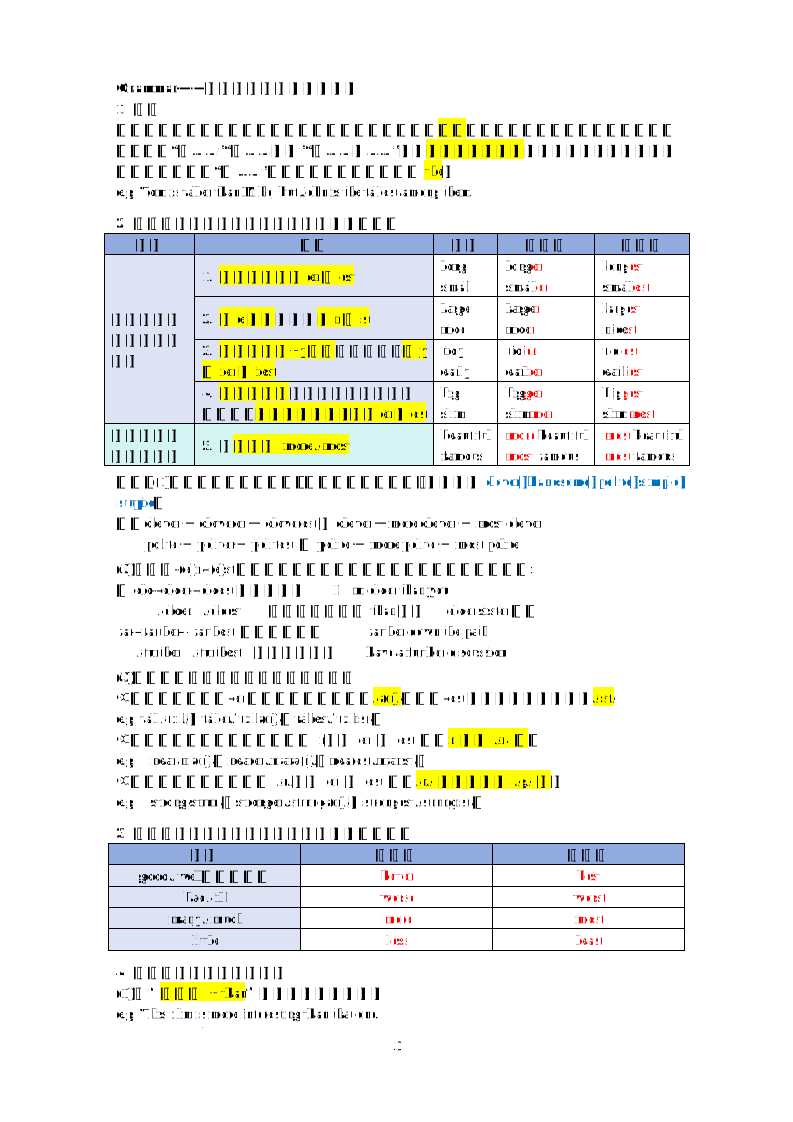
Grammar——形容词的比较级和最高级
1. 概述
大多数形容词有原级、比较级和最高级三种形式。对两者进行比较时,形容词要用比较级形式,表示“较……”“更……一些”“比……更……”。对三者或三者以上进行比较时,形容词要用最高级形式表示“最……”,最高级前通常加定冠词the。
e.g. Tom is taller than Mike, but John is the tallest among them.
2. 形容词比较级和最高级的构成(规则变化)
类别
规则
原级
比较级
最高级
单音节和部分双音节形容词
1. 大多数词后加er或est
long
small
longer
smaller
longest
smallest
2. 以e结尾的词,加r或st
large
nice
larger
nicer
largest
nicest
3. 以辅音字母+y结尾的形容词,去y加ier或iest
tidy
early
tidier
earlier
tidiest
earliest
4. 重读闭音节词末尾只有一个辅音字母时,双写辅音字母,再加er或est
big
slim
bigger
slimmer
biggest
slimmest
多音节和部分双音节词
5. 在词前加 more / most
beautiful
famous
more beautiful
most famous
most beautiful
most famous
注意:(1)有些形容词的比较级、最高级有两套形式,常见的有clever、handsome、polite、simple、stupid。
如:clever → cleverer → cleverest或clever →more clever → most clever
polite → politer→ politest 或polite → more polite → most polite
(2)有些加-(e)r/-(e)st形容词的比较级、最高级有两套形式,用法不同:
如old--older--oldest年龄、新旧 I’m older than you.
/elder /eldest 家里排行,不与than连用 elder sister姐姐
far--farther-- farthest 实际地理距离 farther down the path
/further /furthest 抽象程度深浅 have a further discussion
(3)形容词比较级最高级后缀发音规则:
①一般规则:后缀-er自成一个音节,读作/ə(r)/;后缀-est自成一个音节,读作/ɪst/
e.g. tall /tɔːl/、taller/ˈtɔːlə(r)/、tallest/ˈtɔːlɪst/。
②如果原级词末为不发音的字母 r,加 er 和 est 时,r 要发 /r/ 音,
e.g. near/nɪə(r)/、nearer /nɪərə(r)/、nearest /nɪərɪst/。
③如果原级词末的发音为 /ŋ/,加 er 和 est 时,/ŋ/ 音后要加上 /g/ 音,
e.g. strong/strɒŋ/、stronger /strɒŋɡə(r)/、strongest /strɒŋɡɪst/。
3. 形容词比较级和最高级的构成(不规则变化)
原级
比较级
最高级
good / well(健康的)
better
best
bad / ill
worse
worst
many / much
more
most
little
less
least
4. 形容词比较级的常见用法
(1)用“比较级 + than”引出比较的第二部分
e.g. This film is more interesting than that one.
(2)用“Which/Who... + 比较级, ...or...?”句型来表示在两者中选择
e.g. Which picture is more beautiful, this one or that one?
Who is cleverer, Millie or Simon?
(3)在比较级前加 a little, a bit, much, a lot, even, far 等词表示程度
She is even more beautiful than before.
This problem is much harder than the last one.
She feels a lot better after taking the medicine.
This new road is far wider than the old one.
(4)用“比较级 + and + 比较级”或“more and more + 形容词原级”表示人或事物本身程度的改变,意为“越来越……”
e.g.The weather is getting warmer and warmer.
Our city is becoming more and more beautiful.
(5)用“the + 比较级..., the + 比较级...”表示一方随另一方而变化,意为“越……,就越……”
e.g. The warmer the weather is, the better I feel.
The more careful you are, the fewer mistakes you will make.
5. 形容词最高级的常见用法
(1)用“the + 最高级(+名词)+ 比较范围”的结构来表示“在某一范围内最……”。of和among 后面接表示范围的人或物,in后面接表示范围的名词或名词短语。
e.g. She is the tallest of/among her classmates.
She is the tallest in her class.
(2)用“形容词性物主代词 + 最高级”的结构来表示“某人或事物的最……”。
e.g. Lucy is my best friend.
注意: 此时形容词最高级前不需要加定冠词the
(3)可以用序数词修饰形容词最高级,意为“第……最……”。
e.g. The Yellow River is the second longest river in China.
China is the third largest country in the world.
(4)用“one of the + 形容词最高级 + 可数名词复数”表示“最……的……之一”。
e.g. He is one of the tallest players among his friends.
Beijing is one of the largest cities in China.
6. 形容词比较级表最高级含义的用法
(1)用“比较级 + than + any other + 单数可数名词”的结构来表示“同一范围内,某一个比其他所有都更…”,实际隐含最高级含义。如果主语不属于这个范围,不需要加other
e.g. China is larger than any other country in Asia.(China在Asia范围内)
China is larger than any country in Africa.(China不属于Africa)
(2)用“not/never/nothing + 比较级”,表达“没有比…更…的”,间接表示最高级含义。
e.g. I have never seen a more beautiful city than this.
Nothing is more important than health.
Your answer couldn't be better.
Word power
在一些名词后面加后缀-ful“充满......的”或-less “没有......的”.
care小心;在意
careful 小心的;仔细的
careless 粗心的;马虎的
hope 希望
hopeful 有希望的
hopeless 无望的
use 用途;使用
useful 有用的
useless 无用的
Integration
1. They were very scared.
scared adj. 害怕;恐惧
搭配:be scared of 害怕......(比be afraid of 害怕程度更深)
be scared to do sth. 害怕做某事;不敢做某事
词性拓展:scary adj. 可怕的;令人担忧的
e.g.The child is scared of his father.
I am scared to live alone
2. The bear will leave me alone if it thinks I'm dead.
(1) leave sb. alone 不管、不理某人
(2) dead adj. 死的
词性拓展:die vi. 死 death n. 死亡
3. It said a true friend should not leave you in times of danger.
(1)in times of 在......时刻
(2)danger n. 危险(不可数名词)
搭配:in danger 处于危险中 e.g. We should protect the animals in danger.
in danger of 处于......危险中 e.g. He was in danger of losing his job
out of danger 脱离危险 e.g.The patient was out of danger.
词性拓展:dangerous adj. 危险的 e.g. Driving too fast is dangerous.
4. How to get along with friends
get along with sb. 与某人和睦相处 = get on with sb.
可用well、badly说明相处的好坏程度
e.g. She gets along well with her classmates.
拓展:get along with sth. 某事进展如何
e.g. How are you getting along with your project?
5. Once you are friends, there are some easy ways to make sure your friendship lasts.
(1)once ① conj. 一......就;一旦
e.g.Once you make a promise(承诺), you should keep it.
② adv. 曾经 (一般过去时的标志)
e.g.We once watched the raising of the national flag.
③ adv. 一次
e.g. She cleans her room once a week.
(2) make sure 确保
e.g. Can you make sure the doors are locked before we leave?
(3) last v. 持续
e.g. The meeting lasted for two hours.
6. Joan is helpful and patient.
patient ① adj. 有耐心的
搭配:be patient with sb./sth. 对某人/某事有耐心
拓展:impatient adj. 没有耐心的 patience n. 耐心
e.g. She is very patient with young children.
② n. 病人(可数名词)
e.g. The nurses are looking after the patients very well.
Writing
写作主题: My best friend
人称:第一人称+第三人称
时态:一般现在时为主
结构:Introduction: 介绍好便宜的姓名+初次见面
Main body: 描述好友外貌+品德
Conclusion: 表达对好友的情感
表达:
1. 介绍姓名My best friend is...
I have a best friend called/named...
I have a best friend and his/her name is...
... is my best friend.
2. 初次见面I met him/her at/in+地点 + ... years ago.
I first met him/her ...years ago.
We met at/ in/ during...
We got to know each other ... ago.
3.描述外貌... is taller/ shorter than me.
Her/ His hair is... and...
I like his/her bright smile/smiling eyes/...
... has long hair/ short hair/ big eyes/ a round face...
… is a girl/boy with ...
…usually wears her hair in a ponytail/...
... wears a pair of round glasses.
They make her/ him look... and...
4.描述品德:... is helpful/patient/caring/thoughtful/kind/easy-going/...
... is a cheerful/trustworthy/... person.
Every time I ... , he/she will ...
... is patient/polite/... enough to ...
... has a great sense of humour and often tells funny jokes to make me laugh.
Kind and helpful, ... is always ready to help friends in need.
5.表达情感... is great/wonderful/..., and I hope we will be best friends forever.
... is the most wonderful friend in my life.
I'm lucky to have such a great friend. ... makes my life more colourful and meaningful.
I'm so glad to have...as my best friend, and I believe our friendship will last till the end.
范文: My best friend
I have a best friend called Hai Yan. I first met her in our school library last year.
Hai Yan is a little taller than me. She has a round face with big bright eyes. Her hair is long and straight, and she usually wears it in a ponytail. Her best qualities are honesty and kindness. She never tells lies to anyone and is always ready to help firends in need. Also, Hai Yan is a cheerful person. Every time I am in the face of difficulties, she will cheer me up and encourage me not to give up.
I am so lucky to have her as my best friend, and I believe our friendship will last till the end.
$
资源预览图

1

2
3

相关资源
示范课
由于学科网是一个信息分享及获取的平台,不确保部分用户上传资料的 来源及知识产权归属。如您发现相关资料侵犯您的合法权益,请联系学科网,我们核实后将及时进行处理。