Unit 5 Going on an exchange trip(重难词汇精练)英语新教材沪教版八年级上册
2026-09-10
|
3份
|
19页
|
6人阅读
|
0人下载
摘要:
**基本信息**
该专项以“词汇基础-语境应用-语篇综合”为逻辑主线,通过多题型递进训练,系统提升词汇记忆与语境运用能力,培养语言能力和学习能力。
**专项设计**
|模块|题量/典例|题型特征|知识逻辑|
|----|-----------|----------|----------|
|词汇基础练|汉译英(16单词+6短语)、词汇拓展(11题变形)|侧重词汇音形义记忆及词性转换|从孤立词汇(单词/短语)到词汇拓展(派生/复数),构建基础词汇网络|
|词汇语境练|单词拼写(10题)、提示填空(10题)、适当形式填空(10题)、单选(10题)、完成句子(6题)、选词填空(6题)|强调单句层面词汇应用,结合语法规则|从词汇记忆过渡到语境中灵活运用,关联语法知识(时态/词性)|
|词汇语篇练|短文填空(15空)、完形填空(10题)|注重篇章中词汇综合运用及逻辑衔接|通过语篇整合词汇,提升跨句/段词汇理解与表达能力,呼应文化意识培养|
内容正文:
Unit 5 Going on an exchange trip 词汇专项过关
词汇基础练
词汇语境练
词汇语篇练
一、汉译英
英文
中文
英文
中文
单词
n. 交流
adj. 焦虑的,担忧的
adj. 感激的
n. 筷子
n. 旅行,旅游
n. 太极(拳)
adv. 尚(未),还,仍
adj. 自主的
n. 内容
n. 感觉,感情
n. 震惊,令人震惊的事
adj. 外国的
adj. 糊涂的,迷惑的
adj. 焦虑的,忧虑的
n. 阶段,时期
n. 蜜月
adj. 陌生的,不熟悉的
adj. 想家的
adj. 孤独的
v. 对付,应付
v. 期待,盼望
n. 情况
v. 接受
n. 适应
短语
京剧
寄宿家庭
蜿蜒
文化冲击
解决,处理
感到舒服自在
2、 词汇拓展(单词变形)
学科网(北京)股份有限公司1 / 5
学科网(北京)股份有限公司
1. nervous——__________(adv.)紧张地
2. grateful——__________(adv.)感激地
3. chopstick——__________(pl.)筷子
4. tour——__________(n.)旅游业
5. independent——__________(adv.)自主地
6. feeling——__________(v.)感觉,感受
7. foreign——__________(n.)外国人
8. anxious——__________(adv.)焦虑地
9. lonely——__________(n.)孤独
10. expect——__________(n.)期待,预期
11. adaptation——__________(v.)适应
一、单词拼写
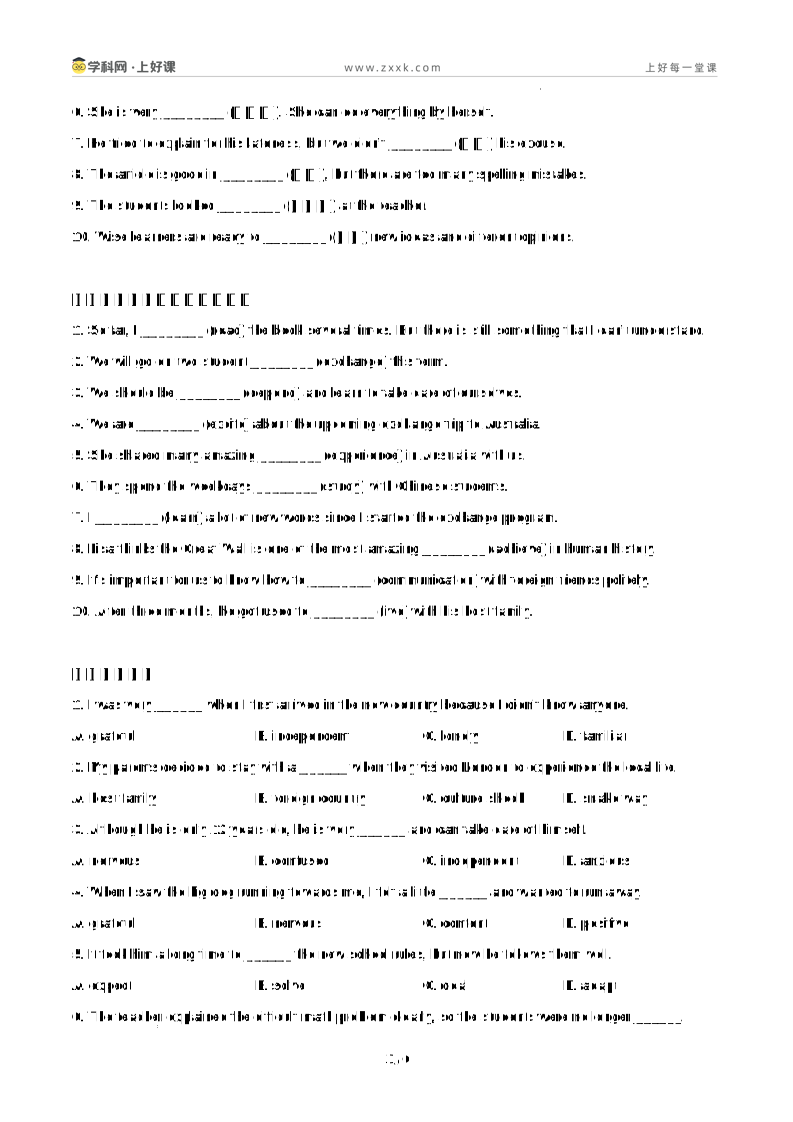
1. She doesn’t feel l________, though she lives alone now.
2. We e________ that our team will win the basketball match because we practiced very hard.
3. I will have an exam tomorrow, so I feel very n________ now.
4. In China, people usually use c________ to eat noodles.
5. The difficult math problem made me feel c________. I couldn’t solve it.
6. Visiting the UK is my first trip to go to a f________ country.
7. We need to find a way to solve this difficult s________.
8. It takes time for him to make an a________ to the new school life.
9. She hasn’t arrived at the party y________.
10. After moving to a new city, I sometimes have a f________ of homesickness, especially during festivals.
二、根据汉语提示填空
1. It’s impossible for us to learn a ________ (外国的) language in a short time.
2. It’s important to ________ (交流) with your host family to avoid misunderstandings.
3. My ________ (寄宿) family invited me to their traditional dinner last night.
4. I felt a little ________ (紧张的) when I first met my host parents.
5. No matter how hard the ________ (情况) was, I could go through it.
6. She is very ________ (独立的). She can do everything by herself.
7. He tried to explain for his lateness, but we didn’t ________ (接受) his excuse.
8. The article is good in ________ (内容), but there are too many spelling mistakes.
9. The students looked ________ (迷惑的) at the teacher.
10. Wise learners are ready to ________ (接受) new ideas and different opinions.
三、括号内词的适当形式填空
1. So far, I ________ (read) the book several times. But there is still something that I can’t understand.
2. We will go on two student ________ (exchange) this term.
3. We should be ________ (depend) and learn to take care of ourselves.
4. We are ________ (excite) about the upcoming exchange trip to Australia.
5. She shared many amazing ________ (experience) in Australia with us.
6. They spend the weekdays ________ (study) with Chinese students.
7. I ________ (learn) a lot of new words since I started the exchange program.
8. Lisa thinks the Great Wall is one of the most amazing ________ (achieve) in human history.
9. It’s important for us to know how to ________ (communication) with foreign friends politely.
10. After three months, he got used to ________ (live) with his host family.
四、单项选择
1. I was very ______ when I first arrived in the new country because I didn’t know anyone.
A. grateful B. independent C. lonely D. familiar
2. My parents decided to stay with a ______ when they visited London to experience the local life.
A. host family B. foreign country C. culture shock D. snake way
3. Although he is only 12 years old, he is very ______ and can take care of himself.
A. nervous B. confused C. independent D. anxious
4. When I saw the big dog running towards me, I felt a little ______ and wanted to run away.
A. grateful B. nervous C. content D. positive
5. It took him a long time to ______ the new school rules, but now he follows them well.
A. expect B. solve C. deal D. adapt
6. The teacher explained the difficult math problem clearly, so the students were no longer ______.
A. confused B. homesick C. unfamiliar D. lonely
7. We should learn how to use ______ properly when we eat Chinese food.
A. tours B. chopsticks C. feelings D. phases
8. He didn’t pass the exam, but he didn’t give up. He decided to ______ with the problem and study harder.
A. deal B. expect C. accept D. shock
9. After living abroad for a year, she started to feel ______ for her family and friends in China.
A. anxious B. grateful C. homesick D. content
10. Many students feel ______ before a big exam because they want to get good grades.
A. independent B. anxious C. unfamiliar D. grateful
五、完成句子
1. 妈妈教我如何耐心地处理问题。
My mother taught me how to ________ ________ problems patiently.
2. 到目前为止,她已经花了很多时间学习说法语了。
________ ________, she ________ ________ a lot of time ________ ________ ________ French.
3. 我来中国学习时,住在北京一个友好的寄宿家庭。
When I came to China to study, I stayed with a friendly ________ ________ in Beijing.
4. 小路蜿蜒上山,游客得以在山顶欣赏风景。
The path ________ ________ ________ up the hill, and visitors ________ ________ the view at the top.
5. 尽管感到焦虑,她仍然接受了挑战。
Although she felt ________, she still ________ the challenge.
6. 面对文化冲击,她努力感到自在。
Facing ________ ________, she tried to ________ ________ ________.
六、选词填空
从方框中选择合适的词或短语,并用其正确形式完成句子,每词 / 短语限用一次。
exchange / prepare / communicate / experience / understand / local
1. We will our ideas about the trip in the meeting.
2. It’s wise to well before going on an exchange trip.
3. You need to with your host family in English every day.
4. She has many interesting things during her stay in America.
5. It’s important to the local people’s way of life.
6. You can taste delicious food at the street market.
一、用方框中所给词汇的正确形式填空。
阅读短文,从方框中选择适当的词并用其正确形式填空,使短文通顺、意思完整。每空限填一词,每词限用一次。
exchange, host, schedule, communication, preparation, cultural, regretful,
gathering, experience, thankful, besides, ever, prepare, introduce, stay
Nowadays, more and more students take part in 1 programs to learn about different cultures. Last year, I went on an exchange trip to the US. Before the trip, I made a detailed 2 and did lots of 3 , like learning basic English daily expressions and reading books about American customs.
When I arrived, my 4 family welcomed me warmly. They helped me 5 myself to their friends and neighbors. Good 6 with them made me feel at home soon. During my 7 there, I joined many 8 activities, such as celebrating Thanksgiving and visiting local museums. 9 , I also went to an exchange student 10 , where we shared our interesting 11 .
I felt a little 12 when I had to leave, but I was deeply 13 to my host family for their love and care. This trip taught me that if we 14 well and open our hearts, we can always have a great time. I hope I can 15 go on another exchange trip in the future.
二、完形填空
Olivier Jean-Baptiste, 26, is from France. He is living in China now and he likes recording his life here with videos. The 1 of visiting China first came to him when his uncle returned from China with much praise for the Chinese lifestyle.
Later, a Chinese woman 2 him to the everyday life of Chinese people. He also learnt to use apps like Weixin and Alipay, which showed him a(n) 3 way of living. The woman later became his wife and they moved to Beijing in 2022.
“One day, she took me to see the flag-raising ceremony. Seeing countless young people 4 rushing towards the flag, I was deeply moved. It’s a strong, united and loving country,” Jean-Baptiste said.
Jean-Baptiste’s Chinese friends were also very 5 to him. When he was in trouble, they always helped him without asking for anything in return. They 6 Jean-Baptiste and even treated him like family.
All of these 7 made Jean-Baptiste want to learn more about Chinese culture. He visited many places in China, like the Great Wall and the Terracotta Army Museum. When he 8 to France for vacation, he shared photos of his travels and life in China with his family. “They were also very 9 ,” Jean-Baptiste said.
After learning about China’s visa-free policy (免签政策), his family and friends couldn’t wait to book their trip to China.
“I was overjoyed to host them during the 10 showing China’s modern development and rich history,” he said. “I’m just an ordinary person with little power, but everyone can play a role in bridging cultures.”
1. A. idea B. mark C. post D. doubt
2. A. followed B. introduced C. compared D. reported
3. A. different B. strict C. original D. unknown
4. A. carefully B. personally C. proudly D. luckily
5. A. new B. social C. strange D. pleasant
6. A. made use of B. made fun of C. took control of D. took care of
7. A. files B. programs C. experiences D. choices
8. A. returned B. attached C. belonged D. walked
9. A. frightened B. annoyed C. relaxed D. excited
10. A. day B. trip C. game D. discussion
$Unit 5 Going on an exchange trip 词汇专项过关
词汇基础练
词汇语境练
词汇语篇练
一、汉译英
英文
中文
英文
中文
单词
exchange
n. 交流
nervous
adj. 焦虑的,担忧的
grateful
adj. 感激的
chopstick
n. 筷子
tour
n. 旅行,旅游
tai chi
n. 太极(拳)
yet
adv. 尚(未),还,仍
independent
adj. 自主的
content
n. 内容
feeling
n. 感觉,感情
shock
n. 震惊,令人震惊的事
foreign
adj. 外国的
confused
adj. 糊涂的,迷惑的
anxious
adj. 焦虑的,忧虑的
phase
n. 阶段,时期
honeymoon
n. 蜜月
unfamiliar
adj. 陌生的,不熟悉的
homesick
adj. 想家的
lonely
adj. 孤独的
deal
v. 对付,应付
expect
v. 期待,盼望
situation
n. 情况
accept
v. 接受
adaptation
n. 适应
短语
Beijing opera
京剧
host family
寄宿家庭
snake its way
蜿蜒
culture shock
文化冲击
deal with
解决,处理
feel at home
感到舒服自在
2、 词汇拓展(单词变形)
学科网(北京)股份有限公司1 / 5
学科网(北京)股份有限公司
1. nervous——__________(adv.)紧张地
2. grateful——__________(adv.)感激地
3. chopstick——__________(pl.)筷子
4. tour——__________(n.)旅游业
5. independent——__________(adv.)自主地
6. feeling——__________(v.)感觉,感受
7. foreign——__________(n.)外国人
8. anxious——__________(adv.)焦虑地
9. lonely——__________(n.)孤独
10. expect——__________(n.)期待,预期
11. adaptation——__________(v.)适应
【答案】1. nervously 2. gratefully 3. chopsticks 4. tourism 5. independently 6. feel
7. foreigner 8. anxiously 9. loneliness 10. expectation 11. adapt
一、单词拼写
1. She doesn’t feel l________, though she lives alone now.
2. We e________ that our team will win the basketball match because we practiced very hard.
3. I will have an exam tomorrow, so I feel very n________ now.
4. In China, people usually use c________ to eat noodles.
5. The difficult math problem made me feel c________. I couldn’t solve it.
6. Visiting the UK is my first trip to go to a f________ country.
7. We need to find a way to solve this difficult s________.
8. It takes time for him to make an a________ to the new school life.
9. She hasn’t arrived at the party y________.
10. After moving to a new city, I sometimes have a f________ of homesickness, especially during festivals.
【答案】1. lonely 2. expect 3. nervous 4. chopsticks 5. confused 6. foreign 7. situation
8. adaptation 9. yet 10. feeling
二、根据汉语提示填空
1. It’s impossible for us to learn a ________ (外国的) language in a short time.
2. It’s important to ________ (交流) with your host family to avoid misunderstandings.
3. My ________ (寄宿) family invited me to their traditional dinner last night.
4. I felt a little ________ (紧张的) when I first met my host parents.
5. No matter how hard the ________ (情况) was, I could go through it.
6. She is very ________ (独立的). She can do everything by herself.
7. He tried to explain for his lateness, but we didn’t ________ (接受) his excuse.
8. The article is good in ________ (内容), but there are too many spelling mistakes.
9. The students looked ________ (迷惑的) at the teacher.
10. Wise learners are ready to ________ (接受) new ideas and different opinions.
【答案】1. foreign 2. communicate 3. host 4. nervous 5. situation 6. independent
7. accept 8. content 9. confused 10. accept
三、括号内词的适当形式填空
1. So far, I ________ (read) the book several times. But there is still something that I can’t understand.
2. We will go on two student ________ (exchange) this term.
3. We should be ________ (depend) and learn to take care of ourselves.
4. We are ________ (excite) about the upcoming exchange trip to Australia.
5. She shared many amazing ________ (experience) in Australia with us.
6. They spend the weekdays ________ (study) with Chinese students.
7. I ________ (learn) a lot of new words since I started the exchange program.
8. Lisa thinks the Great Wall is one of the most amazing ________ (achieve) in human history.
9. It’s important for us to know how to ________ (communication) with foreign friends politely.
10. After three months, he got used to ________ (live) with his host family.
【答案】1. have read 2. exchanges 3. independent 4. excited 5. experiences 6. studying
7. have learned/learnt 8. achievements 9. communicate 10. living
四、单项选择
1. I was very ______ when I first arrived in the new country because I didn’t know anyone.
A. grateful B. independent C. lonely D. familiar
【答案】C
【解析】 句意为“刚到一个新国家谁也不认识时,我感到很孤独”。lonely意为“孤独的”,符合语境。familiar是“熟悉的”,与didn't know anyone矛盾。
2. My parents decided to stay with a ______ when they visited London to experience the local life.
A. host family B. foreign country C. culture shock D. snake way
【答案】A
【解析】句意为“父母决定在伦敦访问期间住在寄宿家庭”。host family意为“寄宿家庭”。
3. Although he is only 12 years old, he is very ______ and can take care of himself.
A. nervous B. confused C. independent D. anxious
【答案】C
【解析】句意为“虽然只有12岁,但他很独立,能照顾自己”。independent意为“独立的;自主的”。
4. When I saw the big dog running towards me, I felt a little ______ and wanted to run away.
A. grateful B. nervous C. content D. positive
【答案】B
【解析】句意为“看到大狗朝我跑来,我感到有点紧张/焦虑”。nervous意为“焦虑的;担忧的”。
5. It took him a long time to ______ the new school rules, but now he follows them well.
A. expect B. solve C. deal D. adapt
【答案】D
【解析】句意为“他花了很长时间才适应新校规”。adapt (to) 意为“适应”。
6. The teacher explained the difficult math problem clearly, so the students were no longer ______.
A. confused B. homesick C. unfamiliar D. lonely
【答案】A
【解析】句意为“老师解释得很清楚,所以学生们不再困惑了”。confused意为“糊涂的;迷惑的”。
7. We should learn how to use ______ properly when we eat Chinese food.
A. tours B. chopsticks C. feelings D. phases
【答案】B
【解析】句意为“我们要学会正确使用筷子吃中餐”。chopstick意为“筷子”。
8. He didn't pass the exam, but he didn’t give up. He decided to ______ with the problem and study harder.
A. deal B. expect C. accept D. shock
【答案】A
【解析】句意为“他决定着手处理这个问题并更努力学习”。deal with是固定搭配,意为“处理;对付”。
9. After living abroad for a year, she started to feel ______ for her family and friends in China.
A. anxious B. grateful C. homesick D. content
【答案】C
【解析】句意为“在国外住了一年后,她开始想家了”。homesick意为“想家的”。
10. Many students feel ______ before a big exam because they want to get good grades.
A. independent B. anxious C. unfamiliar D. grateful
【答案】B
【解析】句意为“许多学生在大考前感到焦虑”。anxious意为“焦虑的;忧虑的”,符合考前心情。
五、完成句子
1. 妈妈教我如何耐心地处理问题。
My mother taught me how to ________ ________ problems patiently.
2. 到目前为止,她已经花了很多时间学习说法语了。
________ ________, she ________ ________ a lot of time ________ ________ ________ French.
3. 我来中国学习时,住在北京一个友好的寄宿家庭。
When I came to China to study, I stayed with a friendly ________ ________ in Beijing.
4. 小路蜿蜒上山,游客得以在山顶欣赏风景。
The path ________ ________ ________ up the hill, and visitors ________ ________ the view at the top.
5. 尽管感到焦虑,她仍然接受了挑战。
Although she felt ________, she still ________ the challenge.
6. 面对文化冲击,她努力感到自在。
Facing ________ ________, she tried to ________ ________ ________.
【答案】1. deal with 2. So far, has spent, learning to speak 3. host family 4. snakes its way, can enjoy
5. anxious, accepted 6. culture shock, feel at home
六、选词填空
从方框中选择合适的词或短语,并用其正确形式完成句子,每词 / 短语限用一次。
exchange / prepare / communicate / experience / understand / local
1. We will our ideas about the trip in the meeting.
2. It’s wise to well before going on an exchange trip.
3. You need to with your host family in English every day.
4. She has many interesting things during her stay in America.
5. It’s important to the local people’s way of life.
6. You can taste delicious food at the street market.
【答案】1. exchange 2. prepare 3. communicate 4. experienced 5. understand 6. local
一、用方框中所给词汇的正确形式填空。
阅读短文,从方框中选择适当的词并用其正确形式填空,使短文通顺、意思完整。每空限填一词,每词限用一次。
exchange, host, schedule, communication, preparation, cultural, regretful,
gathering, experience, thankful, besides, ever, prepare, introduce, stay
Nowadays, more and more students take part in 1 programs to learn about different cultures. Last year, I went on an exchange trip to the US. Before the trip, I made a detailed 2 and did lots of 3 , like learning basic English daily expressions and reading books about American customs.
When I arrived, my 4 family welcomed me warmly. They helped me 5 myself to their friends and neighbors. Good 6 with them made me feel at home soon. During my 7 there, I joined many 8 activities, such as celebrating Thanksgiving and visiting local museums. 9 , I also went to an exchange student 10 , where we shared our interesting 11 .
I felt a little 12 when I had to leave, but I was deeply 13 to my host family for their love and care. This trip taught me that if we 14 well and open our hearts, we can always have a great time. I hope I can 15 go on another exchange trip in the future.
【答案】1. exchange 2. schedule 3. preparation 4. host 5. introduce 6. communication 7. stay 8. cultural 9. Besides 10. gathering 11. experiences 12. regretful 13. thankful 14. prepare 15. ever
【导语】本文是一篇记叙文,作者讲述了自己的美国交换之旅,讲述了出行准备、在美生活活动与感悟,并期盼未来再有交换旅行。
【解析】1. 句意:如今,越来越多的学生参加交换项目,去了解不同的文化。根据“learn about different cultures”和后文的“exchange trip”,以及所给词语,此处考查固定搭配exchange programs,意为“交换项目”,因此,此处填exchange作定语修饰名词programs“项目”。
2. 句意:旅行前,我制定详细计划,做了很多准备,例如学习基础英语日常表达、阅读关于美国风俗的书籍。根据句意和所给词语,此处考查固定搭配make a detailed schedule,意为“制定一个详细计划表”,schedule“计划表”是可数名词,不定冠词a修饰可数名词单数。
3. 句意:旅行前,我制定详细计划,做了很多准备,例如学习基础英语日常表达、阅读关于美国风俗的书籍。后文“like learning basic English daily expressions and reading books about American customs”列举的是出行前所做的准备,结合所给词语,preparation意为“准备”,此处是不可数名词。
4. 句意:当我到达的时候,我的寄宿家庭热烈地欢迎了我。根据“family”和“welcomed me warmly”,以及所给词语,此处考查固定搭配host family,意为“寄宿家庭”。
5. 句意:他们帮我向他们的朋友和邻居做自我介绍。根据“myself to their friends and neighbors”和所给词语,introduce“介绍”符合语境,help sb. (to) do sth.是固定短语,意为“帮助某人做某事”,因此,此处用动词原形或动词不定式均可,题干要求每空一词,因此,此处填动词原形introduce。
6. 句意:和他们良好的交流让我很快就感觉像在家一样。形容词good“好的”后面接名词;结合“with them”和所给词语,communication“交流、沟通”符合语境,作句子的主语,good communication意为“良好的沟通”。
7. 句意:在我待在那里的这段时间里,我参加了许多文化活动,例如庆祝感恩节和参观当地博物馆。my“我的”是形容词性物主代词,其后接名词,结合句意和所给词语,此处stay符合语境,意为“停留、逗留”,during my stay意为“在我逗留期间”。
8. 句意:在我待在那里的这段时间里,我参加了许多文化活动,例如庆祝感恩节和参观当地博物馆。activities“活动”是名词,其前用形容词修饰,空后“such as celebrating Thanksgiving and visiting local museums”列举的是文化活动,结合所给词语,cultural符合语境,意为“文化的”,是形容词修饰名词,作定语。
9. 句意:除此之外,我还参加了交换生聚会,在那里我们分享我们有趣的经历。根据“I also went to…”可知,此处指出了前面提到的文化活动外,还参加了……,结合所给词语,besides符合语境,意为“此外,除此之外”,句首单词的首字母要大写。
10. 句意:除此之外,我还参加了交换生聚会,在那里我们分享我们有趣的经历。不定冠词an后接单数名词,结合句意和所给词语,此处考查固定搭配exchange student gathering,意为“交换生聚会”。
11. 句意:除此之外,我还参加了交换生聚会,在那里我们分享我们有趣的经历。our“我们的”是形容词性物主代词,其后接名词,结合“shared”和所给词语,experience符合语境,意为“经历”,是可数名词,此处表示多人各自的经历,用其复数形式experiences。
12. 句意:当我不得不离开的时候,我感到有点不舍/遗憾,但是我深深感激我的寄宿家庭给予我的爱与关怀。feel“感觉”是系动词,后接形容词作表语,结合“my host family for their love and care”和所给词语,regretful符合语境,意为“遗憾的,不舍的”。
13. 句意:当我不得不离开的时候,我感到有点不舍/遗憾,但是我深深感激我的寄宿家庭给予我的爱与关怀。此处考查固定搭配be thankful to sb. for sth.,意为“因某事感激某人”,因此,此处填形容词thankful“感激的”,作表语。
14. 句意:这次旅行教会我:如果我们做好准备并且敞开心扉,我们总能过得很愉快。结合句意和所给词语,prepare“准备”符合语境,句子是if引导的条件状语从句,主句含有情态动词,从句用一般现在时,主语we“我们”是复数,谓语动词用原形prepare。
15. 句意:我希望将来我还能再去一次交换旅行。结合句意和所给词语,此处ever符合语境,表达希望未来还能再有交换旅行。can后接副词ever,表示“曾经;在任何时候”,表达对未来再次出行的期盼。
二、完形填空
Olivier Jean-Baptiste, 26, is from France. He is living in China now and he likes recording his life here with videos. The 1 of visiting China first came to him when his uncle returned from China with much praise for the Chinese lifestyle.
Later, a Chinese woman 2 him to the everyday life of Chinese people. He also learnt to use apps like Weixin and Alipay, which showed him a(n) 3 way of living. The woman later became his wife and they moved to Beijing in 2022.
“One day, she took me to see the flag-raising ceremony. Seeing countless young people 4 rushing towards the flag, I was deeply moved. It’s a strong, united and loving country,” Jean-Baptiste said.
Jean-Baptiste’s Chinese friends were also very 5 to him. When he was in trouble, they always helped him without asking for anything in return. They 6 Jean-Baptiste and even treated him like family.
All of these 7 made Jean-Baptiste want to learn more about Chinese culture. He visited many places in China, like the Great Wall and the Terracotta Army Museum. When he 8 to France for vacation, he shared photos of his travels and life in China with his family. “They were also very 9 ,” Jean-Baptiste said.
After learning about China’s visa-free policy (免签政策), his family and friends couldn’t wait to book their trip to China.
“I was overjoyed to host them during the 10 showing China’s modern development and rich history,” he said. “I’m just an ordinary person with little power, but everyone can play a role in bridging cultures.”
1. A. idea B. mark C. post D. doubt
2. A. followed B. introduced C. compared D. reported
3. A. different B. strict C. original D. unknown
4. A. carefully B. personally C. proudly D. luckily
5. A. new B. social C. strange D. pleasant
6. A. made use of B. made fun of C. took control of D. took care of
7. A. files B. programs C. experiences D. choices
8. A. returned B. attached C. belonged D. walked
9. A. frightened B. annoyed C. relaxed D. excited
10. A. day B. trip C. game D. discussion
【答案】1. A 2. B 3. A 4. C 5. D 6. D 7. C 8. A 9. D 10. B
【导语】本文叙述了26岁的法国人奥利维耶·让-巴蒂斯特在中国的生活经历,包括他来中国的契机、在中国的所见所感,以及他为中外文化交流搭建桥梁的想法。
【解析】1. 句意:当他的叔叔从中国回来,对中国的生活方式赞不绝口时,他第一次萌生了去中国旅游的想法。
idea想法;mark标记;post帖子;doubt怀疑。根据“The…of visiting China first came to him”可知,此处指产生去中国旅游的想法,idea符合语境。故选A。
2. 句意:后来,一位中国女士向他介绍了中国人的日常生活。
followed跟随;introduced介绍;compared比较;reported报道。根据“a Chinese woman…him to the everyday life of Chinese people”可知,考查introduce sb to sth“向某人介绍某物”,此处指介绍中国人的日常生活。故选B。
3. 句意:他还学会了使用微信和支付宝等应用程序,这些应用程序向他展示了一种不同的生活方式。
different不同的;strict严格的;original原始的;unknown未知的。根据前文“Olivier Jean-Baptiste, 26, is from France. He is living in China now”可知,他来自法国、现居中国,微信和支付宝是中国特色应用,与他原本的生活方式不同,different符合语境。故选A。
4. 句意:看到无数年轻人自豪地奔向国旗,我深受感动。
carefully仔细地;personally亲自地;proudly自豪地;luckily幸运地。根据“the flag-raising ceremony”可知,观看升旗仪式时,年轻人应是自豪地奔向国旗,proudly符合语境。故选C。
5. 句意:让-巴蒂斯特的中国朋友对他也非常友好。
new新的;social社交的;strange奇怪的;pleasant友好的、讨人喜欢的。根据“When he was in trouble, they always helped him without asking for anything in return.”可知,朋友会主动帮助他,说明对他很友好,pleasant符合语境。故选D。
6. 句意:他们照顾让-巴蒂斯特,甚至把他当成家人一样对待。
made use of利用;made fun of取笑;took control of控制;took care of照顾。根据“even treated him like family”可知,此处指朋友对他的照顾,took care of符合语境。故选D。
7. 句意:所有这些经历都让让-巴蒂斯特想更多地了解中国文化。
files文件;programs程序;experiences经历;choices选择。根据前文“she took me to see the flag-raising ceremony”以及“Jean-Baptiste’s Chinese friends were also very pleasant to him. When he was in trouble, they always helped him”可知,此处指代观看升旗仪式、被中国朋友帮助等事,即这些经历,experiences符合语境。故选C。
8. 句意:当他回法国度假时,他和家人分享了他在中国旅行和生活的照片。
returned返回;attached附上;belonged属于;walked步行。根据“to France for vacation”可知,此处指返回法国度假,returned符合语境。故选A。
9. 句意:让-巴蒂斯特说:“他们也非常兴奋。”
frightened害怕的;annoyed恼怒的;relaxed放松的;excited兴奋的。根据后文“After learning about China’s visa-free policy, his family and friends couldn’t wait to book their trip to China.”可知,家人朋友迫不及待要来中国,说明他们看到照片后很兴奋,excited符合语境。故选D。
10. 句意:他说:“能在这次旅行中招待他们,向他们展示中国的现代发展和丰富历史,我非常高兴。”
day天;trip旅行;game游戏;discussion讨论。根据前文“his family and friends couldn’t wait to book their trip to China”可知,此处指家人朋友来中国的这次旅行,trip符合语境。故选B。
$Unit 5 Going on an exchange trip 词汇专项过关
词汇基础练
词汇语境练
词汇语篇练
一、汉译英
英文
中文
英文
中文
单词
exchange
n. 交流
nervous
adj. 焦虑的,担忧的
grateful
adj. 感激的
chopstick
n. 筷子
tour
n. 旅行,旅游
tai chi
n. 太极(拳)
yet
adv. 尚(未),还,仍
independent
adj. 自主的
content
n. 内容
feeling
n. 感觉,感情
shock
n. 震惊,令人震惊的事
foreign
adj. 外国的
confused
adj. 糊涂的,迷惑的
anxious
adj. 焦虑的,忧虑的
phase
n. 阶段,时期
honeymoon
n. 蜜月
unfamiliar
adj. 陌生的,不熟悉的
homesick
adj. 想家的
lonely
adj. 孤独的
deal
v. 对付,应付
expect
v. 期待,盼望
situation
n. 情况
accept
v. 接受
adaptation
n. 适应
短语
Beijing opera
京剧
host family
寄宿家庭
snake its way
蜿蜒
culture shock
文化冲击
deal with
解决,处理
feel at home
感到舒服自在
2、 词汇拓展(单词变形)
学科网(北京)股份有限公司1 / 5
学科网(北京)股份有限公司
1. nervously 2. gratefully 3. chopsticks 4. tourism 5. independently 6. feel
7. foreigner 8. anxiously 9. loneliness 10. expectation 11. adapt
一、单词拼写
1. lonely 2. expect 3. nervous 4. chopsticks 5. confused 6. foreign 7. situation
8. adaptation 9. yet 10. feeling
二、根据汉语提示填空
1. foreign 2. communicate 3. host 4. nervous 5. situation 6. independent
7. accept 8. content 9. confused 10. accept
三、括号内词的适当形式填空
1. have read 2. exchanges 3. independent 4. excited 5. experiences 6. studying
7. have learned/learnt 8. achievements 9. communicate 10. living
四、单项选择
1. C 2. A 3. C 4. B 5. D 6. A 7. B 8. A 9. C 10. B
五、完成句子
1. deal with 2. So far, has spent, learning to speak 3. host family 4. snakes its way, can enjoy
5. anxious, accepted 6. culture shock, feel at home
六、选词填空
1. exchange 2. prepare 3. communicate 4. experienced 5. understand 6. local
一、用方框中所给词汇的正确形式填空。
1. exchange 2. schedule 3. preparation 4. host 5. introduce 6. communication 7. stay 8. cultural 9. Besides 10. gathering 11. experiences 12. regretful 13. thankful 14. prepare 15. ever
二、完形填空
1. A 2. B 3. A 4. C 5. D 6. D 7. C 8. A 9. D 10. B
$
资源预览图

1

2
3
相关资源
示范课
由于学科网是一个信息分享及获取的平台,不确保部分用户上传资料的 来源及知识产权归属。如您发现相关资料侵犯您的合法权益,请联系学科网,我们核实后将及时进行处理。