Unit 5 What are living things explore(教学设计)-2026-2027学年沪教版英语五年级上册
2026-09-10
|
6页
|
8人阅读
|
0人下载
普通
摘要:
该小学英语教学设计聚焦生物与非生物区别、连词and/or/but运用及字母组合w/wh发音规律,通过复习旧知(生物特征词汇)、主题图观察引出课题,Pre-reading环节用AI生成对比图片处理生词,搭建学习支架连接新旧知识。
此资料融合核心素养,语言能力通过语篇阅读提取信息、用连词描述特征提升,思维品质借助生物与非生物对比培养比较分类能力,AI生成动画、发音音频及微课辅助教学,直观有趣,帮助学生理解抽象概念,也为教师提供丰富资源,提升教学效率。
内容正文:
Unit 5 What are living things? — Explore教学设计
课程基本信息
课题
Unit 5 What are living things?(Explore 部分)
课型
新授课
学科
英语
年级
五年级
学段
小学高段
版本章节
沪教牛津版五年级上册 Unit 5
教学目标
语言能力目标:
1. 学生能够听、说、认读拓展词汇:living, non-living, thing, air, by themselves, by itself, important, look around。
2. 学生能够理解并运用连词 and, or, but 连接简单句或短语,描述生物与非生物的特征。
3. 学生能够读懂语篇 Living and non-living things(P52-53),获取生物与非生物的区别信息。
4. 学生能够掌握字母组合 w 和 wh 在单词中的发音规律(/w/),正确认读相关单词。
文化意识目标:
学生能够了解生物与非生物的基本区别,初步树立尊重生命、关爱生命的意识。
思维品质目标:
1. 学生能够通过阅读获取关键信息,完成信息提取与整理任务。
2. 学生能够通过对比生物与非生物的特征,培养比较与分类的思维能力。
3. 学生能够通过观察和归纳,掌握字母组合 w 和 wh 的发音规律。
学习能力目标:
1. 学生能够运用略读、扫读等阅读策略获取文本信息。
2. 学生能够在小组合作中交流分享对生物与非生物的认识。
教学重点:
1. 读懂语篇 Living and non-living things,获取生物与非生物的区别信息。
2. 理解并运用连词 and, or, but 连接简单句或短语。
3. 掌握字母组合 w 和 wh 的发音规律(/w/)。
教学难点:
1. 连词 and, or, but 在不同语境中的正确使用。
2. 能够用 ... can / cannot ... and / or / but ... 描述生物与非生物的特征。
3. 区分 w 和 wh 的发音(均为 /w/,但部分方言地区学生可能存在发音困难)。
学情分析
学生在 Get Ready 阶段已学习了与生物特征相关的核心词汇(get sunlight, get food and water, grow, change, move),并能用 Living things can ... 简单描述生物的特征。本课时为单元第二课时(Explore),学生将深入学习生物与非生物的区别,并通过阅读语篇获取详细信息。学生已具备一定的阅读能力和信息提取能力,能够在教师引导下完成信息表格的填写。连词 and, or, but 在之前的学习中已有初步接触(如 Unit 1 中的 more ... than),本课时进行系统学习。语音板块将学习字母组合 w 和 wh 的发音。
教学准备
1. 多媒体课件(含教材 P52-P53 语篇插图、生物与非生物对比图、发音示例图)
2. 单词卡片(living, non-living, thing, air, by themselves, by itself, important, look around)
3. 阅读任务单(信息表格、连词填空练习)
4. 听力音频(教材 P52 课文朗读)
5. AI 辅助:生成生物与非生物的对比动画及 w / wh 发音对比音频
教学过程
教学任务
教学内容
设计意图
创新设计(含AI应用)
Step 1: Warm-up & Review (5 min)
1. 师生问候,复习 Get Ready 所学的生物特征词汇。
T: What can living things do?
Ss: Living things can grow. They can change. They can move.
2. 快速问答,复习生物与非生物的初步概念。
T: Is a toy bear a living thing?
S: No, it isn't. It's a non-living thing.
3. 呈现教材 P52 主题图,引导学生观察。
T: Look at the picture. What can you see?
4. 引出课题:Today we are going to read about "Living and non-living things". Let's find out how they are different.
通过复习激活学生已有知识,为阅读做词汇准备。主题图观察引出本课话题,激发阅读兴趣。
PPT 展示 P52 主题图,用问号覆盖关键信息,制造悬念。
Step 2: Pre-reading (7 min)
1. 呈现教材 P52 的标题和图片,引导学生预测文章内容。
T: Look at the title: "Living and non-living things". What do you think the passage is about?
2. 引导学生观察图片,说出图中哪些是生物,哪些是非生物。
T: What living things can you see in the picture? What non-living things?
3. 板书生词,教授发音和含义。
— living(有生命的)
— non-living(无生命的)
— thing(东西)
— air(空气)
— by themselves(独自地;无需外力地)
— by itself(独自地;无需外力地)
— important(重要的)
— look around(环顾)
4. 通过举例帮助学生理解生词:
T: A plant is a living thing. A toy is a non-living thing.
T: Plants make their food by themselves.
通过预测培养学生的阅读策略。生词提前处理,为阅读扫清障碍。举例帮助学生理解抽象词汇。
AI 生成生物与非生物的对比图片集,帮助学生直观理解 living 和 non-living 的区别。
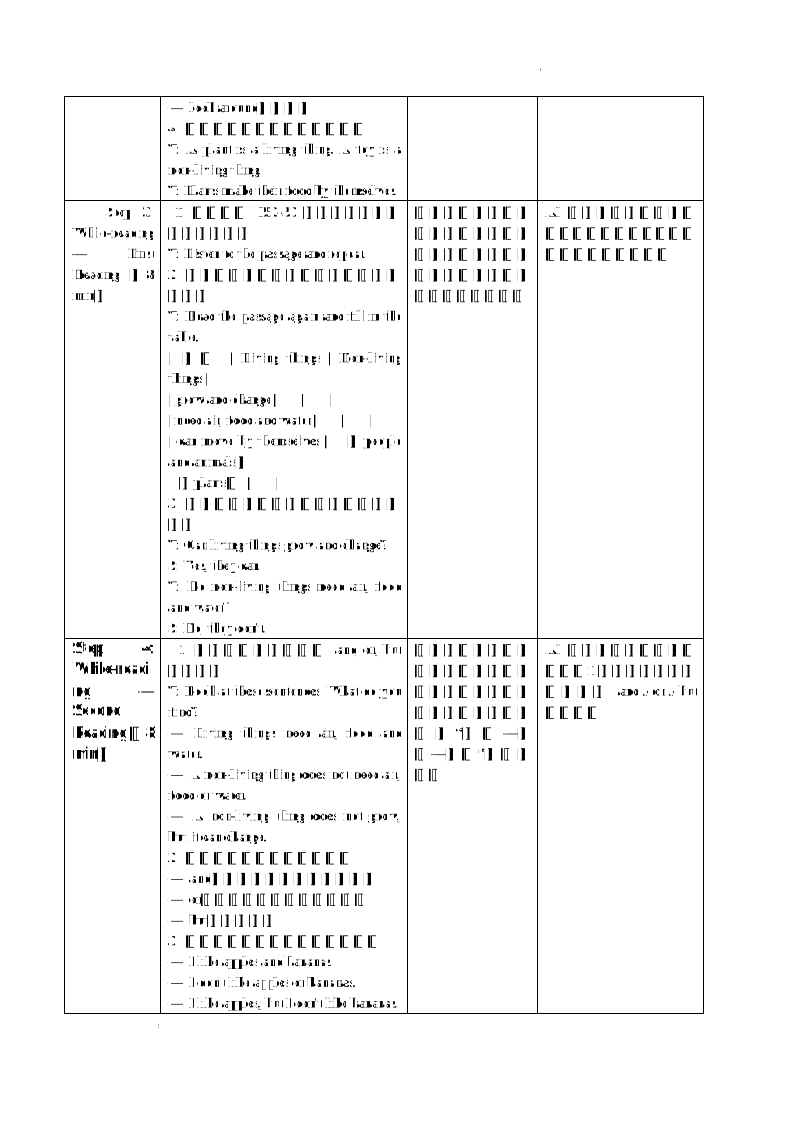
Step 3: While-reading — First Reading (8 min)
1. 播放教材 P52-53 课文录音,学生听音并跟读。
T: Listen to the passage and repeat.
2. 学生自主阅读语篇,完成信息提取任务。
T: Read the passage again and fill in the table.
| 特征 | Living things | Non-living things |
| grow and change | ✓ | ✗ |
| need air, food and water | ✓ | ✗ |
| can move by themselves | ✓(people and animals)
✗(plants) | ✗ |
3. 核对答案,引导学生用完整句子回答。
T: Can living things grow and change?
S: Yes, they can.
T: Do non-living things need air, food and water?
S: No, they don't.
通过听音跟读培养语音语感。信息表格帮助学生聚焦关键信息,培养扫读和信息提取能力。
AI 生成语篇的分段朗读音频(不同语速),帮助不同层次学生跟读。
Step 4: While-reading — Second Reading (8 min)
1. 细读语篇,关注连词 and, or, but 的用法。
T: Look at these sentences. What do you find?
— Living things need air, food and water.
— A non-living thing does not need air, food or water.
— A non-living thing does not grow, but it can change.
2. 引导学生发现连词的用法:
— and:连接并列成分(肯定句)
— or:连接并列成分(否定句)
— but:表示转折
3. 呈现更多例句,帮助学生理解:
— I like apples and bananas.
— I don't like apples or bananas.
— I like apples, but I don't like bananas.
4. 完成连词填空练习。
5. 引导学生关注 by themselves 和 by itself 的用法。
T: Plants cannot move by themselves.
T: A ball cannot move by itself.
通过发现式学习引导学生自主归纳连词的用法。从语篇中提取典型例句,做到“形式—意义—使用”三位一体。
AI 生成连词用法的微课视频(1分钟),以动画形式呈现 and / or / but 的区别。
Step 5: Sounds: w, wh (7 min)
1. 呈现字母组合 w 和 wh 的发音规律。
T: Look at these words: we, water, what, where. How do you pronounce "w" and "wh"?
2. 总结发音规律:
— w 读 /w/(浊音,声带振动):we, water, wonderful, weather
— wh 也读 /w/(浊音,声带振动):what, where, when, white
3. 教师示范发音,学生跟读模仿。
4. 分类游戏:教师出示单词卡片,学生判断含 w 还是 wh,并大声朗读。
5. 完成语音操练:圈出单词中的 w 和 wh 并朗读。
通过归纳和模仿帮助学生掌握 w 和 wh 的发音规律。对比教学帮助学生理解两者的发音关系。游戏活动增加趣味性。
AI 生成 w 和 wh 的发音对比音频,学生课后可自主跟读练习。
Step 6: Practice (5 min)
1. 完成教材 P54 A 部分 Read, and then tick or cross 任务。
T: Read and tick or cross.
2. 完成教材 P54 B 部分 Read again and talk 任务。
T: Talk about the differences between living and non-living things.
3. 小组活动:四人一组,用 and, or, but 描述生物与非生物的特征。
T: Use "and", "or" and "but" to talk about living and non-living things.
S1: Living things need air, food and water.
S2: Non-living things don't need air, food or water.
S3: Non-living things don't grow, but they can change.
4. 请2-3组代表上台展示。
从控制性练习过渡到半控制性练习,逐步提升语言运用的自主性。小组活动在真实交际中运用连词。
AI 生成“生物与非生物”对话范文,供学生参考。
Step 7: Summary & Homework (5 min)
小结:
1. 师生共同回顾本课核心内容:
— 语篇内容:生物与非生物的区别
— 核心语法:连词 and, or, but
— 生词:living, non-living, thing, air, by themselves, by itself, important, look around
— 语音:字母 w 和 wh 的发音(/w/)
2. 教师引导学生总结生物与非生物的区别。
Homework:
1. 听录音跟读课文 Living and non-living things 3遍。
2. 用 and, or, but 各写1个句子,描述生物或非生物的特征。
3. 复习 w 和 wh 的发音,找出含 w 和 wh 的单词各3个并大声朗读。
通过小结帮助学生梳理知识体系,形成结构化的认知。作业设计注重语言的实际运用和语音知识的巩固。
AI 生成个性化的“生物与非生物”范文,供学生课后参考。
作业设计
基础性作业(必做):
1. 听录音,跟读课本 P52 课文 Living and non-living things 3遍。
2. 用 and, or, but 各写1个句子,描述生物或非生物的特征。
3. 复习 w 和 wh 的发音,找出含 w 和 wh 的单词各3个并大声朗读。
拓展性作业(选做):
1. 根据本课所学,用 Living things can ... but non-living things cannot ... 写一段话。
2. 制作一张“Living vs Non-living”英文小海报(含文字和图画)。
板书设计/课堂小结
Unit 5 What are living things? (Explore)
Living things vs Non-living things:
Living things: grow, change, need air/food/water
Non-living things: do not grow, do not need air/food/water
and / or / but:
and — 并列(肯定句)
or — 并列(否定句)
but — 转折
Sounds:
w → /w/ we, water, wonderful
wh → /w/ what, where, when
教学反思
Explore 部分是单元的核心课时,承担着阅读能力培养、语法学习和语音学习的多重任务。本课以语篇 Living and non-living things 为载体,在真实的语境中呈现生物与非生物的区别,学生通过“发现—归纳—练习—运用”的学习路径,较好地掌握了核心内容。阅读环节采用“整体感知—细节提取—深度理解”的三段式设计,符合学生的认知规律。信息表格的使用有效帮助学生聚焦关键信息,培养了扫读和信息提取能力。连词 and, or, but 的教学通过发现式学习,学生能够较好地理解三者的区别和用法。语音板块通过归纳和游戏活动,学生能够较好地掌握 w 和 wh 的发音规律。但部分学生在 or 用于否定句的用法上仍出现混淆(如 I don't like apples and bananas 而非 or),需要在后续课时中持续强化。AI 生成的语音和动画资源增强了课堂的趣味性,学生注意力集中,教学效果良好。
学科网(北京)股份有限公司
学科网(北京)股份有限公司
学科网(北京)股份有限公司
$
资源预览图

1

2
3

相关资源
示范课
由于学科网是一个信息分享及获取的平台,不确保部分用户上传资料的 来源及知识产权归属。如您发现相关资料侵犯您的合法权益,请联系学科网,我们核实后将及时进行处理。