Unit 2 I feel good 重难点提优特训(综合训练)2026-2027 学年译林版(三起)英语五年级上册
2026-09-08
|
6页
|
256人阅读
|
6人下载
摘要:
**基本信息**
聚焦一般现在时三单、情感表达与叙事逻辑、主题短语句型三大模块,以方法提炼为核心,构建“规则-应用-迁移”的知识逻辑链,提升语言运用与思维组织能力。
**综合设计**
|模块|题量/典例|方法提炼|知识逻辑|
|----|-----------|----------|----------|
|一般现在时三单|填空/句型转换/短文补全|三单变化规则(+s/-es/变y为i+es)、否定疑问结构(doesn't+动原/Does+主语+动原)|从语法规则到语境应用,实现词-句-篇的层级递进|
|情感表达与叙事逻辑|排序/短文补全/仿写|情感词汇(happy/sad等)、叙事顺序词(first/then/finally)、情感变化框架(困扰-情绪-尝试-成长)|以叙事逻辑串联情感表达,培养逻辑思维与语言组织能力|
|主题短语与功能句型|单选/匹配/补全对话|核心短语(feel good/try hard等)、功能句型(How does...feel?/You should...)|从短语积累到情境交际,提升语言应用与跨文化沟通能力|
内容正文:
Unit 2 I feel good 重难点提优特训
2026-2027 学年上学期英语五年级上册(译林版三起·新教材)
重难点1 一般现在时第三人称单数(He/She does... / doesn't...)
1. 用法:表示经常性、习惯性的动作或现在的状态、客观事实。当主语是第三人称单数(he / she / it / 单个人名 / 单数名词)时,谓语动词要用第三人称单数形式,常搭配 always, usually, often, sometimes, every day 等频度时间词。
2. 动词第三人称单数变化规则:一般在词尾加 -s;以 s, x, ch, sh, o 结尾的加 -es;以"辅音字母 + y"结尾的,变 y 为 i 再加 -es。
3. 本单元重点动词三单变化:feel→feels try→tries study→studies teach→teaches wash→washes fly→flies go→goes do→does have→has make→makes
4. 否定与疑问:
否定句:主语(三单) + does not (doesn't) + 动词原形。 例:Helen doesn't feel happy.
一般疑问句:Does + 主语(三单) + 动词原形...? 回答:Yes, he/she does. / No, he/she doesn't. 例:Does Su Hai study hard? — Yes, she does.
提优特训
一、用括号中所给单词的第三人称单数形式填空。
1. Helen __________ (feel) angry and sad when she doesn't understand the words.
2. Miss Sullivan never __________ (give) up. She __________ (teach) Helen patiently.
3. Su Hai __________ (study) hard at school every day.
4. Bobby __________ (try) hard at the high jump, but he __________ (not feel) happy.
5. My little brother __________ (wash) his hands before every meal.
6. Yang Ling __________ (sing) very well, and she often __________ (make) us feel good.
7. Liu Tao sometimes __________ (fly) a kite with his friends in the park.
8. Everyone __________ (go) to school at seven in the morning.
二、按要求完成句子。
1. Helen feels angry and sad.(改为一般疑问句,并作肯定回答)
__________ Helen __________ angry and sad? Yes, she __________.
2. Su Hai talks with Su Yang to feel good.(改为否定句)
Su Hai __________ __________ with Su Yang to feel good.
3. Bobby tries hard at football.(改为一般疑问句,并作否定回答)
__________ Bobby __________ hard at football? No, he __________.
4. Yang Ling feels good when she helps others.(对画线部分 feels good 提问)
__________ __________ Yang Ling feel when she helps others?
三、用括号中所给单词的第三人称单数形式,补全短文。
Su Hai __________ (love) school very much. Every morning, she __________ (get) up early. In class, she __________ (listen) to Miss Li carefully and __________ (take) notes. She __________ (study) hard, so she often __________ (feel) good. But when she __________ (not do) well, she feels sad. Then she __________ (talk) with her sister Su Yang, and Su Yang always __________ (help) her. Su Hai also __________ (try) to do better next time.
重难点2 情感表达与叙事的时间逻辑
1. 情感词汇:happy 开心的、sad 难过的、worried 担心的、angry 生气的、excited 兴奋的、proud 自豪的。常用两种句型表达感受:① 主语 + feel(s) + 情感形容词,如 Helen feels angry.;② 某事 + make(s) + 某人 + 情感形容词,如 Football makes Bobby feel good.
2. 叙事顺序词:讲述故事时常用 first 首先、then 然后、soon 很快、after that 之后、finally / in the end 最后等词串联事件,让文章条理更清晰。
3. 情感变化的叙事框架:遇到困扰 → 产生某种情绪 → 努力尝试 / 寻求帮助 → 情绪变好、收获成长。
提优特训
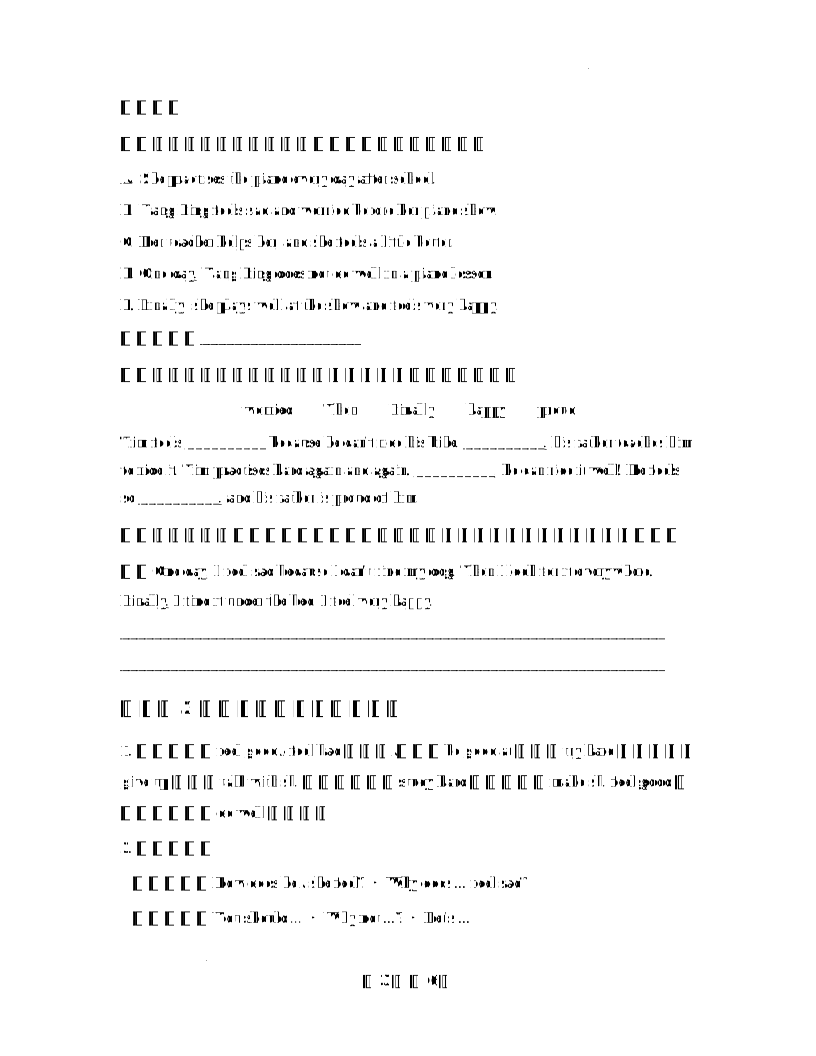
一、给下列句子重新排序,组成一段完整的小故事。
A. She practises the piano every day after school.
B. Yang Ling feels sad and worried before her piano show.
C. Her teacher helps her, and she feels a little better.
D. One day, Yang Ling does not do well in a piano lesson.
E. Finally, she plays well at the show and feels very happy.
正确顺序:____________________
二、从方框中选择合适的单词补全短文,每词限用一次。
worried Then Finally happy proud
Tim feels __________ because he can't ride his bike. __________, his father teaches him to ride it. Tim practises hard again and again. __________, he can ride it well! He feels so __________, and his father is proud of him.
三、仿照例句,用三个时间顺序词写一段话,描述你情绪由坏变好的一次经历。
例:One day, I feel sad because I can't find my dog. Then I look for it everywhere. Finally, I find it under the bed. I feel very happy.
____________________________________________________________________
____________________________________________________________________
重难点3 主题短语与功能句型运用
1. 核心短语:feel good / feel bad 感觉好/不好;be good at 擅长;try hard 努力尝试;give up 放弃;talk with sb. 与某人交谈;study hard 努力学习;make sb. feel good 使某人感觉好;do well 表现好。
2. 功能句型:
询问感受:How does he / she feel? · Why does ... feel sad?
给出建议:You should ... · Why not ...? · Let's ...
表达擅长:He / She is good at ...
提优特训
一、单项选择。
( )1. —__________ does Su Hai feel? —She feels sad.
A. What B. How C. Where
( )2. Helen __________ hard, and she learns fast.
A. try B. trying C. tries
( )3. Football __________ Bobby __________ good.
A. make; feel B. makes; feels C. makes; feel
( )4. When you feel worried, you can __________ your friends.
A. talk with B. talk C. talks with
( )5. Don't __________. Keep trying, and you will feel good.
A. give up B. give away C. get up
二、从Ⅱ栏中选出Ⅰ栏句子的正确答语。
Ⅰ
( )1. How does Yang Ling feel?
( )2. Why is Liu Tao sad?
( )3. Are you good at swimming?
( )4. What do you do when you feel bad?
Ⅱ
A. Because he can't find his kite.
B. She feels happy.
C. I talk with my friends and study hard.
D. Yes, I am.
三、根据情景,选择合适的句子补全对话(有一项多余)。
A: Hi, Tim. You look sad. 1. __________
B: I don't do well in the Maths test. 2. __________
A: Don't worry. 3. __________ Maths is not easy, but you can study harder.
B: That's a good idea. 4. __________
A: Sure. Let's study together after school.
B: Thank you!
A. I feel worried.
B. Why not study with me?
C. What's the matter?
D. I often play football to feel good.
E. You should not give up.
参考答案
重难点1
一、1. feels 2. gives; teaches 3. studies 4. tries; doesn't feel
5. washes 6. sings; makes 7. flies 8. goes
二、1. Does; feel; does 2. doesn't talk 3. Does; try; doesn't 4. How does
三、loves; gets; listens; takes; studies; feels; doesn't do; talks; helps; tries
重难点2
一、D B A C E
二、worried; Then; Finally; happy; proud
三、(示例)One day, I feel sad because I lose my favourite pen. Then my classmate gives me a new one. Finally, I feel very happy again.
重难点3
一、1. B 2. C 3. C 4. A 5. A
二、1. B 2. A 3. D 4. C
三、1. C 2. A 3. E 4. B(多余项:D)
第 1 页 共 6 页
学科网(北京)股份有限公司
$
资源预览图

1

2
3
相关资源
示范课
由于学科网是一个信息分享及获取的平台,不确保部分用户上传资料的 来源及知识产权归属。如您发现相关资料侵犯您的合法权益,请联系学科网,我们核实后将及时进行处理。