Unit 2 On the money Understanding ideas(Reading) 分层作业 2026-2027学年外研版英语九年级上册
2026-09-03
|
2份
|
16页
|
479人阅读
|
5人下载
摘要:
**基本信息**
本练习以“词汇-句型-语篇”递进为路径,分层设计基础巩固、进阶应用、综合拓展三层次,适配新授课知识内化与能力提升需求,助力语言能力与思维品质发展。
**分层设计**
|层次|知识覆盖|设计特色|
|----|----------|----------|
|基础层|核心词汇(如budget, wise)、基础句型转换|单词拼写(5题)、完成句子(5题),聚焦单一知识点直接应用|
|进阶层|短语运用(如turn...into)、情景交际|选词填空(11题)、补全对话(5题),结合阅读主题设计语境化练习|
|综合层|语篇理解、理财策略分析|完形填空(8题)、阅读理解(10题),通过真实案例考查信息提取与逻辑推理|
内容正文:
Unit 2 On the money Period2 Understanding ideas(Reading) 分层作业
学校:___________姓名:___________班级:___________考号:___________
一、单词拼写
1.The more you practise, the ________ (few) mistakes you will make in the exam.
【答案】fewer
【详解】句意:你练习得越多,在考试中犯的错误就越少。本句使用the+比较级,the+比较级固定句型。few的比较级形式为fewer,修饰可数名词复数mistakes。
2.She finally m________ (设法做到) to save enough pocket money to buy her favourite book.
【答案】managed/anaged
【详解】句意:她最终设法攒够零花钱买下了她最喜欢的书。根据汉语提示“设法做到”以及首字母m可知对应的单词为manage,固定搭配manage to do sth.表示设法做成某事。句子描述过去发生的事情,时态使用一般过去时,故填managed。
3.If you plan your pocket money ________ (wise), you can buy more useful things.
【答案】wisely
【详解】句意:如果你明智地规划你的零花钱,你就能买到更多有用的东西。空格修饰动词plan,需要使用副词。形容词wise的副词形式为wisely,应填wisely。
4.If we b________ (编制预算) carefully every month, we will have enough money for the things we need.
【答案】budget/udget
【详解】句意:如果我们每个月都认真编制预算,我们就会有足够的钱购买我们需要的东西。结合首字母以及汉语提示可知,“编制预算”可译为budget,为动词。if引导的条件状语从句遵循主将从现原则,从句用一般现在时,主语we为第一人称复数,谓语动词用原形。
5.You can ________ (simple) use an old jar to store your pocket money.
【答案】simply
【详解】句意:你可以简单地用一个旧罐子来存你的零花钱。此处修饰动词use,需用副词形式。“simple”是形容词,意为“简单的”,其副词形式为simply,意为“简单地;仅仅”,符合语境,应填simply。
二、完成句子
6.时间一去不复返。
Time lost will never ________ ________.
【答案】 come back
【详解】原句中“复返”是关键词,表示“回来”的动词短语是come back。本句为一般将来时,will后接动词原形come。
7.我妹妹总是把零花钱花在零食上。
My sister always ________ her pocket money ________ snacks.
【答案】 spends on
【详解】原句中“花在……上”是关键词。spend money on sth.是固定搭配,意为“把钱花费在某物上”。由频度副词always可知句子为一般现在时,主语My sister是第三人称单数,spend使用第三人称单数形式spends,故填spends;on。
8.旧物可以变成新东西。
Old things can be ________ ________ something new.
【答案】 turned into
【详解】句意:旧物可以变成新东西。turn into意为“变成”。主语“Old things”与“turn into”为被动关系,结合“can”,句子为含有情态动词的被动语态,结构为“can be+过去分词”,turn的过去分词是turned。
9.罐子准备好之后,把你所有的钱都放进去。
When the tin is ________, ________ all the money that you have ________ it.
【答案】 ready put into
【详解】原句中“准备好”为关键词,表示“准备好”的短语为be ready,第一空应填ready。原句中“放进去”为关键词,此处强调动作的方向和进入,英文为put…into…,此处为祈使句,用动词原形开头,第二空应填put,第三空填into。
10.首先,我们需要学会如何处理我们已经拥有的钱。
First, we need to learn how to ________ ________ the money we already have.
【答案】 deal with
【详解】原句中“处理”是关键词,表示“处理”的短语是deal with;how to后接动词原形,构成“疑问词+不定式”结构。
三、选词填空
选用方框中的短语填空
a dream tin; piggy bank; turn...into; put...into; double; manage ; deal with ; mix up; make a start; budget; read her thoughts; give it a try
11.Money suggested using to save for each dream.
12.You can take a spare tin and it a piggy bank.
13.When the tin is ready, all the money you have it.
14.Kira thought, “If I could my pocket money, that would be amazing.”
15.Kira’s parents have over 100 times her pocket money, but they still can’t .
16.First, we need to learn how to the money we already have.
17.“Why don’t you simply ?” Money asked.
18.“If I have many tins, I’ll them ,” Kira worried.
19.The third wish was to help her parents their money.
20.Money and said, “You will only need two dream tins.”
21.Kira promised, “Okay, I’ll ... No, I mean, I’ll do it.”
【答案】
11.a dream tin 12. turn into 13. put into 14.double 15.manage 16.deal with 17.make a start 18. mix up 19.budget 20.read her thoughts 21.give it a try
【详解】11.句意:小钱精灵建议用梦想罐,为每一个梦想存钱。此处表示为每个梦想存钱,对应a dream tin。
12.句意:你可以找一个闲置铁罐,把它改造成存钱罐。此处表示把闲置罐子改成储钱罐,turn...into表示“把……变成……”,符合搭配。
13.句意:罐子准备好后,把你所有的零花钱都放进去。此处表示把零花钱都放进去,put...into表示“把……放进……”,符合语义。
14.句意:凯拉心想:“要是我能让我的零钱翻倍,那就太棒了。”凯拉希望能让自己的零花钱翻倍,double作动词表示“使翻倍”,符合语义。
15.句意:凯拉父母的收入是她零花钱的一百多倍,可他们依然没法妥善打理钱财。此处表示凯拉父母的钱远多于她,但依然没法打理好收支,manage作不及物动词表示“应付、处理好”,符合语义。
16.句意:首先,我们要学会管理手里现有的钱。首先需要学会如何处理我们已经拥有的钱,deal with表示“处理”,符合语境。
17.句意:“你为什么不干脆开始做?”小钱精灵问道。Money建议凯拉先动手开始做,make a start表示“开始,动手”,符合语义。
18.句意:凯拉担忧道:“如果罐子太多,我会把它们弄混。”凯拉担心如果有很多罐子,会把它们弄混,mix up表示“混淆,弄混”,符合语义。
19.句意:第三个心愿是帮父母打理钱财。凯拉的第三个愿望是帮父母做钱财预算,budget作动词表示“编制预算”,符合语义。
20.句意:小钱精灵读懂了她的想法说:“你只需要两个心愿存钱罐就够了。”小钱精灵读懂了凯拉的顾虑,回应说只需要两个梦想罐,read her thoughts表示“读懂她的想法”,符合语义。
21.句意:凯拉承诺道:“好,我会试试看……不,我一定会做到。”凯拉回应说自己会先试一试,随后改口表示一定会做好,give it a try表示“试一试”,符合语义。
四、补全对话
根据对话内容,从方框内的选项中选出能填入空白处的最佳选项,其中有两个为多余选项。
A: Hi, Lucy! Your new schoolbag looks nice!
B: 22 I bought it online yesterday. But I regret it now.
A: Why? What’s wrong?
B: It cost me 150 yuan. Now I don’t have enough money for the art materials.
A: Oh, that’s too bad. You should think twice before buying things online.
B: 23 I often buy things on impulse.
A: I used to do that too. But now I keep a spending diary. It helps me save money.
B: 24 How does it work?
A: Every time I want to buy something, I write it down and wait for a day. 25
B: That sounds like a good idea. What else can I do?
A: You can also make a list of things you really need before going shopping. 26
B: I see. I’ll try these tips. Thanks a lot!
A.That sounds like a good idea.
B.Thanks, but I shouldn’t have bought it.
C.So you won’t buy things without thinking.
D.It helps me avoid buying unnecessary things.
E.How much did it cost?
F.Can you lend me some money?
G.You’re right.
【答案】22.B 23.G 24.A 25.D 26.C
【导语】本篇是情景对话,围绕网购花钱展开。Lucy网购书包后后悔钱不够,朋友向她分享控制消费、理性购物的实用方法,通过一问一答的形式给出消费建议。
【详解】22.在Lucy回应对方称赞之后,下文提到“But I regret it now”但现在我后悔了,说明前半句应先表示感谢或承认,同时为“后悔”埋下伏笔。选项B“Thanks, but I shouldn’t have bought it.”既礼貌回应了赞美,又自然引出后悔情绪,与后文“为什么后悔”的追问逻辑紧密衔接。
23.第二空位于对方提出“购物前应三思”的建议之后。Lucy回答中说到“I often buy things on impulse”我经常冲动消费,这明显是对前面建议的认同和补充。选项G“You’re right.”作为承上启下的简短回应,既表明接受建议,又自然引出自己冲动消费的习惯,符合对话逻辑。
24.第三空设在对方介绍“消费日记”方法之后。Lucy说“How does it work?”它是怎么起作用的?,说明她对这个方法感兴趣并想进一步了解。选项A“That sounds like a good idea.”表达了对方法的认可和好奇,恰好引出了下文对方的具体解释,语气和语境都吻合。
25.对“消费日记”操作步骤的描述中。上文说“wait for a day”等一天再决定,下文没有直接补充,需要填入这一步带来的结果。选项D“It helps me avoid buying unnecessary things.”直接说明了“等待一天”的作用——避免买不必要的东西,使方法完整闭环,逻辑清晰。
26.对话的收尾建议。上文提到“make a list of things you really need before going shopping”购物前列出真正需要的东西,这句建议的最终目的是什么?选项C“So you won’t buy things without thinking.”用“So”引出结果,总结了列清单的好处——不再不假思索地购物,既回应了前文建议,又自然结束对话,语义完整。
五、完形填空
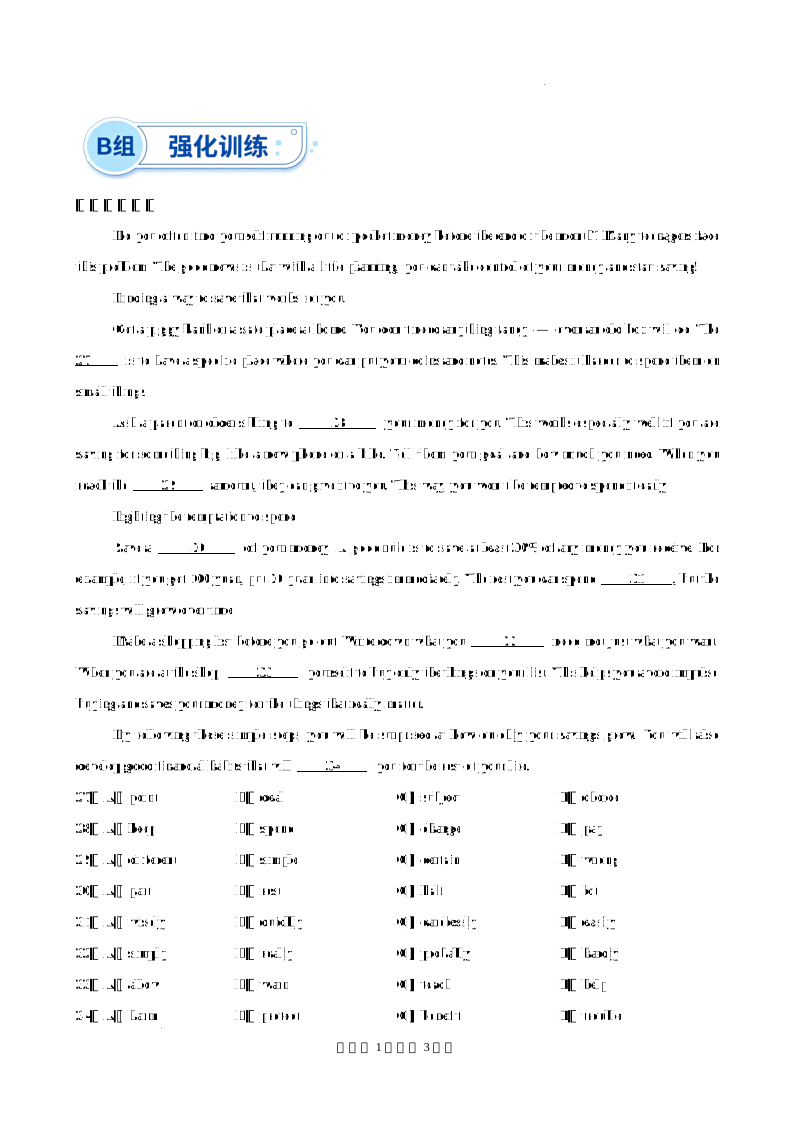
Do you often find yourself running out of pocket money before the end of the month? Many teenagers face this problem. The good news is that with a little planning, you can take control of your money and start saving!
Finding a way to save that works for you.
Get a piggy bank or a safe place at home. You don’t need anything fancy — even an old box will do. The 27 is to have a specific place where you can put your coins and notes. This makes it harder to spend them on small things.
Ask a parent or older sibling to 28 your money for you. This works especially well if you are saving for something big, like a new phone or a bike. Tell them your goal and how much you need. When you reach the 29 amount, they can give it to you. This way, you won’t be tempted to spend it early.
Fighting the temptation to spend
Save a 30 of your money. A good rule is to save at least 30% of any money you receive. For example, if you get 100 yuan, put 30 yuan into savings immediately. The rest you can spend 31 , but the savings will grow over time.
Make a shopping list before you go out. Write down what you 32 need, not just what you want. When you are at the shop, 33 yourself to buy only the things on your list. This helps you avoid impulse buying and saves your money for the things that really matter.
By following these simple steps, you will be surprised at how quickly your savings grow. You will also develop good financial habits that will 34 you for the rest of your life.
27.A.point B.deal C.subject D.choice
28.A.keep B.spend C.change D.pay
29.A.different B.simple C.certain D.wrong
30.A.part B.rest C.half D.lot
31.A.wisely B.quickly C.carelessly D.easily
32.A.simply B.really C.probably D.hardly
33.A.allow B.warn C.teach D.help
34.A.harm B.protect C.benefit D.trouble
【答案】27.A 28.A 29.C 30.A 31.A 32.B 33.A 34.C
【导语】本文主要介绍青少年管理零花钱的方法,包括找地方存钱、请父母保管、制定购物清单等,旨在培养良好的理财习惯。
【详解】27.句意: 关键是要有一个专门的地方来存放你的硬币和纸币。
根据“You don’t need anything fancy — even an old box will do”及“to have a specific place”,可知此处强调存钱的核心要点或目的不在于容器本身,而在于“有固定存放处”这一行为。point“要点,关键”,符合语境。deal“交易,协议”,subject“主题,科目”,choice“选择”,均不符合语境。
28.句意: 请父母或年长的兄弟姐妹替你保管钱。
根据“Ask a parent or older sibling”及“they can give it to you”,可知此处指将钱交给他人代为保存以防乱花。keep“保管,保存”,符合语境。spend“花费”,change“改变,零钱”,pay“支付”,均不符合语境。
29.句意: 当你达到目标金额时,他们就可以把钱给你。
根据“Tell them your goal and how much you need”,可知此处指代前文提到的具体储蓄目标数额。certain“特定的,确定的”,符合语境。different“不同的”,simple“简单的”,wrong“错误的”,均不符合语境。
30.句意: 存下你的一部分钱。
根据“A good rule is to save at least 30% of any money you receive”,可知此处指从总收入中拿出一个比例进行储蓄。part“部分”,符合语境。rest“剩余部分”,half“一半”,lot“大量”,均不符合语境。
31.句意: 剩下的钱你可以明智地花掉,但储蓄会随时间增长。
根据“but the savings will grow over time”及全文倡导理性理财的主旨,可知此处强调花钱也应有节制、有计划。wisely“明智地,合理地”,符合语境。quickly“迅速地”,carelessly“粗心地”,easily“容易地”,均不符合语境。
32.句意: 写下你真正需要的东西,而不仅仅是你想要的。
根据“not just what you want”,可知此处通过对比强调区分“真实需求”与“主观欲望”。really“真正地,确实”,符合语境。simply“仅仅,简单地”,probably“可能”,hardly“几乎不”,均不符合语境。
33.句意:当你到了商店,只允许自己买清单上的东西。
前文写列好清单,后文写执行购买计划,allow意为“允许”,搭配allow yourself to do表示“允许自己去做”,贴合自我约束、按计划购物的行为;warn“警告”、teach“教导”、help“帮助”,均不适用于“自我约束”的语境。
34.句意: 你还将养成受益终身的良好理财习惯。
根据“good financial habits”及“for the rest of your life”,可知此处表达好习惯对未来的积极长远影响。benefit“使受益,对……有利”,符合语境。harm“伤害”,protect“保护”,trouble“困扰”,均不符合语境。
六、阅读理解
(A)
Teenagers and Smart Spending
Nowadays, many teenagers get pocket money from their parents. A recent survey shows that about 70% of teenagers spend their money on snacks, games and online shopping. However, some teenagers are learning to manage their money wisely.
Wang Hao, a 14-year-old student from Hangzhou, is one of them. He gets 100 yuan as pocket money every week. Instead of spending it all at once, he divides it into three parts: 50 yuan for daily needs like pens and notebooks, 30 yuan for savings, and 20 yuan for fun things like snacks or small gifts.
“I write down every expense in a notebook,” Wang said. “It helps me know where my money goes. If I want to buy something expensive, I save money for it little by little.”
His classmate Li Mei also has a good way. She often compares prices before buying anything. “I can find the same thing at a lower price online,” she said. “Also, I never buy things just because they are on sale. I only buy what I really need.”
Their teacher, Mr. Zhang, is happy to see his students learning money management. “Managing money is an important life skill,” he said. “It helps teenagers become responsible and prepare for their future.”
35.How does Wang Hao divide his pocket money?
A.50 yuan for savings, 30 yuan for daily needs, 20 yuan for fun.
B.50 yuan for daily needs, 30 yuan for savings, 20 yuan for fun.
C.50 yuan for fun, 30 yuan for savings, 20 yuan for daily needs.
D.50 yuan for daily needs, 30 yuan for fun, 20 yuan for savings.
36.What does Wang Hao do to manage his money?
A.He spends all his money at once.
B.He writes down every expense in a notebook.
C.He never buys snacks.
D.He asks his parents for more money.
37.What does Li Mei do before buying things?
A.She asks her friends for advice.
B.She waits for a sale.
C.She compares prices.
D.She buys the first thing she sees.
38.What does the underlined word “expense” in Paragraph 3 mean?
A.花费 B.节省 C.收入 D.投资
39.What is the main idea of the text?
A.How to get more pocket money from parents.
B.The importance of online shopping.
C.Teenagers are learning to manage money wisely.
D.Why snacks are popular among teenagers.
【答案】35.B 36.B 37.C 38.A 39.C
【导语】本文是一篇说明文。文章主要介绍当下青少年零花钱的消费现状,通过王浩和李梅的例子讲述青少年理性管理零花钱的方法,并且说明学会理财对青少年成长的重要意义。
【详解】35.由第二段“50 yuan for daily needs...30 yuan for savings, and 20 yuan for fun things”可知,王浩将零花钱分为50元日常所需、30元储蓄、20元娱乐。
36.由第三段“I write down every expense in a notebook”可知,王浩通过记笔记来记录每一笔开销。
37.由第四段“She often compares prices before buying anything”可知,李梅在购买前会比较价格。
38.根据“I write down every expense in a notebook,”以及“It helps me know where my money goes. If I want to buy something expensive, I save money for it little by little.”可知,expense意为“花费,开销”,与A项“花费”同义。
39.文章通过王浩和李梅的例子,讲述了青少年正在学习明智地管理金钱,C项最能概括全文主旨。
(B)
Money is important, but it is not everything. Some teenagers spend all their spare money on expensive clothes or new laptops. However, many students learn to budget and save money for meaningful things.
Tom is one of them. He keeps a tin moneybox to collect pennies and cents. He opens a bank account to keep his savings. Instead of buying costly things, he waits until goods are on sale. He knows the key is to manage money well and make every coin count.
Tom says, “We can have our own treasure without lots of dollars. Sometimes a simple comb or a chain can bring more pleasure than expensive things. If you make smart plans, everything will make sense.”
根据短文内容,选择最佳答案。
40.What does Tom use to collect coins?
A.A website B.A tin moneybox C.A comb D.A chain
41.What is Tom’s key idea about money?
A.Buy expensive laptops quickly
B.Try to get as many dollars as possible
C.Learn to manage money well
D.Never spend any money
42.What does the word “treasure” mean in the last paragraph?
A.存款账户 B.珍贵之物 C.预算计划 D.金属盒子
43.Which of the following is NOT mentioned in the text?
A.Saving money in a bank account
B.Waiting for goods on sale
C.Buying a flat with savings
D.Collecting pennies and cents
44.What is the writer’s opinion?
A.Money can bring all happiness.
B.Expensive things always bring pleasure.
C.Proper money planning is important.
D.Teenagers should never spend money.
【答案】40.B 41.C 42.B 43.C 44.C
【导语】本文是一篇说明文,通过讲述汤姆懂得存钱、理性消费、做好理财规划的事例,告诉读者金钱并非万能,学会合理规划与管理钱财、理性消费,普通小物件也能带来幸福感。
【详解】40.根据第二段“He keeps a tin moneybox to collect pennies and cents.”可知他有一个铁皮存钱罐用来收集便士和美分(零钱)。
41.根据第二段“He knows the key is to manage money well and make every coin count.”可知他知道关键是管好钱,让每一枚硬币都发挥价值。
42.根据第三段“We can have our own treasure without lots of dollars. Sometimes a simple comb or a chain can bring more pleasure than expensive things.”,根据语境可知,就算没有很多钱,我们也能拥有属于自己的珍贵之物,普通小物件也能带来快乐。此处“treasure”表示“珍贵之物”。
43.选项A:根据第二段“He opens a bank account to keep his savings.”提到了Saving money in a bank account(在银行账户存钱);选项B:根据第二段“he waits until goods are on sale.”提到了Waiting for goods on sale(等商品打折再买); 选项D:第二段“…collect pennies and cents”提到了Collecting pennies and cents(收集零钱);选项C:Buying a flat with savings(用存款买房),全文没有出现相关内容。
44.根据第一段“Many students learn to budget and save money for meaningful things” 和最后一段“If you make smart plans, everything will make sense.”可知合理规划金钱很重要,契合全文主旨。
试卷第1页(共3页)
试卷第1页(共3页)
学科网(北京)股份有限公司
$
Unit 2 On the money Period2 Understanding ideas(Reading) 分层作业
学校:___________姓名:___________班级:___________考号:___________
一、单词拼写
1.The more you practise, the ________ (few) mistakes you will make in the exam.
2.She finally m________ (设法做到) to save enough pocket money to buy her favourite book.
3.If you plan your pocket money ________ (wise), you can buy more useful things.
4.If we b________ (编制预算) carefully every month, we will have enough money for the things we need.
5.You can ________ (simple) use an old jar to store your pocket money.
二、完成句子
6.时间一去不复返。
Time lost will never ________ ________.
7.我妹妹总是把零花钱花在零食上。
My sister always ________ her pocket money ________ snacks.
8.旧物可以变成新东西。
Old things can be ________ ________ something new.
9.罐子准备好之后,把你所有的钱都放进去。
When the tin is ________, ________ all the money that you have ________ it.
10.首先,我们需要学会如何处理我们已经拥有的钱。
First, we need to learn how to ________ ________ the money we already have.
三、选词填空
选用方框中的短语填空
a dream tin; piggy bank; turn...into; put...into; double; manage ; deal with ; mix up; make a start; budget; read her thoughts; give it a try
11.Money suggested using to save for each dream.
12.You can take a spare tin and it a piggy bank.
13.When the tin is ready, all the money you have it.
14.Kira thought, “If I could my pocket money, that would be amazing.”
15.Kira’s parents have over 100 times her pocket money, but they still can’t .
16.First, we need to learn how to the money we already have.
17.“Why don’t you simply ?” Money asked.
18.“If I have many tins, I’ll them ,” Kira worried.
19.The third wish was to help her parents their money.
20.Money and said, “You will only need two dream tins.”
21.Kira promised, “Okay, I’ll ... No, I mean, I’ll do it.”
四、补全对话
根据对话内容,从方框内的选项中选出能填入空白处的最佳选项,其中有两个为多余选项。
A: Hi, Lucy! Your new schoolbag looks nice!
B: 22 I bought it online yesterday. But I regret it now.
A: Why? What’s wrong?
B: It cost me 150 yuan. Now I don’t have enough money for the art materials.
A: Oh, that’s too bad. You should think twice before buying things online.
B: 23 I often buy things on impulse.
A: I used to do that too. But now I keep a spending diary. It helps me save money.
B: 24 How does it work?
A: Every time I want to buy something, I write it down and wait for a day. 25
B: That sounds like a good idea. What else can I do?
A: You can also make a list of things you really need before going shopping. 26
B: I see. I’ll try these tips. Thanks a lot!
A.That sounds like a good idea.
B.Thanks, but I shouldn’t have bought it.
C.So you won’t buy things without thinking.
D.It helps me avoid buying unnecessary things.
E.How much did it cost?
F.Can you lend me some money?
G.You’re right.
五、完形填空
Do you often find yourself running out of pocket money before the end of the month? Many teenagers face this problem. The good news is that with a little planning, you can take control of your money and start saving!
Finding a way to save that works for you.
Get a piggy bank or a safe place at home. You don’t need anything fancy — even an old box will do. The 27 is to have a specific place where you can put your coins and notes. This makes it harder to spend them on small things.
Ask a parent or older sibling to 28 your money for you. This works especially well if you are saving for something big, like a new phone or a bike. Tell them your goal and how much you need. When you reach the 29 amount, they can give it to you. This way, you won’t be tempted to spend it early.
Fighting the temptation to spend
Save a 30 of your money. A good rule is to save at least 30% of any money you receive. For example, if you get 100 yuan, put 30 yuan into savings immediately. The rest you can spend 31 , but the savings will grow over time.
Make a shopping list before you go out. Write down what you 32 need, not just what you want. When you are at the shop, 33 yourself to buy only the things on your list. This helps you avoid impulse buying and saves your money for the things that really matter.
By following these simple steps, you will be surprised at how quickly your savings grow. You will also develop good financial habits that will 34 you for the rest of your life.
27.A.point B.deal C.subject D.choice
28.A.keep B.spend C.change D.pay
29.A.different B.simple C.certain D.wrong
30.A.part B.rest C.half D.lot
31.A.wisely B.quickly C.carelessly D.easily
32.A.simply B.really C.probably D.hardly
33.A.allow B.warn C.teach D.help
34.A.harm B.protect C.benefit D.trouble
六、阅读理解
(A)
Teenagers and Smart Spending
Nowadays, many teenagers get pocket money from their parents. A recent survey shows that about 70% of teenagers spend their money on snacks, games and online shopping. However, some teenagers are learning to manage their money wisely.
Wang Hao, a 14-year-old student from Hangzhou, is one of them. He gets 100 yuan as pocket money every week. Instead of spending it all at once, he divides it into three parts: 50 yuan for daily needs like pens and notebooks, 30 yuan for savings, and 20 yuan for fun things like snacks or small gifts.
“I write down every expense in a notebook,” Wang said. “It helps me know where my money goes. If I want to buy something expensive, I save money for it little by little.”
His classmate Li Mei also has a good way. She often compares prices before buying anything. “I can find the same thing at a lower price online,” she said. “Also, I never buy things just because they are on sale. I only buy what I really need.”
Their teacher, Mr. Zhang, is happy to see his students learning money management. “Managing money is an important life skill,” he said. “It helps teenagers become responsible and prepare for their future.”
35.How does Wang Hao divide his pocket money?
A.50 yuan for savings, 30 yuan for daily needs, 20 yuan for fun.
B.50 yuan for daily needs, 30 yuan for savings, 20 yuan for fun.
C.50 yuan for fun, 30 yuan for savings, 20 yuan for daily needs.
D.50 yuan for daily needs, 30 yuan for fun, 20 yuan for savings.
36.What does Wang Hao do to manage his money?
A.He spends all his money at once.
B.He writes down every expense in a notebook.
C.He never buys snacks.
D.He asks his parents for more money.
37.What does Li Mei do before buying things?
A.She asks her friends for advice.
B.She waits for a sale.
C.She compares prices.
D.She buys the first thing she sees.
38.What does the underlined word “expense” in Paragraph 3 mean?
A.花费 B.节省 C.收入 D.投资
39.What is the main idea of the text?
A.How to get more pocket money from parents.
B.The importance of online shopping.
C.Teenagers are learning to manage money wisely.
D.Why snacks are popular among teenagers.
(B)
Money is important, but it is not everything. Some teenagers spend all their spare money on expensive clothes or new laptops. However, many students learn to budget and save money for meaningful things.
Tom is one of them. He keeps a tin moneybox to collect pennies and cents. He opens a bank account to keep his savings. Instead of buying costly things, he waits until goods are on sale. He knows the key is to manage money well and make every coin count.
Tom says, “We can have our own treasure without lots of dollars. Sometimes a simple comb or a chain can bring more pleasure than expensive things. If you make smart plans, everything will make sense.”
根据短文内容,选择最佳答案。
40.What does Tom use to collect coins?
A.A website B.A tin moneybox C.A comb D.A chain
41.What is Tom’s key idea about money?
A.Buy expensive laptops quickly
B.Try to get as many dollars as possible
C.Learn to manage money well
D.Never spend any money
42.What does the word “treasure” mean in the last paragraph?
A.存款账户 B.珍贵之物 C.预算计划 D.金属盒子
43.Which of the following is NOT mentioned in the text?
A.Saving money in a bank account
B.Waiting for goods on sale
C.Buying a flat with savings
D.Collecting pennies and cents
44.What is the writer’s opinion?
A.Money can bring all happiness.
B.Expensive things always bring pleasure.
C.Proper money planning is important.
D.Teenagers should never spend money.
试卷第1页(共3页)
试卷第1页(共3页)
学科网(北京)股份有限公司
$
资源预览图

1

2
3
相关资源
示范课
由于学科网是一个信息分享及获取的平台,不确保部分用户上传资料的 来源及知识产权归属。如您发现相关资料侵犯您的合法权益,请联系学科网,我们核实后将及时进行处理。