第12讲 阅读理解过渡二 导学案-2026-2027学年初高中英语衔接复习专项
2026-07-22
|
2份
|
12页
|
867人阅读
|
15人下载
普通
内容正文:
初升高英语暑假衔接学习手册
Day 12 · 第 12 讲 阅读理解过渡二:推理判断、词义猜测与代词指代
项目
内容
版本
答案解析版
建议用时
30-40 分钟
学习程式
情境观察 → 规律发现 → 知识梳理 → 分层练习 → 语篇应用 → 学习打卡
使用建议 核对答案时必须同时核对证据。推理题写出证据链,词义题说明语境线索,指代题完成“类别—单复数—逻辑”三项检查。
一、情境导入参考
【答案】情境A. attends every meeting 情境B. checked the weather; put an umbrella in her bag 情境C. library was closing; notes unfinished 情境D. changed one step and tried again
【解析】
【情境A题详解】
推理判断题。每次活动都参加,可以合理推断Leo对编程感兴趣。 故选attends every meeting。
【情境B题详解】
推理判断题。查看天气并带伞共同支持“可能下雨”的推断。 故选checked the weather; put an umbrella in her bag。
【情境C题详解】
推理判断题。图书馆将关闭但任务未完成,因此可能需要换地方继续。 故选library was closing; notes unfinished。
【情境D题详解】
推理判断题。失败后继续修改和尝试,表明团队没有轻易放弃。 故选changed one step and tried again。
六、即时练习A答案与解析
【答案】1. B 2. A 3. C 4. A 5. A
【解析】
【1题详解】
推理判断题。提前到达并逐一检查工具,说明Amy准备认真。其他选项没有证据。 故选B。
【2题详解】
词义猜测题。冒号后的例子说明时间可以根据需要改变,因此 flexible 意为“可调整的”。 故选A。
【3题详解】
词义猜测题。本题考查代词指代。it 为单数事物,且能够“显示回收点”的是 digital map。 故选C。
【4题详解】
推理判断题。尽管拥挤却无人提前离开,可推断演讲吸引了学生。 故选A。
【5题详解】
词义猜测题。cleaned 与 lost colours 提示志愿者使画作恢复原貌。 故选A。
六、即时练习B参考
【答案】句子A. two science books 句子B. the club 句子C. 信息不足,需结合上下文判断Mia或Anna 句子D. testing the water beside the river
【解析】
【句子A题详解】
词义猜测题。本题考查代词指代。them 为复数宾格,指前面的两本科普书。 故选two science books。
【句子B题详解】
词义猜测题。本题考查代词指代。it 需要一个能“需要更多时间”的单数主体,指 the club。 故选the club。
【句子C题详解】
词义猜测题。本题考查代词指代。两个女性人物都可能是 she 的所指对象,单句不能唯一确定。 故选信息不足,需结合上下文判断Mia或Anna。
【句子D题详解】
词义猜测题。本题考查代词指代。This 概括前句“检测河边水质”这件事。 故选testing the water beside the river。
七、微阅读答案与解析
【答案】6. B 7. A 8. C 9. A
【解析】
【导语】本文是一篇记叙文。文章讲述凯参加校园鸟类调查后,逐渐认识到科学结论不能依靠一次观察或快速猜测,而要建立在反复观察、比较记录和谨慎求证的基础上。
【6题详解】
细节理解题。根据第一段“he thought the task simply meant counting birds”可知,凯原以为调查只是数鸟。A项拍照、C项查天气和D项研究施工都是后来记录或观察中的内容,不是他最初的理解。 故选B。
【7题详解】
推理判断题。根据“He did not immediately decide...Instead, he compared the result with records from other days”可知,他比较多日记录是为了避免凭一次现象草率下结论。B、C、D项均不能解释比较记录这一行为。 故选A。
【8题详解】
词义猜测题。根据前文“compared...with records from other days”和后文“not a quick guess”可知,有用结论需要不止一次的观察,因此repeated意为“多次进行的”。A项强调一人认真完成,B项强调电脑分享,D项强调无计划,均偏离语境。 故选C。
【9题详解】
推理判断题。根据结尾“a useful conclusion needs repeated observation and careful evidence”可推知,凯变得更加重视证据。B项离队、C项已证明噪音是原因均无依据;D项与他避免quick guess的做法相反。 故选A。
八、语篇应用一答案与解析
【答案】10. A 11. B 12. C 13. A
【解析】
【导语】本文是一篇说明文。文章介绍国际太空艺术与设计营如何把艺术设计与航天科学结合,引导学生从居住、资源、饮食、隐私和交流等角度思考未来太空生活。
【10题详解】
细节理解题。根据首段“Instead of treating art and space science as separate subjects, the camp invited participants to explore...”可知,营地把设计与太空科学结合,这是区别于传统艺术项目之处。B、C、D项分别与参与者范围、课程内容和合作方式不符。 故选A。
【11题详解】
词义猜测题。根据第二段列举的life support、materials、resources、food、privacy和communication可知,地球上普通的生活问题在低重力长期停留中会涉及许多相互关联的因素,complex意为“复杂的”。A、D项含义相反,C项“无法讨论”程度过强。 故选B。
【12题详解】
代词指代题。This interdisciplinary approach紧接“For two weeks, the students worked with art teachers, designers and aerospace experts”,指艺术、设计和航天多个领域共同指导的方式。A、B项只是项目情境或细节;D项“只选一门学科”与interdisciplinary相反。 故选C。
【13题详解】
推理判断题。根据“future space exploration will require not only powerful technology but also people who can imagine how that technology should serve daily life”可推知,技术本身不能解决太空生活的所有问题。B项“完全相同”、C项“艺术家取代专家”和D项“人的需求不重要”均与原文相反或过度推断。 故选A。
九、语篇应用二答案与解析
【答案】14. B 15. C 16. A 17. C
【解析】
【导语】本文是一篇说明文。文章介绍泰国、印度尼西亚和越南的青少年海洋教育项目,说明项目如何把海洋知识、当地环境和社区行动结合起来,培养理解力、信心与责任感。
【14题详解】
细节理解题。根据第一段“observe local coastlines...design actions for their own communities”及第二段“connect learning with places students know”可知,活动把海洋知识与当地环境和行动结合。A项与各地形式不同相反;C、D项错误限定为线上课程或仅面向教师。 故选B。
【15题详解】
代词指代题。原句“Although the activities vary, they all connect...”中they为复数,语法上承接the activities,语义上也能执行connect learning这一动作。A、B、D项虽为复数概念,却不是句子正在比较的活动形式。 故选C。
【16题详解】
写作意图题。作者提到学生在世界海洋日“presented conservation projects and shared their experiences”,是为了举例说明学生把所学转化为面向公众的保护行动。B、C项偏离写作目的;D项“只有大型活动重要”属于过度推断。 故选A。
【17题详解】
推理判断题。根据末段“not only knowledge but also the confidence”和“a responsibility young people can understand and share”可知,项目同时培养理解与责任。A、B项与鼓励本地行动相反;D项忽视第二段对local ecological knowledge的重视。 故选C。
十一、任务输出参考答案
事实1:The award-winning team met many problems while developing its design.
事实2:The students kept improving the design instead of giving up.
合理结论:The team members were persistent and willing to learn from difficulty.
参考说明 结论只概括人物品质,没有进一步推断他们一定获胜或未来一定从事航天工作,因此没有超出证据边界。
初升高英语暑假衔接学习手册 · 第12讲 · 第 1 页
学科网(北京)股份有限公司
$
初升高英语暑假衔接学习手册
Day 12 · 第 12 讲 阅读理解过渡二:推理判断、词义猜测与代词指代
项目
内容
版本
学生版
建议用时
30-40 分钟
学习程式
情境观察 → 规律发现 → 知识梳理 → 分层练习 → 语篇应用 → 学习打卡
学习目标 能依据两项以上事实完成合理推断;能利用解释、转折和同义复现猜测词义;能根据类别、单复数和逻辑判断代词所指。
一、情境导入:读出话语背后的意思
阅读新生Leo的四句话。选择最合理的推断,并在原句中画出证据。
情境A:The coding club meets twice a week, but Leo attends every meeting.
推断:Leo is probably interested in coding. 证据:________________________________
情境B:Mia checked the weather twice before putting an umbrella in her bag.
推断:Mia expects that it may rain. 证据:________________________________
情境C:The library was closing, yet Ben still had three pages of notes to finish.
推断:Ben may need to continue his work elsewhere. 证据:________________________________
情境D:After the first experiment failed, the team changed one step and tried again.
推断:The team did not give up easily. 证据:________________________________
推断边界 推理判断不是自由想象。合理推断必须由原文中的动作、语气、因果或转折共同支持,而且不能比证据走得更远。
二、推理判断:从“原文事实”走一步
第一步,找到题干对象。圈出人物、事件、段落或作者态度,确定需要回到哪里寻找证据。
第二步,合并相关事实。推理题的答案常由相邻两句共同支持,不能只抓一个词。
第三步,只走合理的一步。把原文事实换成更概括的结论,但不要加入原文没有说明的身份、原因或未来结果。
第四步,检查语气强度。原文的 may、often、some 不能被选项偷换成 must、always、all。
层级
信息
判断
事实1
The task failed twice.
过程并不顺利
事实2
The students changed the design and tried again.
学生继续改进
合理推断
The students were persistent.
整合两项事实
过度推断
They would certainly win the competition.
原文没有比赛结果
三、词义猜测:不要孤立翻译生词
高考词义猜测题常考熟词生义、短语意义或指代意义。先判断词性,再利用词语前后的解释、举例、转折和因果线索缩小范围。
线索
例句
判断方法
解释
The device is portable, meaning it can be carried easily.
meaning 后直接解释
举例
Marine life, such as fish and sea turtles, needs clean water.
such as 给出例子
转折
The room looked ordinary, but the equipment inside was advanced.
but 前后形成反差
因果
The path was slippery, so we walked slowly.
结果反推原因
同义复现
The plan was practical. It was easy to carry out.
后句换一种说法
代入检查 选出词义后,把它放回原句,检查词性、感情色彩和上下文逻辑是否都成立。只满足中文大意还不够。
四、代词指代:向前寻找“同类、同数、合理”
先判断代词类型:he、she 通常指人;it 指单数事物、事件或前文整句话;they 指复数对象;this、that 还可能概括前句内容。
再向前寻找候选对象:通常从同句或前一句开始,不要一看到最近的名词就停止。
最后做三项核对:人或物是否同类,单复数是否一致,代入后逻辑是否合理。
观察:The students collected plastic bottles and recorded where they found them. They later used the information to design a map.
判断:第一个 they 指 the students;them 指 plastic bottles;the information 指记录所得信息。
五、干扰项:让推断、猜词和指代都有证据
干扰方式
常见表现
排除动作
过度推断
由一个事实推出原文未提到的未来结果
只走证据支持的一步
绝对化
把 may、some、often 偷换成 must、all、always
核对语气和数量范围
常用义陷阱
直接选择生词最熟悉的词典义
结合词性和上下文后代入检查
就近指代
把最近的名词机械当作代词所指
核对类别、单复数和语义
态度臆测
仅凭话题判断作者赞成或反对
寻找评价词、转折词和结论句
证据检查 推理题问“证据够不够”,词义题问“放回原句通不通”,指代题问“类别、单复数和逻辑是否一致”。
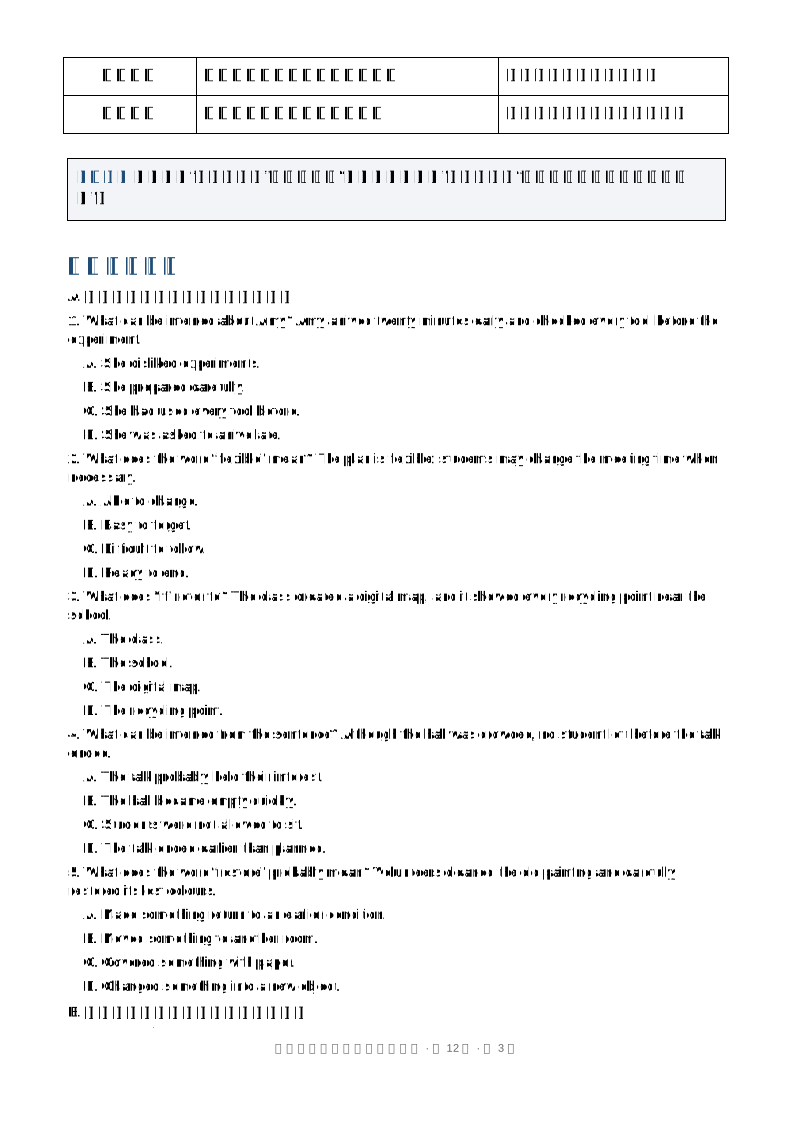
六、即时练习
A. 阅读短句,完成推理与词义判断。
1. What can be inferred about Amy? Amy arrived twenty minutes early and checked every tool before the experiment.
A. She disliked experiments.
B. She prepared carefully.
C. She had used every tool before.
D. She was asked to arrive late.
2. What does the word “flexible” mean? The plan is flexible: students may change the meeting time when necessary.
A. Able to change.
B. Easy to forget.
C. Difficult to follow.
D. Ready to end.
3. What does “it” refer to? The class created a digital map, and it showed every recycling point near the school.
A. The class.
B. The school.
C. The digital map.
D. The recycling point.
4. What can be inferred from the sentence? Although the hall was crowded, no student left before the talk ended.
A. The talk probably held their interest.
B. The hall became empty quickly.
C. Students were not allowed to sit.
D. The talk ended earlier than planned.
5. What does the word “restore” probably mean? Volunteers cleaned the old painting and carefully restored its lost colours.
A. Made something return to an earlier condition.
B. Moved something to another room.
C. Covered something with paper.
D. Changed something into a new object.
B. 阅读句子,写出画线代词所指内容。
句子A:Leo borrowed two science books and returned them on Friday. them:________________
句子B:The club changed its plan because it needed more time. it:________________
句子C:Mia told Anna that she had found the missing notebook. she:________________(写出判断所需的上下文信息)
句子D:Students tested the water beside the river. This helped them understand local pollution. This:________________
七、微阅读:证据不能缺席
During his first month at senior high school, Kai joined a campus bird survey. At first, he thought the task simply meant counting birds. The team leader, however, asked members to record the time, weather and places where each bird appeared.
On the second survey day, Kai noticed fewer birds near a noisy construction area. He did not immediately decide that noise was the cause. Instead, he compared the result with records from other days and asked the biology teacher for advice.
The experience changed Kai's view of science. He learned that a useful conclusion needs repeated observation and careful evidence, not a quick guess.
6. What did Kai originally think the survey involved?
A. Taking photographs.
B. Counting birds.
C. Checking the weather.
D. Studying construction.
7. Why did Kai compare records from other days?
A. To avoid making a quick conclusion.
B. To finish the task earlier.
C. To find more construction areas.
D. To question the team leader.
8. What does the word “repeated” in the last paragraph probably mean?
A. Done carefully by one person.
B. Shared through a computer.
C. Carried out more than once.
D. Completed without a plan.
9. What can be inferred about Kai?
A. He became more careful about using evidence.
B. He decided to leave the survey team.
C. He proved that noise reduced bird numbers.
D. He preferred guessing to observing.
八、语篇应用一:国际太空艺术与设计营(根据新华社2026年7月3日报道原创改编)
More than 120 young students from over 20 countries and regions gathered at Tsinghua University for an international space art and design camp. Instead of treating art and space science as separate subjects, the camp invited participants to explore how creative design might improve life beyond Earth.
Students could choose from six project areas. Some designed homes for extreme places such as the Moon and Mars. They had to consider life support, smart materials and the reuse of limited resources. Others focused on everyday life in space, including food, privacy, sleep and communication. These details may sound ordinary on Earth, but they become complex during a long stay in a low-gravity environment.
For two weeks, the students worked with art teachers, designers and aerospace experts. This interdisciplinary approach encouraged them to connect scientific limits with human needs. The camp suggested that future space exploration will require not only powerful technology but also people who can imagine how that technology should serve daily life.
10. What made the camp different from a traditional art programme?
A. It connected design with space science.
B. It accepted only university students.
C. It focused entirely on painting.
D. It asked students to work alone.
11. What does the word “complex” in paragraph 2 probably mean?
A. Common and familiar.
B. Difficult with many connected parts.
C. Impossible to discuss.
D. Cheap and easy to replace.
12. What does “This interdisciplinary approach” refer to?
A. Living in low gravity for two weeks.
B. Reusing resources on the Moon.
C. Combining guidance from art, design and aerospace fields.
D. Choosing only one school subject.
13. What can be inferred from the last paragraph?
A. Technology alone cannot solve every problem of space life.
B. Daily life will be exactly the same on Earth and Mars.
C. Artists will replace aerospace experts in the future.
D. Human needs are less important than powerful machines.
九、语篇应用二:东南亚青少年海洋保护行动(根据联合国教科文组织2026年6月报道原创改编)
Across Thailand, Indonesia and Viet Nam, more than 23,000 students have taken part in hands-on ocean learning since 2024. The programme does more than teach facts about marine ecosystems. It asks young people to observe local coastlines, discuss environmental problems and design actions for their own communities.
The learning takes different forms in each place. Schools in Indonesia use materials that combine science with local ecological knowledge. In Viet Nam, ocean conservation handbooks have become part of lessons in schools near a mangrove reserve. Thai students and families have explored interactive exhibitions and community activities. Although the activities vary, they all connect learning with places students know.
At a World Oceans Day event, young participants presented conservation projects and shared their experiences. Organisers said this kind of education gives students not only knowledge but also the confidence to protect marine environments. By showing that small local actions are part of a wider regional effort, the programme turns ocean protection from a distant idea into a responsibility young people can understand and share.
14. What is special about the programme's learning activities?
A. They use the same materials in every country.
B. They connect ocean knowledge with local places and action.
C. They are limited to online science lessons.
D. They are designed only for teachers.
15. What does the word “they” in paragraph 2 refer to?
A. The three countries.
B. The local coastlines.
C. The activities.
D. The mangrove reserves.
16. Why does the writer mention the World Oceans Day event?
A. To show students putting learning into public action.
B. To explain why ocean science is too difficult.
C. To compare the size of different exhibitions.
D. To suggest that only large events matter.
17. What can be inferred about the programme?
A. It expects young people to wait for adults to act.
B. It treats ocean protection as an issue far from daily life.
C. It aims to develop both understanding and responsibility.
D. It values scientific facts but not community knowledge.
十、证据链记录表
题号
题型
原文证据
我的推断
1
________
______________________
________________
2
________
______________________
________________
3
________
______________________
________________
4
________
______________________
________________
十一、任务输出:为一次推断写出证据链
从本讲任一语篇中选择一个推理结论,按“事实1 + 事实2 → 合理结论”的方式完成。
事实1:_______________________________________________________________
事实2:_______________________________________________________________
合理结论:___________________________________________________________
十二、学习打卡
我能用证据完成推断:□ □ □ □ □ 我能利用语境猜词:□ □ □ □ □
我能准确判断代词指代:□ □ □ □ □ 今日错题数:________
初升高英语暑假衔接学习手册 · 第12讲 · 第 1 页
学科网(北京)股份有限公司
$
资源预览图

1

2
3

相关资源
示范课
由于学科网是一个信息分享及获取的平台,不确保部分用户上传资料的 来源及知识产权归属。如您发现相关资料侵犯您的合法权益,请联系学科网,我们核实后将及时进行处理。