2026-2027学年新人教版暑假单词突破营 DAY 21(对照百词斩必修第二册)
2026-07-17
|
6页
|
144人阅读
|
0人下载
普通
内容正文:
暑假单词突破营DAY 21
一、核心词汇(2026新人教版必修二)
暑假单词突破营 Constant dripping wears away the stone.
1
学科网(北京)股份有限公司
false /fɔːls/ adj. 错误的;假的;不真实的
particular /pəˈtɪkjələ/ adj. 特别的,不寻常的;挑剔的,讲究的;特定的
embarrassing /ɪmˈbærəsɪŋ/ adj. 使人尴尬的
make fun of 嘲笑,取笑,拿……开玩笑;嘲弄
upset /ʌpˈset/ adj. 苦恼的,沮丧的,心烦意乱的;v. 使苦恼;搅乱
guideline /ˈɡaɪdlaɪn/ n. 指导方针;准则
author /ˈɔːθə/ n. 作者,作家
tip /tɪp/ n. 诀窍,建议;技巧;尖端;小费
familiar /fəˈmɪliə/ adj. 熟悉的,通晓的;熟知的
keep ... in mind记住……
define /dɪˈfaɪn/ v. 给(词、短语等)下定义;界定,解释
case /keɪs/ n. 箱,盒;容器;套;案件;情况
mansion /ˈmænʃn/ n. 官邸,巨宅,公馆,大厦
cemetery /ˈsemətri/ n. 墓地;公墓
philosophy /fəˈlɒsəfi/ n. 哲学,哲学体系
descendant /dɪˈsendənt/ n. 后代,后裔
individual /ˌɪndɪˈvɪdʒuəl/ adj. 个人的;n. 个人
heel /hiːl/ n. (鞋、袜子、脚)后跟;足跟
Achilles‘ heel /əˌkɪliːz ˈhiːl/ phr. (喻)希腊神话阿喀琉斯的脚跟,致命的弱点
kingdom /ˈkɪŋdəm/ n. 王国;领域
chief /tʃiːf/ n. 首领,酋长;负责人,老板;adj. 首席的,最高级的
puzzle /ˈpʌzl/ n. 谜,智力游戏;疑问;v. 使迷惑
nearby 附近的,邻近的;adv. 在附近
Confucius /kənˈfjuːʃəs/ n. 孔子
protect /prəˈtekt/ v. 保护(DAY 8)
preserve /prɪˈzɜːv/ v. 保护;保存(DAY 12)
heritage /ˈherɪtɪdʒ/ n. 文化遗产(DAY 12)
aware /əˈweə/ adj. 意识到的(DAY 16)
effective /ɪˈfektɪv/ adj. 有效的(DAY 17)
access /ˈækses/ n. 通道;使用权;v. 访问(DAY 19)
二、高频固定搭配与词族拓展
【核心搭配】
in particular —— 尤其,特别
be particular about —— 对……挑剔
make fun of —— 嘲笑,取笑
be upset about —— 对……感到沮丧
follow guidelines —— 遵循指导方针
familiar with —— 对……熟悉
familiar to —— 为……所熟悉
keep ... in mind —— 记住……
define ... as —— 把……定义为
in case —— 以防万一
in any case —— 无论如何
in that case —— 既然那样
philosophy of life —— 人生哲学
individual freedom —— 个人自由
the chief reason —— 主要原因
puzzle over —— 苦苦思索
【词形变换】(括号内为中文释义)
particular (adj. 特别的;挑剔的) → particularly (adv. 尤其;特别)
embarrass (v. 使尴尬) → embarrassing (adj. 令人尴尬的) → embarrassed (adj. 感到尴尬的) → embarrassment (n. 尴尬)
upset (adj./v. 沮丧;使沮丧) → upsetting (adj. 令人沮丧的)
familiar (adj. 熟悉的) → familiarity (n. 熟悉)
define (v. 下定义) → definition (n. 定义) → definite (adj. 明确的)
individual (adj./n. 个人的;个人) → individually (adv. 个别地) → individualism (n. 个人主义)
philosophy (n. 哲学) → philosopher (n. 哲学家) → philosophical (adj. 哲学的)
puzzle (n./v. 谜;使迷惑) → puzzled (adj. 感到迷惑的) → puzzling (adj. 令人迷惑的)
三、短文翻译练习(原文三篇,请翻译成中文)
Passage 1 · 文化探索之旅
Last summer, I visited Qufu, the hometown of Confucius. I explored a large mansion that once belonged to his descendants. Nearby, there was an ancient cemetery where many family members were buried. This trip gave me a deeper understanding of Chinese philosophy and heritage. The author of a book on Confucian thought once wrote that individuals should keep in mind the guidelines of kindness and respect. I was familiar with some of his sayings, but seeing the historical sites made them more real. In particular, I was impressed by the chief temple dedicated to Confucius. It is a sacred place that attracts visitors from all over the world. In my opinion, we should protect such cultural treasures and preserve them for future generations. Even if we face challenges, it is worthwhile to make an effort to protect our heritage.
Passage 2 · 学习与反思
In our English class, our teacher gave us some useful tips on how to improve our writing. She said that we should define new words clearly and use them in proper contexts. She also told us not to make fun of others’ mistakes because that could make them feel upset and embarrassed. She reminded us that every individual has their own strengths and weaknesses. She shared a case of a student who improved greatly by following her guidelines. The student kept in mind the tips she gave and practiced every day. In particular, he focused on using specific vocabulary and paraphrasing complex sentences. This effective method helped him make great progress. I was familiar with some of the techniques, but I had never used them systematically. Now I realize that having access to good learning strategies is important. Now that I know these tips, I will keep them in mind and practice regularly. I believe that with effort and the right attitude, anyone can become a better writer.
Passage 3 · 网络礼仪与素养
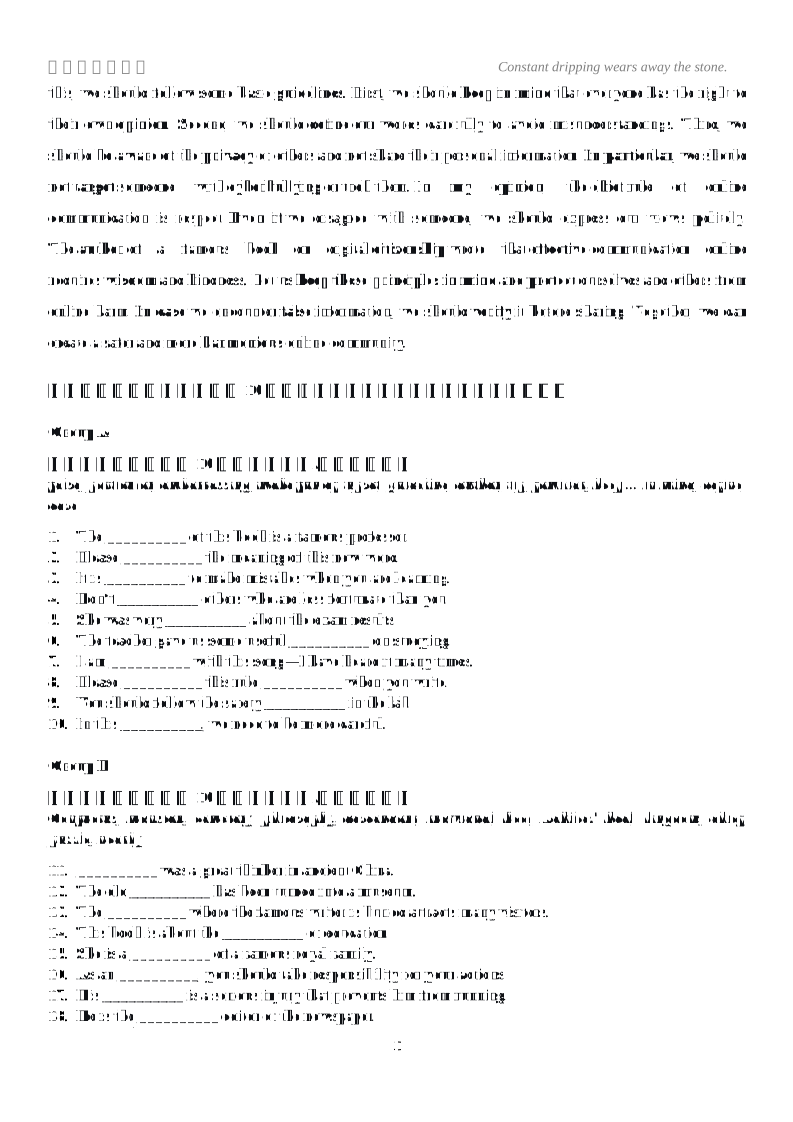
In today‘s digital world, we often encounter false information online. Some individuals post rude comments or make fun of others, which can make people feel upset. To avoid this, we should follow some basic guidelines. First, we should keep in mind that everyone has the right to their own opinion. Second, we should define our words carefully to avoid misunderstandings. Third, we should be aware of the privacy of others and not share their personal information. In particular, we should not target someone with cyberbullying or troll them. In my opinion, the chief rule of online communication is respect. Even if we disagree with someone, we should express our views politely. The author of a famous book on digital citizenship wrote that effective communication online requires wisdom and kindness. Let us keep these principles in mind and protect ourselves and others from online harm. In case we encounter false information, we should verify it before sharing. Together, we can create a safer and more harmonious online community.
四、选词填空(两组,每组10空,请从各自方框中选择并适当形式填空)
Group A
备选词(请选填其中10个,注意时态/语态变化):
false, particular, embarrassing, make fun of, upset, guideline, author, tip, familiar, keep ... in mind, define, case
1. The __________ of this book is a famous professor.
2. Please __________ the meaning of this new word.
3. It is __________ to make mistakes when you are learning.
4. Don‘t __________ others who are less fortunate than you.
5. She was very __________ about the exam results.
6. The teacher gave us some useful __________ on studying.
7. I am __________ with this song—I have heard it many times.
8. Please __________ this rule __________ when you write.
9. You should follow the safety __________ in the lab.
10. In this __________, we need to be more careful.
Group B
备选词(请选填其中10个,注意时态/语态变化):
Confucius, mansion, cemetery, philosophy, descendant, individual, heel, Achilles' heel, kingdom, chief, puzzle, nearby
11. __________ was a great thinker in ancient China.
12. The old __________ has been turned into a museum.
13. The __________ where the famous writer is buried attracts many visitors.
14. This book is about the __________ of education.
15. She is a __________ of a famous royal family.
16. As an __________, you should take responsibility for your actions.
17. His __________ is a serious injury that prevents him from running.
18. He is the __________ editor of the newspaper.
19. The __________ of this word is very difficult to solve.
20. There is a library __________ that I often visit.
五、单词填空(共15小题,含首字母填空和单句语法填空)
Part A 首字母填空(根据句意及首字母补全单词)
21. The c__________ of this restaurant is a famous chef.
22. The c__________ where the king was buried is a tourist attraction.
23. The d__________ of the ancient king still live in the area.
24. The p__________ of the puzzle was very difficult to solve.
25. There is a library n__________ that I often visit.
26. The g__________ of the new policy are very clear.
27. The a__________ of this book is a famous writer.
28. She was u__________ about the news and started crying.
Part B 单句语法填空(用所给词的正确形式填空)
29. The __________ (embarrass) moment made her face turn red.
30. This is a __________ (particular) difficult problem to solve.
31. The __________ (define) of this word is very clear.
32. She felt __________ (upset) about the bad news.
33. The __________ (philosophy) ideas of Confucius are still influential today.
34. Each __________ (individual) has their own unique personality.
35. The __________ (puzzle) look on his face showed that he didn’t understand.
六、单词默写(汉译英)
错误的;假的 __________
特别的;挑剔的 __________
使人尴尬的 __________
嘲笑,取笑(短语) __________
苦恼的,沮丧的 __________
指导方针;准则 __________
作者,作家 __________
诀窍,建议 __________
熟悉的,通晓的 __________
记住……(短语) __________
给……下定义 __________
箱,盒;案件;情况 __________
官邸,巨宅 __________
墓地;公墓 __________
哲学,哲学体系 __________
后代,后裔 __________
个别的;个人 __________
(鞋、袜、脚)后跟 __________
致命的弱点(短语) __________
王国;领域 __________
首领;首席的 __________
谜;使迷惑 __________
附近的;在附近 __________
孔子 __________
保护(DAY 8) __________
保护;保存(DAY 12) __________
文化遗产(DAY 12) __________
意识到的(DAY 16) __________
有效的(DAY 17) __________
通道;访问(DAY 19) __________
【参考答案】
一、短文翻译参考译文
Passage 1 译文
去年夏天,我参观了孔子的故乡曲阜。我探索了一座曾经属于孔子后裔的巨大官邸。附近有一片古老的墓地,许多家族成员埋葬在那里。这次旅行让我对中国哲学和文化遗产有了更深的了解。一本关于儒家思想著作的作者曾写道,个人应当将善良和尊重的准则铭记在心。我熟悉他的一些名言,但看到历史遗址让它们变得更加真实。特别令我印象深刻的是供奉孔子的主庙。它是一个神圣的地方,吸引着来自世界各地的游客。在我看来,我们应该保护这样的文化瑰宝,并为后代保存它们。即使我们面临挑战,努力保护我们的文化遗产也是值得的。
Passage 2 译文
在英语课上,老师给了我们一些关于如何提高写作的有用建议。她说我们应该清晰地定义生词,并在适当的语境中使用它们。她还告诉我们不要嘲笑别人的错误,因为那样会让他们感到沮丧和尴尬。她提醒我们,每个人都有各自的优势和劣势。她分享了一个案例:一个学生遵循她的指导方针取得了巨大进步。那个学生将她给出的建议铭记在心,并每天练习。他特别注重使用具体的词汇和对复杂句子进行转述。这种有效的方法帮助他取得了很大进步。我熟悉其中一些技巧,但从未系统地使用过它们。现在我意识到拥有好的学习策略很重要。既然我知道了这些建议,我会将它们铭记在心并定期练习。我相信,通过努力和正确的态度,任何人都能成为更好的写作者。
Passage 3 译文
在当今的数字世界中,我们经常在网上遇到虚假信息。有些人发表粗鲁的评论或嘲笑他人,这会让人感到沮丧。为了避免这种情况,我们应该遵循一些基本准则。首先,我们应该记住每个人都有权发表自己的意见。其次,我们应该谨慎地定义自己的用词,以避免误解。第三,我们应该意识到他人的隐私,不分享他们的个人信息。特别重要的是,我们不应针对某人进行网络霸凌或挑衅他们。在我看来,网络交流的首要原则是尊重。即使我们不同意某人的观点,我们也应该礼貌地表达自己的看法。一本关于数字公民身份的著名书籍的作者写道,有效的网络交流需要智慧和善良。让我们将这些原则铭记在心,保护自己和他人免受网络伤害。万一遇到虚假信息,我们应该在分享之前进行核实。我们可以一起创造一个更安全、更和谐的网络社区。
二、选词填空答案
Group A
author(作者)
define(下定义,please后接原形)
embarrassing(令人尴尬的,形容词作表语)
make fun of(嘲笑,don‘t后接原形)
upset(沮丧的,形容词作表语)
tips(建议,复数)
familiar(熟悉的,形容词作表语)
keep ... in mind(记住,please后接原形)
guidelines(指导方针,复数)
case(情况)
Group B
Confucius(孔子,句首大写)
mansion(官邸)
cemetery(墓地)
philosophy(哲学)
descendant(后裔)
individual(个人,名词)
Achilles’ heel(致命的弱点)
chief(首席的,形容词)
puzzle(谜,名词)
nearby(在附近,副词)
三、单词填空答案
Part A 首字母填空
chief(首领,首席的)
cemetery(墓地)
descendants(后代,复数)
puzzle(谜)
nearby(在附近)
guidelines(指导方针,复数)
author(作者)
upset(沮丧的)
Part B 单句语法填空
embarrassing(令人尴尬的,修饰moment)
particularly(尤其,副词修饰difficult)
definition(定义,名词)
upset(沮丧的,形容词)
philosophical(哲学的,修饰ideas)
individual(个人,名词)
puzzled(感到困惑的,修饰look,修饰人用-ed)
四、单词默写(见第一部分核心词汇)
$
资源预览图

1

2
3

相关资源
示范课
由于学科网是一个信息分享及获取的平台,不确保部分用户上传资料的 来源及知识产权归属。如您发现相关资料侵犯您的合法权益,请联系学科网,我们核实后将及时进行处理。