期末押题卷(河南郑州卷)-2025-2026学年人教版八年级英语下册
2026-06-19
|
2份
|
22页
|
56人阅读
|
18人下载
资源信息
| 学段 | 初中 |
|---|---|
| 学科 | 英语 |
| 教材版本 | 初中英语人教版八年级下册 |
| 年级 | 八年级 |
| 章节 | - |
| 类型 | 试卷 |
| 知识点 | - |
| 使用场景 | 同步教学-期末 |
| 学年 | 2026-2027 |
| 地区(省份) | 河南省 |
| 地区(市) | 郑州市 |
| 地区(区县) | - |
| 文件格式 | ZIP |
| 文件大小 | 5.63 MB |
| 发布时间 | 2026-06-19 |
| 更新时间 | 2026-06-19 |
| 作者 | 匿名 |
| 品牌系列 | - |
| 审核时间 | 2026-06-19 |
| 下载链接 | https://m.zxxk.com/soft/58412517.html |
| 价格 | 1.00储值(1储值=1元) |
| 来源 | 学科网 |
摘要:
**基本信息**
立足河南中考最新题型,融合跨文化情境(如日本习俗、德国小费文化)与生活实用素材(急救、海啸生存),梯度覆盖语言能力与思维品质,适配八年级期末复习与中考衔接。
**题型特征**
|题型|题量/分值|知识覆盖|命题特色|
|----|-----------|----------|----------|
|听力理解|20/20|日常交际、细节捕捉、信息转述|对话涉及家庭互动、竞赛经历,填空聚焦礼仪规范,情境真实且渗透文化意识|
|阅读理解|20/40|急救处理、个人成长、自然灾害、文化差异|A篇烧伤急救(健康知识)、B篇社交突破(成长故事),D篇补全短文对比中德小费文化,培养问题解决能力|
|书面表达|1/20|文明行为、计划表达|结合无锡“全国文明城市”背景,要求阐述公共行为、志愿服务等,融合本土实际与综合语言运用|
内容正文:
保密★启用前
2025-2026学年八年级英语下学期押题卷(郑州卷)
英 语
注意事项:
1. 本试卷共10页,六个大题,满分120分,考试时间100分钟。
2. 本试卷上不要答题,请按答题卡上注意事项的要求,直接把答案填写在答题卡上。答在试卷上的答案无效。
3. 答题时,请按照答题纸上“注意事项”的要求,在答题纸相应的位置上规范作答,在本试题卷上的作答一律无效。
4. 考试难度:0.75 [2025年河南省最新中考题型]
一、听力理解(20小题,每小题1分,共20分)
第一节
听下面5段对话。每段对话后有一个小题,从题中所给的A、B、C三个选项中选出最佳答案。每段对话读两遍。
1.How many pages has Mike read?
A.247. B.347. C.357.
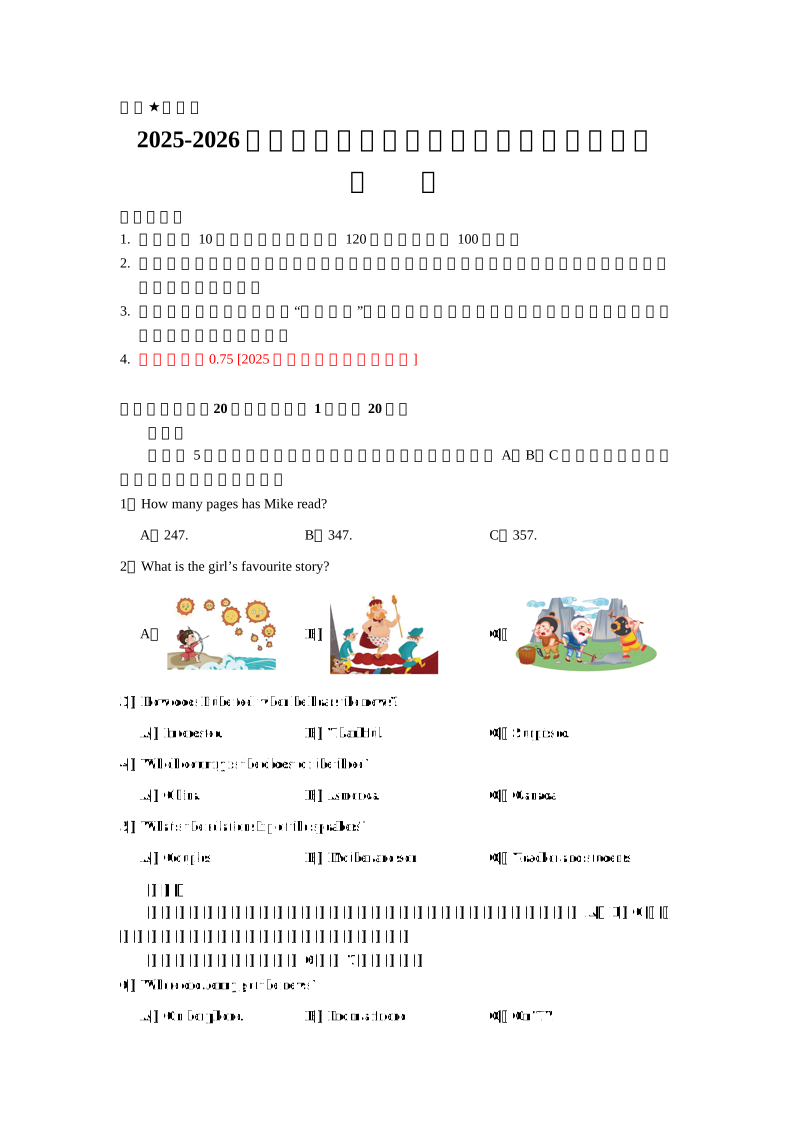
2.What is the girl’s favourite story?
A. B. C.
3.How does Luke feel when he hears the news?
A.Interested. B.Thankful. C.Surprised.
4.Which country is the oldest of the three?
A.China. B.America. C.Canada.
5.What’s the relationship of the speakers?
A.Couples. B.Mother and son. C.Teacher and students.
第二节
听下面几段对话或独白。每段对话或独白后有几个小题,从题中所给的A、B、C三个选项中选出最佳答案。每段对话或独白读两遍。
听下面一段对话,回答第6至第7两个小题。
6.Where did Jenny get the news?
A.On her phone. B.From a friend. C.On TV.
7.When did the heavy rain start?
A.Last Monday. B.Last Friday. C.Last Sunday.
听材料,回答小题。
8.How does Mary feel?
A.Happy. B.Sad. C.Tired.
9.What will Mary do next?
A.Have a rest. B.See a doctor. C.Take some medicine.
听下面一段对话,回答以下小题。
10.What did Lucy win in the physics competition?
A.Second prize.
B.The highest award in her school.
C.A special science prize.
11.How long did Lucy study for the competition?
A.For about two weeks. B.For almost two months. C.For a whole year.
12.Who advised Lucy to take breaks while studying?
A.Her coach. B.Her teacher. C.Her brother.
听下面一段对话,回答以下小题。
13.What is the girl’s problem?
A.She is going to a Japanese family’s dinner.
B.She doesn’t know what to wear to a party.
C.She is supposed to give a speech in France.
14.What is she supposed to do when she enters the house?
A.Take off her shoes. B.Kiss the host. C.Shake hands.
15.What can we get from the conversation?
A.The girl doesn’t need to bring a gift.
B.It is impolite to make a noise while eating in Japan.
C.The girl realizes the customs in China and Japan are different.
第三节
你将听到一篇短文,请根据短文内容,写出下面表格中所缺的单词,每空仅填一词,短文读两遍。
Some useful tips to have good manners
First
Smile and 16 people warmly when meeting them.
Second
Arrive 17 for meetings or appointments to show respect.
Third
Listening carefully when others talk shows that you 18 their ideas.
Fourth
Speak in a soft voice and avoid any 19 words.
Finally
Sending a thank-you 20 is a sweet way to express your appreciation.
二、阅读理解(20小题,每小题2分,共40分)
阅读下面四篇语言材料,然后按文后要求做题。
A
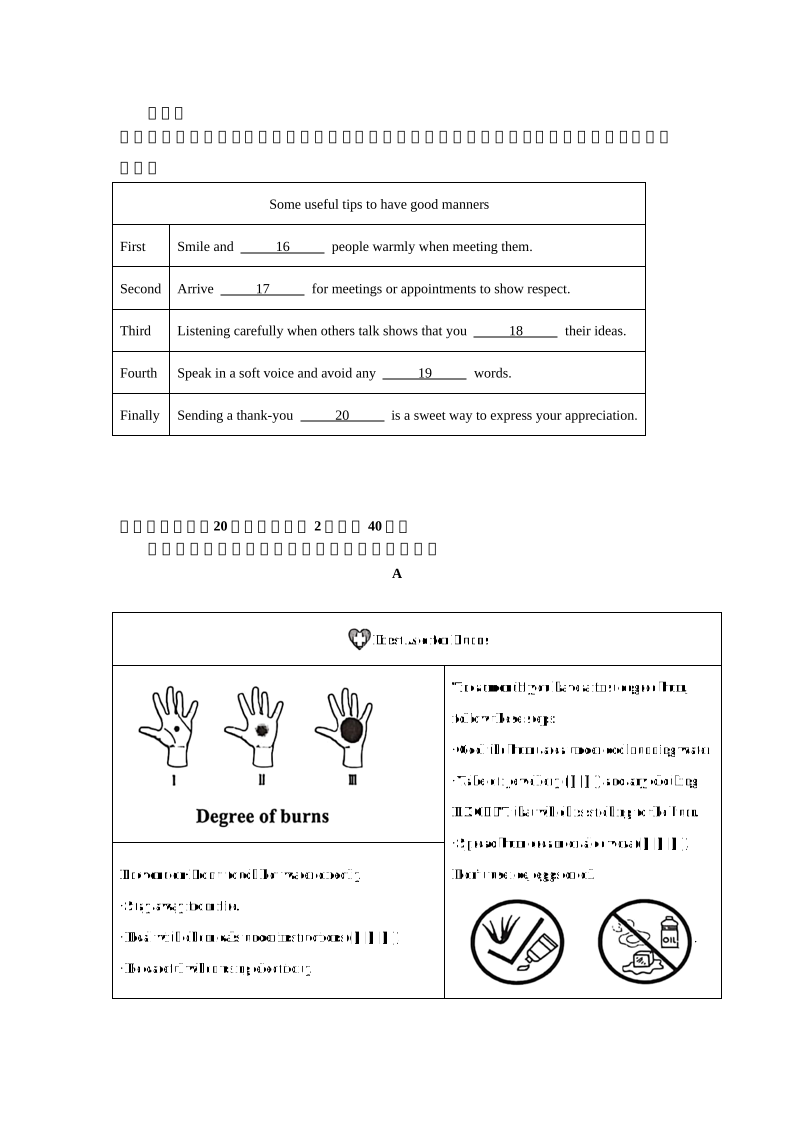
First Aid for Burns
TreatmentIf you have a first degree burn, follow these steps:
·Cool the burnt area under cool running water.
·Take off jewellery (配饰) and any clothing EXCEPT that which is sticking to the burn.
·Spread burn cream or aloe vera (芦荟汁). Don’t use ice, eggs or oil.
·Cover the burnt area with a clean cloth.
·If the burn is serious, call 120 or go to the hospital at once.
Prevention·Don’t touch hot water directly.
·Stay away from fire.
·Deal with chemicals under instructions (说明书).
·Be careful when using electricity.
21.How many degrees of burns are mentioned (提及) in the text?
A.1 B.2 C.3 D.4
22.What can we do to prevent ourselves from getting burnt?
① Keep away from fire. ② Don’t use electricity.
③ Follow instructions when using chemicals. ④ Don’t touch hot water directly.
A.①②③ B.①②④ C.②③④ D.①③④
23.What should you do with clothing that is sticking to the burn?
A.Cover it with ice. B.Leave it in place.
C.Move it off quickly. D.Wash it with hot water.
24.Which of the following can we use in the treatment of burns?
A.Oil. B.Aloe vera. C.Eggs. D.Ice.
25.In which part of a newspaper can we read the text?
A.Health Care. B.Science Study. C.Sports News. D.Travel Life.
B
Chen Jie, a 15-year-old girl, used to have few friends. She often felt lonely but she was too shy to communicate with others.
One day, her art teacher, Ms. Wang, noticed that Chen Jie was sitting alone. She sat beside her and asked, “Your paintings are really beautiful. Would you like to join the school art club?"
Chen Jie loved painting, but she said hesitantly (犹豫地), “I... I don’t know. What if others don’t like my paintings?”
Ms. Wang smiled kindly. “Don’t worry. In the art club, everyone shares and learns together. Why not give it a try?”
With Ms. Wang’s encouragement, Chen Jie decided to join the art club. At first, she was nervous and just painted quietly in a corner. But the other students came to look at her paintings and said, “Wow, these are amazing!” Their warm words made her feel accepted (被认可).
Week by week, Chen Jie started to open up. She began to share her ideas and even helped others. She made friends with two girls there. Now, Chen Jie is different. She still loves painting, but she also loves being with people.
Chen Jie’s story shows that growing up sometimes means stepping out of our comfort zone (舒适区). When we try new things, we discover new parts of ourselves and find true friendship.
26.How did Chen Jie use to feel?
A.Happy. B.Angry. C.Excited. D.Lonely.
27.Who encouraged Chen Jie to join the school art club?
A.Her parents. B.Her classmates.
C.Her art teacher. D.Her best friend.
28.Why did Chen Jie feel accepted in the art club?
A.Because Ms Wang praised her.
B.Because other students liked her paintings.
C.Because she won a prize in a competition.
D.Because she helped other students with their paintings.
29.What can we learn from the text?
A.Chen Jie had many friends at first.
B.Chen Jie stopped painting in the end.
C.Chen Jie changed after joining the art club.
D.Chen Jie felt nervous all the time in the art club.
30.What does the story mainly tell us?
A.New things help us grow and find friends.
B.Teachers should always encourage students.
C.Painting can help students make friends.
D.It’s better to be alone than with others.
C
How to Survive a Tsunami
A tsunami is a series of huge ocean waves caused by underwater earthquakes, volcanic eruptions or landslides. These waves can travel across the sea at over 800 kilometers per hour, and they grow much taller when they reach shallow coasts. Many coastal towns have suffered great losses because people did not know early warning signs.
First, you need to learn the natural warning signals. If you see the sea water suddenly pull back far away from the shore, that is a clear sign of a coming tsunami. Do not go down to pick up fish or shells. Run to high land at once. Another sign is a loud roar from the ocean, like a train or a plane flying low.
Second, know the official warning system. Local governments will send messages through phones, TV and radio when a tsunami danger is confirmed. If you hear the warning siren, you must follow the evacuation routes marked on streets. Do not drive cars in a hurry—traffic jams will stop you from escaping. Walking or riding bikes is faster in such situations.
Third, prepare an emergency bag before disaster hits. The bag should hold bottles of water, dry biscuits, a first-aid kit, a flashlight and a battery radio. Keep it near your front door so you can take it in seconds.
Many tourists make a dangerous mistake: they stay to take photos of the unusual sea. Remember that a tsunami has several waves. The second or third wave is often bigger and more powerful than the first one. Even if the water goes back, do not return to the beach until the government says it is safe.
Scientists work hard to build tsunami early warning stations around the world, but personal knowledge still saves most lives. Learning these simple rules can keep you and your family safe by the sea.
根据材料内容,选择最佳答案。
31.What can cause a tsunami?
A.Heavy rain and strong wind. B.Underwater earthquakes.
C.Big wildfires on land. D.Heavy snowstorms.
32.What does the sea do before a tsunami arrives?
A.It turns dark blue quickly. B.It makes soft singing sounds.
C.It moves far back from the beach. D.It becomes warm suddenly.
33.Why shouldn’t people drive cars during evacuation?
A.Cars may run out of fuel. B.Traffic jams slow down escape.
C.Flood water will wash cars away. D.Roads are covered with sand.
34.Which thing is NOT needed in the emergency bag?
A.Fresh fruit. B.Flashlight. C.Drinking water. D.First-aid kit.
35.What is the main idea of the text?
A.How scientists watch tsunami waves. B.Different kinds of natural disasters.
C.Useful ways to stay safe from tsunami. D.Tourists’ mistakes on coastal beaches.
D
阅读下面的短文,从短文后的选项中选出能填入空白处的最佳选项补全短文。
If you have ever been to Germany, you might find that its tipping (小费) culture is quite different. Tipping is not a traditional custom in China. 36
It’s important to be clear that tipping is a part of daily life in Germany. 37 Tipping is to express your thanks for the workers’ hard work.
Usually, it’s the guests who decide how much they tip. In restaurants and beauty centres, guests usually tip 5% to 10% of the total bill. 38 And sometimes guests give small gifts in return.
39 Unlike in other countries, you do not leave the tip on the table. When your food server brings the bill, you need to leave a tip to let him or her know how you will be paying. Once your food server is ready to collect your payment, you should tell him or her the total amount you wish to pay. 40 Otherwise, he or she will arrive at your table, ready to collect the amount on your bill.
A.So how do you leave a tip in Germany?
B.However, it is popular to tip in Germany.
C.As for coffee shops, guests can give as much as they want.
D.When you are satisfied with the service, you can give a tip.
E.You have to be quick to let your server know that you will be leaving a tip.
三、完形填空(15小题,每小题1分,共15分)
先通读短文,掌握其大意,然后从A、B、C、D四个选项中选出一个可以填入相应空白处的最佳答案。
Reading is one of the greatest habits for students. A good read can bring us fun and wisdom. Many students have 41 lots of famous books, but some still don’t know how to enjoy reading well.
First, choose proper books. You can ask your English teacher to 42 great novels, such as The Secret Garden and Harry Potter. Don’t only read fantasy books; try 43 books about history, they make you know more about the past. Last month, I read a 44 story about ancient China, and I learned many old customs.
Second, make a reading plan. Many people start reading but give up soon because they have no plan. I read thirty pages every night 45 I finish my homework. I have 46 finished three storybooks this term. Never put reading off, or you will forget it day by day.
Third, take notes while reading. When you meet new words or wonderful 47 , write them down in your notebook. Don’t be a 48 reader who only looks at words without thinking. If you meet difficult sentences, try to 49 their meanings instead of giving up.
Also, share books with others. Don’t be 50 and keep good books only for yourself. I often exchange books with my deskmate. We talk about different characters and wonderful plots. Sometimes we argue about the 51 in the story, and it helps us understand the book much better.
Some people say reading is 52 because it takes much time. In fact, reading can 53 your mind and help you grow. If you 54 reading for a long time, you will find it is a great treasure in your life. Never stop reading, and every small effort will make a big 55 .
41.A.heard of B.got lost C.locked up D.given up
42.A.punish B.recommend C.steal D.prove
43.A.painful B.selfish C.historical D.basic
44.A.secret B.literary C.silly D.weak
45.A.since B.until C.after D.before
46.A.yet B.never C.ever D.already
47.A.idioms B.enemies C.society D.readers
48.A.active B.lazy C.gentle D.naughty
49.A.doubt B.destroy C.work out D.give out
50.A.selfish B.weak C.gentle D.careful
51.A.librarian B.summary C.characters D.condition
52.A.interesting B.boring C.amazing D.easy
53.A.destroy B.inspire C.punish D.steal
54.A.keep on B.get on C.put on D.turn on
55.A.mistake B.difference C.kingdom D.mystery
四、语篇填空(15小题,每小题1分,共15分)
第一节
用方框中所给词的适当形式填空,每词限用一次
willing, stick, difference, warm, many, since, help, active, kind, success
I am an 56 volunteer in my school. I have been in the volunteer club 57 Grade Eight. I am always 58 to give my free time to help others.
I always 59 to my volunteer plans. I try to help 60 people than before. I spread 61 and kindness to people around me.
I have got great 62 from my hard work. I know every small act of 63 can make a big 64 . I will keep on 65 others and become a better person.
第二节
阅读短文,根据语篇要求填空,使短文通顺、意思完整。每空限填一词。
The true meaning of Christmas is that it’s important 66 share and give love and joy to people around us.
Charles Dickens wrote A Christmas Carol in 1843. It is 67 famous short novel. The name of the main character is Scrooge. He is mean and doesn’t think about others. He just cares 68 whether he can make more money and he hates Christmas.
One Christmas Eve, three spirits come to visit him one after another, the Ghost of Christmas Past, the Ghost of Christmas Present and the Ghost of Christmas Yet to Come. He sees his scary future in his dream, 69 he makes a decision to change his life. Now he is happy to celebrate Christmas 70 his relatives.
五、补全对话(5小题,每小题2分,共10分)
根据下面的对话情景,在每个空白处填上一个适当的句子,使对话的意思连贯、完整。
A: Hi, Li Ning. My friend Wang Meng invites me to his housewarming party at his new house this Friday. But I don’t know the customs about housewarming in China. 71 ?
B: Sure, Laura. For example, adding a few new bowls and chopsticks is a symbol of the beginning of a new life and having a growing family. Letting the water slowly run out means a continuous stream of wealth (源源不断的财富).
A: Sounds interesting! 72 ?
B: You can bring some things like flowers. It’s impolite to visit people with empty hands.
A: I got it.
B: 73 ? It’s impolite to arrive late.
A: The party begins at 5:30 p.m. And I’ll be there on time. Well, Wang Meng says his new house is at No. 15, Shanghai Road. Can you tell me how I can get there?
B: Let me see. 74 . You can go there by bus. It’s about ten minutes’ ride from our school.
A: That’s great. 75 .
B: You’re welcome.
六、书面表达 (20分)
76.文明从点滴做起,城市因你我美丽。近期,无锡市蝉联“全国文明城市”,无锡市民在日常生活中践行树文明之风、创文明之城的精神。无锡教育电视台将于暑期举办以“How to be a civilized (文明的) middle school student?”为主题的英语口语大赛,请你为此写一篇演讲稿。
内容应包含以下要点:
●Public behavior: follow traffic rules;...
●Voluntary work: help the elderly;...
●Green lifestyle: save water;...
●Summer plan: read more books;...
注意:
文中不得出现你的真实姓名和学校名称;
内容要点作适当发挥;
词数90左右,短文开头结尾已给出,不计入总词数。
How to be a civilized middle school student
The summer holiday is coming soon! As middle school students, I think we can do something to make Wuxi more civilized.
_____________________________________________________________________________________________________________________________________________________________________________________________________________________________________________________________________________________________________________________________________________________________________________________________________________________________________________________________________________________________________________________________________________________________________________________________________________________________________________________________________________________________________________________________________________________________________________________________________________________
Let’s start from small things and try to work together to be civilized students. I'm sure our city will be better through our efforts!
Thank you!
参考答案
题号
1
2
3
4
5
6
7
8
9
10
答案
C
C
C
A
B
C
A
C
A
B
题号
11
12
13
14
15
21
22
23
24
25
答案
B
C
A
A
C
C
D
B
B
A
题号
26
27
28
29
30
31
32
33
34
35
答案
D
C
B
C
A
B
C
B
A
C
题号
36
37
38
39
40
41
42
43
44
45
答案
B
D
C
A
E
A
B
C
B
C
题号
46
47
48
49
50
51
52
53
54
55
答案
D
A
B
C
A
C
B
B
A
B
1.C
【原文】A: Mike, have you finished the novel Oliver Twist so far?
B: No, I haven’t. I’m only on page three hundred and fifty seven.
A: Oh, you should hurry up. The book report is due in two days.
2.C
【原文】M: What’s your favourite story, Lily?
W: I like the story of Yu Gong best. What about you?
M: I like The Emperor’s New Clothes best.
Question: What is the girl’s favourite story?
3.C
【原文】A: Congratulations, Luke. You’ve got first prize in the word spelling contest.
B: Really? It’s a big surprise to me. Thank you.
Question: How does Luke feel when he hears the news?
4.A
【原文】A: I know China has a history of over five thousand years. What about America and Canada?
B: Oh, they are both only a few hundred years old.
5.B
【原文】W: John, Don’t forget to bring your umbrella. There will be a heavy rain. I don’t have enough time to pick you up after school.
M: Don’t worry. I can go back home by myself.
6.C 7.A
【原文】M: Jenny, I saw a news report on my phone about a terrible flood in southern China last night.
W: I saw it on TV too! It was awful.
M: The heavy rain started last Monday and lasted for five days. It caused a lot of trouble.
W: And many roads were in bad condition. Luckily, firemen are offering help to people.
8.C 9.A
【原文】M: Mary, you look pale. Are you all right?
W: I really feel tired.
M: What’s the matter?
W: I didn’t go to sleep until 2 o’clock in the morning.
M: Oh, that’s too late. What were you doing?
W: Nothing. I was so worried about my math test.
M: Well, take it easy. You’d better have a rest.
W: Okay, I will.
10.B 11.B 12.C
【原文】M: Lucy, you seem joyful today. What’s the good news?
W: I won first prize in the physics competition, the highest award in our school.
M: Really? How did you manage that?
W: I studied almost every day for two months, even though I felt lonely sometimes.
M: Did anybody help you during that time?
W: My brother advised me to take breaks and not study too late at night.
M: What will you do with the prize?
W: I’ll use it to buy a present for my parents to thank them.
13.A 14.A 15.C
【原文】A: I’m a bit nervous, Mark.
B: Why? What’s happening?
A: I’m invited to dinner by a Japanese family next week. I know nothing about their customs.
B: Don’t worry. I can tell you some. First, you are supposed to take off your shoes when you enter their house.
A: Okay. Should I bring a gift?
B: Yes, that’s a good idea. A small gift is good. And during the meal, it’s polite to make a noise when you eat noodles. It shows you enjoy the food.
A: Really? That’s interesting. In China, that is rude.
B: Yes, customs are different.
16.greet 17.early 18.value 19.impolite 20.note
【原文】
Good manners are important for good social relationships. Here are some useful tips.
First, greet others nicely. When you meet people, smile and greet them warmly. Second, be on time. Arrive early for meetings or appointments to show respect. If you can’t make it on time, call to let others know. Third, respect others. Listen carefully when others talk. It shows you value their ideas. Fourth, communicate politely. Speak in a soft voice and avoid any impolite words. Finally, show thanks. When someone helps you, say “thank you” sincerely. Sending a thank-you note is also a sweet way to express your appreciation.
Follow these tips, and you’ll get along well with people around you.
21.C 22.D 23.B 24.B 25.A
本文是一篇说明文,主要讲述了烧伤的分级、预防措施与急救处理方法,介绍了不同程度烧伤的图示说明、日常防烧伤的要点,以及一度烧伤的急救步骤与禁忌事项。
21.文中左上角“Degree of burns”部分配有Ⅰ、Ⅱ、Ⅲ共3种烧伤程度的图示,因此提及了3种烧伤分级。
22.左侧“Prevention”部分明确列出:“Don’t touch hot water directly.”“Stay away from fire.”“Deal with chemicals under instructions.”“Be careful when using electricity.”,对应①远离火源、③按说明使用化学品、④不直接接触热水,②“不使用电”表述错误,因此正确的是①③④。
23.右侧“Treatment”部分提到:“Take off jewellery and any clothing EXCEPT that which is sticking to the burn.”,即除了粘在烧伤处的衣物外,其余配饰和衣物都要取下,因此粘住的衣物应留在原处。
24.右侧“Treatment”部分明确说明:“Spread burn cream or aloe vera. Don’t use ice, eggs or oil.”,因此可以使用的是芦荟汁(aloe vera)。
25.本文围绕烧伤的预防与急救展开,属于健康护理相关内容,因此可在报纸的“Health Care”板块读到这篇文本。
26.D 27.C 28.B 29.C 30.A
本文是一篇记叙文。主要讲述了15岁女孩陈洁在美术老师王女士的鼓励下加入学校美术俱乐部,从害羞孤独变得开朗自信,收获友谊的故事。
26.第一段指出“Chen Jie, a 15-year-old girl, used to have few friends. She often felt lonely but she was too shy to communicate with others”,因此陈洁过去感到孤独。
27.第二段指出“One day, her art teacher, Ms. Wang, noticed that Chen Jie was sitting alone. She sat beside her and asked... Would you like to join the school art club?”,因此鼓励陈洁加入美术俱乐部的是她的美术老师。
28.第五段指出“But the other students came to look at her paintings and said, ‘Wow, these are amazing!’ Their warm words made her feel accepted”,因此陈洁在美术俱乐部感到被认可,是因为其他同学喜欢她的画作。
29.文章描写陈洁从害羞孤独到加入美术俱乐部后变得开朗、结交朋友,说明她加入美术俱乐部后发生了改变。
30. 最后一段指出“Chen Jie’s story shows that growing up sometimes means stepping out of our comfort zone. When we try new things, we discover new parts of ourselves and find true friendship”,因此故事主要告诉我们新事物帮助我们成长并找到朋友。
31.B 32.C 33.B 34.A 35.C
本文是一篇说明文,主要介绍了海啸的成因、自然预警信号、官方预警系统、应急包准备及逃生注意事项,旨在帮助人们在海啸中保护自身安全。
31.第一段“A tsunami is a series of huge ocean waves caused by underwater earthquakes, volcanic eruptions or landslides.”说明海底地震可以引发海啸。
32.第二段“If you see the sea water suddenly pull back far away from the shore, that is a clear sign of a coming tsunami”说明海水突然退去是海啸来临前的征兆。
33.第三段“Do not drive cars in a hurry—traffic jams will stop you from escaping.”说明开车可能导致交通堵塞,从而阻碍逃生。
34.第四段“The bag should hold bottles of water, dry biscuits, a first-aid kit, a flashlight and a battery radio.”指出应急包中应含有水、干饼干、急救包等,未提及新鲜水果。
35.文章标题“How to Survive a Tsunami”及全文内容可知,文章主要讲述了在海啸中保持安全的具体方法。
36.B 37.D 38.C 39.A 40.E
本文是一篇说明文,主要介绍了德国的小费文化,包括小费的普遍性、给予场合、金额比例以及具体的支付方式,并与中国习俗进行了对比。
36.文章第一段“Tipping is not a traditional custom in China.”指出给小费不是中国的传统习俗,可知此处语境发生转折,需介绍德国的情况。选项B“而,在德国给小费很流行”与前文形成对比,符合语境。
37.根据文章第二段“It’s important to be clear that tipping is a part of daily life in Germany.”以及后文“Tipping is to express your thanks...”可知,此处应说明给小费的条件。选项D“当你对服务满意时,你可以给小费。”承上启下,解释了何时给小费。
38.根据文章第三段“In restaurants and beauty centres, guests usually tip 5% to 10% of the total bill.”可知,此处正在列举不同场所的小费习惯。选项C“至于咖啡店,客人想给多少就给多少。”补充了另一种场所的情况,符合逻辑。
39.根据文章第四段后文“Unlike in other countries, you do not leave the tip on the table.”可知本段主要讲述具体的给小费方法。选项A“那么在德国如何给小费呢?”作为主题句引出下文的具体操作。
40.根据文章第四段“Otherwise, he or she will arrive at your table, ready to collect the amount on your bill.”可知,此处强调要及时告知服务员意图。选项E“你必须快点让服务员知道你要给小费。”与后文的“Otherwise”形成逻辑对应。
41.A 42.B 43.C 44.B 45.C 46.D 47.A 48.B 49.C 50.A 51.C 52.B 53.B 54.A 55.B
本文阐述阅读对学生重要性,从选书、计划、笔记和分享提供建议,鼓励坚持阅读,享受阅读带来的成长与快乐。
41.许多学生听说过很多名著,但不知如何享受阅读。
根据“but some still don’t know…”转折逻辑,可知学生只是听说过名著,heard of“听说过”符合“知道但未深入阅读”的逻辑。
42.你可以请英语老师推荐好小说。
根据“choose proper books”语境,老师应在推荐书籍,recommend“推荐”是老师的典型动作,且后文举例《秘密花园》《哈利波特》均为推荐内容。
43.尝试读些历史书籍,它们让你了解过去。
根据“books about history”可知,此处需要“历史的”,historical“历史的”符合语境;painful“痛苦的”、selfish“自私的”、basic“基础的”均与“历史书”的描述不符,故排除。
44.上个月我读了一个关于中国古代的文学故事。
根据“story about ancient China”和“learned many old customs”可知,此处需要修饰“故事”的形容词,literary“文学的”符合语境;secret“秘密的”、silly“愚蠢的”、weak“虚弱的”均与“学到旧习俗”的逻辑不符,故排除。
45.我每晚做完作业后读三十页。
根据“read thirty pages every night”和“finish my homework”的时间顺序,此处需要“在……之后”,after“在……之后”符合逻辑。
46.这学期我已经读完三本故事书了。
根据“finished three storybooks this term”可知,此处需要表示“已经”的副词,already“已经”符合语境(现在完成时);yet“还(用于否定/疑问)”、never“从未”、ever“曾经”均与“已完成”的肯定语境不符,故排除。
47.遇到生词或精彩习语时记下来。
根据“new words”和“write them down”可知,此处需要与“新单词”并列的语言元素,idioms“习语”符合语境;enemies“敌人”、society“社会”、readers“读者”均与“语言学习”的场景无关,故排除。
48.别做只看不想的懒惰读者。
根据“only looks at words without thinking”可知,此处需要描述“不思考”的读者特征,lazy“懒惰的”符合(不思考即懒惰);active“积极的”、gentle“温和的”、naughty“淘气的”均与“不思考”的特征无关,故排除。
49.遇到难句试着弄懂意思别放弃。
根据“difficult sentences”和“instead of giving up”可知,此处需要“解决/弄清楚”,work out“弄清楚”符合语境;doubt“怀疑”、destroy“破坏”、give out“分发”均与“解决难句意思”的逻辑不符,故排除。
50.别自私,只把好书留给自己。
根据“keep good books only for yourself”可知,此处需要“自私的”,selfish“自私的”符合语境;weak“虚弱的”、gentle“温和的”、careful“仔细的”均与“不分享书”的特征无关,故排除。
51.有时我们争论故事中的人物。
根据前文“talk about different 根据“talk about different characters”和“argue about”可知,此处需要“角色”,characters“角色”符合语境;librarian“图书管理员”、summary“摘要”、condition“条件”均与“故事内容”无关,故排除。”,争论对象应是人物。characters符合。
52.有人说阅读无聊,因为耗时。
根据“takes much time”可知,此处需要“无聊的”,boring“无聊的”符合语境;interesting“有趣的”、amazing“惊人的”、easy“容易的”均与“花时间导致负面评价”的逻辑不符,故排除。
53.事实上阅读能启发心智助你成长。
根据“help you grow”可知,此处需要“启发”,inspire“启发”符合语境;destroy“破坏”、punish“惩罚”、steal“偷”均与“帮助成长”的积极语境不符,故排除。
54.如果你坚持阅读很久。
根据“for a long time”和“find it is a great treasure”可知,此处需要“坚持”,keep on“坚持”符合语境;get on“上车”、put on“穿上”、turn on“打开”均与“持续阅读”的逻辑不符,故排除。
55.每份小努力都会产生大影响。
根据“every small effort”和“make a big”可知,此处需要“改变”,make a difference为固定搭配,意为“有影响”,符合语境;mistake“错误”、kingdom“王国”、mystery“秘密”均与“努力带来结果”的逻辑不符,故排除。
56.active 57.since 58.willing 59.stick 60.more 61.warmth 62.success 63.kindness 64.difference 65.helping
本文主要讲述作者在校做志愿者的亲身经历,介绍自己坚持参与志愿活动、热心帮扶他人,在奉献中收获成长与成就感。
56.我是我校一名积极的志愿者。此处修饰名词volunteer需用形容词,“active”表示积极的,可用来修饰志愿者,贴合句子语境。
57.自从八年级开始,我就加入了志愿者社团。此处主句为现在完成时,后接时间点需用对应连词,“since”表示自从,适配现在完成时的语法用法,贴合句意。
58.我总是乐意利用空闲时间帮助他人。此处为be willing to do sth.,“willing”意为乐意的,是该固定结构的专用词汇,贴合语境。
59.我一直坚持我的志愿计划。此处为stick to sth.表示坚持某事,主语为第一人称,一般现在时动词用原形,“stick”符合语义和语法。
60.我努力帮助比以前更多的人。句中出现比较级标志词than,此处需要修饰名词people的比较级词汇,many的比较级“more”表示更多的,贴合句意。
61.我向身边的人传递温暖与善意。此处and连接并列名词,与kindness对应,需要填入名词,“warm”变形为名词“warmth”表示温暖,贴合句子语境。
62.我从辛苦的工作中收获了巨大的成功。形容词great后需接名词作宾语,“success”为名词,表示成功、收获,符合句子语义。
63.我知道每一次小小的善举都能带来巨大的影响。介词of后面需要接名词,“kind”变形为名词“kindness”表示善良,act of kindness为善举,贴合语境。
64.我知道每一次小小的善举都能带来巨大的影响。此处为make a big difference表示产生巨大影响,“difference”为该短语核心词汇,贴合句意。
65.我会继续帮助他人,成为更好的人。此处为keep on doing sth.表示坚持做某事,介词on后接动名词,“help”的动名词形式“helping”符合语法要求。
66.to 67.a 68.about 69.so 70.with
本文借《圣诞颂歌》故事点明圣诞真谛:分享与奉献。吝啬的斯克鲁奇被三个圣诞幽灵托梦,预见糟糕未来后幡然醒悟,改掉本性、与亲人共度圣诞,告诉我们要关爱他人、乐于分享。
66.圣诞节真正的意义是:向身边人分享、赠予爱与快乐十分重要。此处为固定句型:It’s+adj.+to do sth.,其中it作形式主语,不定式作真正主语,此处需用不定式符号to。
67.它是一部著名的短篇小说。此处表示泛指,novel为单数可数名词,famous以辅音音素开头,用不定冠词a表示“一部/一本”。
68.他只关心能不能赚到更多钱,还讨厌圣诞节。固定搭配care about“关心、在乎”,表示只关心是否赚钱,需用介词about。
69.他在梦中看到了自己凄惨的未来,因此决定改变自己的人生。前后表示因果关系,需用so“因此”,表示结果。
70.如今他开开心心和亲人一起庆祝圣诞节。此处表示和亲人一起庆祝,需用介词with,表示“和……一起”。
71.
Can you tell me something about them 72.
What should I bring/What should I bring to the party 73.
What time does the party begin/when does the party begin 74.
I know where it is 75.
Thank you/Thank you so much/Thanks a lot
本文主要介绍了Laura向Li Ning咨询中国乔迁派对习俗的情景对话,围绕习俗、伴手礼、时间、路线展开交流,Li Ning给出了实用建议。
71.Laura提到受邀参加乔迁派对,但不了解相关习俗,Li Ning用“Sure”回应并举例说明。此处需用委婉请求的问句引出下文,“them”指的是上文的“customs”。
72.Li Ning给出了带花的礼物建议,并说明空手拜访不礼貌。此处需填入询问伴手礼的问句,承接下文。
73.Li Ning提醒“迟到不礼貌”,Laura随后回答了派对开始时间。此处需填入询问时间的问句。
74.根据上文“Can you tell me how I can get there?”以及下文提供了具体的交通方式和距离,可知Li Ning表示知道那个地方的位置。
75.Li Ning给出路线建议后,以“You’re welcome”回应。此处需填入感谢用语。
76.例文
The summer holiday is coming soon! As middle school students, I think we can do something to make Wuxi more civilized.
First, we should behave politely in public. We must follow traffic rules and not litter everywhere.
Voluntary work is meaningful. We can help the elderly do shopping. Moreover, we can join in community clean-up activities.
A green lifestyle is important too. We should save water by taking short showers and save electricity by turning off lights. Using cloth bags instead of plastic bags makes a difference.
For the summer plan, I will read more books to get ready for the new term. I also plan to do some volunteer work with my friends.
Let’s start from small things and try to work together to be civilized students. I’m sure our city will be better through our efforts
Thank you!
写作步骤
[第一步:审题立意]
确定文体:演讲稿(speech),以一般现在时为主,可适当使用情态动词(should/can/must等)
明确要点:
①公共行为:遵守交通规则、不大声喧哗、不乱扔垃圾;
②志愿服务:帮助老人购物、参与社区清洁活动;
③绿色生活:节约用水用电、使用环保袋;
④暑假计划:多读书、参与志愿活动
确定人称:第一人称复数(we/our)为主,适当使用第一人称单数(I/my)
注意事项:不得出现真实姓名和学校名称;内容要点可适当发挥;词数90左右;短文开头和结尾已给出,不计入总词数
[第二步:构思布局]
开头段(已给出):总起句——暑假将至,作为中学生可以为无锡文明城市做贡献
主体段:分四层展开——公共行为→志愿服务→绿色生活→暑假计划
结尾段(已给出):总结号召——从小事做起,共同努力
[第三步:要点展开]
要点一:公共行为(Public behavior)
活动内容:遵守交通规则(follow traffic rules)、公共场所保持安静(keep voices down)、不乱扔垃圾(not litter everywhere)
具体说明:behave politely in public/make our life more beautiful
要点二:志愿服务(Voluntary work)
活动内容:help the elderly do shopping/join in community clean-up activities/help clean the street
具体说明:meaningful/make neighborhood tidier/learn more useful things
要点三:绿色生活(Green lifestyle)
活动内容:save water by taking short showers/save electricity by turning off lights/use cloth bags instead of plastic bags/take a bus to go out
具体说明:important/make a difference/play a role in our daily life
要点四:暑假计划(Summer plan)
活动内容:read more books/get ready for the new term/take part in volunteer work with friends/do more meaningful things
具体说明:利用假期时间提升自我,同时践行文明行为
学科网(北京)股份有限公司
$听力考试正式开始。Mike, have you finished the novel Oliver twist so far? No, I haven't. I'm only on page three hundred and fifty seven. Oh, you should hurry up. The book report is doing two days. Mike, have you finished the novel Oliver twist so far? No, I haven't, only on page three hundred and fifty seven. Oh, you should hurry up. The book report is doing two days. Listen to the next question. What's your favorite story, lily? I like the story of your best. What about you? I like the imperor new clothes best. What's your favorite story. lily? I like the story of egon best. What about you? I like the imperor new clothes best. Question, what is the girl's favorite story? What is the girl's favorite story? Listen to the next . question. congratulations. Look, you've got first prize in the word spelling contest. Really, it's a big surprise to me. Thank . you. Question, how does luke feel when he hears . the news? congratulations. Look, you've got first prize in the word spelling contest. Really, it's a big surprise to me. Thank . you. Question. how does luke feel when he hears the news? Listen to the next question. I know china has a history of over five thousand years. What about amErica in canada? Oh, they are both only a few hundred years old. I know china has a history of over five thousand years. What about amErica in canada? Oh, they are both only a few hundred years old. Listen to the next question. john, don't forget to bring your umbrella. There will be a heavy rain. I don't have enough time to pick you up after school. Don't worry, I can go back home by myself. John, don't forget to bring your umbrella. There will be a heavy rain. I don't have enough time to pick you up after school. Don't worry, I can go back home by myself. Listen to the next question, Jenny. I saw a news report on my phone about a terrible flood in southern china last night. I saw on T. V, two. IT was awful. The heavy . rain started last monday and lasted for five days. IT caused a lot of trouble . and many roads were in bad condition. Locky firemen are offering help to people. Jenny, I saw a news report on my phone about a terrible flood in southern china last night. I thought on T. V, two IT was awful. The heavy rain started last monday and lasted for five days. IT caused a lot of trouble . and many roads were in bad condition. Locky firemen are offering help to people. Listen to the next . question, mary, you look well. Are you all right? I really feel tired. What's the matter? I didn't go to sleep until a two o'clock in . the morning. Oh, that's too late. What were you doing? nothing. I was so worried about my . math test. Well, take IT easy. You'd Better . have a rest. Okay, I will. Mary, you look well, are you all right? I really . feel tired. What's the matter? I didn't go to . sleep until a two o'clock in the morning. Oh, that's too late. What were you doing? nothing? I was so worried about my math test. Well, take IT easy. You'd Better . have a rest. Okay, I will. Listen to the next question. Lucy, you seem joyful today. What's the good news? I want first Price in the physics competition, the highest of world . in our school. really. How did you manage that? I started almost every day for two months, even though I felt lonely sometimes. Did anybody help you? During that time? My brother advised me to take breaks and not study too late at night. What will you do with the Price? I'll use IT to buy a present for my parents to thank them. Lucy, you seem joyful today. What's the good news? I want . first Price in the physics competition, the highest of world in our school. really. How did you manage that? I started almost every day for two months, even though I felt lonely sometimes. Did anybody help you? During that time, my brother advised me to take breaks and not study too late at night. What will you do with the prize? I'll use IT to buy a present for my parents to thank them. Listen to the next . question. I'm a bit . nervous more. why? What's happening? I'm invited to dinner by a japanese family next week. I know nothing about their customs. Don't worry, I can tell you some. First, you're supposed to take off your shoes when you enter their house. okay? Should I bring a gift? Yes, that's a good idea. A small gift is good. And during the meal, it's polite to make a noise. When you eat noodles, IT shows you enjoy . the food. Really that interesting in china. That is rude. Yes, customs are different. I'm a bit nervous. Marr, why? What's happening? I'm invited to dinner by a japanese family next week. I know nothing about their customs. Don't worry, I can tell you some. First, you're supposed to take off your shoes when you enter their house. okay? Should I bring a gift? Yes, that's a good idea. A small gift is good. And during the meal, it's polite to make a noise. When you eat noodles, IT shows you enjoy the food. Really that interesting in china. That is rude. Yes, customs are different. Listen to the next question. Good manners are important for a good social relationships. Here are some useful tips. First, great. Others nicely. When you meet people, smile and agree them warmly. Second, beyond time, arrive early for meetings or appointment to show respect. If you can't make IT on time, call to let others know. Third, respect others, listen carefully when others talk IT shows you value their ideas. Fourth, communicate politely, speak in a soft voice, and avoid any employed words. Finally, show thanks when someone helped you say thank you sincerely sending a thank you note is also a sweet way to express your appreciation. Follow these tips and you'll get along well with people around you. Good manners are important for good social relationships. Here are some useful tips. First, great others nicely. When you meet people, smile and great them warmly. Second, beyond time, arrive early for meetings or appointment to show respect. If you can't make IT on time, call to let others know. Third, respect others, listen carefully when others talk, IT shows you value their ideas. Fourth, communicate politely, speak in a soft voice, and avoid any employed words. Finally, show thanks when someone helps you say thank you sincerely. Sending a thank you note is also a sweet way to express your appreciation. Follow these tips and you'll get along well with people around you. 听力部分到此结束。
资源预览图
1
2
3
相关资源
由于学科网是一个信息分享及获取的平台,不确保部分用户上传资料的 来源及知识产权归属。如您发现相关资料侵犯您的合法权益,请联系学科网,我们核实后将及时进行处理。