专题05 情态动词(复习讲义)(上海专用)2027年高考英语一轮复习讲练测
2026-06-17
|
2份
|
40页
|
102人阅读
|
2人下载
精品
资源信息
| 学段 | 高中 |
|---|---|
| 学科 | 英语 |
| 教材版本 | - |
| 年级 | 高三 |
| 章节 | - |
| 类型 | 教案-讲义 |
| 知识点 | 情态动词 |
| 使用场景 | 高考复习-一轮复习 |
| 学年 | 2027-2028 |
| 地区(省份) | 上海市 |
| 地区(市) | - |
| 地区(区县) | - |
| 文件格式 | ZIP |
| 文件大小 | 334 KB |
| 发布时间 | 2026-06-17 |
| 更新时间 | 2026-06-17 |
| 作者 | David中高考英语考试研究 |
| 品牌系列 | 上好课·一轮讲练测 |
| 审核时间 | 2026-06-17 |
| 下载链接 | https://m.zxxk.com/soft/58380806.html |
| 价格 | 3.00储值(1储值=1元) |
| 来源 | 学科网 |
摘要:
该高中英语讲义聚焦情态动词高考核心考点,涵盖基础语义、特殊句式、情态动词+have done(重难点)及场景化用法,按“基础-重难点-应用”逻辑系统梳理知识框架。通过命题透视研判考情、思维建模构建体系、考点精讲拆解核心、真题溯源强化训练的教学流程,帮助学生突破语境运用难点,体现复习的系统性与针对性。
资料以培养语言能力和思维品质为导向,创新采用“考点分类+解题范式归纳”策略,如将“情态动词+have done”细分为对过去推测、虚拟责备等类型并总结判断方法。结合近年高考真题设计分层练习,强化语境分析与语义辨析能力,能有效提升学生应考效率,为教师提供清晰复习路径,助力精准把控教学节奏。
内容正文:
专题05 情态动词
内容导航
01
命题透视·考情前瞻
对标素养,研判高考命题趋势
02
思维建模·脉络梳理
搭建知识框架,构建系统思维
03
考点精讲·靶向突破
拆解核心考点,归纳解题范式
考点一 基础情态动词语义
知识解构 知识点 1 can/could/be able to 知识点 2 must/have/need 知识点 3 may/might/should/shall
考向破译 考向 1 能力 / 许可 / 推测类选词 考向 2 must 主客观用法区分
考点二 情态动词特殊句式
知识解构 知识点 1 may as well/had better 知识点 2 否定 + 比较级表最高级 知识点 3 used to 与 would 辨析
考向破译 考向 1 委婉语气翻译 考向 2 特殊句式语境判断
考点三 情态动词 + have done(重难点)
知识解构 知识点 1 对过去推测类结构 知识点 2 虚拟责备类结构 知识点 3 错失机会类结构
考向破译 考向 1 过去语境结构填空 考向 2 虚拟语义翻译
考点四 场景化用法
知识解构 知识点 1 规定 / 命令语气 (shall) 知识点 2 惊讶 / 偏偏等特殊语气 知识点 3 dare/need 用法
考向破译 考向 1 文体语气选词 考向 2 综合语境情态动词运用
04
真题溯源·考向感知
溯源真题逻辑,感知高考考向
命题透视·考情前瞻
——对标素养,研判高考命题趋势
考点要求
考察形式
近年考题
(1)考查常见情态动词的基本语义和用法;
(2)考查情态动词的特殊用法;
(3)在具体语境中尤其句子翻译对情态动词的理解和运用。
语法填空题
句子翻译题
【2023上海秋考】The farmers were taken aback by the king's wisdom. They agreed to the king's decision and thanked him for his fair judgment. From that day forward, they( 26 )__________work together on the land and became the best friends.
【答案】26.could
【解析】考查情态动词。分析句子结构可知,该句不缺少成分,且谓语动词为原型,故考虑情态动词,结合上下文内容可推知,此处想要表述的是“因为国王的决定,他们能够(could)在一起工作,成为最好的朋友”,故填入could。
【2021上海春考】
When you were younger,a piano lesson may have ruined your day. Carrying a flute(长笛) from class to class just for a half-hour lesson(21)_____have seemed pointless. But as you enter the adult world suddenly you realize that knowing how to play an instrument is pretty cool. Yes, even the flute.
【答案】21.may
【解析】考查情态动词。此句中有主语和谓语,在主语和谓语之间的空格缺少情态动词。前句中有may,而且根据句意:“带着笛子从一个班到另一个班仅仅上半小时的课似乎毫无意义。”推测这里也是不确定推测。因此正确答案为may。
考情分析:
高考命题不局限于考查基本用法,而是更加注重在具体语境中尤其句子翻译对情态动词的理解和运用。
必考点:
1. 情态动词的基本意思和用法;
2. 句子翻译对情态动词的理解和运用。
复习目标:
1. 熟练掌握情态动词的基本用法;2.掌握情态动词的一些特殊用法;3. 强化在复杂语境中对情态动词的运用
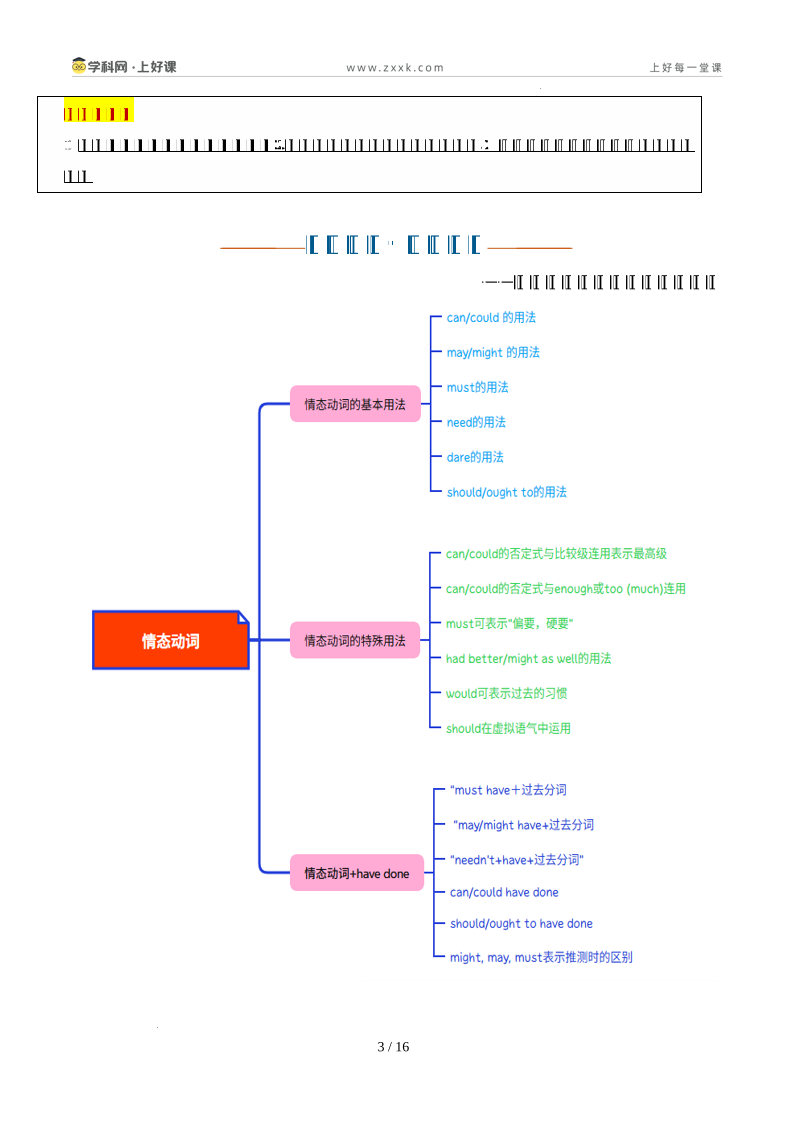
思维建模·脉络梳理
——搭建知识框架,构建系统思维
考点精讲·靶向突破
——拆解核心考点,归纳解题范式
知●识●解●构
知识点1 情态动词的基本用法
1、can和could表能力
(1)意为“能够会”,表示体力或脑力等方面的能力
Can you ride a bike?你能骑自行车吗?
I could run faster then. 我那时能跑得更快一些。
(2)当can和could表示能力时,有时可以用be able to替换,could表过去,can表现在,有时也可表将来,但不能与will, shall等助动词连用;be able to可以用于将来、完成等时态。
With his help, we shall be able to build the house.在他的帮助下,我们将能够建造房屋了。
(3)当我们要强调过去确实使用了某种能力时,要用was(were)able to,而不用could。was able to 表示“设法干成某事”,即succeed in doing sth.或manage to do sth.而could只表示“具备某种能力”。
He is such a good swimmer that he was able to save the two boys from drowning the other day.他是一位游泳健将,因此前些日子他救上了两名溺水男孩。
2、must和have to
(1)must表示“必须”,“应该”。否定式must not(mustn't)表示“不应该”,“不许可”,“不准”,“禁止”等。在回答带有must的问句时,否定式常用need not(needn't)或don't have to 表示“不必”,而不用must not (mustn't)。
The work must be finished as soon as possible.这件工作必须尽快完成。
You mustn't speak like that. 你不能那样说话。
(2)have to表示“必须”,“不得不”,在这个意义上与must与很接近,但must表示的是说话人的主观看法,而have to 表示的却是客观需要。have to 有更多的时态形式:现在时,过去时,将来时等,而must只有现在时形式。have to 不能代替表推测的must,但在虚拟条件句中用had had to+动词原形表示与过去相反的情况。
I have to go now. 我得走了。(客观需要)
I must go now. 我必须走。(主观看法)
I shall have to go to school tomorrow. 明天我得去上学了。
You must be joking.你一定是在开玩笑。(不能用have to)
3、shall
(1)用在疑问句中,用来征求对方意见或请求指示或向对方提出建议,用于第一、三人称。
Shall we start the meeting now?我们现在开会好吗?
Shall those books be sent over to you at once?那些书立即给你送过来吗?
(2)用于第二、三人称,表示说话者的意图、警告、命令、决心、许诺等, 主语的行动受讲话者支配。意为:必须, 应, 可
He shall suffer for this. He shall pay you what he owes you. 他必将自食其果,他欠的债一定得还。(威胁)
He shall have a bicycle for his birthday.他可以得到一架自行车作为生日礼物。
(3)在问句中, 征 询对方对于主语行动的意见(提供帮助, 提出建议、要求给予指示和征求意见), 主要用于第一、三人称。意为:… 好吗? 要不要…?
Shall I carry your bag ?我帮你拿手提包, 好吗?
Shall he come to see you ? 要不要他来看你?
(4)用于第三人称, 在条约、规定、法令等文件中表示义务或规定。意为:应, 必须
No reader shall remove a book from the library without consent of the librarian.
非经管理员同意, 读者不准把书带出图书馆。
4、、should
(1)表“劝告、建议”时,可译成“应该”,这时可用ought to替换。
You should keep your promise.你应该遵守诺言。
(2)表示委婉陈述自己的意见。
I should think you are right. 我想你是对的。
I should advise you not to go now. 我劝你现在别走。
(3)表示惊异赞叹、忧虑、惋惜、欢欣、不满等情绪。
Why should you think so?你为何这样想呢?(不满)
It's strange that it should be so hot today. 很怪,今天怎么这么热。(惊奇)
(4)表推测
意为“可能,该”,表示对现在情况、将来情况的某推测。
They should be home by now. 他们现在应当到家了。
The book you need should be in our library. 你需要的那本书我们图书馆应该有。
5、ought to
(1)ought没有人称或时态的变化,后跟带to的不定式。常译作“应该”,“应当”等,和should同义,只是口气稍重一些。其否定式为ought not to (oughtn't to ),疑问式为Ought I /you to…?
You ought to start at once你应该立刻出发。
(2)表示没有履行过去的义务时,用“ought to +完成时。
You ought to have told me about this earlier. (But you didn't)你本来应该早一点把此事告诉我。(但没有)
6、used to
used to只有一种存在形式,一般过去式。具体用法如下:
(1)在肯定句中,表示现在己经不再发生,不复存在的过去的行为和存在的状态。
He used to smoke 20 cigarettes a day. 他过去每天抽20支烟。
There used to be a building ther(5) 那里曾经有座大楼。
(2)在疑问句、否定句或强调句中,可以有两种形式:
Used you to go to work by bike?
Did you use to go to work by bike?你过去常骑车上班吗?
He usedn't to smoke as much as he does now.
John used to be very fat, didn't he/usedn't he?约翰曾经很胖,是吗。
—Used you to live in Shanghai?—你过去曾住在上海?
—Yes, I did/ I used to. —是的。
(3)used to 与would的区别:
情态动词used to 和would都可以表示过去的习惯性动作,但有下列不同点:
(1) used to 表示确定的过去时间,不需与确定的过去时间连用,而would一般与时间状语连用。used to 含有与现在相比较的意思,而would没有。
He used to get up early. 他过去常常早起。(现在不早起了)
The old man would go to the park every day to have morning exercises. 那位老人以前每天都去公园晨练。(没有与现在相比较的意思)
(2)used to 指过去反复发生或持续发生的动作,而would仅指地去反复发生的动作,不指持续发生的动作;另外,used to 即既表动作还表状态,而would只表动作不表状态,因此下列句中的used to 不能用would代替。
People used to think that the earth was flat. 人们过去认为地球是平的。
She used to be very nervous in the exam. 她以前考试常常很紧张。
(3)used to 表客观事实,would则表示一种意愿。
When he lived by the sea, he used to suffer diseases. 他住在海边时,经常有病。(used to 不能换成would)
There used to be a small village here.这里曾经有一个小村庄。
7、dare
dare作情态动词表示“敢”,主要用于否定句、疑问句和感叹句,无词形变化,单数第三人称不加-s。
(1)通常用于否定句和疑问句,其用法同其他情态动词。
She daren't even look out. 她甚至不敢向外看。
Dare you go to school by yourself?你敢独自一人去上学吗?
How dare you say I am unfair?你怎么敢说我不公平!
I dare not sleep in that room again.我再也不敢睡在那房间了。
(2)dare在句子含有否定意义或疑问意义时;在简略答语中;状语从句中。也用于肯定句中。
I hardly dare think of it. 我简直不敢想这事。
He asked me whether I dare swim across the river. 他问我是否敢游过河。
—You daren't climb that tree, dare you?你不敢爬那棵树,对吗?
—Yes , I dare. 不,我敢。
I won't allow you to swim across the river, even if you dare do it. 即使你敢,我也不愿你游过河去。
8、need
(1)表示 "必要;必须",通常用于否定句和疑问句
Need he work so hard? 他需要这么用功吗?
You needn't worry about it. 你不必为此担忧。
I hardly need say how much we missed you. 不必说我们多么的想念你。
(2)在肯定句中,它被must或have to 取代。
—Need I come? —我需要来吗?
—Yes, you must/have to. —需要。
You needn't see him, but I must /have to. 你不必去看他,但我必须去。
(3)“need+一般式”,通常表现在和未来,有时也可指过去。
She need not come. 她不必来。(现在或将来)
We were told that we needn't do that. 我们被告知不必做那事。(过去)
知识点2 情态动词的特殊用法
(1) can/could的否定式与比较级连用表示最高级。
This bowl of noodles smells amazing! The aroma can't be any better! (香味不可能是更好了 → 香味棒极了)
(2)can/could的否定式与enough或too (much)连用表示“再……也不为过”。
To master a new language, consistent practice is key. You can't practice enough. (你练习再多也不够 → 怎么练都不够/练再多也不过分)
If you see a student struggling and discouraged, you couldn't be too supportive or encouraging. (你给予再多支持或鼓励也不为过 → 越支持/鼓励越好)
(3)must可表示“偏要,硬要”,常用于疑问句或条件状语从句中。
Must you ask me such a question?你非得问我这样的问题吗?
mustn't 意为“不要,千万别”,表示禁止。
Children mustn't play with fire.孩子们不能玩火。
(4) had better/might as well的用法
①had better意为“最好”,后面接动词原形,否定式为had better not do。
We had better take an umbrella in case it rains.以防下雨,我们最好带把伞。
②may/might as well表示“最好;不妨”; “倒不如……,还是做……好”。
The heavy rain ruined our trip. We might as well have stayed at home.
大雨毁了我们的旅行。我们还不如待在家里。
(5)would可表示过去的习惯,与used to相比,前者常表示过去反复的动作,后者常表示过去的状态或习惯,现在已不复存在。
used to+动词原形表示过去的习惯动作或状态,现在不再发生或不存在。疑问式和否定式有两种。
There used to be a building at the street corner, but it has been pulled down.过去在街角有一幢大楼,但现在已经被拆掉了。
I used not/didn't use to like opera. 我过去不喜欢歌剧。
Used you/Did you use to go to school on foot?你过去常常步行去上学吗?
(6)should还可以用在if引导的虚拟条件从句中。should置于句首时,省略if,相当于“万一”的意思。
If it were not raining, we should go for a picnic.
如果现在不下雨的话,我们就出去野餐了。
Should you change your mind, please let us know.
万一你改变主意,请让我们知道。
should还可用在以 why, who, how等开头的疑问句或某些感叹句中,带有感情色彩。意为“竟然,竟会”。
Why should you be so late today?
你今天竟然来得这么晚?
知识点3 “情态动词+have done”的用法
“情态动词+have done”用法是高考的难点,主要是给出动词,让考生根据语境选择适当的情态动词填空,既可能考查情态动词的使用,也可能考查动词过去分词的形式。
1、“must have+过去分词”表对过去的推测,“一定已经,准是已经….”,用于肯定句。表示否定,要用“can’t/couldn’t+ have+过去分词”,意 思 是“不可能”.
The streets are wet. It must have rained. 街道是湿的,准是下雨了。
The money can’t have been lost there. 钱不可能是在那儿丢的。
2、 “may/might have+过去分词”表示对过去的推测,“也许已经┅,可能已经…”。用于肯定或否定句中。疑问句中用can或could. “might(不是may)have+过去分词”也表示“本来可以…”。
He may have gone to bed. 他可能已经上床睡觉了。
You might have succeeded if you had tried. 假如你尝试过,或许已经成功了。(虚拟语气)
3、“needn’t+have+过去分词”表示“作了不必做或不需要做的事”。可译成“本不必”。
I needn’t have borrowed the money yesterday. 昨天我根本不需要借钱的。(实际上已经借了)
4、can/could have done在疑问句、否定句中,表示怀疑和不可能,这时没有时间上的差别,只是could的语气更弱一些:
Who can/could have taken them? 谁会把它们拿走了呢?
He can’t/couldn’t have taken it home. 他不可能是带回家去了。
could have done(但不是can)在肯定句中,表示“本来可以…;差点就要…”。
We could have started a little earlier. 我们其实可以更早一些动身的。
5、should/ought to have done表示“过去应该做谋事却没有做”;“should not/ought not to have+过去分词”表示“做了不应该做的事”。含有责备或遗憾的意思。
She should/ought to have gone there alone. 她本该一个人去那里的。(实际上不是)
The boy shouldn’t have been playing the piano. 那孩子不应该一直在弹钢琴。
6、might, may, must表示推测时的区别: may,might, must可表示 推 测“可能”.根据表示可能性的大小,我们把这三个词排列为:might<may<must(或许→可能→肯定)。例如:
It might rain tomorrow. (将来)明天可能下雨。
They might be watching TV now. (现在)他们可能正在看电视。
Jane might have visited the Summer Palace last year. (过去)去年珍妮可能去过颐和园。
He may have something important to do. (现在)他可能有更重要的事要做。
They may have been to Shanghai last summer. (过去)去年夏天他们可能去过上海。
There must be something wrong with him. (现在)他肯定出问题了。
He must have made a mistake. (过去)他一定是犯了个错误。
名师提醒:情态动词的重点和难点是:情态动词之间的区别;表示“推测”的表达方式;以及“情态动词+have+过去分词”的含义。
考●向●破●译
考向1 考查情态动词基本用法
1.Handshaking have started as an ancient custom to demonstrate to a stranger that you had no weapon in your hand.
【答案】may/might
【详解】考查情态动词。句意:握手最初可能是一种古老的习俗,用来向陌生人展示你手中没有武器。分析句子结构可知,本句中主语为动名词Handshaking,为单数,而谓语动词是have started,且have是用的原形;结合句意,此处表达一种猜测,所以应该用情态动词may/might have done表示“有可能”。故填may或might。
2.He have finished writing the paper. He hadn’t written a single word when I left him fifty minutes ago.
【答案】can’t
【知识点】can’t/couldn’t have done的用法
【详解】考查情态动词。句意:他不可能写完论文。50分钟前我离开他时,他一个字也没写。分析句子结构可知,空后为动词原形have,由此可知,此处应为情态动词,根据下文中的“He hadn’t written a single word when I left him fifty minutes ago.”可知,50分钟前离开时,他还没有写一个字,由此可知推断,此处表示他“不可能”写完论文。故填can’t。
3.Your cousin have enjoyed his trip in Jixian County, didn’t he? He looks amazingly different.
【答案】must
【知识点】must have done、must have done的用法
【详解】考查must have done用法。句意:你表弟在蓟县的旅行一定很愉快,不是吗?他看起来很不一样。根据He looks amazingly different.可知,此处是对过去肯定的推测,表示“一定做了某事”,使用must have done,故填must。
4.The teacher suggests that we remember English words by reading them aloud instead of by just seeing and writing them.
【答案】should
【知识点】表示建议、命令等动词后的宾语从句+(should) do
【详解】考查虚拟语气。句意:老师建议我们应该通过大声朗读来记住英语单词,而不是仅仅通过看和写来记住。 在suggest后面的宾语从句中,谓语动词使用“(should)+动词原形”,故填should。
5. Despite all the attention I was getting I as well not have been there. I felt a stranger.
【答案】might
【详解】考查情态动词。句意:尽管我受到了如此多的关注,我还是不去那里为好。我觉得自己是个陌生人。might as well意思是:还是……的好,不妨;不如;何妨(含轻微劝告的意思)。故填might。
6.Her appearance has changed so much that you well not recognize her. (情态动词) (用适当的词填空)
【答案】may/might
【详解】考查情态动词。句意:她的外貌变化太大了,你很可能认不出她来。may/might well“很可能”,固定短语,故填may/might。
7.It was said that the old lady sit under the big tree, waiting for her son to return from the front. (情态动词) (用适当的词填空)
【答案】would
【详解】考查情态动词。句意:据说那位老太太总会坐在大树下,等着儿子从前线回来。结合句意可知,此处表示过去反复进行的动作,应用情态动词would。故填would。
8.Your cousin have enjoyed his trip in Jixian County, didn’t he? He looks amazingly different. (用适当的词填空)
【答案】must
【详解】考查must have done用法。句意:你表弟在蓟县的旅行一定很愉快,不是吗?他看起来很不一样。根据He looks amazingly different.可知,此处是对过去肯定的推测,表示“一定做了某事”,使用must have done,故填must。
9.He have finished writing the paper. He hadn’t written a single word when I left him fifty minutes ago. (用适当的词填空)
【答案】can’t
【详解】考查情态动词。句意:他不可能写完论文。50分钟前我离开他时,他一个字也没写。分析句子结构可知,空后为动词原形have,由此可知,此处应为情态动词,根据下文中的“He hadn’t written a single word when I left him fifty minutes ago.”可知,50分钟前离开时,他还没有写一个字,由此可知推断,此处表示他“不可能”写完论文。故填can’t。
10.They ________ very well feel a need to step up their demands upon hearing the awful findings of the special report on the ocean and cryosphere v(低温层) in a changing climate, released on Wednesday by the International Panel on Climate Change.
【答案】may##might
【解析】考查情态动词。句意:在听到国际气候变化专门委员会(ipcc)周三发布的《气候变化下的海洋和冰冻圈》特别报告的可怕发现后,他们可能很有必要提高自己的要求。分析句子结构可知,空后动词为原形,再结合句意可知,此处应为情态动词,表示推测,译为“可能”应使用may或者might。故填may/might。
11.Handshaking have started as an ancient custom to demonstrate to a stranger that you had no weapon in your hand. (用适当的词填空)
【答案】may/might
【详解】考查情态动词。句意:握手最初可能是一种古老的习俗,用来向陌生人展示你手中没有武器。分析句子结构可知,本句中主语为动名词Handshaking,为单数,而谓语动词是have started,且have是用的原形;结合句意,此处表达一种猜测,所以应该用情态动词may/might have done表示“有可能”。故填may或might。
12.But grocery store bread stay fresh during long shipping and storage times. So companies often put a chemical preservative in it. (用适当的词填空)
【答案】must
【详解】考查情态动词。句意:但是食品杂货店的面包必须在漫长的运输和贮存期间保持新鲜度。分析句子结构可知,bread是句子的主语且是单数形式,而空格后动词stay用了动词原形。换言之,空格要填上一个词使得stay保持形式不变,考虑情态动词。再分析句意,长时间的运输和贮存肯定会使面包失去新鲜度,因此就得想办法让它保持新鲜。must语气最强烈。故填must。
13.Some scientific evidence suggests musical training before the age of seven have a significant impact on the brain’s development. (用适当的词填空)
【答案】can
【详解】考查情态动词。句意:一些科学证据表明人在七岁以前的音乐训练对大脑的发育可能有重要影响。can在肯定句中表示理论上的可能性;结合句意可知,can的该用法符合句意表示“可能”。故填can。
14.Students can’t wear jumpers, jackets or coats indoors. Also, girls and boys wear black leather shoes and black socks. Sports shoes are not allowed. (用适当的词填空)
【答案】must
【详解】考查情态动词。句意:学生不能在室内穿套头衫、夹克或外套。此外,女孩和男孩都必须穿黑色的皮鞋和黑色的袜子。不穿运动鞋。根据上下文可知这是规定,所以设空处应是必须的意思,后接动词原形,所以用情态动词must,故填must。
15.“I hardly stand the idea of having to talk to strangers on the Tube on my way to work,” he told the BBC. (用适当的词填空)
【答案】can
【详解】考查情态动词。句意:“我几乎无法忍受在上班的地铁上和陌生人说话,”他告诉BBC。结合句意空处应填情态动词can,表示能力。故填can。
考向2 考查情态动词特殊用法
1.They have missed the plane, or perhaps they have been prevented from coming for some reason. (用适当的词填空)
【答案】may
【详解】考查情态动词。句意:他们可能错过了飞机,或者由于某种原因被阻止来。由“or perhaps they have been prevented from coming for some reason”可知,句子表示“他们可能错过了飞机,或者由于某种原因被阻止来”,空格处是对过去的推测,表示“可能做过某事”,是may have done,因此空格处是may,故填may。
2.I have passed my examination easily, but I made too many stupid mistakes. (用适当的词填空)
【答案】could/would/might/should
【详解】考查情态动词+have done。句意为:我本能很轻松地通过考试,但我犯了很多愚蠢的错误。分析句子结构和句意可知,此处使用的是虚拟语气,与过去事实相反,谓语动词用would/could/might/have done。故填could/would/might/should。
3.Mr White should (arrive)at 8:30 am for the meeting, but he didn't show up. (所给词的适当形式填空)
【答案】have arrived
【详解】考查情态动词。句意:怀特先生应该在上午8:30到达参加会议,但他没有出现。通过下文的句意,但他没有出现,可知这里使用should have done“过去本应该做某事却未做”符合题意,故填have arrived。
4.I didn’t see her in the meeting room this morning. She not have spoken at the meeting. (用适当的词填空)
【答案】could
【详解】考查情态动词。句意:今天早上我在会议室没看到她。她不可能在会上发言。根据句意以及前面一句中didn’t see可知,此处为couldn’t have done sth.表示对过去情况进行推测,意为“过去不可能发生某情况”。故填could。
5.At that time, the people in the castle were frightened, thinking that the Lord Carnarvon not have opened the pharaoh’s tomb and they firmly believed that it was his opening the tomb that caused the tragedy. (用适当的词填空)
【答案】should
【详解】考查情态动词。句意:当时,城堡里的人们都很害怕,认为卡那封勋爵本不应该打开法老的坟墓,他们坚信是他打开坟墓才导致了这场悲剧。根据语境可知,此处表示“卡那封勋爵本不应该打开法老的坟墓”,应用情态动词should,构成“should not have done”的结构,意为“本不应该做某事(而实际上做了)”。故填should。
6.According to the club’s regulations, every member abide by the rules and respect other members. (用适当的词填空)
【答案】shall
【详解】句意:依据社团规章,每位成员必须遵守条例、尊重其他成员。用于规章制度、条约中,表示强制规定,意为“应当、必须”,用shall。
7.You can’t imagine a well-behaved man be so rude to a lady. (情态动词) (用适当的词填空)
【答案】should
【详解】考查should用法。句意:你无法想象一个彬彬有礼的男人竟然对一位女士如此粗鲁。结合句意可知,此处表示“竟然”,使用情态动词should,故填should。
8.You’d better send Lisa back home, because it’s too late and she not go home alone at night. (用适当的词填空)
【答案】dare
【详解】考查情态动词。句意:你最好送丽莎回家,因为太晚了,她不敢晚上一个人回家。由go home alone at night可知,句子表示“她不敢晚上一个人回家”,dare not do sth.意为“不敢做某事”,因此空格处是情态动词dare。故填dare。
9.We as well take the subway to get there since the traffic is so bad.(用正确的情态动词填空)
【答案】may/might
【详解】考查情态动词。句意:既然交通如此拥挤,我们还是乘地铁去吧。此处是固定搭配:may as well或者might as well意为“只好(做);(做……)也无妨”。故填may或者might。
10.Time is very limited, so you get to that mountain village within 15 minutes. (用适当的词填空)
【答案】shall
【详解】考查情态动词。句意:时间很紧,你必须在15分钟内到达那个山村。由“Time is very limited”可知,句子表示“时间很紧,你必须在15分钟内到达那个山村”,shall与第二、三人称连用,表示命令,意为“一定,必须”。故填shall。
真题溯源·考向感知
——溯源真题逻辑,感知高考考向
题型1 情态动词在语法填空的运用
例1(2025~2026学年金山区二模)
The carnival, therefore. is more than a business show. It (4)__________also serve as acultural bridge, connecting the past and future, tradition and modern life.Famous for great quality and special features, these products perfectly satisfy modern people'sneed for special and high-end goods.
【答案】
4. can
考查情态动词。句意:因此,这个嘉年华不仅仅是一个商业展示。它也可以作为一个文化桥梁……。根据上下文逻辑,此处表示该活动“能够、可以”起到文化桥梁的作用,强调其功能或可能性。情态动词can符合此意。故填can。
例2(2025~2026学年宝山区二模)
Images of cathedrals like Notre-Dame ____6____ convey part of their beauty and splendor, but they don't compare with the experience of seeing them in person.
【答案】
6. can
考查情态动词。句意:像圣母院这样的大教堂的图片可以传达出它们的一部分美丽和辉煌,但与亲眼看到它们的体验相比,还是有所不及。根据语境可知,此处表示“能够,可以”,应用情态动词can,后接动词原形convey,说明图片可以展现出建筑的部分特质。故填can。
例3(2025~2026学年杨浦区二模)
This kind of thing isn’t all that new, but the Roborock Saros Z70 has an extra feature: an arm with a pair of pincers (钳子) that it ____6____ use to pick socks, underpants and other things off the floor as it moves around the home.
【答案】6. can
【6题详解】
考查情态动词。句意:这类产品并非全新的事物,但 Roborock Saros Z70有一个额外的功能:带有钳子的
机械臂,它可以在家中移动时使用这些钳子从地板上捡起袜子、内裤和其他物品。该空是that引导的定语从句中的谓语部分,it为主语,关系词that指代先行词pincers作动词use的宾语,主语是单数名词,谓语动词use使用了原形可知,应该是和情态动词连用,此处是表示这款机器人的一个功能表示“它能够使用这个钳子”,应填can。故填can。
例4(2025~2026学年嘉定区二模)
Therefore, rather than criticize an adaptation, we ____10____ reflect on why it differs from our imagined version and what that reveals about our perceptions.
【答案】
10. ought to##should
考查情态动词。句意:因此,与其批评改编作品,我们应该思考一下它为何与我们想象的版本不同,以及这反映出我们的认知是怎样的。此处表示建议或责任,与上一句的Therefore相呼应,ought to/should意为 “应该”,符合语境。故填ought to/should。
例5(2025~2026学年青浦区二模)
A red horse toy produced by Happy Sister in the city of Yiwu in the east of China (1) ________ (mean) to wear a broad smile, but a factory error meant it hit the shops, wearing a worried look. Because the smile was placed upside down, the horse’s nostrils (鼻孔) (2) ________ be interpreted as tears.
【答案】
2. could/might
考查情态动词。句意:因为笑容被颠倒了,马的鼻孔可能被解读为眼泪。结合句意,此处表示“可能、能够”,could和might均符合语境,表推测,语气较为委婉,符合上下文逻辑。故填could/might。
例6(2025·上海松江·二模)
The NHS recommends that adults aged 19 to 64 get at least 150 minutes of moderate or 75 minutes of intense activity weekly. However, research has presented conclusive evidence that even very short intervals of activity 6 be beneficial.
【答案】 6.can/will
【解析】考查情态动词。句意:然而,研究已经提供了确凿的证据表明,即使是非常短的运动间隔也是有益的。根据be动词的原形可知,空处应使用情态动词,表示“短时间的运动对于健康有益”这种可能性,可使用情态动词can/will,表示“能够/将会”。故填can/will。
例7(2025年徐汇一模)
A trained Boltzmann machine can recognize familiar traits (特质) in information it has not previously seen. Imagine meeting a friend’s brother or sister, and you can immediately see that they ___7___ be related. In a similar way, the Boltzmann machine can recognize an entirely new example ___8___ it belongs to a category found in the training material.
【答案】7. must
【解析】考查情态动词。句意:想象一下,当你遇到朋友的兄弟姐妹时,你肯定可以立刻看出他们有亲戚关系。根据空前they和空后be可知,空处需用情态动词must表示“肯定”。故填must。
例8(2025年静安一模)
But people who love essential oils often say that there’s an oil for everything. They claim these oils can be useful in a variety of ways. Since long ago, Atlanta Institute for Aromatherapy ____4____ (collect) examples of people harmed by essential oils, in an effort to convince oil fans that these things are not always harmless and ____5____ be treated seriously.
【答案】5. should
【解析】考查情态动词。句意:很久以前,亚特兰大芳香疗法研究所一直在收集人们被精油伤害的例子,试图说服精油爱好者,这些东西并不总是无害的,应该认真对待。根据句意和空格后的动词原形be可知,空格处应该填入应该一个情态动词,且意义为“应该”,所以用should。故填should。
例9(2025年奉贤一模)
According to some scientists, no matter what task you’re engaged in, lyrics in music ___5___ negatively impact your attention. However, if ___6___ (listen) to lyric-less or classical tunes annoys you, you’re probably not going to be very productive, so it ultimately depends on your personal preference.
【答案】5. may##might##can##could
【解析】考查情态动词。句意:根据一些科学家的说法,无论你从事什么任务,音乐中的歌词都可能/可以注意力产生负面影响,应用may/might表示可能,用can/could表示可以。故填may/might/can/could。
例10(2025年松江一模)
Kevin Obonyo, an economics lecturer and kung fu instructor at Strathmore University, said the growing enthusiasm for kung fu across Africa _____10_____ be owed to the strengthening of China-Africa relations solidified through projects like the Belt and Road Initiative.
【答案】10. could##might##should
【解析】考查情态动词。句意:斯特拉斯莫尔大学经济学讲师兼功夫讲师Kevin Obonyo表示,非洲各地对功夫的热情日益高涨,这可以/可能/应该归功于通过“一带一路”倡议等项目巩固的中非关系的加强。空后是be owed to...,所以空处应用情态动词。根据语境可知,中国功夫在非洲受欢迎这一现象可以/可能/应该归功于中非关系的加强,应用could(可以)/might(可能)/should(应该)。故填could/might/should。
例11 (2025·上海徐汇·二模)
“This teaches us that we 10 not make assumptions about animal intelligence based on whether they are 'built' just like us,” she said.
【答案】10.should/must/can
【解析】考查情态动词。句意:她说:“这告诉我们,我们不应该 / 一定不能 / 不能仅仅根据动物是否和我们‘构造’相似就对它们的智力做出假设。”根据语境,这里表达的是一种建议或告诫的语气,“should not” 表示 “不应该”,“must not” 表示 “一定不能”,“can not” 表示 “不能”,这三个情态动词的否定形式都能表达出 “不可以仅凭动物与人类构造相似与否就评判其智力” 的意思,符合句子逻辑。故填 should /must/can。
例12(2025·上海嘉定·二模)
But no amount of skill 5 make overcoming the Arctic any easier. The wind screamed like a wild beast, and the temperature dropped to a freezing minus 60 degrees Fahrenheit. Henson later wrote in his journal, “Freezing of the whole front part of the face is an ordinary occurrence.”
【答案】 5.could
【解析】考查情态动词。句意:但再多的技能也无法使征服北极变得更容易。根据语境,这里表示 “能够” 的意思,且是过去的情况,用 “could” 表示过去的能力或可能性。故填 could。
例13(2025·上海静安·二模)
However, some fitness experts believe that McCarthy might just be overstating its effect. According to Kim Baylor, a personal trainer, any exercise that involves full body motions 8 hardly develop a lot of strength.
【答案】8.can
【解析】考查情态动词。句意:据私人教练金·贝勒说,任何涉及全身运动的锻炼几乎都不能发展出很大的力量。根据语境可知,此处表示能力上“能够”,用情态动词can符合语境。故填can。
例14(2025·上海宝山·二模)
Besides OpenAI's Sora, Google has two products called Lumiere and VideoPoet, but like Sora, they 9 not be open for public use yet. These tools are still being seriously tested and improved to ensure that people can't use them to produce inappropriate content or break laws.
【答案】 9.may
【解析】考查情态动词。句意:除了OpenAI的Sora之外,谷歌还有两款名为Lumiere和VideoPoet的产品,但和Sora一样,这些产品可能尚未对公众开放使用。根据句意和空格后的动词原形be可知,空格处应该填入一个情态动词,且意义为“可能”,所以应该用may。故填may。
例15(2025·上海奉贤·二模)
“There was a blanket of stars right above me, “Sami reminisces.” I 2 see thousands of them stretching endlessly. It was a breathtaking sight.”
【答案】 2.could
【解析】考查情态动词。句意:我可以看到成千上万的山峦绵延不绝。后跟动词原形,表示“可以,能够”用can,发生在过去用could。故填could。
例16(2025年宝山一模)
In the heart of the city where towering buildings go up into the sky, firefighters spring into action. Within 60 seconds of hearing a bell ring, they (1) _____ (dress) and rushing toward the chaos of a high-rise on fire. They have to head inside, knowing that floors could collapse under them and ceilings could fall on their heads. One wrong decision (2) _____ mean death.
【答案】2. might
【解析】考查情态动词。句意:一个错误的决定可能意味着死亡。此处表示一种可能性,意为 “可能”,应用情态动词 “might”,故填 “might”。
题型2 情态动词在句子翻译中的运用
例1 (2025·上海浦东·一模)
你能帮我去文具店买一把三角尺吗? (favour)
【答案】Could you do me a favour and buy a triangle ruler from/at/ in the stationery store?
【详解】考查情态动词和动词短语。根据所给中文句子,本句是表委婉的请求,用情态动词could提问,后接动词原形,“帮某人的忙”根据题干要求,使用动词短语do sb. a favour,“购买”用动词buy,两个动词是并列关系,用and连接,“三角尺”用a triangle ruler,“在文具店”可用介词from,也可用at或者in,翻译为:from/at/ in the stationery store。故翻译为Could you do me a favour and buy a triangle ruler from/ at/ in the stationery store?
例2(2025·上海静安·一模)
我们不妨送她一个带遥控功能的空气净化器作为乔迁礼物。(might as well)
【答案】We might as well give her an air purifier with remote control as a housewarming gift.
【详解】考查情态动词和名词。分析句子可知,表示“我们”应用we,在本句中作主语;表示“不妨”应用 might as well,为固定搭配,该短语由情态动词may和副词as well组成,并且常跟原形动词连用;表示“送某人某东西”应用give sb sth,为固定搭配,表示“一个带遥控功能的空气净化器”应用an air purifier with remote control,在本句中作直接宾语,其中with remote control(带遥控功能的)为介词短语作后置定语;表示“为乔迁礼物”应用 as a housewarming gift,为介词短语作状语。故翻译为We might as well give her an air purifier with remote control as a housewarming gift.
例3(2025·上海闵行·二模)
倘若人工智能完全取代人类劳动,那岂不是每个人都面临失业的风险?(risk)
【答案】If artificial intelligence completely replaces human labor, wouldn’t everyone be at risk of unemployment?
【详解】考查情态动词和从句。根据句意可知,本句为if引导的条件状语从句,从句用一般现在时表示将来。“人工智”为artificial intelligence,作主语;“完全地”为 completely,作状语;“取代”为 replace,作谓语;“人类劳动”为 human labor,作宾语。“倘若人工智能完全取代人类劳动”翻译为:倘若人工智能完全取代人类劳动。“那岂不是每个人都面临失业的风险?”表示一种反问和委婉的语气,用情态动词wouldn’t+动词原形。“面临......风险”为 be at risk of ;“失业”为unemployment,作宾语。故翻译为:If artificial intelligence completely replaces human labor, wouldn’t everyone be at risk of unemployment?
例4(2025·上海徐汇·二模)
该公司在人工智能领域的成就和影响力不容小觑。(field)
【答案】The company’s achievements and influence in the field of artificial intelligence must not be underestimated.
【详解】考查情态动词、名词、固定短语以及被动语态。表示“该公司的”,使用名词所有格the company’s;“成就和影响力”翻译为achievements and influence;“在……领域”根据题目要求使用短语in the field of ;“人工智能”是artificial intelligence;即主语“该公司在人工智能领域的成就和影响力”翻译为:The company’s achievements and influence in the field of artificial intelligence;“不容小觑”即“一定不能被低估”,使用被动语态,“一定不能”用must not,“被低估”翻译为be underestimated,放在情态动词后用动词原形。故翻译为The company’s achievements and influence in the field of artificial intelligence must not be underestimated。
例5(2025·上海嘉定·一模)
随着技术革新,人人都能拍一段视频上传到平台。 (With)
【答案】With technological innovation, everyone can shoot a video and upload it to the platform.
【详解】考查情态动词用法。句子是描述一个事实,使用一般现在时;表示“随着技术革新”为With technological innovation;主语为everyone;“能”使用情态动词can,后接动词原形;表示“拍一段视频”为shoot a video;表示“上传到平台”为upload it to the platform。故翻译为With technological innovation, everyone can shoot a video and upload it to the platform.
例6(2025·上海宝山·一模)
请记住:面对困难和挑战,恒心和耐心可以帮助我们攻坚克难,走向成功。(overcome)
【答案】Please remember: In the face of difficulties and challenges, perseverance and patience can help us overcome them and lead us to success.
【详解】考查情态动词及祈使句,固定短语和动词。根据所给中文句子,“请记住”为祈使句句型,译为“Please remember”,“面对”为固定搭配:in the face of,“困难和挑战”译为“difficulties and challenges”,“恒心和耐心”作主语,译为“perseverance and patience”,“可以”用情态动词can,“帮助我们攻坚克难,走向成功”用固定搭配:help sb. do sth.,“攻坚克难”根据题干要求,用动词overcome,“走向成功”,用固定搭配:lead sb. to success。故译为:Please remember: In the face of difficulties and challenges, perseverance and patience can help us overcome them and lead us to success.
例7(2025·上海静安·一模)
如果准新娘们认为婚纱是重中之重,那只能削减其它项的开支以防婚礼预算超支。(cut)
【答案】If brides-to-be think that wedding dresses are the top priority, they can only cut back on other expenses to prevent the wedding budget from overspending.
【详解】考查情态动词、状语从句和动词短语。本句是一个条件状语从句,从句为一般现在时,主句用情态动词+动词原形。连词使用if导,表示“如果”。“brides-to-be”表示“准新娘”,“think”后接宾语从句,连接词为that;表达“婚纱是最重要的事情”用the wedding dresses are the top priority;“削减其它项的开支”为cut back on other expenses ;“以防婚礼预算超支”为prevent the wedding budget from overspending,用不定式作目的状语。故翻译为:If brides-to-be think that wedding dresses are the top priority, they can only cut back on other expenses to prevent the wedding budget from overspending.
例8 2025·上海崇明·二模)
毋庸置疑,我们不可过度依赖人工智能,而应善用其作为工具,辅助我们的生活、学习和工作。(assist)
【答案】No doubt we shouldn’t rely too much on artificial intelligence but rather make good use of it as a tool to assist in our life, study and work.
【详解】考查情态动词用法、固定搭配和非谓语动词。表示“毋庸置疑”应用no doubt;表示“我们”应用we;表示“不可”应用shouldn’t;表示“过度依赖”应用rely too much on,位于情态动词后面,使用动词原形;表示“人工智能”应用artificial intelligence;表示“而应”应用but rather;表示“应善用其作为工具”应用make good use of it as a tool,此处为客观事实,使用一般现在时,主语为we,make用原形;表示“辅助我们的生活、学习和工作”应用assist in our life, study and work,此处为动词不定式作目的状语。故翻译成:No doubt we shouldn’t rely too much on artificial intelligence but rather make good use of it as a tool to assist in our life, study and work.。
例92025·上海静安·二模)
这款高科技智能机器人可以自主学习,智能识别并适应不同环境,确保高效、准确地完成各项任务。(ensure)
【答案】This high-tech intelligent robot can self-learn/autonomously learn, intelligently recognize, and adapt to different environments, ensuring efficient and accurate completion of various tasks.
【详解】考查名词、形容词、动词(短语)、情态动词、非谓语动词以及时态。此句介绍目前机器人的功能,用一般现在时;主语“这款高科技智能机器人”可用名词短语this high-tech intelligent robot;“可以”应用情态动词can;“自主学习”可用动词self-learn,或副词autonomously和动词learn搭配;“智能识别”可用副词intelligently和动词recognize搭配,“适应”可用动词短语adapt to,“不同环境”可用名词短语different environments;“确保高效、准确地完成各项任务”可看作是随着前面谓语行为自然产生的结果,用现在分词作结果状语,“确保”可用动词ensure,“高效、准确地完成各项任务”可理解为“各项任务的高效、准确的完成”,可用名词短语efficient and accurate completion of various tasks。故可译为:This high-tech intelligent robot can self-learn/autonomously learn, intelligently recognize, and adapt to different environments, ensuring efficient and accurate completion of various tasks.
例102024·上海崇明·二模)
配备了高水平的智能系统,这款最新一代的机器人可以即时理解人类意图,并对人类互动做出反应。(equip)
【答案】Equipped with a high level of intelligent systems, this latest generation of robot can instantly understand human intentions and react to human interactions.
【详解】考查名词短语、动词(短语)、形容词、副词和非谓语动词。“配备了高水平的智能系统”可理解为是对主语“这款最新一代的机器人”的补充说明,作状语,用意为“配备”的过去分词短语equipped with和意为“高水平的智能系统”的名词短语a high level of intelligent systems搭配;主语“这款最新一代的机器人”可用名词短语this latest generation of robot,“可以”应用情态动词can,“即时”可用副词instantly作状语,“理解人类意图”可用动词understand和名词短语human intentions搭配,“并”应用并列连词and,“对人类互动做出反应”可用动词短语react to和名词短语human interactions搭配。故可译为:Equipped with a high level of intelligent systems, this latest generation of robot can instantly understand human intentions and react to human interactions.
1 / 19
学科网(北京)股份有限公司
$
专题05 情态动词
内容导航
01
命题透视·考情前瞻
对标素养,研判高考命题趋势
02
思维建模·脉络梳理
搭建知识框架,构建系统思维
03
考点精讲·靶向突破
拆解核心考点,归纳解题范式
考点一 基础情态动词语义
知识解构 知识点 1 can/could/be able to 知识点 2 must/have/need 知识点 3 may/might/should/shall
考向破译 考向 1 能力 / 许可 / 推测类选词 考向 2 must 主客观用法区分
考点二 情态动词特殊句式
知识解构 知识点 1 may as well/had better 知识点 2 否定 + 比较级表最高级 知识点 3 used to 与 would 辨析
考向破译 考向 1 委婉语气翻译 考向 2 特殊句式语境判断
考点三 情态动词 + have done(重难点)
知识解构 知识点 1 对过去推测类结构 知识点 2 虚拟责备类结构 知识点 3 错失机会类结构
考向破译 考向 1 过去语境结构填空 考向 2 虚拟语义翻译
考点四 场景化用法
知识解构 知识点 1 规定 / 命令语气 (shall) 知识点 2 惊讶 / 偏偏等特殊语气 知识点 3 dare/need 用法
考向破译 考向 1 文体语气选词 考向 2 综合语境情态动词运用
04
真题溯源·考向感知
溯源真题逻辑,感知高考考向
命题透视·考情前瞻
——对标素养,研判高考命题趋势
考点要求
考察形式
近年考题
(1)考查常见情态动词的基本语义和用法;
(2)考查情态动词的特殊用法;
(3)在具体语境中尤其句子翻译对情态动词的理解和运用。
语法填空题
句子翻译题
【2023上海秋考】The farmers were taken aback by the king's wisdom. They agreed to the king's decision and thanked him for his fair judgment. From that day forward, they( 26 )__________work together on the land and became the best friends.
【答案】26.could
【解析】考查情态动词。分析句子结构可知,该句不缺少成分,且谓语动词为原型,故考虑情态动词,结合上下文内容可推知,此处想要表述的是“因为国王的决定,他们能够(could)在一起工作,成为最好的朋友”,故填入could。
【2021上海春考】
When you were younger,a piano lesson may have ruined your day. Carrying a flute(长笛) from class to class just for a half-hour lesson(21)_____have seemed pointless. But as you enter the adult world suddenly you realize that knowing how to play an instrument is pretty cool. Yes, even the flute.
【答案】21.may
【解析】考查情态动词。此句中有主语和谓语,在主语和谓语之间的空格缺少情态动词。前句中有may,而且根据句意:“带着笛子从一个班到另一个班仅仅上半小时的课似乎毫无意义。”推测这里也是不确定推测。因此正确答案为may。
考情分析:
高考命题不局限于考查基本用法,而是更加注重在具体语境中尤其句子翻译对情态动词的理解和运用。
必考点:
1. 情态动词的基本意思和用法;
2. 句子翻译对情态动词的理解和运用。
复习目标:
1. 熟练掌握情态动词的基本用法;2.掌握情态动词的一些特殊用法;3. 强化在复杂语境中对情态动词的运用
思维建模·脉络梳理
——搭建知识框架,构建系统思维
考点精讲·靶向突破
——拆解核心考点,归纳解题范式
知●识●解●构
知识点1 情态动词的基本用法
1、can和could表能力
(1)意为“能够会”,表示体力或脑力等方面的能力
Can you ride a bike?你能骑自行车吗?
I could run faster then. 我那时能跑得更快一些。
(2)当can和could表示能力时,有时可以用be able to替换,could表过去,can表现在,有时也可表将来,但不能与will, shall等助动词连用;be able to可以用于将来、完成等时态。
With his help, we shall be able to build the house.在他的帮助下,我们将能够建造房屋了。
(3)当我们要强调过去确实使用了某种能力时,要用was(were)able to,而不用could。was able to 表示“设法干成某事”,即succeed in doing sth.或manage to do sth.而could只表示“具备某种能力”。
He is such a good swimmer that he was able to save the two boys from drowning the other day.他是一位游泳健将,因此前些日子他救上了两名溺水男孩。
2、must和have to
(1)must表示“必须”,“应该”。否定式must not(mustn't)表示“不应该”,“不许可”,“不准”,“禁止”等。在回答带有must的问句时,否定式常用need not(needn't)或don't have to 表示“不必”,而不用must not (mustn't)。
The work must be finished as soon as possible.这件工作必须尽快完成。
You mustn't speak like that. 你不能那样说话。
(2)have to表示“必须”,“不得不”,在这个意义上与must与很接近,但must表示的是说话人的主观看法,而have to 表示的却是客观需要。have to 有更多的时态形式:现在时,过去时,将来时等,而must只有现在时形式。have to 不能代替表推测的must,但在虚拟条件句中用had had to+动词原形表示与过去相反的情况。
I have to go now. 我得走了。(客观需要)
I must go now. 我必须走。(主观看法)
I shall have to go to school tomorrow. 明天我得去上学了。
You must be joking.你一定是在开玩笑。(不能用have to)
3、shall
(1)用在疑问句中,用来征求对方意见或请求指示或向对方提出建议,用于第一、三人称。
Shall we start the meeting now?我们现在开会好吗?
Shall those books be sent over to you at once?那些书立即给你送过来吗?
(2)用于第二、三人称,表示说话者的意图、警告、命令、决心、许诺等, 主语的行动受讲话者支配。意为:必须, 应, 可
He shall suffer for this. He shall pay you what he owes you. 他必将自食其果,他欠的债一定得还。(威胁)
He shall have a bicycle for his birthday.他可以得到一架自行车作为生日礼物。
(3)在问句中, 征 询对方对于主语行动的意见(提供帮助, 提出建议、要求给予指示和征求意见), 主要用于第一、三人称。意为:… 好吗? 要不要…?
Shall I carry your bag ?我帮你拿手提包, 好吗?
Shall he come to see you ? 要不要他来看你?
(4)用于第三人称, 在条约、规定、法令等文件中表示义务或规定。意为:应, 必须
No reader shall remove a book from the library without consent of the librarian.
非经管理员同意, 读者不准把书带出图书馆。
4、、should
(1)表“劝告、建议”时,可译成“应该”,这时可用ought to替换。
You should keep your promise.你应该遵守诺言。
(2)表示委婉陈述自己的意见。
I should think you are right. 我想你是对的。
I should advise you not to go now. 我劝你现在别走。
(3)表示惊异赞叹、忧虑、惋惜、欢欣、不满等情绪。
Why should you think so?你为何这样想呢?(不满)
It's strange that it should be so hot today. 很怪,今天怎么这么热。(惊奇)
(4)表推测
意为“可能,该”,表示对现在情况、将来情况的某推测。
They should be home by now. 他们现在应当到家了。
The book you need should be in our library. 你需要的那本书我们图书馆应该有。
5、ought to
(1)ought没有人称或时态的变化,后跟带to的不定式。常译作“应该”,“应当”等,和should同义,只是口气稍重一些。其否定式为ought not to (oughtn't to ),疑问式为Ought I /you to…?
You ought to start at once你应该立刻出发。
(2)表示没有履行过去的义务时,用“ought to +完成时。
You ought to have told me about this earlier. (But you didn't)你本来应该早一点把此事告诉我。(但没有)
6、used to
used to只有一种存在形式,一般过去式。具体用法如下:
(1)在肯定句中,表示现在己经不再发生,不复存在的过去的行为和存在的状态。
He used to smoke 20 cigarettes a day. 他过去每天抽20支烟。
There used to be a building ther(5) 那里曾经有座大楼。
(2)在疑问句、否定句或强调句中,可以有两种形式:
Used you to go to work by bike?
Did you use to go to work by bike?你过去常骑车上班吗?
He usedn't to smoke as much as he does now.
John used to be very fat, didn't he/usedn't he?约翰曾经很胖,是吗。
—Used you to live in Shanghai?—你过去曾住在上海?
—Yes, I did/ I used to. —是的。
(3)used to 与would的区别:
情态动词used to 和would都可以表示过去的习惯性动作,但有下列不同点:
(1) used to 表示确定的过去时间,不需与确定的过去时间连用,而would一般与时间状语连用。used to 含有与现在相比较的意思,而would没有。
He used to get up early. 他过去常常早起。(现在不早起了)
The old man would go to the park every day to have morning exercises. 那位老人以前每天都去公园晨练。(没有与现在相比较的意思)
(2)used to 指过去反复发生或持续发生的动作,而would仅指地去反复发生的动作,不指持续发生的动作;另外,used to 即既表动作还表状态,而would只表动作不表状态,因此下列句中的used to 不能用would代替。
People used to think that the earth was flat. 人们过去认为地球是平的。
She used to be very nervous in the exam. 她以前考试常常很紧张。
(3)used to 表客观事实,would则表示一种意愿。
When he lived by the sea, he used to suffer diseases. 他住在海边时,经常有病。(used to 不能换成would)
There used to be a small village here.这里曾经有一个小村庄。
7、dare
dare作情态动词表示“敢”,主要用于否定句、疑问句和感叹句,无词形变化,单数第三人称不加-s。
(1)通常用于否定句和疑问句,其用法同其他情态动词。
She daren't even look out. 她甚至不敢向外看。
Dare you go to school by yourself?你敢独自一人去上学吗?
How dare you say I am unfair?你怎么敢说我不公平!
I dare not sleep in that room again.我再也不敢睡在那房间了。
(2)dare在句子含有否定意义或疑问意义时;在简略答语中;状语从句中。也用于肯定句中。
I hardly dare think of it. 我简直不敢想这事。
He asked me whether I dare swim across the river. 他问我是否敢游过河。
—You daren't climb that tree, dare you?你不敢爬那棵树,对吗?
—Yes , I dare. 不,我敢。
I won't allow you to swim across the river, even if you dare do it. 即使你敢,我也不愿你游过河去。
8、need
(1)表示 "必要;必须",通常用于否定句和疑问句
Need he work so hard? 他需要这么用功吗?
You needn't worry about it. 你不必为此担忧。
I hardly need say how much we missed you. 不必说我们多么的想念你。
(2)在肯定句中,它被must或have to 取代。
—Need I come? —我需要来吗?
—Yes, you must/have to. —需要。
You needn't see him, but I must /have to. 你不必去看他,但我必须去。
(3)“need+一般式”,通常表现在和未来,有时也可指过去。
She need not come. 她不必来。(现在或将来)
We were told that we needn't do that. 我们被告知不必做那事。(过去)
知识点2 情态动词的特殊用法
(1) can/could的否定式与比较级连用表示最高级。
This bowl of noodles smells amazing! The aroma can't be any better! (香味不可能是更好了 → 香味棒极了)
(2)can/could的否定式与enough或too (much)连用表示“再……也不为过”。
To master a new language, consistent practice is key. You can't practice enough. (你练习再多也不够 → 怎么练都不够/练再多也不过分)
If you see a student struggling and discouraged, you couldn't be too supportive or encouraging. (你给予再多支持或鼓励也不为过 → 越支持/鼓励越好)
(3)must可表示“偏要,硬要”,常用于疑问句或条件状语从句中。
Must you ask me such a question?你非得问我这样的问题吗?
mustn't 意为“不要,千万别”,表示禁止。
Children mustn't play with fire.孩子们不能玩火。
(4) had better/might as well的用法
①had better意为“最好”,后面接动词原形,否定式为had better not do。
We had better take an umbrella in case it rains.以防下雨,我们最好带把伞。
②may/might as well表示“最好;不妨”; “倒不如……,还是做……好”。
The heavy rain ruined our trip. We might as well have stayed at home.
大雨毁了我们的旅行。我们还不如待在家里。
(5)would可表示过去的习惯,与used to相比,前者常表示过去反复的动作,后者常表示过去的状态或习惯,现在已不复存在。
used to+动词原形表示过去的习惯动作或状态,现在不再发生或不存在。疑问式和否定式有两种。
There used to be a building at the street corner, but it has been pulled down.过去在街角有一幢大楼,但现在已经被拆掉了。
I used not/didn't use to like opera. 我过去不喜欢歌剧。
Used you/Did you use to go to school on foot?你过去常常步行去上学吗?
(6)should还可以用在if引导的虚拟条件从句中。should置于句首时,省略if,相当于“万一”的意思。
If it were not raining, we should go for a picnic.
如果现在不下雨的话,我们就出去野餐了。
Should you change your mind, please let us know.
万一你改变主意,请让我们知道。
should还可用在以 why, who, how等开头的疑问句或某些感叹句中,带有感情色彩。意为“竟然,竟会”。
Why should you be so late today?
你今天竟然来得这么晚?
知识点3 “情态动词+have done”的用法
“情态动词+have done”用法是高考的难点,主要是给出动词,让考生根据语境选择适当的情态动词填空,既可能考查情态动词的使用,也可能考查动词过去分词的形式。
1、“must have+过去分词”表对过去的推测,“一定已经,准是已经….”,用于肯定句。表示否定,要用“can’t/couldn’t+ have+过去分词”,意 思 是“不可能”.
The streets are wet. It must have rained. 街道是湿的,准是下雨了。
The money can’t have been lostthere. 钱不可能是在那儿丢的。
2、 “may/might have+过去分词”表示对过去的推测,“也许已经┅,可能已经…”。用于肯定或否定句中。疑问句中用can或could. “might(不是may)have+过去分词”也表示“本来可以…”。
He may have gone to bed. 他可能已经上床睡觉了。
You might have succeeded if you had tried. 假如你尝试过,或许已经成功了。(虚拟语气)
3、“needn’t+have+过去分词”表示“作了不必做或不需要做的事”。可译成“本不必”。
Ineedn’t have borrowed the money yesterday. 昨天我根本不需要借钱的。(实际上已经借了)
4、can/could have done在疑问句、否定句中,表示怀疑和不可能,这时没有时间上的差别,只是could的语气更弱一些:
Who can/could have takenthem? 谁会把它们拿走了呢?
He can’t/couldn’t have taken it home. 他不可能是带回家去了。
could have done(但不是can)在肯定句中,表示“本来可以…;差点就要…”。
We could have started a little earlier. 我们其实可以更早一些动身的。
5、should/ought to have done表示“过去应该做谋事却没有做”;“should not/ought not to have+过去分词”表示“做了不应该做的事”。含有责备或遗憾的意思。
She should/ought to have gone there alone. 她本该一个人去那里的。(实际上不是)
The boy shouldn’t have been playing the piano. 那孩子不应该一直在弹钢琴。
6、might, may, must表示推测时的区别: may,might, must可表示 推 测“可能”.根据表示可能性的大小,我们把这三个词排列为:might<may<must(或许→可能→肯定)。例如:
It might rain tomorrow. (将来)明天可能下雨。
They might be watching TV now. (现在)他们可能正在看电视。
Janemight have visited the Summer Palace last year. (过去)去年珍妮可能去过颐和园。
Hemay have something important to do. (现在)他可能有更重要的事要做。
They may have been to Shanghai last summer. (过去)去年夏天他们可能去过上海。
There must be something wrong with him. (现在)他肯定出问题了。
He must have madea mistake. (过去)他一定是犯了个错误。
名师提醒:情态动词的重点和难点是:情态动词之间的区别;表示“推测”的表达方式;以及“情态动词+have+过去分词”的含义。
考●向●破●译
考向1 考查情态动词基本用法
1.Handshaking have started as an ancient custom to demonstrate to a stranger that you had no weapon in your hand.
2.He have finished writing the paper. He hadn’t written a single word when I left him fifty minutes ago.
3.Your cousin have enjoyed his trip in Jixian County, didn’t he? He looks amazingly different.
4.The teacher suggests that we remember English words by reading them aloud instead of by just seeing and writing them.
5. Despite all the attention I was getting I as well not have been there. I felt a stranger.
6.Her appearance has changed so much that you well not recognize her. (情态动词) (用适当的词填空)
7.It was said that the old lady sit under the big tree, waiting for her son to return from the front. (情态动词) (用适当的词填空)
8.Your cousin have enjoyed his trip in Jixian County, didn’t he? He looks amazingly different. (用适当的词填空)
9.He have finished writing the paper. He hadn’t written a single word when I left him fifty minutes ago. (用适当的词填空)
10.They ________ very well feel a need to step up their demands upon hearing the awful findings of the special report on the ocean and cryosphere v(低温层) in a changing climate, released on Wednesday by the International Panel on Climate Change.
11.Handshaking have started as an ancient custom to demonstrate to a stranger that you had no weapon in your hand. (用适当的词填空)
12.But grocery store bread stay fresh during long shipping and storage times. So companies often put a chemical preservative in it. (用适当的词填空)
13.Some scientific evidence suggests musical training before the age of seven have a significant impact on the brain’s development. (用适当的词填空)
14.Students can’t wear jumpers, jackets or coats indoors. Also, girls and boys wear black leather shoes and black socks. Sports shoes are not allowed. (用适当的词填空)
15.“I hardly stand the idea of having to talk to strangers on the Tube on my way to work,” he told the BBC. (用适当的词填空)
考向2 考查情态动词特殊用法
1.They have missed the plane, or perhaps they have been prevented from coming for some reason. (用适当的词填空)
2.I have passed my examination easily, but I made too many stupid mistakes. (用适当的词填空)
3.Mr White should (arrive)at 8:30 am for the meeting, but he didn't show up. (所给词的适当形式填空)
4.I didn’t see her in the meeting room this morning. She not have spoken at the meeting. (用适当的词填空)
5.At that time, the people in the castle were frightened, thinking that the Lord Carnarvon not have opened the pharaoh’s tomb and they firmly believed that it was his opening the tomb that caused the tragedy. (用适当的词填空)
6.According to the club’s regulations, every member abide by the rules and respect other members. (用适当的词填空)
7.You can’t imagine a well-behaved man be so rude to a lady. (情态动词) (用适当的词填空)
8.You’d better send Lisa back home, because it’s too late and she not go home alone at night. (用适当的词填空)
9.We as well take the subway to get there since the traffic is so bad.(用正确的情态动词填空)
10.Time is very limited, so you get to that mountain village within 15 minutes. (用适当的词填空)
真题溯源·考向感知
——溯源真题逻辑,感知高考考向
题型1 情态动词在语法填空的运用
例1(2025~2026学年金山区二模)
The carnival, therefore. is more than a business show. It (4)__________also serve as acultural bridge, connecting the past and future, tradition and modern life.Famous for great quality and special features, these products perfectly satisfy modern people'sneed for special and high-end goods.
例2(2025~2026学年宝山区二模)
Images of cathedrals like Notre-Dame ____6____ convey part of their beauty and splendor, but they don't compare with the experience of seeing them in person.
例3(2025~2026学年杨浦区二模)
This kind of thing isn’t all that new, but the Roborock Saros Z70 has an extra feature: an arm with a pair of pincers (钳子) that it ____6____ use to pick socks, underpants and other things off the floor as it moves around the home.
例4(2025~2026学年嘉定区二模)
Therefore, rather than criticize an adaptation, we ____10____ reflect on why it differs from our imagined version and what that reveals about our perceptions.
例5(2025~2026学年青浦区二模)
A red horse toy produced by Happy Sister in the city of Yiwu in the east of China (1) ________ (mean) to wear a broad smile, but a factory error meant it hit the shops, wearing a worried look. Because the smile was placed upside down, the horse’s nostrils (鼻孔) (2) ________ be interpreted as tears.
例6(2025·上海松江·二模)
The NHS recommends that adults aged 19 to 64 get at least 150 minutes of moderate or 75 minutes of intense activity weekly. However, research has presented conclusive evidence that even very short intervals of activity 6 be beneficial.
例7(2025年徐汇一模)
A trained Boltzmann machine can recognize familiar traits (特质) in information it has not previously seen. Imagine meeting a friend’s brother or sister, and you can immediately see that they ___7___ be related. In a similar way, the Boltzmann machine can recognize an entirely new example ___8___ it belongs to a category found in the training material.
例8(2025年静安一模)
But people who love essential oils often say that there’s an oil for everything. They claim these oils can be useful in a variety of ways. Since long ago, Atlanta Institute for Aromatherapy ____4____ (collect) examples of people harmed by essential oils, in an effort to convince oil fans that these things are not always harmless and ____5____ be treated seriously.
例9(2025年奉贤一模)
According to some scientists, no matter what task you’re engaged in, lyrics in music ___5___ negatively impact your attention. However, if ___6___ (listen) to lyric-less or classical tunes annoys you, you’re probably not going to be very productive, so it ultimately depends on your personal preference.
例10(2025年松江一模)
Kevin Obonyo, an economics lecturer and kung fu instructor at Strathmore University, said the growing enthusiasm for kung fu across Africa _____10_____ be owed to the strengthening of China-Africa relations solidified through projects like the Belt and Road Initiative.
例11 (2025·上海徐汇·二模)
“This teaches us that we 10 not make assumptions about animal intelligence based on whether they are 'built' just like us,” she said.
例12(2025·上海嘉定·二模)
But no amount of skill 5 make overcoming the Arctic any easier. The wind screamed like a wild beast, and the temperature dropped to a freezing minus 60 degrees Fahrenheit. Henson later wrote in his journal, “Freezing of the whole front part of the face is an ordinary occurrence.”
例13(2025·上海静安·二模)
However, some fitness experts believe that McCarthy might just be overstating its effect. According to Kim Baylor, a personal trainer, any exercise that involves full body motions 8 hardly develop a lot of strength.
例14(2025·上海宝山·二模)
Besides OpenAI's Sora, Google has two products called Lumiere and VideoPoet, but like Sora, they 9 not be open for public use yet. These tools are still being seriously tested and improved to ensure that people can't use them to produce inappropriate content or break laws.
例15(2025·上海奉贤·二模)
“There was a blanket of stars right above me, “Sami reminisces.” I 2 see thousands of them stretching endlessly. It was a breathtaking sight.”
例16(2025年宝山一模)
In the heart of the city where towering buildings go up into the sky, firefighters spring into action. Within 60 seconds of hearing a bell ring, they (1) _____ (dress) and rushing toward the chaos of a high-rise on fire. They have to head inside, knowing that floors could collapse under them and ceilings could fall on their heads. One wrong decision (2) _____ mean death.
题型2 情态动词在句子翻译中的运用
例1 (2025·上海浦东·一模)
你能帮我去文具店买一把三角尺吗? (favour)
例2(2025·上海静安·一模)
我们不妨送她一个带遥控功能的空气净化器作为乔迁礼物。(might as well)
例3(2025·上海闵行·二模)
倘若人工智能完全取代人类劳动,那岂不是每个人都面临失业的风险?(risk)
例4(2025·上海徐汇·二模)
该公司在人工智能领域的成就和影响力不容小觑。(field)
例5(2025·上海嘉定·一模)
随着技术革新,人人都能拍一段视频上传到平台。 (With)
例6(2025·上海宝山·一模)
请记住:面对困难和挑战,恒心和耐心可以帮助我们攻坚克难,走向成功。(overcome)
例7(2025·上海静安·一模)
如果准新娘们认为婚纱是重中之重,那只能削减其它项的开支以防婚礼预算超支。(cut)
例8 2025·上海崇明·二模)
毋庸置疑,我们不可过度依赖人工智能,而应善用其作为工具,辅助我们的生活、学习和工作。(assist)
例92025·上海静安·二模)
这款高科技智能机器人可以自主学习,智能识别并适应不同环境,确保高效、准确地完成各项任务。(ensure)
例102024·上海崇明·二模)
配备了高水平的智能系统,这款最新一代的机器人可以即时理解人类意图,并对人类互动做出反应。(equip)
1 / 19
学科网(北京)股份有限公司
$
资源预览图

1

2
3

相关资源
由于学科网是一个信息分享及获取的平台,不确保部分用户上传资料的 来源及知识产权归属。如您发现相关资料侵犯您的合法权益,请联系学科网,我们核实后将及时进行处理。