精品解析:江苏常州市清潭中学2025-2026学年八年级下学期英语阶段学情自测Unit5-6
 切换试卷
切换试卷
2026-06-05
|
2份
|
30页
|
24人阅读
|
0人下载
资源信息
| 学段 | 初中 |
|---|---|
| 学科 | 英语 |
| 教材版本 | 初中英语译林版八年级下册 |
| 年级 | 八年级 |
| 章节 | - |
| 类型 | 试卷 |
| 知识点 | - |
| 使用场景 | 同步教学-阶段检测 |
| 学年 | 2026-2027 |
| 地区(省份) | 江苏省 |
| 地区(市) | 常州市 |
| 地区(区县) | - |
| 文件格式 | ZIP |
| 文件大小 | 148 KB |
| 发布时间 | 2026-06-05 |
| 更新时间 | 2026-06-05 |
| 作者 | 学科网试题平台 |
| 品牌系列 | - |
| 审核时间 | 2026-06-05 |
| 下载链接 | https://m.zxxk.com/soft/58225913.html |
| 价格 | 4.00储值(1储值=1元) |
| 来源 | 学科网 |
内容正文:
8B Unit5-6阶段练习
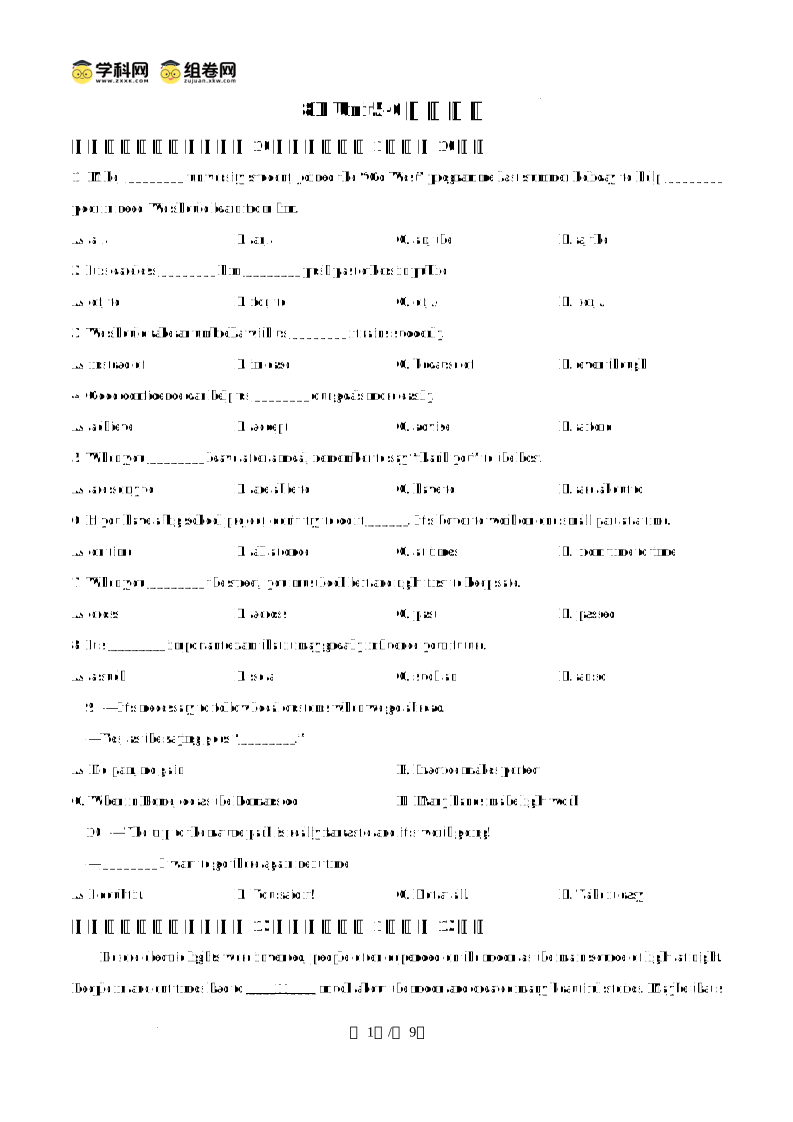
一、单项选择(本大题共10小题,每小题1分,共10分)
1. Mike, ________ university student, joined the “Go West” programme last summer holiday to help ________ poor in need. We should learn from him.
A. a; / B. an;/ C. an; the D. a; the
2. It is careless ________ him ________ push past others in public.
A. of; to B. for; to C. of; / D. for; /
3. We should take an umbrella with us ________ it rains suddenly.
A. instead of B. in case C. because of D. even though
4. Good confidence can help us ________ our goals more easily.
A. achieve B. accept C. advise D. afford
5. When you ________ leave after a meal, remember to say “thank you” to the host.
A. are sorry to B. are able to C. have to D. are about to
6. If you have a big school project, don’t try to do it ______. It’s better to work on one small part at a time.
A. on time B. all at once C. at times D. from time to time
7. When you ________ the street, you must look left and right first to keep safe.
A. cross B. across C. past D. passed
8. It’s ________ important exam that it may greatly influence your future.
A. a such B. so a C. such an D. an so
9. —It’s necessary to follow local customs when we go abroad.
—Yes, as the saying goes “________.”
A. No pain, no gain B. Practice makes perfect
C. When in Rome, do as the Romans do D. Many hands make light work
10. —The trip to the nature park is really fantastic and it’s worth going!
—________ I want to go there again next time.
A. I doubt it. B. You said it! C. Not at all. D. Take it easy.
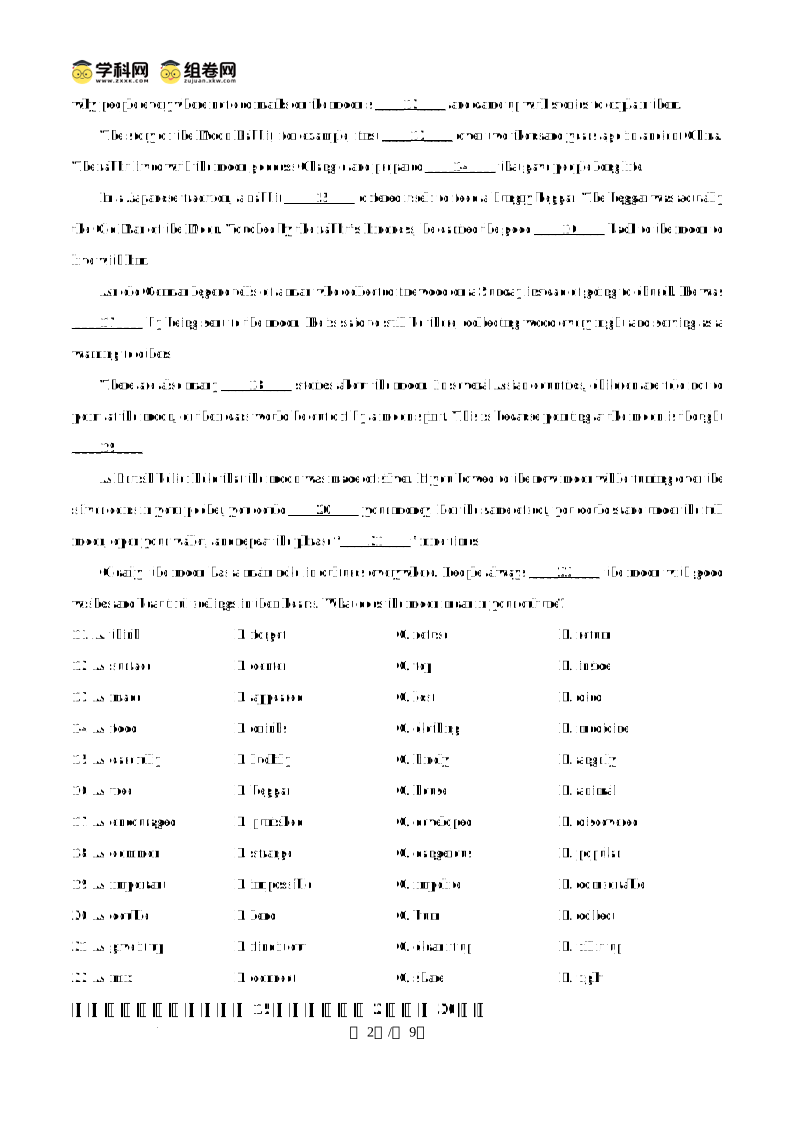
二、完形填空(本大题共12小题,每小题1分,共12分)
Before electric lights were invented, people often depended on the moon as the main source of light at night. People in ancient times had to ____11____ much about the moon and created many beautiful stories. Maybe that’s why people everywhere noticed marks on the moon’s ____12____ and came up with stories to explain them.
The story of the Moon Rabbit, for example, first ____13____ over two thousand years ago in ancient China. The rabbit lived with the moon goddess Chang’e and prepared ____14____ that gave people long life.
In a Japanese tradition, a rabbit ____15____ offered itself to feed a hungry beggar. The beggar was actually the Old Man of the Moon. Touched by the rabbit’s kindness, he carried the good ____16____ back to the moon to live with him.
An old German legend tells of a man who collected firewood on a Sunday instead of going to church. He was ____17____ by being sent to the moon. He is said to still be there, collecting wood every night and serving as a warning to others.
There are also many ____18____ stories about the moon. In several Asian countries, children are told not to point at the moon, or their ears would be cut off by a moon spirit. This is because pointing at the moon is thought ____19____.
A British belief held that the moon was made of silver. If you bowed to the new moon while turning over the silver coins in your pocket, you could ____20____ your money. For the same effect, you could stand under the full moon, open your wallet, and repeat the phrase “____21____” nine times.
Clearly, the moon has a main role in cultures everywhere. People always ____22____ the moon with good wishes and beautiful feelings in their hearts. What does the moon mean in your culture?
11. A. think B. forget C. refuse D. return
12. A. surface B. center C. top D. inside
13. A. made B. appeared C. lost D. died
14. A. food B. drinks C. clothing D. medicine
15. A. carefully B. luckily C. kindly D. angrily
16. A. tree B. beggar C. house D. animal
17. A. encouraged B. punished C. developed D. discovered
18. A. common B. strange C. dangerous D. popular
19. A. important B. impossible C. impolite D. comfortable
20. A. double B. lend C. burn D. collect
21. A. give it up B. find it out C. clean it up D. fill it up
22. A. mix B. connect C. share D. fight
三、阅读理解(本大题共15小题,每小题2分,共30分)
A
When Liu Ming was in Grade Eight, he hardly paid attention to people around him. He only cared about his own study and always thought it was useless to help strangers. Everything changed after he joined a volunteer club at school.
One weekend, the club organized a trip to a special school for disabled teenagers. When Liu Ming first arrived, he felt a little nervous. He worried he could not get along with those students. To his surprise, the students there were warm and active. Some of them were blind, some were deaf, but none of them lost hope for life.
Liu Ming was paired with a 15-year-old girl called Xiao Yu. She lost her sight when she was little, but she loved reading and listening to music very much. Liu Ming read stories to her and talked about school life with her patiently. Xiao Yu shared her dream of becoming a writer in the future. She told Liu Ming that she believed she could still make her dream come true with hard work.
During the activity, Liu Ming saw many disabled teenagers practise sports repeatedly. They fell down many times but never gave up. They showed great courage and strong confidence in themselves. Liu Ming was deeply moved. He realized these young people faced more difficulties than others, yet they still lived positively.
From then on, Liu Ming changed a lot. He began to spend his spare time doing voluntary work. He helps the elderly in his neighbourhood and raises small donations for children in need. He learns that helping others is not a waste of time. It brings warmth to others and also makes his own life more meaningful.
23. What was Liu Ming like before joining the volunteer club?
A. Warm and helpful. B. Strict with himself.
C. Self-centred and cold. D. Shy and quiet.
24. Why did Liu Ming feel nervous at first in the special school?
A. He feared he couldn’t get on with the students.
B. He had no time to take part in the activity.
C. He disliked talking with strangers.
D. He worried about his school study.
25. Which of the following is true about Xiao Yu?
A. She was born deaf. B. She had no future dreams.
C. She hoped to be a writer. D. She refused to communicate with others.
26. What moved Liu Ming deeply?
A. The beautiful environment of the school.
B. Disabled teens’ positive spirit and courage.
C. All kinds of sports in the school.
D. Many donations from kind people.
27. What can we learn from the passage?
A. Study is the only important thing for students.
B. Disabled people need others to look after all the time.
C. Voluntary work can change people and enrich life.
D. Disabled teens can easily realize their dreams.
B
Running a charity shop is a popular and meaningful way to help people in need in many cities. These shops collect all kinds of donated second-hand goods from warm-hearted people, such as clothes, books, toys and everyday supplies. They sell these things at very low prices, and all the money they make is given to support sick children, homeless people and lonely elderly citizens.
Most workers in charity shops are volunteers. They come from all walks of life, including students, office workers and retired people. They are ready to spend their spare time sorting goods, cleaning shelves and serving customers patiently. They never get paid for their work, but they feel happy and proud to do something useful for society.
Many people like shopping in charity shops now. They think the goods are cheap and in good condition. Reusing second-hand things is also environmentally friendly and helps cut down waste. Besides, shoppers feel they are doing a small good deed while shopping.
Charity shops also hold small voluntary activities on weekends. They try their best to care for poor kids and the elderly in the neighbourhood. More and more people are influenced to join them and pass on warmth to others.
28. What do charity shops mainly sell?
A. Expensive new clothes B. Second‑hand daily things
C. Delicious food and drinks D. Modern electronic products
29. What do we know about the workers in charity shops?
A. They all work full-time for money B. They are all professional shopkeepers
C. They work as volunteers for free D. They are only retired old people
30. Which is NOT the advantage of shopping in charity shops?
A. Things are very cheap B. It is good for the environment
C. It helps people in need D. It can make shoppers rich
31. What can we infer from the passage?
A. People can buy expensive gifts in charity shops
B. Volunteers get much money from their work
C. Shopping in charity shops is a kind of small kindness
D. Charity shops only hold activities on weekdays
32. What is the main idea of the passage?
A. How to run a big supermarket B. The importance and value of charity shops
C. How to become a volunteer D. Ways to protect the environment
C
Nowadays, the problem of missing good manners is becoming more and more common in daily life. It appears not only among young students, but can also be seen in some adults around us.
In school, some students run and shout loudly in hallways, leave rubbish everywhere, and talk with their mouths full of food. Worse still, quite a few students use dirty words casually in daily communication. They speak rudely to teachers, quarrel with classmates over tiny things, and show no respect to others. In public, some people still cut in line, push past others rudely, and make loud noise in libraries, hospitals and other quiet places. Some even damage public facilities and pay little attention to the feelings of the elderly and strangers.
This common phenomenon reminds us that good manners are slowly being ignored in modern life. As a matter of fact, good manners are never small or unimportant. They are the symbol of one’s personal quality and self-cultivation. To improve the situation, schools should give more lessons on manners and set clear rules. Parents must set good daily examples for their children. For us teenagers, we should stay away from bad language, correct bad habits bit by bit, and try to behave politely anytime and anywhere.
Developing good manners carries deep and far-reaching meaning. It helps us build friendly relationships with others, create a harmonious living environment, and even shapes the cultural image of our society and country. Politeness is not just simple daily behaviour, but a valuable quality that we should learn, keep and pass on all our life.
33. What is the main problem talked about in Paragraph 1?
A. How to follow school rules B. The lack of good manners among people
C. How to communicate with classmates D. The importance of school education
34. Which bad behaviour is mentioned in the passage?
A. Using dirty words casually B. Reading quietly in the library
C. Waiting in line politely D. Showing respect to teachers
35. What can we infer from the third paragraph?
A. Good manners are only needed for students B. It takes joint efforts to improve the bad situation
C. Parents have no duty to influence their kids D. School rules can solve all manners problems
36. Who should work together to change the situation?
A. Only school teachers B. Schools, parents and teenagers
C. Only teenagers themselves D. Only adult people in society
37. What is the far-reaching meaning of good manners?
A. It can make people become rich quickly
B. It is only helpful for students at school
C. It influences personal relations, social environment and cultural image
D. It has nothing to do with the whole society
四、信息还原(本大题共4小题,每小题2分,共8分)
阅读下面短文,从短文后所给的选项中选出可以填入空白处的最佳选项(选项中有两项为多余选项)
Since everyone likes to be around people with good manners, one can never learn too much about manners. Here are some rules that may help you become a politer person.
In public, it is kind to hold the door open for others, especially when you see someone with arms full or who might have difficulty getting in. Never allow a door to shut heavily on anyone following you. But avoid holding a door open when someone is a bit far away. ____38____
Be kind to people who work for you, such as waiters, shopkeepers and postmen. It is kind to smile and say “Thank you” to them when they are easily forgotten by most people. They work hard so that we can enjoy our lives. ____39____
Take off your headphones(耳机) before you speak to someone. At the end of a phone call with people older than you, it’s proper to make sure they end the phone call first. ____40____ Loud noise is always unwelcome and may even cause fight.
____41____ Hear them out before expressing your own opinion. Allow them to voice their opinions, even when you don’t agree with them. Use your communication skills instead of raising your voice to express yourself.
A. Don’t cut in on people when they talk.
B. This might cause them to hurry up for the door.
C. It’s important to let them know their work is seen by us.
D. Always remember to use words instead of fight to work out problems.
E. It’s wise to get to the meeting room 15 minutes before the meeting starts.
F. When in public, don’t play music or watch videos loudly on your mobile phones.
五、阅读短文,回答问题(共4题,1-3题每题1分,第4题2分,共5分)答案不超过6个词。
Chinese traditional manners are an important part of our cultural heritage. For thousands of years, they have guided people’s daily behaviour, focusing on respect, modesty and politeness—respecting the elderly, being modest and humble anytime, and keeping polite social communication. In ancient times, people followed strict rules in greeting, dining, visiting and public activities. These etiquette norms helped keep order and build warm and harmonious relationships between people.
With the fast development of society, modern lifestyle has greatly changed people’s way of communication. Some complicated and rigid traditional etiquette is too formal and time-consuming for today’s fast-paced life. Young people prefer simple, casual and convenient ways to greet others and get along with each other. As a result, some old formal manners are slowly fading out of daily life.
Even so, the inner spirit of traditional manners is still priceless and never out of date. We should neither refuse traditional manners blindly nor copy all the old rules mechanically. The best way is to realize the perfect connection of traditional etiquette and modern civilization. We inherit the fine traditional values and give up those useless outdated forms.
Good manners are the mirror of one’s personal quality and social civilization. Only when we carry forward the essence of traditional manners and match it with modern daily life, can we develop proper polite behaviour suitable for the times. It is also our duty as teenagers to pass on fine etiquette culture from generation to generation.
42. What do Chinese traditional manners focus on?
_____________________________________________________________
43. Why do some old manners fade out now?
_____________________________________________________________
44. What is still priceless and never out of date?
_____________________________________________________________
45. What is the best way to deal with traditional manners and modern ones?
_____________________________________________________________
46. What duty should teenagers take on?
_____________________________________________________________
六、语法填空(本大题共10小题,每小题1分,共10分)
阅读下面短文,在空白处填入一个适当的单词或括号内单词的正确形式。
Traveling to a foreign country can be exciting, but it can also be challenging ____47____ you don't know the local customs. When ____48____ (compare) customs between China and Brazil, we can find some similarities. For example, it is not polite ____49____ (talk) with your mouth full in both countries. This shows that good manners are ____50____ (wide) accepted. But there are also some differences. In China, we use chopsticks to eat, ____51____ people in Brazil use a knife and fork. Also, in China, it’s polite to arrive a little early for a visit. But in some countries, people think it is ____52____ (polite) too early. As for gift-giving, in China, we usually give gifts ____53____ both hands to show respect. In Brazil, people may open ____54____ gifts immediately as soon as they receive them.
____55____ (remember) that “When in Rome, do as the Romans do”. The more you understand and respect cultural differences, the _____56_____ (good) you will get along with people around the world.
七、词汇应用(本大题共10小题,每小题1分,共10分)
57. She has been ________ (缺席) from school for two weeks.
58. He gets more interested in ________ (化学) as he grows up.
59. What a ________ (善良诚恳的) girl your sister is!
60. The players all have ________ (信心) in winning their match.
61. The hotel offers a high quality of ________ (服务) for all customers here.
62. He has a strong educational ________ (背景) in computer science.
63. —How is the new project running?
—Quite ________ (顺利).
64. If something ________ (使烦恼) you, you can come to me any time.
65. He lost a lot of ________ (血) in the car accident.
66. He won fourth place in the School English Speaking ________ (比赛).
八、书面表达(本大题共15分,A部分5分,B部分10分)
A(小作文)
67. 请介绍一次你的志愿者服务经历,来为“赠人玫瑰,手留余香”(Roses given, fragrance in hand.)这句话注解。
要求:1. 条理清晰,表达准确,语句通顺,意思连贯。2. 不得少于6句话。
___________________________________________________________________________________________________________________________________________________________________________________________________________________________________________________________________________________________________________________________________________________________________________________________________________________________________________________________________________________________________________________________________________________________________________
B(大作文)
68. 青春有礼,阳光同行。学校将举办“青春仪式”主题活动,倡议青少年践行文明礼仪、传递温暖力量。请以“用礼貌与善意点亮青春”为题,写一篇英语短文。
要求:
(1)描述践行礼仪和传递温暖的具体做法,至少各3点;语言通顺,意思连贯,条理清晰。
(2)词数90左右;文章的开头和结尾已经给出,不计入总词数。
(3)文中不得出现真实姓名和学校名称等信息。
Light Up Youth with Good Manners and Kindness
Youth is a time not only to improve our knowledge and abilities, but to grow with good manners and kindness.
___________________________________________________________________________________________________________________________________________________________________________________________________________________________________________________________________________________________________________________________________________________________________________________
Remember: every small effort counts. Let’s light up youth with our actions and make the world a better place for everyone.
第1页/共1页
学科网(北京)股份有限公司
$
8B Unit5-6阶段练习
一、单项选择(本大题共10小题,每小题1分,共10分)
1. Mike, ________ university student, joined the “Go West” programme last summer holiday to help ________ poor in need. We should learn from him.
A. a; / B. an;/ C. an; the D. a; the
【答案】D
【解析】
【详解】句意:迈克,一名大学生,去年暑假加入了“西部计划”去帮助有需要的穷人。我们应该向他学习。
第一空,university虽以元音字母u开头,但发音以辅音音素/j/开头,表示泛指“一名”用不定冠词a;第二空,“the+形容词”表示一类人,the poor意为“穷人”,表特指,需用定冠词the。
2. It is careless ________ him ________ push past others in public.
A. of; to B. for; to C. of; / D. for; /
【答案】A
【解析】
【详解】句意:他在公共场合从别人身边挤过去是粗心的。
of + sb.形容词形容人的人品、性格(clever, careless, kind, foolish, polite),用人自身特质;for + sb.形容词只修饰这件事难易 / 好坏(easy, hard, important, necessary, difficult),不形容人。careless用来描述人的性格品质,介词用of;第二个空用不定式to do作真正主语。故选A。
3. We should take an umbrella with us ________ it rains suddenly.
A. instead of B. in case C. because of D. even though
【答案】B
【解析】
【详解】句意:我们应该随身带把伞,以防突然下雨。
instead of代替,而不是;in case以防万一;because of因为;even though尽管,虽然。根据“We should take an umbrella with us”可知带伞是预防措施,空后“it rains suddenly”是完整句子。because of后接名词,语法不符;instead of表示代替关系,even though表示让步关系,逻辑不通;应用in case表示以防万一,引导目的状语从句。
4. Good confidence can help us ________ our goals more easily.
A. achieve B. accept C. advise D. afford
【答案】A
【解析】
【详解】句意:良好的自信能帮助我们更容易地实现我们的目标。
achieve实现;accept接受;advise建议;afford负担得起。根据“our goals”可知,自信有助于“实现”目标,achieve goals为常见搭配。
5. When you ________ leave after a meal, remember to say “thank you” to the host.
A. are sorry to B. are able to C. have to D. are about to
【答案】D
【解析】
【详解】句意:当你饭后将要离开时,记得对主人说“谢谢”。
are sorry to抱歉做……;are able to能够;have to不得不;are about to正要、即将。此处指当你“即将”离开的时候,要记得道谢,应填are about to。
6. If you have a big school project, don’t try to do it ______. It’s better to work on one small part at a time.
A. on time B. all at once C. at times D. from time to time
【答案】B
【解析】
【详解】句意:如果你有一个大的学校项目,不要试图一下子完成它。最好一次只做一小部分。
on time准时;all at once一起;at times有时候;from time to time时不时。根据后句“It’s better to work on one small part at a time.”可知建议分步完成,因此前句意为不要试图同时或立刻做完。all at once符合“一下子”的语境逻辑,其他选项含义不符。
7. When you ________ the street, you must look left and right first to keep safe.
A. cross B. across C. past D. passed
【答案】A
【解析】
【详解】句意:当你穿过街道时,为了保持安全,你必须先向左和向右看。
cross动词,穿过;across介词,穿过;past介词,经过;passed 动词过去式,经过。句中缺少谓语动词,主语是you,描述一般情况用一般现在时。across是介词不能单独作谓语,past常作介词需配合动词使用,passed是过去式时态不符。cross是动词原形,且cross the street为固定搭配,意为“过马路”。
8. It’s ________ important exam that it may greatly influence your future.
A. a such B. so a C. such an D. an so
【答案】C
【解析】
【详解】句意:这是一次如此重要的考试,以至于它可能极大影响你的未来。
such修饰名词,结构为such+a/an+形容词+可数名词单数;so修饰形容词,结构为so+形容词+a/an+可数名词单数。本句中心词是名词exam,important是以元音音素开头,用an,应填such an。
9. —It’s necessary to follow local customs when we go abroad.
—Yes, as the saying goes “________.”
A. No pain, no gain B. Practice makes perfect
C. When in Rome, do as the Romans do D. Many hands make light work
【答案】C
【解析】
【详解】句意:——出国旅行遵守当地习俗很有必要。——没错,常言道“入乡随俗”。
No pain, no gain一分耕耘一分收获;Practice makes perfect熟能生巧;When in Rome, do as the Romans do入乡随俗;Many hands make light work众人拾柴火焰高。根据“follow local customs when we go abroad”可知,强调遵守当地风俗,应填When in Rome, do as the Romans do。
10. —The trip to the nature park is really fantastic and it’s worth going!
—________ I want to go there again next time.
A. I doubt it. B. You said it! C. Not at all. D. Take it easy.
【答案】B
【解析】
【详解】句意:——去自然公园的旅行真的很棒,值得一去!——你说对了!我下次还想再去那里。
I doubt it我对此怀疑;You said it!说得没错,表示赞同;Not at all.不客气 / 一点也不;Take it easy放轻松。后文“I want to go there again next time”说明赞同对方夸赞旅途美好的观点,B项符合。
二、完形填空(本大题共12小题,每小题1分,共12分)
Before electric lights were invented, people often depended on the moon as the main source of light at night. People in ancient times had to ____11____ much about the moon and created many beautiful stories. Maybe that’s why people everywhere noticed marks on the moon’s ____12____ and came up with stories to explain them.
The story of the Moon Rabbit, for example, first ____13____ over two thousand years ago in ancient China. The rabbit lived with the moon goddess Chang’e and prepared ____14____ that gave people long life.
In a Japanese tradition, a rabbit ____15____ offered itself to feed a hungry beggar. The beggar was actually the Old Man of the Moon. Touched by the rabbit’s kindness, he carried the good ____16____ back to the moon to live with him.
An old German legend tells of a man who collected firewood on a Sunday instead of going to church. He was ____17____ by being sent to the moon. He is said to still be there, collecting wood every night and serving as a warning to others.
There are also many ____18____ stories about the moon. In several Asian countries, children are told not to point at the moon, or their ears would be cut off by a moon spirit. This is because pointing at the moon is thought ____19____.
A British belief held that the moon was made of silver. If you bowed to the new moon while turning over the silver coins in your pocket, you could ____20____ your money. For the same effect, you could stand under the full moon, open your wallet, and repeat the phrase “____21____” nine times.
Clearly, the moon has a main role in cultures everywhere. People always ____22____ the moon with good wishes and beautiful feelings in their hearts. What does the moon mean in your culture?
11. A. think B. forget C. refuse D. return
12. A. surface B. center C. top D. inside
13. A. made B. appeared C. lost D. died
14. A. food B. drinks C. clothing D. medicine
15. A. carefully B. luckily C. kindly D. angrily
16. A. tree B. beggar C. house D. animal
17. A. encouraged B. punished C. developed D. discovered
18. A. common B. strange C. dangerous D. popular
19. A. important B. impossible C. impolite D. comfortable
20. A. double B. lend C. burn D. collect
21. A. give it up B. find it out C. clean it up D. fill it up
22. A. mix B. connect C. share D. fight
【答案】11. A 12. A 13. B 14. D 15. C 16. D 17. B 18. B 19. C 20. A 21. D 22. B
【解析】
【导语】本文主要介绍了世界各地不同文化中关于月亮的传说和故事,包括中国的玉兔、日本的献身兔、德国的惩罚传说以及英美关于财富的迷信等。
【11题详解】
句意:古代人们不得不思考很多关于月亮的事情,并创造了美丽的故事。
结合后文“created many beautiful stories”,说明他们对月亮进行了“思考”。think much about意为“深入思考”,符合古人观测和思考月亮的现象。
【12题详解】
句意:也许这就是为什么世界各地的人们注意到了月球表面的印记,并想出故事来解释它们。
上文提到“marks on the moon’s...”,结合常识,人们看到的印记是在月球“表面”。moon’s surface意为“月球表面”,符合观察到的痕迹的位置。
【13题详解】
句意:例如,玉兔的故事最早出现在两千多年前的中国古代。
结合后文“in ancient China”,说明故事“出现”于古时。appeared意为“出现”,符合故事起源的描述。
【14题详解】
句意:这只兔子和嫦娥住在一起,准备能让人长寿的药。
上文提到“that gave people long life”,结合中国神话中玉兔捣制“长生不老药”,可知是“medicine”。
【15题详解】
句意:在日本传说中,一只兔子善良地献出自己来喂一个饥饿的乞丐。
后文提到“Touched by the rabbit's kindness”,所以这是一种“善良”的行为。kindly意为“善良地”,符合兔子无私奉献的品质。
【16题详解】
句意:被兔子的善良感动,他把这只善良的动物带回月球和他一起生活。
上文提到兔子献出自己,兔子属于“animal”,animal意为“动物”,指代兔子。
【17题详解】
句意:他因被送到月球而受到惩罚。
传说中此人因周日拾柴而非去教堂,被罚到月球,punished意为“惩罚”,符合不守安息日而受罚的语境。
【18题详解】
句意:还有许多关于月球的奇怪故事。
后文指着月亮会被月神割耳朵,属于怪异的传说。strange stories意为“奇怪的故事”,符合后文关于指月亮会被割耳朵的迷信。
【19题详解】
句意:这是因为指月亮被认为是不礼貌的。
结合文化习俗中手指月亮被视为不敬,所以该行为被认为是不礼貌的。impolite意为“不礼貌的”,符合语境
【20题详解】
句意:如果你对着新月鞠躬,同时翻动口袋里的银币,你的钱可以翻倍。
结合英国迷信中这样做能使钱财“翻倍”。double your money意为“让你的钱翻倍”,符合英国迷信中向新月鞠躬的效果。
【21题详解】
句意:另一种招财方式:站在满月下,打开钱包,重复“把它装满”九次。
上文提到“open your wallet”以及希望增加财富,应重复“fill it up”。
【22题详解】
句意:人们总是把月亮与美好的祝愿和美好的情感联系在一起。
结合上文描述,人们把月亮和美好的祝愿、情感联系在一起。各种固定搭配“connect...with...”意为“把……和……联系起来”。
三、阅读理解(本大题共15小题,每小题2分,共30分)
A
When Liu Ming was in Grade Eight, he hardly paid attention to people around him. He only cared about his own study and always thought it was useless to help strangers. Everything changed after he joined a volunteer club at school.
One weekend, the club organized a trip to a special school for disabled teenagers. When Liu Ming first arrived, he felt a little nervous. He worried he could not get along with those students. To his surprise, the students there were warm and active. Some of them were blind, some were deaf, but none of them lost hope for life.
Liu Ming was paired with a 15-year-old girl called Xiao Yu. She lost her sight when she was little, but she loved reading and listening to music very much. Liu Ming read stories to her and talked about school life with her patiently. Xiao Yu shared her dream of becoming a writer in the future. She told Liu Ming that she believed she could still make her dream come true with hard work.
During the activity, Liu Ming saw many disabled teenagers practise sports repeatedly. They fell down many times but never gave up. They showed great courage and strong confidence in themselves. Liu Ming was deeply moved. He realized these young people faced more difficulties than others, yet they still lived positively.
From then on, Liu Ming changed a lot. He began to spend his spare time doing voluntary work. He helps the elderly in his neighbourhood and raises small donations for children in need. He learns that helping others is not a waste of time. It brings warmth to others and also makes his own life more meaningful.
23. What was Liu Ming like before joining the volunteer club?
A. Warm and helpful. B. Strict with himself.
C. Self-centred and cold. D. Shy and quiet.
24. Why did Liu Ming feel nervous at first in the special school?
A. He feared he couldn’t get on with the students.
B. He had no time to take part in the activity.
C. He disliked talking with strangers.
D. He worried about his school study.
25. Which of the following is true about Xiao Yu?
A. She was born deaf. B. She had no future dreams.
C. She hoped to be a writer. D. She refused to communicate with others.
26. What moved Liu Ming deeply?
A. The beautiful environment of the school.
B. Disabled teens’ positive spirit and courage.
C. All kinds of sports in the school.
D. Many donations from kind people.
27. What can we learn from the passage?
A. Study is the only important thing for students.
B. Disabled people need others to look after all the time.
C. Voluntary work can change people and enrich life.
D. Disabled teens can easily realize their dreams.
【答案】23. C 24. A 25. C 26. B 27. C
【解析】
【导语】本文讲述了刘明加入学校志愿者俱乐部前后的变化:八年级时他只关心自己的学习,认为帮助陌生人毫无用处;参与特殊学校的志愿活动后,残疾青少年的积极精神深深打动了他,他从此开始投身志愿工作,明白了帮助他人能为他人带去温暖,也让自己的生活更有意义。
【23题详解】
根据第一段“When Liu Ming was in Grade Eight, he hardly paid attention to people around him. He only cared about his own study and always thought it was useless to help strangers.”可知,加入志愿者俱乐部前,刘明只关注自己、冷漠对待他人,是个以自我为中心的人。
【24题详解】
根据第二段“When Liu Ming first arrived, he felt a little nervous. He worried he could not get along with those students.”可知,刘明一开始紧张是因为担心自己无法和特殊学校的学生相处。
【25题详解】
根据第三段“Liu Ming was paired with a 15-year-old girl called Xiao Yu. She lost her sight when she was little, but she loved reading and listening to music very much... Xiao Yu shared her dream of becoming a writer in the future.”可知,小雨小时候失明,梦想是成为一名作家。
【26题详解】
根据第四段“During the activity, Liu Ming saw many disabled teenagers practise sports repeatedly. They fell down many times but never gave up. They showed great courage and strong confidence in themselves. Liu Ming was deeply moved.”可知,残疾青少年面对困难不放弃的积极精神和勇气深深打动了刘明。
【27题详解】
根据最后一段“From then on, Liu Ming changed a lot. He began to spend his spare time doing voluntary work... He learns that helping others is not a waste of time. It brings warmth to others and also makes his own life more meaningful.”可知,志愿工作改变了刘明,也让他的生活更充实有意义。
B
Running a charity shop is a popular and meaningful way to help people in need in many cities. These shops collect all kinds of donated second-hand goods from warm-hearted people, such as clothes, books, toys and everyday supplies. They sell these things at very low prices, and all the money they make is given to support sick children, homeless people and lonely elderly citizens.
Most workers in charity shops are volunteers. They come from all walks of life, including students, office workers and retired people. They are ready to spend their spare time sorting goods, cleaning shelves and serving customers patiently. They never get paid for their work, but they feel happy and proud to do something useful for society.
Many people like shopping in charity shops now. They think the goods are cheap and in good condition. Reusing second-hand things is also environmentally friendly and helps cut down waste. Besides, shoppers feel they are doing a small good deed while shopping.
Charity shops also hold small voluntary activities on weekends. They try their best to care for poor kids and the elderly in the neighbourhood. More and more people are influenced to join them and pass on warmth to others.
28. What do charity shops mainly sell?
A. Expensive new clothes B. Second‑hand daily things
C. Delicious food and drinks D. Modern electronic products
29. What do we know about the workers in charity shops?
A. They all work full-time for money B. They are all professional shopkeepers
C. They work as volunteers for free D. They are only retired old people
30. Which is NOT the advantage of shopping in charity shops?
A. Things are very cheap B. It is good for the environment
C. It helps people in need D. It can make shoppers rich
31. What can we infer from the passage?
A. People can buy expensive gifts in charity shops
B. Volunteers get much money from their work
C. Shopping in charity shops is a kind of small kindness
D. Charity shops only hold activities on weekdays
32. What is the main idea of the passage?
A. How to run a big supermarket B. The importance and value of charity shops
C. How to become a volunteer D. Ways to protect the environment
【答案】28. B 29. C 30. D 31. C 32. B
【解析】
【导语】本文是一篇说明文,主要介绍了慈善商店的销售物品、工作人员、购物好处以及社会活动,阐述了慈善商店的运行方式与社会价值。
【28题详解】
根据第一段第二句“These shops collect all kinds of donated second-hand goods from warm-hearted people, such as clothes, books, toys and everyday supplies.”可知,慈善商店主要收集并出售二手日常物品。
【29题详解】
根据第二段第一句和第四句“Most workers in charity shops are volunteers...They never get paid for their work”可知,慈善商店的工作人员大多是无偿服务的志愿者。
【30题详解】
根据第一段和第三段可知,商品便宜(very low prices)、环保(environmentally friendly)、帮助有需要的人(support sick children...)均为优点。
【31题详解】
根据第三段最后一句“Besides, shoppers feel they are doing a small good deed while shopping.”可知,在慈善商店购物被视为一种小善举(small kindness)。
【32题详解】
通读全文可知,文章介绍了慈善商店的销售物品、工作人员、购物好处以及社会活动,旨在阐述慈善商店的重要性及其社会价值。
C
Nowadays, the problem of missing good manners is becoming more and more common in daily life. It appears not only among young students, but can also be seen in some adults around us.
In school, some students run and shout loudly in hallways, leave rubbish everywhere, and talk with their mouths full of food. Worse still, quite a few students use dirty words casually in daily communication. They speak rudely to teachers, quarrel with classmates over tiny things, and show no respect to others. In public, some people still cut in line, push past others rudely, and make loud noise in libraries, hospitals and other quiet places. Some even damage public facilities and pay little attention to the feelings of the elderly and strangers.
This common phenomenon reminds us that good manners are slowly being ignored in modern life. As a matter of fact, good manners are never small or unimportant. They are the symbol of one’s personal quality and self-cultivation. To improve the situation, schools should give more lessons on manners and set clear rules. Parents must set good daily examples for their children. For us teenagers, we should stay away from bad language, correct bad habits bit by bit, and try to behave politely anytime and anywhere.
Developing good manners carries deep and far-reaching meaning. It helps us build friendly relationships with others, create a harmonious living environment, and even shapes the cultural image of our society and country. Politeness is not just simple daily behaviour, but a valuable quality that we should learn, keep and pass on all our life.
33. What is the main problem talked about in Paragraph 1?
A. How to follow school rules B. The lack of good manners among people
C. How to communicate with classmates D. The importance of school education
34. Which bad behaviour is mentioned in the passage?
A. Using dirty words casually B. Reading quietly in the library
C. Waiting in line politely D. Showing respect to teachers
35. What can we infer from the third paragraph?
A. Good manners are only needed for students B. It takes joint efforts to improve the bad situation
C. Parents have no duty to influence their kids D. School rules can solve all manners problems
36. Who should work together to change the situation?
A. Only school teachers B. Schools, parents and teenagers
C. Only teenagers themselves D. Only adult people in society
37. What is the far-reaching meaning of good manners?
A. It can make people become rich quickly
B. It is only helpful for students at school
C. It influences personal relations, social environment and cultural image
D. It has nothing to do with the whole society
【答案】33. B 34. A 35. B 36. B 37. C
【解析】
【导语】本文是一篇议论文。文章指出当今社会礼貌缺失的问题,分析了具体表现,并提出了学校、家长和青少年共同努力改善这一现象的建议。
【33题详解】
文章第一段第一句“Nowadays, the problem of missing good manners is becoming more and more common in daily life.”指出,本段主要讨论的问题是人们缺乏良好礼貌。
【34题详解】
文章第二段第二句“Worse still, quite a few students use dirty words casually in daily communication.”指出,文中提到的不良行为包括随意说脏话。
【35题详解】
文章第三段中提到“schools should... Parents must... For us teenagers, we should...”,由此可推知,改善不良现象需要学校、家长和青少年共同努力。
【36题详解】
文章第三段中“schools should... Parents must... For us teenagers, we should...”指出,学校、家长和青少年应该共同努力来改变这一现状。
【37题详解】
文章第四段第二句“It helps us build friendly relationships with others, create a harmonious living environment, and even shapes the cultural image of our society and country.”指出,良好的礼貌影响人际关系、社会环境和文化形象。
四、信息还原(本大题共4小题,每小题2分,共8分)
阅读下面短文,从短文后所给的选项中选出可以填入空白处的最佳选项(选项中有两项为多余选项)
Since everyone likes to be around people with good manners, one can never learn too much about manners. Here are some rules that may help you become a politer person.
In public, it is kind to hold the door open for others, especially when you see someone with arms full or who might have difficulty getting in. Never allow a door to shut heavily on anyone following you. But avoid holding a door open when someone is a bit far away. ____38____
Be kind to people who work for you, such as waiters, shopkeepers and postmen. It is kind to smile and say “Thank you” to them when they are easily forgotten by most people. They work hard so that we can enjoy our lives. ____39____
Take off your headphones(耳机) before you speak to someone. At the end of a phone call with people older than you, it’s proper to make sure they end the phone call first. ____40____ Loud noise is always unwelcome and may even cause fight.
____41____ Hear them out before expressing your own opinion. Allow them to voice their opinions, even when you don’t agree with them. Use your communication skills instead of raising your voice to express yourself.
A. Don’t cut in on people when they talk.
B. This might cause them to hurry up for the door.
C. It’s important to let them know their work is seen by us.
D. Always remember to use words instead of fight to work out problems.
E. It’s wise to get to the meeting room 15 minutes before the meeting starts.
F. When in public, don’t play music or watch videos loudly on your mobile phones.
【答案】38. B 39. C 40. F 41. A
【解析】
【导语】本文是一篇说明文。这篇短文介绍了4种让你成为一个更有礼貌的人的方法。
【38题详解】
根据上一句“But avoid holding a door open when someone is a bit far away.”可知避免当那个人还在很远的地方就把门打开,说明这样做会有不好的结果。选项B“这可能会让他们因为门开着赶紧赶过来。”符合题意。故选B。
【39题详解】
根据上一句“They work hard so that we can enjoy our lives”可知这些人认真工作,这样我们才能享受生活,说明我们要让他们的工作得到认可。选项C“让他们知道他们的工作被你看见是非常重要的。”符合题意。故选C。
【40题详解】
根据下一句“Loud noise is always unwelcome and may even cause fight.”可知大声嘈杂问题不受欢迎的,甚至可能会引发争斗,说明在公众场合,要注意控制音量。选项F“当在公众场所的时候,不要在你的手机上播放音乐或者很大声地观看视频。”符合题意。故选F。
【41题详解】
根据下一句“Hear them out before expressing your own opinion.”可知在表达你自己的看法前先听听他们说什么,说明要注意不要随意打断别人的话。选项A“当人们说话的时候,不要随意插话。”符合题意。故选A。
五、阅读短文,回答问题(共4题,1-3题每题1分,第4题2分,共5分)答案不超过6个词。
Chinese traditional manners are an important part of our cultural heritage. For thousands of years, they have guided people’s daily behaviour, focusing on respect, modesty and politeness—respecting the elderly, being modest and humble anytime, and keeping polite social communication. In ancient times, people followed strict rules in greeting, dining, visiting and public activities. These etiquette norms helped keep order and build warm and harmonious relationships between people.
With the fast development of society, modern lifestyle has greatly changed people’s way of communication. Some complicated and rigid traditional etiquette is too formal and time-consuming for today’s fast-paced life. Young people prefer simple, casual and convenient ways to greet others and get along with each other. As a result, some old formal manners are slowly fading out of daily life.
Even so, the inner spirit of traditional manners is still priceless and never out of date. We should neither refuse traditional manners blindly nor copy all the old rules mechanically. The best way is to realize the perfect connection of traditional etiquette and modern civilization. We inherit the fine traditional values and give up those useless outdated forms.
Good manners are the mirror of one’s personal quality and social civilization. Only when we carry forward the essence of traditional manners and match it with modern daily life, can we develop proper polite behaviour suitable for the times. It is also our duty as teenagers to pass on fine etiquette culture from generation to generation.
42. What do Chinese traditional manners focus on?
_____________________________________________________________
43. Why do some old manners fade out now?
_____________________________________________________________
44. What is still priceless and never out of date?
_____________________________________________________________
45. What is the best way to deal with traditional manners and modern ones?
_____________________________________________________________
46. What duty should teenagers take on?
_____________________________________________________________
【答案】42. Respect, modesty and politeness.
43. Because of modern lifestyle/fast-paced life.
44. The inner spirit of traditional manners.
45. Realize the perfect connection of them.
46. Pass on fine etiquette culture.
【解析】
【导语】本文主要讲述了中国传统礼仪的重要性、现状以及我们应该如何对待传统礼仪与现代文明的关系。
【42题详解】
根据第一段第二句中“...focusing on respect, modesty and politeness...”可知,中国传统礼仪关注的是尊重、谦虚和礼貌。
【43题详解】
根据第二段第二句“Some complicated and rigid traditional etiquette is too formal and time-consuming for today’s fast-paced life.”以及第三句“Young people prefer simple, casual and convenient ways...”可知,一些旧礼仪之所以消失,是因为现代生活方式(快节奏生活)使得复杂的传统礼仪显得过于正式和耗时。
【44题详解】
根据第三段第一句“Even so, the inner spirit of traditional manners is still priceless and never out of date.”可知,传统礼仪的内在精神依然是无价且永不过时的。
【45题详解】
根据第三段第三句“The best way is to realize the perfect connection of traditional etiquette and modern civilization.”可知,处理传统礼仪和现代文明最好的方式是实现两者的完美结合。
【46题详解】
根据最后一段最后一句“It is also our duty as teenagers to pass on fine etiquette culture from generation to generation.”可知,青少年的责任是将优秀的礼仪文化代代相传。
六、语法填空(本大题共10小题,每小题1分,共10分)
阅读下面短文,在空白处填入一个适当的单词或括号内单词的正确形式。
Traveling to a foreign country can be exciting, but it can also be challenging ____47____ you don't know the local customs. When ____48____ (compare) customs between China and Brazil, we can find some similarities. For example, it is not polite ____49____ (talk) with your mouth full in both countries. This shows that good manners are ____50____ (wide) accepted. But there are also some differences. In China, we use chopsticks to eat, ____51____ people in Brazil use a knife and fork. Also, in China, it’s polite to arrive a little early for a visit. But in some countries, people think it is ____52____ (polite) too early. As for gift-giving, in China, we usually give gifts ____53____ both hands to show respect. In Brazil, people may open ____54____ gifts immediately as soon as they receive them.
____55____ (remember) that “When in Rome, do as the Romans do”. The more you understand and respect cultural differences, the _____56_____ (good) you will get along with people around the world.
【答案】47. if##when
48. comparing
49. to talk
50. widely 51. while##but
52. impolite
53. with 54. the
55. Remember
56. better
【解析】
【导语】本文主要讲述了去国外旅行时了解当地习俗的重要性,并通过对比中国和巴西的习俗,说明了文化差异的存在以及我们应该如何应对。
【47题详解】
句意:去国外旅行可能很令人兴奋,但如果你不了解当地习俗,也可能会很有挑战性。此处引导条件状语从句,表示“如果”,故填if;或者表示“当……时候”,填when也符合语境。
【48题详解】
句意:当比较中国和巴西的习俗时,我们可以发现一些相似之处。此处是“When+分词”结构作状语,compare与逻辑主语we之间是主动关系,故用现在分词comparing。
【49题详解】
句意:例如,在这两个国家,嘴里塞满食物时说话是不礼貌的。固定句型“It is+adj.+to do sth.”,其中it是形式主语,真正的主语是后面的不定式,故填to talk。
【50题详解】
句意:这表明良好的礼仪被广泛接受。此处修饰动词accepted,需要用副词形式,wide的副词是widely,意为“广泛地”。
【51题详解】
句意:在中国,我们用筷子吃饭,而在巴西,人们用刀叉。前后两句表示对比关系,故填连词while或but。
【52题详解】
句意:但在一些国家,人们认为太早到达是不礼貌的。根据常识及上下文逻辑,太早到达通常被视为不礼貌,polite的反义词是impolite。
【53题详解】
句意:在中国,我们通常用双手递礼物以示尊重。介词with表示“用……工具/方式”,with both hands意为“用双手”。
【54题详解】
句意:在巴西,人们收到礼物后可能会立即打开它们。此处特指前面提到的gifts,故用定冠词the。
【55题详解】
句意:记住“入乡随俗”。这是一个祈使句,动词原形开头,且位于句首首字母大写,故填Remember。
【56题详解】
句意:你越了解并尊重文化差异,你就越能与世界各地的人相处得好。句型“The+比较级..., the+比较级...”表示“越……,就越……”,good的比较级是better。
七、词汇应用(本大题共10小题,每小题1分,共10分)
57. She has been ________ (缺席) from school for two weeks.
【答案】absent
【解析】
【详解】句意:她已经缺课两周了。“缺席”对应单词absent,固定短语be absent from表示“缺席……”;本句为现在完成时has been+形容词结构,故填absent。
58. He gets more interested in ________ (化学) as he grows up.
【答案】chemistry
【解析】
【详解】句意:随着长大,他对化学越来越感兴趣。根据汉语提示可知,chemistry“化学”,学科类名词,不可数。故填chemistry。
59. What a ________ (善良诚恳的) girl your sister is!
【答案】kind
【解析】
【详解】句意:你的妹妹是一个多么善良诚恳的女孩啊!空格修饰名词girl,需要填写形容词,“善良诚恳的”对应形容词kind,冠词a后接辅音音素开头单词,kind符合用法。
60. The players all have ________ (信心) in winning their match.
【答案】confidence
【解析】
【详解】句意:运动员们全都满怀信心想要赢下这场比赛。根据汉语提示可知,confidence“信心”,不可数名词,固定短语have confidence in表示“对……有信心”。故填confidence。
61. The hotel offers a high quality of ________ (服务) for all customers here.
【答案】service
【解析】
【详解】句意:这家酒店为所有顾客提供高质量的服务。service意为“服务”,是不可数名词;a high quality of后接名词,此处用原形即可。故填service。
62. He has a strong educational ________ (背景) in computer science.
【答案】background
【解析】
【详解】句意:他在计算机科学方面有很强的教育背景。background意为“背景”,是可数名词;形容词educational修饰名词,a strong educational background表示“很强的教育背景”,此处用单数形式。故填background。
63. —How is the new project running?
—Quite ________ (顺利).
【答案】smoothly
【解析】
【详解】句意:——新项目进展如何?——相当顺利。根据汉语提示可知,smoothly“顺利地”,副词,修饰动词running。故填smoothly。
64. If something ________ (使烦恼) you, you can come to me any time.
【答案】troubles
【解析】
【详解】句意:如果有事使你烦恼,你随时可以来找我。根据汉语提示可知,trouble“使烦恼”,不定代词something作主语,谓语动词用第三人称单数形式。故填troubles。
65. He lost a lot of ________ (血) in the car accident.
【答案】blood
【解析】
【详解】句意:他在车祸中流了很多血。blood意为“血”,是不可数名词;a lot of后接可数名词复数或不可数名词,此处blood为不可数名词。
66. He won fourth place in the School English Speaking ________ (比赛).
【答案】Competition
【解析】
【详解】句意:他在学校英语演讲比赛中获得第四名。competition意为“比赛”,是可数名词;the School English Speaking Competition为专有名词,表示“学校英语演讲比赛”,此处用单数形式,首字母大写。故填Competition。
八、书面表达(本大题共15分,A部分5分,B部分10分)
A(小作文)
67. 请介绍一次你的志愿者服务经历,来为“赠人玫瑰,手留余香”(Roses given, fragrance in hand.)这句话注解。
要求:1. 条理清晰,表达准确,语句通顺,意思连贯。2. 不得少于6句话。
___________________________________________________________________________________________________________________________________________________________________________________________________________________________________________________________________________________________________________________________________________________________________________________________________________________________________________________________________________________________________________________________________________________________________________
【答案】
Last Sunday, I worked as a volunteer at the local library.
I helped clean the books and guided readers to find what they needed. Although I was tired, I felt very happy when I saw their smiles. This experience made me understand the saying “Roses given, fragrance in hand.” Helping others not only solves their problems but also brings me joy.
I realize that kindness is like a seed. If we plant it in others’ hearts, it will grow in ours too. I will continue to help people in need.
【解析】
【详解】写作步骤:
第一步:审题立意
确定文体:记叙文,以一般过去时和一般现在时为主
明确要点:通过一次你的志愿者服务经历,来为“赠人玫瑰,手留余香”这句话注解。
确定人称:第一人称、第三人称(I、This experience)
注意事项:不得少于6句话
第二步:构思布局
三段式结构:
开头段:点明时间
主体段:介绍志愿者服务经历,阐释“赠人玫瑰,手留余香”这句话
结尾段:表达感悟和意愿
第三步:要点展开
要点一:点明时间:Last Sunday/yesterday
要点二:介绍志愿者服务经历:helped clean the books and guided readers/sweep the floor
对“赠人玫瑰,手留余香”这句话的理解:Helping others not only solves their problems but also brings me joy/helping others also warms our own heart
要点三:表达感悟:kindness is like a seed/Kindness passes from one to another
意愿:continue to help people in need/always be ready to give a hand in daily life
B(大作文)
68. 青春有礼,阳光同行。学校将举办“青春仪式”主题活动,倡议青少年践行文明礼仪、传递温暖力量。请以“用礼貌与善意点亮青春”为题,写一篇英语短文。
要求:
(1)描述践行礼仪和传递温暖的具体做法,至少各3点;语言通顺,意思连贯,条理清晰。
(2)词数90左右;文章的开头和结尾已经给出,不计入总词数。
(3)文中不得出现真实姓名和学校名称等信息。
Light Up Youth with Good Manners and Kindness
Youth is a time not only to improve our knowledge and abilities, but to grow with good manners and kindness.
___________________________________________________________________________________________________________________________________________________________________________________________________________________________________________________________________________________________________________________________________________________________________________________
Remember: every small effort counts. Let’s light up youth with our actions and make the world a better place for everyone.
【答案】
范文:
Light Up Youth with Good Manners and Kindness
Youth is a time not only to improve our knowledge and abilities, but to grow with good manners and kindness.
To practice good manners, we can start with small daily actions. First, always say “please”, “thank you” and “sorry” when needed. Second, wait in line and never push others. Third, respect the elderly by offering them seats on the bus.
To spread kindness, we can help classmates with their studies, comfort sad friends with warm words, and take part in volunteer work like cleaning the park or visiting old people’s homes.
These actions make our school warmer and our society better. Let’s fill every day with polite words and caring hearts.
Remember: every small effort counts. Let’s light up youth with our actions and make the world a better place for everyone.
【解析】
【详解】写作步骤
[第一步:审题立意]
确定文体:应用文/倡议类文章,以一般现在时和祈使句为主
明确要点:践行礼仪的具体做法(至少3点)、传递温暖的具体做法(至少3点)、行动的意义
确定人称:第一人称复数(we)和第二人称(you)为主
注意事项:不得透露真实姓名和学校名称,需涵盖所有要点
[第二步:构思布局]
三段式结构:
开头段:已给出,引出青春与礼仪善意的主题
主体段一:列举践行礼仪的具体做法(至少3点)
主体段二:列举传递温暖的具体做法(至少3点)
结尾段:总结行动意义,呼应开头
[第三步:要点展开]
要点一:践行礼仪的做法
礼貌用语:say “please”, “thank you” and “sorry” when needed/use polite words等
排队守序:wait in line/never push others/be patient等
尊重长辈:respect the elderly/offer them seats on the bus/help them cross the road等
其他礼仪:keep quiet in public/cover mouth when coughing等
要点二:传递温暖的做法
帮助同学:help classmates with their studies/share notes/explain problems等
安慰朋友:comfort sad friends with warm words/listen to them/give hugs等
志愿服务:take part in volunteer work/clean the park/visit old people’s homes/help the homeless等
其他善意:smile to others/say hello first/give compliments等
要点三:行动意义
学校意义:make our school warmer/build a friendly environment等
社会意义:make society better/create a harmonious world等
个人成长:fill every day with polite words and caring hearts/become better persons等
第1页/共1页
学科网(北京)股份有限公司
$
资源预览图
1
2

3
相关资源
由于学科网是一个信息分享及获取的平台,不确保部分用户上传资料的 来源及知识产权归属。如您发现相关资料侵犯您的合法权益,请联系学科网,我们核实后将及时进行处理。