精品解析:2025年广西壮族自治区来宾市兴宾区6月四模中考模拟预测英语试题
 切换试卷
切换试卷
2026-05-31
|
2份
|
27页
|
30人阅读
|
0人下载
资源信息
| 学段 | 初中 |
|---|---|
| 学科 | 英语 |
| 教材版本 | - |
| 年级 | 九年级 |
| 章节 | - |
| 类型 | 试卷 |
| 知识点 | - |
| 使用场景 | 中考复习-模拟预测 |
| 学年 | 2025-2026 |
| 地区(省份) | 广西壮族自治区 |
| 地区(市) | 来宾市 |
| 地区(区县) | 兴宾区 |
| 文件格式 | ZIP |
| 文件大小 | 521 KB |
| 发布时间 | 2026-05-31 |
| 更新时间 | 2026-05-31 |
| 作者 | 学科网试题平台 |
| 品牌系列 | - |
| 审核时间 | 2026-05-31 |
| 下载链接 | https://m.zxxk.com/soft/58136943.html |
| 价格 | 4.00储值(1储值=1元) |
| 来源 | 学科网 |
内容正文:
2025年广西初中学业水平考试模拟卷英语
(考试时间:120分钟 满分:120分)
注意事项:
1. 答题前,考生务必将姓名、准考证号填写在试卷和答题卡上。
2. 考生作答时,请在答题卡上作答(答题注意事项见答题卡),在本试卷、草稿纸上作答无效。
3. 考试结束后,将本试卷和答题卡一并交回。
4. 先考听力,在听力考试前有两分钟听力试音时间。
一、听力(本大题共30小题,每小题1分,共30分)
(一)听句子,选图片。
你将听到五个句子,请选出与所听句子内容相符的图片,有一幅图是多余的。每个句子读两遍。
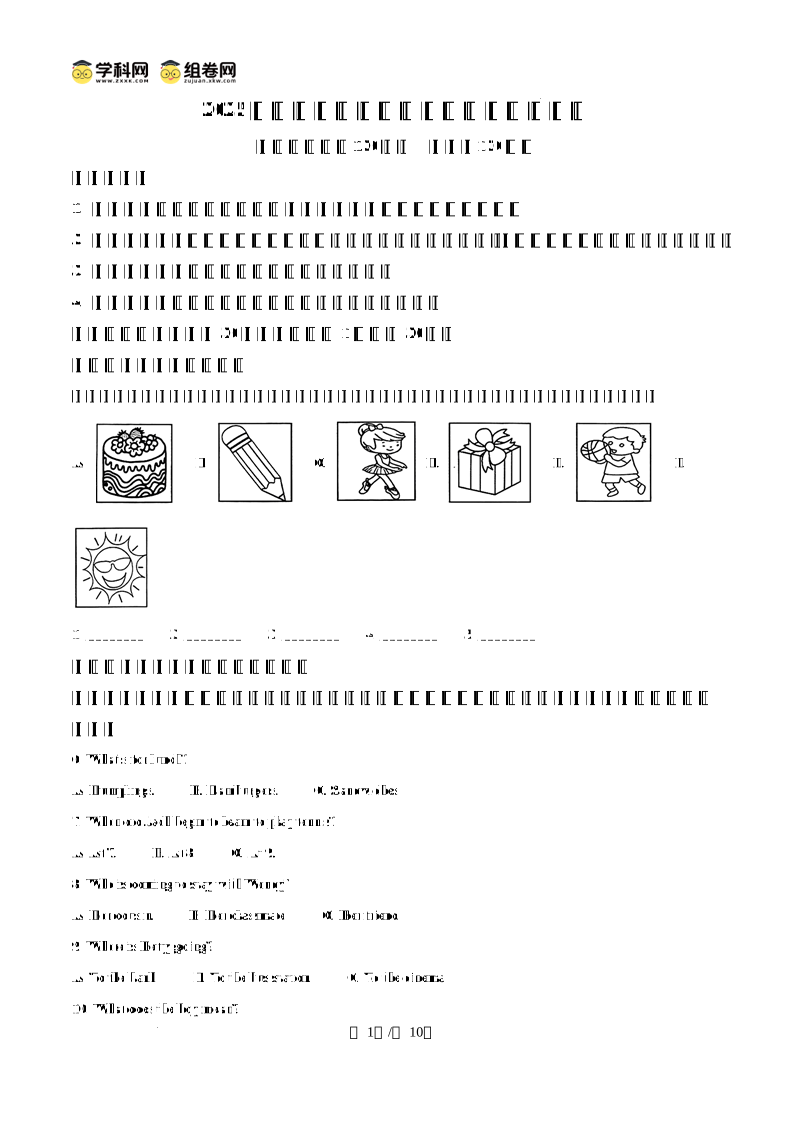
A. B. C. D. E. F.
1. ________ 2. ________ 3. ________ 4. ________ 5. ________
(二)听短对话,选择最佳答案。
你将听到五段对话,每段对话后有一个小题,请根据对话内容,选出最佳答案。每段对话读两遍。
6. What’s for lunch?
A. Dumplings. B. Hamburgers. C. Sandwiches.
7. When did Jack begin to learn to play tennis?
A. At 7. B. At 8. C. At 9.
8. Who is coming to stay with Wendy?
A. Her cousin. B. Her classmate. C. Her friend.
9. Where is Betty going?
A. To the bank. B. To the bus station. C. To the cinema.
10. What does the boy mean?
A. He is painting the wall. B. He is going crazy. C. He is driving a car.
(三)听长对话,选择最佳答案。
你将听到三段对话,请根据对话内容,选出每个问题的最佳答案。每段对话读两遍。
听对话,回答以下各小题。
11. Who won the first prize in the English writing competition?
A. Paul. B. Mary. C. Kelly.
12. What is Kelly’s favorite subject?
A. Science. B. English. C. Physics.
13. Which club is Kelly in?
A. The dancing club. B. The singing club. C. The speaking club.
听对话,回答以下各小题。
14. Where are the two speakers going tomorrow?
A. To the Art Museum. B. To the Nature Museum. C. To the Space Museum.
15. How old is the painting Along the River During the Qingming Festival?
A. Over 800 years old. B. Over 900 years old. C. Over 1000 years old.
16. What’s the relationship between the two speakers?
A. Brother and sister. B. Teacher and student. C. Classmates.
听对话,回答以下各小题。
17. When will the Olympic champion Mr Ma come to the school?
A. Next Monday. B. Next Tuesday. C. Next Wednesday.
18. What time will the talk start?
A. At 2:00 p. m. B. At 2:30 p. m. C. At 3:00 p. m.
19. Where will the talk be?
A. In the playground. B. At the school sports hall. C. In the library.
20. What will Mr Ma talk about?
A. The importance of training. B. The spirit of sports. C. The story behind his victory.
(四)听短文,选择最佳答案。
你将听到一篇短文,请根据短文内容,选出每个问题的最佳答案。短文读两遍。
听短文,回答以下各小题。
21. Where did Lily go hiking?
A. In the park. B. In the countryside. C. In the mountain.
22. Whom did Sally ride a bike with?
A. Her mother. B. Her sister. C. Her friend.
23. What did Sally learn about while having fun?
A. Culture. B. Music. C. Science.
24. When did Tom make chocolate cookies?
A. On Saturday morning. B. On Saturday afternoon. C. On Sunday evening.
25. Which activity is tiring but meaningful according to Tom?
A. Going camping. B. Doing sports. C. Cleaning up a local park.
(五)听短文,填信息。
你将听到一篇短文,请根据短文内容,将所缺信息填入对应的横线上,每空一词。短文读三遍。
Tips to Help You Make Progress in Communication Skills
Fact
Good communication skills play a key role in our daily lives.
Tips
· Be a good listener. When others are speaking, look into their eyes, and this makes them feel 26 .
· Express your thoughts clearly. Speak 27 and loudly. This helps to make sure others can catch your idea easily.
· Use your body 28 . A warm smile can make your message more acceptable.
· Practice more. Have more 29 with others. This means more chances to 30 your skills.
Opinion
Keep practicing, and you’ll make great progress in your communication skills.
二、补全对话(本大题共5小题,每小题2分,共10分)
根据对话内容,从文后选出恰当的选项补全对话,有一个选项是多余的。
Elsa: Good evening, Jack.
Jack: ___1___
Elsa: Are you reading a book?
Jack: ___2___
Elsa: What’s the name of the book?
Jack: Anne of Green Gables.
Elsa: ___3___
Jack: It’s about a girl called Anne.
Elsa: ___4___
Jack: She is kind and warm like sunshine. Let’s read it together.
Elsa: ___5___
A. Yes, I am.
B. No, I don’t.
C. Good idea.
D. What is it about?
E. What is she like?
F. Good evening, Elsa.
三、完形填空(本大题共10小题,每小题1.5分,共15分)
阅读下面的语篇,从各小题所给的A、B、C三个选项中,选出最佳选项。
Did you know? The first instant (速食的) noodles were invented to welcome ____6____!
Long ago in China, a man named Yi Bingshou loved noodles. His home often had many visitors, and he liked to treat them to noodles. ____7____ cooking noodles took too long. So, he told his cook to boil the noodles, fry (油炸) them in oil, and ____8____ them. When guests came, they just added ____9____ water, and then they were ready in just a few minutes! People called this “Yi Fu Mian”, which was the ____10____ name for instant noodles.
Many years later in Japan, a man named Momofuku Ando noticed people waiting in long lines for ramen (拉面). So ____11____ wanted to make noodles they could eat at home. But how?
One day, he saw fried Tempura and got a(n) ____12____. “What if I fry noodles too?” After many tries, he ____13____! His “flash-fry drying method” made noodles that could last long and be cooked fast.
In 1958, he ____14____ the first packaged (袋装的) instant noodles — “Nissin Chicken Ramen”. Later, he had another invention Cup Noodles, which didn’t even need a bowl!
From Yi Bingshou’s clever way to Momofuku Ando’s invention, instant noodles have become a worldwide _____15_____. Now, they’re the perfect quick meal anytime!
6. A. guests B. parents C. classmates
7. A. But B. And C. Or
8. A. eat B. sell C. store
9. A. cold B. hot C. clean
10. A. latest B. earliest C. longest
11. A. you B. he C. we
12. A. order B. word C. idea
13. A. succeeded B. stopped C. failed
14. A. found B. discovered C. created
15. A. favorite B. hobby C. business
四、阅读理解(本大题共20小题,每小题2分,共40分)
A
The Community Flea Market
This year’s Community Flea Market (跳蚤市场) is just coming! As usual, it’s here to get people to recycle their things. So if you have any things you no longer need but are still in good condition, you are welcome to sell them here.
Notes
* To sign up, visit the Community Flea Market page.
* Fill in the form and pay $10 for each stand.
* Bring your own tables and chairs for your stand.
* Parking for $1 per hour.
* Food and drink vendors (商贩) are not allowed.
* Please pay in cash.
根据语篇内容,选择最佳选项。
16. What does the Community Flea Market get people to do?
A. Make friends. B. Save money. C. Recycle things.
17. When is the Community Flea Market?
A. On June 18th. B. On July 10th. C. On August 5th.
18. How long will the Community Flea Market last?
A. For 9 hours. B. For 8 hours. C. For 7 hours.
19. Betty has signed up for two stands. How much should she pay?
A. $10. B. $20. C. $40.
20. How can you pay in the Community Flea Market?
A. In cash. B. By WeChat. C. By Alipay.
B
In a forest, there lived a group of happy little birds. Among them was a small sparrow (麻雀). It was smaller and clumsier (笨拙的) than the other birds.
When the sun shone brightly, the other birds would quickly fly out of their homes. They moved freely through the air, singing and catching insects. But the little sparrow had trouble flying because its wings were weak.
One day, after another failed flight, the little sparrow felt sad. “Why can’t I fly well?” it said quietly. An old owl (猫头鹰) nearby heard it and said, “Don’t worry, little one. The early bird catches the worm (虫子). If you practice more and start earlier, you will get better.”
The little sparrow decided to try harder. From then on, it woke up earlier than the other birds. In the quiet morning, it practiced waving its wings and flying between branches. Even when it fell off the trees again and again, it didn’t give up—it tried again and again.
After many days of practice, the little sparrow could fly freely, just like its friends. When the other birds saw this, they were surprised at how well the little sparrow could fly now.
The little sparrow became an example for all the birds in the forest. Its story showed that even if you start slowly or make mistakes, hard work and persistence (坚持) can help you succeed.
根据语篇内容,选择最佳选项。
21. What did the little sparrow have trouble in?
A. Singing. B. Flying. C. Eating.
22. Who encouraged the little sparrow to practice?
A. An old owl. B. A little monkey. C. A big bear.
23. What does the underlined word “branches” probably mean?
A. 天空 B. 山峰 C. 树枝
24. How did the other birds feel when they saw how well the little sparrow could fly?
A. Moved. B. Excited. C. Surprised.
25. Where can you find this text?
A. In a storybook. B. In a guidebook. C. In a poster.
C
Can you imagine talking with some historic characters in person? You open your history textbook and see Confucius, Leonardo da Vinci, or Marie Curie step out of the pages to talk to you! Thanks to artificial intelligence (AI), this dream is becoming reality in history classes around the world.
In Wuhan Gangcheng No.4 Middle School, students ask questions to a 3D-animated (动画) Confucius. One student once asked, “Does ‘ren’ (kindness) still matter in a world full of competition?” The digital Confucius smiled and then explained how kindness helps people live together peacefully. This isn’t magic—it’s AI! Using tools like Jimeng and Keling, teachers can turn textbook pictures into lively characters. These AI tools add details (细节) to old paintings, make the characters move, and even let them speak. For example, the digital poet Li Bai can recite (背诵) his own poems with gentle expressions.
AI isn’t just fun; it’s changing how we study. In Nanjing’s Stone Shadow Art Museum, AI turns ancient Chinese paintings into modern art styles. After a history class about the Maya civilization (文明) with the help of AI-made videos, a student Sean said, “History isn’t just dates anymore. Learning history is like touching the past with the help of AI.”
From old books to smart screens, the ways of learning are always developing. With AI, textbook characters aren’t just words anymore—they’re friends who guide us through the amazing journey of knowledge.
根据语篇内容,选择最佳选项。
26. How does the writer start the passage?
A. By asking a question. B. By giving an example. C. By telling a story.
27. According to Paragraph 2, what can the digital poet Li Bai do?
A. Add details to old paintings.
B. Explain how kindness works.
C. Recite his own poems.
28. What does Sean mean by saying “History isn’t just dates anymore”?
A. They can touch famous art works in the museum.
B. The dates of the history events are not important.
C. They can learn about history in a more lively way.
29. How does the writer feel about AI technology used in learning history?
A. Negative. B. Positive. C. Doubtful.
30. What’s the structure (结构) of the passage?
A. B. C.
D
At the 2nd Liaoning Traditional Chinese Medicine (TCM) Cultural Night Market, Seth Nkrumah, a doctoral student from Africa, skillfully took the pulse (脉搏) of an elderly woman. “Your pulse is a bit fast. Do you have high blood lipids (脂质)?” he asked, using the four diagnostic (诊断的) methods—looking, listening, questioning, and pulse-taking—he learned at Liaoning University of Traditional Chinese Medicine (LNUTCM).
“I can use what I learned in real life and meet people of different ages and in different health conditions,” Seth said. “When I felt the old woman’s pulse, it felt deep, which often shows high blood lipids. She said I was right when I asked her!” This was Seth’s second time at the TCM Night Market. He sees it as a great chance to practice what he’s learned.
Seth said, “In the future, I plan to start a clinic (诊所) and a training center in my hometown. I’ll not only treat people but also train more TCM practitioners (从业人员). TCM isn’t just about treating illnesses—it’s a way of life. I believe people everywhere can benefit from learning about it.”
This year, students from 9 countries at LNUTCM’s International Education College joined the night market. Liu Jingfeng, the college’s director, said more people worldwide are interested in TCM. “When these foreign students go back to their countries after graduation, they can help TCM become more popular all around the world. At our college, we teach not only medical knowledge but also the culture behind TCM, so they can spread Chinese medical culture to the world,” he said.
根据短文内容回答下列问题。
31. Where is Seth Nkrumah from?
______________________________________________
32. What are the four diagnostic methods of Traditional Chinese Medicine?
______________________________________________
33. How did Seth feel when he said “She said I was right when I asked her!”?
______________________________________________
34. What does Seth plan to do in his hometown in the future?
______________________________________________
35. What else in Chinese traditional culture would you like to spread around the world? Explain the reason. (No more than 20 words.)
______________________________________________
五、选词填空(本大题共10小题,每小题1分,共10分)
根据语篇内容,从方框中选择恰当的单词,并用其正确形式填空。每个单词只能用一次。
and from cover clean water serious early grow they hometown
For more than 20 years, Wang Tianchang’s family has been working hard to fight desert problems in Gansu. Over twenty years ago, the situation in their village was ____36____. The huge sand dunes (沙丘) were moving closer to the village and covering ____37____ farmland. Life was so hard that many villagers left. But instead of running away like other villagers, the Wang family decided to stay and protect their ____38____.
Every day, Wang Tianchang, his wife, and their children got up ____39____ and worked until it got dark. They dug holes in the dry ground ____40____ planted young trees. Then, to keep the young trees alive, they had to carry ____41____ from far away. But very often, strong winds and sandstorms destroyed (摧毁) the young trees badly. However, they never gave up.
Little by little, their hard work paid off. Green plants began to ____42____ on the sandy land. Their village became safer and the air got ____43____. More and more people joined them to protect the land ____44____ the sand.
Today, more than 10 square kilometers of land that was ____45____ with sand before has turned into green areas. The villagers can grow crops (庄稼) on the farmland again! Life here now is much better than 20 years ago, thanks to their effort to fight against the sand!
六、书面表达(共15分)
46. 劳动创造美好生活。假如你是李华,你班计划下周组织一次到农场的体验活动,希望同学们通过采摘和种植活动体会劳动的意义。请你用英文写一个活动计划,并把计划发送给你的外籍老师Mr Lee,征询他的意见。
要点:
1. 活动的计划(时间、地点及活动安排);
2. 你的期待;
3. 询问他的意见。
注意:
1. 词数80左右,文章开头和结尾已给出,不计入总词数;
2. 可适当增加细节,以使行文连贯;
3. 文章不能出现真实姓名及学校名。
参考词汇:plan v. & n. 计划;activity n. 活动;expect v. 期待;opinion n. 意见
Dear Mr Lee,
How are you doing? I’m writing to discuss the plan for our class trip to the farm next Thursday. Let me make it clear. ___________________________________________________________________________________________________________________________________________________________________________________________________________________________________________________________________________________________________________
I’m looking forward to your reply.
Yours,
Li Hua
第1页/共1页
学科网(北京)股份有限公司
$
2025年广西初中学业水平考试模拟卷英语
(考试时间:120分钟 满分:120分)
注意事项:
1. 答题前,考生务必将姓名、准考证号填写在试卷和答题卡上。
2. 考生作答时,请在答题卡上作答(答题注意事项见答题卡),在本试卷、草稿纸上作答无效。
3. 考试结束后,将本试卷和答题卡一并交回。
4. 先考听力,在听力考试前有两分钟听力试音时间。
一、听力(本大题共30小题,每小题1分,共30分)
(一)听句子,选图片。
你将听到五个句子,请选出与所听句子内容相符的图片,有一幅图是多余的。每个句子读两遍。
A. B. C. D. E. F.
1. ________ 2. ________ 3. ________ 4. ________ 5. ________
(二)听短对话,选择最佳答案。
你将听到五段对话,每段对话后有一个小题,请根据对话内容,选出最佳答案。每段对话读两遍。
6. What’s for lunch?
A. Dumplings. B. Hamburgers. C. Sandwiches.
7. When did Jack begin to learn to play tennis?
A. At 7. B. At 8. C. At 9.
8. Who is coming to stay with Wendy?
A. Her cousin. B. Her classmate. C. Her friend.
9. Where is Betty going?
A. To the bank. B. To the bus station. C. To the cinema.
10. What does the boy mean?
A. He is painting the wall. B. He is going crazy. C. He is driving a car.
(三)听长对话,选择最佳答案。
你将听到三段对话,请根据对话内容,选出每个问题的最佳答案。每段对话读两遍。
听对话,回答以下各小题。
11. Who won the first prize in the English writing competition?
A. Paul. B. Mary. C. Kelly.
12. What is Kelly’s favorite subject?
A. Science. B. English. C. Physics.
13. Which club is Kelly in?
A. The dancing club. B. The singing club. C. The speaking club.
听对话,回答以下各小题。
14. Where are the two speakers going tomorrow?
A. To the Art Museum. B. To the Nature Museum. C. To the Space Museum.
15. How old is the painting Along the River During the Qingming Festival?
A. Over 800 years old. B. Over 900 years old. C. Over 1000 years old.
16. What’s the relationship between the two speakers?
A. Brother and sister. B. Teacher and student. C. Classmates.
听对话,回答以下各小题。
17. When will the Olympic champion Mr Ma come to the school?
A. Next Monday. B. Next Tuesday. C. Next Wednesday.
18. What time will the talk start?
A. At 2:00 p. m. B. At 2:30 p. m. C. At 3:00 p. m.
19. Where will the talk be?
A. In the playground. B. At the school sports hall. C. In the library.
20. What will Mr Ma talk about?
A. The importance of training. B. The spirit of sports. C. The story behind his victory.
(四)听短文,选择最佳答案。
你将听到一篇短文,请根据短文内容,选出每个问题的最佳答案。短文读两遍。
听短文,回答以下各小题。
21. Where did Lily go hiking?
A. In the park. B. In the countryside. C. In the mountain.
22. Whom did Sally ride a bike with?
A. Her mother. B. Her sister. C. Her friend.
23. What did Sally learn about while having fun?
A. Culture. B. Music. C. Science.
24. When did Tom make chocolate cookies?
A. On Saturday morning. B. On Saturday afternoon. C. On Sunday evening.
25. Which activity is tiring but meaningful according to Tom?
A. Going camping. B. Doing sports. C. Cleaning up a local park.
(五)听短文,填信息。
你将听到一篇短文,请根据短文内容,将所缺信息填入对应的横线上,每空一词。短文读三遍。
Tips to Help You Make Progress in Communication Skills
Fact
Good communication skills play a key role in our daily lives.
Tips
· Be a good listener. When others are speaking, look into their eyes, and this makes them feel 26 .
· Express your thoughts clearly. Speak 27 and loudly. This helps to make sure others can catch your idea easily.
· Use your body 28 . A warm smile can make your message more acceptable.
· Practice more. Have more 29 with others. This means more chances to 30 your skills.
Opinion
Keep practicing, and you’ll make great progress in your communication skills.
二、补全对话(本大题共5小题,每小题2分,共10分)
根据对话内容,从文后选出恰当的选项补全对话,有一个选项是多余的。
Elsa: Good evening, Jack.
Jack: ___1___
Elsa: Are you reading a book?
Jack: ___2___
Elsa: What’s the name of the book?
Jack: Anne of Green Gables.
Elsa: ___3___
Jack: It’s about a girl called Anne.
Elsa: ___4___
Jack: She is kind and warm like sunshine. Let’s read it together.
Elsa: ___5___
A. Yes, I am.
B. No, I don’t.
C. Good idea.
D. What is it about?
E. What is she like?
F. Good evening, Elsa.
【答案】1. F 2. A 3. D 4. E 5. C
【解析】
【导语】这是一段Elsa与Jack围绕Jack正在阅读的书籍展开的日常情景对话。
【1题详解】
Elsa先说“Good evening, Jack.”,这是晚间见面的问候,Jack的回应需匹配问候场景,选项F“Good evening, Elsa.”对应回应,开启对话。
【2题详解】
Elsa问“Are you reading a book?”,这是一般疑问句,后续Elsa继续询问书名,说明Jack确实在读书,选项A“Yes, I am.”直接回应问句,自然引出后续关于书籍的对话。
【3题详解】
Jack说出书名Anne of Green Gables后,下一句Jack介绍书的内容是“It’s about a girl called Anne.”,说明Elsa的问题是询问书籍内容,选项D“What is it about?”衔接书名与内容介绍的问答。
【4题详解】
Jack回答“She is kind and warm like sunshine.”,这是在描述书中女孩Anne的性格,说明Elsa的问题是询问人物特点,选项E“What is she like?”衔接人物介绍的问句与答句。
【5题详解】
Jack提议“Let’s read it together.”,Elsa的回应需匹配接受提议的场景,选项C“Good idea.”回应提议,完成对话。
三、完形填空(本大题共10小题,每小题1.5分,共15分)
阅读下面的语篇,从各小题所给的A、B、C三个选项中,选出最佳选项。
Did you know? The first instant (速食的) noodles were invented to welcome ____6____!
Long ago in China, a man named Yi Bingshou loved noodles. His home often had many visitors, and he liked to treat them to noodles. ____7____ cooking noodles took too long. So, he told his cook to boil the noodles, fry (油炸) them in oil, and ____8____ them. When guests came, they just added ____9____ water, and then they were ready in just a few minutes! People called this “Yi Fu Mian”, which was the ____10____ name for instant noodles.
Many years later in Japan, a man named Momofuku Ando noticed people waiting in long lines for ramen (拉面). So ____11____ wanted to make noodles they could eat at home. But how?
One day, he saw fried Tempura and got a(n) ____12____. “What if I fry noodles too?” After many tries, he ____13____! His “flash-fry drying method” made noodles that could last long and be cooked fast.
In 1958, he ____14____ the first packaged (袋装的) instant noodles — “Nissin Chicken Ramen”. Later, he had another invention Cup Noodles, which didn’t even need a bowl!
From Yi Bingshou’s clever way to Momofuku Ando’s invention, instant noodles have become a worldwide _____15_____. Now, they’re the perfect quick meal anytime!
6. A. guests B. parents C. classmates
7. A. But B. And C. Or
8. A. eat B. sell C. store
9. A. cold B. hot C. clean
10. A. latest B. earliest C. longest
11. A. you B. he C. we
12. A. order B. word C. idea
13. A. succeeded B. stopped C. failed
14. A. found B. discovered C. created
15. A. favorite B. hobby C. business
【答案】6. A 7. A 8. C 9. B 10. B 11. B 12. C 13. A 14. C 15. A
【解析】
【导语】本文是一篇说明文。主要介绍了方便面的起源,从中国伊秉绶的“伊府面”到日本安藤百福的发明历程,讲述了其成为世界喜爱美食的过程。
【6题详解】
句意:第一包方便面是为了招待客人而发明的。
根据后文“His home often had many visitors, and he liked to treat them to noodles.”可知,伊秉绶家里经常有客人,他喜欢用面条招待他们。应选用guests,表示“客人”。parents表示“父母”,classmates表示“同学”,均与“visitors”和“treat them”的语境不符。
【7题详解】
句意:但是煮面条花费的时间太长了。
前文说伊秉绶喜欢用面条招待客人,后文说煮面条时间长,两者之间是转折关系,说明他遇到了问题。应选用But,表示“但是”。And表示“和”,表示并列;Or表示“或者”,表示选择,均不符合转折逻辑。
【8题详解】
句意:他让厨师把面条煮熟,用油炸一下,然后储存。
根据后文“When guests came, they just added hot water”可知,面条是经过处理后便于储存的,应选用store,表示“储存、贮藏”,此处指将处理好的面条储存起来备用。eat表示“吃”,sell表示“卖”,均不符合“为客人到来提前准备”的逻辑。
【9题详解】
句意:当客人来的时候,他们只需加入热水,几分钟就好了。
根据常识,吃方便面需要加开水冲泡。应选用hot,表示“热的”,hot water意为“热水”。cold表示“冷的”,clean表示“干净的”,均不符合冲泡面条的常识。
【10题详解】
句意:人们把这种面叫做“伊府面”,这是方便面最早的名字。
根据文章开篇“The first instant noodles were invented”以及时间顺序可知,这是方便面最早的形式。应选用earliest,表示“最早的”。latest表示“最新的”,longest表示“最长的”,均不符合“first”所对应的时间概念。
【11题详解】
句意:所以他想要做出让人们可以在家吃的面条。
前文提到安藤百福看到人们排长队等拉面,他想要解决这个问题,因此是他自己想出了这个主意。应选用he,指代安藤百福本人。you表示“你”,we表示“我们”,均不符合第三人称单数的指代。
【12题详解】
句意:有一天,他看到了油炸天妇罗,有了一个主意。
根据后文“What if I fry noodles too?”可知,他从天妇罗受到启发,想到了一个办法。应选用idea,表示“主意、想法”。order表示“订单”,word表示“单词”,均不符合“受到启发想到办法”的语境。
【13题详解】
句意:经过多次尝试,他成功了。
根据后文他发明了“快速油炸干燥法”以及第一包袋装方便面可知,他的尝试最终取得了成功。应选用succeeded,表示“成功”。stopped表示“停止”,failed表示“失败”,均与最终成功的结局不符。
【14题详解】
句意:1958年,他创造了第一包袋装方便面——“日清鸡肉拉面”。
安藤百福通过发明创造,把想法变成了实际的产品。应选用created,表示“创造、创作”。found表示“找到”,discovered表示“发现”,均不符合“发明新产品”的语境。
【15题详解】
句意:方便面已经成为全球最受欢迎的美食。
根据文章最后一句“Now, they’re the perfect quick meal anytime”可知,方便面深受人们喜爱,成为受欢迎的食物。应选用favorite,表示“最喜爱的”。hobby表示“爱好”,business表示“生意”,均不符合“美食”的属性描述。
四、阅读理解(本大题共20小题,每小题2分,共40分)
A
The Community Flea Market
This year’s Community Flea Market (跳蚤市场) is just coming! As usual, it’s here to get people to recycle their things. So if you have any things you no longer need but are still in good condition, you are welcome to sell them here.
Notes
* To sign up, visit the Community Flea Market page.
* Fill in the form and pay $10 for each stand.
* Bring your own tables and chairs for your stand.
* Parking for $1 per hour.
* Food and drink vendors (商贩) are not allowed.
* Please pay in cash.
根据语篇内容,选择最佳选项。
16. What does the Community Flea Market get people to do?
A. Make friends. B. Save money. C. Recycle things.
17. When is the Community Flea Market?
A. On June 18th. B. On July 10th. C. On August 5th.
18. How long will the Community Flea Market last?
A. For 9 hours. B. For 8 hours. C. For 7 hours.
19. Betty has signed up for two stands. How much should she pay?
A. $10. B. $20. C. $40.
20. How can you pay in the Community Flea Market?
A. In cash. B. By WeChat. C. By Alipay.
【答案】16. C 17. A 18. B 19. B 20. A
【解析】
【导语】本文是一篇应用文,介绍了社区跳蚤市场的活动目的、报名方式、收费标准及注意事项等。
【16题详解】
第一段指出:“As usual, it’s here to get people to recycle their things”,说明社区跳蚤市场是为了让人们回收物品。
【17题详解】
广告信息指出:“Date: On June 18th”,说明跳蚤市场在6月18日举办。
【18题详解】
广告信息指出:“Time: 9:00 a.m.–5:00 p.m.”,说明活动持续8小时。
【19题详解】
Notes部分指出:“Fill in the form and pay $10 for each stand”,说明每个摊位10美元,Betty报名了两个摊位,应支付20美元。
【20题详解】
Notes部分指出:“Please pay in cash”,说明跳蚤市场只接受现金支付。
B
In a forest, there lived a group of happy little birds. Among them was a small sparrow (麻雀). It was smaller and clumsier (笨拙的) than the other birds.
When the sun shone brightly, the other birds would quickly fly out of their homes. They moved freely through the air, singing and catching insects. But the little sparrow had trouble flying because its wings were weak.
One day, after another failed flight, the little sparrow felt sad. “Why can’t I fly well?” it said quietly. An old owl (猫头鹰) nearby heard it and said, “Don’t worry, little one. The early bird catches the worm (虫子). If you practice more and start earlier, you will get better.”
The little sparrow decided to try harder. From then on, it woke up earlier than the other birds. In the quiet morning, it practiced waving its wings and flying between branches. Even when it fell off the trees again and again, it didn’t give up—it tried again and again.
After many days of practice, the little sparrow could fly freely, just like its friends. When the other birds saw this, they were surprised at how well the little sparrow could fly now.
The little sparrow became an example for all the birds in the forest. Its story showed that even if you start slowly or make mistakes, hard work and persistence (坚持) can help you succeed.
根据语篇内容,选择最佳选项。
21. What did the little sparrow have trouble in?
A. Singing. B. Flying. C. Eating.
22. Who encouraged the little sparrow to practice?
A. An old owl. B. A little monkey. C. A big bear.
23. What does the underlined word “branches” probably mean?
A. 天空 B. 山峰 C. 树枝
24. How did the other birds feel when they saw how well the little sparrow could fly?
A. Moved. B. Excited. C. Surprised.
25. Where can you find this text?
A. In a storybook. B. In a guidebook. C. In a poster.
【答案】21. B 22. A 23. C 24. C 25. A
【解析】
【导语】本文讲述了森林里有一只小麻雀,它比其他鸟儿更小更笨拙,因为翅膀弱小,飞行总是不顺利。一次飞行失败后它很沮丧,附近的猫头鹰用谚语鼓励它“早起的鸟儿有虫吃”,建议它多练习、早开始。小麻雀从此每天早起,在清晨练习扇动翅膀、在树枝间飞行,即便一次次摔落也从不放弃。经过多日苦练,它终于能像其他鸟儿一样自由飞翔,成为了森林里所有鸟儿的榜样。
【21题详解】
文中第二段提到“But the little sparrow had trouble flying because its wings were weak.”,可知小麻雀在飞行方面有困难。
【22题详解】
文中第三段提到“An old owl nearby heard it and said, ‘Don’t worry, little one. The early bird catches the worm. If you practice more and start earlier, you will get better.’”表明是一只老猫头鹰鼓励了小麻雀。
【23题详解】
根据语境“In the quiet morning, it practiced waving its wings and flying between branches.”,小麻雀在清晨练习挥动翅膀以及在branches之间飞行,结合常识可知是在树枝之间,所以branches意思是“树枝”。
【24题详解】
文中第五段提到“When the other birds saw this, they were surprised at how well the little sparrow could fly now.”明确提到其他鸟儿很惊讶。
【25题详解】
这是一篇讲述小麻雀通过努力练习最终成功飞行的故事,具有故事性和教育意义,通常会出现在故事书里,而不是指南书或者海报中。
C
Can you imagine talking with some historic characters in person? You open your history textbook and see Confucius, Leonardo da Vinci, or Marie Curie step out of the pages to talk to you! Thanks to artificial intelligence (AI), this dream is becoming reality in history classes around the world.
In Wuhan Gangcheng No.4 Middle School, students ask questions to a 3D-animated (动画) Confucius. One student once asked, “Does ‘ren’ (kindness) still matter in a world full of competition?” The digital Confucius smiled and then explained how kindness helps people live together peacefully. This isn’t magic—it’s AI! Using tools like Jimeng and Keling, teachers can turn textbook pictures into lively characters. These AI tools add details (细节) to old paintings, make the characters move, and even let them speak. For example, the digital poet Li Bai can recite (背诵) his own poems with gentle expressions.
AI isn’t just fun; it’s changing how we study. In Nanjing’s Stone Shadow Art Museum, AI turns ancient Chinese paintings into modern art styles. After a history class about the Maya civilization (文明) with the help of AI-made videos, a student Sean said, “History isn’t just dates anymore. Learning history is like touching the past with the help of AI.”
From old books to smart screens, the ways of learning are always developing. With AI, textbook characters aren’t just words anymore—they’re friends who guide us through the amazing journey of knowledge.
根据语篇内容,选择最佳选项。
26. How does the writer start the passage?
A. By asking a question. B. By giving an example. C. By telling a story.
27. According to Paragraph 2, what can the digital poet Li Bai do?
A. Add details to old paintings.
B. Explain how kindness works.
C. Recite his own poems.
28. What does Sean mean by saying “History isn’t just dates anymore”?
A. They can touch famous art works in the museum.
B. The dates of the history events are not important.
C. They can learn about history in a more lively way.
29. How does the writer feel about AI technology used in learning history?
A. Negative. B. Positive. C. Doubtful.
30. What’s the structure (结构) of the passage?
A. B. C.
【答案】26. A 27. C 28. C 29. B 30. A
【解析】
【导语】本文主要介绍人工智能走进历史课堂,通过AI技术让课本人物立体生动、活化历史学习方式,展现了AI为历史学习带来的全新改变与积极作用。
【26题详解】
文章首段以问句开篇“Can you imagine talking with some historic characters in person?”,说明作者通过提问的方式开启整篇文章。
【27题详解】
第二段介绍数字李白的能力“the digital poet Li Bai can recite (背诵) his own poems with gentle expressions.”,说明数字诗人李白可以背诵自己的诗作。
【28题详解】
第三段肖恩发表学习感悟“Learning history is like touching the past with the help of AI.”,说明借助AI技术,学生可以用更加生动鲜活的方式学习历史,不再局限于枯燥的年代日期。
【29题详解】
全文介绍AI为历史学习带来趣味与便利,结尾肯定AI学习的优势,字里行间体现作者对AI运用于历史学习持认可、支持的态度,由此可推断作者对此持积极态度。
【30题详解】
文章第一段总述AI让历史课堂梦想成真,第二、三段分别列举实例介绍AI的应用与优势,最后一段总结升华,全文为总分总结构。
D
At the 2nd Liaoning Traditional Chinese Medicine (TCM) Cultural Night Market, Seth Nkrumah, a doctoral student from Africa, skillfully took the pulse (脉搏) of an elderly woman. “Your pulse is a bit fast. Do you have high blood lipids (脂质)?” he asked, using the four diagnostic (诊断的) methods—looking, listening, questioning, and pulse-taking—he learned at Liaoning University of Traditional Chinese Medicine (LNUTCM).
“I can use what I learned in real life and meet people of different ages and in different health conditions,” Seth said. “When I felt the old woman’s pulse, it felt deep, which often shows high blood lipids. She said I was right when I asked her!” This was Seth’s second time at the TCM Night Market. He sees it as a great chance to practice what he’s learned.
Seth said, “In the future, I plan to start a clinic (诊所) and a training center in my hometown. I’ll not only treat people but also train more TCM practitioners (从业人员). TCM isn’t just about treating illnesses—it’s a way of life. I believe people everywhere can benefit from learning about it.”
This year, students from 9 countries at LNUTCM’s International Education College joined the night market. Liu Jingfeng, the college’s director, said more people worldwide are interested in TCM. “When these foreign students go back to their countries after graduation, they can help TCM become more popular all around the world. At our college, we teach not only medical knowledge but also the culture behind TCM, so they can spread Chinese medical culture to the world,” he said.
根据短文内容回答下列问题。
31. Where is Seth Nkrumah from?
______________________________________________
32. What are the four diagnostic methods of Traditional Chinese Medicine?
______________________________________________
33. How did Seth feel when he said “She said I was right when I asked her!”?
______________________________________________
34. What does Seth plan to do in his hometown in the future?
______________________________________________
35. What else in Chinese traditional culture would you like to spread around the world? Explain the reason. (No more than 20 words.)
______________________________________________
【答案】31. Africa./He is from Africa./He comes from Africa.
32. Looking, listening, questioning, and pulse-taking.
33. He felt proud/happy/excited.
34. He plans to start a clinic and a training center in his hometown./Start a clinic and a training center.
35. Chinese Kung Fu. Because it represents strength and courage./Han Fu. Because it stands for beauty and wisdom.
【解析】
【导语】本文是一篇新闻报道,讲述了在华学习中医的非洲留学生Seth,实践后立志回乡推广中医药文化。
【31题详解】
第一段“...Seth Nkrumah, a doctoral student from Africa...”明确指出Seth来自非洲。答案从原文中直接提取。
【32题详解】
第一段“...using the four diagnostic methods—looking, listening, questioning, and pulse-taking...”明确给出中医四诊的具体内容是“望闻问切”。答案从原文中直接提取。
【33题详解】
第二段“When I felt the old woman’s pulse, it felt deep, which often shows high blood lipids. She said I was right when I asked her!”可推知他的诊断被确认正确,应该感到高兴和自豪。积极正向表达情绪的词即可。
【34题详解】
第三段“In the future, I plan to start a clinic and a training center in my hometown.”明确说明Seth未来计划在家乡开诊所和培训中心。
【35题详解】
本题为开放性试题,答案不唯一,说出一种中国传统文化,给出合理理由且符合字数要求即可。
五、选词填空(本大题共10小题,每小题1分,共10分)
根据语篇内容,从方框中选择恰当的单词,并用其正确形式填空。每个单词只能用一次。
and from cover clean water serious early grow they hometown
For more than 20 years, Wang Tianchang’s family has been working hard to fight desert problems in Gansu. Over twenty years ago, the situation in their village was ____36____. The huge sand dunes (沙丘) were moving closer to the village and covering ____37____ farmland. Life was so hard that many villagers left. But instead of running away like other villagers, the Wang family decided to stay and protect their ____38____.
Every day, Wang Tianchang, his wife, and their children got up ____39____ and worked until it got dark. They dug holes in the dry ground ____40____ planted young trees. Then, to keep the young trees alive, they had to carry ____41____ from far away. But very often, strong winds and sandstorms destroyed (摧毁) the young trees badly. However, they never gave up.
Little by little, their hard work paid off. Green plants began to ____42____ on the sandy land. Their village became safer and the air got ____43____. More and more people joined them to protect the land ____44____ the sand.
Today, more than 10 square kilometers of land that was ____45____ with sand before has turned into green areas. The villagers can grow crops (庄稼) on the farmland again! Life here now is much better than 20 years ago, thanks to their effort to fight against the sand!
【答案】36. serious
37. their 38. hometown
39. early 40. and
41. water 42. grow
43. cleaner
44. from 45. covered
【解析】
【导语】本文主要介绍了甘肃王天昌一家二十余年坚持治沙的故事:面对沙漠化威胁,王家没有逃离家乡,而是坚持每日早起种树固沙,克服风沙破坏树苗等困难,最终让十多平方公里原本被黄沙覆盖的沙地变为绿洲,改善了家乡环境,让村民重新得以耕种,过上了更好的生活。
【36题详解】
句意:二十多年前,他们村的情况很严重。“the situation in their village was…”表示“他们村的情况很严重”,前文提到村庄遭遇沙漠化问题,后文描述沙丘逼近村庄,说明当时情况十分严峻,be动词后接形容词serious作表语。
【37题详解】
句意:巨大的沙丘正在靠近村庄并覆盖他们的农田。“covering…farmland”表示“覆盖他们的农田”,此处需要限定词修饰名词farmland,需用they的形容词性物主代词形式their。
【38题详解】
句意:但王家没有像其他村民一样逃走,反而选择留下,守护他们的家乡。“protect their…”表示“保护他们的家乡”,前文提到很多村民逃离村庄,王家选择留下保护自己的家乡,此处需填入名词hometown。
【39题详解】
句意:每天,王天昌和妻子、孩子很早就起床,一直劳作到天黑。“got up…”表示“很早就起床”,此处需要副词修饰动词短语got up,应填early。且get up early为固定搭配,表示“早起”,与后文“直到天黑”对应。
【40题详解】
句意:他们在干燥的土地上挖坑,种下小树苗。设空处连接“dug”和“planted”两个并列的谓语动词,用并列连词and。
【41题详解】
句意:为了让幼树存活,他们不得不从远处运水。“carry…from far away”表示“从远处运水”,此处需要名词,为了保证树苗存活需要从远处运水浇灌,应填不可数名词water。
【42题详解】
句意:绿色植物开始在沙地上生长。“began to…on the sandy land”表示“开始在沙地上生长”,begin to do sth.是固定结构,此处需要动词grow的原形。
【43题详解】
句意:村庄变得更安全,空气也更干净。“the air got…”表示“空气也更干净”,此处和前文“村庄变得更安全”对应,存在和过去的对比,get后接形容词比较级,clean变比较级cleaner,表示“空气变得更干净”。
【44题详解】
句意:越来越多的人加入他们,一起保护土地免受沙尘侵害。“protect the land…the sand.”表示“保护土地免受沙尘侵害”,固定搭配protect…from…表示“保护……免受……侵害”。
【45题详解】
句意:如今,超过10平方公里曾经被黄沙覆盖的土地已经变成了绿地。“was…with sand”表示“被黄沙覆盖”,固定搭配be covered with表示“被……覆盖”,此处是被动语态,用cover的过去分词covered。
六、书面表达(共15分)
46. 劳动创造美好生活。假如你是李华,你班计划下周组织一次到农场的体验活动,希望同学们通过采摘和种植活动体会劳动的意义。请你用英文写一个活动计划,并把计划发送给你的外籍老师Mr Lee,征询他的意见。
要点:
1. 活动的计划(时间、地点及活动安排);
2. 你的期待;
3. 询问他的意见。
注意:
1. 词数80左右,文章开头和结尾已给出,不计入总词数;
2. 可适当增加细节,以使行文连贯;
3. 文章不能出现真实姓名及学校名。
参考词汇:plan v. & n. 计划;activity n. 活动;expect v. 期待;opinion n. 意见
Dear Mr Lee,
How are you doing? I’m writing to discuss the plan for our class trip to the farm next Thursday. Let me make it clear. ___________________________________________________________________________________________________________________________________________________________________________________________________________________________________________________________________________________________________________
I’m looking forward to your reply.
Yours,
Li Hua
【答案】例文
Dear Mr Lee,
How are you doing? I’m writing to discuss the plan for our class trip to the farm next Thursday. Let me make it clear.
We will go to the Sunny Farm by bike at 9 a.m. On the farm, we can have some activities. First, we’ll learn something about farming, such as the right time to plant different crops. Next, we’ll learn to plant vegetables with the farmers’ help. Then we’ll help feed the chickens. Finally, we’ll help pick the corn in the field. I expect the trip to be fun and meaningful.
What do you think about the plan? Please tell me your opinion about it.
I’m looking forward to your reply.
Yours,
Li Hua
【解析】
【详解】[第一步:审题立意]
确定文体:应用文(邮件),用一般现在时和一般将来时为主
明确要点:介绍农场体验活动计划(时间/地点/活动安排)、表达个人期待、征询老师意见
确定人称:第一人称(I/we),收信人为Mr Lee
注意事项:词数80左右,不得透露真实个人信息,符合邮件格式
[第二步:构思布局]
开头段:承接给定开头,引出农场活动计划
主体段:介绍活动的时间、地点和具体安排,说明个人期待,询问老师的意见
结尾段:期待回复,给定结尾
[第三步:要点展开]
要点一:活动计划
时间安排:next Thursday/next Sunday morning/next weekend/9 a.m./start at 9:00 a.m. and last three hours/等
地点和交通:Sunny Farm/a nearby farm/by bike/by school bus等
活动内容:learn about farming/plant vegetables/feed animals/pick crops/pick fresh fruits and vegetables/water and take care of young plants/remove weeds from the farmland等
要点二:个人期待
期待说明:learn the meaning of labor/experience the value of labor/have fun/look forward to learning from practice/enrich our after-school life等
成长收获:understand hard work/appreciate farmers’ work/labor creates a beautiful life等
要点三:征询意见
礼貌用语:What do you think of.../Please tell me your opinion/ask for your valuable advice/Could you please give me some suggestions on our plan?等
第1页/共1页
学科网(北京)股份有限公司
$
资源预览图
1
2
3

相关资源
由于学科网是一个信息分享及获取的平台,不确保部分用户上传资料的 来源及知识产权归属。如您发现相关资料侵犯您的合法权益,请联系学科网,我们核实后将及时进行处理。