Unit 6 Crossing Cultures Section B 能力提升卷(一) 2025~2026学年 人教版 八年级英语 下册
2026-05-29
|
6页
|
231人阅读
|
3人下载
摘要:
**基本信息**
以“跨文化交际”为主题,通过词汇-短语-语篇-表达的递进训练,整合语言知识与文化意识,提升综合语言运用能力。
**综合设计**
|模块|题量/典例|题型特征|知识逻辑|
|----|-----------|----------|----------|
|词汇运用|15题(首字母填空10题+词形变化5题)|侧重核心词(customs/impolite等)在语境中的拼写与形态变化|从基础词汇积累到词性转换,构建跨文化主题词汇网络|
|短语与句子|11题(短语填空6题+句子翻译5题)|考查固定搭配(hear from/get along等)及汉译英能力|连接词汇与语篇,强化跨文化场景的句型运用|
|语篇理解|29题(完形填空10题+阅读理解19题)|通过完形和阅读深化跨文化场景(派对礼仪/餐桌规矩)的语篇逻辑|从单句理解到语篇分析,培养文化差异的思辨能力|
|书面表达|1题|以邮件形式综合运用礼仪知识解决实际交际问题|实现从输入到输出的语言能力转化,体现跨文化沟通素养|
内容正文:
Unit 6 Crossing Cultures Section B 能力提升卷(一)
一、根据句意及首字母提示完成单词
1. Different countries have different c__________ and table manners in daily life.
2. It is n__________ to be a few minutes late for Western dinner parties.
3. Asking others’ age and income is p__________ and impolite in foreign countries.
4. Don’t hold f__________ ideas about foreign culture before you experience it personally.
5. Good behaviors always leave a wonderful i__________ on strangers.
6. We should dress properly on special o__________ to show our respect.
7. It is i__________ to point at others with chopsticks while eating.
8. She wore a white silk b__________ and looked very elegant at the party.
9. With enough practice, your social manners will become p__________.
10. Many teenagers like wearing j__________ for daily casual wear.
二、用所给词的适当形式填空
1. The cross-cultural rules are really __________ (confuse) for middle school students.
2. He felt __________ (embarrass) when he made mistakes in front of foreign guests.
3. We should communicate with foreign friends __________ (polite) all the time.
4. Be __________ (patience) with new learners who are learning cultural manners.
5. Constant __________ (practice) is the key to mastering social skills.
三、根据汉语意思完成句子,每空一词
1. 小小的善意在跨文化交流中大有裨益。
Small kindnesses __________ __________ __________ __________ in cross-cultural communication.
2. 我每月都会收到我外国笔友的来信。
I __________ __________ my foreign pen pal every month.
3. 我们应该和来自不同文化的人和睦相处。
We should __________ __________ well with people from different cultures.
4. 礼貌待人有助于人们建立更亲密的人际关系。
Good manners help people __________ __________ __________ __________.
5. 在公共场合遵守礼仪是基本的社交准则。
It’s a basic social rule to behave well in __________ __________.
四、从方框中选择恰当的短语填空(7选6,两项多余,每小题1分,共6分)
A. local customs B. point at C. table manners D. keep trying
E. false impression F. hear of G. plenty of
1. It’s rude to __________ others with chopsticks at the dinner table.
2. You need __________ time to understand different cultural rules.
3. Learning basic __________ can help you behave well at formal dinners.
4. Never give up, just __________ and you will improve your social skills.
5. Bad manners may create a __________ on foreign friends.
6. When traveling abroad, we must respect and follow __________.
五、完形填空
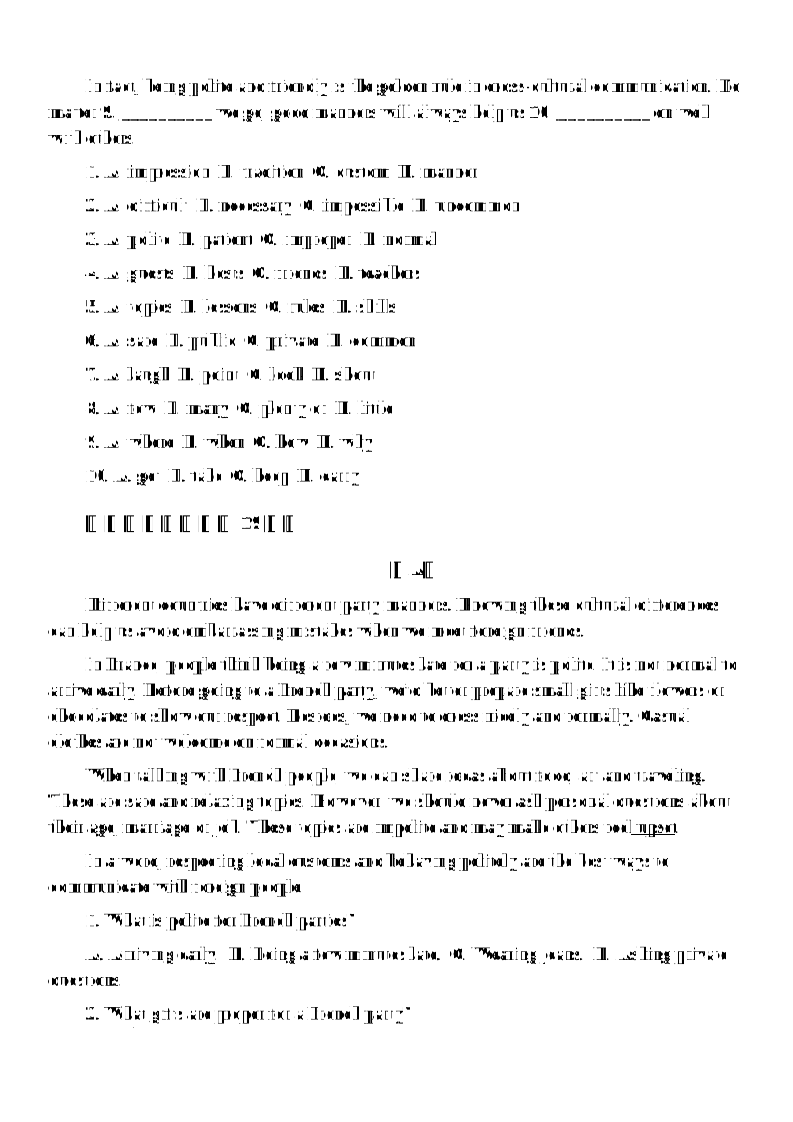
Different countries have different cultural manners. These rules are very important for us to follow when we communicate with foreign people. Good manners can help us leave a good 1. __________ on others and develop closer relationships.
When we attend foreign parties, dressing properly is 2. __________. We need to wear formal clothes for serious occasions. It is 3. __________ to wear jeans or casual clothes to formal parties. In Western countries, it is normal to be on time or a few minutes late. Arriving too early may bring trouble to the 4. __________.
During the party, we should choose safe conversation 5. __________ such as food, travel and culture. We must avoid 6. __________ topics like age, marriage and income. These private questions make others feel uncomfortable and embarrassed.
As for table manners, we can never 7. __________ at others with chopsticks or stick chopsticks into rice bowls. These behaviors are considered rude in most Asian countries. With8. __________ practice, we can master these simple rules.
In fact, being polite and friendly is the golden rule in cross-cultural communication. No matter 9. __________ we go, good manners will always help us 10. __________ on well with others.
1. A. impression B. tradition C. custom D. manner
2. A. difficult B. necessary C. impossible D. uncommon
3. A. polite B. patient C. improper D. normal
4. A. guests B. hosts C. friends D. teachers
5. A. topics B. lessons C. rules D. skills
6. A. safe B. public C. private D. common
7. A. laugh B. point C. look D. shout
8. A. few B. many C. plenty of D. little
9. A. where B. when C. how D. why
10. A. get B. take C. keep D. carry
六、阅读理解(共19分)
(A)
Different countries have different party manners. Knowing these cultural differences can help us avoid embarrassing mistakes when we meet foreign friends.
In France, people think being a few minutes late for a party is polite. It is not normal to arrive early. Before going to a French party, we’d better prepare small gifts like flowers or chocolates to show our respect. Besides, we need to dress nicely and formally. Casual clothes are not welcome on formal occasions.
When talking with French people, we can share ideas about food, art and traveling. These are safe and relaxing topics. However, we should never ask personal questions about their age, marriage or job. These topics are impolite and may make others feel upset.
In a word, respecting local customs and behaving politely are the best ways to communicate with foreign people.
1. What is polite for French parties?
A. Arriving early. B. Being a few minutes late. C. Wearing jeans. D. Asking private questions.
2. What gifts are proper for a French party?
A. Expensive bags. B. Flowers or chocolates. C. Casual clothes. D. Drinks.
3. Which topic is safe in French parties?
A. Age. B. Marriage. C. Travel. D. Income.
4. The underlined word “upset” means __________ in Chinese.
A. 开心的 B. 尴尬的 C. 放松的 D. 兴奋的
5. What is the best title for the passage?
A. French Party Manners B. Different Local Customs C. Safe Conversation Topics D. How to Dress Formally
(B)
Table manners are an important part of cultural communication. Different cultures have different rules for eating. If we want to get along well with foreign friends, we need to learn and respect their table rules.
In most Asian countries, people use chopsticks to eat. There are several strict rules. First, don’t stick your chopsticks into the rice bowl, because it looks like a traditional funeral custom. Second, never wave chopsticks about or point at others with them. It is considered very rude. Third, don’t tap bowls with chopsticks, which is impolite behavior.
In Western countries, people use forks and knives. They usually keep quiet while eating and try not to make loud noises. They also think it is bad manners to talk with a full mouth.
Although table manners are different around the world, the core is the same: showing respect to others. With continuous learning and practice, we can master these manners and communicate better with people from all over the world.
1. What is the main idea of the first paragraph?
A. How to make foreign friends. B. The importance of learning table manners. C. Different eating habits. D. How to use chopsticks.
2. Which behavior is polite when eating with chopsticks?
A. Sticking chopsticks into rice. B. Pointing at others with chopsticks. C. Using chopsticks to eat food gently. D. Tapping bowls with chopsticks.
3. What is the same core of all table manners?
A. Keeping quiet all the time. B. Using right table tools. C. Showing respect to others. D. Eating slowly and quietly.
七、书面表达
假如你是李华,你的英国笔友Tom下周要来中国参加文化交流派对,他不太了解中国的餐桌礼仪和派对规矩,特此向你求助。请你根据所学知识,给他写一封邮件,介绍相关礼仪。
内容要点:1. 着装得体,无需过度正式;2. 用餐礼仪(筷子使用规则);3. 交流话题建议;4. 表达祝愿。
要求:1. 词数80-100;2. 语句通顺,语法正确;3. 包含所有要点,可适当拓展。
________________________________________________________________
________________________________________________________________
________________________________________________________________
________________________________________________________________
________________________________________________________________
参考答案
一、根据句意及首字母提示完成单词
1. customs 2. normal 3. private 4. false 5. impression 6. occasions 7. impolite 8. blouse 9. perfect 10. jeans
二、用所给词的适当形式填空
1. confusing 2. embarrassed 3. politely 4. patient 5. practice
三、根据汉语意思完成句子,每空一词
1. go a long way 2. hear from 3. get along 4. develop closer relationships 5. public places
四、从方框中选择恰当的短语填空
1. B 2. G 3. C 4. D 5. E 6. A
五、完形填空
1. A 2. B 3. C 4. B 5. A 6. C 7. B 8. C 9. A 10. A
六、阅读理解
(A)
1. B 2. B 3. C 4. B 5. A
(B)
1. B 2. C 3. C
七、书面表达(参考范文)
Dear Tom,
I’m glad to hear you will come to China for the cultural party. Here are some useful manners for you.
First, you can wear tidy and casual clothes. You don’t need to dress too formally. Second, pay attention to table manners. It’s impolite to point at others or stick chopsticks into rice. Third, you can talk about Chinese culture, food and travel. These are safe and interesting topics.
I believe you will have a good time. Welcome to China!
Yours,
Li Hua
学科网(北京)股份有限公司
$
资源预览图

1

2
3
相关资源
示范课
由于学科网是一个信息分享及获取的平台,不确保部分用户上传资料的 来源及知识产权归属。如您发现相关资料侵犯您的合法权益,请联系学科网,我们核实后将及时进行处理。