精品解析:新疆维吾尔自治区2026年初中(九年级)学业水平检测考前模拟考试英语试题
 切换试卷
切换试卷
2026-05-27
|
3份
|
35页
|
0人阅读
|
0人下载
资源信息
| 学段 | 初中 |
|---|---|
| 学科 | 英语 |
| 教材版本 | - |
| 年级 | 九年级 |
| 章节 | - |
| 类型 | 试卷 |
| 知识点 | - |
| 使用场景 | 中考复习-三模 |
| 学年 | 2026-2027 |
| 地区(省份) | 新疆维吾尔自治区 |
| 地区(市) | - |
| 地区(区县) | - |
| 文件格式 | ZIP |
| 文件大小 | 26.87 MB |
| 发布时间 | 2026-05-27 |
| 更新时间 | 2026-05-27 |
| 作者 | 匿名 |
| 品牌系列 | - |
| 审核时间 | 2026-05-27 |
| 下载链接 | https://m.zxxk.com/soft/58071440.html |
| 价格 | 5.00储值(1储值=1元) |
| 来源 | 学科网 |
内容正文:
2026年初中学业水平检测第三次模拟考试
英语试题卷
考生须知:
1.本试卷分为试题卷和答题卷两部分,试题卷共8页,答题卷共2页。
2.满分150分(含听力20分)。考试时间120分钟。
3.考生必须在答题卷上答题,在草稿纸、试题卷上答题无效。
Ⅰ.听力部分(满分20分)
A.图片理解(本题共5小题,每小题1分,满分5分)
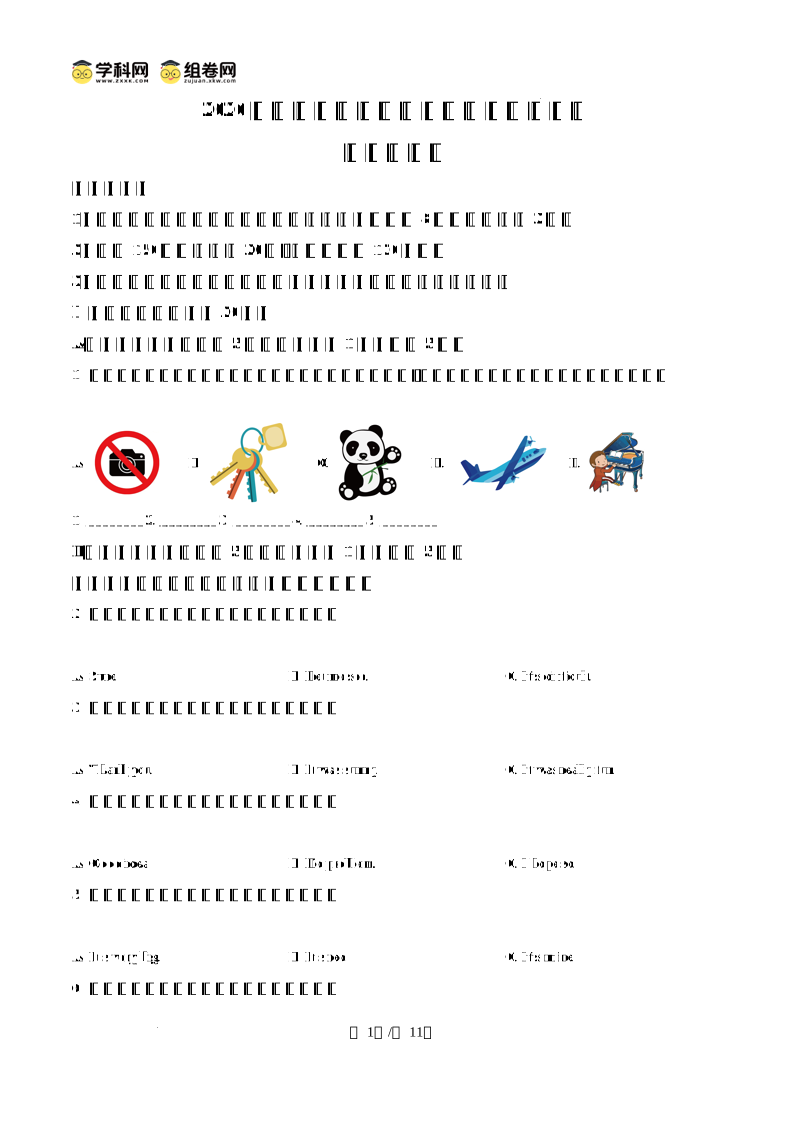
1. 根据听到的句子内容选择正确的图片。每小题读两遍。【此处可播放相关音频,请去附件查看】
A. B. C. D. E.
1. ________ 2. ________ 3. ________ 4. ________ 5. ________
B.情景反应(本题共5小题,每小题1分,满分5分)
听句子,选择正确的应答。每小题读两遍。
2. 【此处可播放相关音频,请去附件查看】
A. Sure. B. Let me see. C. It’s difficult.
3. 【此处可播放相关音频,请去附件查看】
A. Thank you. B. It was sunny. C. It was really fun.
4. 【此处可播放相关音频,请去附件查看】
A. Good idea. B. No problem. C. I hope so.
5. 【此处可播放相关音频,请去附件查看】
A. It’s very big. B. It’s red. C. It’s mine.
6. 【此处可播放相关音频,请去附件查看】
A. Yes, I do. B. That sounds good. C. I have a basketball.
C.对话理解(本题共5小题,每小题1分,满分5分)
听对话及问题,选择正确的答案。每组对话读两遍。
7. Why does Tom like art? 【此处可播放相关音频,请去附件查看】
A. Because it’s easy.
B. Because it’s relaxing.
C. Because it’s interesting.
8. How will the weather be? 【此处可播放相关音频,请去附件查看】
A. Sunny. B. Snowy. C. Rainy.
9. How often does David do sports? 【此处可播放相关音频,请去附件查看】
A. Every day. B. Once a week. C. Twice a week.
10. When will the man see the film? 【此处可播放相关音频,请去附件查看】
A. On Wednesday. B. On Saturday. C. On Sunday.
11. Where are the two speakers probably talking? 【此处可播放相关音频,请去附件查看】
A. In a library.
B. In a museum.
C. In a hospital.
D.短文理解(本题共5小题,每小题1分,满分5分)
听短文,选择正确的答案。短文读两遍。【此处可播放相关音频,请去附件查看】
12. Where did Mr. Black go one day?
A. To a supermarket. B. To a restaurant. C. To a bookstore.
13. What did Mr. Black order?
A. Beef noodles. B. Chicken soup. C. Rice and vegetables.
14. Why did Mr. Black feel worried?
A. He lost his bag.
B. He forgot his wallet.
C. The food was bad.
15. What did Mr. Black bring the next morning?
A. The money.
B. A gift.
C. The money and a gift.
16. What can we learn from the story?
A. Mr. Black was honest.
B. The waiter was not kind.
C. Many people came back to pay.
Ⅱ.完形填空(本题共15小题,每小题1分,满分15分)
根据短文内容,在A、B、C三个选项中选择一个最佳答案。
A sad memory from Grade 7 came to my mind. The sky was ____17____ that day, and I felt the same. My classmates played a game. I wanted to join, but a girl ____18____ and said, “We don’t like you.” I felt ____19____. As time ____20____, the feeling still stayed with me.
Later, my teacher’s words helped. I remember ____21____ it happened — one day in Grade 8. I did well in an English test. My teacher’s surprise was clear, and I could see it in her ____22____. She was happy for me. With a smile, she said, “I believe in you.” Those simple words gave me hope. I used to feel like a bird with ____23____ wings, but her words were the cure (良药). She made me put all my ____24____ into my schoolwork. My science teacher also helped. I remember her words, “Seeing such a hard-working kid fills my heart ____25____ pleasure.”
From this experience, I ____26____ realized that words can hurt. But I also understood the ____27____ of words. Kind words can warm our hearts in the coldest winter, ____28____ harsh (刺耳的) words can hurt our feelings even in the hottest summer. So we should always be kind and ____29____ about our words.
After school, I started writing. It helps me ____30____ my feelings and continue my teachers’ kindness. Their encouragement has ____31____ my life. I hope my words can help others.
17. A. bright B. grey C. empty
18. A. refused B. agreed C. managed
19. A. happy B. tired C. lonely
20. A. went by B. ran out C. came back
21. A. how B. when C. why
22. A. eyes B. mouth C. hands
23. A. strong B. broken C. dangerous
24. A. wealth B. courage C. effort
25. A. with B. of C. out
26. A. badly B. truly C. differently
27. A. symbol B. weight C. power
28. A. while B. though C. if
29. A. ready B. careful C. honest
30. A. express B. perform C. praise
31. A. required B. punished C. changed
Ⅲ.阅读理解(本题共分两节,共23小题,每小题2分,满分46分)
第一节 阅读并从所给选项中选出最佳答案。(四篇阅读,共18小题,每小题2分,满分36分,其中有一篇为T / F判断选择题)
A
根据短文内容,判断下面各小题的正(T)误(F)。
Pinyin is a modern invention. It was invented in 1958 to help illiterate (不识字的) Chinese to learn how to read.
A lot of people learned to read quickly with the help of pinyin. Pinyin has been used in other ways, too. It helps to develop the use of Chinese. It also makes it much easier to type (打字) Chinese characters on computers and mobile phones.
Pinyin is also finding its place in other languages. The Oxford English Dictionary (牛津英语词典) now includes more than 100 pinyin expressions, such as jiaozi for “dumplings” and zhongguomeng for “Chinese dream”.
Foreign media (媒体) sometimes use pinyin in reports about China.
Now, it is not only a language tool but also a cultural bridge that connects China to the world.
32. Pinyin was invented to help Chinese people learn to write.
33. People learned to read slowly with the help of pinyin.
34. Pinyin helps people type Chinese characters on computers and mobile phones more easily.
35. There are over 100 pinyin expressions in the Oxford English Dictionary.
36. Only Chinese media use pinyin in their reports.
B
阅读下面材料,从题中所给的A、B、C、D四个选项中选出一个最佳选项。
Here are three real robots that once performed on the CCTV Spring Festival Gala (春节联欢晚会). They have different appearances and abilities.
Robot Name
Year
Appearance
Ability
Alpha 1S
2016
It is a small robot with white arms and blue eyes. It moves beautifully, just like a dancer. Its arms and legs are designed (设计) to move easily.
It can dance together with human performers. It is also able to perform in groups with other robots.
Unitree H1
2025
It is designed to look like a real person. It wears colorful clothes for traditional folk dance and has a friendly expression.
It can perform yangge, a traditional Chinese dance full of joy and energy. It is known for bringing happiness to people.
Unitree G1
2026
It is a powerful robot with strong arms and legs. Its actions are similar to kung fu, making it look cool and confident.
It can perform Chinese kung fu with speed and power. It is able to show different kinds of kung fu in front of people.
37. How many robots are mentioned in this passage?
A. Two. B. Three. C. Four. D. Five.
38. Which robot appeared on the CCTV Spring Festival Gala in 2016?
A. Alpha 1S. B. Unitree H1. C. Unitree G1. D. LeLe Robot.
39. What does Unitree H1 look like?
A. It is small with white arms and blue eyes.
B. It is powerful with strong arms and legs.
C. It moves beautifully like a dancer.
D. It looks like a real person and wears colorful clothes.
40. What can Unitree G1 do?
A. Perform yangge. B. Dance with human performers.
C. Perform Chinese kung fu. D. Bring happiness to people.
41. Where is the passage probably from?
A. A storybook. B. A science magazine. C. A travel guidebook. D. A sports newspaper.
C
阅读下面材料,从题中所给的A、B、C、D四个选项中选出一个最佳选项。
Love can bring light to a far place. In a small town in Xinjiang, there is a warm story about a Hunan volunteer teacher and a local baker (烘焙师).
The young teacher came a long way to teach kids here and help them get more knowledge. She was very kind and always worked hard.
One day, she walked past a naan (馕) shop and hoped to buy some hot naan for lunch. She felt a little hungry. When the baker learned she was a volunteer teacher from Hunan, he stopped his work at once. He put different kinds of hot naan into a big bag, with sesame (芝麻) and onion on them. The teacher tried to pay, but the baker refused gently. He insisted, “You come to help our children. This is my gift.” The teacher was deeply moved. She held the bag with both hands, feeling the warmth deep in her heart.
Later, she often shared the naan with her students during breaks. The students were very excited. One student said, “This naan tastes like home.”
The simple act of kindness brought the community closer. It shows great love between people. The love always makes the far place full of light.
42. Why did the teacher come to Xinjiang?
A. To teach children. B. To buy naan.
C. To travel around. D. To visit a baker.
43. What did the baker do when he knew the teacher was from Hunan?
A. He closed his shop. B. He taught her to make naan.
C. He asked her to pay. D. He gave her naan for free.
44. What does the underlined word “insisted” in Paragraph 3 mean?
A. Ran in a hurry. B. Asked in a low voice.
C. Said in a strong way. D. Cried in a sad way.
45. Which is the right structure of the text?(①=Paragraph 1, ②=Paragraph 2, …)
A. B. C. D.
D
阅读下面材料,从题中所给的 A、B、C、D 四个选项中选出一个最佳选项。
A farmer and his son had a horse. The horse helped the family make a living. One day, the horse ran out of their gate and went away. Their neighbors said, “Your horse is gone! What bad luck!” The farmer said, “Maybe so, maybe not.”
A few days later, the horse came back home with some wild horses. The neighbors said loudly, “It brings so many horses! What great luck!” The farmer said, “Maybe so, maybe not.”
Later that week, the farmer’s son tried to ride one of the wild horses. But the boy fell off the horse and broke his leg. The neighbors said, “Your son broke his leg! What bad luck!” The farmer said, “Maybe so, maybe not.”
The next week, some soldiers came to the town. They wanted young men to join the army. But they did not take the farmer’s son because his leg was broken. The neighbors said, “Your son is safe! What great luck!” The farmer said, “Maybe so, maybe not.”
46. What did the horse do to help the family?
A. It ran away quickly.
B. It helped the family make a living.
C. It broke the son’s leg.
D. It came back with wild horses.
47. What did the neighbors say when the horse came back with wild horses?
A. “What great luck!” B. “Sell the horses!”
C. “What bad luck!” D. “Maybe so, maybe not.”
48. Which of the following statements is TRUE?
A. The farmer thought his bad luck was always terrible.
B. The neighbors always had the same idea as the farmer.
C. The farmer’s son fell off a wild horse and broke his leg.
D. The horse never came back home after it ran away.
49. What is the best title for the text?
A. A Lucky Horse B. A Farmer and His Son
C. A Terrible Accident D. Good or Bad Luck
E
第二节 阅读并按照要求完成选择。(一篇阅读,共5小题,每小题2分,满分10分)
根据短文内容,从短文后所给的A、B、C、D、E五个选项中,选出能填入空白处的最佳选项,使文章内容完整且符合逻辑。
My dad is a big fan of tea. He always asks me, “Lingling, how about having some tea with me?” ____50____ That day, as usual, ____51____ Through his quiet movements (动作), I felt the hot water pour into the teapot and watched the tea leaves open slowly. Then the water turned green little by little.
I took a cup and tasted it. It was a little bitter (苦的) at first. ____52____ I even felt sweetness (甜味).
I suddenly realized that life is just like a cup of tea. The world around us is like the boiling water and the people are like the leaves. ____53____ This is the same with our lives. We all meet problems in our lives. ____54____ We should be brave enough to fight for the sweetness ahead. Life is full of challenges, but it also brings hope.
A. Dad made the tea carefully.
B. I always refuse and feel bored.
C. But when I tasted it again, the tea left a wonderful taste.
D. These problems may be difficult, but they can make us stronger.
E. The leaves produce their nice smell only through hot water.
Ⅳ.补全对话(本题共6小题,每题2分,满分12分)
从下面的选项中选择合适的句子填到横线上,使对话意思完整。
(Emily and Tina are talking about their wonderful Qingming holiday trips.)
A: What did you do during the Qingming holiday?
B: ____55____
A: That sounds interesting! ____56____
B: I went with my sister.
A: ____57____
B: It was very special. The weather was fine those days. ____58____
A: I went to Yili to see the apricot flowers (杏花).
B: Were they beautiful?
A: ____59____ I took quite a few photos there.
B: Sounds like you had a good time there.
A: Sure. ____60____ We really enjoyed the spring time.
A. Who did you go with?
B. How was your trip?
C. I went to the Kumtag Desert.
D. How about you?
E. Yes, the flowers were really beautiful.
F. We had a wonderful time.
V.读写题(本题共分两节,满分15分)
第一节 阅读短文,根据语篇内容,在方框内的缩写文章中,填入与短文意思最符合的单词,每空一词。
Maya and Lin used to be best friends. They sat together, ate lunch together, and shared everything. But one day, a small argument changed everything. For two months, they didn’t speak.
The silence was like a heavy stone in Maya’s heart. She wanted to say sorry, but her pride stopped her.
One Tuesday morning, Maya saw a small piece of paper in her pencil box. It was folded into a tiny square. She opened it and read, “I miss my best friend.”
Maya’s eyes were filled with tears. She looked across the room. Lin was looking at her and felt nervous. Maya smiled and nodded.
At lunch, Maya sat next to Lin. “I’m sorry,” she said. Lin smiled back “Me too.”
They didn’t talk about the fight again. Some things don’t need words.
Now, years later, Maya still has that note. It sits in a small box with her most important things. It reminds her that friendship isn’t about who is right. It’s about who is brave enough to reach out (主动和好) first.
Maya and Lin were best friends. But a small argument changed everything. For two ____61____, they didn’t speak. Maya wanted to say sorry. However, her ____62____ stopped her. One morning, a small piece of paper was ____63____ in Maya’s pencil box. It said, “I miss my best friend.” Maya’s eyes were ____64____ with tears. She looked across the room and saw Lin looking at her. Maya smiled. At lunch, they sat together and said sorry. They didn’t talk about the ____65____ again. The note ____66____ Maya that friendship is more about being brave to reach out first than about who is right.
第二节 阅读短文,根据语篇内容,回答3个问题。
Did Maya and Lin use to share everything?
____________________________________67____________________________________
Where did Maya see the small piece of paper?
____________________________________68____________________________________
What can you learn from this passage?
____________________________________69____________________________________
Ⅵ.阅读填空(本题共分两节,共22小题,每小题1分,满分22分)
第一节 语法填空(共11小题,每小题1分,满分11分)
阅读短文,在空白处填入适当的词或用括号中所给词的正确形式填空。每空不超过两词。
Paper was first created about 2,000 years ago in China. After ____70____ (it) invention, people started to write on paper to make books. In those days, people made books ____71____ hand. They could make only one book each time. As ____72____ result, the books were expensive. So few people had the chance ____73____ (learn) to read.
Printing (印刷) was ____74____ (invent) in China during the Sui and Tang dynasties (朝代). Later, developments in printing made it possible to produce books more quickly and ____75____ (cheap). Then newspapers ____76____ (come) out. This new form made knowledge and ideas spread faster than ever before.
The Internet is new, ____77____ it is growing very fast. Soon it will be more powerful than printing. It can store (储存) more information than ____78____ (book). The mobile phones we use are often ____79____ (small) than a book. So people can get more information and share it more easily.
Now, computers and the Internet ____80____ (be) used in classrooms, and newspapers and magazines are already read online. What will traditional printing be like in the future? Let’s wait and see.
第二节 短文填空(共11小题,每小题1分,满分11分)
阅读短文,从方框中选择适当的词并用其正确形式填空,使短文通顺、意思完整,每空限填一词,每词限用一次。
their well spirit place fishermen stood when take from lucky feel
Have you seen the fisherman on the back of the 20-yuan note (纸币)? He is Huang Quande, an old man from Guilin. He was one of the ____81____ along the Lijiang River.
In photos with tourists, he wore a bamboo hat and ____82____ on his boat. Huang died at the age of 94, but people still remember him.
His life showed the true ____83____ of the Lijiang River. He was kind and full of energy. Even in his nineties, he could row (划船) his boat ____84____.
After becoming a photo model in 2008, he ____85____ photos with people from all over the world. That picture is not just about one man, but is regarded as a special cultural symbol of Guilin.
These RMB pictures have ____86____ own cultural value. For example, Mount Tai on the 5-yuan note is a ____87____ place. For lots of years, many emperors would go there and pray (祈祷) for peace and good luck.
Many people love to visit these beautiful ____88____. Pan Jinyu from Chongqing wanted to ____89____ the beauty of our country. So he went on a “banknote tour” ____90____ he was young. He traveled ____91____ 1 yuan to 100 yuan, enjoying all the places on the banknotes excitedly.
Ⅶ.书面表达(满分20分)
92. 在成长的路上,我们总会遇到挑战,也会在迷茫时需要指引。总有一个人,用鼓励与陪伴,让我们变得更自信、更勇敢,学会坚持与感恩。请你以“The Person Who Helped Me Grow”为题,写一篇英文短文,介绍在成长路上给予你鼓励与陪伴、助你成长的人。
提示:
1.你曾经遇到的小挑战或小困惑,例如学习上的困难、比赛前的紧张等;
2.他/她为你做了什么温暖的事;
3.你学到了什么,今后会怎样努力。
要求:
1.语句通顺,意思连贯,语法正确,书写规范;
2.文中不得出现真实姓名、校名等信息;
3.词数80~120。
______________________________________________________________________________________________________________________________________________________________________________________________________________________________________________________________________________________________________________________________________________________________________________________________________________________________________________________________________________________________________
第1页/共1页
学科网(北京)股份有限公司
$
2026年初中学业水平检测第三次模拟考试
英语试题卷
考生须知:
1.本试卷分为试题卷和答题卷两部分,试题卷共8页,答题卷共2页。
2.满分150分(含听力20分)。考试时间120分钟。
3.考生必须在答题卷上答题,在草稿纸、试题卷上答题无效。
Ⅰ.听力部分(满分20分)
A.图片理解(本题共5小题,每小题1分,满分5分)
1. 根据听到的句子内容选择正确的图片。每小题读两遍。【此处可播放相关音频,请去附件查看】
A. B. C. D. E.
1. ________ 2. ________ 3. ________ 4. ________ 5. ________
【答案】 ①. B ②. E ③. D ④. A ⑤. C
【解析】
【原文】1.David is looking for his keys.
2.I remember winning the first prize in the piano competition.
3.My family will fly to Beijing for the summer vacation.
4.Taking photos is not allowed in the museum.
5.Many foreigners like pandas a lot.
B.情景反应(本题共5小题,每小题1分,满分5分)
听句子,选择正确的应答。每小题读两遍。
2. 【此处可播放相关音频,请去附件查看】
A. Sure. B. Let me see. C. It’s difficult.
【答案】A
【解析】
【原文】May I use your computer, please?
3. 【此处可播放相关音频,请去附件查看】
A. Thank you. B. It was sunny. C. It was really fun.
【答案】A
【解析】
【原文】Have a nice trip in Xinjiang.
4. 【此处可播放相关音频,请去附件查看】
A. Good idea. B. No problem. C. I hope so.
【答案】B
【解析】
【原文】Could you help me with my English?
5. 【此处可播放相关音频,请去附件查看】
A. It’s very big. B. It’s red. C. It’s mine.
【答案】C
【解析】
【原文】Whose bag is this?
6. 【此处可播放相关音频,请去附件查看】
A. Yes, I do. B. That sounds good. C. I have a basketball.
【答案】B
【解析】
【原文】Let’s play basketball after school.
C.对话理解(本题共5小题,每小题1分,满分5分)
听对话及问题,选择正确的答案。每组对话读两遍。
7. Why does Tom like art? 【此处可播放相关音频,请去附件查看】
A. Because it’s easy.
B. Because it’s relaxing.
C. Because it’s interesting.
【答案】B
【解析】
【原文】A: Tom, why do you like art?
B: Because it’s relaxing. I can feel good when I draw.
Question: Why does Tom like art?
8. How will the weather be? 【此处可播放相关音频,请去附件查看】
A. Sunny. B. Snowy. C. Rainy.
【答案】C
【解析】
【原文】A: Look at those dark clouds. It’s going to rain.
B: Yes, we’d better take our umbrellas.
Question: How will the weather be?
9. How often does David do sports? 【此处可播放相关音频,请去附件查看】
A. Every day. B. Once a week. C. Twice a week.
【答案】C
【解析】
【原文】A: David, do you do sports every day?
B: No, I don’t. I do sports twice a week.
Question: How often does David do sports?
10. When will the man see the film? 【此处可播放相关音频,请去附件查看】
A. On Wednesday. B. On Saturday. C. On Sunday.
【答案】B
【解析】
【原文】A: Will you see the film on Wednesday?
B: No, I’m busy then. I will see it on Saturday.
Question: When will the man see the film?
11. Where are the two speakers probably talking? 【此处可播放相关音频,请去附件查看】
A. In a library.
B. In a museum.
C. In a hospital.
【答案】A
【解析】
【原文】A: Excuse me, where can I borrow story books?
B: You can find them on the second floor.
Question: Where are the two speakers probably talking?
D.短文理解(本题共5小题,每小题1分,满分5分)
听短文,选择正确的答案。短文读两遍。【此处可播放相关音频,请去附件查看】
12. Where did Mr. Black go one day?
A. To a supermarket. B. To a restaurant. C. To a bookstore.
13. What did Mr. Black order?
A. Beef noodles. B. Chicken soup. C. Rice and vegetables.
14. Why did Mr. Black feel worried?
A. He lost his bag.
B. He forgot his wallet.
C. The food was bad.
15. What did Mr. Black bring the next morning?
A. The money.
B. A gift.
C. The money and a gift.
16. What can we learn from the story?
A. Mr. Black was honest.
B. The waiter was not kind.
C. Many people came back to pay.
【答案】12. B 13. A 14. B 15. C 16. A
【解析】
【详解】One day, Mr. Black went into a restaurant. He was very hungry and ordered a bowl of beef noodles. After eating, he found he had no money with him. He felt worried and said to the waiter, “I’m sorry, I forgot to bring my wallet. Can I pay for the noodles next time?” The waiter smiled and said, “That’s OK. Many people forget their wallets here.” Mr. Black thanked him and left happily. The next morning, Mr. Black came back with the money. He also brought a small gift for the waiter. The waiter was surprised. Mr. Black said, “Thank you for your kindness. By the way, did anyone else forget their wallets yesterday?” The waiter answered, “Yes, but none of them came back to pay.”
Ⅱ.完形填空(本题共15小题,每小题1分,满分15分)
根据短文内容,在A、B、C三个选项中选择一个最佳答案。
A sad memory from Grade 7 came to my mind. The sky was ____17____ that day, and I felt the same. My classmates played a game. I wanted to join, but a girl ____18____ and said, “We don’t like you.” I felt ____19____. As time ____20____, the feeling still stayed with me.
Later, my teacher’s words helped. I remember ____21____ it happened — one day in Grade 8. I did well in an English test. My teacher’s surprise was clear, and I could see it in her ____22____. She was happy for me. With a smile, she said, “I believe in you.” Those simple words gave me hope. I used to feel like a bird with ____23____ wings, but her words were the cure (良药). She made me put all my ____24____ into my schoolwork. My science teacher also helped. I remember her words, “Seeing such a hard-working kid fills my heart ____25____ pleasure.”
From this experience, I ____26____ realized that words can hurt. But I also understood the ____27____ of words. Kind words can warm our hearts in the coldest winter, ____28____ harsh (刺耳的) words can hurt our feelings even in the hottest summer. So we should always be kind and ____29____ about our words.
After school, I started writing. It helps me ____30____ my feelings and continue my teachers’ kindness. Their encouragement has ____31____ my life. I hope my words can help others.
17. A. bright B. grey C. empty
18. A. refused B. agreed C. managed
19. A. happy B. tired C. lonely
20. A. went by B. ran out C. came back
21. A. how B. when C. why
22. A. eyes B. mouth C. hands
23. A. strong B. broken C. dangerous
24. A. wealth B. courage C. effort
25. A. with B. of C. out
26. A. badly B. truly C. differently
27. A. symbol B. weight C. power
28. A. while B. though C. if
29. A. ready B. careful C. honest
30. A. express B. perform C. praise
31. A. required B. punished C. changed
【答案】17. B 18. A 19. C 20. A 21. B 22. A 23. B 24. C 25. A 26. B 27. C 28. A 29. B 30. A 31. C
【解析】
【导语】本文讲述了作者七年级时因同学的话而受伤,又在八年级时被老师的鼓励所治愈,从而意识到语言既能伤人也能温暖人心,因此要谨慎使用语言、传递善意的故事。
【17题详解】
句意:那天天空灰蒙蒙的,我的心情也一样。
根据前文“A sad memory”,作者回忆的是悲伤的事,grey“灰色的”符合语境,bright“明亮的”、empty“空的”均不符。
【18题详解】
句意:我想加入,但一个女孩拒绝了我,说:“我们不喜欢你。”
根据后文“We don’t like you.”,女孩拒绝了作者,refused“拒绝”符合语境,agreed“同意”、managed“设法做到”均不符。
【19题详解】
句意:我感到很孤独。
根据前文被同学拒绝,作者的感受是孤独的,lonely“孤独的”符合语境,happy“开心的”、tired“疲惫的”均不符。
【20题详解】
句意:随着时间流逝,这种感觉依然伴随着我。
固定搭配as time went by表示“随着时间流逝”。
【21题详解】
句意:我记得这件事发生的时间——八年级的一天。
根据后文“one day in Grade 8”,作者记得事情发生的时间,when“何时”符合语境,how“如何”、why“为什么”均不符。
【22题详解】
句意:老师的惊讶很明显,我能从她的眼睛里看出来。
结合语境,作者能从老师的眼神里看出惊讶,eyes“眼睛”符合语境,mouth“嘴”、hands“手”均不符。
【23题详解】
句意:我以前感觉自己像一只翅膀折断的鸟,但她的话是良药。
根据后文“but her words were the cure”,作者之前的状态是受伤的,broken“受伤的”符合语境,strong“强壮的”、dangerous“危险的”均不符。
【24题详解】
句意:她让我把所有的努力都投入到学业中。
结合语境,作者开始努力学习,put all one’s effort into表示“全力以赴”,固定搭配。
【25题详解】
句意:看到这样一个勤奋的孩子,我的心里充满了喜悦。
固定搭配fill...with表示“充满”。
【26题详解】
句意:从这次经历中,我真正意识到语言可以伤人。
结合语境,作者深刻地意识到了语言的伤害性,truly“真正地”符合语境,badly“糟糕地”、differently“不同地”均不符。
【27题详解】
句意:但我也理解了语言的力量。
根据后文“Kind words can warm our hearts... harsh words can hurt our feelings”,语言有强大的力量,power“力量”符合语境,symbol“象征”、weight“重量”均不符。
【28题详解】
句意:善意的话语能在最冷的冬天温暖我们的心,而刺耳的话语即使在最热的夏天也会伤害我们的感情。
前后句是对比关系,while“然而”符合语境,though表让步、if表条件,均不符。
【29题详解】
句意:所以我们应该永远善良,对自己的话语保持谨慎。
根据前文语言既能伤人也能温暖人心,我们应该谨慎用词,careful“谨慎的”符合语境,ready“准备好的”、honest“诚实的”均不符。
【30题详解】
句意:放学后,我开始写作。它帮助我表达我的感受,并延续老师们的善意。
结合语境,写作帮助作者表达情感,express“表达”符合语境,perform“表演”、praise“表扬”均不符。
【31题详解】
句意:他们的鼓励改变了我的生活。
根据前文作者的转变,老师的鼓励改变了她的生活,changed“改变”符合语境,required“要求”、punished“惩罚”均不符。
Ⅲ.阅读理解(本题共分两节,共23小题,每小题2分,满分46分)
第一节 阅读并从所给选项中选出最佳答案。(四篇阅读,共18小题,每小题2分,满分36分,其中有一篇为T / F判断选择题)
A
根据短文内容,判断下面各小题的正(T)误(F)。
Pinyin is a modern invention. It was invented in 1958 to help illiterate (不识字的) Chinese to learn how to read.
A lot of people learned to read quickly with the help of pinyin. Pinyin has been used in other ways, too. It helps to develop the use of Chinese. It also makes it much easier to type (打字) Chinese characters on computers and mobile phones.
Pinyin is also finding its place in other languages. The Oxford English Dictionary (牛津英语词典) now includes more than 100 pinyin expressions, such as jiaozi for “dumplings” and zhongguomeng for “Chinese dream”.
Foreign media (媒体) sometimes use pinyin in reports about China.
Now, it is not only a language tool but also a cultural bridge that connects China to the world.
32. Pinyin was invented to help Chinese people learn to write.
33. People learned to read slowly with the help of pinyin.
34. Pinyin helps people type Chinese characters on computers and mobile phones more easily.
35. There are over 100 pinyin expressions in the Oxford English Dictionary.
36. Only Chinese media use pinyin in their reports.
【答案】32. F 33. F
34. T 35. T
36. F
【解析】
【导语】本文是一篇说明文,介绍了拼音的发明背景及其作用:帮助识字、便于打字、进入英语词典,并成为连接中国与世界的文化桥梁。
【32题详解】
文章第一段指出“It was invented in 1958 to help illiterate Chinese to learn how to read.”,目的是帮助阅读,而非写作。
【33题详解】
文章第二段指出“A lot of people learned to read quickly with the help of pinyin.”,是快速而非缓慢。
【34题详解】
文章第二段指出“It also makes it much easier to type Chinese characters on computers and mobile phones.”,与题干表述一致。
【35题详解】
文章第三段指出“The Oxford English Dictionary now includes more than 100 pinyin expressions”,与题干表述一致。
【36题详解】
文章第四段指出“Foreign media sometimes use pinyin in reports about China.”,外国媒体也会使用,并非只有中国媒体。
B
阅读下面材料,从题中所给的A、B、C、D四个选项中选出一个最佳选项。
Here are three real robots that once performed on the CCTV Spring Festival Gala (春节联欢晚会). They have different appearances and abilities.
Robot Name
Year
Appearance
Ability
Alpha 1S
2016
It is a small robot with white arms and blue eyes. It moves beautifully, just like a dancer. Its arms and legs are designed (设计) to move easily.
It can dance together with human performers. It is also able to perform in groups with other robots.
Unitree H1
2025
It is designed to look like a real person. It wears colorful clothes for traditional folk dance and has a friendly expression.
It can perform yangge, a traditional Chinese dance full of joy and energy. It is known for bringing happiness to people.
Unitree G1
2026
It is a powerful robot with strong arms and legs. Its actions are similar to kung fu, making it look cool and confident.
It can perform Chinese kung fu with speed and power. It is able to show different kinds of kung fu in front of people.
37. How many robots are mentioned in this passage?
A. Two. B. Three. C. Four. D. Five.
38. Which robot appeared on the CCTV Spring Festival Gala in 2016?
A. Alpha 1S. B. Unitree H1. C. Unitree G1. D. LeLe Robot.
39. What does Unitree H1 look like?
A. It is small with white arms and blue eyes.
B. It is powerful with strong arms and legs.
C. It moves beautifully like a dancer.
D. It looks like a real person and wears colorful clothes.
40. What can Unitree G1 do?
A. Perform yangge. B. Dance with human performers.
C. Perform Chinese kung fu. D. Bring happiness to people.
41. Where is the passage probably from?
A. A storybook. B. A science magazine. C. A travel guidebook. D. A sports newspaper.
【答案】37. B 38. A 39. D 40. C 41. B
【解析】
【37题详解】
根据文章开头第一句“Here are three real robots...”以及表格中列出的Alpha 1S、Unitree H1、Unitree G1三款机器人可知,文中共提到了三款机器人。
【38题详解】
根据表格第二行信息,Robot Name为“Alpha 1S”对应的Year是“2016”,可知2016年登上春晚的是Alpha 1S。
【39题详解】
根据表格第三行Unitree H1的Appearance(外观)列描述“It is designed to look like a real person. It wears colorful clothes...”可知Unitree H1的外观特征是外形像真人、穿着色彩鲜艳的衣服。
【40题详解】
根据表格第四行Unitree G1的Ability(能力)列描述“It can perform Chinese kung fu...”可知,它可以表演中国功夫。
【41题详解】
本文围绕三款春晚机器人展开,介绍了它们的外观与功能,属于科技类内容,因此最可能出现在科学杂志中。
C
阅读下面材料,从题中所给的A、B、C、D四个选项中选出一个最佳选项。
Love can bring light to a far place. In a small town in Xinjiang, there is a warm story about a Hunan volunteer teacher and a local baker (烘焙师).
The young teacher came a long way to teach kids here and help them get more knowledge. She was very kind and always worked hard.
One day, she walked past a naan (馕) shop and hoped to buy some hot naan for lunch. She felt a little hungry. When the baker learned she was a volunteer teacher from Hunan, he stopped his work at once. He put different kinds of hot naan into a big bag, with sesame (芝麻) and onion on them. The teacher tried to pay, but the baker refused gently. He insisted, “You come to help our children. This is my gift.” The teacher was deeply moved. She held the bag with both hands, feeling the warmth deep in her heart.
Later, she often shared the naan with her students during breaks. The students were very excited. One student said, “This naan tastes like home.”
The simple act of kindness brought the community closer. It shows great love between people. The love always makes the far place full of light.
42. Why did the teacher come to Xinjiang?
A. To teach children. B. To buy naan.
C. To travel around. D. To visit a baker.
43. What did the baker do when he knew the teacher was from Hunan?
A. He closed his shop. B. He taught her to make naan.
C. He asked her to pay. D. He gave her naan for free.
44. What does the underlined word “insisted” in Paragraph 3 mean?
A. Ran in a hurry. B. Asked in a low voice.
C. Said in a strong way. D. Cried in a sad way.
45. Which is the right structure of the text?(①=Paragraph 1, ②=Paragraph 2, …)
A. B. C. D.
【答案】42. A 43. D 44. C 45. B
【解析】
【导语】本文是一篇记叙文,讲述了一位来自湖南的支教老师在新疆小镇收获当地烘焙师善意相助的暖心故事,小小善举传递出人与人之间真挚的爱意。
【42题详解】
原文第二段提到:The young teacher came a long way to teach kids here and help them get more knowledge. 由此可知这位老师来到新疆是为了教孩子们,其余选项均与原文内容不符。
【43题详解】
原文第三段提到:The teacher tried to pay, but the baker refused gently. 烘焙师得知老师的身份后,主动赠送各式热馕,并且不肯收钱,也就是免费送馕,其他选项不符合文意。
【44题详解】
根据第三段:“This is my gift.”以及前文“The teacher tried to pay, but the baker refused gently.”可知,老板坚持不收钱,所以“insisted”意为“坚定地说”。
【45题详解】
文章结构分析:①总起,引出支教老师与烘焙师的暖心故事;②③④讲述支教老师送馕、分享馕的具体经过;⑤总结故事意义,升华主题。可根据该逻辑判断段落结构。
D
阅读下面材料,从题中所给的 A、B、C、D 四个选项中选出一个最佳选项。
A farmer and his son had a horse. The horse helped the family make a living. One day, the horse ran out of their gate and went away. Their neighbors said, “Your horse is gone! What bad luck!” The farmer said, “Maybe so, maybe not.”
A few days later, the horse came back home with some wild horses. The neighbors said loudly, “It brings so many horses! What great luck!” The farmer said, “Maybe so, maybe not.”
Later that week, the farmer’s son tried to ride one of the wild horses. But the boy fell off the horse and broke his leg. The neighbors said, “Your son broke his leg! What bad luck!” The farmer said, “Maybe so, maybe not.”
The next week, some soldiers came to the town. They wanted young men to join the army. But they did not take the farmer’s son because his leg was broken. The neighbors said, “Your son is safe! What great luck!” The farmer said, “Maybe so, maybe not.”
46. What did the horse do to help the family?
A. It ran away quickly.
B. It helped the family make a living.
C. It broke the son’s leg.
D. It came back with wild horses.
47. What did the neighbors say when the horse came back with wild horses?
A. “What great luck!” B. “Sell the horses!”
C. “What bad luck!” D. “Maybe so, maybe not.”
48. Which of the following statements is TRUE?
A. The farmer thought his bad luck was always terrible.
B. The neighbors always had the same idea as the farmer.
C. The farmer’s son fell off a wild horse and broke his leg.
D. The horse never came back home after it ran away.
49. What is the best title for the text?
A. A Lucky Horse B. A Farmer and His Son
C. A Terrible Accident D. Good or Bad Luck
【答案】46. B 47. A 48. C 49. D
【解析】
【导语】本文讲述了农夫和儿子与一匹马的故事,通过马走失、带回野马、儿子摔断腿、免于征兵等一系列事件,展现了农夫对 “福祸相依” 的豁达态度,传递了好事与坏事可能相互转化的哲理。
【46题详解】
根据第一段第二句“The horse helped the family make a living.”可知,马对家庭的帮助是维持生计。
【47题详解】
根据第二段第二句“The neighbors said loudly, ‘It brings so many horses! What great luck!’”可知,当马带着野马回来时,邻居们说的是“什么好运”。
【48题详解】
根据第三段第二句“But the boy fell off the horse and broke his leg.”可知,农夫的儿子从野马上摔下来摔断了腿。
【49题详解】
文章通过“塞翁失马”的故事,讲述了邻居们认为是好运或厄运的事情,在农夫看来未必如此,体现了祸福相依的道理。文章核心围绕运气的好坏转换展开,因此“Good or Bad Luck”是最合适的标题。
E
第二节 阅读并按照要求完成选择。(一篇阅读,共5小题,每小题2分,满分10分)
根据短文内容,从短文后所给的A、B、C、D、E五个选项中,选出能填入空白处的最佳选项,使文章内容完整且符合逻辑。
My dad is a big fan of tea. He always asks me, “Lingling, how about having some tea with me?” ____50____ That day, as usual, ____51____ Through his quiet movements (动作), I felt the hot water pour into the teapot and watched the tea leaves open slowly. Then the water turned green little by little.
I took a cup and tasted it. It was a little bitter (苦的) at first. ____52____ I even felt sweetness (甜味).
I suddenly realized that life is just like a cup of tea. The world around us is like the boiling water and the people are like the leaves. ____53____ This is the same with our lives. We all meet problems in our lives. ____54____ We should be brave enough to fight for the sweetness ahead. Life is full of challenges, but it also brings hope.
A. Dad made the tea carefully.
B. I always refuse and feel bored.
C. But when I tasted it again, the tea left a wonderful taste.
D. These problems may be difficult, but they can make us stronger.
E. The leaves produce their nice smell only through hot water.
【答案】50. B 51. A 52. C 53. E 54. D
【解析】
【导语】本文是一篇记叙文,讲述了作者与爱喝茶的父亲一起品茶的经历,借 “品茶” 感悟人生:生活中的困难如同沸水,能让人像茶叶一样释放芬芳、变得坚强,最终收获美好。
【50题详解】
前文提到爸爸总是邀请喝茶,此处应填作者过去的习惯性反应。B 项“我总是拒绝并感到无聊”与后文作者那天认真观察喝茶形成对比,符合语境逻辑。
【51题详解】
后文详细描写了倒水、茶叶舒展等泡茶细节,A 项“爸爸仔细地泡茶”是对这一动作的概括,能自然引出下文的观察内容。
【52题详解】
前文说茶起初有点苦,后文说感到甜味,中间需要转折。C 项“但当我再次品尝时,茶留下了美妙的味道”符合味觉变化的逻辑。
【53题详解】
前文将世界比作热水,人比作茶叶,E 项“叶子只有通过热水才能散发出香味”进一步阐释了这个比喻的含义,衔接下文对生活的感悟。
【54题详解】
前文提到生活中会遇到问题,后文鼓励要勇敢面对。D 项“这些问题可能很难,但它们能让我们更强大”承上启下,升华了文章主题。
Ⅳ.补全对话(本题共6小题,每题2分,满分12分)
从下面的选项中选择合适的句子填到横线上,使对话意思完整。
(Emily and Tina are talking about their wonderful Qingming holiday trips.)
A: What did you do during the Qingming holiday?
B: ____55____
A: That sounds interesting! ____56____
B: I went with my sister.
A: ____57____
B: It was very special. The weather was fine those days. ____58____
A: I went to Yili to see the apricot flowers (杏花).
B: Were they beautiful?
A: ____59____ I took quite a few photos there.
B: Sounds like you had a good time there.
A: Sure. ____60____ We really enjoyed the spring time.
A. Who did you go with?
B. How was your trip?
C. I went to the Kumtag Desert.
D. How about you?
E. Yes, the flowers were really beautiful.
F. We had a wonderful time.
【答案】55. C 56. A 57. B 58. D 59. E 60. F
【解析】
【导语】本文是Emily和Tina关于清明假期旅行的对话。Tina去了库姆塔格沙漠,Emily去了伊犁看杏花,两人交流了旅伴、旅行感受和景色。
【55题详解】
A询问清明假期做了什么,Tina回答去了库姆塔格沙漠。选项C“I went to the Kumtag Desert.”符合语境。
【56题详解】
A说听起来有趣,接着询问Tina和谁一起去的,Tina回答和姐姐一起。选项A“Who did you go with?”与答句形成问答对应。
【57题详解】
A询问Tina的旅行怎么样,Tina回答很特别,天气好。选项B“How was your trip?”符合逻辑。
【58题详解】
Tina描述完自己的旅行后,反问A去了哪里,A回答去了伊犁看杏花。选项D“How about you?”是合适的反问。
【59题详解】
Tina问杏花是否漂亮,A肯定回答并说拍了很多照片。选项E“Yes, the flowers were really beautiful.”与问句形成问答对应。
【60题详解】
A说当然,并补充说明玩得很开心。选项F“We had a wonderful time.”是对旅行体验的总结。
V.读写题(本题共分两节,满分15分)
第一节 阅读短文,根据语篇内容,在方框内的缩写文章中,填入与短文意思最符合的单词,每空一词。
Maya and Lin used to be best friends. They sat together, ate lunch together, and shared everything. But one day, a small argument changed everything. For two months, they didn’t speak.
The silence was like a heavy stone in Maya’s heart. She wanted to say sorry, but her pride stopped her.
One Tuesday morning, Maya saw a small piece of paper in her pencil box. It was folded into a tiny square. She opened it and read, “I miss my best friend.”
Maya’s eyes were filled with tears. She looked across the room. Lin was looking at her and felt nervous. Maya smiled and nodded.
At lunch, Maya sat next to Lin. “I’m sorry,” she said. Lin smiled back “Me too.”
They didn’t talk about the fight again. Some things don’t need words.
Now, years later, Maya still has that note. It sits in a small box with her most important things. It reminds her that friendship isn’t about who is right. It’s about who is brave enough to reach out (主动和好) first.
Maya and Lin were best friends. But a small argument changed everything. For two ____61____, they didn’t speak. Maya wanted to say sorry. However, her ____62____ stopped her. One morning, a small piece of paper was ____63____ in Maya’s pencil box. It said, “I miss my best friend.” Maya’s eyes were ____64____ with tears. She looked across the room and saw Lin looking at her. Maya smiled. At lunch, they sat together and said sorry. They didn’t talk about the ____65____ again. The note ____66____ Maya that friendship is more about being brave to reach out first than about who is right.
第二节 阅读短文,根据语篇内容,回答3个问题。
Did Maya and Lin use to share everything?
____________________________________67____________________________________
Where did Maya see the small piece of paper?
____________________________________68____________________________________
What can you learn from this passage?
____________________________________69____________________________________
【答案】61. months
62. pride 63. found
64. filled 65. fight
66. reminds
67. Yes, they did.
68. In her pencil box.
69. Friendship is about being brave to reach out first,not about who is right.
【解析】
【导语】本文讲述了玛雅和琳这对昔日挚友,因一次小争吵陷入冷战,最终凭借一张纸条主动和解的故事,告诉我们友谊不在于计较对错,而在于敢于主动迈出和好的一步。
【61题详解】
根据“For two months, they didn’t speak.”可知,Maya和Lin两个月都没有说话了,故填months。
【62题详解】
根据“She wanted to say sorry, but her pride stopped her.”可知,Maya想道歉,但是她的自尊心阻止了她,故填pride。
【63题详解】
根据“Maya saw a small piece of paper in her pencil box.”,此处为被动语态‘be+过去分词’,根据原文可知应填found。
【64题详解】
根据“Maya’s eyes were filled with tears.”可知,Maya的眼里充满了泪水,故填filled。
【65题详解】
根据“They didn’t talk about the fight again.”可知,Maya和Lin没有再谈论那场争吵,故填fight。
【66题详解】
根据“It reminds her that friendship isn’t about who is right.”可知,Maya最重要的东西之一的小纸片提醒她,友谊更重要的是勇敢地先伸出援手,而不是谁是对的。主语为单数,动词用第三人称单数,故填reminds。
【67题详解】
根据“Maya and Lin used to be best friends...and shared everything.”,可知她们过去分享一切,故填Yes, they did.
【68题详解】
根据“Maya saw a small piece of paper in her pencil box.”可知,Maya在她的铅笔盒里看到了那张小纸片,故填In her pencil box.
【69题详解】
根据“It reminds her that friendship isn’t about who is right. It’s about who is brave enough to reach out first.”可知,友谊更重要的是勇敢地先伸出援手,而不是谁是对的,故填Friendship is about who is brave enough to reach out first, not about who is right.
Ⅵ.阅读填空(本题共分两节,共22小题,每小题1分,满分22分)
第一节 语法填空(共11小题,每小题1分,满分11分)
阅读短文,在空白处填入适当的词或用括号中所给词的正确形式填空。每空不超过两词。
Paper was first created about 2,000 years ago in China. After ____70____ (it) invention, people started to write on paper to make books. In those days, people made books ____71____ hand. They could make only one book each time. As ____72____ result, the books were expensive. So few people had the chance ____73____ (learn) to read.
Printing (印刷) was ____74____ (invent) in China during the Sui and Tang dynasties (朝代). Later, developments in printing made it possible to produce books more quickly and ____75____ (cheap). Then newspapers ____76____ (come) out. This new form made knowledge and ideas spread faster than ever before.
The Internet is new, ____77____ it is growing very fast. Soon it will be more powerful than printing. It can store (储存) more information than ____78____ (book). The mobile phones we use are often ____79____ (small) than a book. So people can get more information and share it more easily.
Now, computers and the Internet ____80____ (be) used in classrooms, and newspapers and magazines are already read online. What will traditional printing be like in the future? Let’s wait and see.
【答案】70. its
71. by 72. a
73. to learn
74. invented
75. cheaply
76. came 77. but
78. books 79. smaller
80. are
【解析】
【导语】短文主要讲的是纸和书籍的历史演变过程。
【70题详解】
句意:在纸被发明之后,人们开始在纸上写字来制作书籍。invention(发明)是一个名词,it(它)是人称代词,不能修饰名词,而 its(它的)是形容词性物主代词,可以修饰名词,故填its。
【71题详解】
句意:在那个年代,人们用手工来制作书籍。by hand(用手)是一个固定词组,故填by。
【72题详解】
句意:结果是,这些书很贵。as a result(结果是)是一个固定词组,故填a。
【73题详解】
句意:所以很少人有学习阅读的机会。have the chance to do sth.(有做某事的机会)是一个词组,to后面要跟动词原形,故填to learn。
【74题详解】
句意:印刷术是在隋唐时期被发明的。本句是被动语态,was后接过去分词,invent(发明)的过去分词是invented。
【75题详解】
句意:之后,印刷术的发展使生产书籍更快更便宜成为可能。cheap(便宜的)是一个形容词,and(和)是连词,连接的两个词性要相同,quickly(快地)是副词,故填cheaply。
【76题详解】
句意:然后报纸就出现了。come out(出现)是一个词组,因为本句是一般过去时,所以come(来)要用过去式came。
【77题详解】
句意:网络很新,但是它发展得很快。根据句意可知,前后半句是转折关系,but(但是)是连词,表转折,所以答案是but。
【78题详解】
句意:它能储存的信息比书籍更多。此处表示泛指“书籍”这一类事物,要用名词复数形式books,表示和互联网对比的整个书籍类别。
【79题详解】
句意:我们现在用的手机通常比一本书还要小。句中有比较级标志词than,因此形容词small要变为比较级smaller,表示“更小”。
【80题详解】
句意:现在,电脑和互联网被用于课堂,报纸和杂志也已经可以在线阅读了。主语computers and the Internet是复数,时态是一般现在时,被动语态的be动词用are。
第二节 短文填空(共11小题,每小题1分,满分11分)
阅读短文,从方框中选择适当的词并用其正确形式填空,使短文通顺、意思完整,每空限填一词,每词限用一次。
their well spirit place fishermen stood when take from lucky feel
Have you seen the fisherman on the back of the 20-yuan note (纸币)? He is Huang Quande, an old man from Guilin. He was one of the ____81____ along the Lijiang River.
In photos with tourists, he wore a bamboo hat and ____82____ on his boat. Huang died at the age of 94, but people still remember him.
His life showed the true ____83____ of the Lijiang River. He was kind and full of energy. Even in his nineties, he could row (划船) his boat ____84____.
After becoming a photo model in 2008, he ____85____ photos with people from all over the world. That picture is not just about one man, but is regarded as a special cultural symbol of Guilin.
These RMB pictures have ____86____ own cultural value. For example, Mount Tai on the 5-yuan note is a ____87____ place. For lots of years, many emperors would go there and pray (祈祷) for peace and good luck.
Many people love to visit these beautiful ____88____. Pan Jinyu from Chongqing wanted to ____89____ the beauty of our country. So he went on a “banknote tour” ____90____ he was young. He traveled ____91____ 1 yuan to 100 yuan, enjoying all the places on the banknotes excitedly.
【答案】81. fishermen
82. stood 83. spirit
84. well 85. took
86. their 87. lucky
88. places 89. feel
90. when 91. from
【解析】
【导语】本文介绍了20元人民币背面的渔夫黄全德,讲述他的生平与形象意义,还提及人民币上多处景点的文化价值,以及有人开启 “纸币之旅” 打卡这些地方的故事。
【81题详解】
句意:他是漓江边上的渔民之一。前文提到他是20元纸币背面的人,空处应填“渔民”。one of后接可数名词复数,fishermen“渔民”,复数名词,符合语境。
【82题详解】
句意:在和游客拍的照片里,他戴着竹帽,站在他的船上。描述照片里的动作,and连接两个并列谓语,前一个是wore(过去式),后一个也应用过去式。stood是stand的过去式,意为“站立”,符合语境。
【83题详解】
句意:他的一生展现了漓江真正的精神。后文说他善良、充满活力,九十多岁还能划船,这些是漓江的“精神”体现。spirit“精神”,名词,被形容词true修饰。
【84题详解】
句意:即使到了九十多岁,他还能很好地划船。此处需用副词修饰动词 row (划船),表示划船划得“好”。well“好”,副词,符合语境。
【85题详解】
句意:2008年成为照片模特后,他和来自世界各地的人拍了照片。take photos是固定搭配,意为“拍照”。根据时间状语“in 2008”,使用一般过去时,take的过去式是took。
【86题详解】
句意:这些人民币图片有它们自己的文化价值。修饰名词cultural value,需要用形容词性物主代词their。one’s own意为“某人自己的”,此处their own意为“它们自己的”。
【87题详解】
句意:比如:5元纸币上的泰山是一个幸运的地方。后文说皇帝们去那里祈祷和平与好运,所以泰山被视为一个“幸运的”地方。lucky“幸运的”,形容词,修饰名词place。
【88题详解】
句意:许多人喜欢参观这些美丽的地方。前文提到了泰山等景点,这些都是“地方”。these后接可数名词复数,place的复数形式是places。
【89题详解】
句意:来自重庆的潘金玉想要感受祖国的美丽。前文说许多人喜欢参观这些美丽的地方,后文说他开始了“纸币之旅”。说明他想要“感受”美丽,所以开始了他的“纸币之旅”。feel“感受”,根据“want to do sth.”,空处使用动词原形。
【90题详解】
句意:所以在他年轻的时候,他进行了一次“纸币之旅”。表示“当他年轻时”,用when引导时间状语从句。
【91题详解】
句意:他的旅行涵盖了从1元到100元的纸币上的所有地方。from...to...是固定搭配,意为“从……到……”,此处指“从1元纸币到100元纸币”。
Ⅶ.书面表达(满分20分)
92. 在成长的路上,我们总会遇到挑战,也会在迷茫时需要指引。总有一个人,用鼓励与陪伴,让我们变得更自信、更勇敢,学会坚持与感恩。请你以“The Person Who Helped Me Grow”为题,写一篇英文短文,介绍在成长路上给予你鼓励与陪伴、助你成长的人。
提示:
1.你曾经遇到的小挑战或小困惑,例如学习上的困难、比赛前的紧张等;
2.他/她为你做了什么温暖的事;
3.你学到了什么,今后会怎样努力。
要求:
1.语句通顺,意思连贯,语法正确,书写规范;
2.文中不得出现真实姓名、校名等信息;
3.词数80~120。
______________________________________________________________________________________________________________________________________________________________________________________________________________________________________________________________________________________________________________________________________________________________________________________________________________________________________________________________________________________________________
【答案】
例文:
The Person Who Helped Me Grow
When I was in Grade 7, I struggled with math. I often felt confused and lost confidence.
My math teacher, Ms. Li, noticed my problem. She patiently explained difficult concepts to me after class. She also encouraged me to ask questions and never give up. Her kindness made me feel warm and motivated. With her help, I gradually improved my math skills.
I learned that hard work and persistence are key to success. Now, I face challenges with more courage. I will continue to work hard and help others like Ms. Li helped me.
【解析】
【详解】写作步骤
[第一步:审题立意]
确定文体:叙事类记叙文,以一般过去时为主
明确要点:曾经遇到的小挑战/困惑;他/她做了什么温暖的事;学到了什么,今后会怎样努力
确定人称:第一人称
注意事项:不得出现真实姓名、校名等信息;词数80~120
[第二步:构思布局]
三段式结构:
开头段:引出自己曾经遇到的困难或挑战
主体段:描述他/她为自己做的温暖的事
结尾段:总结学到的道理以及今后的努力方向
[第三步:要点展开]
要点一:曾经遇到的小挑战或困惑
小挑战或困惑:struggled with math/felt confused/lost confidence/felt nervous before the speech competition/had difficulty learning English/failed the exam and felt upset/felt stressed about the coming test等
要点二:他/她为你做了什么温暖的事
温暖的事:patiently explained difficult concepts/encouraged me to ask questions and never give up/stayed with me after school to practice/wrote me a letter to cheer me up/shared her own story to encourage me/listened to my problems with patience等
要点三:学到了什么以及今后会怎样努力
学到了什么:hard work and persistence are key to success/never be afraid of making mistakes/believe in myself even when things are hard/failure is not the end but a chance to grow等
今后会怎样努力:face challenges with more courage/continue to work hard/help others like Ms. Li helped me/take small steps every day to improve/pass the kindness on to others in need/keep a positive attitude when facing difficulties等
第1页/共1页
学科网(北京)股份有限公司
$2026年. 初中学业水平检测第三次模拟考试英语。试卷。听力部分。请各位考生做好准备,听力测试现在开始。A图片理解,根据听到的句子内容选择正确的图片,每小题读两遍。Number one, David is looking for his keys. Number one, David is looking for his keys. Number two, I remember winning the first Price in the piano competition. Number two, I remember winning the first prize in the piano competition. Number three, my family will fly to beijing for the summer vacation. Number three, my family will fly to beijing for the summer vacation. Number four, taking photos is not allowed in the museum. Number four, taking photos is not allowed in the museum. Number five, many foreigners like pandas a lot. Number five, many foreigners like pandas a lot. B情景反应听句子,选择正确的应答,每小题读两遍。Number six, may I use your computer, please? Number six, may I use your computer, please? Number seven, have a nice trip in shenyang. Number seven, have a nice trip in新yang。Number eight, could you help me with my english? Number eight, could you help me with my english? Number nine, whose bag is this? Number nine, whose back is this? Number ten, let's play basketball after school. Number ten, let's play basketball after school. C对话理解,听对话及问题,选择正确的答案,每组对话读两遍。Number eleven, tom, why do you like art? Because it's relaxing. I can feel good when I . draw question, why does tom like art? Number eleven, tom, why do you like art? Because it's relaxing. I can feel good when I . draw question, why does tom like art? Number twelve, look at those dark clause. It's going to rain. Yes, we'd Better take our umbrella . as question. how will the weather be? Number twelve, look at those dark clause. It's going . to rain. Yes, we'd Better take our umbrella . as question. how will the weather be? Number thirteen, David, do you do sports every day? No, I don't. I do sports twice a week. Question, how often does David do sports? Number thirteen, David, do you do sports every day? No, I don't. I do sports twice a week. Question, how often does David do sports? Number fourteen, will you see the film on wednesday? No, i'm busy. Then I will see IT on saturday. Question, when will the man see a film? Number fourteen, will you see the film on wednesday? No, i'm busy. Then I will see IT on saturday. Question. when will the man see a film? Number fifteen, excuse me, where can I borrow story books? You can find them on the second floor . question. where are the two speakers probably talking? Number fifteen, excuse me, where can I borrow story books? You can find them on the second floor . question. where are the two speakers probably talking? D短文理解,听短文,选择正确的答案,短文读两遍。One day, mr. Black went into a restaurant. He was very hungry and ordered a bow of beef noodles. After eating, he found he had no money with him. He felt worried and said to the waiter, i'm sorry, I forgot to bring my wallet. Can I pay for the noodles next time the waiter smelled and sad? That's okay. Many people forget their wallets here. mr. Black thanked him and left happily. The next morning, mr. Black came back with the money. He also brought a small gift for the waiter. The waiter was surprised, mr. Black said, thank you for your kindness. By the way, did anyone else forget their wallace yesterday? The waiter answered yes, but none of them came back to pay. One day, mr. Black went into a restaurant. He was very hungry and ordered a bow of beef noodles. After eating, he found he had no money with him. He felt worried and said to the waiter, i'm sorry, I forgot to bring my wallet. Can I pay for the noodles next time? The water smiled and said, that's okay. Many people forget their let's here. mr. Black thanked him and left happily. The next morning, mr. Black came back with the money. He also brought a small gift for the waiter. The weigher was surprised, mr. Black said, thank you for your kindness. By the way, did anyone else forget their wallets yesterday? The waiter answered yes, but none of them came back to pay. 听力部分到此结束,请考生继续答题。
资源预览图
1
2
3
相关资源
由于学科网是一个信息分享及获取的平台,不确保部分用户上传资料的 来源及知识产权归属。如您发现相关资料侵犯您的合法权益,请联系学科网,我们核实后将及时进行处理。