河南周口市郸城县2025-2026学年七年级下学期5月阶段检测英语试题
 切换试卷
切换试卷
2026-05-26
|
10页
|
55人阅读
|
1人下载
资源信息
| 学段 | 初中 |
|---|---|
| 学科 | 英语 |
| 教材版本 | - |
| 年级 | 七年级 |
| 章节 | - |
| 类型 | 试卷 |
| 知识点 | - |
| 使用场景 | 同步教学-阶段检测 |
| 学年 | 2026-2027 |
| 地区(省份) | 河南省 |
| 地区(市) | 周口市 |
| 地区(区县) | 郸城县 |
| 文件格式 | DOCX |
| 文件大小 | 333 KB |
| 发布时间 | 2026-05-26 |
| 更新时间 | 2026-05-26 |
| 作者 | 匿名 |
| 品牌系列 | - |
| 审核时间 | 2026-05-26 |
| 下载链接 | https://m.zxxk.com/soft/58062859.html |
| 价格 | 1.00储值(1储值=1元) |
| 来源 | 学科网 |
内容正文:
七年级英语
注意事项:
1.本试卷共6页,六个大题,满分120分,考试时间100分钟。
2.答卷前请将装订线内的项目填写清楚。
一、听力理解(20小题,每小题1分,共20分)
第一节 听下面5段对话。每段对话后有一个小题,从题中所给的A、B、C三个选项中选出最佳答案。每段对话读两遍。
( ) 1. Where does Sarah live?
A. In a flat. B. In a cottage. C. In a farmhouse.
( ) 2. What’s the poster (海报) about?
A. Saving the river. B. Saving the ocean. C. Saving animals.
( ) 3. What’s the relationship between the two speakers?
A. Neighbours. B. Mother and son. C. Teacher and student.
( ) 4. How will they go to the zoo?
A. On foot. B. By bus. C. By bike.
( ) 5. What are they talking about?
A. The desert. B. The weather. C. The forest.
第二节 听下面几段对话或独白。每段对话或独白后有几个小题,从题中所给的A、B、C三个选项中选出最佳答案。每段对话或独白读两遍。
听下面一段对话,回答第6至第7两个小题。
( ) 6. What traditional crafts does Tom like?
A. Chinese lanterns. B. Chinese knots. C. Woodcarvings.
( ) 7. When will Millie buy a Chinese lantern for Tom?
A. Next Friday. B. Next Saturday. C. Next Sunday.
听下面一段对话,回答第8至第9两个小题。
( ) 8. What does the girl think of the river?
A. Clean. B. Special. C. Interesting.
( ) 9. How long is the river?
A. 5,464 kilometres. B. 5,346 kilometres. C. 6,300 kilometres.
听下面一段独白,回答第10至第12三个小题。
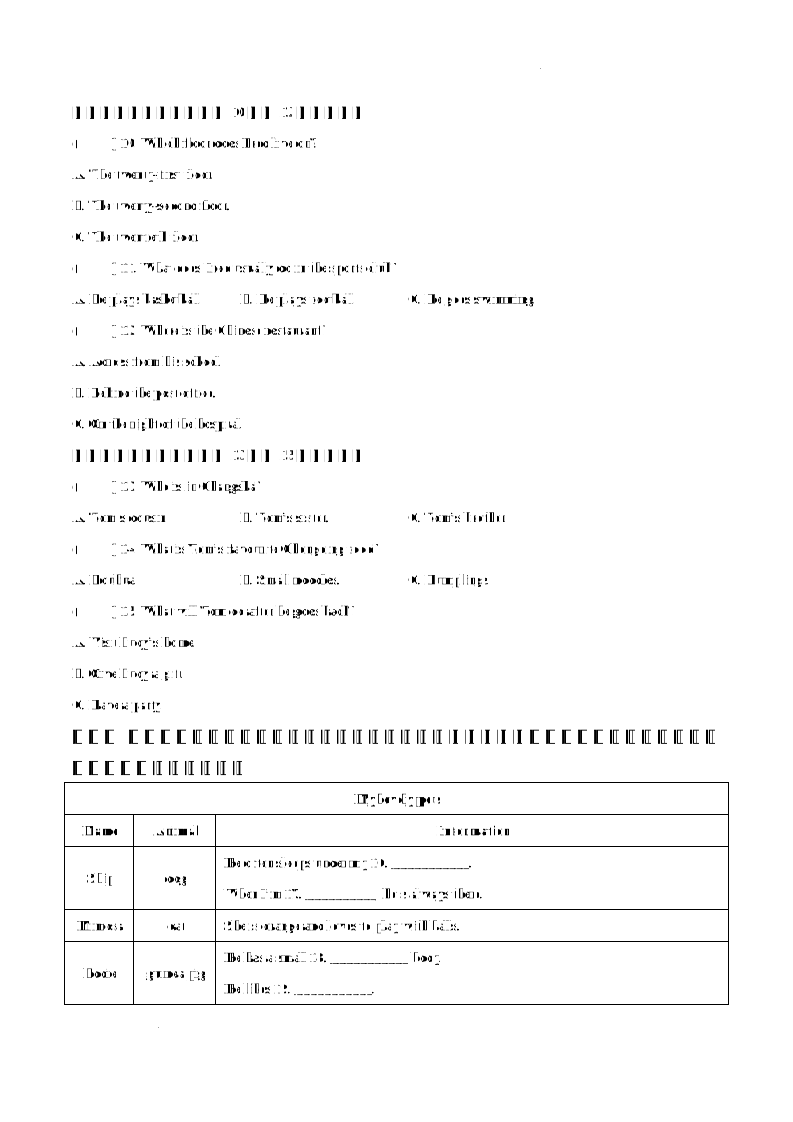
( ) 10. Which floor does Fred live on?
A. The twenty-first floor.
B. The twenty-second floor.
C. The twentieth floor.
( ) 11. What does Fred usually do in the sports club?
A. He plays basketball. B. He plays football. C. He goes swimming.
( ) 12. Where is the Chinese restaurant?
A. Across from his school.
B. Behind the post office.
C. On the right of the hospital.
听下面一段对话,回答第13至第15三个小题。
( ) 13. Who is in Changsha?
A. Tom’s cousin. B. Tom’s sister. C. Tom’s brother.
( ) 14. What is Tom’s favourite Chongqing food?
A. Douhua. B. Small noodles. C. Dumplings.
( ) 15. What will Tom do after he goes back?
A. Visit Lucy’s home.
B. Give Lucy a gift.
C. Have a party.
第三节 你将听到一篇演讲稿。请用你所听到的内容,填写表格中所缺单词,每空限填一词或一个数字。短文读两遍。
My lovely pets
Name
Animal
Information
Skip
dog
He often sleeps under my 16. ___________.
When I’m 17. __________, he’s always there.
Mimosa
cat
She is orange and loves to play with balls.
Eddie
guinea pig
He has a small 18. ___________ body.
He likes 19. ___________.
Coco
parrot
Today she is 20. ___________ years old.
She can sing simple songs.
二、阅读理解(20小题,每小题2分,共40分)
阅读下面四篇语言材料,然后按文后要求做题。
A
Topic: Where’s your hometown and what do you think of it?
Vancouver, Canada, rainy all the day. It is close to the Pacific Ocean (太平洋). It has beautiful mountains and sea views. It is one of the most beautiful cities in the world.
Steve, 2 days ago
Saskatchewan, Canada. I like my hometown because it has a long history. It’s a beautiful place and people here are very nice. Oh, Saskatchewan has the best food too.
Larry, 3 days ago
Crown City, the USA. I like my hometown because it is small and everyone knows each other. It’s quiet. The neighbours always help each other.
Zoe, 4 days ago
Zhengzhou, China. It is a nice and busy city. There are wide (宽阔的) plains in the east. It has a long history and many interesting places, like the Yellow River and Shaolin Temple. It also has many delicious foods. People here are very kind. I love my hometown very much.
Li Hua, 1 day ago
根据材料内容选择最佳答案
( ) 21. Which city is close to the Pacific Ocean?
A. Vancouver. B. Zhengzhou. C. Saskatchewan. D. Crown City.
( ) 22. Why does Larry like his hometown?
A. Because people there are kind.
B. Because it has a long history.
C. Because it is small and quiet.
D. Because the food there is very nice.
( ) 23. What does Zoe think of her neighbours?
A. Smart. B. Creative. C. Helpful. D. Polite.
( ) 24. What can we learn about Li Hua’s hometown?
A. It is rainy all the day. B. It has a short history.
C. It has beautiful sea views. D. There are wide plains.
( ) 25. Where can you find the text?
A. In a magazine. B. On the Internet. C. In a newspaper. D. In a storybook.
B
Boys and girls, do you like cats? What do you think of them? In Chesterfield, the UK, there is a very smart cat. His name is Zebby.
Zebby is black and white, just like the colour of a zebra (斑马) and his fur is short. He likes playing with balls. Nowadays, he becomes a really big star. You may ask why. Read on and find it out.
Genevieve Moss is 66 years old. She cannot hear anything when she doesn’t wear a hearing aid (助听器). Zebby is her pet cat. For Genevieve, Zebby is a cute helper. When someone makes a call to Genevieve, Zebby taps (轻拍) her. Then Genevieve puts on her hearing aid and goes to take the call. At night, when there’s unusual noise outside, Zebby taps Genevieve on the head to let her know. Zebby also helps Genevieve to bring things like shoes.
Genevieve says, “With Zebby’s help, my life is easy and relaxing. Now, I’m not afraid of going to sleep because I know Zebby ▲ .” For Zebby, Genevieve is also important. He loves to be with Genevieve.
根据材料内容选择最佳答案。
( ) 26. How does the writer start the text?
A. By using numbers. B. By telling a story. C. By asking questions. D. By showing a picture.
( ) 27. Which picture may be Zebby?
A. B. C. D.
( ) 28. How does Zebby help Genevieve when someone calls her?
A. By helping her put on shoes. B. By bringing her the hearing aid.
C. By taking her the phone. D. By tapping her to let her know.
( ) 29. Which of the following can we put in ▲ ?
A. doesn’t like fight B. can jump high C. is always there D. likes to sleep
( ) 30. What is the best title (标题) for this text?
A. Lovely Cats — Good Pets in the Family
B. Sick Zebby — Genevieve Moss’s Pet Cat
C. Big Cats — People’s Cute and Important Friends
D. Smart Zebby — Genevieve Moss’s Great Helper
C
In different countries, neighbourhood culture is different, but the spirit of helping each other is the same. Let’s look at how people in China and Canada care for their communities.
In China, “Close neighbours are better than distant (遥远的) relatives” is a famous saying. People in Chinese neighbourhoods often share food with each other. For example, if a family cooks delicious dumplings, they will send some to their neighbours. During festivals like the Spring Festival, neighbours visit each other and give lucky money to kids. Community centres organize many activities, such as dragon dances and tea parties, to help people get to know each other.
In Canada, people are also friendly and helpful in their neighbourhoods. Many Canadian families hold “Garage Sales” (车库甩卖) in their yards. They sell old things like books, clothes and toys at low prices (低价). Neighbours often come to buy things and chat. Some neighbourhoods have “Block Parties” in summer. People bring food and drinks to share, and kids play games together.
Both Chinese and Canadian neighbourhoods value volunteer work. In China, volunteers help the elderly cross the road and clean the community. In Canada, many teenagers volunteer to do shopping for old people. And they also help old people get their medicine (药物).
The ways are different, but the core (核心) of neighbourhood culture is the same: people care about each other and work together to make their communities better.
根据材料内容选择最佳答案。
( ) 31. What does the Chinese saying “Close neighbours are better than distant relatives” mean?
A. Relatives are not important.
B. Relatives live far away from neighbours.
C. We should visit neighbours more than relatives.
D. Neighbours can help more than distant relatives.
( ) 32. What do Chinese families often do to share with neighbours?
A. Hold “Garage Sales”. B. Send food to neighbours.
C. Organize “Block Parties”. D. Plant flowers for neighbours.
( ) 33. What do many Canadian teenagers volunteer to do for old people according to Paragraph 4?
A. Clean houses. B. Sell things. C. Do shopping. D. Hold parties.
( ) 34. What’s the core of neighbourhood culture in both countries?
A. Sharing food during festivals. B. Selling old things and helping the poor.
C. Caring about each other and working together. D. Holding parties often and making friends.
( ) 35. What’s the text mainly about?
A. Neighbourhood culture in China and Canada.
B. Festival activities in different communities.
C. Volunteer work in Canadian neighbourhoods.
D. Special activities in Chinese neighbourhoods.
D
Chinese people have a long history of drinking tea. And they care more about the choice (选择) of tea leaves, water, brewing (沏茶) ways and the quality of teapots. 36. ________ This special clay, the zisha clay, is rich in Yixing, a city in Jiangsu Province in the east of China.
Yixing is famous for the zisha clay. Yixing zisha teapots, as works of art, are always popular because of their own designs, beautiful shapes and good quality. 37. ________ In recent years, the prices of Yixing zisha teapots are always high. You may want to know why a little zisha teapot is so expensive. 38. ________ This zisha clay can make the teapot have a special structure (结构). It can make the smell stronger. Also, it is difficult to make the zisha teapots. It usually takes much time to make a zisha teapot. 39. ________
Now people like shopping on the Internet, and many craftspeople can sell their zisha teapots online. 40. ________ You can try drinking tea with a zisha teapot. It’s not just for brewing tea but also for experiencing Chinese culture.
根据材料内容,从下面五个选项中选出能填入文中空缺处的最佳选项,使文章意思通顺、内容完整。
A. This adds value to the zisha teapots.
B. First, its material, the zisha clay, is really special.
C. So more people around the world can have such handicrafts.
D. Among many kinds of teapots, the zisha teapot is very popular.
E. They can also keep the tea’s colour, smell and taste for a long time.
三、完形填空(15小题,每小题1分,共15分)
先通读短文,掌握其大意,然后从A、B、C、D四个选项中选出一个可以填入相应空白处的最佳答案。
You may think there is only 41. ________ in the desert of the world, but it is not true. In the desert, as we know, there is a little 42. ________ and it is not enough for most plants. But we can still 43. ________ some plants live in the desert.
There are woods (树林) in some places in the desert. We 44. ________ these places oases (绿洲). In the oases, there are villages and towns. People 45. ________ all kinds of crops (庄稼)in the fields there. 46. ________ wants to live without water and food, so they work hard every day.
People also live outside the oases. They have camels (骆驼)and sheep, and these 47. ________ eat the desert plants as their food. The animals are 48. ________ to the desert people in many ways. They eat the meat and drink the 49. ________ of the animals. They use the camels for 50. ________ water, food, tents and something else.
Some people in cities may 51. ________ move house in their lives. They always stay in the same house. But the people of the 52. ________ have to keep moving from place to place. Because they must look for grass or desert plants for their animals. When there is no more food for their animals, they will move to another place. They know how to 53. ________ their animals well. The trip is long 54. ________ quite fun, so they can enjoy themselves on the way. People in the desert are 55. ________. They would like to help each other.
( ) 41. A. water B. sand C. air D. salt
( ) 42. A. rain B. light C. wind D. food
( ) 43. A. see B. cut C. forget D. catch
( ) 44. A. clean B. tell C. call D. lift
( ) 45. A. hurt B. grow C. bring D. hang
( ) 46. A. Anybody B. Everybody C. Nobody D. Somebody
( ) 47. A. machines B. plants C. wonders D. animals
( ) 48. A. similar B. useful C. simple D. fresh
( ) 49. A. milk B. juice C. soup D. tea
( ) 50. A. losing B. drinking C. saving D. carrying
( ) 51. A. always B. usually C. seldom D. never
( ) 52. A. palace B. desert C. plain D. forest
( ) 53. A. ask for B. wait for C. care for D. look for
( ) 54. A. for B. or C. but D. so
( ) 55. A. poor B. strong C. friendly D. busy
四、语篇填空(15小题,每小题1分,共15分)
第一节
阅读短文,从方框中选择适当的词并用其正确形式填空,使短文通顺、意思完整。每空限填一词,每词限用一次。
ground two people build how go hole safe interest after
We people have homes. Animals have their homes, too.
Some animals live under the 56. ___________. For example, woodchucks (土拨鼠) live in 57. ___________ under the ground. They usually have two doors in their homes. They will 58. ___________ out through the other door when someone comes in through one door. It’s very interesting. Most birds enjoy 59. ___________ homes in the trees. They can live there 60. ___________. They come out for food during the day and go back to sleep at night. It’s very 61. ___________ that turtles (乌龟) usually carry their homes on their backs. The weight of their homes is not heavy for them. Bees always work hard to make their homes. Cats, dogs and some other pets live in 62. ___________ homes. People look 63. ___________ them. We can see many kinds of animals in the zoo and the zoo is their big home. Some animals have two homes. They live in the first home in summer and live in the 64. ___________ home in winter. 65. ___________ strange they are!
第二节
阅读下面一篇发言稿,根据语篇要求填空,使发言稿通顺、意思完整。每空限填一词。
Today, I’d like to share with you my idea for helping our community. I want to organize 66. ___________ activity — “Collect and Share”. There 67. ___________ many old things in the neighbourhood. Let’s give them a new life.
First, we can give away some of our old books. We’re going to share them in our community centre. Second, we’re going to collect old toys. We’ll clean them 68. ___________ then give them to children in need. Lastly, we’re going to ask for some old clothes and sell them to raise money. We can use the money to buy some flowers for our garden 69. ___________ time to time.
I hope you like my idea. 70. ___________ make our community a better place, let’s work together!
五、补全对话(5小题,每小题2分,共10分)
根据下面的对话情景,在每个空白处填上一个适当的句子,使对话的意思连贯、完整。
(Jimmy comes to Helen’s new home.)
A: Hello, Jimmy. Welcome to my house!
B: Hi, Helen. Your house looks so nice.
A: 71. ____________________. Let me show you around. Look! This yard is my favourite place.
B: Wow! I like it too. Is that a pear tree?
A: No, it isn’t. 72. ____________________. I can pick apples in autumn.
B: What are those under the tree?
A: 73. ____________________.
B: Really? I love rabbits. 74. ____________________?
A: There are 6 rabbits. They are small but very cute.
B: Can I get a close look at them?
A: Sure. Come on!
B: But there are only 3 rabbits. 75. ____________________?
A: Look! They’re behind the grass.
B: Oh, yes! I see them.
六、书面表达(20分)
假如你是李华,你的美国笔友Mary听说中国地大物博、山川秀丽、风景迷人,因此暑假要来中国旅游。请你根据她的问题回复邮件。
写作提示:1. Which place of interest should she visit?
2. How can she get there?
3. What’s it famous for?
写作要求:1.邮件须包括所有提示内容,可适当发挥;
2.邮件中不得出现真实姓名和学校名称;
3.词数70左右(邮件已给出内容不计入总词数)。
Dear Mary,
I’m happy to hear that you are coming to visit China this summer holiday.
____________________________________________________________________________________________
____________________________________________________________________________________________
____________________________________________________________________________________________
____________________________________________________________________________________________
____________________________________________________________________________________________
____________________________________________________________________________________________
____________________________________________________________________________________________
____________________________________________________________________________________________
____________________________________________________________________________________________
____________________________________________________________________________________________
____________________________________________________________________________________________
____________________________________________________________________________________________
____________________________________________________________________________________________
____________________________________________________________________________________________
____________________________________________________________________________________________
____________________________________________________________________________________________
____________________________________________________________________________________________
I am sure you will have a good time here.
Yours,
Li Hua
学科网(北京)股份有限公司
$
资源预览图

1
2

3
相关资源
由于学科网是一个信息分享及获取的平台,不确保部分用户上传资料的 来源及知识产权归属。如您发现相关资料侵犯您的合法权益,请联系学科网,我们核实后将及时进行处理。