Unit 6 Section A 3a-3d 课件 2025-2026学年人教版八年级英语下册
2026-05-26
|
21页
|
217人阅读
|
0人下载
普通
资源信息
| 学段 | 初中 |
|---|---|
| 学科 | 英语 |
| 教材版本 | 初中英语人教版八年级下册 |
| 年级 | 八年级 |
| 章节 | 3a-3d |
| 类型 | 课件 |
| 知识点 | - |
| 使用场景 | 同步教学-新授课 |
| 学年 | 2026-2027 |
| 地区(省份) | 全国 |
| 地区(市) | - |
| 地区(区县) | - |
| 文件格式 | PPTX |
| 文件大小 | 26.80 MB |
| 发布时间 | 2026-05-26 |
| 更新时间 | 2026-05-26 |
| 作者 | 匿名 |
| 品牌系列 | - |
| 审核时间 | 2026-05-26 |
| 下载链接 | https://m.zxxk.com/soft/58062769.html |
| 价格 | 2.00储值(1储值=1元) |
| 来源 | 学科网 |
摘要:
该初中英语课件聚焦英国餐桌礼仪及跨文化交际,通过视频判断不同国家礼仪导入,结合Free talk激活已知认知,再经听力、阅读对话提取关键信息,按“用餐前-中-后”分类整理,构建从输入到梳理的学习支架。
其亮点在于多模态输入与任务链设计,视频音频增强语言理解,角色扮演提升表达能力,跨文化对比任务(中英礼仪异同)培养文化意识与思维品质。学生能提升跨文化沟通能力,教师可借助结构化活动高效实施教学。
内容正文:
英语人教版八年级下册
Crossing Cultures
Section A
第2课时
Unit 6
Learning objectives
通过本节课的学习,学生能够:
1. 理解对话内容,提取英国做客礼仪的关键信息,
并按“用餐前-用餐中-用餐后”进行归类整理。
2. 在语境中理解并运用Should I...? Could you tell
me...? Remember to...等表达,就做客礼仪进行
咨询、建议和回应。
3. 在中英餐桌礼仪比较中理解礼貌得体的重要性,
形成遇到文化差异主动询问、认真观察的意识。
重点
重点
Watch and mark
Watch the video and mark T for true and F for false.
1. In Korea, you can sit only after the elderly sit down.
2. You can hold your bowl of rice or soup when you have a meal in Korea.
3. In England, if you are a child, you can point with your knife or fork.
4. In Chile, people eat food with their fingers.
T
F
F
F
Free talk
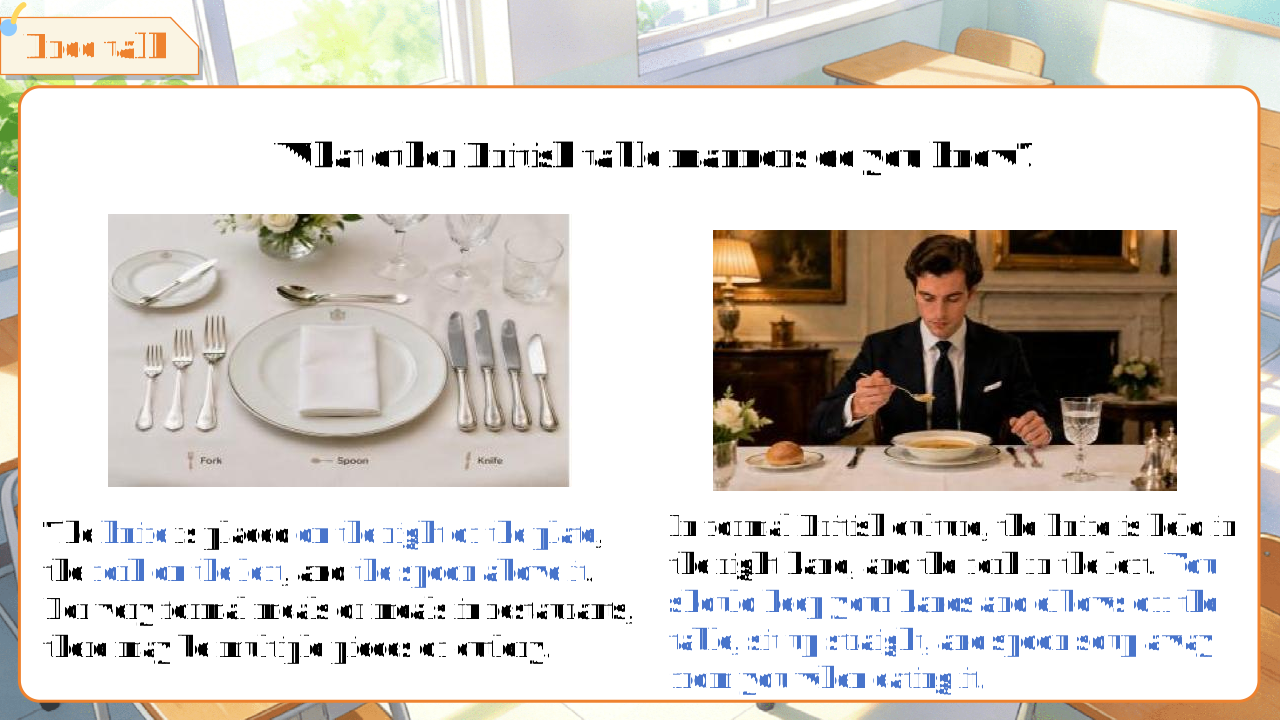
What other British table manners do you know?
The knife is placed on the right of the plate, the fork on the left, and the spoon above it. For very formal meals or meals in restaurants, there may be multiple pieces of cutlery.
In formal British culture, the knife is held in the right hand, and the fork in the left. You should keep your hands and elbows off the table, sit up straight, and spoon soup away from you when eating it.
Listen and answer
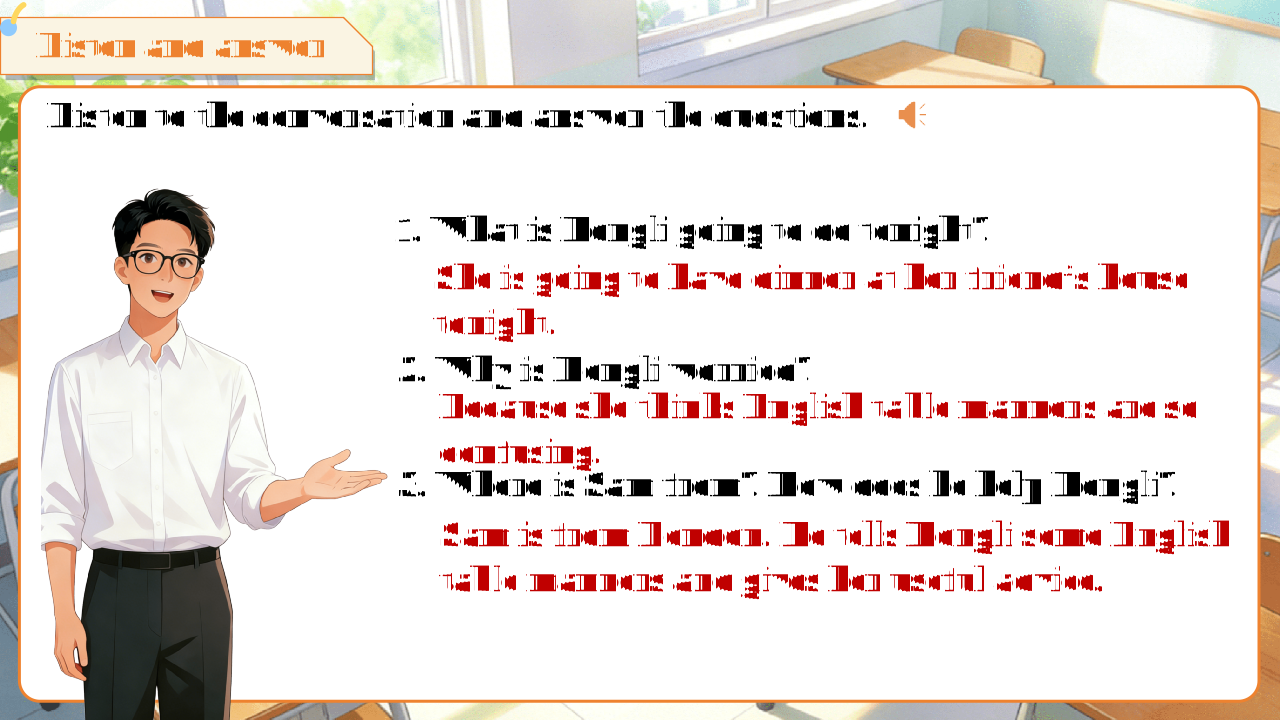
Listen to the conversation and answer the questions.
1. What is Hongli going to do tonight?
2. Why is Hongli worried?
3. Where is Sam from? How does he help Hongli?
She is going to have dinner at her friend’s house tonight.
Because she thinks English table manners are so confusing.
Sam is from London. He tells Hongli some English table manners and gives her useful advice.
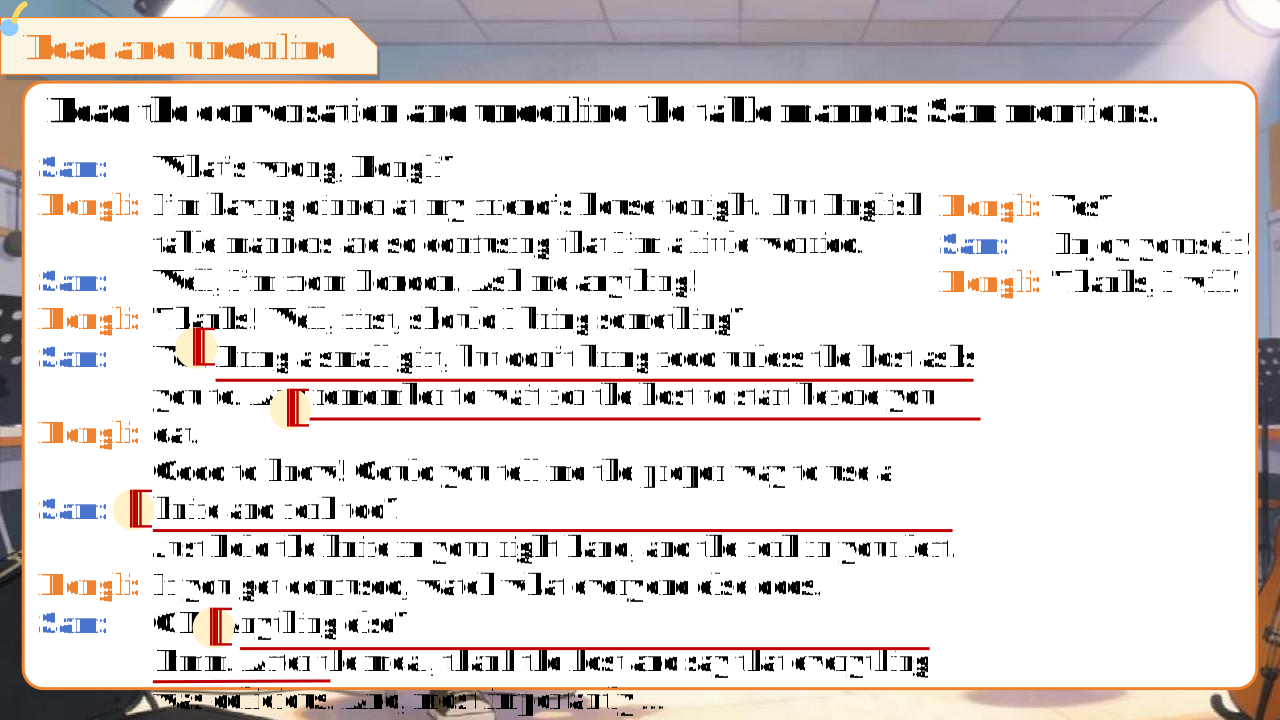
Read and underline
Read the conversation and underline the table manners Sam mentions.
Hongli:
Sam:
Hongli:
Yes?
Enjoy yourself!
Thanks, I will!
Sam:
Hongli:
Sam:
Hongli:
Sam:
Hongli:
Sam:
Hongli:
Sam:
What’s wrong, Hongli?
I’m having dinner at my friend’s house tonight. But English table manners are so confusing that I’m a little worried.
Well, I’m from London. Ask me anything!
Thanks! Well, first, should I bring something?
Yes. Bring a small gift, but don’t bring food unless the host asks
you to. And remember to wait for the host to start before you eat.
Good to know! Could you tell me the proper way to use a
knife and fork too?
Just hold the knife in your right hand, and the fork in your left. If you get confused, watch what everyone else does.
OK. Anything else?
Hmm. After the meal, thank the host and say that everything was delicious. And, most importantly ...
①
②
③
④
Read and write
Make notes about having dinner at a friend’s house in the UK.
Before the meal
During the meal
After the meal
hold the knife in your right hand, and the fork in
your left
watch what everyone else does
thank the host and say that everything was delicious
bring a small gift, but don’t bring food unless the host asks you to
wait for the host to start before you eat
Read and answer
Read again and answer the questions.
1. What does Sam suggest Hongli do if she gets confused during the meal?
He tells her to watch what everyone else does.
Read and answer
Read again and answer the questions.
2. What does this practical suggestion about dealing with cultural differences mean?
It means “When in Rome, do as the Romans do.”
Read and learn
Read the conversation and learn the new words and phrases.
Hongli:
1. I’m having ... tonight
现在进行时表将来,结构:
主语 + am / is / are + 动词-ing + 将来的时间状语
We are leaving for Beijing tomorrow.
我们明天就要动身去北京了。
I’m having dinner at my friend’s house tonight.
Sam:
Yes. Bring a small gift, but don’t bring food unless the host asks you to. And remember to wait for the host to start before you eat.
2. unless
意为:除非,如果不。相当于 if ... not。引导条件状语从句。
We will go for a picnic tomorrow unless it rains.
我们明天去野餐,除非下雨。
Read and learn
Read the conversation and learn the new words and phrases.
Sam:
3. remember to wait
结构:remember to do sth.
意为 “记得去做某事(事情还没做)”。
拓展:
remember doing sth.
(记得做过某事)
Remember to bring your English book tomorrow.
明天记得带你的英语书。
Yes. Bring a small gift, but don’t bring food unless the host asks
you to. And remember to wait for the host to start before you eat.
Listen and role-play
Listen to the conversation. Then role-play it.
While listening, you should focus on how they speak:
Notice their tone (e.g. friendly, encouraging, proud...).
Identify their emotions (e.g. excitement, hesitation, confidence...).
Pay attention to pauses and emphasis on certain words.
Think and share
Think and answer the questions.
1. What small gifts do you think Hongli could bring?
2. Why does Sam say “most importantly, enjoy yourself!” at the end?
She could bring a small bunch of flowers or a nice bookmark.
Because having a good time and feeling relaxed is the most important thing when visiting friends. Manners are important, but enjoying the moment matters more.
Let’s role-play
Wait for older people to start eating.
Sit up straight. Keep your elbows off the table.
Do not stand up to reach for food. Ask others to pass you the dish.
Use serving chopsticks and spoons to take food from shared dishes.
Imagine your foreign friend is going to have dinner at a Chinese person’s house for the first time. Use the tips below to give him or her some advice.
Let’s role-play
Imagine your foreign friend is going to have dinner at a Chinese person’s house for the first time. Use the tips below to give him or her some advice.
OK, thanks. What else?
Sure! First, wait for older people to sit and start eating before you eat.
You should sit up straight and keep your elbows off the table.
I’m going to a Chinese friend’s house for dinner. Could you give me some advice on table manners?
OK, and how should I serve myself?
Don’t stand up to reach for food. Politely ask someone to pass you the dish.
Thanks for the advice. I really don’t want to upset my host.
Discuss and share
What are the similarities and differences between Chinese and English table manners?
Discuss these questions in groups.
Similarities: Both cultures think it’s important to be polite. For example, we shouldn’t talk with a full mouth.
Differences: Chinese people use chopsticks and share food. But English people use a knife and fork, and they usually eat their own food.
Discuss and share
How should we behave when we face cultural differences?
Discuss these questions in groups.
We should respect different cultures and try to understand them. Just as the saying goes, “When in Rome, do as the Romans do.”
Exercises
1. Peter felt very (confuse) when he had dinner with a Chinese
family for the first time.
2. It is very important for us to learn some basic table (manner)
before going abroad.
3. You are supposed to use your chopsticks (proper) at a Chinese
dinner party.
4. In China, it’s polite to use (serve) chopsticks to take food from the shared dishes.
5. Remember (keep) your elbows (手肘) off the
table when you eat in Western countries.
用给定的单词的正确形式填空。
confused
manners
properly
to keep
serving
Summarize
After learning this lesson,
I can
memorize the new words.
manner, proper, properly, confuse, confused, ...
understand and apply knowledge about table manners in different cultures.
know how to give advice to foreign friends on Chinese table manners
know how to respect and behave when facing cultural differences
1. Try using the phrases and sentences from the text to write 3-5 tips about Chinese table manners for a foreign friend who is going to eat at your house.
2. Share the tips with your parents and ask if they have any other advice on table manners.
Homework
人教版八年级下册
Thank you!
Unit 6
Lavf58.46.101
null
57598.992
$
资源预览图
1
2

3
4
5
6
相关资源
由于学科网是一个信息分享及获取的平台,不确保部分用户上传资料的 来源及知识产权归属。如您发现相关资料侵犯您的合法权益,请联系学科网,我们核实后将及时进行处理。