Unit 6 Lesson 3 Section A (3a-3d)(讲解课件)-【优翼·学练优】2025-2026学年八年级英语下册同步备课(人教版)
2026-05-24
|
29页
|
47人阅读
|
0人下载
教辅

资源信息
| 学段 | 初中 |
|---|---|
| 学科 | 英语 |
| 教材版本 | 初中英语人教版八年级下册 |
| 年级 | 八年级 |
| 章节 | 3a-3d |
| 类型 | 课件 |
| 知识点 | - |
| 使用场景 | 同步教学-新授课 |
| 学年 | 2026-2027 |
| 地区(省份) | 全国 |
| 地区(市) | - |
| 地区(区县) | - |
| 文件格式 | PPTX |
| 文件大小 | 31.81 MB |
| 发布时间 | 2026-05-24 |
| 更新时间 | 2026-05-24 |
| 作者 | 湖北盈未来教育科技有限公司 |
| 品牌系列 | 优翼·学练优·初中同步教学 |
| 审核时间 | 2026-04-13 |
| 下载链接 | https://m.zxxk.com/soft/57314930.html |
| 价格 | 3.00储值(1储值=1元) |
| 来源 | 学科网 |
摘要:
该初中英语课件围绕“跨文化交际中的餐桌礼仪”展开,通过Brainstorm列举文化差异方面,Look and Say对比不同国家吃饭方式与时间观念,结合视频观看世界餐桌习俗,搭建从文化差异整体认知到餐桌礼仪细节学习的支架,引导学生逐步深入。
其亮点在于融合语言能力、文化意识与思维品质,通过视频、对话阅读、角色扮演等活动。如对话学习提升语言理解与表达,小组活动(给外国朋友建议中国礼仪)锻炼运用能力,进一步思考环节(如“礼仪是尊重还是规则”)培养批判性思维。采用任务型教学,笔记整理要点帮助梳理知识,助力学生提升跨文化沟通能力,也为教师提供清晰教学流程与丰富活动资源。
内容正文:
Unit 6 Crossing Cultures
Section A How different are our cultures?
(3a-3d)
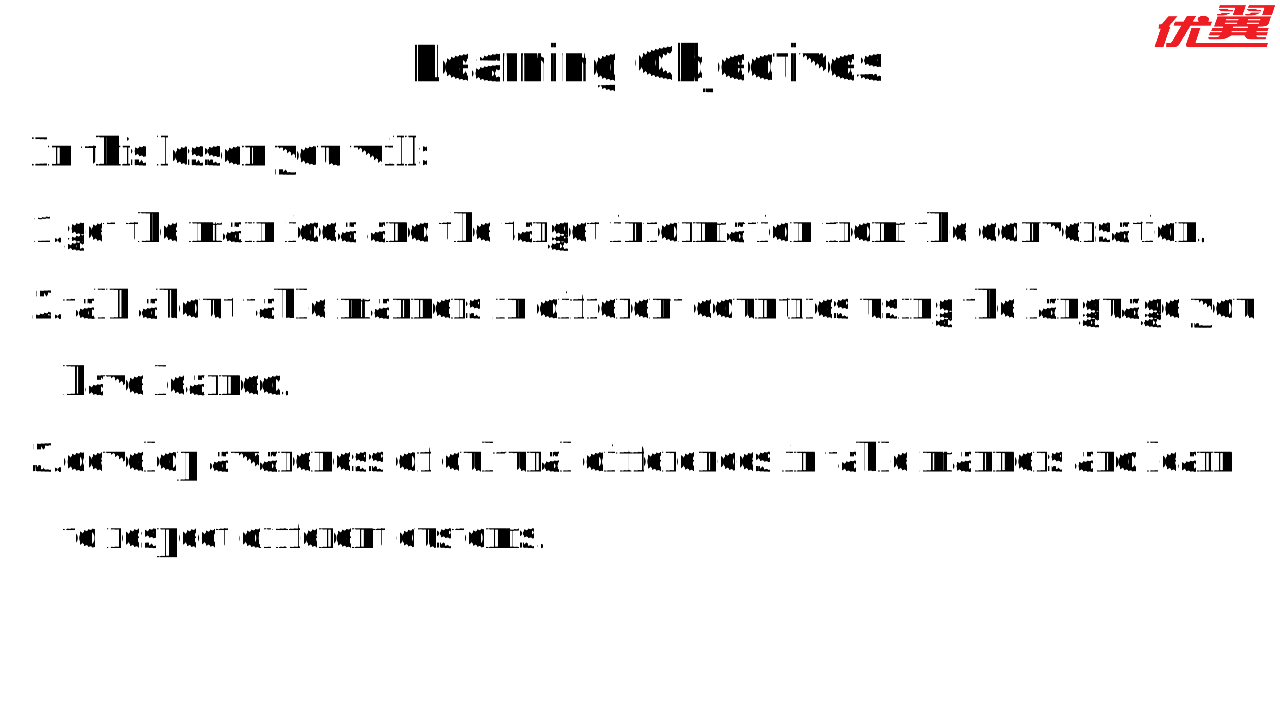
Learning Objectives
In this lesson you will:
1.get the main idea and the target information from the conversation.
2.talk about table manners in different countries using the language you
have learned.
3.develop awareness of cultural differences in table manners and learn
to respect different customs.
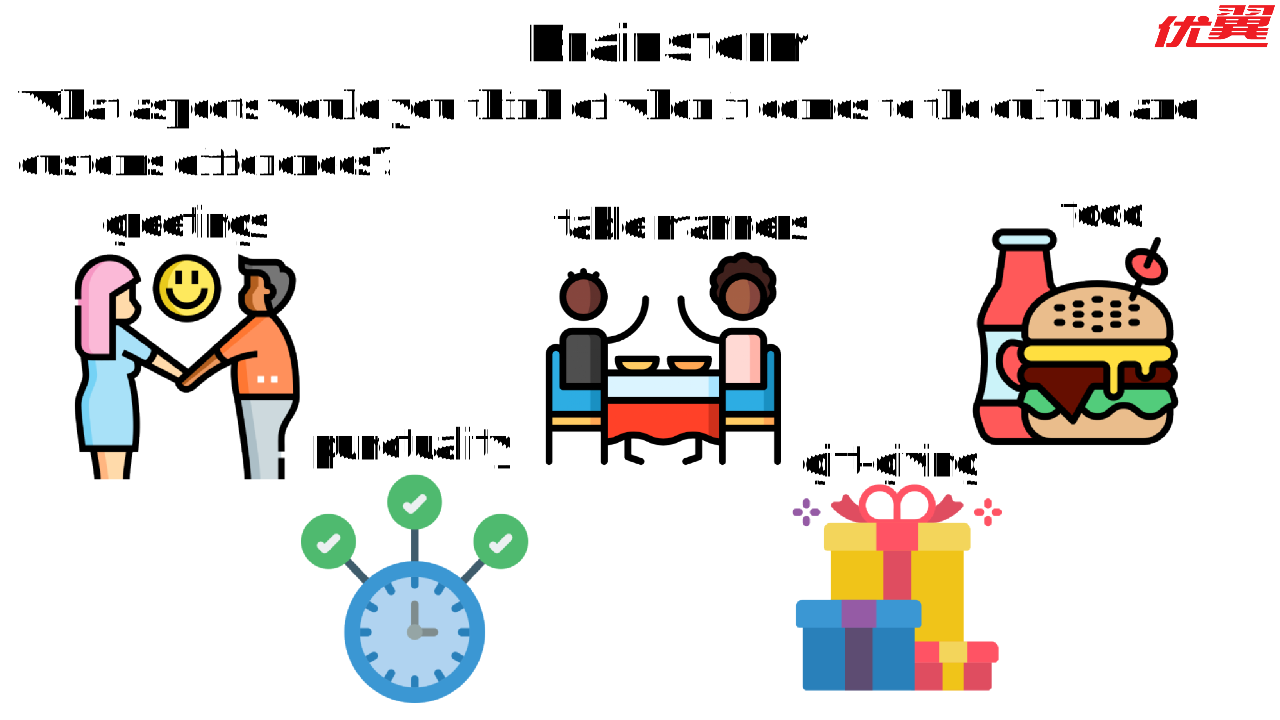
Brainstorm
What aspects would you think of when it comes to the culture and customs differences?
greetings
table manners
food
punctuality
gift-giving
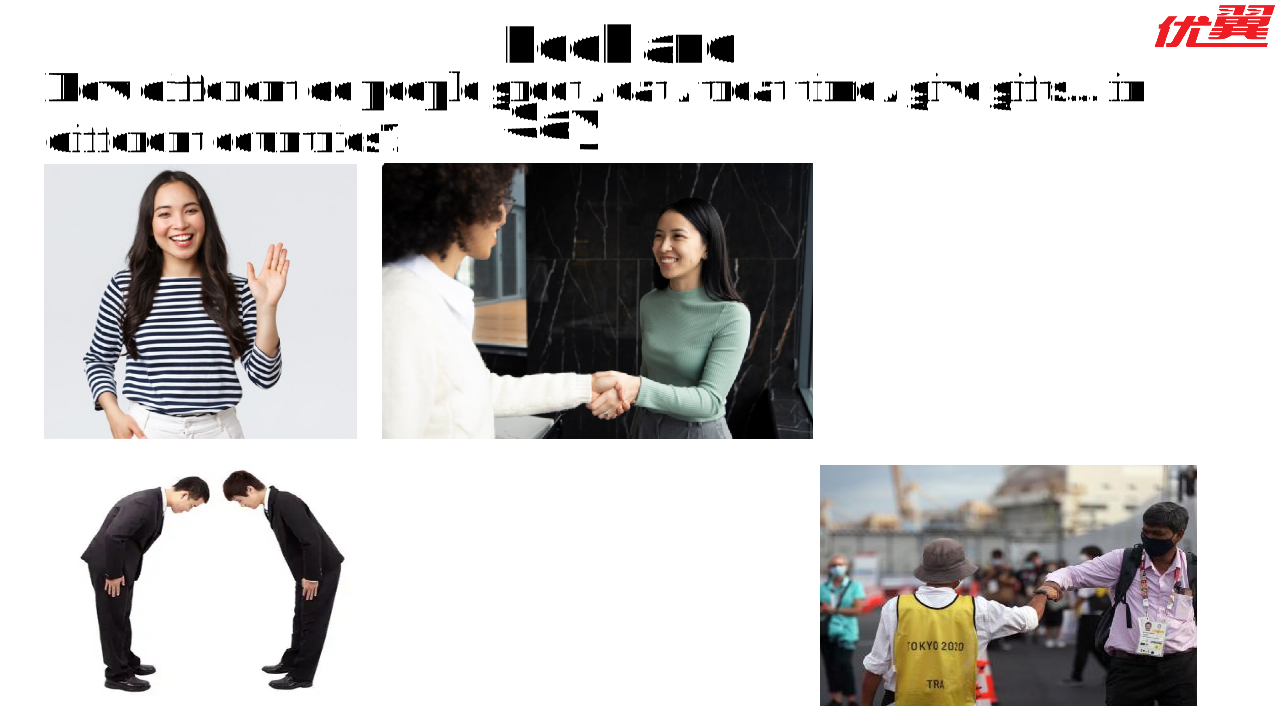
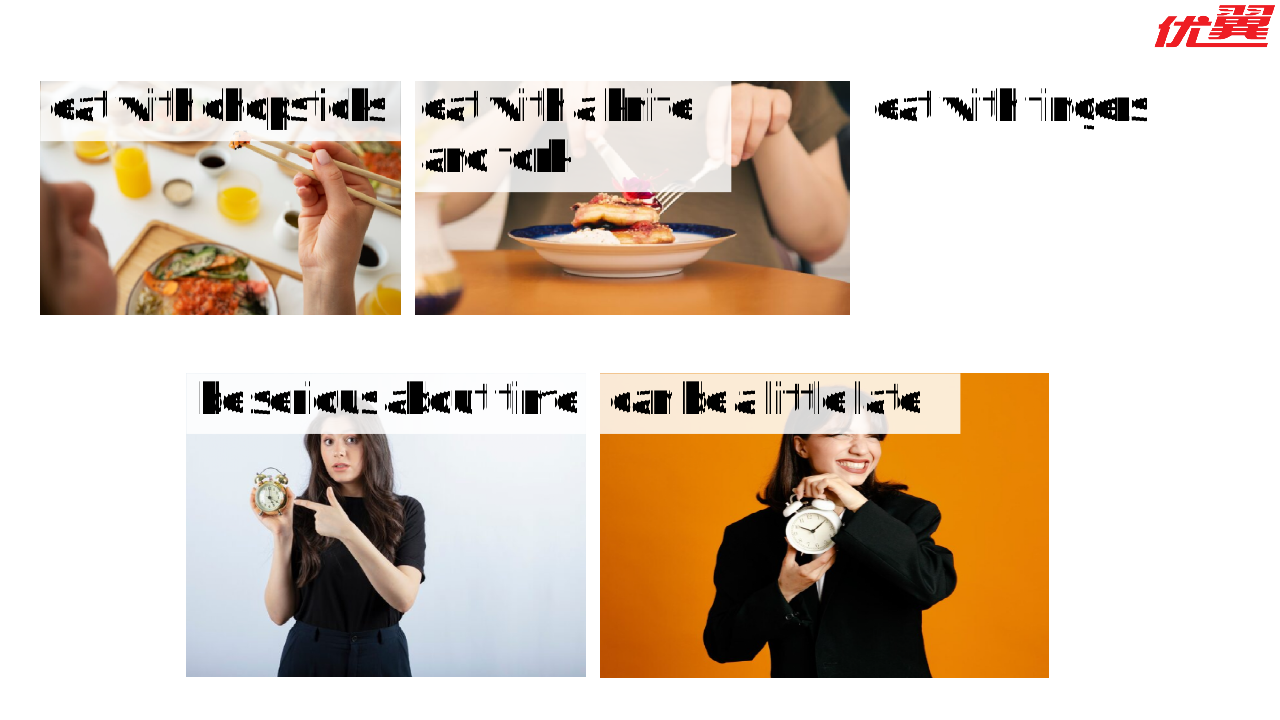
Look and Say
How different do people greet / eat / treat time / give gifts... in different countries?
eat with chopsticks
eat with a knife and fork
eat with fingers
be serious about time
can be a little late
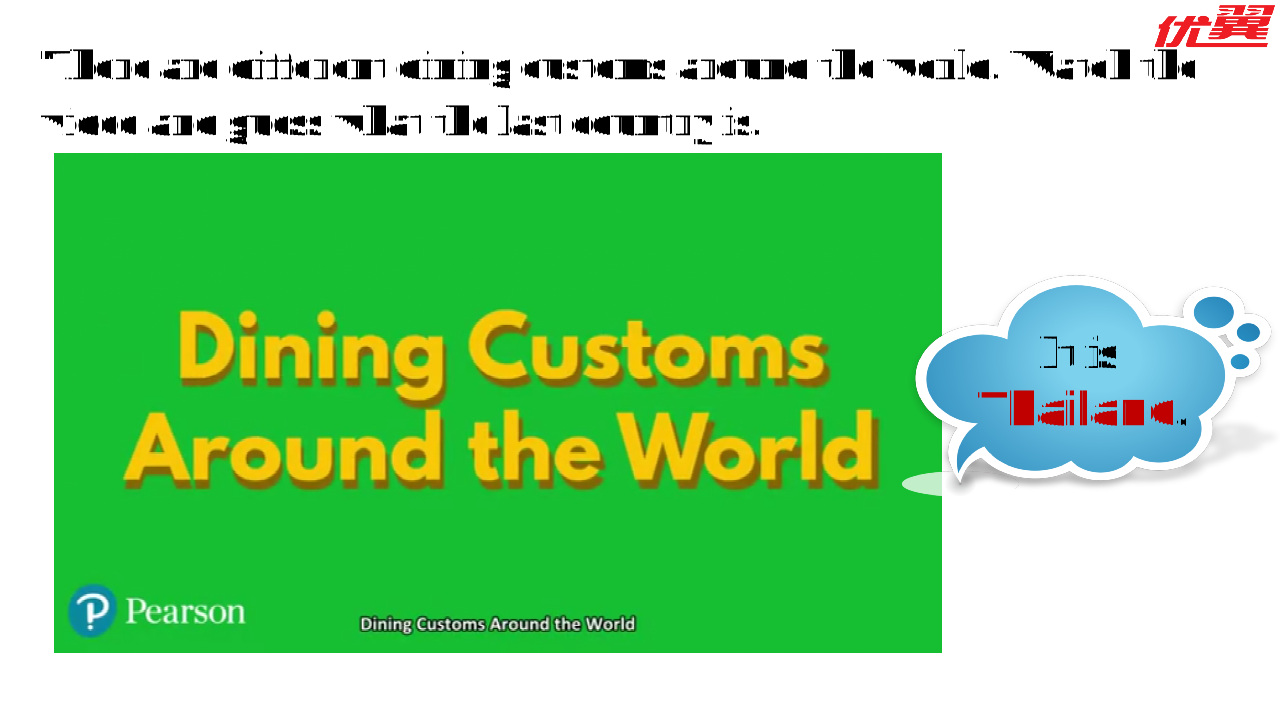
There are different dining customs around the world. Watch the video and guess what the last country is.
It is Thailand.
Free Talk
What do you know about English table manners?
If we are invited to have dinner in an English friend’s home, what information should we know to help us behave well?
Here’s a video to help us. Watch and answer the questions.
Should we bring any gifts?
What kinds of gifts may be welcomed?
What should we say when arriving?
Yes, we should.
Flowers, a bottle of wine, a box of chocolate, a candle and so on.
We should thank the host for the invitation and compliment something in the home sincerely.
What should we do after the meal?
Offer to help clear up.
What should be said before leaving?
Thank the host again and invite the host to your home for dinner.
Read the conversation. Why is Hongli worried?
3a
Sam: What's wrong, Hongli?
Hongli: I'm having dinner at my friend's house tonight. But English
table manners are so confusing that I'm a little worried.
Sam: Well, I'm from London. Ask me anything!
Hongli: Thanks! Well, first, should I bring something?
Sam: Yes. Bring a small gift, but don't bring food unless the host
asks you to. And remember to wait for the host to start before
you eat.
Honjli: Good to know! Could you tell me the proper way to use a
knife and fork too?
Because he’s confused about English table manners.
Sam: Just hold the knife in your right hand, and the fork in
your left. If you get confused, watch what everyone else
does.
Hongli: OK. Anything else?
Sam: Hmm. After the meal, thank the host and say that
everything was delicious. And, most importantly ...
Hongli: Yes?
Sam: Enjoy yourself!
Hongli: Thanks, I will!
Why does Sam know so much about English table manners?
What does Sam suggest Hongli bring to her friend's house?
How does Sam suggest holding a knife and fork?
More questions for details.
Because he’s from London.
Sam suggests that Hongli should bring a small gift.
Just hold the knife in the right hand, and the fork in the left. If Hongli gets confused, he can watch what everyone else does.
4. When should Hongli start eating?
5. What should Hongli do after the meal?
6. What can we know about Sam from the conversation?
After the host starts.
He should thank the host and say that everything was delicious.
Sam is from London and knows a lot about English table manners. He is helpful and willing to share his knowledge.
3b
Make notes about having dinner at a friend's house in the UK.
Before the meal
During the meal
After the meal
bring a small gift ;
wait for the host to start
hold the knife in the right hand and the fork in the left
thank the host and say everything was delicious
3c
Listen to the conversation. Then role-play it.
While listening, you should focus on how they speak:
Notice their tone (e.g. friendly, encouraging, proud...).
Identify their emotions (e.g. excitement, hesitation, confidence...).
Pay attention to pauses and emphasis on certain words.
Further Thinking
What small gifts do you think Hongli could bring?
Why might bringing food be inappropriate in England unless asked?
He could bring a small bunch of flowers or a nice bookmark.
Because the host may have already prepared a full meal, and your food might not match their plan or could make them feel uncomfortable.
Why does Sam say "most importantly, enjoy yourself" at the end?
Do you think table manners are more about "respect" or "rules"?
Why?
Because having a good time and feeling relaxed is the most important thing when visiting friends. Manners are important, but enjoying the moment matters more.
I think they are more about respect. Following them shows you respect the host, their culture, and the people you are with. Rules are just a way to show that respect.
Pair Work
3d
Wait for older people to start eating.
Sit up straight. Keep your elbows off the table.
Do not stand up to reach for food. Ask others to pass you the dish.
Use serving chopsticks and spoons to take food from shared dishes.
Imagine that your foreign friend is going to have dinner at a Chinese person's house for the first time. Use the tips below to give him or her some advice.
A: I'm going to a Chinese friend's house for dinner. Could
you give me some advice on table manners?
B: Sure! First,...
Useful Esxpressions:
Could you tell me ...?/ You can/could...
Don’t...unless.../If you ..., you can...
It’s polite/rude/... to do sth.
When you...,you can/should ...
Sample
A: I’m going to a Chinese friend’s house for dinner. Could you
give me some advice on table manners?
B: Sure! First, you should wait for the older people to start eating
before you begin.
A: Oh, good to know! How should I sit at the table?
B: It's polite to sit up straight and keep your elbows off the table.
A: OK. What if the food I want is far away?
B: Don't stand up to reach for it. Just ask someone to pass you the dish.
A: That makes sense. And how could I get food from the shared plates?
B: Remember to use the serving chopsticks and spoons, not your own.
A: Thanks! That's really helpful.
B: No problem. And most importantly, enjoy the meal and have a great
time!
Language Points
1. But English table manners are so confusing that I'm a little worried.
confusing 意为“令人困惑的;难以理解的”, 修饰对象通常是事物、现象、情况等。
e.g. The instructions for this game are really confusing.
(这个游戏的说明真的很难懂。)
confused 意为 “感到困惑的,迷茫的”,主语 / 修饰对象通常是人,强调人的内心感受。
e.g. He had a confused look on his face when he heard the news.(听到这个消息时,他脸上露出困惑的表情。)
so + 形容词 / 副词 + that 从句 意为“如此…… 以至于……”
e.g. The gift is so small that it won’t make the host feel pressured.
(这个礼物如此小,不会让主人感到有压力。)
He ate so quickly that he forgot to use a knife and fork properly.
(他吃得如此快,以至于忘了正确使用刀叉。)
unless 作连词,意为“除非;如果不”,相当于“if...not”,引导条件状语从句。
e.g. Don’t eat with your mouth open unless you want to be seen as impolite.(不要张着嘴吃饭,除非你想被认为没礼貌。)
You can’t understand Chinese table manners unless you experience them.(你只有亲身体验,才能理解中国餐桌礼仪。)
2. Bring a small gift, but don't bring food unless the host asks you to.
3. Ask me anything!
Ask me anything! 意为“有什么尽管问!”,口语中表示愿意提供帮助,语气热情。
e.g. If you don’t understand the rules, just ask me anything.(要是你不懂规则,有什么问题尽管提。)
4. Good to know!
Good to know. 是口语中非常实用的表达,意为“很高兴知道(这个信息)”“这很有用”,通常用于听到某个有帮助、有价值的信息时回应对方,表达 “这个内容对自己有帮助,很感谢告知” 的意思。
5. Could you tell me the proper way to use a knife and fork too?
proper 是形容词,意为“恰当的;正确的”
e.g. What’s the proper time to arrive at a dinner party?(参加晚宴的合适时间是什么时候?)
还可表示 “真正的;严格意义上的”
e.g. A proper English breakfast includes bacon, eggs, and toast.(一顿正宗的英式早餐包含培根、鸡蛋和吐司。)
6. Sit up straight. Keep your elbows off the table.
sit up 是固定短语,意为“坐直”, 其后的straight 作副词,意为“笔直地”。
e.g. The teacher told the student to sit up in class.
(老师让学生在课堂上坐直。)
keep...off... 意为“使不碰到……;使避开”
e.g. Keep your hands off the food until everyone is ready.
(等所有人都准备好再碰食物。)
本文件著作权为创作公司所有, 仅限于教师教学及其他非商业性和非盈利性用途。如发现盗用、转卖、网络传播等侵权行为, 本公司将依法追究其相应法律责任。
部分素材选自网络, 如有争议, 请联系删改。
声 明
Lavf58.29.100
Packed by Bilibili XCoder v2.0.2
$
资源预览图
1
2
3
4
5
6

相关资源
由于学科网是一个信息分享及获取的平台,不确保部分用户上传资料的 来源及知识产权归属。如您发现相关资料侵犯您的合法权益,请联系学科网,我们核实后将及时进行处理。