命题大赛 广东2025-2026学年高一英语上学期阶段测试(人教版必修二)
2026-05-25
|
3份
|
15页
|
61人阅读
|
0人下载
资源信息
| 学段 | 高中 |
|---|---|
| 学科 | 英语 |
| 教材版本 | 高中英语人教版必修第二册 |
| 年级 | 高一 |
| 章节 | - |
| 类型 | 试卷 |
| 知识点 | - |
| 使用场景 | 同步教学-阶段检测 |
| 学年 | 2025-2026 |
| 地区(省份) | 广东省 |
| 地区(市) | - |
| 地区(区县) | - |
| 文件格式 | ZIP |
| 文件大小 | 131 KB |
| 发布时间 | 2026-05-25 |
| 更新时间 | 2026-05-25 |
| 作者 | xkw_722308077 |
| 品牌系列 | - |
| 审核时间 | 2026-05-25 |
| 下载链接 | https://m.zxxk.com/soft/58024019.html |
| 价格 | 2.00储值(1储值=1元) |
| 来源 | 学科网 |
内容正文:
广东高一英语上学期阶段测试(必修二) 试卷解析
阅读理解A篇
21. B 细节理解题 根据表格中第一行关于“Westminster & Central London”的描述“who want to see famous landmarks”可知,如果游客想要去看伦敦著名的地标建筑,应选择该区域,故选B项。
22. D 细节理解题 根据文中“What’s included”部分中的第二句“Hotel pick-up and drop-off in Central London”可知,旅游服务包含伦敦市中心的酒店接送服务,故选D项。
23. C 细节理解题 根据最后一段最后一句“You must make a reservation for the service at least 24 hours in advance”可知,游客必须至少提前24小时预订,即至少提前一天,故选C项。
阅读理解B篇
24. A 主旨大意题 根据第一段内容可知,该段介绍了“Kid Pan Alley”的成立时间、创始人、性质以及自成立以来取得的成就“work with more than 35,000 students”,故选A项。
25. A 细节理解题 根据第三段Paul Reisler所说的话“Creativity is the most powerful thing. So what we’re really doing is trying to inspire children to be creative”可知,他认为创造力至关重要,因此我们真正应该做的是努力激发孩子们的创造力,故选A项。
26. D 推理判断题 根据第四段第二至五句内容,作者提到学生生活艰难“95 percent of the students come from poor families... Even so, these students still hope to improve themselves and achieve more”可知,这些学生即使身处困境,仍然但依旧渴求自我提升。由此可推知,作者描写这一处境,意在凸显音乐课程带给孩子们的积极意义与独特价值,故选D项。
27. C 细节理解题 根据最后一段最后一句“Mr. Ray said the music workshop and the concert brought students wonderful memories that would stay with them for a long time”可知,工作坊给学生带来了持久的积极影响,选项C中“long-lasting positive effect”是对原文的同义转换,故选C项。
阅读理解C篇
28. C 细节理解题 根据第二段第二句“They’re a keystone species that are often described as an ecosystem engineer”可知,海狸被描述为生态工程师,所以能改善生态,故选C项。
29. B 推理判断题 根据第四段第一句“This desire for beaver products almost led to the extinction of beavers throughout the UK and many other parts of Europe”可知,人们对于海狸产品的需求几乎导致海狸的灭亡,由此可推断人们对海狸的过度猎杀几乎造成了它们的灭亡,故选B项。
30. A 细节理解题 根据最后一段“It’s hoped that the success of this rewilding programme will lead to further beavers being released in other parts of London in the near future”可知,这项放生计划非常成功,故选A项。
31. B 文章标题题 根据全文可知,因海狸有改善水域生态的能力,所以一对海狸被重新引入伦敦水道。18个月后,一只海狸宝宝的诞生,也意味着此次放生计划的成功。故可知,本文讲述海狸重新被引入海道的事,故选B项。
阅读理解D篇
32. D 推理判断题 第一段作者先提到Max Perutz“人类是否需要科学”的问题及其肯定回答,接着提出如果Perutz看到当今AI的快速发展,可能会问“科学是否还需要人类”。作者引用Perutz的问题是为了引出下文关于AI对科学研究影响的讨论,故选D项。
33. A 推理判断题 根据第二段最后一句“The research team said Robin made the research 200
times faster than before”和第三段最后一句“Co-Scientist found the answer in just a few days”可知,两则研究都表明AI能够加速科学研究发现,故选A项。
34. B 词义猜测题 根据划线词所在句的上下文“Humans are still needed to catch AI’s mistakes and hallucinations — a phenomenon that could lead to completely wrong research results”可知,如果不对hallucinations进行仔细检查,会导致完全错误的研究结果,由此可推断其意为“错误信息”,故选B项。
35. C 观点态度题 根据全文内容可知,作者既提到了AI在科研中的巨大潜力即加速科学研究,也指出了其局限性即会产生错误信息,需要人类的指导,最后总结“science still needs humans”,表明作者的态度是客观的,故选C项。
七选五答案解析
36. E 由空前句“Whether making cookies or watching a holiday movie, these traditions can help you feel closer to the people you love”可知,无论是哪种传统都可以加深亲人之间的亲密感;E项“You can enjoy established traditions or create new ones together”你可以享受既有传统也可以创造新传统,与空前句构成顺承关系,前后意义一致,故选E项。
37. F 由空后句“There can be some they’ve forgotten but may enjoy reviving”可知,F项“Ask your family elders what traditions they participated in as children”询问家中长辈们小时候参加过的传统活动,与有一些他们忘记了但是想重新恢复的传统,构成顺承关系,且空后句中的“they”指代F项中的“family elders”,故选F项。
38. A 由空前句“Next, gather the thoughts you and your family have for new traditions”可知,下一步是收集家人们的新想法,A项“Add those ideas to your list”是空前句的下一个步骤,前后句话构成顺承关系;选项A中的“those ideas”指代空前句中的“thoughts”,故选A项。
39. G 由空后句“Think about who those people are in your family, whether it’s a parent, aunt, uncle, or grandparent”可知,G选项“Many families have members loving to organize and bring everyone together”许多家庭中都有喜欢组织活动的成员,与列举家人中可以帮助组织传统活动的人,存在例证关系,故选G项。
40. B 由空前句“If they like it, do it next time”可知,这是尝试新传统之后的反思部分。B项
“If not, change it to work best for them”也属于反思部分,与空前句构成并列关系,故选B项。
完形填空答案解析
41. D 根据前一句a lovely four-month-old puppy以及上半句As she jumped into my lap and licked(舔) my face可知,当她跳上我的大腿舔我脸的时候,我就喜欢上她了。it was love at first sight意为“一见钟情”。
42. A 根据下文looking both ways to check for traffic before ____44____ me to cross the street
可知,Dusty在我过马路的时候都会帮我检查一下两边的车辆,所以她充当的是我上学过马路时的保卫。
43. D 根据空前walk me和空后to school可知,Dusty是陪我走路去上学,由此可推断走的路程应该是两条街区。
44. A 根据空前looking both ways to check for traffic可知,Dusty会先检查一下两边的车辆,才允许我过马路。
45. C 根据空后failed可知,她并没有叫醒我,和上一句Dusty barked的目的之间构成转折关系。
46. B 根据上文rushed可知,Dusty是比较着急的状态,所以她是跑上楼。
47. D 根据下文the fire可知,Dusty发现了火灾,所以她是很焦急地吠叫。
48. A 根据下一句The house across the street—where my best friend Marianne lived—was on ____49____可知,我妈妈发现了Dusty焦急吠叫的事情。
49. B 根据下文the fire department可知,我好朋友家发生了火灾。
50. B 根据空后the fire department可知,我妈妈给消防局拨打了电话。
51. C 根据下文firefighters可知,是消防员很快到达了现场。
52. D 根据空后saved my best friend’s family from harm and their house from total ruin可知,
火灾被扑灭了。
53. A 根据空后妈妈所说的话It was Dusty可知,妈妈拒绝接受这个功劳。
54. C 根据下文我说的话Thank you for saving Marianne可知,Dusty救了我的好朋友。
55. B 根据全文可知,Dusty发现火灾,及时给我们警示,拯救了我的好朋友一家。所以
我认为她是最勇敢的狗。
语法填空答案解析
56. of 考查介词。remind sb of sth为固定搭配,表示“提醒某人某事”,故填of。
57. has been used 考查动词的时态和语态。时间状语In recent years通常与现在完成时连用,
主语digital technology与use之间为被动关系,故用现在完成时的被动语态;主语为单数,故填has been used。
58. where 考查定语从句。先行词为place,从句East meets West结构完整,缺少地点状语,
故用关系副词where引导定语从句,相当于in which。
59. to protect 考查非谓语动词。 aim to do sth为固定搭配,表示“旨在做某事”,故填to protect。
60. activities 考查名词的复数。hands-on意为“实践性的”,后接可数名词;根据句意,北京
劝业场提供多种实践活动,且无单数冠词修饰,故用复数形式activities。
61. more interesting 考查形容词的比较级。much修饰比较级,表示“……得多”;句意为“当
历史通过技术呈现时,许多年轻人觉得它有趣得多”,故填more interesting。
62. a 考查冠词。place为可数名词单数,此处表泛指“一个受欢迎的地方”,故用不定冠词a。
63. greatly 考查副词。修饰动词preserve应用副词;great的副词形式为greatly,表示“极大
地”,故填greatly。
64. their 考查代词。修饰名词experiences应用形容词性物主代词;主语为more people,
对应代词为their,故填their。
65.creating 考查非谓语动词。句中已有谓语动词come together,空格处应用非谓语动词;
the past and the present与create之间为主动关系,故用现在分词creating作结果状语。
写作第一节 答案解析
【答案】
Dear Chris,
I’m Li Hua. Knowing that you are interested in Chinese culture, I am writing to invite you to participate in our upcoming Traditional Chinese Culture Experience Day.
It will be held next Friday afternoon in the school hall. During the activity, you will have the chance to experience the traditions of China firsthand. We will show you how to make paper cuttings and write Chinese characters. You can also taste some traditional snacks like dumplings. Keep your eyes open for the amazing performances!
I believe it will be a great opportunity for you to learn more about our culture. I really hope you can come. Looking forward to your reply.
Yours sincerely,
Li Hua
【导语】
本篇是应用文写作,要求考生以李华的身份,给来校交流的英国学生Chris写一封邀请邮件,邀请他参加学校举办的中国传统文化体验日,内容包括活动时间、活动内容以及表达欢迎参加之意。
【详解】
1. 词汇积累
参加:participate in → take part in / join in
即将到来的:upcoming → approaching / coming
亲身体验:experience...firsthand → have a firsthand experience of...
传统文化:traditional culture → cultural traditions
机会:opportunity → chance
2. 句式拓展
原句:Knowing that you are interested in Chinese culture, I am writing to invite you to participate in our upcoming Traditional Chinese Culture Experience Day.
拓展句:Because I know you have a great interest in Chinese culture, I am writing to invite you to join our Traditional Chinese Culture Experience Day.
【点睛】
[高分句型1]
Knowing that you are interested in Chinese culture, I am writing to invite you to...
(运用了现在分词短语作原因状语,使句子简洁而富有逻辑性。)
[高分句型2]
You will have the chance to experience the traditions of China firsthand.
(“have the chance to do sth”为地道表达,动词不定式作定语,结构清晰自然。)
[高分句型3]
I believe it will be a great opportunity for you to learn more about our culture.
(“I believe + 宾语从句”结构,表达主观看法;“it is an opportunity for sb to do sth”是邀请信中的常用句型,语气得体。)
写作第二节答案解析
【答案】
The next day, Chester came up with an idea. He thought, “Why not just cover my ears and leave my head open?” He started to make a plan. He thought about the shape and the materials. Then, he went to the storage room and found a long piece of wire. He bent the wire into a band. At each end, he made a circle and sewed some animal fur on them. Soon, he made a pair of new ear protectors. Chester was very proud of his work.
He put them on and ran to the pond excitedly. Orville and Emilie were already skating on the ice. When they saw the strange things on Chester’s head, they came over. “What is this? You look like you have two fur balls on your ears!” Orville laughed. “They are my new ear protectors!” Chester said proudly. He started skating as usual. He didn’t care about the jokes because his ears were warm. Now he could stay outside much longer. Chester had solved his problem!
【导语】
本文以人物为线索展开,讲述了十岁的Chester在寒冷的冬天去池塘滑冰。他讨厌羊毛帽,因为羊毛会让他的头发痒。兄妹俩先回家后,Chester独自继续滑冰,但耳朵越来越冷。他试着戴上羊毛帽,头却立刻发痒,只好摘下帽子回家。在回家的路上,他开始思考如何在不戴羊毛帽的情况下保护耳朵不被冻僵。Chester的父亲是桥梁建造师,Chester从小喜欢动手解决问题,他相信自己能想出办法。
【详解】
1. 段落续写:
①由第一段首句The next day, Chester came up with an idea可知,接下来应描写Chester想出了什么办法以及他是如何制作耳罩的。根据原文中Chester喜欢动手创造的性格,续写应体现他的设计思路和制作过程,最终完成一副新耳罩。
②由第二段首句He put them on and ran to the pond excitedly可知,第二段应描写Chester戴上耳罩去池塘滑冰的情景。兄妹看到他的新发明后可能会嘲笑或感到奇怪,但Chester因为耳朵暖和了而不在乎,最终解决了问题。
2. 续写线索:
产生想法 → 设计方案 → 寻找材料 → 制作耳罩 → 戴上耳罩去池塘 → 兄妹嘲笑 → 不在乎 → 耳朵暖和 → 问题解决
3. 词汇激活:
行为类
产生想法:come up with an idea/think of a way/figure out
制作:make/create/design/sew
戴上:put on/wear
嘲笑:laugh at/make fun of/joke about
情绪类
骄傲的:proud/pleased
兴奋地:excitedly/happily
不在乎:not care/ignore
【点睛】
[高分句型1]
He thought about the shape and the materials.
(运用了并列结构,简洁明了地描述了Chester的设计思考过程。)
[高分句型2]
He bent the wire into a band and sewed some animal fur on them.
(运用了并列谓语动词bent和sewed,动作连贯,生动地描绘了制作过程。)
[高分句型3]
He didn’t care about the jokes because his ears were warm.
(运用了because引导的原因状语从句,清晰解释了Chester不在乎嘲笑的原因,同时点明了发明的成功。)
学科网(北京)股份有限公司
$
广东高一英语上学期阶段测试(必修二)双向细目表
1考查的能力层次:
Ⅰ-理解能力 Ⅱ-获取具体事实信息能力 Ⅲ-推理判断能力 Ⅳ-分析综合能力 Ⅴ-语言运用能力
2考核的核心素养:
①语言能力 ②文化品格 ③思维品质 ④学习能力
题号
题型
分值
知识点(主题内容)
能力层次
核心素养
预估难度
Ⅰ
Ⅱ
Ⅲ
Ⅳ
Ⅴ
①
②
③
④
档次
系数
21
阅读理解
2.5
细节理解题
√
√
√
易
0.85
22
阅读理解
2.5
细节理解题
√
√
√
易
0.85
23
阅读理解
2.5
细节理解题
√
√
√
中
0.75
24
阅读理解
2.5
主旨大意题
√
√
√
中
0.7
25
阅读理解
2.5
细节理解题
√
√
√
中
0.7
26
阅读理解
2.5
推理判断题
√
√
√
难
0.55
27
阅读理解
2.5
细节理解题
√
√
√
中
0.75
28
阅读理解
2.5
细节理解题
√
√
√
易
0.8
29
阅读理解
2.5
推理判断题
√
√
√
中
0.7
30
阅读理解
2.5
细节理解题
√
√
√
中
0.7
31
阅读理解
2.5
文章标题题
√
√
√
中
0.65
32
阅读理解
2.5
推理判断题
√
√
√
中
0.65
33
阅读理解
2.5
推理判断题
√
√
√
中
0.7
34
阅读理解
2.5
词义猜测题
√
√
√
难
0.55
35
阅读理解
2.5
观点态度题
√
√
√
中
0.7
36
七选五
2.5
上下文衔接
√
√
√
中
0.7
37
七选五
2.5
逻辑推理
√
√
√
中
0.65
38
七选五
2.5
归纳总结
√
√
√
中
0.6
39
七选五
2.5
上下文衔接
√
√
√
中
0.65
40
七选五
2.5
上下文衔接
√
√
√
√
中
0.75
41
完形填空
1
考查名词及上文推理
√
√
√
√
易
0.75
42
完形填空
1
考查名词及下文推理
√
√
√
中
0.65
43
完形填空
1
考查名词及上文推理
√
√
√
中
0.7
44
完形填空
1
考查动词及上下文推理
√
√
√
中
0.65
45
完形填空
1
考查逻辑连接词及上下文推理
√
√
√
中
0.7
46
完形填空
1
考查动词及上文推理
√
√
√
中
0.65
47
完形填空
1
考查副词及下文推理
√
√
√
中
0.7
48
完形填空
1
考查动词及下文推理
√
√
√
中
0.7
49
完形填空
1
考查名词短语及固定搭配
√
√
√
易
0.85
50
完形填空
1
考查动词及下文推理
√
√
√
中
0.75
51
完形填空
1
考查名词及下文推理
√
√
√
易
0.8
52
完形填空
1
考查动词短语及下文推理
√
√
√
中
0.6
53
完形填空
1
考查名词及下文推理
√
√
√
中
0.6
54
完形填空
1
考查动词及下文推理
√
√
√
易
0.85
55
完形填空
1
考查形容词及上下文推理
√
√
√
中
0.65
56
语法填空
1.5
考查介词
√
√
√
易
0.75
57
语法填空
1.5
考查动词时态语态
√
√
√
√
√
中
0.7
58
语法填空
1.5
考查定语从句
√
√
√
难
0.6
59
语法填空
1.5
考查非谓语动词
√
√
√
√
中
0.7
60
语法填空
1.5
考查名词
√
√
√
易
0.85
61
语法填空
1.5
考查形容词
√
√
√
√
√
中
0.7
62
语法填空
1.5
考查冠词
√
√
√
中
0.7
63
语法填空
1.5
考查副词
√
√
√
√
中
0.75
64
语法填空
1.5
考查代词
√
√
√
易
0.85
65
语法填空
1.5
考查非谓语动词
√
√
√
√
中
0.75
书面表达
15
应用文--传统文化体验
√
√
√
中
0.7
25
读后续写--解决问题
√
√
√
√
√
中
0.65
学科网(北京)股份有限公司
$
广东高一英语上学期阶段测试(必修二)
所有内容均为原创,试卷内容覆盖了人教版必修二所有单元
(阅读理解A—历史与传统;阅读理解B—音乐的价值;阅读理解C—野生动物保护;阅读理解D—科技;七选五—历史与传统;完形填空—人与动物;语法填空—文化遗产的保护、传承与创新;应用文—文化遗产的保护、传承;读后续写—发明创造)
第二部分 阅读(共两节, 满分50分)
第一节(共15 小题; 每小题 2.5 分, 满分 37.5分)
阅读下列短文, 从每题所给的A、B、C、D四个选项中选出最佳选项。
A
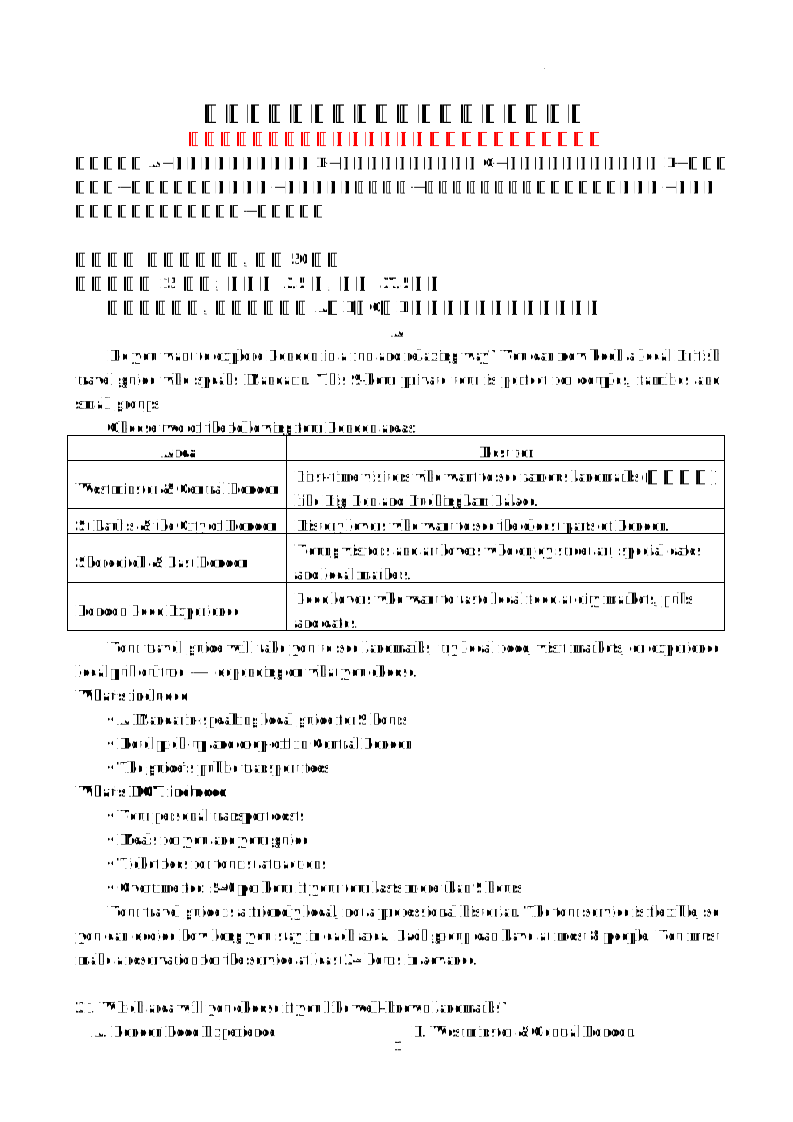
Do you want to explore London in a fun and relaxing way? You can now book a local British travel guide who speaks Mandarin. This 9-hour private tour is perfect for couples, families and small groups.
Choose two of the following four London areas:
Area
Best for
Westminster & Central London
First-time visitors who want to see famous landmarks (地标建筑) like Big Ben and Buckingham Palace.
St Paul’s & the City of London
History lovers who want to see the oldest parts of London.
Shoreditch & East London
Young visitors and art lovers who enjoy street art, special cafes and local markets.
London Food Experience
Food lovers who want to taste local food at city markets, pubs and cafes.
Your travel guide will take you to see landmarks, try local food, visit markets, or experience local pub culture — depending on what you choose.
What’s included
• A Mandarin-speaking local guide for 9 hours
• Hotel pick-up and drop-off in Central London
• The guide’s public transport fees
What’s NOT included
• Your personal transport costs
• Meals for you and your guide
• Ticket fees for tourist attractions
• Overtime fee: £40 per hour if your tour lasts more than 9 hours
Your travel guide is a friendly local, not a professional historian. The tour service is flexible, so you can decide how long you stay in each area. Each group can have at most 8 people. You must make a reservation for the service at least 24 hours in advance.
21. Which area will you choose if you like well-known landmarks?
A. London Food Experience. B. Westminster & Central London.
C. Shoreditch & East London. D. St Paul’s & the City of London.
22. What is included in the tour service?
A. Personal transport fees. B. Ticket fees for tourist attractions.
C. Meals for you and the guide. D. Hotel transfers in Central London.
23. What should you do if you want to book the tour?
A. Form a group of more than 8 people. B. Pay an extra £40 for overtime in advance.
C. Book the service at least 1 day ahead. D. Hire a professional historian as your guide.
B
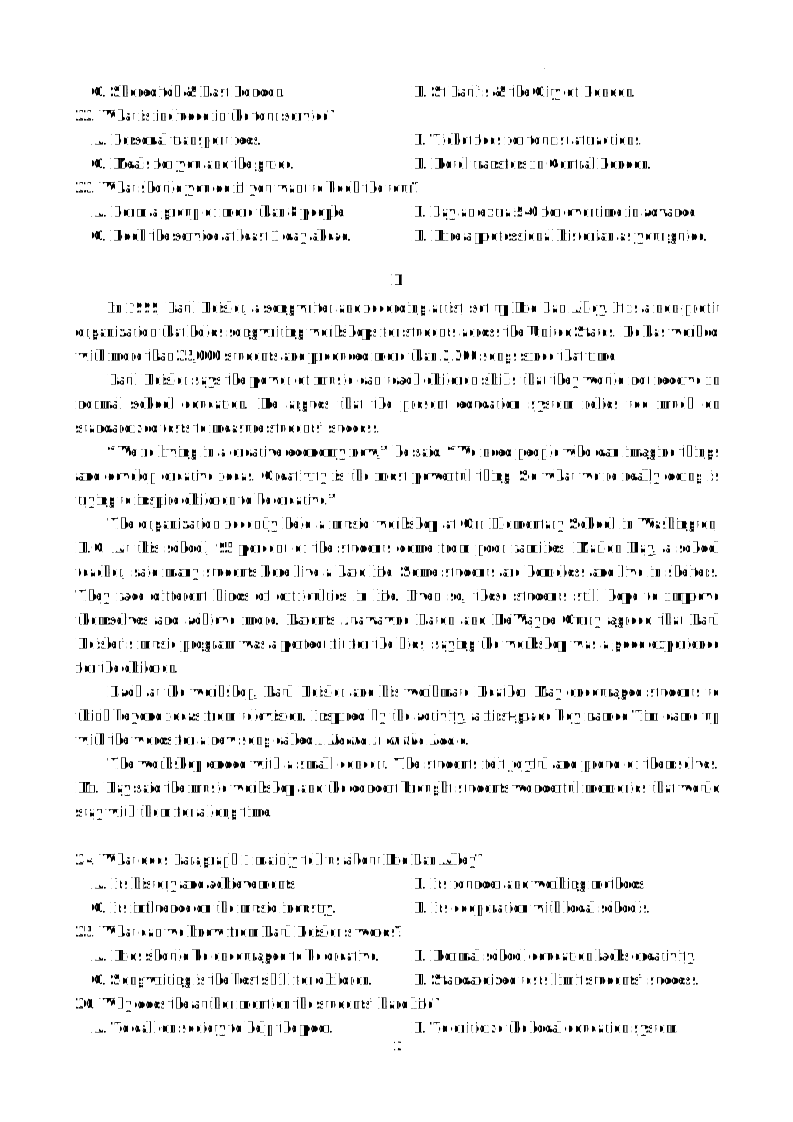
In 1999, Paul Reisler, a songwriter and recording artist, set up Kid Pan Alley. It is a non-profit organization that holds songwriting workshops for students across the United States. He has worked with more than 35,000 students and produced more than 2,200 songs since that time.
Paul Reisler says the power of music can teach children skills that they would not receive in normal school education. He argues that the present education system relies too much on standardized tests to measure students’ success.
“We’re living in a creative economy now,” he said. “We need people who can imagine things and develop creative ideas. Creativity is the most powerful thing. So what we’re really doing is trying to inspire children to be creative.”
The organization recently held a music workshop at Orr Elementary School in Washington, D.C. At this school, 95 percent of the students come from poor families. Marlon Ray, a school teacher, said many students here live a hard life. Some students are homeless and live in shelters. They face different kinds of difficulties in life. Even so, these students still hope to improve themselves and achieve more. Parents Juawawne Eaton and DeWayne Curry agreed that Paul Reisler’s music program was a perfect fit for the kids, saying the workshop was a good experience for the children.
Back at the workshop, Paul Reisler and his workmate Heather May encouraged students to think beyond ideas from television. Inspired by the activity, a first-grade boy named Tim came up with the words for a new song called I Heard It on the Radio.
The workshop ended with a small concert. The students felt joyful and proud of themselves. Mr. Ray said the music workshop and the concert brought students wonderful memories that would stay with them for a long time.
24. What does Paragraph 1 mainly tell us about Kid Pan Alley?
A. Its history and achievements. B. Its founder and working methods.
C. Its influence on the music industry. D. Its cooperation with local schools.
25. What can we know from Paul Reisler’s words?
A. Kids should be encouraged to be creative. B. Normal school education lacks creativity.
C. Songwriting is the best skill for children. D. Standardized tests limit students’ success.
26. Why does the author mention the students’ hard life?
A. To call on society to help the poor. B. To criticize the local education system.
C. To explain why students like concerts. D. To show the value of the music program.
27. What does the last paragraph suggest about the workshop?
A. It improved the students’ singing skills. B. It helped the students solve life problems.
C. It brought a long-lasting positive effect. D. It made the school famous in Washington.
C
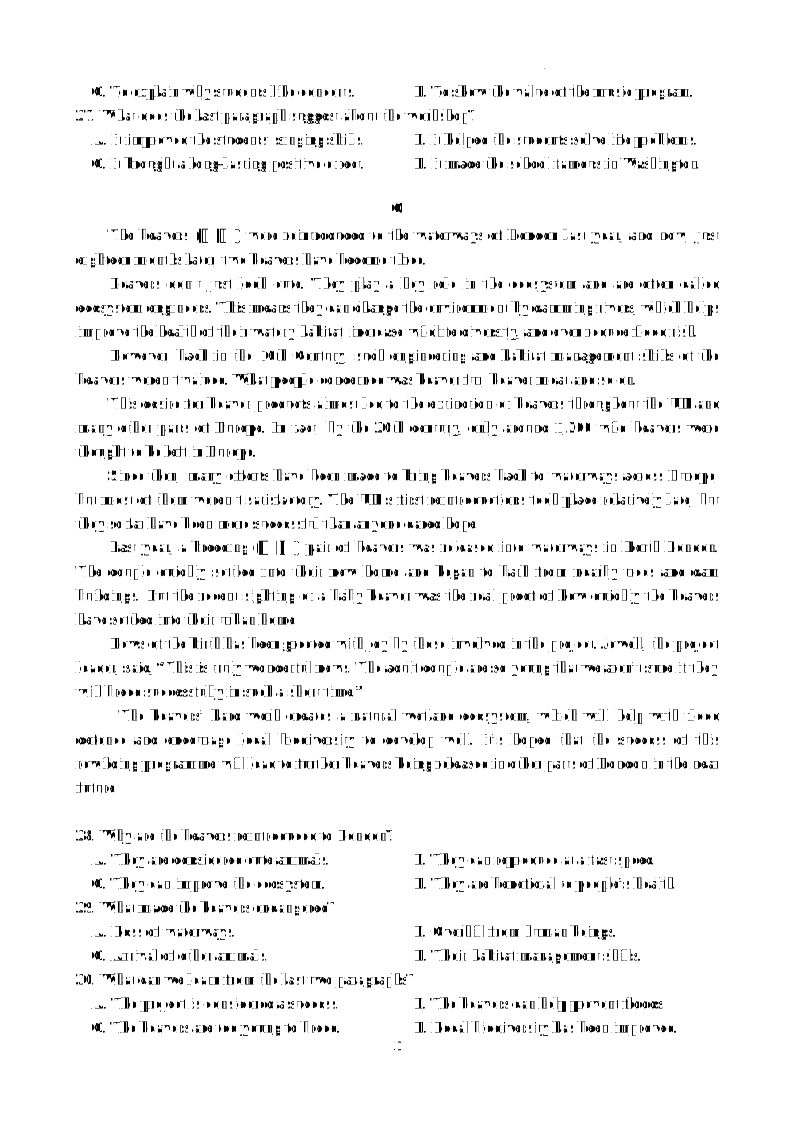
The beavers (海狸) were reintroduced to the waterways of London last year, and now, just eighteen months later, two beavers have become three.
Beavers don’t just look cute. They play a key role in the ecosystem and are often called ecosystem engineers. This means they can change the environment by damming rivers, which helps improve the health of their watery habitat, increase wildlife diversity, and even reduce flood risk.
However, back in the 16th Century, such engineering and habitat management skills of the beavers weren’t valued. What people concerned was beaver fur, beaver meat and so on.
This desire for beaver products almost led to the extinction of beavers throughout the UK and many other parts of Europe. In fact, by the 20th century, only around 1,200 wild beavers were thought to be left in Europe.
Since then, many efforts have been made to bring beavers back to waterways across Europe, but most of them weren’t satisfactory. The UK’s first reintroductions took place relatively late, but they so far have been more successful than anyone dared hope.
Last year, a breeding (繁殖) pair of beavers was released into waterways in North London. The couple quickly settled into their new home and began to bark from nearby trees and dam buildings. But the recent sighting of a baby beaver was the real proof of how quickly the beavers have settled into their urban home.
News of the birth has been greeted with joy by those involved in the project. Jewell, the project leader, said, “This is truly wonderful news. The adult couple are so young that we aren’t sure if they will breed successfully in such a short time.”
The beavers’ hard work creates a natural wetland ecosystem, which will help with flood defence and encourage local biodiversity to develop well. It’s hoped that the success of this rewilding programme will lead to further beavers being released in other parts of London in the near future.
28. Why are the beavers reintroduced to London?
A. They are considered cute animals. B. They can reproduce at a fast speed.
C. They can improve the ecosystem. D. They are beneficial to people’s health.
29. What made the beavers endangered?
A. Loss of waterways. B. Overkill from human beings.
C. Arrival of other animals. D. Their habitat management skills.
30. What can we learn from the last two paragraphs?
A. The project is considered a success. B. The beavers can help prevent floods.
C. The beavers are too young to breed. D. Local biodiversity has been improved.
31. What is the best title of the text?
A. The Story of the Baby Beavers B. The Reintroduction of the Beavers
C. The Capabilities of the Beavers D. The History of the Beaver’s Hunting
D
Do humans need science? In 1989, Nobel Prize winner Max Perutz raised this question in an article, and his answer was yes. But if he had seen the rapid development of today’s artificial intelligence (AI), he might have asked another question: Does science still need humans?
Two recent studies published in Nature have shown a major step toward AI-driven discovery. In one study, an AI system called Robin searched literature, formed hypotheses (假设), and designed experiments to find a new way to treat an eye disease. Human researchers finished lab work and sent the results back to Robin. The research team said Robin made the research 200 times faster than before.
In another study, Google’s AI system, called Co-Scientist, searched for existing drugs to treat a blood cancer. It also solved a ten-year-old puzzle: why many bacteria share the same antibiotic-resistance genes (抗生素抗性基因). Human scientists had worked on it for a decade without clear results, but Co-Scientist found the answer in just a few days.
The powerful ability of AI is truly amazing. However, the AI systems were not working alone. In both cases, humans set research goals, did experiments, offered professional guidance and checked all the work done by AI.
Will AI take the place of human scientists in the future? The answer is probably no. Humans are still needed to catch AI’s mistakes and hallucinations — a phenomenon that could lead to completely wrong research results if not carefully checked. More importantly, human curiosity, creativity, and moral judgment have driven countless discoveries. AI may offer greater speed, but speed does not always mean deeper understanding.
Scientists have different opinions on AI in scientific research. Some researchers see AI as a helpful lab partner that reduces boring work. Others worry that AI might flood science with low-quality results or take away jobs. The key message is this: science still needs humans. Not every research project must include AI, and human wisdom remains essential.
32. Why does the author mention Max Perutz’s question in the first paragraph?
A. To show AI’s rapid progress. B. To stress human scientists’ role.
C. To question traditional science. D. To discuss AI’s impact on science.
33. What can we learn from the two studies?
A. AI speeds up research discoveries. B. Human scientists will face challenges.
C. Human scientists are slower than AI. D. AI can work without human guidance.
34. What does the underlined word “hallucinations” in paragraph 5 mean?
A. Quick answers. B. False information.
C. Confusing data. D. Unreasonable guesses.
35. What is the author’s attitude toward AI in scientific research?
A. Positive. B. Doubtful. C. Objective. D. Unclear.
第二节(共5小题; 每小题2.5分, 满分12.5分)
阅读下面短文, 从短文后的选项中选出可以填入空白处的最佳选项。选项中有两项为多余选项。
Celebrate Family Traditions
Your family may have special traditions, particularly during the time of year as the holidays approach. Whether making cookies or watching a holiday movie, these traditions can help you feel closer to the people you love. 36 Here’s how to get started.
First, think about the traditions your family already has, then write them down. At this time of year, you may have several traditions centered on upcoming holidays, such as making a treasured family recipe or taking a family photo. 37 There can be some they have forgotten but may enjoy reviving (复原).
Next, gather the thoughts you and your family have for new traditions. 38 For instance, you can suggest a special once-a-year outing. Traditions can also be super simple. For example, on Thanksgiving Day, you can round up relatives before dinner to play a family football game, or volunteer at a soup kitchen.
39 Think about who those people are in your family, whether it’s a parent, aunt, uncle, or grandparent. They can help you with creating the “guest list” for any special family gathering, picking a date and time, and choosing the setting.
Celebrating traditions is a great way to create family memories. Consider taking photos while you’re spending time together. Then you can display one to remind your family of the fun you had. After trying a new tradition, take time to reflect on it. Do your family enjoy it? Is there anything that needs improving? If they like it, do it next time. 40
A. Add those ideas to your list.
B. If not, change it to work best for them.
C. Also consider creating new food traditions.
D. There may be some traditions you like to experience again.
E. You can enjoy established traditions or create new ones together.
F. Ask your family elders what traditions they participated in as children.
G. Many families have members loving to organize and bring everyone together.
第三部分 语言运用(共两节, 满分30分)
第一节(共15小题; 每小题1分, 满分15分)
阅读下面短文, 从每题所给的A、B、C、D四个选项中选出最佳选项。
When I was a kid, my grandpa brought me a lovely four-month-old puppy (幼犬). As she jumped into my lap and licked (舔) my face, it was 41 at first sight.
I named the puppy Dusty. From then on, she acted as a school crossing 42 for me. Monday through Friday she’d walk me two 43 to school, looking both ways to check for traffic before 44 me to cross the street.
Late one night, Dusty rushed to my bedroom. She barked and barked. 45 , she failed to fully wake me. Without response, Dusty 46 upstairs to my parents’ bedroom and barked again and again.
“What is it, Dusty?” Mom said, still halfway in dreamland. Seeing her barking 47 , mom followed Dusty to the front door. Soon she 48 what Dusty already had found. The house across the street—where my best friend Marianne lived—was on 49 .
My mother 50 the fire department immediately. Soon the 51 arrived at the scene, 52 the fire and saved my best friend’s family from harm and their house from total ruin.
My mother refused to take 53 . “It was Dusty,” she told the firefighters. “She 54 them.” I put my arms around my dog’s neck and kissed her. “Thank you for saving Marianne,” I whispered into Dusty’s soft ear. “You’re the 55 dog I’ve ever known.”
41. A. hug B. touch C. joy D. love
42. A. guard B. partner C. teacher D. friend
43. A. meters B. inches C. steps D. blocks
44. A. allowing B. asking C. warning D. advising
45. A. Therefore B. Otherwise C. However D. Besides
46. A. went B. raced C. walked D. climbed
47. A. excitedly B. curiously C. angrily D. anxiously
48. A. discovered B. believed C. confirmed D. recognized
49. A. display B. fire C. sale D. watch
50. A. found B. called C. saw D. shouted
51. A. neighbors B. family C. firemen D. crowd
52. A. lighted up B. turned down C. watched over D. put out
53. A. credit B. charge C. action D. care
54. A. told B. protected C. saved D. barked
55. A. nicest B. bravest C. kindest D. cutest
第二节(共10 小题; 每小题 1.5 分, 满分15分)
阅读下面短文, 在空白处填入 1个适当的单词或括号内单词的正确形式。
As a famous old building inside Beijing Fun, the Quanyechang building complex (劝业场建筑群) reminds people 56 the area’s past. Now modern art and technology are bringing new life to this place.
In recent years, digital technology 57 (use) to create interactive cultural experiences. For example, large screens and projection mapping make old photos and paintings come alive, allowing visitors to experience history in a vivid way. This mix of tradition and innovation has made Beijing Fun a special place 58 East meets West.
The project aims 59 (protect) cultural heritage while attracting young people. Unlike traditional museums, Beijing Fun offers hands-on 60 (activity) and digital shows that encourage visitors to explore and learn. Many young people say they find history much 61 (interesting) when it is presented through technology.
With the help of digital tools, the old building complex has become 62 popular place for both tourists and local residents. It shows that technology can 63 (great) preserve tradition without losing its original charm. As more people visit and share 64 (they) experiences online, Beijing Fun continues to grow in popularity.
In this way, the past and the present come together, 65 (create) a lively cultural space for everyone to enjoy.
第四部分 写作(共两节, 满分40分)
第一节(满分15分)
假定你是李华,你校将举办中国传统文化体验日,想邀请来校交流的英国学生Chris参加。请你写一封邮件,内容包括:
(1) 活动时间与内容;
(2) 欢迎参加。
注意:
(1)词数应为80个左右;
(2)请按如下格式在答题纸的相应位置作答。
Dear Chris,
I’m Li Hua.
Yours,
Li Hua
第二节(满分25分)
阅读下面材料,根据其内容和所给段落开头语续写两段,使之构成一篇完整的短文。
It was another bitterly cold winter in Farmington, Maine. The wind blew snow right into the ten-year-old Chester’s face. He brushed it away and kept on moving forward. He was almost to his favorite skating pond. His older brother Orville and younger sister Emilie followed, the wind hitting their backs. Emilie pulled her wool cap low over her ears. Chester hated wool caps. The wool made his head itch (发痒).
“Let’s hurry before the sun goes down,” Chester said.
The three came upon the shining frozen pond, and they quickly changed into their skates. Chester pushed off the edge gliding (滑行) across the smooth glassy surface in a straight line. Emilie and Orville kept up Chester skating to the center.
It was almost a perfect day. Chester wished it would never end, but the sun was setting, and the temperature was dropping quickly. “I’m so cold. Can we go home?” Emilie called out.
“I think I’ll stay a little longer,” shouted Chester.
“OK, but you better put your cap on. Your big ears are turning red,” Orville joked. “My ears aren’t big, and I’ll be just fine,” Chester replied.
Orville and Emilie started for home while Chester continued to skate. Chester glided back and forth enjoying the peace and quiet of the winter evening. There was only one problem—His big ears were getting cold!
I’d better wear the cap, thought Chester. He put his wool cap on, but almost immediately, his head started itching. There was no way he could wear the cap. He would have to go home now before his ears fell off.
As he walked home, Chester thought to himself, how could I keep my ears from freezing without wearing a wool cap?
Chester always had a good mind for figuring things out. He supposed he got that from his father who was a bridge builder. Chester liked fixing things and created something new. He knew he could think of something to keep his ears warm.
注意:
(1)续写词数应为150个左右;
(2)请按如下格式在答题卡的相应位置作答。
The next day, Chester came up with an idea.
He put them on and ran to the pond excitedly.
1
学科网(北京)股份有限公司
$
资源预览图
1
2
3
相关资源
由于学科网是一个信息分享及获取的平台,不确保部分用户上传资料的 来源及知识产权归属。如您发现相关资料侵犯您的合法权益,请联系学科网,我们核实后将及时进行处理。