期末复习之重点语法:一般将来时、过去时、情态动词must和指示代词进阶练60题(Units 1-3,乱序版)-2025-2026学年六年级英语下学期月考期中期末挑战满分冲刺卷(沪教版五四制)
2026-05-22
|
2份
|
20页
|
494人阅读
|
4人下载
摘要:
**基本信息**
分层进阶式语法专项训练,聚焦一般将来时、过去时、情态动词must及指示代词,60题覆盖基础到综合能力,助力期末针对性突破,提升语言运用与思维辨析能力。
**专项设计**
|模块|题量/典例|题型特征|知识逻辑|
|----|-----------|----------|----------|
|基础入门训练|20题|考查祈使句、指示代词单复数、情态动词must基本问答|从单一语法点识别入手,构建基础概念认知|
|进阶拓展训练|20题|涉及情态动词否定、过去时动词辨析、一般将来时结构|在基础上拓展时态应用场景,强化语法规则迁移|
|能力综合实践|20题|包含if条件句时态、情态动词推测、易混动词(lie/lay)辨析|多知识点融合语境,提升语法综合运用与问题解决能力|
内容正文:
2025-2026学年一线教师制作新教材英语同步精品系列资料,名师遴选!
2025-2026学年一线教师制作新教材英语同步精品系列资料,名师遴选!
学校:___________姓名:___________班级:___________考号:___________
期末复习之重点语法:一般将来时、过去时、情态动词must和指示代词进阶练60题(Units 1-3,乱序版)
说明:此专题分三个难度层次,基础入门训练<进阶拓展训练< 能力综合实践,老师根据学生实际情况进行针对性难度训练。
基础入门训练20题
1.Please ________ your hands before you eat lunch.
A.wash B.washing C.washes D.to wash
【答案】A
【详解】句意:请在吃午饭前洗手。考查祈使句中动词的形式。
根据“Please”可知本句是祈使句,动词应用原形。
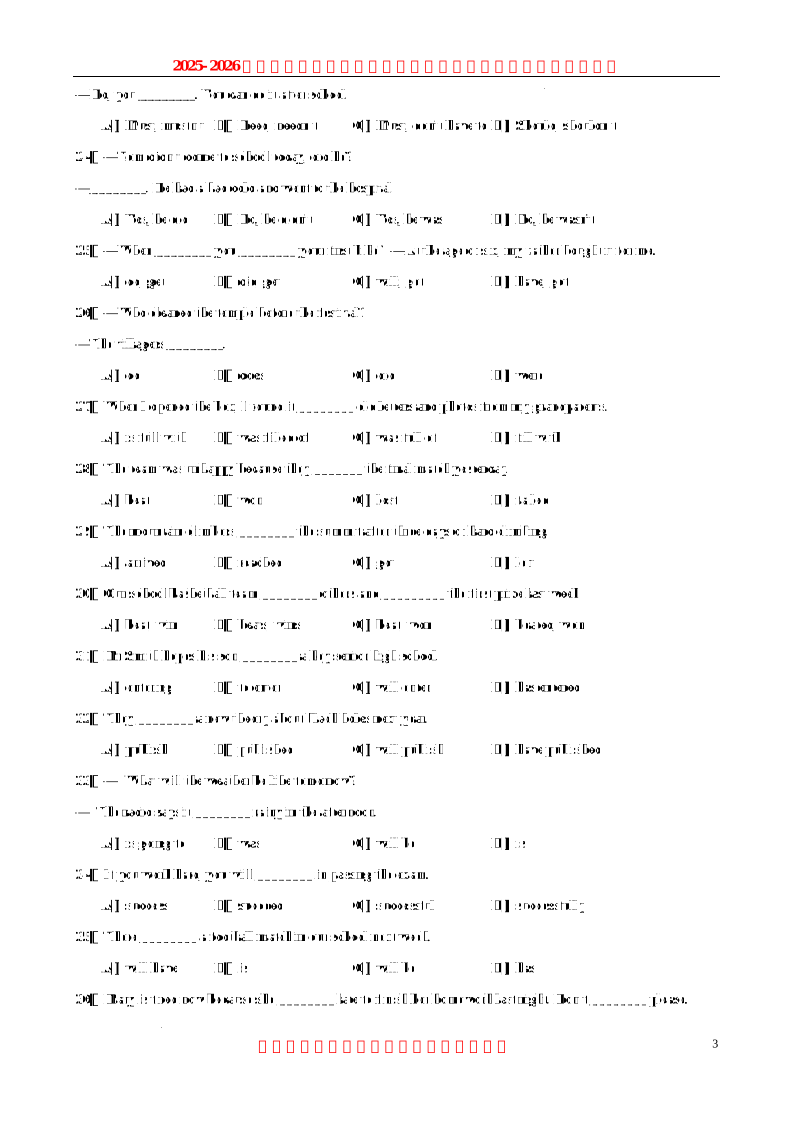
2.—Are these his pens?
—________. They’re my pens.
A.Yes, these are B.Yes, they are C.No, they aren’t D.No, it isn’t
【答案】C
【详解】句意:——这些是他的钢笔吗?——不,它们不是。它们是我的钢笔。
考查一般疑问句的回答。Yes, these are是的,这些是;Yes, they are是的,它们是;No, they aren’t不,它们不是;No, it isn’t不,它不是。根据“They’re my pens.”可知,应作否定回答,排除A和B;疑问句主语为复数these,回答时需用they指代,而D项中it为单数,不符合复数语境。故选C。
3.—What are ________?
—________ are apple trees.
A.these; They B.this; They C.these; This D.this; These
【答案】A
【详解】句意:——这些是什么?——它们是苹果树。
考查指示代词。these这些;They它们;this这个。第一空,空格处为“are”,主语应用these/they;根据答句中“are apple trees”可知,问句询问“这些是什么”,应用“these”指代近处复数事物;第二空,答句主语指代问句中的“these”,应用“They”代替,保持主谓一致。故选A。
4.Look! ________ is my new pen. ________ are Lily’s pencils.
A.This; That B.That; This C.These; This D.This; These
【答案】D
【详解】句意:看!这是我的新钢笔。这些是莉莉的铅笔。
This指代近处单数事物,后接单数动词;That指代远处单数事物,后接单数动词;These指代近处复数事物,后接复数动词。第一空后be动词为is,是单数,排除C选项;第二空后be动词为are,是复数,排除A和B选项,应填This;These。
5.—Let’s sing an English song here.
—________that. Please keep quiet.
A.Do B.Don’t do C.Doing D.Does
【答案】B
【详解】句意:——让我们在这里唱一首英文歌吧。——不要那样做。请保持安静。
Do助动词,用于肯定祈使句;Don’t do不要做,用于否定祈使句;Doing动名词/现在分词;Does助动词,用于第三人称单数。根据“Please keep quiet”可知,此处是阻止对方唱歌,应用否定祈使句“Don’t do that”。应填Don’t do。
6.________ more exercise, and you’ll be healthier.
A.Taking B.To take C.Take D.Takes
【答案】C
【详解】句意:多锻炼,你就会更健康。
“Take exercise”是固定搭配,此句是“祈使句+and+陈述句”结构,祈使句部分用动词原形开头,应填Take。
7.—________ I finish my homework before I watch TV?
—Yes, you must. It’s a family rule.
A.Must B.Can C.May D.Would
【答案】A
【详解】句意:——我必须在看电视之前完成作业吗?——是的,你必须。这是家规。
Must必须;Can能,可以;May可以,可能;Would将会,愿意。根据答语“Yes, you must.”可知,问句是询问是否必须做某事,应该用Must引导一般疑问句。
8.Many soldiers ________ their lives in the war, but we will always remember them.
A.lost B.lose C.have lost D.were losing
【答案】A
【详解】句意:许多士兵在战争中牺牲了,但我们将永远铭记他们。
根据“in the war”可知,战争发生在过去,士兵牺牲是过去发生的事实,应用一般过去时。
9.First, ________ the eggs with chopsticks in a bowl.
A.beat B.beating C.beaten D.to beat
【答案】A
【详解】句意:首先,用筷子在碗里打鸡蛋。
考查祈使句的用法。根据“...the eggs with chopsticks in a bowl.”可知,本句是说明操作步骤的祈使句,祈使句通常以动词原形开头,用于表达命令、步骤等;beat“打”,动词原形,符合语境。故选A。
10.________ swimming in the river. It’s dangerous.
A.Don’t go B.Go C.Goes D.To go
【答案】A
【详解】句意:不要在河里游泳。这很危险。
考查祈使句的否定形式。根据“swimming in the river.”可知,需用否定祈使句表达警告,Don’t +动词原形,故选A。
11.It’s 12 o’clock. Please ________ our lunch.
A.ordering B.order C.to order D.orders
【答案】B
【详解】句意:现在是12点,请点我们的午餐。
考查祈使句的用法。ordering点餐,现在分词/动名词;order点餐,动词原形;to order点餐,动词不定式;orders点餐,第三人称单数形式。根据题意可知,本句是以“Please”开头的祈使句,表示请求或命令,动词要用原形。故选B。
12.Tina, ________ in the classroom.
A.don’t talk B.doesn’t talk C.not talk D.talks
【答案】A
【详解】句意:蒂娜,不要在教室里说话。
考查祈使句的否定形式。don’t talk不要说话,动词原形;doesn’t talk不谈话,第三人称单数;not talk不是单词的正确形式;talks谈话,第三人称单数。题干以“Tina”开头,后接逗号,表示对Tina的直接命令或提醒,应使用祈使句的否定结构“Don’t+动词原形”。故选A。
13.Peter: Mum and Dad, ________ is my new classmate, Yaming. Yaming, ________ are my parents.
Peter’s parents: Nice to meet you.
A.that; they B.this; these C.he; they D.he; those
【答案】B
【详解】句意:彼得:爸爸妈妈,这是我的新同学,亚明。亚明,这是我的父母。彼得的父母:很高兴认识你。
考查代词辨析。this这个;that那个;they他们/她们/它们;these这些;he他;those那些。第一个空介绍近处一个人,用this表示“这位”;第二个空介绍近处的复数人(父母),用these。故选B。
14.Peter, ________ my aunt and ________ are my cousins.
A.this; those B.that’s; those C.that’s; this D.here is; that
【答案】B
【详解】句意:彼得,这是我的阿姨,那些人是我的表亲。
考查指示代词和主谓一致。this这个;those那些;that’s那是;here is这是;that那。根据“are my cousins”可知,第二空应是复数形式,应用those,排除C、D;根据“my aunt”可知,第一空指人,且是单数形式,应用this或that,句中少be动词,第一空应用that’s,表示“那是”。故选B。
15.The sign says, “No ________ in the underground station.”
A.litter B.litters C.littering D.to litter
【答案】C
【详解】句意:牌子上写着“地铁站内禁止乱扔垃圾。”
litter动词原形;litters第三人称单数;littering动名词或现在分词;to litter动词不定式。公共标识表示“禁止做某事”常用“No+动名词”结构,即No littering。
16.________ sleep too late. It’s not good ________ your health.
A.Not; at B.No; to C.Don’t; for D.Can’t; for
【答案】C
【详解】句意:不要睡得太晚。这对你的健康不好。
at在;to到;for为了。第一空构成否定祈使句,结构为“Don’t+动词原形”;根据“It’s not good...your health.”可知,指对健康不好,固定短语be good for意为“对……有益/有好处”。结合语法规则和句意,第一空用Don’t,第二空用for。
17.Amy, never ________ any sweet food before going to bed.
A.eat B.eats C.eating D.to eat
【答案】A
【详解】句意:艾米,睡前绝对不要吃任何甜食。
根据“never…any sweet food before going to bed.”可知,本句是以Never开头的否定祈使句,后接动词原形eat。
18.________ carefully, please! There is a mistake in your homework.
A.Checks B.Checking C.To check D.Check
【答案】D
【详解】句意:请仔细检查!你的作业中有一个错误。
结合“please”和感叹号可知,此处是祈使句,表示命令或请求,应以动词原形开头。应填Check。
19.We ________ leave cigarette ends in the forest because it may cause fire.
A.mustn’t B.can’t C.shouldn’t D.needn’t
【答案】A
【详解】句意:我们千万不能把烟头丢弃在森林里,因为它可能引起火灾。
mustn’t禁止;can’t不能;shouldn’t不应该;needn’t不必。 根据“because it may cause fire”可知,在森林丢弃烟头会引发火灾,属于危险行为,需要表示严格禁止,mustn’t符合语境。
20.According to the rule, visitors ________ bring their cameras into the museum.
A.won’t B.needn’t C.mustn’t D.don’t
【答案】C
【详解】句意:根据规定,游客禁止携带相机进入博物馆。
won’t将不;needn’t不必;mustn’t禁止;don’t不。根据“According to the rule”可知,此处表示根据规定,游客“禁止”携带相机进入博物馆,mustn’t符合语境。
进阶拓展训练20题
21.After running 1,000 meters, you ________ very tired.
A.must be B.can be C.need be D.may be
【答案】A
【详解】句意:跑完1000米后,你一定非常累。
must be一定是;can be可能是;need be需要是;may be也许是。根据“After running 1,000 meters”这个语境,跑完1000米是很耗费体力的事,由此可以做出肯定的推测,应填must be。
22.Students ________ bring mobile phones to school according to the new rule.
A.mustn’t B.don’t have to C.needn’t D.wouldn’t
【答案】A
【详解】句意:根据新规定,学生禁止带手机到学校。
mustn’t禁止、不允许;don’t have to不必;needn’t不必;wouldn’t不愿意。根据句中according to the new rule可知,此处表示一种强制性的禁止规定,应填mustn’t。
23.—________ we clean the classroom now?
—No, you ________. You can do it after school.
A.Must; mustn’t B.Need; needn’t C.Must; don’t have to D.Should; shouldn’t
【答案】C
【详解】句意:——我们必须现在打扫教室吗?——不,你们不必。可以放学后再打扫。
Must必须,Need需要,Should应该,mustn’t禁止,needn’t不必,don’t have to不必,shouldn’t不应该。第一空根据语境是询问“我们现在必须打扫教室吗”,用Must提问;第二空根据“You can do it after school”可知回答是“不必”,must提问的否定回答用don’t have to或needn’t,mustn’t表示禁止。故Must; don’t have to符合语境。
24.—Tom didn’t come to school today, did he?
—________. He had a bad cold and went to the hospital.
A.Yes, he did B.No, he didn’t C.Yes, he was D.No, he wasn’t
【答案】B
【详解】句意:——汤姆今天没来上学,是吗?——不,他没来。他得了重感冒,去医院了。
反意疑问句的回答根据实际情况而定,根据“He had a bad cold and went to the hospital.”可知,汤姆没来上学是事实,所以回答是否定的,即“No, he didn’t”,意思是“不,他没来”。
25.—When ________ you ________ your first bike? —At the age of six, my father bought it for me.
A.do; get B.did; get C.will; get D.have; got
【答案】B
【详解】句意:——你什么时候得到你的第一辆自行车?——六岁的时候,我爸爸给我买的。
根据答语“At the age of six”以及“bought”可知,动作发生在过去,应用一般过去时。特殊疑问句结构为“疑问词+did+主语+动词原形”,因此用did;get。
26.—Who cleaned the temple before the festival?
—The villagers ________.
A.do B.does C.did D.were
【答案】C
【详解】句意:——节日前谁打扫了寺庙?——村民们打扫了。
根据问句中谓语动词“cleaned”可知,句子是一般过去时,答语为了避免重复,用助动词did代替cleaned the temple before the festival。
27.When I opened the box, I found it ________ old letters and photos from my grandparents.
A.is full with B.was filled of C.was full of D.fill with
【答案】C
【详解】句意:当我打开盒子时,我发现里面装满了我祖父母的旧信和照片。
“be full of”和“be filled with”都表示“充满”,是固定短语;found后是宾语从句,从句中主语是it,此处描述打开盒子时看到的情景,用一般过去时,be动词用was,所以用“was full of”。
28.The team was unhappy because they _______ the final match yesterday.
A.beat B.won C.lost D.failed
【答案】C
【详解】句意: 这个队伍很不高兴,因为他们昨天输掉了决赛。
beat打;won赢得;lost失去;failed失败。C选项“lost”,意为“输掉”,输掉比赛会导致不开心,符合语境。
29.The mountain climbers ________ the summit after three days of hard climbing.
A.arrived B.reached C.got D.left
【答案】B
【详解】句意:登山者经过三天艰难的攀登后到达了山顶。
arrived到达,是不及物动词,后面接地点要加介词in/at;reached到达,是及物动词,后面可直接接地点名词;got到达,常用get to加地点;left离开。空格后直接接地点the summit,reach是及物动词,可直接接宾语the summit。应填reached。
30.Our school basketball team ________ others and _________ the first prize last week.
A.beat; win B.beats; wins C.beat; won D.beated; won
【答案】C
【详解】句意:上周我们学校的篮球队击败了其他队伍并赢得了一等奖。
时间状语“last week”表示过去,需用一般过去时;第一空后接对手“others”,用beat;第二空后接奖项“the first prize”,用won。
31.Mr Smith hopes his son ________ a key senior high school.
A.entering B.to enter C.will enter D.has entered
【答案】C
【详解】句意:史密斯先生希望他的儿子将进入一所重点高中。
hope后接宾语从句。根据句意可知,“进入高中”是将来发生的事情,从句应用一般将来时。故选C。
32.They ________ a new theory about black holes next year.
A.publish B.published C.will publish D.have published
【答案】C
【详解】句意:他们明年将发表关于黑洞的新理论。
根据时间状语“next year”可知,动作发生在将来,应用一般将来时,结构为:will+动词原形,应填will publish。
33.— What will the weather be like tomorrow?
— The radio says it ________ rainy in the afternoon.
A.is going to B.was C.will be D.is
【答案】C
【详解】句意:——明天的天气将会怎么样?——收音机说下午将会是下雨的。
问句询问“明天”的天气,答句描述将来的天气情况,应用一般将来时will be。is going to也可表将来,但后面需接动词原形。
34.If you work hard, you will ________ in passing the exam.
A.success B.succeed C.successful D.successfully
【答案】B
【详解】句意:如果你努力学习,你就会成功通过考试。
success成功(名词);succeed成功(动词);successful成功的(形容词);successfully成功地(副词)。根据句子结构,空格处需要填入动词原形与will构成将来时。succeed in doing sth.“成功做某事”,是固定短语。故选B。
35.There ________ a football match in our school next week.
A.will have B.is C.will be D.has
【答案】C
【详解】句意:下周在我们学校将有一场足球比赛。
此句为there be句型,表示“存在”,不能与have/has连用;根据时间状语“next week” 可知,句子要用一般将来时,结构为there will be。空处填will be。
36.Mary is tired now because she ________ late to finish her homework last night. Don’t ________ please.
A.stays up; wake up her B.stays up; wake her up
C.stayed up; wake her up D.stayed up; woke her up
【答案】C
【详解】句意:玛丽现在很累,因为她昨晚熬夜完成了她的家庭作业。请不要叫醒她。
考查动词短语、时态和祈使句。stays up熬夜,stays是动词三单形式;stayed up熬夜,stayed是动词过去式;wake up叫醒,wake是动词原形;woke up叫醒,woke是动词过去式。第一空,根据“last night”可知,时态为一般过去时,所以填stayed up,排除A项和B项;第二空,根据“Don’t”可知,此处是否定祈使句,Don’t后接动词原形,排除D项。故选C。
37.________ as many English books as possible, and you ________ great progress in English.
A.Reading; will make B.Read; make
C.Reading; make D.Read; will make
【答案】D
【详解】句意:尽可能多地读英语书,你会在英语上取得巨大进步。
考查句子结构。根据“... as many English books as possible, and you... great progress in English.”可知,第一个空需用动词原形构成祈使句;第二个空需用将来时表示结果。故选D。
38.What ________ it is to go surfing in ________ weather
A.great fun; so fine B.a great fun; such a fine
C.great fun; such fine D.great fun; such a fine
【答案】C
【详解】句意:在这么好的天气里去冲浪是多么有趣啊!
考查不可数名词和such/so的用法。fun是不可数名词,不能用a修饰,所以排除B。weather也是不可数名词,不能用a修饰,所以排除D。so用来修饰形容词或副词,such用来修饰名词短语,fine weather是名词短语,所以用such,排除A。故选C。
39.Why not ________ a boat trip along the nearby Qinhuai River to enjoy the ________ feel ?
A.taking, old-time B.take, first-time
C.to take, old-time D.take, old-time
【答案】D
【详解】句意:为什么不乘船沿着附近的秦淮河旅行,享受一下古老的感觉呢?
根据“Why not”可知,why not后接动词原形,表示“为什么不……”,因此第一空应填take;根据“feel”可知,第二空需要一个形容词来修饰名词,old-time“古老的”,符合语境,first-time通常用来描述某事物是第一次发生或存在的,不符合语境。应填take;old-time。
40.—________ late for the meeting next time!
—Sorry, I won’t.
A.Not be B.Don’t be C.Be not D.No be
【答案】B
【详解】句意:——下次开会不要迟到了!——对不起,我不会了。
根据答语“Sorry, I won’t.”可知,上句是提醒对方下次不要迟到,是否定祈使句。祈使句的否定结构为“Don’t + 动词原形”。late是形容词,前面需用系动词be,构成短语be late for。
能力综合实践20题
41.—What ________ if we can’t reach an agreement on the team logo?
—We can ask our teacher for advice.
A.happen B.happens C.will happen D.happened
【答案】C
【详解】句意:——如果我们在团队标志上无法达成一致会发生什么?——我们可以向老师寻求建议。
根据“if we can’t reach an agreement on the team logo”可知,此句为if引导的条件状语从句,遵循“主将从现”原则,即主句用一般将来时,从句用一般现在时,所以第一空应该用一般将来时,结构为“will+动词原形”,应填will happen。
42.The power station ________ electricity for the whole city in two years.
A.provides B.provided C.will provide D.has provided
【答案】C
【详解】句意:这座发电站将两年后为整个城市提供电力。
根据时间状语“in two years”可知,句子表示将来发生的动作,应用一般将来时。
43. —________ I swim here?
—I’m sorry. Children _______ swim alone here.
A.Must , can’t B.May , must C.Can, mustn’t D.Can’t can
【答案】C
【详解】难度适中,must是必须,may是可能,can可能,can的意图更大一些,这里问我是否能再这里游泳,应该用can,借东西一般用may,答句是很严肃的说法,应该用must,答案选C。
44.— I went to Mount Wudang with my five friends in one small car last weekend.
— Oh, my God! I think it ________ be an uncomfortable trip.
A.must B.can’t C.may D.shouldn’t
【答案】A
【详解】句意:——上周末我和五个朋友坐一辆小汽车去了武当山。——哦,天哪!我想这一定是一次不舒服的旅行。
考查情态动词。must一定,表示肯定推测(可能性很有把握的推测),语气强烈;can't不可能,表示否定推测;may可能,表示肯定推测(可能性相对must较小),语气比must弱;shouldn't不应该。根据上文“六个人坐一辆小汽车”可以推测“这一定是一次不舒服的旅行”,可能性很大,故选A。
45.—The man in black ________ be your father.
—No, he ________ be my father. My father went to Xi’an last month.
A.must, mustn’t B.can, can’t C.can’t, must D.must, can’t
【答案】D
【详解】句意:——那个穿黑衣服的人一定是你的父亲。 ——不,他不可能是我的父亲。我父亲上个月去了西安。
考查情态动词表示推测。must表推测,只能用于肯定句中,表示很有把握的推测;can表示推测,意为“可能”,一般用于否定句和疑问句中。第一个空表示肯定的推测,用must;根据“My father went to Xi’an last month.”可知,这里表示否定的推测,用can’t。故选D。
46.—_________ I swim here?
—I’m sorry. Children _________ swim alone here. It’s very dangerous.
A.Must; can’t B.May; shouldn’t
C.Can; mustn’t D.Can; needn’t
【答案】C
【详解】句意:——我可以在这里游泳吗?——非常抱歉。孩子禁止独自在这里游泳。非常危险。
考查情态动词。must必须;can’t不能;may可以,表请求;should’t不应该;can可以,表请求;mustn’t禁止;needn’t不必。第一个空根据“I’m sorry.”可知,上文应是表示请求,故排除A;第二个空根据“It’s very dangerous.”可知,这里很危险,故孩子应禁止独自在这里游泳。故选C。
47.—Look at the sleeping dog. Can I pet it now? It _______ be very interesting.
—No, you _________. The sign says “No petting”.
A.can; mustn’t B.can; must
C.must; mustn’t D.must; can
【答案】C
【详解】句意:——看那只正在睡觉的狗。我现在可以摸摸它吗?它一定非常有趣的。——不,你不能。牌子上写着“禁止抚摸”。
考查动词辨析。“must”表示“一定”,肯定猜测,“mustn’t”表示“禁止”;“can”表示“能”。根据“Look at the sleeping dog. Can I pet it now?”及语境可知,空处所在句是肯定句,且是肯定猜测,表示一定会很有趣,结合“No petting”可知,表示禁止抚摸,所以第二空应用mustn’t,故选C。
48.—The weather report says that it _______ tomorrow in most parts of the city.
—If it _______ tomorrow, the school sports meeting will be cancelled(取消).
A.will rain; will rain B.will rain; rains C.rains; will rain D.rains; rains
【答案】B
【详解】句意:——天气预报说,明天该市大部分地区将下雨。——如果明天下雨,学校运动会将取消。
考查时态。第一句为宾语从句,根据“tomorrow”和“主现从不限”的原则可知,从句用一般将来时(will do),排除C和D;第二句是if引导的条件状语从句,根据“主将从现”的原则可知,从句用一般现在时。故选B。
49.Send me an email before you come and I ________ you at the train station.
A.meet B.met C.am meeting D.will meet
【答案】D
【详解】句意:在你来之前给我发封电子邮件,我将会在火车站接你。
考查动词时态。根据句式“祈使句+and/or+陈述句”和句意可知,将去接,后半句为一般将来时。故选D。
50.—If Kate _________ back, tell her to come to my office, please. —OK, I ________.
A.comes; will B.comes; do C.will come; will D.will come; do
【答案】A
【详解】句意:——如果凯特回来,请告诉她来我的办公室。——好的,我会的。
考查时态用法。根据“If Kate”可知,第一空所在句子为条件状语从句;在条件状语从句中,从句用一般现在时表示将来,主语为“Kate”,故动词应用单三形式,即“comes”。根据“OK, I…”可知,是答应之后就告诉她,时态应为一般将来时,结构为will+动词原形,此处省略动词。故选A。
51.LEGOLAND Shanghai Resort is almost here. It ________ visitors this summer.
A.welcome B.welcomed C.will welcome D.has welcomed
【答案】C
【详解】句意:上海乐高乐园度假区即将开业。它将于今年夏天迎接游客。
考查一般将来时。根据“LEGOLAND Shanghai Resort is almost here.”可知,度假区即将开业,this summer“今年夏天”应指将来的时间,句子应用一般将来时,谓语结构为“will+动词原形”。故选C。
52.There ________ school sports events next week.
A.is B.will C.will be D.will have
【答案】C
【详解】句意:下周将会有学校运动会。
考查there be句型的一般将来时用法。根据时间状语“next week”可知,此处应使用一般将来时。there be句型的将来时为“there will be”,表示“将会有”。故选C。
53.The Gumokou museum ________ last week, and thousands of students ________ it already.
A.opened; visited B.has opened; have visited
C.opened; have visited D.has opened; visited
【答案】C
【详解】句意:古莫库博物馆上周刚刚开放,已经有成千上万的学生前来参观了。
考查动词时态。根据last week可知,前半句用一般过去时。根据already可知,后半句用现在完成时have done的结构,故选C。
54.The teachers used to ________ key points on the blackboard, but now they are used to ________ them through PPTs.
A.write; showing B.writing; show C.write; show D.writing; showing
【答案】A
【详解】句意:老师们过去常常在黑板上写重点,但现在他们习惯通过PPT展示重点。
考查固定搭配的辨析。used to do表示“过去常常做某事”,后接动词原形;be used to doing表示“习惯于做某事”,后接动名词。第一空表示“过去写”,用write;第二空表示“现在习惯展示”,用showing。故选A。
55.Lily ________ her shoes, but she didn’t ________ them.
A.looked for; find B.found; look for
C.looked; found out D.found out; looked for
【答案】A
【详解】句意:莉莉寻找她的鞋子,但是她没有找到它们。
look for寻找,侧重寻找的动作,find找到,侧重找的结果,find out查明,侧重查明真相。根据句意,第一空描述寻找的过程,且时态为一般过去时,用looked for;第二空位于助动词didn’t之后,需用动词原形,且描述未找到这一结果,用find。
56.—This smart phone _______ me almost ten thousand yuan but I regret buying it now.
—Why ________ you think twice before you ________ a decision?
A.costs; don’t…make B.costs; did...made C.cost; did...made D.cost; didn’t...made
【答案】D
【详解】句意:——这部智能手机花了我近一万元,但我现在后悔买了它。——你为什么在做决定前不仔细考虑一下?
考查动词时态以及特殊疑问句。根据“but I regret buying it now”可知,“买手机”这个动作发生在过去,第一空应填动词过去式,排除A和B选项。根据“Why … you think twice before you… a decision”可知,此处用why didn’t you do sth的用法,用于提出建议,故选D。
57.Just now a little boy ________ on the ground and ________ to others, “A cock laid an egg.”
A.lied; laid B.lay; lied C.laid; lied D.lay; laid
【答案】B
【详解】句意:刚才,一个小男孩躺在地上对别人撒谎说:“一只公鸡下了一个蛋。”
考查动词的用法。lie意为“躺”时,过去式是lay;lie意为“撒谎”时,过去式是lied;lay“下蛋”,过去式是laid。第一空,根据“on the ground”可知,此处指躺在地上,应用lay;第二空,根据“A cock laid an egg.”可知,公鸡不会下蛋,所以小男孩说谎了,因此第二空应用lied。故选B。
58.It was warm and sunny and the bird ______ down and began to ______ eggs.
A.lied; lay B.lay; laid C.lay; lay D.lay; lie
【答案】C
【详解】句意:天气温暖晴朗,鸟儿躺下开始下蛋。
考查动词辨析和动词形式。lied撒谎,过去式;lay放置,下蛋,动词原形/躺,过去式;laid放置,下蛋,过去式/过去分词;lie撒谎,躺,位于,动词原形。第一空根据“was”可知,句子时态为一般过去时,结合lie down为固定搭配,应填过去式lay,表示“躺下”;第二空根据“begin to do sth”结构可知,空出用动词原形,表示“下蛋”。故选C。
59.When Annie got home, she ________ the bags on the table and then had a rest on the sofa.
A.lied B.found C.laid D.lay
【答案】C
【详解】句意:当安妮到家时,她把包放在桌子上,然后在沙发上休息。
考查动词辨析。lied说谎,lie的过去式;found发现,find的过去式;laid放置,lay的过去式;lay躺,是lie的过去式。根据“the bags on the table”可知,此处表示把包放在桌子上,应该用laid。故选C。
60.On the Dragon Boat Festival, my mother cooked delicious zongzi and ________ them on the plate.
A.laid B.lay C.lain D.lays
【答案】A
【详解】句意:端午节那天,我妈妈做了美味的粽子,然后把它们摆放在盘子里。
考查动词时态及词义辨析。laid放置(lay的过去式);lay躺(过去式)/放置(原形);lain躺(lie的过去分词);lays放置(第三人称单数形式)。根据“cooked”可知,句子是一般过去时,此处需用“放置”的过去式laid。故选A。
8
同步新教材,周周有练习,月月有重点!
13
同步新教材,周周有练习,月月有重点!
学科网(北京)股份有限公司
$
2025-2026学年一线教师制作新教材英语同步精品系列资料,名师遴选!
2025-2026学年一线教师制作新教材英语同步精品系列资料,名师遴选!
学校:___________姓名:___________班级:___________考号:___________
期末复习之重点语法:一般将来时、过去时、情态动词must和指示代词进阶练60题(Units 1-3,乱序版)
说明:此专题分三个难度层次,基础入门训练<进阶拓展训练< 能力综合实践,老师根据学生实际情况进行针对性难度训练。
基础入门训练20题
1.Please ________ your hands before you eat lunch.
A.wash B.washing C.washes D.to wash
2.—Are these his pens?
—________. They’re my pens.
A.Yes, these are B.Yes, they are C.No, they aren’t D.No, it isn’t
3.—What are ________?
—________ are apple trees.
A.these; They B.this; They C.these; This D.this; These
4.Look! ________ is my new pen. ________ are Lily’s pencils.
A.This; That B.That; This C.These; This D.This; These
5.—Let’s sing an English song here.
—________that. Please keep quiet.
A.Do B.Don’t do C.Doing D.Does
6.________ more exercise, and you’ll be healthier.
A.Taking B.To take C.Take D.Takes
7.—________ I finish my homework before I watch TV?
—Yes, you must. It’s a family rule.
A.Must B.Can C.May D.Would
8.Many soldiers ________ their lives in the war, but we will always remember them.
A.lost B.lose C.have lost D.were losing
9.First, ________ the eggs with chopsticks in a bowl.
A.beat B.beating C.beaten D.to beat
10.________ swimming in the river. It’s dangerous.
A.Don’t go B.Go C.Goes D.To go
11.It’s 12 o’clock. Please ________ our lunch.
A.ordering B.order C.to order D.orders
12.Tina, ________ in the classroom.
A.don’t talk B.doesn’t talk C.not talk D.talks
13.Peter: Mum and Dad, ________ is my new classmate, Yaming. Yaming, ________ are my parents.
Peter’s parents: Nice to meet you.
A.that; they B.this; these C.he; they D.he; those
14.Peter, ________ my aunt and ________ are my cousins.
A.this; those B.that’s; those C.that’s; this D.here is; that
15.The sign says, “No ________ in the underground station.”
A.litter B.litters C.littering D.to litter
16.________ sleep too late. It’s not good ________ your health.
A.Not; at B.No; to C.Don’t; for D.Can’t; for
17.Amy, never ________ any sweet food before going to bed.
A.eat B.eats C.eating D.to eat
18.________ carefully, please! There is a mistake in your homework.
A.Checks B.Checking C.To check D.Check
19.We ________ leave cigarette ends in the forest because it may cause fire.
A.mustn’t B.can’t C.shouldn’t D.needn’t
20.According to the rule, visitors ________ bring their cameras into the museum.
A.won’t B.needn’t C.mustn’t D.don’t
进阶拓展训练20题
21.After running 1,000 meters, you ________ very tired.
A.must be B.can be C.need be D.may be
22.Students ________ bring mobile phones to school according to the new rule.
A.mustn’t B.don’t have to C.needn’t D.wouldn’t
23.—________ we clean the classroom now?
—No, you ________. You can do it after school.
A.Must; mustn’t B.Need; needn’t C.Must; don’t have to D.Should; shouldn’t
24.—Tom didn’t come to school today, did he?
—________. He had a bad cold and went to the hospital.
A.Yes, he did B.No, he didn’t C.Yes, he was D.No, he wasn’t
25.—When ________ you ________ your first bike? —At the age of six, my father bought it for me.
A.do; get B.did; get C.will; get D.have; got
26.—Who cleaned the temple before the festival?
—The villagers ________.
A.do B.does C.did D.were
27.When I opened the box, I found it ________ old letters and photos from my grandparents.
A.is full with B.was filled of C.was full of D.fill with
28.The team was unhappy because they _______ the final match yesterday.
A.beat B.won C.lost D.failed
29.The mountain climbers ________ the summit after three days of hard climbing.
A.arrived B.reached C.got D.left
30.Our school basketball team ________ others and _________ the first prize last week.
A.beat; win B.beats; wins C.beat; won D.beated; won
31.Mr Smith hopes his son ________ a key senior high school.
A.entering B.to enter C.will enter D.has entered
32.They ________ a new theory about black holes next year.
A.publish B.published C.will publish D.have published
33.— What will the weather be like tomorrow?
— The radio says it ________ rainy in the afternoon.
A.is going to B.was C.will be D.is
34.If you work hard, you will ________ in passing the exam.
A.success B.succeed C.successful D.successfully
35.There ________ a football match in our school next week.
A.will have B.is C.will be D.has
36.Mary is tired now because she ________ late to finish her homework last night. Don’t ________ please.
A.stays up; wake up her B.stays up; wake her up
C.stayed up; wake her up D.stayed up; woke her up
37.________ as many English books as possible, and you ________ great progress in English.
A.Reading; will make B.Read; make
C.Reading; make D.Read; will make
38.What ________ it is to go surfing in ________ weather
A.great fun; so fine B.a great fun; such a fine
C.great fun; such fine D.great fun; such a fine
39.Why not ________ a boat trip along the nearby Qinhuai River to enjoy the ________ feel ?
A.taking, old-time B.take, first-time
C.to take, old-time D.take, old-time
40.—________ late for the meeting next time!
—Sorry, I won’t.
A.Not be B.Don’t be C.Be not D.No be
能力综合实践20题
41.—What ________ if we can’t reach an agreement on the team logo?
—We can ask our teacher for advice.
A.happen B.happens C.will happen D.happened
42.The power station ________ electricity for the whole city in two years.
A.provides B.provided C.will provide D.has provided
43. —________ I swim here?
—I’m sorry. Children _______ swim alone here.
A.Must , can’t B.May , must C.Can, mustn’t D.Can’t can
44.— I went to Mount Wudang with my five friends in one small car last weekend.
— Oh, my God! I think it ________ be an uncomfortable trip.
A.must B.can’t C.may D.shouldn’t
45.—The man in black ________ be your father.
—No, he ________ be my father. My father went to Xi’an last month.
A.must, mustn’t B.can, can’t C.can’t, must D.must, can’t
46.—_________ I swim here?
—I’m sorry. Children _________ swim alone here. It’s very dangerous.
A.Must; can’t B.May; shouldn’t
C.Can; mustn’t D.Can; needn’t
47.—Look at the sleeping dog. Can I pet it now? It _______ be very interesting.
—No, you _________. The sign says “No petting”.
A.can; mustn’t B.can; must
C.must; mustn’t D.must; can
48.—The weather report says that it _______ tomorrow in most parts of the city.
—If it _______ tomorrow, the school sports meeting will be cancelled(取消).
A.will rain; will rain B.will rain; rains C.rains; will rain D.rains; rains
49.Send me an email before you come and I ________ you at the train station.
A.meet B.met C.am meeting D.will meet
50.—If Kate _________ back, tell her to come to my office, please. —OK, I ________.
A.comes; will B.comes; do C.will come; will D.will come; do
51.LEGOLAND Shanghai Resort is almost here. It ________ visitors this summer.
A.welcome B.welcomed C.will welcome D.has welcomed
52.There ________ school sports events next week.
A.is B.will C.will be D.will have
53.The Gumokou museum ________ last week, and thousands of students ________ it already.
A.opened; visited B.has opened; have visited
C.opened; have visited D.has opened; visited
54.The teachers used to ________ key points on the blackboard, but now they are used to ________ them through PPTs.
A.write; showing B.writing; show C.write; show D.writing; showing
55.Lily ________ her shoes, but she didn’t ________ them.
A.looked for; find B.found; look for
C.looked; found out D.found out; looked for
56.—This smart phone _______ me almost ten thousand yuan but I regret buying it now.
—Why ________ you think twice before you ________ a decision?
A.costs; don’t…make B.costs; did...made C.cost; did...made D.cost; didn’t...made
57.Just now a little boy ________ on the ground and ________ to others, “A cock laid an egg.”
A.lied; laid B.lay; lied C.laid; lied D.lay; laid
58.It was warm and sunny and the bird ______ down and began to ______ eggs.
A.lied; lay B.lay; laid C.lay; lay D.lay; lie
59.When Annie got home, she ________ the bags on the table and then had a rest on the sofa.
A.lied B.found C.laid D.lay
60.On the Dragon Boat Festival, my mother cooked delicious zongzi and ________ them on the plate.
A.laid B.lay C.lain D.lays
2
同步新教材,周周有练习,月月有重点!
5
同步新教材,周周有练习,月月有重点!
学科网(北京)股份有限公司
$
资源预览图

1

2
3

相关资源
示范课
由于学科网是一个信息分享及获取的平台,不确保部分用户上传资料的 来源及知识产权归属。如您发现相关资料侵犯您的合法权益,请联系学科网,我们核实后将及时进行处理。