5月第三次月考复习Units 5~6之词性转换,重点单词,短语,语法,句型练习-2025-2026学年八年级英语下册(人教版)
2026-05-21
|
2份
|
10页
|
560人阅读
|
8人下载

资源信息
| 学段 | 初中 |
|---|---|
| 学科 | 英语 |
| 教材版本 | 初中英语人教版八年级下册 |
| 年级 | 八年级 |
| 章节 | Unit 5 Nature's Temper,Unit 6 Crossing Cultures |
| 类型 | 题集-专项训练 |
| 知识点 | - |
| 使用场景 | 同步教学-阶段检测 |
| 学年 | 2026-2027 |
| 地区(省份) | 全国 |
| 地区(市) | - |
| 地区(区县) | - |
| 文件格式 | ZIP |
| 文件大小 | 75 KB |
| 发布时间 | 2026-05-21 |
| 更新时间 | 2026-05-21 |
| 作者 | 初高中英语资料大全 |
| 品牌系列 | - |
| 审核时间 | 2026-05-21 |
| 下载链接 | https://m.zxxk.com/soft/57967169.html |
| 价格 | 3.00储值(1储值=1元) |
| 来源 | 学科网 |
摘要:
**基本信息**
聚焦Units 5-6核心词汇与句型,通过分层默写与语境应用训练,构建“词汇-短语-句型”递进式知识逻辑,强化语言能力与学习能力。
**专项设计**
|模块|题量/典例|题型特征|知识逻辑|
|----|-----------|----------|----------|
|单元知识点默写|Unit 5/6各含30+单词、10短语默写|分词性转换、单词、短语三层,聚焦自然灾害与文化礼仪主题词汇|从构词法(如名词-tion/副词-ly)到主题词汇积累,形成基础词汇网络|
|单元知识点习题训练|40词形填空+40单词拼写+20完成句子|词形填空考语法应用,拼写考汉译英/首字母提示,句子考短语句型综合运用|从词汇变形到语境应用,实现“基础记忆-语法转换-语用表达”能力进阶|
内容正文:
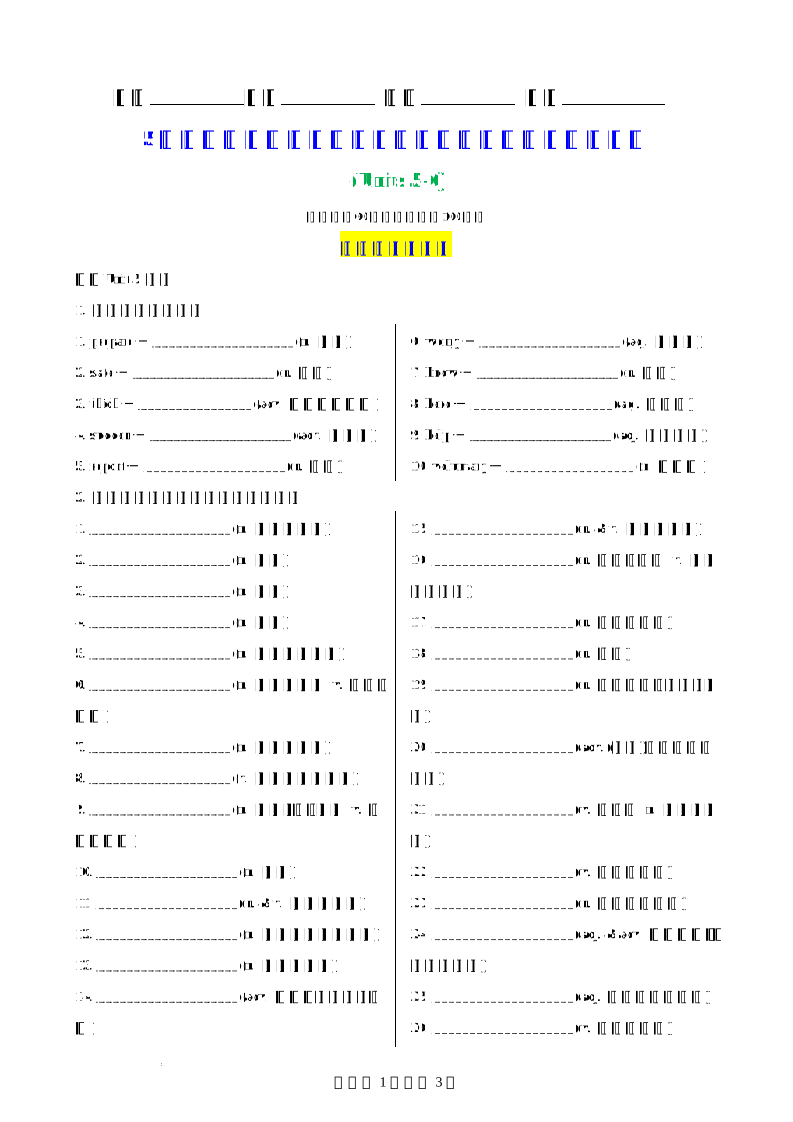
班级 姓名 学号 分数
5月第三次月考复习之重点单词变形短语语法句型练习
(Units 5-6)
(时间:60分钟,满分:100分)
单元知识点默写
一、Unit 5 专项
1. 重点单词词性转换
试卷第1页,共3页
试卷第1页,共3页
学科网(北京)股份有限公司
学科网(北京)股份有限公司
1. prepare → ____________________ (n. 准备)
2. safe → ____________________ (n. 安全)
3. thick → ________________ (adv. 厚地;浓密地)
4. sudden → ____________________ (adv. 突然地)
5. report → ____________________ (n. 记者)
6. worry → ____________________ (adj. 担心的)
7. know → ____________________ (n. 知识)
8. hero → ____________________ (adj. 英雄的)
9. help → ____________________ (adj. 有帮助的)
10. voluntary → __________________ (n. 志愿者)
2. 重点单词默写(不含词性转换词)
1. ____________________ (n. 脾气;怒气)
2. ____________________ (n. 地震)
3. ____________________ (n. 台风)
4. ____________________ (n. 野火)
5. ____________________ (n. 雪暴;暴风雪)
6. ____________________ (n. 水灾;洪水 v. 泛滥;淹没)
7. ____________________ (n. 旱灾;干旱)
8. ____________________ (v. 警告;提醒注意)
9. ____________________ (n. 波浪;波;挥手 v. 挥手;挥舞)
10. ____________________ (n. 海啸)
11. ____________________ (n. & v. 采访;面试)
12. ____________________ (n. 街区;临近的地方)
13. ____________________ (n. 屋顶;顶部)
14. ____________________ (adv. 几乎;差不多;将近)
15. ____________________ (n. & v. 报道;汇报)
16. ____________________ (n. 苦恼;困难 v. 使忧虑;麻烦)
17. ____________________ (n. 亲戚;亲属)
18. ____________________ (n. 卡车)
19. ____________________ (n. 电力供应;能量;力量)
20. ____________________ (adv. (睡觉)酣畅地;可靠地)
21. ____________________ (v. 敲;打 n. 敲击;跳动)
22. ____________________ (v. 躲藏;隐藏)
23. ____________________ (n. 龙卷风;旋风)
24. ____________________ (adj. & adv. 最坏(的);最糟(的))
25. ____________________ (adj. 不幸地;可惜地)
26. ____________________ (v. 拒绝;退却)
27. ____________________ (n. 卫兵;保卫 v. 保卫)
28. _________________ (adj. 附近的 adv. 在附近)
29. ____________________ (v. 尖叫)
30. ____________________ (adv. 幸亏;感激地)
31. ____________________ (n. 思考;想法)
32. ____________________ (n. 英雄;男主角;偶像)
33. ____________________ (n. 滑坡;塌方)
34. ____________________ (v. 保护;捍卫)
35. ____________________ (n. 洪水)
36. ____________________ (n. 心跳(声))
37. ____________________ (n. & v. 救援;营救)
38. ____________________ (n. 热浪)
39. ____________________ (adj. 西南的;西南方的)
40. ____________________ (n. 消防队员)
3. 短语默写(10个)
1. ____________________ 做家务
2. ____________________ (使)慢下来;(使)减速
3. ____________________ (从某物上) 脱落;掉落
4. ____________________ 作准备
5. ____________________ 一……就……
6. ____________________ 保安人员
7. ____________________ 非常糟地;非常
8. ____________________ 闹钟
9. ____________________ (警报器等) 发出响声
10. ____________________ 突然;猛地
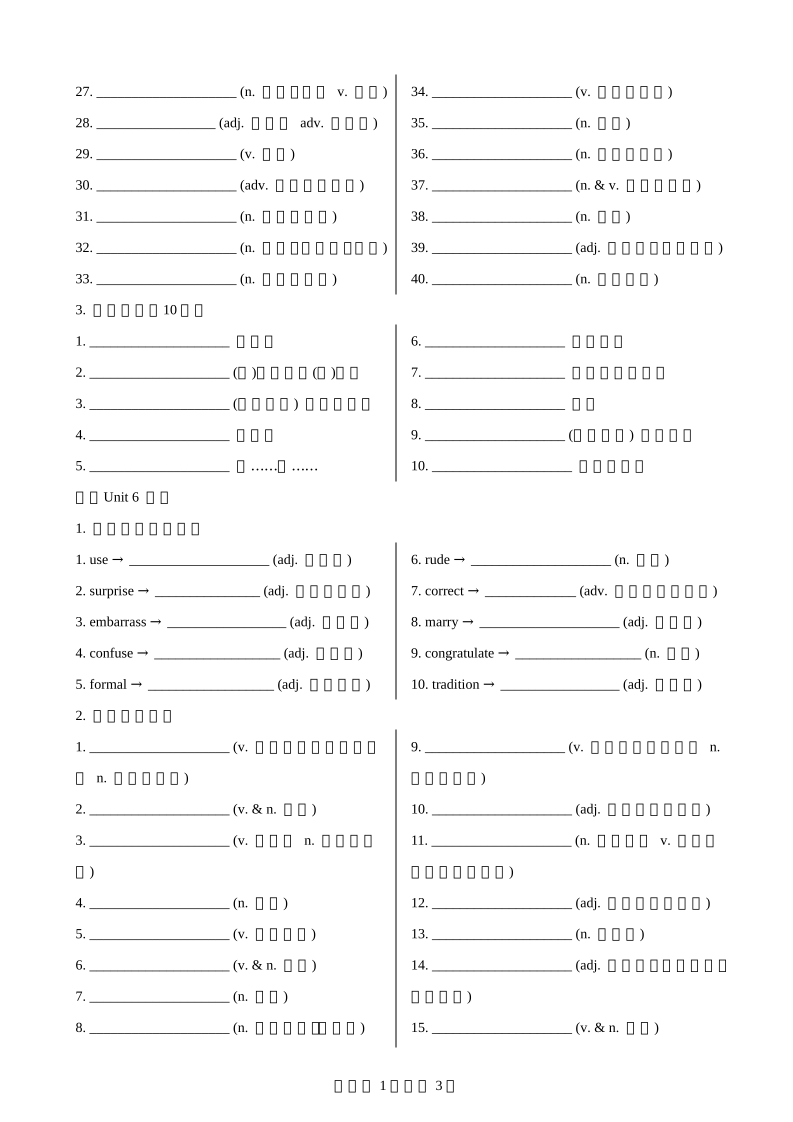
二、Unit 6 专项
1. 重点单词词性转换
1. use → ____________________ (adj. 有用的)
2. surprise → _______________ (adj. 令人惊讶的)
3. embarrass → _________________ (adj. 尴尬的)
4. confuse → __________________ (adj. 困惑的)
5. formal → __________________ (adj. 非正式的)
6. rude → ____________________ (n. 粗鲁)
7. correct → _____________ (adv. 正确地;恰当地)
8. marry → ____________________ (adj. 已婚的)
9. congratulate → __________________ (n. 祝贺)
10. tradition → _________________ (adj. 传统的)
2. 重点单词默写
1. ____________________ (v. 与(某人)握手;摇动 n. 摇动;奶昔)
2. ____________________ (v. & n. 鞠躬)
3. ____________________ (v. 碰;撞 n. 碰撞;肿块)
4. ____________________ (n. 拳头)
5. ____________________ (v. 摩擦;揉)
6. ____________________ (v. & n. 亲吻)
7. ____________________ (n. 脸颊)
8. ____________________ (n. 警报(器);惊恐)
9. ____________________ (v. 复习;回顾;复查 n. 回顾;审查)
10. ____________________ (adj. 突然的;骤然的)
11. ____________________ (n. 雷;雷声 v. 打雷;发出雷鸣般响声)
12. ____________________ (adj. 通常的;寻常的)
13. ____________________ (n. 暴风雨)
14. ____________________ (adj. 不幸的;不顺利的;不吉利的)
15. ____________________ (v. & n. 拥抱)
16. ____________________ (adj. 正式的)
17. ____________________ (n. 咖喱菜)
18. ____________________ (adj. 粗鲁的)
19. ____________________ (adj. 罕见的;不寻常的)
20. ____________________ (n. 手掌)
21. ____________________ (n. 叉子)
22. ____________________ (adj. 印度的;印度人的 n. 印度人)
23. ____________________ (n. 礼仪;方式)
24. ____________________ (adj. 令人困惑的;难以理解的)
25. ____________________ (conj. 除非;如果不)
26. ____________________ (adj. 恰当的;正确的)
27. ____________________ (n. 肘;肘部)
28. ____________________ (adj. 分菜用的 n. 一份食物)
29. ____________________ (n. 筷子)
30. ____________________ (adj. 使人难堪的)
31. ____________________ (adj. 与文化有关的;文化的)
32. ____________________ (n. 习俗)
33. ____________________ (n. 场合;重大活动)
34. ____________________ (adv. 漂亮地;令人愉快地)
35. ____________________ (n. (女式)衬衫或短上衣)
36. ____________________ (adj. 私有的;私人的)
37. ____________________ (conj. 是否)
38. ____________________ (v. 结婚;娶;嫁)
39. ____________________ (adj. 亚洲的 n. 亚洲人;亚洲传统)
40. ____________________ (adj. 主要的)
41. ____________________ (adj. 错误的;不真实的)
42. ____________________ (n. 印象)
43. ____________________ (interj. 再见;干杯)
3. 短语默写(10个)
1. ____________________ 上气不接下气
2. ____________________ 因此
3. ____________________ 餐桌礼仪
4. ____________________ 坐直
5. ____________________ 使不碰到;使避开
6. ____________________ 公筷
7. ____________________ 习惯于
8. ____________________ 得到……消息
9. _________________ (口语)可以;干吧;请便
10. ____________________ 相处融洽;进展
单元知识点习题训练
一、用所给单词适当形式填空(共40题)
1. We have made full ________ (prepare) for the coming heavy rain.
2. People pay more attention to public ________ (secure) in dangerous weather.
3. The snow fell ________ (thick) and covered all the roads in the countryside.
4. Everyone was shocked when the rain came ________ (sudden) in summer.
5. As a famous ________ (report), he always records natural disasters truly.
6. The villagers felt quite ________ (worry) about the coming typhoon.
7. Students can get useful ________ (know) about disasters from books.
8. All people praised those ________ (hero) deeds in the rescue work.
9. The practical advice is very ________ (help) for people to keep safe.
10. Many young ________ (voluntary) take part in disaster relief every year.
11. It is really ________ (surprise) to see such a strong rainstorm here.
12. She felt deeply ________ (embarrass) when she made mistakes in manners.
13. Most kids look ________ (confuse) about different cultural customs.
14. This is an ________ (formal) party so you can wear casual clothes freely.
15. We should refuse all kinds of ________ (rude) in daily communication.
16. Please answer the questions as ________ (correct) as you can in class.
17. The young couple have been ________ (marry) for nearly ten years.
18. We offered sincere ________ (congratulate) to the winners warmly.
19. These old ________ (tradition) customs are still popular nowadays.
20. It is necessary for us ________ (warn) others of possible dangers around.
21. The strong wind began ________ (shake) all the small trees outside the house.
22. Many people choose ________ (hide) inside houses when tornado comes.
23. The firefighters are ready ________ (rescue) people in danger at any time.
24. You had better slow down ________ (keep) safe on the rainy roads.
25. The heavy flood stopped people ________ (go) out for normal work.
26. She refused ________ (take) unsafe ways to cross the flooded street.
27. All the students are used to ________ (learn) different table manners.
28. Don’t forget ________ (review) what you have learnt about culture rules.
29. The little girl kept ________ (scream) when she saw the big thunder.
30. People hope ________ (supply) enough food to the disaster areas soon.
31. The alarm clock ________ (go) off suddenly while I was sleeping last night.
32. We felt tired and out of breath after ________ (run) in the heavy rain.
33. Teachers teach us ________ (sit) up straight when having meals politely.
34. They decided ________ (accept) different foreign customs respectfully.
35. Different countries have ________ (culture) differences in daily greetings.
36. He felt happy ________ (receive) good news from his foreign friends.
37. It is bad manners ________ (put) elbows on the dinner table.
38. Everyone needs to learn ________ (keep) away from all unsafe things.
39. We all hope everything can go ________ (smooth) after natural disasters.
40. The guide tells us ________ (understand) local customs before travelling.
二、单词拼写(共40题,20题汉语提示+20题首字母提示)
A 根据汉语提示写单词
1. You should learn to control your ________ (脾气) when you feel angry.
2. Many houses were badly broken during the terrible ________ (地震).
3. People living near the sea are used to facing strong ________ (台风).
4. Dry weather often causes serious ________ (野火) in mountain areas.
5. People stay indoors to keep safe when ________ (雪暴) comes heavily.
6. Plenty of fields were covered by huge ________ (洪水) last summer.
7. The long hot weather finally caused serious local ________ (旱灾).
8. We often see people ________ (挥手) warmly to greet each other.
9. The journalist will have an important ________ (采访) with firefighters.
10. There are many kind people living in this quiet ________ (街区).
11. Heavy snow almost covered the whole ________ (屋顶) of old houses.
12. We ________ (几乎) finished all safety training before bad weather came.
13. Don’t make any trouble or bring extra ________ (苦恼) to others.
14. During festivals, we usually visit our close ________ (亲戚) together.
15. The workers carry daily goods by large ________ (卡车) every day.
16. The city cut off some electric ________ (电力) because of the flood.
17. The brave ________ (消防队员) rushed into danger to save lives.
18. It is polite to ________ (鞠躬) when meeting elderly Japanese people.
19. We usually use our palms to ________ (摩擦) hands in cold winter.
20. Different nations have different dining ________ (礼仪) in the world.
B 根据首字母提示填单词
1. We should do some useful d________ in our free time to help parents.
2. When driving on wet roads, please s________ down to avoid accidents.
3. Some old leaves will c________ off the trees when strong wind blows.
4. We will start to carry out rescue work a________ soon as we arrive.
5. You can ask the s________ guard for help when you meet trouble outside.
6. My a________ clock always wakes me up on time every early morning.
7. All of a s________, it began to rain heavily when we went out for a walk.
8. As a r________ of bad weather, many outdoor activities were put off.
9. It is really u________ to miss the meaningful cultural lesson yesterday.
10. People usually h________ their best friends when they meet again.
11. It is quite r________ to speak loudly while others are having meals.
12. It is u________ to see such strange dining habits in daily life.
13. We should use clean c________ to eat meals in traditional Chinese culture.
14. You can take a rest u________ you finish all your homework carefully.
15. Parents always teach us to use p________ ways to communicate with others.
16. Please k________ your arms off the table while you are having dinner.
17. We gradually be u________ to different foreign living habits now.
18. I am glad to h________ from my foreign pen pal every month.
19. We can choose proper clothes on different social o________.
20. Don’t leave any f________ impression on strangers when you travel abroad.
三、完成句子(20题)
1. 我们所有人都提前为即将到来的恶劣天气做好了准备。
All of us ________ ________ ________ for the coming bad weather in advance.
2. 在路上行驶时,司机们都需要减速来保障出行安全。
Drivers all need to ________ ________ to ensure travel safety on the road.
3. 秋天一到,树上的许多枯叶就会纷纷掉落下来。
Many dry leaves will ________ ________ the trees when autumn comes.
4. 这位热心志愿者一听到灾情消息就立刻出发前往灾区。
The warm-hearted volunteer set off for disaster areas ________ ________ ________ he heard the news.
5. 你独自在外遇到困难时,可以向附近的保安人员寻求帮助。
You can turn to the ________ ________ for help when you are in trouble outside alone.
6. 昨天夜里闹钟突然响起,惊醒了熟睡中的全家人。
The alarm clock ________ ________ suddenly and woke up the whole family last night.
7. 我们正在户外散步,天突然下起了瓢泼大雨。
We were walking outdoors when it rained heavily ________ ________ ________ ________.
8. 长时间大雨过后,道路变得十分泥泞,因此出行格外不便。
After lasting heavy rain, roads became muddy, ________ ________ travelling was very inconvenient.
9. 坚持学习不同的餐桌礼仪能够帮助我们更好和他人相处。
Keeping learning different ________ ________ helps us ________ ________ with others better.
10. 上课的时候老师们常常提醒我们在座位上坐直身姿。
Teachers often remind us to ________ ________ straight on seats during class.
11. 在就餐过程中我们应当避免手肘碰到干净的餐桌桌面。
We should ________ our elbows ________ the clean dining table while eating.
12. 来到异国他乡之后,他慢慢习惯了当地的生活习俗。
After arriving in foreign countries, he gradually ________ ________ ________ local living customs.
13. 我每周都能收到远方好友发来的暖心消息。
I can ________ ________ my warm-hearted friends far away every week.
14. 如果你已经做好周全计划,那就放手去做吧。
If you have made careful plans, just ________ ________.
15. 跑完长距离跑步之后,所有同学都累得上气不接下气。
All students were tired and ________ ________ ________ after running long distances.
16. 当地民众自发组建队伍,全力营救被困在洪水中的群众。
Local people formed teams voluntarily to ________ ________ people trapped in floodwater.
17. 夏季来临之后,很多地区常常会遭遇热浪天气侵袭。
Many areas are often hit by ________ ________ after summer arrives.
18. 我们应当互相尊重各国不同的传统文化与风俗习惯。
We should respect different traditional cultures and social ________ ________ each other.
19. 大家出行游玩前一定要提前了解当地各类场合社交规矩。
Everyone must know social rules for all kinds of social ________ before travelling.
20. 面对各类自然灾害,我们一定要鼓起勇气冷静从容应对。
Facing all kinds of natural disasters, we must keep calm and ________ ________ bravely.
$
班级 姓名 学号 分数
5月第三次月考复习之重点单词变形短语语法句型练习
(Units 5-6)
(时间:60分钟,满分:100分)
单元知识点默写
试卷第1页,共3页
试卷第1页,共3页
学科网(北京)股份有限公司
学科网(北京)股份有限公司
一、Unit 5 专项
1. 重点单词词性转换
1. prepare → preparation (n. 准备)
2. safe → security (n. 安全)
3. thick → thickly (adv. 厚地;浓密地)
4. sudden → suddenly (adv. 突然地)
5. report → reporter (n. 记者)
6. worry → worried (adj. 担心的)
7. know → knowledge (n. 知识)
8. hero → heroic (adj. 英雄的)
9. help → helpful (adj. 有帮助的)
10. voluntary → volunteer (n. 志愿者)
2. 重点单词默写
1. temper (n. 脾气;怒气)
2. earthquake (n. 地震)
3. typhoon (n. 台风)
4. wildfire (n. 野火)
5. snowstorm (n. 雪暴;暴风雪)
6. flood (n. 水灾;洪水 v. 泛滥;淹没)
7. drought (n. 旱灾;干旱)
8. warn (v. 警告;提醒注意)
9. wave (n. 波浪;波;挥手 v. 挥手;挥舞)
10. tsunami (n. 海啸)
11. interview (n. & v. 采访;面试)
12. neighbourhood (n. 街区;临近的地方)
13. roof (n. 屋顶;顶部)
14. nearly (adv. 几乎;差不多;将近)
15. report (n. & v. 报道;汇报)
16. trouble (n. 苦恼;困难 v. 使忧虑;麻烦)
17. relative (n. 亲戚;亲属)
18. truck (n. 卡车)
19. power (n. 电力供应;能量;力量)
20. soundly (adv. (睡觉)酣畅地;可靠地)
21. beat (v. 敲;打 n. 敲击;跳动)
22. hide (v. 躲藏;隐藏)
23. tornado (n. 龙卷风;旋风)
24. worst (adj. & adv. 最坏(的);最糟(的))
25. unfortunately (adv. 不幸地;可惜地)
26. refuse (v. 拒绝;退却)
27. guard (n. 卫兵;保卫 v. 保卫)
28. nearby (adj. 附近的 adv. 在附近)
29. scream (v. 尖叫)
30. thankfully (adv. 幸亏;感激地)
31. thinking (n. 思考;想法)
32. hero (n. 英雄;男主角;偶像)
33. landslide (n. 滑坡;塌方)
34. safeguard (v. 保护;捍卫)
35. floodwater (n. 洪水)
36. heartbeat (n. 心跳(声))
37. rescue (n. & v. 救援;营救)
38. heatwave (n. 热浪)
39. southwestern (adj. 西南的;西南方的)
40. firefighter (n. 消防队员)
3. 短语默写
1. do chores 做家务
2. slow down (使)慢下来;(使)减速
3. come off (从某物上) 脱落;掉落
4. make preparations 作准备
5. as soon as 一……就……
6. security guard 保安人员
7. terribly 非常糟地;非常
8. alarm clock 闹钟
9. go off (警报器等) 发出响声
10. all of a sudden 突然;猛地
二、Unit 6 专项
1. 重点单词词性转换
1. use → useful (adj. 有用的)
2. surprise → surprising (adj. 令人惊讶的)
3. embarrass → embarrassed (adj. 尴尬的)
4. confuse → confused (adj. 困惑的)
5. formal → informal (adj. 非正式的)
6. rude → rudeness (n. 粗鲁)
7. correct → correctly (adv. 正确地;恰当地)
8. marry → married (adj. 已婚的)
9. congratulate → congratulation (n. 祝贺)
10. tradition → traditional (adj. 传统的)
2. 重点单词默写
1. shake (v. 与(某人)握手;摇动 n. 摇动;奶昔)
2. bow (v. & n. 鞠躬)
3. bump (v. 碰;撞 n. 碰撞;肿块)
4. fist (n. 拳头)
5. rub (v. 摩擦;揉)
6. kiss (v. & n. 亲吻)
7. cheek (n. 脸颊)
8. alarm (n. 警报(器);惊恐)
9. review (v. 复习;回顾;复查 n. 回顾;审查)
10. sudden (adj. 突然的;骤然的)
11. thunder (n. 雷;雷声 v. 打雷;发出雷鸣般响声)
12. usual (adj. 通常的;寻常的)
13. rainstorm (n. 暴风雨)
14. unlucky (adj. 不幸的;不顺利的;不吉利的)
15. hug (v. & n. 拥抱)
16. formal (adj. 正式的)
17. curry (n. 咖喱菜)
18. rude (adj. 粗鲁的)
19. uncommon (adj. 罕见的;不寻常的)
20. palm (n. 手掌)
21. fork (n. 叉子)
22. Indian (adj. 印度的;印度人的 n. 印度人)
23. manner (n. 礼仪;方式)
24. confusing (adj. 令人困惑的;难以理解的)
25. unless (conj. 除非;如果不)
26. proper (adj. 恰当的;正确的)
27. elbow (n. 肘;肘部)
28. serving (adj. 分菜用的 n. 一份食物)
29. chopstick (n. 筷子)
30. embarrassing (adj. 使人难堪的)
31. cultural (adj. 与文化有关的;文化的)
32. custom (n. 习俗)
33. occasion (n. 场合;重大活动)
34. nicely (adv. 漂亮地;令人愉快地)
35. blouse (n. (女式)衬衫或短上衣)
36. private (adj. 私有的;私人的)
37. whether (conj. 是否)
38. marry (v. 结婚;娶;嫁)
39. Asian (adj. 亚洲的 n. 亚洲人;亚洲传统)
40. main (adj. 主要的)
41. false (adj. 错误的;不真实的)
42. impression (n. 印象)
43. cheers (interj. 再见;干杯)
3. 短语默写
1. out of breath 上气不接下气
2. as a result 因此
3. table manners 餐桌礼仪
4. sit up 坐直
5. keep … off 使不碰到;使避开
6. serving chopsticks 公筷
7. be used to 习惯于
8. hear from 得到……消息
9. go ahead (口语)可以;干吧;请便
10. get along 相处融洽;进展
单元知识点习题训练
一、词形填空答案
1.preparations 2.security 3.thickly 4.suddenly 5.reporter 6.worried 7.knowledge 8.heroic 9.helpful 10.volunteers 11.surprising 12.embarrassed 13.confused 14.informal 15.rudeness 16.correctly 17.married 18.congratulations 19.traditional 20.to warn 21.to shake 22.to hide 23.to rescue 24.to keep 25.going 26.to take 27.learning 28.to review 29.screaming 30.to supply 31.went 32.running 33.to sit 34.to accept 35.cultural 36.to receive 37.to put 38.to keep 39.smoothly 40.to understand
二、单词拼写答案
汉语提示
1.temper 2.earthquake 3.typhoon 4.wildfires 5.snowstorms 6.floods 7.drought 8.wave 9.interview 10.neighbourhood 11.roof 12.nearly 13.trouble 14.relatives 15.trucks 16.power 17.firefighters 18.bow 19.rub 20.manners
首字母提示
1.chores 2.slow 3.come 4.as 5.security 6.alarm 7.sudden 8.result 9.unlucky 10.hug 11.rude 12.uncommon 13.chopsticks 14.unless 15.proper 16.keep 17.used 18.hear 19.occasions 20.false
三、完成句子答案
1.made full preparations 2.slow down 3.come off 4.as soon as 5.security guard 6.went off 7.all of a sudden 8.as a result 9.table manners;get along 10.sit up 11.keep;off 12.got used to 13.hear from 14.go ahead 15.out of breath 16.carry out rescue 17.heatwave weather 18.customs among 19.occasions 20.face difficulties
$
资源预览图
1
2

3
相关资源
由于学科网是一个信息分享及获取的平台,不确保部分用户上传资料的 来源及知识产权归属。如您发现相关资料侵犯您的合法权益,请联系学科网,我们核实后将及时进行处理。