河南周口市太康县第一初级中学2025-2026学年八年级下学期期末考试模拟英语试卷
2026-05-20
|
21页
|
222人阅读
|
4人下载
资源信息
| 学段 | 初中 |
|---|---|
| 学科 | 英语 |
| 教材版本 | - |
| 年级 | 八年级 |
| 章节 | - |
| 类型 | 试卷 |
| 知识点 | - |
| 使用场景 | 同步教学-期末 |
| 学年 | 2026-2027 |
| 地区(省份) | 河南省 |
| 地区(市) | 周口市 |
| 地区(区县) | 太康县 |
| 文件格式 | DOCX |
| 文件大小 | 348 KB |
| 发布时间 | 2026-05-20 |
| 更新时间 | 2026-05-20 |
| 作者 | 匿名 |
| 品牌系列 | - |
| 审核时间 | 2026-05-20 |
| 下载链接 | https://m.zxxk.com/soft/57951296.html |
| 价格 | 1.00储值(1储值=1元) |
| 来源 | 学科网 |
内容正文:
2026年八年级期末考试英语试卷
学校:___________姓名:___________班级:___________考号:___________
注意事项:本试卷共8页,六个大题,满分120分,考试时间100分钟。
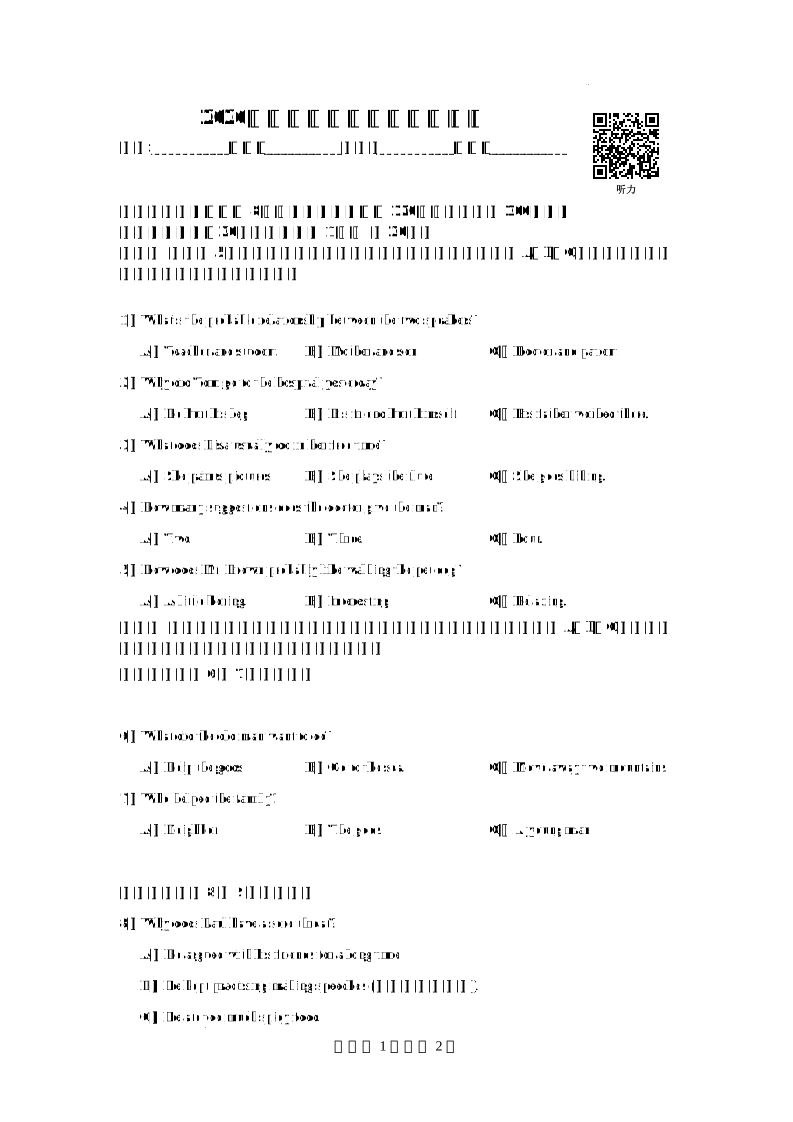
1、 听力理解(20小题,每小题1分, 共20分)
第一节 听下面5段对话。每段对话后有一个小题,从题后所给的A、B、C三个选项中选出最佳答案。每段对话读两遍。
1.What’s the probable relationship between the two speakers?
A.Teacher and student. B.Mother and son. C.Doctor and patient.
2.Why did Tom go to the hospital yesterday?
A.He hurt his leg. B.His friend hurt himself. C.His father worked there.
3.What does Lisa usually do in her free time?
A.She paints pictures. B.She plays the flute. C.She goes hiking.
4.How many suggestions does the doctor give the man?
A.Two. B.Three. C.Four.
5.How does Mr. Brown probably like walking the pet dog?
A.A little boring. B.Interesting. C.Relaxing.
第二节 听下面几段对话。每段对话或独白后有一个小题,从题后所给的A、B、C三个选项中选出最佳答案。每段对话或独白读两遍。
听材料,回答6至7两个小题。
6.What did the old man want to do?
A.Help the gods. B.Go to the sea. C.Move away two mountains.
7.Who helped the family?
A.Neighbor. B.The gods. C.A young man.
听材料,回答8至9两个小题。
8.Why does Paul have a sore throat?
A.He argued with his friends for a long time.
B.He kept practising making speeches (他不断练习演讲).
C.He ate too much spicy food.
9.What should Paul do according to the doctor?
A.Drink more warm water. B.Take some medicine. C.Avoid spicy food.
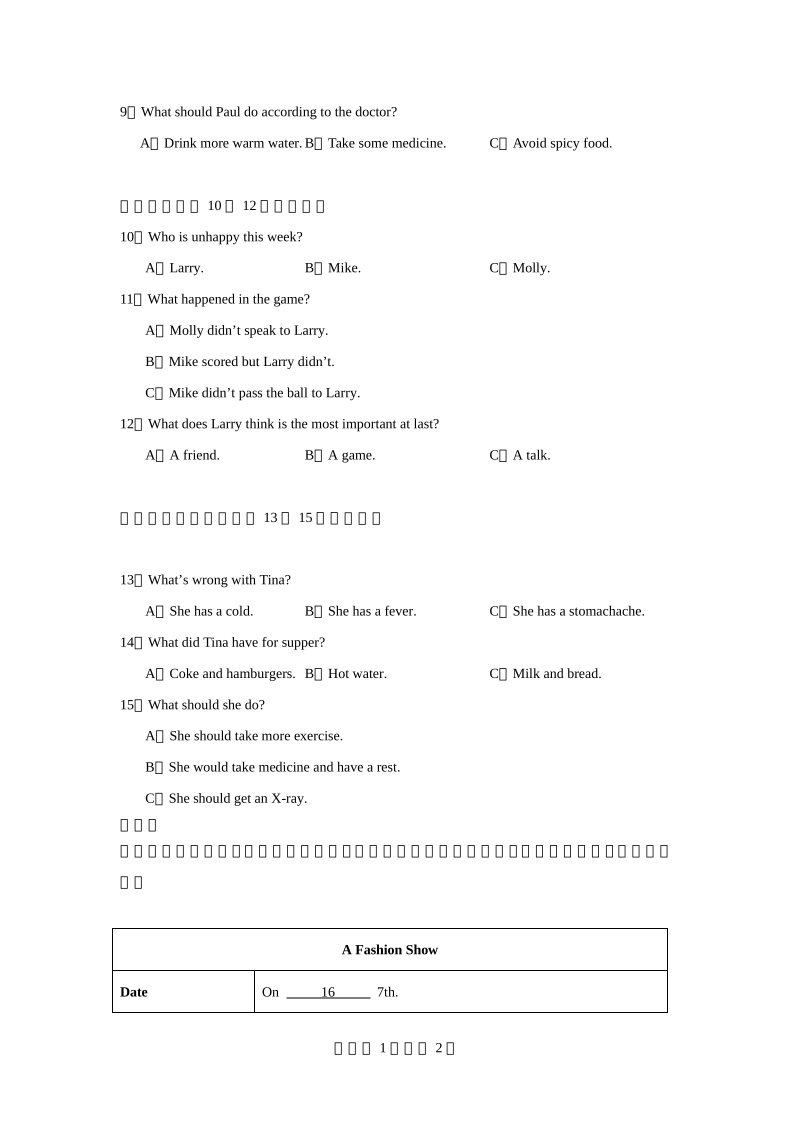
听对话,回答10至12三个小题。
10.Who is unhappy this week?
A.Larry. B.Mike. C.Molly.
11.What happened in the game?
A.Molly didn’t speak to Larry.
B.Mike scored but Larry didn’t.
C.Mike didn’t pass the ball to Larry.
12.What does Larry think is the most important at last?
A.A friend. B.A game. C.A talk.
听下面一段对话,回答13至15两个小题。
13.What’s wrong with Tina?
A.She has a cold. B.She has a fever. C.She has a stomachache.
14.What did Tina have for supper?
A.Coke and hamburgers. B.Hot water. C.Milk and bread.
15.What should she do?
A.She should take more exercise.
B.She would take medicine and have a rest.
C.She should get an X-ray.
第一节
你将听到一篇短文,请根据短文内容,写出下面表格中所缺信息,每空仅填一词。短文读两遍。
A Fashion Show
Date
On 16 7th.
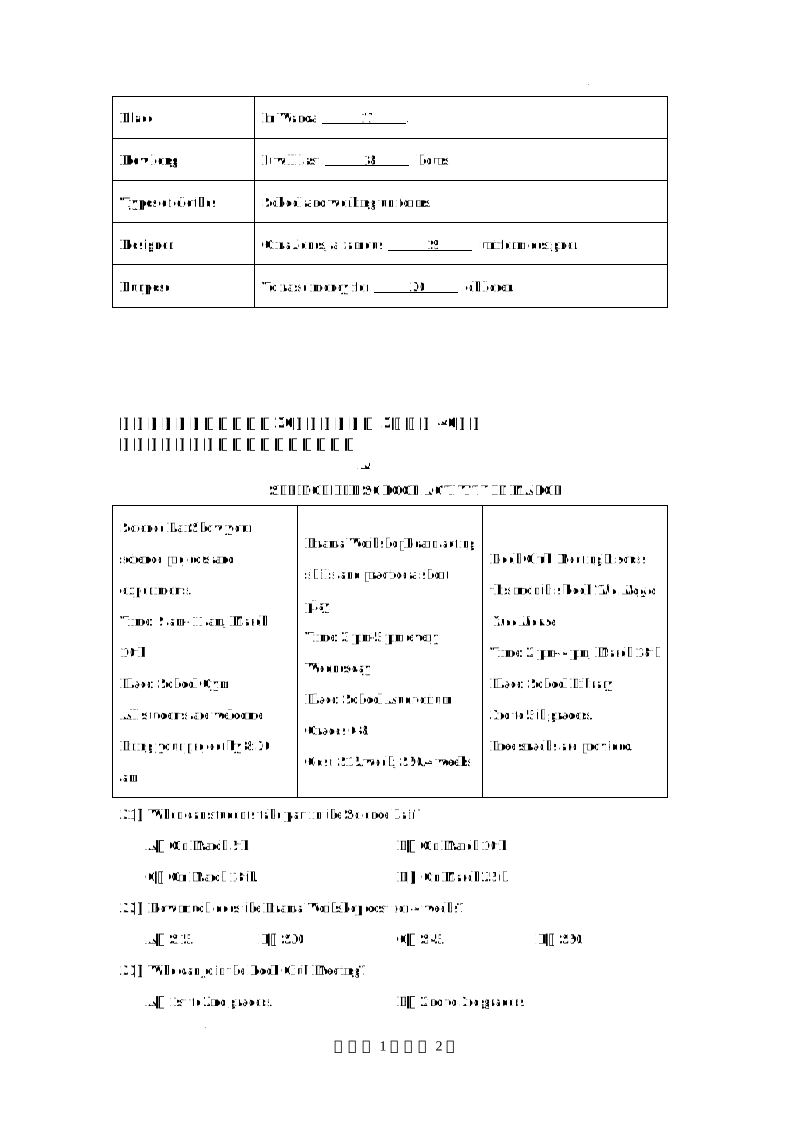
Place
In Wanda 17 .
How long
It will last 18 hours.
Types of clothes
School and working uniforms.
Designer
Gina Jones, a famous 19 uniform designer.
Purpose
To raise money for 20 children.
2、 阅读理解阅读理解(20小题,每小题2分,共40分)
阅读下面材料,然后按文后要求做题。
A
SPRINGFIELD SCHOOL ACTIVITY IN MARCH
Science FairShow your science projects and experiments.
Time: 9 am-11 am, March 10th
Place: School Gym
All students are welcome.
Bring your project by 8:30 am.
Drama WorkshopLearn acting skills and practice a short play.
Time: 3 pm-5 pm every Wednesday
Place: School Auditorium
Grades 6-8.
Cost: $15/week; $50/4 weeks
Book Club MeetingDiscuss this month’s book The Magic Tree House.
Time: 2 pm-4 pm, March 18th
Place: School Library
3rd to 5th graders.
Free snacks are provided.
21.When can students take part in the Science Fair?
A.On March 5th. B.On March 10th.
C.On March 18th. D.On March 25th.
22.How much does the Drama Workshop cost for 4 weeks?
A.$15. B.$30 C.$45. D.$50.
23.Who can join the Book Club Meeting?
A.1st to 2nd graders. B.2nd to 3rd graders.
C.3rd to 5th graders. D.7th to 9th graders.
24.Where can you eat free snacks?
A.At School Gym. B.At School Office.
C.At School Auditorium. D.At School Library.
25.What is the passage?
A.A notice. B.A diary. C.A story. D.An email.
B
Michael is my friend. I admire him because he always looks optimistic (乐观的). I wanted to know why he was always optimistic, so I asked him, “How can you keep optimistic every day?”
Michael answered, “Each morning I wake up and say to myself, ‘Michael, you have two choices today. You can choose to be happy or you can choose to be unhappy.’ I choose to be happy.”
Several years later, something terrible happened to Michael. I heard that Michael fell from a building, and I went to the hospital to visit him. He was badly hurt. I asked him what he thought about when the accident happened.
“The first thing that went through my mind was my little daughter,” Michael answered.“Then, I remembered that I had two choices: I could choose to live or I could choose to die. I told the doctors that I chose to live. So I asked them to operate on me.”
Michael is leading a happy life now, thanks to the skills of the doctors and also his faith (信仰). I learn from him that every day we have a choice about how we live. Faith, after all, is everything!
26.What are Michael’s two choices when he wakes up every morning?
A.To be late or not to be late.
B.To get up or not to get up.
C.To be happy or to be unhappy.
27.What happened to Michael several years later?
A.He fell into the river.
B.He fell from a building.
C.He was hit by a car.
28.What was the first thing Michael thought about when he had the accident?
A.His little daughter. B.His faith. C.The terrible accident.
29.Which of the following is NOT the reason that saved Michael?
A.His wife. B.The skills of the doctors. C.His faith.
30.What’s the best title for the passage?
A.Two Choices You Need to Face
B.Never Give Up Your Dream
C.Faith Is Important
C
You may have seen news about “raising lobster (龙虾)” online, but the “lobster” is not the kind you’d find on the dining table. It’s a new artificial intelligence (AI) agent called OpenClaw, with a red lobster as its symbol. It was developed by an Austrian programmer, Peter Steinberger. In China, many people have set it up on their computers and jokingly call it “raising lobster”.
We already have AI tools like ChatGPT. They can give advice, but they can’t reach into the real world to do it for us. Also, they only “talk” when we ask. OpenClaw is different—it can actually do things. For example, it can send emails and buy plane tickets. It works in chat apps, so you can text it like texting a friend.
OpenClaw also has a long “memory”. It learns what you like and follows your schedule. You can wake up in the morning to a message about your top three tasks without even asking the AI first.
But there is a problem. OpenClaw collects a lot of personal information from users, which is dangerous. In February, researchers found that some important data from OpenClaw had been put online without telling the users. Hackers (黑客) could use it to control users’ computers.
On March 8 and 10, the Chinese government gave its first warnings about this kind of AI, reminding users of the possible risks.
31.What can we learn about OpenClaw from paragraph 1?
A.It is a popular AI program. B.It is created by Chinese users.
C.It is a delicious seafood dish. D.It is used to teach programming.
32.What makes OpenClaw different from ChatGPT?
A.Its power to advise. B.Its ability to take action.
C.Its simple operation. D.Its famous developer.
33.How does OpenClaw’s long “memory” help users?
A.By sending emails. B.By learning what they like.
C.By working in chat apps. D.By collecting personal information.
34.How is the passage organized? (P=Paragraph)
A. B. C. D.
35.Which word best describes the government’s attitude to OpenClaw?
A.Positive. B.Proud. C.Angry. D.Careful.
D
After a natural disaster, people often focus on rebuilding houses or roads. 36 Many survivors feel scared (害怕), sad, or lonely. If these bad feelings persist (继续存在), they may find it hard to live normally again. 37
What can we do to help? Talking is a good start. Survivors should share their feelings with family, friends, or doctors. 38 Communities can also hold activities, like group games, to let people support each other.
Schools play a role too. Teachers can talk with students about their fears. 39 For those who feel very down, it is wise to ask professionals (专业人员) for help because they know how to help people feel better.
40 It helps survivors heal, rebuild their lives, and move forward with hope. Taking care of the mind makes communities stronger later on.
根据材料内容,从下面五个选项中选出能填入文中空缺处的最佳选项,使短文意思通顺、内容完整。
A.That’s why mental recovery (精神恢复) helps people get back on their feet.
B.In a word, we shouldn’t forget the importance of mental recovery
C.But we can’t ignore (忽视) that healing the mind is even more important.
D.This can help them feel better.
E.Letting kids draw or write about their feelings helps them feel safe again.
三、完形填空(15小题,每小题1分,共15分)
先通读全文,掌握其大意,然后从A、B、C、D四个选项中选出一个可以填入相应空白处的最佳答案。
One spring morning, Mrs. Jones was in her garden with her grandson. She said, “I 41 to plant some vegetables here. Are you going to help me?”
“To plant vegetables?” said Justin. “Sure. Grandma, but could you tell me 42 you want to plant vegetables?” asked Justin.
Mrs. Jones replied, “We can eat them when they are fully grown. But it will 43 a few months.”
Justin had no 44 of growing vegetables, so he asked in surprise, “A few months? Why don’t we just go to the store and 45 some?”
“Dear, when I was your age, my parents taught 46 to plant vegetables. I got some planting skills 47 the farm work,” Mrs. Jones explained. “It’s not a boring chore, but a(n) 48 activity. We can choose to plant our favorite vegetables and watch them grow up. More importantly, they taste 49 than those from stores.”
These words made Justin 50 . “Grandma, I can’t wait to try,” Justin said. At last, they decided to plant potatoes and tomatoes.
The next day, Mrs. Jones and Justin started ploughing and sowing (耕作). It took them several hours to 51 the work. Seeing the hopeful garden, Justin felt pleased.
Mrs. Jones and Justin 52 the garden carefully. As time went on, the tomatoes and potatoes grew bigger, which made Justin understand the importance of patience (耐心) and hard work.
53 , it was time to harvest (收获). Justin picked lots of potatoes and tomatoes, and he shared some of them with his neighbors. Then he went home with the rest of the vegetables and 54 them to his grandma. Mrs. Jones used them to cook a dish. Justin tasted it and got a 55 feeling of pleasure. “No pains, no gains. For me, nothing can be more delicious than it!” Justin said happily.
41.A.hate B.learn C.disagree D.prepare
42.A.how B.why C.when D.where
43.A.cause B.waste C.take D.show
44.A.sign B.pressure C.experience D.change
45.A.buy B.invite C.throw D.offer
46.A.you B.me C.him D.them
47.A.as B.through C.off D.on
48.A.useful B.popular C.crazy D.enjoyable
49.A.hotter B.drier C.fresher D.worse
50.A.excited B.talented C.popular D.lazy
51.A.describe B.finish C.guess D.imagine
52.A.asked for B.looked for C.looked after D.took after
53.A.Finally B.Usually C.Never D.Certainly
54.A.returned B.passed C.lent D.paid
55.A.big B.heavy C.long D.strong
四、语篇填空(15小题,每小题1分,共15分)
第一节 阅读短文,从方框中选择适当的词并用其正确形式填空,使短文通顺、意思完整。每空限填一词,每词限用一次。
always when activity experience good interest through try I find
My name is Jeff. I like learning foreign languages. 56 I retired (退休) in 2018,I could speak three foreign languages. At that time, my biggest wish was to learn a new one.
Later, I watched a program about Chinese culture on TV. I was so 57 in it that I made the decision to learn Chinese. I 58 a cultural center in the north of London by chance. It offered Chinese language courses fit for me. In March 2019, I began to learn. To attend the classes, I left my home at 5 a.m. every Saturday and drove 3 hours to the cultural center. But this didn’t stop me. After class, I practiced a lot. 59 learning, I developed a love for Chinese poems and joined in 60 like. Chinese poetry readings. I increasingly dreamed of visiting China.
My Chinese teacher Mr. Liu 61 mentioned “It’s 62 to travel ten thousand miles than to read ten thousand books”. He suggested that I should take part in a study tour in China. So in August 2024, I visited Xi’an with 63 classmates of the cultural center. During the trip, as the student best at Chinese among us, I 64 to act as an interpreter (口译员). I helped my classmates in many ways like asking the way and shopping in Chinese. This 65 encouraged (鼓励) me to study further.
第二节
请阅读下面语篇,根据其内容,将适当的单词填入空白处,并将答案写在答题卡相应的位置上。每空一词。
The Hanging Temple, also called Xuankong Temple, is a famous ancient wonder in Shanxi Province. It is on a cliff near Mount Heng, about 75 meters above the ground. It is one of China’s most amazing architectural (建筑学的) wonders and 66 many visitors every year.
Built over 1,500 years ago, it has a long history. It is supported by thick wooden beams. From far away, it looks 67 it is hanging in the air. That is how it gets 68 name.
There 69 more than 40 small halls inside. It has stood there for over a thousand years because of its clever design.
As a precious relic (珍贵遗迹), it shows the wisdom of ancient Chinese people. 70 you visit Shanxi, don’t miss it. It will make you proud of what our ancestors (祖先) achieved.
五、补全对话(5小题,每小题2分,共10分)
根据下面的对话情景,在每个空白处填上一个适当的句子,使对话的意思连贯、完整。
Tom: Hello! May I speak to Sally?
Sally: 71 .
Tom: Hi, Sally, this is Tom. 72 ? I called you but nobody answered.
Sally: At eleven last night? I was outside with my family.
Tom: 73 ? What happened?
Sally: An earthquake hit my city last night. We got out of the apartment building to keep safe.
Tom: Sorry for the news. 74 ?
Sally: Yeah, luckily, we are all OK. Thanks for asking.
Tom: Thank goodness you are fine.
Sally: Safety always comes first.
Tom: 75 .
六、书面表达(20分)
76.你校英语报正在举办主题为“Relax and Stay Healthy”的征文活动。请你以“Relax and Stay Healthy”为题用英语写一篇短文投稿,介绍你放松和保持健康的方法。
内容包括:
1. 你放松的方法;
2. 你保持健康的方法;
3. 你对“放松与健康”的看法。
注意:
1. 词数为80-100左右;
2. 可适当增加细节,以使行文连贯;
3. 文中不能出现真实姓名及学校名称;
参考词汇:relax(v.放松),stress(n.压力),exercise(v.锻炼),healthy(adj.健康的),diet(n.饮食)
Relax and Stay Healthy
_______________________________________________________________________________________________________________________________________________________________________________________________________________________________________________________________________________________________________________________________________________________________________________________________________________________________________________________________________________________________________《2026年八年级期末考试英语试卷》参考答案
题号
1
2
3
4
5
6
7
8
9
10
答案
C
B
A
B
A
C
B
B
A
A
题号
11
12
13
14
15
21
22
23
24
25
答案
C
A
C
A
B
B
D
C
D
A
题号
26
27
28
29
30
31
32
33
34
35
答案
C
B
A
A
C
A
B
B
C
D
题号
36
37
38
39
40
41
42
43
44
45
答案
C
A
D
E
B
D
B
C
C
A
题号
46
47
48
49
50
51
52
53
54
55
答案
B
B
D
C
A
B
C
A
B
D
1.C
【原文】A: Good afternoon. Are you feeling better now?
B: Yes, much better, Dr John. The medicine you gave me works a lot.
2.B
【原文】A: Tom, why did you go to the hospital yesterday?
B: Oh, my friend hurt his leg and I went to visit him.
3.A
【原文】A: Lisa, what do you usually do in your free time?
B: I love painting pictures. It helps me express my feelings.
4.B
【原文】A: Good morning, doctor. My face feels hot.
B: Let me take your temperature. Oh, it’s 38 degrees Celsius. You should take some medicine and drink enough water. Besides, wear a mask when you go out.
5.A
【原文】A: Mr. Brown, you used to play table tennis every day. Do you still play it now?
B: No. My new routine is walking my dog after dinner. But to be honest, I often think about my comfortable sofa and the TV shows when I do it.
6.C 7.B
【原文】A: Hi, Peter. We read a story today.
B: Oh, how does it begin?
A: Once upon a time, there was an old man. He wanted to move away two big mountains near his house.
B: An old man? Did he do it alone?
A: No, his family helped him.
B: Where did they put the stone?
A: Into the sea.
B: Did they succeed?
A: Yes, with the help of the gods they made it.
B: What an educational story!
A: Yes, we never know what is possible unless we try it.
8.B 9.A
【原文】A: Paul, why does your voice sound terrible?
B: I have a sore throat.
A: I practiced making speeches for a long time yesterday.
B: Did you see a doctor?
A: Yes.
B: He said I should drink more warm water and rest my voice.
A: That's good advice.
10.A 11.C 12.A
【原文】A: Hey, Larry. You seem unhappy this week. What happened?
B: I haven’t spoken to Mike for several days.
A: Your best friend Mike, why?
B: It’s about the soccer game last Wednesday. He didn’t pass the ball to me in the game.
A: I see, but I know Mike. Maybe he just didn’t see you. Why don’t you talk to him directly?
B: Maybe I will.
A: Go ahead, Larry. A friend is much more important than a game.
B: You’re right. Thank you, Molly.
13.C 14.A 15.B
【原文】A: Good morning, sir.
B: Good morning, girl.
A: Let me see.
B: Your name is Tina. What’s wrong with you, Tina?
A: I’m not feeling well.
B: When did it start?
A: Yesterday.
B: What did you have for supper yesterday evening?
A: I had two hamburgers and some Coke.
B: You must have a stomach ache. You should take this medicine twice a day and have a rest.
A: Thank you very much.
B: You’re welcome.
16.April 17.Square 18.2/two 19.Russian 20.poor
【原文】A: Are you free the day after tomorrow, Annie?
B: The day after tomorrow? Let me see. It’s April 7th and it’s a Sunday. I’m free that day. What’s up?
A: I’m going to watch a fashion show in Wanda Square. Would you like to go with me?
B: Yes, I’d like to. What’s the show about?
A: It’s about uniforms. We’ll see different school uniforms and working uniforms from different countries.
B: Sounds interesting. When will the show start?
A: It will start at 9 am, and it will last for two hours.
B: By the way, who is the designer?
A: It’s Gina Jones, a famous uniform designer from Russia.
B: Why does she want to host the fashion show?
A: She said in an interview that she wanted to raise money for poor children.
B: It seems she is a warm and caring designer.
A: She sure is.
21.B 22.D 23.C 24.D 25.A
【导语】本文是一则学校活动通知,主要介绍了斯普林菲尔德学校三月举办的三项校园活动,分别说明了各项活动的时间、地点、参与对象与相关要求。
【详解】21.根据表格第一栏“Science Fair”标注的举办时间为“March 10th”,因此学生可在3月10日参加活动。
22.根据表格第二栏“Drama Workshop”中的信息“Cost: $50/4 weeks”可知,参加4 周戏剧工作坊的费用为50美元。
23.根据表格第三栏“Book Club Meeting”中的信息“3rd to 5th graders.”可知,读书俱乐部面向3至5年级的学生开放。
24.根据表格第三栏“Book Club Meeting”中的信息“Place: School Library”和“Free snacks are provided.”可知,免费零食在学校图书馆提供。
25.通读全文可知,本文列出了学校三月份的活动安排,包含时间、地点、参与对象及费用等具体信息,旨在告知学生相关活动安排,属于通知“notice”类文体。
26.C 27.B 28.A 29.A 30.C
【导语】本文是一篇记叙文,讲述了作者的朋友Michael始终保持乐观的故事,他每天醒来都会选择快乐;在遭遇意外坠楼的重伤时,他又选择了活下去,最终凭借医生的救治和自己的信念重获新生。
【详解】26.根据第二段“Michael, you have two choices today. You can choose to be happy or you can choose to be unhappy.”可知,Michael 每天早上醒来,都会面临“选择快乐”或“选择不快乐”这两个选项。
27.根据第三段“Several years later, something terrible happened to Michael. I heard that Michael fell from a building, and I went to the hospital to visit him.”可知,几年后Michael 遭遇了从楼上坠落的意外。
28.根据第四段“The first thing that went through my mind was my little daughter,” 可知,事故发生时,Michael脑海中闪过的第一件事是他的小女儿。
29.最后一段“Michael is leading a happy life now, thanks to the skills of the doctors and also his faith.”可知,拯救Michael的是医生的技术和他自己的信念。
30.通读全文,文章核心主旨落在结尾“Faith, after all, is everything!”,核心围绕信念的重要性展开。
31.A 32.B 33.B 34.C 35.D
【导语】本文是一篇说明文,介绍了由奥地利程序员开发的AI代理OpenClaw。与ChatGPT不同,OpenClaw可以执行实际操作,具有长期记忆功能,但也存在泄露用户个人信息的风险,已引起中国政府的关注和警告。
【详解】31.第一段提到“In China, many people have set it up on their computers”说明它在中国很受欢迎,是一款流行的AI程序。B项“由中国用户创造”,错误,由奥地利程序员创造;C项“美味海鲜”,错误,它是一种AI代理;D项“用于编程教学”,未提及。
32.第二段明确指出“ChatGPT... can’t reach into the real world to do it for us...OpenClaw is different—it can actually do things. For example, it can send emails and buy plane tickets.”因此区别在于OpenClaw具备采取行动的能力。A项“提供建议的能力”两者都有;C、D未提及。
33.第三段写道“It learns what you like and follows your schedule.” 它学习用户的喜好并遵循日程安排,因此帮助方式是“学习用户喜好”。A项“发送邮件”是操作能力,非记忆功能;C项“在聊天应用中工作”是工作方式;D项“收集个人信息”是风险。
34.文章首先由P1引出OpenClaw这一话题;随后进入正面论述阶段,P2和P3分别从“执行操作”和“长期记忆”两个方面介绍其功能;紧接着P4进行转折,提出其存在的风险(反面论述);最后P5给出政府的警告作为结尾。
35.最后一段写道“The Chinese government gave its first warnings about this kind of AI, reminding users of the possible risks.”政府发出警告,提醒用户风险,因此态度是“谨慎的”。A“积极的”,B“自豪的”,C“愤怒的”,均不符合。
36.C 37.A 38.D 39.E 40.B
【导语】本文是一篇说明文,介绍了自然灾害后,人们在关注物质重建的同时,更需要重视幸存者的心理恢复,并给出了具体的帮助方法。
【详解】36.文中第一段提到“After a natural disaster, people often focus on rebuilding houses or roads.”,后文提到“Many survivors feel scared, sad, or lonely.”,C选项“But we can’t ignore that healing the mind is even more important.”,承接上文的物质重建,引出下文的心理问题。
37.文中第一段提到“If these bad feelings persist, they may find it hard to live normally again.”,A选项“That’s why mental recovery helps people get back on their feet.”,承接上文,点明心理恢复的重要性。
38.文中第二段提到“Survivors should share their feelings with family, friends, or doctors.”,后文提到“Communities can also hold activities, like group games, to let people support each other.”,D选项“This can help them feel better.”,承接上文的分享感受,说明这样做的好处。
39.文中第三段提到“Schools play a role too. Teachers can talk with students about their fears.”,后文提到“For those who feel very down, it is wise to ask professionals for help...”,E选项“Letting kids draw or write about their feelings helps them feel safe again.”,承接上文的学校帮助,补充老师帮助学生的具体方式。
40.文中第四段提到“It helps survivors heal, rebuild their lives, and move forward with hope.”,B选项“In a word, we shouldn’t forget the importance of mental recovery”,作为总结句,强调心理恢复的重要性。
41.D 42.B 43.C 44.C 45.A 46.B 47.B 48.D 49.C 50.A 51.B 52.C 53.A 54.B 55.D
【导语】本文讲述琼斯太太和孙子贾斯汀种蔬菜的故事。通过劳动,贾斯汀学会了耐心和努力的重要性,收获了满足感。
【详解】41.句意:我准备在这里种些蔬菜。
根据下文“Are you going to help me?”可知,奶奶打算种蔬菜,正在做准备。prepare to do sth.表示“准备做某事”,符合语境。hate“讨厌”、learn“学习”和disagree“不同意”均不符合打算种菜的语境。
42.句意:奶奶,你能告诉我你为什么想种蔬菜吗?
根据下文“We can eat them when they are fully grown.”可知,奶奶在解释种菜的原因是这些蔬菜成熟后可以吃。询问原因应用why。how“怎么样”、when“什么时候”和where“在哪里”分别询问方式、时间和地点,与题目不符。
43.句意:但这将花费几个月的时间。
根据“a few months”可知,此处指种植需要花费时间。It takes some time是固定用法,表示“花费时间”。cause“导致”、waste“浪费”和show“展示”均无此意。
44.句意:贾斯汀没有种蔬菜的经验,所以他惊讶地问道:“好几个月?为什么我们不去商店买一些呢?”。
根据“so he asked in surprise”可知,他没有种植经验,不懂种植知识,才导致他对种植时间长的惊讶,have no experience“没有经验”符合语境,sign“标志”、pressure“压力”和change“改变”不符合逻辑。
45.句意:为什么我们不去商店买一些呢?
根据“go to the store”可知,去商店的目的是购买蔬菜。buy“购买”符合去商店获取蔬菜的逻辑。invite“邀请”、throw“扔掉”和offer“提供”均不符合。
46.句意:亲爱的,当我像你这么大时,我的父母教我种蔬菜。
根据“when I was your age”可知,奶奶在讲述自己的经历。父母教的是奶奶自己,应用me“我”。you“你”、him“他”和them“他们”指代对象错误。
47.句意:我通过农活获得了一些种植技能。
根据“got some planting skills”和“the farm work”可知,技能是通过劳动获得的。through表示“通过……方式或途径”。as“作为”、off“离开”和on“在……上”均无法表达此逻辑。
48.句意:这不是无聊的杂活,而是一项令人愉快的活动。
根据“not a boring chore”可知,此处应填与boring相反的词。enjoyable意为“令人愉快的”,与 boring形成对比。useful“有用的”、popular“流行的”和crazy“疯狂的”不符。
49.句意:更重要的是,它们比商店里的尝起来更新鲜。
根据“than those from stores”可知,自家种的蔬菜通常比商店的新鲜。fresher“更新鲜的”符合自家种植蔬菜的优势。hotter“更热”、drier“更干的”和worse“更差的”不符合常理。
50.句意:这些话让贾斯汀很兴奋。
根据“I can’t wait to try”可知,贾斯汀迫不及待想尝试,可见他很感兴趣。excited“兴奋的”表示情绪高涨。talented“有才华的”、popular“受欢迎的”和lazy“懒惰的”均不符合此时的心情。
51.句意:他们花了好几个小时才完成这项工作。
根据“It took them several hours”可知,指花费时间做完耕种工作。finish the work表示“完成工作”。describe“描述”、guess“猜测”和imagine“想象”均不符。
52.句意:琼斯太太和贾斯汀仔细地照料菜园。
根据“the garden carefully”及后文蔬菜的长大可知,需要照料菜园。look after意为“照顾、照料”。ask for“索求”、look for“寻找”和take after“长得像”意思不符。
53.句意:终于,到了收获的时候了。
根据上文种植、照料的过程,此处指时间推移后的结果。Finally“终于”表示经过一段时间后的最终结果。Usually“通常”、Never“从不”和Certainly“当然”不符。
54.句意:然后他带着剩下的蔬菜回家,把它们递给奶奶。
根据“them to his grandma”和“Mrs. Jones used them to cook a dish”可知,是把蔬菜交给奶奶做饭。passed意为“传递、交给”,符合动作。returned“返回”、lent“借出”和paid“支付”均不符合语境。
55.句意:贾斯汀尝了尝,感到一种强烈的愉悦感。
根据“feeling of pleasure”可知,修饰感觉常用strong。a strong feeling表示“强烈的感觉”。big“大的”、heavy“重的”和long“长的”不修饰 feeling。
56.when 57.interested 58.found 59.Through 60.activities 61.always 62.better 63.my 64.tried 65.experience
【导语】本文是一篇记叙文,讲述了退休后的Jeff学习中文的经历,包括他如何开始学习、学习过程中的坚持、参与文化活动以及最终作为口译员访问中国的难忘体验。
【详解】56.句意:当我在2018年退休时,我已经能说三门外语。空格连接时间状语从句与主句,表示“当……的时候”,需用从属连词When。
57.句意:我对它如此感兴趣,以至于我决定学习中文。“be interested in”为固定搭配,表示“对……感兴趣”,此处需用形容词interested。
58.句意:我偶然发现伦敦北部的一个文化中心。“found...by chance”表示“偶然发现”,动词用过去式found。
59.句意:通过学习,我培养了对中国诗歌的热爱。空格表示“通过/借助于”某种方式,需用介词Through。
60.句意:并参加了像中国诗歌朗诵这样的活动。空格前“joined in”后需接名词复数作宾语,“activities”符合语境,需用复数形式activities。
61.句意:我的中文老师刘老师总是提到……。空格修饰动词“mentioned”,表示频率,需用频度副词always。
62.句意:“读万卷书不如行万里路。”此处为比较级结构,“it’s better to do A than to do B”表示“做A比做B更好”,需用形容词比较级better。
63.句意:我和文化中心我的同学们一起参观了西安。空格后为“classmates”,需用形容词性物主代词my表示“我的”。
64.句意:我尝试担任口译员。“tried to do sth.”表示“尝试做某事”,动词用过去式tried。
65.句意:这次经历鼓励我进一步学习。空格在句首作主语,需用名词experience表示“经历”。
66.attracts 67.like 68.its 69.are 70.If/When
【导语】本文是一篇说明文,主要介绍了位于山西省的著名古代建筑奇迹——悬空寺的历史、建筑特点及其文化价值。
【详解】66.句意:它是中国最令人惊叹的建筑奇迹之一,每年吸引许多游客。and连接两个并列谓语,主语是It,结合时间状语every year可知句子应用一般现在时,谓语动词需用第三人称单数形式。根据语境“每年_______很多游客”,attracts“吸引”符合语义。
67.句意:从远处看,它看起来好像悬挂在空中。设空处后是一个完整的句子,固定搭配look like意为“看起来像……”,此处like作连词,引导从句。
68.句意:那就是它名字的由来。设空处修饰名词name,指代前文的The Hanging Temple,应用形容词性物主代词its,意为“它的”。
69.句意:里面有40多个小殿。此处为There be句型,陈述客观事实,时态为一般现在时;主语more than 40 small halls为复数,be动词应用are。
70.句意:如果你(当你)去山西旅游,不要错过它。这里引导条件/时间状语从句,If“如果”或When“当……时候”都符合语境。位于句首,首字母需大写。
71.This is Sally speaking. 72.What were you doing at eleven last night? 73.Why were you outside? 74.Are you all OK? 75.I agree with you.
【导语】本文主要介绍了Tom和Sally通过电话交流,Tom打电话给Sally未接通,询问情况后得知Sally所在城市昨晚发生地震,Sally和家人为了安全跑到公寓楼外,幸运的是大家都平安。
【详解】71.在电话用语中,当对方打电话找自己时,表明“我就是(接电话的人)”常用“This is...speaking.”,这里是Sally回应Tom找她,所以用This is Sally speaking.
72.根据下文Sally回答“At eleven last night? I was outside with my family.”可知,Tom问的是昨晚十一点Sally在做什么,用过去进行时“What were you doing...”来询问过去某个具体时间点正在做的事情。
73.Sally说昨晚十一点和家人在外面,Tom感到疑惑,所以询问为什么在外面,用Why were you outside?
74.Sally告知Tom昨晚发生了地震,Tom出于关心询问他们是否都还好,用Are you all OK?
75.Sally说“Safety always comes first.”,Tom表示认同,所以用I agree with you.
76.例文
Relax and Stay Healthy
Nowadays, it’s important for students to relax and stay healthy.
My ways to relax are listening to light music and reading storybooks. After study, I often listen to light music for 20 minutes to take away my stress. I read interesting storybooks to calm down. To stay healthy, I exercise every morning for 30 minutes and eat healthy food every day. I never eat junk food and sleep for 8 hours a night.
In my opinion, relaxation and health are closely connected. They help us study better and live a happy life.
【详解】写作步骤
[第一步:审题立意]
确定文体:说明文,用一般现在时为主
明确要点:介绍放松的方法、保持健康的方法,以及对“放松与健康”的看法
确定人称:第一人称I/my
注意事项:不得出现真实姓名及学校名称
[第二步:构思布局]
三段式结构:
开头段:承接已给开头,点明学生需要放松与健康的重要性
主体段:分述放松的具体方法、保持健康的具体做法
结尾段:阐述对“放松与健康”的关联及意义的看法
[第三步:要点展开]
要点一:放松的方法
具体方式:listening to light music/reading storybooks/listen for 20 minutes after study/read on weekends/take away stress/calm down/watching movie等
要点二:保持健康的方法
日常习惯:exercise for 30 minutes every morning/eat healthy food/never eat junk food/sleep for 8 hours a night/never eat junk food/sleep for 8 hours a night等
要点三:对“放松与健康”的看法
关联:closely connected/help study better/live a happy life/good for等
答案第1页,共2页
答案第1页,共2页
学科网(北京)股份有限公司
$
资源预览图
1
2
3
相关资源
由于学科网是一个信息分享及获取的平台,不确保部分用户上传资料的 来源及知识产权归属。如您发现相关资料侵犯您的合法权益,请联系学科网,我们核实后将及时进行处理。