精品解析:2026年浙江杭州市萧山区中考一模考试英语试题
 切换试卷
切换试卷
2026-05-19
|
2份
|
34页
|
12人阅读
|
0人下载
资源信息
| 学段 | 初中 |
|---|---|
| 学科 | 英语 |
| 教材版本 | - |
| 年级 | 九年级 |
| 章节 | - |
| 类型 | 试卷 |
| 知识点 | - |
| 使用场景 | 中考复习-一模 |
| 学年 | 2026-2027 |
| 地区(省份) | 浙江省 |
| 地区(市) | 杭州市 |
| 地区(区县) | 萧山区 |
| 文件格式 | ZIP |
| 文件大小 | 3.08 MB |
| 发布时间 | 2026-05-19 |
| 更新时间 | 2026-05-19 |
| 作者 | 匿名 |
| 品牌系列 | - |
| 审核时间 | 2026-05-19 |
| 下载链接 | https://m.zxxk.com/soft/57936308.html |
| 价格 | 5.00储值(1储值=1元) |
| 来源 | 学科网 |
内容正文:
2025学年第二学期九年级教学质量检测
英语试题卷
考生须知:
1.本试卷分试题卷和答题卷两部分。满分120分,考试时间100分钟。
2.答题前,请务必将自己的姓名、准考证号用黑色字迹的水笔填写在答题纸规定的位置上。
3.答题时,请在答题纸相应的位置上规范作答,在本试题卷上的作答一律无效。
第一部分 听力理解(共三节,满分20分)
第一节(共5小题,每小题1分,满分5分)
听下面5段对话。每段对话后有一个小题,从题中所给的A、B、C三个选项中选出最佳选项,并标在试卷的相应位置。听完每段对话后,你都有10秒钟的时间来回答有关小题和阅读下一小题。每段对话仅读一遍。
1. Whose schoolbag is it?
A. Jane’s. B. Mike’s. C. Li Ping’s.
2. Where does Linda want to go?
A. To the school. B. To a bookstore. C. To a bank.
3. What’s the weather like?
A. Windy. B. Sunny. C. Rainy.
4. When might Flora go home?
A. At 4:30. B. At 5:00. C. At 5:30.
5. What’s the possible relationship between speakers?
A. Doctor and patient. B. Teacher and student. C. Driver and passenger.
第二节(共5小题,每小题1.5分,满分7.5分)
听下面2段较长对话。每段对话后有几个小题,从题中所给的A、B、C三个选项中选出最佳选项,并标在试卷的相应位置。听每段对话前,你将有时间阅读各个小题,每小题5秒钟;听完后,各小题将给出5秒钟的作答时间。每段对话读两遍。
听下面一段较长对话,回答问题。
6. What did Jack do for his mother?
A. He made a video. B. He bought a gift. C. He made a cake.
7. Which fruit did Jack add?
A. Bananas. B. Grapes. C. Strawberries.
听下面一段较长对话,回答问题。
8. Why did Ella look worried?
A. She lost a violin. B. She got into a fight. C. She hurt herself.
9. How does Ella feel now?
A. Angry. B. Afraid. C. Sorry.
10. What will Ella probably do next?
A. Make a phone call. B. Talk with her mom. C. Meet Helen in person.
第三节(共5小题,每小题1.5分,满分7.5分)
听下面一段独白,独白后有5个小题,从题中所给的A、B、C三个选项中选出最佳选项,并标在试卷的相应位置。听独白前,你将有时间阅读各个小题,每小题5秒钟;听完后,各小题将给出5秒钟的作答时间。独白读两遍。
听下面一段独白,回答问题。
11. Where did Billy go this weekend?
A. To a volunteer club. B. To a pet shop. C. To an animal hospital.
12. How many animals do they have right now?
A. Two. B. Five. C. Eight.
13. What did Billy do there?
A. He worked as a doctor. B. He fed pets medicine. C. He looked after pets.
14. Who might be chosen as volunteers?
A. People with love. B. People with time. C. People with experience.
15. How will people offer to help?
A. By sending an email. B. By making a phone call. C. By writing a letter.
第二部分 阅读理解(共两节,满分40分)
第一节 阅读理解(共15小题,每小题2分,满分30分)
阅读下面短文,从每题所给的A、B、C、D四个选项中选出最佳选项。
A
Snack Stories
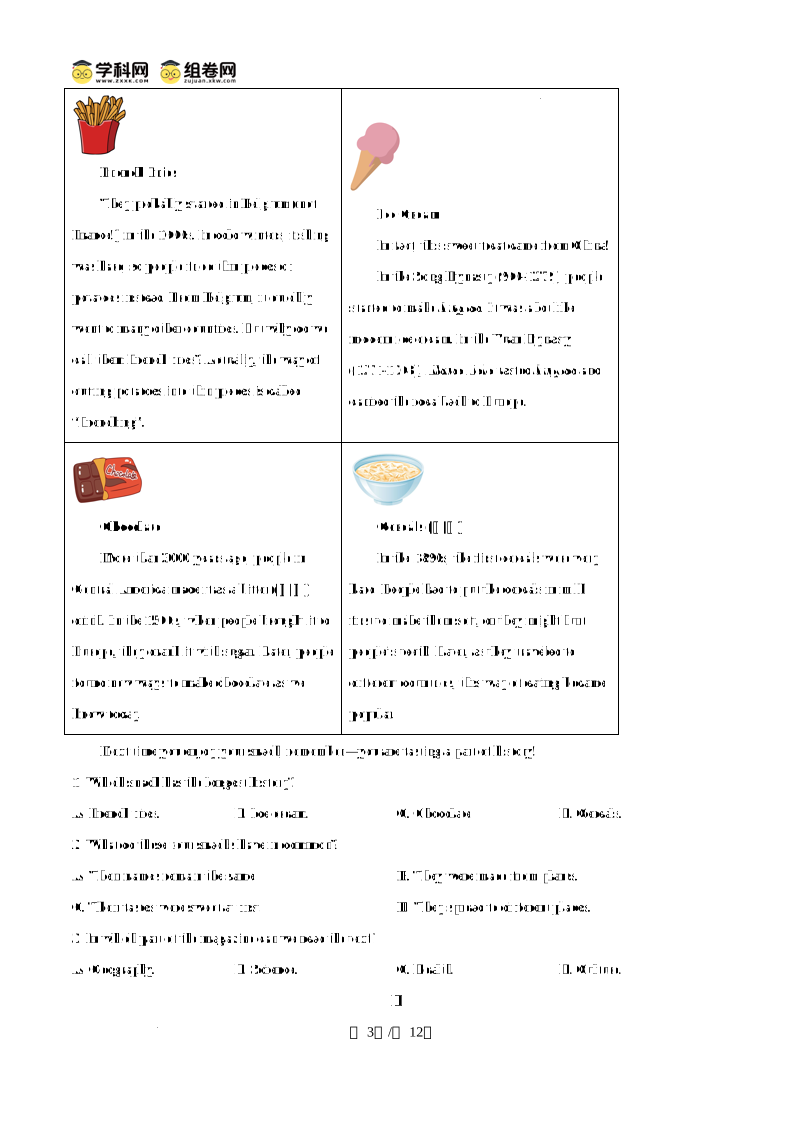
Do you know where your favorite snacks come from? Let’s take a look at the surprising stories behind four snacks.
French Fries
They probably started in Belgium (not France!) in the 1600s. In cold winters, fishing was hard, so people fried thin pieces of potatoes instead. From Belgium, it quickly went to many other countries. But why do we call them French fries? Actually, the way of cutting potatoes into thin pieces is called “Frenching”.
Ice Cream
In fact, this sweet treat came from China!
In the Song Dynasty (960-1279), people started to make binglao. It was a lot like modern ice cream. In the Yuan Dynasty (1271-1368), Marco Polo tasted binglao and carried the idea back to Europe.
Chocolate
More than 3000 years ago, people in Central America made it as a bitter (苦的) drink. In the 1500s, when people brought it to Europe, they drank it with sugar. Later, people found new ways to make chocolate as we know today.
Cereals (麦片)
In the 1890s, the first cereals were very hard. People had to put the cereals in milk first to make them soft, or they might hurt people’s teeth! Later, as they traveled to different countries, this way of eating became popular.
Next time you enjoy your snack, remember—you are tasting a part of history!
1. Which snack has the longest history?
A. French fries. B. Ice cream. C. Chocolate. D. Cereals.
2. What do these four snacks have in common?
A. Their names remain the same. B. They were made from plants.
C. Their tastes were sweet at first. D. They spread to different places.
3. In which part of the magazine can we read the text?
A. Geography. B. Science. C. Health. D. Culture.
【答案】1. C 2. D 3. D
【解析】
【导语】本文介绍了炸薯条、冰淇淋、巧克力和麦片四种日常零食各自有趣的起源以及向外传播发展的历史。
【1题详解】
巧克力段落指出:“More than 3000 years ago, people in Central America made it as a bitter drink.”,巧克力起源于三千多年前,早于其余三种零食,由此确定它历史最悠久。
【2题详解】
薯条段落提到它传到众多国家,冰淇淋段落提到它传入欧洲,巧克力段落提到它传入欧洲,麦片段落提到它传到不同国家,能够看出四种零食都传播到了不同地方,对应所选答案。
【3题详解】
全文介绍各类零食的起源与发展历程,属于饮食文化相关内容,因此能在杂志的文化板块读到这篇文章。
B
I woke up and took a look at my hands. Still pink. Not light pink, but bright pink. What can I do with my magic competition? With the pinkest hands anybody’s ever seen, everybody at Dwight Primary School would see them. Unless…
I jumped out of bed and called my partner, Iggy. I told him about the terrible color of my hands. When I said I would teach him the card tricks during lunch that day, Iggy advised that I just wear my white magician’s gloves. However, I couldn’t make it with the gloves on because the cards were too slippery (滑的).
All he cried was, “We are doomed.”
During lunch at school, I tried to teach Iggy the card tricks (戏法), but he couldn’t get them straight. I even tried doing them myself wearing the white gloves. The cards went all over the place.
Iggy cried. “Luke, too bad you can’t magically change the color of your hands.”
I thought about this for a minute. “Iggy, you’re so smart!” He’d given me an idea. I took the pink bird out of my backpack. It was about the size of the white one in my hat tricks.
Finally, it’s my turn to perform.
“Ladies and gentlemen,” I said, waving my white-gloved hands, “On this special day, whatever I put into this hat will turn pink.”
I put in the white bird and pulled out the pink one… with my amazing pink hands!
Cheers and shouts came from the crowds. The judges said my pink hands won me the first prize.
“What’s for the next show?!” Iggy said quietly.
“Yeah, GREEN.”
4. What does the underlined sentence in Paragraph 3 probably mean?
A. We are so lucky. B. We can put it off. C. We are in big trouble. D. We can make it.
5. Which of the following shows the correct order?
① Luke taught Iggy card tricks. ② Luke turned a white bird into a pink one.
③ Luke thought of the idea of playing hat tricks. ④ Luke made a phone call to Iggy.
A. ③④①② B. ③①②④ C. ④③①② D. ④①③②
6. How did Luke win the competition?
A. He played the card tricks successfully. B. He got help from Iggy when performing.
C. He changed his white gloves into pink. D. He made his pink hands a part of magic.
7. What kind of person is Luke?
A. Clever and creative. B. Friendly and helpful. C. Honest and shy. D. Strict and hardworking.
【答案】4. C 5. D 6. D 7. A
【解析】
【导语】本文讲述了Luke参加魔术比赛的经历。
【4题详解】
根据上文可知,Luke的手变成亮粉色影响魔术比赛,戴手套又会让纸牌打滑无法完成表演,Iggy因此觉得他们陷入了绝境。C选项“We are in big trouble.”符合题意。
【5题详解】
梳理原文事件顺序: Luke起床后先给搭档Iggy打电话(对应④)→午餐时间Luke教Iggy纸牌戏法(对应①)→Iggy的话启发Luke想到了帽子戏法的创意(对应③)→表演时Luke把白鸟变成了粉色的鸟(对应②),正确顺序是④①③②。
【6题详解】
根据“The judges said my pink hands won me the first prize.”以及文中的叙述可知,Luke没有掩饰自己的粉色手,反而设计了“放进帽子的东西都会变粉色”的魔术,把自己的粉色手变成了魔术的一部分,获得了评委认可,对应D选项。
【7题详解】
Luke在手变粉色的不利处境下,灵活变通,把劣势转化为魔术的创意亮点,可见他聪明又有创造力。
C
Do you know why March 14 is a special day for math lovers? It is because the date, 3/14, is just like the number pi (π) which is about 3.14. Pi is a special number that shows the relationship between the distance around a circle and the diameter. Most numbers don’t have names, but pi does. It sounds just like the “pie” you eat, but it’s spelled differently.
Celebrating Pi Day on March 14 every year has become a bigger and bigger event. It is a good way to understand math better. Here is how you can celebrate:
Do the math with everyday objects
A good way to learn about pi is to find round objects around your home, such as plates, cups, and coins. Use a ruler to find out how long it is around the object, and how wide it is across the middle. To get pi, you can divide (相除) the two numbers, and see how much your answer matches 3.14.
Play pi games
In many classrooms, teachers offer competitions like remembering the numbers of pi. Some people can even remember 16 numbers. You can also play a beanbag game. First, draw a big circle on the ground and write numbers in it. Next, stand outside the circle and throw a beanbag. Remember: you must hit the pi numbers in the right order, like first 3, then 1, and then 4.
Have a “round” meal
To feel the Pi Day spirit, you can have a special meal with round foods. For example, you might have round pancakes for breakfast and a large pizza for dinner. Of course, the most popular way is to share a real fruit pie with your friends and family.
8. Why do people celebrate Pi Day?
A. To learn math better. B. To share fun numbers.
C. To encourage enjoying pies. D. To study the history of pi.
9. How can we celebrate Pi Day according to the text?
A. Get pi from different shapes of objects at home.
B. Remember the numbers of pi as many as you can.
C. Throw a beanbag to the pi number you like.
D. Make a pie together with family and friends.
10. How does the writer explain the “round” meal activity?
A. By telling stories. B. By giving examples.
C. By listing numbers. D. By comparing facts.
11. What is the purpose of the text?
A. To show some facts about Pi Day B. To offer ways to enjoy Pi Day.
C. To explain how to play games on Pi Day. D. To share a method to learn math.
【答案】8. A 9. B 10. B 11. B
【解析】
【分析】本文是一篇说明文,介绍了圆周率日(Pi Day)的由来、意义,并列举了多种庆祝方式,旨在让读者了解如何通过有趣的活动更好地认识和体验圆周率。
【8题详解】
第二段提到:“Celebrating Pi Day on March 14 every year has become a bigger and bigger event. It is a good way to understand math better.”,直接说明庆祝圆周率日的目的是为了更好地学习数学。
【9题详解】
文中“Play pi games”部分提到:“In many classrooms, teachers offer competitions like remembering the numbers of pi. Some people can even remember 16 numbers.”,说明“尽可能多地记住圆周率的数字”是文中提到的庆祝方式之一。选项A错误,文中要求的是圆形物体,而非不同形状;选项C错误,投豆袋游戏需要按顺序命中数字,而非随意投掷;选项D错误,文中提到分享水果派是“最受欢迎的方式”,但选项表述不准确,且并非核心答案。
【10题详解】
在“Have a ‘round’ meal”部分,作者通过举例说明:“For example, you might have round pancakes for breakfast and a large pizza for dinner. Of course, the most popular way is to share a real fruit pie with your friends and family.”,用具体的食物例子解释了“圆形餐”活动,属于举例子的说明方法。
【11题详解】
全文的核心内容是介绍多种庆祝圆周率日的方式,如用日常物品做数学题、玩圆周率游戏、吃圆形食物等,因此文章的写作目的是提供享受圆周率日的方法。
D
Many people have a habit of “sleeping on it” when facing a difficult problem or a hard choice. They believe that a fresh mind in the morning will help them think clearly. But is sleeping just about getting rest? Recently, a new study has found that the most helpful time during sleep is the rapid eye movement (REM) period. This is the time when we have the liveliest dreams. Actually, dreaming itself can greatly help us in problem-solving.
In the study, a team of scientists invited 20 people to do an interesting test. They were asked to solve several hard problems. Each problem had a different sound played with it. People were given only three minutes for each problem, so many problems were left unsolved.
Later, they slept in a lab while the research team studied their brain activity. Before falling asleep, they were told that if they heard the sound of a problem in their dreams, they should continue working on that problem. When people entered REM sleep, scientists played several sounds of the unfinished problems.
The next morning, about 75 percent of the people reported that the problems appeared in their dreams. Besides, 12 out of 20 said the problems connected with the sounds appeared more often than the others. All problems were more likely to be solved after sleep. However, problems that appeared in dreams were 42 percent more likely to be solved, while the others improved by only 17 percent.
Why does it happen? Scientists explain that dreaming about a problem allows the brain to put information together in new ways. This helps us find hidden connections that we usually miss during the day. So, next time you face a hard problem, do not just sleep on it — try to dream about it.
12. What did the new study find according to the text?
A. Rest helps clear thinking. B. Dreaming solves hard problems.
C. Sleep makes problems worse. D. Sleep helps forget the problems.
13. What did scientists do when the people were in REM sleep?
A. They played the sounds. B. They woke the people up.
C. They wrote the dreams down. D. They gave more problems.
14. What is the structure of the text?
A. B. C. D.
15. Which of the following may the writer agree with when facing a problem?
A. Think twice and work it out. B. Go to bed and make dreams.
C. Listen to some music to relax. D. Take a rest to clear the mind.
【答案】12. B 13. A 14. A 15. B
【解析】
【导语】本文介绍一项新的科学研究,证实快速眼动睡眠时期的梦境可以帮助人们解决难题,同时说明了该现象背后的原理,并建议人们遇到棘手问题时试着在睡梦中思考问题。
【12题详解】
第一段指出:“Actually, dreaming itself can greatly help us in problem-solving.”,直接点明做梦能够助力解决难题。
【13题详解】
第三段指出:“When people entered REM sleep, scientists played several sounds of the unfinished problems.”,说明受试者处于快速眼动睡眠阶段时,科学家播放了未解决问题对应的声音。
【14题详解】
文章采用总—分—总结构:开头总起点明研究发现做梦有助于解决问题;中间分段详细介绍实验流程与实验得出的数据结果;结尾总结背后原理并给出实用建议。
【15题详解】
最后一段指出:“So, next time you face a hard problem, do not just sleep on it — try to dream about it.”,能看出作者认同遇到难题时入睡,试着在梦中思索问题这一做法。
第二节 任务型阅读(共5小题,每小题2分,满分10分)
阅读下面材料,从方框中所给的A-E五个选项中选出正确选项(其中一项是多余选项),将其序号填入第31~34小题,并回答第35小题。
Mountain climber
At just 18 years old, Sherpa became the youngest person to reach the top of all 14 highest mountains in the world. All of them are more than 8,000 meters high. More than just a climber, Sherpa sees his journey as a call to action—to protect the mountains and encourage responsible climbing. He is doing what he set out to do. Here is an interview with Sherpa.
● How did you start mountain climbing?
I come from a family of mountain climbers. They support me, but they never forced me to follow them. ____16____ I also hope to inspire young people.
● When was your first climb?
I was 16 years old. It was a very exciting and happy moment for me. ____17____ Just like climbing a mountain, if you give your all in something, you’ll often reach the top.
●____18____
Mount Gasherbrum Ⅱ. That same day, I had already climbed Mount Gasherbrum Ⅰ. Then I climbed for another 25 hours to reach the top of Gasherbrum Ⅱ. There was very little rest in between and a lot of suffering.
●____19____
The kids of today are the hope of tomorrow. Every decision we make about the planet affects us all. We need to learn to get on well with nature. We must all do our best, in whatever ways we can, to help the planet.
A. Since then, I have always believed in myself and given 100% in everything I do.
B. What inspired you to climb mountains?
C. Do you have any advice for other young kids?
D. I chose to climb mountains because of my strong love for it.
E. Of the 14 mountains, which was the most difficult?
16. ________
17. ________
18. ________
19. ________
20. Does Sherpa protect the mountains when climbing? What can you do to protect nature? (不超过15词)
____________________________________
【答案】16. D 17. A
18. E 19. C
20. Yes, he does. I can plant more trees.
【解析】
【导语】本文是一篇访谈类应用文。文章主要讲述了对18岁年轻登山者Sherpa的采访,分享了他的登山经历、感受以及对保护自然和激励年轻人的看法。
【16题详解】
根据文章第二段“They support me, but they never forced me to follow them.(他们支持我,但他们从未强迫我跟随他们。)”可推知结论他选择登山是出于自己的热爱,选项D“I chose to climb mountains because of my strong love for it.(我选择爬山是因为我对它强烈的热爱。)”符合语境。故填D。
【17题详解】
根据文章第三段“Just like climbing a mountain, if you give your all in something, you’ll often reach the top.(就像爬山一样,如果你在某件事上倾尽全力,你通常会到达顶峰。)”可推知结论他从第一次攀登后就一直全力以赴,选项A“Since then, I have always believed in myself and given 100% in everything I do.(从那时起,我一直相信自己,并在我做的每件事上付出100%的努力。)”与后文呼应。故填A。
【18题详解】
根据下文“Mount Gasherbrum II. That same day, I had already climbed Mount Gasherbrum I.”(加舒尔布鲁木II峰。同一天,我已经登上了加舒尔布鲁木I峰)可知,对方问的是哪座山最难。E选项“Of the 14 mountains, which was the most difficult?”(在14座山中,哪一座最难?)符合对话逻辑。故选E。
【19题详解】
根据文章第五段“The kids of today are the hope of tomorrow.(今天的孩子是明天的希望。)”可推知结论该段是给年轻人的建议,选项C“Do you have any advice for other young kids?(你对其他年轻孩子有什么建议吗?)”符合语境。故填C。
【20题详解】
第一问,根据文章第一段“Sherpa sees his journey as a call to action—to protect the mountains...(Sherpa把他的旅程看作是保护山脉的行动呼吁……)”可推知结论他在登山时会保护山脉,故填Yes, he does.;第二问为开放性问题,询问能为保护自然做些什么,言之有理且不超过15词即可,故填I can plant more trees.(答案不唯一)。
第三部分 语言运用(共三节,满分40分)
第一节 完形填空(共15小题,每小题1分,满分15分)
I’d had the same job for many years, but it never felt right. Leave or stay? I just couldn’t ____21____.
One day, I went into my backyard to clear my mind. Suddenly, on a three-foot-high planter (花盆), I saw five newborn ____22____ with eyes shut. For two weeks, I watched them from far away. At first, they ____23____ mostly under large leaves. The planter seemed like a warm and safe home. As they grew bigger, the small planter could no longer provide plenty of ____24____ for all of them. They had to leave, but none dared to jump ____25____.
Then a baby rabbit moved to the planter’s side. But it ____26____, as if deciding whether to jump or stay. It looked down at the grass. The drop was high. It stepped back, then forward. ____27____, it jumped and landed safely on the grass. There, it looked back and seemed to invite its friends. One by one, others ____28____ it and ran happily on the soft grass. The last rabbit stayed for a long time, shaking with ____29____ on the side. Its ears hung down and it didn’t dare to look down. I found myself silently cheering, “Come on. ____30____ can do it!” And then it did. After holding my breath together with it, I felt ____31____.
Watching these little rabbits, I understood something. The rabbits had been afraid, ____32____ they still chose to jump. They jumped because staying at the small planter wasn’t a ____33____ choice.
I made up my mind right then: I would ____34____ my job. The ground below was unknown, but like these ____35____ rabbits, fear is not always a sign to stop. Life is more about what we are willing to risk when we finally decide to jump.
21. A. decide B. explain C. change D. believe
22. A. cats B. dogs C. birds D. rabbits
23. A. hid B. ran C. waited D. landed
24. A. air B. space C. food D. water
25. A. in B. up C. down D. around
26. A. moved B. continued C. jumped D. stopped
27. A. Naturally B. Usually C. Finally D. Certainly
28. A. watched B. pushed C. followed D. left
29. A. excitement B. joy C. fear D. tiredness
30. A. I B. You C. It D. They
31. A. surprised B. relaxed C. nervous D. awful
32. A. because B. so C. but D. if
33. A. wise B. true C. popular D. difficult
34. A. wait for B. work on C. turn down D. give up
35. A. brave B. honest C. patient D. friendly
【答案】21. A 22. D 23. A 24. B 25. C 26. D 27. C 28. C 29. C 30. B 31. B 32. C 33. A 34. D 35. A
【解析】
【导语】本文讲了作者常年从事不顺心的工作,纠结离职还是坚守,偶然在后院观察小兔子们离开狭小花盆的过程,从中深受启发,最终下定决心辞去不合适的工作,明白心怀勇气敢于突破才是生活真谛。
【21题详解】
句意:离开还是留下?我迟迟无法做出决定。
根据“Leave or stay? I just couldn’t…”可知,内心纠结两难无法定夺,选decide。 explain解释,change改变,believe相信,都不符合犹豫不决的状态。
【22题详解】
句意:突然,在一个三英尺高的花盆里,我看到了五只眼睛还没睁开的新生小兔子。
根据下文反复出现的“rabbit/rabbits”,可知这些动物是兔子,选rabbits。 cats猫咪,dogs小狗,birds小鸟,均和下文内容无关。
【23题详解】
句意:起初,它们大多躲藏在大片叶子底下。
根据幼崽胆小怕生的特点可知它们藏在叶子下,选hid。 ran奔跑,waited等待,landed降落,都不符合幼兔初期的状态。
【24题详解】
句意:随着它们渐渐长大,小小的花盆再也无法为所有兔子提供充足的空间。
根据兔子体型变大,狭小花盆容纳不下,选space。 air空气,food食物,water水源,均不符合语境。
【25题详解】
句意:它们不得不离开,却没有一只敢往下跳。
根据花盆有高度,兔子需要向下跳到地面,选down。 in进入,up向上,around四处,均不符合动作方向。
【26题详解】
句意:但是它停住不动,仿佛在纠结跳下去还是留下来。
根据后文反复犹豫进退可知兔子停下脚步迟疑不定,选stopped。 moved移动,continued继续,jumped跳跃,都体现不出犹豫的状态。
【27题详解】
句意:最后,它纵身一跃,稳稳落在草地上。
根据多次犹豫过后完成跳跃动作,选Finally。 Naturally自然地,Usually通常,Certainly当然,都体现不出历经纠结后的结果。
【28题详解】
句意:其余小兔子一只接一只跟着它跳了下去,欢快地在软草地上奔跑。
根据前文第一只兔子率先跳下,其余兔子纷纷效仿跟随,选followed。 watched观看,pushed推动,left离开,不符合其余兔子纷纷效仿跟随的语境。
【29题详解】
句意:最后一只兔子迟迟不敢行动,在边上害怕得瑟瑟发抖。
根据不敢往下跳、胆怯怯懦的状态,选fear。 excitement兴奋,joy喜悦,tiredness疲惫,都和胆小畏惧的情绪相反。
【30题详解】
句意:我发现自己默默地鼓励:“加油!你能行!”
根据作者内心默默为小兔子打气鼓励,面对面鼓励用第二人称,选You。 I我,It它,They它们,都不符合语境。
【31题详解】
句意:陪着它一起屏住呼吸后,我内心豁然放松。
根据看完兔子成功跳下,内心纠结的情绪得以舒缓,选relaxed。 surprised惊讶的,nervous紧张的,awful糟糕的,都不是释然之后的心情。
【32题详解】
句意:这些兔子内心满怀恐惧,但是依旧选择纵身一跃。
根据前后存在转折关系,心里害怕却依旧勇敢行动,选but。 because表原因,so表结果,if表假设,逻辑关系不符。
【33题详解】
句意:它们跳是因为待在狭小的花盆里不是一个明智的选择。
根据全文主旨可知固守舒适区并非明智的选择,选wise。 true真实的,popular受欢迎的,difficult困难的,均不贴合文意。
【34题详解】
句意:就在那时我下定了决心:我要放弃我的工作。
根据前文纠结留任还是离开,最终决定放弃这份不合适的工作,选give up。 wait for等待,work on致力于,turn down拒绝,均不能搭配工作表达离职含义。
【35题详解】
句意:前路未知,但如同这些勇敢的小兔子一般,恐惧从来不是止步不前的理由。
根据兔子不惧胆怯勇敢跳出花盆的行为,突出勇敢的品质,选brave。 honest诚实的,patient耐心的,friendly友善的,均不符合语境。
第二节 词汇运用(共15小题,每小题1分,满分15分)
Learn About Your Family History
A.
将方框中所给词语的适当形式填入短文中,每词仅用一次。
baby simple know aunt strange like at that time
Have you ever wondered what your grandfather looked like when he was your age, or what your ____36____ favourite hobby was? These ____37____ questions can lead us to explore our family history.
Annabelle, aged 10, looked through old family photos with her grandma. Most of the people were ____38____ to her. She asked Grandma about the ____39____ in the photos—She couldn’t believe how old they must be by now! It was surprising to learn about family members she never ____40____. Everything looked so different back ____41____, and it was amazing to see how much her mum looked like her when she was young.
Learning about family history is ____42____ opening a treasure box. It is full of photos and stories that help us know where we come from.
【答案】36. aunt’s
37. simple 38. strange
39. babies 40. knew
41. at that time
42. like
【解析】
【导语】本文讲述了10岁的Annabelle通过和奶奶翻看老照片了解家族历史的经历,介绍了家族历史探索的意义,就像打开宝藏盒一样,帮助我们了解自己的根源。
【36题详解】
句意:你有没有好奇过,你的爷爷在你这个年纪长什么样,或者你的姑姑最喜欢的爱好是什么?“favourite hobby”前需用名词所有格修饰,“aunt”的所有格形式“aunt’s”意为“姑姑的”,表示姑姑的爱好,符合“探索家族历史”的语境。
【37题详解】
句意:这些简单的问题可以引导我们探索家族历史。“questions”前需用形容词修饰,结合上文所举问题(祖父小时候的样子、姑姑的爱好)可知,这些都是“简单的”问题,“simple”符合语境。
【38题详解】
句意:照片里的大多数人对她来说都很陌生。“were”后需用形容词作表语,结合下文“She asked Grandma about the babies”以及“family members she never knew”可知,她不认识照片中的人,因此感到“陌生的”,“strange”符合语境。
【39题详解】
句意:她问奶奶照片里的婴儿们是谁——她不敢相信他们现在一定多大了!空处作宾语,结合下文“how old they must be by now”以及“It was surprising to learn about family members she never…”可知,照片中是她不认识的家庭成员小时候的样子,baby的复数babies意为“婴儿”,符合“照片中多个幼年亲属”的语境。
【40题详解】
句意:了解她从未认识的家庭成员是一件令人惊讶的事。空处作谓语,描述过去的状态,用一般过去时;“know”意为“认识”,过去式“knew”符合“她之前不认识这些亲属”的语境。
【41题详解】
句意:当时的一切看起来都那么不同,看到她妈妈年轻时和她长得多像真是令人惊讶。结合上文“looked through old family photos”以及“Everything looked so different”可知,照片中的年代与现在不同,“at that time”意为“当时”,符合“对比过去与现在”的语境。
【42题详解】
句意:了解家族历史就像打开一个宝藏盒。空处位于系动词is之后,构成固定短语“be like”,意为“像……”;like在此作介词,意为“像”,符合“将探索家族历史比喻为打开宝箱”的语境。
B.
阅读下面短文,根据括号内所给汉语注释写出单词的正确形式(每空一词)。
How can discovering your family story help you? It helps you get over ____43____ (挑战). You can learn how your relatives went through hard times. It makes you feel stronger and prepares you better for the ____44____ (未来). Knowing about your past helps you understand who you are. If your family comes from a different country, hearing their stories can help you feel ____45____ (接近,亲近) to that place. Finding out that your uncle likes the same music as you, or your aunt loved the same subjects at school, can make it more fun to ____46____ (花) time with relatives.
Knowing family stories is not ____47____ (足够). We should also share them. It is a good ____48____ (机会) to ask questions about your family’s past when sitting together for meal times. You can also ____49____ (记录) the stories when your grandparents talk about them. All of this ____50____ (描述) a picture of the past and helps you understand your place in it.
【答案】43. challenges
44. future 45. closer
46. spend 47. enough
48. chance##opportunity
49. record 50. describes
【解析】
【导语】本文讲述了了解并分享家庭故事的好处,包括帮助克服挑战、增强韧性、加深与亲人的联系以及理解自我,并鼓励人们主动记录和询问家庭历史。
【43题详解】
句意:它帮助你克服挑战。challenge“挑战”为可数名词,此处表示泛指,且空前无限定词,故用复数形式challenges。
【44题详解】
句意:这让你变得更坚强,并为未来做好更充分的准备。future意为“未来”,for the future“为未来”,固定搭配。
【45题详解】
句意:听他们的故事可以让你感觉与那个地方更亲近。close为形容词,意为“亲近的”,此处表示“因为了解他们故事而变得更亲近”,用比较级形式closer,作表语。
【46题详解】
句意:发现你的叔叔和你喜欢同样的音乐,或者你的阿姨上学时和你喜欢同样的科目,都会让你更乐意花时间陪伴亲人。spend time with为固定搭配,意为“与……共度时光”,此处to后接动词原形。
【47题详解】
句意:仅仅了解家庭故事是不够的。enough为形容词,意为“足够的”,作表语。
【48题详解】
句意:在坐在一起吃饭时询问家庭过去的事情是一个好机会。chance/opportunity“机会”为可数名词,前有a good修饰,故用单数形式。
【49题详解】
句意:当你的祖父母讲述这些故事时,你也可以记录下来。record为动词,意为“记录”,置于情态动词can后,用动词原形。
【50题详解】
句意:所有这些都描绘了一幅过去的画面,并帮助你理解自己在其中的位置。describe“描述”为动词,主语All of this为单数概念,且全文为一般现在时,故用第三人称单数形式describes。
第三节 语法填空(共10小题,每小题1分,满分10分)
阅读下面短文,在空白处填入一个适当的词,或填入括号中所给单词的正确形式。
Have you ever wondered how ancient Chinese buildings stand strong for thousands of years without a single nail (钉子)? This is because of the use of ____51____ special skill of connecting different pieces of wood, which is known as Sunmao. It is one of the ____52____ (great) inventions in Chinese history. The skill ____53____ (use) about 7,000 years ago.
Instead of using nails, Chinese workers put two pieces of wood together ____54____ (perfect). One piece has a hole, ____55____ the other has a part that goes into it. This makes the building as strong ____56____ a rock. The structure is so strong that many old palaces and buildings can stay safe even during big ____57____ (earthquake).
Today Sunmao is becoming more popular than before. Some young artists are interested ____58____ using it to make modern furniture (家具). Recently, more schools have decided ____59____ (teach) students about this traditional skill. This means the ancient skill will be passed down to the next generation. ____60____ is more than just woodworking; it is certainly an art of balance.
【答案】51. a 52. greatest
53. was used
54. perfectly
55. and 56. as
57. earthquakes
58. in 59. to teach
60. It
【解析】
【导语】本文介绍了中国传统榫卯工艺的历史、原理与现代传承,展现了这一不用钉子的木工技艺的科学性与艺术性。
【51题详解】
句意:这是因为使用了一种特殊的拼接木材的工艺,被称为榫卯。“a special skill”表示“一种特殊的技艺”,用不定冠词a。
【52题详解】
句意:它是中国历史上最伟大的发明之一。“one of the+形容词最高级+复数名词”是固定结构,表示“最……之一”,great的最高级greatest。
【53题详解】
句意:这种工艺大约在7000年前就被使用了。主语The skill与动词use是被动关系,需用被动语态;由“about 7,000 years ago”可知,时态为一般过去时;主语为第三人称单数,be动词用was,use的过去分词为used。
【54题详解】
句意:中国工匠不用钉子,而是完美地将两块木头拼接在一起。此处修饰动词put,需用perfect的副词形式perfectly。
【55题详解】
句意:一块有孔,另一块有可以嵌入其中的部分。前后分句为并列关系,用连词and。
【56题详解】
句意:这使得建筑像岩石一样坚固。“as...as”是固定搭配,表示“和……一样”。
【57题详解】
句意:这种结构非常坚固,许多古老的宫殿和建筑即使在大地震中也能保持安全。earthquake是可数名词,此处用复数形式earthquakes表示泛指。
【58题详解】
句意:一些年轻艺术家对用它制作现代家具感兴趣。“be interested in doing sth.”是固定搭配,表示“对做某事感兴趣”,用介词in。
【59题详解】
句意:最近,更多学校决定教学生这门传统技艺。“decide to do sth.”是固定搭配,表示“决定做某事”,用to teach。
【60题详解】
句意:它(榫卯)不仅仅是木工活,它更是一种平衡的艺术。此处指代前文的Sunmao,用代词it,句首首字母大写。
第四部分 书面表达(共1小题,满分20分)
61. 假如你是张华,你正在参加校英语报Daily Life栏目主题为“The Way I Go to School”的征稿活动。请根据以下相关信息,结合自身情况,完成一篇稿件。
The way I Go to School
How do you usually go to school?
What do you usually do on the way?
What do you think of it?
How: by bus / by car / on foot / …
How long: …
With whom: …
…
listen to music
talk with parents
think about study plans
…
make me relaxed
improve relationships
make good use of the time
…
注意:
(1)提供的信息仅供参考使用;
(2)文中不得出现真实姓名、学校等信息;
(3)词数80左右。
The Way I Go to School
____________________________________________________________________________________________________________________________________________________________________________________________________________________________________________________________________________________________________________________________________________________________________________________________________________________________________________________________________________________________________________________________________________________________________________________________________________________________________________________________________________________________________________________________________________________________________________________________________________________________________________________________
【答案】例文:
The Way I Go to School
I usually go to school by car every weekday. My home is not very close to my school, so the morning drive takes me about 20 minutes. During the ride, I always talk with my parents about my school life and studies. Sometimes we share interesting things that happen at school or at home. I feel warm and happy while chatting with them, and it greatly improves our relationship. I really enjoy this way of going to school.
【解析】
【详解】写作步骤
[第一步:审题立意]
确定文体:介绍性记叙文,以一般现在时为主,描述日常上学的交通方式、途中活动及个人感受。
明确要点:上学方式:交通方式、花费时长、同行的人,途中行为:路上常做的事,个人看法:对这种上学方式的评价和感受
确定人称:第一人称(I/my)
注意事项:需结合自身上学情况,但文中不得透露真实姓名和学校名称,词数控制在80词左右,语言流畅、书写规范、卷面整洁。
[第二步:构思布局]
采用三段式结构,层次清晰,逻辑连贯:
开头段:开门见山,点明自己日常上学的交通方式,补充说明时长、同行人等基础信息。
主体段:具体介绍途中常做的事,并说明这些行为带来的积极影响。
结尾段:总结这种上学方式的意义,表达自己的喜爱,升华主题。
[第三步:要点展开]
要点一:上学方式的基本信息
交通方式:除了题目给出的by bus/by car/on foot,还可以用by bike/by subway/take the school bus 等。
时长表达:可以说“It takes me about 15 minutes to get to school.”,也可以说“The ride to school is about 10 minutes long.”/“I spend about half an hour on my way to school.”。
同行人:可以说“I often go with my classmates.”,也可以说“I go to school with my parents every day.”,或“I usually walk to school alone.”。
要点二:途中常做的事
关于“听音乐”:listen to music/listen to light music/listen to my favorite playlist
关于 “和父母聊天”:talk with parents/chat with my parents about daily life
关于“思考学习计划”:think about study plans/go over my lessons/preview what I’ll learn today
关于“欣赏风景”:enjoy the morning scenery/watch the street view
要点三:个人看法与评价(拓展词汇与句型)
关于“让我放松”:make me relaxed/help me relax after waking up/ease my morning tiredness
关于“增进关系”:improve relationships/bring us closer/strengthen our bond
关于“充分利用时间”: make good use of the time/make the most of every minute/use the time wisely
关于“健康环保”:do good to my health/be environmentally friendly
结尾总结
This way of going to school is simple but meaningful. It brings me peace and helps me start the day in a good mood./I really enjoy my way to school. It’s a small but important part of my daily life that I look forward to every morning./Whether I ride my bike or take the bus, I always find joy in my trip to school. I will keep this happy habit.
第1页/共1页
学科网(北京)股份有限公司
$
2025学年第二学期九年级教学质量检测
英语试题卷
考生须知:
1.本试卷分试题卷和答题卷两部分。满分120分,考试时间100分钟。
2.答题前,请务必将自己的姓名、准考证号用黑色字迹的水笔填写在答题纸规定的位置上。
3.答题时,请在答题纸相应的位置上规范作答,在本试题卷上的作答一律无效。
第一部分 听力理解(共三节,满分20分)
第一节(共5小题,每小题1分,满分5分)
听下面5段对话。每段对话后有一个小题,从题中所给的A、B、C三个选项中选出最佳选项,并标在试卷的相应位置。听完每段对话后,你都有10秒钟的时间来回答有关小题和阅读下一小题。每段对话仅读一遍。
1. Whose schoolbag is it?
A. Jane’s. B. Mike’s. C. Li Ping’s.
2. Where does Linda want to go?
A. To the school. B. To a bookstore. C. To a bank.
3. What’s the weather like?
A. Windy. B. Sunny. C. Rainy.
4. When might Flora go home?
A. At 4:30. B. At 5:00. C. At 5:30.
5. What’s the possible relationship between speakers?
A. Doctor and patient. B. Teacher and student. C. Driver and passenger.
第二节(共5小题,每小题1.5分,满分7.5分)
听下面2段较长对话。每段对话后有几个小题,从题中所给的A、B、C三个选项中选出最佳选项,并标在试卷的相应位置。听每段对话前,你将有时间阅读各个小题,每小题5秒钟;听完后,各小题将给出5秒钟的作答时间。每段对话读两遍。
听下面一段较长对话,回答问题。
6. What did Jack do for his mother?
A. He made a video. B. He bought a gift. C. He made a cake.
7. Which fruit did Jack add?
A. Bananas. B. Grapes. C. Strawberries.
听下面一段较长对话,回答问题。
8. Why did Ella look worried?
A. She lost a violin. B. She got into a fight. C. She hurt herself.
9. How does Ella feel now?
A. Angry. B. Afraid. C. Sorry.
10. What will Ella probably do next?
A. Make a phone call. B. Talk with her mom. C. Meet Helen in person.
第三节(共5小题,每小题1.5分,满分7.5分)
听下面一段独白,独白后有5个小题,从题中所给的A、B、C三个选项中选出最佳选项,并标在试卷的相应位置。听独白前,你将有时间阅读各个小题,每小题5秒钟;听完后,各小题将给出5秒钟的作答时间。独白读两遍。
听下面一段独白,回答问题。
11. Where did Billy go this weekend?
A. To a volunteer club. B. To a pet shop. C. To an animal hospital.
12. How many animals do they have right now?
A. Two. B. Five. C. Eight.
13. What did Billy do there?
A. He worked as a doctor. B. He fed pets medicine. C. He looked after pets.
14. Who might be chosen as volunteers?
A. People with love. B. People with time. C. People with experience.
15. How will people offer to help?
A. By sending an email. B. By making a phone call. C. By writing a letter.
第二部分 阅读理解(共两节,满分40分)
第一节 阅读理解(共15小题,每小题2分,满分30分)
阅读下面短文,从每题所给的A、B、C、D四个选项中选出最佳选项。
A
Snack Stories
Do you know where your favorite snacks come from? Let’s take a look at the surprising stories behind four snacks.
French Fries
They probably started in Belgium (not France!) in the 1600s. In cold winters, fishing was hard, so people fried thin pieces of potatoes instead. From Belgium, it quickly went to many other countries. But why do we call them French fries? Actually, the way of cutting potatoes into thin pieces is called “Frenching”.
Ice Cream
In fact, this sweet treat came from China!
In the Song Dynasty (960-1279), people started to make binglao. It was a lot like modern ice cream. In the Yuan Dynasty (1271-1368), Marco Polo tasted binglao and carried the idea back to Europe.
Chocolate
More than 3000 years ago, people in Central America made it as a bitter (苦的) drink. In the 1500s, when people brought it to Europe, they drank it with sugar. Later, people found new ways to make chocolate as we know today.
Cereals (麦片)
In the 1890s, the first cereals were very hard. People had to put the cereals in milk first to make them soft, or they might hurt people’s teeth! Later, as they traveled to different countries, this way of eating became popular.
Next time you enjoy your snack, remember—you are tasting a part of history!
1. Which snack has the longest history?
A. French fries. B. Ice cream. C. Chocolate. D. Cereals.
2. What do these four snacks have in common?
A. Their names remain the same. B. They were made from plants.
C. Their tastes were sweet at first. D. They spread to different places.
3. In which part of the magazine can we read the text?
A. Geography. B. Science. C. Health. D. Culture.
B
I woke up and took a look at my hands. Still pink. Not light pink, but bright pink. What can I do with my magic competition? With the pinkest hands anybody’s ever seen, everybody at Dwight Primary School would see them. Unless…
I jumped out of bed and called my partner, Iggy. I told him about the terrible color of my hands. When I said I would teach him the card tricks during lunch that day, Iggy advised that I just wear my white magician’s gloves. However, I couldn’t make it with the gloves on because the cards were too slippery (滑的).
All he cried was, “We are doomed.”
During lunch at school, I tried to teach Iggy the card tricks (戏法), but he couldn’t get them straight. I even tried doing them myself wearing the white gloves. The cards went all over the place.
Iggy cried. “Luke, too bad you can’t magically change the color of your hands.”
I thought about this for a minute. “Iggy, you’re so smart!” He’d given me an idea. I took the pink bird out of my backpack. It was about the size of the white one in my hat tricks.
Finally, it’s my turn to perform.
“Ladies and gentlemen,” I said, waving my white-gloved hands, “On this special day, whatever I put into this hat will turn pink.”
I put in the white bird and pulled out the pink one… with my amazing pink hands!
Cheers and shouts came from the crowds. The judges said my pink hands won me the first prize.
“What’s for the next show?!” Iggy said quietly.
“Yeah, GREEN.”
4. What does the underlined sentence in Paragraph 3 probably mean?
A. We are so lucky. B. We can put it off. C. We are in big trouble. D. We can make it.
5. Which of the following shows the correct order?
① Luke taught Iggy card tricks. ② Luke turned a white bird into a pink one.
③ Luke thought of the idea of playing hat tricks. ④ Luke made a phone call to Iggy.
A. ③④①② B. ③①②④ C. ④③①② D. ④①③②
6. How did Luke win the competition?
A. He played the card tricks successfully. B. He got help from Iggy when performing.
C. He changed his white gloves into pink. D. He made his pink hands a part of magic.
7. What kind of person is Luke?
A. Clever and creative. B. Friendly and helpful. C. Honest and shy. D. Strict and hardworking.
C
Do you know why March 14 is a special day for math lovers? It is because the date, 3/14, is just like the number pi (π) which is about 3.14. Pi is a special number that shows the relationship between the distance around a circle and the diameter. Most numbers don’t have names, but pi does. It sounds just like the “pie” you eat, but it’s spelled differently.
Celebrating Pi Day on March 14 every year has become a bigger and bigger event. It is a good way to understand math better. Here is how you can celebrate:
Do the math with everyday objects
A good way to learn about pi is to find round objects around your home, such as plates, cups, and coins. Use a ruler to find out how long it is around the object, and how wide it is across the middle. To get pi, you can divide (相除) the two numbers, and see how much your answer matches 3.14.
Play pi games
In many classrooms, teachers offer competitions like remembering the numbers of pi. Some people can even remember 16 numbers. You can also play a beanbag game. First, draw a big circle on the ground and write numbers in it. Next, stand outside the circle and throw a beanbag. Remember: you must hit the pi numbers in the right order, like first 3, then 1, and then 4.
Have a “round” meal
To feel the Pi Day spirit, you can have a special meal with round foods. For example, you might have round pancakes for breakfast and a large pizza for dinner. Of course, the most popular way is to share a real fruit pie with your friends and family.
8. Why do people celebrate Pi Day?
A. To learn math better. B. To share fun numbers.
C. To encourage enjoying pies. D. To study the history of pi.
9. How can we celebrate Pi Day according to the text?
A. Get pi from different shapes of objects at home.
B. Remember the numbers of pi as many as you can.
C. Throw a beanbag to the pi number you like.
D. Make a pie together with family and friends.
10. How does the writer explain the “round” meal activity?
A. By telling stories. B. By giving examples.
C. By listing numbers. D. By comparing facts.
11. What is the purpose of the text?
A. To show some facts about Pi Day B. To offer ways to enjoy Pi Day.
C. To explain how to play games on Pi Day. D. To share a method to learn math.
D
Many people have a habit of “sleeping on it” when facing a difficult problem or a hard choice. They believe that a fresh mind in the morning will help them think clearly. But is sleeping just about getting rest? Recently, a new study has found that the most helpful time during sleep is the rapid eye movement (REM) period. This is the time when we have the liveliest dreams. Actually, dreaming itself can greatly help us in problem-solving.
In the study, a team of scientists invited 20 people to do an interesting test. They were asked to solve several hard problems. Each problem had a different sound played with it. People were given only three minutes for each problem, so many problems were left unsolved.
Later, they slept in a lab while the research team studied their brain activity. Before falling asleep, they were told that if they heard the sound of a problem in their dreams, they should continue working on that problem. When people entered REM sleep, scientists played several sounds of the unfinished problems.
The next morning, about 75 percent of the people reported that the problems appeared in their dreams. Besides, 12 out of 20 said the problems connected with the sounds appeared more often than the others. All problems were more likely to be solved after sleep. However, problems that appeared in dreams were 42 percent more likely to be solved, while the others improved by only 17 percent.
Why does it happen? Scientists explain that dreaming about a problem allows the brain to put information together in new ways. This helps us find hidden connections that we usually miss during the day. So, next time you face a hard problem, do not just sleep on it — try to dream about it.
12. What did the new study find according to the text?
A. Rest helps clear thinking. B. Dreaming solves hard problems.
C. Sleep makes problems worse. D. Sleep helps forget the problems.
13. What did scientists do when the people were in REM sleep?
A. They played the sounds. B. They woke the people up.
C. They wrote the dreams down. D. They gave more problems.
14. What is the structure of the text?
A. B. C. D.
15. Which of the following may the writer agree with when facing a problem?
A. Think twice and work it out. B. Go to bed and make dreams.
C. Listen to some music to relax. D. Take a rest to clear the mind.
第二节 任务型阅读(共5小题,每小题2分,满分10分)
阅读下面材料,从方框中所给的A-E五个选项中选出正确选项(其中一项是多余选项),将其序号填入第31~34小题,并回答第35小题。
Mountain climber
At just 18 years old, Sherpa became the youngest person to reach the top of all 14 highest mountains in the world. All of them are more than 8,000 meters high. More than just a climber, Sherpa sees his journey as a call to action—to protect the mountains and encourage responsible climbing. He is doing what he set out to do. Here is an interview with Sherpa.
● How did you start mountain climbing?
I come from a family of mountain climbers. They support me, but they never forced me to follow them. ____16____ I also hope to inspire young people.
● When was your first climb?
I was 16 years old. It was a very exciting and happy moment for me. ____17____ Just like climbing a mountain, if you give your all in something, you’ll often reach the top.
●____18____
Mount Gasherbrum Ⅱ. That same day, I had already climbed Mount Gasherbrum Ⅰ. Then I climbed for another 25 hours to reach the top of Gasherbrum Ⅱ. There was very little rest in between and a lot of suffering.
●____19____
The kids of today are the hope of tomorrow. Every decision we make about the planet affects us all. We need to learn to get on well with nature. We must all do our best, in whatever ways we can, to help the planet.
A. Since then, I have always believed in myself and given 100% in everything I do.
B. What inspired you to climb mountains?
C. Do you have any advice for other young kids?
D. I chose to climb mountains because of my strong love for it.
E. Of the 14 mountains, which was the most difficult?
16. ________
17. ________
18. ________
19. ________
20. Does Sherpa protect the mountains when climbing? What can you do to protect nature? (不超过15词)
____________________________________
第三部分 语言运用(共三节,满分40分)
第一节 完形填空(共15小题,每小题1分,满分15分)
I’d had the same job for many years, but it never felt right. Leave or stay? I just couldn’t ____21____.
One day, I went into my backyard to clear my mind. Suddenly, on a three-foot-high planter (花盆), I saw five newborn ____22____ with eyes shut. For two weeks, I watched them from far away. At first, they ____23____ mostly under large leaves. The planter seemed like a warm and safe home. As they grew bigger, the small planter could no longer provide plenty of ____24____ for all of them. They had to leave, but none dared to jump ____25____.
Then a baby rabbit moved to the planter’s side. But it ____26____, as if deciding whether to jump or stay. It looked down at the grass. The drop was high. It stepped back, then forward. ____27____, it jumped and landed safely on the grass. There, it looked back and seemed to invite its friends. One by one, others ____28____ it and ran happily on the soft grass. The last rabbit stayed for a long time, shaking with ____29____ on the side. Its ears hung down and it didn’t dare to look down. I found myself silently cheering, “Come on. ____30____ can do it!” And then it did. After holding my breath together with it, I felt ____31____.
Watching these little rabbits, I understood something. The rabbits had been afraid, ____32____ they still chose to jump. They jumped because staying at the small planter wasn’t a ____33____ choice.
I made up my mind right then: I would ____34____ my job. The ground below was unknown, but like these ____35____ rabbits, fear is not always a sign to stop. Life is more about what we are willing to risk when we finally decide to jump.
21. A. decide B. explain C. change D. believe
22. A. cats B. dogs C. birds D. rabbits
23. A. hid B. ran C. waited D. landed
24. A. air B. space C. food D. water
25. A. in B. up C. down D. around
26. A. moved B. continued C. jumped D. stopped
27. A. Naturally B. Usually C. Finally D. Certainly
28. A. watched B. pushed C. followed D. left
29. A. excitement B. joy C. fear D. tiredness
30. A. I B. You C. It D. They
31. A. surprised B. relaxed C. nervous D. awful
32. A. because B. so C. but D. if
33. A. wise B. true C. popular D. difficult
34. A. wait for B. work on C. turn down D. give up
35. A. brave B. honest C. patient D. friendly
第二节 词汇运用(共15小题,每小题1分,满分15分)
Learn About Your Family History
A.
将方框中所给词语的适当形式填入短文中,每词仅用一次。
baby simple know aunt strange like at that time
Have you ever wondered what your grandfather looked like when he was your age, or what your ____36____ favourite hobby was? These ____37____ questions can lead us to explore our family history.
Annabelle, aged 10, looked through old family photos with her grandma. Most of the people were ____38____ to her. She asked Grandma about the ____39____ in the photos—She couldn’t believe how old they must be by now! It was surprising to learn about family members she never ____40____. Everything looked so different back ____41____, and it was amazing to see how much her mum looked like her when she was young.
Learning about family history is ____42____ opening a treasure box. It is full of photos and stories that help us know where we come from.
B.
阅读下面短文,根据括号内所给汉语注释写出单词的正确形式(每空一词)。
How can discovering your family story help you? It helps you get over ____43____ (挑战). You can learn how your relatives went through hard times. It makes you feel stronger and prepares you better for the ____44____ (未来). Knowing about your past helps you understand who you are. If your family comes from a different country, hearing their stories can help you feel ____45____ (接近,亲近) to that place. Finding out that your uncle likes the same music as you, or your aunt loved the same subjects at school, can make it more fun to ____46____ (花) time with relatives.
Knowing family stories is not ____47____ (足够). We should also share them. It is a good ____48____ (机会) to ask questions about your family’s past when sitting together for meal times. You can also ____49____ (记录) the stories when your grandparents talk about them. All of this ____50____ (描述) a picture of the past and helps you understand your place in it.
第三节 语法填空(共10小题,每小题1分,满分10分)
阅读下面短文,在空白处填入一个适当的词,或填入括号中所给单词的正确形式。
Have you ever wondered how ancient Chinese buildings stand strong for thousands of years without a single nail (钉子)? This is because of the use of ____51____ special skill of connecting different pieces of wood, which is known as Sunmao. It is one of the ____52____ (great) inventions in Chinese history. The skill ____53____ (use) about 7,000 years ago.
Instead of using nails, Chinese workers put two pieces of wood together ____54____ (perfect). One piece has a hole, ____55____ the other has a part that goes into it. This makes the building as strong ____56____ a rock. The structure is so strong that many old palaces and buildings can stay safe even during big ____57____ (earthquake).
Today Sunmao is becoming more popular than before. Some young artists are interested ____58____ using it to make modern furniture (家具). Recently, more schools have decided ____59____ (teach) students about this traditional skill. This means the ancient skill will be passed down to the next generation. ____60____ is more than just woodworking; it is certainly an art of balance.
第四部分 书面表达(共1小题,满分20分)
61. 假如你是张华,你正在参加校英语报Daily Life栏目主题为“The Way I Go to School”的征稿活动。请根据以下相关信息,结合自身情况,完成一篇稿件。
The way I Go to School
How do you usually go to school?
What do you usually do on the way?
What do you think of it?
How: by bus / by car / on foot / …
How long: …
With whom: …
…
listen to music
talk with parents
think about study plans
…
make me relaxed
improve relationships
make good use of the time
…
注意:
(1)提供的信息仅供参考使用;
(2)文中不得出现真实姓名、学校等信息;
(3)词数80左右。
The Way I Go to School
____________________________________________________________________________________________________________________________________________________________________________________________________________________________________________________________________________________________________________________________________________________________________________________________________________________________________________________________________________________________________________________________________________________________________________________________________________________________________________________________________________________________________________________________________________________________________________________________________________________________________________________________
第1页/共1页
学科网(北京)股份有限公司
$
资源预览图
1
2
3
相关资源
由于学科网是一个信息分享及获取的平台,不确保部分用户上传资料的 来源及知识产权归属。如您发现相关资料侵犯您的合法权益,请联系学科网,我们核实后将及时进行处理。