Unit 6 Section B 2a-2d (同步课件)-【精品课】2025-2026学年八年级英语下册同步精品课件(新教材人教版)
2026-05-18
|
52页
|
929人阅读
|
3人下载
精品
资源信息
| 学段 | 初中 |
|---|---|
| 学科 | 英语 |
| 教材版本 | 初中英语人教版八年级下册 |
| 年级 | 八年级 |
| 章节 | Vocabulary in Use |
| 类型 | 课件 |
| 知识点 | - |
| 使用场景 | 同步教学-新授课 |
| 学年 | 2026-2027 |
| 地区(省份) | 全国 |
| 地区(市) | - |
| 地区(区县) | - |
| 文件格式 | PPTX |
| 文件大小 | 92.20 MB |
| 发布时间 | 2026-05-18 |
| 更新时间 | 2026-05-18 |
| 作者 | Fleeting blank |
| 品牌系列 | - |
| 审核时间 | 2026-05-18 |
| 下载链接 | https://m.zxxk.com/soft/57912635.html |
| 价格 | 4.00储值(1储值=1元) |
| 来源 | 学科网 |
摘要:
该初中英语课件聚焦Unit 6 "Crossing Cultures" Section B 2a-2d,核心知识点为形容词否定前缀(un-、in-/im-)及-ing/-ed形容词区别。课堂通过"Lead in"环节引导学生学习反义词前缀,结合2a活动让学生写出否定形式,再通过Presentation系统讲解各前缀用法(如un-接形容词、im-接m/p开头词等),构建从识别到应用的学习支架。
其亮点在于以跨文化情境(如日本鞠躬礼仪、泰国头部禁忌等)导入,渗透文化意识,通过2d筷子文化语篇填空及礼仪介绍,提升语言能力。练习环节(2b语境填空、2c形容词辨析)培养思维品质,助力学生在文化理解中运用语言知识,教师可借助清晰结构与实例丰富教学,提高课堂效率。
内容正文:
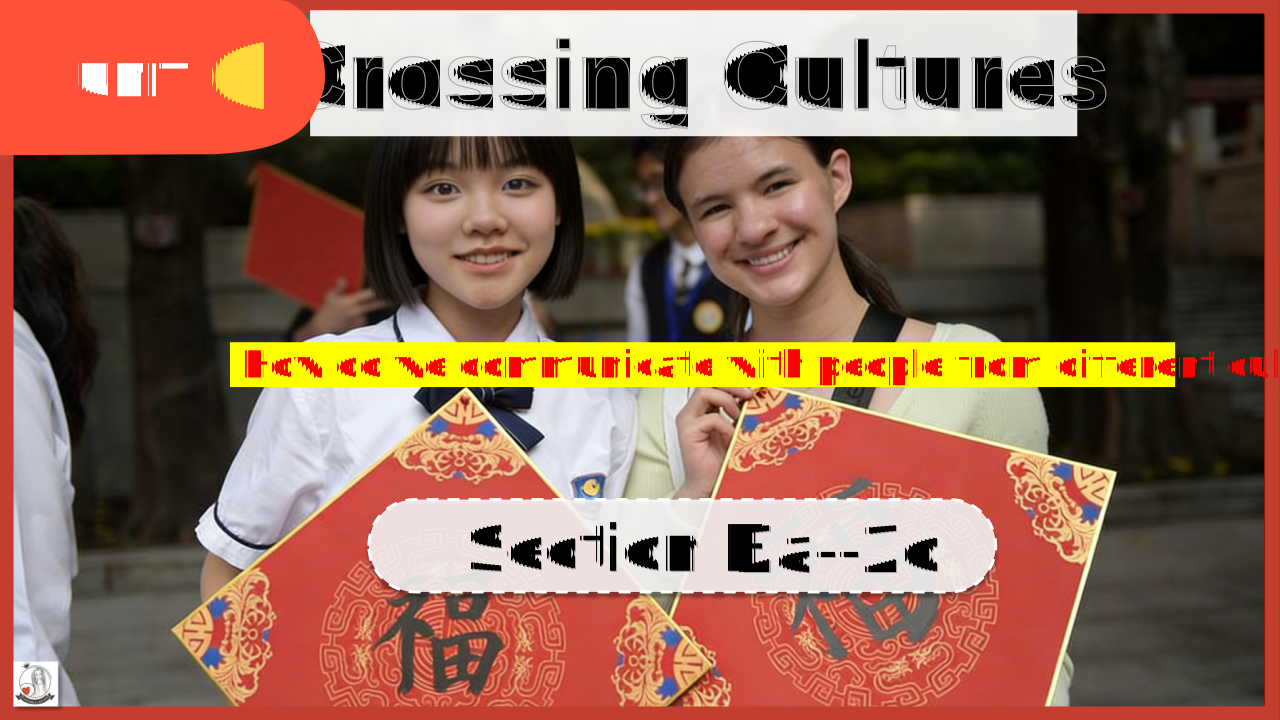
How do we communicate with people from different cultures?
Crossing Cultures
UNIT
6
Section B 2a--2d
学习目标
能够理解形容词否定前缀un-和in-/im-的意义,并在语境中正确使用形容词或其否定形式。
能够掌握含有后缀-ing/-ed的成对形容词的意义区别并在语境中准确运用这两类形容词。
01
02
能够使用所学单词完成有关筷子文化的语篇,理解语篇的主旨和内涵,加深对亚洲筷子文化的了解,并能简要介绍使用筷子的礼仪。
03
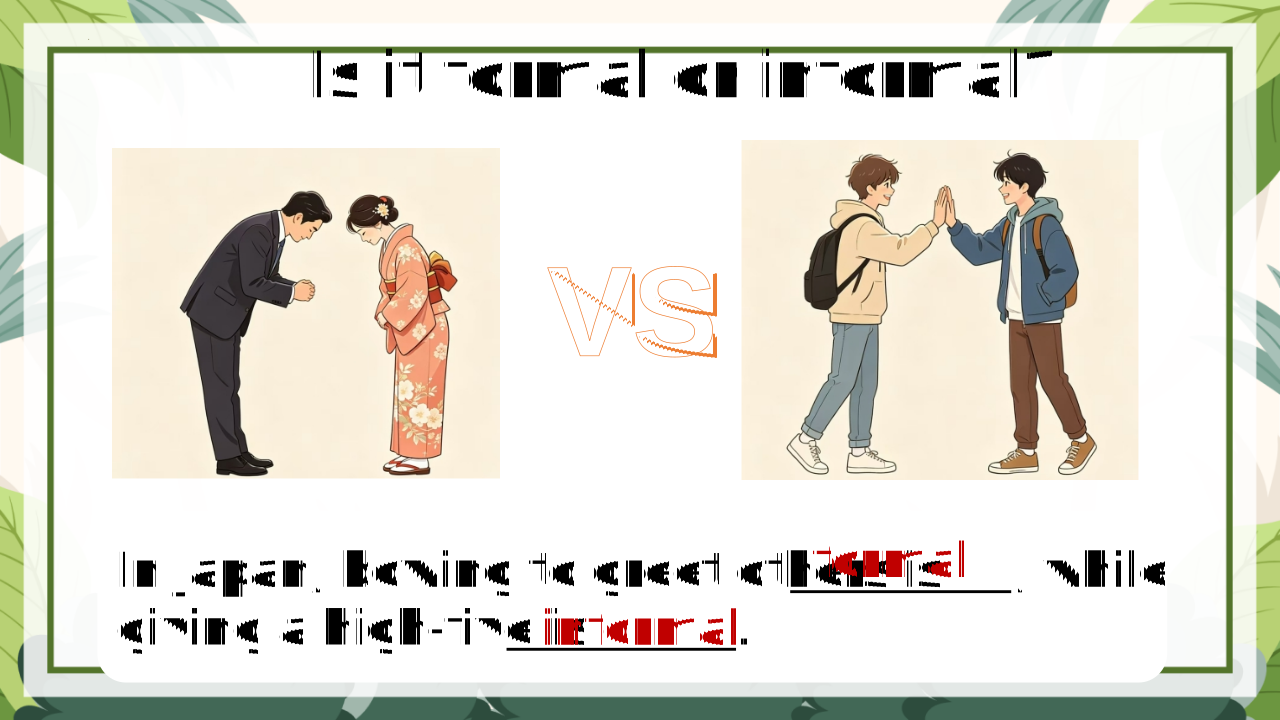
In Japan, bowing to greet others is , while giving a high-five is .
Is it formal or informal?
VS
formal
informal
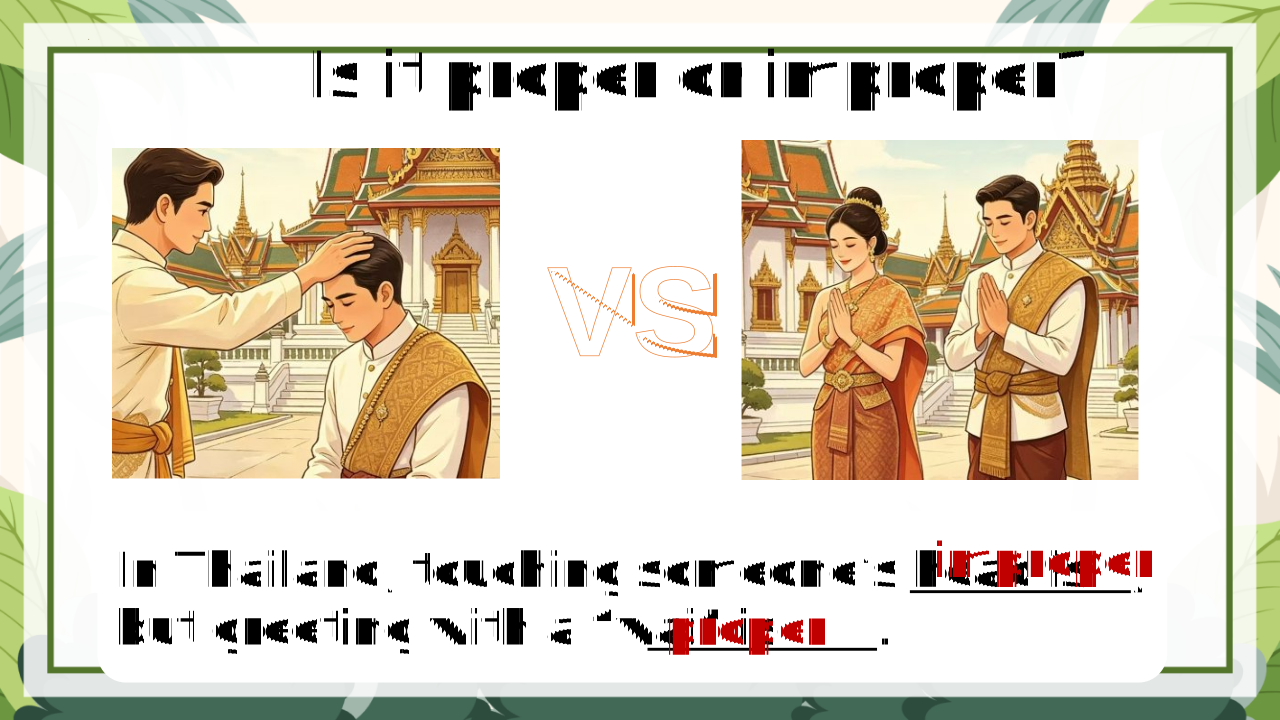
In Thailand, touching someone’s head is , but greeting with a “wai” is .
Is it proper or improper?
VS
improper
proper
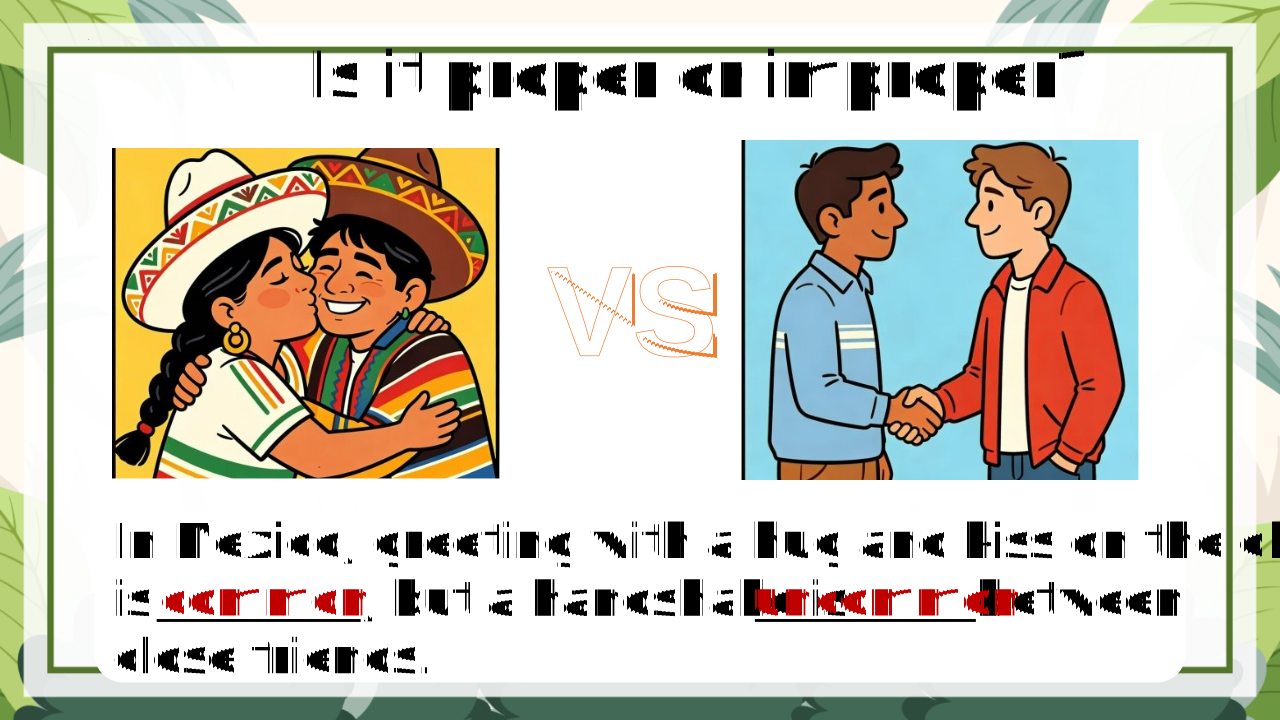
In Mexico, greeting with a hug and kiss on the cheek is , but a handshake is between close friends.
Is it proper or improper?
VS
common
uncommon
Let’s learn
safe
adj. “安全的,无风险的”
名词:safety 安全
反义词: unsafe 不安全的
状态安全:Is the water safe to drink?(这水安全吗?)
位置安全:You are safe here.(你在这儿很安全。)
结果安全:The missing child was found safe.(失踪的孩子被找到了,安然无恙。)
Let’s learn
formal
adj. “正式的,合规的”
名词:formality 正式手续
副词: formally 正式地
反义词:informal 非正式的
正式的 / 合规的:指遵循规则、礼仪或官方程序
Eg. You need to make a formal complaint in writing.
形式上的 / 拘谨的:指不随意、保持距离的态度
Eg. Their conversation was stiff and formal.(谈话生硬而拘谨)
Let’s learn
proper
adj. “恰当的,得体的”
名词:propriety 得体
副词: properly 恰当地
反义词:improper 不恰当的
Eg. Please follow the proper procedure.
请遵守恰当的程序。
Eg. This is a proper meal, not a snack.
这是正经的一餐,不是零食。
Let’s learn
possible
adj. “可能的”
名词:possibility 可能性
副词:possibly 可能地
反义词:impossible不可能的
It is possible (for sb) to do sth 对某人来说做某事是可能的
as...as possible:尽可能……
make it possible (for sb) to do:使……成为可能
if possible:如果可能的话
Let’s learn
friendly
adj. “友好的;友善的”
名词:friendliness 友善
反义词:unfriendly不友善的
常用介词搭配:
friendly to/towards sb:对某人友好
friendly with sb:与某人关系要好(相互的)
Eg. She’s friendly to everyone, but I’m friendly with her.
Let’s learn
direct
adj. “直接的;直率的”
名词:direction 方向
副词:directly 直接地
反义词:indirect 间接的
指路线/联系:a direct flight直飞航班;
指人/说话:direct and honest直率诚实
常见搭配:be direct with sb对某人坦率
Eg. She was direct with me about the problem.
Let’s learn
tidy
adj. “整洁的;井井有条的”
名词:tidiness 整洁
副词:tidily 整洁地
反义词:untidy 不整洁的
固定搭配:keep / leave sth tidy(保持整洁)
具体事物:a tidy desk / room
抽象事物:a tidy mind(清晰的头脑)
Let’s learn
healthy
adj. “健康的”
名词:health 健康
副词:healthily 健康地
反义词:unhealthy 不健康的
形容人或动物:Eg. Stay healthy by exercising.
形容生活方式/习惯:Eg. a healthy diet / lifestyle
形容经济/关系:状况良好的、兴旺的 Eg. a healthy economy
Let’s learn
perfect
adj. “完美的;理想的”
副词:perfectly 完美地
反义词:imperfect 不完美的
指状态/品质:a perfect day / smile (完美的一天)
指非常适合:This car is perfect for camping.
指完全的(强调语气):a perfect stranger完全陌生的人
Let’s learn
important
adj. “重要的;重大的”
名词:importance 重要性
副词:importantly 健康地
反义词:unimportant 不重要的
句型It is important (for sb) to do sth. 做某事对某人来说是重要的
Eg. It’s important to arrive on time.
Eg. It’s important for children to get enough sleep.
Let’s learn
common
adj. “常见的;普遍的;共同的”
名词:commonality 共同点
副词:commonly 通常地
反义词:uncommon 不常见的
常见的事物:a common problem / mistake / name
普遍的看法:It's common knowledge that...(…是常识)
共同点:common interests / goals
固定搭配:in common(共同之处)
Let’s learn
correct
adj. “正确的”
名词:correction 改正;更正
副词:correctly 正确地
反义词:incorrect 不正确的
correct: 侧重客观事实、标准答案,语气稍正式
right: 日常口语、道德判断,语气更随意
Lead in
Let’s learn opposite adjectives!
Write down the negative forms of the adjectives in the box using un- or in-/im-.
2a
safe formal proper possible friendly direct
tidy healthy perfect important common correct
un-: ________________________________________________________
unsafe,
unfriendly, untidy, unhealthy, unimportant, uncommon, unhappy
im- / in-: __________________________________________________
informal, improper,
impossible, imperfect, incorrect, indirect
Presentation
Look and say
dis-
im-
un-
non-
mis-
in-
译为“不 (是)”
“无”“非”等。
加在单词前面 ,
可变为该词的反义词 ,
表示否定意义的前缀
否定前缀
Presentation
Look and say
dis- 表否定
dis-
agree 同意
dis-
disagree
不同意
like 喜欢
dis-
dislike
不喜欢
“dis-” 加在________前,改变词义,使其表示与原动词相反的动作或状态。
动词
in-
in- 表否定
active 积极的
in-
inactive
不活跃的
ability 能力
in-
inability
无能力
“in-” 加在形容词或者_____前,表达否定的含义。
名词
Presentation
Look and say
im- 是 in- 变体,用于 b/m/p 开头单词前
possible 可能的
im-
impossible
不可能的
proper 恰当的
im-
improper
不恰当的
patient 耐心的
im-
impatient
不耐烦
im-
2. im- 的用法
适用词基类型:仅接以唇音字母 m / p 开头的形容词或名词。
接m开头词基:moral → immoral(不道德的)、mature →
immature(不成熟的)
接p开头词基:possible → impossible(不可能的)、patient →
impatient(不耐烦的)、polite → impolite(不礼貌的)
3. in- 的用法
适用词基类型:接以非 m / p 开头的形容词或名词,是 im- 的基础形式。
常见搭配:direct → indirect(间接的)、dependent →
independent(独立的)、finite → infinite(无限的)、
justice → injustice(不公)
Presentation
Look and say
un- 表否定,加在形容词前, 直接否定属性或状态。加在动词前, 表示 “逆转、取消原动作”; 加在名词前:表示 “否定状态或相反事物”。
un-
lucky幸运的
un-
unlucky
不幸的
comfortable舒适的
un-
uncomfortable
不舒服的
cover v. 覆盖
un-
uncover
揭开;揭露
rest n. 休息
un-
unrest
动荡
Let’s learn
否定前缀 un- / im- / in- , 三者均为否定前缀,加在词基前表示“不、非、无”的含义
1. un- 的用法
适用词基的类型:可接形容词和动词,少数接名词。
接形容词:happy → unhappy(不开心的)、healthy → unhealthy(不
健康的)、fair → unfair(不公平的)
接动词:do → undo(撤销)、cover → uncover(揭开)、lock →
unlock(解锁)
接名词:rest → unrest(动荡)、employment → unemployment(失业)
Presentation
non- 表否定
non-
stop n.停止
non-
nonstop
不间断的行程
sense n. 感觉
non-
nonsense
无意义的话
“non-” 加在_______或者_____前,表达否定的含义。
alcoholic(含酒精的 )
non-
non-alcoholic
不含酒精的
名词
形容词
Look and say
Presentation
mis- 表否定, 核心是 “错误性”描述动作的偏差或结果的不当。
mis-
place v. 放置
mis-
misplace
放错地方
understand v. 理解
mis-
misunderstand
误解
fortune n. 运气
mis-
misfortune
不幸;厄运
“mis-” 加在_______或者_____前,表达否定的含义。
名词
动词
Look and say
1.Saying “hi” is an ________ way to greet others. (formal)
2.It is ________ to point at people in many countries. (polite)
3.The host is certainly _______ when you enjoy yourself at their party. (happy)
4.People usually dress in formal clothes when visiting some public places such as concert halls. It is ________ to wear shorts, short skirts, or jeans there.(proper)
5.In some cultures, it is OK to be late sometimes. People are ________ even if their meetings don’t start on time. (patient)
informal
impolite
happy
improper
patient
Complete the sentences with the correct forms of the adjectives in brackets.
2b
point at 指着离说话人比较近的人或者物
point to 指着离说话人比较远的人或者物
Look at the compound words in the box. Do you know what they mean? Complete the sentences using five of these words.
2c
1. A: Did you understand the rules? I found them confused / confusing.
B: I was confused / confusing at first too, but Mr Thompson explained
them to me.
2. A: Isn’t it excited / exciting that James will marry Jennifer next month?
B: Yes! I’m so excited / exciting, and I can’t wait to congratulate them.
3. A: Sally was a little embarrassed / embarrassing just now. She wished
her friend happy birthday on the wrong date.
B: Oh no! That can be embarrassed / embarrassing.
Complete the passage with the correct forms of the words in the box.
2d
normal last manner proper challenge
In many Asian countries, it is ________ for people to eat with chopsticks. There are many rules and traditions about how to use chopsticks _________.
Firstly, don’t stick your chopsticks into food. That is very bad ________. Secondly, don’t pull dishes close to you with your chopsticks.Thirdly, don’t point at others with your chopsticks or wave them about when you talk. _______, hold your chopsticks correctly. Using chopsticks looks easy, but it can actually be a little __________. The key thing is to keep trying. With plenty of practice, anyone can learn to use chopsticks well!
normal
properly
manners
Lastly
challenging
Presentation
Read and fill
Read and fill in the blanks.
2d
Chopstick manners
Introduction
Main body
Conclusion
common, normal in many Asian countries; many rules and traditions to use chopsticks properly
1. Don't _______ chopsticks _______food (bad manners).
2. Don't pull dishes with chopsticks.
3. Don't ________ others or wave chopsticks when talking.
4. Hold chopsticks ___________.
Using chopsticks is a bit challenging but gets easier with practice; keep trying and you can learn to use them well!
stick into
point at
correctly
Language points
1. Isn’t it exciting that James will marry Jennifer next month?
詹姆斯下个月要和詹妮弗结婚了,难道不令人兴奋吗?
marry sb. 嫁给某人 / 和某人结婚
e.g. She married a doctor.
她嫁给了一位医生。
【拓展】get married 结婚(强调动作)
get married to sb. 和某人结婚
e.g. They got married last year.
他们去年结婚了。
She got married to a teacher.
她嫁给了一位老师。
be married 已婚的(强调状态)
e.g. He is married to a famous singer.
他和一位著名歌手结婚了。
① can’t wait to do sth. 迫不及待地做某事
e.g. I can’t wait to read this science fiction.
我迫不及待地想看这本科幻小说。
2. I’m so excited, and I can’t wait to congratulate them.
我太兴奋了,都等不及要去祝贺他们了。
【拓展】can’t wait for sth. 急切地等某事
e.g. I can’t wait for the vacation.
我急切地等待假期的到来。
② congratulate v. 祝贺
congratulate sb. 祝贺某人
congratulate sb. on sth. 因某事祝贺某人
e.g. I congratulated him on his success.
我祝贺他成功。
She congratulated me on passing the exam.
她祝贺我通过了考试。
【拓展】congratulation n. 祝贺(常用复数)
congratulations to sb. on sth. 在某方面祝贺某人
e.g. Congratulations to you on passing the exam.
祝贺你通过了考试。
一、根据语境,用否定前缀(un-、in-、im-)和动词的-ing/-ed形式,
将所给单词变形并填空,再按逻辑给句子按A-E排序。
1. ___Also,in Asian countries,it’s _________(proper) to stick chopsticks
upright in the food. This will make others ____________(disappoint).
2. ___These ________(usual) cultural differences can be __________
(interest) to learn about.
3. ___When visiting other countries, __________(familiar) customs can be
__________(surprise) at first.
C
improper
disappointed
D
unusual
interesting
A
unfamiliar
surprising
38
4. ___So,it’s good to know these rules—otherwise,we may do something
___________(common) and make people feel _________(confuse).
5. ___In many Western countries,it’s ________(polite) to ask people
about their age,which makes them feel ____________(embarrass).
E
uncommon
confused
B
impolite
embarrassed
39
二、用方框中所给单词的适当形式填空,使短文意思完整、通顺。
bow clear culture challenge third polite along manner whether
fork
Different countries have different customs.6. _________ we’re
eating,chatting,or meeting someone new,they guide how we act. Learning
them helps us get 7. ______ with people from other places.
Firstly,table 8. ________ differ(不同) a lot. In India,eating with
hands is 9. ______,especially with foods like curry and rice,but in
France,you need a knife and 10. _____.How interesting!
Whether
along
manners
polite
fork
40
Secondly,saying “no” correctly is 11. ___________.In Mexico,people
might nod slowly to mean “no”,because they don’t want to sound bad.
While in Germany,they’ll say it directly. They think it’s better to be 12.
______ than to confuse others.
13. ________,greeting manners vary. In Korea,14. ________ a little
shows respect,but in Brazil,a warm hug works better.
Lastly,knowing these 15. ________ manners lets us make friends
worldwide. It’s not always easy,but it’s totally worth it!#1.5
challenging
clear
Thirdly
bowing
cultural
从方框中选出下列句子中黑体单词的词义。
manner
A.(n.)方式;方法 B.(n.)态度
C.(n.)(pl.)礼貌;礼仪 D.(n.)(pl.)规矩;习俗
1.His manner towards others is always friendly.( )
2.She finished the work in a quick manner.( )
3.Different countries have different manners and customs.( )
4.It is bad manners to talk with your mouth full.( )
B
A
D
C
42
cheer
A.(n.)欢呼声;喝彩声 B.(v.)欢呼;喝彩
C.(v.)鼓励
5.All my classmates are cheering on their favourite players in the
playground.( )
6.Linda looks a little upset. Let’s go and cheer her up.( )
7.After the actress performed,a great cheer went up from the crowd.( )
B
C
A
43
correct
A.(adj.)正确的 B.(v.) 改正;纠正
C.(v.)批改
8.The teacher will correct our test papers after class.( )
9.Your answer to this maths problem is correct.( )
10.Please correct the spelling mistakes in your homework.( )
C
A
B
44
confused与confusing辨析
知识链接:讲解详见背记本P40考点1
confused confusing
1.The new maths problem is quite __________.I can’t work it out.
2.A survey shows 30% of teens feel _________ about their future jobs.
3.I like your story,but I’m _________ by the ending. Can you explain it?
4.The guide’s words were so __________ that we got lost.
confusing
confused
confused
confusing
45
so…that与so that辨析
知识链接:讲解详见背记本P40考点2
5.他跑得如此快,以至于我们追不上他。
He _____ ____ _____ _____ we can’t catch up with him.
runs
so
fast
that
6.她每天锻炼,以便能保持健康。
She _________ ______ _____ ____ _____ she can keep healthy.
exercises
every
day
so
that
46
7.He got up early to catch the first bus.(改为同义句)
He got up early ____ _____ he ______ catch the first bus.
so
that
could
8.The box is very heavy. I can’t carry it.(改为同义句)
The box is ____ heavy _____ I can’t carry it.
so
that
47
unless的用法
知识链接:讲解详见背记本P40考点3
9.He will never stop exploring the world _______ he is too old to move
on.
10.I will go to the park tomorrow unless it _______(snow) heavily.
11. ___________________________(除非他穿运动鞋),Mike can’t run
fast.
unless
snows
Unless he wears sports shoes
12.I will walk to the nature museum unless it rains this weekend.
(改为同义句)
I will walk to the nature museum ___ ___ ________ _____ this weekend.
if
it
doesn’t
rain
48
be used to doing sth.与used to do sth.辨析
知识链接:讲解详见背记本P40考点4
13.I used to _____(take) the bus to school. But now I choose to take
the subway because it is much quicker.
14.Lucy was shy before,but with practice,she is used to _________
(speak) in front of the class now.
15.Mr Zhou ________ eat lunch at school,but now he __________
bringing his own lunch from home.(used to/be used to)
take
speaking
used to
is used to
49
marry的用法
知识链接:讲解详见背记本P41考点5
16.Jack and Flora were excited to be ________(结婚的) and began their
life together.
17.Will they choose _________(marry) in spring or autumn?
18.His sister ________(marry) a dentist last week.
19.David Smith got married ___ a beautiful girl half a month ago.
married
to marry
married
to
50
1.Yesterday,I forgot my English book at home. It was so ____________
when the teacher asked to check our books. I felt really ____________
and didn’t know what to say. Luckily,this small mistake didn’t __________
me for long—my friend shared her book with me.(embarrass)
embarrassing
embarrassed
embarrass
2.We must put books in _______ places in the classroom. Leaving them
on the floor is _________.If we put things _________,our classroom will
stay tidy. This small habit helps everyone learn better.(proper)
proper
improper
properly
51
✍ 熟记本课时新单词,并挑选出5个单词造句,下节课上分享。
Homework
Lavf58.46.101
1488.979
$
资源预览图
1
2
3
4
5
6

相关资源
由于学科网是一个信息分享及获取的平台,不确保部分用户上传资料的 来源及知识产权归属。如您发现相关资料侵犯您的合法权益,请联系学科网,我们核实后将及时进行处理。