Unit 6 课时5 Section B(Vocabulary in Use)(分层作业)英语新教材人教版八年级下册
2026-04-10
|
3份
|
15页
|
389人阅读
|
2人下载
资源信息
| 学段 | 初中 |
|---|---|
| 学科 | 英语 |
| 教材版本 | 初中英语人教版八年级下册 |
| 年级 | 八年级 |
| 章节 | Vocabulary in Use |
| 类型 | 作业-同步练 |
| 知识点 | - |
| 使用场景 | 同步教学-新授课 |
| 学年 | 2026-2027 |
| 地区(省份) | 全国 |
| 地区(市) | - |
| 地区(区县) | - |
| 文件格式 | ZIP |
| 文件大小 | 753 KB |
| 发布时间 | 2026-04-10 |
| 更新时间 | 2026-04-10 |
| 作者 | Jenica166 |
| 品牌系列 | 上好课·上好课 |
| 审核时间 | 2026-04-10 |
| 下载链接 | https://m.zxxk.com/soft/57280283.html |
| 价格 | 2.00储值(1储值=1元) |
| 来源 | 学科网 |
内容正文:
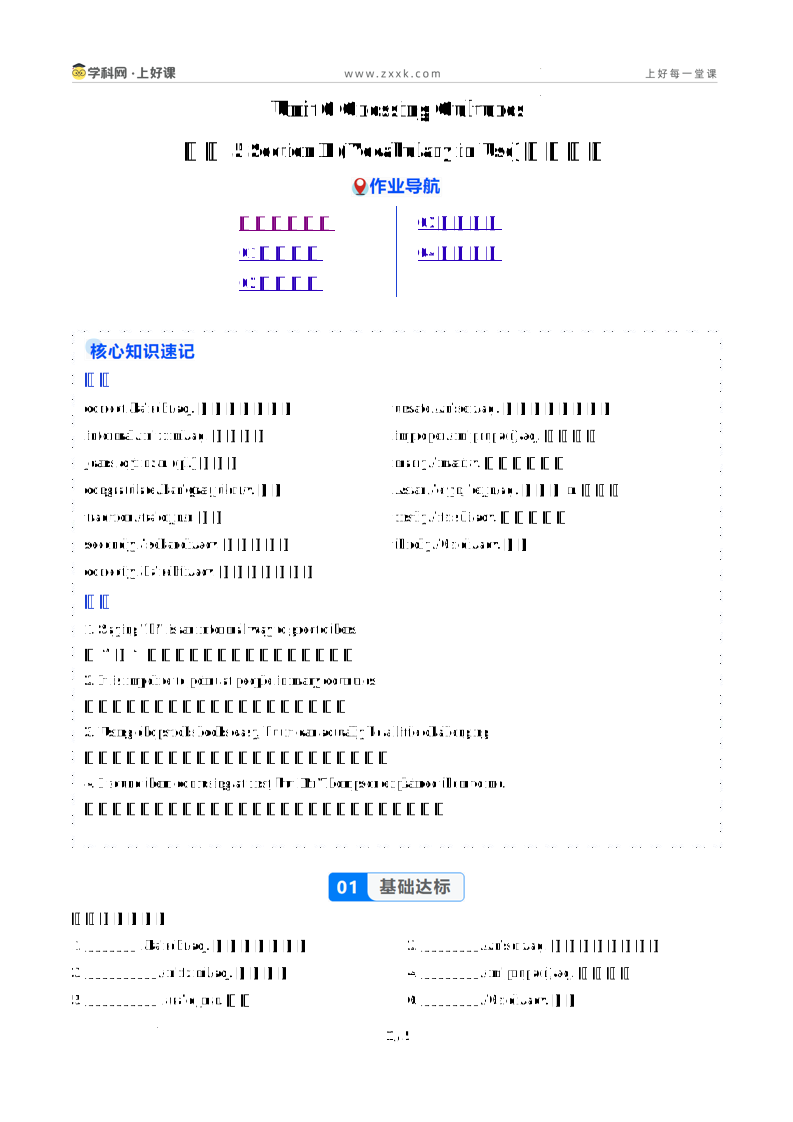
Unit 6 Crossing Cultures
课时5 Section B (Vocabulary in Use) 分层作业
核心知识速记
03拓展培优
01基础达标
04思维进阶
02能力提升
(
词汇
correct /
kəˈrekt
/adj.
正确的;恰当的
unsafe /
ʌnˈseɪf
/adj.
不安全的;危险的
informal /
ɪnˈfɔːml
/adj.
非正式的
improper /
ɪmˈprɒpə
(r)/adj.
不合适的
jeans /
dʒiːnz
/n. (pl.)
牛仔裤
marry /ˈ
mæri
/v.
结婚;娶;嫁
congratulate /
kən
ˈ
ɡ
rætʃuleɪt
/v.
祝贺
Asian /ˈ
eɪʒn
; ˈ
eɪʃn
/adj.
亚洲的
n.
亚洲人
tradition /
trəˈdɪʃn
/n.
传统
firstly /ˈ
fɜːstli
/adv.
第一;首先
secondly /ˈ
sekəndli
/adv.
第二;其次
thirdly /ˈ
θɜːdli
/adv.
第三
correctly /
kəˈrektli
/adv.
正确地;恰当地
句型
1.
Saying "hi" is an informal way to greet others.
说
“嗨”
是一种非正式的问候他人的方式。
2.
It is impolite to point at people in many countries.
在许多国家,用手指指着别人是不礼貌的。
3.
Using chopsticks looks easy, but it can actually be a little challenging.
用筷子看起来很简单,但实际上可能有点挑战性。
4.
I found them confusing at first, but
Mr
Thompson explained them to me.
一开始我觉得它们很令人困惑,但汤普森先生给我解释了。
)
一、单词默写。
1. _______ /kəˈrekt/adj. 正确的;恰当的 2. ________ /ʌnˈseɪf/adj. 不安全的;危险的
3. __________ /ɪnˈfɔːml/adj. 非正式的 4. ________ /ɪmˈprɒpə(r)/adj. 不合适的
5. __________ /trəˈdɪʃn/n. 传统 6. ________ /ˈθɜːdli/adv. 第三
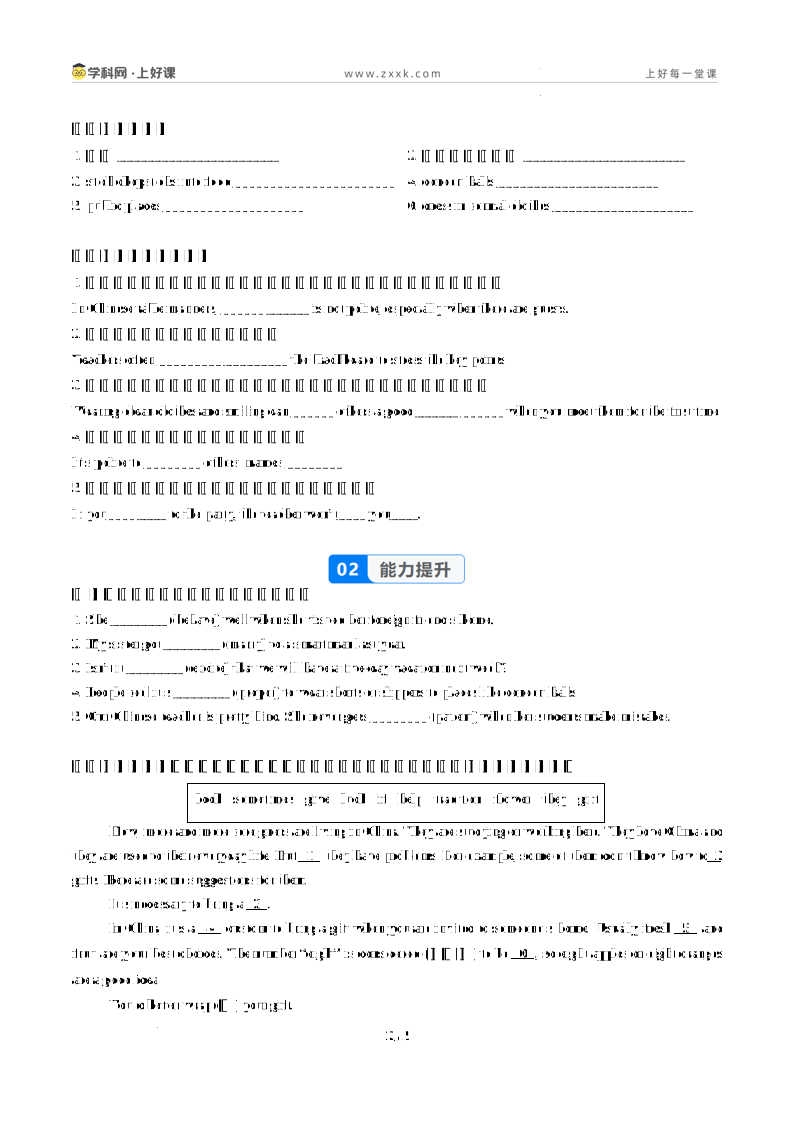
二、词组默写。
1. 指向 _______________________ 2. 迫不及待做某事 _______________________
3. stick chopsticks into food _______________________ 4. concert halls _______________________
5. public places ____________________ 6. dress in formal clothes ____________________
三、根据要求完成句子
1. 在中国的餐桌礼仪中,挥舞筷子是不礼貌的,尤其是有客人在场时。
In Chinese table manners, ______ ______ is not polite, especially when there are guests.
2. 老师经常指着黑板来强调重点。
Teachers often _________ _________ the blackboard to stress the key points.
3. 第一次见面时,穿干净的衣服并微笑能给别人留下好的第一印象。
Wearing clean clothes and smiling can ______ others a good ______ ______ when you meet them for the first time.
4. 正确地叫出别人的名字是有礼貌的。
It’s polite to ________ others’ names ________.
5. 如果你穿牛仔裤去参加聚会,老师将不让你进。
If you____ ____ to the party, the teacher won’t____ you____.
四 、用括号内所给词的适当形式填空。
1. She ________ (behave) well when she visited her foreign friend’s home.
2. My sister got ________ (marry) to a smart man last year.
3. Isn’t it ________ (excite) that we will have a five-day vacation next week?
4. People feel it’s ________ (proper) to wear shorts or slippers to places like concert halls.
5. Our Chinese teacher is pretty kind. She never gets ________ (patient) when her students make mistakes.
五、阅读短文,从方框中选择适当的词并用其正确的形式填空(每词限用一次)。
look sometimes give luck if help tradition flower they gift
Now, more and more foreigners are living in China. They are studying or working here. They love China and they are used to their everyday life. But 1 they have problems. For example, some of them don’t know how to 2 gifts. Here are some suggestions for them.
It’s necessary to bring a 3 .
In China, it’s a 4 custom to bring a gift when you are invited to someone’s home. Usually fresh 5 and fruit are your best choices. The number “eight” is considered (被认为) to be 6 , so eight apples or eight oranges are a good idea.
You’d better wrap (包) your gift.
When you buy a gift, the seller usually 7 you wrap the gift. Don’t be surprised if your gift is wrapped. Wrapping paper will make your gift 8 more beautiful. In China, people don’t open gifts at once. They usually do it in the evening or after you leave.
Give something that can be shared.
9 you have some co-workers, don’t give gifts to only one person. You’d better treat 10 equally. It’s better to give something that can be shared, like food.
六、完形填空。
A gift is necessary when one is invited to visit friends in China. After greetings, the gift should be passed immediately to the host. Remember that usually Chinese people will not open the gift in front of the person who gives 1 . To show the respect, it may be 2 to explain what the gift is. Bringing some nutrients and tonics (营养品、补品) to the elders in the family is a good idea. You can 3 prepare some small gifts for the hostess or kids of the host. The host usually makes full 4 by carefully tidying up the house and 5 a lot of delicious dishes. 6 the meal is well prepared, the host may say to the guest politely, “My preparation is not enough, please excuse me for my poor treat.” As a guest, you should make the host believe that there is plenty to eat by praising the food.
While eating, the elders will use chopsticks to 7 food for guests as a tradition and ask them to eat 8 . As a guest, you should accept their goodwill readily. But nowadays, the younger people do the traditional way less.
After dinner, tea and fruit are usually served. When the guests are to leave, the host may still politely ask them to stay. They don’t have to take it 9 and they can try to find a good time to leave. This doesn’t mean that leaving early is always a good idea as the host may feel that the guests are not satisfied with the treat. Finding the right time to leave 10 the situation.
1.A.it B.them C.that D.us
2.A.necessary B.careful C.comfortable D.exciting
3.A.too B.also C.either D.neither
4.A.plans B.decisions C.preparations D.weeks
5.A.enjoying B.cooking C.washing D.taking
6.A.But B.Although C.Because D.If
7.A.cut up B.eat up C.pick up D.take up
8.A.more B.less C.many D.least
9.A.completely B.seriously C.probably D.carefully
10.A.works out B.sticks to C.depends on D.turns on
七、阅读理解。
Many people love travelling to different countries, but if you plan to go abroad, you should know how to behave in different situations around the world.
①________
Most travellers enjoy meeting new people, but sometimes you can be rude without knowing the customs when people first meet. In Russia, you should never shake hands in the doorway. When the Japanese meet new people, they like giving business cards, but you should read the card carefully, not just put it in your pocket.
②________
In most countries in Europe, people expect a lot of eye contact when you talk to them, but in many Asian countries a lot of eye contact seems unfriendly. And in China, people usually stand quite close to each other when they talk, but in countries like the USA you need to give people more personal space.
③________
In restaurants in China, you can leave a bit of food on your plate. It’s OK to start smoking before other people finish eating, which you mustn’t do in the UK. When in India, remember to eat with your right hand. Also avoid leaving empty bottles on the dinner table in Russia—that’s too bad.
④________
When you are travelling in Asia, if someone invites you to his or her home, don’t forget to take off your shoes when you arrive. And if you visit an Arab family’s home, don’t admire anything valuable because your host will feel he should give it to you as a present.
With so much to think about, it’s not surprising that many people prefer going on holiday in their own countries, or they might just decide to stay at home! But anyway, wherever you go, please remember, you should respect the customs there and try to get used to the life there.
1.What is the theme of the passage?
A.Friends. B.Plans. C.Customs. D.Feelings.
2.Match the title with each paragraph (Paragraph 2-Paragraph 5).
a. Showing people’s love. b. Visiting a family.
c. Meeting new friends. d. Face-to-face communication.
e. Shaking hands. f. Table manners.
A.①→e, ②→a, ③→f, ④→b B.①→c, ②→a, ③→f, ④→d
C.①→c, ②→d, ③→f, ④→b D.①→e, ②→d, ③→f, ④→c
3.Which of the following statements is true?
A.In India, people eat with their left hand.
B.In Arab, we can admire something valuable in people’s home.
C.In Russia, it’s impolite to shake hands with people in the doorway.
D.In the USA, people usually stand quite close to each other when they talk.
4.What does the writer want to tell us?
A.Practice makes perfect.
B.Actions speak louder than words.
C.Where there is a will, there is a way.
D.When in Rome, do as the Romans do.
5.Which of the following best shows the structure of the passage?
A. B. C. D.
八、任务型阅读。
Akuapem is in the eastern part of Ghana. The sun shines all the time. The local people are very friendly and hospitable (好客的). Now, let’s have a look at how the Akuapem people receive a visitor.
A visitor is often welcomed warmly in a family of Akuapem. After the visitor is welcomed into the house, the host offers a seat and water at the very beginning, because the host thinks that the visitor must have come from a very long journey and needs water. If there is a group of visitors, the host will greet the visitors from right to left. And the host shakes hands only with his right hand, because the Akuapem people think the left hand is not clean.
Next, the host usually asks the visitor some questions. For example, the host may ask him how his journey was and why he has come. While the conversation is going on, the wife and the children, especially the girls, are preparing food for the visitor. The visitor can choose his favourite food. After the visitor finishes eating, the host and the visitor go on with their conversation. Usually, this is a short one because the visitor is getting ready to say goodbye.
When the visitor is leaving, he often receives some food. One of the children in the family also accompanies (陪伴) him to the nearest station. The child who accompanies the visitor will not come back home until the visitor leaves safely.
Whether he is a close friend or just a stranger, this is always how friendly Akuapem people receive a visitor.
1.What are the people in Akuapem like?
___________________________________________________________________________
2.How do Akuapem people often welcome a visitor?
___________________________________________________________________________
3.Why is a visitor often offered water at the very beginning?
___________________________________________________________________________
4.Why does the host only shake hands with the right hand?
___________________________________________________________________________
5.When will the child who accompanies the visitor return home?
___________________________________________________________________________
(
1
/
7
)
学科网(北京)股份有限公司
$
Unit 6 Crossing Cultures
课时5 Section B (Vocabulary in Use) 分层作业
一、单词默写。
correct; unsafe; informal; improper; tradition; thirdly
二、词组默写。
1. point at 2. can’t wait to do sth. 3. 把筷子插进食物里 4. 音乐厅 5. 公共场所 6. 穿正式服装
三、根据要求完成句子
1. waving chopsticks 2. point at 3. give first impression 4. call correctly 5. wear jeans; let in
四 、用括号内所给词的适当形式填空。
1. behaved 2. married 3. exciting 4. improper 5. impatient
五、阅读短文,从方框中选择适当的词并用其正确的形式填空(每词限用一次)。
1.sometimes 2. give 3.gift 4.traditional 5.flowers 6.lucky 7.helps 8.look 9.If 10.them
六、完形填空。
1.A 2.A 3.B 4.C 5.B 6.B 7.C 8.A 9.B 10.C
七、阅读理解。
1.C 2.C 3.C 4.D 5.D
八、任务型阅读。
1.They are very friendly and hospitable.
2.They often welcome a visitor warmly.
3.Because the host thinks the visitor has come from a long journey and needs water.
4.Because they think the left hand is not clean.
5.After the visitor leaves safely.
(
1
/
7
)
学科网(北京)股份有限公司
$
Unit 6 Crossing Cultures
课时5 Section B (Vocabulary in Use) 分层作业
核心知识速记
03拓展培优
01基础达标
04思维进阶
02能力提升
(
词汇
correct /kəˈrekt/adj.
正确的;恰当的
unsafe /ʌnˈseɪf/adj.
不安全的;危险的
informal /ɪnˈfɔːml/adj.
非正式的
improper /ɪmˈprɒpə(r)/adj.
不合适的
jeans /dʒiːnz/n. (pl.)
牛仔裤
marry /ˈmæri/v.
结婚;娶;嫁
congratulate /kənˈ
ɡ
rætʃuleɪt/v.
祝贺
Asian /ˈeɪʒn; ˈeɪʃn/adj.
亚洲的
n.
亚洲人
tradition /trəˈdɪʃn/n.
传统
firstly /ˈfɜːstli/adv.
第一;首先
secondly /ˈsekəndli/adv.
第二;其次
thirdly /ˈθɜːdli/adv.
第三
correctly /kəˈrektli/adv.
正确地;恰当地
句型
1.
Saying "hi" is an informal way to greet others.
说
“嗨”
是一种非正式的问候他人的方式。
2.
It is impolite to point at people in many countries.
在许多国家,用手指指着别人是不礼貌的。
3.
Using chopsticks looks easy, but it can actually be a little challenging.
用筷子看起来很简单,但实际上可能有点挑战性。
4.
I found them confusing at first, but Mr Thompson explained them to me.
一开始我觉得它们很令人困惑,但汤普森先生给我解释了。
)
一、单词默写。
1. _______ /kəˈrekt/adj. 正确的;恰当的 2. ________ /ʌnˈseɪf/adj. 不安全的;危险的
3. __________ /ɪnˈfɔːml/adj. 非正式的 4. ________ /ɪmˈprɒpə(r)/adj. 不合适的
5. __________ /trəˈdɪʃn/n. 传统 6. ________ /ˈθɜːdli/adv. 第三
【答案】correct; unsafe; informal; improper; tradition; thirdly
二、词组默写。
1. 指向 _______________________ 2. 迫不及待做某事 _______________________
3. stick chopsticks into food _______________________ 4. concert halls _______________________
5. public places ____________________ 6. dress in formal clothes ____________________
【答案】1. point at 2. can’t wait to do sth. 3. 把筷子插进食物里 4. 音乐厅 5. 公共场所 6. 穿正式服装
三、根据要求完成句子
1. 在中国的餐桌礼仪中,挥舞筷子是不礼貌的,尤其是有客人在场时。
In Chinese table manners, ______ ______ is not polite, especially when there are guests.
2. 老师经常指着黑板来强调重点。
Teachers often _________ _________ the blackboard to stress the key points.
3. 第一次见面时,穿干净的衣服并微笑能给别人留下好的第一印象。
Wearing clean clothes and smiling can ______ others a good ______ ______ when you meet them for the first time.
4. 正确地叫出别人的名字是有礼貌的。
It’s polite to ________ others’ names ________.
5. 如果你穿牛仔裤去参加聚会,老师将不让你进。
If you____ ____ to the party, the teacher won’t____ you____.
【答案】1. waving chopsticks 2. point at 3. give first impression 4. call correctly 5. wear jeans; let in
四 、用括号内所给词的适当形式填空。
1. She ________ (behave) well when she visited her foreign friend’s home.
2. My sister got ________ (marry) to a smart man last year.
3. Isn’t it ________ (excite) that we will have a five-day vacation next week?
4. People feel it’s ________ (proper) to wear shorts or slippers to places like concert halls.
5. Our Chinese teacher is pretty kind. She never gets ________ (patient) when her students make mistakes.
【答案】1. behaved 2. married 3. exciting 4. improper 5. impatient
五、阅读短文,从方框中选择适当的词并用其正确的形式填空(每词限用一次)。
look sometimes give luck if help tradition flower they gift
Now, more and more foreigners are living in China. They are studying or working here. They love China and they are used to their everyday life. But 1 they have problems. For example, some of them don’t know how to 2 gifts. Here are some suggestions for them.
It’s necessary to bring a 3 .
In China, it’s a 4 custom to bring a gift when you are invited to someone’s home. Usually fresh 5 and fruit are your best choices. The number “eight” is considered (被认为) to be 6 , so eight apples or eight oranges are a good idea.
You’d better wrap (包) your gift.
When you buy a gift, the seller usually 7 you wrap the gift. Don’t be surprised if your gift is wrapped. Wrapping paper will make your gift 8 more beautiful. In China, people don’t open gifts at once. They usually do it in the evening or after you leave.
Give something that can be shared.
9 you have some co-workers, don’t give gifts to only one person. You’d better treat 10 equally. It’s better to give something that can be shared, like food.
【答案】1.sometimes 2. give 3.gift 4.traditional 5.flowers 6.lucky 7.helps 8.look 9.If 10.them
【导语】本文主要介绍了在中国生活的外国人赠送礼物的相关习俗和建议,包括礼物的选择、包装方式以及分享原则等。
1.句意:但他们有时会遇到问题。根据前文“They love China and they are used to their everyday life.”及备选词可知,他们已经适应了在中国的生活,但并非完全没有问题,此处需表达“偶尔、有时”的含义,因此用sometimes“有时”,符合语境。故填sometimes。
2.句意:例如,有些人不知道如何赠送礼物。根据“don’t know how … gifts”及备选词可知,此处是“疑问词+不定式”的固定结构,用于表达“如何赠送礼物”,give“给予”,因此用give,符合“how to give gifts”的结构。故填give。
3.句意:带一份礼物是有必要的。根据后文“it’s a ... custom to bring a gift”及备选词可知,文章主题是关于赠送礼物的习俗,此处呼应主题,表达“带一份礼物是有必要的”,因此用gift“礼物”,符合语境。故填gift。
4.句意:在中国,被邀请去别人家时带礼物是一种传统习俗。根据“it’s a … custom to bring a gift”及备选词可知,此处需用形容词修饰名词custom,tradition“传统”,是名词,因此用其形容词形式traditional“传统的”,符合“带礼物是传统习俗”的语境。故填traditional。
5.句意:通常新鲜的花和水果是你最好的选择。根据“fresh … and fruit are your best choices”及备选词可知,此处指与“fruit”并列的物品,且符合“新鲜”的描述,因此用flower的复数形式flowers“花”,“fresh flowers”是常见搭配,符合语境。故填flowers。
6.句意:数字“八”被认为是幸运的,所以八个苹果或八个橙子是个好主意。根据“The number ‘eight’ is considered to be … ”可知,此处需用形容词作表语,说明数字“八”的寓意,luck“运气”,是名词,因此用其形容词形式lucky“幸运的”,符合“八被认为是幸运数字”的文化背景。故填lucky。
7.句意:当你买礼物时,卖家通常会帮你包装礼物。根据“When you buy a gift, the seller usually … you wrap the gift”及备选词可知,主语the seller是第三人称单数,句子用一般现在时,谓语动词需用第三人称单数形式,help“帮助”,第三人称单数形式为helps,符合语境。故填helps。
8.句意:包装纸会让你的礼物看起来更漂亮。根据“Wrapping paper will make your gift … more beautiful”及备选词可知,此处是“make sth. do sth.”的固定结构,需用动词原形look“看起来”,符合“让礼物看起来更漂亮”的语境。故填look。
9.句意:如果你有一些同事,不要只给一个人送礼物。根据“… you have some co-workers, don’t give gifts to only one person”及备选词可知,此处需用引导条件状语从句的连词,因此用if“如果”,符合“如果你有同事,不要只给一个人送礼物”的逻辑,位于句首首字母需大写。故填If。
10.句意:你最好平等对待他们。根据“You’d better treat … equally”可知,此处指代前文的“co-workers”,需用they的宾格形式作treat的宾语,因此用them“他们”,是宾格代词,符合语境。故填them。
六、完形填空。
A gift is necessary when one is invited to visit friends in China. After greetings, the gift should be passed immediately to the host. Remember that usually Chinese people will not open the gift in front of the person who gives 1 . To show the respect, it may be 2 to explain what the gift is. Bringing some nutrients and tonics (营养品、补品) to the elders in the family is a good idea. You can 3 prepare some small gifts for the hostess or kids of the host. The host usually makes full 4 by carefully tidying up the house and 5 a lot of delicious dishes. 6 the meal is well prepared, the host may say to the guest politely, “My preparation is not enough, please excuse me for my poor treat.” As a guest, you should make the host believe that there is plenty to eat by praising the food.
While eating, the elders will use chopsticks to 7 food for guests as a tradition and ask them to eat 8 . As a guest, you should accept their goodwill readily. But nowadays, the younger people do the traditional way less.
After dinner, tea and fruit are usually served. When the guests are to leave, the host may still politely ask them to stay. They don’t have to take it 9 and they can try to find a good time to leave. This doesn’t mean that leaving early is always a good idea as the host may feel that the guests are not satisfied with the treat. Finding the right time to leave 10 the situation.
1.A.it B.them C.that D.us
2.A.necessary B.careful C.comfortable D.exciting
3.A.too B.also C.either D.neither
4.A.plans B.decisions C.preparations D.weeks
5.A.enjoying B.cooking C.washing D.taking
6.A.But B.Although C.Because D.If
7.A.cut up B.eat up C.pick up D.take up
8.A.more B.less C.many D.least
9.A.completely B.seriously C.probably D.carefully
10.A.works out B.sticks to C.depends on D.turns on
【答案】1.A 2.A 3.B 4.C 5.B 6.B 7.C 8.A 9.B 10.C
【导语】本文主要介绍了在中国拜访朋友时的礼仪,包括送礼、做客、用餐及离席等方面的习俗。
1.句意:记住,中国人通常不会在送礼物的人面前打开礼物。
it它;them它们;that那个;us我们。根据“the gift”可知,此处指代前文的“the gift”(单数),所以用“it”。故选A。
2.句意:为了表示尊重,解释礼物是什么可能是有必要的。
necessary有必要的;careful仔细的;comfortable舒适的;exciting令人兴奋的。根据“To show the respect”可知,为了表示尊重,解释礼物是有必要的。故选A。
3.句意:给家里的长辈带些营养品和补品也很好。
too也(用于句末);also也(用于句中);either也(用于否定句末);neither两者都不。根据“is…good”可知,此处是在句中表示“也”,所以用“also”。故选B。
4.句意:主人通常会做充分的准备,比如仔细整理房间,做很多美味的菜。
plans计划;decisions决定;preparations准备;weeks周。根据“by carefully tidying up the house and…a lot of delicious dishes”可知,整理房间、做菜都是做客前的准备,“make preparations”表示“做准备”。故选C。
5.句意:主人通常会做充分的准备,比如仔细整理房间,做很多美味的菜。
enjoying享受;cooking烹饪;washing洗;taking拿。根据“delicious dishes”可知,此处是“烹饪”美味的菜。故选B。
6.句意:虽然饭菜准备得很丰盛,但主人可能会礼貌地对客人说:“我准备得不够,见谅。”
But但是;Although虽然;Because因为;If如果。根据“the meal is well prepared”和“the host may say…‘My preparation is not enough’”可知,前后是让步关系,所以用“Although”表示“虽然”。故选B。
7.句意:吃饭时,长辈会按照传统用筷子给客人夹菜,并让他们多吃点。
cut up切碎;eat up吃光;pick up夹起(食物);take up占据。根据“use chopsticks to…food for guests”可知,长辈是用筷子给客人夹菜,所以用“pick up”。故选C。
8.句意:吃饭时,长辈会按照传统用筷子给客人夹菜,并让他们多吃点。
more更多;less更少;many许多;least最少。根据“ask them to eat”可知,长辈会让客人多吃点,所以用“more”。故选A。
9.句意:他们不必当真,可以找个合适的时间离开。
completely完全地;seriously认真地;probably可能地;carefully仔细地。根据“the host may still politely ask them to stay”可知,主人是礼貌挽留,客人不必当真,“take it seriously”表示“当真”。故选B。
10.句意:找到合适的离开时间取决于具体情况。
works out解决;sticks to坚持;depends on取决于;turns on打开。根据“the situation”可知,合适的离开时间是取决于具体情况的。故选C。
七、阅读理解。
Many people love travelling to different countries, but if you plan to go abroad, you should know how to behave in different situations around the world.
①________
Most travellers enjoy meeting new people, but sometimes you can be rude without knowing the customs when people first meet. In Russia, you should never shake hands in the doorway. When the Japanese meet new people, they like giving business cards, but you should read the card carefully, not just put it in your pocket.
②________
In most countries in Europe, people expect a lot of eye contact when you talk to them, but in many Asian countries a lot of eye contact seems unfriendly. And in China, people usually stand quite close to each other when they talk, but in countries like the USA you need to give people more personal space.
③________
In restaurants in China, you can leave a bit of food on your plate. It’s OK to start smoking before other people finish eating, which you mustn’t do in the UK. When in India, remember to eat with your right hand. Also avoid leaving empty bottles on the dinner table in Russia—that’s too bad.
④________
When you are travelling in Asia, if someone invites you to his or her home, don’t forget to take off your shoes when you arrive. And if you visit an Arab family’s home, don’t admire anything valuable because your host will feel he should give it to you as a present.
With so much to think about, it’s not surprising that many people prefer going on holiday in their own countries, or they might just decide to stay at home! But anyway, wherever you go, please remember, you should respect the customs there and try to get used to the life there.
1.What is the theme of the passage?
A.Friends. B.Plans. C.Customs. D.Feelings.
2.Match the title with each paragraph (Paragraph 2-Paragraph 5).
a. Showing people’s love. b. Visiting a family.
c. Meeting new friends. d. Face-to-face communication.
e. Shaking hands. f. Table manners.
A.①→e, ②→a, ③→f, ④→b B.①→c, ②→a, ③→f, ④→d
C.①→c, ②→d, ③→f, ④→b D.①→e, ②→d, ③→f, ④→c
3.Which of the following statements is true?
A.In India, people eat with their left hand.
B.In Arab, we can admire something valuable in people’s home.
C.In Russia, it’s impolite to shake hands with people in the doorway.
D.In the USA, people usually stand quite close to each other when they talk.
4.What does the writer want to tell us?
A.Practice makes perfect.
B.Actions speak louder than words.
C.Where there is a will, there is a way.
D.When in Rome, do as the Romans do.
5.Which of the following best shows the structure of the passage?
A. B. C. D.
【答案】1.C 2.C 3.C 4.D 5.D
【导语】本文是一篇说明文,主要介绍了不同国家和地区的社交与生活习俗,旨在提醒人们出国旅行时要尊重当地习俗、入乡随俗。
1.主旨大意题。根据“Many people love travelling to different countries, but if you plan to go abroad, you should know how to behave in different situations around the world.”可知,本文主要讲述的是如果你计划出国旅行,你应该知道在世界各地不同的情况下如何表现。故可推测出文章的主题是习俗。故选C。
2.最佳标题题。根据“Most travellers enjoy meeting new people, but sometimes you can be rude without knowing the customs when people first meet.”可知,①段讲述初次见面的礼仪,对应c.Meeting new friends;根据“In most countries in Europe, people expect a lot of eye contact when you talk to them, but in many Asian countries a lot of eye contact seems unfriendly.”可知,②段讲述面对面沟通时的眼神交流和距离差异,对应d.Face-to-face communication;根据“In restaurants in China, you can leave a bit of food on your plate.”可知,③段讲述不同国家的用餐礼仪,对应f.Table manners;根据“When you are travelling in Asia, if someone invites you to his or her home, don’t forget to take off your shoes when you arrive.”可知,④段讲述拜访家庭的礼仪,对应b.Visiting a family。因此匹配为:①→c,②→d,③→f,④→b。故选C。
3.细节理解题。根据“In Russia, you should never shake hands in the doorway”可知,在俄罗斯,在门口与人握手是不礼貌的。故选C。
4.推理判断题。根据“wherever you go, please remember to respect the customs there and try to get used to the life there”可知,作者主要是想告诉我们入乡随俗“When in Rome, do as the Romans do”的道理。故选D。
5.篇章结构题。根据文章内容可知,文章①段总起介绍出国旅行需了解习俗,②-⑤段分别从见面、沟通、用餐、拜访四个方面分述不同习俗,⑥段总结强调尊重当地习俗,结构为“总—分—总”。故选D。
八、任务型阅读。
Akuapem is in the eastern part of Ghana. The sun shines all the time. The local people are very friendly and hospitable (好客的). Now, let’s have a look at how the Akuapem people receive a visitor.
A visitor is often welcomed warmly in a family of Akuapem. After the visitor is welcomed into the house, the host offers a seat and water at the very beginning, because the host thinks that the visitor must have come from a very long journey and needs water. If there is a group of visitors, the host will greet the visitors from right to left. And the host shakes hands only with his right hand, because the Akuapem people think the left hand is not clean.
Next, the host usually asks the visitor some questions. For example, the host may ask him how his journey was and why he has come. While the conversation is going on, the wife and the children, especially the girls, are preparing food for the visitor. The visitor can choose his favourite food. After the visitor finishes eating, the host and the visitor go on with their conversation. Usually, this is a short one because the visitor is getting ready to say goodbye.
When the visitor is leaving, he often receives some food. One of the children in the family also accompanies (陪伴) him to the nearest station. The child who accompanies the visitor will not come back home until the visitor leaves safely.
Whether he is a close friend or just a stranger, this is always how friendly Akuapem people receive a visitor.
1.What are the people in Akuapem like?
___________________________________________________________________________
2.How do Akuapem people often welcome a visitor?
___________________________________________________________________________
3.Why is a visitor often offered water at the very beginning?
___________________________________________________________________________
4.Why does the host only shake hands with the right hand?
___________________________________________________________________________
5.When will the child who accompanies the visitor return home?
___________________________________________________________________________
【答案】1.They are very friendly and hospitable. 2.They often welcome a visitor warmly. 3.Because the host thinks the visitor has come from a long journey and needs water. 4.Because they think the left hand is not clean. 5.After the visitor leaves safely.
【导语】本文介绍了加纳东部阿夸佩姆人的待客之道:他们热情友好,会以递水、备餐、送行等方式招待访客,体现了当地独特的礼仪与文化。
1.根据“The local people are very friendly and hospitable.”可知,阿夸佩姆人非常友好且好客。故填They are very friendly and hospitable.
2.根据“A visitor is often welcomed warmly in a family of Akuapem.”可知,他们通常会热情地欢迎访客。故填They often welcome a visitor warmly.
3.根据“because the host thinks that the visitor must have come from a very long journey and needs water.”可知,主人认为访客一定经过了长途旅行,需要喝水。故填Because the host thinks the visitor has come from a long journey and needs water.
4.根据“because the Akuapem people think the left hand is not clean.”可知,阿夸佩姆人认为左手不干净。故填Because they think the left hand is not clean.
5.根据“The child who accompanies the visitor will not come back home until the visitor leaves safely.”可知,孩子会在访客安全离开后才回家。故填After the visitor leaves safely.
(
1
/
7
)
学科网(北京)股份有限公司
$
资源预览图
1
2

相关资源
由于学科网是一个信息分享及获取的平台,不确保部分用户上传资料的 来源及知识产权归属。如您发现相关资料侵犯您的合法权益,请联系学科网,我们核实后将及时进行处理。