Unit 7 Grammar Focus 语法课课件 2025-2026学年人教版七年级英语下册
2026-05-16
|
48页
|
660人阅读
|
7人下载
普通
资源信息
| 学段 | 初中 |
|---|---|
| 学科 | 英语 |
| 教材版本 | 初中英语人教版七年级下册 |
| 年级 | 七年级 |
| 章节 | Grammar Focus |
| 类型 | 课件 |
| 知识点 | - |
| 使用场景 | 同步教学-新授课 |
| 学年 | 2026-2027 |
| 地区(省份) | 全国 |
| 地区(市) | - |
| 地区(区县) | - |
| 文件格式 | PPTX |
| 文件大小 | 82.39 MB |
| 发布时间 | 2026-05-16 |
| 更新时间 | 2026-05-16 |
| 作者 | 匿名 |
| 品牌系列 | - |
| 审核时间 | 2026-05-16 |
| 下载链接 | https://m.zxxk.com/soft/57892128.html |
| 价格 | 2.00储值(1储值=1元) |
| 来源 | 学科网 |
摘要:
该初中英语课件聚焦一般过去时,通过《Yesterday Once More》歌词及过去与现在动作对比的情境导入,搭建从感知到理解的学习支架,系统讲解定义、时间标志词、动词过去式变化及句式结构。
其亮点在于以多元活动提升语言能力,如歌词分析、对话练习和短文填空,融入井冈山革命博物馆短文渗透文化意识,通过动词变化巧记口诀和归纳训练思维品质,分层作业与Checklist助力学习能力发展。学生能在实践中掌握知识,教师可高效开展教学。
内容正文:
Unit7
A Day to Remember
SectionA ( Grammar Focus 3a-3d )
>>>>>>>>
1. know the usage and the sentence structures of the simple past tense;
2. know how verbs change to the simple past tense;
3. talk about the past activities using the simple past tense.
情景导入
Scenario import
PART.01
1
情景导入
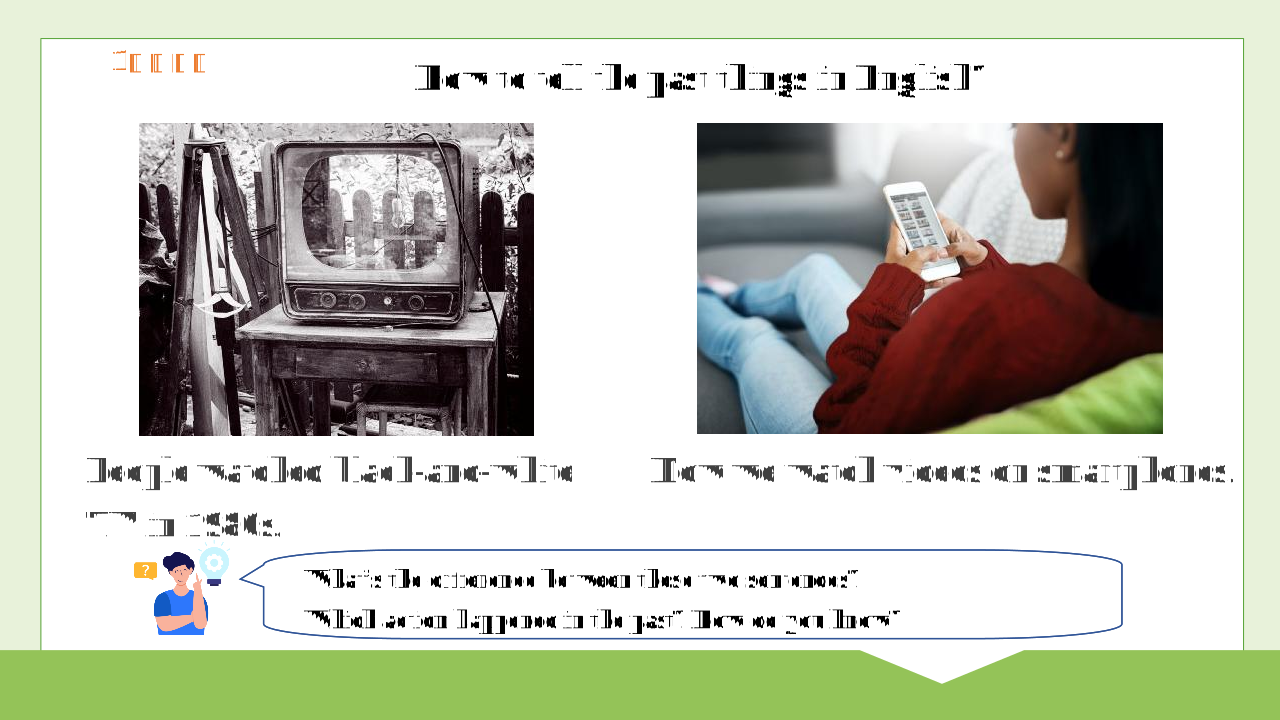
How to tell the past things in English?
People watched black-and-white TV in 1980s.
Now we watch videos on smartphones.
What’s the difference between these two sentences?
Which action happened in the past? How do you know?
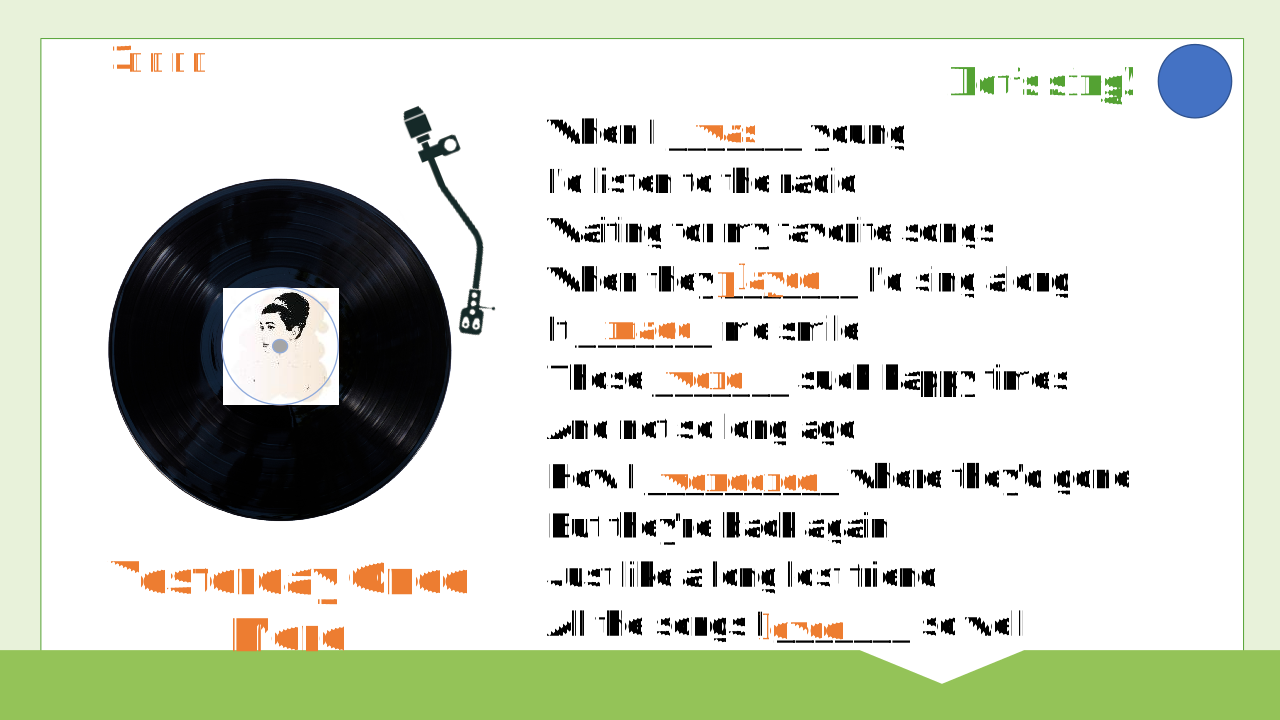
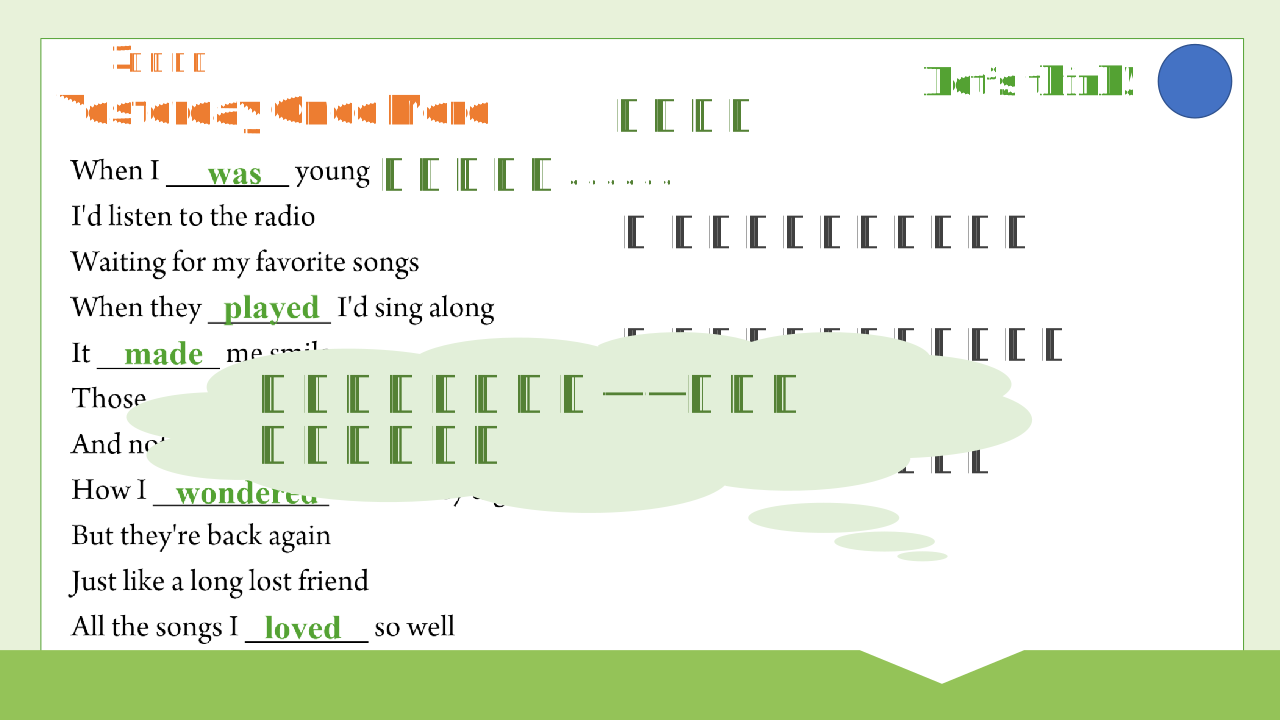
When I _______ young
I'd listen to the radio
Waiting for my favorite songs
When they _______ I'd sing along
It _______ me smile
Those _______ such happy times
And not so long ago
How I __________ where they'd gone
But they're back again
Just like a long lost friend
All the songs I _______ so well
情景导入
1
Let’s sing!
was
played
made
were
wondered
loved
Yesterday Once More
情景导入
1
Let’s think!
Yesterday Once More
这些动词原形是什么?
这些动词用的什么形式?
为什么用这种形式?
昨日重现
当我小时候......
动词的一般过去式——表示过去发生的事。
学习理解
Learning to understand
PART.02
学习理解
2
What is the past tense ?
定义:表示________某个时刻或某一时间发生的动作或状态;
表示________经常或反复发生的动作。
一般过去时
过去
过去
past
present(now)
future
I bought this coat last month. 我是上个月买的这件外套。
In ancient times, Chinese people often used willow branches as gifts when they said goodbye to their friends. 在古代,中国人与朋友告别时常常用柳枝作为礼物。
8
She _____ to Spain
yesterday.
yesterday morning
yesterday afternoon
yesterday evening
the day before yesterday
went
1. yesterday 系列
一般过去时—时间标志词
Let’s learn
I ______ a book
a week ago.
two months ago
three years ago
three hours ago
read
2. ago 系列——时间段+ago …之前
I ________ a friend
last year.
last month
last week
last night
last term
last Monday
3. last 系列 上一…
wrote
Let’s learn
一般过去时—时间标志词
He _____ to France
in 2005.
in 2018
in 2022
in the old days
in those days
4. in+过去年份/世纪
went
5. 其他常考时间状语
I loved eating meat in the past.
I did my homework just now.
I ate an egg this morning.
I was a student when I was 13.
in the past 在过去
just now 刚才
this morning 今天早上
过去的时间状语从句
补充:long long ago 很久以前
once upon a time 从前
Let’s learn
一般过去时—时间标志词
Read the sentences in 3a. Circle the verbs in the simple past tense. Then underline the time expressions for the past.
Did you see anything interesting at the science museum yesterday? Yes, I did. There was a space exhibition.
There were robots.
Did Teng Fei give the tourists the right directions last weekend? No, he didn’t. He felt bad about that.
Did you go on a school trip a week ago? Yes, we did. We went to a wastewater plant.
What did you do the day before yesterday? I visited the zoo with my family.
How was your weekend? It was terrible. I got on the wrong bus. I left my book on the bus too.
3a
Let’s learn
How to change the verbs into the past tense form ?
What is the past tense form ?
在一般过去时态中动词通常用动词的过去式来表示,而动词的过去式是在动词原形的基础上变化的,可分为规则动词和不规则动词。
动词
be动词
实义动词
am, is→was
are→were
规则变化
不规则变化
一般过去时—过去式
助动词
情态动词
do/does→did
can→could; will→would; may→might
Let’s learn
be动词的过去式
单数主语用was,you和复数主语用were。
1.My father _____ ill yesterday.
A.is B.are C.was D.were
2._____ your parents at home last week?
A.Is B.Was C.Are D.Were
3.They _____ in the USA last year.They _____ in China now.
A.are ; were B.were ; are
C.was ; are D.were ; were
C
D
B
练
Let’s learn
Rules Example Can you add more?
play—played visit—visited
live—lived
like—liked
stop—stopped
drop—dropped
study—studied
carry—carried
以不发音的字母e结尾的动词,在词尾加-d
以重读闭音节结尾且末尾只有一个辅音字母的动词,双写这个辅音字母再加-ed
以辅音字母+y结尾的动词,变y为i,再加-ed
一般情况下 直接在动词后面加-ed
walk—walked
clean—cleaned
dance—danced
hope—hoped
trip —tripped
plan—planned
cry —cried
【特别提醒】
(1) 在清辅音后,-ed 读/t/。如walked /wɔːkt/, stopped /stɒpt/。
(2) 在元音或浊辅音后,-ed读/d/。如lived /livd/,enjoyed /ɪnˈdʒɔɪd/。
(3) 在/t/和/d/后,-ed读/id/。 如studied /stʌdid/.
过去式要牢记,一 般词尾加ed。
called learned helped
词尾若有哑音e,直接加d就可以。
lived smiled hoped
元音+辅音重读闭音节:
元辅重闭做尾巴,双写之后加ed。
stopped planned slipped
若是辅音加上y,变y为i加ed。
cried tried buried
动词过去式规则变化
Let’s chant
Let’s learn
巧记:
过去式很简单,前提必须是动词, 结尾有e只加d
辅y结尾也不难,把y变i加ed, 末尾双写有哪些,辅音元音辅音记 其他动词很随和,带上ed成过去
练
写出下列动词的过去式
like -- ______ play-- ______
want -- ______ hope -- ______
carry -- ______ walk -- ______
cry -- ______ sit -- ______
liked
played
wanted
hoped
carried
walked
cried
sitted?
不规则变化
Let’s learn
do — did buy — bought keep — kept will — would
can — could bring — brought sleep — slept write — wrote
have/has — had think — thought feel — felt lie — lay
go — went fight — fought sweep — swept fly — flew
come — came catch — caught draw — drew lose — lost
eat — ate teach — taught know — knew fall — fell
see — saw sit — sat throw — threw drive — drove
meet — met swim — swam grow — grew find — found
say — said drink — drank blow — blew
tell— told give — gave get — got
make— made sing — sang wear — wore
take — took begin — began become — became
ought
aught
中间i
a来替
中间有双e
去e加上t
ow/ aw
变身ew
实义动词的不规则变化(AB型和AA型)
put — put let — let
cut — cut cost — cost
set — set shut — shut
hurt — hurt hit — hit
read — read spread — spread
一致
18
see-saw
go-went
have-had
do-did
run-ran
get-got
say-said
tell-told
make-made
tell-told
take-took
come-came
fly-flew
meet-met
lose-lost
give-gave
find-found
know-knew
eat-ate
wear-wore
write-wrote
draw-drew
break-broke
swim-swam
leave-left
keep-kept
bite-bit
grow-grew
hear-heard
win-won
feed-fed
sit-sat
begin-began
drink-drank
lead-led
put-put
think-thought
buy-bought
teach-taught
bring-brought
Let’s chant
英了个语
go
keep
send
took
rode
sing
write
buy
read
eat
went
sent
take
ride
sang
kept
bought
read
ate
wrote
一般过去时—句式结构
Let’s learn
含be动词
肯定句:主语+ was/ were+其它
否定句:主语+ was/ were+ not +其它
一般疑问句:Was/Were+主语+其它
特殊疑问句:疑问句+was/were+主语+其它
I was late for school yesterday.
am/is
are
was
were
I wasn’t late for school yesterday.
Were you late for school yesterday?
过去式
过去式
wasn’t
否定
否定
weren’t
Where were you yesterday?
一般过去时—句式结构
Let’s learn
含实义动词
肯定句:
主语+动词过去式+其它
否定句:
主语+ did not/didn’t +动词原形+其它
一般疑问句:
Did+主语+动词原形+其它
特殊疑问句:
特殊疑问句+did+主语+其它
I played basketball yesterday.
I didn’t play basketball yesterday.
Did you play basketball yesterday?
What did you do yesterday?
动词一般过去时, 表示过去发生的事;
be用was或用were, have,has变had;
谓语动词过去式, 过去时间作标志;
一般动词加-ed, 若是特殊得硬记。
否定句很简单, 主语之后didn’t添;
疑问句也不难, did放在主语前;
如果谓语之前有did,谓语动词需还原;
动词若是was,were, 否定就把not添。
应用实践
Application Practice
PART.03
1. my favourite actor, the day before yesterday, I, see, in a film
_____________________________________________
2. they, a day, spend, on a chicken farm, last month
_____________________________________________
3. two bottles of milk, on the table, a few minutes ago, there, be
_____________________________________________
4. last night, stop, the doctor, work, at ten o’clock
_____________________________________________
5. Ms Li, last Wednesday, meet, in the street, one of her friends
_____________________________________________
3b
Put the words in order. Write the sentences using the correct tenses.
I saw my favourite actor in a film the day before yesterday.
Last month, they spent a day on a chicken farm.
There were two bottles of milk on the table a few minutes ago.
The doctor stopped working at ten o’clock last night.
Ms Li met one of her friends in the street last Wednesday.
3c
Complete the passage with the correct forms of the verbs in the box.
Last week our class went on a school trip to Jinggangshan. In a museum, we _______ about important people like Mao Zedong and Zhu De. We _______ many things such as old photos, paintings, and guns. We also tried on some uniforms from the past. We _______ along the mountain roads and _______ about the past. Many people back then _______ hard to creat what we have today. It _______ a day to remember, and it made me want to work for a better future too.
What tense did Teng Fei use? How do you know?
Simple Past
Tense
3c
Complete the passage with the correct forms of the verbs in the box.
Last week our class went on a school trip to Jinggangshan. In a museum, we _______ about important people like Mao Zedong and Zhu De. We _______ many things such as old photos, paintings, and guns. We also tried on some uniforms from the past. We _______ along the mountain roads and _______ about the past. Many people back then _______ hard to creat what we have today. It _______ a day to remember, and it made me want to work for a better future too.
see learn be walk think work
learnt
saw
walked
thought
worked
was
例如
枪
试穿
道路
井冈山革命博物馆是为了纪念中国共产党创建的第一个农村革命根据地——井冈山革命根据地而建立的。它是我国第一个地方性革命史类博物馆,也是首批83家国家一级博物馆之一。
Jinggangshan Revolutionary Museum was built to commemorate Jinggangshan Revolutionary Base, the first rural revolutionary base established by the Communist Party of China. It is the first local museum of revolutionary history in China and is listed among the first batch of 83 national first-class museums.
井冈山革命博物馆旧馆于1958年经国家文物局批准兴建,1959年10月,中华人民共和国成立10周年之际竣工并对外开放。
With the approval of the State Administration of Cultural Heritage, the former site of the museum was built in 1958. In October 1959, on the 10th anniversary of the founding of the People’s Republic of China, it was completed and open to the public.
1965年5月毛主席重上井冈山时,亲自审定博物馆的基本陈列内容大纲。1962年3月,朱德委员长重上井冈山时,亲临博物馆视察,并亲笔题写“井冈山革命博物馆”馆名。
Jinggangshan Revolutionary Museum
迁移创新
Migration Innovation
PART.04
3c
Complete the summary of the conversation in 2a.
Last week our class went on a school trip to Jinggangshan. In a museum, we learnt about important people like Mao Zedong and Zhu De. We saw many things such as old photos, paintings, and guns. We also tried on some uniforms from the past. We walked along the mountain roads and thought about the past. Many people back then worked hard to create what we have today. It was a day to remember, and it made me want to work for a better future too.
What did the writer do on the school trip?
When did he go on a school trip?
Where did he go?
How was his trip?
Did he learn anything?
In pairs, ask each other about the activities you did yesterday and what time you did them. Then tell the class about your partner’s day.
3d
What did you ...?
Where did you ...?
When did you ...?
How was ...?
Did you learn anything ...?
Time Activity Detail
... 1. ____got up_____ ...
... 2. ______________ ...
... 3. ______________ ...
All in all, it was ___________________...
... got up at ... yesterday.
At ..., he / she ...
In the afternoon / After that / Then / At ... last night / And at ..., he / she ...
All in all, it was ...
Checklist
How well can you do these things? Very well OK Needs work
1. I know the usage and the sentence
structures of the simple past tense.
2. I know how verbs change to the
simple past tense.
3. I can talk about past activities using
the simple past tense.
Yesterday, Peter had a busy day. He got up at 5 a.m. and had bread and an egg for breakfast. Then he did some early morning reading. At 7:30, he left for school.
At school, he had math, Chinese, and science in the morning. He liked science best. After class, he played football. In the afternoon, he had art and PE. After school, he did homework in the library. When he got home, he helped his mom make noodles. After dinner, he watched TV. At 9:30, he went to bed.
Sample Writing
回顾总结
SUmmary
PART.05
回顾总结
5
含有yesterday的词组
last+时间
时间段+ago
in+过去时间
其他
once upon the time, at the age of.../ when sb was...
定义
1.用来描述在过去某个时候发生的动作或存在的状态。
2.也用来表示在过去某段时间里经常发生的习惯性动作。
标志词
基本结构
肯定句:主语+实义动词过去式+其他。
主语+be动词(was/ were)+其他。
否定句:主语+didn't 实义动词原形+其他。
主语+be动词(was/ were) not+其他。
一般疑问句:Did+主语+实义动词原形+其他?
Was/ Were+主语+其他?
考点速递
language points
PART.06
met up with friends
考点速递
6
I left my book on the bus too. 我还把我的书落在了公交车上。(P53,3a)
leave
①〔动词〕忘记带; 丢下
leave sth+地点状语 把某物忘在某地
I left my English book at home this morning.
今天早晨我把英语书忘在了家里。
②〔名词〕休假; 假期
He asked for three days’ leave.
他请了3天的假。
例
例
met up with friends
考点速递
6
We walked along the mountain roads and thought about the past. 我们沿着山路走着并且回顾着过去。(P53,3a)
①〔介词〕沿着;顺着。相当于 down。常表示某人或某物沿着某个方向或路径移动。
walk/go along/down the street沿着街道走
run along/down the river 沿着河跑步
②〔副词〕向前;一同;一道。与动词连用时,与on同义,表示“向前移动”。
We're going for a swim. Why don't you come along?
我们要去游泳。你为何不一起来?
along
例
met up with friends
考点速递
6
Many people back then worked hard to create what we have today. 过去的许多人努力创造了我们今天所拥有的东西。(P53,3a)
create 意为“创造”时,主要是指产生抽象的或精神上的新东西。create 还可以意为“引起;产生”指的是因为某个原因或行为导致某种结果或现象的发生。
The government tries to create more jobs for young people.
政府尽力为年轻人创造更多的就业机会。
create〔及物动词〕创造;创作
例
随堂练习
exercise
PART.07
Exercises
一、按要求写出正确的单词、词组或句子。
糟糕的(形容词) __________ 2. 演员 (名词) ___________
3. 枪(名词) __________ 4. 试穿(短语) __________
5. 沿着(介词) __________ 6. 马路(名词) __________
7. 创造(动词)__________ 8. 制服(名词)___________
9. 你看到有趣的事情了吗? ___________________________
10. 前天你做什么了?_______________________
11. 周末怎么样?___________________
12. 我把书落在了公交车上。
________________________________________
terrible
actor
gun
try on
along
road
create
uniform
Did you see anything interesting?
What did you do the day before yesterday?
How was your weekend?
I left my book on the bus.
单项选择
1.Lin Tao ________ to bring his English book to school this morning.
A.forget B.forgot C.will forget D.forgets
2.She finished her homework, ________ a book, and started reading.
A.takes B.took C.taking D.take
3.—Kangkang, have you ever been to Paris?
—Yes. I _____ there last July to see the opening ceremony of the 2024 Paris Olympics.
A.go B.went C.will go D.have gone
4.—What a nice bike! Where _________ you _________ it?
—In a store near my grandma’s home.
A.will; buy B.have; bought C.are; buying D.did; buy
B
B
B
D
Exercises
1. We ______ (live) in Japan last year.
2. Jack________ (stop) the car last Sunday.
3. Tom _______ (clean) my room and ______(study) for the Chinese test last weekend.
4.What ______ you ______(do) last night?
5. Carol _____ (pick) some strawberries and _____ (take) them home.
6.I ______ (visit) my grandparents in the countryside.
二、用所给动词的适当形式填空。
lived
stopped
cleaned
studied
did
do
picked
took
visited
三. 按要求完成句子, 每空一词。
1. Suzy stayed at home all day long. (对画线部分提问)
________ ______ Suzy ______ all day long?
2. Tom sat at the back of the classroom. (改为一般疑问句)
______ Tom _____ at the back of the classroom?
3. — Was Annie in the same group as you? (作否定回答)
— No, ______ ________.
4. I watched a very interesting movie last night. (对画线部分提问)
______ ______ you ______ last night?
she wasn't
Did sit
Where did stay
What did do
Exercises
5. I went to Hefei yesterday.(改为一般疑问句)
Did you go to Hefei yesterday?
6. The weather was very bad.(改为否定句)
The weather wasn’t very bad.
7. The girls had a good time on the school trip.(改为同义句)
The girls had fun/en on the school trip.
8. The science teacher cleaned the bus yesterday afternoon.(对画线部分提问)
W did the science teacher do yesterday afternoon?
Did
go
wasn’t
had fun/enjoyed themselves
What
did
do
Exercises
I____ up at 6:30 this morning. Then I _________ my teeth and _______ my face. I_____(wear) a comfortable suit of clothes. After that, I _________ a quick breakfast at 6:55. I _____(get) to school at 7:20. I ________(start) my morning reading at 7:30. I ________(prepare) the lessons at 8:00. Then I _______(check) my students’ homework at 8:40. I _______(teach) students at 9:40.
got
brushed
washed
wore
had/ate
got
started
prepared
checked
taught
Exercises
四. 短文填空。
46
家庭作业
homework
PART.08
家庭作业
8
常规作业
1. 完成练习册第三课时;
2. 记忆不规则动词的过去式。
进阶作业
用一般过去时写5句话描述上周末的活动。
拓展作业
用时间轴描述家人上周的活动(至少含2个不规则动词)。
null
241368.0
羊了个羊BGM
搁浅
羊了个羊BGM, track 1, disc 01
89365.805
XXX -
163 key(Don't modify):L64FU3W4YxX3ZFTmbZ+8/Va/EQ+UTdVjkMC4fodKRTcU5sxs32lV0T80kKdtrIMBYczTq4ezDdHUADm+QmSWgZaL/QDc8+nYVmLSho2iZU5TfD2cQkYSeEVO62RLOFdBBuohS3hl9Y88rQwMLUKQPWSepRupEq/v+tvxGwSJdahXRVrG7sG4vilBfDprf4AFoarxIdGAWK8UYzPaY5K25w23JpAq/upjVbkQDXmxQ5PXxh4ccLbPt2ZWf9RQZKJDBRbzcEMtlB8vQBcyk1VdJifHa5Si5cWHw3c12Kdv5Z705lwT+hdO6KfsPJaeY24FiIamqPGD2IZZVlIhLjkQpEMkUltzkybvMlmrm8GcWzm7VN5kfF7A8MLnALvsnSb2yWnJzT5U2IIgGKzakTyyn/ghAC9A3h+Ot5ws9JCXyS9lfwIgbxC+kMUsokxsjev0jUByx7mOvAcFir2H297cJfrfZfJ3uIRLVYoJIDJ+TTKj0vYhCiQxB3ghxlimRCxqyE+3g5gIkzs/83hu2fyCvw==
Lavf58.20.100
Packed by Bilibili XCoder v2.0.2
$
资源预览图
1

2
3
4
5
6
相关资源
由于学科网是一个信息分享及获取的平台,不确保部分用户上传资料的 来源及知识产权归属。如您发现相关资料侵犯您的合法权益,请联系学科网,我们核实后将及时进行处理。