Unit 4 Section A Grammar Focus 语法课课件 2025-2026学年人教版七年级英语下册
2026-03-30
|
41页
|
1519人阅读
|
24人下载
普通
资源信息
| 学段 | 初中 |
|---|---|
| 学科 | 英语 |
| 教材版本 | 初中英语人教版七年级下册 |
| 年级 | 七年级 |
| 章节 | Grammar Focus |
| 类型 | 课件 |
| 知识点 | - |
| 使用场景 | 同步教学-新授课 |
| 学年 | 2026-2027 |
| 地区(省份) | 全国 |
| 地区(市) | - |
| 地区(区县) | - |
| 文件格式 | PPTX |
| 文件大小 | 66.66 MB |
| 发布时间 | 2026-03-30 |
| 更新时间 | 2026-03-30 |
| 作者 | 匿名 |
| 品牌系列 | - |
| 审核时间 | 2026-03-30 |
| 下载链接 | https://m.zxxk.com/soft/57088297.html |
| 价格 | 2.00储值(1储值=1元) |
| 来源 | 学科网 |
内容正文:
Unit 4 Eat Well
Grammar Focus
1. master the rules of countable and uncountable nouns;
2. offer food and drink to others with the target language.
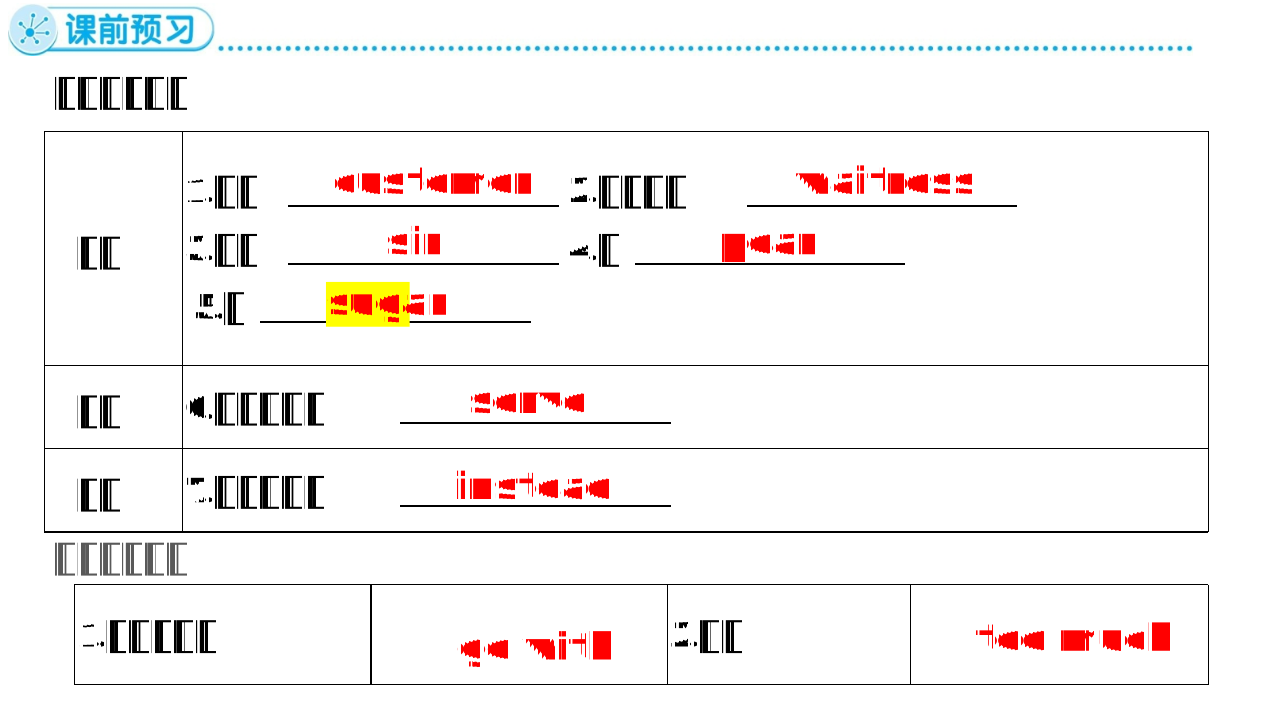
一、必背单词
名词 1.顾客 2.女服务员
3.先生 4.梨
5.糖
动词 6.提供;服务
副词 7.反而;代替
customer
waitress
sir
pear
sugar
serve
instead
二、重点短语
1.搭配;相配 2.太多
go with
too much
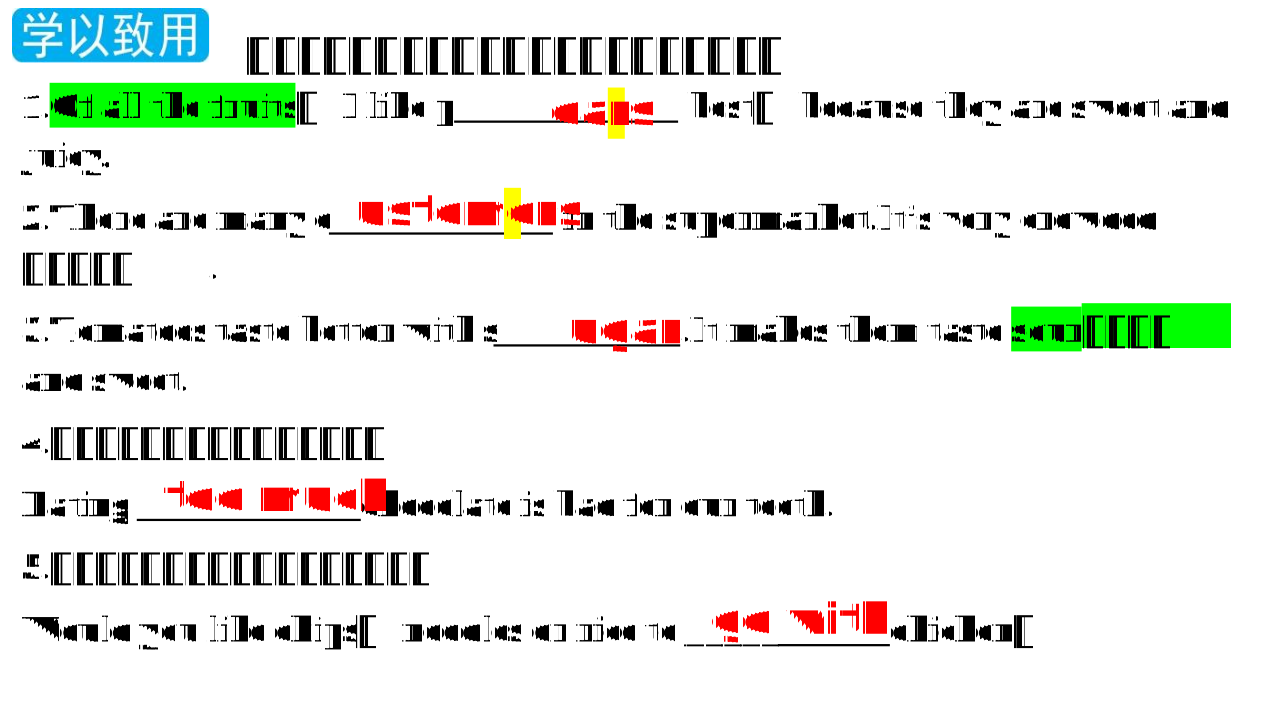
1.Of all the fruits, I like p best, because they are sweet and juicy.
2.There are many c in the supermarket.It’s very crowded (拥挤的).
3.Tomatoes taste better with s .It makes them taste sour(酸的) and sweet.
4.吃太多巧克力对我们的牙齿有害。
Eating chocolate is bad for our teeth.
5.您要炸薯条、面条还是米饭来配鸡肉?
Would you like chips, noodles or rice to _____ chicken?
请用以上重点单词、短语和句型完成下列句子。
ears
ustomers
ugar
too much
go with
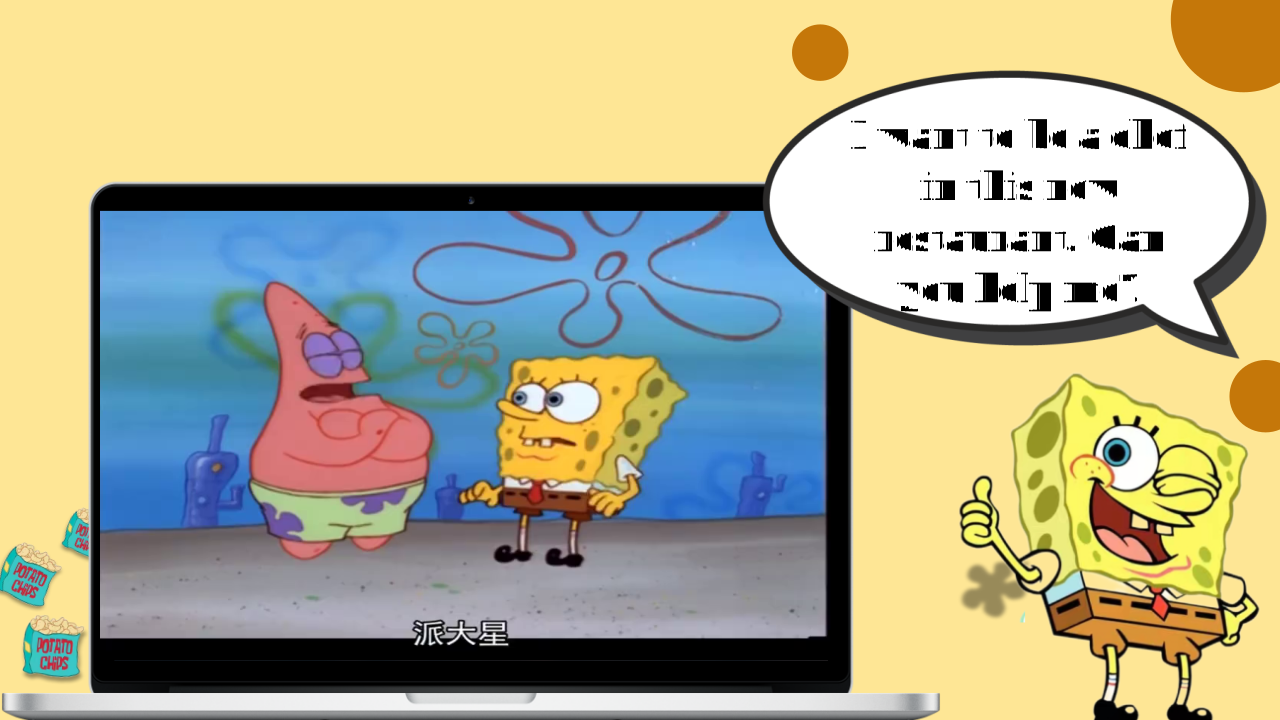
I want to be a chef in this new restaurant. Can you help me?
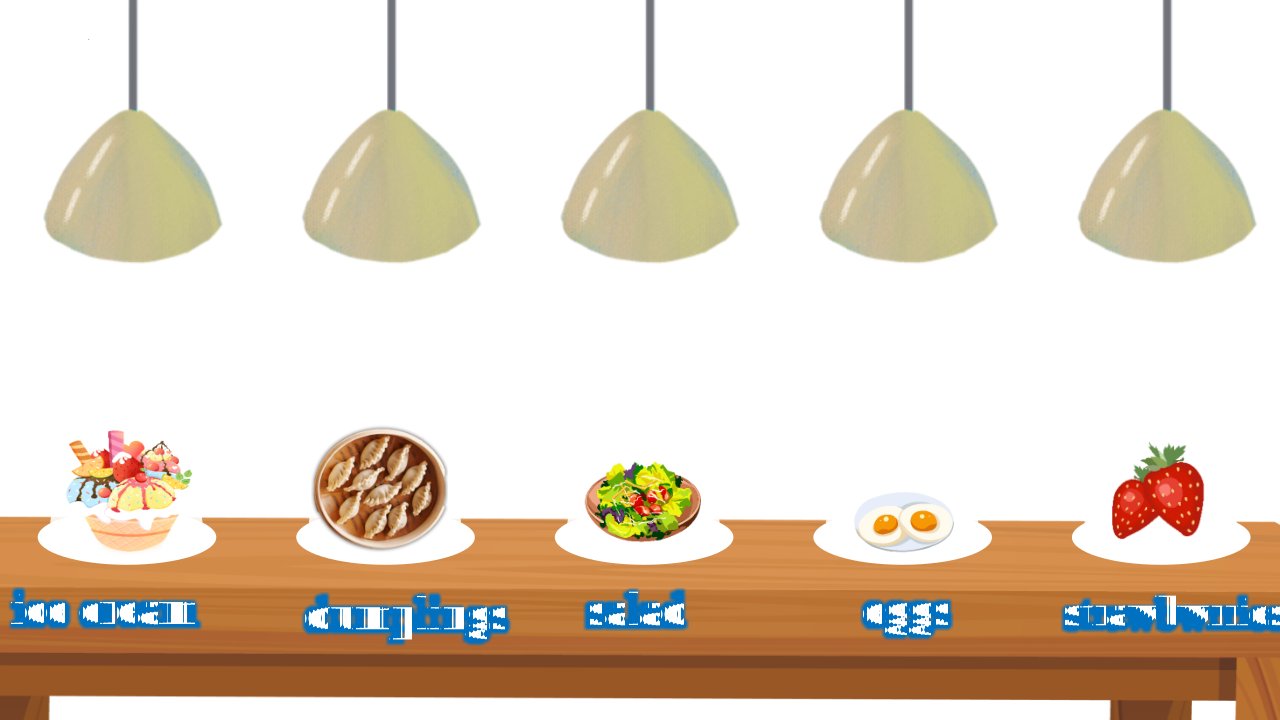
dumplings
salad
eggs
strawbwrries
ice cream
chips
rice
chicken
cookies
beans
mutton
pork
eggs
sugar
beef
cake
tofu
fish
hamburger
cabbage
阿黎老师原创课件,请勿侵权!微Alilaoshi68
小红书号:阿黎老师小助手 抖音号:阿黎老师3
In English, we can count some things.
apple
an
carrot
a
cake
a
apples
two
carrots
five
cakes
ten
countable nouns (可数名词)
In English, we can’t count some things.
water
salt
uncountable nouns (不可数名词)
名词是用来表示人、事物、地点、概念等的词,按其所表示的事物的性质分为可数名词和不可数名词。
Presentation
3a. Read the sentences. Circle all the nouns for food and drink.
What do you usually have for breakfast? I usually have some bread and milk. Sometimes I have eggs and beans.
Which would you like with your meal, rice or noodles? Noodles, please!
Would you like juice or coffee? No, thanks. I’d like a cup of tea.
Are they countable or uncountable in the context?
Countable nouns
Uncountable nouns
eggs
beans
noodles
bread
milk
rice
juice
coffee
tea
Presentation
Countable nouns & Uncountable nouns.
可数名词
不可数名词
定义:可以用数目来计算的名词。
定义:不能用数目来计算的名词。
分类:
个体名词:表示某类人或事物中的个体。(apple)
集体名词:表示作为一个整体来看的一群人或一些事物。(people)
分类:
物质名词:表示无法分为个体的物质。(milk)
抽象名词:表示动作、状态、情况、品质等抽象概念。(health)
形式:
分为单数和复数两种形式。
前面可以用不定冠词、数词或some、many等修饰。
形式:
没有复数形式。
前面不能用不定冠词、数词或many等修饰,但可以用some, a little, much.
Grammar Focus
常见的不可数名词
粉末/颗粒类,如:flour(面粉),rice(米饭)
液体、气体等,如:water(水),air(空气)
语言、学科等,如:English(英语),Chinese(汉语)
肉类,如:beef(牛肉),pork(猪肉)
油脂类,如:oil(油),butter(黄油)
一些抽象名词,如:knowledge(知识),friendship(友谊)
Presentation
How to change countable nouns into plural.
Examples
bean-beans dumpling-dumplings chip-chips
peach-peaches box-boxes bus-buses
straberry-straberries story-stories candy-candies
potato-potatoes tomato-tomatoes hero-heroes
photo-photos zoo-zoos piano-pianos
leaf-leaves knife-knives scarf-scarves
Rules
一般情况下,直接末尾加-s.
以s、x、sh、ch结尾,末尾加-es.
以“辅音字母+y”结尾,变y为i,再加-es.
以“o”结尾的单词, 一般有生命加-es, 一般无生命加-s.
以“f”或“fe” 结尾,变f或fe 为v,再加-es.
Presentation
How to change countable nouns into plural.
Irregular changes Examples
改变单词中间的元音字母 man-men woman-women
foot-feet tooth-teeth
mouse-mice goose-geese
在词尾加 -en/ren child-children ox-oxen(公牛)
单复数同形 sheep-sheep fish-fish
deer-deer(鹿) people-people
“某国人”变复数规则 中国、日本不变 Chinese-Chinese Japanese-Japanese
英国、法国a变e Englishman-Englishmen Frenchman-Frenchmen(法国人)
其余的国家加-s American-Americans German-Germans
(德国人)
Presentation
How to express the number of uncountable nouns.
不可数名词的量可以用 “a/an/基数词+表示量的名词(bottle/grass等) + of + 不可数名词” 表示,这些表示量的名词有单复数形式的变化。这一结构作主语时,谓语动词的单复数形式要与表示量的名词保持一致。
桌子上有一瓶牛奶。
There is a bottle of milk on the table. (谓语动词is与a bottle保持一致)
桌子上有三碗麦片粥
There are three bowls of porridge on the table. 。(谓语动词are与three bowls保持一致)
Presentation
Some nouns can be countable and uncoutable.
The chickens live on the farm.
I usually have chicken for lunch.
countable nouns
uncountable nouns
I catch a fish today.
I eat fish with every meal.
countable nouns
uncountable nouns
If nouns can be both countable and uncountable, they may have different meanings in different contexts.
Presentation
Some nouns can be countable and uncoutable.
Words Countable Uncountable
cabbage 一颗卷心菜 加工后的卷心菜,如切碎或烹饪后的状态
cake 一块蛋糕 蛋糕(食物)
drink 一杯饮料 泛指饮料
food 不同种类的食物 泛指食物或食品
fruit 不同种类的水果 水果的总称或集体名词
salad 一份沙拉 沙拉(食物)
sweet 一份甜点,糖果 甜食
tea 不同种类的茶 茶(饮品)
Noun (n.)
countable nouns:
uncountable nouns:
区别:作主语时谓语动词什么形式?
The two boys like playing football.
The boy likes playing football.
Happiness comes from within.
Bread is delicious.
What are the rules?
Noun (n.)
countable nouns:
uncountable nouns:
区别:作主语时谓语动词什么形式?
可数名词单数作主语时,谓语动词用第三人称单数形式;可数名词复数或两个及以上的单数可数名词作主语时,谓语动词用复数形式.
不可数名词作主语时,谓语动词用第三人称单数形式.
The two boys like playing football.
The boy likes playing football.
Happiness comes from within.
Bread is delicious.
chicken
salad
ice-cream
fish
sheep
hamburger
rice
sheep
chicken
pear
fish
bananas
strawberries
milk
tomatoes
fruit
food
bread
Countable nouns可数名词
Uncountable nouns不可数名词
Countable and
uncountable nouns
( )1.Please give me .
A.two glasses of orange B.two glass of oranges
C.two glasses orange D.two glasses oranges
( )2.—Can I help you, sir?
—I’d like to have two .I want to write some words.
A.piece of paper B.pieces of paper
C.pieces of papers D.piece of papers
A
B
( )3.—I want to make a fruit salad. yogurt do I need?
—You need yogurt.
A.How many; two cups of B.How much; two cup of
C.How much; two cups of D.How many; two cup of
( )4.The man keeps some on the farm, but he never has for meals.
A.chicken; chicken B.chicken; chickens
C.chickens; chicken D.chickens; chickens
C
C
Complete the jokes with the correct forms of the nouns in brackets.
3b
1. Customer: Do you serve _____(fish)?
Waitress: Sir, we serve everyone.
2. Waiter: Would you like the ____(bill) now?
Customer: You can bring it over, but I’m sure I won’t like it!
3. Waitress: Would you like_______(chip), ________(noodle)
or ______(rice) to go with your
________(chicken)?
Customer: I don’t know. Where is my chicken going?
fish
bill
chips
noodles
rice
chicken
上菜;提供
服务
serve sb (with) sth
=serve sth to sb
would like...想要...
喜欢
和鸡肉搭配
和鸡一起去
What does “serve” in customer’s words mean?
A. 提供 B. 服务
What does “serve” in waitress’s words mean?
A. 提供 B. 服务
1. Customer: Do you serve _______ (fish)?
Waitress: Sir, we serve everyone.
fish
1. 顾客问“你们提供鱼吗?”服务员回答“先生,我们服务所有人。”这里服务员误解了顾客的意思,顾客问的是是否提供鱼这道菜,而服务员却以为是在问是否为所有人提供服务,产生了幽默效果。
What does the word “bill” mean there?
A. 纸币 B. 账单
2. Waiter: Would you like the ________(bill) now?
Customer: You can bring it over, but I’m sure I won’t like it!
bill
2. 服务员问“您现在要账单吗?”顾客回答“你可以拿过来,但我肯定不喜欢!”这里顾客是在调侃账单上的金额可能会很高,表达了一种对可能产生的高额费用的担忧和幽默的不满。
What does “chicken” in customer’s words mean?
A. 鸡 B. 鸡肉
What does “chicken” in waitress’s words mean?
A. 鸡 B. 鸡肉
3. Waitress: Would you like ______ (chip), ________(noodle), or
_______(rice) to go with your _________(chicken)?
Customer: I don’t know. Where is my chicken going?
chips
noodles
rice
chicken
搭配;相配
3. 服务员问“您要配薯条、面条还是米饭和您的鸡肉一起吗?”顾客回答“我不知道。我的鸡肉要去哪里?”这里顾客故意曲解了服务员的意思,服务员问的是配菜和主菜一起吃,而顾客却以为是在问鸡肉要被端到哪里去,制造了幽默的误会。
GAME
—What would you like? —I would like...
potatoes
cabbages
beef
mutton
pancakes
porridge
noodles
pork
would like 表达什么意思?可以缩写吗?
would like 意为“愿意;喜欢”,与want意义相近,但比want语气更委婉、 更正式。would like可与任何人称连用,没有人称和数的变化;与人称代词连用时,would可缩写为“’d”。
①would like sth. “喜欢/想要某物”
I’d like a large bowl of noodles.
②would like to do sth.“想要做某事”
I would like to go to the park on weekends.
③would like sb. (not) to do sth.“想要某人(不)做某事”
My mother would like me to study hard.
—Would you like_________________?
—______________________. But I have to do my homewrok.
—Would you like___________________?
—_____________________.
to play soccer
to play basketball
Yes, I’d love/like to
Sorry, I’d love/like to
would like的一般疑问句及回答
肯定回答
否定回答
Look and say
—Would you like_________________?
—_________________.
—Would you like_______________?
—_________________.
some toamtoes
a large bowl
Yes, please
No, thanks
would like的一般疑问句及回答
肯定回答
否定回答
some用于疑问句中,表示委婉、请求、建议或希望得到肯定的回答。
Look and say
① — Is Joe's guitar on the bed or under the table?
— It's under the table.
② — Do you like apples or pears?
— Both, thank you.
③ — Where is Jill from, America or Australia?
— Neither. She is from the UK.
★结构
一般疑问句 + A or B ?
特殊疑问句 + A or B?
★答语
选择疑问句不能用Yes或No作答,通常选择所提供的某个选项,或用neither表示两者都不选,both表示两者都选。
选择疑问句是指提出两个或两个以上可能的答案供对方选择的句式。前一部分是一般疑问句或特殊疑问句,后面加上or提供给对方另一个可能的答案,让对方根据实际情况进行选择回答。
在读选择疑问句的时候,前面的选项通常用升调,以引起对方的注意和思考。而最后一项用降调,表示选择的结束和确定。
http://www.xyybs.com
( )1.—Can you swim or play chess?
— .
A.Yes, I am B.Yes, I can C.I can swim D.I don’t know
( )2.—Which season do you like better, winter or summer?
— .I like playing with snow.
A.Yes, I do B.No, I don’t C.Winter D.Summer
( )3.—Jack! Is your brother tall short?
—He is tall.
A.and B.or C.but D.if
C
C
B
Practice
3c. Complete the passage with the correct forms of the nouns in brackets.
I try to eat healthy food every day. I eat fruit and __________ (vegetable) with every meal. I don't eat _______ (sweet). Instead, I have a pear, a banana, or some ___________ (strawberry)! I love juice, but my mum says that it's not good to drink too much of it. It usually has a lot of _______ (sugar). Now I try to drink more _______ (water) and _______ (milk).
vegetables
sweets
strawberries
sugar
water
milk
try to do sth. 尽力做某事
try one’s best to do sth.
尽某人最大努力做某事
/ɪnˈsted/ adv. 反而;代替
/peə(r)/ n. 梨
too much 太多 (+不可数名词)
too many 太多 (+可数名词)
/ˈʃʊɡə(r)/ n. 糖
Practice
Analyze the passage.
I try to eat healthy food every day. I eat fruit and vegetables
with every meal. I don't eat sweets. Instead, I have a pear, a banana, or some strawberries! I love juice, but my mum says that it's not good to drink too much of it. It usually has a lot of sugar. Now I try to drink more water and milk.
What’s the main idea of the passage?
It’s about daily eating habits.
Topic sentence
What do I eat/drink everyday?
I eat fruit and vegetables with every meal.
What don’t I eat/drink everyday?
I don’t eat sweets.
What do I try to eat/drink everyday?
I try to drink more water and milk.
Production
3d. Imagine that your friends are at your home. Offer them food and drink.
A: What would you like, ... or ...?
B: I’d like ...
A: What ... would you like, ... or ...?
B: ..., please.
3-4 students in a group. One student is the host, and the others are guests. Roles can be rotated after each conversation.
Choose some food and drink items that you can serve your guests at home before the role-play.
Some useful expression you can add to the conversation.
It’s / That’s delicious!
Would you like some more?
Did you make this?
Where did you buy ...?
Can I have some more, please?
Checklist
Speak loudly&correctly
Proper intonation
Good body language
Good pronunciation
Watch and think
How do we eat healthily?
Exercises
一、按要求写出正确的单词、词组或句子。
顾客(名词) __________ 2. 提供;服务 (动词) ___________
3.女服务员(名词) __________ 4. 先生(名词) __________
5. 搭配(短语) __________ 6. 反而;代替 (副词) __________
7. 太多(短语)__________ 8. 糖(名词)___________
9. 你喜欢果汁还是咖啡? ___________________________
10. 你们提供鱼吗?_______________________
11. 相反,我吃梨和才没。___________________
12. 我每天努力吃健康的食物 ________________________________________
customer
serve
waitress
sir
go with
instead
too much
sugar
Would you like juice or coffee?
Do you serve fish?
Instead, I have a pear and strawberries.
I try to eat healthy food every day.
Exercises
二、根据语境,用括号内所给名词的适当形式填空。
1. There isn't any _______(porridge) in the restaurant.
2. Many _______(child) are playing in the park.
3. I need to buy two boxes of _______(milk) for breakfast.
4. Mom usually buys some vegetables and _______(meat) after work.
5. There's some _______(cabbage) in the baozi.
6. Those _______(animal) are in danger. Let's save them.
7. We'd like three cups of _______(tea), please.
porridge
children
milk
meat
cabbage
animals
tea
Exercises
三、根据短文内容及括号内所给单词的提示填空。
On Saturday morning, Dad and I want to have a picnic (野餐) in the park. But there isn’t any (1)_________ (food) at home, so we go to the food (2)__________ (shop) and buy some. I like eating (3)_________ (vegetable). So Dad makes sandwiches (三明治) with (4)_________ (bread), cabbage and (5)__________ (tomato). Then I put the sandwiches in a lunch bag. We usually eat some (6)__________ (fruit) after lunch.
So I put some (7)__________(banana) in the bag, too. Then Dad puts two bottles (瓶) of (8)__________(water) and (9)__________(juice) in the bag. We ride our (10)__________ (bike) to the park. Then we have our picnic under a big tree. Our picnic in the park is great fun.
food
shop
vegetables
bread
tomatoes
fruit
bananas
water
juice
bikes
Must-do:
Make a list of countable and uncountable nouns and tell the reasons.
Choose - to - do:
Draw a picture of a big meal, write the names of food and drinks on it and mark them countable[C], uncountable[U]or countable & uncountable[C&U]
Homework
Lavf58.29.100
Packed by Bilibili XCoder v2.0.2
$
资源预览图
1
2
3
4
5
6
相关资源
由于学科网是一个信息分享及获取的平台,不确保部分用户上传资料的 来源及知识产权归属。如您发现相关资料侵犯您的合法权益,请联系学科网,我们核实后将及时进行处理。