Unit 6 Learning by doing单元测试卷 2025-2026学年沪教版八年级英语下册
2026-05-16
|
14页
|
602人阅读
|
14人下载
资源信息
| 学段 | 初中 |
|---|---|
| 学科 | 英语 |
| 教材版本 | 初中英语沪教版八年级下册 |
| 年级 | 八年级 |
| 章节 | Unit 6 Learning by doing |
| 类型 | 作业-单元卷 |
| 知识点 | - |
| 使用场景 | 同步教学-单元练习 |
| 学年 | 2026-2027 |
| 地区(省份) | 广东省 |
| 地区(市) | 广州市 |
| 地区(区县) | - |
| 文件格式 | DOCX |
| 文件大小 | 44 KB |
| 发布时间 | 2026-05-16 |
| 更新时间 | 2026-05-16 |
| 作者 | 金科白云 |
| 品牌系列 | - |
| 审核时间 | 2026-05-16 |
| 下载链接 | https://m.zxxk.com/soft/57891670.html |
| 价格 | 1.00储值(1储值=1元) |
| 来源 | 学科网 |
摘要:
**基本信息**
广州专用Unit 6“Learning by doing”单元卷,以实践活动为核心情境,融合语法、阅读、写作模块,适配初中英语单元复习,强化语言运用与综合素养。
**题型特征**
|题型|题量/分值|知识覆盖|命题特色|
|----|-----------|----------|----------|
|单项选择|10/10|情态动词(should/had better)、词汇(acquire/opportunity)|基础语法与核心词汇结合,情境贴近学生活动|
|语法选择|10/15|时态(一般过去时)、情态动词|语篇围绕海报设计实践,考查语法在真实情境中的运用|
|完形填空|10/10|上下文理解、动词短语(give up/acquire)|以戏剧比赛经历为线索,渗透“做中学”思维品质|
|阅读|20/35|PBL项目、Dewey教育理念、社区服务|真实实践主题材料,考查信息获取与推理能力|
|写作|3节/30|语篇填词(skills/achievement)、句子翻译、活动描述|结合单元主题,强化综合语言输出与学习能力|
内容正文:
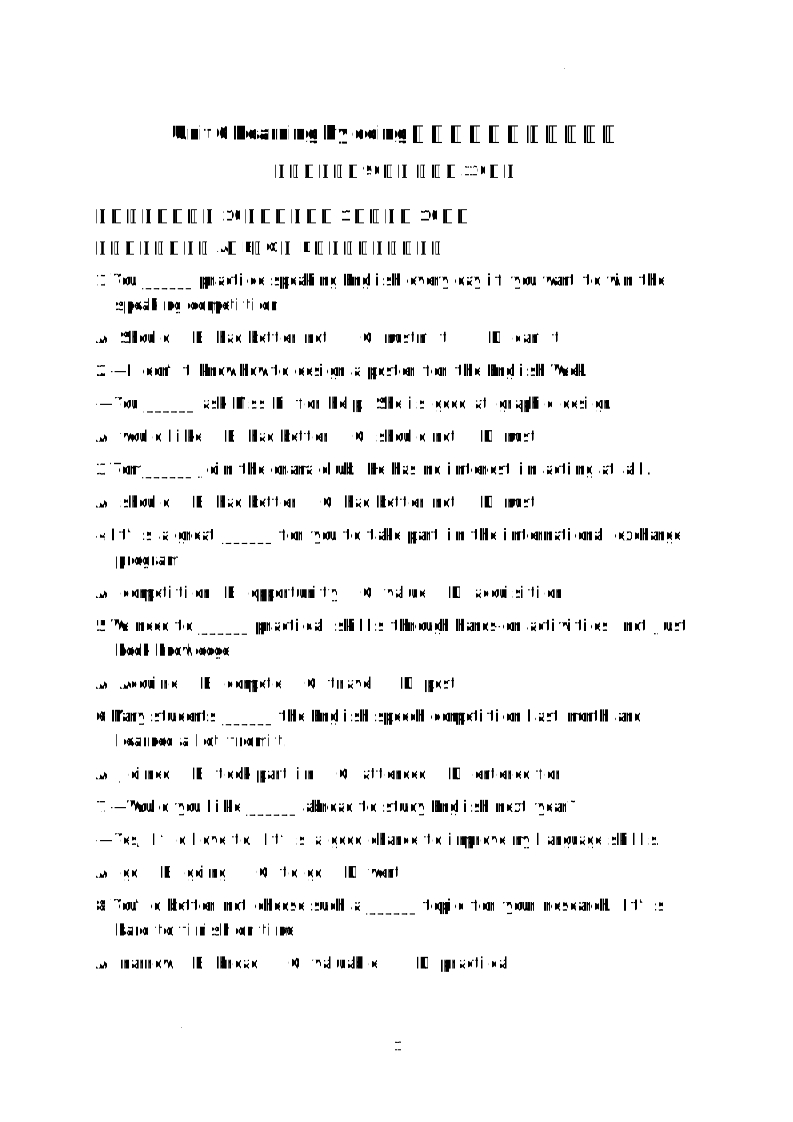
Unit 6 Learning by doing 单元测试卷(广州专用)
(考试时间:90 分钟 满分:110 分)
一、单项选择(共 10 小题;每小题 1 分,满分 10 分)
从下列各题所给的 A、B、C 和 D 项中选出最佳选项。
1.You ______ practice speaking English every day if you want to win the speaking competition.
A. Should B. had better not C. mustn’t D. can’t
2.—I don’t know how to design a poster for the English Week.
—You ______ ask Miss Li for help. She is good at graphic design.
A. would like B. had better C. should not D. must
3.Tom ______ join the drama club. He has no interest in acting at all.
A. should B. had better C. had better not D. must
4.It’s a great ______ for you to take part in the international exchange program.
A. competition B. opportunity C. value D. acquisition
5.We need to ______ practical skills through hands-on activities, not just book knowledge.
A. Acquire B. compete C. travel D. post
6.Many students ______ the English speech competition last month and learned a lot from it.
A. joined B. took part in C. attended D. entered for
7.—Would you like ______ abroad to study English next year?
—Yes, I’d love to. It’s a good chance to improve my language skills.
A. go B. going C. to go D. went
8.You’d better not choose such a ______ topic for your research. It’s hard to finish on time.
A. narrow B. broad C. valuable D. practical
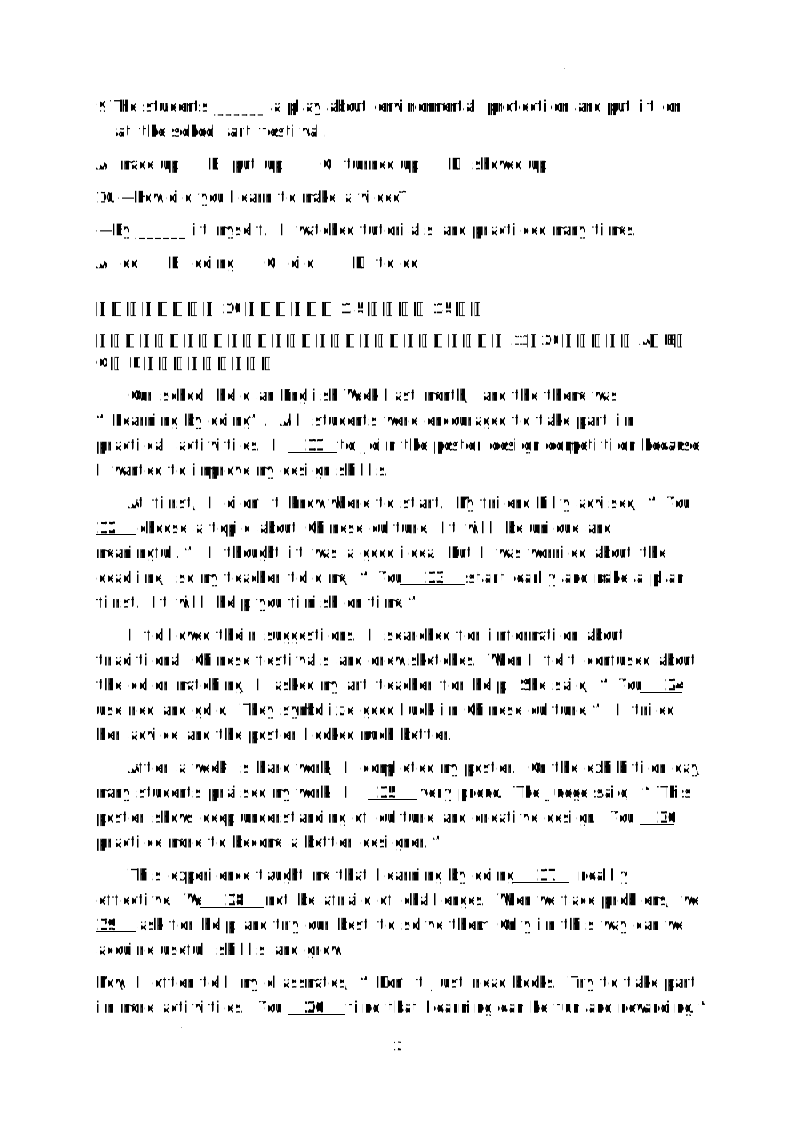
9.The students ______ a play about environmental protection and put it on at the school art festival.
A. made up B. put up C. turned up D. showed up
10.—How did you learn to make a video?
—By ______ it myself. I watched tutorials and practiced many times.
A. do B. doing C. did D. to do
二、语法选择(共 10 小题;每小题 1.5 分,满分 15 分)
阅读下面短文,按照句子结构的语法性和上下文连贯的要求,从 11~20 各题所给的 A、B、C 和 D 项中选出最佳选项。
Our school held an English Week last month, and the theme was “Learning by doing”. All students were encouraged to take part in practical activities. I 11 to join the poster design competition because I wanted to improve my design skills.
At first, I didn’t know where to start. My friend Lily advised, “You 12 choose a topic about Chinese culture. It will be unique and meaningful.” I thought it was a good idea. But I was worried about the deadline, so my teacher told me, “You 13 start early and make a plan first. It will help you finish on time.”
I followed their suggestions. I searched for information about traditional Chinese festivals and drew sketches. When I felt confused about the color matching, I asked my art teacher for help. She said, “You 14 use red and gold. They symbolize good luck in Chinese culture.” I tried her advice and the poster looked much better.
After a week’s hard work, I completed my poster. On the exhibition day, many students praised my work. I 15 very proud. The judge said, “This poster shows deep understanding of culture and creative design. You 16 practice more to become a better designer.”
This experience taught me that learning by doing 17 really effective. We 18 not be afraid of challenges. When we face problems, we 19 ask for help and try our best to solve them. Only in this way can we acquire useful skills and grow.
Now, I often tell my classmates, “Don’t just read books. Try to take part in more activities. You 20 find that learning can be fun and rewarding.”
11.A. decide B. decided C. will decide D. have decided
12.A. should B. had better not C. mustn’t D. can’t
13.A. Would B. should C. might D. could
14.A. had better B. should not C. mustn’t D. needn’t
15.A. Feel B. felt C. am feeling D. will feel
16.A. should B. had better not C. can’t D. mustn’t
17.A. is B. are C. was D. were
18.A. must B. should C. need D. may
19.A. must B. should C. would D. might
20.A. will B. would C. should D. must
三、完形填空(共 10 小题;每小题 1 分,满分 10 分)
阅读下面短文,掌握其大意,然后从各题所给的 A、B、C 和 D 项中选出最佳选项。
Lucy was a shy girl who didn’t like to speak in public. But when her school announced an English drama competition, her teacher encouraged her to join. “It’s a great chance to practice your English and build confidence,” Ms. Wang said. “You 21 try it. You might surprise yourself.”
Lucy was hesitant, but she decided to give it a go. She joined a group of classmates and they chose to perform a short play about friendship. At first, Lucy was too nervous to remember her lines. She often made mistakes and wanted to 22. But her teammates were patient. “Don’t worry,” they said. “We’ll practice together every day. You 23 take it step by step.”
They practiced after school every day. Lucy’s teammates helped her memorize lines and taught her how to express emotions. She also watched drama videos to learn acting skills. Slowly, Lucy became more confident. She realized that 24 by doing was the best way to learn.
On the performance day, Lucy felt excited rather than nervous. She performed her role 25 and the audience cheered loudly. Her group won the third prize. Lucy couldn’t believe it. She felt a strong sense of 26.
After the competition, Lucy changed a lot. She became more outgoing and often joined class activities. She even volunteered to give a speech about her experience. “27 you step out of your comfort zone, you’ll find your hidden talents,” she told her classmates.
Lucy’s story shows that learning by doing can change us in many ways. It helps us 28 new skills, build confidence, and make friends. When we face challenges, we 29 give up easily. Instead, we should keep trying and learn from mistakes.
Now, Lucy often says, “Every experience is a chance to grow. I’m glad I took the 30 to join the competition. It’s one of the most valuable things I’ve ever done.”
21.A. should B. mustn’t C. can’t D. had better not
22.A. go on B. give up C. keep up D. cheer up
23.A. should B. must C. can’t D. needn’t
24.A. reading B. listening C. learning D. speaking
25.A. badly B. carefully C. successfully D. quickly
26.A. achievement B. sadness C. worry D. failure
27.A. Unless B. If C. Though D. Because
28.A. lose B. forget C. miss D. acquire
29.A. shouldn’t B. should C. must D. can
30.A. time B. opportunity C. money D. advice
四、阅读(共两节,满分 30 分)
第一节 阅读理解(共 15 小题;每小题 2 分,满分 30 分)
阅读下列短文,从每题所给的 A、B、C 和 D 项中选出最佳选项。
(A)
Project-based learning (PBL) is a popular teaching method that follows the “Learning by doing” concept. Students work on projects for a period of time to solve real-world problems or create something useful.
In a middle school in Shanghai, students did a PBL project about renewable energy. They were divided into groups and each group chose a different energy source, such as solar energy or wind energy. First, they researched online and read books to collect information. Then, they designed models of energy-saving devices. Some groups built small solar-powered cars, while others made wind turbines.
During the project, students faced many challenges. For example, one group’s solar car didn’t work at first. They tested again and again, changed the design, and finally succeeded. They learned not only about renewable energy but also how to work in a team and solve problems.
At the end of the project, each group presented their work to the class. The teacher praised them for their creativity and hard work. “PBL helps students acquire practical skills and deepens their understanding of knowledge,” the teacher said. “It’s much more effective than traditional teaching methods.”
31.What is PBL based on?
A. Rote learning and memorization B. The “Learning by doing” concept
C. Teacher-centered teaching D. Online learning resources
32.What did the students do in the PBL project?
A. They wrote essays about renewable energy
B. They designed models of energy-saving devices
C. They visited power plants
D. They gave speeches about environmental protection
33.What did the students learn from the project?
A. Only renewable energy knowledge B. How to win competitions
C. Practical skills and teamwork D. How to use online tools
(B)
John Dewey, a famous educational philosopher, believed that “Education is not preparation for life; education is life itself.” He emphasized the importance of experiential learning, which is now called “Learning by doing”.
Dewey thought that students learn best through active participation in real-life activities, not just listening to teachers or reading books. For example, instead of only learning about plants from textbooks, students should grow plants themselves. They can observe how plants grow, water them, and solve problems like pests or lack of sunlight. Through this process, they gain direct experience and deeper understanding.
Dewey also believed that learning should be connected to students’ interests and daily lives. If students are interested in a topic, they will be more willing to learn and explore. Teachers should create meaningful situations for students to learn and grow.
Today, many schools around the world have adopted Dewey’s ideas. They organize field trips, hands-on experiments, and group projects. Students are encouraged to ask questions, think critically, and solve problems on their own. This approach not only helps students learn knowledge but also develops their creativity and practical skills.
34.What did John Dewey emphasize?
A. The importance of textbook learning B. The value of experiential learning
C. The need for more exams D. The role of teachers in classrooms
35.According to Dewey, how should students learn about plants?
A. By reading more textbooks B. By watching videos about plants
C. By growing plants themselves D. By listening to teachers’ lectures
36.Why should learning be connected to students’ interests?
A. Because it makes learning easier B. Because students will be more willing to learn
C. Because it helps teachers save time D. Because it leads to better exam results
37.What do schools do to adopt Dewey’s ideas?
A. They focus on rote memorization B. They organize hands-on activities and projects
C. They give more homework D. They use only online teaching tools
(C)
Last year, my class took part in a “Community Service” project as part of our “Learning by doing” program. Our goal was to help clean up the community park and make it a better place for everyone.
First, we had a meeting to plan our project. We discussed what needs to be done: picking up litter, planting flowers, and repairing broken benches. We divided into groups and assigned tasks. Some groups were responsible for cleaning, some for planting, and others for repairing.
On the project day, we arrived at the park early in the morning. We worked hard together. At first, picking up litter was tiring, but we encouraged each other. When we planted flowers, we learned how to dig holes, put in seeds, and water them properly. The park workers taught us some gardening skills, which was very useful.
During the project, we faced some problems. For example, some benches were too heavy to move. We discussed and found a way to use ropes to lift them. This taught us the importance of teamwork and problem-solving.
After a day’s work, the park looked much cleaner and more beautiful. The community residents thanked us, which made us feel proud. We also realized that small actions can make a big difference.
This project was a valuable experience. We didn’t just learn gardening and repairing skills; we also learned to care for our community and work with others. It showed us that learning by doing is not only fun but also meaningful.
38.What was the goal of the “Community Service” project?
A. To learn gardening skills B. To clean up the community park
C. To have fun with classmates D. To get good grades
39.How did the students divide their tasks?
A. They worked alone B. They divided into groups and assigned tasks
C. The teacher did most of the work D. They drew lots to choose tasks
40.What problem did the students face?
A. They didn’t have enough tools B. Some benches were too heavy to move
C. The weather was bad D. They didn’t know how to plant flowers
41.What did the students learn from the project?
A. Gardening skills, teamwork, and community care B. How to make money
C. How to win awards D. How to avoid hard work
(D)
English Week is a popular activity in many middle schools that promotes “Learning by doing”. Last month, our school held its annual English Week, and it was a great success.
The English Week included many interesting activities. There was a speaking competition where students gave speeches on various topics. A poster design competition encouraged students to show their creativity. We also had a drama performance night, where groups of students put on English plays.
One of the most popular activities was the “English Café”. Students acted as waiters and waitresses, and they had to speak English when serving food and drinks. This was a fun way to practice speaking English in a real-life situation. Many students said they felt more confident after the activity.
The English Week also invited a foreign teacher to give a lecture. He talked about his experience of learning Chinese and shared tips on language learning. He said, “The best way to learn a language is to use it as much as possible. Don’t be afraid to make mistakes—every mistake is a step forward.”
At the end of the week, there was an award ceremony. Many students won prizes for their excellent performance. But even those who didn’t win learned a lot. They improved their English skills, made new friends, and had fun.
42.What is the purpose of English Week?
A. To promote “Learning by doing” B. To give more exams
C. To select top students D. To celebrate festivals
43.What was the most popular activity during the English Week?
A. The speaking competition B. The poster design competition
C. The English Café D. The drama performance
44.What tip did the foreign teacher share?
A. Learn a language by memorizing words B. Use the language as much as possible
C. Avoid making mistakes D. Only speak to native speakers
45.What did students gain from the English Week?
A. Only prizes B. English skills, friends, and fun
C. Free food and drinks D. A chance to travel abroad
第二节 阅读填空(共 5 小题;每小题 1 分,满分 5 分)
阅读短文及文后选项,选出可以填入空白处的最佳选项。选项中有一项为多余选项。
How to Succeed in “Learning by Doing” Activities
“Learning by doing” activities are great for acquiring practical skills and building confidence. If you want to make the most of these activities, here are some useful tips:
__46___ Before starting an activity, set clear goals. For example, if you’re joining a poster design competition, your goal could be to improve your design skills or win a prize. Clear goals will keep you focused and motivated.
47 Don’t be afraid to try new things and take risks. You might make mistakes, but that’s part of learning. For example, if you’re acting in a drama, don’t worry about forgetting lines—practice more and learn from your mistakes.
_48__ Most “Learning by doing” activities require teamwork. Communicate with your teammates, listen to their ideas, and help each other. Together, you can solve problems more easily and achieve better results.
___49___ Pay attention to the process, not just the result. Even if you don’t win a competition, you’ll still learn valuable skills and gain experience. Reflect on what you’ve learned and how you can improve next time.
___50___ If you’re not sure how to do something, ask for help. Teachers, classmates, or experts can give you useful advice. Don’t be shy—asking for help is a sign of courage, not weakness.
A. Set clear goals
B. Work well in a team
C. Focus on winning prizes
D. Be brave to try and learn from mistakes
E. Pay attention to the learning process
F. Ask for help when needed
五、写作(共三节,满分 30 分)
第一节 语篇填词(共 5 小题;每小题 1 分,满分 5 分)
阅读短文,根据上下文和所给的首字母写出所缺单词。注意使用正确形式,每空限填一词。答卷时,要求写出完整单词。
“Learning by doing” is a wonderful way to learn and grow. Last term, our school organized a science project that allowed us to experience this firsthand. Our task was to build a small robot that could move on its own.
At first, I didn’t know anything about robot building. But with the help of my group members, I gradually learned the basics. We searched for information online, watched tutorial videos, and tested different designs. It was challenging, but we didn’t give up. Whenever we faced a problem, we discussed together and found solutions. This process helped us develop our problem-solving (51) s______ and teamwork spirit.
After two weeks of hard work, we successfully built our robot. When we saw it move as we wanted, we felt a great sense of(52) a______. We also presented our robot to the whole class and explained how we built it. The teacher praised us for our creativity and effort.
This project taught me that learning is not just about reading books. It’s about active participation and practical experience. By doing things ourselves, we can(53) a______ knowledge and skills more effectively. I also realized that mistakes are not terrible—they are valuable learning opportunities.
Now, I always look forward to such activities. They make learning fun and meaningful. I believe that “Learning by doing” will help me become a more confident and(54) c______ person. In the future, I will continue to take part in more practical activities and keep learning through (55)e______.
第二节 完成句子(共 5 小题;每小题 2 分,满分 10 分)
根据所给的汉语内容,用英语完成下列句子。每空限填一词。
56.你最好不要错过这个参加英语演讲比赛的好机会。
You ______ ______ ______ miss this great opportunity to take part in the English speech competition.
57.通过亲手种植蔬菜,学生们学到了很多关于植物生长的知识。
Students learned a lot about plant growth ______ ______ vegetables by themselves.
58.我们应该通过小组合作来解决这个问题。
We ______ ______ the problem through group cooperation.
59.做中学是一种非常有效的学习方法。
______ ______ ______ is a very effective learning method.
60.如果你想提高你的设计技能,你应该多练习。
You ______ ______ more if you want to improve your design skills.
第三节 书面表达(共 1 题,满分 15 分)
假设你所在的班级上周完成了一项 “Learning by doing” 主题实践活动(如制作海报、上演英语戏剧、社区服务等),请你以 “A Meaningful ‘Learning by Doing’ Activity” 为题,写一篇英文短文,向学校英文报投稿。
内容包括:
1.活动名称和时间;
2.活动过程(如分工、遇到的问题及解决方法);
3.你的感受和收获。
注意:
1.词数 80 左右;
2.开头已给出,不计入词数;
3.不得透露真实姓名和学校信息。
参考词汇:实践活动 practical activity;分工 divide the work;解决问题 solve problems;收获 gain experience
A Meaningful “Learning by Doing” Activity
Last week, our class carried out a practical activity called “Design a Campus Map” as part of our “Learning by doing” program.
参考答案
1、 单项选择(1-10 小题)
1-10,ABCBABCBAB
二、语法选择(11-20 小题)
11-20,BABABAABBA
2、 完形填空(21-30 小题)
21-30,ABACCABDAB
四、阅读
第一节 阅读理解(31-45 小题)
31-35,BBCBC 36-40,BBBBB 41-45,AACBB
第2节 阅读填空(46-50 小题)
46-50 ADBEF
五、写作
第一节 语篇填词(51-55 小题)
51.skills 52.achievement 53.acquire 54.creative 55.experience
第二节 完成句子(56-60 小题)
56.had better not 57.by growing 58.should solve 59.Learning by doing 60.should practice
第三节 书面表达(参考范文)
A Meaningful “Learning by Doing” Activity
Last week, our class carried out a practical activity called “Design a Campus Map” as part of our “Learning by doing” program. We divided the work: some measured the campus, some drew sketches, and others added details. At first, we had trouble making the map accurate. We asked our geography teacher for help and used measuring tools carefully.
Finally, we completed a beautiful and useful map. This activity taught me the importance of teamwork and problem-solving. I also acquired drawing and measuring skills. It made me realize that learning by doing is fun and effective. I look forward to more such meaningful activities.
1
学科网(北京)股份有限公司
$
资源预览图
1
2

3
相关资源
由于学科网是一个信息分享及获取的平台,不确保部分用户上传资料的 来源及知识产权归属。如您发现相关资料侵犯您的合法权益,请联系学科网,我们核实后将及时进行处理。