精品解析:山东省临沂市罗庄区2025-2026学年八年级下学期5月 阶段学情自测英语试题
 切换试卷
切换试卷
2026-05-16
|
3份
|
37页
|
13人阅读
|
0人下载
资源信息
| 学段 | 初中 |
|---|---|
| 学科 | 英语 |
| 教材版本 | 初中英语人教版(2012)八年级下册 |
| 年级 | 八年级 |
| 章节 | - |
| 类型 | 试卷 |
| 知识点 | - |
| 使用场景 | 同步教学-期中 |
| 学年 | 2026-2027 |
| 地区(省份) | 山东省 |
| 地区(市) | 临沂市 |
| 地区(区县) | 罗庄区 |
| 文件格式 | ZIP |
| 文件大小 | 16.39 MB |
| 发布时间 | 2026-05-16 |
| 更新时间 | 2026-05-16 |
| 作者 | 匿名 |
| 品牌系列 | - |
| 审核时间 | 2026-05-16 |
| 下载链接 | https://m.zxxk.com/soft/57890430.html |
| 价格 | 5.00储值(1储值=1元) |
| 来源 | 学科网 |
内容正文:
2025-2026学年下学期期中素养水平调研试题(B卷)
八年级英语
2026.05
(时间120分钟 总分120分)
注意事项:
1.本试卷共10页。答卷前,考生务必将自己的姓名、准考证号、座号填写在答题纸规定的位置。考试结束后,将答题纸交回。
2.非选择题答在答题纸上,答在本试卷上不得分。
一、听力理解(共20小题;每小题1分,计20分)
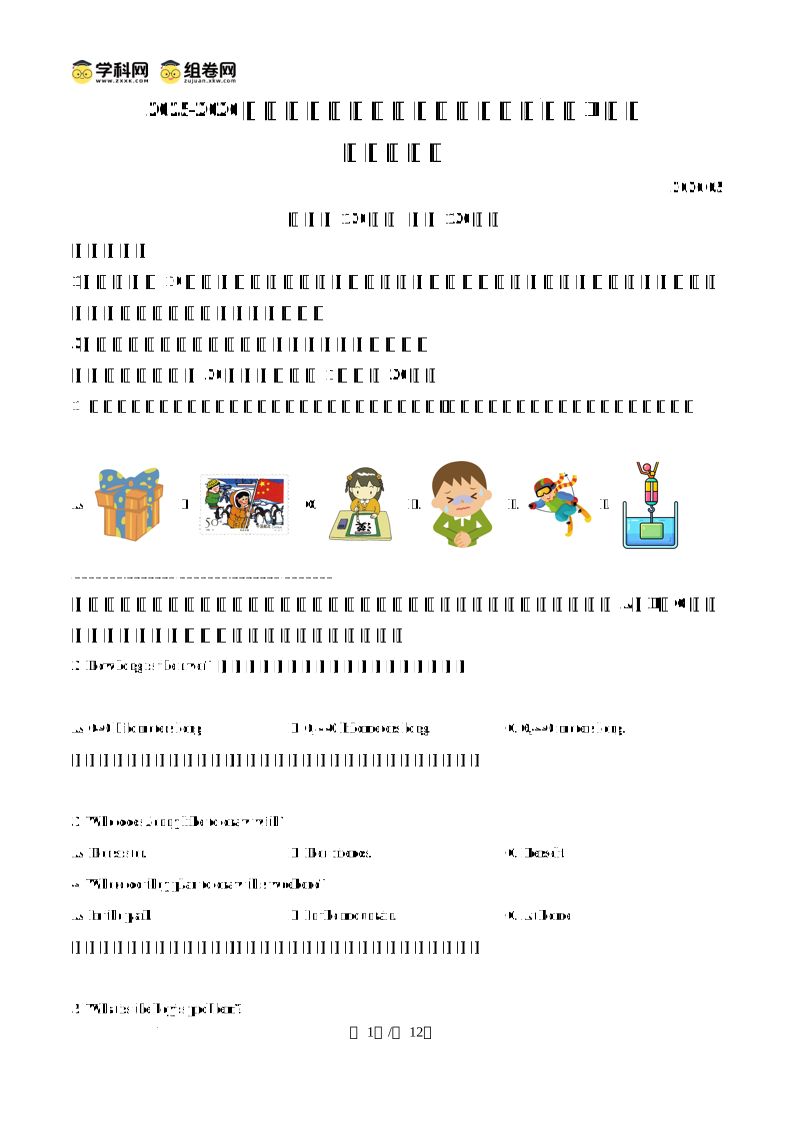
1. 听对话,选择与对话内容相对应的图片。每组对话读两遍。【此处可播放相关音频,请去附件查看】
A. B. C. D. E. F.
_______ _______ _______ _______ _______
(二)听下面几段对话或独白。每段对话或独白后有几个小题,从题中所给的A、B、C三个选项中选出最佳答案。每段对话或独白读两遍。
2. How long is the river? 【此处可播放相关音频,请去附件查看】
A. 640 kilometers long. B. 6,440 kilometers long. C. 6,440 meters long.
听对话,回答以下各小题。【此处可播放相关音频,请去附件查看】
3. Who does Jenny like to draw with?
A. Her sister. B. Her friends. C. Herself.
4. Where do they plan to draw this weekend?
A. In the park. B. In the mountain. C. At home.
听对话,回答以下各小题。【此处可播放相关音频,请去附件查看】
5. What is the boy’s problem?
A. He feels sick. B. He feels tired. C. He feels full.
6. How often does the boy eat junk food?
A. Never.
B. Three or four times a week.
C. Every day.
听对话,回答以下各小题。【此处可播放相关音频,请去附件查看】
7. How did Anne feel at first?
A. Worried. B. Relaxed. C. Excited.
8. Who might help Lucky?
A. Dentists. B. School teachers. C. Pet doctors.
听独白,回答以下各小题。【此处可播放相关音频,请去附件查看】
9. Who is Bella?
A. A student. B. A guide. C. A reporter.
10. How can visitors go along the river?
A. By boat. B. On foot. C. By bike.
11. What can visitors do in the National Park?
A. Ride elephants.
B. Climb mountains.
C. Swim in the river.
听对话,根据对话内容完成下列句子,每空词数不限。对话读三遍。听对话前你们有20秒钟的时间阅读句子内容。【此处可播放相关音频,请去附件查看】
12. What did Timmy learn in the labour education class?
He learned about fire ____________________ and what to do in an emergency.
13. What did Timmy notice?
He smelt something ____________________ and saw a little smoke.
14. What was wrong with the pan?
The pan was ____________________.
15. What did Timmy’s mother tell him?
She told Timmy not to ____________________ anything on the pan.
16. How did Timmy’s mother like Timmy?
She thought Timmy was so brave and ____________________.
二、完形填空(共10小题;每小题1分,计10分)
阅读下面短文,从短文后各题所给的A、B、C三个选项中选出一个可以填入空白出的最佳选项。
I still remember the day when Jose first came to our class. It was a quiet Monday morning. Our teacher Mrs Jones slowly led him into the classroom. He was ____17____ a dirty white shirt and looked very nervous. He was so shy that he kept his head down and stood quietly beside Mrs Jones. His old shoes made a loud noise when he walked____18____ to his desk. All the students in our class turned to look at him in silence, without saying a single word.
I kept asking myself how he felt when so many eyes were fixed on him. I really wanted to walk over and say “Hi” to him warmly. ____19____, I was afraid that my classmates would laugh at me for being friendly to “the new kid”. So I just sat still and said ____20____.
When I got home that evening, I told my sister what had happened at school. I hoped she could give me some good ____21____. “Just follow your heart and be kind,” my sister said gently.
The next morning, I took a deep breath and ____22____ Jose with a big, friendly smile. “Hi, Jose!” I said in a clear and loud voice.
At first, he looked up at me in great surprise and then smiled back shyly. I could see his eyes shining with ____23____ and warmth. In the following days, Jose seemed much less ____24____. As time went by, we talked more and more, and finally ____25____ close good friends.
“Your warm smile is the brightest thing I’ve ever seen. I will never ____26____ that day,” Jose told me sincerely many years later.
17. A. taking B. wearing C. washing
18. A. angrily B. carefully C. happily
19. A. However B. So C. And
20. A. nothing B. something C. everything
21. A. news B. advice C. food
22. A. thanked B. greeted C. helped
23. A. sadness B. pain C. happiness
24. A. lonely B. excited C. active
25. A. called B. became C. found
26. A. remember B. believe C. forget
三、阅读理解(共25小题;31-50每小题1.5分,51-55每小题1分,共计35分)
(一)阅读下列短文,根据短文内容,选择最佳答案。
A
Mike is my best friend. He is 14 years old. Last night, he felt terrible, so his father drove him to the hospital to see a doctor. The doctor took his temperature. It was about 39.5℃. Then the doctor gave him some medicine. Here are the instructions for the medicine.
Medicine Instructions
Take it three times a day after meals.
It is not for children under the age of 5.
Keep it in a cool and dry place.
Do not use it after November 2026.
Age
Dose (剂量)/Per Time
Over 18
2 pills
12-17
1 pill
5-11
1/2 pill
27. How did Mike go to the hospital?
A. By bike. B. By car. C. On foot.
28. What was wrong with Mike last night?
A. He had a high fever.
B. He had a headache.
C. He had a toothache.
29. How many pills should Mike take each time?
A. Half a pill. B. One pill. C. Two pills.
30. How often should Mike take the medicine?
A. Once a day. B. Twice a day. C. Three times a day.
31. Which of the following is TRUE?
A. People can’t use this medicine after November 2026.
B. We can keep the medicine everywhere.
C. Kids under 5 can take this medicine.
B
Stress can be either short-term or long-term. Short-term stress usually comes suddenly and lasts for a short time, like feeling nervous before a small test. Long-term stress stays with you for weeks or even months, and it can make you feel tired all the time. There are three common kinds of stress in our daily life.
The first is survival (生存的) stress. When you are in danger, your body prepares to deal with the danger either by fighting it or running from it. For example, if a dog chases (追赶) you on the street, your body will quickly get ready to run away or protect yourself. When you face this kind of stress, your breath and heartbeat (心跳) will be faster, and you may even feel your hands get cold.
Environmental stress is the second kind of stress. It is from the unhappy things you run into in everyday life. For example, loud noises from a construction site (建筑工地), bad weather like heavy rain or strong winds, and crowded buses or shopping malls can all cause stress. These things are not dangerous, but they can still make you feel mad and stressed.
The third one is internal (内部的) stress. This type of stress is not caused by something outside of you. Instead, it comes from your own thoughts. It may come from stressful situations that happened in the past or will happen in the future. For example, if you think it is stressful for you to give a talk in front of lots of people, just thinking about it will bring you stress.
Some short-term stress can be helpful. It can push you to try your best in a game or a test. However, when stress is long-term, it can cause serious health problems, like headaches or sleep problems. So, you should learn how to deal with stress in your life, such as deep breathing, taking a walk after dinner, or asking for help from your teachers and parents.
32. How does your body deal with danger?
A. By fighting it or running from it.
B. By staying still and waiting for help.
C. By talking to yourself to calm down.
33. Where is environmental stress from?
A. Polluted water and air.
B. Strict parents and teachers.
C. Unhappy things in daily life.
34. Why can short-term stress be helpful sometimes?
A. It can make you sleep well at night.
B. It can push you to do your best.
C. It can stop you from feeling nervous.
35. What is the structure of the passage? (①= Paragraph 1)
A. B. C.
36. What’s the best title for the passage?
A. Common Kinds of Stress
B. Different Ways to Relax
C. How to Deal with Stress
C
Susan was only five years old at that moment. She was angry at her eleven-year-old brother, David. How could her brother be so spiteful? She remembered how he made a face and called her a “big baby” at the breakfast table. “He hated me,” she thought, “just because I took the last cake out from under his nose.”
Then in the afternoon, Susan was playing on the swing. It was fun looking down at the farmyard below. Her red sweater flashed brightly in the sunlight. She stopped thinking about her brother and started to sing a song.
However, a big bull (公牛) with long, sharp horns (角) watched the red sweater far away. It seemed that the big bull was ready to run to Susan. At the same time, David was in the farm, feeding the chickens.
He looked out and saw his little sister on the swing. Then suddenly he saw the bull running across the field, heading straight for his sister. Without a second thought, David cried as loudly as he could, “Look out behind you! Get out of there! Run!”
But his sister didn’t hear him; she just kept singing and swinging. The bull was halfway across the field and closing in fast. David ran faster than he had ever run before. Luckily, he finally saved his sister. After that day, Susan just laughed when her brother called her a “big baby”. Susan knew that her brother loved her.
37. What does the underlined word “spiteful” probably mean in English?
A. friendly B. mean C. curious
38. What did David do when he saw the bull running to Susan?
A. He kept feeding the chickens and did nothing.
B. He sang a song to attract the bull’s attention.
C. He cried loudly to remind his sister and ran to save her.
39. Which is the right order of the story?
① Susan played on the swing and sang happily.
② Susan was angry with her brother in the morning.
③ David saved his sister successfully.
④ A bull saw Susan’s red sweater and ran to her.
A. ① → ② → ③ → ④ B. ② → ① → ④ → ③ C. ① → ③ → ② → ④
40. Why did Susan laugh when hearing a “big baby” at last?
A. Because she got used to it.
B. Because she didn’t care about it.
C. Because she knew her brother loved her.
41. What do you think of Susan’s brother David?
A. Brave and loving. B. Quiet and shy. C. Patient and lazy.
D
The Hukou Waterfall is a famous natural wonder. It’s located between Shanxi and Shaanxi provinces. It is the largest yellowish waterfall in the world and the second largest waterfall in China.
The waterfall was created by the crustal movement (地壳运动) and the river’s force over a very long time. Its name, “Hukou”, perfectly describes how the wide river — the Yellow River, suddenly narrows (变窄) and then rushes down. Because of its special location (位置), the area around Hukou has long been an important place for trade (贸易) and communication among different parts of our country.
The Hukou Waterfall has long played an important role in the history of the Yellow River. The Yellow River is also called China’s “Mother River”. It provides people living nearby with water for life, land to grow crops (农作物), and a waterway for transportation (运输).
There are also some interesting stories about the Hukou Waterfall. One of them is about Dayu and the Dragon King. Long ago, the water level of the Yellow River was hundreds of metres high. As Dayu cut through the Dragon Gate Mountain, the Dragon King had nowhere to hide. He drilled (钻) underground, beat the rocks with his tail, and finally carved (雕刻) out this waterfall.
The view of the Hukou Waterfall changes with the seasons, so you can enjoy its special beauty from spring to winter. You can see the waterfall from both the Shaanxi side and the Shanxi side. From the Shaanxi side, you can get a greater view of how wide the waterfall is. From the Shanxi side, you are closer to the water and can see it falling into the deep valley (峡谷) below. If you want to take the best photos, go to the Shaanxi side in the afternoon. At that time, the sunlight makes the waterfall look even more beautiful.
42. The first two paragraphs tell us the ________ of the Hukou Waterfall.
① location ② importance ③ name origin (起源) ④ best viewing time
A. ①②③ B. ①②④ C. ①③④
43. Which of the following is TRUE according to paragraph 3?
A. The Hukou Waterfall was made by people in ancient times.
B. The Hukou Waterfall is famous because of its rich history.
C. People near the Yellow River depend much on what it provides.
44. In the story, how did the Dragon King carve out the waterfall?
A. He cut through the mountain with tools.
B. He moved the rocks away with his hands.
C. He drilled underground and beat the rocks.
45. If you want to take good photos of the waterfall, you may go to ________.
A. the Shanxi side in the afternoon
B. the Shaanxi side in the afternoon
C. the Shaanxi side in the morning
46. Where can we see this passage most probably?
A. In a travel guide. B. In a scientific report. C. In a history book.
There are different kinds of deserts, both hot and cold. The Sahara Desert is the largest hot desert in the world, while the Gobi Desert is mostly cold. ____47____ Some deserts are mountainous.
What is the weather like in deserts? They are very dry. ____48____ Days are very, very hot, and nights can be quite cold. When rain does fall, it often comes suddenly, but there is still very little water in hot deserts. Sometimes water collects in certain places, forming areas called oases (绿洲).
____49____ There can be sandstorms or even snowstorms. In sandy deserts, winds often shape the sand into long ridges and dunes (山脊和沙丘).
____50____ Although deserts are very dry, many plants are able to grow there. There are also many animals, insects and birds. How do they survive? Some plants, such as cacti (仙人掌), store rainwater in their stems for a long time. Other plants have long roots that reach deep underground to get water.
Some desert animals almost never drink water. ____51____ Many animals sleep during the hot daytime and come out to look for food at night. Some stay underground for most of the day, where it is much cooler.
People often travel through the desert on camels (骆驼). These animals can take in a lot of water very quickly and then go for a long time without drinking again. They are well suited to life in the desert.
A. They have little rainfall.
B. Some deserts are sandy.
C. Life in the deserts is very amazing.
D. What plants and animals live in hot deserts?
E. It can be very stormy in deserts too.
F. They get water from seeds and plants.
四、语言运用(共10小题;每小题1分,计10分)
A.根据音标提示及句意补全单词,或用所给单词的恰当形式填空(每小题1分,共5分)
52. Tina was _________ /ʌpˈset/ because she failed the maths test.
53. She carried two bags on her left ________ /ʃəʊldə(r)/ as she walked home.
54. Accidents can happen when we’re _________ (care).
55. Julie took a/an ________ (usual) trip to Beijing and had lots of amazing experiences.
56. I could see him standing there with a ________ (thank) smile.
B.根据所给提示,完成句子,每空一词,含缩略词。(每小题1分,共5分)
57. My instructor said, “Don’t give up so easily.” (改为不定式结构)
My instructor told me _________ _________ give up so easily.
58. The Yangtze River travels farther than any other river in China.(改为含最高级的句子)
The Yangtze River travels ________ ________ in China.
59. Harry wanted to say sorry to Peter in order to clear the air. (改为同义句)
Harry wanted to say sorry to Peter ________ ________ they could clear the air.
60. The Mariana Trench is about 11,000 meters deep.(对画线部分提问)
________ ________ is the Mariana Trench?
61. 如果我们齐心协力,下次一定会赢。(完成译句)
If we ________ ________, we must win next time.
五、语法填空(共10小题;每小题1分,计10分)
阅读下面短文,在空白处填入一个适当的单词或括号内单词的正确形式。
In May 2024, 15-year-old Alkut Dilxat became the youngest Chinese climber to reach the top of Mount Qomolangma. The boy is from Urumqi, Xinjiang. He arrived at the South Base Camp in Nepal ____62____ April 15. He spent twenty-eight days ____63____ (get) used to the new place and then started his climb with about ten other good climbers.
Breathing ____64____ (heavy), Alkut finally reached the top of Mount Qomolangma. “Reaching the top of Mount Qomolangma is one of the biggest dreams of many climbers, including ____65____ (I). During the climb, I had a feeling of fear. I wanted to give up many times, ____66____ I finally overcame the fear. I feel very happy that I realized my dream.” Alkut said.
Alkut began to learn rock climbing at seven, skiing at eight and ice climbing at nine. He climbed ____67____ (he) first mountain at age ten with the help of his father. He is also his coach. ____68____ (climb) Mount Qomolangma, Alkut ran ten kilometers every morning before going to school, and took lots of ____69____ (train) on weekends.
“I always told him that a great person must hold on to his dream,” his father said. “I also told him it is very difficult and ____70____ (danger), but he did really well with the support of his school and team members.”
Alkut now wants to climb the ____71____ (high) mountains on other continents (大洲). He loves the feeling of climbing and wants to keep trying.
六、阅读表达(共5小题;每小题2分,计10分)
阅读下面短文,完成短文后的问题。
What do young people like to do in their free time? If you think they are all playing video games or watching short videos on their phones, you might be wrong. In 2026, many young people are turning to something quite different — “grandma hobbies.”
“Grandma hobbies” is a fun name for traditional activities like needlepoint (刺绣) and gardening. These are things that people’s grandmothers used to enjoy. But now, Gen Z (people born after 1997) are falling in love with them.
Emma MacTaggart, 26, is a good example. She used to work long hours in banking. After work, she would just look through her phone for hours — a habit called “getting lost in her phone.” To change this, she and her roommates decided to try needlepoint. Soon, they became “fully obsessed (着迷的).” Emma said it was so relaxing that they spent almost all their free time making needlepoint works instead of looking at a screen.
These old hobbies help young people reduce stress and feel relaxed. When they finish a gift or a dish, they feel proud and successful. Social media helps them become more popular. Young people share their works online and make friends. Some even turn their hobbies into businesses. Take Anna Weare, a 31-year-old blacksmith (铁匠) as an example — people now wait a year for her handmade products.
So next time you see a young person blacksmithing, don’t be surprised. It’s the newest cool thing to do!
72. What are “grandma hobbies” in this passage?
__________________________________________________
73. Who are interested in “grandma hobbies” according to paragraph 2?
__________________________________________________
74. Why did Emma MacTaggart start to try needlepoint?
__________________________________________________
75. How do these old hobbies help young people? (Give at least two things.)
__________________________________________________
76. What do you think of “grandma hobbies”? And why?
__________________________________________________
七、补全对话(共5小题;每小题2分,计10分)
A: Hi, Simon. Long time no see. What did you do during the May Day holiday?
B: Long time no see, Nina. I went to Mount Tai with my parents.
A: Sounds fantastic! ________77________?
B: Yes, I did. Mount Tai is one of the most famous mountains in China. We climbed happily and didn’t go down the mountain until late afternoon.
A: It must be great fun to enjoy the beautiful sights. But you look a little weak today. What’s wrong?
B: ________78________. I have a cough and a sore throat.
A: I’m sorry to hear that. ________79________?
B: No, I don’t. I took my temperature and it was not high.
A: ________80________?
B: It started the day before yesterday. Although I wore warm clothes, the wind on the mountain was very cold.
A: You should see a doctor so that you can get better soon.
B: You’re right. Could you go to the hospital with me?
A: ________81________. Shall we go this afternoon?
B: OK. Thank you very much.
A: You’re welcome.
八、书面表达(计15分)
82. 成长不只是年龄的不断增加,更在于学会平衡生活、健康自律。请你根据提示,写一篇英语短文向校报英语角栏目投稿,分享你的看法与亲身经历。
提示:
1. What a healthy and balanced life means to you;
2. One of your own experiences (e.g., keeping a healthy habit/balancing schoolwork and free time/solving pressure problems/ …);
3. Your feelings and lessons you have learned from the experience.
要求:
1.内容必须包含问题提示的全部内容,可以适当增加细节,以使行文连贯。
2.词数不少于80词。
3.文中不能出现任何与考生本人有关的真实人名、校名及其他相关信息,否则不予评分。
___________________________________________________________________________________________________________________________________________________________________________________________________________________________________________________________________________________________________________________
第1页/共1页
学科网(北京)股份有限公司
$
2025-2026学年下学期期中素养水平调研试题(B卷)
八年级英语
2026.05
(时间120分钟 总分120分)
注意事项:
1.本试卷共10页。答卷前,考生务必将自己的姓名、准考证号、座号填写在答题纸规定的位置。考试结束后,将答题纸交回。
2.非选择题答在答题纸上,答在本试卷上不得分。
一、听力理解(共20小题;每小题1分,计20分)
1. 听对话,选择与对话内容相对应的图片。每组对话读两遍。【此处可播放相关音频,请去附件查看】
A. B. C. D. E. F.
_______ _______ _______ _______ _______
【答案】 ①. C ②. D ③. B ④. F ⑤. A
【解析】
【原文】1.W: What do you usually do when you are free?
M: I like doing calligraphy.
2.W: You don’t look well. What’s the matter, David?
M: I have a stomachache.
3.W: Well. Peter, you have so many stamps. Where did you get them?
W: I collected them by myself.
4.W: What’s wrong, Peter? You look worried.
M: I failed in the physics exam.
5.M: Alan, What’s that?
W: Oh. It’s my birthday present from my parents.
(二)听下面几段对话或独白。每段对话或独白后有几个小题,从题中所给的A、B、C三个选项中选出最佳答案。每段对话或独白读两遍。
2. How long is the river? 【此处可播放相关音频,请去附件查看】
A. 640 kilometers long. B. 6,440 kilometers long. C. 6,440 meters long.
【答案】B
【解析】
【原文】M: Mr. Li, can you tell me something about the river?
W: Sure. It’s the Amazon River. It’s about 6440 kilometers long.
听对话,回答以下各小题。【此处可播放相关音频,请去附件查看】
3. Who does Jenny like to draw with?
A. Her sister. B. Her friends. C. Herself.
4. Where do they plan to draw this weekend?
A. In the park. B. In the mountain. C. At home.
【答案】3. B 4. B
【解析】
【原文】M: My sister Jenny likes to draw pictures with her friends in her free time.
W: I like it too. Maybe I can join them next time.
M: Sure. They plan to draw in the mountain this weekend.
W: Well. What a good chance! I’ll join them.
听对话,回答以下各小题。【此处可播放相关音频,请去附件查看】
5. What is the boy’s problem?
A. He feels sick. B. He feels tired. C. He feels full.
6. How often does the boy eat junk food?
A. Never.
B. Three or four times a week.
C. Every day.
【答案】5. A 6. B
【解析】
【原文】W: Hey. You don’t look so well.
M: I feel a bit sick. I had too much fried chicken and chips again.
W: Again? Do you eat that a lot?
M: Yeah. Maybe three or four times a week. It’s just fast and tasty.
W: You really should eat less junk food. Maybe try bringing a healthy lunch from home.
M: That’s a good idea.
听对话,回答以下各小题。【此处可播放相关音频,请去附件查看】
7. How did Anne feel at first?
A. Worried. B. Relaxed. C. Excited.
8. Who might help Lucky?
A. Dentists. B. School teachers. C. Pet doctors.
【答案】7. A 8. C
【解析】
【原文】M: Hi, Anne. You have been sitting on the bench alone for a long time. You’re not playing with us. Are you OK?
W: Hi, Ben. I’m really nervous. My little dog Lucky is ill.
M: Oh. I’m sorry to hear that.
W: I don’t know how to help him. I’m worried about him.
M: Don’t be worried. Maybe we can bring Lucky to the pet doctors after school.
W: That’s a good idea. It’s so kind of you. I’m relaxed now.
听独白,回答以下各小题。【此处可播放相关音频,请去附件查看】
9. Who is Bella?
A. A student. B. A guide. C. A reporter.
10. How can visitors go along the river?
A. By boat. B. On foot. C. By bike.
11. What can visitors do in the National Park?
A. Ride elephants.
B. Climb mountains.
C. Swim in the river.
【答案】9. B 10. A 11. A
【解析】
【原文】Welcome to our trip. I am your guide Bella. Next I will introduce our travel plan to all of you. Firstly, we will arrive in Nepal’s capital city. There are many beautiful buildings and monkeys there. Then we will go to its mountain areas. You can enjoy the beauty of some of the world’s famous mountains and rivers. You can choose to take a boat to go along the river. Next we will visit a famous National Park. You can ride elephants and see some wild animals. Finally, you can go to the stores to buy some presents for your family members and friends. That’s all. Let’s start our trip now.
听对话,根据对话内容完成下列句子,每空词数不限。对话读三遍。听对话前你们有20秒钟的时间阅读句子内容。【此处可播放相关音频,请去附件查看】
12. What did Timmy learn in the labour education class?
He learned about fire ____________________ and what to do in an emergency.
13. What did Timmy notice?
He smelt something ____________________ and saw a little smoke.
14. What was wrong with the pan?
The pan was ____________________.
15. What did Timmy’s mother tell him?
She told Timmy not to ____________________ anything on the pan.
16. How did Timmy’s mother like Timmy?
She thought Timmy was so brave and ____________________.
【答案】12. safety
13. burning
14. on fire
15. throw 16. quick
【解析】
【原文】W: Timmy, how was your labor education class today?
M: It was really useful, Mum. We learn about fire safety and what to do in an emergency.
W: It’s good to know. It’s always important to be prepared.
M: Mum. Do you smell something burning? And I think I can see a little smoke.
W: Oh my goddess, the soup! I totally forgot about it.
M: The pan is on fire. Don’t worry. I remember what to do.
W: Timmy, wait. Be safe. Don’t throw anything on it.
M: Look. I put the cover on the pan. The fire is out. Just like the teacher showed us.
W: You were so brave and quick. Thank you, Timmy.
M: I’m glad I paid attention in class.
W: You really saved us today. How about we order pizza for dinner?
M: Yes. And maybe we can all learn about fire safety together this weekend.
二、完形填空(共10小题;每小题1分,计10分)
阅读下面短文,从短文后各题所给的A、B、C三个选项中选出一个可以填入空白出的最佳选项。
I still remember the day when Jose first came to our class. It was a quiet Monday morning. Our teacher Mrs Jones slowly led him into the classroom. He was ____17____ a dirty white shirt and looked very nervous. He was so shy that he kept his head down and stood quietly beside Mrs Jones. His old shoes made a loud noise when he walked____18____ to his desk. All the students in our class turned to look at him in silence, without saying a single word.
I kept asking myself how he felt when so many eyes were fixed on him. I really wanted to walk over and say “Hi” to him warmly. ____19____, I was afraid that my classmates would laugh at me for being friendly to “the new kid”. So I just sat still and said ____20____.
When I got home that evening, I told my sister what had happened at school. I hoped she could give me some good ____21____. “Just follow your heart and be kind,” my sister said gently.
The next morning, I took a deep breath and ____22____ Jose with a big, friendly smile. “Hi, Jose!” I said in a clear and loud voice.
At first, he looked up at me in great surprise and then smiled back shyly. I could see his eyes shining with ____23____ and warmth. In the following days, Jose seemed much less ____24____. As time went by, we talked more and more, and finally ____25____ close good friends.
“Your warm smile is the brightest thing I’ve ever seen. I will never ____26____ that day,” Jose told me sincerely many years later.
17. A. taking B. wearing C. washing
18. A. angrily B. carefully C. happily
19. A. However B. So C. And
20. A. nothing B. something C. everything
21. A. news B. advice C. food
22. A. thanked B. greeted C. helped
23. A. sadness B. pain C. happiness
24. A. lonely B. excited C. active
25. A. called B. became C. found
26. A. remember B. believe C. forget
【答案】17. B 18. B 19. A 20. A 21. B 22. B 23. C 24. A 25. B 26. C
【解析】
【导语】本文是一篇记叙文,讲述了新同学Jose刚转学时穿着破旧、非常害羞。作者想主动打招呼却因害怕被嘲笑而犹豫,在姐姐“听从内心、友善待人”的建议下,第二天鼓起勇气微笑着问候Jose。这份善意让Jose逐渐开朗,两人最终成为挚友。
【17题详解】
句意:他穿着一件脏兮兮的白衬衫,看上去非常紧张。
前文描述Jose走进教室时的样子,这里提到他“一件脏兮兮的白衬衫”。表示“穿着”应用wearing,强调穿着的状态,符合语境。
【18题详解】
句意:当他小心翼翼地走向座位时,他的旧鞋发出了很大的响声。
根据前文“Jose looked very nervous and shy”,他当时的状态是紧张不安的,因此走路会“小心翼翼地”。carefully最能体现他的心情;angrily和happily均与语境不符。
【19题详解】
句意:我真想走过去热情地跟他打招呼,然而,我又害怕同学们会因为我对新来的孩子友好而嘲笑我。
前半句表达了作者主动示好的想法,后半句表达了作者的顾虑,两句之间是转折关系。However用于此处表转折,符合逻辑。
【20题详解】
句意:所以我只是坐着,什么也没说。
前文提到作者害怕被嘲笑,因此她最终的选择是什么也不做、什么也不说。nothing表示“什么也没说”,与她的犹豫和退缩行为一致。
【21题详解】
句意:我希望她能给我一些好的建议。
根据后文姐姐说的“Just follow your heart and be kind”,这是一句给作者的建议。因此作者希望得到的是advice,而非news或food。
【22题详解】
句意:第二天早上,我深吸一口气,用一个大大的、友好的微笑向Jose打招呼。
后文紧接着作者对Jose说“Hi, Jose!”,这是典型的“打招呼”行为。greeted表示“问候、打招呼”,greet sb. with a smile意为“用微笑问候某人”,符合语境。
【23题详解】
句意:我能看到他的眼睛里闪烁着喜悦和温暖。
Jose从一开始的害羞、惊讶,到被作者的善意打动后露出微笑,此时他的心情应该是喜悦的。happiness与后文的“warmth”并列,符合语境。
【24题详解】
句意:在接下来的日子里,Jose看起来不再那么孤单了。
Jose刚来时很害羞、很孤单,在作者主动和他交流后,他的状态明显改善,不再那么lonely了。
【25题详解】
句意:随着时间的推移,我们聊得越来越多,最终成了亲密的好朋友。
根据上下文,两人从陌生到熟悉,关系发生了质的变化,最终成为了好朋友。became表示“成为”,became close good friends意为“成为亲密的好朋友”,符合故事的发展。
【26题详解】
句意:我永远不会忘记那一天。
Jose多年后说“你温暖的微笑是我见过最闪亮的东西”,说明他把那天深深记在心里。forget意为“忘记”,never forget即“永远不会忘记”。
三、阅读理解(共25小题;31-50每小题1.5分,51-55每小题1分,共计35分)
(一)阅读下列短文,根据短文内容,选择最佳答案。
A
Mike is my best friend. He is 14 years old. Last night, he felt terrible, so his father drove him to the hospital to see a doctor. The doctor took his temperature. It was about 39.5℃. Then the doctor gave him some medicine. Here are the instructions for the medicine.
Medicine Instructions
Take it three times a day after meals.
It is not for children under the age of 5.
Keep it in a cool and dry place.
Do not use it after November 2026.
Age
Dose (剂量)/Per Time
Over 18
2 pills
12-17
1 pill
5-11
1/2 pill
27. How did Mike go to the hospital?
A. By bike. B. By car. C. On foot.
28. What was wrong with Mike last night?
A. He had a high fever.
B. He had a headache.
C. He had a toothache.
29. How many pills should Mike take each time?
A. Half a pill. B. One pill. C. Two pills.
30. How often should Mike take the medicine?
A. Once a day. B. Twice a day. C. Three times a day.
31. Which of the following is TRUE?
A. People can’t use this medicine after November 2026.
B. We can keep the medicine everywhere.
C. Kids under 5 can take this medicine.
【答案】27. B 28. A 29. B 30. C 31. A
【解析】
【导语】本文是一篇应用文,讲述了Mike生病就医的故事,并附带了药品说明书,考查学生从文本和表格中提取信息的能力。
【27题详解】
第一段提到:“his father drove him to the hospital”,说明Mike是乘车去的。
【28题详解】
第一段提到:“The doctor took his temperature. It was about 39.5℃.”,正常体温约为37℃,39.5℃属于高烧。
【29题详解】
第一段说Mike 14岁,属于“12-17”年龄段,表格中该年龄段剂量为“1 pill”,因此每次应吃1片。
【30题详解】
药品说明书提到:“Take it three times a day”,因此每天吃三次。
【31题详解】
表格中“Do not use it after November 2026”说明2026年11月后不能使用,A正确;药品需存放在“cool and dry place”,B说“everywhere”错误;C说“kids under 5 can take this medicine”,但表格明确“Not for children under 5”,错误。因此选A。
B
Stress can be either short-term or long-term. Short-term stress usually comes suddenly and lasts for a short time, like feeling nervous before a small test. Long-term stress stays with you for weeks or even months, and it can make you feel tired all the time. There are three common kinds of stress in our daily life.
The first is survival (生存的) stress. When you are in danger, your body prepares to deal with the danger either by fighting it or running from it. For example, if a dog chases (追赶) you on the street, your body will quickly get ready to run away or protect yourself. When you face this kind of stress, your breath and heartbeat (心跳) will be faster, and you may even feel your hands get cold.
Environmental stress is the second kind of stress. It is from the unhappy things you run into in everyday life. For example, loud noises from a construction site (建筑工地), bad weather like heavy rain or strong winds, and crowded buses or shopping malls can all cause stress. These things are not dangerous, but they can still make you feel mad and stressed.
The third one is internal (内部的) stress. This type of stress is not caused by something outside of you. Instead, it comes from your own thoughts. It may come from stressful situations that happened in the past or will happen in the future. For example, if you think it is stressful for you to give a talk in front of lots of people, just thinking about it will bring you stress.
Some short-term stress can be helpful. It can push you to try your best in a game or a test. However, when stress is long-term, it can cause serious health problems, like headaches or sleep problems. So, you should learn how to deal with stress in your life, such as deep breathing, taking a walk after dinner, or asking for help from your teachers and parents.
32. How does your body deal with danger?
A. By fighting it or running from it.
B. By staying still and waiting for help.
C. By talking to yourself to calm down.
33. Where is environmental stress from?
A. Polluted water and air.
B. Strict parents and teachers.
C. Unhappy things in daily life.
34. Why can short-term stress be helpful sometimes?
A. It can make you sleep well at night.
B. It can push you to do your best.
C. It can stop you from feeling nervous.
35. What is the structure of the passage? (①= Paragraph 1)
A. B. C.
36. What’s the best title for the passage?
A. Common Kinds of Stress
B. Different Ways to Relax
C. How to Deal with Stress
【答案】32. A 33. C 34. B 35. A 36. A
【解析】
【导语】本文是一篇说明文,介绍压力的分类、三种常见压力类型,以及压力的影响和应对方法。
【32题详解】
第二段明确提到“your body prepares to deal with the danger either by fighting it or running from it”,身体通过战斗或逃跑应对危险。
【33题详解】
第三段提到“Environmental stress...is from the unhappy things you run into in everyday life”,环境压力来自日常生活中的不愉快事物。
【34题详解】
第五段提到“Some short-term stress can be helpful. It can push you to try your best in a game or a test”,短期压力能推动人做到最好。
【35题详解】
结合全文,第①段总起,介绍压力的分类与常见类型;第②③④段分述介绍生存压力、环境压力、内部压力;第⑤段总结压力的影响与应对,正确结构为①/②③④/⑤。
【36题详解】
本文核心围绕“三种常见压力类型”展开,“Common Kinds of Stress”最贴合主旨。
C
Susan was only five years old at that moment. She was angry at her eleven-year-old brother, David. How could her brother be so spiteful? She remembered how he made a face and called her a “big baby” at the breakfast table. “He hated me,” she thought, “just because I took the last cake out from under his nose.”
Then in the afternoon, Susan was playing on the swing. It was fun looking down at the farmyard below. Her red sweater flashed brightly in the sunlight. She stopped thinking about her brother and started to sing a song.
However, a big bull (公牛) with long, sharp horns (角) watched the red sweater far away. It seemed that the big bull was ready to run to Susan. At the same time, David was in the farm, feeding the chickens.
He looked out and saw his little sister on the swing. Then suddenly he saw the bull running across the field, heading straight for his sister. Without a second thought, David cried as loudly as he could, “Look out behind you! Get out of there! Run!”
But his sister didn’t hear him; she just kept singing and swinging. The bull was halfway across the field and closing in fast. David ran faster than he had ever run before. Luckily, he finally saved his sister. After that day, Susan just laughed when her brother called her a “big baby”. Susan knew that her brother loved her.
37. What does the underlined word “spiteful” probably mean in English?
A. friendly B. mean C. curious
38. What did David do when he saw the bull running to Susan?
A. He kept feeding the chickens and did nothing.
B. He sang a song to attract the bull’s attention.
C. He cried loudly to remind his sister and ran to save her.
39. Which is the right order of the story?
① Susan played on the swing and sang happily.
② Susan was angry with her brother in the morning.
③ David saved his sister successfully.
④ A bull saw Susan’s red sweater and ran to her.
A. ① → ② → ③ → ④ B. ② → ① → ④ → ③ C. ① → ③ → ② → ④
40. Why did Susan laugh when hearing a “big baby” at last?
A. Because she got used to it.
B. Because she didn’t care about it.
C. Because she knew her brother loved her.
41. What do you think of Susan’s brother David?
A. Brave and loving. B. Quiet and shy. C. Patient and lazy.
【答案】37. B 38. C 39. B 40. C 41. A
【解析】
【导语】 本文讲述了五岁的Susan因蛋糕的事生哥哥David的气,认为哥哥很刻薄。但下午当Susan在秋千上玩耍时,一头公牛被她的红毛衣吸引冲向她,David立刻大声警告并飞奔过去救了妹妹。从此Susan知道了哥哥其实是爱她的。
【37题详解】
根据文章第1段内容“How could her brother be so spiteful? She remembered how he made a face and called her a 'big baby' at the breakfast table.”可知,她觉得哥哥做鬼脸、叫她“大宝宝”的行为很恶劣,由此可推知spiteful意思为“恶意的、刻薄的”,与mean意思相近。
【38题详解】
根据文章第4、5段内容“David cried as loudly as he could, ‘Look out behind you! Get out of there! Run!’”(大卫竭尽全力大声喊道:“小心后面!快离开那里!跑!”)以及“David ran faster than he had ever run before. Luckily, he finally saved his sister.”(大卫跑得比以往任何时候都快。幸运的是,他最终成功救出了他的妹妹。)可知,大卫看到那头公牛朝苏珊冲去时,大声喊叫提醒妹妹,并飞奔过去救妹妹。
【39题详解】
根据全文内容,事件顺序为:②早上Susan因蛋糕生哥哥的气; ①下午Susan在秋千上开心唱歌; ④公牛看到红毛衣冲向Susan ; ③David成功救了妹妹。
【40题详解】
根据文章最后一段内容“After that day, Susan just laughed when her brother called her a ‘big baby’. Susan knew that her brother loved her.”(从那天以后,每当她哥哥叫她“大宝宝”时,苏珊都会一笑置之。苏珊知道她哥哥是爱她的。),可知Susan笑是因为她知道哥哥爱她。
【41题详解】
根据文章内容可知,David看到公牛冲向妹妹时毫不犹豫地大声警告并飞奔去救她,体现了他既勇敢又有爱心。
D
The Hukou Waterfall is a famous natural wonder. It’s located between Shanxi and Shaanxi provinces. It is the largest yellowish waterfall in the world and the second largest waterfall in China.
The waterfall was created by the crustal movement (地壳运动) and the river’s force over a very long time. Its name, “Hukou”, perfectly describes how the wide river — the Yellow River, suddenly narrows (变窄) and then rushes down. Because of its special location (位置), the area around Hukou has long been an important place for trade (贸易) and communication among different parts of our country.
The Hukou Waterfall has long played an important role in the history of the Yellow River. The Yellow River is also called China’s “Mother River”. It provides people living nearby with water for life, land to grow crops (农作物), and a waterway for transportation (运输).
There are also some interesting stories about the Hukou Waterfall. One of them is about Dayu and the Dragon King. Long ago, the water level of the Yellow River was hundreds of metres high. As Dayu cut through the Dragon Gate Mountain, the Dragon King had nowhere to hide. He drilled (钻) underground, beat the rocks with his tail, and finally carved (雕刻) out this waterfall.
The view of the Hukou Waterfall changes with the seasons, so you can enjoy its special beauty from spring to winter. You can see the waterfall from both the Shaanxi side and the Shanxi side. From the Shaanxi side, you can get a greater view of how wide the waterfall is. From the Shanxi side, you are closer to the water and can see it falling into the deep valley (峡谷) below. If you want to take the best photos, go to the Shaanxi side in the afternoon. At that time, the sunlight makes the waterfall look even more beautiful.
42. The first two paragraphs tell us the ________ of the Hukou Waterfall.
① location ② importance ③ name origin (起源) ④ best viewing time
A. ①②③ B. ①②④ C. ①③④
43. Which of the following is TRUE according to paragraph 3?
A. The Hukou Waterfall was made by people in ancient times.
B. The Hukou Waterfall is famous because of its rich history.
C. People near the Yellow River depend much on what it provides.
44. In the story, how did the Dragon King carve out the waterfall?
A. He cut through the mountain with tools.
B. He moved the rocks away with his hands.
C. He drilled underground and beat the rocks.
45. If you want to take good photos of the waterfall, you may go to ________.
A. the Shanxi side in the afternoon
B. the Shaanxi side in the afternoon
C. the Shaanxi side in the morning
46. Where can we see this passage most probably?
A. In a travel guide. B. In a scientific report. C. In a history book.
【答案】42. A 43. C 44. C 45. B 46. A
【解析】
【导语】本文介绍了壶口瀑布的位置、形成、历史作用、传说故事与观赏建议,是一篇介绍自然景观的说明文。
【42题详解】
文中第1段提到“It’s located between Shanxi and Shaanxi provinces”,介绍了位置;第2段提到“Its name, ‘Hukou’, perfectly describes how the wide river—the Yellow River, suddenly narrows and then rushes down”,说明了名字的起源;第2段还提到“the area around Hukou has long been an important place for trade and communication”,介绍了其重要性。①②③均在前两段提及,而④“最佳观赏时间”在最后一段才提到。
【43题详解】
文中第3段提到“The Yellow River...provides people living nearby with water for life, land to grow crops, and a waterway for transportation”,说明黄河附近的人们十分依赖它提供的资源。
【44题详解】
文中第4段提到“He drilled underground, beat the rocks with his tail, and finally carved out this waterfall”,说明龙王是通过钻地、用尾巴击打岩石的方式雕刻出瀑布的。
【45题详解】
文中最后一段提到“If you want to take the best photos, go to the Shaanxi side in the afternoon. At that time, the sunlight makes the waterfall look even more beautiful”,说明想要拍出好照片,应该下午去陕西侧。
【46题详解】
全文介绍了壶口瀑布的景观、观赏建议和传说故事,这类内容最可能出现在旅行指南中。
There are different kinds of deserts, both hot and cold. The Sahara Desert is the largest hot desert in the world, while the Gobi Desert is mostly cold. ____47____ Some deserts are mountainous.
What is the weather like in deserts? They are very dry. ____48____ Days are very, very hot, and nights can be quite cold. When rain does fall, it often comes suddenly, but there is still very little water in hot deserts. Sometimes water collects in certain places, forming areas called oases (绿洲).
____49____ There can be sandstorms or even snowstorms. In sandy deserts, winds often shape the sand into long ridges and dunes (山脊和沙丘).
____50____ Although deserts are very dry, many plants are able to grow there. There are also many animals, insects and birds. How do they survive? Some plants, such as cacti (仙人掌), store rainwater in their stems for a long time. Other plants have long roots that reach deep underground to get water.
Some desert animals almost never drink water. ____51____ Many animals sleep during the hot daytime and come out to look for food at night. Some stay underground for most of the day, where it is much cooler.
People often travel through the desert on camels (骆驼). These animals can take in a lot of water very quickly and then go for a long time without drinking again. They are well suited to life in the desert.
A. They have little rainfall.
B. Some deserts are sandy.
C. Life in the deserts is very amazing.
D. What plants and animals live in hot deserts?
E. It can be very stormy in deserts too.
F. They get water from seeds and plants.
【答案】47. B 48. A 49. E 50. D 51. F
【解析】
【导语】本文介绍了沙漠的不同类型、气候特征,以及沙漠中动植物和人类的生存方式。
【47题详解】
第一段介绍不同类型的沙漠,空后指出“有些沙漠是多山的”,B选项“Some deserts are sandy.”符合分类描述沙漠的逻辑。
【48题详解】
第二段说明沙漠气候,空前指出沙漠非常干燥,A选项“They have little rainfall.”承接“干燥”的特点。
【49题详解】
第三段空后提到沙漠会有沙尘暴、暴风雪,E选项“It can be very stormy in deserts too.”总领该段内容,符合语境。
【50题详解】
第四段开始介绍沙漠中的动植物,D选项“What plants and animals live in hot deserts?”正好引出下文内容。
【51题详解】
第五段空前指出有些沙漠动物几乎从不喝水,F选项“They get water from seeds and plants.”承接上文,解释这类动物的获水方式,符合逻辑。
四、语言运用(共10小题;每小题1分,计10分)
A.根据音标提示及句意补全单词,或用所给单词的恰当形式填空(每小题1分,共5分)
52. Tina was _________ /ʌpˈset/ because she failed the maths test.
【答案】upset
【解析】
【详解】句意:蒂娜因为数学考试没及格而感到难过。根据音标/ʌpˈset/可知,对应的单词为upset,意为“难过的;不安的”。故填upset。
53. She carried two bags on her left ________ /ʃəʊldə(r)/ as she walked home.
【答案】shoulder
【解析】
【详解】句意:她走回家时,左肩上扛着两个包。句中“left”是形容词,后面需要接名词,结合“She carried two bags”以及音标 /ʃəʊldə(r)/ 可知,此处应是说左肩上扛着包,shoulder“肩膀”,符合语境。
54. Accidents can happen when we’re _________ (care).
【答案】careless
【解析】
【详解】句意:当我们粗心的时候,意外就可能发生。根据“Accidents can happen…”,可知此处需要表示“粗心的”形容词,“care”对应的形容词“careless”符合语境(粗心会导致意外发生)。故填careless。
55. Julie took a/an ________ (usual) trip to Beijing and had lots of amazing experiences.
【答案】unusual
【解析】
【详解】句意:朱莉进行了一次不同寻常的北京之旅,有很多奇妙的经历。根据“had lots of amazing experiences”可知,这次旅行是不同寻常的,usual意为“寻常的”,其反义词为unusual,意为“不同寻常的”,形容词作定语修饰名词“trip”。
56. I could see him standing there with a ________ (thank) smile.
【答案】thankful
【解析】
【详解】句意:我能看见他面带感激的微笑站在那里。空处修饰名词smile,需用形容词形式,thank的形容词形式为thankful。
B.根据所给提示,完成句子,每空一词,含缩略词。(每小题1分,共5分)
57. My instructor said, “Don’t give up so easily.” (改为不定式结构)
My instructor told me _________ _________ give up so easily.
【答案】 ①. not ②. to
【解析】
【详解】句意:我的导师说道:“不要这么轻易就放弃。”原句直接引语是否定祈使句Don’t give up...,转换为tell sb的结构后,要遵循固定搭配tell sb not to do sth“告诉某人不要做某事”,因此两个空依次填not和to。故填not;to。
58. The Yangtze River travels farther than any other river in China.(改为含最高级的句子)
The Yangtze River travels ________ ________ in China.
【答案】 ①. the ②. farthest
【解析】
【详解】句意:句意:长江比中国的其他任何河流流得都远。原句中“farther than any other river”是比较级表最高级含义的结构,改为最高级时,结构为“the+最高级+范围”,所以填the farthest。
59. Harry wanted to say sorry to Peter in order to clear the air. (改为同义句)
Harry wanted to say sorry to Peter ________ ________ they could clear the air.
【答案】 ①. so ②. that
【解析】
【详解】句意:为了消除误会,哈利想向彼得道歉。改为同义句,应用短语so that“以便,为了”,其后引导目的状语从句。原句中的“in order to”后接动词原形,表示目的,可转换为由“so that”引导的从句。故填so;that。
60. The Mariana Trench is about 11,000 meters deep.(对画线部分提问)
________ ________ is the Mariana Trench?
【答案】 ①. How ②. deep
【解析】
【详解】句意:马里亚纳海沟大约有11000米深。划线部分表示深度,对深度提问需用疑问词组how deep“多深”,故填How deep。
61. 如果我们齐心协力,下次一定会赢。(完成译句)
If we ________ ________, we must win next time.
【答案】 ①.
work ②.
together
【解析】
【详解】原句中“齐心协力”是关键词,“齐心协力”对应的英文表达是“work together”。句子中“If we”后面需要填动词原形构成条件状语从句。
五、语法填空(共10小题;每小题1分,计10分)
阅读下面短文,在空白处填入一个适当的单词或括号内单词的正确形式。
In May 2024, 15-year-old Alkut Dilxat became the youngest Chinese climber to reach the top of Mount Qomolangma. The boy is from Urumqi, Xinjiang. He arrived at the South Base Camp in Nepal ____62____ April 15. He spent twenty-eight days ____63____ (get) used to the new place and then started his climb with about ten other good climbers.
Breathing ____64____ (heavy), Alkut finally reached the top of Mount Qomolangma. “Reaching the top of Mount Qomolangma is one of the biggest dreams of many climbers, including ____65____ (I). During the climb, I had a feeling of fear. I wanted to give up many times, ____66____ I finally overcame the fear. I feel very happy that I realized my dream.” Alkut said.
Alkut began to learn rock climbing at seven, skiing at eight and ice climbing at nine. He climbed ____67____ (he) first mountain at age ten with the help of his father. He is also his coach. ____68____ (climb) Mount Qomolangma, Alkut ran ten kilometers every morning before going to school, and took lots of ____69____ (train) on weekends.
“I always told him that a great person must hold on to his dream,” his father said. “I also told him it is very difficult and ____70____ (danger), but he did really well with the support of his school and team members.”
Alkut now wants to climb the ____71____ (high) mountains on other continents (大洲). He loves the feeling of climbing and wants to keep trying.
【答案】62. on 63. getting
64. heavily
65. me 66. but
67. his 68. To climb
69. training
70. dangerous
71. highest
【解析】
【导语】本文讲述了15岁少年Alkut Dilxat成为中国最年轻登顶珠穆朗玛峰的登山者的经历,介绍了他的登山历程、训练过程与未来目标,展现了坚持梦想、勇于挑战的精神。
【62题详解】
句意:他于4月15日抵达尼泊尔的南坡大本营。表示具体日期前需用介词on。
【63题详解】
句意:他花了28天时间适应新环境,然后和大约十名其他优秀的登山者一起开始攀登。“spend time (in) doing sth.”是固定搭配,表示“花费时间做某事”,get的动名词形式是getting。
【64题详解】
句意:呼吸沉重,Alkut终于登上了珠穆朗玛峰的顶峰。此处修饰动词Breathing,需用副词,heavy的副词heavily。
【65题详解】
句意:“登上珠穆朗玛峰是许多登山者最大的梦想之一,包括我在内。”介词including后接人称代词宾格,I的宾格me。
【66题详解】
句意:攀登过程中,我有一种恐惧感。我多次想放弃,但最终克服了恐惧。前后句为转折关系,用连词but。
【67题详解】
句意:在父亲的帮助下,他10岁时登上了他的第一座山。此处修饰名词first mountain,需用形容词性物主代词,he的形容词性物主代词his。
【68题详解】
句意:为了攀登珠穆朗玛峰,Alkut每天早上上学前跑十公里,周末进行大量训练。此处用climb的不定式形式To climb作目的状语,表示“为了攀登”。
【69题详解】
句意:为了攀登珠穆朗玛峰,Alkut每天早上上学前跑十公里,周末进行大量训练。固定搭配take lots of training表示“进行大量训练”,train的名词形式为training。
【70题详解】
句意:我也告诉他这非常困难和危险,但在学校和团队成员的支持下,他做得非常好。此处与difficult并列作表语,需用形容词形式,danger的形容词dangerous“危险的”。
【71题详解】
句意:Alkut现在想攀登其他大洲最高的山脉。此处表示“最高的”,需用形容词的最高级形式,high的最高级为 highest。
六、阅读表达(共5小题;每小题2分,计10分)
阅读下面短文,完成短文后的问题。
What do young people like to do in their free time? If you think they are all playing video games or watching short videos on their phones, you might be wrong. In 2026, many young people are turning to something quite different — “grandma hobbies.”
“Grandma hobbies” is a fun name for traditional activities like needlepoint (刺绣) and gardening. These are things that people’s grandmothers used to enjoy. But now, Gen Z (people born after 1997) are falling in love with them.
Emma MacTaggart, 26, is a good example. She used to work long hours in banking. After work, she would just look through her phone for hours — a habit called “getting lost in her phone.” To change this, she and her roommates decided to try needlepoint. Soon, they became “fully obsessed (着迷的).” Emma said it was so relaxing that they spent almost all their free time making needlepoint works instead of looking at a screen.
These old hobbies help young people reduce stress and feel relaxed. When they finish a gift or a dish, they feel proud and successful. Social media helps them become more popular. Young people share their works online and make friends. Some even turn their hobbies into businesses. Take Anna Weare, a 31-year-old blacksmith (铁匠) as an example — people now wait a year for her handmade products.
So next time you see a young person blacksmithing, don’t be surprised. It’s the newest cool thing to do!
72. What are “grandma hobbies” in this passage?
__________________________________________________
73. Who are interested in “grandma hobbies” according to paragraph 2?
__________________________________________________
74. Why did Emma MacTaggart start to try needlepoint?
__________________________________________________
75. How do these old hobbies help young people? (Give at least two things.)
__________________________________________________
76. What do you think of “grandma hobbies”? And why?
__________________________________________________
【答案】72. “Grandma hobbies” is a fun name for traditional activities (like needlepoint and gardening).
73. Gen Z (people born after 1997).
74. She wanted to change the habit of getting lost in her phone after work./She wanted to change her lifestyle.
75. ①They help young people reduce stress and feel relaxed.
② They also make people feel proud and successful.
③ Young people can make friends online.
④ Some young people turn their hobbies into businesses.(答出其中两条即可。)
76. I think “grandma hobbies” are really good. They are helpful for young people to keep away from screens and relax themselves./…
【解析】
【导语】本文介绍了“Grandma hobbies”在当代年轻人中流行的现象,分析了它的起源、代表案例以及给年轻人带来的多重好处。
【72题详解】
原文第二段提到“‘Grandma hobbies’ is a fun name for traditional activities like needlepoint (刺绣) and gardening. ”,“grandma hobbies”是一个有趣的名字,指的是传统活动,如针线活和园艺。
【73题详解】
原文第二段提到“Gen Z (people born after 1997) are falling in love with them.”,感兴趣的群体是1997年后出生的Z世代。
【74题详解】
原文第三段提到“she would just look through her phone for hours — a habit called ‘getting lost in her phone.’ To change this, she and her roommates decided to try needlepoint.”,Emma尝试刺绣是为了改变下班后沉迷刷手机的坏习惯。
【75题详解】
原文第四段提到“These old hobbies help young people reduce stress and feel relaxed.”、“they feel proud and successful”、“Young people share their works online and make friends.”以及“Some even turn their hobbies into businesses.”,它们帮助年轻人减轻压力,感到放松;它们也让人们感到自豪和成功;年轻人可以在网上交朋友; 一些年轻人把爱好变成了生意。
【76题详解】
开放性试题,答案不唯一,合理即可。参考答案为I think “grandma hobbies” are really good. They are helpful for young people to keep away from screens and relax themselves./…
七、补全对话(共5小题;每小题2分,计10分)
A: Hi, Simon. Long time no see. What did you do during the May Day holiday?
B: Long time no see, Nina. I went to Mount Tai with my parents.
A: Sounds fantastic! ________77________?
B: Yes, I did. Mount Tai is one of the most famous mountains in China. We climbed happily and didn’t go down the mountain until late afternoon.
A: It must be great fun to enjoy the beautiful sights. But you look a little weak today. What’s wrong?
B: ________78________. I have a cough and a sore throat.
A: I’m sorry to hear that. ________79________?
B: No, I don’t. I took my temperature and it was not high.
A: ________80________?
B: It started the day before yesterday. Although I wore warm clothes, the wind on the mountain was very cold.
A: You should see a doctor so that you can get better soon.
B: You’re right. Could you go to the hospital with me?
A: ________81________. Shall we go this afternoon?
B: OK. Thank you very much.
A: You’re welcome.
【答案】77. Did you have a good time there?/Did you enjoy yourselves? / Did you have fun?
78. I’m feeling sick. / I’m not feeling well. / …
79. Do you have a fever?
80. When did it start?/When did you feel like this?
81. Sure. / Of course. / No problem. / …
【解析】
【导语】本文主要讲述Nina问候刚爬完泰山归来的Simon,发现他身体不适、咳嗽咽痛,全程关心询问病情,最后答应陪同他一起去医院看病。
【77题详解】
Simon说自己和父母去了泰山,Nina表示听起来很棒,结合下文Simon的肯定回答,此处需询问他玩得是否开心,用句子Did you have a good time there?/Did you enjoy yourselves? / Did you have fun? 衔接上下文。
【78题详解】
Nina发现Simon看起来虚弱并询问怎么了,Simon随后说明自己咳嗽、喉咙痛,用句子I’m feeling sick. /I’m not feeling well. /承接上文,说明自己身体不舒服。
【79题详解】
Nina听到Simon生病表示遗憾,结合下文Simon回答“量了体温不高”,此处需询问他是否发烧,用句子Do you have a fever?衔接上下文,引出体温相关的对话。
【80题详解】
Nina建议Simon去看医生,结合下文Simon回答“从前天开始的”,此处需询问症状开始的时间,用句子When did it start?/When did you feel like this?承接上文,引出对症状时间的回答。
【81题详解】
Simon请求Nina陪自己去医院,Nina随后提议下午一起去,用句子Sure. / Of course. / No problem. /回应请求,表示同意陪同。
八、书面表达(计15分)
82. 成长不只是年龄的不断增加,更在于学会平衡生活、健康自律。请你根据提示,写一篇英语短文向校报英语角栏目投稿,分享你的看法与亲身经历。
提示:
1. What a healthy and balanced life means to you;
2. One of your own experiences (e.g., keeping a healthy habit/balancing schoolwork and free time/solving pressure problems/ …);
3. Your feelings and lessons you have learned from the experience.
要求:
1.内容必须包含问题提示的全部内容,可以适当增加细节,以使行文连贯。
2.词数不少于80词。
3.文中不能出现任何与考生本人有关的真实人名、校名及其他相关信息,否则不予评分。
___________________________________________________________________________________________________________________________________________________________________________________________________________________________________________________________________________________________________________________
【答案】
例文:
Growing Up: More Than Just Age
To me, a healthy, balanced life means managing time wisely, staying active, and keeping a positive mindset. It’s about making good choices daily.
Last term, I was overwhelmed by schoolwork and often stayed up late. I created a plan—two hours for homework, 30 minutes for exercise, and time to relax. I also slept before 10 p.m. Soon, I felt more energetic and focused.
I learned that balance is key to growth. Growing up isn’t just getting older—it’s learning to care for body and mind. True growth comes from self-discipline and healthy habits.
【解析】
【详解】写作步骤
[第一步:审题立意]
确定文体:记叙文,用一般过去时和一般现在时为主
明确要点:健康平衡生活的定义、亲身经历、感受与教训
确定人称:第一人称(I/my)
注意事项:不得透露真实姓名和学校名称
[第二步:构思布局]
三段式结构:
开头段:总起句,阐明对健康平衡生活的看法
主体段:讲述一次具体经历(如平衡学业与休息)
结尾段:总结感受,点明成长的真谛
[第三步:要点展开]
要点一:健康平衡生活的定义
核心表达:managing time wisely, staying active, and keeping a positive mindset/eating healthy food/getting enough sleep/reducing stress等
本质概括:making good choices daily/finding balance/self-discipline/keeping fit等
要点二:亲身经历
时间背景:last term/last month/when I was in trouble等
问题描述:was overwhelmed by schoolwork and often stayed up late/felt tired/had too much homework/felt anxious等
解决方法:created a plan—two hours for homework, 30 minutes for exercise, and time to relax. I also slept before 10 p.m./made a timetable/did sports daily/stopped using phones late等
结果感受:felt more energetic and focused/felt happier/did better in class/had more confidence等
要点三:感受与教训
核心感悟:balance is key to growth/health is important/self-discipline matters等
成长定义:Growing up isn’t just getting older—it’s learning to care for body and mind/it’s about becoming responsible/learning from mistakes等
总结升华:True growth comes from self-discipline and healthy habits/hard work/good choices/daily practice等
第1页/共1页
学科网(北京)股份有限公司
$八年级英语听力马上开始,请同学们做好准备。一听对话,选择与对话的内容相对应的图片,每个对话读两遍。One, what do you usually do when you are free? I like doing calligraphy. What do you usually do when you are free? I like doing calligraphy. Two, you don't look well. What's the matter? David? I have a stomach cake. You don't look well. What's the matter, David? I have a stomach cake. Three, well, Peter, you have so many stamps, where did you get them? I collected them . by myself. Well, Peter, you have so many stamps, where did you get them? I collected them by myself. For what's wrong? Peter, you look worried. I failed in the physics exam. What's wrong? Peter, you look worried. I failed in the physics exam. Five. what's that? Oh. it's my birthday present from my parents. Hello. what's that? Oh, it's my birthday present from my parents. 2、听下面几段对话或独白。每段对话或独白后有几个小题,从题中所给的ABC3个选项中选出最佳答案,每段对话或独白读两遍,听对话回答第六小题。Miss lee, can you tell me something . about the river? Sure, it's the amazon river. It's about six thousand, four hundred forty kilometers long. Miss lee, can you tell me something . about the river? sure. It's the amazon river. It's about six thousand, four hundred forty kilometers long. 听对话,回答第7至8小题。My sister Jenny likes to draw pictures with her friends in her free time. I like IT too. Maybe I can join them next time. Sure, they plan to dry in the mountain this weekend. Wo, what a good chance i'll join them. My sister . Jenny likes to draw pictures with her friends in her free time. I like IT too. Maybe I can join them next time. Sure, they planned to dry in the mountain this weekend. Wow, what a good chance i'll join them. 听对话,回答第9至10小题。Hey, you don't look so well. I feel a bit sick. I had too much fried chicken and chips again. again. Do you eat that a lot? Yeah, maybe three or four times a week. It's just fast than tasty. You really should eat less junk food. Maybe try bringing a healthy lunch from home. That's a good idea. Hey. you don't look so well. I feel a bit sick. I had too much fried chicken and chips again. again. Do you eat that a lot? Yeah, maybe three, four times a week. It's just fast than tasty. You really should eat less junk food. Maybe try bringing a healthy . lunch from home. That's a good idea. 听对话,回答第11至12小题。Hi anna, you have been sitting on the bench alone for a long time. You're not playing with us, are you? okay? Hi bin, i'm really nervous. My little dog lucky is ill. Oh, i'm sorry to hear that. I don't know how to help him. I'm worried about him. Don't be worried. Maybe we can bring lucky to the pet doctors after school. That's a good idea. It's so kind of you. I'm relaxed. Ed, now. hi anna. You have been sitting on the bench alone for a long time. You're not playing with us, are you? okay? Hi, bin, i'm really nervous. My little dog, lucky is ill. Oh, i'm sorry to hear that. I don't know how to help him. I'm worried about him. Don't be worried. Maybe we can bring lucky to the pet doctors after school. That's a good idea. It's so kind of you. I'm relaxed now. 听读白,回答第13至15小题。Welcome to our trip. I am your kind bela. Next I will introduce our travel plan to all of you. Firstly, we will arrive in a pause capital city. There are many beautiful buildings in monkeys there. Then we will go to its mountains, areas you can enjoy the beauty of some of the world's famous mountains and rivers you can choose to take about to go along the river. Next we will visit a famous national park. You can ride elephants and see some wild animals. Finally, you can go to the stores to buy some presents for your family members and friends. That's all. Let's start a trip now. Welcome to our trip. I'm your guide, Bella. Next, I will introduce our travel plan to all of you. Firstly, we will arrive in the polls capital city. There are many beautiful buildings and monkeys there. Then we will go to its mountain areas. You can enjoy the beauty of some of the world's famous mountains and rivers. You can choose to take a boat to go along the river. Next we will visit a famous national park. You can ride elephants and see some wild animals. Finally, you can go to the stores to buy some presence for your family members and friends. That's all. Let's start a trip now. 第三大题听对话,根据对话内容完成下面的句子,每空词数不限,对话读三遍。听对话前你们有20秒的时间阅读句子内容。Timmy, how is your labor education class today? IT was really useful. Mom, we learned about fire safety and what to do in an emergency. That's good to know. It's always important to be prepared. Mom, do you smell something burning? And I think I can see a little smoke. Oh my god, is the soup I totally forgot about IT. The pen is on fire. Don't worry. I remember what to do. Timmy, wait, be safe. Don't throw anything on IT. Look, I put the cover on the pan. The fire is out just like the teacher showed us. You were so brave and quick. Thank you to me. I'm glad I paid attention . in class. You really say that today. How about we order pizza . for dinner? Yes, and maybe we can all learn about fire safety together this weekend. Timmy, how was your labor education class today? IT was really useful. Mom, we learned about fire safety and what to do in an emergency. That's good to know. It's always important to be prepared. Mom, do you smell something burning? And I think I can see a little smoke. Oh my god, is the soup I totally forgot about IT. The pen is on fire. Don't worry. I remember what to do. Timmy, wait, be safe. Don't throw anything on IT. Look, I put the cover on the pan. The fire is out just like the teacher showed us. You were so brave and quick. Thank you to me. I'm glad I pay attention . in class. You really say us today. How about we order pizza for dinner? Yes, and maybe we can all learn about fire safety together this weekend. Timmy, how was your labor education class today? IT was really useful. Mom, we learned about fire safety and what to do in an emergency. That's good to know. It's always important to be prepared. Mom, do you smell something burning? And I think I can see a little smoke. Oh my god, is the soup I totally forgot about IT. The pen is on fire. Don't worry. I remember . what to do. Timmy, wait, be safe. Don't throw anything on IT. Look, I put the cover on the pen. The fire is out just like the teacher showed us. You were so brave and quick. Thank you to me. I'm glad I paid attention . in class. You really say us today. How about we order pizza for dinner? Yes, and maybe we can all learn about fire safety together this weekend. 听力到此结束。
资源预览图
1
2
3

相关资源
由于学科网是一个信息分享及获取的平台,不确保部分用户上传资料的 来源及知识产权归属。如您发现相关资料侵犯您的合法权益,请联系学科网,我们核实后将及时进行处理。