Unit 5 Section B 2a-2c词汇运用(同步实用课件)-2025-2026学年八年级英语下册同步实用课件(新教材人教版)
2026-05-13
|
21页
|
298人阅读
|
1人下载
精品
资源信息
| 学段 | 初中 |
|---|---|
| 学科 | 英语 |
| 教材版本 | 初中英语人教版八年级下册 |
| 年级 | 八年级 |
| 章节 | 2a-2d |
| 类型 | 课件 |
| 知识点 | - |
| 使用场景 | 同步教学-新授课 |
| 学年 | 2026-2027 |
| 地区(省份) | 全国 |
| 地区(市) | - |
| 地区(区县) | - |
| 文件格式 | PPTX |
| 文件大小 | 47.56 MB |
| 发布时间 | 2026-05-13 |
| 更新时间 | 2026-05-13 |
| 作者 | shangwan1991 |
| 品牌系列 | - |
| 审核时间 | 2026-05-13 |
| 下载链接 | https://m.zxxk.com/soft/57808568.html |
| 价格 | 3.00储值(1储值=1元) |
| 来源 | 学科网 |
内容正文:
1. Language Ability
- Master natural disaster vocabulary and common verb collocations.
- Use compound words and correct word forms in sentences and passages.
2. Thinking Quality
- Analyze noun-verb collocations and infer compound word meanings.
- Synthesize context to complete passages accurately.
3. Learning Ability
- Develop topic-based vocabulary learning strategies.
- Practice independent exercise completion and self-checking.
4. Emotional Attitude
- Raise awareness of natural disaster impacts and rescue efforts.
- Foster social responsibility and positive attitudes toward disaster prevention.
此课件为蜗牛英语圈原创课件,已申请版权,侵权必究法律责任
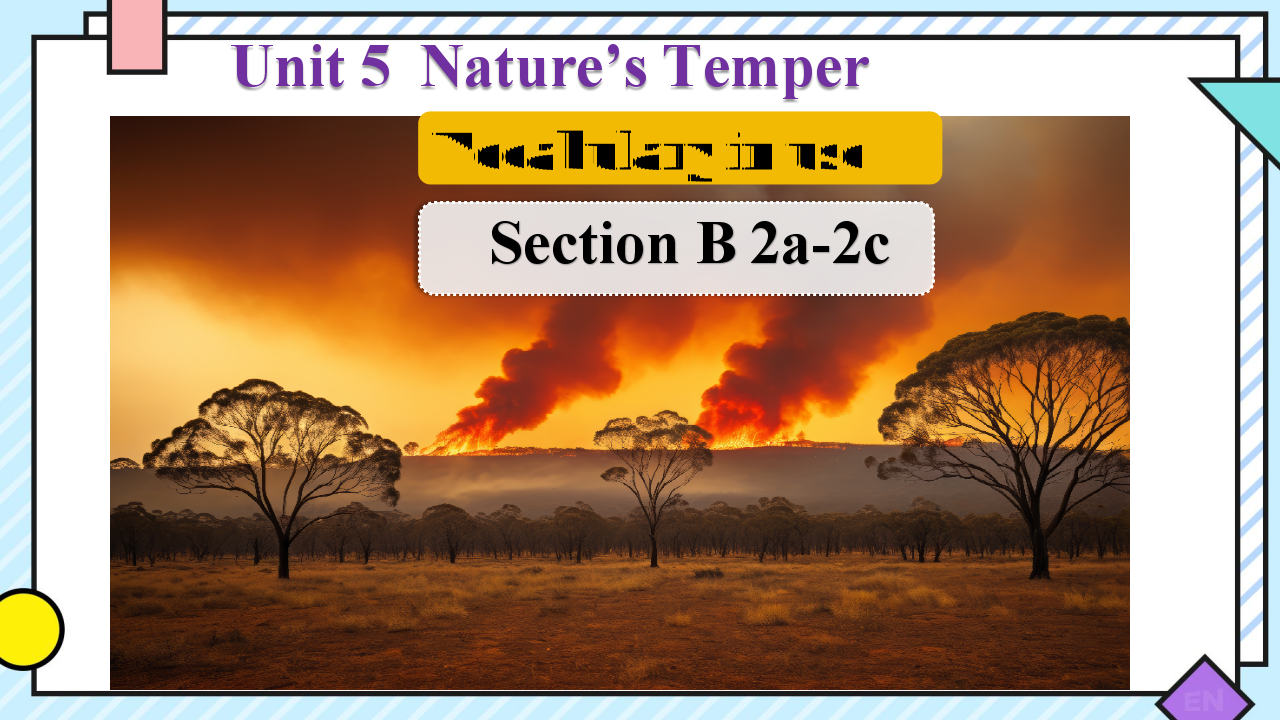
Unit 5 Nature’s Temper
Vocabulary in use
Section B 2a-2c
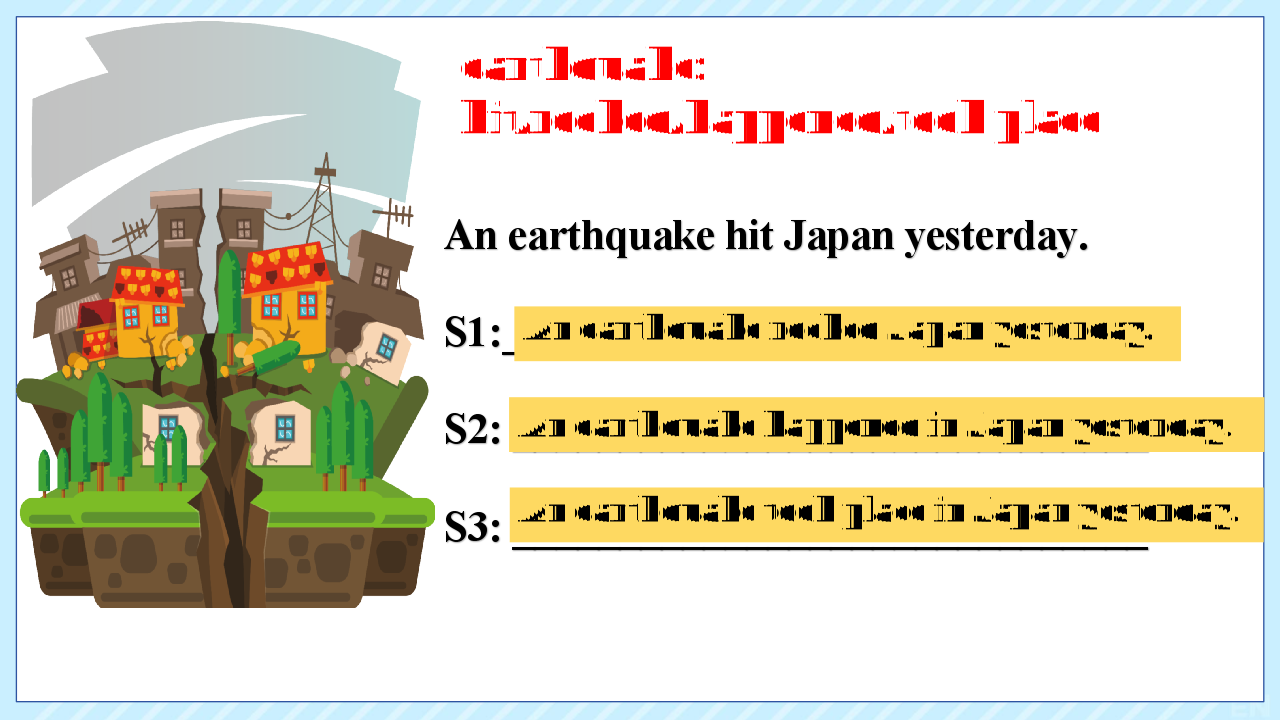
earthquake:
hit/rocked/happened/took place
An earthquake hit Japan yesterday.
S1:______________________________
S2: ______________________________
S3: ______________________________
An earthquake rocked Japan yesterday.
An earthquake happened in Japan yesterday.
An earthquake took place in Japan yesterday.
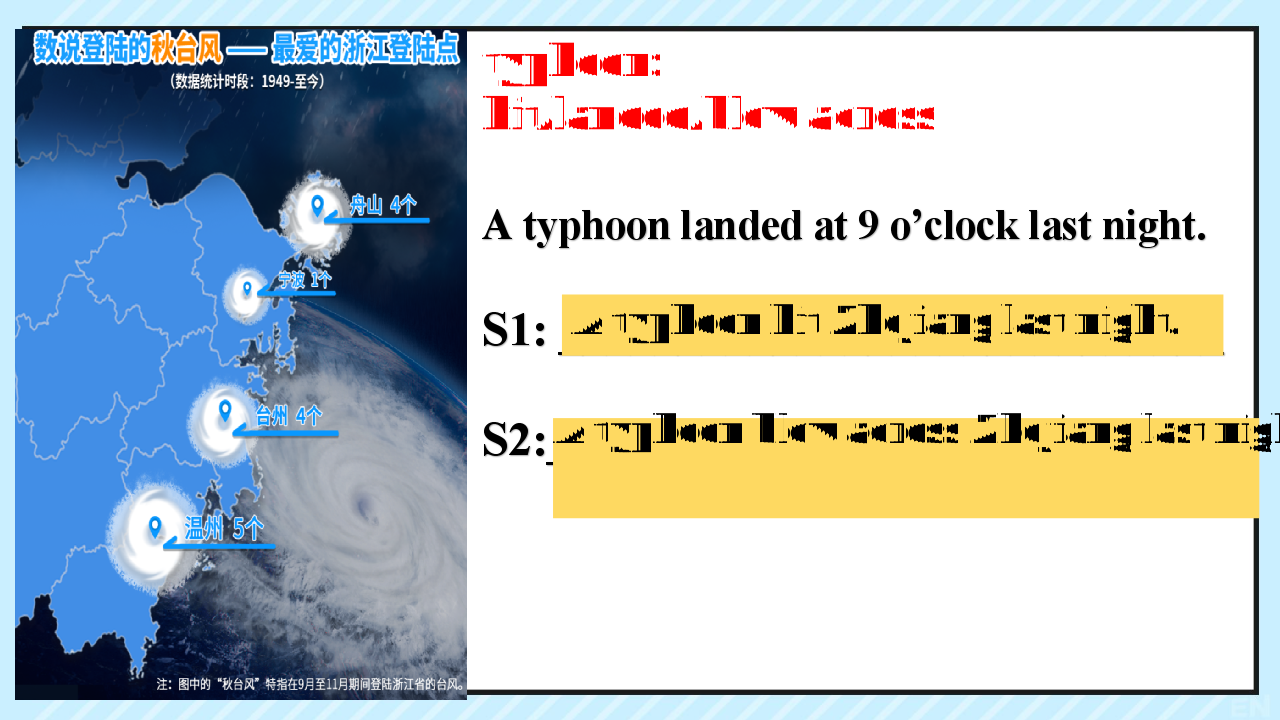
typhoon:
hit/landed/blew across
A typhoon landed at 9 o’clock last night.
S1: ____________________________
S2:____________________________
A typhoon hit Zhejiang last night.
A typhoon blew across Zhejiang last night.
tsunami:
hit/came/swept through
The tsunami swept through the village.
S1: ______________________________
S2: ______________________________
A tsunami hit the coastal city.
A tsunami came to the village.
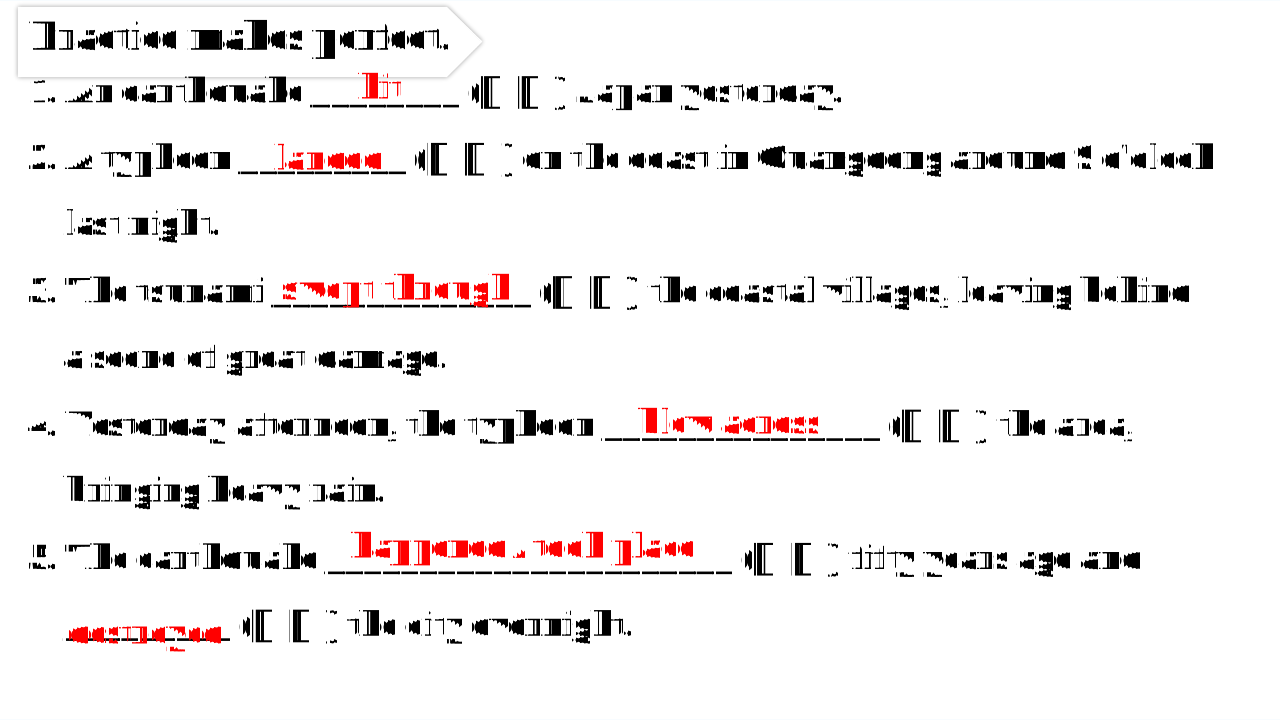
Practice makes perfect.
1. An earthquake ________ (袭击) Japan yesterday.
2. A typhoon _________ (登陆) on the coast in Guangdong around 9 o'clock
last night.
3. The tsunami ______________ (席卷) the coastal villages, leaving behind
a scene of great damage.
4. Yesterday afternoon, the typhoon _______________ (横扫) the area,
bringing heavy rain.
5. The earthquake ______________________ (发生) fifty years ago and
_________ (摧毁) the city overnight.
hit
landed
swept through
blew across
happened / took place
destroyed
Summarize the rules
Could you give more examples?
2b
2b
Look at the compound words in the box. Do you know what they mean? Complete the sentences using five of these words.
1. The rescue workers need more ___________ to clear the streets.
2. The family built strong roofs to __________ their house from heavy
storms.
3. The doctor listened to the man's __________ carefully.
4. During the storm, the ___________ nearly reached our windows.
5. People should avoid driving during a ____________ because it can be
very difficult to see clearly on the roads.
landslide snowstorm earthquake safeguard
floodwater manpower wildfire heartbeat
n.
v.
n.
n.
n.
manpower
safeguard
heartbeat
floodwater
snowstorm
Tip: Decide the part of speech 词性for each blank. It makes the task easier
/ˈreskjuː/
What touched you in the video?Why could they put out the wildfire?
Let’s read a report about a
serious wildfire which struck Chongqing in 2022.
2c
Complete the passage with the correct forms of the words in the box.
refuse drought warn hit safe wildfire
In August 2022, China experienced a great heatwave. It caused __________
in different parts of the country. The heatwave __________ the southwestern
city of Chongqing very hard. Large __________ swept through the forests
and mountains there. Over 5,000 firefighters, police, and volunteers all worked
together to keep the people and their homes safe. They put out the fires,
brought more than 1,500 people to ___________, and ___________ others
to stay away from dangerous areas. It was very hard to fight the fires because
of the high temperatures and changeable winds, but the rescue workers
__________ to give up. By the end of August, they managed to put out all
the fires.
n.
v.
n.
n.
v.
v.
/ˈhiːtweɪv/
Tip: Decide the part of speech 词性for each blank. It makes the task easier
2c
Complete the passage with the correct forms of the words in the box.
refuse drought warn hit safe wildfire
In August 2022, China experienced a great heatwave. It caused __________
in different parts of the country. The heatwave __________ the southwestern
city of Chongqing very hard. Large __________ swept through the forests
and mountains there. Over 5,000 firefighters, police, and volunteers all worked
together to keep the people and their homes safe. They put out the fires,
brought more than 1,500 people to ___________, and ___________ others
to stay away from dangerous areas. It was very hard to fight the fires because
of the high temperatures and changeable winds, but the rescue workers
__________ to give up. By the end of August, they managed to put out all
the fires.
droughts
hit
wildfires
safety
warned
refused
Read and answer
1. What do you think of these people?
They are brave, hard-working and great.
2. What can we learn from the story?
We can learn the spirit of unity(团结) and volunteering, and we should be thankful. We should also learn to protect ourselves and safeguard our homes from natural disasters.
No matter how big the challenge is, when we unite and never give up, we will win in the end.
Disasters are cruel, but unity is powerful.
Chinese people can overcome all hardships together.
灾难无情,团结有力,中国人民共克时艰
1. 保护……免受…… _________________________
2. 避免做某事 _________________________
3. 拒绝做某事 _________________________
4. 保障人民和家园的安全 _________________________
5. 因为;由于高温 _________________________
6.经历一场严重的热浪 _________________________
7. 转移到安全地带 _________________________
8. 席卷;横扫 森林和山脉_________________________
9. 登陆;着陆 _________________________
10. 严重袭击;重创 _________________________
11.在全国不同地区
12.远离危险区域
13.警告/提醒某人做某事
14.到八月底
15. 多变的风
refuse to do sth.
avoid doing sth.
safeguard ... from/against
keep the people and their homes safe
because of the high temperatures
bring ... to safety
sweep through the forests and mountains
land sp.
hit ... hard
Summary
in different parts of the country
stay away from dangerous areas
warn sb. to do sth.
by the end of August
changeable winds
experience a great heatwave
1. 昨晚一场台风袭击了这座城市。
A typhoon ________________ last night.
2. 昨天地震发生在那个地区。
_____________________________________ in that area yesterday.
3. 海啸席卷了沿海的几个村庄。
The tsunami _______________ several coastal villages.
4. 这个意外的消息让她很震惊。
___________________ shocked her.
5. 突然,灯灭了,房间陷入一片漆黑。
_______________, the lights went out and the room became completely dark.
hit the city
An earthquake took place / happened
swept through
The unexpected news
All of a sudden
In August 2022, China experienced a great heatwave. It caused droughts in different parts of the country. The heatwave hit the southwestern city of Chongqing very hard. Large wildfires swept through the forests and mountains there. Over 5,000 firefighters, police, and volunteers all worked together to keep the people and their homes safe. They put out the fires, brought more than 1,500 people to safety, and warned others to stay away from dangerous areas. It was very hard to fight the fires because of the high temperatures and changeable winds, but the rescue workers refused to give up. By the end of August, they managed to put out all the fires.
经历一场严重的热浪
在全国不同地区
西南城市重庆
席卷森林和山脉
齐心协力;共同努力
保障人民和家园的安全
扑灭大火
bring sb. to safety 将某人带到安全地带
warn sb. to do sth. 警告/提醒某人做某事
远离危险区域
由于高温
多变的风
拒绝放弃;绝不放弃
到八月底
manage to do sth. 设法做成某事
In August 2022, China experienced a great heatwave, the worst since 1961. 2022 年 8 月,中国经历了一场自1961 年以来最严重的热浪。
since prep.,adv. & conj. 自...... 以后;从...... 以来 conj. 既然;由于
① 【介词】自......以后;从..... 以来后接表示时间点的词或短语,常与现在完成时连用。
② 【副词】自...... 以后;从...... 以来 常与现在完成时连用。
她十年前离开了这里,此后我再也 没有见过她。
She left here ten years ago, and I haven't seen her _________.
since
从上学期开始,露西已经学会 了自己管理时间。
Lucy has learned to manage time by herself ____________last term.
since
③ 【连词】自...... 以后;从...... 以来 引导时间状语从句,从句常用一般过去时,对应 的主句多用现在完成时。
从五岁开 始,我就跟妈妈和姐姐学刺绣。
__________I was five years old, I have leamed embroidery from my mother and sister.
In August 2022, China experienced a great heatwave, the worst since 1961. 2022 年 8 月,中国经历了一场自1961 年以来最严重的热浪。
Since
④ 【连词】因为;既然 引导原因状语从句,常位于 句首。
因为我们对彼此知之甚少,所以我们分享了自己的故事。
__________we knew little about each other, we shared our stories.
Since
Tip since表示原因时多 用于已知或共知的 原因,because 表示 直接的原因。
Language Points
1. safeguard保护
在家里如何防备各种危险?
How to safeguard against dangers at home?
政府必须保护人们免受空气污染(危害)。
The government must safeguard people against air pollution.
safeguard ① [动词]保护;捍卫
safeguard against sth 防范/预防某事
safeguard...against/from... 保护……免受……
② (名词)安全设施;保护措施
学校有火灾报警器和摄像头等安全设施。
The school has safeguards like fire alarms and cameras.
Language Points
2. The rescue workers need more manpower to clear the streets.救援人员需要更多人力来清理街道。
战士们竭尽全力营救洪水中的人。
The soldiers tried their best to rescue people in the flood.
消防员奋战两个小时,将人们从大楼中救出。
Firefighters worked for two hours to rescue people from the building.
rescue① (名词)救援;营救;获救
rescue team 救援队 come to sb's rescue 挽救某人
② (及物动词]援救;营救
rescue...from... 从……中救……
在世界动物日,全世界的 志愿者为动物中心和社会组织筹集资金。
All over the world on World Animal Day, _____________raise money for animal centers and social organizations.
Over 5, 000 firefighters, police, and volunteers all worked together to keep the people and their homes safe.5000 多名消防 员、警察和志愿者共同努力保护人民及其家 园的安全。
volunteer n. 志愿者;自告奋勇者 v. 自愿做;义务做
① 【可数名词】志愿者;自告奋勇者
volunteers
② 【及物动词】& 【不及物动词】自愿做;义 务做
volunteer as... 自愿充当......
volunteer to do sth. 自愿做某事;义务做某事
$
资源预览图

1
2
3
4
5
6
所属专辑

相关资源
由于学科网是一个信息分享及获取的平台,不确保部分用户上传资料的 来源及知识产权归属。如您发现相关资料侵犯您的合法权益,请联系学科网,我们核实后将及时进行处理。