Unit 2 No Rules,No Order Section A Pronunciation课件 2025-2026学年人教版七年级英语下册
2026-05-11
|
27页
|
23人阅读
|
0人下载
普通
资源信息
| 学段 | 初中 |
|---|---|
| 学科 | 英语 |
| 教材版本 | 初中英语人教版七年级下册 |
| 年级 | 七年级 |
| 章节 | Pronunciation |
| 类型 | 课件 |
| 知识点 | - |
| 使用场景 | 同步教学-新授课 |
| 学年 | 2026-2027 |
| 地区(省份) | 全国 |
| 地区(市) | - |
| 地区(区县) | - |
| 文件格式 | PPTX |
| 文件大小 | 12.44 MB |
| 发布时间 | 2026-05-11 |
| 更新时间 | 2026-05-11 |
| 作者 | 匿名 |
| 品牌系列 | - |
| 审核时间 | 2026-05-11 |
| 下载链接 | https://m.zxxk.com/soft/57804846.html |
| 价格 | 1.00储值(1储值=1元) |
| 来源 | 学科网 |
内容正文:
Unit 2 No Rules,No Order
Section A Pronunciation 1
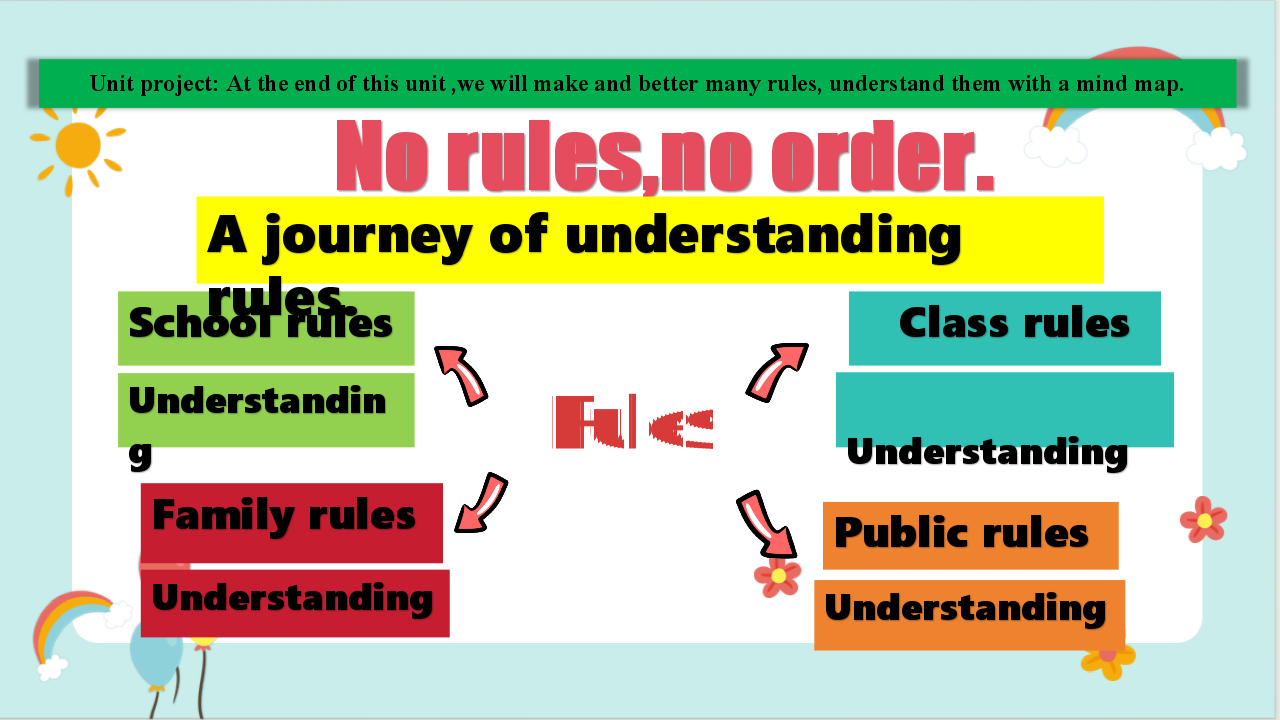
Rules
Family rules
Class rules
School rules
Public rules
Unit project: At the end of this unit ,we will make and better many rules, understand them with a mind map.
No rules,no order.
A journey of understanding rules.
Understanding
Understanding
Understanding
Understanding
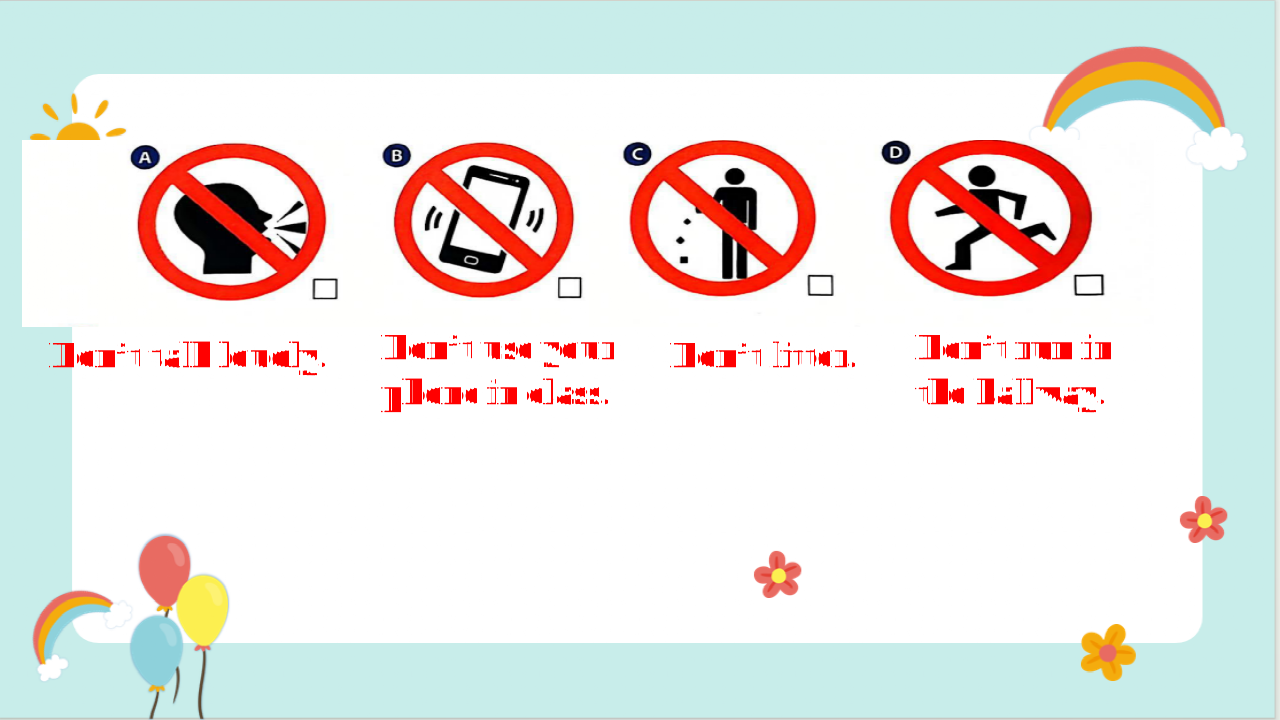
Don’t talk loudly.
Don’t use your phone in class.
Don’t litter.
Don’t run in the hallway.
scc1zbyy25022803
3
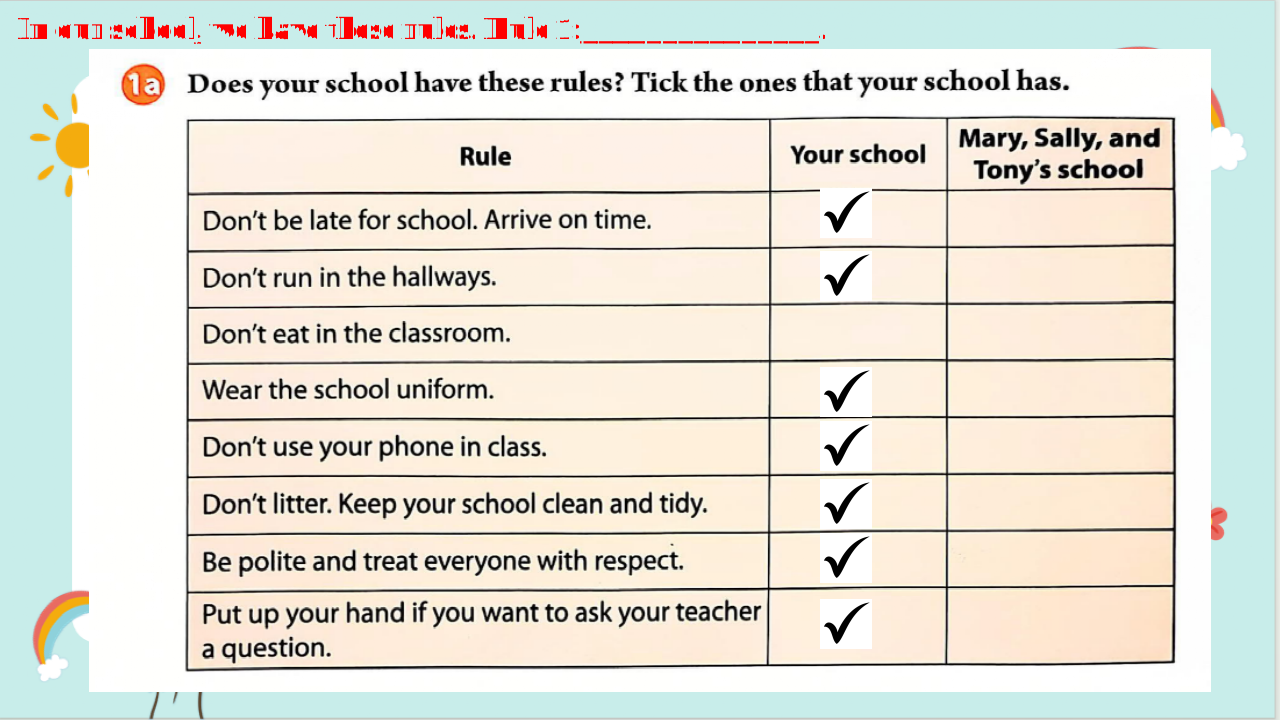
In our school, we have these rules. Rule 1:_______________.
scc1zbyy25022803
4
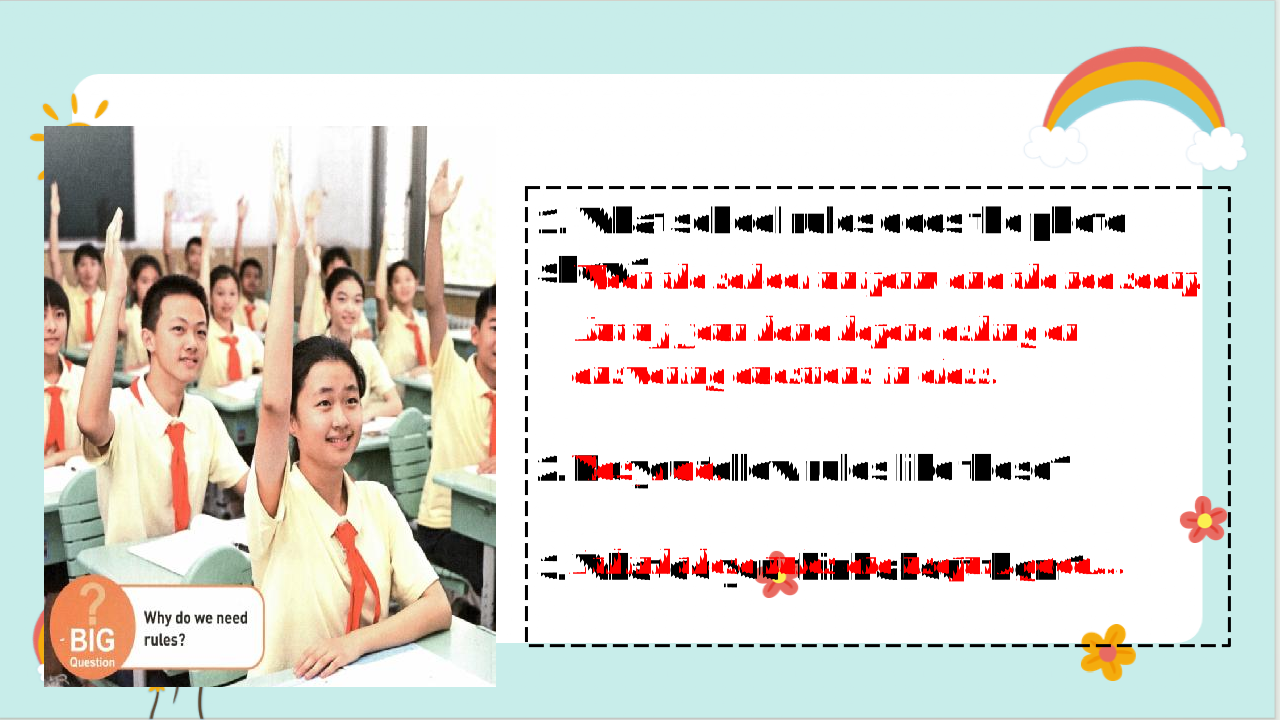
1. What school rules does the photo show?
2. Do you follow rules like these?
3. What do you think about them?
Yes, I do.
I think these rules are useful / good/...
Wear the school uniform and the red scarf.
Put up your hand before asking or answering questions in class.
5
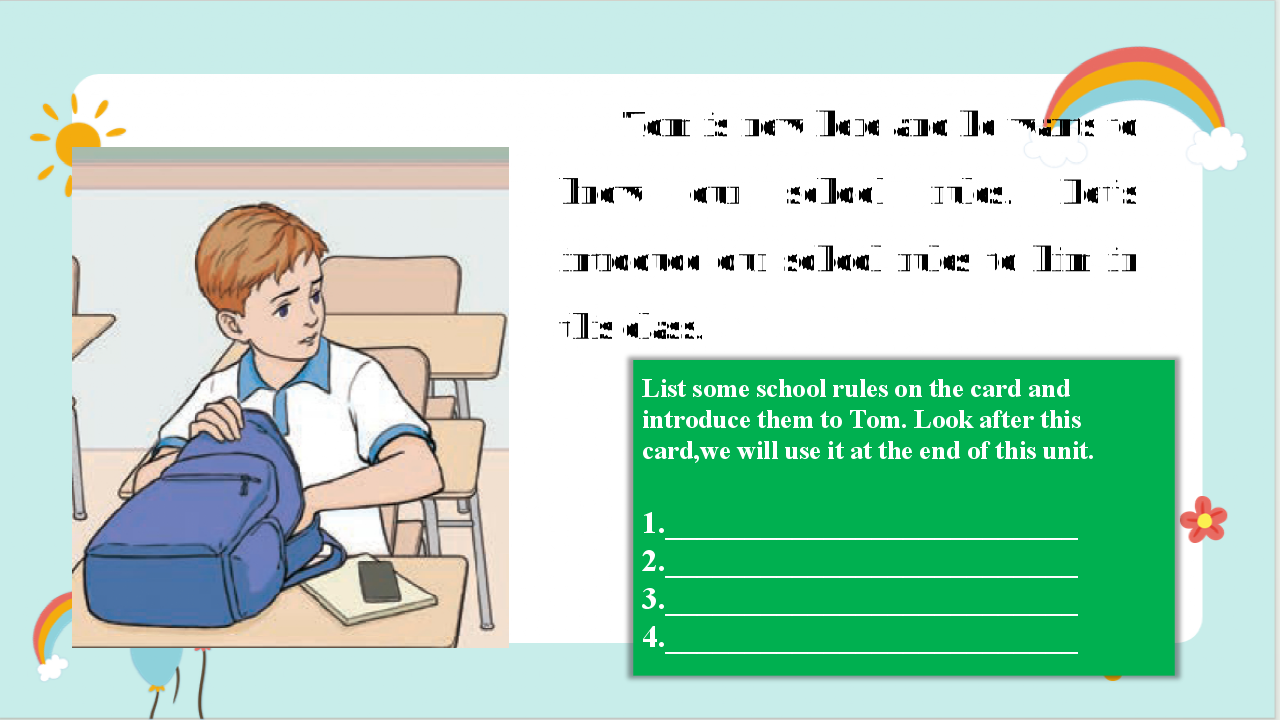
Tom is new here and he wants to know our school rules. Let’s introduce our school rules to him in this class.
List some school rules on the card and introduce them to Tom. Look after this card,we will use it at the end of this unit.
1.__________________________
2.__________________________
3.__________________________
4.__________________________
run
hallway
school
the uniform
litter
clean and tidy
What words can we use to talk about rules?
scc1zbyy25022803
7
Don’ t run in the hallways.
Can we run in the hallways?
Don’ t be late for school.
/ˈhɔːlweɪ/
/leɪt/
Can we be late for school?
8
Let’s chant.
Why do students have to follow rules?
Across the country, in many schools,
Students like us follow rules!
Be on time. Don’t be late for class.
Keeping the rules is good for us!
Every day, from Monday to Friday,
Keep our school clean and tidy!
Raise your hand. Walk and don’t run.
Keep the rules and let’s have fun!
Be on time. Don’t be late for class.
Keeping the rules is good for us!
Every day, from Monday to Friday,
Keep our school clean and tidy!
Raise your hand. Walk and don’t run.
Keep the rules and let’s have fun!
Ms Brown.
scc1zbyy25022803
10
scc1zbyy25022803
11
Look and say.
(1) Where are they?
(2) What’s the relationship between them?
(3) How do they feel?
(4) What happens to the boy?
Listen to the first part of the recording. Tick the rules that are mentioned.
You can’t/ mustn't talk.
No talking
Don’t use your phones.
Don’t talk loudly.
You can’t/mustn’t use your phones.
You can’t/ mustn’t litter.
Don’t litter.
No littering
You can’t/ mustn’t run.
Don’t run.
No running
signs
标志
Listen to the conversation and circle the coloured words you hear.
Anne: Hi, I’m Anne. What’s your name?
Tom: Hello! I’m Tom. It’s my first day here.
Anne: It’s nice to meet you, Tom! Is everything OK?
Tom: Well, I can’t find my pencil box / pen. I think it’s in my locker / at home.
Anne: Here, I can lend you my pen.
Tom: Thanks! Would you like a sweet?
Anne: No, thank you. We can’t eat snacks in class.
Tom: Can we eat fruit / drink water?
Anne: Yes, of course.
Tom: OK, thanks ... Oh! I’m sorry, I have to answer my phone.
Anne: Oh, but we can’t / mustn’t bring our mobile phones to class. We have to turn them off and put/ keep
them in our lockers. That’s another rule.
Tom: OK! Thanks for telling me, Anne.
Anne: You’re welcome, Tom.
(1) What happens to Tom?
(2) What does Anne tell Tom?
14
Listen again. Complete the sentences.
Mary can’t ________ in the ____________.
Sally mustn’t wear her own jacket in _________. She has to wear____________.
Tony can’t _________. He must keep
the school ______________.
“Mary, slow down! Don't run in the hallway, please.”
“Sally, you know the rules. You can only wear the uniform in school. You can't wear that jacket here.”
“Tony, you know you mustn't litter. We have to keep the school clean and tidy.”
school
run
hallway
litter
clean and tidy
the uniform
It is the music or rhythm of spoken English .
意思是你说某些单词时声音更大,语气更重。
That means that you say certain words more loudly and with more emphasis than others.
句子重音是英语口语中的音乐或节奏。
Sentence stress
Content
words
Function
words
内容词,具有最大的意义,
承载着句子的关键信息。
功能词,几乎没有意义,
大部分起语法连接作用。
Anne: Hi, I'm Anne. What's your name?
Tom: Hello! I'm Tom. It's my first day here.
Anne: It's nice to meet you, Tom! Is everything OK?
Tom: Well, I can't find my pencil box. I think it's in my locker.
Anne: Here, I can lend you my pen.
Tom: Thanks! Would you like a sweet?
Anne: No, thank you. We can't eat snacks in class.
Tom: Can we drink water?
Anne: Yes, of course.
Tom: OK, thanks … Oh! I'm sorry, I have to answer my phone.
Anne: Oh, but we mustn't bring our mobile phones to class. We have to
turn them off and keep them in our lockers. That's another rule.
Tom: OK! Thanks for telling me, Anne.
Anne: You're welcome, Tom.
sb's first day 某人的第一天
在我的储物柜里
lend sb. sth = lend sth. to sb. 把某物借给某人
Would you like …? 你想要……吗?
吃零食
在课堂上
当然
不得不;必须
接电话
bring sth. to + 地点
把某物带到某地来
关掉(水、电或煤气)
谢谢……
不客气
很高兴见到你
存放在储物柜里
1. Don’t jump the queue. You ___________ wait your turn.
2. I _____ feed my dog many kinds of food, but I ____________give him chocolate. It is bad for him!
3. A: Can I leave the classroom if I don’t feel well?
B: Yes, but you ___________ tell your teacher about it when you ____________ be absent from class.
4. A: Hey! Can I look at your book?
B: Shh, we ___________ talk quietly in the library.
5. A: Can you put on your seat belt? We ___________ wear one when we’re in a car.
B: Sure. Thanks!
Complete the sentences using can, have to / must, or can’t / mustn’t.
have to / must
can
have to / must
have to/must
can’t/mustn’t
have to/must
have to/must
插队
缺席、不在
Don’t be late for school. Arrive on time.
Don’t run in the hallways.
Don’t eat in the classroom.
Wear the school uniform.
Don’t use your phone in class.
Don’t litter. Keep your school clean and tidy.
Be polite and treat everyone with respect.
Put up your hand if you want to ask your teacher a question.
Listen to the second part of the recording. Who is the speaker? What rules does she talk about ? Tick them in 1a.
Mary, Sally, and Tony’s school
1.
2.
3.
4.
5.
6.
7.
8.
Who is the speaker?
The headmaster.
The class teacher, Ms Brown.
The monitor in the class.
名词
主动词
形容词
疑问词
副词
否定
物主代词
指示代词
介词
冠词
连词
大部分代词
be动词
助动词
情态动词
构成各类时态的词
I am sorry.The class is full.
I am sorry.The class is full.
Read the conversation and complete Tom's notes about the school rules.
P12 2b
Anne: Hi, I'm Anne. What's your name?
Tom: Hello! I'm Tom. It's my first day
here.
Anne: It's nice to meet you, Tom! Is
everything OK?
Tom: Well, I can't find my pencil box. I
think it's in my locker.
Anne: Here, I can lend you my pen.
Tom: Thanks! Would you like a sweet?
Anne: No, thank you. We can't eat
snacks in class.
Tom: Can we drink water?
Anne: Yes, of course.
Tom: OK, thanks … Oh! I'm sorry, I
have to answer my phone.
Anne: Oh, but we mustn't bring our
mobile phones to class. We have to
turn them off and keep them
in our lockers. That's another rule.
Tom: OK! Thanks for telling me, Anne.
Anne: You're welcome, Tom.
School rules
We cannot _________________
We must not ________________
________________
We have to _________________
_________________
_________________
eat snacks in class.
bring our mobile phones to class.
turn the mobile phones off and keep them in our lockers.
Do you have any brothers or sisters?
Do you have any brothers or sisters?
Listen again. Complete the sentences.
Ms Brown:
Good morning, students. This morning, I had to tell some students to ______ the school ______, Please remember them, everyone! Walk in the ________. Don't run! You have to ______ the _________. You mustn't wear other clothes to school instead. Don’t ______. Make ______ to ______ the school tidy, And most importantly ,we must be _______ and that everyone with ________. If we follow these rules, we can have a happy and safe school !
follow
rules
hallway
wear
uniform
litter
keep
polite
respect
sure
I can’t play the guitar.
I can’t play the guitar.
Listen to the conversation again and pay attention to the stressed words.
Anne: Hi, I’m Anne. What’s your name?
Tom: Hello! I’m Tom. It’s my first day here.
Anne: It’s nice to meet you, Tom! Is everything OK?
Tom: Well, I can’t find my pencil box. I think it’s in my locker.
Anne: Here, I can lend you my pen.
Tom: Thanks! Would you like a sweet?
Anne: No, thank you. We can’t eat snacks in class.
Tom: Can we drink water?
Anne: Yes, of course.
Tom: OK, thanks ... Oh! I’m sorry, I have to answer my phone.
Anne: Oh, but we mustn’t bring our mobile phones to class. We have to turn them off and keep them in our lockers. That’s another rule.
Tom: OK! Thanks for telling me, Anne.
Anne: You’re welcome, Tom.
带着重要信息,
需要强调的词重读,如名词,动词,形容词,副词,表否定的词和疑问词等。
语调
发音
连读
重读
46512.0
null
62640.363
34920.0
$
资源预览图
1
2
3
4
5
6
相关资源
由于学科网是一个信息分享及获取的平台,不确保部分用户上传资料的 来源及知识产权归属。如您发现相关资料侵犯您的合法权益,请联系学科网,我们核实后将及时进行处理。