Unit5 Section A(1a-2d)教学设计 2025-2026学年人教版八年级英语下册
2026-04-20
|
6页
|
824人阅读
|
7人下载
普通
内容正文:
课题
Unit 5 Nature’s Temper
Section A (1a-2d)
学段
初中
年级
八
课型
听说课
课时
1
学科
English
单元
主题分析
本单元属于“人与自然”范畴,涉及“自然灾害与防范措施,人身安全与自我保护”子主题内容,学生将通过探讨不同类型的灾难、描述防灾减灾措施、分析灾害的双重致命性,以及学习预防准备,深入理解自然灾难的多维冲击与应对策略。主题强调灾害意识与生存能力,引导学生在敬畏自然的同时,思考人类的责任与行动。
文本解读
What:本课时是人教版新版八年级下册第五单元Nature’s Temper
的第一课时,听力材料以“自然灾害”为主题,聚焦台风这一具体灾害类型,通过图文匹配、对话听力和采访录音等多种形式,引导学生理解自然灾害的发生场景与应对经验。听力文本包含不同人物在灾害发生时的活动描述、灾后行动记录以及天气报告的实用信息,构成了一个从事件描述到行为反应、再到预警建议的完整信息链。
Why:本课旨在语言学习中融入灾害安全教育,帮助学生掌握与自然灾害相关的核心词汇和表达,同时培养他们在真实语境中获取关键信息的能力。通过听取不同人物的亲身经历,学生不仅能提升英语听力技能,更能增强对灾害情境的认知与同理心,学习如何沉着应对突发情况。
How:本课通过阶梯式的任务设计引导学生逐步深入理解:先匹配灾害类型与图片,建立视觉关联;再听取对话捕捉灾害事件的关键信息;随后通过细节听力完成句子填空,聚焦具体行动与后果;最后创设角色扮演情境,鼓励学生运用所学语言进行模拟对话,实现从输入到输出的语言内化与迁移运用。
学情分析
1.已有知识经验
在自然灾害这一主题上,学生可能通过新闻、科普读物或中学地理课程对常见灾害有基本认知,部分学生可能具备相关英文术语的初步积累。
2.潜在学习难点
自然灾害相关术语可能对学生构成词汇障碍,影响整体理解。
3.教学支持建议
在听力前通过图片、短视频引入关键术语,并结合简单例句强化理解;可简要讨论学生已知的自然灾害案例,激活背景知识。
教学目标
语言
能力
1.Students will be able to understand and use key vocabulary related to natural disasters and describe past events using the past continuous tense.
2.Students will be able to extract specific information from listening passages about people's experiences during disasters and complete related comprehension tasks.
文化意识
1.Students will develop an understanding of how communities in disaster-prone areas prepare for, experience, and recover from natural disasters.
2.Students will recognize the importance of community support, mutual aid, and following official warnings during emergencies, fostering a sense of collective responsibility and resilience.
思维品质
1.Students will analyze and synthesize information from multiple short listening texts to compare different individuals' experiences and responses during the same disaster.
2.Students will apply learned language and concepts to create and perform a realistic role-play, demonstrating logical sequencing and problem-solving in a simulated context.
学习能力
1.Students will employ listening strategies such as predicting content from pictures, identifying key words, and taking notes to complete various task-based activities.
2.Students will utilize cooperative learning strategies through pair work and group discussions to practice language, share ideas, and provide peer support.
教学
重难点
教学重点
Students will conduct a simple role-play interview, asking and answering questions about personal experiences during a typhoon using learned structures.
教学难点
Students will connect the lesson's theme to real-world knowledge and possible personal experiences, enhancing engagement and the transfer of learning.
教学过程设计
教学环节
教师活动
学生活动
设计意图
Step 1
Warming-up
1.Greeting each other.
2.Explain learning objectives to students.
3.Look at the cover page of this unit and think the questions in Look and share:
-What natural disaster is happening in the photo?
-When and where is it likely to happen?
-How does this photo make you feel ?
1.Greeting.
2.Students learn about learning objectives in this unit.
3.Students observe the photo and answer the questions.
通过教师对于本单元学习目标的介绍以及学生对于封面页的观察,学生能够对于本单元的话题有一个初步认知,为后续学习做铺垫。
Step 2
Lead-in
Teacher plays 4-5 short audio clips related to natural disasters.After each clip, teacher asks: “What do you hear? What might be happening?”
Students shout out their guesses
They can also mimic sounds or actions.
通过声音调动学生的听觉想象,增加神秘感和参与度,符合“悬念导入”的教学策略。
Step 3
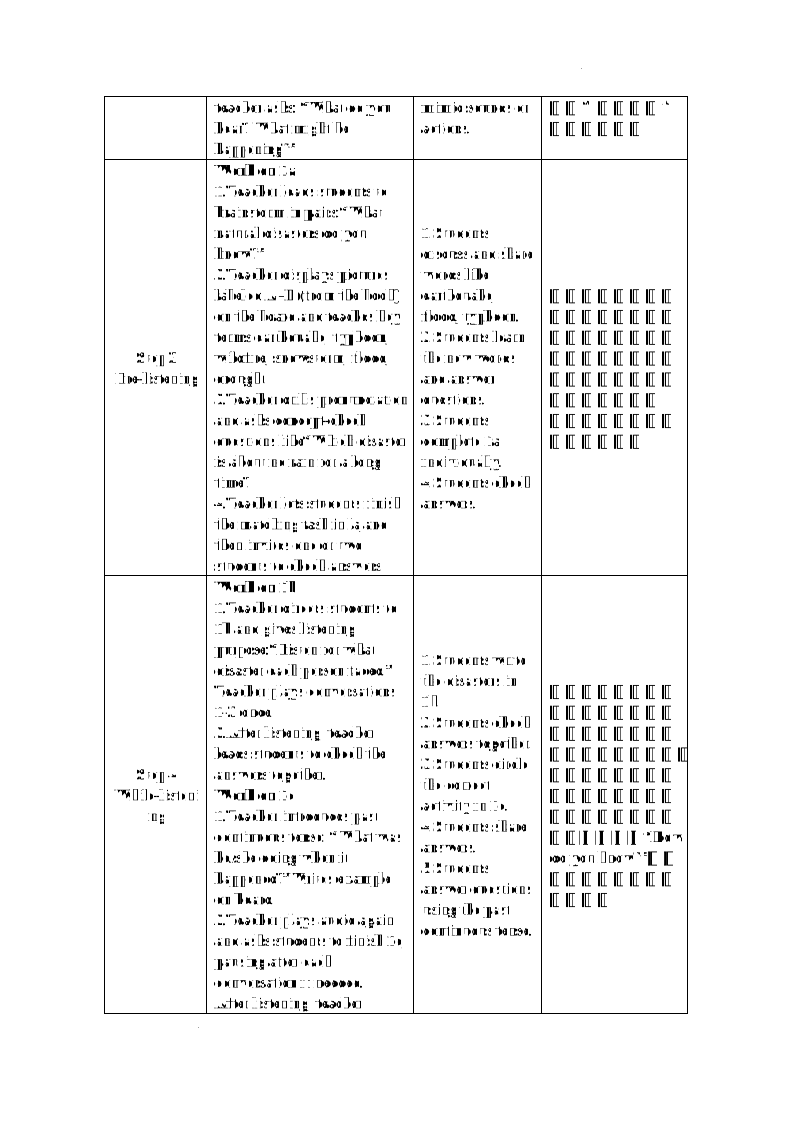
Pre-listening
Work on 1a
1.Teacher leads students to brainstorm in pairs:“What natural disasters do you know?”
2.Teacher displays pictures labeled A–E (from the book) on the board and teaches key terms:earthquake, typhoon, wildfire, snowstorm, flood, drought.
3.Teacher drills pronunciation and asks concept-check questions like“Which disaster is about no rain for a long time?
4.Teacher lets students finish the matching task in la,and then invites one or two students to check answers.
1.Students discuss and share words like earthquake, flood, typhoon.
2.Students learn the new words and answer questions.
3.Students complete 1a individually.
4.Students check answers.
教师引导学生通过头脑风暴激活已有词汇,为新课做铺垫。利用图片直观呈现词汇,通过问答巩固词义与发音,为听力理解扫清词汇障碍。
Step 4
While-listening
Work on 1b
1.Teacher directs students to 1b and gives listening purpose:“Listen for what disaster each person faced.”
Teacher plays conversations 1-3 once.
2.After listening, teacher leads students to check the answers together.
Work on 1c
1.Teacher introduces past continuous tense: “What was he/she doing when it happened?”Writes example on board.
2.Teacher plays audio again and asks students to finish 1c, pausing after each conversation if needed.
After listening, teacher invites several students to share the answers.
3.After checking answers, teacher asks: “What was Xinyi doing? How do you know?”
1.Students write the disasters in 1b.
2.Students check answers together.
3.Students circle the correct activity in 1c.
4.Students share answers.
5.Students answer questions using the past continuous tense.
第一遍听主旨,训练学生捕捉关键信息的能力。任务明确,侧重整体理解。
第二遍听取细节,聚焦过去进行时,将语法学习融入语境。通过追问“How do you know?”培养学生基于证据的听力习惯。
Step 5
Post-listening
Work on 1d
1.Teacher models the dialogue in 1d with a student and writes sentence frames on board:
A:What was [name] doing at the time of the [disaster]?
B:He/She was [activity].
2.Teacher monitors and provides support if needed,then invites several pairs to share their conversations.
1.In pairs, students ask and answer about all four people.
2.Students share their dialogues with the class.
通过控制性对话练习巩固目标句型,逐步过渡到个性化输出,提升语言运用真实感与流利度。
Step 6
Judging
Work on 2a
1.Teacher plays a short video clip showing the scene of a typhoon and asks:“What did you see? What was surprising about it?”
2.Teacher introduces the topic:“We’re going to be typhoon investigators. We’ll listen to real stories and a weather report about typhoons.”
3.Teacher directs students to 2a and has students read the statements in 2a individually.
Then teacher clarifies key terms:coast, flooded, eye, tsunami using visuals.
4.Teacher allows brief pair discussion to finish 2a.After that,teacher invites some students share their answers.
1.Students watch the video and respond to the teacher’s questions.
2.Students work in pairs to complete 2a.
3.Students share their answers with the class.
通过视频抓住学生注意力,直观呈现台风眼现象,激发探究兴趣,并自然引入台风相关事实的学习。
预处理可能影响理解的关键词汇,降低听力难度。通过视频介绍和同伴讨论,降低2a任务的难度。
Step 7
Listening
Work on 2b
1.Teacher plays the audio for 2b once without stopping and guides students to answer the questions in 2b.Uses graphic organizer on board:4W chart (Who/Where/When/What).
2.Teacher invites several students to share answers.
Work on 2c
1.Teacher plays the audio again, pausing after each interview.
2.Teacher instructs students to complete the sentences in 2c and provides support by writing key phrases on the board if needed.
3.Teacher leads students to check answers together.
1.Students listen and complete 2b questions focusing on 4W elements.
2.Students share their answers.
3.Students listen again and complete the sentences in 2c.
4.Students check answers together.
4W图表工具化听力策略,帮助学生系统捕捉关键信息。
第二遍听力聚焦具体信息,训练捕捉细节和准确记录的能力。填空练习帮助学生关注目标语法和词汇。
Step 8
Pair work
Work on 2d
1.Teacher sets scenario:"You are a reporter and your partner is a survivor."
2.Teacher demonstrates role-play with a confident student using the textbook dialogue frame and provides language support on board:
-Reporter phrases: "Could you describe...", "What was the most ...moment?"
-Survivor phrases: "Suddenly...", "Luckily...", "Unfortunately..."
3.Teacher invites some pairs to share their conversations.
1.Students make up and practice their conversation.
2.Volunteer pairs perform their conversations.
模拟新闻现场创造高真实度交际语境。提供情感维度支架(惊恐、庆幸等)提升对话深度。表演环节配合记者证道具增强代入感。
Step 9 Summary
1.Teacher introduces "Emergency Pyramid": Bottom (Before), Middle (During), Top (After).Then guides students to categorize advice from the weather report and their own ideas.
2.Teacher connects to real life: Show local typhoon warning signals.
Students create a "Typhoon Preparedness Poster" with 3 Dos and 3 Don'ts for each pyramid level.
应急金字塔将语言学习转化为生存技能学习,体现学科育人价值。海报制作融合视觉-语言智能。地方预警信号联系学生真实生活环境。
Step 10
Homework
Level A:Write 5 sentences about what people were doing during a natural disaster, using the past continuous tense.
Level B:Imagine you are a reporter. Write a dialogue(6-8 lines) to interview someone who has experienced a natural disaster.
Level C:Choose one natural disaster and create a simple safety plan (in English) for your family. Include at least 5 steps.
本作业设计遵循分层教学理念,兼顾不同层次学生的需求,培养语言运用能力,提升综合语言素养与防灾意识。各层任务循序渐进,助力学生实现个性化发展。
板书设计
Unit 5 Nature’s Temper
Section A (1a-2d)
Key Words:
typhoon earthquake flood
drought snowstorm wildfire
Key Sentences:
A:What was he/she doing at the time of ...?
B:He/She was ...
教学反思
一、成功之处:
1.任务设计层次分明:课堂活动从词汇识别到听力理解,再到角色扮演,循序渐进,符合学生的认知规律。
2.听说技能训练扎实:听力材料包含对话、访谈、天气报告等多种语篇类型,帮助学生适应不同语速和口音。角色扮演活动鼓励学生进行真实交际,提高了口语表达的流利度与准确性。
二、存在问题:
1.语言输出机会不均:角色扮演时,部分性格内向或基础较弱的学生参与度不高,多数由活跃学生主导,未能实现全员深度参与。
2.评估方式较为单一:课堂评价多以任务完成为主,缺乏对思维过程、合作能力、创新表达等方面的多元评价。
三、改进措施:
1.推行结构化小组合作:在角色扮演等活动中明确分工,如设立“记录员”“汇报员”“监督员”等角色,确保每位学生都有参与和展示的机会,并可实行轮换制。
2.完善多元评价体系:增加课堂观察量表,关注学生的参与度、合作表现与思维品质;引入自评与互评环节,让学生从“学会”走向“会学”,提升元认知能力。
学科网(北京)股份有限公司
$
资源预览图

1

2
3

相关资源
示范课
由于学科网是一个信息分享及获取的平台,不确保部分用户上传资料的 来源及知识产权归属。如您发现相关资料侵犯您的合法权益,请联系学科网,我们核实后将及时进行处理。