Unit 9 课时 6 Oral Communication(分层作业)英语新教材仁爱科普版八年级下册
2026-04-01
|
2份
|
15页
|
320人阅读
|
2人下载

资源信息
| 学段 | 初中 |
|---|---|
| 学科 | 英语 |
| 教材版本 | 初中英语仁爱科普版八年级下册 |
| 年级 | 八年级 |
| 章节 | Oral Communication |
| 类型 | 作业-同步练 |
| 知识点 | - |
| 使用场景 | 同步教学-新授课 |
| 学年 | 2026-2027 |
| 地区(省份) | 全国 |
| 地区(市) | - |
| 地区(区县) | - |
| 文件格式 | ZIP |
| 文件大小 | 151 KB |
| 发布时间 | 2026-04-01 |
| 更新时间 | 2026-04-01 |
| 作者 | 小圈儿的英语角 |
| 品牌系列 | 上好课·上好课 |
| 审核时间 | 2026-04-01 |
| 下载链接 | https://m.zxxk.com/soft/57132274.html |
| 价格 | 2.00储值(1储值=1元) |
| 来源 | 学科网 |
内容正文:
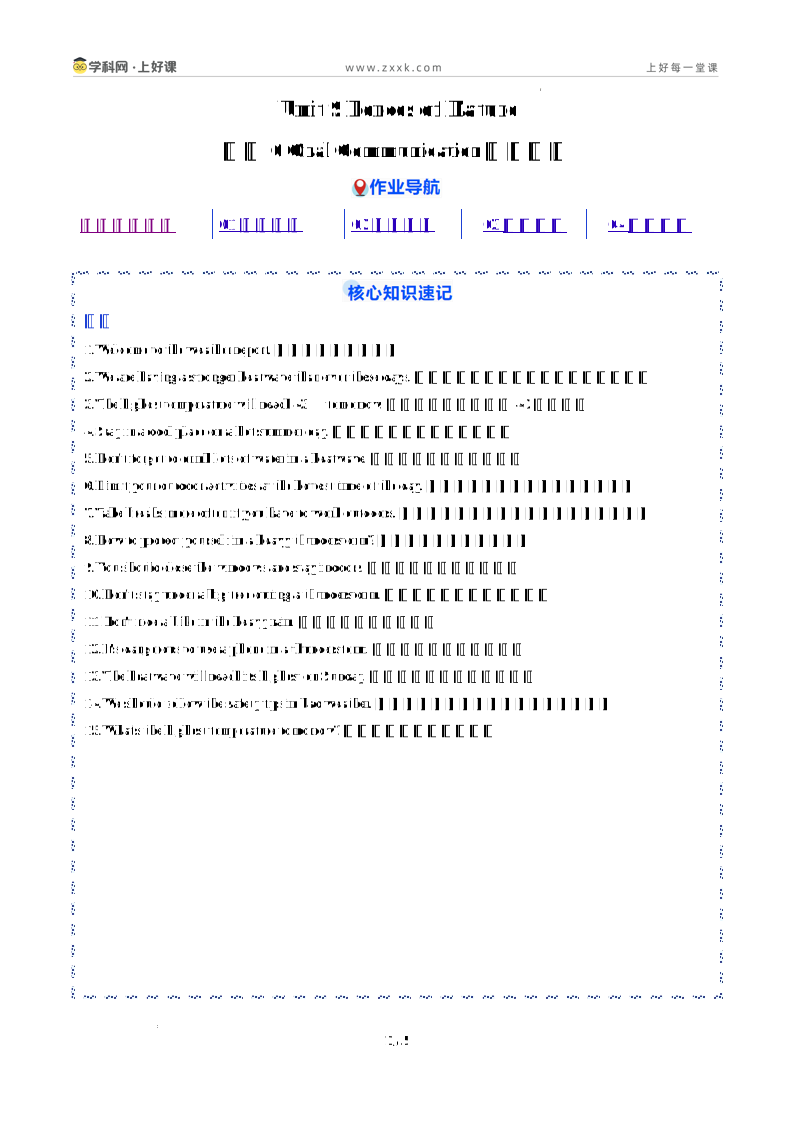
Unit 9 Forces of Nature
课时6 Oral Communication 分层作业
核心知识速记
01基础达标
02能力提升
03拓展培优
04思维进阶
句型
1.Welcome to the weather report. 欢迎收看天气预报。
2.We are having a stronger heatwave than ever these days. 这些天我们正遭遇前所未有的强热浪。
3.The highest temperature will reach 43℃ tomorrow. 明天最高气温将达到 43 摄氏度。
4.Stay in a cool place on a hot summer day. 炎热的夏日待在凉爽的地方。
5.Don't forget to drink lots of water in a heatwave. 热浪期间别忘了多喝水。
6.Limit your outdoor activities at the hottest time of the day. 在一天最热的时候限制户外活动。
7.Take breaks more often if you have to work outdoors. 如果必须在户外工作,要更频繁地休息。
8.How to protect yourself in a heavy thunderstorm? 雷暴天气如何保护自己?
9.You should close the windows and stay indoors. 你应该关窗并待在室内。
10.Don't stay under a big tree during a thunderstorm. 雷暴期间不要待在大树下。
11.Don't ride a bike in the heavy rain. 大雨中不要骑自行车。
12.It's dangerous to use a phone in a thunderstorm. 雷暴天使用手机很危险。
13.The heatwave will reach its highest on Sunday. 热浪将在周日达到最高温。
14.We should follow the safety tips in bad weather. 我们应该在恶劣天气中遵循安全提示。
15.What's the highest temperature tomorrow? 明天的最高气温是多少?
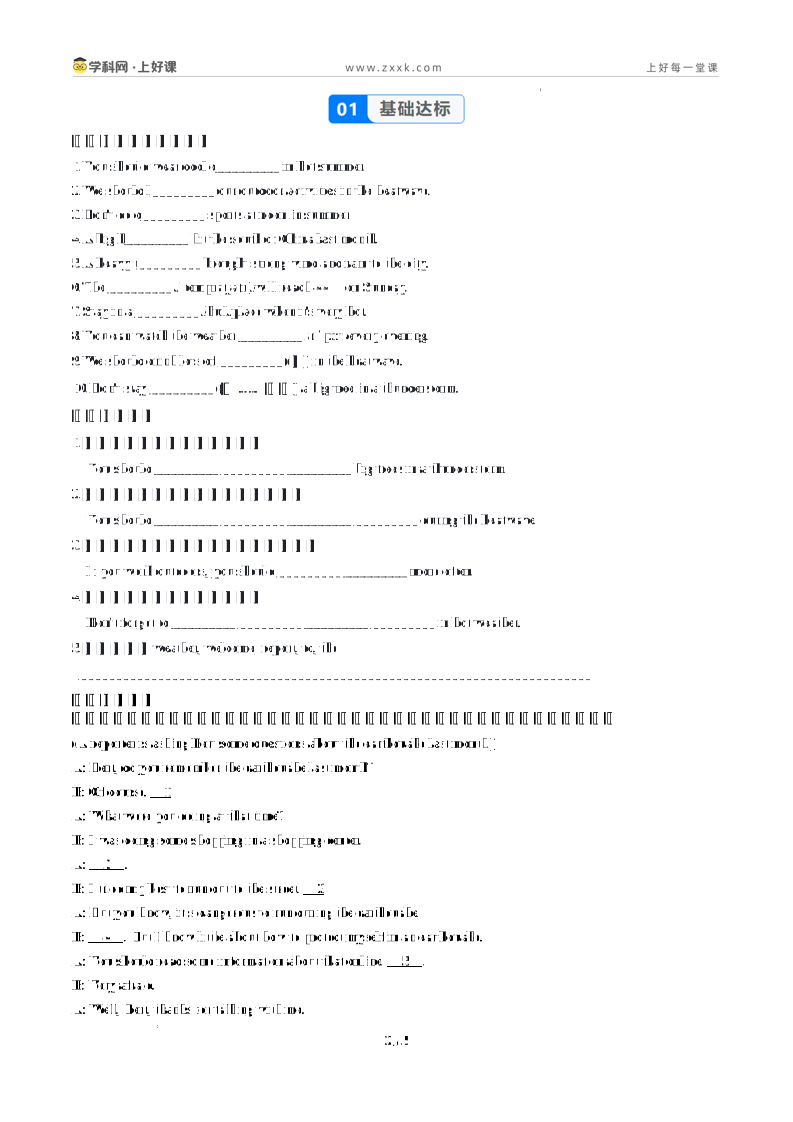
一、根据提示补全单词
1.You should wear cool c_________ in hot summer.
【答案】clothing
【详解】句意:炎热的夏天你应该穿凉爽的衣服。根据 “in hot summer” 和首字母提示,此处填 clothing“衣服;服装”,是不可数名词,符合语境,故填 clothing。
2.We should l_________ our outdoor activities in the heatwave.
【答案】limit
【详解】句意:热浪期间我们应该限制户外活动。根据 “in the heatwave” 和首字母提示,此处填 limit“限制;限定”,情态动词 should 后接动词原形,符合语境,故填 limit。
3.Don't do o_________ sports at noon in summer.
【答案】outdoor
【详解】句意:夏天中午不要做户外运动。根据 “at noon in summer” 和首字母提示,此处填 outdoor“户外的;室外的”,修饰名词 sports,符合语境,故填 outdoor。
4.A big h_________ hit the south of China last month.
【答案】heatwave
【详解】句意:上个月一场强热浪袭击了中国南方。根据 “hit the south of China” 和首字母提示,此处填 heatwave “热浪”,前面有不定冠词 A,用单数形式,贴合本课时主题,故填 heatwave。
5.A heavy t_________ brought strong wind and rain to the city.
【答案】thunderstorm
【详解】句意:一场强雷暴给这座城市带来了狂风暴雨。根据 “brought strong wind and rain” 和首字母提示,此处填 thunderstorm “雷暴”,前面有不定冠词 A,用单数形式,贴合本课时主题,故填 thunderstorm。
6.The _________ /ˈtemprətʃə(r)/will reach 44℃ on Sunday.
【答案】temperature
【详解】句意:周日气温将达到 44 摄氏度。根据所给音标 /ˈtemprətʃə(r)/ 和语境,此处填 temperature“温度;气温”,是不可数名词,符合天气预报的语境,故填 temperature。
7.Stay in a _________ /kuːl/place when it's very hot.
【答案】cool
【详解】句意:天气很热时待在凉爽的地方。根据所给音标 /kuːl / 和语境,此处填 cool “凉爽的”,修饰名词 place,符合热浪防护的语境,故填 cool。
8.You can watch the weather _________ /rɪˈpɔːt/every evening.
【答案】report
【详解】句意:你可以每天晚上看天气预报。根据所给音标 /rɪˈpɔːt / 和语境,此处填 report“报道;报告”,weather report 是固定短语 “天气预报”,贴合本课时听力主题,故填 report。
9.We should drink lots of _________ (水) in the heatwave.
【答案】water
【详解】句意:热浪期间我们应该多喝水。根据汉语提示 “水”,此处填 water,是不可数名词,符合热浪防护的语境,故填 water。
10.Don't stay _________ (在…… 下面) a big tree in a thunderstorm.
【答案】under
【详解】句意:雷暴期间不要待在大树下。根据汉语提示 “在…… 下面”,此处填 under,是介词,符合雷暴防护的语境,故填 under。
二、完成句子
1.雷暴天气,你应该远离大树。
You should _________ _________ _________ big trees in a thunderstorm.
【答案】stay away from
【详解】句意:雷暴天气,你应该远离大树。考点:考查固定短语 stay away from“远离;回避”,情态动词 should 后接动词原形,符合雷暴防护的语境,故填 stay away from。
2.热浪期间,你应该待在凉爽的地方。
You should _________ _________ _________ _________ during the heatwave.
【答案】stay in a cool place
【详解】句意:热浪期间,你应该待在凉爽的地方。考点:考查固定短语 stay in a cool place “待在凉爽的地方”,情态动词 should 后接动词原形,符合热浪防护的语境,故填 stay in a cool place。
3.如果你在户外工作,要更频繁地休息。
If you work outdoors, you should _________ _________ more often.
【答案】take breaks
【详解】句意:如果你在户外工作,要更频繁地休息。考点:考查固定短语 take breaks “休息”,情态动词 should 后接动词原形,符合热浪防护的语境,故填 take breaks。
4.炎热天气里,别忘了多喝水。
Don't forget to _________ _________ _________ _________ in hot weather.
【答案】drink lots of water
【详解】句意:炎热天气里,别忘了多喝水。考点:考查固定短语 drink lots of water “多喝水”,forget to 后接动词原形,符合语境,故填 drink lots of water。
5.连词成句:weather, welcome, report, to, the
_________________________________________________________________________
【答案】Welcome to the weather report.
【详解】句意:欢迎收看天气预报。考点:考查本课时高频功能句,句子为祈使句,Welcome to... 是固定结构,宾语为 the weather report,符合陈述句语序,贴合本课时听力主题,故填 Welcome to the weather report.
三、补全对话
根据对话内容,从下面的选项中选出能填入空白处的最佳选项,其中有两个为多余选项。
(A reporter is asking Bert some questions about the earthquake last month.)
A: Bert, do you remember the earthquake last month?
B: Of course. 1
A: What were you doing at that time?
B: I was doing some shopping in a shopping center.
A: 2 .
B: I tried my best to run out to the street. 3
A: But you know, it’s dangerous to run during the earthquake.
B: 4 . But I know little about how to protect myself in an earthquake.
A: You should read some information about that online. 5 .
B: Very afraid.
A: Well, Bert, thanks for talking with me.
B: My pleasure.
A.Yes, I see.
B.I will never forget it.
C.Then what did you do?
D.Did you shout for help?
E.Many other people were also running quickly.
F.I think we should learn more about earthquakes.
G.By the way, how did you feel when you found yourself in danger?
【答案】1.B 2.C 3.E 4.A 5.G
【导语】本文是一段关于地震经历的采访对话,记者询问Bert上个月地震时的经历和感受。
1.根据“Bert, do you remember the earthquake last month?”和“Of course.”可知,Bert对地震记忆深刻。选项B“我永远不会忘记”符合语境,表达强烈的记忆。故选B。
2.根据“I was doing some shopping in a shopping center.”和“I tried my best to run out to the street.”可知,前后句都是Bert在描述地震时的具体行动,空处应是记者在追问地震时的活动。选项C“然后你做了什么”自然衔接前后文。故选C。
3.根据“I tried my best to run out to the street.”可知,Bert描述了自己的行为,选项E“许多其他人也在快速逃跑”补充了场景细节。故选E。
4.根据“But you know, it’s dangerous to run during the earthquake.”和“But I know little about how to protect myself in an earthquake.”可知,记者提醒Bert地震时逃跑是危险的,根据后面转折可知,Bert承认记者的提醒。选项A“是的,我明白”表示认同。故选A。
5.根据“Very afraid.”可知,记者突然询问感受。选项G“顺便问一下,当你身处危险时感觉如何”符合语境。故选G。
四、完形填空
先通读短文,掌握其大意,然后从A、B、C、D四个选项中选出一个可以填入相应空白处的最佳答案。
Have you ever experienced anything really terrible that made you have scary dreams at night? One of the 1 experiences of mine was going through a storm.
One morning when I was eight years old, the news on TV 2 that there was a storm that might soon move into our town. But my parents and I were not going to leave our house because we thought the 3 wouldn’t be too serious.
Around 8:00 p.m, the wind 4 to blow. We could see the leaves 5 everywhere. About an hour later, it started to rain 6 . The branches (树枝) of the trees started to break off. I felt the wind pushing me back 7 I opened the door. At about 10:00 p.m, I tried to 8 but the wind kept making noises. Suddenly, my parents and I heard a 9 noise and knew that something bad happened. The storm broke a 10 into pieces and started to come in. After seeing this, we were so shocked that we couldn't say a word. We were in 11 for a while and decided to do something. I got some rubbish bags to cover the TV and computer in our house. My parents pushed an old bed to block (堵住) the window, but the wind kept blowing it down. So they found some 12 to prop up (支撑) the bed. Luckily, the storm didn't become worse again. The storm lasted 13 12 hours and stopped the next morning. When we went out, we saw the 14 trees everywhere.
This storm experience made us 15 that storms are very dangerous. We should take them seriously and make full preparations before they come.
1.A.longest B.busiest C.happiest D.worst
2.A.pointed B.remembered C.reported D.shared
3.A.snow B.storm C.sunshine D.thunder
4.A.began B.meant C.continued D.planned
5.A.losing B.watering C.feeding D.flying
6.A.slowly B.hardly C.heavily D.lightly
7.A.now that B.as soon as C.even if D.so that
8.A.fall asleep B.wake up C.come back D.sit down
9.A.usual B.loud C.soft D.clear
10.A.table B.chair C.door D.window
11.A.privacy B.peace C.silence D.safety
12.A.wood B.paper C.water D.gold
13.A.in B.on C.for D.at
14.A.strong B.fallen C.fresh D.sick
15.A.realize B.wonder C.change D.imagine
【答案】
1.D 2.C 3.B 4.A 5.D 6.C 7.B 8.A 9.B 10.D 11.C 12.A 13.C 14.B 15.A
【导语】本文主要讲述了一个8岁孩子经历可怕暴风雨的夜晚,全家因低估风暴严重性未撤离,最终在房屋受损时紧急自救,这场灾难让他们深刻认识到风暴的危险性。
1.句意:我最糟糕的经历之一是经历一场暴风雨。
longest最长的;busiest最忙的;happiest最幸福的;worst最差的。根据前文“Have you ever experienced anything really terrible”可知,此处指的是糟糕的经历。故选D。
2.句意:我八岁那年的一个早晨,电视新闻报道说,一场暴风雨可能很快就会来到我们镇上。
pointed指出;remembered记得;reported报道;shared分享。根据“the news on TV…that there was a storm that might soon move into our town.”可知,此处应表达电视新闻“报道”风暴的消息。故选C。
3.句意:但是我的父母和我不打算离开我们的房子,因为我们认为风暴不会太严重。
snow雪;storm暴风雨;sunshine阳光;thunder雷。根据前文“there was a storm that might soon move into our town.”可知,有一场暴风雨可能很快就会进入我们镇。此处应表达我们认为暴风雨不会太严重。故选B。
4.句意:晚上8点左右,开始刮风。
began开始;meant意味着;continued继续;planned计划。根据“Around 8:00 p.m, the wind…to blow. ”可知,此处应表达晚上8点左右,开始刮风。故选A。
5.句意:我们可以看到树叶四处飞舞。
losing失去;watering浇水;feeding饲养;flying飞行。根据“ the wind…to blow. ”可知,风开始刮。此处应表达风吹动树叶,树叶被风吹得四处飞舞。故选D。
6.句意:大约一小时后,开始下大雨。
slowly缓慢地;hardly几乎不;heavily猛烈地;lightly轻轻地。根据“The branches of the trees started to break off.”可知,树枝开始折断。此处应表达雨下得很猛烈。故选C。
7.句意:我一打开门,就感觉到风把我往后推。
now that既然;as soon as一……就……;even if虽然;so that以便。根据“I felt the wind pushing me back”可知,此处应表达我一打开门就感受到风的推力。强调时间上的立即性。故选B。
8.句意:晚上10点左右,我试图入睡,但风不停地发出噪音。
fall asleep入睡;wake up醒来;come back回来;sit down坐下。根据前文“At about 10:00 p.m”及“but the wind kept making noises.”可知,此处应表达风在吵闹,我试图“入睡”,但被噪音干扰。故选A。
9.句意:突然,我和父母听到一声巨响,知道发生了不好的事情。
usual通常的;loud大声的;soft柔软的;clear清楚的。根据“Suddenly, my parents and I heard a…noise and knew that something bad happened.”可知,此处应表达听到的是“大声的”噪音,才意识到坏事发生。故选B。
10.句意:暴风雨打碎了一扇窗户,并开始进来。
table桌子;chair椅子; door门; window窗户。根据后文“My parents pushed an old bed to block the window”可知,我父母推了一张旧床挡住窗户。此处应表达暴风打破了窗户。故选D。
11.句意:我们沉默了一会儿,决定做点什么。
privacy隐私;peace和平;silence沉默;safety安全。根据前文“we were so shocked that we couldn't say a word.”可知,我们震惊得一句话也说不出来。此处应表达震惊后的沉默。故选C。
12.句意:所以他们找了些木头来支撑床。
wood木材;paper纸; water水;gold黄金。根据“they found some…to prop up the bed.”可知,此处应表达他们找到一些木材来支撑床。需要“支撑”床的物品,wood“木材”,坚固实用,其他选项不现实。故选A。
13.句意:暴风雨持续了12个小时,第二天早上才停止。
in在……内;on在……上;for(表示一段时间)达;at在。根据“The storm lasted…12 hours”可知,暴风雨持续了12个小时。for介词,用于时间段。故选C。
14.句意:当我们出去的时候,我们看到到处都是倒下的树。
strong强烈的;fallen倒下的;fresh新鲜的;sick生病的。根据“we saw the…trees everywhere.”可知,此处应表达我们到处都看到了倒下的树。风暴后树木被吹倒,描述破坏的景象。故选B。
15.句意:这次暴风雨的经历让我们意识到暴风雨是非常危险的。
realize意识到;wonder想知道;change变化;imagine想象。根据“This storm experience made us…that storms are very dangerous. We should take them seriously”可知,此处应表达这次暴风雨的经历让我们意识到暴风雨是非常危险的。我们应该认真对待他们。故选A。
五、阅读理解
Early Warning: Staying Safe Before Natural Disasters
①Natural disasters like earthquakes, floods, and tsunamis can happen suddenly. But today, we can often receive warnings before they arrive. These warnings help us get ready and stay safe.
②An early warning (警告) system is a way scientists tell people that a natural disaster may come. They use special tools to watch nature. They also use machines to feel small shakes in the ground. If something dangerous is found, the system sends out alerts.
③These alerts reach people through different ways. Many people get them on their mobile phones as text messages or loud alarms (警报). They are also shown on TV and radio. In some places, you can hear sirens (警报器) outdoors. The message will tell you what kind of disaster is coming, how strong it might be, and what to do. For example, it may say, “A strong typhoon is coming in three hours. Please stay indoors and close windows.”
④Getting a warning early gives people time to act. Families can get ready for emergency bags with water, food, and a flashlight (手电筒). They can move to safer places like higher ground in a flood. These steps can save many lives.
⑤Remember, when you receive an early warning, listen carefully and act quickly. Being prepared is our best way to stay safe.
1.What is the purpose of an early warning system?
A.To stop natural disasters. B.To tell people to get ready and stay safe.
C.To make mobile phones ring. D.To study the weather for fun.
2.The word “alerts” in Paragraph ② most likely means ________.
A.pictures B.warnings C.games D.songs
3.People can receive disaster alerts by ________.
A.reading newspapers B.looking at the sky C.visiting a scientist D.watching TV
4.What should you do after getting an early warning?
A.Go outside to watch. B.Call the police for help.
C.Listen and act quickly. D.Wait for another message.
【答案】1.B 2.B 3.D 4.C
【导语】本文是一篇说明文,主要讲述了自然灾害预警系统的相关信息,包括其目的、工作方式、信息传达途径以及人们收到预警后应采取的行动等,旨在帮助人们在自然灾害来临前做好准备,保障安全。
1.第二段明确指出“An early warning (警告) system is a way scientists tell people that a natural disaster may come. These warnings help us get ready and stay safe.”,这直接说明了预警系统的目的是告诉人们做好准备并保障安全。
2.第二段提到“If something dangerous is found, the system sends out alerts.”,结合前文说预警系统是告知人们自然灾害可能来临的方式,当发现危险情况时系统发出的应该是“警告”,所以“alerts”最可能的意思是“warnings”。
3.第三段提到“These alerts reach people through different ways. Many people get them on their mobile phones as text messages or loud alarms (警报). They are also shown on TV and radio. In some places, you can hear sirens (警报器) outdoors.”,其中明确提到人们可以通过电视接收灾害预警,而选项A读报纸、选项B看天空、选项C拜访科学家均未提及。
4.最后一段提到“Remember, when you receive an early warning, listen carefully and act quickly. Being prepared is our best way to stay safe.”,这直接说明了收到预警后应该仔细听并迅速行动。
六、任务型阅读
阅读下面短文,简略回答问题。
When disaster strikes, such as earthquakes, floods or fires, it’s important to know how to keep safe. Here are some safety tips for different disasters.
First, for earthquakes.
When an earthquake happens, if you are indoors, you should stay calm and hide under a strong table or desk quickly. You should stay away from windows, mirrors and heavy furniture (家具) because they may fall down and hurt you. Don’t use the lift. If you are outdoors, you should stay away from buildings, trees and power lines. You should stand in an open area and wait for the earthquake to stop.
Second, for floods.
If there is a flood warning, you should move to higher ground quickly. You should take important things with you, such as food, water and clothes. Don’t walk or drive through deep water because you may be washed away. Don’t swim in floodwater because it’s dangerous.
Third, for fires.
When a fire breaks out, you should cover your mouth and nose with a wet towel to avoid breathing in smoke. You should stay low to the ground because smoke rises. You should use the stairs instead of the lift. If you can’t get out, you should stay in a room with the door closed and call for help. Don’t jump out of the window unless it’s the only way to get out of a fire.
It’s important to remember these safety methods. They can help us keep safe when disasters strike.
1.What should you do indoors when an earthquake happens? (两种情况即可得分)
_____________________________________________________
2.If there is a flood, where should we move to?
_____________________________________________________
3.Why shouldn’t we swim in floods?
_____________________________________________________
4.How can you protect yourself from smoke if a fire breaks out? (两种情况即可得分)
_____________________________________________________
5.What should you do if you cannot get out of a fire?
_____________________________________________________
【答案】1.Stay calm and hide under a strong table or desk quickly. Stay away from windows, mirrors and heavy furniture. Don’t use the lift.(任选两种即可) 2.Higher ground. 3.Because it’s dangerous. 4.Cover my mouth and nose with a wet towel. Stay low to the ground. 5.Stay in a room with the door closed and call for help.
【导语】本文是一篇说明文。文章主要介绍了在地震、洪水和火灾等灾害发生时如何保持安全,并提供了一些具体的安全建议。
1.根据第二段“…if you are indoors, you should stay calm and hide under a strong table or desk quickly. You should stay away from windows, mirrors and heavy furniture because they may fall down and hurt you.”可知,地震时在室内应保持冷静、迅速躲到结实的桌子或书桌下,并远离窗户、镜子和重家具。此外,该部分还提到“Don’t use the lift.” (不要使用电梯)。故填Stay calm and hide under a strong table or desk quickly. Stay away from windows, mirrors and heavy furniture. Don’t use the lift. (任选两种即可)
2.根据第三段“If there is a flood warning, you should move to higher ground quickly.”可知,如果有洪水预警,应该迅速转移到高地。故填Higher ground.
3.根据第三段“Don’t swim in floodwater because it’s dangerous.”可知,不要在洪水中游泳,因为这很危险。故填Because it’s dangerous.
4.根据第四段“When a fire breaks out, you should cover your mouth and nose with a wet towel to avoid breathing in smoke. You should stay low to the ground because smoke rises.”可知,火灾发生时,可以用湿毛巾捂住口鼻以避免吸入烟雾;应该尽量贴近地面,因为烟雾会上升。题目要求回答两种情况,故可以填Cover my mouth and nose with a wet towel. Stay low to the ground.
5.根据第四段“If you can’t get out, you should stay in a room with the door closed and call for help.”可知,如果无法逃出火灾现场,应该待在门关着的房间里并呼救。故填Stay in a room with the door closed and call for help.
1 / 10
学科网(北京)股份有限公司
学科网(北京)股份有限公司
$
Unit 9 Forces of Nature
课时6 Oral Communication 分层作业
核心知识速记
01基础达标
02能力提升
03拓展培优
04思维进阶
句型
1.Welcome to the weather report. 欢迎收看天气预报。
2.We are having a stronger heatwave than ever these days. 这些天我们正遭遇前所未有的强热浪。
3.The highest temperature will reach 43℃ tomorrow. 明天最高气温将达到 43 摄氏度。
4.Stay in a cool place on a hot summer day. 炎热的夏日待在凉爽的地方。
5.Don't forget to drink lots of water in a heatwave. 热浪期间别忘了多喝水。
6.Limit your outdoor activities at the hottest time of the day. 在一天最热的时候限制户外活动。
7.Take breaks more often if you have to work outdoors. 如果必须在户外工作,要更频繁地休息。
8.How to protect yourself in a heavy thunderstorm? 雷暴天气如何保护自己?
9.You should close the windows and stay indoors. 你应该关窗并待在室内。
10.Don't stay under a big tree during a thunderstorm. 雷暴期间不要待在大树下。
11.Don't ride a bike in the heavy rain. 大雨中不要骑自行车。
12.It's dangerous to use a phone in a thunderstorm. 雷暴天使用手机很危险。
13.The heatwave will reach its highest on Sunday. 热浪将在周日达到最高温。
14.We should follow the safety tips in bad weather. 我们应该在恶劣天气中遵循安全提示。
15.What's the highest temperature tomorrow? 明天的最高气温是多少?
一、根据提示补全单词
1.You should wear cool c_________ in hot summer.
2.We should l_________ our outdoor activities in the heatwave.
3.Don't do o_________ sports at noon in summer.
4.A big h_________ hit the south of China last month.
5.A heavy t_________ brought strong wind and rain to the city.
6.The _________ /ˈtemprətʃə(r)/will reach 44℃ on Sunday.
7.Stay in a _________ /kuːl/place when it's very hot.
8.You can watch the weather _________ /rɪˈpɔːt/every evening.
9.We should drink lots of _________ (水) in the heatwave.
10.Don't stay _________ (在…… 下面) a big tree in a thunderstorm.
二、完成句子
1.雷暴天气,你应该远离大树。
You should _________ _________ _________ big trees in a thunderstorm.
2.热浪期间,你应该待在凉爽的地方。
You should _________ _________ _________ _________ during the heatwave.
3.如果你在户外工作,要更频繁地休息。
If you work outdoors, you should _________ _________ more often.
4.炎热天气里,别忘了多喝水。
Don't forget to _________ _________ _________ _________ in hot weather.
5.连词成句:weather, welcome, report, to, the
_________________________________________________________________________
三、补全对话
根据对话内容,从下面的选项中选出能填入空白处的最佳选项,其中有两个为多余选项。
(A reporter is asking Bert some questions about the earthquake last month.)
A: Bert, do you remember the earthquake last month?
B: Of course. 1
A: What were you doing at that time?
B: I was doing some shopping in a shopping center.
A: 2 .
B: I tried my best to run out to the street. 3
A: But you know, it’s dangerous to run during the earthquake.
B: 4 . But I know little about how to protect myself in an earthquake.
A: You should read some information about that online. 5 .
B: Very afraid.
A: Well, Bert, thanks for talking with me.
B: My pleasure.
A.Yes, I see.
B.I will never forget it.
C.Then what did you do?
D.Did you shout for help?
E.Many other people were also running quickly.
F.I think we should learn more about earthquakes.
G.By the way, how did you feel when you found yourself in danger?
四、完形填空
先通读短文,掌握其大意,然后从A、B、C、D四个选项中选出一个可以填入相应空白处的最佳答案。
Have you ever experienced anything really terrible that made you have scary dreams at night? One of the 1 experiences of mine was going through a storm.
One morning when I was eight years old, the news on TV 2 that there was a storm that might soon move into our town. But my parents and I were not going to leave our house because we thought the 3 wouldn’t be too serious.
Around 8:00 p.m, the wind 4 to blow. We could see the leaves 5 everywhere. About an hour later, it started to rain 6 . The branches (树枝) of the trees started to break off. I felt the wind pushing me back 7 I opened the door. At about 10:00 p.m, I tried to 8 but the wind kept making noises. Suddenly, my parents and I heard a 9 noise and knew that something bad happened. The storm broke a 10 into pieces and started to come in. After seeing this, we were so shocked that we couldn't say a word. We were in 11 for a while and decided to do something. I got some rubbish bags to cover the TV and computer in our house. My parents pushed an old bed to block (堵住) the window, but the wind kept blowing it down. So they found some 12 to prop up (支撑) the bed. Luckily, the storm didn't become worse again. The storm lasted 13 12 hours and stopped the next morning. When we went out, we saw the 14 trees everywhere.
This storm experience made us 15 that storms are very dangerous. We should take them seriously and make full preparations before they come.
1.A.longest B.busiest C.happiest D.worst
2.A.pointed B.remembered C.reported D.shared
3.A.snow B.storm C.sunshine D.thunder
4.A.began B.meant C.continued D.planned
5.A.losing B.watering C.feeding D.flying
6.A.slowly B.hardly C.heavily D.lightly
7.A.now that B.as soon as C.even if D.so that
8.A.fall asleep B.wake up C.come back D.sit down
9.A.usual B.loud C.soft D.clear
10.A.table B.chair C.door D.window
11.A.privacy B.peace C.silence D.safety
12.A.wood B.paper C.water D.gold
13.A.in B.on C.for D.at
14.A.strong B.fallen C.fresh D.sick
15.A.realize B.wonder C.change D.imagine
五、阅读理解
Early Warning: Staying Safe Before Natural Disasters
①Natural disasters like earthquakes, floods, and tsunamis can happen suddenly. But today, we can often receive warnings before they arrive. These warnings help us get ready and stay safe.
②An early warning (警告) system is a way scientists tell people that a natural disaster may come. They use special tools to watch nature. They also use machines to feel small shakes in the ground. If something dangerous is found, the system sends out alerts.
③These alerts reach people through different ways. Many people get them on their mobile phones as text messages or loud alarms (警报). They are also shown on TV and radio. In some places, you can hear sirens (警报器) outdoors. The message will tell you what kind of disaster is coming, how strong it might be, and what to do. For example, it may say, “A strong typhoon is coming in three hours. Please stay indoors and close windows.”
④Getting a warning early gives people time to act. Families can get ready for emergency bags with water, food, and a flashlight (手电筒). They can move to safer places like higher ground in a flood. These steps can save many lives.
⑤Remember, when you receive an early warning, listen carefully and act quickly. Being prepared is our best way to stay safe.
1.What is the purpose of an early warning system?
A.To stop natural disasters. B.To tell people to get ready and stay safe.
C.To make mobile phones ring. D.To study the weather for fun.
2.The word “alerts” in Paragraph ② most likely means ________.
A.pictures B.warnings C.games D.songs
3.People can receive disaster alerts by ________.
A.reading newspapers B.looking at the sky
C.visiting a scientist D.watching TV
4.What should you do after getting an early warning?
A.Go outside to watch. B.Call the police for help.
C.Listen and act quickly. D.Wait for another message.
六、任务型阅读
阅读下面短文,简略回答问题。
When disaster strikes, such as earthquakes, floods or fires, it’s important to know how to keep safe. Here are some safety tips for different disasters.
First, for earthquakes.
When an earthquake happens, if you are indoors, you should stay calm and hide under a strong table or desk quickly. You should stay away from windows, mirrors and heavy furniture (家具) because they may fall down and hurt you. Don’t use the lift. If you are outdoors, you should stay away from buildings, trees and power lines. You should stand in an open area and wait for the earthquake to stop.
Second, for floods.
If there is a flood warning, you should move to higher ground quickly. You should take important things with you, such as food, water and clothes. Don’t walk or drive through deep water because you may be washed away. Don’t swim in floodwater because it’s dangerous.
Third, for fires.
When a fire breaks out, you should cover your mouth and nose with a wet towel to avoid breathing in smoke. You should stay low to the ground because smoke rises. You should use the stairs instead of the lift. If you can’t get out, you should stay in a room with the door closed and call for help. Don’t jump out of the window unless it’s the only way to get out of a fire.
It’s important to remember these safety methods. They can help us keep safe when disasters strike.
1.What should you do indoors when an earthquake happens? (两种情况即可得分)
_____________________________________________________
2.If there is a flood, where should we move to?
_____________________________________________________
3.Why shouldn’t we swim in floods?
_____________________________________________________
4.How can you protect yourself from smoke if a fire breaks out? (两种情况即可得分)
_____________________________________________________
5.What should you do if you cannot get out of a fire?
_____________________________________________________
1 / 10
学科网(北京)股份有限公司
学科网(北京)股份有限公司
$
资源预览图
1
2

相关资源
由于学科网是一个信息分享及获取的平台,不确保部分用户上传资料的 来源及知识产权归属。如您发现相关资料侵犯您的合法权益,请联系学科网,我们核实后将及时进行处理。