Unit 5 Good manners(小完形专练,南京专用)英语新教材译林版八年级下册
2026-03-30
|
2份
|
18页
|
608人阅读
|
23人下载
资源信息
| 学段 | 初中 |
|---|---|
| 学科 | 英语 |
| 教材版本 | 初中英语译林版八年级下册 |
| 年级 | 八年级 |
| 章节 | Unit 5 Good manners |
| 类型 | 题集-专项训练 |
| 知识点 | - |
| 使用场景 | 同步教学-单元练习 |
| 学年 | 2026-2027 |
| 地区(省份) | 江苏省 |
| 地区(市) | 南京市 |
| 地区(区县) | - |
| 文件格式 | ZIP |
| 文件大小 | 101 KB |
| 发布时间 | 2026-03-30 |
| 更新时间 | 2026-03-30 |
| 作者 | xkw_026803666 |
| 品牌系列 | 上好课·上好课 |
| 审核时间 | 2026-03-30 |
| 下载链接 | https://m.zxxk.com/soft/57091399.html |
| 价格 | 3.00储值(1储值=1元) |
| 来源 | 学科网 |
内容正文:
Unit 5 Good manners 小完形专练(南京专用)
话题:人与社会—人际关系与人际交往
基础篇
一、小完形填空。(本大题共15小题,每小题1分,共15分)
01
Good manners make public places comfortable for everyone. When we are in the library, we 1. ______ speak quietly—talking loudly will disturb other readers. We should take books gently and not 2. ______ them, because the books are not 3. ______ strong to stand rough handling.
If we need to ask the librarian for help, we should speak politely enough to make ourselves understood. It’s 4. ______ late to return books on time; otherwise, we may lose the chance to 5. ______ books again.
1.A. must B. needn’t C. can’t D. may
2.A. drop B. hold C. protect D. clean
3.A. too B. enough C. so D. such
4.A. too B. not too C. enough D. not enough
5.A. borrow B. lend C. keep D. buy
02
Waiting for buses needs good manners. We should stand in a line and 6. ______ for our turn—7. ______ in before others is impolite and will make people angry. Some people are too in a hurry to wait, but this kind of behavior breaks public rules. We should offer our seats to the elderly or the disabled, because they are not 8. ______ strong to stand for a long time. When we get on the bus, we should walk slowly and not 9. ______—safety is important enough to ignore. After getting off, we should not leave any 10. ______ on the bus.
6.A.rush B. push C. shout D. wait
7.A. push B. walk C. jump D. run
8.A. too B. enough C. very D. much
9.A. rush B. walk C. stand D. sit
10.A. rubbish B. books C. bags D. gifts
03
Communicating with others needs good manners. When we meet someone we know, we 1. ______ greet them with a smile—it’s impolite to pretend not to see them. If we want to ask for help, we should say “2. ______ me” first, because it’s rude to interrupt others without warning. We should speak clearly when asking for help, so that others can hear us well enough to offer 3. ______ help. After getting help, we must say “thank you”——it’s a simple gesture but shows great 4. ______ for others. We shouldn’t be 5. ______ shy to express our thanks.
11.A.can B. mustn’t C. should D. need
12.A. Excuse B. Pardon C. Sorry D. Hello
13.A.busy B. quick C. easy D. proper
14.A. respect B. interest C. surprise D. happiness
15.A.much B. enough C. very D. too
二、小完形填空。(本大题共15小题,每小题1分,共15分)
04
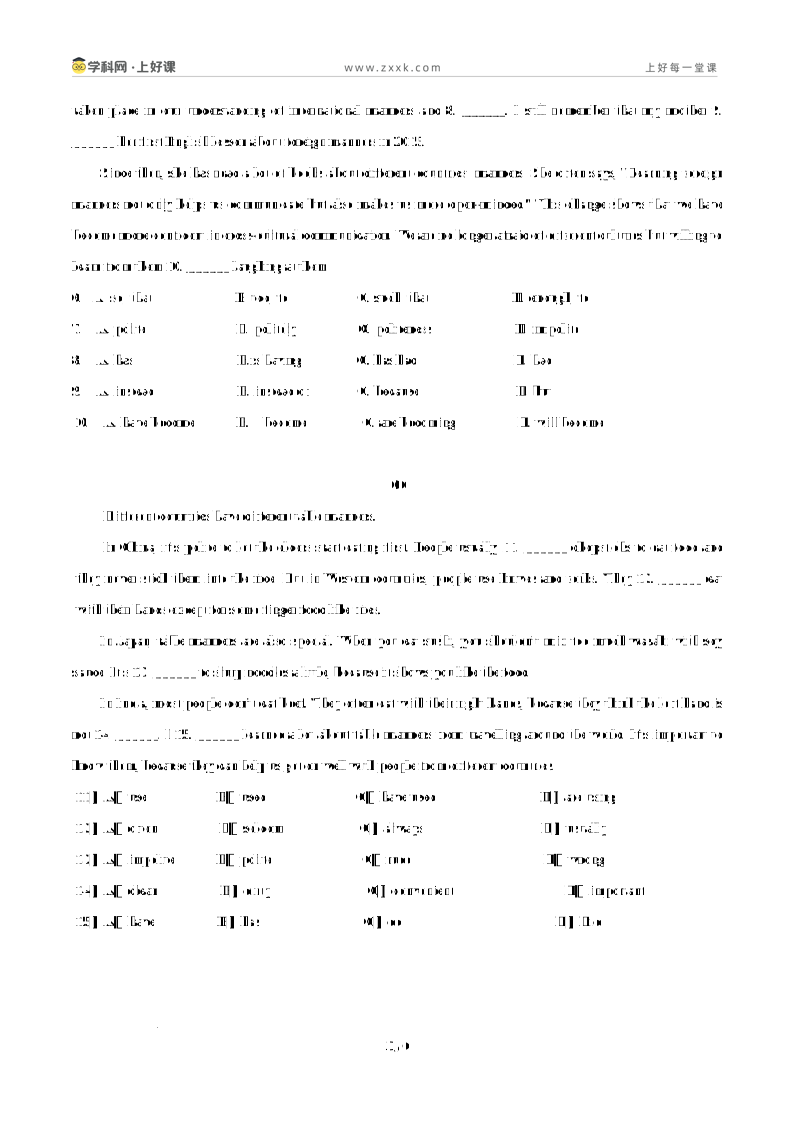
With the help of the Internet, our knowledge about international greeting manners 1.______ a lot. In the past, we only knew a few simple greeting ways, like handshakes. But now, we can learn about different greeting manners from all over the world easily. A video about international greeting manners 2.______ popular among teenagers recently. It shows different ways of greeting in over 20 countries. If you watch this video carefully, you 3.______ to know about different cultures. My classmates and I 4.______ this kind of videos for more than a year. We all think it helps us know more about the world. We believe that the Internet 5.______ a bridge between different cultures so far.
1.A.increased B. has increased C. increases D. will increase
2.A.becomes B. became C. has become D. is becoming
3.A.old enough B. enough old C. too learn D. will learn
4.A.watch B. watched C. have watched D. are watching
5.A. built B. has built C. builds D. is building
05
Thirty years ago, few Chinese people knew about foreign manners. They were 6. ______ shy 7.______ communicate with foreigners because they were afraid of making mistakes. But look at us now! Great changes have taken place in our understanding of international manners and 8. ______. I still remember that my mother 9. ______ her first English lesson about foreign manners in 2015.
Since then, she has read a lot of books about different countries’ manners. She often says, "Learning foreign manners not only helps us communicate but also makes us more open-minded." This change shows that we have become more confident in cross-cultural communication. We are no longer afraid of different cultures but willing to learn from them 10. ______ laughing at them.
6. A. so; that B. too; to C. such; that D. enough; to
7. A. polite B. politely C. politeness D. impolite
8. A. has B.is having C. has had D. had
9. A. instead B. instead of C. because D. but
10. A. have become B. become C. are becoming D. will become
06
Different countries have different table manners.
In China, it’s polite to let the elders start eating first. People usually 11. ______ chopsticks to eat food and they never stick them into the rice. But in Western countries, people use knives and forks. They 12. ______ eat with their hands except for some finger food like fries.
In Japan, table manners are also special. When you eat sushi, you shouldn’t mix too much wasabi with soy sauce. It’s 13. ______ to slurp noodles a little, because it shows you like the food.
In India, most people don’t eat beef. They often eat with their right hands, because they think the left hand is not 14. ______. I 15. ______ learned a lot about table manners from travelling around the world. It’s important to know them, because they can help us get on well with people from different countries.
11.A.use B.used C.have used D.are using
12.A.often B.seldom C.always D.usually
13.A.impolite B.polite C.rude D.wrong
14.A.clean B.dirty C.convenient D.important
15.A.have B.has C.do D.Did
提优篇
一、小完形填空。(本大题共20小题,每小题1分,共20分)
07
When you travel to a foreign country, it’s necessary to learn about its social manners.
In Australia, people are very casual. They often call each other by their first names, even if they 1. ______ each other for a short time. They like to keep a relaxed distance when talking and don’t like to stand too close.
In Germany, people are very punctual. If you have an appointment, you must arrive on time. Being late is considered impolite and it 2. ______ make others unhappy. When you talk with Germans, they like to speak directly. They don’t like to beat around the bush, 3. ______ you should say what you mean clearly.
In Brazil, people are very warm and friendly. They like to talk a lot and touch each other when communicating. They often smile and hug, which makes you 4. ______ at home. So far, I 5. ______ to many countries and experienced different manners. Every country’s manners are special, and we should respect them.
1.A.know B.knew C.have known D.will know
2.A.may B.must C.need D.should
3.A.so B.because C.though D.if
4.A.feel B.to feel C.feeling D.felt
5.A.go B.went C.have been D.will go
08
Respecting teachers and valuing education is a traditional virtue of the Chinese nation. There are many moving stories about it in history. Confucius, a great ancient Chinese educator, 6. ______ his students sincerely. He treated every student equally, no matter how poor or rich they were. His students 7. ______ him deeply and always followed his teachings.
One of his famous students is Zigong. He was very talented, but he still 8. ______ Confucius humbly. Once, someone asked Zigong if he was smarter than his teacher. Zigong said firmly, "My teacher is like a bright star in the sky. I can never 9. ______ him." This words show his great respect for Confucius. Even today, Confucius’ ideas about respecting teachers 10. ______ people a lot. We still keep the virtue of respecting teachers in our daily life.
6.A.loves B.loved C.has loved D.is loving
7.A.admired B.admire C.will admire D.are admiring
8.A.learns from B.learned from C.has learned from D.will learn from
9.A.compare with B.agree with C.talk with D.play with
10.A.influence B.influenced C.have influenced D.will influence
09
Yang Shi, a scholar in the Northern Song Dynasty, left a well-known story called "Standing in the Snow to Wait for the Master". One cold winter day, Yang Shi and his classmate wanted to ask their teacher Cheng Yi some questions. When they got to the teacher’s home, they found Cheng Yi 11. ______. They didn’t want to wake up their teacher, so they stood outside the door quietly. At that time, it 12. ______ heavily. The snow soon covered their heads and shoulders, but they still didn’t move.
When Cheng Yi woke up, he found the two students standing in the deep snow. He was very surprised and moved, and he 13. ______ them in at once. This story 14. ______ for nearly a thousand years. It tells us that we should be patient and polite when we ask teachers for help. Up to now, this story 15. ______ many people to respect their teachers sincerely.
11.A.sleep B.sleeping C.to sleep D.slept
12.A.snows B.snowed C.is snowing D.was snowing
13.A.let B.lets C.has let D.will let
14.A.is told B.was told C.has been told D.will be told
15.A.encourages B.encouraged C.has encouraged D.will encourage
10
The Book of Rites is an ancient Chinese classic that tells us about manners, etiquette and proper behavior. It has a long history and 16. ______ an important role in shaping Chinese culture. For junior high school students, it is not 17. ______ difficult to understand its basic ideas, which are closely related to our daily life.
The book teaches us to respect the old and care for the young. It also 18. ______ us to be polite to others and keep our promises. When we communicate with people, we should avoid 19. ______ impolite words and try to be kind to everyone. We should also learn to put others first and think more about their feelings.
Many people today still 20. ______ by the teachings of The Book of Rites. It reminds us that good manners are not only a sign of kindness but also a way to build good relationships. By learning from this classic, we can become better people and make our society more harmonious.
16. A. plays B. takes C. makes D. does
17. A. too B. so C. enough D. very
18. A. advises B. teaches C. stops D. allows
19. A. speaking B. saying C. telling D. talking
20. A. live B. learn C. follow D. agree
1 / 6
学科网(北京)股份有限公司
$
Unit 5 Good manners 小完形专练(南京专用)
话题:人与社会—人际关系与人际交往
基础篇
一、小完形填空。(本大题共15小题,每小题1分,共15分)
01
Good manners make public places comfortable for everyone. When we are in the library, we 1. ______ speak quietly—talking loudly will disturb other readers. We should take books gently and not 2. ______ them, because the books are not 3. ______ strong to stand rough handling.
If we need to ask the librarian for help, we should speak politely enough to make ourselves understood. It’s 4. ______ late to return books on time; otherwise, we may lose the chance to 5. ______ books again.
1.A. must B. needn’t C. can’t D. may
2.A. drop B. hold C. protect D. clean
3.A. too B. enough C. so D. such
4.A. too B. not too C. enough D. not enough
5.A. borrow B. lend C. keep D. buy
【答案】1.A 2.A 3.B 4.B 5.A
【导语】本文介绍图书馆的基本礼仪,包括保持安静、爱护书籍、按时还书等,需要向管理员求助时,应礼貌沟通以确保理解。
1.句意:当我们在图书馆时,我们必须安静地说话 —— 大声说话会打扰其他读者。must 意为 “必须”,强调图书馆保持安静是硬性礼仪要求;needn’t(不必)、can’t(不能)、may(可以)均不符合语境的强制性,故选 A。
2.句意:我们应该轻拿轻放书籍,不要掉落它们,因为书籍不够坚固,经不起粗暴对待。drop 意为 “掉落”,是破坏书籍的不礼貌行为;hold(握住)、protect(保护)、clean(清洁)均与 “轻拿轻放” 的语境相悖,故选 A。
3.句意:我们应该轻拿轻放书籍,不要掉落它们,因为书籍不够坚固,经不起粗暴对待。enough 修饰形容词 strong 时需后置,not strong enough 表示 “不够坚固”,符合 “书籍需要爱护” 的逻辑;too 后接形容词需搭配 to do,so/such 后接从句,均不符,故选 B。
4.句意:按时还书不能太晚,否则我们可能会失去再次借书的机会。语法(not too + 形容词):not too late 表示 “不算太晚”,贴合 “按时还书是基本礼仪” 的语境;too late 与文意相反,enough/not enough 无法表达 “时间合适” 的含义,故选 B。
5.句意:按时还书不能太晚,否则我们可能会失去再次借书的机会。borrow 意为 “借入”,指从图书馆借书;lend(借出)、keep(保留)、buy(购买)均与图书馆场景不符,故选 A。
02
Waiting for buses needs good manners. We should stand in a line and 6. ______ for our turn—7. ______ in before others is impolite and will make people angry. Some people are too in a hurry to wait, but this kind of behavior breaks public rules. We should offer our seats to the elderly or the disabled, because they are not 8. ______ strong to stand for a long time. When we get on the bus, we should walk slowly and not 9. ______—safety is important enough to ignore. After getting off, we should not leave any 10. ______ on the bus.
6.A.rush B. push C. shout D. wait
7.A. push B. walk C. jump D. run
8.A. too B. enough C. very D. much
9.A. rush B. walk C. stand D. sit
10.A. rubbish B. books C. bags D. gifts
【答案】6.D 7.A 8.B 9.A 10.A
【导语】本文讲述乘坐公共交通的礼仪,包括排队候车、主动让座、安全上下车等,选项中融入单元核心词汇,重点考查 too…to 结构与 enough 用法。
6.句意:我们应该排队等待轮到自己 —— 在别人前面插队是不礼貌的,会让人生气。wait for 为固定搭配,意为 “等待”,贴合排队候车的礼仪要求;push(推挤)、shout(大喊)、rush(冲)均为不礼貌行为,与语境相悖,故选 D。
7.句意:我们应该排队等待轮到自己 —— 在别人前面插队是不礼貌的,会让人生气。push in 为固定搭配,意为 “插队”,是公共交通中的不礼貌行为;walk(走)、jump(跳)、run(跑)均无 “插队” 含义,故选 A。
8.句意:我们应该给老人或残疾人让座,因为他们不够强壮,无法长时间站立。not strong enough 表示 “不够强壮”,贴合老人和残疾人的身体状况;too 后接形容词需搭配 to do,very/much 无 “足够……” 的含义,故选 B。
9.句意:上车时,我们应该慢慢走,不要着急 —— 安全足够重要,不容忽视。rush 意为 “急促、冲”,与 “慢慢走” 的礼仪要求相反;walk(走)、stand(站)、sit(坐)均与 “着急” 的语境不符,故选 A。
10.句意:下车后,我们不应该在公交车上留下任何垃圾。rubbish 意为 “垃圾”,不乱扔垃圾是公共交通礼仪的基本要求;books(书)、bags(包)、gifts(礼物)均不属于 “应留下的不礼貌物品”,故选 A。
03
Communicating with others needs good manners. When we meet someone we know, we 1. ______ greet them with a smile—it’s impolite to pretend not to see them. If we want to ask for help, we should say “2. ______ me” first, because it’s rude to interrupt others without warning. We should speak clearly when asking for help, so that others can hear us well enough to offer 3. ______ help. After getting help, we must say “thank you”——it’s a simple gesture but shows great 4. ______ for others. We shouldn’t be 5. ______ shy to express our thanks.
11.A.can B. mustn’t C. should D. need
12.A. Excuse B. Pardon C. Sorry D. Hello
13.A.busy B. quick C. easy D. proper
14.A. respect B. interest C. surprise D. happiness
15.A.much B. enough C. very D. too
【答案】11.C 12.A 13.D 14.A 15.D
【导语】本文介绍见面问候与求助时的文明礼仪,初次见面时,我们应当做到:微笑问候——假装没看见对方是失礼的。若需要求助时要说话清晰,确保对方能听清需求以便及时提供帮助。获得帮助后务必道谢。
11.句意:当我们遇到认识的人时,我们应该微笑着问候他们 —— 假装没看见是不礼貌的。should 表 “应该”,提出日常礼仪的建议性要求,贴合见面问候的礼貌行为;mustn’t(禁止)、can(能够)、need(需要,后接 to do)均不符,故选 C。
12.句意:如果我们想求助,应该先说 “打扰一下”,因为毫无预兆地打断别人是粗鲁的。excuse me 为固定搭配,意为 “打扰一下”,是求助时的礼貌用语;pardon(原谅)、sorry(对不起)、hello(你好)均无 “求助提醒” 的含义,故选 A。
13.句意:求助时我们应该说得清楚,这样别人才能听得足够清楚,提供恰当的帮助。proper 意为 “恰当的”,指符合需求的帮助;quick(快速的)、easy(容易的)、busy(忙碌的)均与 “帮助的适配性” 无关,故选 D。
14.句意:得到帮助后,我们必须说 “谢谢”—— 这是一个简单的举动,却能体现对他人的极大尊重。respect 意为 “尊重”,是 “谢谢” 所传递的核心情感;interest(兴趣)、surprise(惊讶)、happiness(快乐)均与语境不符,故选 A。
15.句意:我们不应该太害羞而不敢表达感谢。too shy to express 表示 “太害羞而不敢表达”,贴合部分人不愿主动致谢的场景;enough 需搭配形容词 / 副词后置,very/much 无 “过于…… 而不能” 的含义,故选 D。
二、小完形填空。(本大题共15小题,每小题1分,共15分)
04
With the help of the Internet, our knowledge about international greeting manners 1.______ a lot. In the past, we only knew a few simple greeting ways, like handshakes. But now, we can learn about different greeting manners from all over the world easily. A video about international greeting manners 2.______ popular among teenagers recently. It shows different ways of greeting in over 20 countries. If you watch this video carefully, you 3.______ to know about different cultures. My classmates and I 4.______ this kind of videos for more than a year. We all think it helps us know more about the world. We believe that the Internet 5.______ a bridge between different cultures so far.
1.A.increased B. has increased C. increases D. will increase
2.A.becomes B. became C. has become D. is becoming
3.A.old enough B. enough old C. too learn D. will learn
4.A.watch B. watched C. have watched D. are watching
5.A. built B. has built C. builds D. is building
【答案】1.B 2.C 3.A 4.C 5.B
【导语】本文讲述借助互联网,我们对国际问候礼仪的了解了很多。过去,我们只知道几种简单的问候方式,比如握手。但现在,我们可以轻松地从世界各地了解不同的问候礼仪。一部关于国际问候礼仪的视频,近期在青少年中很受欢迎。它展示了20多个国家的不同问候方式。如果你仔细观看这部视频,你将会了解到不同的文化。
1 .句意:在互联网的帮助下,我们对国际问候礼仪的了解已经增加了很多。
句中 “a lot” 暗示了 “增加” 这个动作从过去开始,一直持续到现在,并对现在产生了影响(我们现在的知识比以前多了很多)。has increased (现在完成时):强调动作从过去开始并持续到现在,符合语境。
2 .句意:一个关于国际问候礼仪的视频最近已经变得在青少年中很受欢迎。
recently (最近) 是现在完成时的典型时间状语,表明动作发生在近期,并与现在有关联。has become (现在完成时),强调从过去到现在这段时间内 “变得流行” 的结果,符合 “recently” 的语境。
3 .句意:如果你仔细看这个视频,你就足够大去了解不同的文化了。此处考查形容词 + enough + to do sth. (足够…… 去做某事)。old enough符合 “形容词 + enough” 的结构。
94.句意:我和我的同学们已经看了这类视频一年多了。
for more than a year (一年多了) 是现在完成时的标志,强调动作从过去开始,一直持续到现在。have watched (现在完成时):强调从过去开始持续到现在的动作,符合语境。
5 .句意:我们相信,到目前为止互联网已经建成了一座连接不同文化的桥梁。so far (到目前为止) 是现在完成时的典型时间状语,强调动作从过去开始一直持续到现在。has built (现在完成时)强调到目前为止已经建成了这座桥梁,符合 “so far” 的语境。
05
Thirty years ago, few Chinese people knew about foreign manners. They were 6. ______ shy 7.______ communicate with foreigners because they were afraid of making mistakes. But look at us now! Great changes have taken place in our understanding of international manners and 8. ______. I still remember that my mother 9. ______ her first English lesson about foreign manners in 2015.
Since then, she has read a lot of books about different countries’ manners. She often says, "Learning foreign manners not only helps us communicate but also makes us more open-minded." This change shows that we have become more confident in cross-cultural communication. We are no longer afraid of different cultures but willing to learn from them 10. ______ laughing at them.
6. A. so; that B. too; to C. such; that D. enough; to
7. A. polite B. politely C. politeness D. impolite
8. A. has B.is having C. has had D. had
9. A. instead B. instead of C. because D. but
10. A. have become B. become C. are becoming D. will become
【答案】6. B 7. C 8. D 9. B 10. A
【导语】 本文通过对比三十年前和现在中国人对外国礼仪的态度变化,从过去因害怕犯错不敢交流,到如今主动学习、尊重不同文化,展现了国人在跨文化交际中不断提升的自信与素养。
6. 句意:他们太害羞而不敢和外国人交流。 “too + 形容词 + to do sth.”表示“太……而不能做某事”,后接动词原形。 so…that / such…that 后接从句,此处为动词原形 communicate,故排除 A、C。 enough 应放在形容词后,结构为 adj. + enough to do,与本题结构不符,排除 D。 故本题选B。
7.句意:我们对国际礼仪和礼貌的理解发生了巨大变化。 and 连接并列名词,前面是 manners(名词),此处也需要名词。 polite(形容词,礼貌的), politely(副词,礼貌地),politeness(名词,礼貌、礼仪), impolite(形容词,不礼貌的),故选 C。
8. 句意:我仍然记得妈妈在 2015 年上了第一堂关于外国礼仪的课。 in 2015 是过去的具体时间,句子用一般过去时。 have 的过去式为 had。 has / has had 是完成时,is having 是现在进行时,均不与过去时间点连用。故选D。
9. 句意:我们愿意向不同文化学习,而不是嘲笑它们。 “instead of + 名词/代词/动名词(doing)”,表示“而不是……”。 空后是 laughing(动名词),只能用 instead of。 instead 为副词,常置于句首或句末,不能直接接 doing。 故选B。
10. 句意:这种变化表明我们已经变得更加自信。 强调从过去到现在的变化结果,对现在造成影响,用现在完成时。 主语为 we,助动词用 have,become 的过去分词还是 become。 have become 强调“已经变得”,符合语境,故选A。
06
Different countries have different table manners.
In China, it’s polite to let the elders start eating first. People usually 11. ______ chopsticks to eat food and they never stick them into the rice. But in Western countries, people use knives and forks. They 12. ______ eat with their hands except for some finger food like fries.
In Japan, table manners are also special. When you eat sushi, you shouldn’t mix too much wasabi with soy sauce. It’s 13. ______ to slurp noodles a little, because it shows you like the food.
In India, most people don’t eat beef. They often eat with their right hands, because they think the left hand is not 14. ______. I 15. ______ learned a lot about table manners from travelling around the world. It’s important to know them, because they can help us get on well with people from different countries.
11.A.use B.used C.have used D.are using
12.A.often B.seldom C.always D.usually
13.A.impolite B.polite C.rude D.wrong
14.A.clean B.dirty C.convenient D.important
15.A.have B.has C.do D.Did
【答案】11.A 12.B 13.B 14.A 15.A
【导语】本文介绍了不同的国家有不同的餐桌礼仪。在中国,让长辈先开始用餐是有礼貌的。人们通常用筷子吃东西,而且从不把筷子插进米饭里。但在西方国家,人们使用刀叉。除了像薯条这样的一些手抓食物外,他们很少用手吃饭。在日本,餐桌礼仪也很特别。吃寿司时,你不应该在酱油里拌太多芥末。吃面时稍微发出一点呼噜声是可以的,因为这表明你喜欢这食物。在印度,大多数人不吃牛肉。他们经常用右手吃饭,因为他们认为左手不干净。
11.句意:人们通常用筷子吃饭,从不把筷子插在米饭里。根据“usually”(通常)可知,描述习惯性的动作,用一般现在时,主语People是复数,谓语动词用原形use。故选A。
12.句意:除了薯条之类的手抓食物,他们很少用手吃饭。often(经常)、seldom(很少)、always(总是)、usually(通常)。结合西方餐桌礼仪常识,除了特定手抓食物,西方人很少用手吃饭,seldom符合语境。故选B。
13.句意:吃面时轻轻发出吸溜声是礼貌的,因为这表明你喜欢这道菜。impolite(不礼貌的)、polite(礼貌的)、rude(粗鲁的)、wrong(错误的)。根据日本餐桌礼仪,吃面吸溜声是对食物的认可,是礼貌的行为。故选B。
14.句意:他们经常用右手吃饭,因为他们认为左手不干净。clean(干净的)、dirty(脏的)、convenient(方便的)、important(重要的)。结合印度的文化习惯,左手被认为是不干净的,所以用右手进食。故选A。
15.句意:通过环游世界,我学到了很多关于餐桌礼仪的知识。根据语境,“学到知识”是过去的动作对现在造成的影响,用现在完成时,主语I是第一人称,用have。故选A。
提优篇
一、小完形填空。(本大题共20小题,每小题1分,共20分)
07
When you travel to a foreign country, it’s necessary to learn about its social manners.
In Australia, people are very casual. They often call each other by their first names, even if they 1. ______ each other for a short time. They like to keep a relaxed distance when talking and don’t like to stand too close.
In Germany, people are very punctual. If you have an appointment, you must arrive on time. Being late is considered impolite and it 2. ______ make others unhappy. When you talk with Germans, they like to speak directly. They don’t like to beat around the bush, 3. ______ you should say what you mean clearly.
In Brazil, people are very warm and friendly. They like to talk a lot and touch each other when communicating. They often smile and hug, which makes you 4. ______ at home. So far, I 5. ______ to many countries and experienced different manners. Every country’s manners are special, and we should respect them.
1.A.know B.knew C.have known D.will know
2.A.may B.must C.need D.should
3.A.so B.because C.though D.if
4.A.feel B.to feel C.feeling D.felt
5.A.go B.went C.have been D.will go
【答案】1.C 2.A 3.A 4.A 5.C
【导语】本文介绍了出国旅行时,了解当地社交礼仪至关重要。在澳大利亚,人们生活节奏轻松随意,即使只是短暂见面,也常以名字相称。交谈时保持适当距离是他们的习惯,不愿过于亲近。德国人讲究守时,约好时间必须准时赴约,迟到会被视为失礼,甚至可能让他人不悦。与德国人交流时,他们喜欢直截了当,不喜欢拐弯抹角,因此必须清晰表达观点。巴西人热情友善,沟通时爱唠嗑、喜欢肢体接触,常以微笑拥抱营造亲切氛围,让人倍感宾至如归。迄今为止,我已游历多国,见识了各国独特的礼仪文化。每个国家的礼仪都有其独特之处,我们应当心怀尊重。
1.句意:他们经常直呼对方的名字,即使他们认识彼此的时间很短。根据“for a short time”(一段时间),可知动作从过去开始持续到现在,用现在完成时,主语they是复数,用have known。故选C。
2.句意:迟到被认为是不礼貌的,而且可能会让别人不高兴。may(可能)、must(必须)、need(需要)、should(应该)。结合语境,迟到不一定必然让别人不高兴,只是有这种可能性,may符合语义。故选A。
3.句意:他们不喜欢绕弯子,所以你应该清楚地表达你的意思。so(因此,表结果)、because(因为,表原因)、though(尽管,表让步)、if(如果,表条件)。前文“不喜欢绕弯子”是原因,后文“清楚表达”是结果,前因后果用so。故选A。
4.句意:他们经常微笑和拥抱,这会让你感觉像在家里一样。make sb. do sth.是固定搭配,意为“让某人做某事”,后接动词原形feel。故选A。
5.句意:到目前为止,我去过很多国家,体验过不同的礼仪。so far(到目前为止)是现在完成时的标志词,have been to表示“去过某地(已返回)”,符合语境。故选C。
08
Respecting teachers and valuing education is a traditional virtue of the Chinese nation. There are many moving stories about it in history. Confucius, a great ancient Chinese educator, 6. ______ his students sincerely. He treated every student equally, no matter how poor or rich they were. His students 7. ______ him deeply and always followed his teachings.
One of his famous students is Zigong. He was very talented, but he still 8. ______ Confucius humbly. Once, someone asked Zigong if he was smarter than his teacher. Zigong said firmly, "My teacher is like a bright star in the sky. I can never 9. ______ him." This words show his great respect for Confucius. Even today, Confucius’ ideas about respecting teachers 10. ______ people a lot. We still keep the virtue of respecting teachers in our daily life.
6.A.loves B.loved C.has loved D.is loving
7.A.admired B.admire C.will admire D.are admiring
8.A.learns from B.learned from C.has learned from D.will learn from
9.A.compare with B.agree with C.talk with D.play with
10.A.influence B.influenced C.have influenced D.will influence
【答案】6.B 7.A 8.B 9.A 10.C
【导语】本文介绍了尊师重教是中华民族的传统美德。历史上有许多关于这一美德的感人故事。中国古代伟大的教育家孔子,真诚地对待他的学生们。无论学生们贫穷还是富有,他都一视同仁。他的学生们深深爱戴他,并始终遵循他的教诲。孔子著名的弟子之一是子贡。子贡很有才华,但他仍然谦逊地向孔子学习。即使在今天,孔子关于尊师的思想仍然对人们有很大影响。在日常生活中,我们依然保持着尊师这一美德。
6.句意:中国古代伟大的教育家孔子真诚地爱护他的学生。本文讲述历史故事,描述过去的动作,用一般过去时,love的过去式是loved。故选B。
7.句意:他的学生们深深地敬佩他,并且始终遵循他的教诲。与前文时态保持一致,讲述过去的状态,用一般过去时,admire的过去式是admired。故选A。
8.句意:他很有才华,但仍然虚心地向孔子学习。结合上下文的过去时态,此处用一般过去时,learn from的过去式是learned from。故选B。
9.句意:我的老师就像天上的一颗明星,我永远无法和他相比。compare with(与……相比)、agree with(同意)、talk with(和……交谈)、play with(和……玩耍)。结合语境,子贡认为自己远不如老师,compare with符合语义。故选A。
10.句意:即使在今天,孔子关于尊师的思想已经影响了人们很多。强调从过去到现在的持续影响,用现在完成时,主语ideas是复数,用have influenced。故选C。
09
Yang Shi, a scholar in the Northern Song Dynasty, left a well-known story called "Standing in the Snow to Wait for the Master". One cold winter day, Yang Shi and his classmate wanted to ask their teacher Cheng Yi some questions. When they got to the teacher’s home, they found Cheng Yi 11. ______. They didn’t want to wake up their teacher, so they stood outside the door quietly. At that time, it 12. ______ heavily. The snow soon covered their heads and shoulders, but they still didn’t move.
When Cheng Yi woke up, he found the two students standing in the deep snow. He was very surprised and moved, and he 13. ______ them in at once. This story 14. ______ for nearly a thousand years. It tells us that we should be patient and polite when we ask teachers for help. Up to now, this story 15. ______ many people to respect their teachers sincerely.
11.A.sleep B.sleeping C.to sleep D.slept
12.A.snows B.snowed C.is snowing D.was snowing
13.A.let B.lets C.has let D.will let
14.A.is told B.was told C.has been told D.will be told
15.A.encourages B.encouraged C.has encouraged D.will encourage
【答案】11.B 12.D 13.A 14.C 15.C
【导语】本文讲述了北宋学者杨时“程门立雪”的经典尊师故事。某个寒冷的冬日,杨时与同窗欲向老师程颐请教问题。当他们来到老师家中时,发现程颐正在睡觉。为避免惊扰老师,两人便悄悄站在门外。当时大雪纷飞,待程颐醒来时,只见两位学子伫立在深雪之中。他既惊讶又感动,当即将他们迎入屋内。这个故事流传近千年,告诫我们向师求教时应保持耐心与礼貌。时至今日,这个典故仍激励无数人以诚挚之心敬重师长。
11. 句意:当他们到老师家时,发现程颐正在睡觉。find sb. doing sth.是固定搭配,意为“发现某人正在做某事”,用sleeping。故选B。
12. 句意:那时,天正下着大雪。根据“at that time”(那时)可知,描述过去某个时刻正在发生的动作,用过去进行时,主语it,用was snowing。故选D。
13. 句意:他又惊又喜,立刻让他们进来了。与前文的过去时态一致,用一般过去时,let的过去式是let。故选A。
14. 句意:这个故事已经流传了近一千年。根据“for nearly a thousand years”可知,用现在完成时的被动语态,表动作从过去持续到现在,主语story是单数,用has been told。故选C。 15.句意:到目前为止,这个故事已经激励了很多人真诚地尊敬他们的老师。根据“Up to now”(到目前为止)可知,用现在完成时,主语story是单数,用has encouraged。故选C。
15.
10
The Book of Rites is an ancient Chinese classic that tells us about manners, etiquette and proper behavior. It has a long history and 16. ______ an important role in shaping Chinese culture. For junior high school students, it is not 17. ______ difficult to understand its basic ideas, which are closely related to our daily life.
The book teaches us to respect the old and care for the young. It also 18. ______ us to be polite to others and keep our promises. When we communicate with people, we should avoid 19. ______ impolite words and try to be kind to everyone. We should also learn to put others first and think more about their feelings.
Many people today still 20. ______ by the teachings of The Book of Rites. It reminds us that good manners are not only a sign of kindness but also a way to build good relationships. By learning from this classic, we can become better people and make our society more harmonious.
16. A. plays B. takes C. makes D. does
17. A. too B. so C. enough D. very
18. A. advises B. teaches C. stops D. allows
19. A. speaking B. saying C. telling D. talking
20. A. live B. learn C. follow D. agree
【答案】16. A 17. C 18. A 19. B 20. C
【导语】本文简要介绍了中国古代经典《礼记》,讲述其在塑造中国文化、传递礼仪规范中的重要作用,结合日常行为,引导学生理解礼仪的意义。它有着悠久的历史,并且在塑造中国文化方面也发挥重要作用。通过学习这部经典,我们能够成为更好的人,并让我们的社会更加和谐。
16.句意:它有着悠久的历史,并且在塑造中国文化中起着重要作用。 固定搭配:play an important role in sth. 意为“在某事中扮演重要角色、在某事中起重要作用”。take 常与 part in 搭配(take part in 参加);make 可构成 make a difference(产生影响);do 无此搭配,均不符合语境,故选A。
17. 句意:对于初中生来说,理解它的基本思想并不难,这些思想与我们的日常生活密切相关。enough 修饰形容词/副词,需放在被修饰词之后,结构为“adj./adv. + enough to do sth.”,意为“足够……去做某事”;本句中“not enough difficult”表示“不够难”,符合语境。too 常与 to 搭配(too...to... 太……而不能);so 常与 that 搭配(so...that... 如此……以至于);very 仅表示“非常”,无法体现“程度足够”的含义,且不符合本句逻辑,故选C。
18. 句意:它也建议我们要对他人有礼貌并遵守承诺。advise sb. to do sth. 意为“建议某人做某事”,贴合《礼记》对人们行为的引导,与前文“teaches us to respect...”呼应,符合语境;
teach(教)与前文“teaches us”重复,不符合完形填空词汇不重复的原则;stop(阻止)、allow(允许)均与“引导人们讲礼貌”的语境不符,故选A。
19. 句意:当我们与人交流时,我们应该避免说不礼貌的话,并努力对每个人友善。say 后接具体的话语(words),avoid doing sth. 意为“避免做某事”,因此“avoid saying impolite words”(避免说不礼貌的话)符合语境;say是Unit5核心词汇,侧重“说的内容”。speak 后接语言或强调“说”的动作;tell 后接双宾语(tell sb. sth.);talk 侧重“交谈”(talk with/to sb.),均无法与“impolite words”搭配,故选B。
20.句意:如今,许多人仍然遵循《礼记》的教诲。固定搭配:follow the teachings of 意为“遵循……的教诲”,是贴合主题的固定词组,符合“人们受《礼记》影响”的语境。live by 靠……为生;learn by 通过……学习;agree by 无此搭配,均不符合句意,故选C。
1 / 12
学科网(北京)股份有限公司
$
资源预览图

1

2
3
所属专辑

相关资源
由于学科网是一个信息分享及获取的平台,不确保部分用户上传资料的 来源及知识产权归属。如您发现相关资料侵犯您的合法权益,请联系学科网,我们核实后将及时进行处理。