Unit2 Sports and Fitness Lesson1 The Underdog 课件-2025-2026学年高中英语北师大版必修第一册
2026-03-24
|
40页
|
251人阅读
|
1人下载
普通
资源信息
| 学段 | 高中 |
|---|---|
| 学科 | 英语 |
| 教材版本 | 高中英语北师大版必修第一册 |
| 年级 | 高一 |
| 章节 | Lesson 1 The Underdog |
| 类型 | 课件 |
| 知识点 | - |
| 使用场景 | 同步教学-新授课 |
| 学年 | 2025-2026 |
| 地区(省份) | 全国 |
| 地区(市) | - |
| 地区(区县) | - |
| 文件格式 | PPTX |
| 文件大小 | 38.68 MB |
| 发布时间 | 2026-03-24 |
| 更新时间 | 2026-03-24 |
| 作者 | xkw_083692128 |
| 品牌系列 | - |
| 审核时间 | 2026-03-24 |
| 下载链接 | https://m.zxxk.com/soft/56984638.html |
| 价格 | 1.50储值(1储值=1元) |
| 来源 | 学科网 |
内容正文:
B2U3
Underdog
Sports and fitness
1
01
Warming - up
P31
01
Warming - up
P31
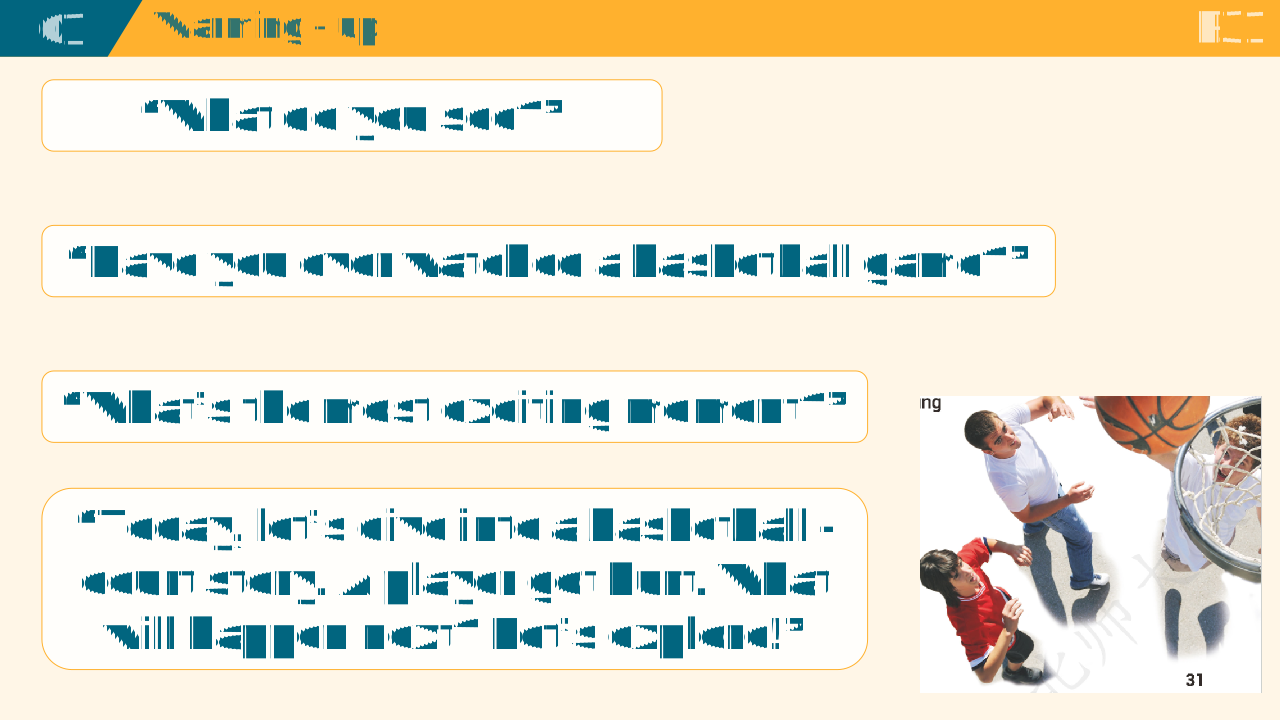
“What do you see?”
“Have you ever watched a basketball game?”
“What’s the most exciting moment?”
“Today, let’s dive into a basketball - court story. A player got hurt. What will happen next? Let’s explore!”
02
paragraph 1
P31
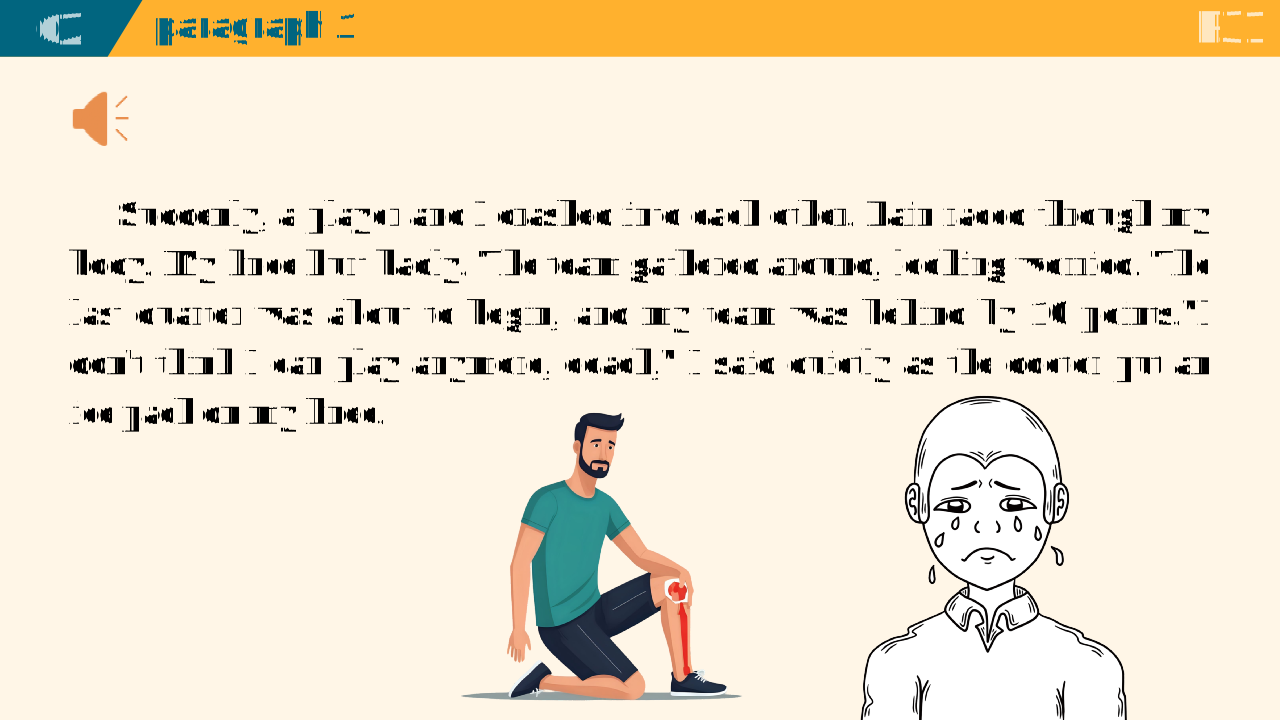
Suddenly, a player and I crashed into each other. Pain raced through my body. My knee hurt badly. The team gathered around, looking worried. The last quarter was about to begin, and my team was behind by 10 points."I don't think I can play anymore, coach," I said quietly as the doctor put an ice pack on my knee.
02
paragraph 1 language point
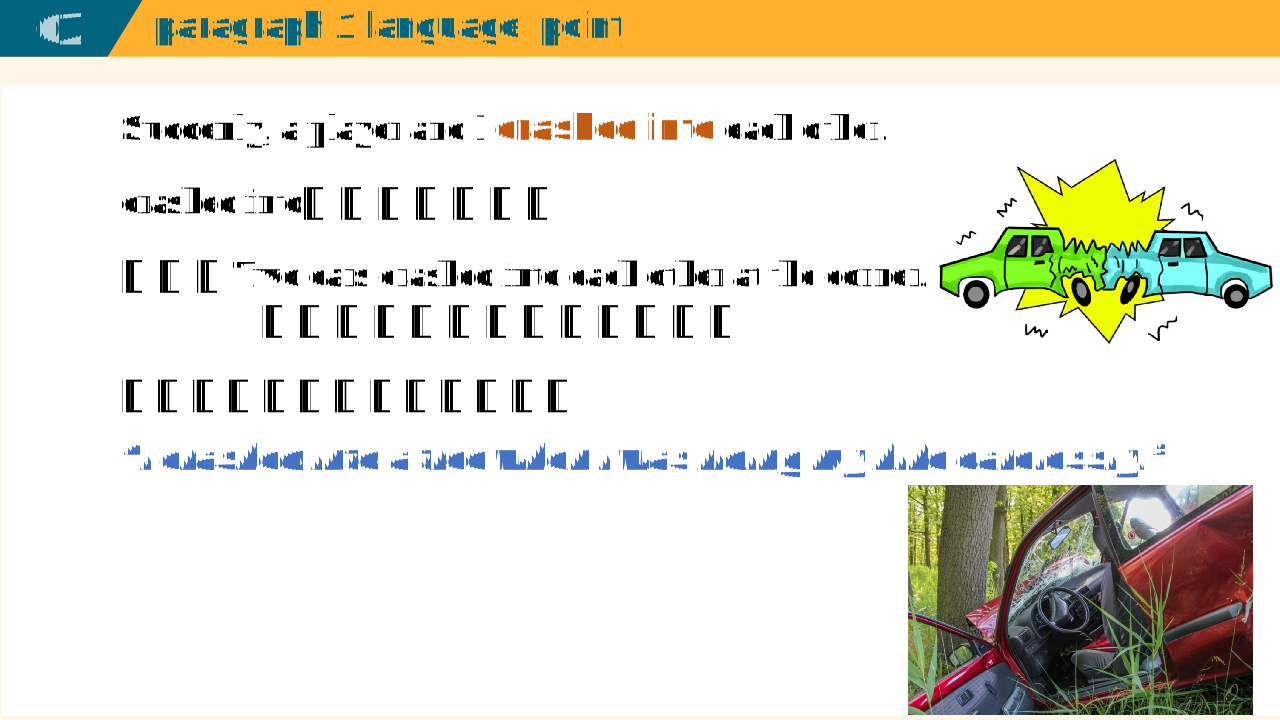
Suddenly, a player and I crashed into each other.
crashed into(碰撞;猛撞)
例句:Two cars crashed into each other at the corner.
(两辆车在街角猛烈相撞。)
我骑车不小心时撞到了树上。
“I crashed into a tree when I was riding my bike carelessly.”
02
paragraph 1 language point
Pain raced through my body.
race(奔跑)
例句:“When I hit the desk edge, pain raced through my arm.”
(当我撞到桌角时,疼痛迅速蔓延到手臂。)
(Personification)拟人
“The wind whispered in the trees.”
“The sun smiled down on us.”
“The story speaks to our hearts.”
给事物 人类的动作:给事物 人类的情感或表情:给事物 人类的思想或能力:
02
paragraph 1 language point
The team gathered around, looking worried.
the team:“team” 为集体名词,当它被视作一个整体时,谓语动词用单数形式;若强调其成员,则谓语动词用复数形式。
例句:The team is made up of 12 players.
(团队由 12 名队员组成,强调整体构成,谓语用单数。)
“Now, please gather around me.”
“We gathered around the group leader to discuss the problem.”
gathered around(围拢;聚集在…… 周围)
The team are discussing the strategy separately.
(队员们正在各自讨论策略,强调成员个体行为,谓语用复数。)
在本句中,“gathered(聚集)” 强调团队作为一个整体的动作,此时将 “team” 视为整体,谓语动词使用单数形式(过去式 “gathered”)。
02
paragraph 1 language point
The team gathered around, looking worried.
looking worried:是现在分词短语,作伴随状语,其逻辑主语为句子的主语 “the team”,表示 “the team gathered around”(团队围拢过来)时同时伴随的状态 “看起来忧心忡忡”。
现在分词作伴随状语时,与谓语动词所表示的动作同时发生
worried:是形容词,意为 “担心的;担忧的”,在 “looking worried” 中作表语,说明主语的状态,“look” 在此为系动词,类似结构如 “look happy”“ feel sad”
She sat there, reading a book.
02
paragraph 1 language point
The last quarter was about to begin, and my team was behind by 10 points.
并列句结构(Compound Sentence)
句子由 并列连词 and 连接两个独立分句,构成并列句,表明两个同时存在或相继发生的事实:
第一个分句:The last quarter was about to begin
第二个分句:my team was behind by 10 points
and 表示顺承关系,连接两个并列的事实,逻辑上强调 “在…… 时候,同时处于…… 状态”。
两个分句时态一致(均为一般过去时),确保句子结构平衡。
02
paragraph 1 language point
The last quarter was about to begin, and my team was behind by 10 points.
behind 在此为形容词,意为 “落后的”,与系动词 “was” 构成系表结构,表示主语的状态。
例句:Don’t fall behind in your studies.
The company is behind in technology.
语法功能:
“by + 具体数值” 作状语,修饰形容词 “behind”,说明落后的程度。
by 是介词,此处表示 “(差距)以…… 计算”,用于说明落后或领先的具体分数、数量等。
例句:
We won the game by 5 points.
The price increased by 10%.
03
paragraph 2
P31
" I don't think I can play anymore, coach," I said quietly as the doctor put an ice pack on my knee.
"No way," the coach replied sharply. "We've got no more players!"
"What about Paul?" someone suggested.
"Paul?" said the coach. "He can't play!"
"Give him a shot, coach!" I said. "What have we got to lose?"
, "That's right," another player said. "We're losing anyway. Let Paul play!"
"Let me try, coach! I won't let you down!" Paul said.
"OK, OK!" the coach finally agreed. "Don't let us down, Paul. It's your time to shine."
03
paragraph 2
P31
Now, here’s an activity for everyone. Look at a dialogue text. Read each sentence carefully and annotate the emotion you perceive beside it. Use an adjective or a brief phrase—for example, “helpless,” “anxious,” or “doubtful.” This helps you dive into the dialogue’s feelings. Take your time and rely on your own interpretations.
03
paragraph 2
P31
Now, form groups of 4 - 5 students. In your group, exchange the emotions you’ve annotated for each sentence. Then, discuss how each sentence contributes to shaping the characters and advancing the plot.
For example, take the sentence “What about Paul?” someone suggested. Deliberate on whether this sentence serves as the starting point of a plot twist and whether the emotion of the one making the suggestion is tentative or urgent. Here are some sentences help your thinking:
“How would the story differ if this sentence were removed?”
“How does the character’s mood when uttering this sentence impact the subsequent development?”
02
paragraph 2 language point
"I don't think I can play anymore, coach," I said quietly as the doctor put an ice pack on my knee.
as 引导的时间状语从句,强调两个动作 同时发生(= while/when),且通常为短暂性动作(与延续性动作的 while 形成对比)。
时态一致性:主句 “I said” 为一般过去时,从句 “put” 也为一般过去时,体现 主从句时态一致(均描述过去同时发生的动作)。
例句:
She sang as she walked.
As I opened the door, I saw a cat.
02
paragraph 2 language point
"I don't think I can play anymore, coach," I said quietly as the doctor put an ice pack on my knee.
Direct Speech,即说话者的原话用引号括起,后接主句 “I said quietly”,表明说话人及方式。
格式:“引语内容,称呼语,” 主语 + 谓语 + 状语(如 quietly) + 时间 / 地点状语。
引语内的逗号(如 “anymore, coach”)和句号(或其他标点)需位于引号内。
称呼语 “coach” 是对听话者的直接称呼,用逗号与引语主体分隔,属于 独立成分(Vocative),不影响句子语法结构,但需通过标点明确逻辑关系。
02
paragraph 2 language point
"I don't think I can play anymore, coach," I said quietly as the doctor put an ice pack on my knee.
否定转移现象:语法上,否定词 “not” 位于主句动词 “think” 前,但实际否定的是从句的内容(即 “I cannot play anymore”)。
中文对应表达为 “我认为我不能再打了”(而非 “我不认为我能再打了”),体现中英文在否定逻辑上的一致性。
仅适用于 主语为第一人称(I/we) 且动词为 think, believe, suppose, imagine, expect 等表示 “观点、看法” 的词时
例句:
I don’t believe he will come.(= I believe he won’t come.)
We don’t suppose they have finished the work.(= We suppose they haven’t finished the work.)
02
paragraph 2 language point
"I don't think I can play anymore, coach," I said quietly as the doctor put an ice pack on my knee.
宾语从句的省略(Omission in Object Clause)
主句 “I don’t think” 后接宾语从句时,引导词 that 可省略(口语中常见)。
完整形式:I don’t think that I can play anymore, coach.
注:若主句动词后接多个宾语从句,仅第一个 that 可省略,后续不可省略(如 I think (that) you are right and that he is wrong)。
02
paragraph 2 language point
"I don't think I can play anymore, coach," I said quietly as the doctor put an ice pack on my knee.
副词作状语(Adverb as Adverbial)
“quietly” 是副词,修饰主句谓语动词 “said”,表示说话的方式,译为 “轻声说”。
副词在句中的位置灵活,可位于句首、句中或句尾,此处位于动词后,符合 “动词 + 方式副词” 的常见搭配(如 speak loudly, walk slowly)。
02
paragraph 2 language point
"I don't think I can play anymore, coach," I said quietly as the doctor put an ice pack on my knee.
put sth on sth:固定搭配,意为 “把某物敷 / 放在某物上”,此处 “ice pack”(冰袋)是医疗场景常用词汇。
类似表达:put a bandage on the wound(在伤口上缠绷带)。
时态一致性:主句 “I said” 为一般过去时,从句 “put” 也为一般过去时,体现 主从句时态一致(均描述过去同时发生的动作)。
例句:
She sang as she walked.(她边走边唱。)
As I opened the door, I saw a cat.(我开门时,看到了一只猫。)
03
Dialogue Analysis: Emotions & Plot/Character Development
P31
No way,” the coach replied sharply. “We’ve got no more players!”
Direct Speech (直接引语)
Punctuation:
“No way” (省略句)
“Absolutely not” “There’s no possibility”.
Usage: Shows strong refusal or disbelief (tone: firm, decisive).
“replied sharply” (副词修饰动词)
“no more”:“not any more”
03
Dialogue Analysis: Emotions & Plot/Character Development
P31
“What about Paul?” someone suggested.
“What about...?” 结构(提出建议 / 询问意见)
功能:用于非正式场合,提出建议、询问看法或提醒考虑某事,后接 名词、代词或动名词。
省略现象:完整形式为 “What do you think about...?”,但口语中常省略为 “What about...?”,更简洁自然。.
Indefinite Pronoun “someone” 作主语
“someone” 是不定代词,意为 “某人”,作主语时谓语动词用 单数形式(如 suggested)。类似用法:anyone, everyone, no one 等不定代词作主语时,谓语动词均用单数。
03
Dialogue Analysis: Emotions & Plot/Character Development
“What about Paul?” someone suggested.
Verb “suggest” 的用法
后接 直接引语,引出建议内容(如 “What about Paul?”)。
其他常见用法:
接 动名词:suggest doing sth(如 He suggested starting early)。
接 that 从句(从句中常用虚拟语气,即 “should + 动词原形”,should 可省略):
She suggested that we (should) practice more.
注意:不能说 suggest sb to do sth(正确:advise sb to do sth)。
03
功能句型:提出建议的多样化表达
“What about Paul?” someone suggested.
句型 例句
What about...? What about trying a new method?
How about...? How about a cup of tea?
Why not...? Why not ask the teacher for help?
Let’s... Let’s discuss the problem together.
03
Dialogue Analysis: Emotions & Plot/Character Development
P31
“Give him a shot, coach!” I said. “What have we got to lose?”
Direct Speech with Two Quotations(双直接引语结构)
句子包含两部分直接引语,由报告句 “I said” 连接,形成自然的口语对话。
第一引语:“Give him a shot, coach!”(祈使句,提出建议)
第二引语:“What have we got to lose?”(反问句,强化语气)
第一引语以感叹号结尾,感叹号位于引号内;
报告句 “I said” 后用句号,引出第二引语(因两引语为独立内容)。
03
Dialogue Analysis: Emotions & Plot/Character Development
P31
“Give him a shot, coach!” I said. “What have we got to lose?”
Imperative Sentence(祈使句)
“Give him a shot, coach!” 是典型的祈使句,省略主语(通常为 “you”),直接以动词原形开头,用于提出请求、建议或命令。
功能:
表达急切的鼓励(结合语境,说话者希望教练给 Paul 机会);
“coach” 是称呼语(Vocative),独立于句子结构,用逗号与主句分隔,明确对话对象。
Idiom “give him a shot”(习语)
“shot” 在此为口语化表达,意为 “机会;尝试”(= chance/try),“give him a shot” 即 “给某人一次机会”。
03
Dialogue Analysis: Emotions & Plot/Character Development
P31
“That’s right,” another player said. “We’re losing anyway. Let Paul play!”
“That’s right”(口语化认同表达)
类似表达:“Exactly!” “You’re right.” “I agree.”
“We’re losing anyway”(现在进行时 + 副词)
副词 “anyway”:意为 “无论如何;反正”,修饰整个句子(= “in any case”)。
位置:通常位于句中(实义动词前,be 动词后)或句尾,此处位于句尾,加强 “无奈却坚定” 的语气。
03
Dialogue Analysis: Emotions & Plot/Character Development
P31
“That’s right,” another player said. “We’re losing anyway. Let Paul play!”
Imperative Sentence “Let Paul play!”(祈使句:建议型 let 句型)
Let + 宾语(Paul) + 动词原形(play),表示 “让某人做某事”,用于提出建议或请求。
否定形式:Let + 宾语 + not + 动词原形(Let Paul not play!),但更常用 “Don’t let Paul play.”
03
Dialogue Analysis: Emotions & Plot/Character Development
P31
“That’s right,” another player said. “We’re losing anyway. Let Paul play!”
“another player”(限定词 another 的用法)
限定词 “another”:
表示 “(三者或以上中的)另一个”,后接单数可数名词(player),强调 “除了已有成员之外的另一个”。
对比:another:三者及以上的 “另一个”(another book);
other:后接复数名词或不可数名词(other players, other information)。
03
Dialogue Analysis: Emotions & Plot/Character Development
P31
“Let me try, coach! I won’t let you down!” Paul said.
Phrasal Verb “let down”(动词短语:使失望)
及物动词短语,宾语可位于中间或后面(let sb down / let down sb),但宾语为代词时必须放中间(如 “let you down” 正确,“let down you” 错误)。
强化 Paul 的承诺,通过 “won’t”(will not)表达将来的决心,与前文 “教练的怀疑” 形成对比(“He can’t play!” → “I won’t let you down!”)。
例句:
She would never let her friends down.(她绝不会让朋友失望。)
Don’t let yourself down!(别让自己失望!)
03
Dialogue Analysis: Emotions & Plot/Character Development
P31
“Let me try, coach! I won’t let you down!” Paul said.
Future Tense with “won’t”(将来时:意志表达)
“I won’t let you down!” 是一般将来时的否定形式,“won’t” = will not,此处表示 “主语的意志或承诺”(而非单纯预测)。
情感色彩:
区别于 “I don’t let you down”(现在时,陈述事实),“won’t” 强调 “未来主动避免让对方失望”,体现 Paul 的责任感。
03
Dialogue Analysis: Emotions & Plot/Character Development
P31
“OK, OK!” the coach finally agreed. “Don’t let us down, Paul. It’s your time to shine.”
Negative Imperative Sentence(否定祈使句)
结构:
“Don’t let us down, Paul.” = Don’t + 动词原形(let) + 宾语(us) + 补语(down)。
功能:直接提出要求,否定形式加强语气(“不要让我们失望”)。
Idiom “It’s your time to shine”(习语:是你大放异彩的时候了)
“It’s time to do sth” 的扩展,加入 “your” 强调对象,“shine” 比喻 “表现出色、发挥潜力”。
类似表达:It’s time to prove yourself. / Seize the moment!
Emotions in dialogue reveal character motivations and relationships.
Each line can advance the plot, create suspense, or resolve conflicts.
Paying attention to tone and context helps us understand deeper meanings.
02
Why Dialogue Matters in Stories
04
paragraph 4
Paul jumped up and rushed onto the court. And clearly, all the extra hours that he'd spent practising alone paid off. The other team just couldn't keep up with his energy and speed. He made shot after shot, and the crowd couldn't stop clapping and cheering.
When the game ended, our team had won by two points.
"Well," said the coach as he hit Paul on the shoulder, "you've just earned your place on the team, big guy!"
jumped up
rushed onto
spent (practising)
paid off
couldn’t keep up
made shot after shot
couldn’t stop clapping/cheering
ended
had won
said
hit (on the shoulder)
earned
04
paragraph 4 language point
jumped up
rushed onto
spent (practising)
paid off
couldn’t keep up
made shot after shot
couldn’t stop clapping/cheering
ended
had won
said
hit (on the shoulder)
earned
A. 向上跳(动作描写)
B. 冲上去(强调速度 / 急切)
C. 花费(时间)练习(语法:spend + 时间 + (in) doing sth)
D. 取得回报,成功(常指努力 / 投资的结果)
E. 跟不上(后接 with)(固定搭配:keep up with)
F. 一次又一次投篮(shot = 投篮 / 击球)
G. 不停地鼓掌 / 欢呼(语法:can’t stop doing sth)
H. 结束(可接介词,如 ended with“以… 结束”)
I. 已经赢得(过去完成时)
J. 说(最常用动词,注意间接引语中时态变化)
K. 轻拍(肩膀)(hit 此处为 “轻触”,非 “击打”)
L. 赢得,获得(强调 “通过努力 / 付出挣得”,对比 win “赢比赛”)
05
textbook tasks
① One player got hurt and could not play.
② Someone suggested, “What about Paul?”
③ The coach replied, “Paul? He can’t play!”
④ Players said, “Give him a shot…Let Paul play!”
⑤ Paul said, “Let me try…!”
⑥ The coach agreed, “OK, OK! Don’t let us down…”
① Worried (“We’ve got no more players!”)
② Doubtful (“Paul? He can’t play!” — 怀疑 Paul 的能力)
③ Reluctant (经队员们请求后仍犹豫,但开始考虑)
④ Persuaded (被队员们的坚持影响)
⑤ Encouraging (对 Paul 说 “It’s your time to shine” — 鼓励 Paul)
05
textbook tasks
05
textbook tasks
who worked really hard for the team
who played for the Charlotte Hornets
which was short of players
that he had been waiting to contribute to
05
textbook tasks
选项 a:若关系代词在从句中作主语(出现在动词前),不可省略。如 “He is the boy who likes singing.”(who 作主语,不可省)。
选项 b:若关系代词在从句中作宾语(出现在名词或代词前,且是动作的承受者),可以省略。如 “The movie (that/which) we watched last night was great.”(that/which 作 watched 的宾语,可省)。
b
05
textbook tasks
that /which(圈出)
that /which(圈出)
who
whose
who /that/whom(圈出)
作业任务:分析叙事技巧以突出保罗的人物特征
任务概述
分析作者如何通过对保罗的描述、叙述者的陈述、活动场景、对话以及动词的使用来推进故事并突出保罗的人物特征。使用以下指南来组织你的分析。
写 300 - 400 词,每个部分使用清晰的段落。
引用具体的文本例子来支持你的分析。
05
Assignment.
Assignment
Lavf58.76.100
null
104466.055
$
资源预览图
1
2
3
4
5
6
相关资源
由于学科网是一个信息分享及获取的平台,不确保部分用户上传资料的 来源及知识产权归属。如您发现相关资料侵犯您的合法权益,请联系学科网,我们核实后将及时进行处理。