Unit 4 Language and Communication(重难词汇精练)英语新教材北师大版八年级下册
2026-03-20
|
2份
|
16页
|
135人阅读
|
2人下载

资源信息
| 学段 | 初中 |
|---|---|
| 学科 | 英语 |
| 教材版本 | 初中英语北师大版八年级下册 |
| 年级 | 八年级 |
| 章节 | Unit 4 Language and Communication |
| 类型 | 题集-专项训练 |
| 知识点 | - |
| 使用场景 | 同步教学-单元练习 |
| 学年 | 2026-2027 |
| 地区(省份) | 全国 |
| 地区(市) | - |
| 地区(区县) | - |
| 文件格式 | ZIP |
| 文件大小 | 149 KB |
| 发布时间 | 2026-03-20 |
| 更新时间 | 2026-03-20 |
| 作者 | 小米夏 |
| 品牌系列 | 上好课·上好课 |
| 审核时间 | 2026-03-20 |
| 下载链接 | https://m.zxxk.com/soft/56920311.html |
| 价格 | 3.00储值(1储值=1元) |
| 来源 | 学科网 |
内容正文:
Unit 4 Language and Communication
词汇专项过关
目录
词汇基础练
词汇语境练-句子
词汇语境练-语篇
词汇基础练
一、单词汉译英
学科网(北京)股份有限公司1 / 6
学科网(北京)股份有限公司
1. adv.主要地,首要地;大部分
2. n.意见,想法;观点,信仰
3. adj.数码的,数字式的
4. n.符号,记号 vt.做记号
5. vt.& vi. 微笑,笑
6. adj.发怒的,愤怒的,生气的
7. adv.极度,极其;非常
8. vt.&vi.翻译,译;变为
9. n.(长篇)小说
10. vt.& vi.做广告,登广告;公布
11. n.效应,影响;效果
12. adj. 影响全世界的,世界各地的
13. n.优势;益处;成效
14. adj.与文化有关的,文化的
15. n.知道;认识;意识
16. n.见识,良好的判断;感觉
17. vt.& vi. 听见,听到;听说
18. n. 智商(intelligence quotient)
19. vt.触摸,碰;感动
20. n.颈,脖子
21. v.打招呼,欢迎,迎接
22. n.海马
23. vt.& vi. 摇动,抖动;(与某人)握手
24. n.运动,转动
25. adj.相像的,相仿的,类似的
26. n.电影
28. adj.正确的,恰当的;真正的
27. vt.& vi.召开;抓住;抱住
二、短语汉译英
1. 视频通话
2. 听说
3. 肢体语言
4. 以···为基础
5. 在某人看来
6. 社交媒体
7. 文化意识
8. 有道理
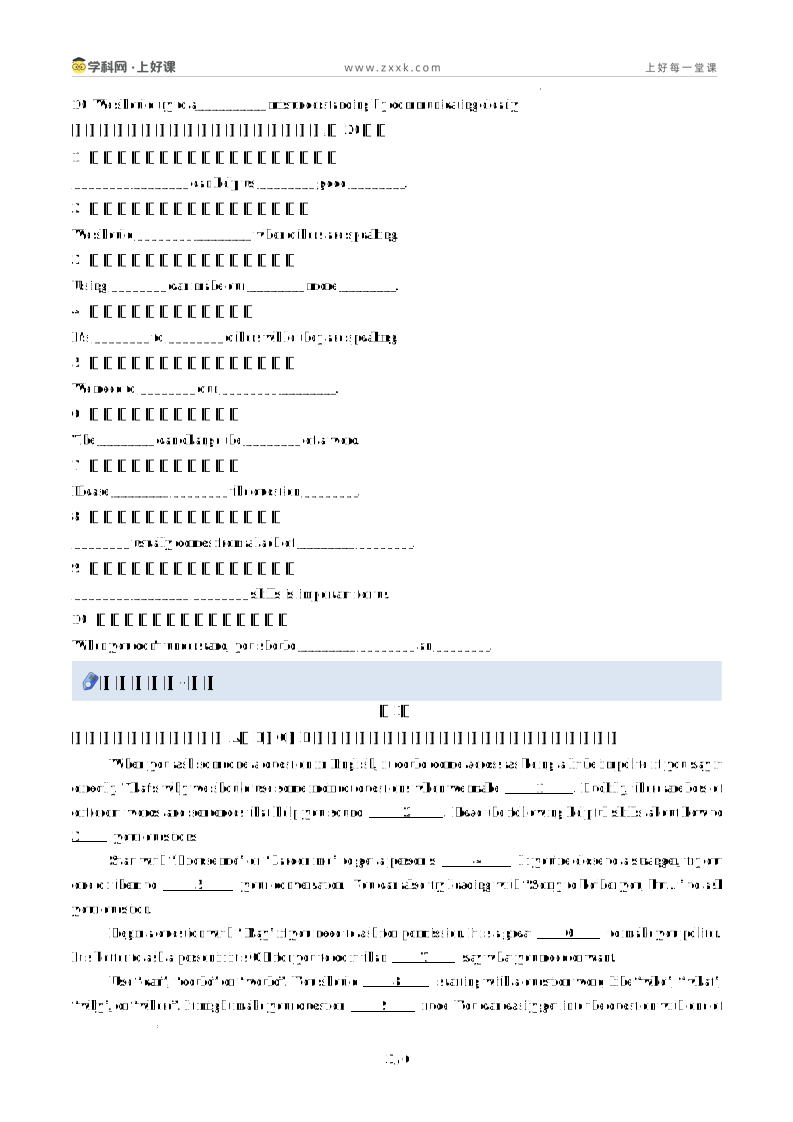
词汇语境练-句子
一.重点单词词性转换
1. polite(名词:礼貌)________;(副词:有礼貌地)________
2. impolite(名词:无礼)________;(副词:无礼地)________
3. clear(副词:清楚地)________;(动词:使清晰)________
4. explain(名词:解释)________;(形容词:说明性的)________
5. meaning(动词:意思是)________;(形容词:有意义的)________
6. communicate(第三人称单数)________;(现在分词)________
7. interrupt(名词:打断)________;(过去式)________
8. respond(名词:回应)________;(过去式)________
9. misunderstand(过去式)________;(过去分词)________
10. effective(名词:效力)________;(副词:有效地)________
11. gesture(动词:做手势)________;(第三人称单数)________
12. context(形容词:上下文相关的)________;(复数)________
13. listen(名词:倾听者)________;(形容词:善于倾听的)________
14. understand(名词:理解力)________;(形容词:可理解的)________
15. express(名词:表情;表达)________;(形容词:有表现力的)________
二、用所给单词的适当形式填空
1. We need to __________ (communication) clearly to avoid misunderstanding.
2. She __________ (express) her thanks to the teacher politely yesterday.
3. It's important __________ (listen) actively when others are talking.
4. Don't __________ (interrupt) others while they are giving a speech.
5. I __________ (misunderstand) his meaning because of the unclear context.
6. A friendly __________ (gesture) can make a conversation more comfortable.
7. It's __________ (polite) to speak loudly in a quiet library.
8. Could you __________ (explain) this grammar rule again? I'm confused.
9. The __________ (mean) of this word changes with different situations.
10. __________ (communicate) effectively is a key skill in teamwork.
11. He always responds __________ (active) in class discussions.
12. We should learn how to __________ (respond) properly to different opinions.
13. The teacher's explanation made the problem __________ (clear) than before.
14. There are many different __________ (context) for using this phrase.
15. An __________ (effect) way to improve communication is to practice listening.
三、根据首字母提示完成填空
1. Good c__________ is the foundation of strong interpersonal relationships.
2. You should e__________ your opinions openly but politely in the meeting.
3. It's necessary to l__________ carefully when others share their ideas.
4. Using g__________ can help us connect with people who speak different languages.
5. It's i__________ to cut in when someone else is talking.
6. Please e__________ this sentence for me; I can't get its meaning.
7. The m__________ of a word often depends on its context.
8. Don't i__________ your parents while they are having a conversation.
9. You need to r__________ to the customer's email within 24 hours.
10. We should try to a__________ misunderstanding by communicating clearly.
四、汉译英(一空一词,注意时态与句式,共20分)
1. 有效的沟通能帮助我们建立良好的关系。
________ ________ can help us ________ good ________.
2. 当别人说话时,我们应该积极倾听。
We should ________ ________ when others are speaking.
3. 用手势可以让我们的表达更清晰。
Using ________ can make our ________ more ________.
4. 打断别人说话是不礼貌的。
It's ________ to ________ others while they are speaking.
5. 我们需要清楚地表达自己的想法。
We need to ________ our ________ ________.
6. 语境会改变单词的意义。
The ________ can change the ________ of a word.
7. 请礼貌地回应这个问题。
Please ________ ________ the question ________.
8. 误解通常来自缺乏清晰的沟通。
________ usually comes from a lack of ________ ________.
9. 学习有效沟通技巧对我们很重要。
________ ________ ________ skills is important for us.
10. 当你不明白时,应该请求解释。
When you don't understand, you should ________ ________ an ________.
词汇语境练-语篇
(1)
阅读下面短文,从每小题A、B、C、D中选出一个能填入文章中相应空白处的最佳答案。
When you ask someone a question in English, it could come across as being a little impolite if you say it directly. That’s why we should use some indirect questions when we make 1 . Luckily, there are lots of different words and sentences that help you sound 2 . Read the following helpful skills about how to 3 your questions.
Start with “Excuse me” or “Pardon me” to get a person’s 4 . If you’re close to a stranger, try out one of them to 5 your conversation. You can also try leading with “Sorry to bother you, but...” to ask your question.
Begin a question with “May” if you need to ask for permission. It is a great 6 to make you politer. It’s better to ask a person if it’s OK for you to do it than 7 say what you need or want.
Use “can”, “could” or “would”. You should 8 starting with a question word, like “who”, “what”, “why”, or “where”. It might make your question 9 rude. You can easily get into the question with one of these words. For example, instead of asking “Where is the bathroom?”, you could say “Would you mind telling me where the 10 is?”
I think all of the skills mentioned above can help you.
1.A.requests B.examples C.memories D.opinions
2.A.smart B.bored C.serious D.polite
3.A.imagine B.realize C.express D.search
4.A.progress B.attention C.decision D.condition
5.A.start off B.look up C.turn down D.work on
6.A.reason B.reply C.choice D.course
7.A.strictly B.directly C.closely D.smartly
8.A.avoid B.stand C.enjoy D.allow
9.A.reply B.hear C.sound D.care
10.A.station B.bookstore C.restaurant D.bathroom
(2)
先通读短文,掌握其大意,然后从A、B、C、D四个选项中选出一个可以填入相应空白处的最佳选项,并在答题卡上将该项涂黑。
Kimi was a middle school student. He had always been attracted by Chinese culture. He loved learning about the 1 , traditions, and customs of his country. One day, while looking through the Internet, he noticed some information 2 Western culture. He was surprised to find that there were many differences between Chinese and Western 3 .
Kimi couldn’t believe what he was reading. He found it 4 to understand why people in the West did things so differently from people in China. He thought that Western culture was strange. He decided to 5 about it with his best friend, Jack.
“Jack, have you ever noticed how different Western culture is from Chinese culture?” Kimi asked.
“Yeah, I have,” Jack replied. “But that doesn’t mean we should think it’s strange. We should try to 6 and appreciate (欣赏) it.”
“But 7 do they do things so differently?” Kimi asked.
“Well, different cultures have 8 values,” Jack explained. “For example, in the West, individualism (个人主义) is 9 valued, while in China, collectivism (集体主义) is more important.”
Kimi thought about what Jack had 10 . He found that he had been too quick to judge (评价) Western culture. He decided to learn more about it.
Over the next few weeks, Kimi tried many 11 to help himself understand Western culture, such as reading books and watching movies about it. And he had learned a great deal. He knew that things could not be said to be strange and bad just because they were different from yours. Kimi 12 that it was very common to find differences. Everyone is different, so how could two countries with totally different backgrounds be the same?
In the end, Kimi changed 13 attitude (态度) towards Western culture. By learning about the differences, he could understand the 14 better and become a more open-minded person. He was 15 to continue learning about different cultures and exploring the world around him.
1.A.art B.math C.science D.history
2.A.about B.with C.for D.like
3.A.songs B.pictures C.cities D.cultures
4.A.hard B.special C.brave D.safe
5.A.think B.talk C.learn D.worry
6.A.imagine B.explain C.understand D.receive
7.A.what B.where C.why D.When
8.A.similar B.different C.common D.important
9.A.lightly B.slowly C.highly D.totally
10.A.made B.said C.looked D.asked
11.A.ways B.skills C.plans D.moments
12.A.heard B.realized C.suggested D.guessed
13.A.their B.his C.her D.its
14.A.life B.world C.nature D.mood
15.A.happy B.sorry C.moved D.surprised
(3)
阅读下面短文,掌握其大意,然后从各题所给的四个选项中选出一个最佳答案。
I had been a nurse for about a year when I decided to move from my home to take a new job. It was a 1 time—my first trip away from home.
I spent many evenings alone in the small 2 worrying about how I would achieve my goals and wondering if the 3 had been the right decision for me. As I sat on my secondhand sofa, 4 my dinner from a hamburger bag, I thought about home. I pictured myself in the kitchen with my mom, making delicious strawberry jams. Later, I 5 myself sitting at the table with my mom and dad, eating warm apple pies. I missed the 6 of home.
One day, I was feeling down. Although I 7 my job, my heart ached for my loved ones. That morning at work I was 8 to receive a package from my father. He hardly shops. What made him send me a 9 ? I opened the package and pulled out a poster. On it is a large ship sailing in the sea. The 10 below touched me, “Sailing ships are 11 in their harbor, but that’s not what sailing ships were built for.” For the first time, my 12 to leave home and set out on my own felt 13 . I knew my father. I knew he was 14 a man with many words, but he was trying to tell me he missed me but 15 my decision to go.
Mark Twain once said, “Twenty years from now you will be more disappointed by the things that you didn’t do than by the things you did do. Sail away from the safe harbor.” I knew I would sail farther, because I was supported by father’s love.
1.A.lonely B.wonderful C.nervous D.exciting
2.A.office B.hospital C.flat D.company
3.A.study B.trip C.move D.chance
4.A.making B.eating C.buying D.ordering
5.A.avoided B.kept C.stopped D.imagined
6.A.peace B.smell C.power D.warmth
7.A.loved B.achieved C.missed D.lost
8.A.surprised B.worried C.pleased D.excited
9.A.letter B.gift C.poster D.message
10.A.icon B.pictures C.words D.sign
11.A.safe B.quiet C.ready D.active
12.A.dream B.decision C.duty D.goal
13.A.proud B.right C.wrong D.sorry
14.A.never B.sometimes C.often D.always
15.A.formed B.made C.supported D.offered
$Unit 4 Language and Communication
词汇专项过关
目录
词汇基础练
词汇语境练-句子
词汇语境练-语篇
词汇基础练
一、单词汉译英
学科网(北京)股份有限公司1 / 6
学科网(北京)股份有限公司
1.mainly adv.主要地,首要地;大部分
2.opinion n.意见,想法;观点,信仰
3.digital adj.数码的,数字式的
4.mark n.符号,记号 vt.做记号
5.smile vt.& vi. 微笑,笑
6.angry adj.发怒的,愤怒的,生气的
7.hugely adv.极度,极其;非常
8.translate vt.&vi.翻译,译;变为
9.novel n.(长篇)小说
10.advertise vt.& vi.做广告,登广告;公布
11.effect n.效应,影响;效果
12.worldwide adj. 影响全世界的,世界各地的
13.benefit n.优势;益处;成效
14.cultural adj.与文化有关的,文化的
15.awareness n.知道;认识;意识
16.sense n.见识,良好的判断;感觉
17.hear vt.& vi. 听见,听到;听说
18.IQ n. 智商(intelligence quotient)
19.touch vt.触摸,碰;感动
20.neck n.颈,脖子
21.greet v.打招呼,欢迎,迎接
22.seahorse n.海马
23.shake vt.& vi. 摇动,抖动;(与某人)握手
24.movement n.运动,转动
25.similar adj.相像的,相仿的,类似的
26.movie n.电影
28.proper adj.正确的,恰当的;真正的
27.hold vt.& vi.召开;抓住;抱住
二、短语汉译英
1.video call 视频通话
2.hear about听说
3.body language 肢体语言
4.based on 以···为基础
5.in one's opinion 在某人看来
6.social media 社交媒体
7.cultural awareness文化意识
8.make sense 有道理
词汇语境练-句子
一.重点单词词性转换
1. polite(名词:礼貌)________;(副词:有礼貌地)________
2. impolite(名词:无礼)________;(副词:无礼地)________
3. clear(副词:清楚地)________;(动词:使清晰)________
4. explain(名词:解释)________;(形容词:说明性的)________
5. meaning(动词:意思是)________;(形容词:有意义的)________
6. communicate(第三人称单数)________;(现在分词)________
7. interrupt(名词:打断)________;(过去式)________
8. respond(名词:回应)________;(过去式)________
9. misunderstand(过去式)________;(过去分词)________
10. effective(名词:效力)________;(副词:有效地)________
11. gesture(动词:做手势)________;(第三人称单数)________
12. context(形容词:上下文相关的)________;(复数)________
13. listen(名词:倾听者)________;(形容词:善于倾听的)________
14. understand(名词:理解力)________;(形容词:可理解的)________
15. express(名词:表情;表达)________;(形容词:有表现力的)________
【答案】1. politeness; politely 2. impoliteness; impolitely 3. clearly; clarify4. explanation; explanatory 5. mean; meaningful 6. communicates; communicating7. interruption; interrupted 8. response; responded 9. misunderstood; misunderstood10. effect; effectively 11. gesture; gestures 12. contextual; contexts13. listener; listening 14. understanding; understandable 15. expression; expressive
二、用所给单词的适当形式填空
1. We need to __________ (communication) clearly to avoid misunderstanding.
2. She __________ (express) her thanks to the teacher politely yesterday.
3. It's important __________ (listen) actively when others are talking.
4. Don't __________ (interrupt) others while they are giving a speech.
5. I __________ (misunderstand) his meaning because of the unclear context.
6. A friendly __________ (gesture) can make a conversation more comfortable.
7. It's __________ (polite) to speak loudly in a quiet library.
8. Could you __________ (explain) this grammar rule again? I'm confused.
9. The __________ (mean) of this word changes with different situations.
10. __________ (communicate) effectively is a key skill in teamwork.
11. He always responds __________ (active) in class discussions.
12. We should learn how to __________ (respond) properly to different opinions.
13. The teacher's explanation made the problem __________ (clear) than before.
14. There are many different __________ (context) for using this phrase.
15. An __________ (effect) way to improve communication is to practice listening.
【答案】1. communicate 2. expressed 3. to listen 4. interrupt 5. misunderstood6. gesture 7. impolite 8. explain 9. meaning 10. Communicating11. actively 12. respond 13. clearer 14. contexts 15. effective
三、根据首字母提示完成填空
1. Good c__________ is the foundation of strong interpersonal relationships.
2. You should e__________ your opinions openly but politely in the meeting.
3. It's necessary to l__________ carefully when others share their ideas.
4. Using g__________ can help us connect with people who speak different languages.
5. It's i__________ to cut in when someone else is talking.
6. Please e__________ this sentence for me; I can't get its meaning.
7. The m__________ of a word often depends on its context.
8. Don't i__________ your parents while they are having a conversation.
9. You need to r__________ to the customer's email within 24 hours.
10. We should try to a__________ misunderstanding by communicating clearly.
【答案】1. communication 2. express 3. listen 4. gestures 5. impolite6. explain 7. meaning 8. interrupt 9. respond 10. avoid
四、汉译英(一空一词,注意时态与句式,共20分)
1. 有效的沟通能帮助我们建立良好的关系。
________ ________ can help us ________ good ________.
2. 当别人说话时,我们应该积极倾听。
We should ________ ________ when others are speaking.
3. 用手势可以让我们的表达更清晰。
Using ________ can make our ________ more ________.
4. 打断别人说话是不礼貌的。
It's ________ to ________ others while they are speaking.
5. 我们需要清楚地表达自己的想法。
We need to ________ our ________ ________.
6. 语境会改变单词的意义。
The ________ can change the ________ of a word.
7. 请礼貌地回应这个问题。
Please ________ ________ the question ________.
8. 误解通常来自缺乏清晰的沟通。
________ usually comes from a lack of ________ ________.
9. 学习有效沟通技巧对我们很重要。
________ ________ ________ skills is important for us.
10. 当你不明白时,应该请求解释。
When you don't understand, you should ________ ________ an ________.
【答案】1. Effective; communication; build; relationships2. listen; actively3. gestures; expression; clear4. impolite; interrupt5. express; ideas; clearly6. context; meaning7. respond; to; politely8. Misunderstanding; clear; communication9. Learning; effective; communication10. ask; for; explanation
词汇语境练-语篇
(1)
阅读下面短文,从每小题A、B、C、D中选出一个能填入文章中相应空白处的最佳答案。
When you ask someone a question in English, it could come across as being a little impolite if you say it directly. That’s why we should use some indirect questions when we make 1 . Luckily, there are lots of different words and sentences that help you sound 2 . Read the following helpful skills about how to 3 your questions.
Start with “Excuse me” or “Pardon me” to get a person’s 4 . If you’re close to a stranger, try out one of them to 5 your conversation. You can also try leading with “Sorry to bother you, but...” to ask your question.
Begin a question with “May” if you need to ask for permission. It is a great 6 to make you politer. It’s better to ask a person if it’s OK for you to do it than 7 say what you need or want.
Use “can”, “could” or “would”. You should 8 starting with a question word, like “who”, “what”, “why”, or “where”. It might make your question 9 rude. You can easily get into the question with one of these words. For example, instead of asking “Where is the bathroom?”, you could say “Would you mind telling me where the 10 is?”
I think all of the skills mentioned above can help you.
1.A.requests B.examples C.memories D.opinions
2.A.smart B.bored C.serious D.polite
3.A.imagine B.realize C.express D.search
4.A.progress B.attention C.decision D.condition
5.A.start off B.look up C.turn down D.work on
6.A.reason B.reply C.choice D.course
7.A.strictly B.directly C.closely D.smartly
8.A.avoid B.stand C.enjoy D.allow
9.A.reply B.hear C.sound D.care
10.A.station B.bookstore C.restaurant D.bathroom
【答案】1.A 2.D 3.C 4.B 5.A 6.C 7.B 8.A 9.C 10.D
【导语】本文是一篇说明文,主要介绍了如何用英语礼貌地提问的技巧,包括使用间接问句、礼貌用语等。
1.句意:这就是为什么我们在提出请求时应该使用一些间接问句。
requests请求;examples例子;memories记忆;opinions观点。根据“use some indirect questions when we make…”可知,此处指提出请求时使用间接问句更礼貌。故选A。
2.句意:幸运的是,有很多不同的词语和句子可以帮助你听起来更礼貌。
smart聪明的;bored无聊的;serious严肃的;polite礼貌的。根据全文主题“如何礼貌提问”及“sound…”可知,此处强调礼貌性。故选D。
3.句意:阅读以下关于如何表达你的问题的有用技巧。
imagine想象;realize意识到;express表达;search搜索。根据“how to…your questions”可知,此处指表达问题的方式。故选C。
4.句意:以“Excuse me”或“Pardon me”开头以引起对方的注意。
progress进步;attention注意;decision决定;condition条件。根据“get a person’s…”可知,礼貌用语是为了吸引对方注意。故选B。
5.句意:如果你靠近陌生人,试着用其中一个来开始你们的对话。
start off开始;look up查阅;turn down拒绝;work on从事。根据“to…your conversation”可知,此处指开始对话。故选A。
6.句意:这是一个让你更礼貌的好选择。
reason理由;reply回复;choice选择;course课程。根据“a great…to make you politer”和前句可知,使用“May”开头是一种选择。故选C。
7.句意:问一个人你是否可以这样做,比直接说你需要或想要什么更好。
strictly严格地;directly直接地;closely紧密地;smartly聪明地。根据“than…say what you need”可知,此处是与“直接说”对比。故选B。
8.句意:你应该避免以疑问词开头,比如“who”、“what”、“why”或“where”。
avoid避免;stand忍受;enjoy享受;allow允许。根据“starting with a question word…might make your question rude”可知,应避免直接提问。故选A。
9.句意:这可能让你的问题听起来粗鲁。
reply回复;hear听到;sound听起来;care关心。根据“make your question…rude”可知,此处指问题给人的听感。故选C。
10.句意:例如,不要问“Where is the bathroom?”,你可以说“Would you mind telling me where the bathroom is?”。
station车站;bookstore书店;restaurant餐厅;bathroom洗手间。根据前文“Where is the bathroom?”的间接问法示例可知,此处指洗手间。故选D。
(2)
先通读短文,掌握其大意,然后从A、B、C、D四个选项中选出一个可以填入相应空白处的最佳选项,并在答题卡上将该项涂黑。
Kimi was a middle school student. He had always been attracted by Chinese culture. He loved learning about the 1 , traditions, and customs of his country. One day, while looking through the Internet, he noticed some information 2 Western culture. He was surprised to find that there were many differences between Chinese and Western 3 .
Kimi couldn’t believe what he was reading. He found it 4 to understand why people in the West did things so differently from people in China. He thought that Western culture was strange. He decided to 5 about it with his best friend, Jack.
“Jack, have you ever noticed how different Western culture is from Chinese culture?” Kimi asked.
“Yeah, I have,” Jack replied. “But that doesn’t mean we should think it’s strange. We should try to 6 and appreciate (欣赏) it.”
“But 7 do they do things so differently?” Kimi asked.
“Well, different cultures have 8 values,” Jack explained. “For example, in the West, individualism (个人主义) is 9 valued, while in China, collectivism (集体主义) is more important.”
Kimi thought about what Jack had 10 . He found that he had been too quick to judge (评价) Western culture. He decided to learn more about it.
Over the next few weeks, Kimi tried many 11 to help himself understand Western culture, such as reading books and watching movies about it. And he had learned a great deal. He knew that things could not be said to be strange and bad just because they were different from yours. Kimi 12 that it was very common to find differences. Everyone is different, so how could two countries with totally different backgrounds be the same?
In the end, Kimi changed 13 attitude (态度) towards Western culture. By learning about the differences, he could understand the 14 better and become a more open-minded person. He was 15 to continue learning about different cultures and exploring the world around him.
1.A.art B.math C.science D.history
2.A.about B.with C.for D.like
3.A.songs B.pictures C.cities D.cultures
4.A.hard B.special C.brave D.safe
5.A.think B.talk C.learn D.worry
6.A.imagine B.explain C.understand D.receive
7.A.what B.where C.why D.When
8.A.similar B.different C.common D.important
9.A.lightly B.slowly C.highly D.totally
10.A.made B.said C.looked D.asked
11.A.ways B.skills C.plans D.moments
12.A.heard B.realized C.suggested D.guessed
13.A.their B.his C.her D.its
14.A.life B.world C.nature D.mood
15.A.happy B.sorry C.moved D.surprised
【答案】1.D 2.A 3.D 4.A 5.B 6.C 7.C 8.B 9.C 10.B 11.A 12.B 13.B 14.B 15.A
【导语】本文讲述了中学生Kimi对中国文化感兴趣,后通过网络了解到中西方文化差异,起初觉得西方文化奇怪,后经过与朋友Jack讨论并学习,改变了态度,认识到文化差异的普遍性,成为更开放的人并继续学习不同文化。
1.句意:他喜欢学习他国家的历史、传统和习俗。
art艺术;math数学;science科学;history历史。根据前文“He had always been attracted by Chinese culture.”以及后文“traditions, and customs”可知,此处应填入与中国文化相关的名词,且与“传统、习俗”并列,history“历史”是文化的重要组成部分,符合语境。故选D。
2.句意:一天,在浏览互联网时,他注意到一些关于西方文化的信息。
about关于;with和……一起;for为了;like像。information about...意为“关于……的信息”,固定搭配,此处表示“关于西方文化的信息”。故选A。
3.句意:他惊讶地发现中西方文化之间有很多不同之处。
songs歌曲;pictures图片;cities城市;cultures文化。前文提到“some information...Western culture”,且全文围绕中西方文化差异展开,因此此处应指“中西方文化之间的不同”。故选D。
4.句意:他发现很难理解为什么西方人做事的方式和中国人如此不同。
hard困难的;special特别的;brave勇敢的;safe安全的。根据前文“He was surprised to find that there were many differences...”可知,Kimi对中西方文化差异感到惊讶,因此理解这些差异应该是“困难的”。故选A。
5.句意:他决定和他最好的朋友Jack谈论这件事。
think思考;talk谈论;learn学习;worry担心。根据后文Kimi与Jack的对话“Jack, have you ever noticed how different Western culture is from Chinese culture?”可知,Kimi是想和Jack“谈论”这件事。talk about sth. with sb.意为“和某人谈论某事”,符合语境。故选B。
6.句意:我们应该尝试去理解并欣赏它。
imagine想象;explain解释;understand理解;receive收到。根据“appreciate it”可知,Jack认为应该尝试“理解”并欣赏。故选C。
7.句意:但是为什么他们做事的方式如此不同?
what什么;where哪里;why为什么;When什么时候。根据后文Jack的解释“Well, different cultures have...”可知,Kimi是在询问“为什么”西方人做事方式不同,因此应用疑问词“why”。故选C。
8.句意:不同文化有不同的价值观。
similar相似的;different不同的;common共同的;important重要的。前文Kimi询问“为什么做事方式不同”,Jack解释原因,结合常识可知,不同文化通常有“不同的”价值观。故选B。
9.句意:例如,在西方,个人主义被高度重视,而在中国,集体主义更重要。
lightly轻微地;slowly慢慢地;highly高度地;totally完全地。be highly valued意为“被高度重视”,固定搭配,符合西方文化重视个人主义的特点。故选C。
10.句意:Kimi思考了Jack说的话。
made制作;said说;looked看;asked问。前文Jack对Kimi的问题进行了解释,因此Kimi思考的是Jach“说”的话。故选B。
11.句意:在接下来的几周里,Kimi尝试了很多方法来帮助自己理解西方文化,比如阅读关于它的书籍和观看电影。
ways方法;skills技能;plans计划;moments时刻。后文“such as reading books and watching movies”是具体的“方法”,ways to do sth.意为“做某事的方法”。故选A。
12.句意:Kimi意识到发现差异是很常见的。
heard听到;realized意识到;suggested建议;guessed猜测。经过学习西方文化,Kimi对文化差异有了新的认识,因此是“意识到”差异很常见。故选B。
13.句意:最后,Kimi改变了他对西方文化的态度。
their他们的;his他的;her她的;its它的。主语Kimi是男性,因此形容词性物主代词用his表示“他的”,his attitude“他的态度”,符合语境。故选B。
14.句意:通过学习差异,他能更好地理解世界,并成为一个更开放的人。
life生活;world世界;nature自然;mood情绪。文化差异是世界的一部分,学习文化差异有助于更好地理解“世界”。故选B。
15.句意:他很高兴能继续学习不同的文化并探索他周围的世界。
happy开心的;sorry抱歉的;moved感动的;surprised惊讶地。Kimi改变了态度,成为更开放的人,因此继续学习不同文化应该是“开心的”。故选A。
(3)
阅读下面短文,掌握其大意,然后从各题所给的四个选项中选出一个最佳答案。
I had been a nurse for about a year when I decided to move from my home to take a new job. It was a 1 time—my first trip away from home.
I spent many evenings alone in the small 2 worrying about how I would achieve my goals and wondering if the 3 had been the right decision for me. As I sat on my secondhand sofa, 4 my dinner from a hamburger bag, I thought about home. I pictured myself in the kitchen with my mom, making delicious strawberry jams. Later, I 5 myself sitting at the table with my mom and dad, eating warm apple pies. I missed the 6 of home.
One day, I was feeling down. Although I 7 my job, my heart ached for my loved ones. That morning at work I was 8 to receive a package from my father. He hardly shops. What made him send me a 9 ? I opened the package and pulled out a poster. On it is a large ship sailing in the sea. The 10 below touched me, “Sailing ships are 11 in their harbor, but that’s not what sailing ships were built for.” For the first time, my 12 to leave home and set out on my own felt 13 . I knew my father. I knew he was 14 a man with many words, but he was trying to tell me he missed me but 15 my decision to go.
Mark Twain once said, “Twenty years from now you will be more disappointed by the things that you didn’t do than by the things you did do. Sail away from the safe harbor.” I knew I would sail farther, because I was supported by father’s love.
1.A.lonely B.wonderful C.nervous D.exciting
2.A.office B.hospital C.flat D.company
3.A.study B.trip C.move D.chance
4.A.making B.eating C.buying D.ordering
5.A.avoided B.kept C.stopped D.imagined
6.A.peace B.smell C.power D.warmth
7.A.loved B.achieved C.missed D.lost
8.A.surprised B.worried C.pleased D.excited
9.A.letter B.gift C.poster D.message
10.A.icon B.pictures C.words D.sign
11.A.safe B.quiet C.ready D.active
12.A.dream B.decision C.duty D.goal
13.A.proud B.right C.wrong D.sorry
14.A.never B.sometimes C.often D.always
15.A.formed B.made C.supported D.offered
【答案】1.A 2.C 3.C 4.B 5.D 6.D 7.A 8.A 9.B 10.C 11.A 12.B 13.B 14.A 15.C
【导语】本文讲述了作者当护士一年后离家换工作,初时孤独思乡,收到父亲包裹含海报与文字,受其传递的支持鼓励,坚定独自出发的决定,明白了有父爱支持能走更远。
1.句意:那是一段孤独的时光——我第一次离家旅行。
lonely孤独的;wonderful美妙的;nervous紧张的;exciting令人兴奋的。根据“my first trip away from home”和“I spent many evenings alone”可知,离开家的那一段时光是孤独的。故选A。
2.句意:我很多个晚上独自在小公寓里,担心如何实现目标,想知道这次搬家对我来说是否是正确的决定。
office办公室;hospital医院;flat公寓;company公司。根据“spent many evenings alone”以及生活场景可知,是在公寓里。故选C。
3.句意:我很多个晚上独自在小公寓里,担心如何实现目标,想知道这次搬家对我来说是否是正确的决定。
study学习;trip旅行;move搬家;chance机会。根据前文“...decided to move from my home to take a new job”可知,这里指搬家这个决定。故选C。
4.句意:当我坐在二手沙发上,从汉堡袋里吃晚餐时,我想起了家。
making制作;eating吃;buying买;ordering订购。根据“...from a hamburger bag”可知,是吃晚餐。故选B。
5.句意:后来,我想象自己和爸爸妈妈坐在餐桌旁,吃着温暖的苹果派。
avoided避免;kept保持;stopped停止;imagined想象。根据“I pictured myself in the kitchen with my mom”可知,这里继续想象和父母做饭场景。故选D。
6.句意:我想念家的温暖。
peace和平;smell气味;power力量;warmth温暖。 根据“I missed the...of home.”可知,前文想象在家和父母的温馨场景,符合对家的感受。故选D。
7.句意:虽然我热爱我的工作,但我内心渴望我的亲人。
loved热爱;achieved实现;missed想念;lost失去。根据“my heart ached for my loved ones”可知,这里转折说热爱工作。故选A。
8.句意:那天早上上班时,我很惊讶地收到父亲寄来的包裹。
surprised惊讶的;worried担心的;pleased高兴的;excited兴奋的。根据“He hardly shops.”可知,收到他寄的包裹会惊讶,“惊讶的”符合。故选A。
9.句意:是什么让他给我寄礼物呢?
letter信件;gift礼物;poster海报;message消息。根据“received a package”可知,这里指包裹里的礼物。故选B。
10.句意:下面的文字吸引了我:“帆船在它们的港口是安全的,但这不是建造帆船的目的。”
icon图标;pictures图片;words文字;sign标志。根据“‘Sailing ships are … in their harbor, but that’s not what sailing ships were built for.’”可知,是海报上的文字。故选C。
11. 句意:下面的文字感动了我:“帆船在它们的港口是安全的,但这不是建造帆船的目的。”
safe安全的;quiet安静的;ready准备好的;active活跃的。根据“but that’s not what sailing ships were built for”可知,港口是安全的地方。故选A。
12.句意:第一次,我离开家独自出发的决定感觉是正确的。
dream梦想;decision决定;duty责任;goal目标。根据前文“wondering if the move had been the right decision”可知,这里指离开家的决定。故选B。
13.句意:第一次,我离开家独自出发的决定感觉是正确的。
proud骄傲的;right正确的;wrong错误的;sorry抱歉的。根据“For the first time, my...to leave home and set out on my own felt.... ”可知,父亲寄海报及话语传递的支持,觉得自己离开家的决定是对的。故选B。
14.句意:我知道他从不是一个有很多话的人,但他在努力告诉我他想念我,但支持我离开的决定。
never从不;sometimes有时;often经常;always总是。根据“but he was trying to tell me”可知,说明父亲平时话不多。故选A。
15.句意:我知道他从不是一个有很多话的人,但他在努力告诉我他想念我,但支持我离开的决定。
formed形成;made制作;supported支持;offered提供。根据“I knew I would sail farther, because I was supported by father’s love.”可知,父亲是支持我离开的决定的。故选C。
$
资源预览图

1

2
3
所属专辑

相关资源
由于学科网是一个信息分享及获取的平台,不确保部分用户上传资料的 来源及知识产权归属。如您发现相关资料侵犯您的合法权益,请联系学科网,我们核实后将及时进行处理。