Unit 4 Weather and our lives(重难词汇精练)英语新教材沪教版五四学制六年级下册
2026-03-15
|
2份
|
15页
|
974人阅读
|
26人下载
资源信息
| 学段 | 初中 |
|---|---|
| 学科 | 英语 |
| 教材版本 | 初中英语沪教版(五四学制)六年级下册 |
| 年级 | 六年级 |
| 章节 | Unit 4 Weather and our lives |
| 类型 | 题集-专项训练 |
| 知识点 | 词汇 |
| 使用场景 | 同步教学-单元练习 |
| 学年 | 2026-2027 |
| 地区(省份) | 上海市 |
| 地区(市) | - |
| 地区(区县) | - |
| 文件格式 | ZIP |
| 文件大小 | 185 KB |
| 发布时间 | 2026-03-15 |
| 更新时间 | 2026-03-15 |
| 作者 | xkw_057563316 |
| 品牌系列 | 上好课·上好课 |
| 审核时间 | 2026-03-15 |
| 下载链接 | https://m.zxxk.com/soft/56809458.html |
| 价格 | 2.00储值(1储值=1元) |
| 来源 | 学科网 |
内容正文:
Unit 4 Weather and our lives
词汇专项过关
目录
词汇基础练
词汇语境练-句子
词汇语境练-语篇
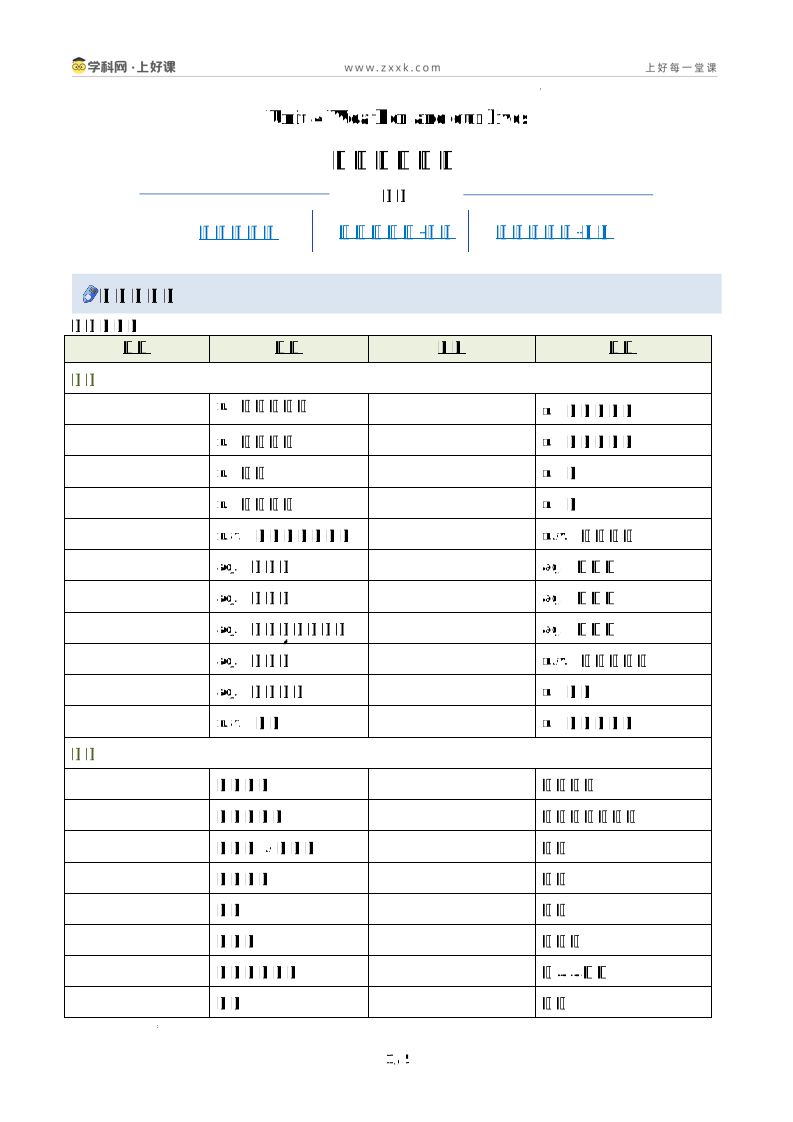
词汇基础练
一、汉译英
英文
中文
英文
中文
单词
n. 天气;气象
n. 温度;气温
n. 度;度数
n. 阳光;日光
n. 太阳
n. 风
n. 云;云朵
n. 雾
n./v. 雨;雨水;下雨
n./v. 雪;下雪
adj. 晴朗的
adj. 有风的
adj. 多云的
adj. 有雾的
adj. 下雨的;多雨的
adj. 下雪的
adj. 极端的
n./v. 报告;报道
adj. 季节性的
n. 活动
n./v. 旅行
n. 生活;生命
短语
天气预报
极端天气
季节性活动
在我们的生活中
在夏天 / 在冬天
发烧
在阳光下
大雨
小雪
强风
去游泳
去野餐
取决于;依靠
与……不同
因为
例如
户外活动
室内活动
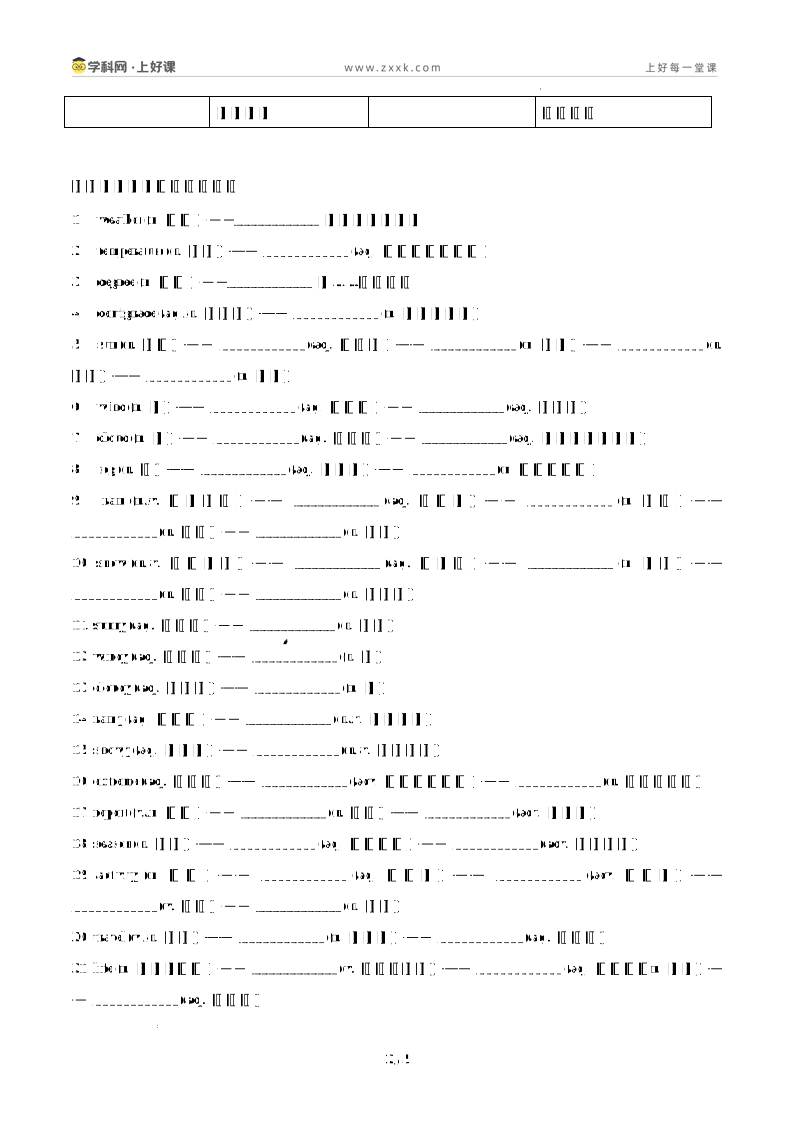
二、词汇拓展(单词变形)
学科网(北京)股份有限公司1 / 5
zxxk.com
学科网(北京)股份有限公司
1. weather (n. 天气) ——____________ (天气预报员)
2. temperature (n. 温度) —— ____________ (adj. 温和的;适度的)
3. degree (n. 度数) ——____________ (……的程度)
4. centigrade (adj./n. 摄氏的) —— ____________ (n. 等级;年级)
5. sun (n. 太阳) —— ____________ (adj. 晴朗的) —— ____________ (n. 阳光) —— ____________ (n. 日出) —— ____________ (n. 日落)
6. wind (n. 风) —— ____________ (adj. 有风的) —— ____________ (adj. 无风的)
7. cloud (n. 云) —— ____________ (adj. 多云的) —— ____________ (adj. 无云的;晴朗的)
8. fog (n. 雾) —— ____________ (adj. 有雾的) —— ____________ (n. 有雾;模糊)
9. rain (n./v. 雨;下雨) —— ____________ (adj. 下雨的) —— ____________ (n. 彩虹) —— ____________ (n. 雨衣) —— ____________ (n. 雨滴)
10. snow (n./v. 雪;下雪) —— ____________ (adj. 下雪的) —— ____________ (n. 雪人) —— ____________ (n. 雪球) —— ____________ (n. 暴风雪)
11. sunny (adj. 晴朗的) —— ____________ (n. 太阳)
12. windy (adj. 有风的) —— ____________ (n. 风)
13. cloudy (adj. 多云的) —— ____________ (n. 云)
14. rainy (adj. 下雨的) —— ____________ (n./v. 雨;下雨)
15. snowy (adj. 下雪的) —— ____________ (n./v. 雪;下雪)
16. extreme (adj. 极端的) —— ____________ (adv. 极端地;非常) —— ____________ (n. 极端;末端)
17. report (v./n. 报告) —— ____________ (n. 记者) —— ____________ (adv. 据报道)
18. season (n. 季节) —— ____________ (adj. 季节性的) —— ____________ (adv. 季节性地)
19. activity (n. 活动) —— ____________ (adj. 活跃的) —— ____________ (adv. 活跃地) —— ____________ (v. 行动) —— ____________ (n. 行动)
20. travel (v./n. 旅行) —— ____________ (n. 旅行者) —— ____________ (adj. 旅行的)
21. life (n. 生活;生命) —— ____________ (v. 生活;居住) —— ____________ (adj. 活着的;n. 生计) —— ____________ (adj. 活泼的)
词汇语境练-句子
一、单项选择
1.We need to take action ________ the environment before it’s too late.
A.protect B.protecting C.protected D.to protect
2.He will Heilongjiang tomorrow. Let’s meet him at the station.
A.arrive B.arrive in C.get D.reach to
3.Aunt Sun ________ eats pre-made meals (预制菜). She thinks it’s bad for her health.
A.seldom B.also C.always D.still
4.Wildfires usually ________ in Los Angeles because of dry weather.
A.break into B.break open C.break down D.break out
5.We must __________ the traffic rules when we cross the road.
A.follow B.break C.forget D.make
6.I could help you ________ the milk. It’s a little cold.
A.heat B.produce C.pour D.burn
7.They didn’t get the first prize ________ they tried their best to win.
A.as long as B.so that C.for D.even though
8.The meeting ________ on the seventh of July.
A.took out B.happened C.took the place D.was held
9.—What ________ is it today?
—It is Wednesday.
A.day B.date C.time D.period
10.Our main aim is to ________ sales in Europe to make more profit.
A.increase B.decrease C.drop D.decline
二、单词拼写
1.The new library (build) is tall and modern, with large windows that let in plenty of light.
2.In math class, we learned that apples are (count) nouns because you can count each individual apple.
3.Get up quickly! It’s time (have) breakfast now.
4.He felt than yesterday, so he went to hospital.(bad)
5.Before taking , we need to think about the problem carefully. (act)
6.The boy took off his shirt and his hair to cool himself down. (wet)
7.The drivers don’t like the days because it’s hard to see clearly. (fog)
8.He’s looking for a few (leaf).
9.We should (slow) down when we see the red light.
10.My parents enjoy (fly) kites in the park.
11.The children are having a great time (滑冰).
12.The cold winds come from the (北方).
13.The elephant is (非常,相当)a big animal.
14.You are wet all over. You should put on some (干燥的) clothes quickly.
15. (气流) is nothing more than air moving near the surface (表面) of the Earth.
16.The food with too much salt and sugar may (造成) heart problems.
17.Today’s (温度) is 39℃; it is very hot.
18.My father likes watching the (新闻) because he wants to learn a lot from it.
19.The trees were swaying in the (风).
20.Eating too much but not doing any exercise will (导致) health problems.
词汇语境练-语篇
三、短文填空
Fill in the blanks with suitable words.
Today, let’s learn about the world’s and China’s climates, as well as their current problems.
The climates are different a 1 the world. In general, places near the equator (赤道) are hot all year round, w 2 areas closer to the poles (极地) are much colder. Some areas, like deserts, receive very little rain and have long droughts. In contrast, tropical rainforests e heavy rainfall and high humidity. In recent years, extreme weather events have been more frequent, such as hurricanes and h 4 . Scientists warn that human activities, such as burning fossil fuels, are the main c 5 of these changes. If people don’t stop these harmful activities, they will finally lose their homes.
China is a large country with many different climates. In the north, winters are cold with snow, and summers are warm. Beijing, the c 6 , faces freezing winter every year. The south, including Guangzhou, has mild winters and hot, r 7 summers. In eastern China, monsoons (季风) bring heavy rains, which is i 8 for farming. Western China, like Xizang, is colder because it is high up. Like the rest of the world, China has faced climate challenges nowadays, such as more unusual weather and rainfall. The government is working to reduce pollution and use more clean energy to help s 9 down climate change. By t 10 action, China hopes to protect its environment for future generations.
Weather prediction has always been an important part of human life. There are several ways to p 1 the weather, and each method has its own m 2 .
One common way is using meteorological instruments such as thermometers and barometers. These tools can provide accurate m 3 of temperature and pressure, which help meteorologists (气象学家) make their forecasts. In addition, weather satellites play a crucial r 4 in observing the atmosphere from space, providing real-time data about cloud patterns and storms.
Another method is looking at natural signs in the environment. For example, many farmers believe that certain animal behaviours can be indicators of upcoming weather changes. If birds fly lower than usual, it might mean a storm is c 5 . Similarly, some people notice that when the sky turns a particular shade of red at sunset, it often indicates good weather the next day.
Moreover, meteorologists also use computer models to simulate atmospheric conditions. These computer-generated simulations help predict weather patterns by analyzing vast amounts of data. A 6 these models can be complex, they provide valuable insights into what the weather might be like in the future.
Lastly, weather forecasting often involves a combination of these methods. By using different approaches, meteorologists can increase the a 7 of their predictions. Whether it’s through technology or observing nature, understanding how to do weather prediction is e 8 for planning our daily activities and staying safe.
$Unit 4 Weather and our lives
词汇专项过关
目录
词汇基础练
词汇语境练-句子
词汇语境练-语篇
词汇基础练
一、汉译英
英文
中文
英文
中文
单词
weather
n. 天气;气象
temperature
n. 温度;气温
degree
n. 度;度数
sunshine
n. 阳光;日光
sun
n. 太阳
wind
n. 风
cloud
n. 云;云朵
fog
n. 雾
rain
n./v. 雨;雨水;下雨
snow
n./v. 雪;下雪
sunny
adj. 晴朗的
windy
adj. 有风的
cloudy
adj. 多云的
foggy
adj. 有雾的
rainy
adj. 下雨的;多雨的
snowy
adj. 下雪的
extreme
adj. 极端的
report
n./v. 报告;报道
seasonal
adj. 季节性的
activity
n. 活动
travel
n./v. 旅行
life
n. 生活;生命
短语
weather report / forecast
天气预报
extreme weather
极端天气
seasonal activities
季节性活动
in our lives
在我们的生活中
in summer / winter
在夏天 / 在冬天
have a temperature
发烧
in the sunshine
在阳光下
heavy rain
大雨
light snow
小雪
strong wind
强风
go swimming
去游泳
have a picnic
去野餐
depend on
取决于;依靠
be different from
与……不同
because of
因为
such as
例如
outdoor activities
户外活动
indoor activities
室内活动
二、词汇拓展(单词变形)
学科网(北京)股份有限公司1 / 5
zxxk.com
学科网(北京)股份有限公司
1. weather (n. 天气) ——weatherman (天气预报员)
2. temperature (n. 温度) —— temperate (adj. 温和的;适度的)
3. degree (n. 度数) ——degree of (……的程度)
4. centigrade (adj./n. 摄氏的) —— grade (n. 等级;年级)
5. sun (n. 太阳) —— sunny (adj. 晴朗的) —— sunshine (n. 阳光) —— sunrise (n. 日出) —— sunset (n. 日落)
6. wind (n. 风) —— windy (adj. 有风的) —— windless (adj. 无风的)
7. cloud (n. 云) —— cloudy (adj. 多云的) —— cloudless (adj. 无云的;晴朗的)
8. fog (n. 雾) —— foggy (adj. 有雾的) —— fogginess (n. 有雾;模糊)
9. rain (n./v. 雨;下雨) —— rainy (adj. 下雨的) —— rainbow (n. 彩虹) —— raincoat (n. 雨衣) —— raindrop (n. 雨滴)
10. snow (n./v. 雪;下雪) —— snowy (adj. 下雪的) —— snowman (n. 雪人) —— snowball (n. 雪球) —— snowstorm (n. 暴风雪)
11. sunny (adj. 晴朗的) —— sun (n. 太阳) —— sunnier (adj. 比较级) —— sunniest (adj. 最高级)
12. windy (adj. 有风的) —— wind (n. 风) —— windier (adj. 比较级) —— windiest (adj. 最高级)
13. cloudy (adj. 多云的) —— cloud (n. 云) —— cloudier (adj. 比较级) —— cloudiest (adj. 最高级)
14. rainy (adj. 下雨的) —— rain (n./v. 雨;下雨) —— rainier (adj. 比较级) —— rainiest (adj. 最高级)
15. snowy (adj. 下雪的) —— snow (n./v. 雪;下雪) —— snowier (adj. 比较级) —— snowiest (adj. 最高级)
16. extreme (adj. 极端的) —— extremely (adv. 极端地;非常) —— extremity (n. 极端;末端)
17. report (v./n. 报告) —— reporter (n. 记者) —— reportedly (adv. 据报道)
18. season (n. 季节) —— seasonal (adj. 季节性的) —— seasonally (adv. 季节性地)
19. activity (n. 活动) —— active (adj. 活跃的) —— actively (adv. 活跃地) —— act (v. 行动) —— action (n. 行动)
20. travel (v./n. 旅行) —— traveler (n. 旅行者) —— traveling (adj. 旅行的)
21. life (n. 生活;生命) —— live (v. 生活;居住) —— living (adj. 活着的;n. 生计) —— lively (adj. 活泼的)词汇语境练-句子
一、单项选择
1.We need to take action ________ the environment before it’s too late.
A.protect B.protecting C.protected D.to protect
【答案】D
【详解】句意:我们需要采取行动保护环境,以免为时已晚。
考查动词不定式作目的状语。protect保护,动词原形;protecting现在分词或动名词;protected过去式或过去分词;to protect动词不定式。根据“take action”以及“the environment”可知,此处表示“采取行动的目的是保护环境”,应使用动词不定式作目的状语。故选D。
2.He will Heilongjiang tomorrow. Let’s meet him at the station.
A.arrive B.arrive in C.get D.reach to
【答案】B
【详解】句意:他明天将抵达黑龙江。我们在车站见他吧。
考查动词辨析。arrive到达,不及物动词,接地点需搭配介词;arrive in到达,后接大地点;get作“到达”讲时,常用 “get to + 地点” ;reach到达,及物动词,直接接地点。故选B。
3.Aunt Sun ________ eats pre-made meals (预制菜). She thinks it’s bad for her health.
A.seldom B.also C.always D.still
【答案】A
【详解】句意:孙阿姨很少吃预制菜。她认为这对她的健康有害。
考查副词辨析。seldom几乎不;also也;always总是;still仍然。根据后文“She thinks it’s bad for her health.”可知,很少吃预制菜。故选A。
4.Wildfires usually ________ in Los Angeles because of dry weather.
A.break into B.break open C.break down D.break out
【答案】D
【详解】句意:由于天气干燥,洛杉矶经常发生野火。
考查动词短语辨析。break into闯入;break open打开;break down分解;break out突然发生,爆发。根据“Wildfires usually... in Los Angeles because of dry weather.”可知,由于天气干燥而在洛杉矶经常发生野火。故选D。
5.We must __________ the traffic rules when we cross the road.
A.follow B.break C.forget D.make
【答案】A
【详解】句意:我们过马路时必须遵守交通规则。
考查动词辨析。follow遵守;break打破;forget忘记;make制作。根据“…the traffic rules”可知,此处指“遵守交通规则”,follow符合题意。故选A。
6.I could help you ________ the milk. It’s a little cold.
A.heat B.produce C.pour D.burn
【答案】A
【详解】句意:我可以帮你热一下牛奶。它有点凉了。
考查动词辨析。heat加热;produce生产;pour倒;灌;burn燃烧;烧毁。根据“It’s a little cold.”可知,牛奶有点凉,需要加热,heat符合语境。故选A。
7.They didn’t get the first prize ________ they tried their best to win.
A.as long as B.so that C.for D.even though
【答案】D
【详解】句意:尽管他们尽了最大的努力去赢,但他们没有得到第一名。
考查状语从句。as long as只要;so that以便;for因为;even though尽管。句子表达的是让步关系,即“尽管他们尽了最大努力,但未能获得第一名”,用even though引导让步状语从句。故选D。
8.The meeting ________ on the seventh of July.
A.took out B.happened C.took the place D.was held
【答案】D
【详解】句意:会议于7月7日举行。
考查动词及动词短语辨析。took out取出;happened发生,指偶然或意外事件;took the place代替;was held被举行。根据“The meeting…on the seventh of July.”的语境并结合选项可知,此处指举行会议,D项符合。故选D。
9.—What ________ is it today?
—It is Wednesday.
A.day B.date C.time D.period
【答案】A
【详解】句意:——今天星期几?——星期三。
考查名词辨析。day天;date日期;time时间;period时期。根据“It is Wednesday.”可知,问的是星期几,用day。故选A。
10.Our main aim is to ________ sales in Europe to make more profit.
A.increase B.decrease C.drop D.decline
【答案】A
【详解】句意:我们的主要目标是增加在欧洲的销售额,以获得更多利润。
考查动词辨析。increase增加;decrease减少;drop下降;decline减少。根据“make more profit”可知,是要增加销售额。故选A。
二、单词拼写
1.The new library (build) is tall and modern, with large windows that let in plenty of light.
【答案】building
【详解】句意:这座新建的图书馆又高又现代化,大窗户透入充足的光线。build“建造”,动词;此处需用名词形式作主语,building表示“建筑物、楼房”,结合“is”可知,此处用单数形式。故填building。
2.In math class, we learned that apples are (count) nouns because you can count each individual apple.
【答案】countable
【详解】句意:在数学课上,我们学到苹果是可数名词,因为你可以数每个单独的苹果。根据“because you can count each individual apple”可知,此处需用形容词修饰名词;count的形容词形式是countable,意为“可数的”,符合语境。故填countable。
3.Get up quickly! It’s time (have) breakfast now.
【答案】to have
【详解】句意:快起床!现在是吃早饭的时间了。固定句型“It’s time to do sth.”,表示“是做某事的时间了”。故填to have。
4.He felt than yesterday, so he went to hospital.(bad)
【答案】worse
【详解】句意:他感觉比昨天糟糕,因此他去了医院。根据than可知,空白处需填入的比较级形式,bad的比较级worse表示“更糟糕的”。故填worse。
5.Before taking , we need to think about the problem carefully. (act)
【答案】action
【详解】句意:在采取行动之前,我们需要仔细考虑这个问题。take action“采取行动”,是固定搭配。故填action。
6.The boy took off his shirt and his hair to cool himself down. (wet)
【答案】wetted
【详解】句意:男孩脱下衬衫并弄湿头发来让自己凉快下来。此处用动词过去式与took off作并列谓语,wet的过去式为wetted。故填wetted。
7.The drivers don’t like the days because it’s hard to see clearly. (fog)
【答案】foggy
【详解】句意:司机们不喜欢雾天,因为很难看清楚。根据“fog”可知,此处使用名词fog的形容词形式foggy,表示“有雾的”作定语。故填foggy。
8.He’s looking for a few (leaf).
【答案】leaves
【详解】句意:他正在寻找一些叶子。a few“一些,几个”,后接可数名词复数,leaf“叶子”,复数形式为leaves。故填leaves。
9.We should (slow) down when we see the red light.
【答案】slow
【详解】句意:看到红灯时,我们应该减速。“should”是情态动词,后跟动词原形,故填slow。
10.My parents enjoy (fly) kites in the park.
【答案】flying
【详解】句意:我的父母喜欢在公园里放风筝。enjoy doing sth“喜欢做某事”,空处用动名词形式。故填flying。
11.The children are having a great time (滑冰).
【答案】skating
【详解】句意:孩子们滑冰滑得很开心。skate “滑冰”,动词;根据短语have a great time doing sth.“做某事很开心”可知,空处应填是skate的动名词形式skating。故填skating。
12.The cold winds come from the (北方).
【答案】north
【详解】句意:寒冷的风来自北方。根据“The cold winds come from the…”和中文提示可知,此处需要填入一个名词,north“北方”,名词,符合语境。故填north。
13.The elephant is (非常,相当)a big animal.
【答案】quite
【详解】句意:大象是一种非常大的动物。根据中文提示可知,“非常;相当”意为quite。故填quite。
14.You are wet all over. You should put on some (干燥的) clothes quickly.
【答案】dry
【详解】句意:你全身都湿透了。你应该赶紧穿上一些干燥的衣服。dry“干燥的”,形容词作定语。故填dry。
15. (气流) is nothing more than air moving near the surface (表面) of the Earth.
【答案】Wind
【详解】句意:气流无非是地球表面附近的空气运动。wind“风,气流”,指一种自然现象,为不可数名词,句首单词首字母要大写。故填Wind。
16.The food with too much salt and sugar may (造成) heart problems.
【答案】cause
【详解】句意:含有太多盐和糖的食物可能会造成心脏问题。根据中文提示可知,“造成”的英文表达是cause,情态动词may后接动词原形,故填cause。
17.Today’s (温度) is 39℃; it is very hot.
【答案】temperature
【详解】句意:今天的温度是39℃;天气很热。temperature“温度”,名词。故填temperature。
18.My father likes watching the (新闻) because he wants to learn a lot from it.
【答案】news
【详解】句意:我爸爸喜欢看新闻,因为他想从中学到很多东西。根据中文提示,news“新闻”符合题意,不可数名词。故填news。
19.The trees were swaying in the (风).
【答案】wind
【详解】句意:树在风中摇曳。根据汉语提示可知,此处使用wind“风”,in the wind“在风中”。故填wind。
20.Eating too much but not doing any exercise will (导致) health problems.
【答案】cause
【详解】句意:吃得太多但不运动会导致健康问题。根据汉语提示可知,cause意为“导致”,为动词,will后跟动词原形。故填cause。
词汇语境练-语篇
三、短文填空
Fill in the blanks with suitable words.
Today, let’s learn about the world’s and China’s climates, as well as their current problems.
The climates are different a 1 the world. In general, places near the equator (赤道) are hot all year round, w 2 areas closer to the poles (极地) are much colder. Some areas, like deserts, receive very little rain and have long droughts. In contrast, tropical rainforests e heavy rainfall and high humidity. In recent years, extreme weather events have been more frequent, such as hurricanes and h 4 . Scientists warn that human activities, such as burning fossil fuels, are the main c 5 of these changes. If people don’t stop these harmful activities, they will finally lose their homes.
China is a large country with many different climates. In the north, winters are cold with snow, and summers are warm. Beijing, the c 6 , faces freezing winter every year. The south, including Guangzhou, has mild winters and hot, r 7 summers. In eastern China, monsoons (季风) bring heavy rains, which is i 8 for farming. Western China, like Xizang, is colder because it is high up. Like the rest of the world, China has faced climate challenges nowadays, such as more unusual weather and rainfall. The government is working to reduce pollution and use more clean energy to help s 9 down climate change. By t 10 action, China hopes to protect its environment for future generations.
【答案】
1.(a)round 2.(w)hile 3.(e)njoy 4.(h)eat 5.(c)ause 6.(c)apital 7.(r)ainy 8.(i)mportant 9.(s)low 10.(t)aking
【导语】本文主要介绍世界的气候变化,以及中国面临的气候问题。
1.句意:世界各地的气候各不相同。around the world“世界各地”,固定短语,故填(a)round。
2.句意:一般来说,赤道附近的地方一年四季都很热,而靠近两极的地区则要冷得多。根据“In general, places near the equator (赤道) are hot all year round, w... areas closer to the poles (极地) are much colder.”可知,前后两句构成对比关系,用while连接,故填(w)hile。
3.句意:相反,热带雨林享受大量降雨和高湿度。根据“tropical rainforests e... heavy rainfall and high humidity”可知,热带雨林享受大量降雨和高湿度,enjoy“享受”,时态是一般现在时,主语是复数,动词用原形。故填(e)njoy。
4.句意:近年来,极端天气事件更加频繁,比如飓风和高温。根据“extreme weather events have been more frequent, such as hurricanes and h...”可知,如飓风和热浪的极端天气,heat“高温”符合语境。故填(h)eat。
5.句意:科学家警告说,人类活动,如燃烧化石燃料,是这些变化的主要原因。根据“Scientists warn that human activities, such as burning fossil fuels, are the main c... of these changes.”可知,人类活动是这些变化的主要原因,cause“原因”符合语境,故填(c)ause。
6.句意:首都北京每年都面临严寒的冬天。根据“Beijing, the c... , faces freezing winter every year.”可知,北京是首都,capital“首都”符合语境,故填(c)apital。
7.句意:南方,包括广州,冬天温和,夏天炎热多雨。根据“The south, including Guangzhou, has mild winters and hot, r... summers.”可知,南方夏天炎热多雨,rainy“多雨的”,作定语修饰其后的名词。故填(r)ainy。
8.句意:在中国东部,季风带来大雨,这对农业很重要。根据“In eastern China, monsoons (季风) bring heavy rains, which is i... for farming.”可知,季风带来大雨对农业很重要,important“重要的”,在句中作表语。故填(i)mportant。
9.句意:政府正在努力减少污染,使用更多的清洁能源,以帮助减缓气候变化。根据“use more clean energy to help s... down climate change”可知,用更多的清洁能源帮助减缓气候变化,slow down“减缓”,help do sth“帮助做某事”。故填(s)low。
10.句意:通过采取行动,中国希望为子孙后代保护环境。take action“采取行动”,介词后用动名词作宾语,故填(t)aking。
Weather prediction has always been an important part of human life. There are several ways to p 1 the weather, and each method has its own m 2 .
One common way is using meteorological instruments such as thermometers and barometers. These tools can provide accurate m 3 of temperature and pressure, which help meteorologists (气象学家) make their forecasts. In addition, weather satellites play a crucial r 4 in observing the atmosphere from space, providing real-time data about cloud patterns and storms.
Another method is looking at natural signs in the environment. For example, many farmers believe that certain animal behaviours can be indicators of upcoming weather changes. If birds fly lower than usual, it might mean a storm is c 5 . Similarly, some people notice that when the sky turns a particular shade of red at sunset, it often indicates good weather the next day.
Moreover, meteorologists also use computer models to simulate atmospheric conditions. These computer-generated simulations help predict weather patterns by analyzing vast amounts of data. A 6 these models can be complex, they provide valuable insights into what the weather might be like in the future.
Lastly, weather forecasting often involves a combination of these methods. By using different approaches, meteorologists can increase the a 7 of their predictions. Whether it’s through technology or observing nature, understanding how to do weather prediction is e 8 for planning our daily activities and staying safe.
【答案】1.(p)redict 2.(m)erits 3.(m)easurements 4.(r)ole 5.(c)oming 6.(A)lthough 7.(a)ccuracy 8.(e)ssential
【导语】本文主要介绍了天气预测的几种方法及其重要性。
1.句意:有几种方法可以预测天气,每种方法都有自己的优点。根据“ Weather prediction”及首字母提示可知,是有几种方法可以预测天气,predict“预测”,不定式结构to后面加动词原形。故填(p)redict。
2.句意:有几种方法可以预测天气,每种方法都有自己的优点。根据“and each method has its own...”及首字母提示可知,应表达每种方法都有自己的优点,merit“优点”,空处用复数形式表泛指。故填(m)erits。
3.句意:这些工具可以提供精确的温度和压力测量,帮助气象学家做出预测。根据“These tools can provide accurate m...of temperature and pressure”及首字母提示可知,是这些工具可以提供精确的温度和压力测量,measurement“测量”,根据tools可知,应用名词复数形式。故填(m)easurements。
4.句意:此外,气象卫星在从太空观测大气方面发挥着至关重要的作用,提供有关云模式和风暴的实时数据。根据首字母提示可知,是发挥着至关重要的作用,play a crucial role“起重要作用”,固定搭配。故填(r)ole。
5.句意:如果鸟儿飞得比平时低,这可能意味着暴风雨即将来临。根据“If birds fly lower than usual”及首字母提示可知,应表达暴风雨即将来临,come“来”,根据is可知,时态为现在进行时,应用come的现在分词coming。故填(c)oming。
6.句意:尽管这些模型可能很复杂,但它们为未来的天气提供了宝贵的见解。根据“these models can be complex, they provide valuable insights into what the weather might be like in the future.”可知,前后是转折关系,用although引导让步状语从句,句首字母大写。故填(A)lthough。
7.句意:通过使用不同的方法,气象学家可以提高他们的预测准确性。根据“increase the a...of their predictions.”可知,是提高预测的准确性,accuracy“准确性”。故填(a)ccuracy。
8.句意:无论是通过技术还是观察自然,了解如何进行天气预报对于规划我们的日常活动和保持安全至关重要。根据“understanding how to do weather prediction is e...for planning our daily activities and staying safe.”及首字母提示可知,是表达了解如何进行天气预报对于我们的日常生活很重要,essential“重要的”,形容词作表语。故填(e)ssential。
$
资源预览图
1
2
所属专辑


相关资源
由于学科网是一个信息分享及获取的平台,不确保部分用户上传资料的 来源及知识产权归属。如您发现相关资料侵犯您的合法权益,请联系学科网,我们核实后将及时进行处理。