12.专题十二 句子的种类-【中考导学案】2026年四川达州中考英语讲义本配套课件
2026-04-08
|
29页
|
24人阅读
|
1人下载
教辅
资源信息
| 学段 | 初中 |
|---|---|
| 学科 | 英语 |
| 教材版本 | - |
| 年级 | 九年级 |
| 章节 | - |
| 类型 | 课件 |
| 知识点 | 句子的种类 |
| 使用场景 | 中考复习 |
| 学年 | 2026-2027 |
| 地区(省份) | 四川省 |
| 地区(市) | 达州市 |
| 地区(区县) | - |
| 文件格式 | PPTX |
| 文件大小 | 1.36 MB |
| 发布时间 | 2026-04-08 |
| 更新时间 | 2026-04-08 |
| 作者 | 湖北世纪国华文化传播有限公司 |
| 品牌系列 | 中考导学案·中考复习讲练测 |
| 审核时间 | 2026-02-20 |
| 下载链接 | https://m.zxxk.com/soft/56481933.html |
| 价格 | 2.00储值(1储值=1元) |
| 来源 | 学科网 |
摘要:
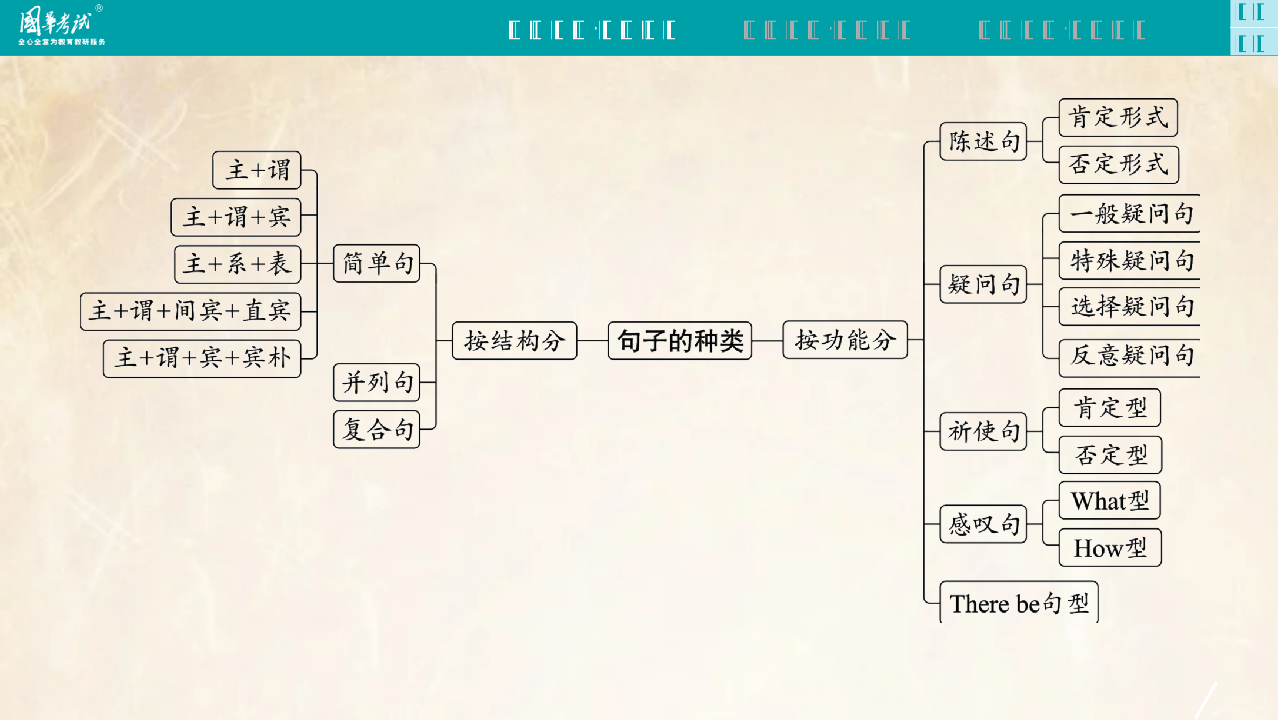
该初中英语中考复习课件系统覆盖“句子的种类”核心考点,按结构(简单句、并列句、复合句)和功能(疑问句、祈使句、感叹句、There be句型)分类梳理,对接中考说明分析考点权重,归纳特殊疑问词辨析、感叹句What/How用法、There be就近原则等常考题型,体现备考针对性。
课件亮点在于“知识导图+真题训练+技巧解析”模式,如2025年云南真题“______ kind boy Mike is!”详解感叹句What a结构,2025年天水真题There be句型就近原则应用,培养学生语言能力和思维品质。教师可依托此资料精准突破考点,帮助学生掌握答题技巧,提升中考得分率。
内容正文:
专题十二 句子的种类
《中考导学案》
2026达州英语
1
2
2
2
1
语法突破·知识梳理
知识导图·重点概览
2
3
语法专练·夯基提能
目
录
2
知识导图·重点概览
考点综述
01
3
首页
目录
知识导图·重点概览
语法突破·知识梳理
语法专练·夯基提能
语法突破·知识梳理
考点综述
02
5
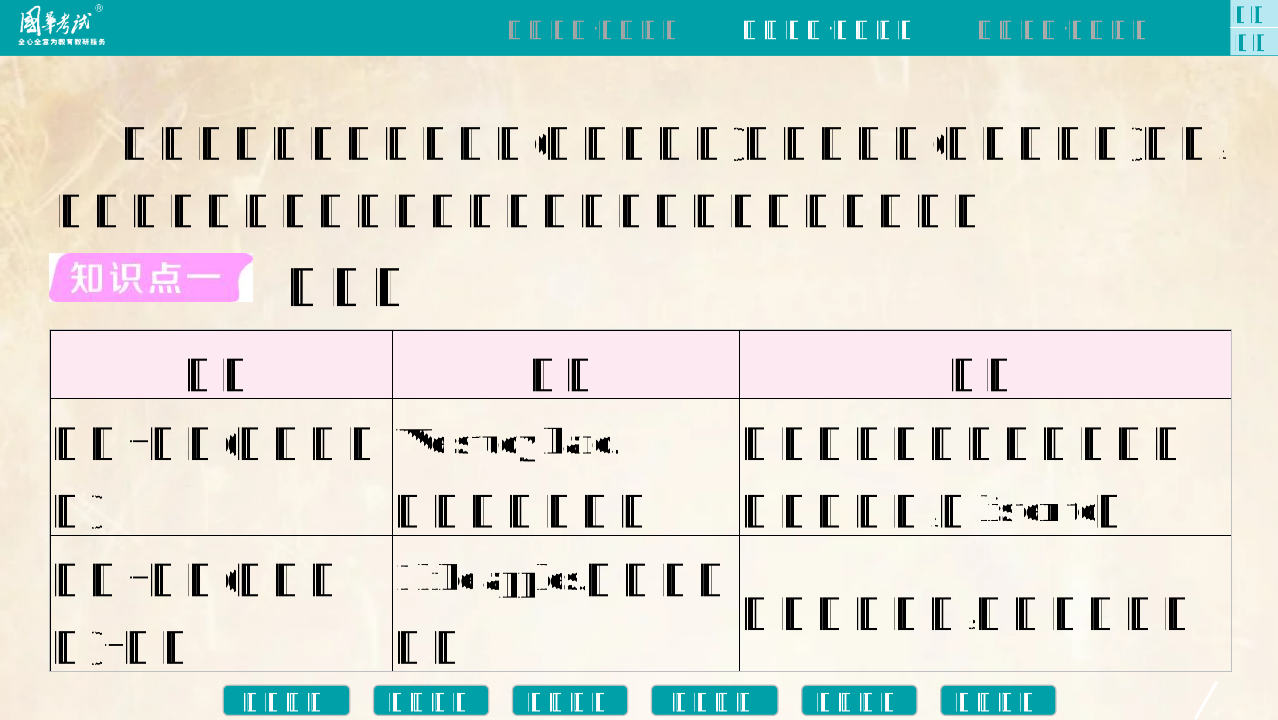
简单句
简单句通常只由一个主语(或并列主语)和一个谓语(或并列谓语)构成,按句子功能一般分为陈述句、疑问句、祈使句和感叹句。
类型 例句 备注
主语+谓语(不及物动词) We study hard.
我们努力学习。 某些不及物动词加特定介词后可带宾语,如listen to等
主语+谓语(及物动词)+宾语 I like apples.我喜欢苹果。 宾语为代词时,要用宾格代词
首页
目录
知识点一
知识点二
知识点三
知识导图·重点概览
语法突破·知识梳理
语法专练·夯基提能
知识点四
知识点五
知识点六
6
类型 例句 备注
主语+系动词+表语 The girl is kind.
这个女孩很友好。 表语多为名词或形容词,系动词look,taste,smell等后面常跟形容词作表语
主语+谓语(及物动词)+间接宾语+直接宾语 She bought me a card.
她给我买了一张卡片。 常见的此类动词:give,buy,show,pass等
主语+谓语(及物动词)+宾语+宾语补足语 He made the baby cry.
他把这个婴儿弄哭了。 常见的此类动词:make,keep,
let,see,hear,notice等
首页
目录
知识点一
知识点二
知识点三
知识导图·重点概览
语法突破·知识梳理
语法专练·夯基提能
知识点四
知识点五
知识点六
7
陈述句
类型 含义 例句
肯定句 肯定的陈述,表示 “是如此” They usually go to school by bike.
他们经常骑自行车去上学。
否定句 否定的陈述,表示“不是如此” They won’t go to the park tomorrow.
他们明天不去公园。
注:否定句是在be动词、助动词或情态动词后加not,常用缩略形式,要注意人称、时态的一致。
首页
目录
知识点一
知识点二
知识点三
知识导图·重点概览
语法突破·知识梳理
语法专练·夯基提能
知识点四
知识点五
知识点六
疑问句
名词所有格
类型 句型 例句
一般
疑问句 be动词/助动词/情态动词+主语+表语/动词原形/分词?
答语:Yes,主语+be动词/助动词/情态动词;No,主语+be动词/助动词/情态动词+not —Are you a student?
你是学生吗?
—Yes, I am./No, I’m not.
是的,我是。/不,我不是。
首页
目录
知识点一
知识点二
知识点三
知识导图·重点概览
语法突破·知识梳理
语法专练·夯基提能
知识点四
知识点五
知识点六
类型 句型 例句
特殊
疑问句 特殊疑问词+一般疑问句? —What are you doing?你在做什么?
—I am reading a book.我在看书。
选择
疑问句 一般疑问句+or+另一个选择项?
特殊疑问句+选择项+or+另一个选择项? —Do you like English or math?
你喜欢英语还是数学?
—English.英语。
反意
疑问句 陈述句/祈使句+简短问句(前肯后否,前否后肯)? —You used to be short, didn’t you?
你过去长得矮,是吗?
—Yes, I did.是的。/No, I didn’t.
不是的。
首页
目录
知识点一
知识点二
知识点三
知识导图·重点概览
语法突破·知识梳理
语法专练·夯基提能
知识点四
知识点五
知识点六
常见疑问词(组)及其用法:
who 询问身份
which 询问特定的事或物
whose 询问所有者
what 询问具体信息(电话号码地址等) when 询问时间
why 询问原因
where 询问地点,位置
how 询问方式(怎样)
首页
目录
知识点一
知识点二
知识点三
知识导图·重点概览
语法突破·知识梳理
语法专练·夯基提能
知识点四
知识点五
知识点六
祈使句
祈使句表示请求、命令、劝告、叮嘱、号召、建议等。
类型 结构 例句
肯定
祈使句 动词原形+其他 Come in, please.请进。
Let+宾语+动词原形+其他 Let’s go!我们走吧!
Be+表语+其他 Be careful, please.请小心。
否定
祈使句 Don’t/Never+动词原形+其他 Don’t do that again!不要再那样做!
No+名词/动名词+其他 No parking here!这儿禁止停车!
首页
目录
知识点一
知识点二
知识点三
知识导图·重点概览
语法突破·知识梳理
语法专练·夯基提能
知识点四
知识点五
知识点六
感叹句
感叹句是表示说话时的惊异、喜悦、气愤、哀伤等强烈感情的句子。通常由what或how引导,what后以名词为中心,how后以形容词或副词为中心,句末常用感叹号。
类型 结构 例句
What型 What+a/an+形容词+可数名词的单数形式(+主语+谓语)! What a beautiful girl she is!
她是多么漂亮的一个女孩啊!
What+形容词+可数名词的复数形式/不可数名词(+主语+谓语)! What important jobs they have done!
他们做了多么重要的工作啊!
What sweet water it is!多么甜的水啊!
首页
目录
知识点一
知识点二
知识点三
知识导图·重点概览
语法突破·知识梳理
语法专练·夯基提能
知识点四
知识点五
知识点六
类型 结构 例句
How型 How+形容词+a/an+可数名词的单数形式(+主语+谓语)! How beautiful a picture it is!
多么漂亮的一幅画啊!
How+形容词/副词(+主语+谓语)! How cute the dog is!
这只狗多么可爱啊!
How+主语+谓语! How time flies!
时间过得多么快啊!
首页
目录
知识点一
知识点二
知识点三
知识导图·重点概览
语法突破·知识梳理
语法专练·夯基提能
知识点四
知识点五
知识点六
There be句型
There be句型表示“某地或某时有某人或某物”,there是引导词,没有实际意义,句中的be与离它最近的名词在数方面保持一致
[就近原则]
首页
目录
知识点一
知识点二
知识点三
知识导图·重点概览
语法突破·知识梳理
语法专练·夯基提能
知识点四
知识点五
知识点六
1. There be句型的常用结构
类型 句型 例句
一般现在时 There is/are+sb./sth.+地点状语 There is an apple on the desk.
桌上有一个苹果。
一般过去时 There was/were+sb./sth.+地点状语/表示过去的时间状语 There were many people in the theater last night.昨晚剧院里有很多人。
一般将来时 There will be(is/are going to be)+sb./sth.+地点状语/表示将来的时间状语 There is going to be a basketball match next Friday.下周五将有一场篮球比赛。
与情态动
词连用 There+情态动词+be+sb./sth.+地点状语/时间状语 There must be some cute animals in the zoo.动物园里一定有一些可爱的动物。
首页
目录
知识点一
知识点二
知识点三
知识导图·重点概览
语法突破·知识梳理
语法专练·夯基提能
知识点四
知识点五
知识点六
2. There be句型的句式变化
句式 变化规则 例句
否定句 一般是在be动词后面加not There isn’t any water in the bottle.
瓶子里没有水。
一般疑问句 一般是把be动词提前到句首 —Are there many people in the park on weekends?周末公园里有很多人吗?
—Yes, there are./No, there aren’t.
是的,有。/不,没有。
首页
目录
知识点一
知识点二
知识点三
知识导图·重点概览
语法突破·知识梳理
语法专练·夯基提能
知识点四
知识点五
知识点六
语法专练·夯基提能
考点综述
03
一、单项选择
( )1. (2025·天水改编)— are the trousers?
—20 pounds.
A. How many B. How long C. How much
( )2. (2025·扬州改编)— do you remember about this week’s news?
—None, I’m afraid.
A. How many B. How much C. How soon
C
B
首页
目录
知识导图·重点概览
语法突破·知识梳理
语法专练·夯基提能
( )3. (2025·云南改编) kind boy Mike is!He always helps his classmates with math.
A. How B. What C. What a
( )4. (2025·遂宁改编)—Excuse me, sir. is it from here to the train station?
—Oh, it’s about ten minutes’ walk.
A. How long B. How soon C. How far
C
C
首页
目录
知识导图·重点概览
语法突破·知识梳理
语法专练·夯基提能
( )5. (2025·成都)— is the sports center closed today?
—Here’s a notice. Let’s have a look.
A. Why B. How C. Whether
( )6. (2025·绥化) good advice it is! I’m sure to make many friends at the party.
A. How B. What a C. What
( )7. (2025·绥化)Jim doesn’t know anything about DeepSeek. his brother.
A. So does B. Neither doesn’t C. Neither does
A
C
C
首页
目录
知识导图·重点概览
语法突破·知识梳理
语法专练·夯基提能
( )8. (2025·龙东)—We are going to the Sanxingdui Ruins(三星堆遗迹). we are!
—Have a good time!
A. What excited B. How excited C. How exciting
( )9. (2025·天水改编)Look! There a notebook and three keys on the desk.
A. is B. was C. are
B
A
首页
目录
知识导图·重点概览
语法突破·知识梳理
语法专练·夯基提能
( )10. (2025·广元改编)—Mike, such a loud noise in the room. Your sister is sleeping.
—OK, Dad. I won’t do that again.
A. making B. to make C. don’t make
( )11. (2025·北京改编)—Steve, did you begin to learn how to play chess?
—About two years ago.
A. what B. when C. why
C
B
首页
目录
知识导图·重点概览
语法突破·知识梳理
语法专练·夯基提能
( )12. (2025·凉山)—Look! The students are learning paper cutting in the club.
—Wow! interesting it is!
A. How B. What C. What an
( )13. He have breakfast because he woke up late this morning.
A. does B. didn’t C. doesn’t
( )14. —Tom will have a birthday party next Sunday. Do you want to go?
—If you go, .
A. so I will B. so will I C. neither will I
A
B
B
首页
目录
知识导图·重点概览
语法突破·知识梳理
语法专练·夯基提能
( )15. —The old man never feels lonely, ?
—No, because he has many friends.
A. does he B. won’t he C. doesn’t he
( )16. Only after he had spoken out the word he had made a big mistake.
A. he did realize B. he realized C. did he realize
A
C
首页
目录
知识导图·重点概览
语法突破·知识梳理
语法专练·夯基提能
( )17. (2025·长春改编) , Tutu, or you will be late for class. Only two minutes left.
A. Hurry up B. To hurry up C. Hurrying up
( )18. —Does your brother have to run for half an hour after school every day?
— . He can run twice a week.
A. Yes, he has B. Yes, he does C. No, he doesn’t
A
C
首页
目录
知识导图·重点概览
语法突破·知识梳理
语法专练·夯基提能
二、语法填空
I used to be so lazy all day. You can’t imagine 1 lazy I was. But after growing up, I began doing things actively. And from then on, I was no longer a lazy person. There 2 (be) some ways for you to stay away from laziness. 3 will you do if you get this thought of laziness? I advise you to walk out of that place. That’s because your brain will become much fresher when you see a new place. It will make you more active and 4 (prevent) you from being lazy.
1. 2. 3. 4.
how
are
What
prevent
首页
目录
知识导图·重点概览
语法突破·知识梳理
语法专练·夯基提能
5 (put) yourself in your hobbies. Why not 6 (take) up these interesting hobbies to make you busy? They can help you be more active. If you seem to delay(延迟) doing things, 7 (use) the SJF(shortest job first) method. The sense of achievement seems to be the best medicine to solve laziness.
5. 6. 7.
Put
take
use
首页
目录
知识导图·重点概览
语法突破·知识梳理
语法专练·夯基提能
本讲内容结束
$
资源预览图
1
2
3
4
5
6

相关资源
由于学科网是一个信息分享及获取的平台,不确保部分用户上传资料的 来源及知识产权归属。如您发现相关资料侵犯您的合法权益,请联系学科网,我们核实后将及时进行处理。