Unit 7 Be wise with money(Integration 1)课件 2025-2026学年译林版七年级英语上册
2026-01-18
|
21页
|
141人阅读
|
0人下载
普通
资源信息
| 学段 | 初中 |
|---|---|
| 学科 | 英语 |
| 教材版本 | 初中英语译林版七年级上册 |
| 年级 | 七年级 |
| 章节 | Integration |
| 类型 | 课件 |
| 知识点 | - |
| 使用场景 | 同步教学-新授课 |
| 学年 | 2026-2027 |
| 地区(省份) | 全国 |
| 地区(市) | - |
| 地区(区县) | - |
| 文件格式 | PPTX |
| 文件大小 | 20.82 MB |
| 发布时间 | 2026-01-18 |
| 更新时间 | 2026-01-18 |
| 作者 | 匿名 |
| 品牌系列 | - |
| 审核时间 | 2026-01-18 |
| 下载链接 | https://m.zxxk.com/soft/56015010.html |
| 价格 | 1.00储值(1储值=1元) |
| 来源 | 学科网 |
内容正文:
Unit 7 Be wise with money
Integration (1)
英语译林版七年级上册
Learning objectives
通过本课时的学习,学生能够:
1. 阅读图片信息,了解不同种类货币的发展历史;
2. 获取、梳理货币展览的相关信息(包括时间、地点及活动内容等);
3. 小组合作,模仿对话语言,讨论和分享彼此对压岁钱的规划。
重点
重点
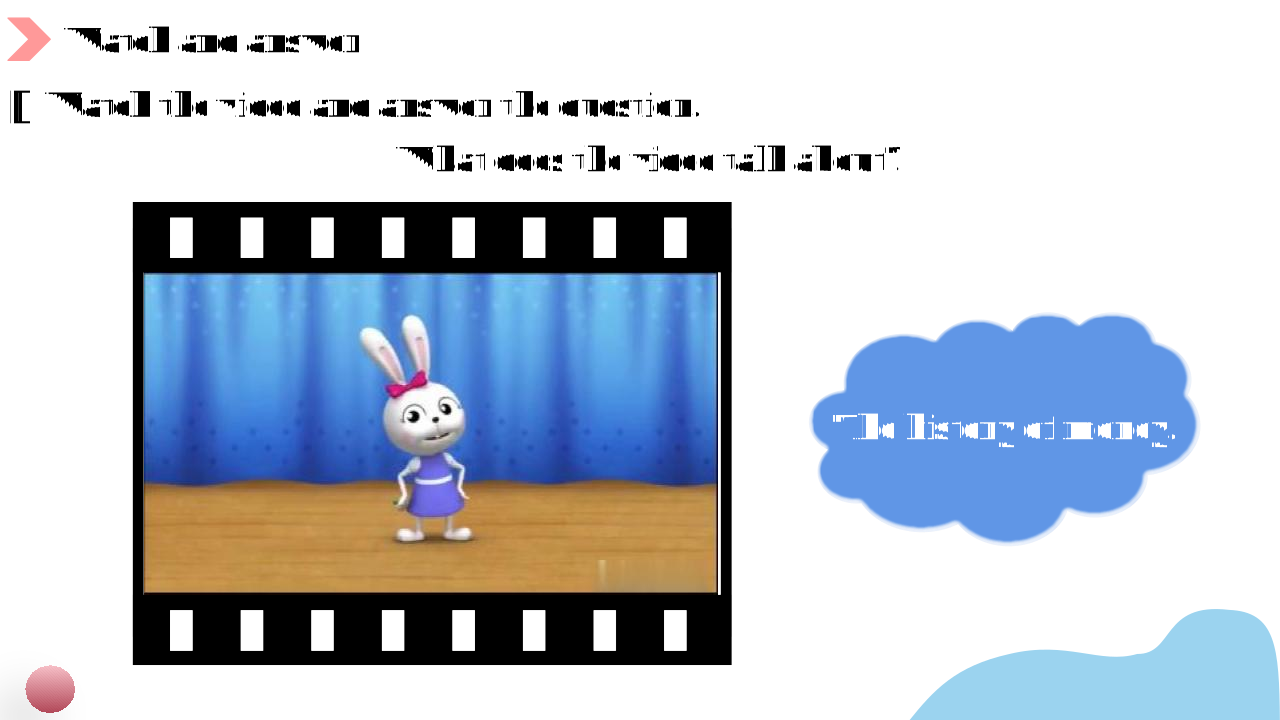
Watch and answer
What does the video talk about?
Watch the video and answer the question.
The history of money.
Discuss and say
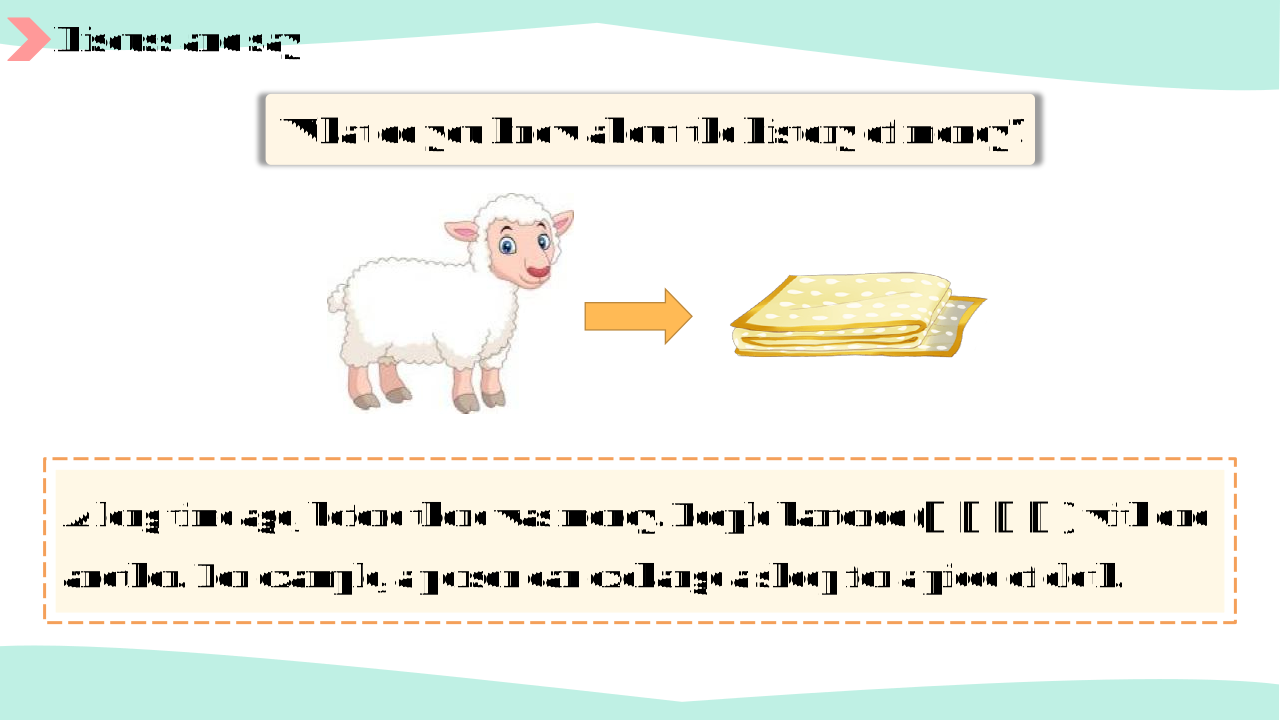
What do you know about the history of money?
A long time ago, before there was money. People bartered (以物换物) with one another. For example, a person can exchange a sheep for a piece of cloth.
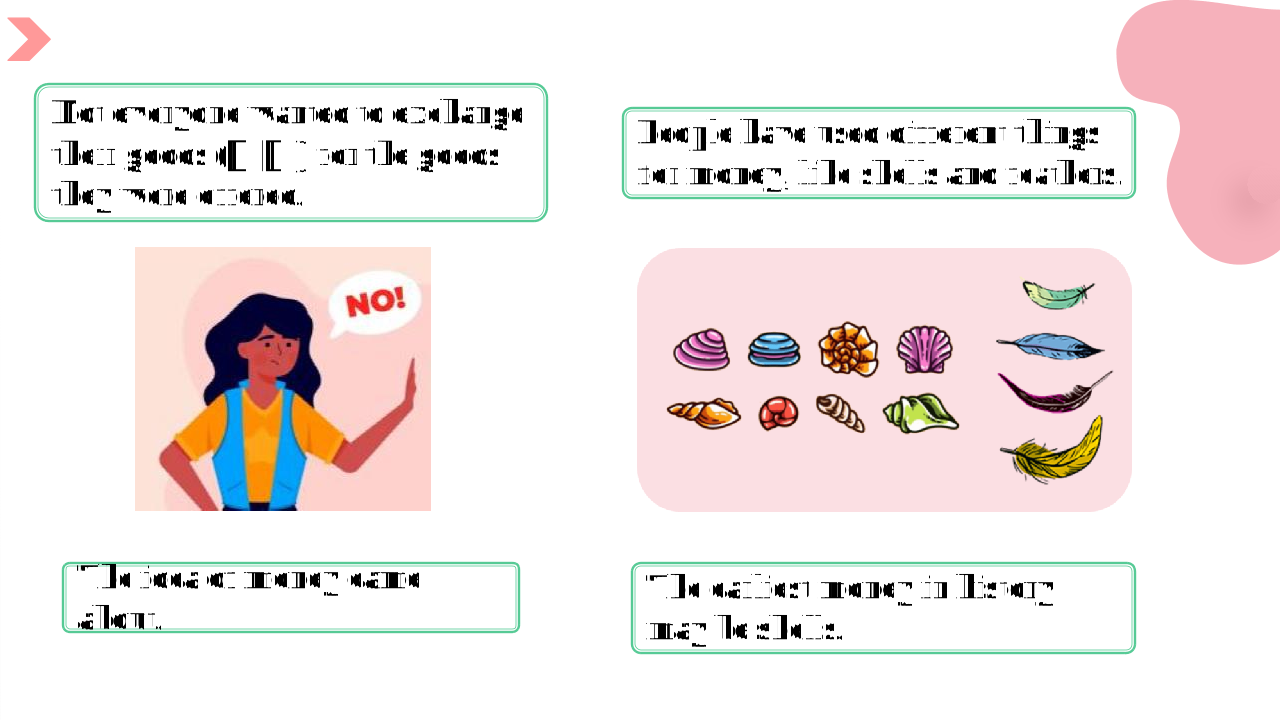
Not everyone wanted to exchange their goods (物品) for the goods they were offered.
The idea of money came about.
People have used different things for money, like shells and feathers.
The earliest money in history may be shells.
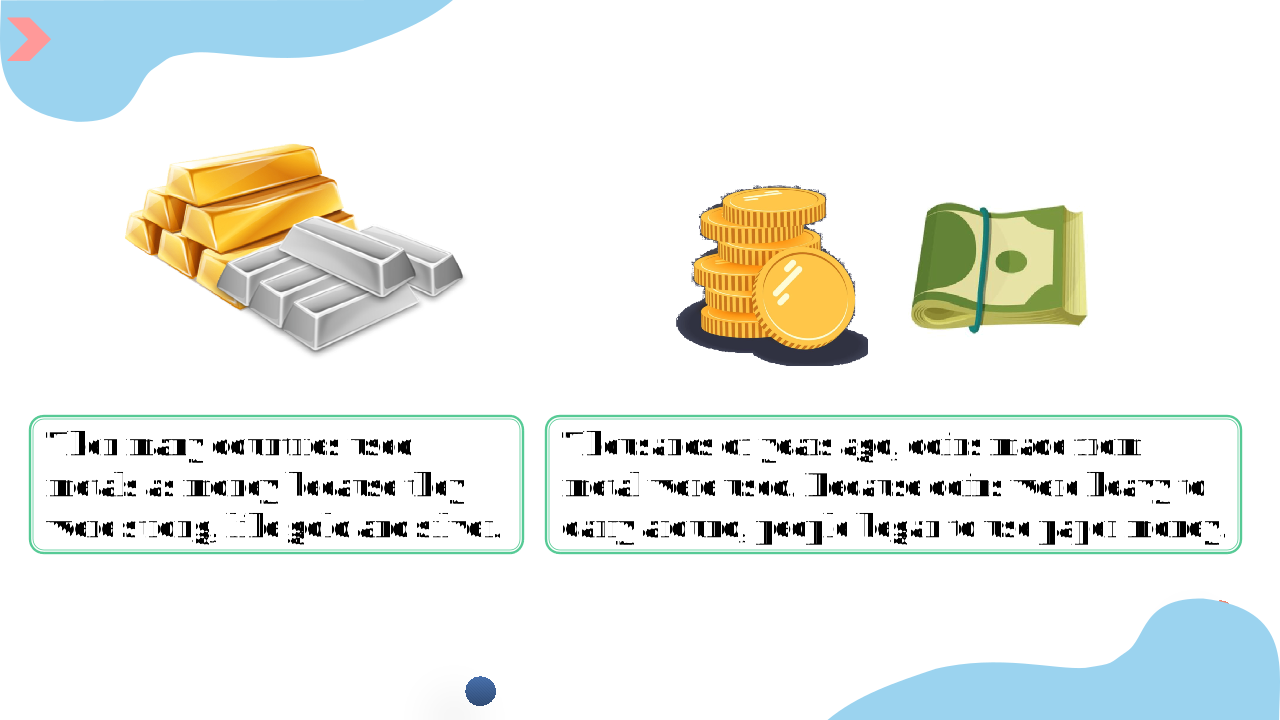
Then many countries used metals as money because they were strong, like gold and silver.
Thousands of years ago, coins made from metal were used. Because coins were heavy to carry around, people began to use paper money.
Look and answer
Daniel wants to learn about different kinds of money in history. Look at the timeline and answer the questions.
How many ways to pay are there in the pictures?
TIP: When reading pictures, look closely at the details in the image and read the text in the speech bubbles to better understand the message.
There are four ways to pay.
1. Use the shells.
2. Use the coins.
3. Use paper money.
4. Pay with electronic cash (电子货币).
What other kinds of money do you know about?
Let’s check
Discuss and answer
Daniel is talking to Millie about a money show.
What will a money show be about?
Time
Place
…
Activities
Listen and complete
Event A show about money
Place Sunshine Museum
Time 1. _________
What to do See 2. ___________ of money from different times, such as shells, coins and 3. ______________
Watch videos to learn 4. ___________ about money
(Example: China is the 5. __________ country in the world to use paper money.)
Listen to a 6. ________ about different kinds of money around the world
Listen to the conversation between Daniel and Millie and complete the table.
Sunday
all kinds
paper money
fun facts
first
talk
Listen and answer
Listen again and answer the questions.
1. Where is the money show?
It’s at Sunshine Museum.
2. What kinds of money will be on show?
Shells, coins and paper money.
3. Which country is the first to use paper money?
China.
4. What is the talk about?
It’s about different kinds of money around the world.
Listen and read.
Daniel: Hi, Millie, do you know there’s a show about money at Sunshine Museum?
Millie: Oh, Really? When is it?
Daniel: It’s on Sunday.
Millie: And what can we see there?
Daniel: We can see all kinds of money from different times, like shells, coins and paper money.
Millie: Sounds great. What else?
Daniel: We can also watch videos to learn fun facts about money? For example, China was the
first country in the world to use paper money.
Millie: Interesting. Are there any other activities?
Daniel: There’s a talk about different kinds of money around the world?
Millie: Sounds fun. I can’t wait to go.
Try to retell
There is a show about money at Sunshine Museum on Sunday. We can see all kinds of money from different times, …
Event A show about money
Place Sunshine Museum
Time Sunday
Activities See all kinds of money, such as shells, coins and paper money
Watch videos to learn fun facts about money
Listen to a talk about different kinds of money around the world
Free talk
1. Do you get lucky money?
2. Who gives you lucky money?
3. How do you usually spend your
lucky money?
Listen to the conversation between Daniel and Millie. Then answer the questions.
Listen and answer
Daniel and Millie are talking about lucky money.
1. When do Daniel and Millie get lucky money?
At the Spring Festival.
2. Who gives Daniel lucky money the most?
His grandparents.
3. Why does Millie’s uncle send her online red packets?
Because he lives far away in Shenzhen.
4. How does Millie spend her lucky money? Why?
She usually saves it because she never knows when she may need it.
Do you think it is necessary to save lucky money? Why or why not?
Listen again and fill in the blanks.
Listen and fill
Daniel and Millie usually get 1. _____________ at the Spring Festival. Daniel’s grandparents gives him 2. __________. Some of Millie’s 3. _________ give her lucky money too. Millie’s uncle sends her 4. ________ red packets because he lives far away. Millie usually 5. _______ her lucky money. Daniel thinks it is a good idea.
lucky money
the most
relatives
online
saves
Millie: Do you usually get lucky money at the Spring Festival?
Daniel: Of course! My grandparents give me the most.
Millie: Same here. Some of my other relatives give me lucky money too. My uncle
lives far away in Shenzhen, so he sometimes sends me online red packets.
Daniel: How do you spend your lucky money?
Millie: I usually save it. You never know when you may need it.
Daniel: Good idea.
“Of course” means “yes”. We use it in a conversation to show something is surely true or correct.
Listen, read and role-play
n. 红包
/ˈrelətɪv/ n. 亲戚
Make a new conversation
Work in pairs to talk about your lucky money. The following questions can help you.
1. Do you usually get lucky money?
2. When do you get it?
3. Who gives it to you?
4. How do you spend your lucky
money? Why?
5. …
Do you usually get lucky money?
Of course.
When do you get it?
At the Spring Festival.
Who gives it to you?
My parents gives me the most. And …
Summary
better understand the message by reading pictures carefully.
talk about my lucky money correctly.
listen effectively.
2
3
1
After learning this lesson,
I can
I get lucky money at …
My grandparents gives me the most.
I save it. You never know …
get the main information of the money show
details in the image
text in the speech bubbles
Homework
1. Interview your best friends about how they spend
their lucky money.
2. Preview Integration D2.
Bye-bye!
Lavf58.28.100
null
57860.203
null
37903.688
$
资源预览图
1

2
3
4
5
6
相关资源
由于学科网是一个信息分享及获取的平台,不确保部分用户上传资料的 来源及知识产权归属。如您发现相关资料侵犯您的合法权益,请联系学科网,我们核实后将及时进行处理。