寒假作业06 常考点和易错点特训(巩固培优)七年级英语新教材外研版
2026-01-12
|
2份
|
31页
|
1210人阅读
|
41人下载
资源信息
| 学段 | 初中 |
|---|---|
| 学科 | 英语 |
| 教材版本 | 初中英语外研版七年级上册 |
| 年级 | 七年级 |
| 章节 | - |
| 类型 | 题集-专项训练 |
| 知识点 | - |
| 使用场景 | 寒暑假-寒假 |
| 学年 | 2026-2027 |
| 地区(省份) | 全国 |
| 地区(市) | - |
| 地区(区县) | - |
| 文件格式 | ZIP |
| 文件大小 | 256 KB |
| 发布时间 | 2026-01-12 |
| 更新时间 | 2026-01-12 |
| 作者 | Luciabc |
| 品牌系列 | 上好课·寒假轻松学 |
| 审核时间 | 2026-01-12 |
| 下载链接 | https://m.zxxk.com/soft/55907912.html |
| 价格 | 3.00储值(1储值=1元) |
| 来源 | 学科网 |
内容正文:
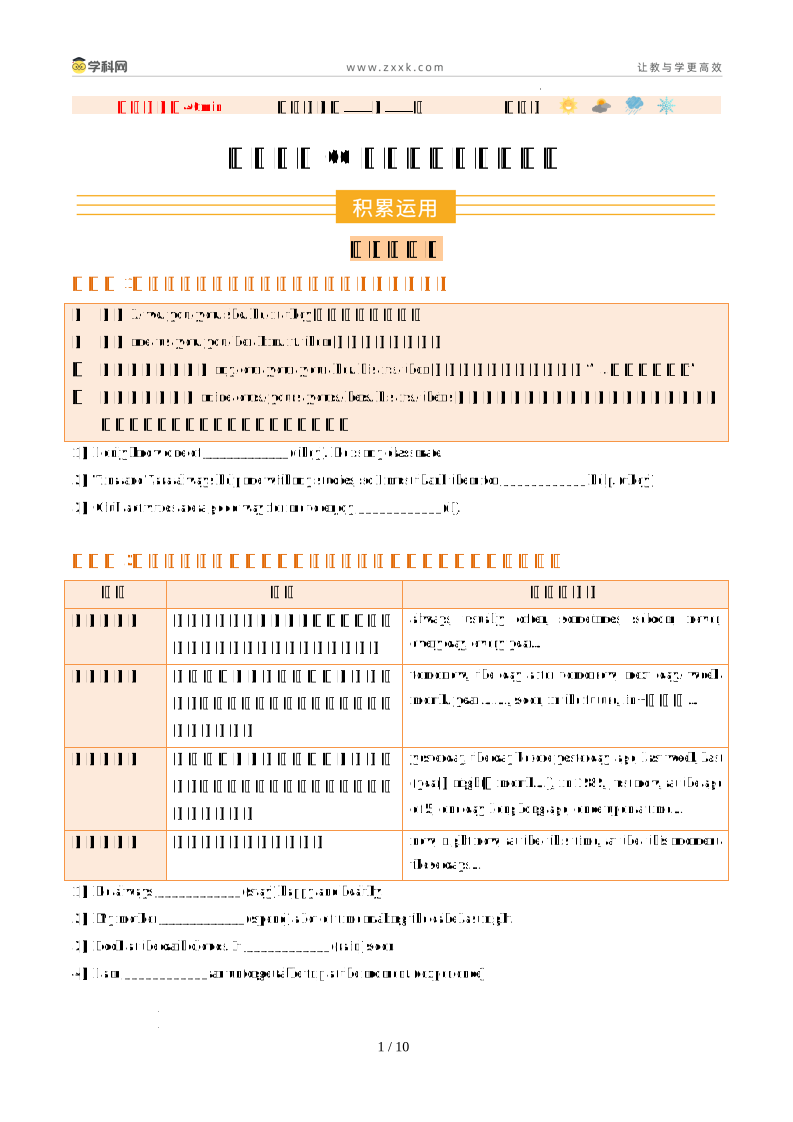
限时练习:40min 完成时间: 月 日 天气:
寒假作业06 常考点和易错点特训
常考点总结
常考点1:人称代词所有格和物主代词反身代词的辨析
· 主格I/ we/ you/ you/ she/ he/ it/ they在句子里做主语;
· 宾格me/ us/ you/ you/ her/ him/ it/ them在句子里做宾语;
· 形容词性物主代词my/ our/ your/ your/ her/ his/ its/ their一般用于名词之前,表示“...的(物品等)”
· 名词性物主代词mine/ ours/ yours/ yours/ hers/ his/ its/ theirs具有独立句法功能,在句子里承担名词能承担的句法功能,可充当主语、宾语及表语
1.I only know one of ____________ (they). He is my classmate.
【答案】them
【解析】句意:我只认识他们中的一个。他是我的同学。they“他们”,人称代词主格,空处位于介词of后面,用宾格形式them。故填them。
2.Tina and Tara always help me with my studies, so I must thank them for ____________ help. (they)
【答案】their
【解析】句意:蒂娜和塔拉总是帮助我学习,所以我必须感谢她们的帮助。they“她们”,根据“help”是名词可知,此处应该用形容词性物主代词their修饰名词。故填their。
3.Club activities are a good way for me to enjoy ____________ (I).
【答案】myself
【解析】句意:社团活动对我来说是一个玩得开心的好方法。enjoy oneself是固定搭配,意为“过得愉快;玩得开心”;主语为I,对应的反身代词是myself,故填myself。
常考点2:一般现在、一般将来、一般过去、现在进行四种时态的辨析
时态
含义
时间标志词
一般现在时
表示通常性、规律性、习惯性、的动作或状态,或是客观事实和真理。
always, usually, often, sometimes, seldom, never, every day, every year…
一般将来时
表示将来某一时间发生的动作或状态,或将来某一时间段内经常发生的动作或状态。
tomorrow, the day after tomorrow, next day/ week/ month/ year ……, soon, in the future, in +时间段…
一般过去时
表示过去某一时间发生的动作或状态,或过去某一时间段内经常发生的动作或状态。
yesterday, the day before yesterday, ago, last week, last (year,night,month…), in 1989, just now, at the age of 5, one day, long long ago, once upon a time…
现在进行时
表达此时此刻正在做的事
now, right now, at the/ this time, at the/ this moment/ these days…
1.He always ____________ (stay) happy and healthy.
【答案】stays
【解析】句意:他总是保持快乐和健康。stay“停留,保持”,由always可知,此处是一般现在时,主语he是第三人称单数形式,谓语用第三人称单数形式。故填stays。
2.My mother ____________ (spend) a lot of time making the cake last night.
【答案】spent
【解析】句意:我妈妈昨晚花了很多时间做这个蛋糕。spend“花费”是动词。由时间状语“last night”可知,句子应用一般过去时,spend的过去式为spent。故填spent。
3.Look at the dark clouds. It ____________ (rain) soon.
【答案】is going to rain
【解析】句意:看那些乌云,很快要下雨了。根据“soon”可知,动作发生在将来,且“dark clouds”是“要下雨”的明显迹象,因此用“be going to+动词原形”结构,表示根据迹象推测的将来动作;主语是It,be动词用is。故填is going to rain。
4.I am ____________ an unforgettable trip at the moment. (experience)
【答案】experiencing
【解析】句意:此刻我正在经历一次难忘的旅行。experience“经历”是动词。由时间状语“at the moment”可知,句子应用现在进行时,结构为“am + 现在分词”。故填experiencing。
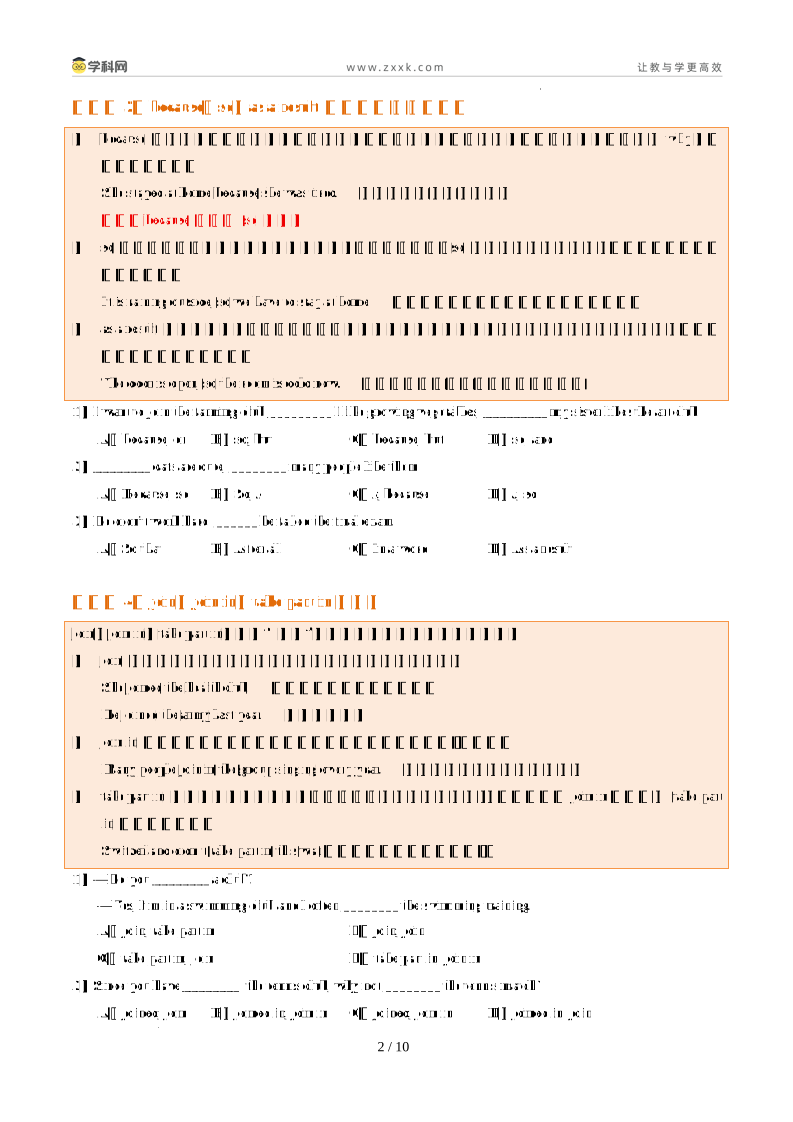
常考点3:because、so、as a result 等连词(组)的用法
· because 是一个从属连词,用于引导原因状语从句,直接引出句子的直接原因,常用于回答why提出的问题。例句:
She stayed at home because she was tired. 她待在家里因为她累了。
※注意because 不能与 so 连用。
· so 作为连词时,连接两个分句表示结果,强调前因后果;so 也可作副词单独使用,但需用逗号与主句隔开。例句:
It is raining outside, so we have to stay at home. 外面在下雨,所以我们不得不待在家里。
· as a result 是副词短语,用于引出结果,需用逗号与前后文分隔,不能直接连接两个完整句子。它通常置于句首或句中。例句:
The door is open, so the room is cold now. 门是开着的,结果房间里现在很冷。
1.I want to join the farming club _________ I like growing vegetables, _________ my sister likes the art club.
A.because; or B.so; but C.because; but D.so; and
【答案】C
【解析】句意:我想加入农业俱乐部,因为我喜欢种蔬菜,但我妹妹喜欢艺术俱乐部。
考查连词辨析。because因为;or或者;so所以;but但是;and和。根据“I want to join the farming club…I like growing vegetables”可知,前后句之间是因果关系,前果后因,第一空应用连词because;根据“I want to join the farming club…my sister likes the art club.”可知,此处表示转折,指的是“但我妹妹喜欢艺术俱乐部”,第二空应用连词but。故选C。
2.________ cats are cute, ________ many people like them
A.Because; so B.So; / C./; because D./; so
【答案】D
【解析】句意:猫很可爱,所以很多人喜欢它们。
考查连词用法。句子表达因果关系,前半部分“猫很可爱”是原因,后半部分“很多人喜欢它们”是结果。英语中,可用“because”引导原因从句,或用“so”连接结果分句,但两者不能同时使用,以避免冗余。选项D正确使用so连接结果,符合语法和逻辑。故选D。
3.He didn’t work hard. ______ he failed the final exam.
A.So that B.After all C.In a word D.As a result
【答案】D
【解析】句意:他没有努力学习。结果他期末考试不及格。So that以便于,after all毕竟,in a word总而言之,as a result结果。根据句意,前一句表示他没有努力学习,后一句表示他期末考试不及格,前后表示因果关系,故用as a result.故选D。
常考点4:join、join in、take part in的辨析
join、join in和take part in都表示“参加”,但它们在语境应用上有所不同。
· join 主要表示加入某个组织、团体或成为其中一员,例如:
She joined the health club. 她加入了一个健身俱乐部。
He joined the army last year. 他去年参军。
· join in 指参加正在进行的具体活动(如游戏、讨论或娱乐),例如:
Many people join in the group singing every year. 每年许多人都参加集体歌唱。
· take part in 强调积极参与某项活动(如会议、运动或社会活动),通常可以和join in互换,但 take part in 更正式,例如:
Switzerland didn’t take part in this war.(瑞士没有参加这次战争。)
1.—Do you ________ a club?
—Yes, I’m in a swimming club and I often ________ the swimming training.
A.join; take part in B.join; join
C.take part in; join D.take part in; join in
【答案】A
【解析】句意:——你加入俱乐部了吗?——是的,我加入了一个游泳俱乐部,而且我经常参加游泳训练。
考查动词和动词短语辨析。join指加入某个组织、团体或俱乐部等,成为其中一员;take part in指参加某项活动或运动,强调参与并起到一定作用。根据语境可知,第一空是问是否加入俱乐部,应该用join;第二空是指参加游泳训练这项活动,应该用take part in。join in通常指参加某种活动,但更侧重于与他人一同进行,此处不如take part in合适。故选A。
2.Since you have ________ the tennis club, why not ________ the tennis match?
A.joined; join B.joined in; join in C.joined; join in D.joined in; join
【答案】C
【解析】句意:既然你已经加入了网球俱乐部,为什么不参加网球比赛呢?
考查动词用法。join加入,后接组织或人;join in参加,后接活动。根据“Since you have...the tennis club, why not...the tennis match?”以及选项可知,第一空应用joined,表示加入了网球俱乐部这个组织;第二空应用join in表示参加网球比赛这一活动。故选C。
常考点5:with和without的句法功能
with 和 without 是英语中常用的介词,两者互为反义词。
· with 的基本用法:
· 表示“和…一起”,例如:She always walks to school with her dog. 她总是和狗一起步行上学。
· 表示使用工具或手段,翻译为“用…”,例如:We cut the cake with a knife. 我们用刀切蛋糕。
· 用于描述人或事物的带有某种特征的状态,例如:The boy with red hair is my brother. 那个红头发的男孩是我兄弟。
· 表示拥有或包含:说明主体具备某种物品或品质,例如:The house with a big garden is her home. 那栋带大花园的房子是她家。
· without 的基本用法:
· 表示缺乏或没有,通常翻译成“没有”例如:She left without saying goodbye. 她没说再见就离开了。
· 表示条件或假设,例如:Without your help, we couldn't have finished on time. 若没有你的帮助,我们无法按时完成。
· 表示不使用某工具或方法,例如:The cookies were made without sugar. 这些饼干是无糖制作的。
1.你想用你的零花钱做什么?
What do you want to ____________ ____________ your pocket money?
【答案】 do with
【解析】根据中英文对比,可知此处缺“用……做什么”。“do with”做什么,固定表达,且“want to”后接动词原形。故填do;with。
2.没有爱的生活就像没有阳光的日子。
A life ____________ is like a ____________ day.
【答案】 without love sunless
【解析】without“没有”,后接名词;love“爱”,抽象名词;sunless表示“无阳光的,阳光照不到的”,形容词作定语,修饰名词day。故填without love;sunless。
常考点6:advice/ advise/ suggest/ suggestion的用法
词性
例句
advise
v. 建议
He advised us to leave early. 他建议我们早点离开。
advice
n.(不可数) 建议
Please give me some advice. 请给我一些建议。
suggest
v. 建议
They suggested waiting a bit longer. 他们建议再等一会儿。
suggestion
n.(可数) 建议
We need more suggestions. 我们需要更多的建议。
1.Tom always gives me some ____________ (advise).
【答案】advice
【解析】句意:汤姆总是给我一些建议。some修饰可数名词复数或不可数名词。advice“建议”,不可数名词,符合语境。故填advice。
2.Our teacher gave us some useful ____________ (suggest) on how to improve our English writing.
【答案】suggestions
【解析】句意:我们的老师给了我们一些关于如何提高英语写作水平的有用建议。根“useful”可知,此处需要填名词,suggest“建议”,动词,其对应的名词形式是suggestion(可数名词),结合“some”,此处用可数名词复数,故填suggestions。
常考点7:across/ cross的用法
词性
例句
across
prep. 穿过
adv. 在对面,从一面到另一面
A big tree fell across the river. 一棵大树横贯河流倒下。
Can you swim across the river? 你能游到河的对岸吗?
cross
v. 穿过
n. 十字,十字路口
We cross the bridge to go to school. 我们每天过桥去上学。
The Red Cross helps lots of people every year. 红十字会每年帮助很多人。
1.Are you sure that the cat can go ________ the hole (洞) and run ________ the road?
A.across; through B.through; across
C.cross; through D.through; cross
【答案】B
【解析】句意:你确定这只猫能穿过洞然后跑过马路吗?
考查介词辨析。across从表面穿过,介词;through从内部穿过,介词;cross穿过,动词。句子中已有谓语动词“go”和“run”,两个空格处都需填介词,第一个空,“the hole”表示洞,猫穿过洞是从内部空间穿过,应用介词through;第二个空,“the road”表示道路,跑过马路是从路面表面穿过,应用介词across。故选B。
2.—Can a plane fly ________ the Atlantic Ocean?
—Yes, but it needs to go ________ the clouds for hours.
A.through; through B.across; across
C.through; across D.across; through
【答案】D
【解析】句意:——飞机能飞越大西洋吗?——是的,但它需要穿过云层几个小时。考查介词辨析。across强调从物体表面“横穿、穿过”;through强调从物体内部“穿过、通过”。根据语境可知,第一空描述飞机“横穿”大西洋,是从表面穿过,故用across;第二空描述飞机“穿过”云层,是从内部穿过,故用through。故选D。
易错点总结
易错点1:形容词和副词的用法
· 形容词是用于描述人或事物的性质、特征、属性及状态的一类词语,在句子中最常见的功能是充当表语、定语或补语,主要用来修饰名词,常位于名词之前和不定代词之后,以及系动词之后
· 副词用于表示行为或状态的特征,常在句中充当状语,主要用以修饰动词(动作),还可以用来修饰形容词、副词或全句,位置可以位于句首、句中和句末。
1.Tom can learn a lot of ____________ (use) things in his biology class.
【答案】useful
【解析】句意:汤姆在生物课上能学到很多有用的东西。use“使用”,此处需要形容词修饰名词“things”,use的形容词形式是useful“有用的”。故填useful。
2.What the writer says in his book shows ____________ (exact) how I feel.
【答案】exactly
【解析】句意:这位作者在他的书中所说的完全符合我的感受。此空修饰动词“shows”,应填副词exactly“完全”,故填exactly。
易错点2:make sb do sth及其类似结构
· make sb do sth “让某人做某事”,是不定式必须to的结构,类似的用法的使役动词还有
① let sb do sth
② have sb do sth
· 不定式必须省略to的结构还有:see/ hear/ feel/ notice sb to do sth
Daniel likes listening to music because it makes him ____________ (feel) great.
【答案】feel
【解析】句意:丹尼尔喜欢听音乐,因为这让他感觉很好。make sb. do sth.“使某人做某事”,固定短语。故填feel。
易错点3:常考的几个情态动词的用法
情态动词
功能
用法
can
1) 表示具备某种能力
2) 表示请求
3) 表示推测,意思为“有…的可能性”
1) can表示现在能力;could表示过去能力.可用be able to代替。
2) 当请求时,could 的语气更委婉,回答时仍用can。
could
may
1) 表示委婉的请求
2) 表示推测意思为有可能的“也许”
1) 表示请求时用might语气更委婉。
2) 表示允许时用may,表示“可以”而不用might。
might
must
1) 表示“必须”
2) 表示推测时意思为“肯定是”
1) must多表主观必须遵守的如规则或法律,客观上的必须用have to
2) mustn’t “禁止”,否定用needn’t或don’t have to
3) must表推测只用于肯定句。在否定句或疑问句中用can和could。
1.Frank ________ be interested in Chinese folk music, for he has spent 20 years studying it.
A.must B.mustn’t C.could D.couldn’t
【答案】A
【解析】句意:Frank一定对中国的民间音乐感兴趣,因为他已经花了20年时间研究它。
考查情态动词辨析。must一定;mustn’t禁止;could可以;couldn’t不能。根据“for he has spent 20 years studying it”可知他已经花了20年时间研究中国的民间音乐,可见他一定对中国的民间音乐感兴趣。故选A。
2.—My friend Alice _________ speak English well.
—Wow, she is so great.
A.can’t B.mustn’t C.can D.must
【答案】C
【解析】句意:——我朋友Alice英语说得很好。——哇,她太棒了。
考查情态动词辨析。can’t不能;mustn’t禁止;can能;must必须。根据答语“Wow, she is so great.”可知,Alice英语说得很好,表示能力用can。故选C。
3.—________ I borrow your pen?
—Sure, here you are.
A.Must B.Should C.May D.Need
【答案】C
【解析】句意:——我可以借你的钢笔吗?——当然,给你。
考查情态动词辨析。Must必须;Should应该;May可以;Need需要。根据答句“Sure, here you are.”可知,问句是在提出请求,询问是否可以借钢笔。May用于表示请求或允许,符合语境。而Must表示必须,Should表示应该,Need表示需要,均不符合此处提出请求的语境。故选C。
易错点4:may be和maybe的辨析
· may be是情态动词may+动词原形be的词组,翻译成“可能是”。例句:
He may be a teacher. 他可能是一名老师。
· maybe是一个副词,同义词为perhaps,翻译成“也许”。例句:
Maybe she’ll come this afternoon. 她可能今天下午来。
· may be和maybe可以相互转换,例如:
He may be at school. = Maybe he is at school. 他或许在学校。
· You may be right. = Maybe you are right. 你或许是对的。
The young girl in a clean coat ________ work as a nurse. Look! She is walking to the hospital. ________ she is on the way to work.
A.may be; Maybe B.maybe; May be C.may; Maybe D.maybe; May
【答案】C
【解析】句意:那个穿着干净外套的年轻女孩或许是一名护士。看!她正朝着医院走去。说不定她是在上班的路上呢。
考查词汇辨析。may可能,情态动词,后接动词原形;may be可能是,动词短语,后接名词或形容词;maybe或许,副词,常用于句首修饰整个句子。第一个空后接动词原形“work”,需用情态动词“may”表示可能性;第二个空位于句首,后接完整句子“she is on the way to work”,需用副词“Maybe”修饰整个句子,表示推测。故选C。
易错点5:forget to do和forget doing的用法
· forget to do sth. 表示“忘记去做某事”,强调事情还没做。例句:
She forgot to turn off the light. 她忘记关灯。(灯还没关)
· forget doing sth. 表示“忘记已做过某事”,强调动作已完成但不记得了。例句:
He forgot locking the door. 他忘记已锁过门。(实际上锁了但忘了)
· 同理remember to do 表示记得要去做某事(事情还没做),remember doing表示记得做过某事(事情已经完成)
1.Don’t forget ____________ (say) thanks when other people help you.
【答案】to say
【解析】句意:当别人帮助你的时候,不要忘记说谢谢。根据“Don’t forget… (say) thanks when other people help you.”可知,这里考查forget to do sth.,表示“忘记要做某事”,此处需要用动词不定式形式,to say符合语境,指不要忘记去做“说谢谢”这件事。故填to say。
2.I’ll never forget ____________ (hear) this piece of music for the first time.
【答案】hearing
【解析】句意:我永远不会忘记第一次听到这首音乐的情景。“forget doing sth.”是固定搭配,意为“忘记做过某事(已做过)”,“hear”的动名词形式是“hearing”,故填hearing。
3.She remembered ____________ (meet) him at the party last year.
【答案】meeting
【解析】句意:她记得去年在派对上见过他。根据“She remembered…him at the party last year.” 以及“meet” 可知,此处考查“remember doing sth.”与 “remember to do sth.” 的辨析。“remember doing sth.”表示“记得做过某事”,而 “remember to do sth.” 表示“记得要去做某事”。句中时间状语 “last year”表明“见面”是过去已发生的动作,强调动作已经发生,因此需用动名词形式。故填meeting。
4.—Don’t forget to bring your exercise books here.
—I won’t. I must remember ____________ (bring) them here.
【答案】to bring
【解析】句意:——别忘了把你的练习本带来这里。——我不会的。我一定记得把它们带到这儿。“remember to do sth”表示“记得去做某事(事情尚未做)”;“remember doing sth”表示“记得做过某事(事情已完成)”。根据题干可知,此处语境是“提醒对方记得带练习册(还没带)”。故填to bring。
三层必刷:巩固提升+能力培优+创新题型
一、单项选择
1.Jack didn’t have any friends in the new city, _______ he felt very lonely.
A.because B.but C.so D.or
【答案】C
【解析】句意:杰克在这个新城市里没有任何朋友,所以他感觉非常孤独。
考查连词辨析。because因为;but但是;so所以;or或者。根据“Jack didn’t have any friends in the new city”及“he felt very lonely.”可知,他没有朋友所以感觉孤独,前后是因果关系,后句是前句的结果,“so”用于引出结果,符合前因后果的逻辑。故选C。
2.—Tom doesn’t come to the chess club today, why?
— ________ he is very busy, ________ he can’t come here.
A.So; / B.Because; so C.Because; / D.So; because
【答案】C
【解析】句意:——汤姆今天没来国际象棋俱乐部,为什么? ——因为他很忙,他不能来这里。
考查连词的用法。so所以,后接结果;because因为,后接原因。根据句意,第一个空后接的是原因,第二个空后接的是结果。而在因为表达中,“because”和“so”不能同时使用。故选C。
3.—We will ________ Kate’s birthday party. Would you like ________ us?
—Yes, I’d love to.
A.take part in; to join B.join; take part in
C.take part in; join D.join; to take part in
【答案】A
【解析】句意:——我们将参加凯特的生日聚会。你想加入我们吗?——是的,我想去。
考查动词和动词短语辨析以及不定式用法。take part in参加,通常指参加群众性活动、会议、晚会、聚会等,并在其中起一定作用;join加入,通常指加入某个组织、团体、党派等,成为其中一员,也可用于参加某种活动,但更侧重于成为活动中的一员。此处是参加生日聚会,用“take part in”更合适,且will后接动词原形,所以第一个空填“take part in”;第二个空,“would like to do sth.”是固定搭配,意为“想要做某事”,所以此处用“to join”。故选A。
4.—Would you like ________ our game?
—Of course. I’d like to.
A.taking part in B.to take part in C.joining D.to join
【答案】B
【解析】句意:——你愿意参加我们的比赛吗?——当然。我很乐意。
考查非谓语动词和动词短语。take part in指参与某项活动或比赛;join指加入某个团体、队伍成为其一员。根据“our game”可知,此处表示参加比赛,应该用take part in;would like to do sth.意为“想要做某事”,动词短语。故选B。
5.The teacher gives us ________ on how to learn English well.
A.an advice B.some advices C.some advice D.a advice
【答案】C
【解析】句意:老师给我们一些关于如何学好英语的建议。
考查不可数名词advice的用法。“advice”表示“建议”,是不可数名词,没有复数形式,也不能用不定冠词a或an修饰。故选C。
6.We don’t know how to prevent the flu. Shall we ask Doctor Wang Hai for ________?
A.some suggestion B.an advice C.some advice D.some advices
【答案】C
【解析】句意:我们不知道如何预防流感。我们要不要向王海医生征求一些建议?
考查名词的数。some suggestion错误表达;an advice错误表达;some advice一些建议;some advices错误表达。advice是不可数名词,没有单复数,suggestion是可数名词,被some修饰应用复数,故选C。
7.There is a bridge ________ the river. Be careful when you walk ________ it.
A.across; over B.over; cross C.cross; across D.over; across
【答案】D
【解析】意:河上有一座桥。当你走过桥时要小心。
考查介词用法。across穿过,介词;over在……上方;cross穿过,动词。根据“There is a bridge… the river.”可知,桥在河面之上,应该用介词over;根据“Be careful when you walk… it.”可知,走过桥应该用介词across。故选D。
8.The students go on a ropeway ________ the river to school.
A.cross B.across C.to cross D.crossing
【答案】C
【解析】句意:学生们乘坐索道过河去上学。
考查动词不定式作目的状语。cross穿过、越过,动词原形;across穿过、横穿,介词;to cross穿过、越过,动词不定式。根据“The students go on a ropeway...the river to school.”可知,句中表述学生们乘坐索道的“目的是过河”去上学。此处使用动词不定式“to cross”,在句中作目的状语,表示为了上学而过河,故选C。
9.Tom is ________. He doesn’t want to speak in front of a lot of people.
A.polite B.smart C.slim D.shy
【答案】D
【解析】句意:汤姆很害羞。他不想在很多人面前讲话。
考查形容词辨析。polite有礼貌的;smart聪明的;slim苗条的;shy害羞的。根据后句“He doesn’t want to speak in front of a lot of people.”可知,描述不愿在公众场合发言的行为,这体现了“害羞”的特征。故选D。
10.Playing on the street is too ________. We shouldn’t do that.
A.exciting B.creative C.dangerous D.important
【答案】C
【解析】句意:在街上玩耍太危险了,我们不该这么做。
考查形容词辨析。exciting令人兴奋的;creative有创造力的;dangerous危险的;important重要的。根据“Playing on the street”可知,在街上玩耍是危险的,用dangerous。故选C。
11.This girl can play the piano really ________.
A.good B.well C.fine D.nice
【答案】B
【解析】句意:这个女孩钢琴弹得真的很好。
考查副词用法。good好的,形容词;well好(副词),健康的(形容词);fine好的,形容词;nice好的,形容词。根据句子结构,空格处修饰动词“play”,因此必须用副词形式,表示钢琴弹得好,well符合。故选B。
12.He should eat any snacks as ________ as possible.
A.quietly B.quiet C.quieter D.quietest
【答案】A
【解析】句意:他应该尽可能安静地吃零食。
考查副词用法。quietly安静地,副词;quiet安静的,形容词;quieter更安静的,比较级;quietest最安静的,最高级。根据“as...as possible”结构修饰动词“eat”,需用副词原级形式表示方式。故选A。
13.________ you show me the way to the zoo? I’m new here.
A.Can B.Must C.Need D.Shall
【答案】A
【解析】句意:你能告诉我去动物园的路吗?我是新来的。
考查情态动词。Can能;Must必须;Need需要;Shall将。根据“... you show me the way to the zoo”可知,此处是礼貌地请求对方帮助指路,用Can表示。故选A。
14.—______ I use your dictionary? I left mine at home.
—Sure, here you are.
A.Must B.Should C.May D.Need
【答案】C
【解析】句意:——我可以用你的字典吗?我把我的忘在家里了。——当然,给你。
考查情态动词辨析。Must必须;Should应该;May可以;Need需要。根据语境,说话者是在礼貌地请求使用字典的许可,“May”常用于正式或礼貌的请求中,符合情境。故选C。
15.You ________ play with fire. It’s dangerous.
A.mustn’t B.needn’t C.can D.may
【答案】A
【解析】句意:你不许玩火。这很危险。
考查情态动词的用法。mustn’t禁止;needn’t不必;can可以;may可能,可以。根据“It’s dangerous.”可知,玩火是危险的,应表示禁止,故选A。
二、用所给词适当形式填空
1.This is my pencil. Where is ____________ (you), Kitty?
【答案】yours
【解析】句意:这是我的铅笔。你的在哪里,Kitty?you“你”,主格/宾格,根据“Where is...Kitty?”可知,此处指你的铅笔,应用名词性物主代词,you的名词性物主代词为yours。故填yours。
2.The things are difficult, so I can’t finish ____________ (they) on time.
【答案】them
【解析】句意:这些事情很难,所以我没法按时完成它们。括号内的“they”是人称代词主格形式,此处作及物动词finish的宾语,需使用其宾格形式;they的宾格为them。故填them。
3.The park is very beautiful. We will enjoy ____________ (our) there.
【答案】ourselves
【解析】句意:这个公园非常漂亮。我们会在那里玩得很开心。enjoy oneself“玩得开心”,是固定搭配,此处用反身代词ourselves。故填ourselves。
4.She ____________ (like) music because it’s relaxing.
【答案】likes
【解析】句意:她喜欢音乐,因为它令人放松。主语是第三人称单数“She”,根据“because it’s relaxing”可知时态为一般现在时,因此所给词“like”需变为第三人称单数形式“likes”,在句中作谓语。故填likes。
5.She usually ____________ newspapers in the morning, but she ____________ yesterday. (read)
【答案】 reads read
【解析】句意:她通常在早上看报纸,但她昨天看了报纸。 read动词,“阅读”, ①处usually是一般现在时的标志词,主语She是第三人称单数,谓语动词需用第三人称单数形式,read的第三人称单数为reads; ②处yesterday是一般过去时的标志词,read的过去式为read。 故填reads;read。
6.Students ____________ (study) on the Internet. They won’t use books.
【答案】will study
【解析】句意:学生们将会在网上学习,他们不会使用书本。study“学习”,动词;根据后句“They won’t use books”可知前句也用一般将来时,其结构为“will+动词原形”。故填will study。
7.Mr Black usually ____________ TV at night. Now he ____________ a basketball game on TV. (watch)
【答案】 watches is watching
【解析】句意:布莱克先生通常晚上看电视。现在他正在电视上看篮球赛。watch“看”,第一空根据“usually”可知,用一般现在时,主语“Mr Black”是第三人称单数,谓语动词watch要用第三人称单数形式watches;第二空根据“Now”可知,用现在进行时,其结构为“be动词 + 动词的现在分词”,主语“he”对应的be动词是is,watch的现在分词是watching。故填watches;is watching。
8.My parents suggested ____________ (share) it with my classmates.
【答案】sharing
【解析】句意:我的父母建议和我的同学们分享它。share“分享”,suggest doing sth.“建议做某事”,因此填动名词。故填sharing。
9.How useful the ____________ (suggest) Mr Green offered us are!
【答案】suggestions
【解析】句意:格林先生给我们的建议多么有用啊!“the”后需接名词,“suggest”是动词,其名词形式是“suggestion”;根据句中“are”可知,主语应为复数,“suggestion”的复数形式是“suggestions”,在句中作主语。故填suggestions。
10.The doctor advises my father ____________ (run) every day.
【答案】to run
【解析】句意:医生建议我父亲每天跑步。run“跑步”,advise sb. to do sth.“建议某人做某事”,固定用法。故填to run。
11.Could you give me some ____________ (advise) on how to write the report?
【答案】advice
【解析】句意:你能就如何写报告给我一些建议吗?some后接名词,advise为动词,其名词形式为 advice(不可数),故填 advice。
12.—Is your maths teacher in the office?
—I’m not sure. She is ____________ (probable) in the classroom.
【答案】probably
【解析】句意:—— 你的数学老师在办公室吗?—— 我不确定。她可能在教室里。此处需要副词修饰整个句子(表示“可能”的状态),“probable(可能的,形容词)” 对应的副词形式是 “probably”,符合语法和语境要求。故填probably。
13.I ____________ (usual) walk to school with my friends in the morning.
【答案】usually
【解析】句意:早上我通常和我的朋友们步行去上学。根据“I…walk to school with my friends in the morning.”可知,这里需要一个修饰动词walk“步行”的副词,usual是形容词,其副词形式usually符合语境,用于说明“和朋友步行上学”这一动作发生的频率是“通常”。故填usually。
14.We can’t go on holiday because of the ____________ (wind) weather.
【答案】windy
【解析】句意:由于有风的天气,我们不能去度假。此处需用形容词修饰名词weather,wind的形容词形式是windy“有风的”。故填windy。
15.This is an ____________ (amaze) trip. Do you like it?
【答案】amazing
【解析】句意:这是一次令人惊叹的旅行。你喜欢吗?此处修饰名词trip,需用形容词;amaze对应的形容词amazing表示“令人惊叹的”,修饰事物。故填amazing。
一、完形填空
A
These days, Jack keeps thinking about a problem—what can he do with (处理) the hawk (鹰)—Falco?
“I can’t take him into the 1 ” he thinks. “My mum even doesn’t like cats or dogs. But I can’t 2 him outside all night.”
Then, he has a(n) 3 . He opens the gate into the back yard. There is a small house in it. He 4 goes inside and puts the hawk down on the floor with his T-shirt and closes the door behind him.
“Is it all right? Is it hungry?” Jack can’t 5 the whole night.
Next morning, after Jack 6 he quickly runs towards the back yard and comes to the small house. The house is warm but 7 inside.
It takes Jack a minute to see his T-shirt on the floor. But Falco isn’t on it. Where is it? It doesn’t take Jack too long to 8 him: The hawk is sitting in a corner. Its eyes are open, but they aren’t bright now. They are like clouds on a grey day.
Jack puts a cup of water in front of the hawk. Then he looks at the hawk. He remembers him flying freely in the blue 9 . But now he can’t fly any more. Jack wants to help him 10 again. But how?
1.A.house B.garden C.lab D.school
2.A.leave B.forget C.carry D.treat
3.A.secret B.surprise C.task D.idea
4.A.quickly B.madly C.easily D.suddenly
5.A.breathe B.wait C.move D.sleep
6.A.takes off B.wakes up C.knocks around D.looks around
7.A.old B.dirty C.dry D.dark
8.A.follow B.find C.protect D.save
9.A.room B.building C.sky D.forest
10.A.move B.jump C.run D.fly
【答案】
1.A 2.A 3.D 4.A 5.D 6.B 7.D 8.B 9.C 10.D
【解析】本文叙述了Jack捡到鹰Falco后,因无法将它带回家、又不忍心留它在户外过夜,于是将它安置在后院小屋里,整晚牵挂,第二天发现鹰状态不佳,进而想帮助鹰重新飞翔的故事。
1.句意:“我不能把它带进屋子,” 他心想。house房子;garden花园;lab实验室;school学校。根据后句“My mum even doesn’t like cats or dogs.”可知,妈妈连猫和狗都不喜欢,由此可推断Jack不能把鹰带进的地方是家里。故选A。
2.句意:但是我不能把它整晚留在外面。leave留下;forget忘记;carry携带;treat对待。根据前文“‘I can’t take him into the…’ he thinks.”提到不能带回家,以及转折词But可知,此处表达的是不忍心将鹰整晚留在户外,leave符合“留下”的语义。故选A。
3.句意:然后,他有了一个主意。secret秘密;surprise惊喜;task任务;idea主意。根据后句“He opens the gate into the back yard.”可知,Jack接下来有了具体的行动,说明他想到了应对的办法,即有了一个主意,idea符合语境。故选D。
4.句意:他快速走进屋里,用自己的T恤把鹰放在地上,然后随手关上了门。 quickly快速地;madly疯狂地;easily容易地;suddenly突然地。根据前文Jack纠结如何安置鹰,想到办法后应是迅速行动,quickly能体现他当时急切安置鹰的状态。故选A。
5.句意:Jack整晚都睡不着。 breathe呼吸;wait等待;move移动;sleep睡觉。根据前文“Is it all right? Is it hungry?”可知,Jack一直担心鹰的状况,由此可推断他整晚都无法入睡,sleep符合语义。故选D。
6.句意:第二天早上,Jack醒来后,立刻跑向后院,来到小木屋前。 takes off起飞、脱掉;wakes up醒来;knocks around闲逛;looks around环顾四周。根据时间状语“Next morning”可知,此处应是指Jack早上醒来,wakes up符合时间逻辑和语境。故选B。
7.句意:小屋里很暖和,但里面很暗。 old旧的;dirty脏的;dry干燥的;dark黑暗的。根据后句“It takes Jack a minute to see his T-shirt on the floor.”可知,Jack花了一分钟才看到地上的T恤,说明屋里光线不好,比较暗,dark符合语境。故选D。
8.句意:Jack没多久就找到了它。 follow跟随;find找到;protect保护;save拯救。根据前文提到“But Falco isn’t on it. Where is it?”,即Jack找不到鹰了,后文说明鹰在角落里,由此可知此处是指Jack找到了鹰,find符合语义。故选B。
9.句意:他记得它在蓝色的天空中自由飞翔。 room房间;building建筑物;sky天空;forest森林。根据“flying freely”可知,鹰自由飞翔的地方应该是天空,sky符合常识和语境。故选C。
10.句意:Jack想帮助它再次飞翔。 move移动;jump跳跃;run奔跑;fly飞翔。根据前文“But now he can’t fly any more.”可知,鹰现在不能飞了,由此可推断Jack想帮助它重新飞翔,fly与前文形成呼应。故选D。
B
Tom is 5. He only eats red foods like apples, strawberries and 1 .
Today is special. “We’ll have a family 2 ,” says Tom’s dad. “Red foods are good, but let’s use colorful foods to make a healthy ‘rainbow’ today,” Dad says.
Unhappy with new foods but loving rainbows, Tom decides to 3 .
Before cooking, Dad asks, “ 4 do you want to eat tonight?”
Grandma says, “We 5 blueberries and eggplants from our garden. We grow them ourselves. Eating purple food can 6 us stay healthy.”
“I want orange foods like carrots,” says Mom. “I 7 at the office every day. Orange foods are good for my eyes.”
“May I have green vegetables?” asks Sister Anna. “I love dancing. Teachers 8 say green food helps us stay strong.”
Tom tells his dad, “I love red food best. But I’ll eat cherries and red peppers. Our teacher says 9 food helps remember things better. Maybe it’ll help my math.”
That evening, Dad makes a big meal. The 10 of the foods are like a rainbow. Everyone enjoys it.
1.A.bananas B.pears C.tomatoes D.cabbages
2.A.breakfast B.lunch C.dinner D.teatime
3.A.have a look B.have a try C.have a drink D.have a talk
4.A.How B.When C.Where D.What
5.A.bring B.take C.buy D.sell
6.A.need B.ask C.help D.tell
7.A.cook B.think C.call D.work
8.A.sometimes B.often C.never D.always
9.A.blue B.white C.brown D.red
10.A.colors B.prices C.ideas D.pictures
【答案】
1.C 2.C 3.B 4.D 5.A 6.C 7.D 8.B 9.D 10.A
【解析】本文主要讲述了汤姆一家准备吃一顿“彩虹餐”,家人各自表达了对不同颜色食物的喜好和原因,晚餐时爸爸做了一顿色彩丰富的饭菜,大家都很享受。
1.句意:他只吃红色的食物,像苹果、草莓和西红柿。bananas香蕉;pears梨;tomatoes西红柿;cabbages卷心菜。根据“He only eats red foods like apples, strawberries and...”可知,苹果和草莓都是红色的,西红柿也是红色的,符合语境。故选C。
2.句意:“我们要吃一顿家庭晚餐,”汤姆的爸爸说。breakfast早餐;lunch午餐;dinner晚餐;teatime茶点时间。根据“...do you want to eat tonight?”可知,此处指晚餐。故选C。
3.句意:对新食物不满意,但喜欢彩虹,汤姆决定试一试。have a look看一看;have a try试一试;have a drink喝一杯;have a talk谈一谈。根据“Unhappy with new foods but loving rainbows, Tom decides to...”可知,汤姆对新食物不满意,但喜欢彩虹,所以决定尝试一下。故选B。
4.句意:今晚你想吃什么?How怎样;When什么时候;Where哪里;What什么。根据“...do you want to eat tonight?”及下文家人各自表达了对食物的喜好可知,此处是询问今晚想吃什么。故选D。
5.句意:我们从花园里带来了蓝莓和茄子。bring带来;take带走;buy买;sell卖。根据“...blueberries and eggplants from our garden.”可知,是从花园里带来蓝莓和茄子。故选A。
6.句意:吃紫色的食物可以帮助我们保持健康。need需要;ask问;help帮助;tell告诉。根据“Eating purple food can...us stay healthy.”可知,吃紫色的食物可以帮助我们保持健康。故选C。
7.句意:我每天在办公室工作。cook做饭;think思考;call打电话;work工作。根据“I...at the office every day.”可知,此处指在办公室工作。故选D。
8.句意:老师们经常说绿色食物有助于我们保持强壮。sometimes有时;often经常;never从不;always总是。根据“Teachers...say green food helps us stay strong.”及常识可知,老师们经常说绿色食物有助于保持强壮。故选B。
9.句意:我们的老师说红色食物有助于更好地记住事情。blue蓝色的;white白色的;brown棕色的;red红色的。根据“But I’ll eat cherries and red peppers. Our teacher says...food helps remember things better.”可知,樱桃和红辣椒都是红色的,所以此处指红色食物。故选D。
10.句意:食物的颜色像彩虹一样。colors颜色;prices价格;ideas想法;pictures图片。根据“The...of the foods are like a rainbow.”及上文家人各自表达了对不同颜色食物的喜好可知,此处指食物的颜色像彩虹一样。故选A。
二、阅读理解
Hello, boys and girls! Do you like to make new friends at school? Yes? Here’s some of my advice.
First, don’t be shy! 1 Smile and say, “Hello! What’s your name?” If you didn’t hear the name clearly, try, “Sorry, can you repeat that for me, please?” Then give your name and say, “Nice to meet you!” It’s really as easy as that! It’s important to get people’s names right. If you get them wrong, they might feel sad!
Second, 2 Ask about school, sport, music, and more! As you listen, think of more questions to ask. So when your classmate stops talking, you can jump in and ask another question! But remember, 3
Last, don’t forget to share! 4 Then your new friends can get to know you too! Soon enough, you’ll be the best of friends!
I hope you find my advice helpful! Now go make some new friends!
A.Try to talk to all classmates and smile.
B.Remember to share something interesting about yourself.
C.Think of more questions to ask while listening.
D.be a good listener before asking.
E.ask questions!
【答案】1.A 2.E 3.D 4.B
【解析】本文主要介绍了在学校结交新朋友的建议。
1.根据“don’t be shy!”及“Smile and say, “Hello!”可知,不要害羞,微笑打招呼,选项A“试着和所有同学说话,微笑。 ”符合语境。故选A。
2.根据“Ask about school, sport, music, and more! As you listen, think of more questions to ask.”可知,此处提到多问问题,选项E“问问题!”符合语境。故选E。
3.根据“As you listen, think of more questions to ask.”可知,此处提到了要听,选项D“在提问之前,先做一个好的倾听者。”符合语境。故选D。
4.根据“don’t forget to share!”可知,不要忘记分享,选项B“记得分享一些关于你自己的有趣的事情。”符合语境。故选B。
语篇填空
A
Today was 1 amazing day. There 2 (be) a total solar eclipse (日全食) in Wuhan! I woke up early because I couldn’t wait to see it!
My friends and I went down to the Yangtze River to find a good place 3 (watch) it. We took cameras, chairs, food and drink, and special glasses so we could look at it. Lots of people gathered there to watch too. 4 (slow), the moon moved in front of the sun. It looked like someone bit a hole in the sun! It got darker and darker 5 the moon slowly covered the sun.
6 9:26 a.m., the moon completely covered the sun. The sky went dark. The crowd gasped and cheered. The light of the sun made a ring of light around the moon. I 7 (take) this photograph then. The total eclipse lasted for over five minutes! Then it passed and the sky started to get brighter again. I was really inspired by the eclipse this morning. In the afternoon, I spent hours 8 (read) about astronomers, eclipses, and how the planets move in our solar system. The universe is simply amazing! I am 9 (interest) in it! I also watched some videos with famous Chinese 10 (astronaut). I want to become an astronaut or astronomer someday too. The sky is the limit!
【答案】
1.an 2.was 3.to watch 4.Slowly 5.because/as 6.At 7.took 8.reading 9.interested 10.astronauts
【解析】本文主要讲述了作者在武汉观看日全食的经历以及由此引发的对宇宙的兴趣。
1.句意:今天是令人惊叹的一天。根据“Today was…amazing day.”可知,day是可数名词单数,amazing以元音音素开头,所以用不定冠词an表示“一天”。故填an。
2.句意:武汉出现了日全食!根据“There…(be) a total solar eclipse (日全食) in Wuhan!”可知,本文描述的是过去发生的事情,用一般过去时,a total solar eclipse是单数,be动词用was。故填was。
3.句意:我和朋友们到长江边去找个好地方观看日全食。根据“find a good place…(watch) it”可知,此处用动词不定式作后置定语,修饰place,表示“观看的好地方”。故填to watch。
4.句意:慢慢地,月亮移动到太阳前面。根据“…(slow), the moon moved in front of the sun.”可知,此处用副词修饰整个句子,slow的副词形式是slowly,表示“慢慢地”,句首首字母大写。故填Slowly。
5.句意:天越来越黑,因为月亮慢慢地遮住了太阳。根据“It got darker and darker…the moon slowly covered the sun.”可知,前后是因果关系,because表示“因为”,as也可表示“因为”,此处两种表达均可。故填because/as。
6.句意:上午9点26分,月亮完全遮住了太阳。根据“…9:26 a.m.”可知,在具体的时间点前用介词at,句首首字母大写。故填At。
7.句意:我当时拍了这张照片。根据“I…(take) this photograph then.”可知,then表示过去的时间,用一般过去时,take的过去式是took。故填took。
8.句意:下午,我花了几个小时阅读关于天文学家、日食以及太阳系中行星如何运动的内容。根据“spent hours…(read) about”可知,spend time (in)doing sth.表示“花时间做某事”,read的动名词是reading。故填reading。
9.句意:我对它感兴趣!根据“I am…(interest) in it!”可知,be interested in表示“对……感兴趣”,interest的形容词形式是interested。故填interested。
10.句意:我还看了一些有中国著名宇航员的视频。根据“with famous Chinese…(astronaut)”可知,astronaut是可数名词,此处用复数形式astronauts,表示“宇航员们”。故填astronauts。
B
This is one of the famous 1 (story) about Li Bai. He was a famous poet in the history of China. He enjoyed 2 (play) very much when he was young. And he was always careless 3 classes.
One day, he saw 4 old woman sitting by the river. The old woman was grinding an iron pestle (磨铁杵) without feeling tired.
Li Bai saw this and was 5 (surprise). He said, “Fools do this job.” He laughed at 6 (she). The old woman answered kindly, “It’s a difficult job. But I would like 7 (turn) the iron pestle into a needle (针). I’m sure I can do this!”
Li Bai 8 (take) the iron pestle and had a try. 9 he stopped after a minute. “How can I finish it?” he said 10 (angry). The old woman shook her head and said, “I think I can do it as long as I keep working hard.”
【答案】
1.stories 2.playing 3.in 4.an 5.surprised 6.her 7.to turn 8.took 9.But 10.angrily
【解析】本文是一篇记叙文,主要讲述了中国唐代著名诗人李白年少时,偶遇一位在河边磨铁杵的老妇人,并因其坚持不懈的精神而深受触动和教育的著名故事。
1.句意:这是关于李白的著名故事之一。根据“one of the famous... (story)”可知,one of后接可数名词复数,story的复数形式是stories。故填stories。
2.句意:他年轻时非常喜欢玩耍。enjoy doing sth.“喜欢做某事”。故填playing。
3.句意:他在课堂上总是很粗心。be careless in...“在……方面粗心”。故填in。
4.句意:一天,他看到一位老妇人坐在河边。根据“...old woman”可知,此处泛指“一位老妇人”,用不定冠词a/an;old以元音音素开头,用an。故填an。
5.句意:李白看到这个,感到很惊讶。根据“was...(surprise)”可知,此处指人感到惊讶,用形容词surprised作表语。故填surprised。
6.句意:他嘲笑她。laugh at sb.“嘲笑某人”,后接人称代词的宾格形式,she的宾格是her。故填her。
7.句意:但我想把铁杵磨成针。would like to do sth.“想要做某事”。故填to turn。
8.句意:李白拿起铁杵试了试。根据“had a try”可知,描述过去动作,take的过去式是took。故填took。
9.句意:但是一分钟后他就停下了。根据“he stopped after a minute.”与前文“试了试”的逻辑关系可知,此处是转折,用But连接,句首首字母大写。故填But。
10.句意:他生气地说:“我怎么能完成它呢?”此处修饰动词said,需用副词形式,angry的副词是angrily。故填angrily。
7 / 10
学科网(北京)股份有限公司
$
限时练习:40min 完成时间: 月 日 天气:
寒假作业06 常考点和易错点特训
常考点总结
常考点1:人称代词所有格和物主代词反身代词的辨析
· 主格I/ we/ you/ you/ she/ he/ it/ they在句子里做主语;
· 宾格me/ us/ you/ you/ her/ him/ it/ them在句子里做宾语;
· 形容词性物主代词my/ our/ your/ your/ her/ his/ its/ their一般用于名词之前,表示“...的(物品等)”
· 名词性物主代词mine/ ours/ yours/ yours/ hers/ his/ its/ theirs具有独立句法功能,在句子里承担名词能承担的句法功能,可充当主语、宾语及表语
1.I only know one of ____________ (they). He is my classmate.
2.Tina and Tara always help me with my studies, so I must thank them for ____________ help. (they)
3.Club activities are a good way for me to enjoy ____________ (I).
常考点2:一般现在、一般将来、一般过去、现在进行四种时态的辨析
时态
含义
时间标志词
一般现在时
表示通常性、规律性、习惯性、的动作或状态,或是客观事实和真理。
always, usually, often, sometimes, seldom, never, every day, every year…
一般将来时
表示将来某一时间发生的动作或状态,或将来某一时间段内经常发生的动作或状态。
tomorrow, the day after tomorrow, next day/ week/ month/ year ……, soon, in the future, in +时间段…
一般过去时
表示过去某一时间发生的动作或状态,或过去某一时间段内经常发生的动作或状态。
yesterday, the day before yesterday, ago, last week, last (year,night,month…), in 1989, just now, at the age of 5, one day, long long ago, once upon a time…
现在进行时
表达此时此刻正在做的事
now, right now, at the/ this time, at the/ this moment/ these days…
1.He always ____________ (stay) happy and healthy.
2.My mother ____________ (spend) a lot of time making the cake last night.
3.Look at the dark clouds. It ____________ (rain) soon.
4.I am ____________ an unforgettable trip at the moment. (experience)
常考点3:because、so、as a result 等连词(组)的用法
· because 是一个从属连词,用于引导原因状语从句,直接引出句子的直接原因,常用于回答why提出的问题。例句:
She stayed at home because she was tired. 她待在家里因为她累了。
※注意because 不能与 so 连用。
· so 作为连词时,连接两个分句表示结果,强调前因后果;so 也可作副词单独使用,但需用逗号与主句隔开。例句:
It is raining outside, so we have to stay at home. 外面在下雨,所以我们不得不待在家里。
· as a result 是副词短语,用于引出结果,需用逗号与前后文分隔,不能直接连接两个完整句子。它通常置于句首或句中。例句:
The door is open, so the room is cold now. 门是开着的,结果房间里现在很冷。
1.I want to join the farming club _________ I like growing vegetables, _________ my sister likes the art club.
A.because; or B.so; but C.because; but D.so; and
2.________ cats are cute, ________ many people like them
A.Because; so B.So; / C./; because D./; so
3.He didn’t work hard. ______ he failed the final exam.
A.So that B.After all C.In a word D.As a result
常考点4:join、join in、take part in的辨析
join、join in和take part in都表示“参加”,但它们在语境应用上有所不同。
· join 主要表示加入某个组织、团体或成为其中一员,例如:
She joined the health club. 她加入了一个健身俱乐部。
He joined the army last year. 他去年参军。
· join in 指参加正在进行的具体活动(如游戏、讨论或娱乐),例如:
Many people join in the group singing every year. 每年许多人都参加集体歌唱。
· take part in 强调积极参与某项活动(如会议、运动或社会活动),通常可以和join in互换,但 take part in 更正式,例如:
Switzerland didn’t take part in this war.(瑞士没有参加这次战争。)
1.—Do you ________ a club?
—Yes, I’m in a swimming club and I often ________ the swimming training.
A.join; take part in B.join; join
C.take part in; join D.take part in; join in
2.Since you have ________ the tennis club, why not ________ the tennis match?
A.joined; join B.joined in; join in C.joined; join in D.joined in; join
常考点5:with和without的句法功能
with 和 without 是英语中常用的介词,两者互为反义词。
· with 的基本用法:
· 表示“和…一起”,例如:She always walks to school with her dog. 她总是和狗一起步行上学。
· 表示使用工具或手段,翻译为“用…”,例如:We cut the cake with a knife. 我们用刀切蛋糕。
· 用于描述人或事物的带有某种特征的状态,例如:The boy with red hair is my brother. 那个红头发的男孩是我兄弟。
· 表示拥有或包含:说明主体具备某种物品或品质,例如:The house with a big garden is her home. 那栋带大花园的房子是她家。
· without 的基本用法:
· 表示缺乏或没有,通常翻译成“没有”例如:She left without saying goodbye. 她没说再见就离开了。
· 表示条件或假设,例如:Without your help, we couldn't have finished on time. 若没有你的帮助,我们无法按时完成。
· 表示不使用某工具或方法,例如:The cookies were made without sugar. 这些饼干是无糖制作的。
1.你想用你的零花钱做什么?
What do you want to ____________ ____________ your pocket money?
2.没有爱的生活就像没有阳光的日子。
A life ____________ is like a ____________ day.
常考点6:advice/ advise/ suggest/ suggestion的用法
词性
例句
advise
v. 建议
He advised us to leave early. 他建议我们早点离开。
advice
n.(不可数) 建议
Please give me some advice. 请给我一些建议。
suggest
v. 建议
They suggested waiting a bit longer. 他们建议再等一会儿。
suggestion
n.(可数) 建议
We need more suggestions. 我们需要更多的建议。
1.Tom always gives me some ____________ (advise).
2.Our teacher gave us some useful ____________ (suggest) on how to improve our English writing.
常考点7:across/ cross的用法
词性
例句
across
prep. 穿过
adv. 在对面,从一面到另一面
A big tree fell across the river. 一棵大树横贯河流倒下。
Can you swim across the river? 你能游到河的对岸吗?
cross
v. 穿过
n. 十字,十字路口
We cross the bridge to go to school. 我们每天过桥去上学。
The Red Cross helps lots of people every year. 红十字会每年帮助很多人。
1.Are you sure that the cat can go ________ the hole (洞) and run ________ the road?
A.across; through B.through; across
C.cross; through D.through; cross
2.—Can a plane fly ________ the Atlantic Ocean?
—Yes, but it needs to go ________ the clouds for hours.
A.through; through B.across; across
C.through; across D.across; through
易错点总结
易错点1:形容词和副词的用法
· 形容词是用于描述人或事物的性质、特征、属性及状态的一类词语,在句子中最常见的功能是充当表语、定语或补语,主要用来修饰名词,常位于名词之前和不定代词之后,以及系动词之后
· 副词用于表示行为或状态的特征,常在句中充当状语,主要用以修饰动词(动作),还可以用来修饰形容词、副词或全句,位置可以位于句首、句中和句末。
1.Tom can learn a lot of ____________ (use) things in his biology class.
2.What the writer says in his book shows ____________ (exact) how I feel.
易错点2:make sb do sth及其类似结构
· make sb do sth “让某人做某事”,是不定式必须to的结构,类似的用法的使役动词还有
① let sb do sth
② have sb do sth
· 不定式必须省略to的结构还有:see/ hear/ feel/ notice sb to do sth
Daniel likes listening to music because it makes him ____________ (feel) great.
易错点3:常考的几个情态动词的用法
情态动词
功能
用法
can
1) 表示具备某种能力
2) 表示请求
3) 表示推测,意思为“有…的可能性”
1) can表示现在能力;could表示过去能力.可用be able to代替。
2) 当请求时,could 的语气更委婉,回答时仍用can。
could
may
1) 表示委婉的请求
2) 表示推测意思为有可能的“也许”
1) 表示请求时用might语气更委婉。
2) 表示允许时用may,表示“可以”而不用might。
might
must
1) 表示“必须”
2) 表示推测时意思为“肯定是”
1) must多表主观必须遵守的如规则或法律,客观上的必须用have to
2) mustn’t “禁止”,否定用needn’t或don’t have to
3) must表推测只用于肯定句。在否定句或疑问句中用can和could。
1.Frank ________ be interested in Chinese folk music, for he has spent 20 years studying it.
A.must B.mustn’t C.could D.couldn’t
2.—My friend Alice _________ speak English well.
—Wow, she is so great.
A.can’t B.mustn’t C.can D.must
3.—________ I borrow your pen?
—Sure, here you are.
A.Must B.Should C.May D.Need
易错点4:may be和maybe的辨析
· may be是情态动词may+动词原形be的词组,翻译成“可能是”。例句:
He may be a teacher. 他可能是一名老师。
· maybe是一个副词,同义词为perhaps,翻译成“也许”。例句:
Maybe she’ll come this afternoon. 她可能今天下午来。
· may be和maybe可以相互转换,例如:
He may be at school. = Maybe he is at school. 他或许在学校。
· You may be right. = Maybe you are right. 你或许是对的。
The young girl in a clean coat ________ work as a nurse. Look! She is walking to the hospital. ________ she is on the way to work.
A.may be; Maybe B.maybe; May be C.may; Maybe D.maybe; May
易错点5:forget to do和forget doing的用法
· forget to do sth. 表示“忘记去做某事”,强调事情还没做。例句:
She forgot to turn off the light. 她忘记关灯。(灯还没关)
· forget doing sth. 表示“忘记已做过某事”,强调动作已完成但不记得了。例句:
He forgot locking the door. 他忘记已锁过门。(实际上锁了但忘了)
· 同理remember to do 表示记得要去做某事(事情还没做),remember doing表示记得做过某事(事情已经完成)
1.Don’t forget ____________ (say) thanks when other people help you.
2.I’ll never forget ____________ (hear) this piece of music for the first time.
3.She remembered ____________ (meet) him at the party last year.
4.—Don’t forget to bring your exercise books here.
—I won’t. I must remember ____________ (bring) them here.
三层必刷:巩固提升+能力培优+创新题型
一、单项选择
1.Jack didn’t have any friends in the new city, _______ he felt very lonely.
A.because B.but C.so D.or
2.—Tom doesn’t come to the chess club today, why?
— ________ he is very busy, ________ he can’t come here.
A.So; / B.Because; so C.Because; / D.So; because
3.—We will ________ Kate’s birthday party. Would you like ________ us?
—Yes, I’d love to.
A.take part in; to join B.join; take part in
C.take part in; join D.join; to take part in
4.—Would you like ________ our game?
—Of course. I’d like to.
A.taking part in B.to take part in C.joining D.to join
5.The teacher gives us ________ on how to learn English well.
A.an advice B.some advices C.some advice D.a advice
6.We don’t know how to prevent the flu. Shall we ask Doctor Wang Hai for ________?
A.some suggestion B.an advice C.some advice D.some advices
7.There is a bridge ________ the river. Be careful when you walk ________ it.
A.across; over B.over; cross C.cross; across D.over; across
8.The students go on a ropeway ________ the river to school.
A.cross B.across C.to cross D.crossing
9.Tom is ________. He doesn’t want to speak in front of a lot of people.
A.polite B.smart C.slim D.shy
10.Playing on the street is too ________. We shouldn’t do that.
A.exciting B.creative C.dangerous D.important
11.This girl can play the piano really ________.
A.good B.well C.fine D.nice
12.He should eat any snacks as ________ as possible.
A.quietly B.quiet C.quieter D.quietest
13.________ you show me the way to the zoo? I’m new here.
A.Can B.Must C.Need D.Shall
14.—______ I use your dictionary? I left mine at home.
—Sure, here you are.
A.Must B.Should C.May D.Need
15.You ________ play with fire. It’s dangerous.
A.mustn’t B.needn’t C.can D.may
二、用所给词适当形式填空
1.This is my pencil. Where is ____________ (you), Kitty?
2.The things are difficult, so I can’t finish ____________ (they) on time.
3.The park is very beautiful. We will enjoy ____________ (our) there.
4.She ____________ (like) music because it’s relaxing.
5.She usually ____________ newspapers in the morning, but she ____________ yesterday. (read)
6.Students ____________ (study) on the Internet. They won’t use books.
7.Mr Black usually ____________ TV at night. Now he ____________ a basketball game on TV. (watch)
8.My parents suggested ____________ (share) it with my classmates.
9.How useful the ____________ (suggest) Mr Green offered us are!
10.The doctor advises my father ____________ (run) every day.
11.Could you give me some ____________ (advise) on how to write the report?
12.—Is your maths teacher in the office?
—I’m not sure. She is ____________ (probable) in the classroom.
13.I ____________ (usual) walk to school with my friends in the morning.
14.We can’t go on holiday because of the ____________ (wind) weather.
15.This is an ____________ (amaze) trip. Do you like it?
一、完形填空
A
These days, Jack keeps thinking about a problem—what can he do with (处理) the hawk (鹰)—Falco?
“I can’t take him into the 1 ” he thinks. “My mum even doesn’t like cats or dogs. But I can’t 2 him outside all night.”
Then, he has a(n) 3 . He opens the gate into the back yard. There is a small house in it. He 4 goes inside and puts the hawk down on the floor with his T-shirt and closes the door behind him.
“Is it all right? Is it hungry?” Jack can’t 5 the whole night.
Next morning, after Jack 6 he quickly runs towards the back yard and comes to the small house. The house is warm but 7 inside.
It takes Jack a minute to see his T-shirt on the floor. But Falco isn’t on it. Where is it? It doesn’t take Jack too long to 8 him: The hawk is sitting in a corner. Its eyes are open, but they aren’t bright now. They are like clouds on a grey day.
Jack puts a cup of water in front of the hawk. Then he looks at the hawk. He remembers him flying freely in the blue 9 . But now he can’t fly any more. Jack wants to help him 10 again. But how?
1.A.house B.garden C.lab D.school
2.A.leave B.forget C.carry D.treat
3.A.secret B.surprise C.task D.idea
4.A.quickly B.madly C.easily D.suddenly
5.A.breathe B.wait C.move D.sleep
6.A.takes off B.wakes up C.knocks around D.looks around
7.A.old B.dirty C.dry D.dark
8.A.follow B.find C.protect D.save
9.A.room B.building C.sky D.forest
10.A.move B.jump C.run D.fly
B
Tom is 5. He only eats red foods like apples, strawberries and 1 .
Today is special. “We’ll have a family 2 ,” says Tom’s dad. “Red foods are good, but let’s use colorful foods to make a healthy ‘rainbow’ today,” Dad says.
Unhappy with new foods but loving rainbows, Tom decides to 3 .
Before cooking, Dad asks, “ 4 do you want to eat tonight?”
Grandma says, “We 5 blueberries and eggplants from our garden. We grow them ourselves. Eating purple food can 6 us stay healthy.”
“I want orange foods like carrots,” says Mom. “I 7 at the office every day. Orange foods are good for my eyes.”
“May I have green vegetables?” asks Sister Anna. “I love dancing. Teachers 8 say green food helps us stay strong.”
Tom tells his dad, “I love red food best. But I’ll eat cherries and red peppers. Our teacher says 9 food helps remember things better. Maybe it’ll help my math.”
That evening, Dad makes a big meal. The 10 of the foods are like a rainbow. Everyone enjoys it.
1.A.bananas B.pears C.tomatoes D.cabbages
2.A.breakfast B.lunch C.dinner D.teatime
3.A.have a look B.have a try C.have a drink D.have a talk
4.A.How B.When C.Where D.What
5.A.bring B.take C.buy D.sell
6.A.need B.ask C.help D.tell
7.A.cook B.think C.call D.work
8.A.sometimes B.often C.never D.always
9.A.blue B.white C.brown D.red
10.A.colors B.prices C.ideas D.pictures
二、阅读理解
Hello, boys and girls! Do you like to make new friends at school? Yes? Here’s some of my advice.
First, don’t be shy! 1 Smile and say, “Hello! What’s your name?” If you didn’t hear the name clearly, try, “Sorry, can you repeat that for me, please?” Then give your name and say, “Nice to meet you!” It’s really as easy as that! It’s important to get people’s names right. If you get them wrong, they might feel sad!
Second, 2 Ask about school, sport, music, and more! As you listen, think of more questions to ask. So when your classmate stops talking, you can jump in and ask another question! But remember, 3
Last, don’t forget to share! 4 Then your new friends can get to know you too! Soon enough, you’ll be the best of friends!
I hope you find my advice helpful! Now go make some new friends!
A.Try to talk to all classmates and smile.
B.Remember to share something interesting about yourself.
C.Think of more questions to ask while listening.
D.be a good listener before asking.
E.ask questions!
语篇填空
A
Today was 1 amazing day. There 2 (be) a total solar eclipse (日全食) in Wuhan! I woke up early because I couldn’t wait to see it!
My friends and I went down to the Yangtze River to find a good place 3 (watch) it. We took cameras, chairs, food and drink, and special glasses so we could look at it. Lots of people gathered there to watch too. 4 (slow), the moon moved in front of the sun. It looked like someone bit a hole in the sun! It got darker and darker 5 the moon slowly covered the sun.
6 9:26 a.m., the moon completely covered the sun. The sky went dark. The crowd gasped and cheered. The light of the sun made a ring of light around the moon. I 7 (take) this photograph then. The total eclipse lasted for over five minutes! Then it passed and the sky started to get brighter again. I was really inspired by the eclipse this morning. In the afternoon, I spent hours 8 (read) about astronomers, eclipses, and how the planets move in our solar system. The universe is simply amazing! I am 9 (interest) in it! I also watched some videos with famous Chinese 10 (astronaut). I want to become an astronaut or astronomer someday too. The sky is the limit!
B
This is one of the famous 1 (story) about Li Bai. He was a famous poet in the history of China. He enjoyed 2 (play) very much when he was young. And he was always careless 3 classes.
One day, he saw 4 old woman sitting by the river. The old woman was grinding an iron pestle (磨铁杵) without feeling tired.
Li Bai saw this and was 5 (surprise). He said, “Fools do this job.” He laughed at 6 (she). The old woman answered kindly, “It’s a difficult job. But I would like 7 (turn) the iron pestle into a needle (针). I’m sure I can do this!”
Li Bai 8 (take) the iron pestle and had a try. 9 he stopped after a minute. “How can I finish it?” he said 10 (angry). The old woman shook her head and said, “I think I can do it as long as I keep working hard.”
7 / 10
学科网(北京)股份有限公司
$
资源预览图
1
2

3

相关资源
由于学科网是一个信息分享及获取的平台,不确保部分用户上传资料的 来源及知识产权归属。如您发现相关资料侵犯您的合法权益,请联系学科网,我们核实后将及时进行处理。