精品解析:浙江省金华市义乌市2024-2025学年八年级上学期10月英语第六周校本作业
 切换试卷
切换试卷
2026-01-07
|
2份
|
30页
|
67人阅读
|
1人下载
资源信息
| 学段 | 初中 |
|---|---|
| 学科 | 英语 |
| 教材版本 | - |
| 年级 | 八年级 |
| 章节 | - |
| 类型 | 试卷 |
| 知识点 | - |
| 使用场景 | 同步教学-阶段检测 |
| 学年 | 2024-2025 |
| 地区(省份) | 浙江省 |
| 地区(市) | 金华市 |
| 地区(区县) | 义乌市 |
| 文件格式 | ZIP |
| 文件大小 | 313 KB |
| 发布时间 | 2026-01-07 |
| 更新时间 | 2026-01-07 |
| 作者 | 学科网试题平台 |
| 品牌系列 | - |
| 审核时间 | 2026-01-07 |
| 下载链接 | https://m.zxxk.com/soft/55843201.html |
| 价格 | 3.00储值(1储值=1元) |
| 来源 | 学科网 |
内容正文:
八年级英语第六周校本作业
2024.10
卷I
第一部分 听力(共两节,满分 20 分)
第一节(共5小题,每小题1分,满分5分)
听下面5段对话。每段对话后有一个小题。从题中所给的A、B、C 三个选项中选出最佳选项,并标在试题的相应位置。听完每段对话后,你都有10秒钟的时间来回答有关小题和阅读下一小题。每段对话仅读一遍。
1. Where did the man go?
A. To Tian’anmen Square. B. To the Palace Museum. C. To the Great Wall.
2. How often does Dave have music lessons?
A. Once a month. B. Once a week C. Twice a week.
3. Who is the best at singing?
A. Judy. B. Lucy. C. Kate.
4. What kind of movie did they watch?
A. A comedy. B. A scary movie. C. An action movie
5. What does Danny like about the Chinese restaurant?
A. Its food. B. Its price. C. Its service.
第二节(共 10 小题,第 6 至第 10 题每小题1分,第 11 至第 15 题每小题2分,满分15 分)
听下面3段对话或独白。每段对话或独白后有几个小题,从题中所给的A、B、C三个选项中选出最佳选项,并标在试卷的相应位置。听每段对话或独白前,你有时间阅读各小题,每小题5秒钟。听完后,各小题给出5秒钟的作答时间。每段对话或独白读两遍。
听对话,回答以下各小题
6. What does Tara want to be now?
A. A writer. B. A dentist C.A magician.
7. What did Tara think of Steve?
A. He sang the most beautifully. B. He was the most creative. C. He was the best performer.
听对话,回答以下各小题。
8. What does the boy think of comedies?
A. Meaningless. B. Enjoyable. C. Creative
9. What does Judy love to watch?
A. News. B. Sports shows. C. Talent shows.
10. What time is it now?
A. 7:10. B.7:00. C.6:50.
听独白,回答以下各小题。
11. How often do Tony and his parents usually go on vacation?
A. Once a year. B. Twice a year. C. Three times a year.
12. What did Tony think of the things in the museum?
A. They were wonderful. B. They were interesting. C. They were old.
13. What did they do on the second day when they got to Xi’an?
A. They lived in a good hotel. B. They bought some special gifts. C. They ate some delicious food.
14. How long did they stay in Xi’an?
A. For two days. B. For three days. C. For five days.
15. Which of the following is NOT true?
A. Tony and his parents went to Xi’an by air.
B. Tony learned that Xi’an has a long history
C. Tony and his parents left Xi’an in the evening
第二部分 阅读理解(共两节,满分40分)
第一节(共15小题,每小题2分,满分30分)
A
English Classes for Your Workers!
Are you looking for English classes for your company? It isn’t easy to find a good class that can make your workers love English, and provide excellent materials (材料) and a professional service at the same time. But “Learn Hot English” can help!
Our lively courses and materials will give your workers the language they need at work!
We have face-to-face classes in English and online classes all over the world.
Why not try us for FREE? We’ll give you a FREE one-hour trial class (体验课) with one of our English teachers.
Wherever your company is, we can help.
Contact (联系) us NOW and put us to the test!
1. Who would like to take part in the English class according to the passage?
A. An office worker. B. A middle school teacher.
C. A football player. D. A college student.
2. We can get a free trial class from “Learn Hot English” by ________.
A. making a phone call B. talking to them face-to-face
C. sending an email D. searching for information on the Internet
3. What kind of writing is the passage?
A. A letter. B. An ad. C. A diary. D. A play.
【答案】1. A 2. C 3. B
【解析】
【导语】本文主要介绍了一个为公司提供英语课程的服务机构。该机构提供优质的课程和专业的服务,能够帮助员工提高工作中所需的英语能力。
1题详解】
细节理解题。根据文中“Our lively courses and materials will give your workers the language they need at work!”可知,上班族愿意参加英语课。故选A。
【2题详解】
细节理解题。根据图中“To get your free class, email us at: business@learnhotenglish.com”可知,我们可以通过与他们发送电子邮件而获得“Learn Hot English”免费试用课。故选C。
【3题详解】
推理判断题。根据标题“English Classes for Your Workers!”以及通读全文可知,短文主要介绍了一个为公司提供英语课程的服务机构;该服务机构提供优质的课程和专业的服务,能够帮助员工提高工作中所需的英语能力。他们提供面对面和在线课程,并且可以在全球范围内提供服务。他们还提供免费的一小时试听课程,并鼓励公司联系他们进行试用;据此可以推断这段文字是一则广告。故选B。
B
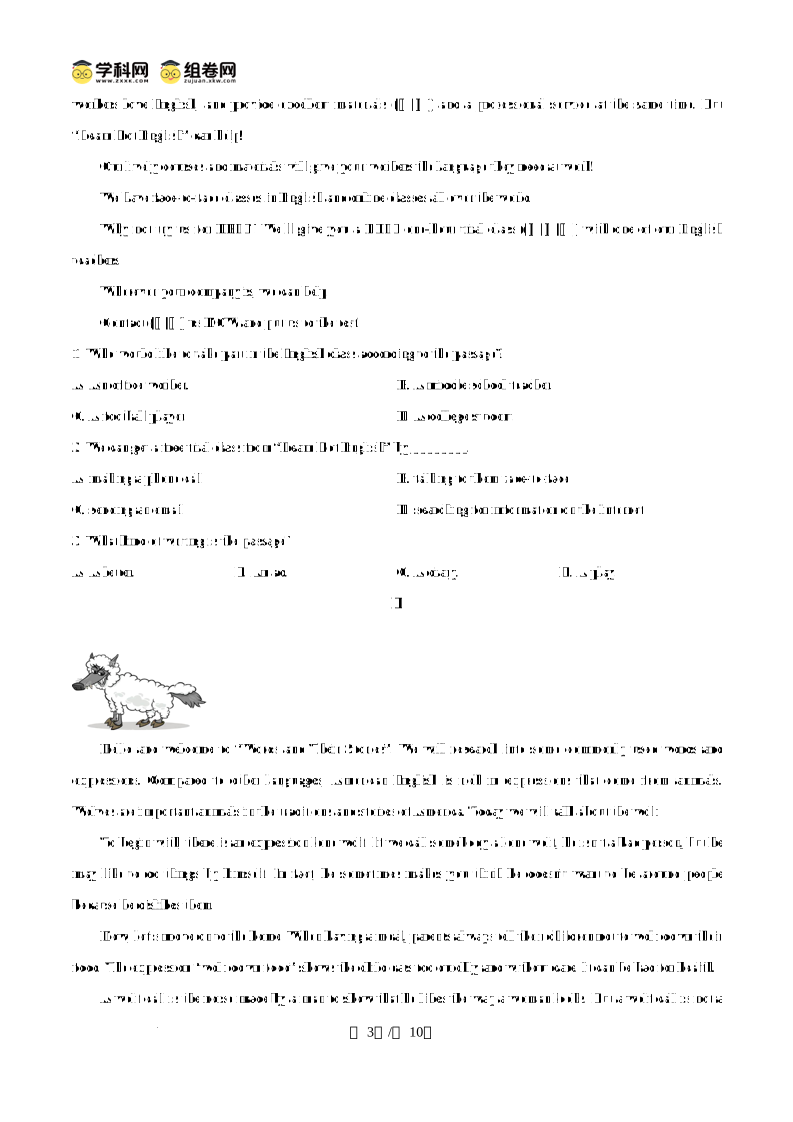
Hello and welcome to “Words and Their Stories”. We will research into some commonly used words and expressions. Compared to other languages, American English is rich in expressions that come from animals. Wolves are important animals in the traditions and stories of America. Today we will talk about the wolf.
To begin with, there is an expression lone wolf. If we call somebody a lone wolf, he isn’t a bad person, but he may like to do things by himself. In fact, he sometimes makes you think he doesn’t want to be around people because he dislikes them.
Now, let’s move on to the home. When having a meal, parents always tell their children not to wolf down their food. The expression “wolf down food” shows the child eats too quickly and without care. It can be bad for health.
A wolf call is the noise made by a man to show that he likes the way a woman looks. But a wolf call is not a nice thing. These men sound rude (粗鲁的). And in fact, most women don’t like wolf calls at all.
By the way, there is a popular expression about wolf from a very old story: a wolf in sheep’s clothing. A wolf in sheep’s clothing describes someone who acts and looks nice on the outside but is bad on the inside. It tells us that appearances can lie to people.
4. How many expressions can we learn about wolf in the passage?
A. Two. B. Three. C. Four. D. Five.
5. If a person is called a lone wolf, what is he probably going to do?
A. Help classmates to finish homework. B. Make many friends with people around.
C. Break the window if nobody is watching. D. Go to see a movie by himself after school.
6. Which of the following is NOT true?
A. Wolf call is really popular to women.
B. Children had better not wolf down food at meal time.
C. Appearances don’t always tell the truth to us.
D. American English has many expressions with animals.
7. Where is it possible for us to find the passage above?
A. A science report. B. A story about American history.
C A book for travel guide. D. A program for English learning.
【答案】4. C 5. D 6. A 7. D
【解析】
【导语】本文是说明文。主要介绍了美式英语中与“狼”相关的几个常用短语及其含义。
【4题详解】
细节理解题。根据文章内容,依次提到了“lone wolf”“wolf down food”“wolf call”和“a wolf in sheep’s clothing”四个与狼相关的短语。故选C。
【5题详解】
细节理解题。根据“If we call somebody a lone wolf, he isn’t a bad person, but he may like to do things by himself”可知,“独狼(lone wolf)”指喜欢独自做事的人。“放学后独自去看电影”符合这一特征。故选D。
【6题详解】
细节理解题。根据“And in fact, most women don’t like wolf calls at all”可知,“狼嚎式挑逗”并不受女性欢迎,与选项“A wolf call is really popular to women”表述相反。其他选项均与原文内容一致。故选A。
【7题详解】
推理判断题。根据文章开头“Hello and welcome to ‘Words and Their Stories’. We will research into some commonly used words and expressions”可知,文章出自一个研究英语词语和表达的栏目,属于英语学习相关内容。故选D。
C
When I was in primary school, Miss Green told us a story in an English class. Through the story, she wanted to tell us that there is always a way to solve every problem. I kept that in mind.
One day, when I returned home, I found that my father was unhappy. When I asked him why, he told me that he lost his watch when he was working in the garden. He looked for it everywhere but couldn’t find it. He also asked my two elder brothers to help, but they couldn’t find the watch, either.
That watch was very important to my father because it was a gift from my grandfather. “Don’t worry, Dad. I’ll help you find it,” I said. But my father didn’t believe it. After all, they all couldn’t find it. He was doubtful but still said, “Well, if you find it, I’ll give you 20 dollars.” “OK, just wait,” I said, and then went to the garden.
Suddenly, I thought of the story that Miss Green told us. But how could I find the watch? I started thinking and thinking. Then I remembered that the watch ticked (滴答声). But the ticking was hard to hear. I decided not to look here and there as they did. Instead, I put my ear to the ground. And ten minutes later, I found the watch.
My father and brothers couldn’t believe their eyes. They thought I was really lucky. But I shook my head, saying, “No. It wasn’t good luck. I just thought before I took action.”
There is always a way to every problem. Think before you take action!
8. How did the father look when the writer returned home?
A. Sad. B. Angry. C. Bored. D. Peaceful.
9. Which of the following is the right order according to the passage?
a. My father lost his watch while working.
b. I found the watch in the garden.
c. My brothers were asked to look for the watch.
d. I learned something in an English class.
A. a-d-c-b B. b-a-d-c C. c-d-a-b D. d-a-c-b
10. What does the underlined sentence mean in Para.5?
A. They didn’t think I could find the watch. B. They found it was not the father’s watch.
C. They knew eyes are important for children. D. There was something wrong with their eyes.
11. What can we learn from the story?
A. All roads lead to Rome. B. Practice makes perfect.
C. Two heads are better than one. D. Where there is a will, there is a way.
【答案】8. A 9. D 10. A 11. D
【解析】
【导语】本文是记叙文。主要讲述了“我”受小学老师故事的启发,通过思考而非盲目寻找,帮助父亲找回重要手表的经历,印证了“凡事皆有解决办法”的道理。
【8题详解】
细节理解题。根据“One day, when I returned home, I found that my father was unhappy.”可知,父亲回家时看起来不高兴,Sad“难过的”符合语境。故选A。
【9题详解】
细节理解题。根据文章内容,事件顺序依次为:“When I was in primary school, Miss Green told us a story in an English class.”(“我” 在英语课上学到道理,对应 d);“he told me that he lost his watch when he was working in the garden.”(父亲工作时丢了手表,对应 a); “He also asked my two elder brothers to help”(哥哥们帮忙找手表,对应 c);“I said and then went to the garden... And ten minutes later, I found the watch.”(“我” 在花园找到手表,对应 b)。正确顺序为 d-a-c-b。故选 D。
【10题详解】
词句猜测题。根据前文“He looked for it everywhere but couldn’t find it. He also asked my two elder brothers to help, but they couldn’t find the watch, either.”以及父亲对“我”的怀疑,可知此处指父亲和哥哥们没想到“我”能找到手表。故选A。
【11题详解】
主旨大意题。文章开篇提到老师通过故事告诉我们“there is always a way to every problem”,结尾也再次强调该观点。选项D“有志者事竟成”与文章传达的 “凡事皆有解决办法” 的主旨一致。故选D。
D
English is becoming popular in China. It is used in many fields, such as on signs and restaurant menus. But there are some problems when people use it.
Have you seen the English letters “WC” in your city? WC is another way of saying public toilets. But do you know it is far from native (地道的) English? In fact, people from English-speaking countries don’t use the expression. “‘WC’ is old-fashioned English. It sounds dirty to me,” says Nancy, a young woman from the US. Workers in our city are changing “WC” signs all over the city. The signs will become “Gents/Men” and “Ladies/Women”. The government is spending much money changing all the bad English on signs and restaurant menus. Many other places in China are following our steps.
We can see much bad English in everyday life, and not only on signs. We may know what they mean, but they are Chinglish, not real English. For example, when someone says to you “My hometown is Guizhou Province”, he or she should say “My hometown is in Guizhou Province”. That’s because hometown is a smaller place in a province. The common mistakes include “Not Entry”, which should be “No Entry”; “Direction of Airport”, which should be changed to “To the Airport”; it is “Room Rate”, not “Room Price”; and remember to “Keep off the Grass” rather than “Care of the Green”.
So, next time you walk on the street or have dinner in the restaurant, you can go and see if the expressions are right.
12. What does “WC” mean according to the passage?
A. Public toilets. B. Shopping centres. C. Water factories. D. Science museums.
13. What will the Chinese cities do with the bad English on signs?
A. Take notes. B. Draw pictures. C. Correct mistakes. D. Add information.
14. Which of the following shows the structure (结构) of the passage? (P=Paragraph) ______
A. B.
C. D.
15. What is the best title of the passage?
A. The Meaning of WC. B. Bad English Around Us.
C. Ways to Improve English. D. The Signs and Restaurant Menus.
【答案】12. A 13. C 14. C 15. B
【解析】
【导语】本文是说明文。主要讲述了中国存在的一些中式英语问题,以“WC”标识等为例,介绍了这些不地道英语的修正情况以及日常生活中其他常见的中式英语错误。
【12题详解】
细节理解题。根据“WC is another way of saying public toilets.”可知,“WC”的意思是公共厕所。故选A。
【13题详解】
细节理解题。根据“The government is spending much money changing all the bad English on signs and restaurant menus.”可知,中国城市会修正标识上的错误英语。故选C。
【14题详解】
篇章结构题。第一段总述英语在中国使用广泛但存在问题;第二、三段分别举例说明标识和日常生活中的中式英语错误;第四段总结让读者留意英语表达是否正确。属于“总—分—总”结构,对应选项C。故选C。
【15题详解】
最佳标题题。文章围绕身边的中式英语(不好的英语表达)展开,介绍了其存在的问题及修正情况等。“Bad English Around Us”能概括文章主旨。故选B。
第二节(共5小题,每小题2分,满分10分)
阅读以下材料,从文后所给的A—E五个选项中选择正确的选项(其中一项是多余选项),将其序号填入1—4题,并回答5题。
When you want to make your mind rich, what do you do? 1
But today, few Chinese people like to read. In 2012, Chinese people read an average (平均) of 4 books. Things are different in many other countries. A US person reads 21 books a year, and a Japanese person reads 17.
Reading is important for today’s young people. Then what can we do to have good reading habits?
2
If you can’t read for a long time, this way is helpful. 10 minutes on the way to and from school, 10 minutes waiting for friends, 15 minutes before going to sleep. That is 35 minutes a day, about five hours a week in all.
3
Your list can be the best-selling books on famous websites like The New York Times or dangdang. com, or the books your teacher asks you to read.
4
Talk about the books you read with your friends and family. The more fun you get from books, the more books you will read.
A. Read in a short time.
B. Make your own reading list.
C. Reading books is a good way!
D. Share your reading with others.
E. Reading is a good habit.
16. ________
17. ________
18. ________
19. ________
20. Do you like reading books? Why or why not? (理由不少于5个单词)
_______________________________________________
【答案】16. C 17. A 18. B 19. D
20. Yes. Because I can get a lot of knowledge from books.(答案不唯一,合理即可)
【解析】
【导语】本文是说明文。围绕阅读的重要性及如何养成良好阅读习惯展开,先指出阅读能丰富思想,对比中外阅读量,再给出具体的阅读习惯培养建议。
【16题详解】
根据前文问句“When you want to make your mind rich, what do you do?”可知,此处需回答让思想丰富的方法,,选项C“读书是一种好方式”符合语境。故选C。
【17题详解】
根据下文“If you can’t read for a long time, this way is helpful. 10 minutes on the way to and from school...”可知,该段强调利用短时间阅读,A选项“短时间读书”是对这一阅读方式的概括,可作为该部分的主题句。故选A。
【18题详解】
根据下文“Your list can be the best-selling books on famous websites...”可知,段落围绕“阅读清单”展开,B选项“制作自己的阅读清单”符合语境。故选B。
【19题详解】
根据下文“Talk about the books you read with your friends and family.”可知,此部分强调与他人交流读书内容,选项D“和其他人分享你的阅读”符合语境。故选D。
【20题详解】
开放性试题,言之有理即可,回答喜欢读书,列出读书的好处即可。故填Yes. Because I can get a lot of knowledge from books.(答案不唯一,合理即可)
第三部分 语言运用(共三节,满分40分)
第一节 完形填空(共15小题,每小题1分,满分15分)
It began a year ago, around Christmas. Every time I drove down our street, I ___21___ an old man sitting in his front yard. He was usually smoking or drinking, and looking rather unhappy.
One day, while I was driving past him with my ___22___, I decided to wave at him with a lot of excitement. ___23___, when he noticed me waving at him, he looked a bit shocked. Then, I saw his hand go up and he waved back.
“___24___ did you wave at him?” my daughter asked.
I told her it’s just an act of kindness that doesn’t ___25___ anything. It gives both him and me a feeling of joy. My daughter replied that she felt a bit uncomfortable to wave to a ___26___, but next time she would try it as well.
We liked close to the old man, ___27___ we saw him rather often. Whenever we drove by, both of us would start waving at him and, pretty soon, the old man started ___28___ at everyone who passed by his house.
One time, my daughter’s friend came to visit and she told my daughter that she saw this strange old man near our home wave at her very ___29___. She mentioned that she waved back, although she didn’t know ____30____, and it felt really good.
As soon as my daughter heard this, she told her friend the ____31____ of how all the waving began. Her friend answered: “Tell your mom that’s really cool!”
Other friends gave similar ____32____. This taught my daughter that an act of kindness can be natural and ____33____, if you really want to do it. It showed us how giving happiness can do good to ____34____ the giver and the receiver.
Moved by the old man’s actions, we’re planning to give our waving neighbor a thank-you card to express our ____35____ for his exciting waves. We are really thankful for him sharing his simple joy with all who pass by his house.
21. A. noticed B. felt C. heard D. kept
22. A. husband B. son C. daughter D. friend
23. A. Just now B. On time C. In the end D. At the beginning
24. A. Why B. How C. When D. Where
25. A. buy B. cost C. hide D. guess
26 A. friend B. driver C. classmate D. stranger
27. A. or B. but C. so D. yet
28. A. shouting B. waving C. laughing D. looking
29. A. angrily B. excitedly C. loudly D. carefully
30. A. him B. me C. her D. us
31. A. lesson B. accident C. news D. story
32. A. gifts B. notes C. opinions D. books
33. A. easy B. funny C. usual D. special
34. A. past B. between C. all D. both
35. A. attention B. thanks C. suggestions D. interests
【答案】21. A 22. C 23. D 24. A 25. B 26. D 27. C 28. B 29. B 30. A 31. D 32. C 33. A 34. D 35. B
【解析】
【导语】本文主要讲述了一对父女无意间一个善意的形容词,让一个原本悲观的老人开始客观起来,进而影响了一大批人。
【21题详解】
句意:每次我开车沿着我们的街道行驶时,我都会注意到一位老人坐在他的前院里。
noticed通知,注意到;felt感觉;heard听说;kept 保持,坚持。根据“…an old man sitting in his front yard”可知,此处指的是注意到一个老人坐在前院,故选A。
【22题详解】
句意:有一天,当我和女儿开车从他身边经过时,我激动地决定向他挥手。
husband丈夫;son儿子;daughter女儿;friend朋友。根据下文“my daughter asked”可知,我是带着女儿经过,故选C。
【23题详解】
句意:一开始,当他注意到我向他挥手时,他看起来有点震惊。
Just now刚才;On time按时;In the end终于,最后;At the beginning一开始。根据“I decided to wave at him with a lot of excitement”及语境可知,此处指的是一开始这个老人看到我们向他挥手,有点吃惊,故选D。
【24题详解】
句意:你为什么向他挥手?
Why为什么;How如何,怎样;When什么时候;Where 在哪儿。根据“my daughter asked”可知,这个女儿问的是为什么向他挥手,故选A。
【25题详解】
句意:我告诉她这只是一种善意的行为,不需要付出任何代价。
buy买;cost花费;hide隐藏;guess 猜测。根据“it’s just an act of kindness”可知,此处指的是不花费什么,故选B。
【26题详解】
句意:我女儿回答说,她觉得向陌生人挥手有点不舒服,但下次她也会试试。
friend朋友;driver司机;classmate同学;stranger 陌生人。根据“she felt a bit uncomfortable”可知,此处指的是向陌生人挥手,故选D。
【27题详解】
句意:我们喜欢和老人亲近,所以我们经常见到他。
or或者,否则;but但是;so因此;yet然而。分析前后句可知,前后是因果关系,后句表示结果,故选C。
【28题详解】
句意:每当我们开车经过时,我们都会开始向他挥手,很快,老人就开始向经过他家的每个人挥手。
shouting喊叫;waving挥手;laughing笑;looking看。根据“started…at everyone who passed by his house”可知,此处指的是这个老人开始向每个经过他家的人挥手,故选B。
【29题详解】
句意:有一次,我女儿的朋友来拜访,她告诉我女儿,她看到我们家附近有一个奇怪的老人非常兴奋地向她挥手。
angrily愤怒地;excitedly兴奋地;loudly大声地;carefully 细心地。根据前文“started…at everyone who passed by his house”及语境可知,老人是兴奋地向他挥手,故选B。
【30题详解】
句意:她提到她挥手回应,尽管她不认识他,但感觉真的很好。
him他;me我;her她;us 我们。根据“she saw this strange old man near our home wave at her”可知,此处代词指代的是那个老人,故选A。
【31题详解】
句意:我女儿一听到这个,就告诉她的朋友所有挥手的故事是如何开始的。
lesson课程,教训;accident事故,意外;news新闻;story 故事。根据“told her friend the…of how all the waving began”可知,她告诉了她的朋友这个故事是如何开始的,故选D。
【32题详解】
句意:其他朋友也给出了类似的意见。
gifts礼物;notes礼物,便笺;opinions意见,主张;books 书籍。结合语境可知此处指的是其它朋友也给了类似的意见,故选C。
【33题详解】
句意:这教会了我女儿,如果你真的想做,善意的行为可以是自然而且简单的。
easy容易的;funny有趣的;usual通常的,平常的;special特殊的,专门的。根据“an act of kindness can be natural and…if you really want to do it”可知,此处指的是善意的行为是自然且容易的,故选A。
【34题详解】
句意:它向我们展示了给予幸福对给予者和接受者都有好处。
past越过,晚于;between在……两者之间;all所有都;both两者都。根据“the giver and the receiver”可知,此处指的是对给予者和接受者都有好处,故选D。
【35题详解】
句意:被老人的举动感动了,我们打算送给挥手的邻居一张感谢卡,以表达我们对他激动的挥手的感谢。
attention注意力,关心;thanks感谢;suggestions建议;interests兴趣。根据“give our waving neighbor a thank-you card”可知,此处指的是表达谢意,故选B。
卷Ⅱ
第二节 词汇运用(共15小题,每小题1分,满分15分)
用方框内所给词的适当形式填空,每词限用一次。
twelve slow interest tiring different
36. You look ________. You’d better have a rest.
37. There are many ________ between the twins.
38. Today is my brother’s ________ birthday. He will have a party tonight.
39. You should speak ________ to her about it.
40. The girl is ________ in dancing than singing.
【答案】36. tired
37. differences
38. twelfth
39. slowly 40. more interested
【解析】
【36题详解】
句意:你看起来很疲惫。你最好休息一下。根据“look”为系动词,后接形容词作表语,且结合“You’d better have a rest”可知,此处表示“疲惫的”,应用tiring的形容词形式tired,修饰人。故填tired。
【37题详解】
句意:这对双胞胎之间有很多不同之处。根据“many”后接可数名词复数形式,且结合“between the twins”可知,此处表示“不同之处”,应用different的名词形式difference,其复数为differences。故填differences。
【38题详解】
句意:今天是我弟弟的十二岁生日。他今晚要举办一个派对。根据“birthday”可知,此处表示“第十二个生日”,应用twelve的序数词形式twelfth。故填twelfth。
【39题详解】
句意:关于这件事,你应该慢慢地跟她说。根据“speak”为动词,需用副词修饰,结合语境可知,此处表示“慢慢地说”,应用slow的副词形式slowly。故填slowly。
40题详解】
句意:这个女孩对跳舞比对唱歌更感兴趣。根据固定短语be interested in“对……感兴趣”,且结合“than”可知,此处应用interest的形容词形式interested的比较级more interested。故填more interested。
根据短文内容和所给的汉语注释,写出单词的正确形式。每空限填一词。
What sport do you often do in your free time? I do lots of sports such as basketball, running, swimming and so on. I ___41___ (尤其) love playing basketball. I am on the school team. This year we are going to play ___42___ (和……比赛) a team from another school. We dare (敢) to say we will ___43___ (打败) them because we are ___44___ (训练) more carefully and much ___45___ (努力地). Last year we ___46___ (输) to them in the final match. Our ___47___ (教练) who has a round face is friendly and always encourages us to never give up. He also repeats (重复) some difficult skills so that we can do better next time. We spend ___48___ (大量) of time practising this year.
I often watch basketball matches on TV to learn how to play better. Last night, there was a basketball match between the German team and the Chinese team. At last, the Chinese team won the match. All the Chinese fans shouted ___49___ (大声地) with pleasure. We were proud to see the Chinese national flag rising in the ____50____ (体育场).
【答案】41. especially
42. against
43. beat 44. training
45. harder 46. lost
47. coach 48. lots##plenty
49. loudly 50. stadium
【解析】
【导语】本文讲述了作者在空闲时间常进行的体育运动,重点介绍了自己对篮球的热爱,包括加入校队、即将与外校球队比赛、去年的比赛结果、教练的帮助,以及作者通过看电视比赛学习和昨晚观看中德篮球赛为中国队喝彩的经历。
【41题详解】
句意:我尤其喜欢打篮球。根据所给汉语提示可知,“尤其”为especially,是副词,用于修饰动词“love”,强调程度。故填especially。
【42题详解】
句意:今年我们要和另一所学校的球队比赛。根据所给汉语提示可知,“和……比赛”常用短语play against,为固定短语,符合语境。故填against。
【43题详解】
句意:我们敢说我们会打败他们。根据所给汉语提示可知,“打败”为beat,其后常接对手(如球队、人等);will后接动词原形。故填beat。
【44题详解】
句意:因为我们正在更认真地训练。根据所给汉语提示可知,“训练”为train;结合语境,此处表示现阶段正在进行的动作,用现在进行时,其结构为“be+动词现在分词”,train的现在分词为training。故填training。
【45题详解】
句意:而且(训练得)更努力地。根据所给汉语提示可知,“努力地”为hard,此处用于修饰动词“training”,且由“much”可知,需用其比较级harder,表示“更努力地”。故填harder。
【46题详解】
句意:去年我们在决赛中输给了他们。根据所给汉语提示可知,“输”为lose;由“Last year”可知,句子用一般过去时,lose的过去式为lost。故填lost。
【47题详解】
句意:我们那位圆脸的教练很友好,总是鼓励我们永不放弃。根据所给汉语提示可知,“教练”为coach;结合后面的“has”可知,此处用名词单数形式。故填coach。
【48题详解】
句意:今年我们花了大量时间练习。根据所给汉语提示可知,“大量”常用lots of或plenty of,故填lots/plenty。
【49题详解】
句意:所有中国球迷都高兴地大声欢呼。根据所给汉语提示可知,“大声地”为loudly,是副词,用于修饰动词“shouted”。故填loudly。
【50题详解】
句意:看到中国国旗在体育场升起,我们感到自豪。根据所给汉语提示可知,“体育场”为stadium,此处特指举办比赛的那个体育场,用名词单数形式。故填stadium。
第三节 语法填空(共10小题,每小题1分,满分10分)
根据短文内容在空格处填入一个适当的词,或根据首字母提示及括号中的词语的正确形式填空。
TV plays an important role in our daily lives. TV is one of ___51___ (important) things of the day. Many people like to watch TV. ___52___ brings the outside world closer to people’s homes. Some people say the world is smaller ___53___ before because of TV.
What’s going on in other ___54___ (country)? How do people live in places far away? ___55___ (be) there a good sports game somewhere? What’s living in the deepest part of the sea?
If you want to answer these and other kinds of questions, just ___56___ (turn) on the TV. You can see a lot and learn a lot. Of course, reading and listening to ___57___ radio are also good ways. But with TV they can learn better and ___58___ (easy). Why? Because people can listen and watch at the same time.
TV helps to open our eyes. TV also helps to open ___59___ (we) mind. TV often gives us new ideas. We can learn newer and better ways of doing something ____60____ TV.
【答案】51. the most important
52. It 53. than
54. countries
55. Is 56. turn
57. the 58. more easily
59. our 60. on
【解析】
【导语】本文是说明文。通过介绍电视在人们日常生活中的重要作用,如拉近人与外部世界的距离、帮助人们获取信息、开阔视野和思维等,阐述了电视对人类生活的积极影响。
【51题详解】
句意:电视是当今最重要的事物之一。“one of the + 形容词最高级 + 可数名词复数”是固定结构,表示“最……的……之一”,important的最高级是most important,前面需加定冠词the。故填the most important。
【52题详解】
句意:它把外面的世界拉近到人们的家。此处指代前文提到的“TV”,为单数可数名词,且在句中作主语,应用人称代词主格It,句首首字母需大写。故填It。
【53题详解】
句意:有些人说,因为电视,世界比以前更小了。根据句中形容词比较级“smaller”可知,此处需用连词than引出比较的对象“before”。故填than。
【54题详解】
句意:其他国家正在发生什么事?“other”后接可数名词复数形式,表示“其他的……”,country的复数是countries。故填countries。
【55题详解】
句意:某个地方有一场精彩的体育比赛吗?此处为there be句型的一般疑问句,主语“a good sports game”是单数,且句子描述的是当前的情况,时态为一般现在时,be动词应用Is,句首首字母需大写。故填Is。
【56题详解】
句意:如果你想回答这些以及其他类型的问题,只需打开电视。“just”后接动词原形,构成祈使句的省略形式,表建议或指令,turn用原形即可。故填turn。
【57题详解】
句意:当然,读书和听收音机也是很好的方式。“radio”此处指“收音机”这一设备,通常与定冠词the搭配,“listen to the radio”是固定短语,意为“听收音机”。故填the。
【58题详解】
句意:但是有了电视,他们可以学得更好、更容易。此处与“better”并列,修饰动词“learn”,应用easy的副词形式easily,且要用比较级more easily。故填more easily。
【59题详解】
句意:电视也有助于开阔我们的思维。此处修饰名词“mind”,应用形容词性物主代词,we的形容词性物主代词是our。故填our。
【60题详解】
句意:我们可以通过电视学习更新、更好的做事方法。此处表示“通过电视”这一媒介,应用介词on,“on TV”是固定短语,意为“通过电视;在电视上”。故填on。
第四节 书面表达(共1题,满分20分)
61. 根据下面Andrew的信,写一封回信。
要求:
1.表达清楚,语法正确,上下文连贯;
2. 词数:90~110。
Dear Li Hua,
How is everything going with you? Is your school life also very busy?
I think a good habit can help us a lot. Could you tell me one of the good habits that you have? How did you start it? How did you keep it? What change happened with the help of it?
Looking forward to your reply.
Andrew
__________________________________________________________________________________________________________________________________________________________________________________________________________________________________________________________________________________________________________________
【答案】例文
Dear Andrew,
I’m doing well, thanks! School is a bit busy with exams coming up, but I manage it well, partly because of a good habit—reading for 30 minutes every night.
I started it two years ago. My mom gave me a storybook, and I loved it so much that I decided to read daily. To keep it, I put my book by my bed and set a phone reminder.
This habit has changed me a lot. My vocabulary has grown, and my writing in English class is much better now. It also helps me relax after a long school day.
How about your good habits? Write back soon!
Li Hua
【解析】
【详解】[总体分析]
①题材:本文是一篇书信作文;
②时态:以 “一般现在时”和 “一般过去时” 为主;
③提示:文章围绕 “分享好习惯” 展开,包含习惯开始时间、坚持方法、带来的改变,结构完整,细节丰富(如 “put my book by my bed”“set a phone reminder”),标点使用规范,字母大小写正确。
[写作步骤]
第一步,开篇问候并引入话题;
第二步,详细介绍习惯:说明习惯开始的时间与原因以及坚持习惯的具体方法;
第三步,阐述习惯的意义并结尾:说明阅读习惯对自己的积极影响,最后以询问对方习惯、期待回信收尾。
[亮点词汇]
①manage 应对,处理
②daily 每日地
③reminder 提醒物
[高分句型]
①My mom gave me a storybook, and I loved it so much that I decided to read daily.(so...that...引导结果状语从句)
②This habit has changed me a lot. (现在完成时)
第1页/共1页
学科网(北京)股份有限公司
$
八年级英语第六周校本作业
2024.10
卷I
第一部分 听力(共两节,满分 20 分)
第一节(共5小题,每小题1分,满分5分)
听下面5段对话。每段对话后有一个小题。从题中所给的A、B、C 三个选项中选出最佳选项,并标在试题的相应位置。听完每段对话后,你都有10秒钟的时间来回答有关小题和阅读下一小题。每段对话仅读一遍。
1. Where did the man go?
A. To Tian’anmen Square. B. To the Palace Museum. C. To the Great Wall.
2. How often does Dave have music lessons?
A. Once a month. B. Once a week C. Twice a week.
3. Who is the best at singing?
A. Judy. B. Lucy. C. Kate.
4. What kind of movie did they watch?
A. A comedy. B. A scary movie. C. An action movie
5. What does Danny like about the Chinese restaurant?
A. Its food. B. Its price. C. Its service.
第二节(共 10 小题,第 6 至第 10 题每小题1分,第 11 至第 15 题每小题2分,满分15 分)
听下面3段对话或独白。每段对话或独白后有几个小题,从题中所给的A、B、C三个选项中选出最佳选项,并标在试卷的相应位置。听每段对话或独白前,你有时间阅读各小题,每小题5秒钟。听完后,各小题给出5秒钟的作答时间。每段对话或独白读两遍。
听对话,回答以下各小题。
6. What does Tara want to be now?
A. A writer. B. A dentist C.A magician.
7. What did Tara think of Steve?
A. He sang the most beautifully. B. He was the most creative. C. He was the best performer.
听对话,回答以下各小题。
8. What does the boy think of comedies?
A. Meaningless. B. Enjoyable. C. Creative
9. What does Judy love to watch?
A. News. B. Sports shows. C. Talent shows.
10. What time is it now?
A. 7:10. B.7:00. C.6:50.
听独白,回答以下各小题。
11. How often do Tony and his parents usually go on vacation?
A. Once a year. B. Twice a year. C. Three times a year.
12. What did Tony think of the things in the museum?
A. They were wonderful. B. They were interesting. C. They were old.
13. What did they do on the second day when they got to Xi’an?
A. They lived in a good hotel. B. They bought some special gifts. C. They ate some delicious food.
14 How long did they stay in Xi’an?
A. For two days. B. For three days. C. For five days.
15. Which of the following is NOT true?
A. Tony and his parents went to Xi’an by air.
B. Tony learned that Xi’an has a long history
C. Tony and his parents left Xi’an in the evening
第二部分 阅读理解(共两节,满分40分)
第一节(共15小题,每小题2分,满分30分)
A
English Classes for Your Workers!
Are you looking for English classes for your company? It isn’t easy to find a good class that can make your workers love English, and provide excellent materials (材料) and a professional service at the same time. But “Learn Hot English” can help!
Our lively courses and materials will give your workers the language they need at work!
We have face-to-face classes in English and online classes all over the world.
Why not try us for FREE? We’ll give you a FREE one-hour trial class (体验课) with one of our English teachers.
Wherever your company is, we can help.
Contact (联系) us NOW and put us to the test!
1. Who would like to take part in the English class according to the passage?
A. An office worker. B. A middle school teacher.
C. A football player. D. A college student.
2. We can get a free trial class from “Learn Hot English” by ________.
A. making a phone call B. talking to them face-to-face
C. sending an email D. searching for information on the Internet
3. What kind of writing is the passage?
A. A letter. B. An ad. C. A diary. D. A play.
B
Hello and welcome to “Words and Their Stories”. We will research into some commonly used words and expressions. Compared to other languages, American English is rich in expressions that come from animals. Wolves are important animals in the traditions and stories of America. Today we will talk about the wolf.
To begin with, there is an expression lone wolf. If we call somebody a lone wolf, he isn’t a bad person, but he may like to do things by himself. In fact, he sometimes makes you think he doesn’t want to be around people because he dislikes them.
Now, let’s move on to the home. When having a meal, parents always tell their children not to wolf down their food. The expression “wolf down food” shows the child eats too quickly and without care. It can be bad for health.
A wolf call is the noise made by a man to show that he likes the way a woman looks. But a wolf call is not a nice thing. These men sound rude (粗鲁的). And in fact, most women don’t like wolf calls at all.
By the way, there is a popular expression about wolf from a very old story: a wolf in sheep’s clothing. A wolf in sheep’s clothing describes someone who acts and looks nice on the outside but is bad on the inside. It tells us that appearances can lie to people.
4. How many expressions can we learn about wolf in the passage?
A. Two. B. Three. C. Four. D. Five.
5. If a person is called a lone wolf, what is he probably going to do?
A. Help classmates to finish homework. B. Make many friends with people around.
C. Break the window if nobody is watching. D. Go to see a movie by himself after school.
6. Which of the following is NOT true?
A. Wolf call is really popular to women.
B. Children had better not wolf down food at meal time.
C. Appearances don’t always tell the truth to us.
D. American English has many expressions with animals.
7. Where is it possible for us to find the passage above?
A. A science report. B. A story about American history.
C. A book for travel guide. D. A program for English learning.
C
When I was in primary school, Miss Green told us a story in an English class. Through the story, she wanted to tell us that there is always a way to solve every problem. I kept that in mind.
One day, when I returned home, I found that my father was unhappy. When I asked him why, he told me that he lost his watch when he was working in the garden. He looked for it everywhere but couldn’t find it. He also asked my two elder brothers to help, but they couldn’t find the watch, either.
That watch was very important to my father because it was a gift from my grandfather. “Don’t worry, Dad. I’ll help you find it,” I said. But my father didn’t believe it. After all, they all couldn’t find it. He was doubtful but still said, “Well, if you find it, I’ll give you 20 dollars.” “OK, just wait,” I said, and then went to the garden.
Suddenly, I thought of the story that Miss Green told us. But how could I find the watch? I started thinking and thinking. Then I remembered that the watch ticked (滴答声). But the ticking was hard to hear. I decided not to look here and there as they did. Instead, I put my ear to the ground. And ten minutes later, I found the watch.
My father and brothers couldn’t believe their eyes. They thought I was really lucky. But I shook my head, saying, “No. It wasn’t good luck. I just thought before I took action.”
There is always a way to every problem. Think before you take action!
8. How did the father look when the writer returned home?
A Sad. B. Angry. C. Bored. D. Peaceful.
9. Which of the following is the right order according to the passage?
a My father lost his watch while working.
b. I found the watch in the garden.
c. My brothers were asked to look for the watch.
d. I learned something in an English class.
A. a-d-c-b B. b-a-d-c C. c-d-a-b D. d-a-c-b
10. What does the underlined sentence mean in Para.5?
A. They didn’t think I could find the watch. B. They found it was not the father’s watch.
C. They knew eyes are important for children. D. There was something wrong with their eyes.
11. What can we learn from the story?
A. All roads lead to Rome. B. Practice makes perfect.
C. Two heads are better than one. D. Where there is a will, there is a way.
D
English is becoming popular in China. It is used in many fields, such as on signs and restaurant menus. But there are some problems when people use it.
Have you seen the English letters “WC” in your city? WC is another way of saying public toilets. But do you know it is far from native (地道的) English? In fact, people from English-speaking countries don’t use the expression. “‘WC’ is old-fashioned English. It sounds dirty to me,” says Nancy, a young woman from the US. Workers in our city are changing “WC” signs all over the city. The signs will become “Gents/Men” and “Ladies/Women”. The government is spending much money changing all the bad English on signs and restaurant menus. Many other places in China are following our steps.
We can see much bad English in everyday life, and not only on signs. We may know what they mean, but they are Chinglish, not real English. For example, when someone says to you “My hometown is Guizhou Province”, he or she should say “My hometown is in Guizhou Province”. That’s because hometown is a smaller place in a province. The common mistakes include “Not Entry”, which should be “No Entry”; “Direction of Airport”, which should be changed to “To the Airport”; it is “Room Rate”, not “Room Price”; and remember to “Keep off the Grass” rather than “Care of the Green”.
So, next time you walk on the street or have dinner in the restaurant, you can go and see if the expressions are right.
12. What does “WC” mean according to the passage?
A Public toilets. B. Shopping centres. C. Water factories. D. Science museums.
13. What will the Chinese cities do with the bad English on signs?
A. Take notes. B. Draw pictures. C. Correct mistakes. D. Add information.
14. Which of the following shows the structure (结构) of the passage? (P=Paragraph) ______
A. B.
C. D.
15. What is the best title of the passage?
A. The Meaning of WC. B. Bad English Around Us.
C. Ways to Improve English. D. The Signs and Restaurant Menus.
第二节(共5小题,每小题2分,满分10分)
阅读以下材料,从文后所给的A—E五个选项中选择正确的选项(其中一项是多余选项),将其序号填入1—4题,并回答5题。
When you want to make your mind rich, what do you do? 1
But today, few Chinese people like to read. In 2012, Chinese people read an average (平均) of 4 books. Things are different in many other countries. A US person reads 21 books a year, and a Japanese person reads 17.
Reading is important for today’s young people. Then what can we do to have good reading habits?
2
If you can’t read for a long time, this way is helpful. 10 minutes on the way to and from school, 10 minutes waiting for friends, 15 minutes before going to sleep. That is 35 minutes a day, about five hours a week in all.
3
Your list can be the best-selling books on famous websites like The New York Times or dangdang. com, or the books your teacher asks you to read.
4
Talk about the books you read with your friends and family. The more fun you get from books, the more books you will read.
A. Read in a short time.
B. Make your own reading list.
C. Reading books is a good way!
D. Share your reading with others.
E. Reading is a good habit.
16. ________
17. ________
18. ________
19. ________
20. Do you like reading books? Why or why not? (理由不少于5个单词)
_______________________________________________
第三部分 语言运用(共三节,满分40分)
第一节 完形填空(共15小题,每小题1分,满分15分)
It began a year ago, around Christmas. Every time I drove down our street, I ___21___ an old man sitting in his front yard. He was usually smoking or drinking, and looking rather unhappy.
One day, while I was driving past him with my ___22___, I decided to wave at him with a lot of excitement. ___23___, when he noticed me waving at him, he looked a bit shocked. Then, I saw his hand go up and he waved back.
“___24___ did you wave at him?” my daughter asked.
I told her it’s just an act of kindness that doesn’t ___25___ anything. It gives both him and me a feeling of joy. My daughter replied that she felt a bit uncomfortable to wave to a ___26___, but next time she would try it as well.
We liked close to the old man, ___27___ we saw him rather often. Whenever we drove by, both of us would start waving at him and, pretty soon, the old man started ___28___ at everyone who passed by his house.
One time, my daughter’s friend came to visit and she told my daughter that she saw this strange old man near our home wave at her very ___29___. She mentioned that she waved back, although she didn’t know ____30____, and it felt really good.
As soon as my daughter heard this, she told her friend the ____31____ of how all the waving began. Her friend answered: “Tell your mom that’s really cool!”
Other friends gave similar ____32____. This taught my daughter that an act of kindness can be natural and ____33____, if you really want to do it. It showed us how giving happiness can do good to ____34____ the giver and the receiver.
Moved by the old man’s actions, we’re planning to give our waving neighbor a thank-you card to express our ____35____ for his exciting waves. We are really thankful for him sharing his simple joy with all who pass by his house.
21 A. noticed B. felt C. heard D. kept
22. A. husband B. son C. daughter D. friend
23. A. Just now B. On time C. In the end D. At the beginning
24. A. Why B. How C. When D. Where
25. A. buy B. cost C. hide D. guess
26. A. friend B. driver C. classmate D. stranger
27. A. or B. but C. so D. yet
28. A. shouting B. waving C. laughing D. looking
29. A. angrily B. excitedly C. loudly D. carefully
30. A. him B. me C. her D. us
31. A. lesson B. accident C. news D. story
32. A. gifts B. notes C. opinions D. books
33. A. easy B. funny C. usual D. special
34. A. past B. between C. all D. both
35. A. attention B. thanks C. suggestions D. interests
卷Ⅱ
第二节 词汇运用(共15小题,每小题1分,满分15分)
用方框内所给词的适当形式填空,每词限用一次。
twelve slow interest tiring different
36. You look ________. You’d better have a rest.
37. There are many ________ between the twins.
38. Today is my brother’s ________ birthday. He will have a party tonight.
39. You should speak ________ to her about it.
40. The girl is ________ in dancing than singing.
根据短文内容和所给的汉语注释,写出单词的正确形式。每空限填一词。
What sport do you often do in your free time? I do lots of sports such as basketball, running, swimming and so on. I ___41___ (尤其) love playing basketball. I am on the school team. This year we are going to play ___42___ (和……比赛) a team from another school. We dare (敢) to say we will ___43___ (打败) them because we are ___44___ (训练) more carefully and much ___45___ (努力地). Last year we ___46___ (输) to them in the final match. Our ___47___ (教练) who has a round face is friendly and always encourages us to never give up. He also repeats (重复) some difficult skills so that we can do better next time. We spend ___48___ (大量) of time practising this year.
I often watch basketball matches on TV to learn how to play better. Last night, there was a basketball match between the German team and the Chinese team. At last, the Chinese team won the match. All the Chinese fans shouted ___49___ (大声地) with pleasure. We were proud to see the Chinese national flag rising in the ____50____ (体育场).
第三节 语法填空(共10小题,每小题1分,满分10分)
根据短文内容在空格处填入一个适当的词,或根据首字母提示及括号中的词语的正确形式填空。
TV plays an important role in our daily lives. TV is one of ___51___ (important) things of the day. Many people like to watch TV. ___52___ brings the outside world closer to people’s homes. Some people say the world is smaller ___53___ before because of TV.
What’s going on in other ___54___ (country)? How do people live in places far away? ___55___ (be) there a good sports game somewhere? What’s living in the deepest part of the sea?
If you want to answer these and other kinds of questions, just ___56___ (turn) on the TV. You can see a lot and learn a lot. Of course, reading and listening to ___57___ radio are also good ways. But with TV they can learn better and ___58___ (easy). Why? Because people can listen and watch at the same time.
TV helps to open our eyes. TV also helps to open ___59___ (we) mind. TV often gives us new ideas. We can learn newer and better ways of doing something ____60____ TV.
第四节 书面表达(共1题,满分20分)
61. 根据下面Andrew的信,写一封回信。
要求:
1.表达清楚,语法正确,上下文连贯;
2. 词数:90~110。
Dear Li Hua,
How is everything going with you? Is your school life also very busy?
I think a good habit can help us a lot. Could you tell me one of the good habits that you have? How did you start it? How did you keep it? What change happened with the help of it?
Looking forward to your reply.
Andrew
__________________________________________________________________________________________________________________________________________________________________________________________________________________________________________________________________________________________________________________
第1页/共1页
学科网(北京)股份有限公司
$
资源预览图
1

2
3
相关资源
由于学科网是一个信息分享及获取的平台,不确保部分用户上传资料的 来源及知识产权归属。如您发现相关资料侵犯您的合法权益,请联系学科网,我们核实后将及时进行处理。