2026届高三上学期第一次模拟考试英语练习试题(天津卷)
2025-10-23
|
2份
|
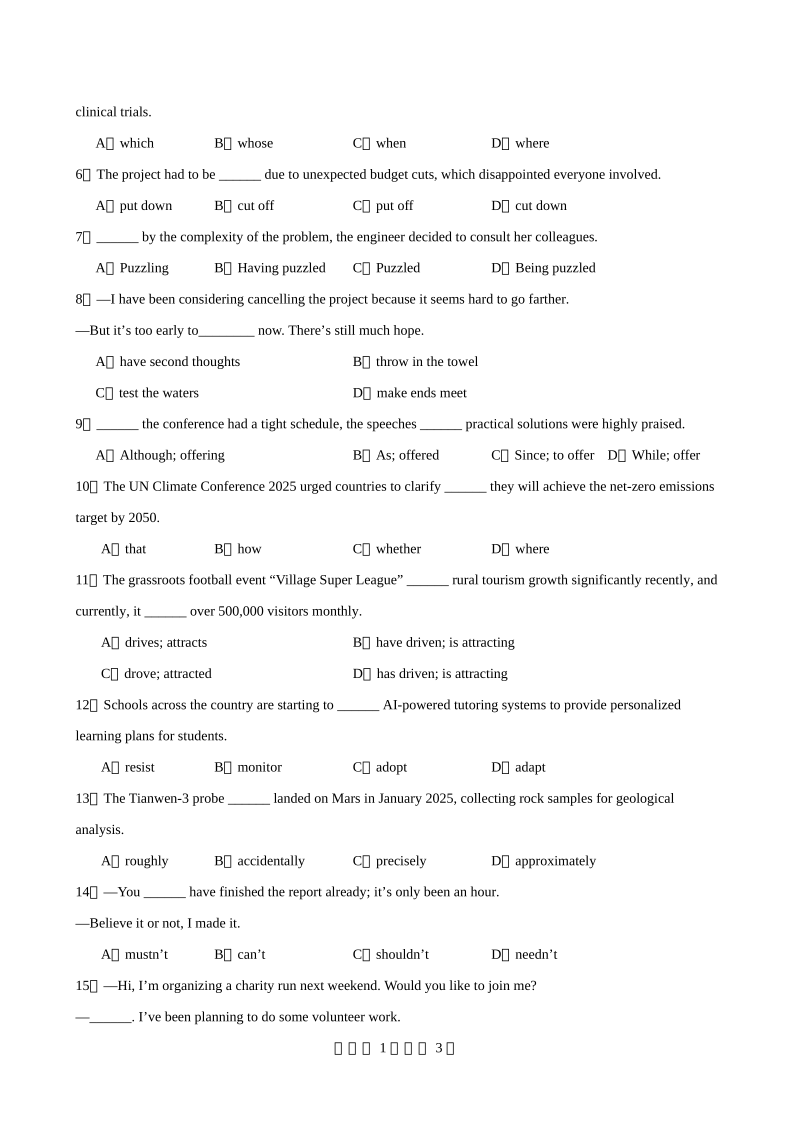
35页
|
289人阅读
|
6人下载
资源信息
| 学段 | 高中 |
|---|---|
| 学科 | 英语 |
| 教材版本 | - |
| 年级 | 高三 |
| 章节 | - |
| 类型 | 试卷 |
| 知识点 | - |
| 使用场景 | 高考复习-一模 |
| 学年 | 2025-2026 |
| 地区(省份) | 天津市 |
| 地区(市) | - |
| 地区(区县) | - |
| 文件格式 | ZIP |
| 文件大小 | 102 KB |
| 发布时间 | 2025-10-23 |
| 更新时间 | 2025-10-23 |
| 作者 | 初高中精品英语馆 |
| 品牌系列 | - |
| 审核时间 | 2025-10-23 |
| 下载链接 | https://m.zxxk.com/soft/54515662.html |
| 价格 | 3.00储值(1储值=1元) |
| 来源 | 学科网 |
内容正文:
绝密★考试结束前
2026年高考第一次模拟考试(天津卷)
英语
(考试时间:100分钟 试卷满分:120分)
注意事项:
1.本试卷分第Ⅰ卷(选择题)和第Ⅱ卷(非选择题)两部分。答卷前,考生务必将自己的姓名、准考证号填写在答题卡上。
2.回答第Ⅰ卷时,选出每小题答案后,用2B铅笔把答题卡上对应题目的答案标号涂黑。如需改动,用橡皮擦干净后,再选涂其他答案标号。写在本试卷上无效。
3.回答第Ⅱ卷时,将答案写在答题卡上。写在本试卷上无效。
4.考试结束后,将本试卷和答题卡一并交回。
第一部分:英语知识运用(共两节,满分45分)
第一节:单项填空(共15小题;每小题1分,满分15分)
从A、B、C、D四个选项中,选出可以填入空白处的最佳选项。
1.— I’m terribly sorry for spilling coffee on your laptop. I’ll pay for the repair.
— ______. It was an accident, and the laptop still works fine.
A.It’s none of your business B.You’d better not
C.Forget it D.You are welcome
2.After months of hard work, the research team finally saw some signs of hope ______.
They believed their efforts would soon pay off.
A.to some extent B.on the horizon
C.beyond all praise D.behind schedule
3.After leaving the soda bottle open overnight, she took a sip and made a face — the drink had gone ______ and tasted dull.
A.secure B.distinctive C.exceptional D.flat
4.Mother’s Day is around the corner, and I intend to buy my mom a wonderful present, ______ that is not expensive but very meaningful.
A.it B.one C.the one D.ones
5.The brain-computer interface technology, ______ development is funded by the government, has entered clinical trials.
A.which B.whose C.when D.where
6.The project had to be ______ due to unexpected budget cuts, which disappointed everyone involved.
A.put down B.cut off C.put off D.cut down
7.______ by the complexity of the problem, the engineer decided to consult her colleagues.
A.Puzzling B.Having puzzled C.Puzzled D.Being puzzled
8.—I have been considering cancelling the project because it seems hard to go farther.
—But it’s too early to________ now. There’s still much hope.
A.have second thoughts B.throw in the towel
C.test the waters D.make ends meet
9.______ the conference had a tight schedule, the speeches ______ practical solutions were highly praised.
A.Although; offering B.As; offered C.Since; to offer D.While; offer
10.The UN Climate Conference 2025 urged countries to clarify ______ they will achieve the net-zero emissions target by 2050.
A.that B.how C.whether D.where
11.The grassroots football event “Village Super League” ______ rural tourism growth significantly recently, and currently, it ______ over 500,000 visitors monthly.
A.drives; attracts B.have driven; is attracting
C.drove; attracted D.has driven; is attracting
12.Schools across the country are starting to ______ AI-powered tutoring systems to provide personalized learning plans for students.
A.resist B.monitor C.adopt D.adapt
13.The Tianwen-3 probe ______ landed on Mars in January 2025, collecting rock samples for geological analysis.
A.roughly B.accidentally C.precisely D.approximately
14.—You ______ have finished the report already; it’s only been an hour.
—Believe it or not, I made it.
A.mustn’t B.can’t C.shouldn’t D.needn’t
15.—Hi, I’m organizing a charity run next weekend. Would you like to join me?
—______. I’ve been planning to do some volunteer work.
A.That’s all right B.Sorry, I can’t
C.Count me in D.It depends
第二节:完形填空(共20小题;每小题1.5分,满分30分)
阅读下面短文,掌握其大意,然后从16-35各题所给的A、B、C、D四个选项中,选出最佳选项。One day, a train was approaching the small town of Cheekyville. On the train was a strange man with a big suitcase. He was 16 William Warbler and he looked very uncommon indeed. But what made him most 17 was the fact that whenever he needed to 18 he did so by singing opera. Even if someone said “good day”, he would clear his throat and 19 , “Gooood dayyy to youuuuuuuu, toooooo! ”
Almost everyone considered William Warbler unusual, since no one could get a 20 spoken word out of him. And, as no one knew how he made his living and he lived quite 21 , always wearing his same old second-hand suit—they often had no respect for him.
William had been in Cheekyville for some years, when, one day, a rumor (谣言) 22 that William had 23 a role in a very important opera in the nation’s capital, that there had been posters everywhere 24 the event, and that it had been a great 25 . And to everyone’s 26 , when William was being interviewed by reporters, he answered their questions by speaking 27 singing. And he did it with good pronunciation, and with a clear and 28 voice.
From that day, William 29 singing at all hours. Now he sang only during his stage appearances. Some people had an idea 30 he had changed, but others still had none, and continued believing him to be somewhat mad. They wouldn’t have thought so 31 they had seen what William kept in his 32 . It was a large stone, with a hand-carved message on it. The message said: “Practice, my boy. Practice every second, for you never know when your 33 will come. ”
Little did people 34 that he only got the role in the opera because the 35 had heard William singing while out buying a newspaper.
16.A.treated B.believed C.called D.named
17.A.unusual B.ordinary C.familiar D.humour
18.A.debate B.practice C.mention D.communicate
19.A.shout B.reply C.repeat D.laugh
20.A.strange B.normal C.satisfactory D.generous
21.A.naturally B.quietly C.simply D.calmly
22.A.obtained B.exploded C.spread D.gathered
23.A.refused B.created C.performed D.received
24.A.suggesting B.advertising C.explaining D.celebrating
25.A.benefit B.discovery C.success D.experience
26.A.surprise B.joy C.excitement D.doubt
27.A.other than B.rather than C.apart from D.except for
28.A.pleasant B.weak C.relaxing D.broken
29.A.gave up B.turned down C.asked for D.went over
30.A.how B.why C.that D.where
31.A.while B.because C.if D.since
32.A.pocket B.cupboard C.drawer D.suitcase
33.A.chance B.fortune C.courage D.wisdom
34.A.appreciate B.notice C.expect D.realize
35.A.actor B.manager C.neighbor D.director
第二部分:阅读理解(共20小题;每小题2.5分,满分50分)
阅读下列短文,从每题所给的A、B、C、D四个选项中,选出最佳选项。
A
There are many ways to get involved and volunteer at the National Museum of American History. Becoming a Museum Ambassador is one of them. To learn more about this volunteer program, please see the descriptions below.
Museum Ambassadors at the American History Museum are a mobile source of information that helps bridge the gap between two other volunteer groups here at the museum — information desk specialists, who provide orientation (方向) assistance when guests arrive, and volunteer docents (讲师), who provide Highlights tours, facilitate hands-on demonstrations and circulate through many of our exhibitions to interact with visitors. Each year, our Museum Ambassadors help over 100,000 people get the most out of their visits by welcoming groups, circulating throughout the museum’s public zones to answer basic questions, and directing visitors to programs and exhibitions of interest. The museum has also employed the Museum Ambassadors to assist with special projects and events as needed.
To learn more about what Museum Ambassadors do, check out what Larry nas said, “As museum ambassadors, we get to share in the curiosity of a child, the nostalgia (怀旧) of returning visitors, the treasure hunt of students assigned to find important historical objects, and the amazement of those experiencing our eye on the nation’s history for the first time. We can help recommend a meaningful museum visit just for you. There’s more. We’ re also traffic cops when elevators and escalators break and extra eyes for museum security.”
If you enjoy...
•interacting with diverse audiences, age groups and learning styles.
·working in an often busy and changing environment.
If you have...
•strong interpersonal and communication skills.
•an interest in history and communication.
If you can...
commit to three shifts a month (weekday Ambassadors) or twice a month (weekend Ambassadors).
The museum is open 364 days a year, including weekends and holidays.
•handle frequent walking, standing, and talking.
To Apply
To learn more information about the application process, please contact Ruth Shirley.
NOTE: Acceptance into the program is subject to successful completion of an interview and background investigation.
36.Which one is the responsibility of Museum Ambassadors?
A.To receive visitors at the entrance. B.To take full charge of museum security.
C.To direct visitors to their exhibitions of interest. D.To help visitors with hands-on demonstrations
37.What aspect of the role does Larry’s words highlight most?
A.The physical demands of constant walking.
B.The joy of engaging with visitors’ unique perspectives.
C.The need for technical repair skills.
D.The importance of academic qualifications.
38.A qualified Museum Ambassador should _______.
A.enjoy communicating with people B.speak at least two foreign languages
C.have academic background in history D.commit to working three shifts at weekends
39.What must volunteers do before they can start working as Museum Ambassadors?
A.Pass a culture and history test to prove knowledgeable.
B.Try working for one day to be familiar with their work
C.Have an interview and check personal experience
D.Give a speech to museum staff to be impressive
40.The author writes this passage mainly to _______.
A.introduce volunteer programs for teenagers
B.provide special tours to meet different needs
C.invite people to visit the American History Museum
D.attract potential applicants for Museum Ambassadors
B
A principal in Manhattan informed parents that there would be no more homework for the public school’s students. And then came the arguments — not from teachers, but from parents. Some said they would transfer (转学) their children to another school. Some said they were finding online sources of homework for their children. They were not convinced by the explanation from Principal Jane Hsu about the negative effects of homework on young children, including lack of time for other activities and family time, and loss of interest in learning. Hsu suggested children should spend their time on activities that had been found to be good for their academic, social and emotional development.
As a supporter of Hsu’s approach, I wonder how many of the parental arguments occur not because of what children will miss out on, but because parents themselves no longer feel confident about their ability to help their children develop without highly structured activities to guide them.
I’m reminded of a meeting at the school my younger daughter was about to start when she was 6. The head of the school met with parents to say that she was also considering doing away with homework. One mom objected because homework was her “special time” each day with her child when they could sit down together to go through the work. The head of the school appeared surprised at this. She gently suggested that the mother should read to her child, or that they should cook dinner together.
It’s been sad to see that kids, between their structured soccer practices and their homework, have very little time to play. But it’s even sadder to see the parental nervousness around what might happen to a third-grader who has more time to create, think, read, interact with others, or imagine. What might happen, I believe, must be more happiness, more energy and better physical fitness.
41.Principal Jane Hsu suggested that there should be no homework because ______.
A.there are too many activities after school
B.doing homework does no good to teaching
C.some more meaningful activities should be done
D.students are not interested in doing their homework
42.From the passage, we know ______.
A.teachers are strongly opposed to giving no homework to their student
B.the idea of no homework has led to a heated debate
C.children greatly benefit from the idea of no homework
D.other activities have taken the place of the homework
43.Why did one mom object the idea of no homework for kids?
A.Her child might lose interest in learning.
B.Her child might have less time to think.
C.She enjoyed the time doing homework with her child.
D.Homework is good for children’s academic development.
44.What is the author’s attitude towards Principal Jane Hsu’s suggestion?
A.Indifferent. B.Positive. C.Negative. D.Critical.
45.The passage is mainly about ______.
A.whether the parents should transfer their children to public school
B.the benefit of doing homework
C.the necessity of changing the education system
D.whether the students should do homework after school
C
For lots of kids, toddlerhood (幼儿期) is an important time for friendship. Studies show that the earlier kids learn to form positive relationships, the better they are at relating to others as teenagers and adults. Playing together also helps these kids practice social behaviors, such as kindness, sharing, and cooperation.
Even so, how quickly your child develops into a social creature may also depend on his temperament. Some toddlers are very social, but others are shy. In addition, the way that toddlers demonstrate that they like other children is markedly different from what adults think of as expressions of friendship. Research at Ohio State University in Columbus found that a toddler’s way of saying “I like you” during play is likely to come in the form of copying a friend’s behavior.
This seemingly unusual way of demonstrating fondness can result in unpleasant behavior. Regardless of how much they like a playmate, they may still grab his toys, refuse to share, and get bossy. But experts say that this is a normal and necessary part of friendship for kids this age. Through play experiences, toddlers learn social rules. That’s why it’s so important to take an active role in your toddler’s social encounters by setting limits and offering frequent reminders of what they are. When you establish these guidelines, explain the reasons behind them.
Begin by helping your child learn sympathy (“Ben is crying. What’s making him so sad?”), then suggest how he could resolve the problem (“Maybe he would feel better if you let him play the ball.”). When your child shares or shows empathy (同理心) toward a friend, praise him (“Ben stopped crying! You made him feel better.”).
Another way to encourage healthy social interaction is by encouraging kids to use words—not fists—to express how they feel. It’s also important to be mindful of how your child’s personality affects playtime. Kids are easy to get angry when they’re sleepy or hungry, so schedule playtime when they’re refreshed.
46.What does it indicate when toddlers copy their playmates’ behavior?
A.They are interested in acting. B.They are shy with the strangers.
C.They are fond of their playmates. D.They are tired of playing games.
47.What is the meaning of the underlined word in paragraph 2?
A.Behavior. B.Talent. C.Enthusiastic. D.Character.
48.What does the author suggest parents do for their kids?
A.Design games for them. B.Find them suitable playmates.
C.Play together with them. D.Help them understand social rules.
49.What is the function of the quoted statements in paragraph 4?
A.Giving examples. B.Explaining concepts.
C.Providing evidence. D.Making comparisons.
50.Which of the following is the best title for the text?
A.How Children Adapt to Changes B.How to Be Role Model for Children
C.How Your Baby Learns to Love D.How to Communicate with Your Kid
D
In 2019, I began learning Chinese at the Confucius Institute in Rome. Already fluent in several European languages, I sought a new challenge — something truly different that would expand my worldview. Chinese, with its intricate characters resembling abstract art, melodic tones that sounded like singing, and sentence structures reversing European logic, fascinated me from the first lesson.
However, my interest soon branched out beyond linguistics into China’s cultural heritage. I started with Tang Dynasty poetry, renowned for its concise elegance and emotive power. Poems by Li Bai and Du Fu introduced me to China’s poetic tradition. Intrigued by its roots, I then turned to earlier works like the Shi Jing (The Book of Songs), an anthology of poems often attributed as one of the earliest reflections of the Chinese soul. Later, I explored the Chu Ci (Songs of Chu, or Poetry of the South), further broadening my understanding of regional literary expressions.
My classes soon multiplied, as I took courses on Chinese history, literature, philosophy and art history. Confucianism’s emphasis on social harmony, Daoism’s natural spontaneity, and Buddhism’s cyclical worldview formed a philosophical triad that explained many modern Chinese values. Yet it was Chinese art history, especially scroll painting, that truly fired my imagination. The graceful brush-strokes, the interplay of ink and water, and the visual storytelling contained within those scrolls made me see art in an entirely new light.
During my journey, I was particularly drawn to the stories of influential women in Chinese history, such as military leader Fu Hao, and Emperor Wu Zetian. Learning about these extraordinary women expanded my understanding of China’s societal transformations and how women’s contributions have often been overlooked, yet undeniably crucial.
These discoveries inspired me to create a bilingual English-Montenegrin magazine about Chinese culture. Unlike academic journals, it would mix thorough research with engaging stories — featuring Tang poetry analyses alongside profiles of contemporary Chinese innovators. A planned column “From Terra Cotta to Tech” would trace historical continuities, while a culinary section might explore how Sichuan peppercorns traveled the Silk Road.
This publishing venture (活动) is both exciting and challenging. From selecting articles to editing translations, I’m constantly learning. And that, in itself, is part of what fascinates me so much about China: its cultural depth is an ever-expanding puzzle — one that can never be fully completed, but becomes more fascinating with each piece we add. Ultimately, my hope is that by creating this bilingual magazine, I can contribute to a mutual understanding.
51.What initially motivated the author to learn Chinese?
A.The complexity of the Chinese language.
B.The desire to become a linguistic teacher.
C.The influence of several European languages.
D.The opportunity to study at the Confucius Institute.
52.In her exploration of Chinese culture, which of the following topics does the author NOT cover?
A.The principles of Confucianism and Taoism.
B.The expressive qualities of Tang Dynasty poetry.
C.The artistic skills involved in Chinese calligraphy.
D.The storytelling elements in Chinese scroll painting.
53.What does the author find most significant about the stories of influential women in Chinese history?
A.Their success in challenging traditional gender roles.
B.Their contributions to China’s societal transformations.
C.Their artistic achievements in both poetry and painting.
D.Their overlooked yet crucial thoughts of Chinese culture.
54.What makes the author’s magazine different from academic journals?
A.Use of bilingual content and comments from readers.
B.Exclusion of serious and deep historical analysis.
C.Focus mainly on modern technology and innovations.
D.Integration of academic depth and appealing stories.
55.Why does the author compare “Chinese cultural depth” to “an ever-expanding puzzle” in the last paragraph?
A.To emphasize that Chinese culture is too complicated to understand.
B.To criticize the lack of systematic study of Chinese traditions.
C.To demonstrate that Chinese culture is disconnected and incomplete.
D.To highlight its complexity and the endless opportunities for discovery.
第二部分:写作(共两节,满分35分)
第一节:阅读表达(共5小题;每小题2分,满分10分)
阅读下面短文,并根据短文内容完成下列各题。
When I got my first research project to work as an undergraduate, I was so excited that I could hardly think. My excitement, though, was soon cut short when my professor asked me to write a research paper on the project. My body tensed. Writing was the last thing I wanted to do.
I hated writing in high school. It felt like wondering in a chaotic jungle, unsure where to reach next. My teachers would return my papers littered with red.
In college, I studied engineering. I took comfort there, knowing objective truth could be found. The professor assigned me a project to improve the efficiency of an inductor(感应器). I spent weeks setting up a test for a new design. The results weren’t good. I kept trying new designs, using the results to brainstorm ideas with researchers. Finally, we had one. I was overjoyed—until my professor told me to write that research paper.
I knew I would need to spend time penning papers. In a panic, I asked a graduate student for help. We defined a goal, and I carefully wrote an outline. But when I asked him for feedback, I soon found the paper covered in red marks. The graduate student explained that red didn’t mean I was a bad writer. Writing isn’t a one-and done thing. It requires revising your work, often several times. Suddenly it occurred to me, “Hadn’t I done the same thing when I was searching for an efficient inductor design?” I kept refining the outline, eventually turning it into sentences and paragraphs guided by feedback from others. My initial draft wasn’t perfect. But with help. I was finally making my way through the jungle.
From then on writing became one of my favorite parts of research, and it still is today. It’s a future I never could have imagined during my early struggles with English classes. But I came around. All it took was some trial and error.
56.Why was the author’s excitement cut short when he had to write a research paper?(no more than 5 words)
57.What does the underlined phrase “wondering in a chaotic jungle” mean in Paragraph 2?(no more than 2 words)
58.How did the author improve the inductor design?(no more than 10 words)
59.What made writing become the author’s favorite part of research?(no more than 10 words)
60.What do you think of “red marks” in your life? Please explain in your own words.(no more than 20 words)
第二节:书面表达(满分25分)
61.假定你是晨光中学校微信视频号英语节目“Talk to Talk”的负责人李津,近期要开展一期以“如何更好地用英语讲述中国故事,让世界更好地认识中国”为话题的访谈节目。外籍教师Chris在中国已经工作一年,对中国有了一定的了解,现请你给他写一封邮件,邀请他作为外籍嘉宾参加这期访谈节目。内容包括:
(1)邀请他的原因以及访谈的时间和地点;
(2)该期访谈节目的介绍(访谈话题、访谈目的等);
(3)希望他对同学们如何学好英语提出一些建议。
注意:(1)词数不少于100;
(2)可适当加入细节,使内容充实、行文连贯。
参考词汇:微信视频号:WeChat Video Channel
Dear Chris,
____________________________________________________________________________________________________________________________________________________________________________________________________________________________________________________________________________________________________________________________________________________________________________________________________________________________________________________________________________
Yours,
Li Jin
试卷第1页,共3页
试卷第1页,共3页
学科网(北京)股份有限公司
$
绝密★考试结束前
2026年高考第一次模拟考试(天津卷)
英语
(考试时间:100分钟 试卷满分:120分)
注意事项:
1.本试卷分第Ⅰ卷(选择题)和第Ⅱ卷(非选择题)两部分。答卷前,考生务必将自己的姓名、准考证号填写在答题卡上。
2.回答第Ⅰ卷时,选出每小题答案后,用2B铅笔把答题卡上对应题目的答案标号涂黑。如需改动,用橡皮擦干净后,再选涂其他答案标号。写在本试卷上无效。
3.回答第Ⅱ卷时,将答案写在答题卡上。写在本试卷上无效。
4.考试结束后,将本试卷和答题卡一并交回。
第一部分:英语知识运用(共两节,满分45分)
第一节:单项填空(共15小题;每小题1分,满分15分)
从A、B、C、D四个选项中,选出可以填入空白处的最佳选项。
1.— I’m terribly sorry for spilling coffee on your laptop. I’ll pay for the repair.
— ______. It was an accident, and the laptop still works fine.
A.It’s none of your business B.You’d better not
C.Forget it D.You are welcome
【答案】C
【详解】考查情景交际。句意:——我非常抱歉把咖啡洒在你的笔记本电脑上了。我会支付修理费用的。——没关系。这是个意外,而且笔记本电脑还能正常使用。A. It’s none of your business 这不关你的事;B. You’d better not 你最好不要;C. Forget it 没关系,算了;D. You are welcome 不客气。根据答语中“It was an accident, and the laptop still works fine”可知,说话者并不在意对方洒咖啡这件事,想要安慰对方别往心里去。“Forget it” 符合语境。故选C项。
2.After months of hard work, the research team finally saw some signs of hope ______.
They believed their efforts would soon pay off.
A.to some extent B.on the horizon
C.beyond all praise D.behind schedule
【答案】B
【详解】考查介词短语辨析。句意:经过几个月的艰苦工作,研究小组终于看到了一线希望。他们相信自己的努力很快就会有回报。A. to some extent 在某种程度上;B. on the horizon 即将出现,在地平线上,有希望;C. beyond all praise 赞美不尽,夸不胜夸;D. behind schedule 落后于预定计划。根据“They believed their efforts would soon pay off”可知,研究团队看到了希望的曙光,即希望即将到来,介词短语“on the horizon”符合语境。故选B项。
3.After leaving the soda bottle open overnight, she took a sip and made a face — the drink had gone ______ and tasted dull.
A.secure B.distinctive C.exceptional D.flat
【答案】D
【详解】考查形容词词义辨析。句意:把汽水瓶敞开过夜后,她喝了一口,做了个鬼脸——饮料没气了,喝起来没味道。A. secure安全的;B. distinctive独特的;C. exceptional杰出的、例外的;D. flat(饮料)走了气的,不新鲜的。根据“tasted dull”可推知,饮料经过敞开过夜后,里面的气跑掉了,所以喝起来没味道。因此,用形容词flat来描述饮料的这种状态是最合适的。故选D项。
4.Mother’s Day is around the corner, and I intend to buy my mom a wonderful present, ______ that is not expensive but very meaningful.
A.it B.one C.the one D.ones
【答案】B
【详解】考查代词的用法辨析。句意:母亲节快到了,我打算给我妈妈买一份很棒的礼物,一份不贵但很有意义的礼物。A. it 通常指代前面提到的同一个事物;B. one 指代前面提到的同类事物中的一个,是泛指;C. the one 指代前面提到的同类事物中的一个,是特指;D. ones 是 one 的复数形式,指代复数的同类事物。在本句中,这里需要一个代词来指代前面的“a wonderful present”,是泛指一份礼物,并非特指某一份,也不是复数概念。所以用one来指代,作同位语,符合语境。故选B项。
5.The brain-computer interface technology, ______ development is funded by the government, has entered clinical trials.
A.which B.whose C.when D.where
【答案】B
【详解】考查定语从句。句意:由政府资助研发的脑机接口技术已进入临床试验阶段。“______ development is funded by the government”是定语从句,修饰先行词The brain-computer interface technology,关系词将其代入从句作定语,表示“脑机接口技术的研发”,用表示所属关系的关系代词whose引导定语从句,在从句中作定语。故选B项。
6.The project had to be ______ due to unexpected budget cuts, which disappointed everyone involved.
A.put down B.cut off C.put off D.cut down
【答案】C
【详解】考查动词短语辨析。句意:由于意外的预算削减,这个项目不得不被推迟,这让所有参与其中的人都很失望。A. put down放下、镇压、记下;B. cut off切断、中断、使隔绝;C. put off推迟、延期;D. cut down削减、砍倒。根据“due to unexpected budget cuts”可知,因为预算削减,项目没办法按原计划进行,需要往后推迟。故选C项。
7.______ by the complexity of the problem, the engineer decided to consult her colleagues.
A.Puzzling B.Having puzzled C.Puzzled D.Being puzzled
【答案】C
【详解】考查非谓语动词。句意:被问题的复杂性难住了,这位工程师决定向她的同事们咨询。“(puzzle) by the complexity of the problem”作原因状语,puzzle(使困惑,使迷惑)是非谓语动词,与逻辑主语the engineer之间是被动关系,即工程师被问题的复杂性所困扰,用过去分词表被动。故选C项。
8.—I have been considering cancelling the project because it seems hard to go farther.
—But it’s too early to________ now. There’s still much hope.
A.have second thoughts B.throw in the towel
C.test the waters D.make ends meet
【答案】B
【详解】考查习语。句意:——我一直在考虑取消这个项目,因为似乎很难再继续下去了。——但现在认输还为时过早。还有很多希望。A. have second thoughts三思;B. throw in the towel认输;C. test the waters试水;D. make ends meet收支相抵。根据“There’s still much hope.”可知,现在就认输(放弃)为时过早。故选B。
9.______ the conference had a tight schedule, the speeches ______ practical solutions were highly praised.
A.Although; offering B.As; offered C.Since; to offer D.While; offer
【答案】A
【详解】考查让步状语从句和非谓语动词。句意:尽管会议日程安排紧凑,但那些提供切实可行解决方案的演讲受到了高度赞扬。根据语境,前后句是让步关系,第1空处可用从属连词although或者while引导让步状语从句;第2空处“(offer) practical solutions”作后置定语,offer(提供)是非谓语动词,与其逻辑主语speeches之间是主动关系,用现在分词,表主动。故选A项。
10.The UN Climate Conference 2025 urged countries to clarify ______ they will achieve the net-zero emissions target by 2050.
A.that B.how C.whether D.where
【答案】B
【详解】考查宾语从句。句意:2025年联合国气候大会敦促各国阐明如何在2050年前实现净零排放目标。空格处引导的是宾语从句,从句中不缺主语或宾语,句子表示“2025年联合国气候大会敦促各国阐明如何在2050年前实现净零排放目标”,空格处意为“如何”,用how,故选B。
11.The grassroots football event “Village Super League” ______ rural tourism growth significantly recently, and currently, it ______ over 500,000 visitors monthly.
A.drives; attracts B.have driven; is attracting
C.drove; attracted D.has driven; is attracting
【答案】D
【详解】考查时态和主谓一致 。句意:最近,草根足球赛事“乡村超级联赛”带动了乡村旅游的显著增长,目前每月吸引游客超过50万人次。由recently可知,第一空所在句子时态用现在完成时,主语The grassroots football event “Village Super League”是单数,因此第一空是has driven;由currently可知,第二空所在句子时态用现在进行时,主语it是单数,因此第二空是is attracting。故选D。
12.Schools across the country are starting to ______ AI-powered tutoring systems to provide personalized learning plans for students.
A.resist B.monitor C.adopt D.adapt
【答案】C
【详解】考查动词词义辨析。 句意:全国各地的学校开始采用人工智能驱动的辅导系统,为学生提供个性化学习计划。A. resist抵制;B. monitor监控;C. adopt采用;D. adapt适应。根据“AI-powered tutoring systems to provide personalized learning plans for students.”可知,采用人工智能驱动的辅导系统。故选C项。
13.The Tianwen-3 probe ______ landed on Mars in January 2025, collecting rock samples for geological analysis.
A.roughly B.accidentally C.precisely D.approximately
【答案】C
【详解】考查副词词义辨析。 句意:天问三号探测器于2025年1月精确着陆火星,采集岩石样本进行地质分析。 A. roughly粗略地; B. accidentally偶然地; C. precisely精确地; D. approximately大约。根据“collecting rock samples for geological analysis.”可知,探测器登陆火星是为了精确完成科研任务,需体现操作的准确性。故选C。
14.—You ______ have finished the report already; it’s only been an hour.
—Believe it or not, I made it.
A.mustn’t B.can’t C.shouldn’t D.needn’t
【答案】B
【详解】考查情态动词辨析。句意:——你不可能已经完成报告了;这才过了一个小时。——信不信由你,我做到了。A. mustn’t禁止,不准; B. can’t不可能,表否定推测; C. shouldn’t不应该,表建议或责备; D. needn’t不必,表没有必要。 根据“it’s only been an hour”可知,空格处需填入表“否定推测”的情态动词,强调“不可能完成”。can’t是唯一符合语境的选项(对过去情况的否定推测)。故选B项。
15.—Hi, I’m organizing a charity run next weekend. Would you like to join me?
—______. I’ve been planning to do some volunteer work.
A.That’s all right B.Sorry, I can’t
C.Count me in D.It depends
【答案】C
【详解】考查情景交际。句意:——嗨,我下周末要组织慈善跑,你想加入吗?——算我一个,我一直计划做些志愿工作。 A. That’s all right没关系; B. Sorry, I can’t抱歉,我不能; C. Count me in算我一个; D. It depends看情况。根据下文“I’ve been planning to do some volunteer work.”可知,表示同意用Count me in。故选C项。
第二节:完形填空(共20小题;每小题1.5分,满分30分)
阅读下面短文,掌握其大意,然后从16-35各题所给的A、B、C、D四个选项中,选出最佳选项。One day, a train was approaching the small town of Cheekyville. On the train was a strange man with a big suitcase. He was 16 William Warbler and he looked very uncommon indeed. But what made him most 17 was the fact that whenever he needed to 18 he did so by singing opera. Even if someone said “good day”, he would clear his throat and 19 , “Gooood dayyy to youuuuuuuu, toooooo! ”
Almost everyone considered William Warbler unusual, since no one could get a 20 spoken word out of him. And, as no one knew how he made his living and he lived quite 21 , always wearing his same old second-hand suit—they often had no respect for him.
William had been in Cheekyville for some years, when, one day, a rumor (谣言) 22 that William had 23 a role in a very important opera in the nation’s capital, that there had been posters everywhere 24 the event, and that it had been a great 25 . And to everyone’s 26 , when William was being interviewed by reporters, he answered their questions by speaking 27 singing. And he did it with good pronunciation, and with a clear and 28 voice.
From that day, William 29 singing at all hours. Now he sang only during his stage appearances. Some people had an idea 30 he had changed, but others still had none, and continued believing him to be somewhat mad. They wouldn’t have thought so 31 they had seen what William kept in his 32 . It was a large stone, with a hand-carved message on it. The message said: “Practice, my boy. Practice every second, for you never know when your 33 will come. ”
Little did people 34 that he only got the role in the opera because the 35 had heard William singing while out buying a newspaper.
16.A.treated B.believed C.called D.named
17.A.unusual B.ordinary C.familiar D.humour
18.A.debate B.practice C.mention D.communicate
19.A.shout B.reply C.repeat D.laugh
20.A.strange B.normal C.satisfactory D.generous
21.A.naturally B.quietly C.simply D.calmly
22.A.obtained B.exploded C.spread D.gathered
23.A.refused B.created C.performed D.received
24.A.suggesting B.advertising C.explaining D.celebrating
25.A.benefit B.discovery C.success D.experience
26.A.surprise B.joy C.excitement D.doubt
27.A.other than B.rather than C.apart from D.except for
28.A.pleasant B.weak C.relaxing D.broken
29.A.gave up B.turned down C.asked for D.went over
30.A.how B.why C.that D.where
31.A.while B.because C.if D.since
32.A.pocket B.cupboard C.drawer D.suitcase
33.A.chance B.fortune C.courage D.wisdom
34.A.appreciate B.notice C.expect D.realize
35.A.actor B.manager C.neighbor D.director
【答案】
16.C 17.A 18.D 19.B 20.B 21.C 22.C 23.D 24.B 25.C 26.A 27.B 28.A 29.A 30.B 31.C 32.D 33.A 34.D 35.D
【导语】这是一篇记叙文。主要讲述了William Warbler以歌剧演唱交流的独特方式不被小镇居民理解,后来人们才知道,原来他因日常坚持练习歌唱,被导演发现而获得成功的故事。
16.考查动词词义辨析。句意:他叫William Warbler,他看起来确实很不寻常。A. treated对待;B. believed相信;C. called叫;D. named命名。根据语境以及下文“William Warbler”可知,此处应表示人们称呼这个人为William Warbler。故选C项。
17.考查形容词词义辨析。句意:但最让他与众不同的是,每当他需要交流时,他就通过唱歌剧来交流。A. unusual不寻常的;B. ordinary普通的;C. familiar熟悉的;D. humour幽默的。根据上文“he looked very uncommon”以及下文“Almost everyone considered William Warbler unusual”可知,unusual原词复现,表示这个人最不寻常的地方。故选A项。
18.考查动词词义辨析。句意:但最让他与众不同的是,每当他需要交流时,他就通过唱歌剧来交流。A. debate争论;B. practice练习;C. mention注意;D. communicate交流。根据下文“Even if someone said “good day”, he would clear his throat and…”可知,此处表示与人交流。故选D项。
19.考查动词词义辨析。句意:即使有人跟他说“你好”,他也会清一下嗓子回答:“祝你好,好,好!”A. shout大叫;B. reply回复;C. repeat重复;D. laugh大笑。根据上文“Even if someone said “good day””可知,当有人打招呼时,应回应对方。故选B项。
20.考查形容词词义辨析。句意:几乎每个人都认为William Warbler不寻常,因为没有人能从他嘴里套出一个正常的单词。A. strange奇怪的;B. normal正常的;C. satisfactory满足的;D. generous慷慨的。根据上文提到William Warbler用唱歌剧的方式与人交流,所以人们听不到他正常的话。故选B项。
21.考查副词词义辨析。句意:而且,由于没有人知道他是如何谋生的,他生活得很简朴,总是穿着那套旧的二手衣服,所以他们常常不尊重他。A. naturally自然地;B. quietly安静地;C. simply简单地;D. calmly镇静地。根据下文“always wearing his same old second-hand suit”可知,他总是穿着那套旧的二手衣服,说明他生活很简朴。故选C项。
22.考查动词词义辨析。句意:William在奇基维尔已经住了几年了,有一天,谣言四起,说William在首都得到了一个非常重要的歌剧中的一个角色,到处都是宣传这件事的海报,说演出非常成功。A. obtained获得;B. exploded爆炸;C. spread传播;D. gathered聚集。根据下文“that William had 8 a role in a very important opera in the nation’s capital”可知,此处表示谣言四起,说William得到了一个非常重要的歌剧中的一个角色。故选C项。
23.考查动词词义辨析。句意:William在奇基维尔已经住了几年了,有一天,谣言四起,说William在首都得到了一个非常重要的歌剧中的一个角色,到处都是宣传这件事的海报,说演出非常成功。A. refused拒绝;B. created创造;C. performed表现;D. received得到。根据下文“a role in a very important opera in the nation’s capital”可知,此处应表示William得到了一个非常重要的歌剧中的一个角色。故选D项。
24.考查动词词义辨析。句意:William在奇基维尔已经住了几年了,有一天,谣言四起,说William得到了在首都一个非常重要的歌剧中的一个角色,到处都是宣传这件事的海报,说演出非常成功。A. suggesting建议;B. advertising做广告;C. explaining解释;D. celebrating庆祝。根据句意以及上文“that there had been posters everywhere”可知,此处应表示到处都是宣传这件事的海报,说演出非常成功。故选B项。
25.考查名词词义辨析。句意:William在奇基维尔已经住了几年了,有一天,谣言四起,说William在首都得到了一个非常重要的歌剧中的一个角色,到处都是宣传这件事的海报,说演出非常成功。A. benefit利益;B. discovery发现;C. success成功;D. experience经历。根据下文“William was being interviewed by reporters”可知,William接受了记者的采访,说明这部歌剧取得了成功。故选C项。
26.考查名词词义辨析。句意:令所有人惊讶的是,当William接受记者采访时,他不是唱歌而是说话来回答记者的问题。A. surprise惊讶;B. joy高兴;C. excitement激动;D. doubt怀疑。根据前文分析和下文“he answered their questions by speaking 12 singing”可知,因为他原来交流都不正常说话,而这次他不是唱歌而是说话来回答记者的问题,所以令人惊讶。故选A项。
27.考查介词短语辨析。句意:令所有人惊讶的是,当William接受记者采访时,他不是唱歌而是说话来回答记者的问题。A. other than除了;B. rather than而不是;C. apart from除了;D. except for除了。根据上文“he answered their questions by speaking”以及下文“singing”可知,此处应表示当William接受记者采访时,他不是唱歌而是说话来回答记者的问题。故选B项。
28.考查形容词词义辨析。句意:他的发音很好,声音清晰悦耳。A. pleasant令人愉快的;B. weak弱的;C. relaxing令人放松的;D. broken破损的。根据上文“And he did it with good pronunciation”可知,William的发音很好,声音清晰悦耳。故选A项。
29.考查动词短语辨析。句意:从那天起,William就不再唱歌了。A. gave up放弃;B. turned down拒绝;C. asked for要求;D. went over复习,检查。根据下文“Now he sang only during his stage appearances.”可知,William现在只有在登台演出时候才唱歌剧,说明他现在不再每时每刻都唱歌了。故选A项。
30.考查连词词义辨析。句意:有些人知道他为什么变了,但其他人仍然不知道,仍然认为他有点疯了。A. how如何;B. why为什么;C. that(无意义);D. where在哪里。根据下文“but others still had none, and continued believing him to be somewhat mad”可知,此处应表示William改变的原因。故选B项。
31.考查连词词义辨析。句意:如果他们看到William在手提箱里放的东西,他们就不会这么想了。A. while当……时;B. because因为;C. if如果;D. since因为。根据上文“They wouldn’t have thought so”以及下文“they had seen”可知,本句是虚拟条件句,与过去事实相反,表示“如果”。故选C项。
32.考查名词词义辨析。句意:如果他们看到William在手提箱里放的东西,他们就不会这么想了。A. pocket口袋;B. cupboard橱柜;C. drawer抽屉;D. suitcase手提箱。根据上文“On the train was a strange man with a big suitcase.”以及下文“It was a large stone”可知,此处指William随声携带的大箱子里有一块大石头。故选D项。
33.考查名词词义辨析。句意:每一秒都要练习,因为你永远不知道机会什么时候会到来。A. chance机会;B. fortune运气;C. courage勇气;D. wisdom智慧。根据下文“he only got the role in the opera because the ___20___ had heard William singing while out buying a newspaper.”可知,导演外出买报纸时听到William在唱歌剧,这使他有机会得到了这个角色,所以此处指机会。故选A项。
34.考查动词词义辨析。句意:人们很少意识到,他之所以能得到这个角色,是因为导演在外面买报纸的时候听到了William唱歌。A. appreciate欣赏;B. notice注意;C. expect期待;D. realize意识到。根据句意以及下文“that he only got the role in the opera because the 20 had heard William singing while out buying a newspaper.”可知,此处应表示人们很少意识到他如何能得到这个角色。故选D项。
35.考查名词词义辨析。句意:人们很少意识到,他之所以能得到这个角色,是因为导演在外面买报纸的时候听到了William唱歌。A. actor演员;B. manager经理;C. neighbor邻居;D. director导演。根据上文提到William在歌剧中得到了一个角色,再结合常识及选项可知,此处指导演给了William这个角色。故选D项。
第二部分:阅读理解(共20小题;每小题2.5分,满分50分)
阅读下列短文,从每题所给的A、B、C、D四个选项中,选出最佳选项。
A
There are many ways to get involved and volunteer at the National Museum of American History. Becoming a Museum Ambassador is one of them. To learn more about this volunteer program, please see the descriptions below.
Museum Ambassadors at the American History Museum are a mobile source of information that helps bridge the gap between two other volunteer groups here at the museum — information desk specialists, who provide orientation (方向) assistance when guests arrive, and volunteer docents (讲师), who provide Highlights tours, facilitate hands-on demonstrations and circulate through many of our exhibitions to interact with visitors. Each year, our Museum Ambassadors help over 100,000 people get the most out of their visits by welcoming groups, circulating throughout the museum’s public zones to answer basic questions, and directing visitors to programs and exhibitions of interest. The museum has also employed the Museum Ambassadors to assist with special projects and events as needed.
To learn more about what Museum Ambassadors do, check out what Larry nas said, “As museum ambassadors, we get to share in the curiosity of a child, the nostalgia (怀旧) of returning visitors, the treasure hunt of students assigned to find important historical objects, and the amazement of those experiencing our eye on the nation’s history for the first time. We can help recommend a meaningful museum visit just for you. There’s more. We’ re also traffic cops when elevators and escalators break and extra eyes for museum security.”
If you enjoy...
•interacting with diverse audiences, age groups and learning styles.
·working in an often busy and changing environment.
If you have...
•strong interpersonal and communication skills.
•an interest in history and communication.
If you can...
commit to three shifts a month (weekday Ambassadors) or twice a month (weekend Ambassadors).
The museum is open 364 days a year, including weekends and holidays.
•handle frequent walking, standing, and talking.
To Apply
To learn more information about the application process, please contact Ruth Shirley.
NOTE: Acceptance into the program is subject to successful completion of an interview and background investigation.
36.Which one is the responsibility of Museum Ambassadors?
A.To receive visitors at the entrance. B.To take full charge of museum security.
C.To direct visitors to their exhibitions of interest. D.To help visitors with hands-on demonstrations
37.What aspect of the role does Larry’s words highlight most?
A.The physical demands of constant walking.
B.The joy of engaging with visitors’ unique perspectives.
C.The need for technical repair skills.
D.The importance of academic qualifications.
38.A qualified Museum Ambassador should _______.
A.enjoy communicating with people B.speak at least two foreign languages
C.have academic background in history D.commit to working three shifts at weekends
39.What must volunteers do before they can start working as Museum Ambassadors?
A.Pass a culture and history test to prove knowledgeable.
B.Try working for one day to be familiar with their work
C.Have an interview and check personal experience
D.Give a speech to museum staff to be impressive
40.The author writes this passage mainly to _______.
A.introduce volunteer programs for teenagers
B.provide special tours to meet different needs
C.invite people to visit the American History Museum
D.attract potential applicants for Museum Ambassadors
【答案】36.C 37.B 38.A 39.C 40.D
【导语】这是一篇应用文。文章主要通过介绍博物馆大使这个志愿者工作,来吸引有意申请博物馆大使的人士。
36.细节理解题。根据第二段“Each year, our Museum Ambassadors help over 100,000 people get the most out of their visits by welcoming groups, circulating throughout the museum’s public zones to answer basic questions, and directing visitors to programs and exhibitions of interest.(每年,我们的博物馆大使所做的是欢迎游客,在博物馆的公共区域巡回且回答游客的基本问题,并引导参观者参观感兴趣的项目和展览,通过做这些,我们的博物馆大使帮助了超过10万人,使他们在自己的旅游参观中有最大的收获)”可知,博物馆大使的职责之一就是引导游客参观他们感兴趣的展览。故选C。
37.细节理解题。根据第三段“As museum ambassadors, we get to share in the curiosity of a child, the nostalgia (怀旧) of returning visitors, the treasure hunt of students assigned to find important historical objects, and the amazement of those experiencing our eye on the nation’s history for the first time. We can help recommend a meaningful museum visit just for you.(作为博物馆大使,我们可以分享孩子的好奇心、回访者的怀旧之情、学生们被指派寻找重要历史文物的寻宝活动,以及那些第一次体验我们对国家历史的关注的人的惊奇。我们可以为您推荐一个有意义的博物馆之旅)”可知,拉里的话最突出了这个角色与游客独特视角接触的乐趣。故选B。
38.细节理解题。根据If you have…部分“•strong interpersonal and communication skills. •an interest in history and communication.(较强的人际交往和沟通能力。对历史和沟通有兴趣。)”可知,一个合格的博物馆大使应该是喜欢与人交流和沟通,故选A。
39.细节理解题。根据最后一段“NOTE: Acceptance into the program is subject to successful completion of an interview and background investigation.(注意:该计划的接受取决于成功完成面试和背景调查)”可知,志愿者在成为博物馆大使之前必须面试并核对个人经历。故选C。
40.推理判断题。通读全文可知,文章第一段主要介绍了成为博物馆大使,可以在美国历史博物馆做志愿者。第二段主要介绍了博物馆大使的职责。第三段介绍了成为博物馆大使的一些好处。接着文章从申请人的意愿,条件,要求,申请等几个方面介绍博物馆大使的工作。所以可以得知,文章主要目的是为了吸引有意申请博物馆大使的人士,故选D。
B
A principal in Manhattan informed parents that there would be no more homework for the public school’s students. And then came the arguments — not from teachers, but from parents. Some said they would transfer (转学) their children to another school. Some said they were finding online sources of homework for their children. They were not convinced by the explanation from Principal Jane Hsu about the negative effects of homework on young children, including lack of time for other activities and family time, and loss of interest in learning. Hsu suggested children should spend their time on activities that had been found to be good for their academic, social and emotional development.
As a supporter of Hsu’s approach, I wonder how many of the parental arguments occur not because of what children will miss out on, but because parents themselves no longer feel confident about their ability to help their children develop without highly structured activities to guide them.
I’m reminded of a meeting at the school my younger daughter was about to start when she was 6. The head of the school met with parents to say that she was also considering doing away with homework. One mom objected because homework was her “special time” each day with her child when they could sit down together to go through the work. The head of the school appeared surprised at this. She gently suggested that the mother should read to her child, or that they should cook dinner together.
It’s been sad to see that kids, between their structured soccer practices and their homework, have very little time to play. But it’s even sadder to see the parental nervousness around what might happen to a third-grader who has more time to create, think, read, interact with others, or imagine. What might happen, I believe, must be more happiness, more energy and better physical fitness.
41.Principal Jane Hsu suggested that there should be no homework because ______.
A.there are too many activities after school
B.doing homework does no good to teaching
C.some more meaningful activities should be done
D.students are not interested in doing their homework
42.From the passage, we know ______.
A.teachers are strongly opposed to giving no homework to their student
B.the idea of no homework has led to a heated debate
C.children greatly benefit from the idea of no homework
D.other activities have taken the place of the homework
43.Why did one mom object the idea of no homework for kids?
A.Her child might lose interest in learning.
B.Her child might have less time to think.
C.She enjoyed the time doing homework with her child.
D.Homework is good for children’s academic development.
44.What is the author’s attitude towards Principal Jane Hsu’s suggestion?
A.Indifferent. B.Positive. C.Negative. D.Critical.
45.The passage is mainly about ______.
A.whether the parents should transfer their children to public school
B.the benefit of doing homework
C.the necessity of changing the education system
D.whether the students should do homework after school
【答案】41.C 42.B 43.C 44.B 45.D
【导语】本文是议论文,曼哈顿的一位校长建议公立学校的学生将不再有家庭作业,这在家长中引起了热烈的讨论。校长建议孩子们把时间花在那些对他们的学业、社会和情感发展有好处的活动上。作者认为这个建议能给孩子带来更多的快乐、更多的能量,身体会更健康。
41.细节理解题。根据第一段“Hsu suggested children should spend their time on activities that had been found to be good for their academic, social and emotional development.(Hsu建议孩子们应该把时间花在对他们的学业、社交和情感发展有益的活动上)”可知,校长建议不应该有家庭作业,因为应该做一些更有意义的活动。故选C。
42.细节理解题。根据第一段“A principal in Manhattan informed parents that there would be no more homework for the public school’s students. And then came the arguments — not from teachers, but from parents.(曼哈顿的一位校长通知家长,公立学校的学生将不再有家庭作业。然后是争论——不是来自老师,而是来自家长)”可知,“公立学校的学生将不再有家庭作业”这个建议在家长中引起了热烈的讨论。故选B项。
43.细节理解题。根据第三段“One mom objected because homework was her “special time” each day with her child when they could sit down together to go through the work.(一位母亲表示反对,因为家庭作业是她每天和孩子一起坐下来完成作业的“特殊时间”)”可知, 那位母亲反对没有家庭作业,因为每天她和孩子一起完成作业,家庭作业是她和孩子一起度过的“特殊时间”。故选C项。
44.推理判断题。根据第二段“As a supporter of Hsu’s approach, I wonder how many of the parental arguments occur not because of what children will miss out on, but because parents themselves no longer feel confident about their ability to help their children develop without highly structured activities to guide them.(作为Hsu教授方法的支持者,我想知道有多少父母的争吵不是因为孩子会错过什么,而是因为父母自己不再对自己帮助孩子发展的能力有信心,因为没有高度结构化的活动来指导他们)”和最后一段“What might happen, I believe, must be more happiness, more energy and better physical fitness.(我相信,可能会发生的是更多的快乐,更多的精力和更好的身体健康)”可知,作者认为没有家庭作业的建议一定会给孩子带来更多的快乐、更多的能量,更健康的身体。由此推知,作者对校长的建议是持肯定态度的。故选B项。
45.主旨大意题。根据第一段“A principal in Manhattan informed parents that there would be no more homework for the public school’s students. And then came the arguments — not from teachers, but from parents.(曼哈顿的一位校长通知家长,公立学校的学生将不再有家庭作业。然后是争论——不是来自老师,而是来自家长)”以及文章主要说明了校长建议公立学校的学生将不再有家庭作业,这在家长中引起了热烈的讨论。校长建议孩子们把时间花在那些对他们的学业、社会和情感发展有好处的活动上。因此文章主要是关于学生是否应该有家庭作业。故选D项。
C
For lots of kids, toddlerhood (幼儿期) is an important time for friendship. Studies show that the earlier kids learn to form positive relationships, the better they are at relating to others as teenagers and adults. Playing together also helps these kids practice social behaviors, such as kindness, sharing, and cooperation.
Even so, how quickly your child develops into a social creature may also depend on his temperament. Some toddlers are very social, but others are shy. In addition, the way that toddlers demonstrate that they like other children is markedly different from what adults think of as expressions of friendship. Research at Ohio State University in Columbus found that a toddler’s way of saying “I like you” during play is likely to come in the form of copying a friend’s behavior.
This seemingly unusual way of demonstrating fondness can result in unpleasant behavior. Regardless of how much they like a playmate, they may still grab his toys, refuse to share, and get bossy. But experts say that this is a normal and necessary part of friendship for kids this age. Through play experiences, toddlers learn social rules. That’s why it’s so important to take an active role in your toddler’s social encounters by setting limits and offering frequent reminders of what they are. When you establish these guidelines, explain the reasons behind them.
Begin by helping your child learn sympathy (“Ben is crying. What’s making him so sad?”), then suggest how he could resolve the problem (“Maybe he would feel better if you let him play the ball.”). When your child shares or shows empathy (同理心) toward a friend, praise him (“Ben stopped crying! You made him feel better.”).
Another way to encourage healthy social interaction is by encouraging kids to use words—not fists—to express how they feel. It’s also important to be mindful of how your child’s personality affects playtime. Kids are easy to get angry when they’re sleepy or hungry, so schedule playtime when they’re refreshed.
46.What does it indicate when toddlers copy their playmates’ behavior?
A.They are interested in acting. B.They are shy with the strangers.
C.They are fond of their playmates. D.They are tired of playing games.
47.What is the meaning of the underlined word in paragraph 2?
A.Behavior. B.Talent. C.Enthusiastic. D.Character.
48.What does the author suggest parents do for their kids?
A.Design games for them. B.Find them suitable playmates.
C.Play together with them. D.Help them understand social rules.
49.What is the function of the quoted statements in paragraph 4?
A.Giving examples. B.Explaining concepts.
C.Providing evidence. D.Making comparisons.
50.Which of the following is the best title for the text?
A.How Children Adapt to Changes B.How to Be Role Model for Children
C.How Your Baby Learns to Love D.How to Communicate with Your Kid
【答案】46.C 47.D 48.D 49.A 50.C
【导语】本文是一篇说明文。文章介绍了幼儿时期友谊对儿童社交能力发展的重要性,并探讨了幼儿表达友谊的方式和可能出现的问题。同时,文章还提供了一些建议和方法,帮助家长在幼儿社交互动中发挥积极作用,培养他们的同情心和表达能力,学会发展友谊。
46.细节理解题。根据第二段的“Research at Ohio State University in Columbus found that a toddler’s way of saying “I like you” during play is likely to come in the form of copying a friend’s behavior.(位于哥伦布市的俄亥俄州立大学的研究发现,蹒跚学步的孩子在玩耍时表达“我喜欢你”的方式很可能是模仿朋友的行为。)”可知,蹒跚学步的孩子模仿朋友的行为说明他们喜欢玩伴,故选C。
47.词句猜测题。根据下文“Some toddlers are very social, but others are shy.(有些蹒跚学步的孩子很爱交际,但有些则很害羞。)”可知,孩子的性格对于孩子社交能力的发展有着重要的影响,再由“how quickly your child develops into a social creature may also depend on his temperament(你的孩子多快发展成为一个社会动物也可能取决于他的temperament。)”可知,孩子多快学会社交与他们的“性格”有关,因此划线词意为“性格”,和D选项Character意思相近,故选D。
48.推理判断题。根据第三段的“Through play experiences, toddlers learn social rules. That’s why it’s so important to take an active role in your toddler’s social encounters by setting limits and offering frequent reminders of what they are. When you establish these guidelines, explain the reasons behind them.(幼儿通过游戏经验学习社会规则。这就是为什么在你的孩子的社会交往中,通过设定限制和经常提醒他们是什么来发挥积极作用是如此重要。当您建立这些指导方针时,请解释其背后的原因。)”可知,作者建议家长在孩子的社交生活中设定限制,并且经常提醒孩子们这些限制,也就是社交规则,以帮助孩子理解社交规则,故选D。
49.推理判断题。根据第四段的“Begin by helping your child learn sympathy (“Ben is crying. What’s making him so sad?”), then suggest how he could resolve the problem (“Maybe he would feel better if you let him play the ball.”).(从帮助孩子学会同情开始(“本哭了。是什么让他这么伤心?”),然后建议他如何解决这个问题(“如果你让他玩球,也许他会感觉好一点。”)。)”可知,这些引用是通过举例说明来帮助孩子学会同情并解决问题,故选A。
50.主旨大意题。通读全文,尤其是第一段“For lots of kids, toddlerhood (幼儿期) is an important time for friendship. Studies show that the earlier kids learn to form positive relationships, the better they are at relating to others as teenagers and adults. Playing together also helps these kids practice social behaviors, such as kindness, sharing, and cooperation.(对很多孩子来说,蹒跚学步是培养友谊的重要时期。研究表明,孩子越早学会建立积极的人际关系,他们在青少年和成年后就越善于与他人相处。一起玩耍也有助于这些孩子练习社会行为,比如善良、分享和合作。)”可知,本文主要讲的是幼儿期社交技能的发展及其培养方法,强调家长在其中的引导作用,因此本文最好的题目是C选项“How Your Baby Learns to Love(宝宝如何学会爱)”。故选C。
D
In 2019, I began learning Chinese at the Confucius Institute in Rome. Already fluent in several European languages, I sought a new challenge — something truly different that would expand my worldview. Chinese, with its intricate characters resembling abstract art, melodic tones that sounded like singing, and sentence structures reversing European logic, fascinated me from the first lesson.
However, my interest soon branched out beyond linguistics into China’s cultural heritage. I started with Tang Dynasty poetry, renowned for its concise elegance and emotive power. Poems by Li Bai and Du Fu introduced me to China’s poetic tradition. Intrigued by its roots, I then turned to earlier works like the Shi Jing (The Book of Songs), an anthology of poems often attributed as one of the earliest reflections of the Chinese soul. Later, I explored the Chu Ci (Songs of Chu, or Poetry of the South), further broadening my understanding of regional literary expressions.
My classes soon multiplied, as I took courses on Chinese history, literature, philosophy and art history. Confucianism’s emphasis on social harmony, Daoism’s natural spontaneity, and Buddhism’s cyclical worldview formed a philosophical triad that explained many modern Chinese values. Yet it was Chinese art history, especially scroll painting, that truly fired my imagination. The graceful brush-strokes, the interplay of ink and water, and the visual storytelling contained within those scrolls made me see art in an entirely new light.
During my journey, I was particularly drawn to the stories of influential women in Chinese history, such as military leader Fu Hao, and Emperor Wu Zetian. Learning about these extraordinary women expanded my understanding of China’s societal transformations and how women’s contributions have often been overlooked, yet undeniably crucial.
These discoveries inspired me to create a bilingual English-Montenegrin magazine about Chinese culture. Unlike academic journals, it would mix thorough research with engaging stories — featuring Tang poetry analyses alongside profiles of contemporary Chinese innovators. A planned column “From Terra Cotta to Tech” would trace historical continuities, while a culinary section might explore how Sichuan peppercorns traveled the Silk Road.
This publishing venture (活动) is both exciting and challenging. From selecting articles to editing translations, I’m constantly learning. And that, in itself, is part of what fascinates me so much about China: its cultural depth is an ever-expanding puzzle — one that can never be fully completed, but becomes more fascinating with each piece we add. Ultimately, my hope is that by creating this bilingual magazine, I can contribute to a mutual understanding.
51.What initially motivated the author to learn Chinese?
A.The complexity of the Chinese language.
B.The desire to become a linguistic teacher.
C.The influence of several European languages.
D.The opportunity to study at the Confucius Institute.
52.In her exploration of Chinese culture, which of the following topics does the author NOT cover?
A.The principles of Confucianism and Taoism.
B.The expressive qualities of Tang Dynasty poetry.
C.The artistic skills involved in Chinese calligraphy.
D.The storytelling elements in Chinese scroll painting.
53.What does the author find most significant about the stories of influential women in Chinese history?
A.Their success in challenging traditional gender roles.
B.Their contributions to China’s societal transformations.
C.Their artistic achievements in both poetry and painting.
D.Their overlooked yet crucial thoughts of Chinese culture.
54.What makes the author’s magazine different from academic journals?
A.Use of bilingual content and comments from readers.
B.Exclusion of serious and deep historical analysis.
C.Focus mainly on modern technology and innovations.
D.Integration of academic depth and appealing stories.
55.Why does the author compare “Chinese cultural depth” to “an ever-expanding puzzle” in the last paragraph?
A.To emphasize that Chinese culture is too complicated to understand.
B.To criticize the lack of systematic study of Chinese traditions.
C.To demonstrate that Chinese culture is disconnected and incomplete.
D.To highlight its complexity and the endless opportunities for discovery.
【答案】51.A 52.C 53.B 54.D 55.D
【导语】本文是一篇记叙文。文章讲述了作者因中文的独特性开始学习,进而深入研究中国诗歌、哲学、艺术及历史人物,并创办双语杂志以促进文化交流。
51.细节理解题。根据第一段中“Already fluent in several European languages, I sought a new challenge — something truly different that would expand my worldview. Chinese, with its intricate characters resembling abstract art, melodic tones that sounded like singing, and sentence structures reversing European logic, fascinated me from the first lesson. (在熟练掌握几门欧洲语言后,我渴望寻找新的挑战——一种能真正拓宽我世界观的全新体验。中文以其如抽象艺术般精妙的汉字、如歌唱般悦耳的声调,以及颠覆欧洲语言逻辑的句式结构,从第一堂课起就深深吸引了我)”可知,汉语的复杂性是作者学习汉语的最初动机。故选A项。
52.细节理解题。根据第二段中“I started with Tang Dynasty poetry, renowned for its concise elegance and emotive power. (我从唐诗开始学习,这种诗歌以其凝练优雅和情感力量而闻名)”、第三段中“Confucianism’s emphasis on social harmony, Daoism’s natural spontaneity, and Buddhism’s cyclical worldview formed a philosophical triad that explained many modern Chinese values. (儒家思想强调社会和谐,道家崇尚自然无为,佛教则秉持轮回世界观——这三种哲学构成了解释当代中国价值观的重要思想体系)”和“The graceful brush-strokes, the interplay of ink and water, and the visual storytelling contained within those scrolls made me see art in an entirely new light. (宣纸上那些优雅的笔触、水墨交融的韵味,以及画卷中蕴含的视觉叙事,彻底颠覆了我对艺术的认知)”可知,作者研究了儒家思想和道家思想、唐代诗歌的表现力、中国卷轴画中的叙事元素,但未探究中国书法的艺术技巧。故选C项。
53.细节理解题。根据第四段中“Learning about these extraordinary women expanded my understanding of China’s societal transformations and how women’s contributions have often been overlooked, yet undeniably crucial. (了解这些杰出女性的故事,不仅拓宽了我对中国社会变革的认知,更让我意识到:尽管她们的贡献常被历史忽略,却始终是推动变革不可或缺的力量)”可知,作者发现这些女性对社会变革的贡献最为突出。故选B项。
54.细节理解题。根据第五段中“These discoveries inspired me to create a bilingual English-Montenegrin magazine about Chinese culture. Unlike academic journals, it would mix thorough research with engaging stories — featuring Tang poetry analyses alongside profiles of contemporary Chinese innovators. (这些发现启发我创办了一本中英双语的中国文化杂志。与学术期刊不同,我们将严谨考据与生动叙事相融合——既刊载唐诗鉴赏,也讲述当代中国创新者的故事)”可知,作者的杂志的不同之处是融合学术深度和吸引人的故事。故选D项。
55.推理判断题。根据最后一段中“And that, in itself, is part of what fascinates me so much about China: its cultural depth is an ever-expanding puzzle — one that can never be fully completed, but becomes more fascinating with each piece we add. (而这一点,恰恰是中国最令我着迷的地方:它的文化底蕴如同一幅永远拼不完的拼图——我们永远无法穷尽其全貌,但每拼上一片新的图块,就会收获更多惊喜)”可知,作者认为中国文化是拼不完的拼图,强调无法完全掌握它,但每探索一部分都会有惊喜,说明其复杂性和持续探索的乐趣。因此,作者的比喻旨在强调中国文化的复杂与探索的无限可能性。故选D项。
第二部分:写作(共两节,满分35分)
第一节:阅读表达(共5小题;每小题2分,满分10分)
阅读下面短文,并根据短文内容完成下列各题。
When I got my first research project to work as an undergraduate, I was so excited that I could hardly think. My excitement, though, was soon cut short when my professor asked me to write a research paper on the project. My body tensed. Writing was the last thing I wanted to do.
I hated writing in high school. It felt like wondering in a chaotic jungle, unsure where to reach next. My teachers would return my papers littered with red.
In college, I studied engineering. I took comfort there, knowing objective truth could be found. The professor assigned me a project to improve the efficiency of an inductor(感应器). I spent weeks setting up a test for a new design. The results weren’t good. I kept trying new designs, using the results to brainstorm ideas with researchers. Finally, we had one. I was overjoyed—until my professor told me to write that research paper.
I knew I would need to spend time penning papers. In a panic, I asked a graduate student for help. We defined a goal, and I carefully wrote an outline. But when I asked him for feedback, I soon found the paper covered in red marks. The graduate student explained that red didn’t mean I was a bad writer. Writing isn’t a one-and done thing. It requires revising your work, often several times. Suddenly it occurred to me, “Hadn’t I done the same thing when I was searching for an efficient inductor design?” I kept refining the outline, eventually turning it into sentences and paragraphs guided by feedback from others. My initial draft wasn’t perfect. But with help. I was finally making my way through the jungle.
From then on writing became one of my favorite parts of research, and it still is today. It’s a future I never could have imagined during my early struggles with English classes. But I came around. All it took was some trial and error.
56.Why was the author’s excitement cut short when he had to write a research paper?(no more than 5 words)
57.What does the underlined phrase “wondering in a chaotic jungle” mean in Paragraph 2?(no more than 2 words)
58.How did the author improve the inductor design?(no more than 10 words)
59.What made writing become the author’s favorite part of research?(no more than 10 words)
60.What do you think of “red marks” in your life? Please explain in your own words.(no more than 20 words)
【答案】56.Because he didn’t like writing.
Or: Because he hated writing. 57.Confusing./ Puzzling./ Overwhelming. 58.By trying new designs, and brainstorming ideas with researchers. 59.Refining the outline with feedback and help from others. 60.I think “red marks” show my mistakes so I can fix them and become better.
Or: I think they are like warnings that help me avoid repeating the same errors.
Or: I see them as chances to check my progress and learn from failures.
【导语】本文是记叙文。讲述了作者在大学期间第一次进行科研项目并需要撰写研究论文的经历,以及这一过程中作者对写作态度的转变。
56.考查细节理解题。根据第一段“When I got my first research project to work as an undergraduate, I was so excited that I could hardly think. My excitement, though, was soon cut short when my professor asked me to write a research paper on the project. My body tensed. Writing was the last thing I wanted to do.(当我作为一名本科生得到我的第一个研究项目时,我兴奋得几乎无法思考。然而,当我的教授让我写一篇关于这个项目的研究论文时,我的兴奋很快就被打断了。我的身体绷紧了。写作是我最不愿意做的事)”可知,作者讨厌写作,因此他的兴奋感被写作任务打断了。故填Because he didn’t like writing. Or: Because he hated writing.
57.考查词句猜测题。根据第二段“I hated writing in high school.(我在高中时讨厌写作。”以及“unsure where to reach next.(不知道下一步该去哪里)”可知,作者感到困惑。故填Confusing./ Puzzling./ Overwhelming.
58.考查细节理解题。根据文章第三段“I kept trying new designs, using the results to brainstorm ideas with researchers.(我不断尝试新的设计,利用这些结果与研究人员进行头脑风暴)”可知,作者通过不断尝试新设计并与研究人员进行头脑风暴来提高感应器的设计。故填By trying new designs and brainstorming with researchers.
59.考查细节理解题。根据第四段“I kept refining the outline, eventually turning it into sentences and paragraphs guided by feedback from others.(我不断完善提纲,最终在别人反馈的指导下把它变成句子和段落)”可知,在别人的反馈和帮助下完善大纲让写作成为作者最喜欢的研究部分。故填Refining the outline with feedback and help from others.
60.开放性试题。我认为“红色标记”表明了我的错误,这样我就可以改正它们,变得更好。或者:我认为它们就像警告,帮助我避免重复同样的错误。或者:我把它们看作是检查我的进步和从失败中学习的机会。故填I think “red marks” show my mistakes so I can fix them and become better.Or: I think they are like warnings that help me avoid repeating the same errors.Or: I see them as chances to check my progress and learn from failures.
第二节:书面表达(满分25分)
61.假定你是晨光中学校微信视频号英语节目“Talk to Talk”的负责人李津,近期要开展一期以“如何更好地用英语讲述中国故事,让世界更好地认识中国”为话题的访谈节目。外籍教师Chris在中国已经工作一年,对中国有了一定的了解,现请你给他写一封邮件,邀请他作为外籍嘉宾参加这期访谈节目。内容包括:
(1)邀请他的原因以及访谈的时间和地点;
(2)该期访谈节目的介绍(访谈话题、访谈目的等);
(3)希望他对同学们如何学好英语提出一些建议。
注意:(1)词数不少于100;
(2)可适当加入细节,使内容充实、行文连贯。
参考词汇:微信视频号:WeChat Video Channel
Dear Chris,
____________________________________________________________________________________________________________________________________________________________________________________________________________________________________________________________________________________________________________________________________________________________________________________________________________________________________________________________________________
Yours,
Li Jin
【答案】One possible version:
Dear Chris,
As the coordinator of the WeChat Video Channel “Talk to Talk”, I am delighted to invite you as a guest speaker for an upcoming episode.
We are eager to invite you due to your one-year experience working in China, which has provided valuable insights into Chinese culture and society. The interview is scheduled for May 20th at 10:00 am in the school’s multipurpose auditorium.
The episode will focus on “How to Better Narrate Chinese Stories in English and Enhance Global Understanding of China”. We aim to explore effective ways to use English to convey Chinese stories and promote cross-cultural understanding.
In addition, we will greatly value your suggestions, through which our students can improve their English level. Your insights will undoubtedly provide valuable guidance for their language learning journey.
We eagerly await your response.
Yours,
Li Jin
【导语】本篇书面表达属于应用文。题目要求学生以校微信视频号英语节目“Talk to Talk”的负责人李津的身份,给外籍教师Chris写一封邮件,邀请他作为外籍嘉宾参加一期访谈节目。
【详解】1. 词汇积累
因为:due to→because of, on account of
宝贵的:valuable→precious, priceless
聚焦于:focus on→center on
旨在做:aim to do→intend to do
促进:promote→facilitate, further
2. 句式拓展
简单句变复合句
原句:Your insights will undoubtedly provide valuable guidance for their language learning journey.
拓展句:There is no doubt that your insights will provide valuable guidance for their language learning journey.
【点睛】[高分句型1] We are eager to invite you due to your one-year experience working in China, which has provided valuable insights into Chinese culture and society. (运用了which引导的非限制性定语从句)
[高分句型2] In addition, we will greatly value your suggestions, through which our students can improve their English level. (运用了“介词+关系代词”引导的非限制性定语从句)
试卷第1页,共3页
试卷第1页,共3页
学科网(北京)股份有限公司
$
资源预览图

1
2

3
相关资源
由于学科网是一个信息分享及获取的平台,不确保部分用户上传资料的 来源及知识产权归属。如您发现相关资料侵犯您的合法权益,请联系学科网,我们核实后将及时进行处理。