第04讲 阅读理解之主旨大意题(复习讲义)(天津专用)2026年高考英语一轮复习讲练测
2025-11-24
|
2份
|
40页
|
702人阅读
|
32人下载
精品
资源信息
| 学段 | 高中 |
|---|---|
| 学科 | 英语 |
| 教材版本 | - |
| 年级 | 高三 |
| 章节 | - |
| 类型 | 教案-讲义 |
| 知识点 | - |
| 使用场景 | 高考复习-一轮复习 |
| 学年 | 2026-2027 |
| 地区(省份) | 天津市 |
| 地区(市) | - |
| 地区(区县) | - |
| 文件格式 | ZIP |
| 文件大小 | 963 KB |
| 发布时间 | 2025-11-24 |
| 更新时间 | 2025-10-28 |
| 作者 | daleideng |
| 品牌系列 | 上好课·一轮讲练测 |
| 审核时间 | 2025-10-08 |
| 下载链接 | https://m.zxxk.com/soft/54246207.html |
| 价格 | 3.00储值(1储值=1元) |
| 来源 | 学科网 |
内容正文:
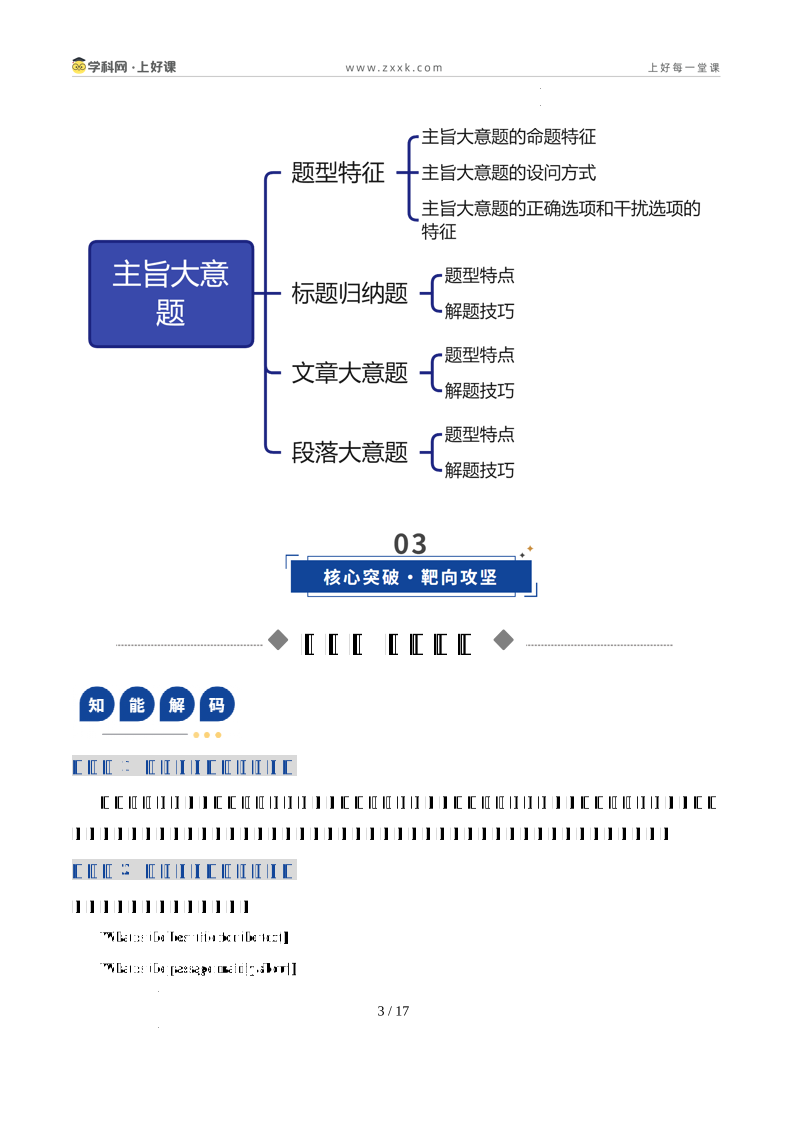
第04讲 阅读理解之主旨大意题
目录
01 1
02 体系构建·思维可视 2
03 核心突破·靶向攻坚 3
考点一 题型特征 3
知识点1 主旨大意题的命题特征 3
知识点2 主旨大意题的设问方式 3
知识点3 主旨大意题的正确选项和干扰选项的特征 4
考点二 标题归纳题 4
知识点1 题型特点 4
知识点2 解题技巧 4
考向 标题归纳题 5
考点三 文章大意题 6
知识点1 题型特点 6
知识点2 解题技巧 6
考向 文章大意题 7
考点四 段落大意题 8
知识点1 题型特点 8
知识点2 解题技巧 9
考向 段落大意题 9
04 真题溯源·考向感知 10
考点要求
考察形式
2025年
2024年
2023年
主旨大意题
选择题
非选择题
3月,C篇,1道
3月,D篇,1道
3月,D篇,1道
6月,C篇,1道
3月,B篇,1道
3月,D篇,1道
6月,B篇,1道
考情分析:
主旨大意题是阅读理解中最难的题目,因为该类题目不仅考查略读文章、领会大意的能力,也对归纳概括能力提出了较高的要求。该类题目在文章中没有明显的解题依据,需要从文章中提炼、提取一些关键词、主干句进行加工概括,才能归纳出文章的主旨。因此,遇到主旨大意题时切勿草率作答,一定要读完、读懂文章后再作判断。
复习目标:
1. 掌握标题归纳题的解题方法;
2. 掌握文章大意题的解题方法;
3. 掌握段落大意题的解题方法。
考点一 题型特征
知识点1 主旨大意题的命题特征
主旨大意题考查的是对文章内容的深层次理解、概括能力,它要求在充分理解全文的前提下,对整篇文章的主旨大意有一个较为清晰的印象。主旨大意题分为标题归纳题、文章大意题和段落大意题。
知识点2 主旨大意题的设问方式
主旨大意题常见的设问方式:
What is the best title for the text?
What is the passage mainly about?
Which of the following is the best title for the passage?
Which is the most suitable title for the text?
What is the first paragraph mainly about?
知识点3 主旨大意题的正确选项和干扰选项的特征
正确选项特征
1.涵盖性强,覆盖全文或全段。
2.确定的范围恰当,既不能太大,也不能太小。
3.精确性强,不会改变原文语言表意的程度及感情色彩。
4.含有文章关键词或者有象征意义的事物。
干扰选项特征
以偏概全
只阐述了局部信息或文章内容的某一个方面
主题过大
归纳概括过于宽泛,超出了文章实际所讨论的内容
断章取义
以次要的事实或细节代替全文的主要观点
无中生有
与文章内容毫不相干或与文章内容相悖
考点二 标题归纳题
知识点 题型特点
标题归纳题要求在理解文章的基础上,结合文章的体裁和结构,从所给选项中选出适合文章的标题。注意最佳标题的特点:概括性强,言简而意赅;精准性强,不改变原文的意义和感情色彩;覆盖性强,能概括全文内容并提炼文章主旨。
知识点2 解题技巧
正面肯定法
在理解文章主旨的基础上,揣摩哪个选项能准确概括主旨。
反面否定法
撇开原文,拿各个备选项去设想用它们作标题写出来的“文章”将是什么内容,然后和原文对照,一一排除不符选项。
研读备选项本身
研读备选项里面的中心词、修饰词的变化、结构、概括性等,排除过于具体化、细节化、绝对化的选项。
考向 标题归纳题
例1 (2024·浙江1月卷)The Stanford marshmallow (棉花糖) test was originally conducted by psychologist Walter Mischel in the late 1960s. Children aged four to six at a nursery school were placed in a room. A single sugary treat, selected by the child, was placed on a table. Each child was told if they waited for 15 minutes before eating the treat, they would be given a second treat. Then they were left alone in the room. Follow-up studies with the children later in life showed a connection between an ability to wait long enough to obtain a second treat and various forms of success.
As adults we face a version of the marshmallow test every day. We’re not tempted (诱惑) by sugary treats, but by our computers, phones, and tablets — all the devices that connect us to the global delivery system for various types of information that do to us what marshmallows do to preschoolers.
We are tempted by sugary treats because our ancestors lived in a calorie-poor world, and our brains developed a response mechanism to these treats that reflected their value — a feeling of reward and satisfaction. But as we’ve reshaped the world around us, dramatically reducing the cost and effort involved in obtaining calories, we still have the same brains we had thousands of years ago, and this mismatch is at the heart of why so many of us struggle to resist tempting foods that we know we shouldn’t eat.
A similar process is at work in our response to information. Our formative environment as a species was information-poor, so our brains developed a mechanism that prized new information. But global connectivity has greatly changed our information environment. We are now ceaselessly bombarded (轰炸) with new information. Therefore, just as we need to be more thoughtful about our caloric consumption, we also need to be more thoughtful about our information consumption, resisting the temptation of the mental “junk food” in order to manage our time most effectively.
4. Which of the following is the best title for the text?
A.Eat Less, Read More B.The Bitter Truth about Early Humans
C.The Later, the Better D.The Marshmallow Test for Grownups
【答案】D
【详解】主旨大意题。根据第二段“As adults we face a version of the marshmallow test every day. We’re not tempted(诱惑)by glyary treats, but by our computers, phones, and tablets—the all devices that connect us to the global delivery system for various types of information that do to us what marshmallows do to preschoolers.(作为成年人,我们每天都要面对棉花糖测试。诱惑我们的不是甜食,而是我们的电脑、手机和平板电脑——所有这些将我们与全球信息传递系统连接起来的设备,它们对我们的作用就像棉花糖对学龄前儿童的作用一样)”结合文章主要内容可知,文章主语介绍了在信息化时代我们作为成年人都在面对棉花糖测试,信息轰炸让我们摄入了太多精神“垃圾食品”。D选项“成人棉花糖测试”最符合文章标题。故选D。
考点三 文章大意题
知识点1 题型特点
文章大意是作者在文章中所要表达的主要内容,是全文的核心思想,也是作者在文章中通过行文逻辑和各种细节来阐明的中心话题。掌握寻找文章主题的3个小技巧,可以快速确定文章大意。解答文章大意题,找准文章的主题句是关键。
知识点2 解题技巧
主题
句法
根据文体和写作手法来定位主题句
根据行文标志来定位主题句
转折词
段落中出现表示转折的词语,如but、 however、 in fact、 actually等,转折词后的句子很可能是主题句
总结词
表示总结或结论的词语,如therefore、 thus、 in short、 conclude 等,总结词后的内容往往是文章的主题句
疑问句
若首段出现疑问句时,对该问题的回答可能是文章的主题句
高频
词法
若全文中无明显主题句时,我们可以利用文章中出现的高频词找出文章主题句。任何一篇文章都是围绕某个主题展开的,因此,有的文章中最明显的特点之一是有一个反复出现的中心词,即高频词,也叫作主题词。抓住它,便容易抓住文章的中心
逆向思
维法
在两个选项看上去都十分正确且无法选择时,试着从选项出发,想象一下如果自己以此选项来写文章会有哪些内容,然后把它与文章的内容相比较,接近的即为正确选项
考向 文章大意题
例1 (2024·新课标II卷)We all know fresh is best when it comes to food. However, most produce at the store went through weeks of travel and covered hundreds of miles before reaching the table. While farmer’s markets are a solid choice to reduce the journey, Babylon Micro-Farm (BMF) shortens it even more.
BMF is an indoor garden system. It can be set up for a family. Additionally, it could serve a larger audience such as a hospital, restaurant or school. The innovative design requires little effort to achieve a reliable weekly supply of fresh greens.
Specifically, it’s a farm that relies on new technology. By connecting through the Cloud, BMF is remotely monitored. Also, there is a convenient app that provides growing data in real time. Because the system is automated, it significantly reduces the amount of water needed to grow plants. Rather than watering rows of soil, the system provides just the right amount to each plant. After harvest, users simply replace the plants with a new pre-seeded pod (容器) to get the next growth cycle started.
Moreover, having a system in the same building where it’s eaten means zero emissions (排放) from transporting plants from soil to salad. In addition, there’s no need for pesticides and other chemicals that pollute traditional farms and the surrounding environment.
BMF employees live out sustainability in their everyday lives. About half of them walk or bike to work. Inside the office, they encourage recycling and waste reduction by limiting garbage cans and avoiding single-use plastic. “We are passionate about reducing waste, carbon and chemicals in our environment,” said a BMF employee.
4. What does the text mainly talk about?
A.BMF’s major strengths. B.BMF’s general management.
C.BMF’s global influence. D.BMF’s technical standards.
【答案】A
【详解】主旨大意题,根据第一段“While farmer”s markets are a solid choice to reduce the journey, Babylon Micro-Farm(BMF) shortens it even more.(虽然农贸市场是减少旅程的可靠选择,但巴比伦微型农场(BMF) 至终缩短了旅程)”第三段“By connecting through the Cloud, BMF is remotely monitored. Also, there is a convenient app that provides growing data in real time. Because the system is automated, it significantly reduces the amount of water needed to grow plants. Rather than watering rows of soil, the system provides just the right amount to each plant.(通过云连接,对BMF进行远程监控。此外,还有一个方便的应用程序可以实时提供不断增长的数据。由于该系统是自动化的,因此大大减少了种植植物所需的水量。该系统不是给一排排土壤浇水,而是为每株植物提供合适的水量)”以及最后一段“BMF employees live out sustainability in their everyday lives. About half of them walk or bike to work. Inside the office, they encourage recycling and waste reduction by limiting garbage cans and avoiding single-use塑料。“We are passionate about reducing waste, carbon and chemicals in our environment,” said a BMF employee.(BMF员工在日常生活中追求可持续发展。大约一半的人步行或骑自行车上班。在办公室里,他们通过限制垃圾和避免一次性塑料来鼓励回收和减少浪费。BMF的一名员工表示:“我们热衷于减少环境中的废物、碳和化学品。”)”可知,文章主要介绍了巴比伦微农场(BMF)的一些主要优势,包括减少食物运输距离、通过云技术远程监控、自动化系统节约水资源、减少化学污染、以及员工的环保生活方式等。故选A。
考点四 段落大意题
知识点1 题型特点
段落大意题主要考查段落的主要意思,是对某个段落基本内容的提炼和概括。概括、总结、归纳段落大意就是用准确、简练的语言把一个段落的主要意思明确而完整地表达出来。
知识点2 解题技巧
定位段落主题句,首尾兼顾定段意
常用的写作架构
每一文段都要围绕一个特定的主题,按照一定的逻辑顺序展开,所以段落的结构也有一定的规律性。做题时要特别注意“首尾兼顾”,即问题所涉及段落的首句和尾句。一是因为它们往往体现主旨要义,二是因为利用这些信息可以迅速提炼段落结构框架,在框架下判断主旨,其准确性更高
考向 段落大意题
例1 (2024·新课表I卷)“I am not crazy,” says Dr. William Farber, shortly after performing acupuncture (针灸) on a rabbit. “I am ahead of my time.” If he seems a little defensive, it might be because even some of his coworkers occasionally laugh at his unusual methods. But Farber is certain he’ll have the last laugh. He’s one of a small but growing number of American veterinarians (兽医) now practicing “holistic” medicine-combining traditional Western treatments with acupuncture, chiropractic (按摩疗法) and herbal medicine.
Farber, a graduate of Colorado State University, started out as a more conventional veterinarian. He became interested in alternative treatments 20 years ago when he suffered from terrible back pain. He tried muscle-relaxing drugs but found little relief. Then he tried acupuncture, an ancient Chinese practice, and was amazed that he improved after two or three treatments. What worked on a veterinarian seemed likely to work on his patients. So, after studying the techniques for a couple of years, he began offering them to pets.
Leigh Tindale’s dog Charlie had a serious heart condition. After Charlie had a heart attack, Tindale says, she was prepared to put him to sleep, but Farber’s treatments eased her dog’s suffering so much that she was able to keep him alive for an additional five months. And Priscilla Dewing reports that her horse, Nappy, “moves more easily and rides more comfortably” after a chiropractic adjustment.
3. What does paragraph 3 mainly talk about?
A.Steps of a chiropractic treatment. B.The complexity of veterinarians’work.
C.Examples of rare animal diseases. D.The effectiveness of holistic medicine.
【答案】D
【详解】主旨大意题。根据第六题内容“Leigh Tindale”dog Charlie had a serious heart condition. After Charlie had a heart attack, Tindale says, she was prepared to put him to sleep, but Farber”s treatments eased her dog”s suffering, so that she was able to keep him alive for an additional five months. And Priscilla Dewing reports that her horse, Nappy,“moves more easily and rides more comfortably”after a chiropractic adjustment.(利廷代尔的狗患有严重的心脏病。廷代尔说,查理看病发作后,她准备让他进入睡眠状态,但法伯的治疗大大减轻了她的狗的痛苦,她能够让它多活五个月。普里西杜(Priscilla Dewing)报告说,她的马(Nappy)经过脊椎按摩调整后,“行动更容易,乘车更舒服”。)可知,本段主要讲述了两个人,一个是Farber通过整体医学方法帮助了患有严重脏病的狗Charlie,另一个是马Nappy在接受脊椎按摩治疗后和骑行行为更为舒适。这些例子都是为了说明整体医学的有效性。故选D。
Passage 1
(2024·天津·高考真题)Research sometimes proves, with data, what we more or less already know(e. g. Exercise is good for you, and polluted air isn’t). Still, sometimes our assumptions are incorrect, and scientific findings surprise researchers, along with the rest of us. A recent example is the phenomenon of disappearing lakes in parts of the frozen treeless Arctic(北极的) region.
You might think these lakes would be expanding, not disappearing. As climate change warms the region — melting(融化)surface snow and ice as well as the permafrost(永冻层)— there should be more surface water, forming larger lakes and even new ones. Recently, however, scientists have observed not just shrinking(缩小的) lakes but lakes that have completely gone away.
Many scientists shared the commonsense expectation that as permafrost melted, lakes would at first expand with meltwater flowing into them. Eventually, researchers made a prediction that progressive warming during the 21st and 22nd centuries would dry out the Arctic, and lakes would begin to shrink. But now it looks as if Arctic lakes are disappearing a century sooner than predicted. A case in point is that some large, age-old lakes shrank dramatically in what appears to have been a matter of months. Scientists have labeled this phenomenon “disastrous lake loss”
What caused this? The frozen solid ground actually contains bits of rock, mineral and organic matter, leaving spaces in between. And because these spaces are filled with solid ice, liquid water cannot readily get inside, but it can when the permafrost melts, allowing more water to get through. Soon after that, around 192 lakes in northwestern Alaska are gone from sight.
Why did scientists miss this? One probable reason is that most climate models assume that the melting of permafrost is driven only by warming air.
New evidence suggests, however, that rainfall — particularly increasing autumn rain — is now contributing significantly to permafrost loss. The rainfall carries heat into the ground. Yet none of the existing models includes such processes.
That is a good example of why — no matter how complex our models are or may one day be — we need direct observation of the natural world.
1.What does Paragraph 1 mainly tell us?
A.General knowledge can at times turn out to be true.
B.Commonsense assumptions can sometimes prove wrong.
C.Research findings should be built on popular assumptions.
D.Scientific research is inspired by an unknown phenomenon.
2.Contrary to the general expectation, climate change has caused ________.
A.a rapid rise of water surface B.the permafrost to melt faster
C.many Arctic lakes to grow larger D.the disappearance of many Arctic lakes
3.The disastrous climatic impacts on the Arctic region have been ________.
A.proved with emerging lakes B.underestimated by scientists
C.well predicted by researchers D.shown elsewhere in the world
4.Why is the frozen Arctic ground hard for water to get through?
A.Because of the solid ice within it.
B.Because of its unique composition.
C.Because it is far away from the waters.
D.Because snow rarely melts on frozen ground.
5.What lesson can we learn from the passage?
A.Direct observation is a must for scientific research.
B.Scientific research is guaranteed by sufficient lab facilities.
C.New evidence should be found to back up research findings.
D.Scientific predictions should be mostly based on research models.
【答案】1.B 2.D 3.B 4.A 5.A
【导语】本文是篇说明文。文章通过对在冰冻无树的北极地区部分湖泊消失的现象这一实例的分析,表明了直接观察自然世界对科学研究是必要的。
1.主旨大意题。根据第一段“Research sometimes proves, with data, what we more or less already know.(研究有时会用数据证明我们或多或少已经知道的事情。)”和“Still, sometimes our assumptions are incorrect, and scientific findings surprise researchers, along with the rest of us.(尽管如此,有时我们的假设是不正确的,科学发现让研究人员和我们其他人感到惊讶。)”可知,该段表明有时一些常识性的假设可能被证明是错误的。故选B。
2.细节理解题。根据第二段“You might think these lakes would be expanding, not disappearing.(你可能会认为这些湖泊会扩大,而不是消失。)”和“Recently, however, scientists have observed not just shrinking(缩小的) lakes but lakes that have completely gone away.(然而,最近科学家们不仅观察到湖泊在萎缩,而且还观察到湖泊已经完全消失。)”可知,与人们的普遍预期相反,气候变化已经引起了许多北极湖泊的消失。故选D。
3.细节理解题。根据第三段“But now it looks as if Arctic lakes are disappearing a century sooner than predicted.(但现在看来,北极湖泊的消失似乎比预测的要早一个世纪。)”可知,对比之前科学家的预测,一些北极湖泊似乎消失得要快很多,可见灾难性的气候对北极地区的影响一直被科学家低估了。故选B。
4.细节理解题。根据第四段“And because these spaces are filled with solid ice, liquid water cannot readily get inside,(因为这些空间充满了固体冰,液态水不容易进入,)”可知,因为冻土层中的空间里充满了坚实的冰,导致液体水无法进入。故选A。
5.推理判断题。根据最后一段“That is a good example of why — no matter how complex our models are or may one day be — we need direct observation of the natural world.(这是一个很好的例子——说明为什么不管我们的例子有多复杂,或者有一天可能会复杂——我们都需要直接观察自然世界。)”可知,文章通过对在冰冻无树的北极地区部分湖泊消失的现象这一实例的分析,让我们学到了直接观察自然世界对科学研究是必要的。故选A。
Passage 2
(2024·天津·高考真题)Staring at the bookcases in my study, packed with so many great books that had remained unread, I heard a loud voice in my head — “Shame on you! How can you leave these masterpieces unread?”
The first book I picked up was Montaigne's Essays. To my surprise I discovered in the margins (页边空白) what clearly was my own faded hand-writing. So I was actually reading it again, but what I was rereading seemed entirely new. I also found sentences underlined. Only this time I wondered: Why did I underline this sentence? It's the next one that is important!
Clearly, my way of reading the text had shifted, and I myself had changed over the years. This raised the larger question of rereading. It comes in many forms. There’s voluntary rereading, the result of a willful decision to revisit a book one has admired, or a book that has left one with some unanswered questions. This kind of planned revisit could also be for confirming certain details in the text, or for checking on the moves of a given character. A devoted teacher might also wish to refresh his closeness to a work, and thus avoid teaching through the same old written notes with soporific (让人瞌睡的) effects.
Contrarily, there’s involuntary rereading. The original reading was either forgotten or so totally absorbed that the new chance encounter with the text produced surprise and astonishment. My reaction to the renewed reading no longer corresponded to the original experience, and I was no longer sure that I recognized myself as the same reader.
Then there are what one might call subconscious (潜意识的) rereadings, those that occur without the specific act of reading, much as the memory of a tune can keep coming back to the mind without its actually being heard again. This form of remembered contact with a book can accompany us during a lifetime and continue to strengthen and shape us. Much in the same manner, we may over the years recite to ourselves poems learnt by heart long ago, which have become part of our self-recognition.
All of these ways of reading are valuable. Renewed contact with a novel or a poem can activate the search for a better knowledge of the self. The new reading, a form of revision, uncovers the change in us. The newness is not in the text. It is we who have evolved. In the process of rereading, our outlook has also been significantly changed. Rereading makes it possible for us to see the world around us, ourselves included, in a new light.
1.What did the author find when reading Montaigne’s Essays?
A.He still couldn't understand it. B.He had made notes in it.
C.It was a brand new copy. D.It was his favorite work.
2.According to the author, what could be a purpose of voluntary rereading?
A.To improve the quality of teaching. B.To learn from admirable characters.
C.To collect details for writing novels. D.To help making important decisions.
3.According to Paragraph 4, involuntary rereading can bring about?
A.Unexpected reading experience. B.Total concentration on new books.
C.Changed preferences for books. D.Enhanced reading skills.
4.What can be learnt about subconscious rereading?
A.It prevents memory from fading. B.It helps make who we are.
C.It involves actual reading. D.It works best with poetry and music.
5.What could be the best title for the passage?
A.Accessing Masterpieces through Rereading B.Rereading: Voluntary or Involuntary?
C.Rereading: Pursuit of Truth D.Transformative Power of Rereading
【答案】1.B 2.A 3.A 4.B 5.D
【导语】本文为一篇说明文。文章主要介绍了自己对重新阅读的感悟和想法,认为重新阅读能更好地了解自我,能让我们以新的眼光来看待周围的世界,包括自己。
1.细节理解题。根据文章第二段“The first book I picked up was Montaigne's Essays. To my surprise I discovered in the margins (页边空白) what clearly was my own faded hand-writing.(我拿起的第一本书就是Montaigne的散文。令我惊讶的是,我在页边空白处发现了明显是我自己褪色的笔记。)”可知,作者惊讶地发现书的空白处是自己之前的笔记,故选B。
2.推理判断题。根据文章第三段“A devoted teacher might also wish to refresh his closeness to a work, and thus avoid teaching through the same old written notes with soporific (让人瞌睡的) effects.(一位敬业的教师可能也希望重新建立与工作的亲密关系,因此避免通过具有催眠效果的相同的旧笔记来进行教学。)”可知,教师通过主动再读更新内容,提高教学质量是主动再读的目的之一,故选A。
3.推理判断题。根据文章第四段“Contrarily, there’s involuntary rereading. The original reading was either forgotten or so totally absorbed that the new chance encounter with the text produced surprise and astonishment. My reaction to the renewed reading no longer corresponded to the original experience, and I was no longer sure that I recognized myself as the same reader. (相反,有一种非主动再读。原来的阅读要么被遗忘,要么完全被吸收,以至于与文本的新的偶遇产生了惊讶和震惊。我对重新阅读的反应不再符合最初的体验,我也不再确定我是否认出自己是同一个读者。)”可知,非主动再读能让读者感到与最初体验不符合的反应,因此能带来意料之外的阅读体验,故选A。
4.推理判断题。根据文章第五段“This form of remembered contact with a book can accompany us during a lifetime and continue to strengthen and shape us. Much in the same manner, we may over the years recite to ourselves poems learnt by heart long ago, which have become part of our self-recognition.(这种与书的记忆联系可以伴随我们一生,并继续加强和塑造我们。同样地,多年来,我们可能会背诵很久以前背下来的诗,这些诗已经成为我们认知的一部分。)”可知,潜意识再读有助于进一步塑造自我,是我们认知的一部分,故选B。
5.主旨大意题。根据文章最后一段“Rereading makes it possible for us to see the world around us, ourselves included, in a new light.(重新阅读使我们能够以新的眼光看待周围的世界,包括我们自己。)”和后文对重新阅读的介绍可知,文章主要论述了重新阅读的重要意义,即再读具有提升读者对作品、自我及世界认知的力量,故D项 “Transformative Power of Rereading(重新阅读的变革力量)” 符合文章标题,故选D。
Passage 3
(2023·天津·高考真题)Storytelling is an ancient art form that has been used to hand down legends, tales and factual stories. Perhaps the first thing that springs to mind when you think of storytelling is the fantasy land that took shape in your mind while Mom or Dad told you stories about princes, castles and monsters, with a unique voice for each character.
Storytelling does not just take place at bedtime or round a campfire, however. It can take some other forms, either via the books we read or the films we watch. But they usually have some elements in common: rather than a list of dry facts, stories have plots and they introduce characters. We respond to stories, particularly when there is emotional detail.
And unlike what we suppose, storytelling is not just a form of entertainment, but a form of learning as well. Long before reading and writing became widely spread and available, oral storytelling had already been a form that the wisdom and knowledge of the people were passed down from elders to children. A good story engages our curiosity, emotions and imagination.
Storytelling helps with learning also because stories are easy to remember. Research has found that learning obtained from a well-told story is remembered more accurately, and for far longer, than from facts and figures.
And above all, stories have a transformative power to allow us to see the world in a different way than we do if we just encounter it on our own. Stories are an entry point to understanding a different experience of the world.
This aspect of storytelling-presenting a different perspective of the world—is important when it comes to connecting with each other. It gives us an opportunity to learn from another person’s experience and it can shape, strengthen or challenge our opinions and values. So, when someone tells us their own personal story, we catch a glimpse (瞥见) of a view of the world that may be slightly or significantly different from our own. When we see the world as they see it, or walk in their shoes, the experience can inspire empathy (共情;同理心) with them.
1.What occurs to us the moment we think of “storytelling”?
A.A child's imaginary world.
B.Voices of Mom or Dad.
C.An ancient art form.
D.Factual stories.
2.What are the common elements in all forms of storytelling according to the author?
A.Form and style.
B.Facts and figures.
C.Emotional and physical details.
D.A series of events and characters.
3.Why does storytelling work better than mere statement of facts in promoting learning?
A.It carries more wisdom and knowledge.
B.It is more widely available to young learners.
C.It satisfies our imagination and releases our emotions.
D.It makes what is learned more precise and longer lasting.
4.How can other people’s personal stories probably benefit us?
A.By offering us more opportunities to know people.
B.By helping us stay connected with the contemporary world.
C.By allowing us to understand the world the way they see it.
D.By enabling us to tell reality from imagination.
5.What makes the best title for the passage?
A.The History of Storytelling
B.The Power of Storytelling
C.The Forms of Storytelling
D.The Art of Storytelling
【答案】1.A 2.D 3.D 4.C 5.B
【导语】本文是说明文。文章主要讲述了讲故事给我们带来的好处。
1.细节理解题。根据第一段中“Perhaps the first thing that springs to mind when you think of storytelling is the fantasy land that took shape in your mind while Mom or Dad told you stories about princes, castles and monsters, with a unique voice for each character. (也许当你想到讲故事时,你首先想到的就是爸爸妈妈给你讲王子、城堡和怪物的故事,每个角色都有独特的声音,在你脑海中形成的幻想世界。)”可知,当提到“讲故事”时,我们会想到一个孩子的想象世界。故选A。
2.细节理解题。根据第二段中“But they usually have some elements in common: rather than a list of dry facts, stories have plots and they introduce characters. (但它们通常都有一些共同点:故事有情节,也有人物形象,而不是一长串枯燥的事实。)”可知,作者认为,一系列的事件和人物是所有叙事中的共同元素,故选D。
3.细节理解题。根据第四段“Storytelling helps with learning also because stories are easy to remember. Research has found that learning obtained from a well-told story is remembered more accurately, and for far longer, than from facts and figures. (讲故事也有助于学习,因为故事容易记住。研究发现,从一个讲得很好的故事中获得的知识比从事实和数据中获得的知识记忆得更准确,时间也更长。)”可知,讲故事比仅仅陈述事实更能促进学习,这是因为它使所学到的知识更加精确和持久。故选D。
4.细节理解题。根据倒数第二段中“And above all, stories have a transformative power to allow us to see the world in a different way than we do if we just encounter it on our own. (最重要的是,故事有一种变革的力量,让我们以一种不同的方式看待这个世界,而不是仅仅依靠我们自己。)”可知,他人的故事让我们以他们看待世界的方式来理解世界,这会让我们受益,故选C。
5.主旨大意题。通读全文,尤其是第三段中“And unlike what we suppose, storytelling is not just a form of entertainment, but a form of learning as well. (与我们想象的不同,讲故事不仅仅是一种娱乐方式,也是一种学习方式。)”,第四段中“Storytelling helps with learning also because stories are easy to remember. (讲故事也有助于学习,因为故事容易记住。)”,第五段中“And above all, stories have a transformative power to allow us to see the world in a different way than we do if we just encounter it on our own. (最重要的是,故事有一种变革的力量,让我们以一种不同的方式看待这个世界,而不是仅仅依靠我们自己。)”和第六段中“This aspect of storytelling-presenting a different perspective of the world—is important when it comes to connecting with each other. (讲故事的这个方面——呈现出一个不同的世界观——对于彼此之间的联系来说是很重要的。)”可知,文章主要讲述了讲故事给我们带来的好处,B项“讲故事的力量”适合作文章标题,故选B。
Passage 4
(2023·天津·高考真题)I looked through the window of the charming little violin shop, and my heart began to race.
I'd been out to dinner that evening. Since it wasn't dark yet after the meal, I decided to walk home from the restaurant. I had traveled that way before, yet I had never noticed that old little shop. But that night I felt drawn to the violin shop the moment I came across it.
I wiped the dirt from the window to get a better look inside. Several violins hung from the dark walls, quietly waiting to be chosen. As my eyes rested on them, I felt as though I were looking through a window into my own past.
My childhood was all about the pursuits I had attempted, most of which had been chosen by Mom. She was like, “Join the swim team, Tara. Your sister is a good swimmer;surely you will be, too. ”What she refused to acknowledge, however, was that I was visibly afraid of water.
Every Saturday I begged Mom not to make me go to the swim meet, but had little chance of success. That said, with a bang of the starting gun, I would dive into the cold water with all my strength and swim to the other side of the pool as fast as I could, only to find that the other swimmers slid past me. I would have given it up if I had not heard my father's encouraging shouts to cheer me on. When at last my hand would grab the edge of the pool, he would always be there with a warm, dry towel, telling me how proud he was of my desperate efforts.
Then came a turning point in my life the day our school orchestra( 管弦乐队)visited my class, and gave a demonstration. The drums annoyed me. The flutes(笛子)bored me. But the violin…ah, the violin. It made the sweetest sound I'd ever heard!My heart was dancing along with its flowing tune. For the first time in my life, I went so wild with joy.
Tightly holding the permission slip from the orchestra director, I ran all the way home after school, and shakily handed it to my parents with a fear that they might dismiss my desire. They didn't. Mom was thrilled to see me finally excited about something, and Dad winked(眨眼示意)at me while eagerly signing the slip.
I began practicing the violin with great passion, and rose quickly in ability. Before long I had won the first seat in the community orchestra …
1.What did the sight of the violins in that little shop bring to Tara's mind?
A.Her miserable past.
B.An unforgettable sport event.
C.The stories behind the violins.
D.Her childhood memory.
2.What Dad did for Tara during the swimming competition implies that he is ________.
A.mindless and bad-tempered
B.caring and supportive
C.strict and demanding
D.tolerant and sympathetic
3.What fascinated Tara during her school orchestra's demonstration?
A.The tune of the flutes.
B.The beat of the drums.
C.The sound of the violin.
D.The manner of the musicians.
4.What enabled Tara to win the first seat in the community orchestra?
A.The steady improvement in her taste.
B.Her strong desire for success.
C.Her natural gift for music.
D.The rapid progress in her ability.
5.What message does Tara's story convey?
A.It's never too young to learn.
B.A passionate interest works wonders.
C.Hard work will pay off in the long run.
D.Like mother, like daughter.
【答案】1.D 2.B 3.C 4.D 5.B
【导语】这是一篇记叙文。讲述了作者路过橱窗时,看到一把迷人的小提琴深受吸引。在游泳比赛屡次落后的情形下,我观看了学校管弦乐队举办的演奏会。在得到父母的许可下,我充满激情地练习小提琴最终成为了社区管弦乐团的首席。
1.细节理解题。由文章第三段最后一行“As my eyes rested on them, I felt as though I were looking through a window into my own past. ”(当我的目光停留在他们身上时,我觉得自己好像在透过窗户回顾自己的过去。)和第四段第一行“My childhood was all about the pursuits I had attempted, most of which had been chosen by Mom. ”(我的童年都是我尝试追求过的爱好,其中大部分都是妈妈选择的。)可知,透过商店的小提琴作者回想起了童年。故选D项。
2.推理判断题。由文章第五段最后两句“I would have given it up if I had not heard my father's encouraging shouts to cheer me on. When at last my hand would grab the edge of the pool, he would always be there with a warm, dry towel, telling me how proud he was of my desperate efforts.”(如果我没有听到父亲鼓励我加油的呼喊声,我早就放弃了。当我的手终于抓住泳池边时,他总是拿着一条温暖、干燥的毛巾在那里,告诉我他为我拼命的努力感到多么自豪。)由此可以推断爸爸是关心和支持作者的。故选B项。
3.细节理解题。由文章第六段最后两句“But the violin…ah, the violin. It made the sweetest sound I'd ever heard!My heart was dancing along with its flowing tune. For the first time in my life, I went so wild with joy. ”( 但是小提琴…啊,小提琴。它发出了我听过的最甜美的声音!我的心随着它流动的曲调翩翩起舞。我有生以来第一次欣喜若狂。)可知是小提琴的声音令作者痴迷。故选C项。
4.细节理解题。由文章第八段第一句“I began practicing the violin with great passion, and rose quickly in ability.”(我怀着极大的热情开始练习小提琴,并且能力迅速提升。 )可知,作者进步飞速,所以才成为首席。故选D项。
5.主旨大意题。根据文章,作者非常拼命地游泳但是依然落后于其他人。他非常热爱小提琴,进步飞速,很快成为了管弦乐团的首席,可知兴趣爱好是最好的老师,能创造奇迹。故选B项。
Passage 5
(2023·天津·高考真题)Most people with good sense would accept that we can and should learn from accidental failures. It would be impossible to progress in anything, after all, without taking the occasional misstep. And by understanding how we slipped, we can avoid falling in the future.
Few would advocate making intentional mistakes, however. Yet consciously erring (犯错) can promote deeper understanding and better recall. The phenomenon is known as the derring effect — coming from “deliberate (故意的) erring” — and when applied properly, it may bring benefits in many unexpected areas of life.
In one experiment carried out at the National University of Singapore, participants were given the task of learning concepts on a difficult subject. For some terms, they simply copied out the correct definition; for others, they were asked to first add an error in their description of the term before correcting the mistake.
Naturally, you would expect the addition of the errors to have increased unwanted confusion. Yet the exact opposite was true: the participants who made deliberate errors learned about twice as much as the people who simply copied out the correct definitions.
The derring effect could be applied in other situations. So a music teacher may find the addition of deliberate errors could help a student remember the right musical notes. Such a playful approach could fuel their creativity for composition, if the student looks for ways to develop those wrong notes into something more attractive. It is encouraging to discover that by readily accepting our errors and wisely placing ourselves in the way of being wrong, we can in fact overcome weaknesses and rise stronger.
The derring effect could be useful for many other challenges too. If you enjoy cooking, for example, you may faithfully follow a recipe without questioning the instructions. But why not try to break away from those habits and deliberately do the “wrong” thing for a change, and see where your derring takes you? If you are painting,meanwhile,you could relax one of the constraints (限制) that you usually put on your work and see what you produce.
At worst, you will have refreshed and deepened your knowledge of the rules you normally apply, so that you can be even more effective next time. At best, you may just find that you have discovered something completely new and unexpected, through a flash of inspiration that you would have missed with perfectionism. Either way, your apparent missteps will have moved you a little closer to true mastery.
1.In Paragraph 1, the author presents ____________.
A.a routine warning
B.a popular misbelief
C.a commonly-held view
D.a theoretical assumption
2.What can be learnt about the experiment?
A.Adding intentional errors facilitates learning.
B.Correcting mistakes is the key to learning.
C.Errors contribute to confusion in learning.
D.Learners make fewer errors in difficult subjects.
3.According to the author using the approach mentioned in Paragraph 5 may result in _______.
A.disappointing performances
B.greater creative power
C.the discovery of problems
D.the admission of weaknesses
4.Which of the following would the author encourage you to do?
A.Strictly follow traditional recipes when cooking.
B.Avoid making mistakes and be a perfectionist.
C.Occasionally ignore traffic regulations.
D.Try unconventional coloring in painting.
5.What could be the best title for the passage?
A.The Challenge of Derring
B.Erring Prevents Failure
C.To Err is Fruitful
D.Errors: Accidental or Intentional
【答案】1.C 2.A 3.B 4.D 5.C
【导语】本文是一篇说明文。文章主要介绍了在学习中,我们总是害怕犯错,甚至为犯错而感到羞耻、焦虑。但新研究发现,犯错对学习来说并不是洪水猛兽,甚至,故意犯错还能促进学习进步。
1.细节理解题。根据第一段“Most people with good sense would accept that we can and should learn from accidental failures. It would be impossible to progress in anything, after all, without taking the occasional misstep. And by understanding how we slipped, we can avoid falling in the future.(大多数有理智的人都会接受我们能够而且应该从偶然的失败中吸取教训。毕竟,如果不偶尔犯错,任何事情都不可能取得进步。通过了解我们是如何滑倒的,我们可以避免在未来摔倒)”可知,第一段作者提出了一个人们普遍认为的观点。故选C。
2.细节理解题。根据第四段中“Naturally, you would expect the addition of the errors to have increased unwanted confusion.Yet the exact opposite was true: the participants who made deliberate errors learned about twice as much as the people who simply copied out the correct definitions.(当然,你会认为错误的增加会增加不必要的混乱。然而事实恰恰相反:故意犯错误的参与者学到的知识是简单抄写正确定义的人的两倍)”可知,添加故意错误有助于学习。故选A。
3.细节理解题。根据第五段中“Such a playful approach could fuel their creativity for composition, if the student looks for ways to develop those wrong notes into something more attractive.( 如果学生想方设法把那些错误的笔记发展成更有吸引力的东西,这种有趣的方法可以激发他们作文的创造力)”可知,根据作者的观点,使用第5段中提到的方法可能会激发学生产生更大的创造力。故选B。
4.推理判断题。根据倒数第二段中“But why not try to break away from those habits and deliberately do the “wrong” thing for a change, and see where your derring takes you? If you are painting, meanwhile, you could relax one of the constraints (限制) that you usually put on your work and see what you produce.(但是,为什么不试着打破这些习惯,为了改变而故意做一些“错误”的事情,看看你的大胆之举会把你带向何方?如果你正在绘画,同时,你可以放下你通常对你的作品施加的限制之一,看看你的作品)”可推知,作者可能会鼓励你在绘画时尝试非常规的色彩。故选D。
5.主旨大意题。通读全文,尤其是第二段“Few would advocate making intentional mistakes, however. Yet consciously erring (犯错) can promote deeper understanding and better recall. The phenomenon is known as the derring effect — coming from “deliberate (故意的) erring” — and when applied properly, it may bring benefits in many unexpected areas of life.(然而,很少有人会主张犯故意的错误。然而,有意识地犯错可以促进更深刻的理解和更好的回忆。这种现象被称为大胆效应——来自“故意犯错”——如果运用得当,它可能会在生活的许多意想不到的领域带来好处)”可知,文章主要介绍了新研究发现,犯错对学习来说并不是洪水猛兽,甚至,故意犯错还能促进学习进步。由此可知,C项“To Err is Fruitful(故意犯错,收获颇丰)挑战主动犯错”适合做文章标题。故选C。
1 / 1
学科网(北京)股份有限公司
学科网(北京)股份有限公司
$
第04讲 阅读理解之主旨大意题
目录
01 1
02 体系构建·思维可视 2
03 核心突破·靶向攻坚 3
考点一 题型特征 3
知识点1 主旨大意题的命题特征 3
知识点2 主旨大意题的设问方式 3
知识点3 主旨大意题的正确选项和干扰选项的特征 4
考点二 标题归纳题 4
知识点1 题型特点 4
知识点2 解题技巧 4
考向 标题归纳题 5
考点三 文章大意题 5
知识点1 题型特点 6
知识点2 解题技巧 6
考向 文章大意题 6
考点四 段落大意题 7
知识点1 题型特点 7
知识点2 解题技巧 8
考向 段落大意题 8
04 真题溯源·考向感知 9
考点要求
考察形式
2025年
2024年
2023年
主旨大意题
选择题
非选择题
3月,C篇,1道
3月,D篇,1道
3月,D篇,1道
6月,C篇,1道
3月,B篇,1道
3月,D篇,1道
6月,B篇,1道
考情分析:
主旨大意题是阅读理解中最难的题目,因为该类题目不仅考查略读文章、领会大意的能力,也对归纳概括能力提出了较高的要求。该类题目在文章中没有明显的解题依据,需要从文章中提炼、提取一些关键词、主干句进行加工概括,才能归纳出文章的主旨。因此,遇到主旨大意题时切勿草率作答,一定要读完、读懂文章后再作判断。
复习目标:
1. 掌握标题归纳题的解题方法;
2. 掌握文章大意题的解题方法;
3. 掌握段落大意题的解题方法。
考点一 题型特征
知识点1 主旨大意题的命题特征
主旨大意题考查的是对文章内容的深层次理解、概括能力,它要求在充分理解全文的前提下,对整篇文章的主旨大意有一个较为清晰的印象。主旨大意题分为标题归纳题、文章大意题和段落大意题。
知识点2 主旨大意题的设问方式
主旨大意题常见的设问方式:
What is the best title for the text?
What is the passage mainly about?
Which of the following is the best title for the passage?
Which is the most suitable title for the text?
What is the first paragraph mainly about?
知识点3 主旨大意题的正确选项和干扰选项的特征
正确选项特征
1.涵盖性强,覆盖全文或全段。
2.确定的范围恰当,既不能太大,也不能太小。
3.精确性强,不会改变原文语言表意的程度及感情色彩。
4.含有文章关键词或者有象征意义的事物。
干扰选项特征
以偏概全
只阐述了局部信息或文章内容的某一个方面
主题过大
归纳概括过于宽泛,超出了文章实际所讨论的内容
断章取义
以次要的事实或细节代替全文的主要观点
无中生有
与文章内容毫不相干或与文章内容相悖
考点二 标题归纳题
知识点 题型特点
标题归纳题要求在理解文章的基础上,结合文章的体裁和结构,从所给选项中选出适合文章的标题。注意最佳标题的特点:概括性强,言简而意赅;精准性强,不改变原文的意义和感情色彩;覆盖性强,能概括全文内容并提炼文章主旨。
知识点2 解题技巧
正面肯定法
在理解文章主旨的基础上,揣摩哪个选项能准确概括主旨。
反面否定法
撇开原文,拿各个备选项去设想用它们作标题写出来的“文章”将是什么内容,然后和原文对照,一一排除不符选项。
研读备选项本身
研读备选项里面的中心词、修饰词的变化、结构、概括性等,排除过于具体化、细节化、绝对化的选项。
考向 标题归纳题
例1 (2024·浙江1月卷)The Stanford marshmallow (棉花糖) test was originally conducted by psychologist Walter Mischel in the late 1960s. Children aged four to six at a nursery school were placed in a room. A single sugary treat, selected by the child, was placed on a table. Each child was told if they waited for 15 minutes before eating the treat, they would be given a second treat. Then they were left alone in the room. Follow-up studies with the children later in life showed a connection between an ability to wait long enough to obtain a second treat and various forms of success.
As adults we face a version of the marshmallow test every day. We’re not tempted (诱惑) by sugary treats, but by our computers, phones, and tablets — all the devices that connect us to the global delivery system for various types of information that do to us what marshmallows do to preschoolers.
We are tempted by sugary treats because our ancestors lived in a calorie-poor world, and our brains developed a response mechanism to these treats that reflected their value — a feeling of reward and satisfaction. But as we’ve reshaped the world around us, dramatically reducing the cost and effort involved in obtaining calories, we still have the same brains we had thousands of years ago, and this mismatch is at the heart of why so many of us struggle to resist tempting foods that we know we shouldn’t eat.
A similar process is at work in our response to information. Our formative environment as a species was information-poor, so our brains developed a mechanism that prized new information. But global connectivity has greatly changed our information environment. We are now ceaselessly bombarded (轰炸) with new information. Therefore, just as we need to be more thoughtful about our caloric consumption, we also need to be more thoughtful about our information consumption, resisting the temptation of the mental “junk food” in order to manage our time most effectively.
4. Which of the following is the best title for the text?
A.Eat Less, Read More B.The Bitter Truth about Early Humans
C.The Later, the Better D.The Marshmallow Test for Grownups
考点三 文章大意题
知识点1 题型特点
文章大意是作者在文章中所要表达的主要内容,是全文的核心思想,也是作者在文章中通过行文逻辑和各种细节来阐明的中心话题。掌握寻找文章主题的3个小技巧,可以快速确定文章大意。解答文章大意题,找准文章的主题句是关键。
知识点2 解题技巧
主题
句法
根据文体和写作手法来定位主题句
根据行文标志来定位主题句
转折词
段落中出现表示转折的词语,如but、 however、 in fact、 actually等,转折词后的句子很可能是主题句
总结词
表示总结或结论的词语,如therefore、 thus、 in short、 conclude 等,总结词后的内容往往是文章的主题句
疑问句
若首段出现疑问句时,对该问题的回答可能是文章的主题句
高频
词法
若全文中无明显主题句时,我们可以利用文章中出现的高频词找出文章主题句。任何一篇文章都是围绕某个主题展开的,因此,有的文章中最明显的特点之一是有一个反复出现的中心词,即高频词,也叫作主题词。抓住它,便容易抓住文章的中心
逆向思
维法
在两个选项看上去都十分正确且无法选择时,试着从选项出发,想象一下如果自己以此选项来写文章会有哪些内容,然后把它与文章的内容相比较,接近的即为正确选项
考向 文章大意题
例1 (2024·新课标II卷)We all know fresh is best when it comes to food. However, most produce at the store went through weeks of travel and covered hundreds of miles before reaching the table. While farmer’s markets are a solid choice to reduce the journey, Babylon Micro-Farm (BMF) shortens it even more.
BMF is an indoor garden system. It can be set up for a family. Additionally, it could serve a larger audience such as a hospital, restaurant or school. The innovative design requires little effort to achieve a reliable weekly supply of fresh greens.
Specifically, it’s a farm that relies on new technology. By connecting through the Cloud, BMF is remotely monitored. Also, there is a convenient app that provides growing data in real time. Because the system is automated, it significantly reduces the amount of water needed to grow plants. Rather than watering rows of soil, the system provides just the right amount to each plant. After harvest, users simply replace the plants with a new pre-seeded pod (容器) to get the next growth cycle started.
Moreover, having a system in the same building where it’s eaten means zero emissions (排放) from transporting plants from soil to salad. In addition, there’s no need for pesticides and other chemicals that pollute traditional farms and the surrounding environment.
BMF employees live out sustainability in their everyday lives. About half of them walk or bike to work. Inside the office, they encourage recycling and waste reduction by limiting garbage cans and avoiding single-use plastic. “We are passionate about reducing waste, carbon and chemicals in our environment,” said a BMF employee.
4. What does the text mainly talk about?
A.BMF’s major strengths. B.BMF’s general management.
C.BMF’s global influence. D.BMF’s technical standards.
考点四 段落大意题
知识点1 题型特点
段落大意题主要考查段落的主要意思,是对某个段落基本内容的提炼和概括。概括、总结、归纳段落大意就是用准确、简练的语言把一个段落的主要意思明确而完整地表达出来。
知识点2 解题技巧
定位段落主题句,首尾兼顾定段意
常用的写作架构
每一文段都要围绕一个特定的主题,按照一定的逻辑顺序展开,所以段落的结构也有一定的规律性。做题时要特别注意“首尾兼顾”,即问题所涉及段落的首句和尾句。一是因为它们往往体现主旨要义,二是因为利用这些信息可以迅速提炼段落结构框架,在框架下判断主旨,其准确性更高
考向 段落大意题
例1 (2024·新课表I卷)“I am not crazy,” says Dr. William Farber, shortly after performing acupuncture (针灸) on a rabbit. “I am ahead of my time.” If he seems a little defensive, it might be because even some of his coworkers occasionally laugh at his unusual methods. But Farber is certain he’ll have the last laugh. He’s one of a small but growing number of American veterinarians (兽医) now practicing “holistic” medicine-combining traditional Western treatments with acupuncture, chiropractic (按摩疗法) and herbal medicine.
Farber, a graduate of Colorado State University, started out as a more conventional veterinarian. He became interested in alternative treatments 20 years ago when he suffered from terrible back pain. He tried muscle-relaxing drugs but found little relief. Then he tried acupuncture, an ancient Chinese practice, and was amazed that he improved after two or three treatments. What worked on a veterinarian seemed likely to work on his patients. So, after studying the techniques for a couple of years, he began offering them to pets.
Leigh Tindale’s dog Charlie had a serious heart condition. After Charlie had a heart attack, Tindale says, she was prepared to put him to sleep, but Farber’s treatments eased her dog’s suffering so much that she was able to keep him alive for an additional five months. And Priscilla Dewing reports that her horse, Nappy, “moves more easily and rides more comfortably” after a chiropractic adjustment.
3. What does paragraph 3 mainly talk about?
A.Steps of a chiropractic treatment. B.The complexity of veterinarians’work.
C.Examples of rare animal diseases. D.The effectiveness of holistic medicine.
Passage 1
(2024·天津·高考真题)Research sometimes proves, with data, what we more or less already know(e. g. Exercise is good for you, and polluted air isn’t). Still, sometimes our assumptions are incorrect, and scientific findings surprise researchers, along with the rest of us. A recent example is the phenomenon of disappearing lakes in parts of the frozen treeless Arctic(北极的) region.
You might think these lakes would be expanding, not disappearing. As climate change warms the region — melting(融化)surface snow and ice as well as the permafrost(永冻层)— there should be more surface water, forming larger lakes and even new ones. Recently, however, scientists have observed not just shrinking(缩小的) lakes but lakes that have completely gone away.
Many scientists shared the commonsense expectation that as permafrost melted, lakes would at first expand with meltwater flowing into them. Eventually, researchers made a prediction that progressive warming during the 21st and 22nd centuries would dry out the Arctic, and lakes would begin to shrink. But now it looks as if Arctic lakes are disappearing a century sooner than predicted. A case in point is that some large, age-old lakes shrank dramatically in what appears to have been a matter of months. Scientists have labeled this phenomenon “disastrous lake loss”
What caused this? The frozen solid ground actually contains bits of rock, mineral and organic matter, leaving spaces in between. And because these spaces are filled with solid ice, liquid water cannot readily get inside, but it can when the permafrost melts, allowing more water to get through. Soon after that, around 192 lakes in northwestern Alaska are gone from sight.
Why did scientists miss this? One probable reason is that most climate models assume that the melting of permafrost is driven only by warming air.
New evidence suggests, however, that rainfall — particularly increasing autumn rain — is now contributing significantly to permafrost loss. The rainfall carries heat into the ground. Yet none of the existing models includes such processes.
That is a good example of why — no matter how complex our models are or may one day be — we need direct observation of the natural world.
1.What does Paragraph 1 mainly tell us?
A.General knowledge can at times turn out to be true.
B.Commonsense assumptions can sometimes prove wrong.
C.Research findings should be built on popular assumptions.
D.Scientific research is inspired by an unknown phenomenon.
2.Contrary to the general expectation, climate change has caused ________.
A.a rapid rise of water surface B.the permafrost to melt faster
C.many Arctic lakes to grow larger D.the disappearance of many Arctic lakes
3.The disastrous climatic impacts on the Arctic region have been ________.
A.proved with emerging lakes B.underestimated by scientists
C.well predicted by researchers D.shown elsewhere in the world
4.Why is the frozen Arctic ground hard for water to get through?
A.Because of the solid ice within it.
B.Because of its unique composition.
C.Because it is far away from the waters.
D.Because snow rarely melts on frozen ground.
5.What lesson can we learn from the passage?
A.Direct observation is a must for scientific research.
B.Scientific research is guaranteed by sufficient lab facilities.
C.New evidence should be found to back up research findings.
D.Scientific predictions should be mostly based on research models.
Passage 2
(2024·天津·高考真题)Staring at the bookcases in my study, packed with so many great books that had remained unread, I heard a loud voice in my head — “Shame on you! How can you leave these masterpieces unread?”
The first book I picked up was Montaigne's Essays. To my surprise I discovered in the margins (页边空白) what clearly was my own faded hand-writing. So I was actually reading it again, but what I was rereading seemed entirely new. I also found sentences underlined. Only this time I wondered: Why did I underline this sentence? It's the next one that is important!
Clearly, my way of reading the text had shifted, and I myself had changed over the years. This raised the larger question of rereading. It comes in many forms. There’s voluntary rereading, the result of a willful decision to revisit a book one has admired, or a book that has left one with some unanswered questions. This kind of planned revisit could also be for confirming certain details in the text, or for checking on the moves of a given character. A devoted teacher might also wish to refresh his closeness to a work, and thus avoid teaching through the same old written notes with soporific (让人瞌睡的) effects.
Contrarily, there’s involuntary rereading. The original reading was either forgotten or so totally absorbed that the new chance encounter with the text produced surprise and astonishment. My reaction to the renewed reading no longer corresponded to the original experience, and I was no longer sure that I recognized myself as the same reader.
Then there are what one might call subconscious (潜意识的) rereadings, those that occur without the specific act of reading, much as the memory of a tune can keep coming back to the mind without its actually being heard again. This form of remembered contact with a book can accompany us during a lifetime and continue to strengthen and shape us. Much in the same manner, we may over the years recite to ourselves poems learnt by heart long ago, which have become part of our self-recognition.
All of these ways of reading are valuable. Renewed contact with a novel or a poem can activate the search for a better knowledge of the self. The new reading, a form of revision, uncovers the change in us. The newness is not in the text. It is we who have evolved. In the process of rereading, our outlook has also been significantly changed. Rereading makes it possible for us to see the world around us, ourselves included, in a new light.
1.What did the author find when reading Montaigne’s Essays?
A.He still couldn't understand it. B.He had made notes in it.
C.It was a brand new copy. D.It was his favorite work.
2.According to the author, what could be a purpose of voluntary rereading?
A.To improve the quality of teaching. B.To learn from admirable characters.
C.To collect details for writing novels. D.To help making important decisions.
3.According to Paragraph 4, involuntary rereading can bring about?
A.Unexpected reading experience. B.Total concentration on new books.
C.Changed preferences for books. D.Enhanced reading skills.
4.What can be learnt about subconscious rereading?
A.It prevents memory from fading. B.It helps make who we are.
C.It involves actual reading. D.It works best with poetry and music.
5.What could be the best title for the passage?
A.Accessing Masterpieces through Rereading B.Rereading: Voluntary or Involuntary?
C.Rereading: Pursuit of Truth D.Transformative Power of Rereading
Passage 3
(2023·天津·高考真题)Storytelling is an ancient art form that has been used to hand down legends, tales and factual stories. Perhaps the first thing that springs to mind when you think of storytelling is the fantasy land that took shape in your mind while Mom or Dad told you stories about princes, castles and monsters, with a unique voice for each character.
Storytelling does not just take place at bedtime or round a campfire, however. It can take some other forms, either via the books we read or the films we watch. But they usually have some elements in common: rather than a list of dry facts, stories have plots and they introduce characters. We respond to stories, particularly when there is emotional detail.
And unlike what we suppose, storytelling is not just a form of entertainment, but a form of learning as well. Long before reading and writing became widely spread and available, oral storytelling had already been a form that the wisdom and knowledge of the people were passed down from elders to children. A good story engages our curiosity, emotions and imagination.
Storytelling helps with learning also because stories are easy to remember. Research has found that learning obtained from a well-told story is remembered more accurately, and for far longer, than from facts and figures.
And above all, stories have a transformative power to allow us to see the world in a different way than we do if we just encounter it on our own. Stories are an entry point to understanding a different experience of the world.
This aspect of storytelling-presenting a different perspective of the world—is important when it comes to connecting with each other. It gives us an opportunity to learn from another person’s experience and it can shape, strengthen or challenge our opinions and values. So, when someone tells us their own personal story, we catch a glimpse (瞥见) of a view of the world that may be slightly or significantly different from our own. When we see the world as they see it, or walk in their shoes, the experience can inspire empathy (共情;同理心) with them.
1.What occurs to us the moment we think of “storytelling”?
A.A child's imaginary world.
B.Voices of Mom or Dad.
C.An ancient art form.
D.Factual stories.
2.What are the common elements in all forms of storytelling according to the author?
A.Form and style.
B.Facts and figures.
C.Emotional and physical details.
D.A series of events and characters.
3.Why does storytelling work better than mere statement of facts in promoting learning?
A.It carries more wisdom and knowledge.
B.It is more widely available to young learners.
C.It satisfies our imagination and releases our emotions.
D.It makes what is learned more precise and longer lasting.
4.How can other people’s personal stories probably benefit us?
A.By offering us more opportunities to know people.
B.By helping us stay connected with the contemporary world.
C.By allowing us to understand the world the way they see it.
D.By enabling us to tell reality from imagination.
5.What makes the best title for the passage?
A.The History of Storytelling
B.The Power of Storytelling
C.The Forms of Storytelling
Passage 4
(2023·天津·高考真题)I looked through the window of the charming little violin shop, and my heart began to race.
I'd been out to dinner that evening. Since it wasn't dark yet after the meal, I decided to walk home from the restaurant. I had traveled that way before, yet I had never noticed that old little shop. But that night I felt drawn to the violin shop the moment I came across it.
I wiped the dirt from the window to get a better look inside. Several violins hung from the dark walls, quietly waiting to be chosen. As my eyes rested on them, I felt as though I were looking through a window into my own past.
My childhood was all about the pursuits I had attempted, most of which had been chosen by Mom. She was like, “Join the swim team, Tara. Your sister is a good swimmer;surely you will be, too. ”What she refused to acknowledge, however, was that I was visibly afraid of water.
Every Saturday I begged Mom not to make me go to the swim meet, but had little chance of success. That said, with a bang of the starting gun, I would dive into the cold water with all my strength and swim to the other side of the pool as fast as I could, only to find that the other swimmers slid past me. I would have given it up if I had not heard my father's encouraging shouts to cheer me on. When at last my hand would grab the edge of the pool, he would always be there with a warm, dry towel, telling me how proud he was of my desperate efforts.
Then came a turning point in my life the day our school orchestra( 管弦乐队)visited my class, and gave a demonstration. The drums annoyed me. The flutes(笛子)bored me. But the violin…ah, the violin. It made the sweetest sound I'd ever heard!My heart was dancing along with its flowing tune. For the first time in my life, I went so wild with joy.
Tightly holding the permission slip from the orchestra director, I ran all the way home after school, and shakily handed it to my parents with a fear that they might dismiss my desire. They didn't. Mom was thrilled to see me finally excited about something, and Dad winked(眨眼示意)at me while eagerly signing the slip.
I began practicing the violin with great passion, and rose quickly in ability. Before long I had won the first seat in the community orchestra …
1.What did the sight of the violins in that little shop bring to Tara's mind?
A.Her miserable past.
B.An unforgettable sport event.
C.The stories behind the violins.
D.Her childhood memory.
2.What Dad did for Tara during the swimming competition implies that he is ________.
A.mindless and bad-tempered
B.caring and supportive
C.strict and demanding
D.tolerant and sympathetic
3.What fascinated Tara during her school orchestra's demonstration?
A.The tune of the flutes.
B.The beat of the drums.
C.The sound of the violin.
D.The manner of the musicians.
4.What enabled Tara to win the first seat in the community orchestra?
A.The steady improvement in her taste.
B.Her strong desire for success.
C.Her natural gift for music.
D.The rapid progress in her ability.
5.What message does Tara's story convey?
A.It's never too young to learn.
B.A passionate interest works wonders.
C.Hard work will pay off in the long run.
D.Like mother, like daughter.
Passage 5
(2023·天津·高考真题)Most people with good sense would accept that we can and should learn from accidental failures. It would be impossible to progress in anything, after all, without taking the occasional misstep. And by understanding how we slipped, we can avoid falling in the future.
Few would advocate making intentional mistakes, however. Yet consciously erring (犯错) can promote deeper understanding and better recall. The phenomenon is known as the derring effect — coming from “deliberate (故意的) erring” — and when applied properly, it may bring benefits in many unexpected areas of life.
In one experiment carried out at the National University of Singapore, participants were given the task of learning concepts on a difficult subject. For some terms, they simply copied out the correct definition; for others, they were asked to first add an error in their description of the term before correcting the mistake.
Naturally, you would expect the addition of the errors to have increased unwanted confusion. Yet the exact opposite was true: the participants who made deliberate errors learned about twice as much as the people who simply copied out the correct definitions.
The derring effect could be applied in other situations. So a music teacher may find the addition of deliberate errors could help a student remember the right musical notes. Such a playful approach could fuel their creativity for composition, if the student looks for ways to develop those wrong notes into something more attractive. It is encouraging to discover that by readily accepting our errors and wisely placing ourselves in the way of being wrong, we can in fact overcome weaknesses and rise stronger.
The derring effect could be useful for many other challenges too. If you enjoy cooking, for example, you may faithfully follow a recipe without questioning the instructions. But why not try to break away from those habits and deliberately do the “wrong” thing for a change, and see where your derring takes you? If you are painting,meanwhile,you could relax one of the constraints (限制) that you usually put on your work and see what you produce.
At worst, you will have refreshed and deepened your knowledge of the rules you normally apply, so that you can be even more effective next time. At best, you may just find that you have discovered something completely new and unexpected, through a flash of inspiration that you would have missed with perfectionism. Either way, your apparent missteps will have moved you a little closer to true mastery.
1.In Paragraph 1, the author presents ____________.
A.a routine warning
B.a popular misbelief
C.a commonly-held view
D.a theoretical assumption
2.What can be learnt about the experiment?
A.Adding intentional errors facilitates learning.
B.Correcting mistakes is the key to learning.
C.Errors contribute to confusion in learning.
D.Learners make fewer errors in difficult subjects.
3.According to the author using the approach mentioned in Paragraph 5 may result in _______.
A.disappointing performances
B.greater creative power
C.the discovery of problems
D.the admission of weaknesses
4.Which of the following would the author encourage you to do?
A.Strictly follow traditional recipes when cooking.
B.Avoid making mistakes and be a perfectionist.
C.Occasionally ignore traffic regulations.
D.Try unconventional coloring in painting.
5.What could be the best title for the passage?
A.The Challenge of Derring
B.Erring Prevents Failure
C.To Err is Fruitful
D.Errors: Accidental or Intentional
1 / 1
学科网(北京)股份有限公司
学科网(北京)股份有限公司
$
资源预览图

1

2
3

相关资源
由于学科网是一个信息分享及获取的平台,不确保部分用户上传资料的 来源及知识产权归属。如您发现相关资料侵犯您的合法权益,请联系学科网,我们核实后将及时进行处理。