Unit 2 We're Family! Over to You 教学设计 2025-2026学年鲁教版(五四学制)(2024)六年级英语上册
2025-09-06
|
4页
|
54人阅读
|
22人下载
普通
资源信息
| 学段 | 初中 |
|---|---|
| 学科 | 英语 |
| 教材版本 | 初中英语鲁教版(五四学制)六年级上册 |
| 年级 | 六年级 |
| 章节 | Over to You |
| 类型 | 教案-教学设计 |
| 知识点 | - |
| 使用场景 | 同步教学-新授课 |
| 学年 | 2025-2026 |
| 地区(省份) | 全国 |
| 地区(市) | - |
| 地区(区县) | - |
| 文件格式 | DOCX |
| 文件大小 | 54 KB |
| 发布时间 | 2025-09-06 |
| 更新时间 | 2025-09-06 |
| 作者 | 匿名 |
| 品牌系列 | - |
| 审核时间 | 2025-09-06 |
| 下载链接 | https://m.zxxk.com/soft/53800072.html |
| 价格 | 0.00储值(1储值=1元) |
| 来源 | 学科网 |
内容正文:
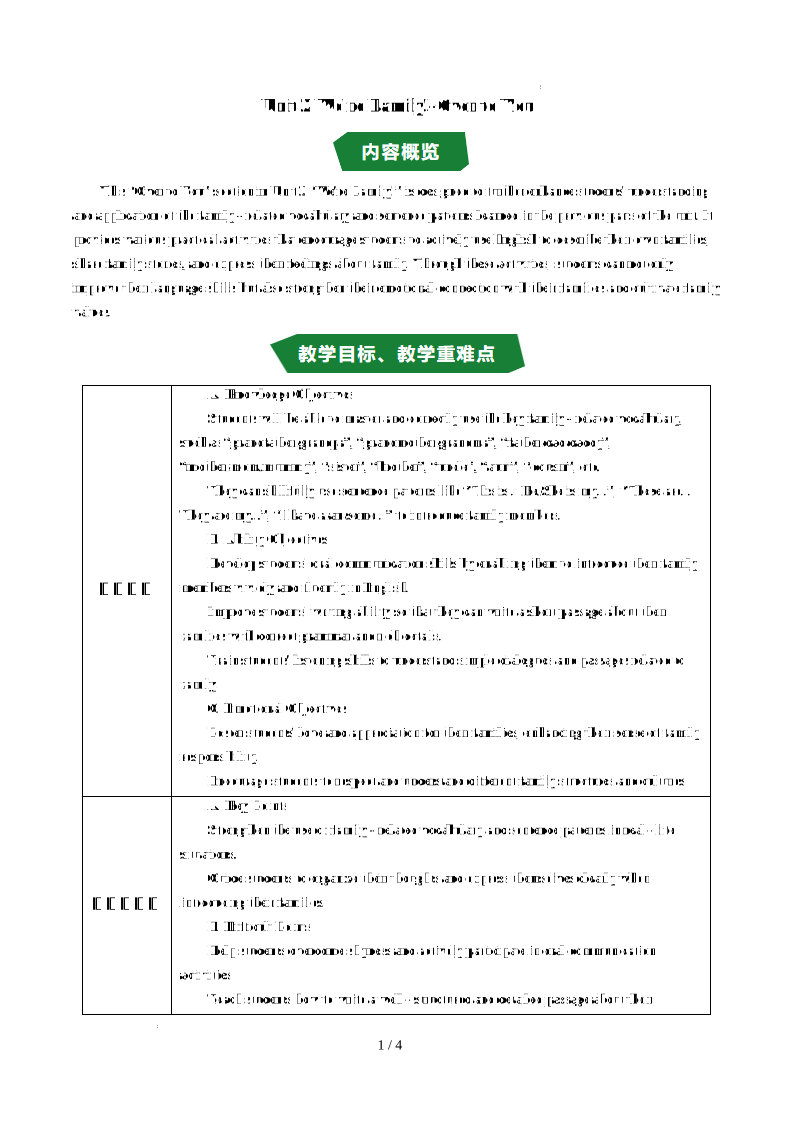
Unit 2 We're Family!-Over to You
This “Over to You” section in Unit 2 “We're Family!” is designed to further enhance students' understanding and application of the family - related vocabulary and sentence patterns learned in the previous parts of the unit. It provides various practical activities that encourage students to actively use English to describe their own families, share family stories, and express their feelings about family. Through these activities, students can not only improve their language skills but also strengthen their emotional connection with their families and cultivate family values.
教学目标
A. Knowledge Objectives
Students will be able to master and correctly use the key family - related vocabulary, such as “grandfather/grandpa”, “grandmother/grandma”, “father/dad/daddy”, “mother/mom/mummy”, “sister”, “brother”, “uncle”, “aunt”, “cousin”, etc.
They can skillfully use sentence patterns like “This is... He/She is my...”, “These are... They are my...”, “I have a/an/some...” to introduce family members.
B. Ability Objectives
Develop students' oral communication skills by enabling them to introduce their family members vividly and fluently in English.
Improve students' writing ability so that they can write a short passage about their families with correct grammar and rich details.
Train students' listening skills to understand simple dialogues and passages related to family.
C. Emotional Objectives
Foster students' love and appreciation for their families, enhancing their sense of family responsibility.
Encourage students to respect and understand different family structures and cultures.
教学重难点
A. Key Points
Strengthen the use of family - related vocabulary and sentence patterns in real - life situations.
Guide students to organize their thoughts and express themselves clearly when introducing their families.
B. Difficult Points
Help students overcome shyness and actively participate in oral communication activities.
Teach students how to write a well - structured and detailed passage about their families, including the use of proper connecting words and sentence variety.
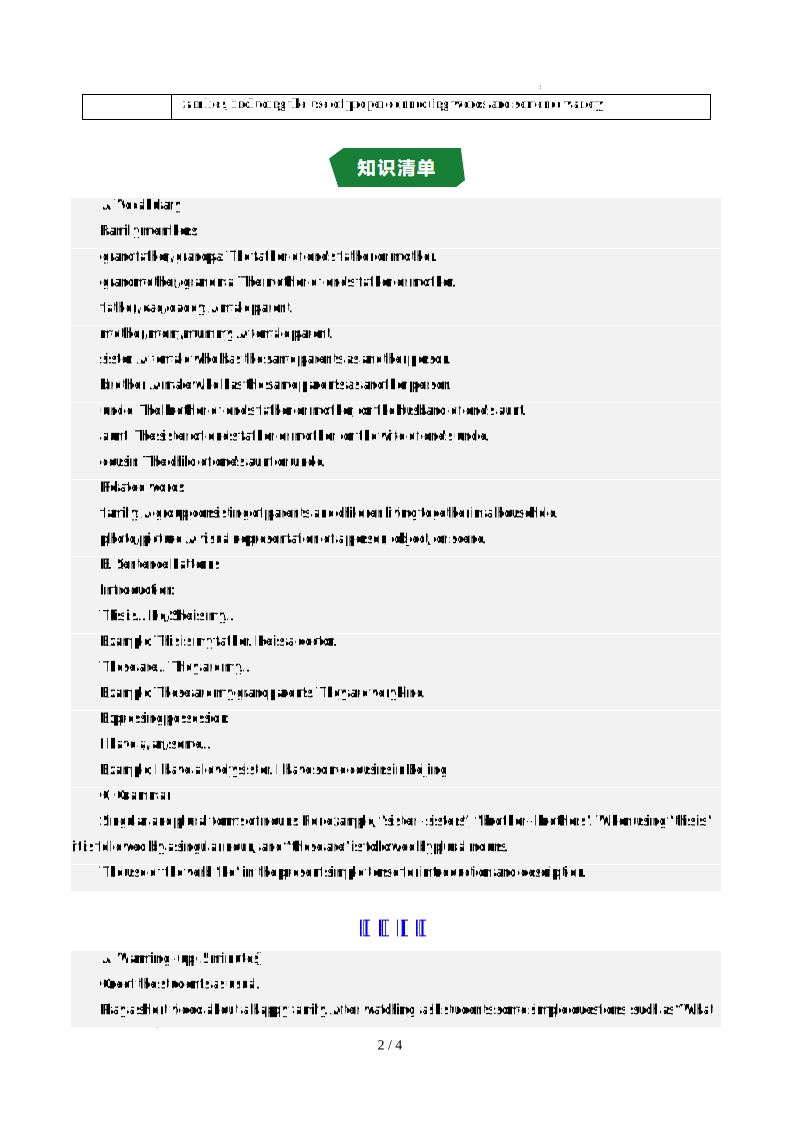
A. Vocabulary
Family members:
grandfather/grandpa: The father of one's father or mother.
grandmother/grandma: The mother of one's father or mother.
father/dad/daddy: A male parent.
mother/mom/mummy: A female parent.
sister: A female who has the same parents as another person.
brother: A male who has the same parents as another person.
uncle: The brother of one's father or mother, or the husband of one's aunt.
aunt: The sister of one's father or mother, or the wife of one's uncle.
cousin: The child of one's aunt or uncle.
Related words:
family: A group consisting of parents and children living together in a household.
photo/picture: A visual representation of a person, object, or scene.
B. Sentence Patterns
Introduction:
This is... He/She is my...
Example: This is my father. He is a doctor.
These are... They are my...
Example: These are my grandparents. They are very kind.
Expressing possession:
I have a/an/some...
Example: I have a lovely sister. I have some cousins in Beijing.
C. Grammar
Singular and plural forms of nouns: For example, “sister - sisters”, “brother - brothers”. When using “this is”, it is followed by a singular noun, and “these are” is followed by plural nouns.
The use of the verb “be” in the present simple tense for introduction and description.
教学过程
A. Warming - up (5 minutes)
Greet the students as usual.
Play a short video about a happy family. After watching, ask students some simple questions, such as “What can you see in the video?” “How many people are there in the family?” to arouse their interest and lead in the topic of family.
B. Revision (5 minutes)
Use flashcards to review the family - related vocabulary learned before. Show the flashcards one by one and ask students to quickly say the corresponding English words.
Invite several students to come to the front of the class and use the sentence patterns “This is... He/She is my...” to introduce the family members in their photos (students are asked to bring family photos in advance).
C. Presentation (10 minutes)
Listening Activity
Play a dialogue recording about two students introducing their families. Before playing, give students some listening tasks, such as “How many people are there in each student's family?” “Who are they?”
After playing the recording once, let students answer the questions. Then play the recording again for students to check their answers.
Explain some new words or expressions that appear in the dialogue, like “a big family”, “live with”.
Reading Activity
Present a short passage about a family on the blackboard or through a projector. The passage can include information about family members' jobs, hobbies, etc.
Let students read the passage silently first, and then answer some comprehension questions, such as “What does the father do?” “What is the sister's hobby?”
Analyze the passage sentence by sentence, emphasizing the use of vocabulary, sentence patterns, and grammar points. For example, point out how the writer uses “I have...” to introduce family members and “He/She is...” to describe them.
D. Practice (15 minutes)
Group Work - Oral Practice
Divide students into groups of 4 - 5. In each group, students take turns to introduce their families in detail. They can talk about not only the basic information of family members but also some interesting family stories or traditions.
The group members listen carefully and can ask questions if they are interested in something. For example, “What does your father like to do on weekends?”
Walk around the classroom to monitor and offer help when necessary. After each group finishes, select one or two groups to present their family introductions in front of the whole class.
Writing Practice
Ask students to write a short passage about their families based on their oral introductions. Remind them to use the correct vocabulary, sentence patterns, and grammar. They can also add some drawings or stickers related to their families to make their passages more vivid.
While students are writing, provide individual guidance, such as helping them with spelling mistakes, grammar errors, or organizing their ideas.
E. Production (5 minutes)
Show and Share
Invite several students to come to the front of the class and share their written passages about their families. They can hold up their family photos or the passages with drawings at the same time.
After each student shares, the rest of the class gives applause and can ask some questions or make some comments, like “Your family looks very happy. I like your story about the family trip.”
Summary
Summarize the key points of this class, including the important vocabulary, sentence patterns, and grammar related to family introduction. Emphasize the significance of family and the importance of expressing our love for family in English.
F. Homework (5 minutes)
Ask students to make a family photo album with English captions under each photo. They can describe who the people in the photos are, what they are doing, and their feelings about these photos.
Tell students to teach their family members at least three English words about family members that they learned in this class, and then write a short report about it, such as “I taught my mom the word ‘aunt’ today. She was very interested and repeated it many times.”
教学反思
In this class, the use of multimedia resources, such as videos and recordings, effectively attracted students' attention and created a vivid language - learning environment. However, in the future, more diverse materials can be prepared to meet different students' interests.
The group work and pair - work activities actively engaged most students in oral communication. But some shy students still need more encouragement and individual guidance to fully participate. In the following classes, more specific strategies should be designed to help these students overcome their fear of speaking English in public.
The writing practice was helpful for students to consolidate the knowledge they learned. However, some students still made mistakes in grammar and vocabulary usage. In the next class, more grammar exercises and writing - correction sessions can be arranged to improve their writing skills.
Overall, through this class, students have a better understanding of family - related English expressions and a deeper sense of family. But continuous review and practice are needed to ensure that students can firmly master and freely use this knowledge in different situations.
2 / 37
学科网(北京)股份有限公司
学科网(北京)股份有限公司
$
资源预览图
1
2
相关资源
由于学科网是一个信息分享及获取的平台,不确保部分用户上传资料的 来源及知识产权归属。如您发现相关资料侵犯您的合法权益,请联系学科网,我们核实后将及时进行处理。