Unit 5 课时2 Lesson1(课件)英语北师大版2024八年级上册
2025-10-30
|
2份
|
32页
|
125人阅读
|
4人下载
精品
资源信息
| 学段 | 初中 |
|---|---|
| 学科 | 英语 |
| 教材版本 | 初中英语北师大版八年级上册 |
| 年级 | 八年级 |
| 章节 | Lesson 1 Always Travelling, Always Learning |
| 类型 | 课件 |
| 知识点 | - |
| 使用场景 | 同步教学-新授课 |
| 学年 | 2025-2026 |
| 地区(省份) | 全国 |
| 地区(市) | - |
| 地区(区县) | - |
| 文件格式 | ZIP |
| 文件大小 | 73.08 MB |
| 发布时间 | 2025-10-30 |
| 更新时间 | 2025-10-27 |
| 作者 | xkw_044809615 |
| 品牌系列 | 上好课·上好课 |
| 审核时间 | 2025-08-29 |
| 下载链接 | https://m.zxxk.com/soft/53667962.html |
| 价格 | 4.00储值(1储值=1元) |
| 来源 | 学科网 |
内容正文:
Lesson 1
Always Travelling, Always Learning
Unit 5 Travel
学习目标
通过本节课学习,学生能够:
1. 读懂关于旅行经历和意义的博客文章,识别并理解现在完成时在语境中的含义和功能。(学习理解)
2.运用现在完成时和本课核心词汇(taste local food, learn about the history, make new friends, become a better person等),口头和书面描述自己或他人的旅行经历与收获。(应用实践)
3. 分析和评价旅行对个人成长的积极影响,并能在模拟的访谈情境中运用所学语言进行交流,表达自己的观点。(迁移创新)
Contents
Lead in
1
Pre-reading
2
While-reading
3
Post-reading
4
Language points
5
Exercise
6
Summary
7
Homework
8
Lead in
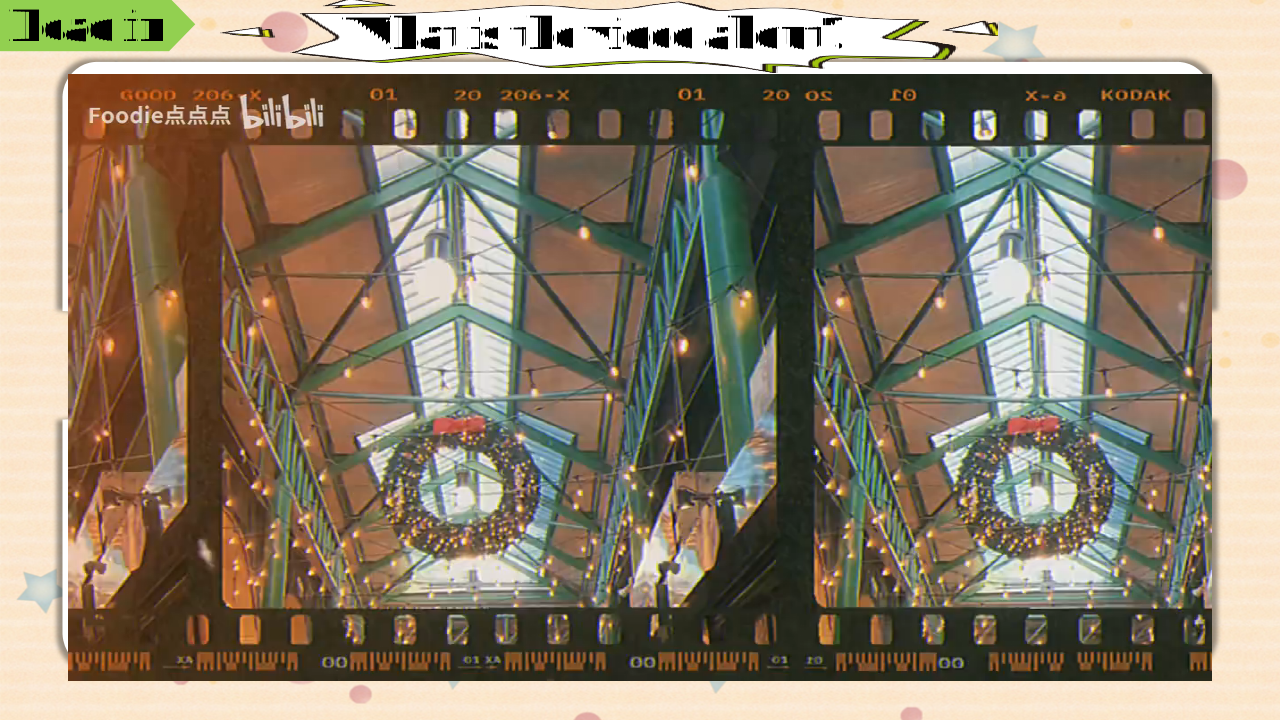
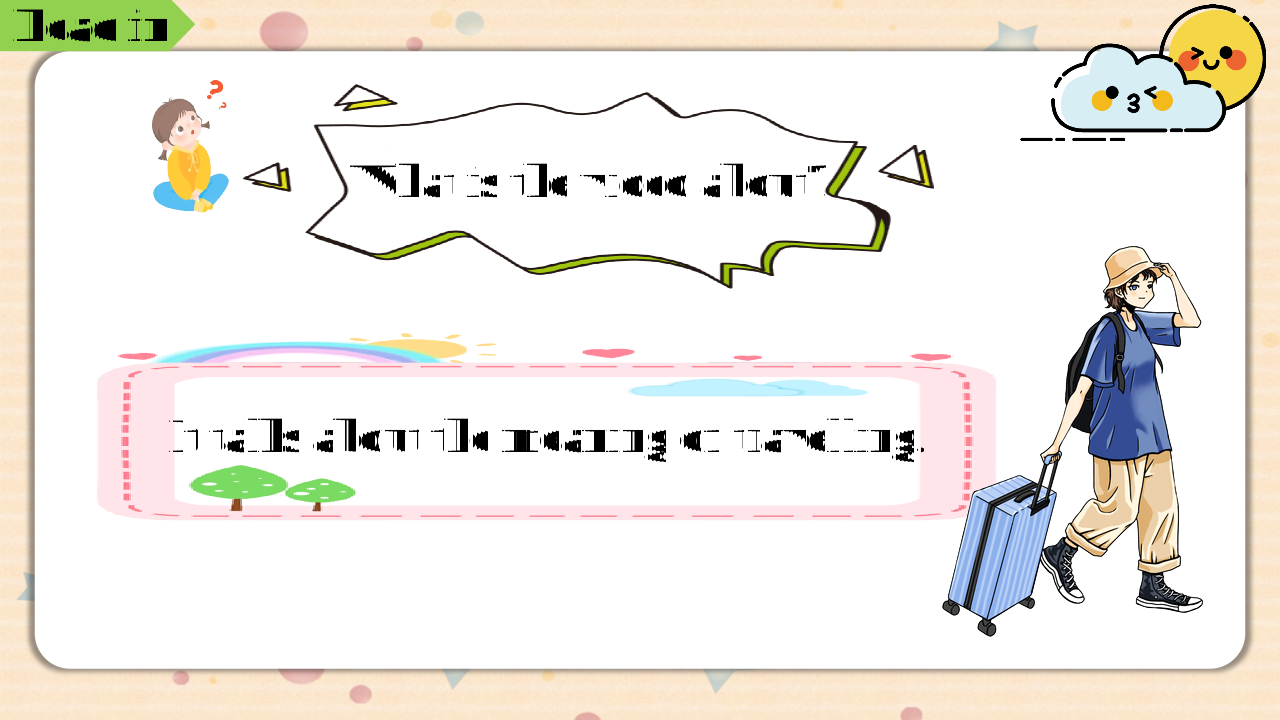
What is the video about?
Lead in
It talks about the meaning of travelling.
What is the video about?
Pre-reading
Talk with a partner. Use the ideas in the box to help you.
Activate and Share
1
Why do we travel?
While-reading
Read and Understand
2
Below is a blog post about travelling. Why does the writer love travelling so much? Read and find out.
While-reading
Read and Understand
3
Why does the writer travel? What has he done? What has he gained from his travel experiences? Read the blog post again and take notes.
Why does he travel?
What has he done?
What has he gained?
While-reading
Read and Understand
At first: To get away from familiar places and see something different.
But now: It is more than that. It has become a way of life and learning.
What has he done?
While-reading
Read and Understand
What has he done?
He has been to more than 50 cities and towns.
He has stayed in places for different lengths of time.
He has tried local food.
He has learnt about local cultures.
He has made new friends.
He has seen many new things.
While-reading
Read and Understand
What has he gained?
Most importantly: These trips have changed his life and made him a better person.
He has learnt to see the world from different points of view.
He is now more open to new things and new ideas.
While-reading
Read and Understand
What travel tips does the writer give and why? Read again and match the tips with the reasons.
4
While-reading
Read and Understand
1 We should respect the local culture and
2 We should be curious and
3 We should keep a record
because
4 We should be prepared and
it will help us remember our experiences.
look at each place through local people's eyes.
make a plan before we travel
experience new things.
What travel tips does the writer give and why? Read again and match the tips with the reasons.
4
A
B
C
D
Post-reading
Read and Understand
In groups, act out an interview with the writer about travelling. Prepare some questions before the interview.
5
Why do you travel so much?
What can people do on their travels?
…
How many places have you been to?
What's your favorite part about travelling?
How can travelling change a person?
Post-reading
Read and Understand
In groups, act out an interview with the writer about travelling. Prepare some questions before the interview.
5
Interviewer 1: Hello! Thank you for joining us. Why do you travel so much?
Writer: Well, I have loved travelling since I was a child. At first, I just wanted to see something different. But now, travelling has changed my life and made me a better person. That's why I keep travelling.
Interviewer 2: That's great! What can people do on their travels?
Writer: Oh, they can do many things! For example, they can try local food, learn about local cultures, and make new friends. Most importantly, they should be curious and experience new things fully.
Interviewer 1: Do you have any tips for us?
Writer: Yes…
Post-reading
Read and Explore
Analyse and Appreciate Does the writer describe his travel experiences before or after he gives advice? Why does he write in this way?
6
to make it interesting: Starting with a personal story is much more fun and engaging than just giving a list of rules right away. It makes you want to keep reading.
The writer describes his own travel experiences first, and then gives advice after.
He writes this way because he wants :
to make you believe him: By sharing his experiences first, he shows you he is a true traveler. This makes you trust his advice more.
to prove his points: His advice comes directly from what he learned during his trips. It's not just ideas; it's based on real life.
Post-reading
Read and Explore
Think and Share Discuss the questions in groups.
7
1 How does the writer feel about travelling? Find words and expressions from the blog post to support your opinion.
The writer loves travelling very much.
Words from the blog:
I have loved travelling since I was a child.
Travelling is more than that (just seeing something different).
These trips have changed my life and made me a better person.
I am now more open to new things and new ideas.
Post-reading
Read and Explore
Think and Share Discuss the questions in groups.
7
Yes, because:
It helps me learn about new cultures and understand different people.
It makes me more independent and confident.
I see new places and try new things, which makes me more open-minded.
2 Do you think travel can make you a better person? Why or why not?
Post-reading
Focus on Language
Vocabulary in Use Complete Anna's blog post with the correct form of the expressions in the box.
8
tasted local food
explored some historic landmarks
learn about the history
see things from different points of view
made new friends
become a better person
Post-reading
Express Yourself
Speaking Talk in pairs. Which places have you and your family/friends visited? What have you done and what have you learnt?
10
Which places have you and your family/friends visited?
What have you done and what have you learnt?
My family and I have visited Sanya. It's a beautiful coastal city.
A
B
We have tried local seafood and have learnt about Hainan's special culture.
A
B
Post-reading
Express Yourself
Speaking Talk in pairs. Which places have you and your family/friends visited? What have you done and what have you learnt?
10
What can we learn from travelling?
I think travel can teach us how to see/be/understand________________.
how to see the world with our own eyes.
how to be more independent and confident.
how to understand different cultures and people.
I think travel can teach us:
Language points
1. 热爱旅行
2.从我小时候起
3.在过去的十年里
4.远离...
5.熟悉的地方
6.看一些不同的东西
7.远不止如此
8.了解当地文化
9.品尝当地食物
love travelling
since I was a child
in the last ten years
get away from
familiar places
see something different
more than that
learn about local cultures
try local food
Language points
10.交新朋友
11.看到许多新事物
12.改变某人的生活
13.使我成为一个更好的人
14.查找信息
15.制定一个周密的计划
16.保持好奇心
17.充分体验新事物
18.尊重当地文化
19.拥有开放的心态
make new friends
see many new things
change one’s life
make me a better person
find out information
make a careful plan
be curious
experience new things fully
respect the local culture
have an open mind
an action that started in the past and still continues in the present?
an action that started in the past and has a connection with the present?
Grammar Discovery Present perfect(1)(现在完成时)
Focus on Language
Study the sentences carefully. Which sentences show:
A
B
( )1 I have loved travelling since l was a child.
( )2 In the last ten years, l have been to more than 50 cities and towns.
( )3 I have stayed in some places for a few days, and others for weeks or even months.
( )4 These trips have changed my life and made me a better person.
A
B
B
B
Language points
9
Complete the Your Discovery box.
Focus on Language
We can use the present perfect to express:
We can form the present perfect in the following ways:
We can use for and since with the present perfect in the following ways:
actions or experiences that happened at some time in the past and are connected to the present.
have/has + past participle (动词的过去分词)
for + a period of time (for ten years, for a few days)
since + a point in time (since I was a child, since 2020)
Language points
Focus on Language
Language points
2.have/has been to
表示某人曾经去过某地(有这种经历),但现在人不在那里。
have/has gone to与have/has been to的区别
1.have/has gone to
表示某人去了某地,现在还在那里或在路上,还没回来。
I have been to Paris twice.我去过巴黎两次。
We have been to many countries in Asia.我们去过很多亚洲国家。
Exercise
1 We_____________(not/visit) Shaanxi_________2019.
2 He__________ (work) for the travel company ____nine months.
3 They_____________ (not/have) a holiday________six years.
4 I _____________(not/see)Jack _________three weeks.
5 Abigail___________(not/post) anything on her blog_____June.
6 My dad_________(fly) planes_________ he was 22.
1 Put the verbs in brackets into the present perfect. Then, complete the gaps with for or since.P153
haven't visited
since
has worked
for
haven't had
for
haven't seen
for
since
hasn't posted
since
has flown
Exercise
1 Jenny isn't here. She ___________ to the supermarket.
2 He ___________ to seventeen countries. He's never left China!
3 We ___________ to Beijing three times.
4 My parents __________ on holiday. They're coming back tomorrow night.
5 Dad ___________ to work. He's still eating his breakfast in the kitchen.
6 Peter ___________ to the UK. He went in March last year and came back in July.
2 Complete the sentences with have/has been, haven't/hasn't been, have/has gone, haven't/hasn't gone.P153
has gone
hasn't been
have been
have gone
hasn't gone
has been
Exercise
1.I want to ____________________ and experience a new culture.
2.It's important to __________________ local cultures when you travel.
3.You will __________________ if you stay in a youth hostel.
4.A good traveller should always __________________ for their trip.
5.Travelling helps you to __________________________ of the world.
6.Don't forget to __________________ of your journey with photos.
7.To really enjoy a new place, you need to __________________.
用方框内短语的正确形式完成句子。
be prepared, learn about, make new friends, see something different,
keep a record, from different points of view, have an open mind
see something different
learn about
make new friends
be prepared
see the world from different points of view
keep a record
have an open mind
Summary
Expressions
point of view ,judgement, respect, mind, familiar, point, from time to time …
Reading
We have learnt a blog post about travelling and known the meaning of travelling.
We have learnt a grammar rule: Present perfect(现在完成时)
Homework
Must do:
1.记忆本节课的单词和短语,重点句型;
2.完成课后的相关练习;
3. 整理现在完成时的用法和例句;
4.写一篇小短文,70词左右,介绍你的一次旅行经历及收获(使用至少3个本课短语和现在完成时)。
Choose to do:
为你梦想的旅行目的地制作一个简单的旅行计划海报,包括原因和想做的事情。
Thank you
Lavf58.29.100
Packed by Bilibili XCoder v2.0.2
$$I there, welcome back to my channel today. I want to deep dive into a topic that's very close to my heart traveling. Join me as I share my personal reasons why I absolutely love, explore in the world. So lets get started. One of the main reasons i'm so passionate about traveling is the thrill of discovery. There is something truly magical about stepping food in a new place in merging yourself in a different culture and experiencing the unknown. From wandering through bustling markets to stumbling upon hidden gems of the biden path, every adventure brings a sense of excitement and wonder that simply can't be replicated. Travelling also has this incredible ability to expand our horizons. IT opens our minds to new perspectives, traditions and ways of life. By interacting with people from different backgrounds, we gain a deeper understanding and appreciation for the world's diverse cultures, is through these interactions that we grow as individuals, becoming more tolerant, empathetic and compassionate. One of the most rewarding aspects of traveling is the collection of unforgettable experiences, whether it's witnessing a breathtaking sunset over a pretium beach, hiking to the summit of a majestic mountain, or expLoring ancient ruins that whisper tales of the past, these moments stay with us forever. They become stories with share, memories we cherish and a constant source of inspiration for future adventures. So these are just a few of the many reasons why i'm absolutely passionate about traveling, the thrill of discovery, expanding horizons and unforgettable experiences. So if you haven't already, I encourage you to embark on your own adventures and create memories that will last a lifetime until next time. Happy travels.
资源预览图
1
2
3
4
5

6

相关资源
由于学科网是一个信息分享及获取的平台,不确保部分用户上传资料的 来源及知识产权归属。如您发现相关资料侵犯您的合法权益,请联系学科网,我们核实后将及时进行处理。