专题04 真题体裁阅读微解+议论文 导学案-备考2026届高考英语历年阅读理解真题专题
2025-08-27
|
2份
|
49页
|
175人阅读
|
6人下载
精品
资源信息
| 学段 | 高中 |
|---|---|
| 学科 | 英语 |
| 教材版本 | - |
| 年级 | 高三 |
| 章节 | - |
| 类型 | 学案-导学案 |
| 知识点 | - |
| 使用场景 | 高考复习-一轮复习 |
| 学年 | 2026-2027 |
| 地区(省份) | 全国 |
| 地区(市) | - |
| 地区(区县) | - |
| 文件格式 | ZIP |
| 文件大小 | 181 KB |
| 发布时间 | 2025-08-27 |
| 更新时间 | 2025-08-27 |
| 作者 | 倍悦英语 |
| 品牌系列 | - |
| 审核时间 | 2025-08-27 |
| 下载链接 | https://m.zxxk.com/soft/53628300.html |
| 价格 | 2.00储值(1储值=1元) |
| 来源 | 学科网 |
内容正文:
专题04 真题体裁阅读微解—议论文
第一节 解题技能微解
一、考情聚焦
时间
卷次
主题语境
字数
题型分类
2023年
全国乙卷
人与社会:物品纳入历史叙事以更好地理解无文字社会的重要性
343+131
2个推理判断题
1个主旨大意题
1个词义猜测题
2022年
全国甲卷
人与社会:悉尼发展中面临的问题
342+152
1个细节理解题
2个推理判断题
1个主旨大意题
北京卷
人与社会:量子计算真的会像它的宣传那样成功吗?
400+109
1个细节理解题
1个推理判断题
1个主旨大意题
1个词义猜测题
天津卷
人与社会:美好生活的秘诀
403+194
3个细节理解题
2个推理判断题
全国甲卷
人与社会:“天才”有很多种形式
295+123
1个细节理解题
2个推理判断题
1个主旨大意题
全国乙卷
人与社会:固定电话是非必需品
326+120
2个推理判断题
1个主旨大意题
1个词义猜测题
北京卷
人与自然:人们应该和大自然和谐相处,保护环境
480+189
1个细节理解题
2个推理判断题
1个主旨大意题
2021年
天津卷(第一次)
1) 人与自我:我们必须学会把过去抛在脑后,像蜥蜴一样,用我们柔嫩、充满希望的皮肤,作为人生的起点
2) 人与社会:要当一个多面手,而不是当某方面的专家
1)408+214
2)409+211
1) 2个细节理解题
2个推理判断题
1个词义猜测题
2) 2个细节理解题
2个推理判断题
1个主旨大意题
二、命题规律及解题策略
1.命题规律
议论文涉及的论题具有生活化的特征,与社会生活密切相关。从命题上看,议论文阅读理解以考查细节理解、推理判断和主旨大意题为主,但不排除对观点态度的考查。考生在平时的阅读训练中要阅读一定数量的议论文,以了解和掌握议论文的结构和行文特征。
议论文是作者对某个问题或某件事情进行分析、评论,表明自己的观点、立场、态度、看法和主张的一种文体。这类文章或从正面提出某种见解,或是驳斥别人的错误观点,以说服读者同意自己的观点为主要目的。
议论文一般有论点、论据和论证三个要素。论点是议论文的核心,是文章要表达的主要思想内容;论据是作者所引用的用以证明和支持论点的材料,这些材料可以是名人名言、事实例证,或是统计数据等,只要是对证明论点有利的材料都可以为作者所用;确定了论点和论据材料后,作者还需要将这些论据合理地组织在一起,就是我们所说的论证。
2.阅读技巧
要想读懂议论文、理解作者的写作意图,关键在于是否能够把握议论文的三要素。首先,论点是作者对所论述事件的基本看法和立场,找准论点有助于把握文章的整体方向和理解文章主题的深层内涵;理清论据材料的内容能够帮助读者更深层次地理解论点的含义;论据是作者组织、运用论据的手法。论证方法多种多样,常见的有:
▲归纳法,即从分析个别事例入手,找出事物的共同特点,从而得出结论。
▲演绎法,即从一般原理出发,对个别事物进行说明、分析后得出结论。
▲比较对照法,即对所有事实、方面进行对照,找出异同之处,然后加以分析,得出结论。
▲驳论法,即先列出错误的观点,然后加以逐条批驳,反证自己观点的正确性。
英语议论文在表达上多使用有辩论、推理等含义的连接词和过渡词等的结构,如since, now that(既然),therefore(因而),consequently(因此),accordingly(因此),hence(因而),in that case(在那种情况下)。还有些常用句型比如It follows that…(因而……),If…,we may conclude that…(如果……,我们可以这样下结论……),It is true that…,but…(诚然……,但是……),Even if…(即使……)等。同学们在阅读的时候可以通过寻找关键词语表达来快速搜索需要的信息。
3.解题策略
(1)先题后文
先读试题,了解试题考点;明确目的,快速捕捉,获取信息。应该从结构和内容两方面同时入手,先通读全文,再区分事实和观点。把握文章的论点、论据和论证。此外,还要把握文章的结构和语言。
(2)题干定向
根据题干关键词到文中定位答案范围(在定位和寻找信息点的时候,可以充分利用加粗字体的标题、小标题、加下划线的语句等重要信息提高阅读和解题速度,如果每则信息的项目及其位置具有一致性和对应性,就可利用其一致性和对应性快速查找答案,查找信息时不一定要读完全文),按照题目顺序依次而下:问题与材料相同→对号入座;问题与原文相同→同义替换、归纳事实等。
(3)生词模糊
遇到生词;如与答题无关,直接跳过;涉及答题,则根据语境、构词法等猜词。
⑷逐项比较,得出最佳
通常来说,议论文会采用三段论式结构。首段会通过一个故事或对某种现象的描述来引入话题,明确论点;接下来是文章的主体部分,会用两个或两个以上的段落引用事实和理论论据进行论证,常用的论证方法有举例、引用和对比,这一部分要注意作者选用的论据,它们往往与细节理解题的考查点相对应,同时还要留意论证的方法;文章的最后一段是结论部分,要弄清作者最后得出了什么结论。在通读全文并了解文章的结构和内容后再阅读试题,到文章中去找相对应的信息,比如事实、观点、作者真正的意图和结论等。做阅读理解题,切不可凭主观印象,想当然地确定答案。任何一道题目,均可以在原文中找到相关线索,这就如同破译密码一样。做题人的思维过程和编题人的思维过程恰好相反,编题人先找好线索,然后设计问题和选项,解题人根据问题,再去文中找相关线索。因此,我们做题时要逐项比较,排除错误选项,得出最佳答案。
三、技能透视
1.把握文章的论点、论据和论证
议论文一般有论点、论据和论证三个要素。论点是议论文的核心,是文章要表达的主要思想内容;论据是作者所引用的用来证明和支持论点的材料,这些材料可以是名人名言、事实例证、或是统计数据等,只要是对证明论点有利的材料都可作为论据使用;确定论点和论据材料后,作者还需要将这些论据合理地组织在一起,就是我们所说的论证。
例1:(2023闵行区一模)
Building good transportation is a good idea. To have environmental value, new transportation has to sufficiently replace or eliminate driving to cut energy consumption overall. That means that a new traffic system has to be supported by reduction in car use. Traffic lanes should be eliminated or converted into bike or bus lanes. Ideally, these should be combined with higher fuel taxes, and parking fees. Needless to say, I have to struggle to make myself extensively understood. But they’re necessary, because you can’t make people drive less, in the long run, by taking steps that make driving more pleasant, economical, and productive.
……
One of the arguments that cities inevitably make in promoting transportation plans is that the new system, by relieving automobile congestion, will improve the lives of those who continue to drive. No one ever promotes a transportation system by arguing that it would make travelling less convenient—even though, from an environmental perspective, inconvenient travel is a worthy goal.
21.The author wrote this massage mainly to ______.
A. support the claim that efforts to reduce traffic actually increase traffic.
B. oppose the belief that improving mass transportation systems is good for the environment.
C. provide a balance between suburban expansion and traffic congestion.
D. indicate that making driving less agreeable is a way to reduce negative effects of traffic.
【解析】D主旨大意题 根据文章第一段第三句“That means that a new traffic system has to be supported by reduction in car use.(这意味着新的交通系统必须通过减少汽车使用来支持)”和最后一句“No one ever promotes a transportation system by arguing that it would make travelling less convenient—even though, from an environmental perspective, inconvenient travel is a worthy goal.(从来没有人通过争论某个交通系统会使旅行变得不那么方便来推广这个交通系统,尽管从环境角度来看,不方便的旅行是一个值得追求的目标)”可知,在作者眼里,为了缓解环境压力,把开车出行变得不那么方便,不那么让人开心是一个好方法在,这也是他在本文中推崇的。故选D项。
2.互推法
在议论之后,总会再列举一些具体的例子来支持观点或在一些例子之后,总要抒发一些议论。在理解议论时,可以借助文中所给的实例,从而在形象的例子中推理出抽象的议论;或从议论中推理理解具体例子的深刻含义,相互推断。
例2:
It’s true that quite a few most respected scientific authorities have confirmed that the world is becoming hotter and hotter. There’s also strong evidence that humans are contributing to the warming. Countless recent reports have proved the same thing. For instance, a 2010 summary about the climate science by the Royal Society noted that: The global warming over the last half - century has been caused mainly by human activity.
……
Of course, the earth’s climate has always been changing due to “natural” factors such as volcanic eruption or changes in solar, or cycles concerning the Earth’s going around the sun. According to the scientific research, however, the warming observed by now matches the pattern of warming we would expect from a build - up of greenhouse gas in the atmosphere - not the warming we would expect from other possible causes.
21. Which of the following is not the cause of climate change?
A. volcanic eruption
B. floods arid droughts
C. changes in solar
D. cycles concerning the Earth’s going around the sun
【解析】B细节题 由Of course, the earth’s climate has always been changing due to “natural” factors such as volcanic eruption or changes in solar, or cycles concerning the Earth’s going around the sun. 可知洪水和干旱造成气候变化的原因。
3.深推法
推理的结论一定是原文有这层意思,但没有明确表达的。推理要根据文章的字面意思,通过语篇、段落和句子之间的逻辑关系,各个信息所暗示和隐含的意义,作者的隐含意等对文章进行推理判断。考生要由文字的表层信息挖掘出文章的深层含义,要能透过现象看本质。
例3:
Some people prefer to do almost everything over the Internet. To them, dealing with an actual human is like an evolutionary step backward. It feels very slow because humans don't work at 4G speeds. When you have dinner with friends, you will often notice someone paying more attention to his mobile phone. We have programmed ourselves to think that every new message brings life-changing news, so taking calls and checking our texts are more important than talking to the people we are with. What is worse, some people even tend to send anonymous(匿名的)rude messages by email.
Some people are less willing to deal with humans because ________.
A. they are becoming less patient
B. they are growing too independent
C. they have to handle many important messages
D. they have to follow an evolutionary step backward
【解析】A推理判断题 根据第二段第三句“It feels very slow because humans don’t work at 4G speeds.”可知现在的人不愿意与他人交流,主要是因为嫌回应的速度不够快,也就是没有耐心。故A正确。
第二节 专题训练
Passage 1 (2025全国I卷C)
While safety improvements might have been made to our streets in recent years, transport studies also show declines in pedestrian (行人) mobility, especially among young children. Many parents say there’s too much traffic on the roads for their children to walk safely to school, so they pack them into the car instead.
Dutch authors Thalia Verkade and Marco te Brömmelstroet are bothered by facts like these. In their new book Movement: How to Take Back Our Streets and Transform Our Lives, they call for a rethink of our streets and the role they play in our lives.
Life on city streets started to change decades ago. Whole neighbourhoods were destroyed to make way for new road networks and kids had to play elsewhere. Some communities fought back. Most famously, a Canadian journalist who had moved her family to Manhattan in the early 1950s led a campaign to stop the destruction of her local park. Describing her alarm at its proposed replacement with an expressway, Jane Jacobs called on her mayor (市长) to champion “New York as a decent place to live, and not just rush through.” Similar campaigns occurred in Australia in the late 1960s and 1970s as well.
Although these campaigns were widespread, the reality is that the majority of the western cities were completely redesigned around the needs of the motor car. The number of cars on roads has been increasing rapidly. In Australia we now have over twenty million cars for just over twenty-six million people, among the highest rate of car ownership in the world.
We invest a lot in roads that help us rush through, but we fail to account for the true costs. Do we really recognise what it costs us as a society when children can’t move safely around our communities? The authors of Movement have it right: it’s time to think differently about that street outside your front door.
28. What phenomenon does the author point out in paragraph 1?
A. Cars often get stuck on the road. B. Traffic accidents occur frequently.
C. People walk less and drive more. D. Pedestrians fail to follow the rules.
29. What were the Canadian journalist and other campaigners trying to do?
A. Keep their cities livable. B. Promote cultural diversity.
C. Help the needy families. D. Make expressways accessible.
30. What can be inferred about the campaigns in Australia in the late 1960s and 1970s?
A. They boosted the sales of cars. B. They turned out largely ineffective.
C. They won government support. D. They advocated building new parks.
31. What can be a suitable title for the text?
A. Why the Rush? B. What’s Next?
C. Where to Stay? D. Who to Blame?
Passage 2 (2024全国甲卷D)
“I didn’t like the ending,” I said to my favorite college professor. It was my junior year of undergraduate, and I was doing an independent study on Victorian literature. I had just finished reading The Mill on the Floss by George Eliot, and I was heartbroken with the ending. Prof. Gracie, with all his patience, asked me to think about it beyond whether I liked it or not. He suggested I think about the difference between endings that I wanted for the characters and endings that were right for the characters, endings that satisfied the story even if they didn’t have a traditionally positive outcome. Of course, I would have preferred a different ending for Tom and Maggie Tulliver, but the ending they got did make the most sense for them.
This was an aha moment for me, and I never thought about endings the same way again. From then on, if I wanted to read an ending guaranteed to be happy, I’d pick up a love romance. If I wanted an ending I couldn’t guess, I’d pick up a mystery (悬疑小说). One where I kind of knew what was going to happen, historical fiction. Choosing what to read became easier.
But writing the end — that’s hard. It’s hard for writers because endings carry so much weight with readers. You have to balance creating an ending that's unpredictable, but doesn’t seem to come from nowhere, one that fits what’s right for the characters.
That’s why this issue (期) of Writer’s Digest aims to help you figure out how to write the best ending for whatever kind of writing you’re doing. If it’s short stories, Peter Mountford breaks down six techniques you can try to see which one helps you stick the landing. Elizabeth Sims analyzes the final chapters of five great novels to see what key points they include and how you can adapt them for your work.
This issue won’t tell you what your ending should be — that’s up to you and the story you’re telling — but it might provide what you need to get there.
12. Why did the author go to Prof. Gracie?
A. To discuss a novel. B. To submit a book report.
C. To argue for a writer. D. To ask for a reading list.
13. What did the author realize after seeing Gracie?
A. Writing is a matter of personal preferences.
B. Readers are often carried away by character.
C. Each type of literature has its unique end.
D. A story which begins well will end well.
14. What is expected of a good ending?
A. It satisfies readers’ taste. B. It fits with the story development.
C. It is usually positive. D. It is open for imagination.
15. Why does the author mention Peter Mountford and Elizabeth Sims?
A. To give examples of great novelists. B. To stress the theme of this issue.
C. To encourage writing for the magazine. D. To recommend their new books.
Passage 3(2023全国乙卷D)
If you want to tell the history of the whole world, a history that does not privilege one part of humanity, you cannot do it through texts alone, because only some of the world has ever had texts, while most of the world, for most of the time, has not. Writing is one of humanity’s later achievements, and until fairly recently even many literate (有文字的) societies recorded their concerns not only in writing but in things.
Ideally a history would bring together texts and objects, and some chapters of this book are able to do just that, but in many cases we simply can’t. The clearest example of this between literate and non-literate history is perhaps the first conflict, at Botany Bay, between Captain Cook’s voyage and the Australian Aboriginals. From the English side, we have scientific reports and the captain’s record of that terrible day. From the Australian side, we have only a wooden shield (盾) dropped by a man in flight after his first experience of gunshot. If we want to reconstruct what was actually going on that day, the shield must be questioned and interpreted as deeply and strictly as the written reports.
In addition to the problem of miscomprehension from both sides, there are victories accidentally or deliberately twisted, especially when only the victors know how to write. Those who are on the losing side often have only their things to tell their stories. The Caribbean Taino, the Australian Aboriginals, the African people of Benin and the Incas, all of whom appear in this book, can speak to us now of their past achievements most powerfully through the objects they made: a history told through things gives them back a voice. When we consider contact (联系) between literate and non-literate societies such as these, all our first-hand accounts are necessarily twisted, only one half of a dialogue. If we are to find the other half of that conversation, we have to read not just the texts, but the objects.
32. What is the first paragraph mainly about?
A. How past events should be presented. B. What humanity is concerned about.
C. Whether facts speak louder than words. D. Why written language is reliable.
33. What does the author indicate by mentioning Captain Cook in paragraph 2?
A. His report was scientific. B. He represented the local people.
C. He ruled over Botany Bay. D. His record was one-sided.
34. What does the underlined word “conversation” in paragraph 3 refer to?
A. Problem. B. History. C. Voice. D. Society.
35. Which of the following books is the text most likely selected from?
A. How Maps Tell Stories of the World B. A Short History of Australia
C. A History of the World in 100 Objects D. How Art Works Tell Stories
Passage 4(2022全国甲卷D)
Sometime in the early 1960s, a significant thing happened in Sydney, Australia. The city discovered its harbor. Then, one after another, Sydney discovered lots of things that were just sort of there — broad parks, superb beaches, and a culturally diverse population. But it is the harbor that makes the city.
Andrew Reynolds, a cheerful fellow in his early 30s, pilots Sydney ferryboats for a living. I spent the whole morning shuttling back and forth across the harbor. After our third run Andrew shut down the engine, and we went our separate ways — he for a lunch break, I to explore the city.
“I’ll miss these old boats,” he said as we parted.
“How do you mean?” I asked.
“Oh, they’re replacing them with catamarans. Catamarans are faster, but they’re not so elegant, and they’re not fun to pilot. But that’s progress, I guess.”
Everywhere in Sydney these days, change and progress are the watchwords (口号), and traditions are increasingly rare. Shirley Fitzgerald, the city’s official historian, told me that in its rush to modernity in the 1970s, Sydney swept aside much of its past, including many of its finest buildings. “Sydney is confused about itself,” she said. “We can’t seem to make up our minds whether we want a modern city or a traditional one. It’s a conflict that we aren’t getting any better at resolving (解决).”
On the other hand, being young and old at the same time has its attractions. I considered this when I met a thoughtful young businessman named Anthony. “Many people say that we lack culture in this country,” he told me. “What people forget is that the Italians, when they came to Australia, brought 2000 years of their culture, the Greeks some 3000 years, and the Chinese more still. We’ve got a foundation built on ancient cultures but with a drive and dynamism of a young country. It’s a pretty hard combination to beat.”
He is right, but I can’t help wishing they would keep those old ferries.
32. What is the first paragraph mainly about?
A. Sydney’s striking architecture. B. The cultural diversity of Sydney.
C. The key to Sydney’s development. D. Sydney’s tourist attractions in the 1960s.
33. What can we learn about Andrew Reynolds?
A. He goes to work by boat. B. He looks forward to a new life.
C. He pilots catamarans well. D. He is attached to the old ferries.
34. What does Shirley Fitzgerald think of Sydney?
A. It is losing its traditions. B. It should speed up its progress.
C. It should expand its population. D. It is becoming more international.
35. Which statement will the author probably agree with?
A. A city can be young and old at the same time.
B. A city built on ancient cultures is more dynamic.
C. Modernity is usually achieved at the cost of elegance.
D. Compromise should be made between the local and the foreign.
Passage 5 (2022年北京卷D)
Quantum ( 量子 ) computers have been on my mind a lot lately. A friend has been sending me articles on how quantum computers might help solve some of the biggest challenges we face as humans. I’ve also had exchanges with two quantum-computing experts. One is computer scientist Chris Johnson who I see as someone who helps keep the field honest. The other is physicist Philip Taylor.
For decades, quantum computing has been little more than a laboratory curiosity. Now, big tech companies have invested in quantum computing, as have many smaller ones. According to Business Weekly, quantum machines could help us “cure cancer, and even take steps to turn climate change in the opposite direction.” This is the sort of hype ( 炒作 ) that annoys Johnson. He worries that researchers are making promises they can’t keep. “What’s new,” Johnson wrote, “is that millions of dollars are now potentially available to quantum computing researchers.”
As quantum computing attracts more attention and funding, researchers may mislead investors, journalists, the public and, worst of all, themselves about their work’s potential. If researchers can’t keep their promises, excitement might give way to doubt, disappointment and anger, Johnson warns. Lots of other technologies have gone through stages of excitement. But something about quantum computing makes it especially prone to hype, Johnson suggests, perhaps because “‘quantum’ stands for something cool you shouldn’t be able to understand.” And that brings me back to Taylor, who suggested that I read his book Q for Quantum.
After I read the book, Taylor patiently answered my questions about it. He also answered my questions about PyQuantum, the firm he co-founded in 2016. Taylor shares Johnson’s concerns about hype, but he says those concerns do not apply to PyQuantum.
The company, he says, is closer than any other firm “by a very large margin ( 幅度 )” to building a “useful” quantum computer, one that “solves an impactful problem that we would not have been able to solve otherwise.” He adds, “People will naturally discount my opinions, but I have spent a lot of time quantitatively comparing what we are doing with others.”
Could PyQuantum really be leading all the competition “by a wide margin”, as Taylor claims? I don’t know. I’m certainly not going to advise my friend or anyone else to invest in quantum computers. But I trust Taylor, just as I trust Johnson.
31. Regarding Johnson’s concerns, the author feels ________.
A. sympathetic B. unconcerned C. doubtful D. excited
32. What leads to Taylor’s optimism about quantum computing?
A. His dominance in physics. B. The competition in the field.
C. His confidence in PyQuantum. D. The investment of tech companies.
33. What does the underlined word “prone” in Paragraph 3 most probably mean?
A. Open. B. Cool. C. Useful. D. Resistant.
34. Which would be the best title for the passage?
A. Is Johnson More Competent Than Taylor?
B. Is Quantum Computing Redefining Technology?
C. Will Quantum Computers Ever Come into Being?
D. Will Quantum Computing Ever Live Up to Its Hype?
Passage 6 (2022年天津6月卷)
Ralph Emerson once said that the purpose of life is not to be happy, but to be useful, to be loving, to make some difference in he world. While we appreciate such words of wisdom, we rarely try to follow them in our lives.
Most people prefer to live a good life themselves, ignoring their responsibilities for the world. This narrow perception of a good life may provide short-term benefits, but is sure to lead to long-term harm and suffering. A good life based on comfort and luxury may eventually lead to more pain be-cause we spoil our health and even our character, principles, ideals, and relationships.
What then, is the secret of a good life? A good life is a process, not a state of being : a direction, not a destination. We have to earn a good life by first serving others without any expectation in return because their happiness is the very source of our own happiness. More importantly, we must know ourselves inside out. Only when we examine ourselves deeply can we discover our abilities and recognize our limitations, and then work accordingly to create a better world.
The first requirement for a good life is having a loving heart. When we do certain right things merely as a duty, we find our job so tiresome that we’ll soon burn out. However, when we do that same job out of love, we not only enjoy what we do, but also do it with an effortless feeling.
However, love alone is insufficient to lead a good life. Love sometimes blinds us to the reality. Consequently, our good intentions may not lead to good results. To achieve desired outcome, those who want to do good to others also need to equip themselves with accurate world knowledge. False knowledge is more dangerous than ignorance. If love is the engine of a car knowledge is the steering wheel(方向盘). If the engine lacks power, th car can’t move; if the driver loses control of the steering, a road accident probably occurs. Only with love in heart and the right knowledge in mind can we lead a good life.
With love and knowledge, we go all out to create a better world by doing good to others. When we see the impact of our good work on the world we give meaning to our life and earn lasting joy and happiness.
51. What effect does the narrow perception of a good life have on us?
A. Making us simple-minded B. Making us short-signted.
C. Leading us onto a busy road. D. Keeping us from comfort and luxury.
52. According to the author, how can one gain true happiness?
A. Through maintaining good health.
B. By going through pain and suffering.
C. By recognizing one’s abilities and limitations.
D. Through offering help much needed by others.
53. According to Paragraph 4, doing certain right things with a loving heart makes one________.
A. less selfish B. less annoying C. more motivated D. more responsible
54. In what case may good intentions fail to lead to desired results?
A. When we have wrong knowledge of the world.
B. When our love for the world is insufficient.
C. When we are insensitive to dangers in life.
D. When we stay blind to the reality.
55. According to Paragraph 5, life can be made truly good when ________.
A. inspired by love and guided by knowledge
B. directed by love and pushed by knowledge
C. purified by love and enriched by knowledge
D. promoted by love and defined by knowledge
Passage 7(2021全国甲卷D)
Who is a genius? This question has greatly interested humankind for centuries.
Let’s state clearly: Einstein was a genius. His face is almost the international symbol for genius. But we want to go beyond one man and explore the nature of genius itself. Why is it that some people are so much more intelligent or creative than the rest of us? And who are they?
In the sciences and arts, those praised as geniuses were most often white men, of European origin. Perhaps this is not a surprise. It’s said that history is written by the victors, and those victors set the standards for admission to the genius club. When contributions were made by geniuses outside the club—women, or people of a different color or belief—they were unacknowledged and rejected by others.
A study recently published by Science found that as young as age six, girls are less likely than boys to say that members of their gender(性别)are “really, really smart.” Even worse, the study found that girls act on that belief: Around age six they start to avoid activities said to be for children who are “really, really smart.” Can our planet afford to have any great thinkers become discouraged and give up? It doesn’t take a genius to know the answer: absolutely not.
Here’s the good news. In a wired world with constant global communication, we’re all positioned to see flashes of genius wherever they appear. And the more we look, the more we will see that social factors(因素)like gender, race, and class do not determine the appearance of genius. As a writer says, future geniuses come from those with “intelligence, creativity, perseverance(毅力), and simple good fortune, who are able to change the world.”
32. What does the author think of victors’ standards for joining the genius club?
A. They’re unfair. B. They’re conservative. C. They’re objective. D. They’re strict.
33. What can we infer about girls from the study in Science?
A. They think themselves smart. B. They look up to great thinkers.
C. They see gender differences earlier than boys. D. They are likely to be influenced by social beliefs
34. Why are more geniuses known to the public?
A. Improved global communication. B. Less discrimination against women.
C. Acceptance of victors’ concepts. D. Changes in people’s social positions.
35. What is the best title for the text?
A. Geniuses Think Alike B. Genius Takes Many Forms
C. Genius and Intelligence D. Genius and Luck
Passage 8 (2021年全国乙卷B)
When almost everyone has a mobile phone, why are more than half of Australian homes still paying for a landline(座机)?
These days you’d be hard pressed to find anyone in Australia over the age of 15 who doesn’t own a mobile phone. In fact plenty of younger kids have one in their pocket. Practically everyone can make and receive calls anywhere, anytime.
Still, 55 percent of Australians have a landline phone at home and only just over a quarter (29%) rely only on their smartphones according to a survey (调查). Of those Australians who still have a landline, a third concede that it’s not really necessary and they’re keeping it as a security blanket — 19 percent say they never use it while a further 13 percent keep it in case of emergencies. I think my home falls into that category.
More than half of Australian homes are still choosing to stick with their home phone. Age is naturally a factor(因素)— only 58 percent of Generation Ys still use landlines now and then, compared to 84 percent of Baby Boomers who’ve perhaps had the same home number for 50 years. Age isn’t the only factor; I’d say it’s also to do with the makeup of your household.
Generation Xers with young families, like my wife and I, can still find it convenient to have a home phone rather than providing a mobile phone for every family member. That said, to be honest the only people who ever ring our home phone are our Baby Boomers parents, to the point where we play a game and guess who is calling before we pick up the phone(using Caller ID would take the fun out of it).
How attached are you to your landline? How long until they go the way of gas street lamps and morning milk deliveries?
24. What does paragraph 2 mainly tell us about mobile phones?
A. Their target users. B. Their wide popularity.
C. Their major functions. D. Their complex design.
25. What does the underlined word “concede” in paragraph 3 mean?
A. Admit. B. Argue. C. Remember. D. Remark.
26. What can we say about Baby Boomers?
A. They like smartphone games. B. They enjoy guessing callers’ identity.
C. They keep using landline phones. D. They are attached to their family.
27. What can be inferred about the landline from the last paragraph?
A. It remains a family necessity.
B. It will fall out of use some day.
C. It may increase daily expenses.
D. It is as important as the gas light.
Passage 9(2021天津3月卷)
About five weeks ago, I noticed the skin of our pet lizard was growing dusty. It worried me. I reported the strange surface on the skin of the lizard to my husband and children the next morning. Seconds later, our lizard emerged from its tank with its old skin flowing behind it.
I didn’t think about it much until a morning last week when I knocked my favorite teapot off the table. It burst into hundreds of pieces. As I swept up the mess, I wondered why we had been breaking so many things over the months.
The destruction started three months ago. It was my husband’s birthday. He had just lost his job. The uncertainty was starting to wear on us, so I wanted to do something special.
“Let’s make a cake for Dad!” I cried.
My kids screamed with joy. We baked, iced and sprinkled for most of the day. Candles on the cake! Balloons on the walls! Flowers on the table!
Two hours before my husband came back home from another job interview, my daughter climbed up to grab a glass vase from a high shelf. It fell and crashed beside the cake. Tiny pieces of glass were everywhere. She sobbed loudly as I threw the cake away. My husband had banana pudding for his birthday.
Three days ago, the light in our living room suddenly went out. After several frustrating hours of unsuccessful attempts to fix it, my husband suggested watching the Michael Jordan documentary series The Last Dance.
The poignancy of Jordan retiring from his beloved basketball to play baseball and what had pushed him to make such a tough decision took me by surprise. As I watched him take off his basketball uniform and replace it with a baseball uniform, I saw him leaving behind the layer that no longer served him, just as our lizard had. Neither of them chose the moment that had transformed them. But they had to live with who they were after everything was different. Just like us. I realized that we have to learn to leave the past behind.
Humans do not shed skin as easily as other animals. The beginning of change is upsetting. The process is tiring. Damage changes us before we are ready. I see our lizard, raw and nearly new.
Jordan said that no matter how it ends, it starts with hope. With our tender, hopeful skin, that is where we begin.
40. What can we learn about the pet lizard from Paragraph 1?
A. Its tank grew dirty. B. Its old skin came off. C. It got a skin disease. D. It went missing.
41. Why did the author’s husband have banana pudding for his birthday?
A. The birthday cake was ruined. B. The author made good puddings.
C. Pudding was his favorite dessert. D. They couldn’t afford a birthday cake.
42. Why does the author mention The Last Dance in the passage?
A. To prove a theory. B. To define a concept.
C. To develop the theme. D. To provide the background.
43. The underlined part “leaving behind the layer” in Paragraph 8 can be understood as .
A. letting go of the past B. looking for a new job
C. getting rid of a bad habit D. giving up an opportunity
44. What does the author most likely want to tell us?
A. Love of family helps us survive great hardships. B. It’s not the end of the world if we break things.
C. We should move on no matter what happens. D. Past experiences should be treasured.
Passage 10 (2021天津3月卷)
There is something to be said for being a generalist, even if you are a specialist. Knowing a little about a lot of things that interest you can add to the richness of a whole, well-lived life.
Society pushes us to specialize, to become experts. This requires commitment to a particular occupation, branch of study or research. The drawback to being specialists is we often come to know more and more about less and less. There is a great deal of pressure to master one’s field. You may pursue training, degrees, or increasing levels of responsibility at work. Then you discover the pressure of having to keep up.
Some people seem willing to work around the clock in their narrow specialty. But such commitment can also weaken a sense of freedom. These specialists could work at the office until ten each night, then look back and realize they would have loved to have gone home and enjoyed the sweetness of their family and friends, or traveled to exciting places, meeting interesting people. Mastering one thing to the exclusion (排除) of others can hold back your true spirit.
Generalists, on the other hand, know a lot about a wide range of subjects and view the whole with all its connections. They are people of ability, talent, and enthusiasm who can bring their broad perspective (视角) into specific fields of expertise (专长). The doctor who is also a poet and philosopher is a superior doctor, one who can give so much more to his patients than just good medical skills.
Things are connected. Let your expertise in one field fuel your passions in all related areas. Some of your interests may not appear to be connected but, once you explore their depths, you discover that they are. My editor Toni, who is also a writer, has edited several history books. She has decided to study Chinese history. Fascinated by the structural beauty of the Forbidden City as a painter, she is equally interested to learn more about Chinese philosophy. “I don’t know where it will lead, but I’m excited I'm on this pursuit.”
These expansions into new worlds help us by giving us new perspectives. We begin to see the interconnectedness of one thing to another in all aspects of our life, of ourselves and the universe. Develop broad, general knowledge and experience. The universe is all yours to explore and enjoy.
51. To become a specialist, one may have to_____.
A. narrow his range of knowledge B. avoid responsibilities at work
C. know more about the society D. broaden his perspective on life
52. The specialists mentioned in Paragraph 3 tend to______.
A. treasure their freedom B. travel around the world
C. spend most time working D. enjoy meeting funny people
53. According to the author, a superior doctor is one who_____.
A. is fully aware of his talent and ability B. is a pure specialist in medicine
C. should love poetry and philosophy D. brings knowledge of other fields to work
54. What does the author intend to show with the example of Toni?
A. Passion alone does not ensure a person’s success.
B. In-depth exploration makes discoveries possible.
C. Everyone has a chance to succeed in their pursuit.
D. Seemingly unrelated interests are in a way connected.
55. What could be the best title for the passage?
A. Be More a Generalist Than a Specialist B. Specialist or Generalist: Hard to Decide
C. Turn a Generalist into a Specialist D. Ways to Become a Generalist
Passage 11 (2020天津3月卷D)
Studying a subject that you feel pointless is never a fun or easy task. If you’re studying history, asking yourself the question “why is history important” is a very good first step. History is an essential part of human civilization. You will find something here that will arouse your interest, or get you thinking about the significance of history.
History grounds us in our roots. History is an important and interesting field of study, and learning the history of our home country can give us a deeper, more meaningful glimpse (一瞥) into our ancestral pasts, and how we got to where we are today. Many people feel like they need a sense of cultural belonging, which is something that studying your roots and being open-minded to the evolution of your culture can provide.
History enriches our experience. Reading history is an amazing experience because it enables us to reflect on the social and economic life of the people living long time ago. According to the experts, problems faced by people regardless of the past and present are the same. With the information about the ancestors, one can become more experienced in handling challenges of life.
History makes us more empathetic (具有共情能力的). Studying history can give us insight (洞察力) into why our culture does certain things, and how the past has shaped it into what we know now. It also provides a rather strong foundation for empathy across cultures. Fear and hate for others is usually caused by ignorance (无知). We’re scared of the things that we don’t understand. History has the potential to break down those boundaries by offering us insight into entire worlds that would otherwise be foreign to us.
History can inspire us to learn more. What’s fantastic about history is the way it broadens our horizons. It’s almost impossible to learn about one historical period without having dozens of questions about related concepts. Study the 19th century England, and you might catch a glimpse of Charles Dickens’ Oliver Twist. Look up Charles Dickens, and you might learn a thing or two about realism. Or maybe you end up switching your attention away from novels, and discover the history of romantic poets in England. It can go anywhere, and there is something in there for absolutely anybody.
The value of history cannot be underestimated. We don’t have to live in the past, but we can definitely do better by learning from it and using the lessons learnt to lead more meaningful lives.
51. The underlined part “where we are today” in Para. 2 probably means __________.
A. the turning point in our history B. the present state of our nation
C. the location of our homeland D. the total area of our country
52. According to the experts, why is history useful for people to handle challenges of life?
A. The problems at present are similar to those in the past.
B. Ancient people laid economic foundations for people today.
C. The current challenges of life were predicted by the ancestors.
D. People living long time ago knew more about how to solve problems.
53. What can be concluded from Para.4?
A. It is difficult to get rid of cultural barriers.
B. People are willing to accept foreign cultures.
C. Cultural conflicts in history are difficult to ignore.
D. History helps us improve our cross-cultural awareness.
54. With the example in Para.5, the writer intends to show that______________.
A. Charles Dickens contributes much to British literature
B. Oliver Twist can satisfy our curiosity for romantic poets
C. reading novels is a way to learn about a historical period
D. studying history can arouse people’s interest in other fields
55. What could be the best title for the passage?
A. How to Build Cultural Identity B. Why Studying History Matters
C. Know the Past, Know the Present D. History: a Way to Broaden Horizons
Passage 12 (2020年北京卷D)
Certain forms of AI are indeed becoming ubiquitous. For example, algorithms (算法) carry out huge volumes of trading on our financial markets, self-driving cars are appearing on city streets, and our smartphones are translating from one language into another. These systems are sometimes faster and more perceptive than we humans are. But so far that is only true for the specific tasks for which the systems have been designed. That is something that some AI developers are now eager to change.
Some of today’s AI pioneers want to move on from today’s world of “weak” or “narrow” AI, to create “strong” or “full” AI, or what is often called artificial general intelligence (AGI). In some respects, today’s powerful computing machines already make our brains look weak. A GI could, its advocates say, work for us around the clock, and drawing on all available data, could suggest solutions to many problems. DM, a company focused on the development of AGI, has an ambition to “solve intelligence”. “If we’re successful,” their mission statement reads, “we believe this will be one of the most important and widely beneficial scientific advances ever made.”
Since the early days of AI, imagination has outpaced what is possible or even probable. In 1965, an imaginative mathematician called Irving Good predicted the eventual creation of an “ultra-intelligent machine…that can far surpass all the intellectual (智力的) activities of any man, however clever.” Good went on to suggest that “the first ultra-intelligent machine” could be “the last invention that man need ever make.”
Fears about the appearance of bad, powerful, man-made intelligent machines have been reinforced (强化) by many works of fiction — Mary Shelley’s Frankenstein and the Terminator film series, for example. But if AI does eventually prove to be our downfall, it is unlikely to be at the hands of human-shaped forms like these, with recognisably human motivations such as aggression (敌对行为). Instead, I agree with Oxford University philosopher Nick Bostrom, who believes that the heaviest risks from A GI do not come from a decision to turn against mankind but rather from a dogged pursuit of set objectives at the expense of everything else.
The promise and danger of true A GI are great. But all of today’s excited discussion about these possibilities presupposes the fact that we will be able to build these systems. And, having spoken to many of the world’s foremost AI researchers, I believe there is good reason to doubt that we will see A GI any time soon, if ever.
42. What does the underlined word “ubiquitous” in Paragraph I probably mean?
A. Enormous in quantity. B. Changeable daily.
C. Stable in quality. D. Present everywhere.
43. What could AGI do for us, according to its supporters?
A. Help to tackle problems. B. Make brains more active.
C. Benefit ambitious people. D. Set up powerful databases.
44. As for Irving Good’s opinion on ultra-intelligent machines the author is ____________.
A. supportive B. disapproving C. fearful D. uncertain
45. What can be inferred about AGI from the passage?
A. It may be only a dream.
B. It will come into being soon.
C. It will be controlled by humans.
D. It may be more dangerous than ever.
Passage 13(2020全国II卷D)
I have a special place in my heart for libraries. I have for as long as I can remember. I was always an enthusiastic reader, sometimes reading up to three books a day as a child. Stories were like air to me and while other kids played ball or went to parties, I lived out adventures through the books I checked out from the library.
My first job was working at the Ukiah Library when I was 16 years old. It was a dream job and I did everything from shelving books to reading to the children for story time.
As I grew older and became a mother, the library took on a new place and an added meaning in my life. I had several children and books were our main source(来源) of entertainment. It was a big deal for us to load up and go to the local library, where my kids could pick out books to read or books, they wanted me to read to them.
I always read, using different voices, as though I were acting out the stories with my voice and they loved it! It was a special time to bond with my children and it filled them with the wonderment of books.
Now, I see my children taking their children to the library and I love that the excitement of going to the library lives on from generation to generation.
As a novelist, I’ve found a new relationship with libraries. I encourage readers to go to their local library when they can’t afford to purchase a book. I see libraries as a safe haven(避风港) for readers and writers, a bridge that helps put together a reader with a book. Libraries, in their own way, help fight book piracy(盗版行为) and 1 think all writers should support libraries in a significant way when they can. Encourage readers to use the library. Share library announcements on your social media. Frequent them and talk about them when you can.
32. Which word best describes the author’s relationship with books as a child?
A. Cooperative. B. Uneasy. C. Inseparable. D. Casual.
33. What does the underlined phrase “an added meaning” in paragraph 3 refer to?
A. Pleasure from working in the library. B. Joy of reading passed on in the family.
C. Wonderment from acting out the stories. D. A closer bond developed with the readers.
34. What does the author call on other writers to do?
A. Sponsor book fairs. B. Write for social media. C. Support libraries. D. Purchase her novels.
35. Which can be a suitable title for the text?
A. Reading: A Source of Knowledge B. My idea about writing
C. Library: A Haven for the Young D. My Love of the Library
Passage 14(2020天津7月卷D)
After years of observing human nature, I have decided that two qualities make the difference between men of great achievement and men of average performance curiosity and discontent. I have never known an outstanding man who lacked either. And I have never known an average man who had both. The two belong together.
Together, these deep human urges (驱策力) count for much more that ambition. Galileo was not merely ambitious when he dropped objects of varying weights from the Leaning Tower at Pisa and timed their fall to the ground. Like Galileo, all the great names in history were curious and asked in discontent, “Why? Why? Why?”
Fortunately, curiosity and discontent don’t have to be learned. We are born with them and need only recapture them.
“The great man,” said Mencius (孟子), “is he who does not lose his child’s heart.” Yet most of us do lose it. We stop asking questions. We stop challenging custom. We just follow the crowd. And the crowd desires restful average. It encourages us to occupy our own little corner, to avoid foolish leaps into the dark, to be satisfied.
Most of us meet new people, and new ideas, with hesitation. But once having met and liked them, we think how terrible it would have been, had we missed the chance. We will probably have to force ourselves to waken our curiosity and discontent and keep them awake.
How should you start? Modestly, so as not to become discouraged. I think of one friend who couldn’t arrange flowers to satisfy herself. She was curious about how the experts did it. How she is one of the experts, writing books on flower arrangement.
One way to begin is to answer your own excuses. You haven’t any special ability? Most people don’t; there are only a few geniuses. You haven’t any time? That’s good because it’s always the people with no time who get things done. Harriet Stowe, mother of six, wrote parts of Uncle Tom’s Cabin while cooking. You’re too old? Remember that Thomas Costain was 57 when he published his first novel, and that Grandma Moses showed her first pictures when she was 78.
However, you start, remember there is no better time to start than right now, for you’ll never be more alive than you are at this moment.
51. In writing Paragraph 1, the author aims to ________.
A. propose a definition B. make a comparison C. reach a conclusion D. present an argument
52. What does the example of Galileo tell us?
A. Trial and error leads to the finding of truth.
B. Scientists tend to be curious and ambitious.
C. Creativity results from challenging authority.
D. Greatness comes from a lasting desire to explore.
53. What can you do to recapture curiosity and discontent?
A. Observe the unknown around you. B. Develop a questioning mind.
C. Lead a life of adventure. D. Follow the fashion.
54. What can we learn from Paragraphs 6 and 7?
A. Gaining success helps you become an expert.
B. The genius tends to get things done creatively.
C. Lack of talent and time is no reason for taking no action.
D. You should remain modest when approaching perfection.
55. What could be the best title of the passage?
A. Curious Minds Never Feel Contented B. Reflections on Human Nature
C. The Keys to Achievement D. Never Too Late to Learn
Passage 15(2019课标全国I卷D)
During the rosy years of elementary school(小学), I enjoyed sharing my dolls and jokes, which allowed me to keep my high social status. I was the queen of the playground. Then came my tweens and teens, and mean girls and cool kids. They rose in the ranks not by being friendly but by smoking cigarettes, breaking rules and playing jokes on others, among whom I soon found myself.
Popularity is a well-explored subject in social psychology. Mitch Prinstein, a professor of clinical psychology sorts the popular into two categories: the likable and the status seekers. The likables’ plays-well-with-others qualities strengthen schoolyard friendships, jump-start interpersonal skills and, when tapped early, are employed ever after in life and work. Then there’s the kind of popularity that appears in adolescence: status born of power and even dishonorable behavior.
Enviable as the cool kids may have seemed, Dr. Prinstein’s studies show unpleasant consequences. Those who were highest in status in high school, as well as those least liked in elementary school, are “most likely to engage(从事) in dangerous and risky behavior.”
In one study, Dr. Prinstein examined the two types of popularity in 235 adolescents, scoring the least liked, the most liked and the highest in status based on student surveys(调查研究). “We found that the least well-liked teens had become more aggressive over time toward their classmates. But so had those who were high in status. It clearly showed that while likability can lead to healthy adjustment, high status has just the opposite effect on us.”
Dr. Prinstein has also found that the qualities that made the neighbors want you on a play date—sharing, kindness, openness—carry over to later years and make you better able to relate and connect with others.
In analyzing his and other research, Dr. Prinstein came to another conclusion: Not only is likability related to positive life outcomes, but it is also responsible for those outcomes, too. “Being liked creates opportunities for learning and for new kinds of life experiences that help somebody gain an advantage, ” he said.
27.What sort of girl was the author in her early years of elementary school?
A. Unkind. B. Lonely. C. Generous. D. Cool.
28.What is the second paragraph mainly about?
A. The classification of the popular. B. The characteristics of adolescents.
C. The importance of interpersonal skills. D. The causes of dishonorable behavior.
29.What did Dr. Prinstein’s study find about the most liked kids?
A. They appeared to be aggressive. B. They tended to be more adaptable.
C. They enjoyed the highest status. D. They performed well academically.
30.What is the best title for the text?
A. Be Nice—You Won’t Finish Last B. The Higher the Status, the Better
C. Be the Best—You Can Make It D. More Self-Control, Less Aggressiveness
Passage 16 (2019天津卷B)
I must have always known reading was very important because the first memories I have as a child deal with books. There was not one night that I don’t remember mom reading me a storybook by my bedside. I was extremely inspired by the elegant way the words sounded.
I always wanted to know what my mom was reading. Hearing mom say, “I can’t believe what’s printed in the newspaper this morning,” made me want to grab it out of her hands and read it myself. I wanted to be like my mom and know all of the things she knew. So I carried around a book, and each night, just to be like her, I would pretend to be reading.
This is how everyone learned to read. We would start off with sentences, then paragraphs, and then stories. It seemed an unending journey, but even as a six-year-old girl I realized that knowing how to read could open many doors. When mom said, “The C-A-N-D-Y is hidden on the top shelf,” I knew where the candy was. My progress in reading raised my curiosity, and I wanted to know everything. I often found myself telling my mom to drive more slowly, so that I could read all of the road signs we passed.
Most of my reading through primary, middle and high school was factual reading. I read for knowledge, and to make A’s on my tests. Occasionally, I would read a novel that was assigned, but I didn’t enjoy this type of reading. I liked facts, things that are concrete. I thought anything abstract left too much room for argument.
Yet, now that I’m growing and the world I once knew as being so simple is becoming more complex, I find myself needing a way to escape. By opening a novel, I can leave behind my burdens and enter into a wonderful and mysterious world where I am now a new character. In these worlds I can become anyone. I don’t have to write down what happened or what technique the author was using when he or she wrote this. I just read to relax.
We’re taught to read because it’s necessary for much of human understanding. Reading is a vital part of my life. Reading satisfies my desire to keep learning. And I’ve found that the possibilities that lie within books are limitless.
41. Why did the author want to grab the newspaper out of mom’s hands?
A. She wanted mom to read the news to her.
B. She was anxious to know what had happened.
C. She couldn’t wait to tear the newspaper apart.
D. She couldn’t help but stop mom from reading.
42. According to Paragraph 3, the author’s reading of road signs indicates___________
A. her unique way to locate herself
B. her eagerness to develop her reading ability
C. her effort to remind mom to obey traffic rules
D. her growing desire to know the world around her.
43. What was the author’s view on factual reading?
A. It would help her update test-taking skills.
B. It would allow much room for free thinking.
C. It would provide true and objective information.
D. It would help shape a realistic and serious attitude to life.
44. The author takes novel reading as a way to___________.
A. explore a fantasy land B. develop a passion for leaning
C. learn about the adult community D. get away from a confusing world
5. What could be the best title for the passage?
A. The Magic of Reading B. The Pleasure of Reading
C. Growing Up with Reading D. Reading Makes a Full Man
Passage 17(2018全国III卷D)
Adults understand what it feels like to be flooded with objects. Why do we often assume that more is more when it comes to kids and their belongings? The good news is that I can help my own kids learn earlier than I did how to live more with less.
I found the pre-holidays a good time to encourage young children to donate less-used things, and it worked. Because of our efforts, our daughter Georgia did decide to donate a large bag of toys to a little girl whose mother was unable to pay for her holiday due to illness. She chose to sell a few larger objects that were less often used when we promised to put the money into her school fund(基金)(our kindergarten daughter is serious about becoming a doctor)
For weeks, I’ve been thinking of bigger, deeper questions: How do we make it a habit for them? And how do we train ourselves to help them live with, need, and use less? Yesterday, I sat with my son, Shepherd, determined to test my own theory on this. I decided to play with him with only one toy for as long as it would keep his interest. I expected that one toy would keep his attention for about five minutes, ten minutes, max. I chose a red rubber ball-simple, universally available. We passed it, he tried to put it in his mouth, he tried bouncing it, rolling it, sitting on it, throwing it. It was totally, completely enough for him. Before I knew it an hour had passed and it was time to move on to lunch.
We both became absorbed in the simplicity of playing together. He had my full attention and I had his. My little experiment to find joy in a single object worked for both of us.
32. What do the words “more is more” in paragraph 1 probably mean?
A. The more, the better. B. Enough is enough.
C. More money, more worries. D. Earn more and spend more.
33. What made Georgia agree to sell some of her objects?
A. Saving up for her holiday B. Raising money for a poor girl
C. Adding the money to her fund D. Giving the money to a sick mother
34. Why did the author play the ball with Shepherd?
A. To try out an idea B. To show a parent’s love
C. To train his attention D. To help him start a hobby
35. What can be a suitable title for the text?
A. Take It or Leave It B. A Lesson from Kids C. Live More with Less D. The Pleasure of Giving
学科网(北京)股份有限公司
$$
专题04 真题体裁阅读微解—议论文
第一节 解题技能微解
一、考情聚焦
时间
卷次
主题语境
字数
题型分类
2023年
全国乙卷
人与社会:物品纳入历史叙事以更好地理解无文字社会的重要性
343+131
2个推理判断题
1个主旨大意题
1个词义猜测题
2022年
全国甲卷
人与社会:悉尼发展中面临的问题
342+152
1个细节理解题
2个推理判断题
1个主旨大意题
北京卷
人与社会:量子计算真的会像它的宣传那样成功吗?
400+109
1个细节理解题
1个推理判断题
1个主旨大意题
1个词义猜测题
天津卷
人与社会:美好生活的秘诀
403+194
3个细节理解题
2个推理判断题
全国甲卷
人与社会:“天才”有很多种形式
295+123
1个细节理解题
2个推理判断题
1个主旨大意题
全国乙卷
人与社会:固定电话是非必需品
326+120
2个推理判断题
1个主旨大意题
1个词义猜测题
北京卷
人与自然:人们应该和大自然和谐相处,保护环境
480+189
1个细节理解题
2个推理判断题
1个主旨大意题
2021年
天津卷(第一次)
1) 人与自我:我们必须学会把过去抛在脑后,像蜥蜴一样,用我们柔嫩、充满希望的皮肤,作为人生的起点
2) 人与社会:要当一个多面手,而不是当某方面的专家
1)408+214
2)409+211
1) 2个细节理解题
2个推理判断题
1个词义猜测题
2) 2个细节理解题
2个推理判断题
1个主旨大意题
二、命题规律及解题策略
1.命题规律
议论文涉及的论题具有生活化的特征,与社会生活密切相关。从命题上看,议论文阅读理解以考查细节理解、推理判断和主旨大意题为主,但不排除对观点态度的考查。考生在平时的阅读训练中要阅读一定数量的议论文,以了解和掌握议论文的结构和行文特征。
议论文是作者对某个问题或某件事情进行分析、评论,表明自己的观点、立场、态度、看法和主张的一种文体。这类文章或从正面提出某种见解,或是驳斥别人的错误观点,以说服读者同意自己的观点为主要目的。
议论文一般有论点、论据和论证三个要素。论点是议论文的核心,是文章要表达的主要思想内容;论据是作者所引用的用以证明和支持论点的材料,这些材料可以是名人名言、事实例证,或是统计数据等,只要是对证明论点有利的材料都可以为作者所用;确定了论点和论据材料后,作者还需要将这些论据合理地组织在一起,就是我们所说的论证。
2.阅读技巧
要想读懂议论文、理解作者的写作意图,关键在于是否能够把握议论文的三要素。首先,论点是作者对所论述事件的基本看法和立场,找准论点有助于把握文章的整体方向和理解文章主题的深层内涵;理清论据材料的内容能够帮助读者更深层次地理解论点的含义;论据是作者组织、运用论据的手法。论证方法多种多样,常见的有:
▲归纳法,即从分析个别事例入手,找出事物的共同特点,从而得出结论。
▲演绎法,即从一般原理出发,对个别事物进行说明、分析后得出结论。
▲比较对照法,即对所有事实、方面进行对照,找出异同之处,然后加以分析,得出结论。
▲驳论法,即先列出错误的观点,然后加以逐条批驳,反证自己观点的正确性。
英语议论文在表达上多使用有辩论、推理等含义的连接词和过渡词等的结构,如since, now that(既然),therefore(因而),consequently(因此),accordingly(因此),hence(因而),in that case(在那种情况下)。还有些常用句型比如It follows that…(因而……),If…,we may conclude that…(如果……,我们可以这样下结论……),It is true that…,but…(诚然……,但是……),Even if…(即使……)等。同学们在阅读的时候可以通过寻找关键词语表达来快速搜索需要的信息。
3.解题策略
(1)先题后文
先读试题,了解试题考点;明确目的,快速捕捉,获取信息。应该从结构和内容两方面同时入手,先通读全文,再区分事实和观点。把握文章的论点、论据和论证。此外,还要把握文章的结构和语言。
(2)题干定向
根据题干关键词到文中定位答案范围(在定位和寻找信息点的时候,可以充分利用加粗字体的标题、小标题、加下划线的语句等重要信息提高阅读和解题速度,如果每则信息的项目及其位置具有一致性和对应性,就可利用其一致性和对应性快速查找答案,查找信息时不一定要读完全文),按照题目顺序依次而下:问题与材料相同→对号入座;问题与原文相同→同义替换、归纳事实等。
(3)生词模糊
遇到生词;如与答题无关,直接跳过;涉及答题,则根据语境、构词法等猜词。
⑷逐项比较,得出最佳
通常来说,议论文会采用三段论式结构。首段会通过一个故事或对某种现象的描述来引入话题,明确论点;接下来是文章的主体部分,会用两个或两个以上的段落引用事实和理论论据进行论证,常用的论证方法有举例、引用和对比,这一部分要注意作者选用的论据,它们往往与细节理解题的考查点相对应,同时还要留意论证的方法;文章的最后一段是结论部分,要弄清作者最后得出了什么结论。在通读全文并了解文章的结构和内容后再阅读试题,到文章中去找相对应的信息,比如事实、观点、作者真正的意图和结论等。做阅读理解题,切不可凭主观印象,想当然地确定答案。任何一道题目,均可以在原文中找到相关线索,这就如同破译密码一样。做题人的思维过程和编题人的思维过程恰好相反,编题人先找好线索,然后设计问题和选项,解题人根据问题,再去文中找相关线索。因此,我们做题时要逐项比较,排除错误选项,得出最佳答案。
三、技能透视
1.把握文章的论点、论据和论证
议论文一般有论点、论据和论证三个要素。论点是议论文的核心,是文章要表达的主要思想内容;论据是作者所引用的用来证明和支持论点的材料,这些材料可以是名人名言、事实例证、或是统计数据等,只要是对证明论点有利的材料都可作为论据使用;确定论点和论据材料后,作者还需要将这些论据合理地组织在一起,就是我们所说的论证。
例1:(2023闵行区一模)
Building good transportation is a good idea. To have environmental value, new transportation has to sufficiently replace or eliminate driving to cut energy consumption overall. That means that a new traffic system has to be supported by reduction in car use. Traffic lanes should be eliminated or converted into bike or bus lanes. Ideally, these should be combined with higher fuel taxes, and parking fees. Needless to say, I have to struggle to make myself extensively understood. But they’re necessary, because you can’t make people drive less, in the long run, by taking steps that make driving more pleasant, economical, and productive.
……
One of the arguments that cities inevitably make in promoting transportation plans is that the new system, by relieving automobile congestion, will improve the lives of those who continue to drive. No one ever promotes a transportation system by arguing that it would make travelling less convenient—even though, from an environmental perspective, inconvenient travel is a worthy goal.
21.The author wrote this massage mainly to ______.
A. support the claim that efforts to reduce traffic actually increase traffic.
B. oppose the belief that improving mass transportation systems is good for the environment.
C. provide a balance between suburban expansion and traffic congestion.
D. indicate that making driving less agreeable is a way to reduce negative effects of traffic.
【解析】D主旨大意题 根据文章第一段第三句“That means that a new traffic system has to be supported by reduction in car use.(这意味着新的交通系统必须通过减少汽车使用来支持)”和最后一句“No one ever promotes a transportation system by arguing that it would make travelling less convenient—even though, from an environmental perspective, inconvenient travel is a worthy goal.(从来没有人通过争论某个交通系统会使旅行变得不那么方便来推广这个交通系统,尽管从环境角度来看,不方便的旅行是一个值得追求的目标)”可知,在作者眼里,为了缓解环境压力,把开车出行变得不那么方便,不那么让人开心是一个好方法在,这也是他在本文中推崇的。故选D项。
2.互推法
在议论之后,总会再列举一些具体的例子来支持观点或在一些例子之后,总要抒发一些议论。在理解议论时,可以借助文中所给的实例,从而在形象的例子中推理出抽象的议论;或从议论中推理理解具体例子的深刻含义,相互推断。
例2:
It’s true that quite a few most respected scientific authorities have confirmed that the world is becoming hotter and hotter. There’s also strong evidence that humans are contributing to the warming. Countless recent reports have proved the same thing. For instance, a 2010 summary about the climate science by the Royal Society noted that: The global warming over the last half - century has been caused mainly by human activity.
……
Of course, the earth’s climate has always been changing due to “natural” factors such as volcanic eruption or changes in solar, or cycles concerning the Earth’s going around the sun. According to the scientific research, however, the warming observed by now matches the pattern of warming we would expect from a build - up of greenhouse gas in the atmosphere - not the warming we would expect from other possible causes.
21. Which of the following is not the cause of climate change?
A. volcanic eruption
B. floods arid droughts
C. changes in solar
D. cycles concerning the Earth’s going around the sun
【解析】B细节题 由Of course, the earth’s climate has always been changing due to “natural” factors such as volcanic eruption or changes in solar, or cycles concerning the Earth’s going around the sun. 可知洪水和干旱造成气候变化的原因。
3.深推法
推理的结论一定是原文有这层意思,但没有明确表达的。推理要根据文章的字面意思,通过语篇、段落和句子之间的逻辑关系,各个信息所暗示和隐含的意义,作者的隐含意等对文章进行推理判断。考生要由文字的表层信息挖掘出文章的深层含义,要能透过现象看本质。
例3:
Some people prefer to do almost everything over the Internet. To them, dealing with an actual human is like an evolutionary step backward. It feels very slow because humans don't work at 4G speeds. When you have dinner with friends, you will often notice someone paying more attention to his mobile phone. We have programmed ourselves to think that every new message brings life-changing news, so taking calls and checking our texts are more important than talking to the people we are with. What is worse, some people even tend to send anonymous(匿名的)rude messages by email.
Some people are less willing to deal with humans because ________.
A. they are becoming less patient
B. they are growing too independent
C. they have to handle many important messages
D. they have to follow an evolutionary step backward
【解析】A推理判断题 根据第二段第三句“It feels very slow because humans don’t work at 4G speeds.”可知现在的人不愿意与他人交流,主要是因为嫌回应的速度不够快,也就是没有耐心。故A正确。
第二节 专题训练
Passage 1 (2025全国I卷C)
While safety improvements might have been made to our streets in recent years, transport studies also show declines in pedestrian (行人) mobility, especially among young children. Many parents say there’s too much traffic on the roads for their children to walk safely to school, so they pack them into the car instead.
Dutch authors Thalia Verkade and Marco te Brömmelstroet are bothered by facts like these. In their new book Movement: How to Take Back Our Streets and Transform Our Lives, they call for a rethink of our streets and the role they play in our lives.
Life on city streets started to change decades ago. Whole neighbourhoods were destroyed to make way for new road networks and kids had to play elsewhere. Some communities fought back. Most famously, a Canadian journalist who had moved her family to Manhattan in the early 1950s led a campaign to stop the destruction of her local park. Describing her alarm at its proposed replacement with an expressway, Jane Jacobs called on her mayor (市长) to champion “New York as a decent place to live, and not just rush through.” Similar campaigns occurred in Australia in the late 1960s and 1970s as well.
Although these campaigns were widespread, the reality is that the majority of the western cities were completely redesigned around the needs of the motor car. The number of cars on roads has been increasing rapidly. In Australia we now have over twenty million cars for just over twenty-six million people, among the highest rate of car ownership in the world.
We invest a lot in roads that help us rush through, but we fail to account for the true costs. Do we really recognise what it costs us as a society when children can’t move safely around our communities? The authors of Movement have it right: it’s time to think differently about that street outside your front door.
28. What phenomenon does the author point out in paragraph 1?
A. Cars often get stuck on the road. B. Traffic accidents occur frequently.
C. People walk less and drive more. D. Pedestrians fail to follow the rules.
29. What were the Canadian journalist and other campaigners trying to do?
A. Keep their cities livable. B. Promote cultural diversity.
C. Help the needy families. D. Make expressways accessible.
30. What can be inferred about the campaigns in Australia in the late 1960s and 1970s?
A. They boosted the sales of cars. B. They turned out largely ineffective.
C. They won government support. D. They advocated building new parks.
31. What can be a suitable title for the text?
A. Why the Rush? B. What’s Next?
C. Where to Stay? D. Who to Blame?
【体裁】议论文 【题材】研究与发现 【主题】重视城市宜居性
【语篇导读】
文章主要介绍了西方城市过度围绕汽车设计导致行人流动性下降,尤其是儿童步行减少的现象,并通过历史案例和现状分析呼吁反思街道功能,重视城市宜居性。
【答案解析】
28.C细节理解题 根据文章第一段“While safety improvements might have been made to our streets in recent years, transport studies also show declines in pedestrian (行人) mobility, especially among young children. Many parents say there’s too much traffic on the roads for their children to walk safely to school, so they pack them into the car instead. (虽然近年来我们的街道可能已经改善了安全性,但交通研究也表明行人的流动性下降,尤其是年轻儿童。许多家长说,路上的交通太拥挤,他们的孩子无法安全步行上学,所以他们把孩子塞进车里)”可知,作者指出的现象是人们步行减少、开车增多。故选C。
29.A推理判断题 根据文章第三段“Most famously, a Canadian journalist who had moved her family to Manhattan in the early 1950s led a campaign to stop the destruction of her local park. Describing her alarm at its proposed replacement with an expressway, Jane Jacobs called on her mayor (市长) to champion “New York as a decent place to live, and not just rush through.” (最著名的是,一位加拿大记者在20世纪50年代初举家迁往曼哈顿,她领导了一场阻止当地公园被毁的运动。在描述她对用高速公路取代公园的提议感到震惊时,Jane Jacobs呼吁她的市长捍卫“纽约作为适宜居住的地方,而不仅是匆匆穿过的通道”)”可推知,加拿大记者和其他运动参与者旨在保持城市宜居性。故选A。
30.B推理判断题 根据文章倒数第二段“Although these campaigns were widespread, the reality is that the majority of the western cities were completely redesigned around the needs of the motor car. The number of cars on roads has been increasing rapidly. (尽管这些运动很普遍,但现实是大多数西方城市完全围绕汽车需求重新设计。道路上的汽车数量一直在迅速增加)”可推知,20世纪60年代末和70年代澳大利亚的竞选活动未能阻止汽车发展,基本上没有效果。故选B。
31.A主旨大意题 通读全文,并根据文章最后一段“We invest a lot in roads that help us rush through, but we fail to account for the true costs. Do we really recognise what it costs us as a society when children can’t move safely around our communities? (我们在帮助我们快速通过的道路上投入了大量资金,但我们没有考虑到真正的成本。我们真的认识到当孩子们不能在我们的社区安全地移动时,我们作为一个社会将会付出什么代价吗)”可推知,本文批判城市过度追求交通效率、忽视行人需求的现象,A项“Why the Rush? (为何匆匆?)”质问“rush through (匆匆通行)”的规划理念,契合主旨,最适合作为本文标题。故选A。
Passage 2 (2024全国甲卷D)
“I didn’t like the ending,” I said to my favorite college professor. It was my junior year of undergraduate, and I was doing an independent study on Victorian literature. I had just finished reading The Mill on the Floss by George Eliot, and I was heartbroken with the ending. Prof. Gracie, with all his patience, asked me to think about it beyond whether I liked it or not. He suggested I think about the difference between endings that I wanted for the characters and endings that were right for the characters, endings that satisfied the story even if they didn’t have a traditionally positive outcome. Of course, I would have preferred a different ending for Tom and Maggie Tulliver, but the ending they got did make the most sense for them.
This was an aha moment for me, and I never thought about endings the same way again. From then on, if I wanted to read an ending guaranteed to be happy, I’d pick up a love romance. If I wanted an ending I couldn’t guess, I’d pick up a mystery (悬疑小说). One where I kind of knew what was going to happen, historical fiction. Choosing what to read became easier.
But writing the end — that’s hard. It’s hard for writers because endings carry so much weight with readers. You have to balance creating an ending that's unpredictable, but doesn’t seem to come from nowhere, one that fits what’s right for the characters.
That’s why this issue (期) of Writer’s Digest aims to help you figure out how to write the best ending for whatever kind of writing you’re doing. If it’s short stories, Peter Mountford breaks down six techniques you can try to see which one helps you stick the landing. Elizabeth Sims analyzes the final chapters of five great novels to see what key points they include and how you can adapt them for your work.
This issue won’t tell you what your ending should be — that’s up to you and the story you’re telling — but it might provide what you need to get there.
12. Why did the author go to Prof. Gracie?
A. To discuss a novel. B. To submit a book report.
C. To argue for a writer. D. To ask for a reading list.
13. What did the author realize after seeing Gracie?
A. Writing is a matter of personal preferences.
B. Readers are often carried away by character.
C. Each type of literature has its unique end.
D. A story which begins well will end well.
14. What is expected of a good ending?
A. It satisfies readers’ taste. B. It fits with the story development.
C. It is usually positive. D. It is open for imagination.
15. Why does the author mention Peter Mountford and Elizabeth Sims?
A. To give examples of great novelists. B. To stress the theme of this issue.
C. To encourage writing for the magazine. D. To recommend their new books.
【体裁】议论文 【题材】文学艺术 【主题】写作好小说的结局的重要性
【语篇导读】
文章首先通过作者与教授关于小说结局的讨论引发了对结局的思考,接着阐述了不同类型的文学作品结局的特点,最后提出了写作好的结局的重要性并介绍了《Writer’s Digest》杂志如何帮助作家写出更好的结尾。
【答案解析】
12.A细节理解题 根据第一段““I didn’t like the ending,” I said to my favorite college professor. It was my junior year of undergraduate, and I was doing an independent study on Victorian literature. I had just finished reading The Mill on the Floss by George Eliot, and I was heartbroken with the ending. Prof. Gracie, with all his patience, asked me to think about it beyond whether I liked it or not.( “我不喜欢这个结局,”我对我最喜欢的大学教授说。那是我大三的时候,我正在做一项关于维多利亚文学的独立研究。我刚刚读完乔治·艾略特的《弗洛斯河上的磨坊》,读到结尾我很伤心。格雷西教授耐心地让我考虑一下,不要只看我喜不喜欢)”可知,作者去找格雷西教授是为了讨论小说。故选A项。
13.C推理判断题 根据第二段“This was an aha moment for me, and I never thought about endings the same way again. From then on, if I wanted to read an ending guaranteed to be happy, I’d pick up a love romance. If I wanted an ending I couldn’t guess, I’d pick up a mystery (悬疑小说). One where I kind of knew what was going to happen, historical fiction. Choosing what to read became easier.( 这对我来说是一个顿悟的时刻,我再也没有想过同样的结局。从那时起,如果我想读一个保证幸福的结局,我就会选一部爱情小说。如果我想要一个我猜不到的结局,我会选一本神秘小说。一种是我知道会发生什么,历史小说。选择读什么变得更容易了)”可知,见过格雷西教授后,作者意识到了每种类型的文学都有其独特的结局。故选C项。
14.B推理判断题 根据第三段“But writing the end—that’s hard. It’s hard for writers because endings carry so much weight with readers. You have to balance creating an ending that’s unpredictable, but doesn’t seem to come from nowhere, one that fits what’s right for the characters.(但是写出结局——那很难。对作家来说很难,因为结局对读者来说意义重大。你必须平衡创造一个不可预测的结局,但这个结局又不能显得凭空而来,要适合角色的设定)”可知,人们对一个好结局的期望是结局又不能显得凭空而来,要适合角色的设定,也就是符合故事的发展。故选B项。
15.B推理判断题 根据倒数第二段“That’s why this issue (期) of Writer’s Digest aims to help you figure out how to write the best ending for whatever kind of writing you’re doing. If it’s short stories, Peter Mountford breaks down six techniques you can try to see which one helps you stick the landing. Elizabeth Sims analyzes the final chapters of five great novels to see what key points they include and how you can adapt them for your work.( 这就是为什么这期《Writer’s Digest》旨在帮助你找出如何为你正在写的任何类型的作品写出最好的结局。如果是短篇小说,彼得·蒙特福德分解了六种技巧,你可以尝试看看哪一种能帮助你完美着陆。伊丽莎白·西姆斯分析了五部伟大小说的最后几章,看看它们包含了哪些关键点,以及你如何将它们应用到你的作品中)”可知,作者提到彼得·蒙福德和伊丽莎白·西姆斯是为了强调这期《Writer’s Digest》的主题,即帮助读者写出更好的结尾。故选B项。
Passage 3(2023全国乙卷D)
If you want to tell the history of the whole world, a history that does not privilege one part of humanity, you cannot do it through texts alone, because only some of the world has ever had texts, while most of the world, for most of the time, has not. Writing is one of humanity’s later achievements, and until fairly recently even many literate (有文字的) societies recorded their concerns not only in writing but in things.
Ideally a history would bring together texts and objects, and some chapters of this book are able to do just that, but in many cases we simply can’t. The clearest example of this between literate and non-literate history is perhaps the first conflict, at Botany Bay, between Captain Cook’s voyage and the Australian Aboriginals. From the English side, we have scientific reports and the captain’s record of that terrible day. From the Australian side, we have only a wooden shield (盾) dropped by a man in flight after his first experience of gunshot. If we want to reconstruct what was actually going on that day, the shield must be questioned and interpreted as deeply and strictly as the written reports.
In addition to the problem of miscomprehension from both sides, there are victories accidentally or deliberately twisted, especially when only the victors know how to write. Those who are on the losing side often have only their things to tell their stories. The Caribbean Taino, the Australian Aboriginals, the African people of Benin and the Incas, all of whom appear in this book, can speak to us now of their past achievements most powerfully through the objects they made: a history told through things gives them back a voice. When we consider contact (联系) between literate and non-literate societies such as these, all our first-hand accounts are necessarily twisted, only one half of a dialogue. If we are to find the other half of that conversation, we have to read not just the texts, but the objects.
32. What is the first paragraph mainly about?
A. How past events should be presented. B. What humanity is concerned about.
C. Whether facts speak louder than words. D. Why written language is reliable.
33. What does the author indicate by mentioning Captain Cook in paragraph 2?
A. His report was scientific. B. He represented the local people.
C. He ruled over Botany Bay. D. His record was one-sided.
34. What does the underlined word “conversation” in paragraph 3 refer to?
A. Problem. B. History. C. Voice. D. Society.
35. Which of the following books is the text most likely selected from?
A. How Maps Tell Stories of the World B. A Short History of Australia
C. A History of the World in 100 Objects D. How Art Works Tell Stories
【体裁】议论文 【题材】研究与发现 【主题】用文字和物品共同记录历史
【语篇导读】本文讨论了仅仅依靠书面文本来讲述世界历史的局限性,并强调了将物品纳入历史叙事以更好地理解无文字社会的重要性。
【答案解析】
32.A主旨大意题 根据题干信息,将解题线索定位到文章第一段“If you want to tell the history of the whole world, a history that does not privilege one part of humanity, you cannot do it through texts alone, because only some of the world has ever had texts, while most of the world, for most of the time, has not. Writing is one of humanity’s later achievements, and until fairly recently even many literate (有文字的) societies recorded their concerns not only in writing but in things. (如果你想讲述整个世界的历史,一段不以人类某一部分为特权的历史,你不能仅仅通过文本来讲述,因为世界上只有一部分人曾经有过文本,而世界上大多数人,在大多数时间里,都没有。写作是人类较晚的成就之一,直到最近,甚至许多有文字的社会也不仅用文字,而且用物件来记录他们所关心的事情。)”,由定位句可推知,第一段主要讲述的是历史应该如何呈现给我们,故选A。
33.D推理判断题 根据题干信息,将解题线索定位到文章第二段首句“Ideally a history would bring together texts and objects, and some chapters of this book are able to do just that, but in many cases we simply can’t. (理想情况下,历史应该将文本和物品结合在一起,本书的某些章节能够做到这一点,但在许多情况下,我们根本做不到。)”,由定位句可推断,作者认为历史应该是文本和物品相结合的产物,但是很多情况下,我们做不到。再根据所举例子的下文“From the English side, we have scientific reports and the captain’s record of that terrible day. From the Australian side, we have only a wooden shield (盾) dropped by a man in flight after his first experience of gunshot. (在英国方面,我们有科学报告和船长对那可怕的一天的记录。从澳大利亚方面来看,我们只有一个木制盾牌,这是一名男子在第一次经历枪击后在飞行中扔下的。)”,由定位句可知,作者举这个例子是为了说明船长的记录是片面的,只从自己的角度描述了问题,故选D。
34.B词义猜测题 根据题干信息,将解题线索定位到划线单词上文“The Caribbean Taino, the Australian Aboriginals, the African people of Benin and the Incas, all of whom appear in this book, can speak to us now of their past achievements most powerfully through the objects they made: a history told through things gives them back a voice. When we consider contact (联系) between literate and non-literate societies such as these, all our first-hand accounts are necessarily twisted, only one half of a dialogue. (加勒比海的泰诺人、澳大利亚的土著人、贝宁的非洲人以及印加人,所有这些人都出现在这本书中,他们现在都可以通过他们制造的物品向我们讲述他们过去最强大的成就:通过物品讲述的历史给了他们一个声音。当我们考虑诸如此类的有文化社会和无文化社会之间的接触时,我们所有的第一手资料都必然是扭曲的,只有对话的一半。)”,结合划线句“If we are to find the other half of that conversation, we have to read not just the texts, but the objects. (如果我们要找到对话的另一半,我们不仅要读文本,还要读物体。)”,由定位句及划线部分可知,我们对过去历史的了解,只是书写历史的人所想要让我们了解的历史,如果我们想要了解历史的另一半,我们不仅仅要读文本也要读对象。所以conversation指的是“历史”,故选B。
35.C推理判断题 根据题干信息,将解题线索定位到文章第一段“If you want to tell the history of the whole world, a history that does not privilege one part of humanity, you cannot do it through texts alone, because only some of the world has ever had texts, while most of the world, for most of the time, has not.(如果你想讲述整个世界的历史,一段不以人类某一部分为特权的历史,你不能仅仅通过文本来讲述,因为世界上只有一部分人的历史曾经被文字记录过,而世界上大多数人,在大多数时间里,都没有。)”结合最后一段的“ If we are to find the other half of that conversation, we have to read not just the texts, but the objects. (如果我们要找到对话的另一半,我们不仅要读文本,还要读物体。)”,由定位句可知,本文讲述仅仅依靠书面文本来讲述世界历史有局限性,想要更好的了解历史就要将文本和物品结合在一起。从而推断文章最有可能选自《100件物品中的世界史》,故选C。
【长难句析】
1.The Caribbean Taino, the Australian Aboriginals the African people of Benin and the Incas, all of whom appear in this book, can speak to us now of their past achievements most powerfully through the objects they made: a history told through things gives them back a voice.在本书中出现的加勒比地区的泰诺人、澳大利亚土著、非洲贝宁人和印加人,现在都可以通过他们实物讲述历史,让他们重获发言权。
【分析】句子的主干是 The Caribbean Taino, the Australian Aboriginals, the African people of Benin and the Incas can speak of their past achievements.句中的 all of whom appear in this book是非限制性定语从句,whom指代句子的主语 The Caribbean Taino, the Australian Aboriginals, the African people of Benin and the In case they made是定语从句,修饰先行词 objects. told through things 是过去分词短语作后置定语修饰history。
Passage 4(2022全国甲卷D)
Sometime in the early 1960s, a significant thing happened in Sydney, Australia. The city discovered its harbor. Then, one after another, Sydney discovered lots of things that were just sort of there — broad parks, superb beaches, and a culturally diverse population. But it is the harbor that makes the city.
Andrew Reynolds, a cheerful fellow in his early 30s, pilots Sydney ferryboats for a living. I spent the whole morning shuttling back and forth across the harbor. After our third run Andrew shut down the engine, and we went our separate ways — he for a lunch break, I to explore the city.
“I’ll miss these old boats,” he said as we parted.
“How do you mean?” I asked.
“Oh, they’re replacing them with catamarans. Catamarans are faster, but they’re not so elegant, and they’re not fun to pilot. But that’s progress, I guess.”
Everywhere in Sydney these days, change and progress are the watchwords (口号), and traditions are increasingly rare. Shirley Fitzgerald, the city’s official historian, told me that in its rush to modernity in the 1970s, Sydney swept aside much of its past, including many of its finest buildings. “Sydney is confused about itself,” she said. “We can’t seem to make up our minds whether we want a modern city or a traditional one. It’s a conflict that we aren’t getting any better at resolving (解决).”
On the other hand, being young and old at the same time has its attractions. I considered this when I met a thoughtful young businessman named Anthony. “Many people say that we lack culture in this country,” he told me. “What people forget is that the Italians, when they came to Australia, brought 2000 years of their culture, the Greeks some 3000 years, and the Chinese more still. We’ve got a foundation built on ancient cultures but with a drive and dynamism of a young country. It’s a pretty hard combination to beat.”
He is right, but I can’t help wishing they would keep those old ferries.
32. What is the first paragraph mainly about?
A. Sydney’s striking architecture. B. The cultural diversity of Sydney.
C. The key to Sydney’s development. D. Sydney’s tourist attractions in the 1960s.
33. What can we learn about Andrew Reynolds?
A. He goes to work by boat. B. He looks forward to a new life.
C. He pilots catamarans well. D. He is attached to the old ferries.
34. What does Shirley Fitzgerald think of Sydney?
A. It is losing its traditions. B. It should speed up its progress.
C. It should expand its population. D. It is becoming more international.
35. Which statement will the author probably agree with?
A. A city can be young and old at the same time.
B. A city built on ancient cultures is more dynamic.
C. Modernity is usually achieved at the cost of elegance.
D. Compromise should be made between the local and the foreign.
【体裁】议论文 【题材】社会文化 【主题】传统与现代的冲突与融合
【语篇导读】本文通过作者和悉尼人士的交流介绍了悉尼发展中产生的现在文化与传统文化之间的冲突的看法,论述了一座城市可以新旧并存。
【答案解析】
32. C主旨大意题 根据第一段“Sometime in the early 1960s, a significant thing happened in Sydney, Australia. The city discovered its harbor. (20世纪60年代初,澳大利亚悉尼发生了一件大事。这座城市发现了它的港口) ”以及“But it is the harbor that makes the city. (但是是港口造就了城市)”可知,本段主要介绍了悉尼发展的关键是港口,故选C项。
33. D细节理解题 根据题干信息,将解题线索定位到第二段“Andrew Reynolds, a cheerful fellow in his early 30s, pilot Sydney ferryboats for a living. (30岁出头的Andrew Reynolds是个快乐的小伙子,他在悉尼担任渡轮领航员为生)”、第三段“I’ll miss these old boats. (我会想念这些旧船的)”以及第五段“Catamarans are faster, but they’re not so elegant, and they’re not fun to pilot. (双体船更快,但它们不那么优雅,驾驶起来也不有趣)”,由定位句可知,渡轮领航员Andrew Reynolds喜欢老式渡船,故选D项。
34. A推理判断题 根据题干信息,将解题线索定位到倒数第三段“Shirley Fitzgerald, the city’s official historian, told me that in its rush to modernity in the 1970s, Sydney swept aside much of its past, including many of its finest buildings. (悉尼的官方历史学家Shirley Fitzgerald告诉我,在20世纪70年代奔向现代化的过程中,悉尼把很多它的过去都抛在了一边,包括许多最漂亮的建筑)”,由定位句可推知,Shirley Fitzgerald认为悉尼匆忙奔向现代化,正在失去它的传统。故选A项。
35. A推理判断题 根据题干信息,将解题线索定位到倒数第二段“On the other hand, being young and old at the same time has its attractions. I considered this when I met a thoughtful young businessman named Anthony. (另一方面,同时既年轻又古老也有它的魅力。当我遇到一位深思熟虑的年轻商人Anthony时,我考虑到了这一点)”以及最后一段“He is right (他说得没错)”,由定位句可推知,作者赞同Anthony的观点,认为一座城市可以同时既年轻又古老。故选A项。
【词汇】
1. back and forth来回地
2. make up one’s minds 下定决心
3. look forward to a new life 期待新的生活
4. be attached to 附属于;喜爱
【长难句析】
1. Shirley Fitzgerald, the city’s official historian, told me that in its rush to modernity in the 1970s, Sydney swept aside much of its past, including many of its finest buildings. 悉尼的官方历史学家雪莉·菲茨杰拉德(Shirley Fitzgerald)告诉我,在20世纪70年代奔向现代化的过程中,悉尼把很多过去都抛在了一边,包括许多最漂亮的建筑。
【分析】本句含有一个that 引导的宾语从句,句子主句为Shirley Fitzgerald, the city’s official historian, told me 。
2. What people forget is that the Italians, when they came to Australia, brought 2000 years of their culture, the Greeks some 3000 years, and the Chinese more still.
【分析】本句含有一个what引导的主语从句和that引导的表语从句,表语从句中主句为the Italians broutht 2000 years of their culture…, 还有一个when引导的时间状语从句。
Passage 5 (2022年北京卷D)
Quantum ( 量子 ) computers have been on my mind a lot lately. A friend has been sending me articles on how quantum computers might help solve some of the biggest challenges we face as humans. I’ve also had exchanges with two quantum-computing experts. One is computer scientist Chris Johnson who I see as someone who helps keep the field honest. The other is physicist Philip Taylor.
For decades, quantum computing has been little more than a laboratory curiosity. Now, big tech companies have invested in quantum computing, as have many smaller ones. According to Business Weekly, quantum machines could help us “cure cancer, and even take steps to turn climate change in the opposite direction.” This is the sort of hype ( 炒作 ) that annoys Johnson. He worries that researchers are making promises they can’t keep. “What’s new,” Johnson wrote, “is that millions of dollars are now potentially available to quantum computing researchers.”
As quantum computing attracts more attention and funding, researchers may mislead investors, journalists, the public and, worst of all, themselves about their work’s potential. If researchers can’t keep their promises, excitement might give way to doubt, disappointment and anger, Johnson warns. Lots of other technologies have gone through stages of excitement. But something about quantum computing makes it especially prone to hype, Johnson suggests, perhaps because “‘quantum’ stands for something cool you shouldn’t be able to understand.” And that brings me back to Taylor, who suggested that I read his book Q for Quantum.
After I read the book, Taylor patiently answered my questions about it. He also answered my questions about PyQuantum, the firm he co-founded in 2016. Taylor shares Johnson’s concerns about hype, but he says those concerns do not apply to PyQuantum.
The company, he says, is closer than any other firm “by a very large margin ( 幅度 )” to building a “useful” quantum computer, one that “solves an impactful problem that we would not have been able to solve otherwise.” He adds, “People will naturally discount my opinions, but I have spent a lot of time quantitatively comparing what we are doing with others.”
Could PyQuantum really be leading all the competition “by a wide margin”, as Taylor claims? I don’t know. I’m certainly not going to advise my friend or anyone else to invest in quantum computers. But I trust Taylor, just as I trust Johnson.
31. Regarding Johnson’s concerns, the author feels ________.
A. sympathetic B. unconcerned C. doubtful D. excited
32. What leads to Taylor’s optimism about quantum computing?
A. His dominance in physics. B. The competition in the field.
C. His confidence in PyQuantum. D. The investment of tech companies.
33. What does the underlined word “prone” in Paragraph 3 most probably mean?
A. Open. B. Cool. C. Useful. D. Resistant.
34. Which would be the best title for the passage?
A. Is Johnson More Competent Than Taylor?
B. Is Quantum Computing Redefining Technology?
C. Will Quantum Computers Ever Come into Being?
D. Will Quantum Computing Ever Live Up to Its Hype?
【体裁】议论文 【题材】科普知识 【主题】量子计算
【语篇导读】本文主要论述了“量子计算真的会像它的宣传那样成功吗?”,计算机科学家克里斯·约翰逊和物理学家菲利普·泰勒分别阐明了自己的观点。
【答案解析】
31.A推理判断题 根据题干信息,将解题线索定位到第三自然段“As quantum computing attracts more attention and funding, researchers may mislead investors, journalists, the public and, worst of all, themselves about their work’s potential. If researchers can’t keep their promises, excitement might give way to doubt, disappointment and anger, Johnson warns. (随着量子计算吸引了更多的关注和资金,研究人员可能会误导投资者、记者、公众,最糟糕的是,他们自己的工作潜力。约翰逊警告说,如果研究人员不能兑现承诺,兴奋可能会让位于怀疑、失望和愤怒。)”,以及最后一段“ But I trust Taylor, just as I trust Johnson.”(但我相信泰勒,就像我相信约翰逊一样)”,由定位句可知,关于约翰逊的担忧,作者是支持的。A. sympathetic同情的,赞同的;B. unconcerned不关心的;C. doubtful怀疑的;D. excited激动的;故选A。
32.细节理解题 根据题干信息,将解题线索定位到倒数第二段“The company, he says, is closer than any other firm “by a very large margin ( 幅度 )” to building a “useful” quantum computer, one that “solves an impactful problem that we would not have been able to solve otherwise.” He adds, “People will naturally discount my opinions, but I have spent a lot of time quantitatively comparing what we are doing with others.”( 他说,这家公司比其他任何公司都“在很大程度上”接近于制造出“有用的”量子计算机,它“解决了一个有影响力的问题,否则我们无法解决这个问题”。他补充说:“人们自然会不相信我的观点,但我已经花了很多时间来定量地比较我们与他人的做法。)”,由定位句可知,泰勒对量子计算的乐观来源于他对PyQuantum的信心;故选C。
33.词义猜测题 根据第三自然段“But something about quantum computing makes it especially prone to hype, Johnson suggests, perhaps because “‘quantum’ stands for something cool you shouldn’t be able to understand.”( 但约翰逊表明,量子计算的某些方面使得它特别 prone被炒作,可能是因为“‘量子’代表了一些你不应该理解的酷东西。”)”,由定位句可知,本句中含有一个原因状语从句,因为‘量子’代表了一些你不应该理解的酷东西,所以它特别容易被炒作。可推知prone意为“易于……的”。A. Open.开放的;易受损害的;B. Cool. 酷的;C. Useful. 有用的;D. Resistant. 有抵抗力的;故选A。
34.主旨大意题 根据题干信息,将解题线索定位到第二自然段“Now, big tech companies have invested in quantum computing, as have many smaller ones. According to Business Weekly, quantum machines could help us “cure cancer, and even take steps to turn climate change in the opposite direction. This is the sort of hype ( 炒作 ) that annoys Johnson.( 现在,大型科技公司和许多小型公司都在量子计算领域进行了投资。据《商业周刊》报道,量子机器可以帮助我们“治愈癌症,甚至采取措施将气候变化转向相反的方向。这种炒作让约翰逊感到恼火。)”,以及最后一段“Could PyQuantum really be leading all the competition “by a wide margin”, as Taylor claims? I don’t know. I’m certainly not going to advise my friend or anyone else to invest in quantum computers.(PyQuantum真的能像泰勒所说的那样“以巨大的优势”领先所有竞争对手吗?我不知道。我当然不会建议我的朋友或其他人投资量子计算机。但我信任泰勒,就像我信任约翰逊一样。)”,由定位句可知,本文主要论述了“量子计算真的会像它的宣传那样成功吗?”,计算机科学家克里斯·约翰逊和物理学家菲利普·泰勒分别阐明了自己的观点。所以短文的最佳标题为“量子计算真的会像它的宣传那样成功吗?”;故选D。
Passage 6 (2022年天津6月卷)
Ralph Emerson once said that the purpose of life is not to be happy, but to be useful, to be loving, to make some difference in he world. While we appreciate such words of wisdom, we rarely try to follow them in our lives.
Most people prefer to live a good life themselves, ignoring their responsibilities for the world. This narrow perception of a good life may provide short-term benefits, but is sure to lead to long-term harm and suffering. A good life based on comfort and luxury may eventually lead to more pain be-cause we spoil our health and even our character, principles, ideals, and relationships.
What then, is the secret of a good life? A good life is a process, not a state of being : a direction, not a destination. We have to earn a good life by first serving others without any expectation in return because their happiness is the very source of our own happiness. More importantly, we must know ourselves inside out. Only when we examine ourselves deeply can we discover our abilities and recognize our limitations, and then work accordingly to create a better world.
The first requirement for a good life is having a loving heart. When we do certain right things merely as a duty, we find our job so tiresome that we’ll soon burn out. However, when we do that same job out of love, we not only enjoy what we do, but also do it with an effortless feeling.
However, love alone is insufficient to lead a good life. Love sometimes blinds us to the reality. Consequently, our good intentions may not lead to good results. To achieve desired outcome, those who want to do good to others also need to equip themselves with accurate world knowledge. False knowledge is more dangerous than ignorance. If love is the engine of a car knowledge is the steering wheel(方向盘). If the engine lacks power, th car can’t move; if the driver loses control of the steering, a road accident probably occurs. Only with love in heart and the right knowledge in mind can we lead a good life.
With love and knowledge, we go all out to create a better world by doing good to others. When we see the impact of our good work on the world we give meaning to our life and earn lasting joy and happiness.
51. What effect does the narrow perception of a good life have on us?
A. Making us simple-minded B. Making us short-signted.
C. Leading us onto a busy road. D. Keeping us from comfort and luxury.
52. According to the author, how can one gain true happiness?
A. Through maintaining good health.
B. By going through pain and suffering.
C. By recognizing one’s abilities and limitations.
D. Through offering help much needed by others.
53. According to Paragraph 4, doing certain right things with a loving heart makes one________.
A. less selfish B. less annoying C. more motivated D. more responsible
54. In what case may good intentions fail to lead to desired results?
A. When we have wrong knowledge of the world.
B. When our love for the world is insufficient.
C. When we are insensitive to dangers in life.
D. When we stay blind to the reality.
55. According to Paragraph 5, life can be made truly good when ________.
A. inspired by love and guided by knowledge
B. directed by love and pushed by knowledge
C. purified by love and enriched by knowledge
D. promoted by love and defined by knowledge
【体裁】议论文 【题材】社会文化 【主题】美好生活的秘诀
【语篇导读】本文是一篇议论文。文章主要论述了美好生活的秘诀是什么。人生的目的不是生而快乐,而是生而有益。
【答案详解】
51.B细节理解题 根据题干信息,将解题线索定位到文章第二段“This narrow perception of a good life may provide short-term benefits, but is sure to lead to long-term harm and suffering.(这种对美好生活的狭隘看法可能会带来短期的好处,但肯定会导致长期的伤害和痛苦。)”,由定位句可知,对美好生活的狭隘看法只能给我们带来短期的好处,所以时间长了会让我们目光短浅、短视;故选B项。
52.D细节理解题 根据题干信息,将解题线索定位到文章第三段“We have to earn a good life by first serving others without any expectation in return because their happiness is the very source of our own happiness.(我们必须先为他人服务而不求回报,因为他人的幸福是我们自己幸福的源泉。)”,由定位句可知,我们能够从帮助他人获得真正的幸福;故选D项。
53.C推理判断题 根据题干信息,将解题线索定位到文章第四段“However, when we do that same job out of love, we not only enjoy what we do, but also do it with an effortless feeling.(然而,当我们出于热爱做同样的工作时,我们不仅享受我们做的事情,而且也享受那种毫不费力的感觉。)”,由定位句可知,带着热爱去做事会让人更加享受做这件事情;越享受做某件事,做事越有动力;故选C项。
54.A推理判断题 根据题干信息,将解题线索定位到文章第五段“False knowledge is more dangerous than ignorance.(虚假的知识比无知更危险。)”,由定位句可以推测出,当我们对世界有错误的认识的时候,就算意图良好,也可能导致不好的、违背预期的结局;故选A项。
55.A细节理解题 根据题干信息,将解题线索定位到文章最后一段“With love and knowledge, we go all out to create a better world by doing good to others.(带着爱和知识,我们全力以赴,通过对他人做好事来创造一个更美好的世界。)”,由定位句可知,有爱和知识,生活就会变得更美好;故选A项。
Passage 7(2021全国甲卷D)
Who is a genius? This question has greatly interested humankind for centuries.
Let’s state clearly: Einstein was a genius. His face is almost the international symbol for genius. But we want to go beyond one man and explore the nature of genius itself. Why is it that some people are so much more intelligent or creative than the rest of us? And who are they?
In the sciences and arts, those praised as geniuses were most often white men, of European origin. Perhaps this is not a surprise. It’s said that history is written by the victors, and those victors set the standards for admission to the genius club. When contributions were made by geniuses outside the club—women, or people of a different color or belief—they were unacknowledged and rejected by others.
A study recently published by Science found that as young as age six, girls are less likely than boys to say that members of their gender(性别)are “really, really smart.” Even worse, the study found that girls act on that belief: Around age six they start to avoid activities said to be for children who are “really, really smart.” Can our planet afford to have any great thinkers become discouraged and give up? It doesn’t take a genius to know the answer: absolutely not.
Here’s the good news. In a wired world with constant global communication, we’re all positioned to see flashes of genius wherever they appear. And the more we look, the more we will see that social factors(因素)like gender, race, and class do not determine the appearance of genius. As a writer says, future geniuses come from those with “intelligence, creativity, perseverance(毅力), and simple good fortune, who are able to change the world.”
32. What does the author think of victors’ standards for joining the genius club?
A. They’re unfair. B. They’re conservative. C. They’re objective. D. They’re strict.
33. What can we infer about girls from the study in Science?
A. They think themselves smart. B. They look up to great thinkers.
C. They see gender differences earlier than boys. D. They are likely to be influenced by social beliefs
34. Why are more geniuses known to the public?
A. Improved global communication. B. Less discrimination against women.
C. Acceptance of victors’ concepts. D. Changes in people’s social positions.
35. What is the best title for the text?
A. Geniuses Think Alike B. Genius Takes Many Forms
C. Genius and Intelligence D. Genius and Luck
【体裁】议论文 【题材】社会文化 【主题】天才的划分标准
【语篇导读】本文由问题“谁是天才?”引入,论述了世人对天才的狭隘定义,提出事实上“天才”有很多种形式,不要让思维限制了我们的“天才”能力。
【答案解析】
32. A 推理判断题 根据题干信息,将解题线索定位到第三段的“It is said that history is written by victors, and those victors set the standards for admission to the genius club. When contributions were made by geniuses outside the club—women, or people of a different color or belief—they were unacknowledged and rejected by others.(据说历史是由胜利者书写的,而那些胜利者为进入天才俱乐部设定了标准。当俱乐部以外的天才—女性或不同肤色或信仰的人—做出贡献时,他们不会被承认并且被其他人拒绝。)”,由定位句可知,作者认为那些“胜利者”对进 “天才俱乐部”设置的标准是不公平的,因为女性或者不同肤色或信仰的人做出的成就是得不到承认的,故选A。
33. D 推理判断题 根据题干信息,将解题线索定位到第四段的“Even worse, the study found that girls act on that belief. Around age six they start to avoid activities said to be for children who are “really, really smart.(更糟糕的是,研究发现女孩们是按照这个信念行事的。六岁左右,她们开始避免那些据说是“非常非常聪明”的孩子参加的活动。)”,由定位句可推知,女孩容易受到社会信仰的影响,认为自己不适合做“聪明孩子”做的事情,故选D。
34. A细节理解题 根据题干信息,将解题线索定位到最后一段的“In a wired world with constant global communication, we’re all positioned to see flashes of genius wherever they appear.(在一个拥有持续的全球交流的联网的世界里,我们随时随地都能看到天才的出现。)”,由定位句可知,进步的全球通讯让更多的天才被公众所知道,故选A。
35. B 主旨大意题 根据题干信息,结合文章第一段提出问题“Who is a genius?(谁是天才)”和最后一段的“And the more we look, the more we will see that social factors(因素)like gender, race, and class do not determine the appearance of genius. As a writer says, future geniuses come from those with “intelligence, creativity, perseverance, and simple geniuses, who are able to change the world.(我们看得越多,就越会发现,像性别、种族和阶级这样的社会因素并不能决定天才的外表。正如一位作家所说,未来的天才来自那些具有“智慧、创造力、毅力和那些能够改变世界的简单天才。)”,由此可知,天才不一定是那些有巨大贡献的人,他们也可以是某一方面比较突出的普通人。由此可知B项“天才有多种形式”可以作为本文最佳标题,故选B。
【词汇】
fairly adv[派生词] 相当地;
concern n(对人、组织等)重要的事情;
ideally adv[句子副词] 最理想的情况是;
one-sided adj [合成词] 片面的,偏颇的
【长难句析】
1. In a wired world with constant global communication, we’re all positioned to see flashes of genius wherever they appear. 在一个全球通讯不断的有线世界里,无论天才出现在哪里,我们都能看到他们的闪光。
【分析】…with constant global communication…此处为介词短语做后置定语。…wherever they appear…此处为wherever引导的地点状语从句。
2. And the more we look, the more we will see that social factors (因素) like gender, race, and class do not determine the appearance of genius.我们看的越多,就越会看到性别、种族和阶级等社会因素(因素)并不能决定天才的外表。
【分析】整体句子是the more…, the more…的比较状语从句。…like gender, race, and class…此处为介词短语做后置定语修饰factors。
Passage 8 (2021年全国乙卷B)
When almost everyone has a mobile phone, why are more than half of Australian homes still paying for a landline(座机)?
These days you’d be hard pressed to find anyone in Australia over the age of 15 who doesn’t own a mobile phone. In fact plenty of younger kids have one in their pocket. Practically everyone can make and receive calls anywhere, anytime.
Still, 55 percent of Australians have a landline phone at home and only just over a quarter (29%) rely only on their smartphones according to a survey (调查). Of those Australians who still have a landline, a third concede that it’s not really necessary and they’re keeping it as a security blanket — 19 percent say they never use it while a further 13 percent keep it in case of emergencies. I think my home falls into that category.
More than half of Australian homes are still choosing to stick with their home phone. Age is naturally a factor(因素)— only 58 percent of Generation Ys still use landlines now and then, compared to 84 percent of Baby Boomers who’ve perhaps had the same home number for 50 years. Age isn’t the only factor; I’d say it’s also to do with the makeup of your household.
Generation Xers with young families, like my wife and I, can still find it convenient to have a home phone rather than providing a mobile phone for every family member. That said, to be honest the only people who ever ring our home phone are our Baby Boomers parents, to the point where we play a game and guess who is calling before we pick up the phone(using Caller ID would take the fun out of it).
How attached are you to your landline? How long until they go the way of gas street lamps and morning milk deliveries?
24. What does paragraph 2 mainly tell us about mobile phones?
A. Their target users. B. Their wide popularity.
C. Their major functions. D. Their complex design.
25. What does the underlined word “concede” in paragraph 3 mean?
A. Admit. B. Argue. C. Remember. D. Remark.
26. What can we say about Baby Boomers?
A. They like smartphone games. B. They enjoy guessing callers’ identity.
C. They keep using landline phones. D. They are attached to their family.
27. What can be inferred about the landline from the last paragraph?
A. It remains a family necessity.
B. It will fall out of use some day.
C. It may increase daily expenses.
D. It is as important as the gas light.
【体裁】议论文 【题材】社会文化 【主题】家庭座机的保留
【语篇导读】本文主要介绍了澳大利亚使用固定电话的情况,并且表达了固定电话是非必需品的观点。
24.B主旨大意题 根据题干信息,将解题线索定位到文章第二段“These days you'd be hard pressed to find anyone in Australia over the age of 15 who doesn't own a mobile phone. In fact plenty of younger kids have one in their pocket. Practically everyone can make and receive calls anywhere, anytime. (现在你很难在澳大利亚找到15岁以上的没有手机的人。事实上,很多年幼的孩子口袋里都有手机。几乎每个人都可以随时随地拨打和接听电话)”,由定位句可推知,本段主要说明手机在澳大利亚广受欢迎;故选B项。
25.A词句猜测题 根据划线单词的上文“Of those Australians who still have a landline (在那些仍然有固定电话的澳大利亚人中)”可知,这个调查的目标人群是仍然有固定电话的澳大利亚人;根据下文“it's not really necessary and they're keeping it as a security blanket — 19 percent say they never use it while a further 13 percent keep it in case of emergencies (固定电话并不是必须的,他们将其作为一种安全保障——19%的人表示他们从未使用过固定电话,另有13%的人保留固定电话以防紧急情况)”可知,很多人认为固定电话并不是必须拥有的,有些人保留固定电话只是为了防止紧急情况。从而推知,在调查中,他们应该是承认了固定电话的非必要性。由此推知,划线单词“concede”意为“承认”;故选A项。
26.C推理判断题 根据题干信息,将解题线索定位到文章第四段“84 percent of Baby Boomers who've perhaps had the same home number for 50 years.(婴儿潮时代中有84%的人可能已经有50年相同的家庭号码了)”,以及文章第五段“That said, to be honest the only people who ever ring our home phone are our Baby Boomers parents (也就是说,老实说,唯一打过我们家电话的人是婴儿潮一代的父母)”,由定位句可推知,婴儿潮时代的人一直用固定电话;故选C项。
27.B推理判断题 根据题干信息,将解题线索定位到文章最后一段“How attached are you to your landline? How long until they go the way of gas street lamps and morning milk deliveries? (你有多喜欢你的座机?它们还要多久才能走上煤气路灯和早晨送牛奶的道路?)”,由定位句可推知,本段使用类比的方式,使用煤气路灯以及早晨送牛奶已经被淘汰的例子,侧面说明了固定电话总有一天会废弃的;故选B项。
Passage 9(2021天津3月卷)
About five weeks ago, I noticed the skin of our pet lizard was growing dusty. It worried me. I reported the strange surface on the skin of the lizard to my husband and children the next morning. Seconds later, our lizard emerged from its tank with its old skin flowing behind it.
I didn’t think about it much until a morning last week when I knocked my favorite teapot off the table. It burst into hundreds of pieces. As I swept up the mess, I wondered why we had been breaking so many things over the months.
The destruction started three months ago. It was my husband’s birthday. He had just lost his job. The uncertainty was starting to wear on us, so I wanted to do something special.
“Let’s make a cake for Dad!” I cried.
My kids screamed with joy. We baked, iced and sprinkled for most of the day. Candles on the cake! Balloons on the walls! Flowers on the table!
Two hours before my husband came back home from another job interview, my daughter climbed up to grab a glass vase from a high shelf. It fell and crashed beside the cake. Tiny pieces of glass were everywhere. She sobbed loudly as I threw the cake away. My husband had banana pudding for his birthday.
Three days ago, the light in our living room suddenly went out. After several frustrating hours of unsuccessful attempts to fix it, my husband suggested watching the Michael Jordan documentary series The Last Dance.
The poignancy of Jordan retiring from his beloved basketball to play baseball and what had pushed him to make such a tough decision took me by surprise. As I watched him take off his basketball uniform and replace it with a baseball uniform, I saw him leaving behind the layer that no longer served him, just as our lizard had. Neither of them chose the moment that had transformed them. But they had to live with who they were after everything was different. Just like us. I realized that we have to learn to leave the past behind.
Humans do not shed skin as easily as other animals. The beginning of change is upsetting. The process is tiring. Damage changes us before we are ready. I see our lizard, raw and nearly new.
Jordan said that no matter how it ends, it starts with hope. With our tender, hopeful skin, that is where we begin.
40. What can we learn about the pet lizard from Paragraph 1?
A. Its tank grew dirty. B. Its old skin came off. C. It got a skin disease. D. It went missing.
41. Why did the author’s husband have banana pudding for his birthday?
A. The birthday cake was ruined. B. The author made good puddings.
C. Pudding was his favorite dessert. D. They couldn’t afford a birthday cake.
42. Why does the author mention The Last Dance in the passage?
A. To prove a theory. B. To define a concept.
C. To develop the theme. D. To provide the background.
43. The underlined part “leaving behind the layer” in Paragraph 8 can be understood as .
A. letting go of the past B. looking for a new job
C. getting rid of a bad habit D. giving up an opportunity
44. What does the author most likely want to tell us?
A. Love of family helps us survive great hardships. B. It’s not the end of the world if we break things.
C. We should move on no matter what happens. D. Past experiences should be treasured.
【体裁】夹叙夹议 【题材】人生感悟 【主题】放下过去,继续前进
【语篇导读】讲述了作者的丈夫刚刚丢了工作,这种不确定性开始影响到家人,直到作者看到家里的宠物蜥蜴换皮和观看了Michael Jordan的纪录片《最后的舞蹈》后,领悟到我们必须学会把过去抛在脑后,像蜥蜴一样,用我们柔嫩、充满希望的皮肤,作为人生的起点。
【答案详解】
40.B 细节理解题 根据题干信息,将解题线索定位到第一段中“I reported the strange surface on the skin of the lizard to my husband and children the next morning. Seconds later, our lizard emerged from its tank with its old skin flowing behind it.(第二天早上,我向丈夫和孩子们报告了蜥蜴皮肤上奇怪的表面。几秒钟后,我们的蜥蜴从水箱里出来,旧皮肤蜕了下来)”,由定位句可知,宠物蜥蜴旧的皮肤脱落了,故选B。
41.A 细节理解题 根据题干信息,将解题线索定位到第六段“Two hours before my husband came back home from another job interview, my daughter climbed up to grab a glass vase from a high shelf. It fell and crashed beside the cake. Tiny pieces of glass were everywhere. She sobbed loudly as I threw the cake away. My husband had banana pudding for his birthday.(就在我丈夫参加另一场工作面试回家前两个小时,我女儿爬到一个高高的架子上,抓起一个玻璃花瓶。它掉下来摔碎在蛋糕旁边。到处都是细小的玻璃碎片。我把蛋糕扔掉时,她大声抽泣。我丈夫生日吃了香蕉布丁)”,由定位句可知,作者的丈夫过生日吃了香蕉布丁是因为生日蛋糕毁了,故选A。
42.C 推理判断题 根据题干信息,将解题线索定位到倒数第三段“The poignancy of Jordan retiring from his beloved basketball to play baseball and what had pushed him to make such a tough decision took me by surprise. As I watched him take off his basketball uniform and replace it with a baseball uniform, I saw him leaving behind the layer that no longer served him, just as our lizard had. Neither of them chose the moment that had transformed them. But they had to live with who they were after everything was different. Just like us. I realized that we have to learn to leave the past behind. ( Jordan从心爱的篮球退役,转而打棒球,这是多么令人痛心的事情,是什么促使他做出如此艰难的决定,让我感到惊讶。当我看着他脱下篮球服,换上棒球服时,我看到他脱下了那层不再适合他的衣服,就像我们的蜥蜴一样。他们都没有选择那个改变了他们的时刻。但他们必须和自己生活在一起因为一切都变了。就像我们一样。我意识到我们必须学会把过去抛在脑后)”以及最后一段“Jordan said that no matter how it ends, it starts with hope. With our tender, hopeful skin, that is where we begin.( Jordan说,不管结局如何,都是以希望开始的。用我们柔嫩、充满希望的皮肤,那是我们的起点)”,由定位句可推知,作者在文章中提到The Last Dance是为了展开文章关于放手过去,重新开始的主题,故选C。
43.A 词义猜测题 根据题干信息,将解题线索定位到画线词后文“Neither of them chose the moment that had transformed them. But they had to live with who they were after everything was different. Just like us. I realized that we have to learn to leave the past behind.(他们都没有选择那个改变了他们的时刻。但他们必须和自己生活在一起因为一切都变了。就像我们一样。我意识到我们必须学会把过去抛在脑后)”,由定位句可知,作者看着乔丹脱下篮球服,换上棒球服时,意识到看到他放开了过去,把过去抛在脑后了。即画线词意思是“放开过去”,故选A。
44.C 推理判断题 根据题干信息,将解题线索定位到倒数第二段“Humans do not shed skin as easily as other animals. The beginning of change is upsetting. The process is tiring. Damage changes us before we are ready. I see our lizard, raw and nearly new.(人类不像其他动物那样容易蜕皮。变革的开始令人不安。这个过程很累人。伤害在我们准备好之前就改变了我们。我看到了我们生嫩的、几乎是全新的蜥蜴)”以及最后一段“Jordan said that no matter how it ends, it starts with hope. With our tender, hopeful skin, that is where we begin.( Jordan说,不管结局如何,都是以希望开始的。用我们柔嫩、充满希望的皮肤,那是我们的起点)”,由定位句可推知,作者最有可能想告诉我们无论发生什么,我们都应该继续前进,故选C。
【词汇】
1. emerge vt. 出现;浮现;暴露
2. take sb by surprise 使某人大吃一惊
3. leave the past behind 把过去抛在脑后
4. get rid of a bad habit 改掉坏习惯
【长难句析】
1. Seconds later, our lizard emerged from its tank with its old skin flowing behind it. 几秒钟后,我们的蜥蜴从水箱里出来,它的旧皮肤在后面流动。
【分析】整句是一个简单句加一个with的复合结构,old skin和flow之间是主动关系,所以用ing形式。
2. After several frustrating hours of unsuccessful attempts to fix it, my husband suggested watching the Michael Jordan documentary series The Last Dance. 在经历了几个小时的失败尝试后,我丈夫建议看迈克尔·乔丹的纪录片系列《最后的舞蹈》。
【分析】此句中frustrating hours是frustrating作定语修饰hours; suggest watching是suggest doing sth的用法。
Passage 10 (2021天津3月卷)
There is something to be said for being a generalist, even if you are a specialist. Knowing a little about a lot of things that interest you can add to the richness of a whole, well-lived life.
Society pushes us to specialize, to become experts. This requires commitment to a particular occupation, branch of study or research. The drawback to being specialists is we often come to know more and more about less and less. There is a great deal of pressure to master one’s field. You may pursue training, degrees, or increasing levels of responsibility at work. Then you discover the pressure of having to keep up.
Some people seem willing to work around the clock in their narrow specialty. But such commitment can also weaken a sense of freedom. These specialists could work at the office until ten each night, then look back and realize they would have loved to have gone home and enjoyed the sweetness of their family and friends, or traveled to exciting places, meeting interesting people. Mastering one thing to the exclusion (排除) of others can hold back your true spirit.
Generalists, on the other hand, know a lot about a wide range of subjects and view the whole with all its connections. They are people of ability, talent, and enthusiasm who can bring their broad perspective (视角) into specific fields of expertise (专长). The doctor who is also a poet and philosopher is a superior doctor, one who can give so much more to his patients than just good medical skills.
Things are connected. Let your expertise in one field fuel your passions in all related areas. Some of your interests may not appear to be connected but, once you explore their depths, you discover that they are. My editor Toni, who is also a writer, has edited several history books. She has decided to study Chinese history. Fascinated by the structural beauty of the Forbidden City as a painter, she is equally interested to learn more about Chinese philosophy. “I don’t know where it will lead, but I’m excited I'm on this pursuit.”
These expansions into new worlds help us by giving us new perspectives. We begin to see the interconnectedness of one thing to another in all aspects of our life, of ourselves and the universe. Develop broad, general knowledge and experience. The universe is all yours to explore and enjoy.
51. To become a specialist, one may have to_____.
A. narrow his range of knowledge B. avoid responsibilities at work
C. know more about the society D. broaden his perspective on life
52. The specialists mentioned in Paragraph 3 tend to______.
A. treasure their freedom B. travel around the world
C. spend most time working D. enjoy meeting funny people
53. According to the author, a superior doctor is one who_____.
A. is fully aware of his talent and ability B. is a pure specialist in medicine
C. should love poetry and philosophy D. brings knowledge of other fields to work
54. What does the author intend to show with the example of Toni?
A. Passion alone does not ensure a person’s success.
B. In-depth exploration makes discoveries possible.
C. Everyone has a chance to succeed in their pursuit.
D. Seemingly unrelated interests are in a way connected.
55. What could be the best title for the passage?
A. Be More a Generalist Than a Specialist B. Specialist or Generalist: Hard to Decide
C. Turn a Generalist into a Specialist D. Ways to Become a Generalist
【体裁】议论文 【题材】社会与文化 【主题】做通才而不作专家
【语篇导读】本文是议论文。文章论述了要当一个多面手,而不是当某方面的专家。
【答案详解】
51.A 推理判断题 根据题干信息,将解题线索定位到文章第二段中提到“This requires commitment to a particular occupation, branch of study or research. The drawback to being specialists is we often come to know more and more about less and less.(成为专家需要对特定的职业、研究领域的投入。成为专家的缺点是我们常常对越来越少的知识领域了解得越来越多。)”,由定位句并结合 “know … about less and less”可知,要成为一名专家,了解到的知识领域会越来越少,会缩小他的知识范围,故选A。
52.C细节理解题 根据题干信息,将解题线索定位到第三段中提到“Some people seem willing to work around the clock in their narrow specialty. …These specialists could work at the office until ten each night (有些人似乎愿意在他们狭隘的专业领域夜以继日地工作。…… 这些专家可以每天晚上在办公室工作到十点。)”,由定位句可知,这些专家往往花大部分的时间在工作上,故选C。
53.D 细节理解题 根据题干信息,将解题线索定位到根据文章第四段中“The doctor who is also a poet and philosopher is a superior doctor, one who can give so much more to his patients than just good medical skills. (这位既是诗人又是哲学家的医生是一位优秀的医生,他能给他的病人提供比良好的医术更多的东西。)”,由定位句可知,作者认为一名优秀的医生可以将其他领域的知识带到工作中,故选D。
54.D 推理判断题 根据题干信息,将解题线索定位到文章第五段中提到“Things are connected. Let your expertise in one field fuel your passions in all related areas. Some of your interests may not appear to be connected but, once you explore their depths, you discover that they are.(事物之间是有联系的。让你在一个领域的专长激发你在所有相关领域的热情。你的一些兴趣可能看起来没有联系,但一旦你深入探索,你就会发现它们是有联系的。)”;下文举出Toni的例子“My editor Toni, who is also a writer, has edited several history books. She has decided to study Chinese history. Fascinated by the structural beauty of the Forbidden City as a painter, she is equally interested to learn more about Chinese philosophy.(我的编辑Toni也是一位作家,她编辑过几本历史书。她已决定学习中国历史。作为一名画家,她痴迷于紫禁城的建筑之美,同时也对更多地了解中国哲学感兴趣。)”,由定位句可以推断,作者想通过Toni的例子说明看似不相关的兴趣,如果深入探索的话,在某种程度上是有联系的,故选D。
55.A 主旨大意题 通读全文,根据第一段提出观点“There is something to be said for being a generalist, even if you are a specialist.”作者提出即使你是一个专家,也应该当一个通才;文章第二段提出“The drawback to being specialists is we often come to know more and more about less and less. ”说明成为专家的不足之处是我们常常对越来越少的知识领域了解得越来越深;第四段中提到“Generalists, …, know a lot about a wide range of subjects and view the whole with all its connections.”说明当通才的优点往往对广泛的学科了解得很多,并从整体上来看其中的所有的联系。作者的观点是应该当一个通才。因此文章的标题应为“Be More a Generalist Than a Specialist(做一个通才,而不是专家)”,故选A。
【词汇】
1. a great deal of pressure 巨大的压力
2. weaken a sense of freedom 削弱自由感
3. hold back your true spirit 抑制你真正的精神
4. a wide range of subjects 广泛的科目
5. fuel your passions 激发你的热情
【长难句析】
The doctor who is also a poet and philosopher is a superior doctor, one who can give so much more to his patients than just good medical skills. 这位同时也是诗人和哲学家的医生是一位卓越的医生,他能为病人奉献的不仅仅是良好的医疗技能。
【分析】此句是一个含有两个who引导的定语从句的主从复合句,每二个who前面的one,作前面a doctor的同位语。
Passage 11 (2020天津3月卷D)
Studying a subject that you feel pointless is never a fun or easy task. If you’re studying history, asking yourself the question “why is history important” is a very good first step. History is an essential part of human civilization. You will find something here that will arouse your interest, or get you thinking about the significance of history.
History grounds us in our roots. History is an important and interesting field of study, and learning the history of our home country can give us a deeper, more meaningful glimpse (一瞥) into our ancestral pasts, and how we got to where we are today. Many people feel like they need a sense of cultural belonging, which is something that studying your roots and being open-minded to the evolution of your culture can provide.
History enriches our experience. Reading history is an amazing experience because it enables us to reflect on the social and economic life of the people living long time ago. According to the experts, problems faced by people regardless of the past and present are the same. With the information about the ancestors, one can become more experienced in handling challenges of life.
History makes us more empathetic (具有共情能力的). Studying history can give us insight (洞察力) into why our culture does certain things, and how the past has shaped it into what we know now. It also provides a rather strong foundation for empathy across cultures. Fear and hate for others is usually caused by ignorance (无知). We’re scared of the things that we don’t understand. History has the potential to break down those boundaries by offering us insight into entire worlds that would otherwise be foreign to us.
History can inspire us to learn more. What’s fantastic about history is the way it broadens our horizons. It’s almost impossible to learn about one historical period without having dozens of questions about related concepts. Study the 19th century England, and you might catch a glimpse of Charles Dickens’ Oliver Twist. Look up Charles Dickens, and you might learn a thing or two about realism. Or maybe you end up switching your attention away from novels, and discover the history of romantic poets in England. It can go anywhere, and there is something in there for absolutely anybody.
The value of history cannot be underestimated. We don’t have to live in the past, but we can definitely do better by learning from it and using the lessons learnt to lead more meaningful lives.
51. The underlined part “where we are today” in Para. 2 probably means __________.
A. the turning point in our history B. the present state of our nation
C. the location of our homeland D. the total area of our country
52. According to the experts, why is history useful for people to handle challenges of life?
A. The problems at present are similar to those in the past.
B. Ancient people laid economic foundations for people today.
C. The current challenges of life were predicted by the ancestors.
D. People living long time ago knew more about how to solve problems.
53. What can be concluded from Para.4?
A. It is difficult to get rid of cultural barriers.
B. People are willing to accept foreign cultures.
C. Cultural conflicts in history are difficult to ignore.
D. History helps us improve our cross-cultural awareness.
54. With the example in Para.5, the writer intends to show that______________.
A. Charles Dickens contributes much to British literature
B. Oliver Twist can satisfy our curiosity for romantic poets
C. reading novels is a way to learn about a historical period
D. studying history can arouse people’s interest in other fields
55. What could be the best title for the passage?
A. How to Build Cultural Identity B. Why Studying History Matters
C. Know the Past, Know the Present D. History: a Way to Broaden Horizons
【体裁】议论文 【题材】人文历史 【主题】历史的价值
【语篇导读】本文开头提出问题为什么历史重要。然后分四方面论述学历史的好处,最后总结扣题说明学历史的意义——历史的价值不可低估,通过从中学习,并利用学到的教训过更有意义的生活。
【答案解析】
51.B 猜测词义题 根据题干信息,将解题线索定位到第二段划线部分上句“learning the history of our home country can give us a deeper, more meaningful glimpse(一瞥 )into our ancestral pasts.”(学习我们祖国的历史能更深、更有意义地了解我们祖先的过去。),由定位句可知,此处指学历史着眼于大局,是从国家层面讲的,与之一致,可推知画线的where we are today指的是我们国家的现状,故选B。
52.A 细节理解题 根据题干信息,将解题线索定位到第三段“According to the experts, problems faced by people regardless of the past and present are the same. With the information about the ancestors, one can become more experienced in handling challenges of life.”,由定位句可知专家认为,无论过去和现在,人们面临的问题都是一样的。有了祖先的信息,我们在处理生活中的挑战时会更有经验,故选A。
53.D 推理判断题 根据题干信息,将解题线索定位到第四段“It also provides a rather strong foundation for empathy across cultures”和“History has the potential to break down those boundaries by offering us insight into entire worlds that would otherwise be foreign to us.”,由定位句可知历史为跨文化的同理心提供了一个相当坚实的基础,历史有可能打破对未知事物的恐惧和憎恨,为我们提供洞悉整个世界的机会。由此推之历史帮助我们提高跨文化意识,故选D。
54.D 推理判断题 第五段标题是 History can inspire us to learn more:(历史可以激励我们学习更多),下面列举了阅读Oliver Twist的例子,通过Oliver Twist我们能去了解作者 Charles Dickens,还可能会学到一些关于现实主义的东西,会发现英国浪漫主义诗人的历史。由此可以推出作者通过这个例子是为了说明学习历史可以引起人们对其他领域的兴趣,故选D。
55.B主旨大意题 通读全文,根据第一段If you’re studying history, asking yourself the question “why is history important” is a very good first step.提到学历史前先问自己为什么历史重要。下文分四方面论述学历史的好处,最后一段总结扣题说明学历史的意义——历史的价值不可低估,通过从中学习,并利用学到的教训过更有意义的生活。故Why Studying History Matters?能概括全文内容。故选B。
【词汇】
1. a sense of cultural belonging 文化归属感
2. reflect on the social and economic life of the people 反思人们的社会经济生活
3. catch a glimpse of Charles Dicens’ Oliver Twist看一眼查尔斯·狄更斯的《雾都孤儿》
4. get rid of cultural barriers 消除文化障碍
【长难句析】
Many people feel like they need a sense of cultural belonging, which is something that studying your roots and being open-minded to the evolution of your culture can provide. 许多人觉得他们需要一种文化归属感,这是研究你的根源并对你的文化演变持开放态度所能提供的。
【分析】本句是一个主从复合句,which在句中引导非限定性定语从句;that引导定语从句,先行词是something。
Passage 12 (2020年北京卷D)
Certain forms of AI are indeed becoming ubiquitous. For example, algorithms (算法) carry out huge volumes of trading on our financial markets, self-driving cars are appearing on city streets, and our smartphones are translating from one language into another. These systems are sometimes faster and more perceptive than we humans are. But so far that is only true for the specific tasks for which the systems have been designed. That is something that some AI developers are now eager to change.
Some of today’s AI pioneers want to move on from today’s world of “weak” or “narrow” AI, to create “strong” or “full” AI, or what is often called artificial general intelligence (AGI). In some respects, today’s powerful computing machines already make our brains look weak. A GI could, its advocates say, work for us around the clock, and drawing on all available data, could suggest solutions to many problems. DM, a company focused on the development of AGI, has an ambition to “solve intelligence”. “If we’re successful,” their mission statement reads, “we believe this will be one of the most important and widely beneficial scientific advances ever made.”
Since the early days of AI, imagination has outpaced what is possible or even probable. In 1965, an imaginative mathematician called Irving Good predicted the eventual creation of an “ultra-intelligent machine…that can far surpass all the intellectual (智力的) activities of any man, however clever.” Good went on to suggest that “the first ultra-intelligent machine” could be “the last invention that man need ever make.”
Fears about the appearance of bad, powerful, man-made intelligent machines have been reinforced (强化) by many works of fiction — Mary Shelley’s Frankenstein and the Terminator film series, for example. But if AI does eventually prove to be our downfall, it is unlikely to be at the hands of human-shaped forms like these, with recognisably human motivations such as aggression (敌对行为). Instead, I agree with Oxford University philosopher Nick Bostrom, who believes that the heaviest risks from A GI do not come from a decision to turn against mankind but rather from a dogged pursuit of set objectives at the expense of everything else.
The promise and danger of true A GI are great. But all of today’s excited discussion about these possibilities presupposes the fact that we will be able to build these systems. And, having spoken to many of the world’s foremost AI researchers, I believe there is good reason to doubt that we will see A GI any time soon, if ever.
42. What does the underlined word “ubiquitous” in Paragraph I probably mean?
A. Enormous in quantity. B. Changeable daily.
C. Stable in quality. D. Present everywhere.
43. What could AGI do for us, according to its supporters?
A. Help to tackle problems. B. Make brains more active.
C. Benefit ambitious people. D. Set up powerful databases.
44. As for Irving Good’s opinion on ultra-intelligent machines the author is ____________.
A. supportive B. disapproving C. fearful D. uncertain
45. What can be inferred about AGI from the passage?
A. It may be only a dream.
B. It will come into being soon.
C. It will be controlled by humans.
D. It may be more dangerous than ever.
【体裁】议论文 【题材】社会与文化 【主题】几乎不会出现AGI(通用人工智能)
【语篇导读】本文主要就通用人工智能(AGI)实现的可能性进行了论述。
42.D词义猜测题 根据题干信息,将解题线索定位到划线词所在句后面的“For example, algorithms (算法) carry out huge volumes of trading on our financial markets, self-driving cars are appearing on city streets, and our smartphones are translating from one language into another(例如,算法在我们的金融市场上进行大量交易,自动驾驶汽车出现在城市街道上,我们的智能手机正在从一种语言翻译成另一种语言)”,由定位句可知,人工智能在我们生活中用处十分广泛。由此推知,划线词所在句意为“某些形式的人工智能确实正在变得无处不在”,即划线词与D选项“Present everywhere.(在任何地方存在)”意思接近;故选D项。
43.A细节理解题 根据题干信息,将解题线索定位到第二段“AGI could, its advocates say, work for us around the clock, and drawing on all available data, could suggest solutions to many problems(AGI的倡导者说,AGI可以24小时为我们工作,并利用所有可用的数据,可以提出许多问题的解决方案)”,由定位句可知,AGI(通用人工智能)的倡导者认为,AGI(通用人工智能)可以提出许多问题的解决方案,帮助我们解决问题。因此,A选项“Help to tackle problems(帮助解决问题)”符合题意;故选A项。
44.B推理判断题 根据题干信息,将解题线索定位到第三段“Since the early days of AI, imagination has outpaced what is possible or even probable. In 1965, an imaginative mathematician called Irving Good predicted the eventual creation of an “ultra-intelligent machine…that can far surpass all the intellectual (智力的) activities of any man, however clever.”(自从人工智能的早期,想象力已经超过了可能。1965年,一位富有想象力的数学家欧文·古德预言,最终将创造出一台“超智能机器……它将远远超过任何一个人的智力活动,无论他有多聪明。”)”,由定位句可知,作者认为Irving Good对“超智能机器”的想象力超出了实现的可能,作者并不赞成他的观点,因此B项“disapproving(不赞成)”符合题意;故选B项。
45.A推理判断题 根据题干信息,将解题线索定位到文章最后一句“And, having spoken to many of the world's foremost AI researchers, I believe there is good reason to doubt that we will see A GI any time soon, if ever. (而且,在与世界上许多顶尖的人工智能研究人员交谈后,我相信有充分的理由怀疑我们是否会很快看到AGI)”,由定位句可推断出,通用人工智能(AGI)或许只是一个梦想,A选项“It may be only a dream(它也许仅仅是一个梦想)”符合题意;故选择A项。
Passage 13(2020全国II卷D)
I have a special place in my heart for libraries. I have for as long as I can remember. I was always an enthusiastic reader, sometimes reading up to three books a day as a child. Stories were like air to me and while other kids played ball or went to parties, I lived out adventures through the books I checked out from the library.
My first job was working at the Ukiah Library when I was 16 years old. It was a dream job and I did everything from shelving books to reading to the children for story time.
As I grew older and became a mother, the library took on a new place and an added meaning in my life. I had several children and books were our main source(来源) of entertainment. It was a big deal for us to load up and go to the local library, where my kids could pick out books to read or books, they wanted me to read to them.
I always read, using different voices, as though I were acting out the stories with my voice and they loved it! It was a special time to bond with my children and it filled them with the wonderment of books.
Now, I see my children taking their children to the library and I love that the excitement of going to the library lives on from generation to generation.
As a novelist, I’ve found a new relationship with libraries. I encourage readers to go to their local library when they can’t afford to purchase a book. I see libraries as a safe haven(避风港) for readers and writers, a bridge that helps put together a reader with a book. Libraries, in their own way, help fight book piracy(盗版行为) and 1 think all writers should support libraries in a significant way when they can. Encourage readers to use the library. Share library announcements on your social media. Frequent them and talk about them when you can.
32. Which word best describes the author’s relationship with books as a child?
A. Cooperative. B. Uneasy. C. Inseparable. D. Casual.
33. What does the underlined phrase “an added meaning” in paragraph 3 refer to?
A. Pleasure from working in the library. B. Joy of reading passed on in the family.
C. Wonderment from acting out the stories. D. A closer bond developed with the readers.
34. What does the author call on other writers to do?
A. Sponsor book fairs. B. Write for social media. C. Support libraries. D. Purchase her novels.
35. Which can be a suitable title for the text?
A. Reading: A Source of Knowledge B. My idea about writing
C. Library: A Haven for the Young D. My Love of the Library
【体裁】夹叙夹议 【题材】个人经历 【主题】我对图书馆的爱
【语篇导读】本文述了作者是一个热情的读者,孩提时热衷读书,第一份工作在图书馆。有了孩子以后,一家人去图书馆读书,阅读的习惯代代传承下去。作为小说家,作者呼吁其他作家支持图书馆,宣传图书馆。
【答案解析】
32. C 推理判断题 根据题干信息,将解题线索定位到第一段的 I was always an enthusiastic reader,sometimes reading up to three books a day as a child. Stories were like air to me and while other kids played ball or went to parties. I lived out adventures through the books I checked out from the library.(我一直是一个热情的读者,孩提时,有时候每天读多达三本书。故事对我来说就像空气,而其他孩子则打球或参加聚会。我通过从图书馆借阅来的书籍经历冒险),由定位句可推断,作者小时候与书是密不可分的,故选C。
33. B 词义猜测题 根据题干信息,将解题线索定位到划线部分上文As I grew older and became a mother可知,我长大了成了一位母亲,结合下文I had several children and books were our main source (来源) of entertainment. It was a big deal for us to load up and go to the local library, where my kids could pick out books to read or books they wanted me to read to them(我有几个孩子,书是我们娱乐的主要来源。对于我们来说,坐上车去当地的图书馆是件大事,在那里我的孩子们可以挑选要阅读的书或者想让我给他们读的书),由定位句可推断,作者成了母亲以后,带着孩子去图书馆,孩子挑选书籍来阅读,或者作者读给他们听,因此可知图书馆在作者的生活中又增添了新的意义,阅读的乐趣在家庭中代代相传”,故选B。
34. C 细节理解题 根据题干信息,将解题线索定位到最后一段的I think all writers should support libraries in a significant way when they can. Encourage readers to use the library. Share library announcements on your social media. Frequent them and talk about them when you can.( 我认为所有的作家都应该在他们可以的时候以有意义的方式支持图书馆。鼓励读者使用图书馆。在社交媒体上分享图书馆公告。可以的时候常去图书馆,谈论图书馆),由定位句可知,作者呼吁其他的作家们支持图书馆。故选C。
35. D 主旨大意题 纵观全文可知,文章讲述了作者是一名热情地读者,孩提时喜欢阅读,工作在图书馆。有了孩子以后,一家人去图书馆读书,阅读的习惯代代传承下去,作为小说家,作者呼吁其他作家支持图书馆,宣传图书馆。因此推断全文围绕“作者对图书馆的爱”展开讲述。故D项“我对图书馆的爱”为最佳标题,故选D。
【长难句析】
1. Stories were like air to me and while other kids played ball or went to parties, I lived out adventures through the books I checked out from the library. 故事对我来说就像空气一样, 当其他孩子在玩球或参加聚会时,我通过从图书馆借出去的书经历了历险。
【分析】本句含有一个时间状语从句while other kids played ball or went to parties;I checked out from the library.为省略了关系代词that/which的定语从句,修饰先行词the books。
2. It was a big deal for us to load up and go to the local library, where my kids could pick out books to read or books they wanted me to read to them. 这对我们来说是一件很重要的事情,我们把书装好,然后去当地的图书馆,我的孩子们可以在那里挑选要读的书,或者他们想让我读给他们听的书。
【分析】 where my kids could pick out books to read or books they wanted me to read to them.为定语从句,先行词为the local library,;其后又含有省略了that/which的定语从句,修饰先行词books。
Passage 14(2020天津7月卷D)
After years of observing human nature, I have decided that two qualities make the difference between men of great achievement and men of average performance curiosity and discontent. I have never known an outstanding man who lacked either. And I have never known an average man who had both. The two belong together.
Together, these deep human urges (驱策力) count for much more that ambition. Galileo was not merely ambitious when he dropped objects of varying weights from the Leaning Tower at Pisa and timed their fall to the ground. Like Galileo, all the great names in history were curious and asked in discontent, “Why? Why? Why?”
Fortunately, curiosity and discontent don’t have to be learned. We are born with them and need only recapture them.
“The great man,” said Mencius (孟子), “is he who does not lose his child’s heart.” Yet most of us do lose it. We stop asking questions. We stop challenging custom. We just follow the crowd. And the crowd desires restful average. It encourages us to occupy our own little corner, to avoid foolish leaps into the dark, to be satisfied.
Most of us meet new people, and new ideas, with hesitation. But once having met and liked them, we think how terrible it would have been, had we missed the chance. We will probably have to force ourselves to waken our curiosity and discontent and keep them awake.
How should you start? Modestly, so as not to become discouraged. I think of one friend who couldn’t arrange flowers to satisfy herself. She was curious about how the experts did it. How she is one of the experts, writing books on flower arrangement.
One way to begin is to answer your own excuses. You haven’t any special ability? Most people don’t; there are only a few geniuses. You haven’t any time? That’s good because it’s always the people with no time who get things done. Harriet Stowe, mother of six, wrote parts of Uncle Tom’s Cabin while cooking. You’re too old? Remember that Thomas Costain was 57 when he published his first novel, and that Grandma Moses showed her first pictures when she was 78.
However, you start, remember there is no better time to start than right now, for you’ll never be more alive than you are at this moment.
51. In writing Paragraph 1, the author aims to ________.
A. propose a definition B. make a comparison C. reach a conclusion D. present an argument
52. What does the example of Galileo tell us?
A. Trial and error leads to the finding of truth.
B. Scientists tend to be curious and ambitious.
C. Creativity results from challenging authority.
D. Greatness comes from a lasting desire to explore.
53. What can you do to recapture curiosity and discontent?
A. Observe the unknown around you. B. Develop a questioning mind.
C. Lead a life of adventure. D. Follow the fashion.
54. What can we learn from Paragraphs 6 and 7?
A. Gaining success helps you become an expert.
B. The genius tends to get things done creatively.
C. Lack of talent and time is no reason for taking no action.
D. You should remain modest when approaching perfection.
55. What could be the best title of the passage?
A. Curious Minds Never Feel Contented B. Reflections on Human Nature
C. The Keys to Achievement D. Never Too Late to Learn
【体裁】议论文【题材】社会文化 【主题】好奇与不满足的品质
【语篇导读】本文论述了获得成就的两个关键因素——好奇心和不满足。
【答案详解】
51. D 推理判断题 根据题干信息,将解题线索定位到第一段内容“After years of observing human nature, I have decided that two qualities make the difference between men of great achievement and men of average performance curiosity and discontent. I have never known an outstanding man who lacked either. And I have never known an average man who had both. The two belong together.(经过多年对人性的观察,认为成就非凡的人和平庸的人的区别在于好奇心和不满足,而且两者是相辅相成的。)”,由定位句可推知,作者写第一段的目的是提出一个论点,故选D。
52. D 推理判断题 根据题干信息,将解题线索定位到第二段中的“Like Galileo, all the great names in history were curious and asked in discontent, “Why? Why? Why?”(像伽利略一样,历史上所有的伟人都感到好奇,并不满地问:“为什么?为什么?为什么?”)”,由定位句可推知,伽利略的例子告诉我们,伟大来自于持久的探索欲望。故选D。
53. B 细节理解题 根据题干信息,将解题线索定位到第二段中的“Like Galileo, all the great names in history were curious and asked in discontent, “Why? Why? Why?” (像伽利略一样,历史上所有的伟人都感到好奇,并不满地问:“为什么?为什么?为什么?”)”,及第四段中的“The great man,” said Mencius (孟子), “is he who does not lose his child’s heart.” Yet most of us do lose it. We stop asking questions. We stop challenging custom. We just follow the crowd.(孟子认为“不失去孩子的心,就是伟大的人。”然而,我们大多数人确实失去了它。我们不再问问题。我们不再挑战习俗。我们只是随大流。)”,由定位句可知,你可以通过培养了一个善于提问的头脑,来重新获得好奇心和不满。故选B。
54. C 推理判断题 根据题干信息,将解题线索定位到第六段中的“How she is one of the experts, writing books on flower arrangement.及第七段中的You haven’t any special ability? Most people don’t; there are only a few geniuses. You haven’t any time? That’s good, because it’s always the people with no time who get things done.”以及列举了Thomas Costain在57岁时出版了他的第一部小说,Grandma Moses在78岁时展示了她的第一批照片。由此可知,这两段想告诉我们“缺乏天赋和时间不是不采取行动的理由”。故选C。
55. C 主旨大意题 通读全文,根据第一段内容After years of observing human nature, I have decided that two qualities make the difference between men of great achievement and men of average performance curiosity and discontent. I have never known an outstanding man who lacked either. And I have never known an average man who had both. The two belong together.及下文论述可知,本文主要论述了获得成就的两个关键因素——好奇心和不满足。由此可知,C项The Keys to Achievement(成就的关键)适合做本文最佳标题,故选C。
【词汇】
waken our curiosity 唤醒我们的好奇心
【长难句析】
1. Galileo was not merely ambitious when he dropped objects of varying weights from the Leaning Tower at Pisa and timed their fall to the ground. 伽利略不仅雄心勃勃,他还从比萨斜塔上扔下了不同重量的物体,并确定了它们落地的时间。
【分析】本句中when引导时间状语从句,从句中dropped和timed为并列谓语。
2. But once having met and liked them, we think how terrible it would have been, had we missed the chance.
但一旦遇到并喜欢上了他们,我们就会想,如果我们错过了这个机会,那将是多么可怕。
【分析】本句中的having是once引导的从句的省略,因为主语是我们,所以用ing形式,had we missed the chance是一个过去的虚拟语气,正常语序应该是if we had missed the chance.
Passage 15(2019课标全国I卷D)
During the rosy years of elementary school(小学), I enjoyed sharing my dolls and jokes, which allowed me to keep my high social status. I was the queen of the playground. Then came my tweens and teens, and mean girls and cool kids. They rose in the ranks not by being friendly but by smoking cigarettes, breaking rules and playing jokes on others, among whom I soon found myself.
Popularity is a well-explored subject in social psychology. Mitch Prinstein, a professor of clinical psychology sorts the popular into two categories: the likable and the status seekers. The likables’ plays-well-with-others qualities strengthen schoolyard friendships, jump-start interpersonal skills and, when tapped early, are employed ever after in life and work. Then there’s the kind of popularity that appears in adolescence: status born of power and even dishonorable behavior.
Enviable as the cool kids may have seemed, Dr. Prinstein’s studies show unpleasant consequences. Those who were highest in status in high school, as well as those least liked in elementary school, are “most likely to engage(从事) in dangerous and risky behavior.”
In one study, Dr. Prinstein examined the two types of popularity in 235 adolescents, scoring the least liked, the most liked and the highest in status based on student surveys(调查研究). “We found that the least well-liked teens had become more aggressive over time toward their classmates. But so had those who were high in status. It clearly showed that while likability can lead to healthy adjustment, high status has just the opposite effect on us.”
Dr. Prinstein has also found that the qualities that made the neighbors want you on a play date—sharing, kindness, openness—carry over to later years and make you better able to relate and connect with others.
In analyzing his and other research, Dr. Prinstein came to another conclusion: Not only is likability related to positive life outcomes, but it is also responsible for those outcomes, too. “Being liked creates opportunities for learning and for new kinds of life experiences that help somebody gain an advantage, ” he said.
27.What sort of girl was the author in her early years of elementary school?
A. Unkind. B. Lonely. C. Generous. D. Cool.
28.What is the second paragraph mainly about?
A. The classification of the popular. B. The characteristics of adolescents.
C. The importance of interpersonal skills. D. The causes of dishonorable behavior.
29.What did Dr. Prinstein’s study find about the most liked kids?
A. They appeared to be aggressive. B. They tended to be more adaptable.
C. They enjoyed the highest status. D. They performed well academically.
30.What is the best title for the text?
A. Be Nice—You Won’t Finish Last B. The Higher the Status, the Better
C. Be the Best—You Can Make It D. More Self-Control, Less Aggressiveness
【体裁】议论文 【题材】人际交往 【主题】“受欢迎”程度所产生的影响
【语篇导读】文章主要讲述了受欢迎度对青少年所生产的影响,旨在告诉人们要成为会分享、友善、开放的人,这不仅能为人创造学习机会和新的生活体验,还能帮人们获得优势。
【答案解析】
27.C 推理判断题 根据题干信息,将解题线索定位到根据第一段“During the rosy years of elementary school, I enjoyed sharing my dolls and jokes, which allowed me to keep my high social status.”,由定位句可知,在美好的小学时光里,作者喜欢分享她的娃娃和笑话,由此推断出,作者在早年的小学时期是一个慷慨的女孩。A. Unkind不友善的;B. Lonely寂寞的;C. Generous慷慨的;D. Cool冷静的;故选C。
28.A 主旨大意题 根据题干信息,将解题线索定位到第二段“Mitch Prinstein, a professor of clinical psychology sorts the popular into two categories: the likable and the status seekers.(临床心理学教授Mitch Prinstein将受欢迎的人分为两类:讨人喜欢的人和追求地位的人。)”,由定位句可知此段落主题句,本段内容分别对the likable 和the status seekers做了解释,所以本段主要介绍了两种受欢迎的分类;故选A。
29.B 推理判断题 根据题干信息,将解题线索定位到第四段“It clearly showed that while likability can lead to healthy adjustment.(它清楚地表明,讨人喜欢可以促使健全的调整。)”,由定位句推断出,心理学教授Mitch Prinstein的研究表明,讨人喜欢的孩子适应性更强;故选B。
30.A 主旨大意题 通过阅读全文内容,尤其是最后一段,可知这篇文章主要讲了受欢迎度对青少年的影响,讨人喜欢对青少年成长都有深远的有益影响。与选项A“友善一点——你将不会排在最后(你不会完蛋/你会笑到最后)”一致;故选A。
【词汇积累】
popular adj. 受大众喜爱的,受欢迎的;(想法、情绪或态度)普遍的;通俗的,大众化的;
popularity n. 流行,普及,受欢迎
the likable and the status seekers 讨人喜欢的人和追求地位的人
【长难句析】
1.They rose in the ranks not by being friendly but by smoking cigarettes, breaking rules and playing jokes on others, among whom I soon found myself. 他们靠的不是友好,而是抽烟、破坏规矩、和别人开玩笑,我很快就发现自己也在他们中间。
【分析】 注意并列结构not by doing but by doing,among whom 引导定语从句。
Passage 16 (2019天津卷B)
I must have always known reading was very important because the first memories I have as a child deal with books. There was not one night that I don’t remember mom reading me a storybook by my bedside. I was extremely inspired by the elegant way the words sounded.
I always wanted to know what my mom was reading. Hearing mom say, “I can’t believe what’s printed in the newspaper this morning,” made me want to grab it out of her hands and read it myself. I wanted to be like my mom and know all of the things she knew. So I carried around a book, and each night, just to be like her, I would pretend to be reading.
This is how everyone learned to read. We would start off with sentences, then paragraphs, and then stories. It seemed an unending journey, but even as a six-year-old girl I realized that knowing how to read could open many doors. When mom said, “The C-A-N-D-Y is hidden on the top shelf,” I knew where the candy was. My progress in reading raised my curiosity, and I wanted to know everything. I often found myself telling my mom to drive more slowly, so that I could read all of the road signs we passed.
Most of my reading through primary, middle and high school was factual reading. I read for knowledge, and to make A’s on my tests. Occasionally, I would read a novel that was assigned, but I didn’t enjoy this type of reading. I liked facts, things that are concrete. I thought anything abstract left too much room for argument.
Yet, now that I’m growing and the world I once knew as being so simple is becoming more complex, I find myself needing a way to escape. By opening a novel, I can leave behind my burdens and enter into a wonderful and mysterious world where I am now a new character. In these worlds I can become anyone. I don’t have to write down what happened or what technique the author was using when he or she wrote this. I just read to relax.
We’re taught to read because it’s necessary for much of human understanding. Reading is a vital part of my life. Reading satisfies my desire to keep learning. And I’ve found that the possibilities that lie within books are limitless.
41. Why did the author want to grab the newspaper out of mom’s hands?
A. She wanted mom to read the news to her.
B. She was anxious to know what had happened.
C. She couldn’t wait to tear the newspaper apart.
D. She couldn’t help but stop mom from reading.
42. According to Paragraph 3, the author’s reading of road signs indicates___________
A. her unique way to locate herself
B. her eagerness to develop her reading ability
C. her effort to remind mom to obey traffic rules
D. her growing desire to know the world around her.
43. What was the author’s view on factual reading?
A. It would help her update test-taking skills.
B. It would allow much room for free thinking.
C. It would provide true and objective information.
D. It would help shape a realistic and serious attitude to life.
44. The author takes novel reading as a way to___________.
A. explore a fantasy land B. develop a passion for leaning
C. learn about the adult community D. get away from a confusing world
5. What could be the best title for the passage?
A. The Magic of Reading B. The Pleasure of Reading
C. Growing Up with Reading D. Reading Makes a Full Man
【体裁】夹叙夹议 【题材】个人学习 【主题】读书与感悟
【语篇导读】本文讲述了作者自己的读书经历和感悟。
【答案详解】
41. B 细节理解题 根据题干信息,将解题线索定位到第二段主题句I always wanted to know what my mom was reading.和Hearing mom say … made me want to grab it out of her hands and read it myself,由定位句可知,作者一直想知道妈妈在读什么。作者抢过妈妈读的报纸,因为作者自己迫切想看一看报纸上写的内容,故选B。
42. D 推理判断题 根据题干信息,将解题线索定位到第三段My progress in reading raised my curiosity, and I wanted to know everything,由定位句可以推断出,让妈妈开车开慢一点,他能够读出所有路标,正是作者在阅读方面的进步引起了他的好奇心,想要了解周围的一切,故选D。
43. C 推理判断题 根据题干信息,将解题线索定位到第四段第一句Most of my reading through primary, middle and high school was factual reading. I read for knowledge, and to make A’s on my test.,由定位句可知,小学和中学阶段的阅读都是事实性阅读,读书是为了获取知识,考试得A。因此事实性阅读能够提供真实的客观的信息,故选 C。
44. D 细节理解题 根据题干信息,将解题线索定位到第五段By opening a novel, I can leave behind my burdens and enter into a wonderful and mysterious world where I am now a new character. In these worlds I can become anyone.( 打开一本小说,我可以摆脱我的负担,进入一个奇妙而神秘的世界,我现在是一个新的角色。在这个世界上,我可以成为任何人。),由定位句可知,阅读小说可以让作者避开复杂的现实而投入到小说中的世界中去,故选D。
45. C 主旨大意题 通读全文,根据上下文可知,作者以时间顺序回忆了自己的阅读经历和感悟,伴着阅读成长,故选项C符合题意。
【词汇】
1. leave behind my burdens 放下我的负担
2. start off with sentences 从句子开始
3. satisfy my desire to keep learning 满足我不断学习的愿望
【长难句析】
1. By opening a novel, I can leave behind my burdens and enter into a wonderful and mysterious world where I am now a new character. 打开一本小说,我可以摆脱我的负担,进入一个奇妙而神秘的世界,我现在是一个新的角色。
【分析】本句中by opening a novel是方式状语,句中的where引导定语从句,先行词是a wonderful and mysterious world。
2. I don’t have to write down what happened or what technique the author was using when he or she wrote this.
我不必写下发生了什么,也不必写作者写这篇文章时使用了什么技巧。
【分析】本句中what引导宾语从句, when引导时间状语从句。
Passage 17(2018全国III卷D)
Adults understand what it feels like to be flooded with objects. Why do we often assume that more is more when it comes to kids and their belongings? The good news is that I can help my own kids learn earlier than I did how to live more with less.
I found the pre-holidays a good time to encourage young children to donate less-used things, and it worked. Because of our efforts, our daughter Georgia did decide to donate a large bag of toys to a little girl whose mother was unable to pay for her holiday due to illness. She chose to sell a few larger objects that were less often used when we promised to put the money into her school fund(基金)(our kindergarten daughter is serious about becoming a doctor)
For weeks, I’ve been thinking of bigger, deeper questions: How do we make it a habit for them? And how do we train ourselves to help them live with, need, and use less? Yesterday, I sat with my son, Shepherd, determined to test my own theory on this. I decided to play with him with only one toy for as long as it would keep his interest. I expected that one toy would keep his attention for about five minutes, ten minutes, max. I chose a red rubber ball-simple, universally available. We passed it, he tried to put it in his mouth, he tried bouncing it, rolling it, sitting on it, throwing it. It was totally, completely enough for him. Before I knew it an hour had passed and it was time to move on to lunch.
We both became absorbed in the simplicity of playing together. He had my full attention and I had his. My little experiment to find joy in a single object worked for both of us.
32. What do the words “more is more” in paragraph 1 probably mean?
A. The more, the better. B. Enough is enough.
C. More money, more worries. D. Earn more and spend more.
33. What made Georgia agree to sell some of her objects?
A. Saving up for her holiday B. Raising money for a poor girl
C. Adding the money to her fund D. Giving the money to a sick mother
34. Why did the author play the ball with Shepherd?
A. To try out an idea B. To show a parent’s love
C. To train his attention D. To help him start a hobby
35. What can be a suitable title for the text?
A. Take It or Leave It B. A Lesson from Kids C. Live More with Less D. The Pleasure of Giving
【体裁】议论文 【题材】文化教育 【主题】拥有更少也可能更快乐
【语篇导读】文章讲述作者引导孩子主动捐献玩具,并从玩耍简单玩具中获得快乐的做法,从而体现了拥有更少也可能更快乐的生活态度。
【答案解析】
32. A 词义猜测题 根据文章第一段最后一句“…I can help my own kids learn earlier than I did how to live more with less”可以推断出,人们通常认为越多越好,故选A。
33. C 细节理解题 根据文章第二段中“She chose to sell a few larger objects that were less often used when we promised to put the money into her school fund(基金)”可知,当我们承诺给她把卖玩具的钱放到她的教育基金里时,她同意卖玩具。故选C。
34. A 细节理解题。根据文章最后一段最后一句“My little experiment to find joy in a single object worked for both of us.”,可推知跟Shepherd玩球是为了测试自己的一种想法是否可行,故选A。
35. C 主旨大意题 根据文章第一段可知,作者想要教会孩子how to live more with less,而二三段是作者的尝试,故C作标题适合。
【词汇】
1. be flooded with 被…淹没;充满
2. when it comes to sth 当提到…的时候
【长难句分析】
Because of our efforts, our daughter Georgia did decide to donate a large bag of toys to a little girl whose mother was unable to pay for her holiday due to illness. 由于我们的努力,我们的女儿乔治亚确实决定捐赠一大袋玩具给一个小女孩,她的母亲因病无法支付她的假期费用。
【分析】本句含有一个whose引导的定语从句,先行词是a little girl。
学科网(北京)股份有限公司
$$
资源预览图
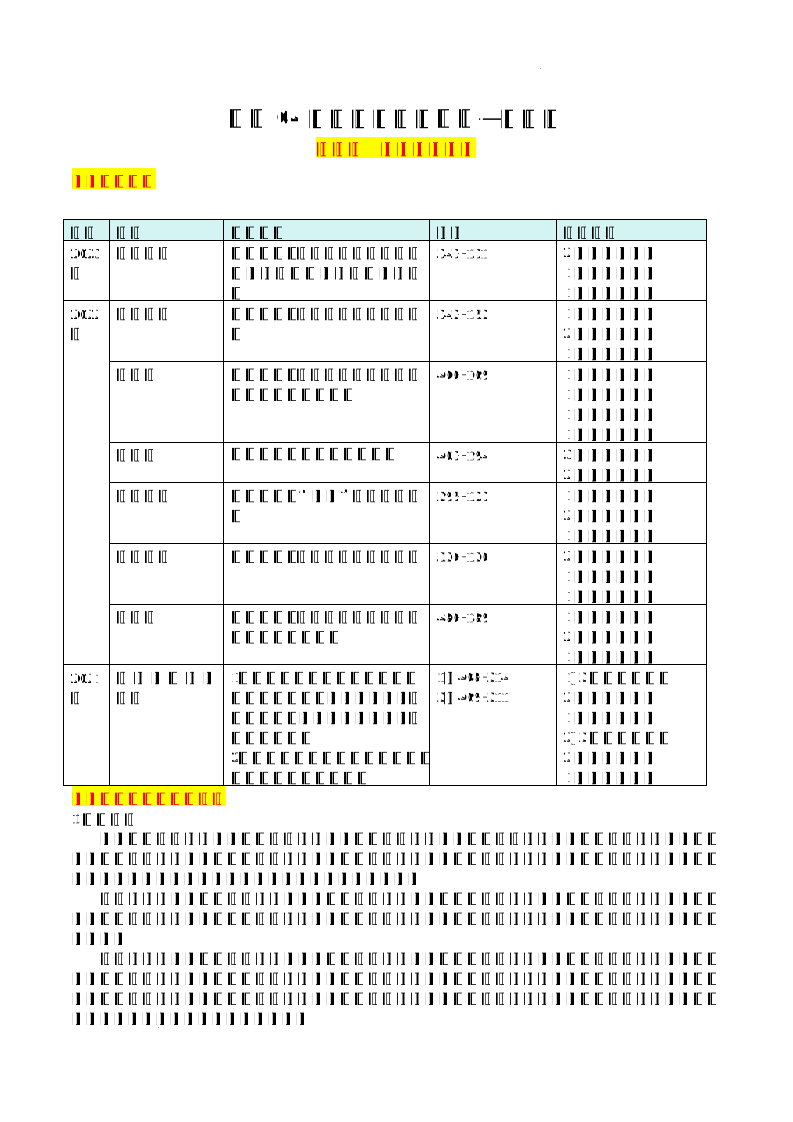
1
2
3

相关资源
由于学科网是一个信息分享及获取的平台,不确保部分用户上传资料的 来源及知识产权归属。如您发现相关资料侵犯您的合法权益,请联系学科网,我们核实后将及时进行处理。