专题05 阅读理解书评和新闻报道(知识清单)(全国通用)2026年高考英语一轮复习讲练测
2025-10-30
|
2份
|
53页
|
905人阅读
|
35人下载
精品
资源信息
| 学段 | 高中 |
|---|---|
| 学科 | 英语 |
| 教材版本 | - |
| 年级 | 高三 |
| 章节 | - |
| 类型 | 学案-知识清单 |
| 知识点 | - |
| 使用场景 | 高考复习-一轮复习 |
| 学年 | 2026-2027 |
| 地区(省份) | 全国 |
| 地区(市) | - |
| 地区(区县) | - |
| 文件格式 | ZIP |
| 文件大小 | 791 KB |
| 发布时间 | 2025-10-30 |
| 更新时间 | 2025-08-20 |
| 作者 | 吴Sir初高中英语精品 |
| 品牌系列 | 上好课·一轮讲练测 |
| 审核时间 | 2025-08-20 |
| 下载链接 | https://m.zxxk.com/soft/53540404.html |
| 价格 | 4.00储值(1储值=1元) |
| 来源 | 学科网 |
内容正文:
专题05 阅读理解---新闻报道和书评 (
目录
01知识脑图·学科框架速建
02考点精析·知识能力全解
【知能解读
01
】
新闻报道和书评六年高考考情统计
【知能解读
02
】
新闻报道五年高考考情解读
【知能解读
03
】
阅读理解新闻报道选项特点
【知能解读
04
】
阅读理解新闻报道选项特点
【知能解读
05
】
阅读理解新闻报道解题思路
03 攻坚指南·高频考点突破
【重难点突破
01
】
阅读理解书评考情解读
【重难点突破
0
2
】
阅读理解书评解题思路
【重难点突破
0
3
】
阅读理解书评跟踪训练
04 避坑锦囊·易混易错诊疗
【易混易错
01
】
阅读理解新闻报道跟踪训练
【易混易错
0
2
】
高考新闻报道高频词汇
05 通法提炼·高频思维拆解
【方法技巧
0
1
】
阅读理解书评类答题误区
【方法技巧
0
2
】
阅读理解书评类应对办法
【方法技巧
0
3
】
阅读理解新闻报道类答题误区
【方法技巧
0
4
】
阅读理解新闻报道类应对办法
)
01新闻报道和书评六年高考考情统计
卷别
主题
话题
词数
细节
理解题
猜测
词义题
推理
判断题
主旨
大意题
2024新课标II卷
人与自我
新闻-车站自助阅读亭吸引客流
282+107
3
1
2020全国III卷
人与社会
新闻-电影数字化类人猿引关注
248+128
3
1
2020全国III卷
人与社会
新闻-报道英国多世同堂的现象
320+97
2
1
1
2024新课标II卷
人与社会
书评-阐述AI发展现状与前景
323+160
1
1
2
2023新课标I卷
人与社会
书评-倡导简单的数字生活方式
322+107
1
2
1
2023新课标II卷
人与社会
书评-印刷书籍以及阅读的意义
328+126
1
1
2
2023全国甲卷
人与社会
书评-倡导读者花时间去多读书
332+124
2
2
2022全国乙卷
人与社会
书评-介绍评价Dorothy的书籍
319+122
2
2
2020新课标卷
人与社会
书评-作者的乌兹别克斯坦之行
300+121
1
1
2
02新闻报道五年高考考情解读
新闻报道类文章和高考阅读理解选材突出“时代性”的原则相吻合,及时反映了当代社会时政、文化、娱乐、环保、人物、体育、科技等方面的新事物、新发现、新发明。
1.新闻报道要素
以记叙为主的新闻的六个要素(时间、地点、人物、事件的起因、经过、结果)。以说明居多的新闻的三个部分(说明的对象、说明的过程和归纳总结)。
2.新闻报道结构
新闻报道通常包含四个部分,即:标题(headline)、导语(lead)、主体(body)和结尾(ending)。 标题是新闻的眼睛,它要求语言准确、生动和新颖,能够概括新闻事件的主要焦点。 导语部分为新闻的“灵魂”,通常位于新闻报道的开头,通常包含了最重要的信息,如事件的时间、地点、主要人物和事件概要(5W+1H: when, where, who, what, why 和how)。 导语有助于吸引读者的兴趣,让他们迅速了解事件的关键内容。 主体段落位于导语之后,对导语部分概括的新闻事实展开详细叙述,按照信息的重要性递减的顺序排列。 新闻报道的结尾通常比较简洁,一般用一些不太重要但相关的细节、采访引言和总结作为结束语,其作用是重申主题,或强调事件的重要性或可能的影响。
3.新闻报道语言特点
新闻类语篇具有一些明显的语言特点,了解这些特点,有助于考生迅速把握新闻类文章主要内容,快速筛选有用信息,提高阅读效率。
客观中立:新闻报道通常保持客观和中立的立场,避免使用主观性的词语和观点。
第三人称:新闻报道常以第三人称来描述事件和人物,多用被动语态,以突出新闻主体,保持客观性。
大量引语:新闻报道注重事实本身,强调客观性,通常包含大量直接引语或间接引语,以增强新闻报道的真实性和权威性,有助于读者了解事件的多个视角。 此外,为突出新闻内容,通常倾向于采用“掉尾句”的结构,即将说话人或信息来源放在句子的末尾。
数字和统计数据:新闻报道经常包括数字和统计数据,以支持事件的描述,增强文本的说服力和真实性。
专有名词多:新闻报道类材料中人名和地名大量出现,频繁使用缩略词等。 在不影响理解全文的情况下,不要过分纠缠,抓住地名或人名之间的关系即可。
复杂句多:新闻报道中通常包含不少复杂句,这些句子通常包含修饰、限定、补充和说明等成分。 复杂句的频繁使用以及修饰成分的出现体现了新闻报道对精确表达的要求。 虽然新闻报道的语言结构较为复杂,但它的表达方式朴实,能够清晰、简洁、明了地传达信息。
03阅读理解新闻报道选项特点
1.正确选项特征
同义替换
与原文关键信息相同含义的不同表达
信息归纳
对分散或复杂的信息进行概括或比较
正话反说
把原文中的意思反过来表达意思明了
原文原词
利用原文原词作为正确选项比较简单
2.干扰选项特征
张冠李戴
是原文信息,但不是题目要求的内容
无中生有
符合生活常识,但不是该文章的内容
曲解文意
极其相似但是细节处与原文有些出入
颠倒是非
在意思上与原文大相径庭或完全相反
正误参半
选项内容部分正确,部分和原文错误
04阅读理解新闻报道解题思路
1. 浏览文章,抓住文体特征
判断文体考生在做阅读理解题时一定要有“文体意识”,即结合文章体裁的文体特征,紧扣主旨理解文章。具体到新闻类文体,首先通过新闻独有的语篇特征,如导语、信息源等,判断是否是新闻类语篇。然后,根据文章结构特点和题型特点可以去文章相应部分寻找答案,这样可以节约时间、有的放矢。例如:文章主旨、写作意图题一般对应文章导语部分。
2. 利用导语,掌握核心要点
掌握核心导语往往包括了新闻最具价值的内容,与主旨密切相关,是对新闻事件本质、新闻人物的突出特点和社会现象背后的原因等最凝练的概括,是写作意图题、主旨大意题的重要判断依据。例如:2020全国高考III卷C篇,探讨了英国社会中由于多方压力,一家人几代同堂的现状。第31题“What is the text mainly about?”就是导语的侧面考查。通过结合下文的例子和数据分析,我们知道这种选择多是同住一室的家庭越来越多,因此全文讲述的是人们居住方式的一种新的趋势。
3. 深入细节,做好原文定位
定位分析细节判断题是新闻类语篇的主要考查题型,做题时考生要有“题目意识”,即由题干关键词把握命题意图和答题要点,解题时多使用“同义转换”或者“综合归纳”两种方法。多数情况下,选项会对原文信息进行同义转换,即原文信息的另外一种表达。相反,选项中如果出现了原文出现过的词句,应当引起警觉,谨防受到“偷梁换柱”的迷惑干扰。有时候细节散落在多个句子,或者在不同段落中都有提到,考生应该分析事件之间的关联、人物与事件的关联、社会现象背后的原因和结果的关联等等,进行综合归纳。如果是以记叙为主,则需要抓住“何人、何时、何为、何因、何果”几要素,这几大要素也是题目的着眼点。
4. 结合主旨,做好推理判断
理解引语引语是新闻类文章中的点睛之笔,用来体现作者或者文中相关方面的态度、观点,用来佐证支撑主旨。在答题时要有“语境意识”,即联系文章主旨和上下文语境分析判断作者的写作意图或者说话人的情感态度。
5.突破长难句子,克服阅读瓶颈
新闻报道阅读材料往往包含一些长句和难句,让不少学生颇为头疼。处理长难句的原则是“化繁为简,去枝叶,留主干”,即先跳读修饰成分或附加成分,找出句子的主干并理解其意义;然后再分段理解修饰成分或附加成分。考生要学会跳读非谓语、插入语和各种从句, 这样就能够尽快抓住句子核心意思,不至于被各种似是而非的选项所迷惑。
01 阅读理解书评考情解读
1.书评开头
简明扼要地开始。在书评的开头,用简单而明了的语言介绍你将要谈论的书籍、作者和主题。你可以在这里提出你的观点,或者引用一些有关书籍的有趣或引人入胜的内容,以激发读者的兴趣。
例:《To Kill a Mockingbird》是 Harper Lee 的一部小说,讲述了一个在 20 世纪 30 年代南部小镇 Maycomb 的男孩 Scout Finch 的成长故事,也是一部对社会不公与种族歧视的深入探讨。
2.书评主体
分析并阐释图书主题。在书评的核心部分,你可以分析小说的主题,并解释作者想要表达的观点。你可以用引用和实例来支持你的观点,并且对于书中的人物、情节、对话和其他元素,可以展开详细的解释。
例:在小说中,作者 Harper Lee 很好地表达了针对种族歧视与不平等现象的深入思考。她通过以 Scout 和她的家人为中心的故事,在书中不断地探讨这种现象对社会和个人带来的影响。例如,书中描述的一些场景以及托马斯·罗宾逊案件的发生,使得读者能够深入了解与种族歧视相关的问题,以及它们是如何影响当地社会的。
3.书评结尾
摘要和评价。在书评的最后,总结你的观点和评价,看这本书对你的感知有何影响。确保你的结论能够概括你对小说的总体印象,并且可以给读者一个清晰的看法。你可以谈论这本书的可读性、作者的写作风格和故事的深意等方面。
例:总的来说,我认为《To Kill a Mockingbird》是一本值得读的书。作者Harper Lee 运用了一种深入的,生动的方式将其讲述,让读者深入到其故事中,并深入思考与社会不平等相关的问题。这本书提供了关于种族问题的真切叙述,以及有关社会和个人应如何对抗不公现象的深刻见解。
02 阅读理解书评解题思路
1.书评会涉及到书目中提到的人名、地名、机构等专有名词,学会去识别定位;
2.书评会涉及书目内容、故事情节、人物性格、人物评价等,多用一般现在时;
3.尾段客观公正的评论或评价,或考查写作手法,主人公的命运和性格特征等。
4.重视新闻报道和书评“倒三角形”结构,特别是首段和段首的独特引领作用。
5.标题概括题重视三性:概括性、简洁性和新颖性;同时联系首段和关键词。
6.注意长难句落实“括号法”--(从句)(非谓语)(介词短语)(名词短语)。
7.满分策略:读题干→找原文→做标记→留痕迹→看选项→扣字眼。
03 阅读理解书评跟踪训练
跟踪训练1 (2024新课标II卷阅读D篇)
Given the astonishing potential of AI to transform our lives, we all need to take action to deal with our AI-powered future, and this is where AI by Design: A Plan for Living with Artificial Intelligence comes in. This absorbing new book by Catriona Campbell is a practical roadmap addressing the challenges posed by the forthcoming AI revolution (变革).
In the wrong hands, such a book could prove as complicated to process as the computer code (代码) that powers AI but, thankfully, Campbell has more than two decades’ professional experience translating the heady into the understandable. She writes from the practical angle of a business person rather than as an academic, making for a guide which is highly accessible and informative and which, by the close, will make you feel almost as smart as AI.
As we soon come to learn from AI by Design, AI is already super-smart and will become more capable, moving from the current generation of “narrow-AI” to Artificial General Intelligence. From there, Campbell says, will come Artificial Dominant Intelligence. This is why Campbell has set out to raise awareness of AI and its future now-several decades before these developments are expected to take place. She says it is essential that we keep control of artificial intelligence, or risk being sidelined and perhaps even worse.
Campbell’s point is to wake up those responsible for AI-the technology companies and world leaders-so they are on the same page as all the experts currently developing it. She explains we are at a “tipping point” in history and must act now to prevent an extinction-level event for humanity. We need to consider how we want our future with Al to pan out. Such structured thinking, followed by global regulation, will enable us to achieve greatness rather than our downfall.
AI will affect us all, and if you only read one book on the subject, this is it.
32. What does the phrase “In the wrong hands” in paragraph 2 probably mean?
A. If read by someone poorly educated.
B. If reviewed by someone ill-intentioned.
C. If written by someone less competent.
D. If translated by someone unacademic.
33. What is a feature of AI by Design according to the text?
A. It is packed with complex codes.
B. It adopts a down-to-earth writing style.
C. It provides step-by-step instructions.
D. It is intended for AI professionals.
34. What does Campbell urge people to do regarding AI development?
A. Observe existing regulations on it.
B. Reconsider expert opinions about it.
C. Make joint efforts to keep it under control.
D. Learn from prior experience to slow it down.
35. What is the author’s purpose in writing the text?
A. To recommend a book on AI.
B. To give a brief account of AI history.
C. To clarify the definition of AI.
D. To honor an outstanding AI expert.
跟踪训练2 (2022全国乙卷阅读B篇)
In 1916, two girls of wealthy families, best friends from Auburn, N. Y.—Dorothy Woodruff and Rosamond Underwood—traveled to a settlement in the Rocky Mountains to teach in a one-room schoolhouse. The girls had gone to Smith College. They wore expensive clothes. So for them to move to Elkhead, Colo. to instruct the children whose shoes were held together with string was a surprise. Their stay in Elkhead is the subject of Nothing Daunted: The Unexpected Education of Two Society Girls in the West by Dorothy Wickenden, who is a magazine editor and Dorothy Woodruff’s granddaughter.
Why did they go then? Well, they wanted to do something useful. Soon, however, they realized what they had undertaken.
They moved in with a local family, the Harrisons, and, like them, had little privacy, rare baths, and a blanket of snow on their quilt when they woke up in the morning. Some mornings, Rosamond and Dorothy would arrive at the schoolhouse to find the children weeping from the cold. In spring, the snow was replaced by mud over ice.
In Wickenden’s book, she expanded on the history of the West and also on feminism, which of course influenced the girls’ decision to go to Elkhead. A hair-raising section concerns the building of the railroads, which entailed (牵涉) drilling through the Rockies, often in blinding snowstorms. The book ends with Rosamond and Dorothy’s return to Auburn.
Wickenden is a very good storyteller. The sweep of the land and the stoicism (坚忍) of the people move her to some beautiful writing. Here is a picture of Dorothy Woodruff, on her horse, looking down from a hill top: “When the sun slipped behind the mountains, it shed a rosy glow all around them. Then a full moon rose. The snow was marked only by small animals: foxes, coyotes, mice, and varying hares, which turned white in the winter.”
24. Why did Dorothy and Rosamond go to the Rocky Mountains?
A. To teach in a school. B. To study American history.
C. To write a book. D. To do sightseeing.
25. What can we learn about the girls from paragraph 3?
A. They enjoyed much respect. B. They had a room with a bathtub.
C. They lived with the local kids. D. They suffered severe hardships.
26. Which part of Wickenden’s writing is hair-raising?
A. The extreme climate of Auburn. B. The living conditions in Elkhead.
C. The railroad building in the Rockies. D. The natural beauty of the West.
27. What is the text?
A. A news report. B. A book review. C. A children’s story. D. A diary entry.
01阅读理解新闻报道跟踪训练
跟踪训练1 (2024全新课标II卷B篇)
Do you ever get to the train station and realize you forgot to bring something to read? Yes, we all have our phones, but many of us still like to go old school and read something printed.
Well, there’s a kiosk (小亭) for that. In the San Francisco Bay Area, at least.
“You enter the fare gates (检票口) and you’ll see a kiosk that is lit up and it tells you can get a one-minute, a three-minute, or a five-minute story,” says Alicia Trost, the chief communications officer for the San Francisco Bay Area Rapid Transit — known as BART. “You choose which length you want and it gives you a receipt-like short story.”
It’s that simple. Riders have printed nearly 20,000 short stories and poems since the program was launched last March. Some are classic short stories, and some are new original works.
Trost also wants to introduce local writers to local riders. “We wanted to do something where we do a call to artists in the Bay Area to submit stories for a contest,” Trost says. “And as of right now, we’ve received about 120 submissions. The winning stories would go into our kiosk and then you would be a published artist.”
Ridership on transit (交通) systems across the country has been down the past half century, so could short stories save transit?
Trost thinks so.
“At the end of the day all transit agencies right now are doing everything they can to improve the rider experience. So I absolutely think we will get more riders just because of short stories,” she says.
And you’ll never be without something to read.
24. Why did BART start the kiosk program?
A. To promote the local culture. B. To discourage phone use.
C. To meet passengers’ needs. D. To reduce its running costs.
25. How are the stories categorized in the kiosk?
A. By popularity. B. By length.
C. By theme. D. By language.
26. What has Trost been doing recently?
A. Organizing a story contest. B. Doing a survey of customers.
C. Choosing a print publisher. D. Conducting interviews with artists.
27. What is Trost’s opinion about BART’s future?
A. It will close down. B. Its profits will decline.
C. It will expand nationwide. D. Its ridership will increase.
跟踪训练2 (2020全国III卷B篇)
When "Rise of the Planet of the Apes" was first shown to the public last month, a group of excited animal activists gathered on Hollywood Boulevard. But they weren’t there to throw red paint on fur-coat-wearing film stars. Instead, one activist, dressed in a full-body monkey suit, had arrived with a sign praising the filmmakers: "Thanks for not using real apes (猿)!"
The creative team behind "Apes" used motion-capture (动作捕捉) technology to create digitalized animals, spending tens of millions of dollars on technology that I records an actor’s performance and later processes it with computer graphics to create a final image (图像). In this case, one of a realistic-looking ape.
Yet "Apes" is more exception than the rule. In fact, Hollywood has been hot on live animals lately. One nonprofit organization, which monitors the treatment or animals in filmed entertainment, is keeping tabs on more than 2,000 productions this year. Already, a number of films, including "Water for Elephants," "The Hangover Part Ⅱ" and "Zookeeper," have drawn the anger of activists who say the creatures acting in them haven’t been treated properly.
In some cases, it’s not so much the treatment of the animals on set in the studio that has activists worried; it’s the off-set training and living conditions that are raising concerns. And there are questions about the films made outside the States, which sometimes are not monitored as closely as productions filmed in the Sates.
24. Why did the animal activists gather on Hollywood Boulevard?
A. To see famous film stars. B. To oppose wearing fur coats.
C. To raise money for animal protection. D. To express thanks to some filmmakers.
25. What does paragraph 2 mainly talk about?
A. The cost of making "Apes." B. The creation of digitalized apes.
C. The publicity about “Apes." D. The performance of real apes.
26. What does the underlined phrase "keeping tabs on" in paragraph 3 probably mean?
A. Listing completely. B. Directing professionally.
C. Promoting successfully. D. Watching carefully.
27. What can we infer from the last paragraph about animal actors?
A. They may be badly treated. B. They should take further training.
C. They could be traded illegally. D. They would lose popularity.
02 高考新闻报道高频词汇
1.生僻词汇
prohibit /prəˈhɪbɪt/ vt. 禁止
agenda /əˈdʒendə/ n. 议事日程;议程表
deposit /dɪˈpɒzɪt/ n. 存款;押金;订金
procedure /prəˈsiːdʒə/ n. 程序;手续;步骤
sympathy /ˈsɪmpəθɪ/ n. 同情
multiply /ˈmʌltɪplaɪ/ vt.&vi. 乘;增加
insert /ɪnˈsɜːt/ vt.&vi. 插入
ambiguous /æmˈbɪɡjʊəs/adj. 模棱两可的;含糊不清的
awesome /ˈɔːsə m/ adj. 令人惊叹的
delicate /ˈdelɪkət/ adj. 精美的;易碎的
punctual /ˈpʌŋk tʃʊəl/ adj. 守时的
thorough /ˈθʌrə/ adj. 彻底的
allocate /ˈæləkeɪt/ vt. 分配;拨出
dilemma /dɪˈlemə/ n. 困境;进退两难
exacerbate /ɪɡˈzæsəbeɪt/ vt. 使恶化;使加剧
substitute /ˈsʌbstɪtjuːt/ v. 代替;取代 n. 替代品
priority /praɪˈɒrəti/ n. 优先事项;优先权
resonance /ˈrè sōnɡ/ n. 共鸣
barrier /ˈbæriə/ n. 障碍;屏障
consequence /ˈkɒnsɪkwəns/n. 结果;后果
3.派生词汇
co - author /kəʊˈɔːθə/ n. 合著者
aspirational /ˌæspəˈreɪʃənl/ adj. 渴望成功的;有抱负的
emotionally /ɪˈməʊʃənəli/ adv. 情绪上;感情上
complainer /kəmˈpleinə/ n. 抱怨者
globalization /ˌɡləʊbəlaɪˈzeɪʃən/n. 全球化
historically /hɪˈstɒrɪkli/ adv. 在历史上
motivational /ˌməʊtɪˈveɪʃənl/ adj. 鼓舞人心的
perspective /pəˈspektɪv/ n. 视角;观点;态度
unimaginable /ˌʌnɪˈmædʒɪnəbl/adj. 难以置信的
digestion /daɪˈdʒestʃən/ n. 消化;领悟
reprogram /riːˈprəʊɡræm/ v. 重新编程
incurable /ɪnˈkjʊərəbl/ adj. 无法治愈的
unnatural /ʌnˈnætʃrəl/ adj. 不自然的
publication /ˌpʌblɪˈkeɪʃn/ n. 出版;发行
promotion /prəˈməʊʃn/ n. 促销;晋升;推广
worthless /ˈwɜːθləs/ adj. 无价值的;没用处的
greenery /ˈɡriːnəri/ n. 绿色植物
holistic /həʊˈlɪstɪk/ adj. 整体的
multitask /ˌmʌltiˈtɑːsk/ v. 同时执行多项任务
urbanization /ˌɜːbənaɪˈzeɪʃn/ n. 城市化
3.熟词生义
board /bɔːd/ 熟义:n. 板 v. 登上; 生义:n. 饮食
excuse /ɪkˈskjuːz/ 熟义:v. 原谅; 生义:v. 借故离开
flood /flʌd/ 熟义:n. 洪水; 生义:v. 淹没,涌到
head /hed/ 熟义:n. 头; 生义:v. (朝……)前进,去;带领
land /lænd/ 熟义:n. 土地 v. 着陆; 生义:v. 谋得
law /lɔː/ 熟义:n. 法律; 生义:n. 法则
name /neɪm/ 熟义:n. 名字; 生义:v. 说定;命名
note /nəʊt/ 熟义:n. 笔记,便条; 生义:n. 音符;纸币
storm /stɔːm/ 熟义:n. 暴风雨; 生义:v. 气冲冲地疾走
station /ˈsteɪʃə n/ 熟义:n. 站; 生义:v. 部署,使驻扎
ache /eɪk/ 熟义:n. 疼痛; 生义:v. 渴望
coach /kəʊtʃ/ 熟义:n. 教练; 生义:v. 辅导;训练
course /kɔːs/ 熟义:n. 课程;过程; 生义:n. 一道菜
desert /dɪˈzɜːt/ 熟义:n. 沙漠; 生义:v. 抛弃,离弃
ground /ɡraʊnd/ 熟义:n. 地面; 生义:n. 理由
measure /ˈmeʒə/ 熟义:n. 措施,方法; 生义:v. 估量,判定(重要性、价值或影响等)
position /pəˈzɪʃən/ 熟义:n. 位置;职位; 生义:n. 立场;观点
promise /ˈprɒmɪs/ 熟义:n. 诺言; 生义:v. 有…… 的希望;使…… 有可能
shoulder /ˈʃəʊldə/ 熟义:n. 肩膀; 生义:v. 承担
conduct /ˈkɒndʌkt/ 熟义:v. 指挥; 生义:v. 实施,做
01 阅读理解书评类答题误区
1.事实与观点混淆
误将引语(如专家观点)等同于作者立场,例如将"某教授认为该政策存在执行漏洞"理解为新闻作者的观点。
2.时间线与因果关系错乱
对"事件发展顺序-影响-后续措施" 的逻辑链把握不足,如将 "政策实施后出现经济波动" 误判为"政策导致经济波动"。
3.数据解读表面化
仅关注数字本身,忽略数据对比的深层含义,例如将"失业率下降 2%"直接等同于经济向好,忽视统计口径变化。
4.推断题过度延伸
脱离文本进行主观臆断,如根据"某城市犯罪率上升"推断"治安管理全面失效",而忽略文中提到的"季节性因素"。
02 阅读理解书评类应对办法
1.构建评价维度认知框架
文学性分析:关注写作手法(如 "意识流"" 隐喻 ")、结构设计(如" 倒叙 ""多线叙事");主题阐释:识别作品反映的社会议题(如 "阶级矛盾"" 文化冲突 ");价值判断:区分 "创新性"" 深度 ""感染力" 等评价维度
2.建立评价词汇库
正面评价:profound insight深刻洞察、compelling narrative引人入胜的叙事;负面评价:superficial characterization肤浅的人物塑造、clichéd plot陈词滥调的情节;中性评价:balanced perspective平衡的视角、thought-provoking发人深省。
3.强化逻辑关系识别
因果关系:由于采用第一人称视角,读者更容易产生共鸣;对比关系:与传统历史小说不同,该作品弱化了英雄主义叙事;递进关系:不仅揭露社会问题,更提出了解决路径。
4.主旨归纳三步法
定位评价句:重点关注首段结论句、尾段总结句;提取关键词:如"批判性反思""艺术突破""时代局限性";整合核心观点:本文通过分析作品的叙事革新,肯定其对女性主义文学的贡献。
03 阅读理解新闻报道类答题误区
1. 忽视首段主旨,陷入细节迷宫
案例:2023年全国甲卷新闻报道首段提到“某国通过新法案限制塑料使用”,后文详细列举法案条款和企业反应。题目问“文章主要讨论什么”,考生易误选“企业应对措施”(细节),而非“新塑料法案的出台”(首段核心)。
误区本质:未抓住倒金字塔 的主旨前置特点,被次要信息干扰。
2. 混淆客观事实与主观观点
案例:2022 年新高考 I 卷报道“AI 技术在医疗中的应用”,原文含doctors believe AI can reduce errors(观点)和AI helped diagnose 30% more cases(事实)。题目问“哪项是作者确认的事实”,考生易将“医生观点”当作事实选入。
误区本质:未区分信号词(观点think/argue/suggest;事实prove/show/statistics)。
3. 对数字、时间、机构等细节定位失误
案例:2021 年全国乙卷报道“全球可再生能源装机容量增长”,含数据 “2020 年增长10%,2021年达15%”。题目问“2021年增长率”,考生因漏看年份或混淆“装机容量”与“增长率”选错。
误区本质:对新闻中高频出现的“数字+单位+限定词”(如增长vs 总量)敏感度不足。
04 阅读理解新闻报道类应对办法
1.快速确认文体
通过导语、倒金字塔结构、引语等语言特点,快速判断文章为新闻类,以便针对性答题。
2.抓住文章核心
新闻核心通常在导语部分,传统导语一般包含5W+1H(Who, What, When, Where, Why, How),但现代新闻导语更注重对事实的概括,需重点关注。
3.定位答案出处
标记关键词:读题时标记题干中的人名、地名、数据等关键词,阅读时留意这些信息的出现位置。对比选项:定位后抓住关键词,与选项对比,注意识别同义词,考虑细节暗示,确保答案准确。
4.斟酌主旨标题
依据导语:新闻标题主要依赖导语内容,确定标题后可反推涉及内容,最终敲定答案。注意双关:标题中的双关需仔细体会,理解其深层含义。
5.细节理解题技巧
精准定位:根据题干关键词在文中查找对应信息,注意细节描述。排除干扰:注意选项中的绝对化表述(如“always”“never”等),此类选项通常为干扰项。
6.推理判断题技巧
依据文本:答案需基于文中信息合理推断,避免主观臆断。分析引语:新闻中的直接引语或间接引语常反映当事人观点,需结合上下文理解其态度和看法。
7.词义猜测题技巧
结合语境:根据上下文线索推测词义,注意前后文的逻辑关系。关注定义或解释:文中对生词的定义、举例或同义词替换等可帮助猜测词义。
(
阅读理解书评和新闻报道
综合能力提升
)
真题专区:研读高考真题,洞悉高考命题规律,探寻满分做题技巧和应试思维
01 (2020全国III卷)
With the young unable to afford to leave home and the old at risk of isolation(孤独), more families are choosing to live together.
The doorway to peace and quiet, for Nick Bright at least, leads straight to his mother-in-law, she lives on the ground floor, while he lives upstairs with his wife and their two daughters.
Four years ago they all moved into a three-storey Victorian house in Bristol — one of a growing number of multigenerational families in the UK living together under the same roof. They share a front door and a washing machine, but Rita Whitehead has her own kitchen, bathroom, bedroom and living room on the ground floor.
“We floated the idea to my mum of sharing at a house,” says Kathryn Whitehead. Rita cuts in: “We spoke more with Nick because I think it’s a big thing for Nick to live with his mother-in-law.”
And what does Nick think? “From my standpoint, it all seems to work very well. Would I recommend it? Yes, I think I would.”
It’s hard to tell exactly how many people agree with him, but research indicates that the numbers have been rising for some time. Official reports suggest that the number of households with three generations living together had risen from 325,000 in 2002 to 419,000 in 2013.
Other varieties of multigenerational family are more common. Some people live with their elderly parents; many more adult children are returning to the family home, if they ever left. It is said that about 20% of 25-34-year-olds live with their parents, compared with 16% in 1991.The total number of all multigenerational households in Britain is thought to be about 1.8 million.
Stories like that are more common in parts of the world where multigenerational living is more firmly rooted. In India, particularly outside cities, young women are expected to move in with their husband’s family when they get married.
28. Who mainly uses the ground floor in the Victorian house in Bristol?
A. Nick. B. Rita. C. Kathryn D. The daughters.
29. What is Nick’s attitude towards sharing the house with his mother-in -law?
A. Positive. B. Carefree. C. Tolerant. D. Unwilling.
30. What is the author’s statement about multigenerational family based on?
A. Family traditions. B. Financial reports. C. Published statistics. D. Public opinions.
31. What is the text mainly about?
A. Lifestyles in different countries. B. Conflicts between generations.
C. A housing problem in Britain. D. A rising trend of living in the UK.
02 (2020新课标卷)
In the mid-1990s, Tom Bissell taught English as a volunteer in Uzbekistan. He left after seven months, physically broken and having lost his mind. A few years later, still attracted to the country, he returned to Uzbekistan to write an article about the disappearance of the Aral Sea.
His visit, however, ended up involving a lot more than that. Hence this book, Chasing the Sea: Lost Among the Ghosts of Empire in Central Asia, which talks about a road trip from Tashkent to Karakalpakstan, where millions of lives have been destroyed by the slow drying up of the sea. It is the story of an American travelling to a strange land, and of the people he meets on his way: Rustam, his translator, a lovely 24-year-old who picked up his colorful English in California, Oleg and Natasha, his hosts in Tashkent, and a string of foreign aid workers.
This is a quick look at life in Uzbekistan, made of friendliness and warmth, but also its darker side of society. In Samarkand, Mr Bissell admires the architectural wonders, while on his way to Bukhara he gets a taste of police methods when suspected of drug dealing. In Ferghana, he attends a mountain funeral(葬礼)followed by a strange drinking party. And in Karakalpakstan, he is saddened by the dust storms, diseases and fishing boats stuck miles from the sea.
Mr Bissell skillfully organizes historical insights and cultural references, making his tale a well-rounded picture of Uzbekistan, seen from Western eyes. His judgment and references are decidedly American, as well as his delicate stomach. As the author explains, this is neither a travel nor a history book, or even a piece of reportage. Whatever it is, the result is a fine and vivid description of the purest of Central Asian traditions.
28. What made Mr Bissell return to Uzbekistan?
A. His friends' invitation. B. His interest in the country.
C. His love for teaching. D. His desire to regain health.
29. What does the underlined word “that” in paragraph 2 refer to?
A. Developing a serious mental disease.
B. Taking a guided tour in Central Asia.
C. Working as a volunteer in Uzbekistan.
D. Writing an article about the Aral Sea.
30. Which of the following best describes Mr Bissell's road trip in Uzbekistan?
A. Romantic. B. Eventful. C. Pleasant. D. Dangerous.
31. What is the purpose of this text?
A. To introduce a book.
B. To explain a cultural phenomenon.
C. To remember a writer.
D. To recommend a travel destination.
03 (2023新课标II卷)
Reading Art: Art for Book Lovers is a celebration of an everyday object — the book, represented here in almost three hundred artworks from museums around the world. The image of the reader appears throughout history, in art made long before books as we now know them came into being. In artists’ representations of books and reading, we see moments of shared humanity that go beyond culture and time.
In this “book of books,” artworks are selected and arranged in a way that emphasizes these connections between different eras and cultures. We see scenes of children learning to read at home or at school, with the book as a focus for relations between the generations. Adults are portrayed (描绘) alone in many settings and poses —absorbed in a volume, deep in thought or lost in a moment of leisure. These scenes may have been painted hundreds of years ago, but they record moments we can all relate to.
Books themselves may be used symbolically in paintings to demonstrate the intellect (才智), wealth or faith of the subject. Before the wide use of the printing press, books were treasured objects and could be works of art in their own right. More recently, as books have become inexpensive or even throwaway, artists have used them as the raw material for artworks — transforming covers, pages or even complete volumes into paintings and sculptures.
Continued developments in communication technologies were once believed to make the printed page outdated. From a 21st-century point of view, the printed book is certainly ancient, but it remains as interactive as any battery-powered e-reader. To serve its function, a book must be activated by a user: the cover opened, the pages parted, the contents reviewed, perhaps notes written down or words underlined. And in contrast to our increasingly networked lives where the information we consume is monitored and tracked, a printed book still offers the chance of a wholly private, “off-line” activity.
28. Where is the text most probably taken from?
A. An introduction to a book.
B. An essay on the art of writing.
C. A guidebook to a museum.
D. A review of modern paintings.
29. What are the selected artworks about?
A. Wealth and intellect. B. Home and school.
C. Books and reading. D. Work and leisure.
30. What do the underlined words “relate to” in paragraph 2 mean?
A. Understand. B. Paint.
C. Seize. D. Transform.
31. What does the author want to say by mentioning the e-reader?
A. The printed book is not totally out of date.
B. Technology has changed the way we read.
C. Our lives in the 21st century are networked.
D. People now rarely have the patience to read.
模拟专区:精选名校真题好题,帮你锤炼做题技巧,助力冲刺备考圆梦高考
04(24-25高三下·重庆·阶段练习)
J. D.Salinger’s The Catcher in the Rye remains a classic novel of adolescent rebellion and isolation, connecting with generations since its 1951 publication. Through the voice of Holden Caulfield, a teenager kicked out of prep school, Salinger captures the raw emotions of youth — anger, confusion, and a desperate search for realness in a world he dismisses as “phoney”. The novel’s lasting power lies not in grand adventures but in its intimate portrayal of Holden’s internal struggles, which reflect universal teenage experiences.
Holden’s journey through New York City acts as a psychological exploration. He criticizes the hypocrisy (虚伪) of the adult world, mocks social expectations, and fantasizes about escaping to a simpler life “away from all the nonsense.” Yet beneath his cynical (愤世嫉俗的) appearance lies vulnerability.
Symbolism deepens the novel’s exploration of innocence and loss. The repeated image of the “catcher in the rye” — Holden’s fantasy of saving children from falling off a cliff — symbolizes his wish to preserve childhood innocence. His repeated visits to the Museum of Natural History, where displays stay unchanged, reveal his ingoing for stability. The ducks in Central Park’s lake, which mysteriously disappear each winter, mirror Holden’s anxiety about life’s uncertainties. Even the novel’s controversial language, criticized when first published and briefly defended later in one publisher’s preface (序言) as “authentic adolescent voice”, serves as a rebellion against social norms, making Holden’s voice feel startlingly real.
Though set in the 1950s, The Catcher in the Rye continues to speak to modern teenagers. In an era dominated by social media and artificial identities, Holden’s hatred of hypocrisy feels strikingly relatable. Unlike today’s digital interactions, Holden’s handwritten letters and face-to-face encounters in the novel emphasize the original and pure nature of human connection. Salinger’s refusal to romanticize adolescence — offering no easy answers to Holden’s pain — challenges readers to confront their own struggles with growing up. The novel endures not as a relic but as a timeless conversation about the confusion and struggles of youth.
1.Where is the text most probably taken from?
A.A comment on modern education. B.A book review of Salinger’s novel.
C.A publisher’s preface for a special edition. D.A psychological study on teenage rebellion.
2.What does the underlined word “phoney” in paragraph 1 most likely mean?
A.Fake. B.Dangerous. C.Traditional. D.Complicated.
3.According to paragraph 3, what does the image “catcher in the rye” represent?
A.Holden’s admiration for rural life. B.Holden’s desire to escape society.
C.Holden’s criticism of education systems. D.Holden’s wish to protect childhood purity.
4.What does Salinger agree with according to the final paragraph?
A.Adolescence deserves romanticizing. B.Genuine human connections are vital.
C.Social media fosters sincere connections. D.Teenagers require straightforward life solutions.
05(24-25高三上·辽宁沈阳·阶段练习)
“Why does grandpa have ear hair?“ Just a few years ago my child was so curious to know “why” and “how” that we had to cut off her questions five minutes before bedtime. Now a soon-to-be fourth grader, she says that she dislikes school because “it’s not fun to learn.” I am shocked. As a scientist and parent, I have done everything I can to promote a love of learning in my children. Where did I go wrong?
My child’s experience is not unique. Developmental psychologist Susan Engel notes that curiosity defined as “spontaneous (自发的)” investigation and eagerness for new information drops dramatically in children by the fourth grade.
In Wonder: Childhood and the Lifelong Love of Science, Yale psychologist Frank C. Keil details the development of wonder―a spontaneous passion to explore, discover, and understand. He takes us on a journey from its early development, when wonder drives common sense and scientific reasoning, through the drop-off in wonder that often occurs, to the trap of life in a society that devalues wonder.
As Keil notes, children are particularly rich in wonder while they are rapidly developing causal mechanisms (因果机制) in the preschool and early elementary school years. They are sensitive to the others’ knowledge and goals, and they expertly use their desire for questioning. Children’s questions, particularly those about “why” and “how” support the development of causal mechanisms which can be used to help their day-to-day reasoning.
Unfortunately, as Keil notes, ”adults greatly underestimate young children’s causal mechanisms.” In the book, Wonder, Keil shows that we can support children’s ongoing wonder by playing games with them as partners, encouraging question-asking, and focusing on their abilities to reason and conclude.
A decline in wonder is not unavoidable. Keil reminds us that we can accept wonder as a desirable positive quality that exists in everyone. I value wonder deeply, and Wonder has given me hope by proposing a future for my children that will remain wonder-full.
1.What is a common problem among fourth graders?
A.They upset their parents too often.
B.They ask too many strange questions.
C.Their desire to learn declines sharply.
D.Their love for fun disappears quickly.
2.Which is true about the “causal mechanisms” in Para. 4?
A.They usually control children’s sensitivity.
B.They slightly change in early childhood.
C.They hardly support children’s reasoning.
D.They improve through children’s questioning.
3.How can parents support children’s wonder according to Keil?
A.By welcoming inquiring minds.
B.By overestimating their abilities.
C.By monitoring all of their games.
D.By providing timely conclusions.
4.What is the text?
A.A children’s story. B.A news report.
C.A research paper. D.A book review.
06(24-25高二下·安徽·阶段练习)
Burning oil, gas and coal — fuels that come from the remains of ancient plants and animals — releases carbon (碳) into Earth’s atmosphere, where it traps heat and changes the climate. That process has caused massive destruction and loss of life, and it will continue to do so. As a result, carbon is seen as a pollutant.
However, Paul Hawken argues in his new book Carbon: The Book of Life that both the thinking and the message of the climate movement are wrong. “Those who call carbon a pollutant should rethink what they are saying,” Hawken writes. “Carbon is the building block of life. Without it, Earth would just be a lonely, dead rock.”
Hawken believes that treating carbon as a pollutant not only misses what has caused climate change in the first place, but also further separates people from the living world. “There is no climate crisis, but a crisis of human thinking and behavior that’s damaging the soil, wiping out entire species, and changing the weather faster than people can adapt,” he argues. “The warming atmosphere is a response, a teaching.”
Hawken’s book is a lesson in what’s sometimes called “unlearning”, or letting go of old assumptions, like the idea that nature is something to fix or control. Instead, it explores ways to repair a broken relationship with the natural world by drawing inspiration from native cultures and new scientific discoveries.
First of all, Hawken wants a change in how people talk about the natural world. He describes the word “biodiversity” as “a bloodless term”. Even terms like “nature” are not proper for Hawken. He points out that such terms would only be needed if we are not a part of the living world.
The goal of the book is not to map out a plan for saving Earth, but to rebuild the relationship with it. “My community recently broke down a barrier under a bridge that had blocked the fish on their journey up the stream to give birth. The lesson from the project is about care,” Hawken writes. “That’s where we should start.”
1.According to Paul Hawken, carbon should be treated as ________.
A.a polluting element B.the result of burning fuels
C.a part of the living world D.the cause of climate change
2.What does Paul Hawken say about “biodiversity” and ”nature“?
A.They are not based on the latest discoveries.
B.They are helpful in fighting climate changes.
C.They are not easy for the public to understand.
D.They are misleading and should be abandoned.
3.What does Paul Hawken suggest people do in his new book?
A.“Unlearn” to co-exist with nature. B.Find ways to control nature.
C.Return to traditional ways of living. D.Fix the problems scientifically.
4.From which is the text probably taken?
A.A new book. B.A book review.
C.An advertisement. D.An environment report.
07(2024·天津河西·三模)
For too many years now, the teaching of the English language in our grammar and high schools has been uninspiring, leaving an entire generation with only unclear ideas about how to write and speak clearly and well. Now The Handbook of Good English, a comprehensive, easy-to-use guide to modern grammar, punctuation, usage, and style, puts the best available advice about writing and using the English language at your fingertips.
Intended to replace Strunk and White’s The Elements of Style and a host of other desk-reference books on careful writing, The Handbook of Good English is organized for both rapid reference to check specific points and for leisurely study to improve personal and professional writing.
This comprehensive book explores syntax, punctuation, style, organization and tone. Edward D.Johnson does more than issue the rules; he gives examples, exceptions, and, more important, clear, easily understood explanations of why grammar has the rules it does. He also gives full attention to styling, the important matter of giving consistent treatment to numbers, abbreviation, generic terms, forms of address, foreign terms, etc., in good writing.
A special feature of this book is the combined Glossary/Index (词汇表/索引), arranged from A to Z, to give instant answers to the most commonly asked questions about misused words, phrases, and constructions, and cross-referenced to the text of a longer explanation is desired. For the novice, the professional, for anyone who cares about the language, The Handbook of Good English is the crucial guide to proper communication.
“The Handbook of Good English fills a real need for a basic and strict handbook of standard English grammar, punctuation rules and conventions of editorial styling. Because grammar has been taught so carelessly for the past 20 years, Johnson takes pains to explain reasons for and relationships between grammatical rules,” comments Booklist, a book-review magazine.
1.What does the author think of classroom English language teaching?
A.Engaging. B.Time-consuming.
C.Creative. D.Ineffective.
2.What is the purpose of The Handbook of Good English?
A.To list English words commonly used in daily conversations.
B.To provide advice on proper English communication.
C.To further develop the idea in The Elements of Style.
D.To highlight the importance of grammar learning.
3.What does Paragraph 3 mainly talk about concerning Johnson’s book?
A.Its diverse content. B.Its unique organization.
C.Its publishing process. D.Its target readers.
4.Why is The Handbook of Good English special according to Paragraph 4?
A.It has multiple glossaries for different users.
B.It has extensive references for further reading.
C.It has a section devoted to readers’ frequent confusions.
D.It adopts a conversational approach to explaining grammar.
5.What can the comment from Booklist be regarded as?
A.Effective means of learning standard English.
B.A further recommendation for Johnson’s book.
C.An expectation of Johnson’s creation.
D.An introduction to the history of English grammar.
08(25-26高三上·河北保定·开学考试)
Walking along the Tidal Basin in Washington DC right now, you’ll see an almost funny scene about a minute’s walk west of the Jefferson Memorial: fans fighting to view a little cherry tree, Stumpy. Admirers have left cards, roses and bottles of wine at its base. One of the enthusiasts even threatened to chain himself to the trunk to save the tree when the sad news came out: Stumpy will be among the roughly 150 trees to be removed from the Tidal Basin as part of a three-year project to repair the site’s sinking seawalls.
Stumpy is about 25 years old. It didn’t quite enter the public’s imagination until 2020, when a tourist posted a picture and compared Stumpy’s survival in the challenging environment to its love of life. “There’s almost no way that the tree should still be alive. The trunk is entirely hollowed out and it has just three branches,” the post read. “Yet, it puts out these beautiful flowers.”
After that post, people began to notice Stumpy more. Then, in 2023, people were literally lining up to get pictures taken. “However, the fever has risen to a completely new level this year,” says Kevin Ambrose who photographed the tree long before it got its name and later wrote an article for the Washington Post titled Stumpy Steals the Hearts of Thousands at the Tidal Basin. “It’s sad to see it leave. But nature has the circle of life. Trees grow and die.”
“We have considered replanting it somewhere that doesn’t flood,” says National Park Service (NPS) spokesman Mike Litterst. “But we would probably do far more damage to it if we tried to move it than if we just allow it to remain in place due to its extremely weakened condition.”
But people can be relieved to hear a sliver of good news: To preserve Stumpy’s memory, NPS will take cuttings from Stumpy to produce genetically (基因) identical trees that will be planted around the Tidal Basin once the seawall is restored.
1.Why do most people gather around Stumpy this year?
A.To visit a nearby museum.
B.To say goodbye to a beloved tree.
C.To stop the cutting of the forest.
D.To draw attention to the seawalls.
2.What did the 2020 post stress about Stumpy?
A.Its love of life. B.Its healthy branches.C.Its strong trunk. D.Its hard living condition.
3.What is Kevin Ambrose’s attitude to the removal of Stumpy?
A.Unclear. B.Disapproving. C.Unconcerned. D.Understandable.
4.How will National Park Service deal with Stumpy?
A.By replanting it somewhere.
B.By replacing it with a different tree.
C.By preserving its DNA and reproducing it.
D.By providing proper medical treatment to it.
09(26-27高三上·全国·课后作业)
LONDON — The U. K. recorded its highestever temperatures Tuesday with readings of over 104 degrees Fahrenheit, as a heat wave scorched the nation and caused fires around the capital.
During the day, at least 34 places across the country broke the previous record. Several blazes broke out across London — including a large fire in a residential area. London Mayor Sadiq Khan said on Twitter that the fire brigade was under “immense pressure,” and warned citizens to stay safe.
Tuesday has been the second successive day of extremely hot weather in the nation. The U. K. government has declared a national emergency, while the national meteorological (气象的) service, the Met Office, started its first-ever “red extreme heat warning” across England.
Nationwide, schools and summer camps have closed, hospitals have canceled routine visits and transport has been disrupted, with many railways and the London subway system urging customers to stay at home.
The heat warped (使变形) runways at U. K. airports on Monday, forcing Luton Airport to stop all flights until early evening. The Met office has warned against melting asphalt (沥青) on roads and has advised citizens not to travel.
“In this country we’re used to treating a hot spell as a chance to go and play in the sun,” said Penny Endersby, chief executive at the Met Office, in a press release. “This is not that sort of weather.”
Scientists have warned that climate change is likely to make weather of this severity more common. Dr Friederike Otto, a climate scientist at Imperial College London, said, “It would have been almost impossible to see temperatures of 40 degrees in London without climate change.”
1.What does the underlined word “scorched” mean in the first paragraph?
A.Flooded. B.Blew. C.Burned. D.Warmed.
2.What do we know about the heat in U. K. according to the passage?
A.No more than 34 places broke the previous temperature record.
B.Tuesday was the first day of extremely hot weather in the country.
C.The highest temperature readings was over 104 degrees Celsius.
D.Some fires broke out in London because of the burning weather.
3.Why has the Met office advised citizens not to travel?
A.Because the heat damaged runways at U. K. airports.
B.Because of the first-ever red extreme heat warning.
C.Because the fire brigade was under big pressure.
D.Because the awful heat has melted asphalt on roads.
4.What can we learn from what Dr Friederike Otto said?
A.Londoners are used to playing outside in the sun.
B.Climate has changed and caused burning weather.
C.This kind of climate is less likely to happen again.
D.This weather is not suitable to outdoor activities.
10(25-26高三上·广东·开学考试)
Scientists in the Netherlands have created a soft-bodied robot that’s powered by air.
When you think of a robot, you might picture something with a lot of sensors, and inflexible metal arms controlled by a computer. But scientists at the AMOLF institute in the Netherlands have come up with a robot that has no brain and no sensors.
“I was in the lab, working on another project, and had to bend a tube to stop air from going through it. The tube started oscillating (振荡) loudly at very high frequency,” says Alberto Comoretto, a roboticist. Then, he set up a high-speed camera and recorded the movement. He found that when there was a kink (扭结) in the tube, the increasing pressure pushed that kink along the tube’s length. That caused the pressure to decrease, which enabled a new kink to appear and the cycle to repeat. Comoretto’s team was excited as the waving tube shared airflow physics with the famous dancing “Fly guys” at the 1996 Atlanta Olympics.
Comoretto’s team decided to build a robot using the Fly guys’ physics to achieve natural, almost lifelike movement. They finally made it. The robot can cover a distance equal to thirty times its body length in a second. That’d be like the world’s fastest man, Usain Bolt, running the 100-meter race in 1.71 seconds. It can go over uneven ground. Hitting a wall, it turns on its own. When dropped into water, it begins moving in a new way that allows it to swim.
“Now when it hits a wall, it starts to turn left. If it lands in water, it starts to swim backwards. We didn’t come up with that — it just happens,” says Johannes Overvelde, a AMOLF researcher. “We understand the system but need a better grasp of how to design specific functionalities.” And this grasp will be needed for any applications that require something more than tiny robots that can run, swim, or both. This is what the team invests more to address next.
1.Why did Comoretto record the tube by using the high-speed camera?
A.To observe its airflow speed. B.To analyze its movement causes.
C.To examine its material properties. D.To measure its oscillation frequency.
2.What is one feature of Comoretto’s robot?
A.It copies human arm motions any time. B.It moves much faster than Usain Bolt.
C.It needs training for an extended period. D.It adjusts automatically to its conditions.
3.What is the team’s remaining challenge according to Overvelde?
A.Designing the robots of larger sizes. B.Increasing the robot’s movement speed.
C.Trying to control the robot’s behavior. D.Reducing production costs for the robot.
4.What’s the best title for the text?
A.A Brainless Soft Robot Running on Air B.The Physics Behind Air-powered Systems
C.From Lab accident to Robot Innovation D.Future Applications of Soft-bodied Robots
试卷第1页,共3页
试卷第21页,共22页
学科网(北京)股份有限公司
$$
专题05 阅读理解---新闻报道和书评 (
目录
01知识脑图·学科框架速建
02考点精析·知识能力全解
【知能解读
01
】
新闻报道和书评六年高考考情统计
【知能解读
02
】
新闻报道五年高考考情解读
【知能解读
03
】
阅读理解新闻报道选项特点
【知能解读
04
】
阅读理解新闻报道选项特点
【知能解读
05
】
阅读理解新闻报道解题思路
03 攻坚指南·高频考点突破
【重难点突破
01
】
阅读理解书评考情解读
【重难点突破
0
2
】
阅读理解书评解题思路
【重难点突破
0
3
】
阅读理解书评跟踪训练
04 避坑锦囊·易混易错诊疗
【易混易错
01
】
阅读理解新闻报道跟踪训练
【易混易错
0
2
】
高考新闻报道高频词汇
05 通法提炼·高频思维拆解
【方法技巧
0
1
】
阅读理解书评类答题误区
【方法技巧
0
2
】
阅读理解书评类应对办法
【方法技巧
0
3
】
阅读理解新闻报道类答题误区
【方法技巧
0
4
】
阅读理解新闻报道类应对办法
)
01新闻报道和书评六年高考考情统计
卷别
主题
话题
词数
细节
理解题
猜测
词义题
推理
判断题
主旨
大意题
2024新课标II卷
人与自我
新闻-车站自助阅读亭吸引客流
282+107
3
1
2020全国III卷
人与社会
新闻-电影数字化类人猿引关注
248+128
3
1
2020全国III卷
人与社会
新闻-报道英国多世同堂的现象
320+97
2
1
1
2024新课标II卷
人与社会
书评-阐述AI发展现状与前景
323+160
1
1
2
2023新课标I卷
人与社会
书评-倡导简单的数字生活方式
322+107
1
2
1
2023新课标II卷
人与社会
书评-印刷书籍以及阅读的意义
328+126
1
1
2
2023全国甲卷
人与社会
书评-倡导读者花时间去多读书
332+124
2
2
2022全国乙卷
人与社会
书评-介绍评价Dorothy的书籍
319+122
2
2
2020新课标卷
人与社会
书评-作者的乌兹别克斯坦之行
300+121
1
1
2
02新闻报道五年高考考情解读
新闻报道类文章和高考阅读理解选材突出“时代性”的原则相吻合,及时反映了当代社会时政、文化、娱乐、环保、人物、体育、科技等方面的新事物、新发现、新发明。
1.新闻报道要素
以记叙为主的新闻的六个要素(时间、地点、人物、事件的起因、经过、结果)。以说明居多的新闻的三个部分(说明的对象、说明的过程和归纳总结)。
2.新闻报道结构
新闻报道通常包含四个部分,即:标题(headline)、导语(lead)、主体(body)和结尾(ending)。 标题是新闻的眼睛,它要求语言准确、生动和新颖,能够概括新闻事件的主要焦点。 导语部分为新闻的“灵魂”,通常位于新闻报道的开头,通常包含了最重要的信息,如事件的时间、地点、主要人物和事件概要(5W+1H: when, where, who, what, why 和how)。 导语有助于吸引读者的兴趣,让他们迅速了解事件的关键内容。 主体段落位于导语之后,对导语部分概括的新闻事实展开详细叙述,按照信息的重要性递减的顺序排列。 新闻报道的结尾通常比较简洁,一般用一些不太重要但相关的细节、采访引言和总结作为结束语,其作用是重申主题,或强调事件的重要性或可能的影响。
3.新闻报道语言特点
新闻类语篇具有一些明显的语言特点,了解这些特点,有助于考生迅速把握新闻类文章主要内容,快速筛选有用信息,提高阅读效率。
客观中立:新闻报道通常保持客观和中立的立场,避免使用主观性的词语和观点。
第三人称:新闻报道常以第三人称来描述事件和人物,多用被动语态,以突出新闻主体,保持客观性。
大量引语:新闻报道注重事实本身,强调客观性,通常包含大量直接引语或间接引语,以增强新闻报道的真实性和权威性,有助于读者了解事件的多个视角。 此外,为突出新闻内容,通常倾向于采用“掉尾句”的结构,即将说话人或信息来源放在句子的末尾。
数字和统计数据:新闻报道经常包括数字和统计数据,以支持事件的描述,增强文本的说服力和真实性。
专有名词多:新闻报道类材料中人名和地名大量出现,频繁使用缩略词等。 在不影响理解全文的情况下,不要过分纠缠,抓住地名或人名之间的关系即可。
复杂句多:新闻报道中通常包含不少复杂句,这些句子通常包含修饰、限定、补充和说明等成分。 复杂句的频繁使用以及修饰成分的出现体现了新闻报道对精确表达的要求。 虽然新闻报道的语言结构较为复杂,但它的表达方式朴实,能够清晰、简洁、明了地传达信息。
03阅读理解新闻报道选项特点
1.正确选项特征
同义替换
与原文关键信息相同含义的不同表达
信息归纳
对分散或复杂的信息进行概括或比较
正话反说
把原文中的意思反过来表达意思明了
原文原词
利用原文原词作为正确选项比较简单
2.干扰选项特征
张冠李戴
是原文信息,但不是题目要求的内容
无中生有
符合生活常识,但不是该文章的内容
曲解文意
极其相似但是细节处与原文有些出入
颠倒是非
在意思上与原文大相径庭或完全相反
正误参半
选项内容部分正确,部分和原文错误
04阅读理解新闻报道解题思路
1. 浏览文章,抓住文体特征
判断文体考生在做阅读理解题时一定要有“文体意识”,即结合文章体裁的文体特征,紧扣主旨理解文章。具体到新闻类文体,首先通过新闻独有的语篇特征,如导语、信息源等,判断是否是新闻类语篇。然后,根据文章结构特点和题型特点可以去文章相应部分寻找答案,这样可以节约时间、有的放矢。例如:文章主旨、写作意图题一般对应文章导语部分。
2. 利用导语,掌握核心要点
掌握核心导语往往包括了新闻最具价值的内容,与主旨密切相关,是对新闻事件本质、新闻人物的突出特点和社会现象背后的原因等最凝练的概括,是写作意图题、主旨大意题的重要判断依据。例如:2020全国高考III卷C篇,探讨了英国社会中由于多方压力,一家人几代同堂的现状。第31题“What is the text mainly about?”就是导语的侧面考查。通过结合下文的例子和数据分析,我们知道这种选择多是同住一室的家庭越来越多,因此全文讲述的是人们居住方式的一种新的趋势。
3. 深入细节,做好原文定位
定位分析细节判断题是新闻类语篇的主要考查题型,做题时考生要有“题目意识”,即由题干关键词把握命题意图和答题要点,解题时多使用“同义转换”或者“综合归纳”两种方法。多数情况下,选项会对原文信息进行同义转换,即原文信息的另外一种表达。相反,选项中如果出现了原文出现过的词句,应当引起警觉,谨防受到“偷梁换柱”的迷惑干扰。有时候细节散落在多个句子,或者在不同段落中都有提到,考生应该分析事件之间的关联、人物与事件的关联、社会现象背后的原因和结果的关联等等,进行综合归纳。如果是以记叙为主,则需要抓住“何人、何时、何为、何因、何果”几要素,这几大要素也是题目的着眼点。
4. 结合主旨,做好推理判断
理解引语引语是新闻类文章中的点睛之笔,用来体现作者或者文中相关方面的态度、观点,用来佐证支撑主旨。在答题时要有“语境意识”,即联系文章主旨和上下文语境分析判断作者的写作意图或者说话人的情感态度。
5.突破长难句子,克服阅读瓶颈
新闻报道阅读材料往往包含一些长句和难句,让不少学生颇为头疼。处理长难句的原则是“化繁为简,去枝叶,留主干”,即先跳读修饰成分或附加成分,找出句子的主干并理解其意义;然后再分段理解修饰成分或附加成分。考生要学会跳读非谓语、插入语和各种从句, 这样就能够尽快抓住句子核心意思,不至于被各种似是而非的选项所迷惑。
01 阅读理解书评考情解读
1.书评开头
简明扼要地开始。在书评的开头,用简单而明了的语言介绍你将要谈论的书籍、作者和主题。你可以在这里提出你的观点,或者引用一些有关书籍的有趣或引人入胜的内容,以激发读者的兴趣。
例:《To Kill a Mockingbird》是 Harper Lee 的一部小说,讲述了一个在 20 世纪 30 年代南部小镇 Maycomb 的男孩 Scout Finch 的成长故事,也是一部对社会不公与种族歧视的深入探讨。
2.书评主体
分析并阐释图书主题。在书评的核心部分,你可以分析小说的主题,并解释作者想要表达的观点。你可以用引用和实例来支持你的观点,并且对于书中的人物、情节、对话和其他元素,可以展开详细的解释。
例:在小说中,作者 Harper Lee 很好地表达了针对种族歧视与不平等现象的深入思考。她通过以 Scout 和她的家人为中心的故事,在书中不断地探讨这种现象对社会和个人带来的影响。例如,书中描述的一些场景以及托马斯·罗宾逊案件的发生,使得读者能够深入了解与种族歧视相关的问题,以及它们是如何影响当地社会的。
3.书评结尾
摘要和评价。在书评的最后,总结你的观点和评价,看这本书对你的感知有何影响。确保你的结论能够概括你对小说的总体印象,并且可以给读者一个清晰的看法。你可以谈论这本书的可读性、作者的写作风格和故事的深意等方面。
例:总的来说,我认为《To Kill a Mockingbird》是一本值得读的书。作者Harper Lee 运用了一种深入的,生动的方式将其讲述,让读者深入到其故事中,并深入思考与社会不平等相关的问题。这本书提供了关于种族问题的真切叙述,以及有关社会和个人应如何对抗不公现象的深刻见解。
02 阅读理解书评解题思路
1.书评会涉及到书目中提到的人名、地名、机构等专有名词,学会去识别定位;
2.书评会涉及书目内容、故事情节、人物性格、人物评价等,多用一般现在时;
3.尾段客观公正的评论或评价,或考查写作手法,主人公的命运和性格特征等。
4.重视新闻报道和书评“倒三角形”结构,特别是首段和段首的独特引领作用。
5.标题概括题重视三性:概括性、简洁性和新颖性;同时联系首段和关键词。
6.注意长难句落实“括号法”--(从句)(非谓语)(介词短语)(名词短语)。
7.满分策略:读题干→找原文→做标记→留痕迹→看选项→扣字眼。
03 阅读理解书评跟踪训练
跟踪训练1 (2024新课标II卷阅读D篇)
Given the astonishing potential of AI to transform our lives, we all need to take action to deal with our AI-powered future, and this is where AI by Design: A Plan for Living with Artificial Intelligence comes in. This absorbing new book by Catriona Campbell is a practical roadmap addressing the challenges posed by the forthcoming AI revolution (变革).
In the wrong hands, such a book could prove as complicated to process as the computer code (代码) that powers AI but, thankfully, Campbell has more than two decades’ professional experience translating the heady into the understandable. She writes from the practical angle of a business person rather than as an academic, making for a guide which is highly accessible and informative and which, by the close, will make you feel almost as smart as AI.
As we soon come to learn from AI by Design, AI is already super-smart and will become more capable, moving from the current generation of “narrow-AI” to Artificial General Intelligence. From there, Campbell says, will come Artificial Dominant Intelligence. This is why Campbell has set out to raise awareness of AI and its future now-several decades before these developments are expected to take place. She says it is essential that we keep control of artificial intelligence, or risk being sidelined and perhaps even worse.
Campbell’s point is to wake up those responsible for AI-the technology companies and world leaders-so they are on the same page as all the experts currently developing it. She explains we are at a “tipping point” in history and must act now to prevent an extinction-level event for humanity. We need to consider how we want our future with Al to pan out. Such structured thinking, followed by global regulation, will enable us to achieve greatness rather than our downfall.
AI will affect us all, and if you only read one book on the subject, this is it.
32. What does the phrase “In the wrong hands” in paragraph 2 probably mean?
A. If read by someone poorly educated.
B. If reviewed by someone ill-intentioned.
C. If written by someone less competent.
D. If translated by someone unacademic.
33. What is a feature of AI by Design according to the text?
A. It is packed with complex codes.
B. It adopts a down-to-earth writing style.
C. It provides step-by-step instructions.
D. It is intended for AI professionals.
34. What does Campbell urge people to do regarding AI development?
A. Observe existing regulations on it.
B. Reconsider expert opinions about it.
C. Make joint efforts to keep it under control.
D. Learn from prior experience to slow it down.
35. What is the author’s purpose in writing the text?
A. To recommend a book on AI.
B. To give a brief account of AI history.
C. To clarify the definition of AI.
D. To honor an outstanding AI expert.
【答案】32. C 33. B 34. C 35. A
【导语】本文是一篇说明文。文章主要介绍了Catriona Campbell所著AI by Design: A Plan for Living with Artificial Intelligence一书。该书作为应对AI革命挑战的实用指南,以商业视角阐述AI发展现状与前景,强调控制AI的重要性,呼吁各界协同确保人工智能安全发展,以防潜在危机。
32.词句猜测题。根据文章第二段“such a book could prove as complicated to process as the computer code (代码) that powers AI but, thankfully, Campbell has more than two decades' professional experience translating the heady into the understandable. She writes from the practical angle of a business person rather than as an academic, making for a guide which is highly accessible and informative and which, by the close, will make you feel almost as smart as AI. (这样一本书可能会像驱动人工智能的计算机代码一样复杂,但值得庆幸的是,坎贝尔有20多年的专业经验,可以将令人兴奋的内容转化为可理解的内容。她从商业人士的实际角度而不是学者的角度出发,撰写了一本非常通俗易懂、内容丰富的指南,读完后会让你觉得自己几乎和人工智能一样聪明)”可知,坎贝尔撰写的这本书是通俗易懂的,如果别人写这本书的话可能就不是这样了,推测划线短语表示 “如果是由能力较差的人写的”。故选C项。
33. 推理判断题。根据文章第二段“thankfully, Campbell has more than two decades’ professional experience translating the heady into the understandable. She writes from the practical angle of a business person rather than as an academic, making for a guide which is highly accessible and informative and which, by the close, will make you feel almost as smart as AI.(值得庆幸的是,坎贝尔有20多年的专业经验,可以将令人兴奋的内容转化为可理解的内容。她从商业人士的实际角度而不是学者的角度出发,撰写了一本非常通俗易懂、内容丰富的指南,读完后会让你觉得自己几乎和人工智能一样聪明)”可知,坎贝尔在书中将令人兴奋的内容转化为可理解的内容,这本书的特点是通俗易懂,推测它采用了接地气的写作风格。故选B项。
34.细节理解题。根据文章倒数第二段“She says it is essential that we keep control of artificial intelligence, or risk being sidelined and perhaps even worse. (她说,我们必须保持对人工智能的控制,否则就有被边缘化甚至更糟的风险)”和文章最后一段“We need to consider how we want our future with AI to pan out. Such structured thinking, followed by global regulation, will enable us to achieve greatness rather than our downfall. (我们需要考虑我们希望人工智能的未来如何发展。这种结构化的思维,加上全球监管,将使我们走向伟大,而不是走向衰败)”可知,坎贝尔敦促人们保持对人工智能的控制,考虑人工智能的未来应如何发展,所以关于人工智能的发展,坎贝尔敦促人们共同努力将其控制住。故选C项。
35. 推理判断题。根据文章第一段“Given the astonishing potential of AI to transform our lives, we all need to take action to deal with our AI-powered future, and this is where AI by Design: A Plan for Living with Artificial Intelligence comes in. This absorbing new book by Catriona Campbell is a practical roadmap addressing the challenges posed by the forthcoming AI revolution (变革). (考虑到人工智能改变我们生活的惊人潜力,我们都需要采取行动来应对人工智能驱动的未来,这正是AI by Design: A Plan for Living with Artificial Intelligence的用武之地。卡特里奥娜·坎贝尔撰写的这本引人入胜的新书是一本实用的路线图,旨在应对即将到来的人工智能革命带来的挑战)”和文章最后一段“AI will affect us all, and if you only read one book on the subject, this is it. (人工智能将影响我们所有人,如果你只读一本关于这个主题的书,那就是这本书)”可知,本文主要介绍了Catriona Campbell所著AI by Design: A Plan for Living with Artificial Intelligence一书,该书作为应对AI革命挑战的实用指南,以商业视角阐述AI发展现状与前景,强调控制AI的重要性,呼吁各界协同确保人工智能安全发展,以防潜在危机,所以作者写这篇文章的目的是推荐一本关于人工智能的书。故选A项。
语篇来源:https://www.blackpoolgazette.co.uk/must-read/must-read-of-the-week-ai-by-design-a-plan-for-living-with-artificial-intelligence-by-catriona-campbell-3696983
主题语境:人与社会——科学与技术
语篇导读:本文是一篇书评。AI by Design: A Plan for Living with Artificial Intelligence由英国人工智能专家Catriona Campbell所著,旨在帮助读者应对人工智能(AI)即将带来的革命性变革。本书从商业实用角度出发,将复杂的AI概念转化为易于理解的语言。Campbell强调,AI正从“窄AI”向“通用AI”甚至“主导AI”发展,我们必须及时采取行动,确保人类能够控制AI的发展,避免潜在的灾难性后果。她呼吁技术公司和社会力量与AI开发者达成共识,共同思考如何塑造人类与AI共存的未来。
价值取向:文章通过对Catriona Campbell所著的《AI by Design: A Plan for Living with Artificial Intelligence》一书的介绍,旨在引导学生积极思索AI可能带来的变革以及个人和社会在控制和利用AI方面可以扮演的角色,倡导数字时代的安全意识和协作意识。
跟踪训练2 (2022全国乙卷阅读B篇)
In 1916, two girls of wealthy families, best friends from Auburn, N. Y.—Dorothy Woodruff and Rosamond Underwood—traveled to a settlement in the Rocky Mountains to teach in a one-room schoolhouse. The girls had gone to Smith College. They wore expensive clothes. So for them to move to Elkhead, Colo. to instruct the children whose shoes were held together with string was a surprise. Their stay in Elkhead is the subject of Nothing Daunted: The Unexpected Education of Two Society Girls in the West by Dorothy Wickenden, who is a magazine editor and Dorothy Woodruff’s granddaughter.
Why did they go then? Well, they wanted to do something useful. Soon, however, they realized what they had undertaken.
They moved in with a local family, the Harrisons, and, like them, had little privacy, rare baths, and a blanket of snow on their quilt when they woke up in the morning. Some mornings, Rosamond and Dorothy would arrive at the schoolhouse to find the children weeping from the cold. In spring, the snow was replaced by mud over ice.
In Wickenden’s book, she expanded on the history of the West and also on feminism, which of course influenced the girls’ decision to go to Elkhead. A hair-raising section concerns the building of the railroads, which entailed (牵涉) drilling through the Rockies, often in blinding snowstorms. The book ends with Rosamond and Dorothy’s return to Auburn.
Wickenden is a very good storyteller. The sweep of the land and the stoicism (坚忍) of the people move her to some beautiful writing. Here is a picture of Dorothy Woodruff, on her horse, looking down from a hill top: “When the sun slipped behind the mountains, it shed a rosy glow all around them. Then a full moon rose. The snow was marked only by small animals: foxes, coyotes, mice, and varying hares, which turned white in the winter.”
24. Why did Dorothy and Rosamond go to the Rocky Mountains?
A. To teach in a school. B. To study American history.
C. To write a book. D. To do sightseeing.
25. What can we learn about the girls from paragraph 3?
A. They enjoyed much respect. B. They had a room with a bathtub.
C. They lived with the local kids. D. They suffered severe hardships.
26. Which part of Wickenden’s writing is hair-raising?
A. The extreme climate of Auburn. B. The living conditions in Elkhead.
C. The railroad building in the Rockies. D. The natural beauty of the West.
27. What is the text?
A. A news report. B. A book review. C. A children’s story. D. A diary entry.
24-27 ADCB
【解题导语】这是一篇书评。本文简要介绍了Dorothy Wickenden的书籍并对其进行了评价。
24. A。细节理解题。根据第一段“In 1916, two girls of wealthy families, best friends from Auburn, N.Y.-Dorothy Woodruff and Rosamond Underwood -traveled to a settlement in the Rocky Mountains to teach in a one-room schoolhouse. (1916年,来自纽约奥本市的两个富裕家庭的女孩——Dorothy Woodruff和Rosamond Underwood——来到落基山脉的一个定居点,在一间只有一个房间的学校教书。)”可知,Dorothy和Rosamond去落基山脉是为了去学校里教书。故选A。
25. D。推理判断题。根据第三段“They moved in with a local family, the Harrisons, and like them, had little privacy, rare baths, and a blanket of snow on their quilt when they woke up in the morning.(他们和一个当地家庭,哈里森一家一起搬进去,和他们一样,几乎没有隐私,很少洗澡,早上醒来时被子上覆盖着一层雪。)”以及“In spring, the snow was replaced by mud over ice.(在春天,雪被泥替代覆盖在冰上。)”可知,女孩们的生活条件非常艰苦,她们饱受磨难。故选D。
26. C。细节理解题。根据倒数第二段“A hair-raising section concerns the building of the railroads, which entailed drilling through the Rockies, often in blinding snowstorms.(令人毛骨悚然的一段与铁路建设有关,这涉及到在令人眩目的暴风雪中钻穿落基山脉。)”可知,Wickenden的作品中涉及落基山脉的铁路建设这一部分是令人毛骨悚然的。故选C。
27. B。推理判断题。根据倒数第二段“The book ends with Rosamond and Dorothy’s return to Auburn.(这本书以Rosamond和Dorothy回到奥本结束。)”以及最后一段“Wickenden is a very good storyteller. The sweep of the land and the stoicism of the people move her to some beautiful writing.( Wickenden是个很好的讲故事的人。大地的辽阔和人们的坚忍使她创作出了一些美丽的作品。)”可知,本文简要介绍了Wickenden的书籍内容,并对其进行了评价,所以文本是一篇书评。故选B。
01阅读理解新闻报道跟踪训练
跟踪训练1 (2024全新课标II卷B篇)
Do you ever get to the train station and realize you forgot to bring something to read? Yes, we all have our phones, but many of us still like to go old school and read something printed.
Well, there’s a kiosk (小亭) for that. In the San Francisco Bay Area, at least.
“You enter the fare gates (检票口) and you’ll see a kiosk that is lit up and it tells you can get a one-minute, a three-minute, or a five-minute story,” says Alicia Trost, the chief communications officer for the San Francisco Bay Area Rapid Transit — known as BART. “You choose which length you want and it gives you a receipt-like short story.”
It’s that simple. Riders have printed nearly 20,000 short stories and poems since the program was launched last March. Some are classic short stories, and some are new original works.
Trost also wants to introduce local writers to local riders. “We wanted to do something where we do a call to artists in the Bay Area to submit stories for a contest,” Trost says. “And as of right now, we’ve received about 120 submissions. The winning stories would go into our kiosk and then you would be a published artist.”
Ridership on transit (交通) systems across the country has been down the past half century, so could short stories save transit?
Trost thinks so.
“At the end of the day all transit agencies right now are doing everything they can to improve the rider experience. So I absolutely think we will get more riders just because of short stories,” she says.
And you’ll never be without something to read.
24. Why did BART start the kiosk program?
A. To promote the local culture. B. To discourage phone use.
C. To meet passengers’ needs. D. To reduce its running costs.
25. How are the stories categorized in the kiosk?
A. By popularity. B. By length.
C. By theme. D. By language.
26. What has Trost been doing recently?
A. Organizing a story contest. B. Doing a survey of customers.
C. Choosing a print publisher. D. Conducting interviews with artists.
27. What is Trost’s opinion about BART’s future?
A. It will close down. B. Its profits will decline.
C. It will expand nationwide. D. Its ridership will increase.
【答案】24. C 25. B 26. A 27. D
【导语】本文是一篇新闻报道。主要报道了旧金山湾区捷运系统(BART)推出自动售货亭提供短篇故事打印服务,旨在满足乘客阅读需求,提升出行体验,Trost认为此举措能吸引更多乘客,对BART 未来持乐观态度,预期乘客量将会增长。
24.推理判断题。根据第三段““You enter the fare gates (检票口) and you’ll see a kiosk that is lit up and it tells you can get a one-minute, a three-minute, or a five-minute story,” says Alicia Trost, the chief communications officer for the San Francisco Bay Area Rapid Transit - known as BART. “You choose which length you want and it gives you a receipt-like short story.”(旧金山湾区捷运系统(BART)首席通讯官Alicia Trost表示:“你进入检票口,会看到一个亮着灯的信息亭,它告诉你可以得到一分钟、三分钟或五分钟的报道。你可以选择你想要的长度,它会给你一个类似收据的短篇故事。”)”可知,BART启动信息亭是为了满足乘客在乘车过程中的阅读需求,为他们提供不同长度的短篇故事或诗歌来打发时间。故选C项。
25.细节理解题。根据第三段“You choose which length you want and it gives you a receipt-like short story.(你可以选择你想要的长度,它会给你一个类似收据的短篇故事)”可知,信息亭中的故事按长度分类,乘客可以根据自己的需求选择不同长度的故事。故选B项。
26.细节理解题。根据第五段“We wanted to do something where we do a call to artists in the Bay Area to submit stories for a contest,(我们想做一些事情,呼吁湾区的艺术家为比赛提交故事)”以及第六段“The winning stories would go into our kiosk and then you would be a published artist.(获奖故事会进入我们的信息亭,然后你就会成为一名出版艺术家)”可知,Trost最近在组织一个故事竞赛,向湾区的艺术家征集故事,获胜作品将被放入售货亭供乘客阅读。故选A项。
27.细节理解题。根据倒数第二段““At the end of the day all transit agencies right now are doing everything they can to improve the rider experience. So I absolutely think we will get more riders just because of short stories,” she says.(她说:“归根结底,所有的交通机构现在都在尽一切努力改善乘客体验。所以我绝对认为,我们会因为短篇小说而吸引更多的乘客。”)”可知,Trost认为通过提升乘客体验,包括提供短篇故事阅读服务,BART可以吸引更多的乘客,乘客量将会增加。故选D项。
语篇来源:https://www.npr.org/2022/06/09/1103884811/san-francisco-transit-dispenses-short-stories-to-commuters
主题语境:人与社会——社会服务与人际沟通
语篇导读:本文是一篇新闻报道。文章主要介绍了旧金山湾区的车站中推出的创新服务:自助阅读亭。乘客可以从中打印出1分钟、3分钟或5分钟长的短篇小说和诗歌,解决他们在等车时无事可做的困扰。该项目不仅提供经典作品,还鼓励本地作家投稿以助推本地文学发展。这种举措可以改善乘客的乘坐体验,并有望吸引更多人选择乘坐公共交通工具。
背景知识:旧金山湾区的车站阅读亭是一种提供短篇小说和诗歌阅读的设施。它位于旧金山湾区快速交通(BART)的车站内部,在进入车站的检票口附近设置。这些阅读亭提供各种阅读选择,一旦乘客选择了阅读时间长度,阅读亭会提供一张类似收据的纸质短篇故事供其阅读。这个项目旨在为乘客提供多样化和愉快的阅读体验。
价值取向:文章不仅能够增进学生对国外文化背景下趣味社会文化项目的了解,也有利于拓宽学生的文化视野,并增强他们对纸质书的阅读意识,鼓励其践行积极的生活方式。
跟踪训练2 (2020全国III卷B篇)
When "Rise of the Planet of the Apes" was first shown to the public last month, a group of excited animal activists gathered on Hollywood Boulevard. But they weren’t there to throw red paint on fur-coat-wearing film stars. Instead, one activist, dressed in a full-body monkey suit, had arrived with a sign praising the filmmakers: "Thanks for not using real apes (猿)!"
The creative team behind "Apes" used motion-capture (动作捕捉) technology to create digitalized animals, spending tens of millions of dollars on technology that I records an actor’s performance and later processes it with computer graphics to create a final image (图像). In this case, one of a realistic-looking ape.
Yet "Apes" is more exception than the rule. In fact, Hollywood has been hot on live animals lately. One nonprofit organization, which monitors the treatment or animals in filmed entertainment, is keeping tabs on more than 2,000 productions this year. Already, a number of films, including "Water for Elephants," "The Hangover Part Ⅱ" and "Zookeeper," have drawn the anger of activists who say the creatures acting in them haven’t been treated properly.
In some cases, it’s not so much the treatment of the animals on set in the studio that has activists worried; it’s the off-set training and living conditions that are raising concerns. And there are questions about the films made outside the States, which sometimes are not monitored as closely as productions filmed in the Sates.
24. Why did the animal activists gather on Hollywood Boulevard?
A. To see famous film stars. B. To oppose wearing fur coats.
C. To raise money for animal protection. D. To express thanks to some filmmakers.
25. What does paragraph 2 mainly talk about?
A. The cost of making "Apes." B. The creation of digitalized apes.
C. The publicity about “Apes." D. The performance of real apes.
26. What does the underlined phrase "keeping tabs on" in paragraph 3 probably mean?
A. Listing completely. B. Directing professionally.
C. Promoting successfully. D. Watching carefully.
27. What can we infer from the last paragraph about animal actors?
A. They may be badly treated. B. They should take further training.
C. They could be traded illegally. D. They would lose popularity.
【答案】24-27 DBDA
【导读】这是一篇新闻报道。短文报道了电影“猩球崛起”上个月首次与公众见面。动物爱好者聚集在好莱坞前,感谢电影制作者,在电影拍摄时,没有使用真的类人猿。现在的动物拍摄使用的是数字化人猿的创造技术,而一些电影的拍摄却存在着虐地动物的现象,这让一个非盈利的组织密切关注此事。但有些拍摄也是不能够被监测到的。
24. D。细节理解题。根据第一段“Instead, one activist ,dressed in a full -body monkey suit ,had arrived with a sign praising the filmmakers:“Thanks for not using real apes”可知,相反,一名身穿全套猴服的活动人士来到现场,手里拿着一块牌子,称赞电影制作人:“感谢你们不用真正的猿猴。所以动物保护者聚集在好莱坞大道是为了向电影制作者表示感谢。
25. B。主旨大意题。根据第二段“The creative team behind "Apes" used motion-capture (动作捕捉) technology to create digitalized animals, spending tens of millions of dollars on technology that I records an actor’s performance and later processes it with computer graphics to create a final image (图像). ”可知,“人猿”背后的创作团队利用动作捕捉技术创造数字化的动物,在记录演员表演的技术上,花费数千万美元,然后用电脑图形处理,以产生最终的影像。由此可知,第二段主要是关于数字化人猿的创造。
26. D。词句猜测题。根据第三段划线前的句子“One nonprofit organization, which monitors the treatment or animals in filmed entertainment”以及下文Already, a number of films, including "Water for Elephants," "The Hangover Part Ⅱ" and "Zookeeper," have drawn the anger of activists who say the creatures acting in them haven’t been treated properly.由此可知,其中一家监控动物待遇的非营利组织,今年正密切关注着2000多部影片。由此判断出,划线词的意思是“密切关注”。
27. A。推理判断题。根据最后一段In some cases, it’s not so much the treatment of the animals on set in the studio that has activists worried; it’s the off-set training and living conditions that are raising concerns. And there are questions about the films made outside the States, which sometimes are not monitored as closely as productions filmed in the Sates.”可知,在某些情况下,让活动人士担心的并不是工作室里动物的待遇;令人担忧的是训练和生活条件。由此判断出动物演员可能受到虐待。
02 高考新闻报道高频词汇
1.生僻词汇
prohibit /prəˈhɪbɪt/ vt. 禁止
agenda /əˈdʒendə/ n. 议事日程;议程表
deposit /dɪˈpɒzɪt/ n. 存款;押金;订金
procedure /prəˈsiːdʒə/ n. 程序;手续;步骤
sympathy /ˈsɪmpəθɪ/ n. 同情
multiply /ˈmʌltɪplaɪ/ vt.&vi. 乘;增加
insert /ɪnˈsɜːt/ vt.&vi. 插入
ambiguous /æmˈbɪɡjʊəs/adj. 模棱两可的;含糊不清的
awesome /ˈɔːsə m/ adj. 令人惊叹的
delicate /ˈdelɪkət/ adj. 精美的;易碎的
punctual /ˈpʌŋk tʃʊəl/ adj. 守时的
thorough /ˈθʌrə/ adj. 彻底的
allocate /ˈæləkeɪt/ vt. 分配;拨出
dilemma /dɪˈlemə/ n. 困境;进退两难
exacerbate /ɪɡˈzæsəbeɪt/ vt. 使恶化;使加剧
substitute /ˈsʌbstɪtjuːt/ v. 代替;取代 n. 替代品
priority /praɪˈɒrəti/ n. 优先事项;优先权
resonance /ˈrè sōnɡ/ n. 共鸣
barrier /ˈbæriə/ n. 障碍;屏障
consequence /ˈkɒnsɪkwəns/n. 结果;后果
3.派生词汇
co - author /kəʊˈɔːθə/ n. 合著者
aspirational /ˌæspəˈreɪʃənl/ adj. 渴望成功的;有抱负的
emotionally /ɪˈməʊʃənəli/ adv. 情绪上;感情上
complainer /kəmˈpleinə/ n. 抱怨者
globalization /ˌɡləʊbəlaɪˈzeɪʃən/n. 全球化
historically /hɪˈstɒrɪkli/ adv. 在历史上
motivational /ˌməʊtɪˈveɪʃənl/ adj. 鼓舞人心的
perspective /pəˈspektɪv/ n. 视角;观点;态度
unimaginable /ˌʌnɪˈmædʒɪnəbl/adj. 难以置信的
digestion /daɪˈdʒestʃən/ n. 消化;领悟
reprogram /riːˈprəʊɡræm/ v. 重新编程
incurable /ɪnˈkjʊərəbl/ adj. 无法治愈的
unnatural /ʌnˈnætʃrəl/ adj. 不自然的
publication /ˌpʌblɪˈkeɪʃn/ n. 出版;发行
promotion /prəˈməʊʃn/ n. 促销;晋升;推广
worthless /ˈwɜːθləs/ adj. 无价值的;没用处的
greenery /ˈɡriːnəri/ n. 绿色植物
holistic /həʊˈlɪstɪk/ adj. 整体的
multitask /ˌmʌltiˈtɑːsk/ v. 同时执行多项任务
urbanization /ˌɜːbənaɪˈzeɪʃn/ n. 城市化
3.熟词生义
board /bɔːd/ 熟义:n. 板 v. 登上; 生义:n. 饮食
excuse /ɪkˈskjuːz/ 熟义:v. 原谅; 生义:v. 借故离开
flood /flʌd/ 熟义:n. 洪水; 生义:v. 淹没,涌到
head /hed/ 熟义:n. 头; 生义:v. (朝……)前进,去;带领
land /lænd/ 熟义:n. 土地 v. 着陆; 生义:v. 谋得
law /lɔː/ 熟义:n. 法律; 生义:n. 法则
name /neɪm/ 熟义:n. 名字; 生义:v. 说定;命名
note /nəʊt/ 熟义:n. 笔记,便条; 生义:n. 音符;纸币
storm /stɔːm/ 熟义:n. 暴风雨; 生义:v. 气冲冲地疾走
station /ˈsteɪʃə n/ 熟义:n. 站; 生义:v. 部署,使驻扎
ache /eɪk/ 熟义:n. 疼痛; 生义:v. 渴望
coach /kəʊtʃ/ 熟义:n. 教练; 生义:v. 辅导;训练
course /kɔːs/ 熟义:n. 课程;过程; 生义:n. 一道菜
desert /dɪˈzɜːt/ 熟义:n. 沙漠; 生义:v. 抛弃,离弃
ground /ɡraʊnd/ 熟义:n. 地面; 生义:n. 理由
measure /ˈmeʒə/ 熟义:n. 措施,方法; 生义:v. 估量,判定(重要性、价值或影响等)
position /pəˈzɪʃən/ 熟义:n. 位置;职位; 生义:n. 立场;观点
promise /ˈprɒmɪs/ 熟义:n. 诺言; 生义:v. 有…… 的希望;使…… 有可能
shoulder /ˈʃəʊldə/ 熟义:n. 肩膀; 生义:v. 承担
conduct /ˈkɒndʌkt/ 熟义:v. 指挥; 生义:v. 实施,做
01 阅读理解书评类答题误区
1.事实与观点混淆
误将引语(如专家观点)等同于作者立场,例如将"某教授认为该政策存在执行漏洞"理解为新闻作者的观点。
2.时间线与因果关系错乱
对"事件发展顺序-影响-后续措施" 的逻辑链把握不足,如将 "政策实施后出现经济波动" 误判为"政策导致经济波动"。
3.数据解读表面化
仅关注数字本身,忽略数据对比的深层含义,例如将"失业率下降 2%"直接等同于经济向好,忽视统计口径变化。
4.推断题过度延伸
脱离文本进行主观臆断,如根据"某城市犯罪率上升"推断"治安管理全面失效",而忽略文中提到的"季节性因素"。
02 阅读理解书评类应对办法
1.构建评价维度认知框架
文学性分析:关注写作手法(如 "意识流"" 隐喻 ")、结构设计(如" 倒叙 ""多线叙事");主题阐释:识别作品反映的社会议题(如 "阶级矛盾"" 文化冲突 ");价值判断:区分 "创新性"" 深度 ""感染力" 等评价维度
2.建立评价词汇库
正面评价:profound insight深刻洞察、compelling narrative引人入胜的叙事;负面评价:superficial characterization肤浅的人物塑造、clichéd plot陈词滥调的情节;中性评价:balanced perspective平衡的视角、thought-provoking发人深省。
3.强化逻辑关系识别
因果关系:由于采用第一人称视角,读者更容易产生共鸣;对比关系:与传统历史小说不同,该作品弱化了英雄主义叙事;递进关系:不仅揭露社会问题,更提出了解决路径。
4.主旨归纳三步法
定位评价句:重点关注首段结论句、尾段总结句;提取关键词:如"批判性反思""艺术突破""时代局限性";整合核心观点:本文通过分析作品的叙事革新,肯定其对女性主义文学的贡献。
03 阅读理解新闻报道类答题误区
1. 忽视首段主旨,陷入细节迷宫
案例:2023年全国甲卷新闻报道首段提到“某国通过新法案限制塑料使用”,后文详细列举法案条款和企业反应。题目问“文章主要讨论什么”,考生易误选“企业应对措施”(细节),而非“新塑料法案的出台”(首段核心)。
误区本质:未抓住倒金字塔 的主旨前置特点,被次要信息干扰。
2. 混淆客观事实与主观观点
案例:2022 年新高考 I 卷报道“AI 技术在医疗中的应用”,原文含doctors believe AI can reduce errors(观点)和AI helped diagnose 30% more cases(事实)。题目问“哪项是作者确认的事实”,考生易将“医生观点”当作事实选入。
误区本质:未区分信号词(观点think/argue/suggest;事实prove/show/statistics)。
3. 对数字、时间、机构等细节定位失误
案例:2021 年全国乙卷报道“全球可再生能源装机容量增长”,含数据 “2020 年增长10%,2021年达15%”。题目问“2021年增长率”,考生因漏看年份或混淆“装机容量”与“增长率”选错。
误区本质:对新闻中高频出现的“数字+单位+限定词”(如增长vs 总量)敏感度不足。
04 阅读理解新闻报道类应对办法
1.快速确认文体
通过导语、倒金字塔结构、引语等语言特点,快速判断文章为新闻类,以便针对性答题。
2.抓住文章核心
新闻核心通常在导语部分,传统导语一般包含5W+1H(Who, What, When, Where, Why, How),但现代新闻导语更注重对事实的概括,需重点关注。
3.定位答案出处
标记关键词:读题时标记题干中的人名、地名、数据等关键词,阅读时留意这些信息的出现位置。对比选项:定位后抓住关键词,与选项对比,注意识别同义词,考虑细节暗示,确保答案准确。
4.斟酌主旨标题
依据导语:新闻标题主要依赖导语内容,确定标题后可反推涉及内容,最终敲定答案。注意双关:标题中的双关需仔细体会,理解其深层含义。
5.细节理解题技巧
精准定位:根据题干关键词在文中查找对应信息,注意细节描述。排除干扰:注意选项中的绝对化表述(如“always”“never”等),此类选项通常为干扰项。
6.推理判断题技巧
依据文本:答案需基于文中信息合理推断,避免主观臆断。分析引语:新闻中的直接引语或间接引语常反映当事人观点,需结合上下文理解其态度和看法。
7.词义猜测题技巧
结合语境:根据上下文线索推测词义,注意前后文的逻辑关系。关注定义或解释:文中对生词的定义、举例或同义词替换等可帮助猜测词义。
(
阅读理解书评和新闻报道
综合能力提升
)
真题专区:研读高考真题,洞悉高考命题规律,探寻满分做题技巧和应试思维
01 (2020全国III卷)
With the young unable to afford to leave home and the old at risk of isolation(孤独), more families are choosing to live together.
The doorway to peace and quiet, for Nick Bright at least, leads straight to his mother-in-law, she lives on the ground floor, while he lives upstairs with his wife and their two daughters.
Four years ago they all moved into a three-storey Victorian house in Bristol — one of a growing number of multigenerational families in the UK living together under the same roof. They share a front door and a washing machine, but Rita Whitehead has her own kitchen, bathroom, bedroom and living room on the ground floor.
“We floated the idea to my mum of sharing at a house,” says Kathryn Whitehead. Rita cuts in: “We spoke more with Nick because I think it’s a big thing for Nick to live with his mother-in-law.”
And what does Nick think? “From my standpoint, it all seems to work very well. Would I recommend it? Yes, I think I would.”
It’s hard to tell exactly how many people agree with him, but research indicates that the numbers have been rising for some time. Official reports suggest that the number of households with three generations living together had risen from 325,000 in 2002 to 419,000 in 2013.
Other varieties of multigenerational family are more common. Some people live with their elderly parents; many more adult children are returning to the family home, if they ever left. It is said that about 20% of 25-34-year-olds live with their parents, compared with 16% in 1991.The total number of all multigenerational households in Britain is thought to be about 1.8 million.
Stories like that are more common in parts of the world where multigenerational living is more firmly rooted. In India, particularly outside cities, young women are expected to move in with their husband’s family when they get married.
28. Who mainly uses the ground floor in the Victorian house in Bristol?
A. Nick. B. Rita. C. Kathryn D. The daughters.
29. What is Nick’s attitude towards sharing the house with his mother-in -law?
A. Positive. B. Carefree. C. Tolerant. D. Unwilling.
30. What is the author’s statement about multigenerational family based on?
A. Family traditions. B. Financial reports. C. Published statistics. D. Public opinions.
31. What is the text mainly about?
A. Lifestyles in different countries. B. Conflicts between generations.
C. A housing problem in Britain. D. A rising trend of living in the UK.
【答案】28-31 BACD
【导读】这是一篇新闻报道。短文报道了在英国,由于年轻人负担不起离家的费用,而老年人又面临着被孤立的风险,越来越多的家庭选择住在一起,出现了多世同堂的现象。
28. B。细节理解题。根据第三段“ but Rita Whitehead has her own kitchen, bathroom, bedroom and living room on the ground floor.”可知,但Rita在一楼有自己厨房、浴室、卧室和客厅。由此可知,Rita 在布里斯托尔的维多利亚式住宅中使用一楼。
29. A。 推理判断题。根据第五段“And what does Nick think? “From my standpoint, it all seems to work very well. Would I recommend it? Yes, I think I would.”可知,尼克是怎么想的?“从我的角度来看,一切都很顺利。我推荐它吗?是的,我想我会推荐在一起居住的。”由此判断出,尼克对和和岳母合住房子的态度是积极的。
30. C。细节理解题。根据第六段“ Official reports suggest that the number of households with three generations living together had risen from 325,000 in 2002 to 419,000 in 2013.根据第七段“It is said that about 20% of 25-34-year-olds live with their parents, compared with 16% in 1991.The total number of all multigenerational households in Britain is thought to be about 1.8 million.”可知,据说,25-34岁的年轻人中有20%和父母住在一起,而1991年这一比例为16%。据估计,英国多代同堂的家庭总数约为180万。由此可知,作者关于多世同堂家庭的论述基于发布的统计数据。
31. D。主旨大意题。通读全文,尤其根据第一段“With the young unable to afford to leave home and the old at risk of isolation(孤独), more families are choosing to live together.”可知,由于年轻人负担不起离家的费用,而老年人又面临着被孤立的风险,越来越多的家庭选择住在一起。所以短文主要是关于英国生活方式的一种上升趋势。
02 (2020新课标卷)
In the mid-1990s, Tom Bissell taught English as a volunteer in Uzbekistan. He left after seven months, physically broken and having lost his mind. A few years later, still attracted to the country, he returned to Uzbekistan to write an article about the disappearance of the Aral Sea.
His visit, however, ended up involving a lot more than that. Hence this book, Chasing the Sea: Lost Among the Ghosts of Empire in Central Asia, which talks about a road trip from Tashkent to Karakalpakstan, where millions of lives have been destroyed by the slow drying up of the sea. It is the story of an American travelling to a strange land, and of the people he meets on his way: Rustam, his translator, a lovely 24-year-old who picked up his colorful English in California, Oleg and Natasha, his hosts in Tashkent, and a string of foreign aid workers.
This is a quick look at life in Uzbekistan, made of friendliness and warmth, but also its darker side of society. In Samarkand, Mr Bissell admires the architectural wonders, while on his way to Bukhara he gets a taste of police methods when suspected of drug dealing. In Ferghana, he attends a mountain funeral(葬礼)followed by a strange drinking party. And in Karakalpakstan, he is saddened by the dust storms, diseases and fishing boats stuck miles from the sea.
Mr Bissell skillfully organizes historical insights and cultural references, making his tale a well-rounded picture of Uzbekistan, seen from Western eyes. His judgment and references are decidedly American, as well as his delicate stomach. As the author explains, this is neither a travel nor a history book, or even a piece of reportage. Whatever it is, the result is a fine and vivid description of the purest of Central Asian traditions.
28. What made Mr Bissell return to Uzbekistan?
A. His friends' invitation. B. His interest in the country.
C. His love for teaching. D. His desire to regain health.
29. What does the underlined word “that” in paragraph 2 refer to?
A. Developing a serious mental disease.
B. Taking a guided tour in Central Asia.
C. Working as a volunteer in Uzbekistan.
D. Writing an article about the Aral Sea.
30. Which of the following best describes Mr Bissell's road trip in Uzbekistan?
A. Romantic. B. Eventful. C. Pleasant. D. Dangerous.
31. What is the purpose of this text?
A. To introduce a book. B. To explain a cultural phenomenon.
C. To remember a writer. D. To recommend a travel destination.
【答案】28. B 29. D 30. B 31. A
【导读】本文是记叙文。文章讲述了Bissell写的《追逐大海:迷失在中亚帝国的幽灵》这本书。这本书是Bissell在乌兹别克斯坦做志愿者后写的,是对乌兹别克斯坦人生活的一个快速观察。
28. 细节理解题。根据第一段的”A few years later, still attracted to the country. he returned to Uzbekistan to write an article about the disappearance of the Ara Sea”可知,几年后,Bissell仍然被这个国家所吸引。他回到乌兹别克斯坦写了一篇关于咸海消失的文章。因此推断出对这个国家的兴趣让Bissell先生再次返回乌兹别克斯坦。故选B。
29. 词句猜测题。划线句是第二段首句,that用来指代上文提的事情,因此推断that指代写了一篇关于咸海消失的文章这件事,根据第一段最后一句”A few years later, still attracted to the country, he returned to Uzbekistan to write an article about the disappearance of the Aral Sea(几年后,仍然被这个国家所吸引。他回到乌兹别克斯坦写了一篇关于咸海消失的文章)”可知,that指代写了一篇关于死海消失的文章这件事,故选D。
30. 推理判断题。根据第三段”This is a quick look at life in Uzbekistan, made of friendliness and warmth, but also its darker side of society. In Samarkand, Mr Bissell admires the architectural wonders, while on his way to Bukhara he gets a taste of police methods when suspected of drug dealing. In Ferghana, he attends a mountain funeral(葬礼)followed by a strange drinking party. And in Karakalpakstan, he is saddened by the dust storms, diseases and fishing boats stuck miles from the sea.”可知,在乌兹别克斯坦的旅途中,Mr Bissell既体会到了友善和温暖,也看到了社会的黑暗面。在撒马尔罕,Mr Bissell欣赏到了的建筑奇观。在前往布哈拉的路上,他因为被怀疑进行毒品交易,他尝到了警察的伎俩。在费尔干纳,他参加了一个山区葬礼,然后参加了一个奇怪的酒会。在卡拉卡尔帕克斯坦,他为沙尘暴、疾病和被困在数英里外的渔船而难过。由此可知,在旅途中,他经历了很多事情。结合选项,B选项(充满事件的,多事的)可以表达此意。故选B。
31. 推理判断题。文章第一段提到书的作者的乌兹别克斯坦之行,引出他写的书,接下来三段讲述了他的书《追逐大海:迷失在中亚帝国的幽灵》的故事内容,是乌兹别克斯坦生活的一个快速观察。因此推断本文的写作目的是介绍一本书。故选A。
03 (2023新课标II卷)
Reading Art: Art for Book Lovers is a celebration of an everyday object — the book, represented here in almost three hundred artworks from museums around the world. The image of the reader appears throughout history, in art made long before books as we now know them came into being. In artists’ representations of books and reading, we see moments of shared humanity that go beyond culture and time.
In this “book of books,” artworks are selected and arranged in a way that emphasizes these connections between different eras and cultures. We see scenes of children learning to read at home or at school, with the book as a focus for relations between the generations. Adults are portrayed (描绘) alone in many settings and poses —absorbed in a volume, deep in thought or lost in a moment of leisure. These scenes may have been painted hundreds of years ago, but they record moments we can all relate to.
Books themselves may be used symbolically in paintings to demonstrate the intellect (才智), wealth or faith of the subject. Before the wide use of the printing press, books were treasured objects and could be works of art in their own right. More recently, as books have become inexpensive or even throwaway, artists have used them as the raw material for artworks — transforming covers, pages or even complete volumes into paintings and sculptures.
Continued developments in communication technologies were once believed to make the printed page outdated. From a 21st-century point of view, the printed book is certainly ancient, but it remains as interactive as any battery-powered e-reader. To serve its function, a book must be activated by a user: the cover opened, the pages parted, the contents reviewed, perhaps notes written down or words underlined. And in contrast to our increasingly networked lives where the information we consume is monitored and tracked, a printed book still offers the chance of a wholly private, “off-line” activity.
28. Where is the text most probably taken from?
A. An introduction to a book. B. An essay on the art of writing.
C. A guidebook to a museum. D. A review of modern paintings.
29. What are the selected artworks about?
A. Wealth and intellect. B. Home and school.
C. Books and reading. D. Work and leisure.
30. What do the underlined words “relate to” in paragraph 2 mean?
A. Understand. B. Paint.
C. Seize. D. Transform.
31. What does the author want to say by mentioning the e-reader?
A. The printed book is not totally out of date.
B. Technology has changed the way we read.
C. Our lives in the 21st century are networked.
D. People now rarely have the patience to read.
【答案】28. A 29. C 30. A 31. A
【解析】
【导语】本文是一篇说明文。文章主要介绍了印刷书籍和阅读对人类的重要意义。
28.推理判断题。根据全文内容尤其是第一段第一句"Reading Art: Art for Book Lovers is a celebration. . . three hundred artworks from museums around the world"可知,《阅读艺术:书籍爱好者的艺术》这本书里展示了来自世界各地博物馆的近300件艺术品,本文主要是对该书内容的介绍。故可以推知,本文最有可能摘自一本书的序言。故选A。
29.细节理解题。根据第一段最后一句中的"In artists' representations of books and reading"可知,被选中的艺术品强调的是图书和阅读,故C项正确。
30.词句猜测题。根据画线词上文“artworks are selected and arranged in a way that emphasizes these connections between different eras and cultures. We see scenes of children learning to read at home or at school, with the book as a focus for relations between the generations. (艺术品的选择和排列方式强调了不同时代和文化之间的联系。我们看到孩子们在家里或学校学习阅读的场景,这本书是几代人之间关系的焦点)”以及“These scenes may have been painted hundreds of years ago, but they record moments (这些场景可能是数百年前绘制的,但它们记录了一些时刻)”可推知,此处指书籍是人类之间相互联系和理解的纽带,故与画线短语“relate to”意思最相近的为A项“理解、认识到”。故选A。
31.推理判断题。通过文章最后一段“it remains as interactive as any battery-powered e-reader (它仍然像任何电池供电的电子阅读器一样具有互动性)”以及“printed book still offers the chance of a wholly private, “off-line” activity (印刷书籍仍然提供了完全私人的“离线”活动的机会)”可推知,本文作者提到电子阅读器想表达的是印刷书籍并没有完全过时。故选A。
模拟专区:精选名校真题好题,帮你锤炼做题技巧,助力冲刺备考圆梦高考
04(24-25高三下·重庆·阶段练习)
J. D.Salinger’s The Catcher in the Rye remains a classic novel of adolescent rebellion and isolation, connecting with generations since its 1951 publication. Through the voice of Holden Caulfield, a teenager kicked out of prep school, Salinger captures the raw emotions of youth — anger, confusion, and a desperate search for realness in a world he dismisses as “phoney”. The novel’s lasting power lies not in grand adventures but in its intimate portrayal of Holden’s internal struggles, which reflect universal teenage experiences.
Holden’s journey through New York City acts as a psychological exploration. He criticizes the hypocrisy (虚伪) of the adult world, mocks social expectations, and fantasizes about escaping to a simpler life “away from all the nonsense.” Yet beneath his cynical (愤世嫉俗的) appearance lies vulnerability.
Symbolism deepens the novel’s exploration of innocence and loss. The repeated image of the “catcher in the rye” — Holden’s fantasy of saving children from falling off a cliff — symbolizes his wish to preserve childhood innocence. His repeated visits to the Museum of Natural History, where displays stay unchanged, reveal his ingoing for stability. The ducks in Central Park’s lake, which mysteriously disappear each winter, mirror Holden’s anxiety about life’s uncertainties. Even the novel’s controversial language, criticized when first published and briefly defended later in one publisher’s preface (序言) as “authentic adolescent voice”, serves as a rebellion against social norms, making Holden’s voice feel startlingly real.
Though set in the 1950s, The Catcher in the Rye continues to speak to modern teenagers. In an era dominated by social media and artificial identities, Holden’s hatred of hypocrisy feels strikingly relatable. Unlike today’s digital interactions, Holden’s handwritten letters and face-to-face encounters in the novel emphasize the original and pure nature of human connection. Salinger’s refusal to romanticize adolescence — offering no easy answers to Holden’s pain — challenges readers to confront their own struggles with growing up. The novel endures not as a relic but as a timeless conversation about the confusion and struggles of youth.
1.Where is the text most probably taken from?
A.A comment on modern education. B.A book review of Salinger’s novel.
C.A publisher’s preface for a special edition. D.A psychological study on teenage rebellion.
2.What does the underlined word “phoney” in paragraph 1 most likely mean?
A.Fake. B.Dangerous. C.Traditional. D.Complicated.
3.According to paragraph 3, what does the image “catcher in the rye” represent?
A.Holden’s admiration for rural life. B.Holden’s desire to escape society.
C.Holden’s criticism of education systems. D.Holden’s wish to protect childhood purity.
4.What does Salinger agree with according to the final paragraph?
A.Adolescence deserves romanticizing. B.Genuine human connections are vital.
C.Social media fosters sincere connections. D.Teenagers require straightforward life solutions.
【答案】1.B 2.A 3.D 4.B
【导语】本文是一篇书评,主要分析 J.D. 塞林格的小说《麦田里的守望者》,探讨其主题、象征意义及对现代青少年的共鸣。
1.推理判断题。根据第一段“J. D. Salinger’s The Catcher in the Rye remains a classic novel of adolescent rebellion and isolation(J.D. 塞林格的《麦田里的守望者》仍是一部关于青少年叛逆与孤独的经典小说)”、第三段“Symbolism deepens the novel’s exploration of innocence and loss(象征主义深化了小说对纯真与失落的探索)”及第四段“Though set in the 1950s, The Catcher in the Rye continues to speak to modern teenagers(尽管背景设定在 20 世纪 50 年代,《麦田里的守望者》仍能引起现代青少年的共鸣)”可知,全文始终以文学评论的视角分析小说的内容、手法及社会意义,符合书评的体裁特征。故选B。
2.词义猜测题。根据第一段“Through the voice of Holden Caulfield, a teenager kicked out of prep school, Salinger captures the raw emotions of youth — anger, confusion, and a desperate search for realness in a world he dismisses as ‘phoney’.(通过被预科学校开除的少年霍尔顿・考尔菲德的视角,塞林格捕捉到了年轻人的原始情感 —— 愤怒、困惑,以及在一个被他斥为 “phony” 的世界中对真实的绝望追寻)可知,霍尔顿追求 “realness(真实)”,所以与之相反的“phoney” 意思应该是 “虚假的”。故选A。
3.推理判断题。根据第三段 “The repeated image of the “catcher in the rye” — Holden’s fantasy of saving children from falling off a cliff — symbolizes his wish to preserve childhood innocence.(“麦田里的守望者”——霍尔顿从悬崖上拯救孩子的幻想——的形象反复出现,象征着他希望保持童年的纯真)”可知,“麦田里的守望者”这个形象代表霍尔顿保护童年纯真的愿望。故选D。
4.推理判断题。根据最后一段 “Unlike today’s digital interactions, Holden’s handwritten letters and face - to - face encounters in the novel emphasize the original and pure nature of human connection.(与如今的数字互动不同,小说中霍尔顿的手写书信和面对面交流强调了人际交往的本真和纯粹)” 可推断,塞林格认同真正的人际交往至关重要。故选B。
05(24-25高三上·辽宁沈阳·阶段练习)
“Why does grandpa have ear hair?“ Just a few years ago my child was so curious to know “why” and “how” that we had to cut off her questions five minutes before bedtime. Now a soon-to-be fourth grader, she says that she dislikes school because “it’s not fun to learn.” I am shocked. As a scientist and parent, I have done everything I can to promote a love of learning in my children. Where did I go wrong?
My child’s experience is not unique. Developmental psychologist Susan Engel notes that curiosity defined as “spontaneous (自发的)” investigation and eagerness for new information drops dramatically in children by the fourth grade.
In Wonder: Childhood and the Lifelong Love of Science, Yale psychologist Frank C. Keil details the development of wonder―a spontaneous passion to explore, discover, and understand. He takes us on a journey from its early development, when wonder drives common sense and scientific reasoning, through the drop-off in wonder that often occurs, to the trap of life in a society that devalues wonder.
As Keil notes, children are particularly rich in wonder while they are rapidly developing causal mechanisms (因果机制) in the preschool and early elementary school years. They are sensitive to the others’ knowledge and goals, and they expertly use their desire for questioning. Children’s questions, particularly those about “why” and “how” support the development of causal mechanisms which can be used to help their day-to-day reasoning.
Unfortunately, as Keil notes, ”adults greatly underestimate young children’s causal mechanisms.” In the book, Wonder, Keil shows that we can support children’s ongoing wonder by playing games with them as partners, encouraging question-asking, and focusing on their abilities to reason and conclude.
A decline in wonder is not unavoidable. Keil reminds us that we can accept wonder as a desirable positive quality that exists in everyone. I value wonder deeply, and Wonder has given me hope by proposing a future for my children that will remain wonder-full.
1.What is a common problem among fourth graders?
A.They upset their parents too often.
B.They ask too many strange questions.
C.Their desire to learn declines sharply.
D.Their love for fun disappears quickly.
2.Which is true about the “causal mechanisms” in Para. 4?
A.They usually control children’s sensitivity.
B.They slightly change in early childhood.
C.They hardly support children’s reasoning.
D.They improve through children’s questioning.
3.How can parents support children’s wonder according to Keil?
A.By welcoming inquiring minds.
B.By overestimating their abilities.
C.By monitoring all of their games.
D.By providing timely conclusions.
4.What is the text?
A.A children’s story. B.A news report.
C.A research paper. D.A book review.
【答案】1.C 2.D 3.A 4.D
【导语】本文是一篇说明文,主要介绍的是Wonder这本书的主要内容,这本书主要分析的是为什么孩子们对外界事物的好奇会在四年级时急剧减少。
1.推理判断题。根据第二段“Developmental psychologist Susan Engel notes that curiosity defined as “spontaneous (自发的)” investigation and eagerness for new information drops dramatically in children by the fourth grade.(发展心理学家Susan Engel指出,到四年级时,被定义为“自发”调查的好奇心和对新信息的渴望会急剧下降。)”可知,四年级学生的常见问题是他们的学习欲望急剧下降。故选C项。
2.细节理解题。根据第四段“Children’s questions, particularly those about “why” and “how” support the development of causal mechanisms which can be used to help their day-to-day reasoning.(孩子们的问题,特别是那些关于“为什么”和“如何”的问题,支持因果机制的发展,可以用来帮助他们的日常推理。)”可知,从第4段可以推断出儿童的因果机制是通过孩子们的提问发展起来的。故选D项。
3.细节理解题。根据倒数第二段“In the book, Wonder, Keil shows that we can support children’s ongoing wonder by playing games with them as partners, encouraging question-asking, and focusing on their abilities to reason and conclude.(在Wonder这本书中,Keil告诉我们,我们可以通过和孩子们一起玩游戏,鼓励他们提问,关注他们推理和总结的能力,来支持孩子们持续的惊奇。)”可知,根据Keil的说法,父母可以通过欢迎孩子们问问题来支持孩子们不断的惊奇,故选A项。
4.推理判断题。通读全文,尤其是倒数第二段“In the book, Wonder, Keil shows that we can support children’s ongoing wonder by playing games with them as partners, encouraging question-asking, and focusing on their abilities to reason and conclude.(在Wonder这本书中,Keil告诉我们,我们可以通过和孩子们一起玩游戏,鼓励他们提问,关注他们推理和总结的能力,来支持孩子们持续的惊奇。)”可知,本文主要介绍的是Wonder这本书的主要内容,因此这本书是书评,故选D项。
06(24-25高二下·安徽·阶段练习)
Burning oil, gas and coal — fuels that come from the remains of ancient plants and animals — releases carbon (碳) into Earth’s atmosphere, where it traps heat and changes the climate. That process has caused massive destruction and loss of life, and it will continue to do so. As a result, carbon is seen as a pollutant.
However, Paul Hawken argues in his new book Carbon: The Book of Life that both the thinking and the message of the climate movement are wrong. “Those who call carbon a pollutant should rethink what they are saying,” Hawken writes. “Carbon is the building block of life. Without it, Earth would just be a lonely, dead rock.”
Hawken believes that treating carbon as a pollutant not only misses what has caused climate change in the first place, but also further separates people from the living world. “There is no climate crisis, but a crisis of human thinking and behavior that’s damaging the soil, wiping out entire species, and changing the weather faster than people can adapt,” he argues. “The warming atmosphere is a response, a teaching.”
Hawken’s book is a lesson in what’s sometimes called “unlearning”, or letting go of old assumptions, like the idea that nature is something to fix or control. Instead, it explores ways to repair a broken relationship with the natural world by drawing inspiration from native cultures and new scientific discoveries.
First of all, Hawken wants a change in how people talk about the natural world. He describes the word “biodiversity” as “a bloodless term”. Even terms like “nature” are not proper for Hawken. He points out that such terms would only be needed if we are not a part of the living world.
The goal of the book is not to map out a plan for saving Earth, but to rebuild the relationship with it. “My community recently broke down a barrier under a bridge that had blocked the fish on their journey up the stream to give birth. The lesson from the project is about care,” Hawken writes. “That’s where we should start.”
1.According to Paul Hawken, carbon should be treated as ________.
A.a polluting element B.the result of burning fuels
C.a part of the living world D.the cause of climate change
2.What does Paul Hawken say about “biodiversity” and ”nature“?
A.They are not based on the latest discoveries.
B.They are helpful in fighting climate changes.
C.They are not easy for the public to understand.
D.They are misleading and should be abandoned.
3.What does Paul Hawken suggest people do in his new book?
A.“Unlearn” to co-exist with nature. B.Find ways to control nature.
C.Return to traditional ways of living. D.Fix the problems scientifically.
4.From which is the text probably taken?
A.A new book. B.A book review.
C.An advertisement. D.An environment report.
【答案】1.C 2.D 3.A 4.B
【导语】本文是一篇应用文。文章是Paul Hawken新书《Carbon: The Book of Life》的书评,介绍了书中核心观点,包括对碳的看法、对一些术语的批判以及书中倡导的与自然相处的方式等。
1.细节理解题。根据第二段中Paul Hawken的话“Carbon is the building block of life. Without it, Earth would just be a lonely, dead rock.(碳是生命的基石。没有它,地球将只是一块孤独的、死寂的岩石)”和第三段中“Hawken believes that treating carbon as a pollutant not only misses what has caused climate change in the first place, but also further separates people from the living world.(Hawken认为,将碳视为污染物不仅一开始就忽视了导致气候变化的原因,还会进一步使人类与生物世界分离)”可知,Paul Hawken认为碳是生命的基石,碳应该被视为生物世界的一部分。故选C项。
2.细节理解题。根据第五段中“He describes the word “biodiversity” as “a bloodless term”. Even terms like “nature” are not proper for Hawken. He points out that such terms would only be needed if we are not a part of the living world.(他将‘生物多样性’这个词描述为‘一个毫无生气的术语’。即使是‘自然’这样的术语对Hawken来说也不合适。他指出,只有当我们不是生物世界的一部分时,才需要这样的术语)”可知,Paul Hawken认为“生物多样性”和“自然”这样的术语不合适,具有误导性,应该被摒弃。故选D项。
3.细节理解题。根据第四段中“Hawken’s book is a lesson in what’s sometimes called ‘unlearning’, or letting go of old assumptions, like the idea that nature is something to fix or control. Instead, it explores ways to repair a broken relationship with the natural world by drawing inspiration from native cultures and new scientific discoveries.(Hawken的书是一堂关于所谓‘忘却’的课,即摒弃旧的假设,比如认为自然是需要修复或控制的东西。相反,它从本土文化和新的科学发现中汲取灵感,探索修复与自然世界破裂关系的方法)”可知,Paul Hawken在新书中建议人们“忘却”旧观念,与自然和谐共存。故选A项。
4.推理判断题。根据第二段中“However, Paul Hawken argues in his new book Carbon: The Book of Life that both the thinking and the message of the climate movement are wrong.(然而,Paul Hawken 在他的新书《碳:生命之书》中认为,气候运动的思想和信息都是错误的)”以及第四段中“Hawken’s book is a lesson in what’s sometimes called ‘unlearning’...(Hawken 的书是一堂关于所谓‘忘却’的课……)”等内容,文章围绕Paul Hawken的新书展开,介绍了书中的观点、内容等,所以这篇文章很可能出自一篇书评。故选B项。
07(2024·天津河西·三模)
For too many years now, the teaching of the English language in our grammar and high schools has been uninspiring, leaving an entire generation with only unclear ideas about how to write and speak clearly and well. Now The Handbook of Good English, a comprehensive, easy-to-use guide to modern grammar, punctuation, usage, and style, puts the best available advice about writing and using the English language at your fingertips.
Intended to replace Strunk and White’s The Elements of Style and a host of other desk-reference books on careful writing, The Handbook of Good English is organized for both rapid reference to check specific points and for leisurely study to improve personal and professional writing.
This comprehensive book explores syntax, punctuation, style, organization and tone. Edward D.Johnson does more than issue the rules; he gives examples, exceptions, and, more important, clear, easily understood explanations of why grammar has the rules it does. He also gives full attention to styling, the important matter of giving consistent treatment to numbers, abbreviation, generic terms, forms of address, foreign terms, etc., in good writing.
A special feature of this book is the combined Glossary/Index (词汇表/索引), arranged from A to Z, to give instant answers to the most commonly asked questions about misused words, phrases, and constructions, and cross-referenced to the text of a longer explanation is desired. For the novice, the professional, for anyone who cares about the language, The Handbook of Good English is the crucial guide to proper communication.
“The Handbook of Good English fills a real need for a basic and strict handbook of standard English grammar, punctuation rules and conventions of editorial styling. Because grammar has been taught so carelessly for the past 20 years, Johnson takes pains to explain reasons for and relationships between grammatical rules,” comments Booklist, a book-review magazine.
1.What does the author think of classroom English language teaching?
A.Engaging. B.Time-consuming.
C.Creative. D.Ineffective.
2.What is the purpose of The Handbook of Good English?
A.To list English words commonly used in daily conversations.
B.To provide advice on proper English communication.
C.To further develop the idea in The Elements of Style.
D.To highlight the importance of grammar learning.
3.What does Paragraph 3 mainly talk about concerning Johnson’s book?
A.Its diverse content. B.Its unique organization.
C.Its publishing process. D.Its target readers.
4.Why is The Handbook of Good English special according to Paragraph 4?
A.It has multiple glossaries for different users.
B.It has extensive references for further reading.
C.It has a section devoted to readers’ frequent confusions.
D.It adopts a conversational approach to explaining grammar.
5.What can the comment from Booklist be regarded as?
A.Effective means of learning standard English.
B.A further recommendation for Johnson’s book.
C.An expectation of Johnson’s creation.
D.An introduction to the history of English grammar.
【答案】1.D 2.B 3.A 4.C 5.B
【导语】这是一篇说明文。文章主要介绍了《The Handbook of Good English》这本书的组织形式、重点内容和特色。
1.推理判断题。根据第一段的“For too many years now, the teaching of the English language in our grammar and high schools has been uninspiring, leaving an entire generation with only unclear ideas about how to write and speak clearly and well. (多年来,我们的语法和高中的英语教学一直不令人振奋,给整整一代人留下了关于如何清晰地写作和说话的模糊概念。)”可知,作者认为英语课堂教学是无效的。故选D。
2.细节理解题。根据第四段的“For the novice, the professional, for anyone who cares about the language, The Handbook of Good English is the crucial guide to proper communication.(对于初学者,专业人士,以及任何关心语言的人来说,《良好英语手册》是恰当沟通的关键指南。) ”可知,《良好英语手册》的作用是为恰当的英语交流提供建议。故选B。
3.主旨大意题。根据第三段的“This comprehensive book explores syntax, punctuation, style, organization and tone. Edward D. Johnson does more than issue the rules; he gives examples, exceptions, and, more important, clear, easily understood explanations of why grammar has the rules it does. He also gives full attention to styling, the important matter of giving consistent treatment to numbers, abbreviation, generic terms, forms of address, foreign terms, etc., in good writing.(这本全面的书探讨了语法、标点、风格、组织和语气。Edward D. Johnson不仅仅是发布规则;他给出了例子、例外,更重要的是,他清晰易懂地解释了为什么语法有它所具有的规则。他还充分注意了风格以及在良好的写作中对数字、缩写、通用术语、称呼形式、外来语等给予一致处理的重要问题。)”可知,Johnson的书中涉及到的内容是多种多样的。故选A。
4.细节理解题。根据第四段的“A special feature of this book is the combined Glossary/Index, arranged from A to Z, to give instant answers to the most commonly asked questions about misused words, phrases, and constructions, and cross-referenced to the text of a longer explanation is desired. (这本书的一个特别的功能是组合词汇表/索引,是从A到Z排列的,对于最常见的问题给出即时答案,包括误用的单词,短语,和结构,并交叉引用较长的解释文本是必要的。)”可知,《良好英语手册》是特别的是因为它有一个章节专门讨论读者经常遇到的困惑。故选C。
5.推理判断题。根据最后一段的“Because grammar has been taught so carelessly for the past 20 years, Johnson takes pains to explain reasons for and relationships between grammatical rules,” comments Booklist, a book-review magazine.(书评杂志Booklist评论道:“由于过去20年的语法教学过于草率,Johnson煞费苦心地解释语法规则的原因和相互关系。”)”可知,来自Booklist的评论可以被视为对Johnson这本书的进一步推荐。故选B。
08(25-26高三上·河北保定·开学考试)
Walking along the Tidal Basin in Washington DC right now, you’ll see an almost funny scene about a minute’s walk west of the Jefferson Memorial: fans fighting to view a little cherry tree, Stumpy. Admirers have left cards, roses and bottles of wine at its base. One of the enthusiasts even threatened to chain himself to the trunk to save the tree when the sad news came out: Stumpy will be among the roughly 150 trees to be removed from the Tidal Basin as part of a three-year project to repair the site’s sinking seawalls.
Stumpy is about 25 years old. It didn’t quite enter the public’s imagination until 2020, when a tourist posted a picture and compared Stumpy’s survival in the challenging environment to its love of life. “There’s almost no way that the tree should still be alive. The trunk is entirely hollowed out and it has just three branches,” the post read. “Yet, it puts out these beautiful flowers.”
After that post, people began to notice Stumpy more. Then, in 2023, people were literally lining up to get pictures taken. “However, the fever has risen to a completely new level this year,” says Kevin Ambrose who photographed the tree long before it got its name and later wrote an article for the Washington Post titled Stumpy Steals the Hearts of Thousands at the Tidal Basin. “It’s sad to see it leave. But nature has the circle of life. Trees grow and die.”
“We have considered replanting it somewhere that doesn’t flood,” says National Park Service (NPS) spokesman Mike Litterst. “But we would probably do far more damage to it if we tried to move it than if we just allow it to remain in place due to its extremely weakened condition.”
But people can be relieved to hear a sliver of good news: To preserve Stumpy’s memory, NPS will take cuttings from Stumpy to produce genetically (基因) identical trees that will be planted around the Tidal Basin once the seawall is restored.
1.Why do most people gather around Stumpy this year?
A.To visit a nearby museum.
B.To say goodbye to a beloved tree.
C.To stop the cutting of the forest.
D.To draw attention to the seawalls.
2.What did the 2020 post stress about Stumpy?
A.Its love of life. B.Its healthy branches.C.Its strong trunk. D.Its hard living condition.
3.What is Kevin Ambrose’s attitude to the removal of Stumpy?
A.Unclear. B.Disapproving. C.Unconcerned. D.Understandable.
4.How will National Park Service deal with Stumpy?
A.By replanting it somewhere.
B.By replacing it with a different tree.
C.By preserving its DNA and reproducing it.
D.By providing proper medical treatment to it.
【答案】1.B 2.A 3.D 4.C
【导语】本文是一篇新闻报道。文章主要介绍了美国公园管理处将如何处置因工程改造需要而将被移除的一棵樱花树。
1.推理判断题。根据第一段“Admirers have left cards, roses and bottles of wine at its base. One of the enthusiasts even threatened to chain himself to the trunk to save the tree when the sad news came out: Stumpy will be among the roughly 150 trees to be removed from the Tidal Basin as part of a three-year project to repair the site’s sinking seawalls.(仰慕者们在树根处留下了卡片、玫瑰和葡萄酒瓶。当噩耗传来时,一位狂热粉丝甚至扬言要将自己锁在树干上以保护这棵树——原来,Stumpy是潮汐湖约150棵将被移除的树木之一,这是为修复该区域下沉海堤而开展的为期三年的工程的一部分。)”可推断,这些人是来向Stumpy道别的。故选B。
2.细节理解题。根据第二段“It didn’t quite enter the public’s imagination until 2020, when a tourist posted a picture and compared Stumpy’s survival in the challenging environment to its love of life.(直到2020年,当一位游客发布了一张照片,将Stumpy在充满挑战的环境中的生存与其对生活的热爱进行比较时,它才完全进入了公众的想象。)”可知,是Stumpy的顽强生命力深深打动了那个发帖者。故选A。
3.推理判断题。根据第三段“But nature has the circle of life. Trees grow and die.(但自然有它的生命轮回。树木会生长,也会凋零。)”可推断,尽管有些不舍,Kevin Ambrose还是对砍倒Stumpy表示理解。故选D。
4.细节理解题。根据最后一段“To preserve Stumpy’s memory, NPS will take cuttings from Stumpy to produce genetically (基因) identical trees that will be planted around the Tidal Basinonce the seawall is restored.(为保留Stumpy的记忆,国家公园管理局将从它身上采集枝条,培育出基因完全相同的樱花树,待海堤修复完成后,这些新树将被种植在潮汐湖周边。)”可知,公园管理处将保存它的DNA并繁殖它。故选C。
09(26-27高三上·全国·课后作业)
LONDON — The U. K. recorded its highestever temperatures Tuesday with readings of over 104 degrees Fahrenheit, as a heat wave scorched the nation and caused fires around the capital.
During the day, at least 34 places across the country broke the previous record. Several blazes broke out across London — including a large fire in a residential area. London Mayor Sadiq Khan said on Twitter that the fire brigade was under “immense pressure,” and warned citizens to stay safe.
Tuesday has been the second successive day of extremely hot weather in the nation. The U. K. government has declared a national emergency, while the national meteorological (气象的) service, the Met Office, started its first-ever “red extreme heat warning” across England.
Nationwide, schools and summer camps have closed, hospitals have canceled routine visits and transport has been disrupted, with many railways and the London subway system urging customers to stay at home.
The heat warped (使变形) runways at U. K. airports on Monday, forcing Luton Airport to stop all flights until early evening. The Met office has warned against melting asphalt (沥青) on roads and has advised citizens not to travel.
“In this country we’re used to treating a hot spell as a chance to go and play in the sun,” said Penny Endersby, chief executive at the Met Office, in a press release. “This is not that sort of weather.”
Scientists have warned that climate change is likely to make weather of this severity more common. Dr Friederike Otto, a climate scientist at Imperial College London, said, “It would have been almost impossible to see temperatures of 40 degrees in London without climate change.”
1.What does the underlined word “scorched” mean in the first paragraph?
A.Flooded. B.Blew. C.Burned. D.Warmed.
2.What do we know about the heat in U. K. according to the passage?
A.No more than 34 places broke the previous temperature record.
B.Tuesday was the first day of extremely hot weather in the country.
C.The highest temperature readings was over 104 degrees Celsius.
D.Some fires broke out in London because of the burning weather.
3.Why has the Met office advised citizens not to travel?
A.Because the heat damaged runways at U. K. airports.
B.Because of the first-ever red extreme heat warning.
C.Because the fire brigade was under big pressure.
D.Because the awful heat has melted asphalt on roads.
4.What can we learn from what Dr Friederike Otto said?
A.Londoners are used to playing outside in the sun.
B.Climate has changed and caused burning weather.
C.This kind of climate is less likely to happen again.
D.This weather is not suitable to outdoor activities.
【答案】1.C 2.D 3.D 4.B
【导语】本文是一篇新闻报道。主要介绍了英国遭遇历史最高温,热浪肆虐导致火灾频发、交通中断等一系列问题,同时科学家指出气候变化可能使此类极端天气更为常见。
1.词句猜测题。根据划线词后的“caused fires around the capital (在首都周围引发火灾)”可知,热浪的威力很大,能引发火灾,由此可推测“scorched”的含义应与“燃烧、炙烤”相关,与“Burned (燃烧)”意义相近。故选C项。
2.细节理解题。根据第一段中“The U. K. recorded its highestever temperatures Tuesday with readings of over 104 degrees Fahrenheit, as a heat wave scorched the nation and caused fires around the capital. (周二,英国录得有史以来最高气温,超过104华氏度,一股热浪席卷全国,并在首都周边引发火灾)”以及第二段中“Several blazes broke out across London — including a large fire in a residential area. (伦敦各地发生了多起火灾,包括一个居民区的大火)”可知,由于酷热天气,伦敦发生了一些火灾。故选D项。
3.细节理解题。根据第五段中“The Met office has warned against melting asphalt (沥青) on roads and has advised citizens not to travel. (气象局警告路面沥青可能融化,并建议市民不要出行)”可知,气象局建议市民不要出行是因为酷热已导致路面沥青融化。故选D项。
4.推理判断题。根据最后一段中Dr Friederike Otto所说的“It would have been almost impossible to see temperatures of 40 degrees in London without climate change. (如果没有气候变化,伦敦几乎不可能出现40度的高温)”可推知,气候变化导致了这种酷热天气。故选B项。
10(25-26高三上·广东·开学考试)
Scientists in the Netherlands have created a soft-bodied robot that’s powered by air.
When you think of a robot, you might picture something with a lot of sensors, and inflexible metal arms controlled by a computer. But scientists at the AMOLF institute in the Netherlands have come up with a robot that has no brain and no sensors.
“I was in the lab, working on another project, and had to bend a tube to stop air from going through it. The tube started oscillating (振荡) loudly at very high frequency,” says Alberto Comoretto, a roboticist. Then, he set up a high-speed camera and recorded the movement. He found that when there was a kink (扭结) in the tube, the increasing pressure pushed that kink along the tube’s length. That caused the pressure to decrease, which enabled a new kink to appear and the cycle to repeat. Comoretto’s team was excited as the waving tube shared airflow physics with the famous dancing “Fly guys” at the 1996 Atlanta Olympics.
Comoretto’s team decided to build a robot using the Fly guys’ physics to achieve natural, almost lifelike movement. They finally made it. The robot can cover a distance equal to thirty times its body length in a second. That’d be like the world’s fastest man, Usain Bolt, running the 100-meter race in 1.71 seconds. It can go over uneven ground. Hitting a wall, it turns on its own. When dropped into water, it begins moving in a new way that allows it to swim.
“Now when it hits a wall, it starts to turn left. If it lands in water, it starts to swim backwards. We didn’t come up with that — it just happens,” says Johannes Overvelde, a AMOLF researcher. “We understand the system but need a better grasp of how to design specific functionalities.” And this grasp will be needed for any applications that require something more than tiny robots that can run, swim, or both. This is what the team invests more to address next.
1.Why did Comoretto record the tube by using the high-speed camera?
A.To observe its airflow speed. B.To analyze its movement causes.
C.To examine its material properties. D.To measure its oscillation frequency.
2.What is one feature of Comoretto’s robot?
A.It copies human arm motions any time. B.It moves much faster than Usain Bolt.
C.It needs training for an extended period. D.It adjusts automatically to its conditions.
3.What is the team’s remaining challenge according to Overvelde?
A.Designing the robots of larger sizes. B.Increasing the robot’s movement speed.
C.Trying to control the robot’s behavior. D.Reducing production costs for the robot.
4.What’s the best title for the text?
A.A Brainless Soft Robot Running on Air B.The Physics Behind Air-powered Systems
C.From Lab accident to Robot Innovation D.Future Applications of Soft-bodied Robots
【答案】1.B 2.D 3.C 4.A
【导语】本文是一篇新闻报道。主要介绍荷兰科学家研发的一款由空气驱动、无大脑和传感器的软体机器人。
1.推理判断题。根据第三段中的“The tube started oscillating loudly at very high frequency,” says Alberto Comoretto, a roboticist. Then, he set up a high-speed camera and recorded the movement. He found that when there was a kink in the tube, the increasing pressure pushed that kink along the tube’s length. That caused the pressure to decrease, which enabled a new kink to appear and the cycle to repeat.(“管子开始以非常高的频率大声振荡,”机器人专家Alberto Comoretto说。然后,他架设了一台高速摄像机,记录下这一运动。他发现,当管子出现扭结时,不断增加的压力会将扭结沿着管子的长度方向推过去。这导致压力下降,从而使新的扭结出现,循环往复。)”可知,Comoretto用高速摄像机记录管子是为了分析其运动的原因。故选B项。
2.细节理解题。根据第四段中的“It can go over uneven ground. Hitting a wall, it turns on its own. When dropped into water, it begins moving in a new way that allows it to swim.(它能在不平坦的地面上行走。撞到墙,它会自己转弯。当被放入水中时,它会开始以一种新的方式移动,从而能够游泳。)”可知,这款机器人的一个特点是能根据环境自动调整。故选D项。
3.细节理解题。根据第五段中的““Now when it hits a wall, it starts to turn left. If it lands in water, it starts to swim backwards. We didn’t come up with that — it just happens,” says Johannes Overvelde, a AMOLF researcher. “We understand the system but need a better grasp of how to design specific functionalities.”(“现在,当它撞到墙时,就会开始向左转。如果落入水中,它就会开始向后游。这些都不是我们设计的——只是自然发生的,”AMOLF研究所的研究员Johannes Overvelde说,“我们了解这个系统,但还需要更好地掌握如何设计特定的功能。”)”可知,根据Overvelde的说法,团队剩下的挑战是尝试控制机器人的行为。故选C项。
4.主旨大意题。通读全文,尤其是第一段“A scientists in the Netherlands have created a soft-bodied robot that’s powered by air.(荷兰科学家创造了一种由空气驱动的软体机器人。)”和第二段中的“But scientists at the AMOLF institute in the Netherlands have come up with a robot that has no brain and no sensors.(但荷兰AMOLF研究所的科学家们研制出了一种没有大脑和传感器的机器人。)”可知,文章主要介绍了这款由空气驱动、没有大脑的软体机器人,因此“一款依靠空气驱动的无大脑软机器人”概括了本文的主题,适合用作标题。故选A项。
试卷第1页,共3页
试卷第1页,共31页
学科网(北京)股份有限公司
$$
资源预览图
1
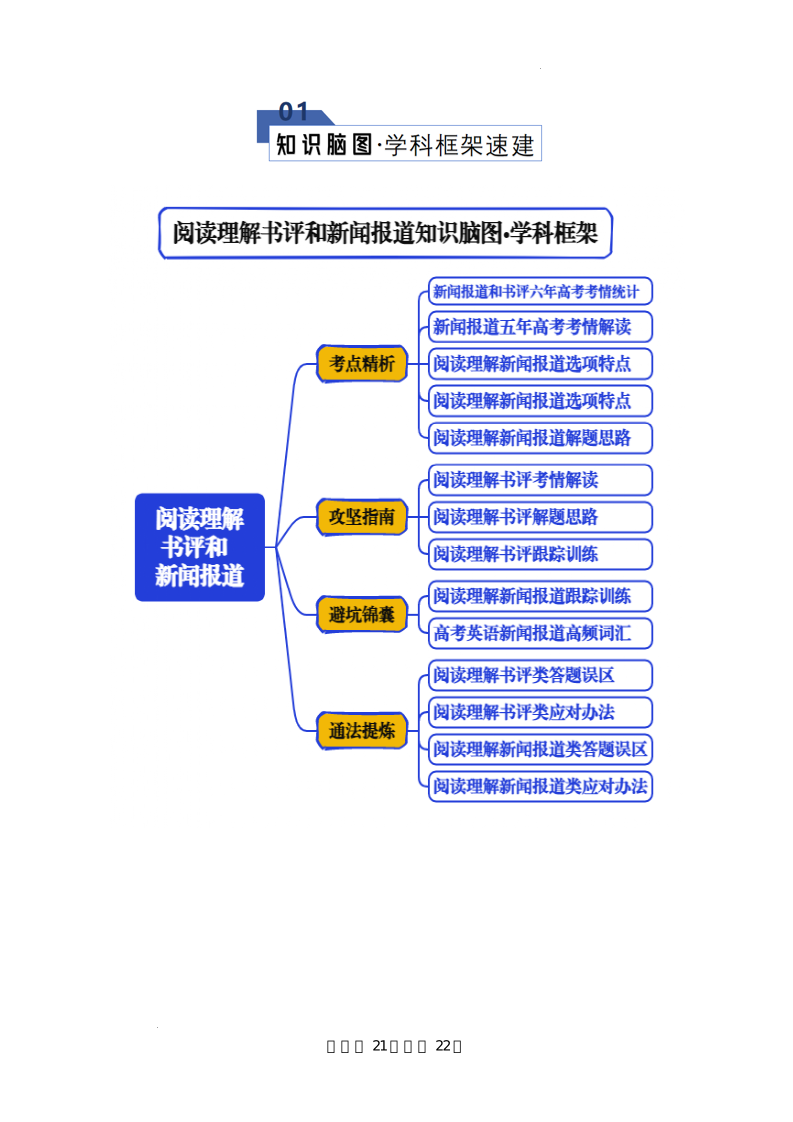
2
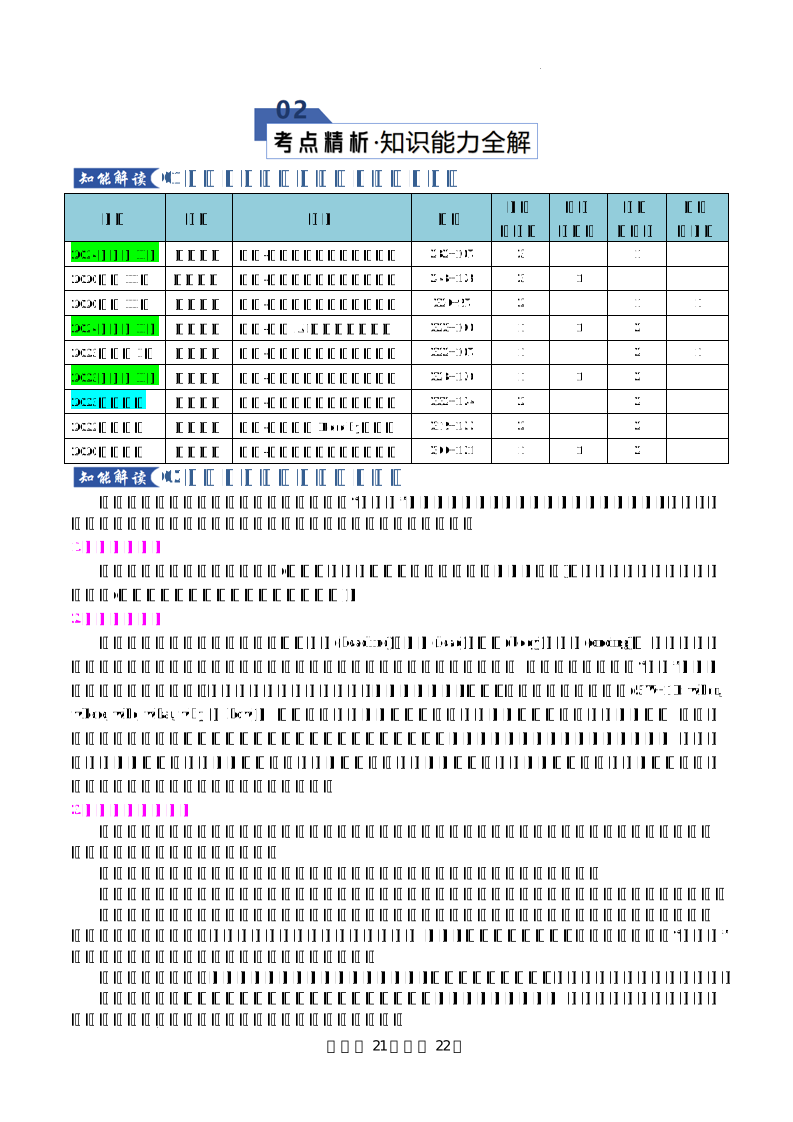
3
所属专辑


相关资源
由于学科网是一个信息分享及获取的平台,不确保部分用户上传资料的 来源及知识产权归属。如您发现相关资料侵犯您的合法权益,请联系学科网,我们核实后将及时进行处理。