Unit 1 Healthy Mind and Body 重点语法:情态动词need和否定前缀(三题型,45题)精讲练-2025-2026学年八年级英语上册重难点讲练全攻略(仁爱科普版2024)
2025-08-08
|
2份
|
19页
|
615人阅读
|
21人下载

内容正文:
2025-2026学年一线教师制作新教材英语同步精品系列资料,名师遴选!
2025-2026学年一线教师制作新教材英语同步精品系列资料,名师遴选!
学校:___________姓名:___________班级:___________考号:___________
Unit 1 Healthy Mind and Body
重点语法:情态动词need和否定前缀(三题型,45题)精讲练
目录
语法知识精讲 1
一、情态动词 need 1
二、常见否定前缀 1
语法知识精练 3
题型一:情态动词need 3
题型二:否定前缀 6
题型三:综合提高巩固练 8
语法知识精讲
一、情态动词 need
用法分类
肯定形式
否定形式
疑问形式
情态动词(常用于否定句和疑问句)
need + 动词原形
needn't + 动词原形
Need + 主语 + 动词原形?
You need finish your homework first.(你需要先完成作业。)
She needn't come here early tomorrow.(她明天不必早来这儿。)
Need I hand in the report today?(我今天需要交报告吗?)
实义动词(有人称和数的变化)
need+to do sth.
don't/doesn't/didn't need+to do sth.
Do/Does/Did + 主语 + need+to do sth.?
He needs to buy a new dictionary.(他需要买一本新字典。)
They don't need to worry about the exam.(他们不必担心考试。)
Did she need to go to the hospital yesterday?(她昨天需要去医院吗?)
二、常见否定前缀
否定前缀
含义
例词
例句
un-
不、未
unhappy(不开心的)
She felt unhappy because she failed the test.(她因为考试不及格而感到不开心。)
unfair(不公平的)
It's unfair to blame him for this mistake.(因为这个错误责怪他是不公平的。)
dis-
不、相反
dislike(不喜欢)
He dislikes eating vegetables.(他不喜欢吃蔬菜。)
disagree(不同意)
I disagree with your opinion on this matter.(在这件事上我不同意你的观点。)
in-
不、无
impossible(不可能的)
It's impossible to finish the work in one hour.(在一小时内完成这项工作是不可能的。)
incorrect(不正确的)
Your answer to this question is incorrect.(你对这个问题的回答是不正确的。)
im-
不、无(用于以 p 开头的单词前)
impolite(不礼貌的)
It's impolite to speak loudly in the library.(在图书馆大声说话是不礼貌的。)
impatient(不耐烦的)
He became impatient while waiting for the bus.(等公交车时他变得不耐烦了。)
ir-
不、无(用于以 r 开头的单词前)
irregular(不规则的)
The irregular verbs are difficult to remember.(不规则动词很难记住。)
irresponsible(不负责任的)
It's irresponsible to leave the child alone at home.(把孩子独自留在家里是不负责任的。)
il-
不、无(用于以 l 开头的单词前)
illegal(非法的)
Smoking in public places is illegal in this city.(在这个城市的公共场所吸烟是非法的。)
illogical(不合逻辑的)
His argument sounds illogical.(他的论点听起来不合逻辑。)
语法知识精练
题型一:情态动词need
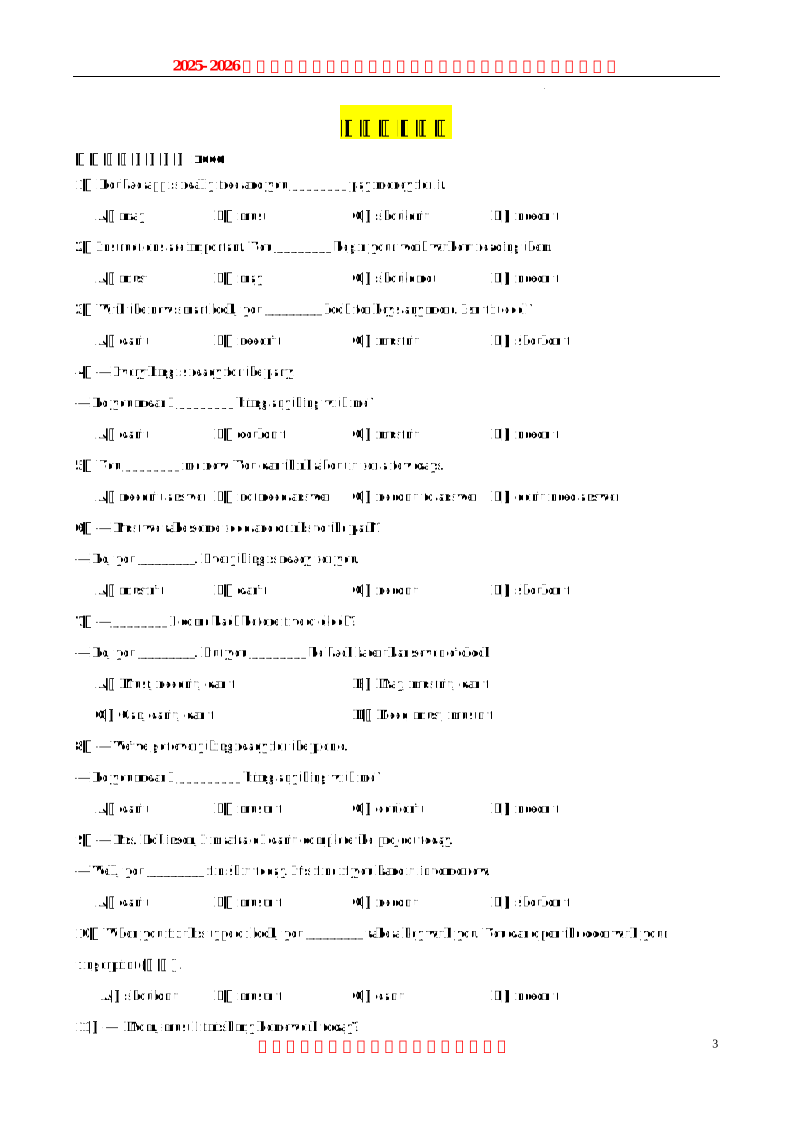
1.Doubao app is really free and you ________ pay money for it.
A.may B.must C.shouldn’t D.needn’t
【答案】D
【详解】句意:豆包应用程序真的是免费的,你不需要付费。
考查情态动词。may可以;must必须;shouldn’t不应该;needn’t不需要。根据“Doubao app is really free”可知,这款app是免费的,不需要付费。故选D。
2.Instructions are important. You ________ begin your work without reading them.
A.must B.may C.should not D.needn’t
【答案】C
【详解】句意:操作指南很重要。你不应该在不阅读它们的情况下开始工作。
考查情态动词辨析。must必须;may可能,可以;should not不应该;needn’t不必。根据句意“Instructions are important. You ... begin your work without reading them.”可知此处表达“你不应该在不阅读它们的情况下开始工作”。故选C。
3.With the new smart lock, you ________ look for keys any more. Isn’t it cool?
A.can’t B.needn’t C.mustn’t D.shouldn’t
【答案】B
【详解】句意:有了新的智能锁,你再也不用找钥匙了。是不是很酷?
考查动词辨析。can’t不能;needn’t不必;mustn’t禁止;shouldn’t不应该。根据“With the new smart lock, you…look for keys any more.”可知,有了新的智能锁,就不用找钥匙了,needn’t符合题意。故选B。
4.—Everything is ready for the party.
—Do you mean I ________ bring anything with me?
A.can’t B.couldn’t C.mustn’t D.needn’t
【答案】D
【详解】句意:——聚会的一切都准备好了。——你是说我不必带任何东西吗?
考查情态动词辨析。can’t不能;couldn’t不能;mustn’t禁止;needn’t不必。根据“Everything is ready for the party”可知,所有东西都准备好了,那就没有必要再准备了。故选D。
5.You ________ me now. You can think about it for a few days.
A.needn’t answer B.not need answer C.needn’t to answer D.don’t need answer
【答案】A
【详解】句意:你现在不必回答我。你可以考虑几天。
考查情态动词need的用法。needn’t是情态动词 ,意为“不必”,后接动词原形 ;don’t need是实义动词need的否定形式 ,后加to do;根据“me now”可知此处指不必回答我,此处answer是动词。故选A。
6.—Must we take some food and drinks to the park?
—No, you ________. Everything is ready for you.
A.mustn’t B.can’t C.needn’t D.shouldn’t
【答案】C
【详解】句意:——我们必须带些食物和饮料去公园吗? ——不,不必了。一切都为你们准备好了。
考查情态动词。mustn’t禁止;can’t不能;needn’t不必;shouldn’t不应该。根据下文“Everything is ready for you.”可知,一切已准备好,所以此处是指不需要带食物饮料。故选C。
7.—________ I come back before five o’clock?
—No, you ________. But you ________ be back later than seven o’clock.
A.Must; needn’t; can’t B.May; mustn’t; can’t
C.Can; can’t; can’t D.Need; must; mustn’t
【答案】A
【详解】句意:——我必须在五点前回来吗?——不,你不必。但是你不能晚于七点回来。
考查情态动词辨析。根据“—...I come back before five o’clock? —No, you...But you...be back later than seven o’clock.”可知,第一、二空:问句是一般疑问句,询问是否“必须”做某事,应该使用“Must”;情态动词“Must”用于提问时,否定回答用“needn’t”;第三空:此处表示你“不能”晚于七点回来,“can’t”表示“不能”,符合语境。故选A。
8.—We’ve got everything ready for the picnic.
—Do you mean I _________ bring anything with me?
A.can’t B.mustn’t C.couldn’t D.needn’t
【答案】D
【详解】句意:——我们已经为野餐准备好了一切。——你的意思是我不必带任何东西吗?
考查情态动词的用法。can’t不能;mustn’t禁止;couldn’t不能,表示过去时态;needn’t不必。根据“We’ve got everything ready for the picnic.”可知,已经准备了一切,所以不必再带任何东西了,应填needn’t“不必”。故选D。
9.—Mrs. Robinson, I’m afraid I can’t complete the project today.
—Well, you ________ finish it today. It’s fine if you hand it in tomorrow.
A.can’t B.mustn’t C.needn’t D.shouldn’t
【答案】C
【详解】句意:——Robinson夫人,今天恐怕我无法完成任务了。——嗯,你今天不必完成它。明天上交也可以。
考查情态动词用法。can’t不能;mustn’t禁止;needn’t不必;shouldn’t不应该。根据“It’s fine if you hand it in tomorrow.”可知,可以明天交,所以不必非得今天完成。故选C。
10.When you fix this type of lock, you ________ take a key with you. You can open the door with your fingerprint (指纹) .
A.shouldn’t B.mustn’t C.can’t D.needn’t
【答案】D
【详解】句意:当你修理这种类型的锁时,你不必随身携带一把钥匙。你可以用指纹开门。
考查情态动词。shouldn’t不应该;mustn’t禁止;can’t不能;needn’t不必。根据“You can open the door with your fingerprint (指纹).”可知,不必随身携带一把钥匙。故选D。
11.— Mom, must I finish my homework today?
— ________. It depends on yourself. You may do it tomorrow if you are tired.
A.Yes, you may B.Yes, you can C.No, you needn’t D.No, you mustn’t
【答案】C
【详解】句意:——妈妈,我今天必须完成作业吗? ——不,你不必。这取决于你自己。如果你累了,你可以明天做。
考查情态动词用法。Yes, you may是的,你可以;Yes, you can是的,你能;No, you needn’t不,你不必;No, you mustn’t不,你不可以。以“Must I ...”开头的一般疑问句的否定回答常用“No, you needn’t”或“No, you don’t have to”;肯定回答常用“Yes, you must”。根据下文“It depends on yourself. You may do it tomorrow if you are tired.”可知,这取决于你自己,如果累了,可以明天做,所以这里应用否定回答。故选C。
12.—We’ve got everything ready for the picnic, Kate.
—Do you mean I ________ bring anything with me? That’s great!
A.can’t B.mustn’t C.needn’t D.couldn’t
【答案】C
【详解】句意:——凯特,野餐的一切都准备好了。——你的意思是我不需要随身携带任何东西?那太棒了!
考查情态动词。can’t不能;mustn’t禁止;needn’t不必;couldn’t不能。根据“We’ve got everything ready for the picnic”可知,已经准备了一切,所以不必再带任何东西了。故选C。
13.—Mr. White, must I hand in my homework now?
—No, you ________. You can hand in it next Monday.
A.mustn’t B.needn’t C.can’t D.must
【答案】B
【详解】句意:——怀特先生,我现在必须交作业吗? ——不,你不必。你可以下周一交。
考查情态动词。mustn’t禁止;needn’t不必;can’t不能;must必须。根据“must I …”可知,其否定回答应用needn’t。故选B。
14.—Miss Yang, must I hand in my report on table manners today?
—No, you ________. You can hand it in tomorrow as you’re not feeling well.
A.needn’t B.shouldn’t C.can’t D.mustn’t
【答案】A
【详解】句意:——杨老师,我今天必须交关于餐桌礼仪的报告吗?——不,你不必。你可以明天交,因为你不舒服。
考查情态动词。needn’t表示“不必”;shouldn’t表示“不应该”,语气较强,通常用于建议或禁止;can’t表示“不能”,指能力或可能性上的限制;mustn’t表示“禁止”,语气强烈,强调绝对不允许。根据“You can hand it in tomorrow as you’re not feeling well.”可知杨老师允许学生明天交报告,因此是对“must”的否定回答,用“needn’t”最合适。故选A。
15.—Must I return the book this week, Ms Li?
—No, you ________. You can ________ it for another week.
A.mustn’t; borrow B.needn’t; borrow C.needn’t; keep D.mustn’t; keep
【答案】C
【详解】句意:——李老师,这周我必须归还这本书吗?——不,不需要。你可以再借一周。
考查动词辨析。mustn’t不行,表禁止;needn’t不需要,不必;keep保留,延续性动词;borrow借入,非延续性动词。根据“Must I”可知,must开头的一般疑问句,其否定回答用needn’t,表示“不需要,不必”;根据“for another week”可知,此处表示动作持续一段时间,应用延续性动词keep表示“借书,保留”。故选C。
题型二:否定前缀
16.In the word “unpleasant”, the “un” means ________.
A.not B.less C.very D.more
【答案】A
【详解】句意:在单词“unpleasant”中,这个“un”意味着“不”。
考查否定前缀。pleasant“令人愉快的”,unpleasant“令人不快的”,由此可知,前缀“un”表否定,应译为“不”。故选A。
17.Which word can NOT be added the prefix “in-” to give it the opposite meaning?
A.complete B.direct C.correct D.proper
【答案】D
【详解】句意:哪个词不能加前缀“in-”来赋予它相反的意思?
考查构词法。complete完整的;direct直接的;correct正确的;proper恰当的;根据构词法,词语如果是b;m;p开头,一般用im前缀;故选D。
18.Which of the following prefixes(前缀) can turn “agree” into its antonym(反义词)?
A.un- B.im- C.in- D.dis-
【答案】D
【详解】句意: 下面哪个前缀可以把“agree”变成它的反义词?
考查派生。四个选项都是否定前缀,agree“同意”的反义词为disagree,故选D。
19.Which word can be added with the prefix “un-” to be a new word?
A.possible B.active C.certain D.correct
【答案】C
【详解】句意:哪个单词可以加上前缀“un-”,从而变成一个新单词?
考查构词法。possible可能的;active积极主动的;certain必然的;correct正确的。certain加上前缀“un-”,为uncertain“无法确定的,无把握的”。故选C
20.Which of the following words is formed like “dishonest”?
A.important B.international C.uncomfortable D.interviewer
【答案】C
【详解】句意:以下哪个词的构词类似于“dishonest”?
考查构词法。important重要的;international国际的;uncomfortable不舒服的;interviewer采访者。dishonest中dis-是否定前缀,加在“honest诚实的”前面,dishonest意为“不诚实的”;结合选项,un-是个否定前缀,加在“comfortable舒服的”前面,uncomfortable不舒服的。dis-和un-都是否定前缀。故选C。
21.The following words all have the negative prefixes (否定前缀) EXCEPT ________.
A.indoor B.unhappy C.inexpensive D.impossible
【答案】A
【详解】句意:除“indoor”外,以下单词都有否定前缀。
考查单词的构成。indoor室内的,形容词,没有否定前缀;unhappy不快乐的,在happy的基础上加否定前缀un;inexpensive廉价的,在expensive的基础上加否定前缀in;impossible不可能的,在possible的基础上加否定前缀im。因此没有否定前缀的单词是indoor。故选A。
22.Which word has a different prefix (前缀) to make the opposite meaning below?
A.possible B.polite C.pleasant D.proper
【答案】C
【详解】句意:下列哪个词有不同的前缀使其产生相反的意思?
考查单词的派生。possible可能的,否定前缀为impossible不可能的;polite礼貌的,否定前缀为impolite不礼貌的;pleasant愉快的,否定前缀为unpleasant不愉快的;proper合适的,否定前缀为improper不合适的。ABD选项的前缀是im-,C选项的前缀是un-。故选C。
23.Which of the following words can’t be added with a prefix (前缀) “un-”?
A.comfortable B.able C.correct D.important
【答案】C
【详解】句意:下面哪个单词不能加前缀un-?
考查构词法。comfortable舒适的,uncomfortable不舒适的;able能的,unable不能的;correct正确的,incorrect不正确的;interesting有趣的,uninteresting无趣的。ABD选项的前缀都是un-;C选项的前缀是in-。故选C。
24.We can add the prefix “un” to all the following words to form a new word EXCEPT ________.
A.happy B.tidy C.certain D.polite
【答案】D
【详解】句意:我们可以把前缀“un”加到下面所有的单词上,组成一个新单词,除了polite。
考查否定前缀。happy幸福的,否定前缀加un-;tidy整洁的,否定前缀加un-;certain肯定的;否定前缀加un-;polite有礼貌的,否定前缀加im-。由此可知,我们可以把前缀“un”加到下面所有的单词上,组成一个新单词,除了polite。故选D。
25.Which of the follow prefixes (前缀) doesn’t mean “without”?
A.un- B.im- C.in- D.re-
【答案】D
【详解】句意:以下哪个前缀的含义不是“没有”?
考查构词法。un-,im-和in-都是否定前缀,表示“没有”,re-表示的是“再,重新”。故选D。
题型三:综合提高巩固练
26.—With Xiaohongshu, we know exactly where to ‘da ka’!
—Couldn’t agree more. We________get a guide any more.
A.can’t B.shouldn’t C.mustn’t D.needn’t
【答案】D
【详解】句意:——有了小红书,我们确切知道去哪儿“打卡”!——完全同意。我们不用再请导游了。
考查情态动词辨析。can’t不能;shouldn’t不应该;mustn’t禁止;needn’t没必要。根据语境可知,这里表示因为有了小红书能知道打卡地点,所以客观上不再需要请导游。故选D。
27.Young people like shopping online because they ________ spend a lot of time going from shop to shop.
A.needn’t B.can’t C.mustn’t D.shouldn’t
【答案】A
【详解】句意:年轻人喜欢网上购物,因为他们不需要花很多时间从一家商店到另一家商店。
考查情态动词辨析。needn’t不需要;can’t不可以;mustn’t禁止;shouldn’t不应该。根据“because they... spend a lot of time going from shop to shop.”可知,年轻人喜欢网购是因为网购不需要花费很多时间,needn’t符合语境。故选A。
28.You ________ tell Jim the good news because I’ve told him already.
A.need B.needn’t C.can D.can’t
【答案】B
【详解】句意:你不必告诉Jim这个好消息,因为我已经告诉他了。
考查情态动词。need需要;needn’t不必;can能;can’t不能。根据“because I’ve told him already”可知,我已经告诉他这个好消息了,故你应是不需要再做某事,即不必再做这件事。故选B。
29.Which of the following words is formed in the same way as disabled?
A.daily B.unfriendly C.pancake D.dishonest
【答案】D
【详解】句意:下列哪个词的构成方式与disabled相同?
考查构词法。daily每天的,由名词day和形容词后缀-ly构成;unfriendly不友好的,由否定前缀un-和名词friend以及形容词后缀-ly构成;pancake薄煎饼,由两个名词pan和cake构成;dishonest不诚实的,由否定前缀dis-和形容词honest构成。“disabled”由否定前缀dis-和形容词able以及后缀-ed构成。选项D与其构成方式相同。故选D。
30.— I was told to be here at this time.
—Sorry, you ________. I forgot to tell you we had changed the plan.
A.must B.may C.can’t D.needn’t
【答案】D
【详解】句意:——我被告知要在这个时候到这里。——对不起,你不必。我忘了告诉你我们改变了计划。
考查情态动词。must必须;may可以;can’t不能;needn’t不必。根据“I forgot to tell you we had changed the plan.”可知,因为计划有变,所以告知对方不需要此时到这里。故选D。
31.You ________ finish all the homework today because you’ll have enough time for it tomorrow.
A.can’t B.mustn’t C.won’t D.needn’t
【答案】D
【详解】句意:你今天不必完成所有的家庭作业,因为明天你有足够的时间。
考查情态动词。can’t不能;mustn’t禁止;won’t将不;needn’t不必。根据“because you’ll have enough time for it tomorrow.”可知明天有足够的时间做作业,所以今天不必全部完成。故选D。
32.—It takes me a long time to carry out the experiment and I haven’t finish the report.
—Take your time. You ________ finish it today. It’s fine if we hand it in tomorrow.
A.can’t B.mustn’t C.needn’t D.shouldn’t
【答案】C
【详解】句意:——我花了很长时间做实验,而且我还没有完成报告。——别着急。你今天不必完成它。我们明天交也可以。
考查情态动词辨析。can’t不能;不可能;mustn’t禁止;不允许;needn’t不必;shouldn’t不应该。根据“Take your time.”以及“It’s fine if we hand it in tomorrow.”可知,这里是说没有必要今天完成报告,needn’t符合语境,即不需要、不必今天完成。故选C。
33.—The new energy cars are becoming popular, but some people are caring about their safety.
—We ________ worry about it with the development of modern technology.
A.mustn’t B.needn’t C.can’t D.shouldn’t
【答案】B
【详解】句意:——新能源汽车越来越受欢迎,但是一些人担心它的安全性。——随着现代化技术的发展我们不需要担心。
考查情态动词辨析。mustn’t禁止,不允许;needn’t没有必要,不需要;can’t不会,不能;shouldn’t不应该。由“We…worry about it with the development of modern technology”可知,此处是说随着技术的发展人们不需要担心它的安全性。故选B。
34.Father’s Day is coming. Maybe we ________ buy Dad presents. We can do some housework, instead.
A.can’t B.mustn’t C.needn’t D.shouldn’t
【答案】C
【详解】句意:父亲节快到了。也许我们不需要给爸爸买礼物。我们可以做些家务代替。
考查情态动词辨析。can’t不可能;mustn’t不准;needn’t不必要;shouldn’t不应该。根据“Maybe we ... buy Dad presents. We can do some housework, instead.”可知,我们不必要给爸爸买礼物,但是可以做些家务。故选C。
35.—Must I finish the work today?
—No, you ______. But you ______ finish it before next Monday.
A.mustn’t; must B.can’t; need C.mustn’t; could D.needn’t; must
【答案】D
【详解】句意:——我必须今天完成这项工作吗?——不,你不必。但你必须在下周一之前完成它。
考查情态动词辨析。mustn’t禁止,must必须;can’t不能, need需要;could可以;needn’t不必。根据“Must”可知,其表示“必须”,其否定回答不能用mustn’t“禁止”,而要用needn’t或don’t have to, 因此第一空排除A、C选项; 根据“But”可知,前后语义转折,前句表示“不必今天完成”,后句强调“必须在下周一前完成”, must符合“规定或义务”的语境。故选D。
36.—Doctor Wang, must I take the medicine?
—No, you ______. You’ll get well soon.
A.can’t B.mustn’t C.needn’t D.won’t
【答案】C
【详解】句意:——王医生,我必须吃药吗?——不必,你很快就会好起来的。
考查情态动词。can’t不能;mustn’t禁止;needn’t不必;won’t将不。根据“must I...”可知其否定回答用needn’t,表示“不必”。故选C。
37.—You _______ take the subway to the airport, for I can drive you there directly.
—That’s very kind of you.
A.can’t B.needn’t C.mustn’t D.shouldn’t
【答案】B
【详解】句意:——你不必坐地铁去机场,因为我可以直接开车送你去。——你真是太好了。
考查情态动词。can’t不能;needn’t不必;mustn’t禁止;shouldn’t不应该。根据“take the subway to the airport, for I can drive you there directly.”可知开车送他去机场,所以不必坐地铁。故选B。
38.The new app about fashion is really free and you ________ pay money for it.
A.may B.must C.shouldn’t D.needn’t
【答案】D
【详解】句意:这款关于时尚的新应用程序真的是免费的,你不需要付费。
考查情态动词。may可以;must必须;shouldn’t不应该;needn’t不需要。根据“The new app about fashion is really free”可知,这款app是免费的,不需要付费。故选D。
39.When you have fixed this type of lock, you ________ take a key with you. You can open the door with your fingerprint.
A.shouldn’t B.needn’t C.mustn’t D.can’t
【答案】B
【详解】句意:你把这种锁修好后,就不必带钥匙了。你可以用指纹把门打开。
考查情态动词。shouldn’t不应该;needn’t不必;mustn’t禁止;can’t不能。根据“You can open the door with your fingerprint.”可知可以用指纹把门打开,所以不必带钥匙。故选B。
40.—Must I use pink to paint my bedroom?
—No, you ________. You can use any colour you like,
A.can’t B.mustn’t C.shouldn’t D.needn’t
【答案】D
【详解】句意:——我必须用粉红色来粉刷我的卧室吗?——不,你不用。你可以用任何你喜欢的颜色。
考查情态动词。can’t不能;mustn’t禁止;shouldn’t不应该;needn’t不必。根据“Must I...”可知其否定回答用needn’t。故选D。
41.—I have no time to buy things in the supermarket.
—Don’t worry. You can shop online instead. That way, you ________ waste a lot of time going from shop to shop.
A.needn’t B.mustn’t C.can’t D.shouldn’t
【答案】A
【详解】句意:——我没有时间去超市买东西。——别担心。你可以改为网上购物。那样,你就不必浪费很多时间从一个商店到另一个商店。
考查情态动词。needn’t“不必”,强调无必要;mustn’t“禁止”,语气强烈;can’t“不能”,指能力或可能性不足;shouldn’t“不应该”,侧重建议或义务。根据“You can shop online instead. That way, you...waste a lot of time going from shop to shop.”中,网上购物可避免奔波,故此处强调“不必”浪费时间,符合逻辑。故选A。
42.Which of the following words can’t be added with a prefix (前缀) “im-”?
A.polite B.patient C.active D.possible
【答案】C
【详解】句意:下列哪个单词不能加上前缀“im-”?
考查构词法。polite“有礼貌的”—impolite“无礼貌的”;patient“耐心的”—impatient“不耐烦的”;active“积极的”,其反义词是inactive,不是imactive,因此不能加前缀“im-”;possible“可能的”—impossible“不可能的”。结合选项可知,选项C符合。故选C。
43.We can add the prefix (前缀) “un” to all the following words to form a new word EXCEPT ________.
A.important B.agree C.interesting D.comfortable
【答案】B
【详解】句意:我们可以在下面所有的单词后面加上前缀“un”组成一个新词,除了agree。unimportant“不重要的”,disagree“不同意”,uninteresting“无趣的”,uncomfortable“不舒适的”,agree不能加前缀un。故选B。
44.Which of the followings can’t we add “un-” to give it the opposite meaning?
A.happy B.correct C.certain D.important
【答案】B
【详解】句意:下列哪一个单词不能够添加un变成反义词?
考查构词法。happy变成unhappy“不开心的”;correct变成incorrect“不正确的”;certain变成uncertain“不确定的”;important变成unimportant“不重要的”。故选B。
45.We can put the prefix “in-” before ________ to get its opposite (相反的) meaning.
A.certain B.correct C.important D.possible
【答案】B
【详解】句意:我们可以在correct前面加上前缀“in-”,得到它相反的意思。
考查派生和形容词辨析。certain肯定的,其反义词是uncertain;correct正确的,其反义词是incorrect;important重要的,其反义词是unimportant;possible可能的,其反义词是impossible。在correct前面加上前缀“in-”可以得到反义词。故选B。
10
同步新教材,周周有练习,月月有重点!
11
同步新教材,周周有练习,月月有重点!
学科网(北京)股份有限公司
$$
2025-2026学年一线教师制作新教材英语同步精品系列资料,名师遴选!
2025-2026学年一线教师制作新教材英语同步精品系列资料,名师遴选!
学校:___________姓名:___________班级:___________考号:___________
Unit 1 Healthy Mind and Body
重点语法:情态动词need和否定前缀(三题型,45题)精讲练
目录
语法知识精讲 1
一、情态动词 need 1
二、常见否定前缀 1
语法知识精练 3
题型一:情态动词need 3
题型二:否定前缀 6
题型三:综合提高巩固练 8
语法知识精讲
一、情态动词 need
用法分类
肯定形式
否定形式
疑问形式
情态动词(常用于否定句和疑问句)
need + 动词原形
needn't + 动词原形
Need + 主语 + 动词原形?
You need finish your homework first.(你需要先完成作业。)
She needn't come here early tomorrow.(她明天不必早来这儿。)
Need I hand in the report today?(我今天需要交报告吗?)
实义动词(有人称和数的变化)
need+to do sth.
don't/doesn't/didn't need+to do sth.
Do/Does/Did + 主语 + need+to do sth.?
He needs to buy a new dictionary.(他需要买一本新字典。)
They don't need to worry about the exam.(他们不必担心考试。)
Did she need to go to the hospital yesterday?(她昨天需要去医院吗?)
二、常见否定前缀
否定前缀
含义
例词
例句
un-
不、未
unhappy(不开心的)
She felt unhappy because she failed the test.(她因为考试不及格而感到不开心。)
unfair(不公平的)
It's unfair to blame him for this mistake.(因为这个错误责怪他是不公平的。)
dis-
不、相反
dislike(不喜欢)
He dislikes eating vegetables.(他不喜欢吃蔬菜。)
disagree(不同意)
I disagree with your opinion on this matter.(在这件事上我不同意你的观点。)
in-
不、无
impossible(不可能的)
It's impossible to finish the work in one hour.(在一小时内完成这项工作是不可能的。)
incorrect(不正确的)
Your answer to this question is incorrect.(你对这个问题的回答是不正确的。)
im-
不、无(用于以 p 开头的单词前)
impolite(不礼貌的)
It's impolite to speak loudly in the library.(在图书馆大声说话是不礼貌的。)
impatient(不耐烦的)
He became impatient while waiting for the bus.(等公交车时他变得不耐烦了。)
ir-
不、无(用于以 r 开头的单词前)
irregular(不规则的)
The irregular verbs are difficult to remember.(不规则动词很难记住。)
irresponsible(不负责任的)
It's irresponsible to leave the child alone at home.(把孩子独自留在家里是不负责任的。)
il-
不、无(用于以 l 开头的单词前)
illegal(非法的)
Smoking in public places is illegal in this city.(在这个城市的公共场所吸烟是非法的。)
illogical(不合逻辑的)
His argument sounds illogical.(他的论点听起来不合逻辑。)
语法知识精练
题型一:情态动词need
1.Doubao app is really free and you ________ pay money for it.
A.may B.must C.shouldn’t D.needn’t
2.Instructions are important. You ________ begin your work without reading them.
A.must B.may C.should not D.needn’t
3.With the new smart lock, you ________ look for keys any more. Isn’t it cool?
A.can’t B.needn’t C.mustn’t D.shouldn’t
4.—Everything is ready for the party.
—Do you mean I ________ bring anything with me?
A.can’t B.couldn’t C.mustn’t D.needn’t
5.You ________ me now. You can think about it for a few days.
A.needn’t answer B.not need answer C.needn’t to answer D.don’t need answer
6.—Must we take some food and drinks to the park?
—No, you ________. Everything is ready for you.
A.mustn’t B.can’t C.needn’t D.shouldn’t
7.—________ I come back before five o’clock?
—No, you ________. But you ________ be back later than seven o’clock.
A.Must; needn’t; can’t B.May; mustn’t; can’t
C.Can; can’t; can’t D.Need; must; mustn’t
8.—We’ve got everything ready for the picnic.
—Do you mean I _________ bring anything with me?
A.can’t B.mustn’t C.couldn’t D.needn’t
9.—Mrs. Robinson, I’m afraid I can’t complete the project today.
—Well, you ________ finish it today. It’s fine if you hand it in tomorrow.
A.can’t B.mustn’t C.needn’t D.shouldn’t
10.When you fix this type of lock, you ________ take a key with you. You can open the door with your fingerprint (指纹) .
A.shouldn’t B.mustn’t C.can’t D.needn’t
11.— Mom, must I finish my homework today?
— ________. It depends on yourself. You may do it tomorrow if you are tired.
A.Yes, you may B.Yes, you can C.No, you needn’t D.No, you mustn’t
12.—We’ve got everything ready for the picnic, Kate.
—Do you mean I ________ bring anything with me? That’s great!
A.can’t B.mustn’t C.needn’t D.couldn’t
13.—Mr. White, must I hand in my homework now?
—No, you ________. You can hand in it next Monday.
A.mustn’t B.needn’t C.can’t D.must
14.—Miss Yang, must I hand in my report on table manners today?
—No, you ________. You can hand it in tomorrow as you’re not feeling well.
A.needn’t B.shouldn’t C.can’t D.mustn’t
15.—Must I return the book this week, Ms Li?
—No, you ________. You can ________ it for another week.
A.mustn’t; borrow B.needn’t; borrow C.needn’t; keep D.mustn’t; keep
题型二:否定前缀
16.In the word “unpleasant”, the “un” means ________.
A.not B.less C.very D.more
17.Which word can NOT be added the prefix “in-” to give it the opposite meaning?
A.complete B.direct C.correct D.proper
18.Which of the following prefixes(前缀) can turn “agree” into its antonym(反义词)?
A.un- B.im- C.in- D.dis-
19.Which word can be added with the prefix “un-” to be a new word?
A.possible B.active C.certain D.correct
20.Which of the following words is formed like “dishonest”?
A.important B.international C.uncomfortable D.interviewer
21.The following words all have the negative prefixes (否定前缀) EXCEPT ________.
A.indoor B.unhappy C.inexpensive D.impossible
22.Which word has a different prefix (前缀) to make the opposite meaning below?
A.possible B.polite C.pleasant D.proper
23.Which of the following words can’t be added with a prefix (前缀) “un-”?
A.comfortable B.able C.correct D.important
24.We can add the prefix “un” to all the following words to form a new word EXCEPT ________.
A.happy B.tidy C.certain D.polite
25.Which of the follow prefixes (前缀) doesn’t mean “without”?
A.un- B.im- C.in- D.re-
题型三:综合提高巩固练
26.—With Xiaohongshu, we know exactly where to ‘da ka’!
—Couldn’t agree more. We________get a guide any more.
A.can’t B.shouldn’t C.mustn’t D.needn’t
27.Young people like shopping online because they ________ spend a lot of time going from shop to shop.
A.needn’t B.can’t C.mustn’t D.shouldn’t
28.You ________ tell Jim the good news because I’ve told him already.
A.need B.needn’t C.can D.can’t
29.Which of the following words is formed in the same way as disabled?
A.daily B.unfriendly C.pancake D.dishonest
30.— I was told to be here at this time.
—Sorry, you ________. I forgot to tell you we had changed the plan.
A.must B.may C.can’t D.needn’t
31.You ________ finish all the homework today because you’ll have enough time for it tomorrow.
A.can’t B.mustn’t C.won’t D.needn’t
32.—It takes me a long time to carry out the experiment and I haven’t finish the report.
—Take your time. You ________ finish it today. It’s fine if we hand it in tomorrow.
A.can’t B.mustn’t C.needn’t D.shouldn’t
33.—The new energy cars are becoming popular, but some people are caring about their safety.
—We ________ worry about it with the development of modern technology.
A.mustn’t B.needn’t C.can’t D.shouldn’t
34.Father’s Day is coming. Maybe we ________ buy Dad presents. We can do some housework, instead.
A.can’t B.mustn’t C.needn’t D.shouldn’t
35.—Must I finish the work today?
—No, you ______. But you ______ finish it before next Monday.
A.mustn’t; must B.can’t; need C.mustn’t; could D.needn’t; must
36.—Doctor Wang, must I take the medicine?
—No, you ______. You’ll get well soon.
A.can’t B.mustn’t C.needn’t D.won’t
37.—You _______ take the subway to the airport, for I can drive you there directly.
—That’s very kind of you.
A.can’t B.needn’t C.mustn’t D.shouldn’t
38.The new app about fashion is really free and you ________ pay money for it.
A.may B.must C.shouldn’t D.needn’t
39.When you have fixed this type of lock, you ________ take a key with you. You can open the door with your fingerprint.
A.shouldn’t B.needn’t C.mustn’t D.can’t
40.—Must I use pink to paint my bedroom?
—No, you ________. You can use any colour you like,
A.can’t B.mustn’t C.shouldn’t D.needn’t
41.—I have no time to buy things in the supermarket.
—Don’t worry. You can shop online instead. That way, you ________ waste a lot of time going from shop to shop.
A.needn’t B.mustn’t C.can’t D.shouldn’t
42.Which of the following words can’t be added with a prefix (前缀) “im-”?
A.polite B.patient C.active D.possible
43.We can add the prefix (前缀) “un” to all the following words to form a new word EXCEPT ________.
A.important B.agree C.interesting D.comfortable
44.Which of the followings can’t we add “un-” to give it the opposite meaning?
A.happy B.correct C.certain D.important
45.We can put the prefix “in-” before ________ to get its opposite (相反的) meaning.
A.certain B.correct C.important D.possible
10
同步新教材,周周有练习,月月有重点!
11
同步新教材,周周有练习,月月有重点!
学科网(北京)股份有限公司
$$
资源预览图

1

2
3
所属专辑

相关资源
示范课
由于学科网是一个信息分享及获取的平台,不确保部分用户上传资料的 来源及知识产权归属。如您发现相关资料侵犯您的合法权益,请联系学科网,我们核实后将及时进行处理。