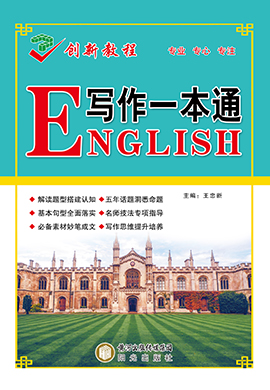
[第三部分]写作基本句型-【创新教程】2026年高考英语复习写作一本通
2025-07-30
|
2份
|
16页
|
229人阅读
|
16人下载
教辅

内容正文:
No.1 主谓结构
【构成】 主语+谓语(不及物动词)(+状语)
此类句型为英语语言中最简单、最实用的句型,主语是
一个句子所叙述的主体.主语一般位于句首,可由名词、代
词、数词、不定式、动名词、名词化的形容词和主语从句等表
示.其中的谓语动词为不及物动词,其后不跟名词、代词或
其他相当于名词的动名词及名词性从句,但其后常跟副词
性质的状语.
1.He主语
worked
谓语
hard/
状语(程度)
inafactory
/
状语(地点)
tosupporthisfamily.
状语(目的)
2.Tom主语
lives
谓语
alone
状语(方式)
inaflat
状语(地点)
atpresent
状语(时间)
forpeace.
状语(目的)
1.他们日夜不停地工作.
2.上星期天,父母外出购物.
3.我买了一张电影票.
4.今天下午游泳是件非常愉快
的事.
5.吸烟对健康是有害的.
No.2 主谓宾结构
【构成】 主语+谓语+宾语
此类句型在写作中再现率很高,属于基本句型之一,用
于直接表达文章主人翁所做之事、所说之话、所看之景等基
本意义表达;句型中的谓语动词为及物动词或不及物动词
与介词搭配所构成的动词短语;其宾语为名词、代词、数词、
名词化的形容词或分词、不定式、动名词及名词性从句.副
词修饰语能使表达更加形象生动.
1.She主语
lookedafter
谓语
thebaby
宾语
carefuly.
状语
2.I主语
remembered
谓语
him
宾语(代词)
/hisname/
宾语(名词)
doingit
宾语(动名词)
/Ihadseenhimbefore.
宾语(从句)
3.I主语
decided
谓语
toseehiminperson.
宾语(动词不定式)
1.他把手臂举过头顶.
2.我们应该向他学习.
3.———你有几本字典?
———我有5本.
4.他 们 昨 天 帮 助 老 年 人 做
家务.
5.我们应该把伤员送进医院.
92
第三部分 写作基本句型
No.3 主系表结构
【构成】 主语+系动词+表语
此类句型用于说明某物或某人或某事所具有的特性或存在
的状态,在写作中准确地介绍话题所处的状况.
系动词种类有:1.be动词;2.look,feel,sound,seem,taste,smel
等;3.become,go,turn,get,grow,prove,fal等;4.keep,remain,stay,lie,
stand等;5.turnout等.
用作表语的有:名词、代词、形容词、数词、副词、不定式、动名
词、分词(短语)、介词短语、从句.
1.Smith主语
is
系动词
aboss
表语(名词)
/ over40
表语(数词)
/ smart
表语(形容词)
/
inaroom
表语(介词短语)
/togotoseeafilm
表语(不定式)/
excited
表语(形容词)
/ out.
表语(副词)
2. Herjob主语(名词)
is
系动词
lookingafterthebaby.
表语(动名词短语)
3. It主语(代词)
is
系动词
nouse
表语(名词)
/ useless
表语(形容词)
doingitnow.
主语(动名词)
1.我是红星中学的李华.
2.这是你应该牢记在心
的事.
3.他今天看起来很高兴.
4.他 的 话 听 起 来 很 有
道理.
5.这 场 演 讲 真 是 激 动
人心.
No.4 双宾语结构
【构成】 主语+谓语+间接宾语+直接宾语
◆[类型一] 动词后的间接宾语可以用一个
介词to引导的短语来表示方向
构成这种类型的双宾语结构的动词主要
有 give,tel,teach,write,bring,promise,
lend,hand,show,offer,send,pay,pass,
award,alow等.
1.He主语
handed
谓语
me
间接宾语
abook.
直接宾语
2.He主语
handed
谓语
abook
直接宾语
tome.
方向
句型转换(用to来引出间接宾语)
1.Hegavemesomebeautifulpictures.
2.Hehandedtheteacherthepurse(walet).
3.Shetoldthestudentsaninterestingstory.
4.Wewilshowyouherhandwriting.
5.WilyouoffermethispreciousopportuniG
ty?
◆[类型二] 动词后的间接宾语可以用一个
介词for引导的短语来表示
构成这种类型的双宾语结构的动词主要
有buy,do,order,get,fetch,find,save,make,
sing,spare,choose等.
1.Hisfather主语
bought
谓语
her
间接宾语
abike.
直接宾语
2.Hisfather主语
bought
谓语
abike
宾语
forher.
目的
句型转换(用for引出间接宾语)
1.Wouldyoufetchthechildrensomewater?
2.Wouldyoudomeafavor?
3.Wilyousingusasong?
4.Pleasechooseusagoodroom.
5.Hesavedhischildrenalotofmoney.
03
英语写作一本通
◆[类型三] 动词后的两个宾语都是直接宾
语,无法改变其结构形式
可构成这种类型的双宾语结构的动词主要有
ask,answer,take,cost等.
He
主语
asked
谓语
me
直接宾语
aquestion.
直接宾语
1.我可以问你一个问题吗?
2.在我离开之前,请先回答我一个问题.
3.找到那头大象可花费了他好长时间.
4.买这辆新自行车花了他300元.
No.5 复合宾语结构
【构成】 主语+谓语+复合宾语
此类句型在写作中属于中档句型,其复
合宾语由宾语和宾语补足语构成,宾语与补
足语之间存在逻辑关系,即主动和被动关系.
宾语补足语通常是名词、形容词、副词、介词
短语、不定式、现在分词、过去分词和从句等.
We
主语
found
谓语
him
宾语
unhappy
宾补(形)
/ out
宾补(副)
/
inthecrowd
宾补(介词短语)
/standingthere
宾补(现在分词)
/
tiedtoatree.
宾补(过去分词)
1.我们选他当我们的班长.
2.医生建议他做手术.
3.老板强迫工人们长时间地工作.
4.网吧(cybercafe)老板教我们怎样玩网络
游戏.
5.你不许在这里抽烟.
No.6 定语
修饰名词或代词的词、短语或从句称为
定语.
定语一般可由形容词、分词(短语)、名
词、代词、数词、名词所有格、不定式、动名词、
介词短语、副词和从句等表示.
1.Abright
定语
future
主语
shines
谓语
beforemyeyes.
状语
2.Theman
主语
intheroom
定语
below
定语
is
系动词
friendly.
表语
1.桂林是一座美丽的城市.
2.和我们老师握手的那个人是谁?
3.这是去年建的那座桥.
4.我们班长总是第一个走进教室.
5.他正在读一篇有关如何学习英语的文章.
13
第三部分 写作基本句型
No.7 状语
修饰动词、形容词、副词或整个句子,说
明动作或状态特征的句子成分,叫做状语.
状语一般由名词、副词及副词性词组、介
词短语、不定式(短语)、分词(短语)和状语从
句等表示.
1.Light主语
travels
谓语
mostquickly.
状语
2.He主语
is
系动词
intheroom
表语
makingamodelplane.
状语
3.Sinceyouarebusy状语从句
,I
主语
wonttrouble
谓语
you
宾语.
1.到处都能见到工厂的建筑物.
2.他在那座城市已经住了10年.
3.这个箱子太重,我抬不起来.
4.在老师的鼓励下,我决定把英语学好.
5.如果天不下雨,我将到那里去.
No.8 Therebe句型(表示存在)
【构成】 There+be+主语
此种句型属于主系表结构句型中的一
种,特指某处所存在的人或物,通常与具体的
地点状语连用,有时亦可跟时间状语,这是一
种倒装句,因而be动词随着主语的人称发生
相应变化.为使表达更加形象、具体、直观,
be动词可更换为具体形象动词,如:stand,lie,sit
等.如果地点状语提前,there要省略.
1.There is
系动词
abal
主语
underthebed.
地点状语
2.There are
系动词
twotemples
主语
onthetopofthehil.
地点状语
3.Ontherightoftheblackboard
地点状语
is
系动词
amap.
主语
1.桌子上放着一支钢笔和三本书.
2.明天剧场要上演一部新戏.
3.他好像有点不舒服.
4.从前,那里长着一棵大树.
5.很久很久以前,有一个国王想长生不老.
23
英语写作一本通
No.9 祈使结构
【构成】 (Dontnever/always)+动词原形+
其他部分
(Dontnever/always)+be+表语+其他成分
let,make,have等+宾语+动词原形+其他
成分
force,tel,ask等+to+动词原形+其他成分
祈使句表示请求、命令等.它的主语是
听话人,一般不需要说出来.它的谓语动词
一律用动词原形.祈使句末用感叹号或句
号,读时用降调.
1.Come谓语
here
状语
,Tom.
2.Tel谓语
him
宾语
to
bringhistoy.
宾补
1.请递给我一张纸.
2.小心别碰它!
3.别在行驶的公共汽车上看书.
4.别这么傻,好吗?
5.让那个孩子进来,好吗?
No.10 感叹结构
感叹句用来表示“喜、怒、哀、乐”等强烈情感,亦可用于表扬、批评等情感表达,句末用感叹
号“!”,读时用降调.
[结构一] What(+a/an)+形容词+名词+
主谓或主系结构
1.Whatacleverboy表语
he
主语
is
系动词
!
2.Whatbeautifuldresses宾语
they
主语
wear
谓语
!
1.他是一个多么聪明的孩子啊!
2.天气真糟糕!
3.多冷的水啊!
4.他们是多么用功的学生啊!
5.他给我们送了多么好的礼物啊!
[结构二] How+形容词/副词+主谓或主系
结构
1.Howbeautiful表语
she
主语
is
系动词
!
2.Howfast状语
LiuXiang
主语
runs
谓语
!
1.他们工作得真起劲!
2.你多热心啊!
3.他们打敌人多勇敢啊!
4.这部电影真令人激动啊!
5.你真聪明!
33
第三部分 写作基本句型
[结构三] How+形容词+a/an+名词+主
谓或主系结构
1.Howgoodanarticle宾语
he
主语
haswritten
谓语
!
2.Howtalaboy表语
he
主语
is
系动词
!
1.我们看到的景色多美啊!
2.今天是多好的一天啊!
3.他 有一位多么有影响力的(powerful)爸
爸呀!
4.他们住在非常漂亮的公寓里.
5.他买的这本书多有用啊!
No.11 并列句结构
(1)用并列连词、逗号+连词或分号把两个或
两个以上的、具有逻辑关系的简单句连接为
一体,就构成了并列句.
(2)常用的并列连词有:but,and,for,so,yet,
however,therefore,or,either...or...,neiG
ther...nor...,notonly...butalso...等.
1.Youcandoyourhomework or
连词
cleanthe
house.
2.Notonly
连词
canhedancebutalso
连词
heisconfiG
dent.
1.他不得不回到家里,他想要点钱.
2.她满眼含泪,但他并没有注意到.
3.春天来了,树变绿了.
4.他发现室内无人,所以就走了.
5.他虽然老了,却仍然积极工作.
No.12 复合句结构
(1)复合句由一个主句和若干个从句构成,主
句和从句都具有完整的主谓结构,主句是主
体,从句是一个成分,不能独立.
根据从句在全句中的不同作用,从句可
分为主语从句、表语从句、宾语从句、同位语
从句、定语从句、状语从句.
(2)主语从句、表语从句、宾语从句、同位语从
句在复合句中的功能相当于名词,分别作主
语、表语、宾语和同位语,故统称为名词性从
句.这四种从句和主句之间不用逗号.引导
名词性从句的关联词有以下三种:
①从属连词:that,whether,if等
②连接代词:who,whom,whose,what,
which等
③连接副词:when,why,where,how等
除宾语从句外,其他名词性从句都不能
用从属连词if引导.
(3)连接定语从句、状语从句的关联词有以下
几种:
① 从 属 连 词:that(无 意 义 ),before
(在之前), whether (是 否 ),after
(在之后),if(是 否,假 如),since(既 然,
自 从 ),although (虽 然 ),as soon as
(一就),because(因为),so(as)long
as(只要)
②连接代词:who,whose,whom,which,
what等
③连接副词:when,why,where,how等
43
英语写作一本通
◆[类型一] 主语从句
主语从句在句子中作主语,它的位置与
陈述句基本结构中的主语相同.
1.Whathesaid主语(从句)
sounds
系动词
reasonable.
表语
2.Whenandwheretheywilholdaparty主语(从句)
hasntbeendecided.
1.地球绕着太阳转这一点是众所周知的.
2.他是否要来还未知道.
3.谁将去那儿并不重要.
4.他什么时候动身去美国还未决定.
5.还不清楚他为什么没有通过英语考试.
◆[类型二] 表语从句
表语从句在复合句中起表语作用,它位
于主句中的连系动词之后.
1.Hissuggestionsis
thatweshouldhaveadiscussionabouttheproblem
表语(从句)
.
2.Theproblemis
whetherhewillistentoouradvice
表语(从句)
.
1.问题是他能否单独做这件事.
2.我所知道的是他不能做这件事.
3.暴风雨好像要来了.
4.那是他考试不及格的原因.
5.那就是为什么他昨天得了感冒.
◆[类型三] 宾语从句
宾语从句在复合句中起宾语作用,它既
可作谓语动词的宾语,也可作介词、非谓语动
词的宾语.
1.Thekindmanalwaysconsiders
whathecandotohelpothers宾语(从句)
.
2.Hehasastrongbeliefin
whateverhiswifesays宾语(从句)
.
1.我认为看太多电视对人的健康有害.
2.我想知道他的英语考试是否及格了.
3.我想知道他发生了什么事.
4.我不知道他在哪所学校读书.
5.她不知道是谁首先发现了美洲大陆.
53
第三部分 写作基本句型
◆[类型四] 同位语从句
同位语从句在句子中作同位语,它一般要放在主句中
某些名词(如thought,idea,fact,news,suggestion,plan,beG
lief,doubt,fear)之后,说明这些名词的含义.引导同位语从
句的连接词有that,whether或连接副词how,when,where,
why等.但大多数是由that引导.
1.Wehavetakenhissuggestion
thatweshouldhaveasecondtry
同位语(从句)
.
2.Itisnotasecret
thatMaryhasfaleninlovewithTom
同位语(从句) .
1.地球是圆的这种看法并不
新鲜.
2.他必须回答他是否同意这一
问题.
3.我不知道他什么时候回来.
4.真相终于大白,他原来是一
个小偷.
5.众 所 周 知,海水是不能饮
用的.
◆[类型五] 定语从句
定语从句在复合句中起定语作用,修饰主句中的
名词或代词.被定语从句修饰的词称为先行词.定语
从句一般放在先行词之后.引导定语从句的关系代词
有 who,whom,whose,which,as和that;关系副词有
when,where,why等.
1.Thearticle
thatiswritenabouthumanity
定语从句
ispublishedinChinaDaily
.
2.Haveyouvisitedthefactory
whereheworks
定语从句
?
1.这是 一年前和我一块工作 的 那
个人.
2.正在和我们老师谈话 的 那 个 人
是谁?
3.想一个我们能去吃饭的地方.
4.我不知道他离开这里的原因.
5.我仍然记得我第一次来北京的那
一天.
◆[类型六] 状语从句
在复合句中作状语成分的从句称为状语从句.状语从
句可分为时间、地点、原因、条件、方式、让步、目的、结果、比
较状语从句等9种.状语从句通常在主句之前,一般要用逗
号与主句隔开;如状语从句在主句之后,可以不用逗号与主
句隔开.
(一)时间状语从句
时间状语从句常用 when,while(当的时候),as,afG
ter,before,since,until,once,assoonas,theminute/moment
(一就),hardly...when,nosooner...than(刚就)
等引导.
1.
Wheneverhecomes
状语从句(时间)
,hebringsmeagift.
2.Hedidntleave
untilIcame
状语从句(时间)
.
1.铃响时,这个人正在座位上
等着.
2.三个月过去了她才知道这
件事.
3.她不停地走呀走呀,一直走
到河的尽头.
4.当我在做家庭作业时,妈妈
在做饭.
5.他 匆 忙 地 回 家,边走边往
后看.
63
英语写作一本通
(二)地点状语从句
由连词 where和 wherever引导.
1.Putthebookback
whereitwas
状语从句(地点)
.
2.
Wherethereiswater
状语从句(地点)
,thereisfish.
1.在有疑问的地方做个记号.
2.哪里有充足的阳光和雨水,哪里的田地就绿油油的.
3.哪里的人民需要他,他就在哪里工作.
4.你从何处来,便回何处去.
5.在必要的地方填上冠词.
(三)原因状语从句
由 because,as,since,nowthat,for
引导.
1.Sinceeveryoneishere状语从句(原因) ,
letsbeginclass.
2.Hedidntcome,
becausehewasil
状语从句(原因)
.
1.既然很多人一生中都会犯错误,我们想给他一个
机会.
2.既然所有的客人都到了,我们就开饭吧.
3.他是因为病了才没有跟我们一块去.
4.天气很好,我把所有的窗户都打开了.
5.昨晚一定下雨了,因为地是湿的.
(四)条件状语从句
由if,unless,aslongas,solongas等引导,
另外,suppose/supposing,provided/providing,on
conditionthat,assuming 也 可 引 导 条 件 状 语
从句.
1.Youshalhaveastory
ifyougotobedassoonaspossible状语从句(条件)
.
2.Supposing
(that)youarewrong
状语从句(条件) ,whatwil you
dothen?
1.你可以用这辆自行车,条件是你周五前
归还.
2.如果有空,我们星期三来看你.
3.除非明天天晴,否则他不会走.
4.只要我们活着,就应该为人民服务.
5.要是他不能来,那谁来做这项工作呢?
(五)方式状语从句
由as,asif,asthough等引导.
Theoldmanactsandspeaks
asifhewereachild
状语从句(方式)
.
1.叫我怎样做,我就怎样做.
2.他听到一种声音,好像有人在呼吸.
3.我们应该像班长那样学习.
4.他说话的口气像是曾经到过那里似的.
5.他可以说是一本活词典.
73
第三部分 写作基本句型
(六)让步状语从句
让 步 状 语 从 句 常 用though,although,
evenif/though,as,however,whatever,no
matter,whether...or...等从属连词引导.
Nomatterwhatyoudo
状语从句(让步)
,youmustdoitwel.
1.即使再失败十次,我们也不会灰心.
2.不管发生什么,我们决心完成任务.
3.他虽然年轻,但能用几门外语阅读和写作.
4.尽管我喜欢这本词典,但我不会买下它.
5.不管有多困难,我们决心把研究进行到底.
(七)目的状语从句
目的状语从句常用that,sothat,inorder
that,forfearthat,lest(免得)等从属连词引
导,从句中的谓语动词常用 may(might),can
(could),should等情态动词.
Hegotupearly
inorderthathecouldcatchthefirstbus
状语从句(目的)
.
1.他准时吃药,目的是想早日恢复健康.
2.让我们坐到前排去,以便可以看得更清楚些.
3.他努力学习的目的是想获得更多的知识.
4.我不敢去那里,生怕他看到我.
5.吉姆没有回嘴,免得妈妈生他的气.
(八)结果状语从句
结果状语从句常用sothat,
so...that,such...that等引导.
Heissokind
thatalofuslovehim
状语从句(结果)
.
1.事实上,他的英语口语非常好,以至于老师在课堂上表扬了他.
2.他发表了一篇精彩的演讲,以至于每个人都钦佩他.
3.这是一个如此好的机会,我们不要错过.
4.他的英语进步如此之大,我禁不住羡慕他.
5.他有如此多的朋友,以至于我也想和他交朋友.
(九)比较状语从句
比 较 状 语 从 句 常 用 as...as,notso/
as...as,more...than,less...than,the+比
较级...the+比较级等引导.这种从句中常
省略某些成分.
Hisbrotherisastal
ashe
状语从句(比较)
.
1.纽约的街道和伦敦的一样拥挤.
2.他看上去比他实际年龄要小.
3.看的书越多,你的知识越丰富.
4.我的同桌学习比我努力.
5.他同我一样大.
83
英语写作一本通
No.13 简化句子
在高考英语书面表达中,由于时间的限制,许多考生写出的句子单调、呆板.其实,要想在
有限的时间里写出丰富、生动的句子来并不难,只要对所学的英语句式加以简化,就一定能使写
出来的句子更加准确、得体、简洁、灵活,为文章添彩,以提高得分.
◆[方法一] 用单词简化句子
1.Ashewastiredandhungry,theboywas
unwilingtomoveon.
→Tiredandhungry,theboywasunwiling
tomoveon.
2.Ifyoudontstudyhard,youwil notsucG
ceed.
→Studyhard,oryouwilnotsucceed.
用单词简化以下句子
1.Wearetiredandhungry.Wewilwaitnolonger.
2.Thesoldierroledover.Thesoldierdied.
3.Pleasekeepsilent.Teacheriscoming.
4.Ifyoudonthurry,youlbelate.
5.Ifyougivemeonemoreminute,Icanfinishit.
◆[方法二] 用介词短语简化句子
1.Wewil notfinishthetaskifyoudonot
helpus.
→Withoutyourhelp,wewilnotfinishthe
task.
2.Ifithadnotbeenfortheleadershipofthe
Party,theywouldstilbeverypoornow.
→ButfortheleadershipoftheParty,they
wouldstilbeverypoornow.
用介词短语简化句子
1.Ifyoucanhelpus,wemayfinishtheworkearlier.
2.Ifthereisnowater,therewilbenolife.
3.Shesatthere.Shedidntsayanyword.
4.Becausehewasabsent,wecouldntfinish
thetaskontime.
5.Weworkedhard.Wesucceeded.
◆[方法三] 用动名词简化句子
1.Whenhearrives,pleasegiveme
aneGmail.
→Onhisarriving,pleasegiveme
aneGmail.
2.Marycamelate,whichmadeher
teacherangry.
→Maryscominglatemadeher
teacherangry.
3.DoyoumindifIsmokehere?
→Doyoumindmysmokinghere?
1.她一听到这个消息就哭了.
2.那个明星的到来使得大家很激动.
3.你介意我把门关上吗?
4.他不能来真令人失望.
5.在 我把那封信给你寄出后,我意识到我是多么的
愚蠢.
93
第三部分 写作基本句型
◆[方法四] 用分词简化句子
(类型一)用现在分词简化句子
1.Ashe waslyinginthegrass,he
thoughtofhisparents who were
livinginthecountryside.
→Lyinginthegrass,hethoughtof
hisparentslivinginthecountryG
side.
2.Becausehedidnotknow whatto
do,hehadtoasktheteacherfor
help.
→Notknowingwhattodo,hehad
toasktheteacherforhelp.
句型转换
1.Theycameoutoftheclassroomastheytalkedand
laughed.
2.Ifoundthelittlegirlwhocoveredherfacewithher
hands.
3.Theteacherfolowedthestudents.Theteacher
cameintotheclassroom.
4.Hewaslyingtherewhenhelookedstraightinto
thesky.
5.Becauseshesawthejewels,shejumpedwithjoy.
(类型二)用过去分词简
化句子
1.Onceitisseen,itwil
neverbeforgotten.
→ Onceseen,it wil
neverbeforgotten.
2.Ifitisseenfromthetop
ofthehil,thetownis
verybeautiful.
→Seenfrom thetop
ofthehil,thetownis
verybeautiful.
句型转换
1.Whentheearthisseenfromspace,itisabigroundwaterGcoveredbal.
2.Theteachercameintotheclassroom.Theteacherwasfolowed
bythestudents.
3.Becausewewereencouragedbywhathesaid,weweredeterG
minedtostudyevenharder.
4.Wefoundthegroundwhichwascoveredwithheavysnow.
5.Becausetheyoungmanwasfiledwithnewideas,heinvented
manymodernmachines.
◆[方法五] 用不定式简化句子
1.Hespokeloudersothatthe
audiencecouldhearhimclearG
ly.
→Hespokelouderinorderto
beheardclearly.
2.ImsorrythatIhavekeptyou
waiting.
→Imsorrytohavekeptyou
waiting.
句型转换
1.Shewentthereveryearlyinorderthatshecouldseethe
star.
2.Herepeateditsothathecouldbeunderstood.
3.Itseemedthathewaseatingsomething.
4.Itissaidthathehasbeenpraisedbytheteacher.
5.Iwanttotelyouthetruth.Sheisnottherightperson
forthejob.
04
英语写作一本通
◆[方法六] 用独立主格结构简化句子
1.Ifweatherpermits,weshal gothereon
foot.
→Weatherpermitting,weshalgothereon
foot.(逻辑主语+现在分词)
2.Ifeverythingisconsidered,hisplanseems
tobemoreworkable.
→Everythingtakenintoconsideration(considG
ered),hisplanseemstobemoreworkable.(逻
辑主语+过去分词)
3.Becausetherewasnothingtodo,weplayed
games.
→Therebeingnothingtodo,weplayed
games.(being不可省略)
句型转换
1.Iftimepermits,Ilgotoseehim.
2.Afterhomeworkwascompleted,wewent
home.
3.Becausetherewerenobuses,wehadto
walkhome.
4.Afterthemeetingwasover,wewenthome.
5.Theteacherenteredtheclassroom witha
bookinhishand.
◆[方法七] 用省略简化句子
1.Whenwaterispure,itisacolorlessliquid.
→Whenpure,waterisacolorlessliquid.
2.Errors,ifthereareany,shouldbecorrecG
ted.
→Errors,ifany,shouldbecorrected.
3.Theletteristobelefthereuntilitiscaled
for.
→ The letteris to be left here until
caledfor.
4.Henrylookedaboutasifhewereinsearch
ofsomething.
→Henrylookedaboutasifinsearchof
something.
句型转换
1.Donttalkwhileyouareeatingsomething.
2.Dontcomeinuntilyouaretoldto.
3.Wheneveritispossible,theboyswentout
toplayfootbal.
4.Shestudiesveryhardthoughsheisstil
veryweak.
5.Ourclassroomisonthethirdfloorand
theirclassroomisonthefourthfloor.
◆[方法八] 用倒装简化句子
1.—Hewonthechampionshipfiveyearsago.
—Sohedid.
—NeitherdoIknow,nordoIcare.
2.IfIwereyou,Iwouldtakehisadvice.
→WereIyou,Iwouldtakehisadvice.
3.Ifitshouldraintomorrow,thesports
meetingwouldbeputoff.
→Shoulditrain tomorrow,the sports
meetingwouldbeputoff.
4.Ifyouhadcomeafew minutesearlier,you
wouldhaveseenhim.
→Hadyoucomeafewminutesearlier,you
wouldhaveseenhim.
1.———昨天天气很好.
———确实很好.
2.———汤姆考试及格了吗?
———我不知道,也不关心.
3.如果他晚了,他将受到惩罚.
4.如果他认出了我,他早就走过来了.
5.他虽然是个孩子,但关于历史他了解很多.
14
第三部分 写作基本句型
tempttogetcloser.Withtheboxtippingover,outcamethe
littleone,whowasnotshyandinstantlygotfamiliarwith
Poppy.Itdidnttakelongbeforethetwoplayedaroundthe
house,cheerfulyrunningaftereachother.
Afewweekslater,theboyarrivedhomefromuniverG
sity.Hehadbeenmissinghisparentsandthedogsinceit
wasthefirsttimethathehadbeenawayfrom homefor
suchalongtime.WhentheboycaughtsightofPoppy,he
wentrushingtowardthedogandbentdowntogivehera
bighug.Suddenly,theboynoticedthelittledog.“Ohmy
god,whoisthis?”HisparentslaughedatthelookofsurG
priseonhisface.“ItsPoppysnewcompanion.”saidMom.
第三部分 写作基本句型
No.1 主谓结构
跟踪训练
1.Theyworkeddayandnight.
2.LastSunday,myparentswentoutshopping.
3.Iboughtafilmticket.
4.Toswimthisafternoonisagreatpleasure.
5.Smokingdoesharmtothehealth.
No.2 主谓宾结构
跟踪训练
1.Heraisedarmsoverthehead.
2.Weshouldlearnfromhim.
3.—Howmanydictionariesdoyouhave?
—Ihavefive.
4.Theyhelpedtheoldwiththeirhouseworkyesterday.
5.Weshouldtakethewoundedtothehospitalimmediately.
No.3 主系表结构
跟踪训练
1.IamLiHuafrom HongXingmiddleschool.
2.Thisissomethingyoushouldkeepinmind.
3.Helooksveryhappytoday.
4.Hiswordssoundreasonable.
5.Thespeechisveryexciting.
No.4 双宾语结构
类型一
跟踪训练
1.Hegavesomebeautifulpicturestome.
2.Hehandedthepurse(walet)totheteacher.
3.Shetoldaninterestingstorytothestudents.
4.Wewilshowherhandwritingtoyou.
5.Wilyouofferthispreciousopportunitytome?
类型二
跟踪训练
1.Wouldyoufetchsomewaterforthechildren?
2.Wouldyoudoafavorforme?
3.Wilyousingasongforus?
4.Pleasechooseagoodroomforus.
5.Hesavedalotofmoneyforhischildren.
类型三
跟踪训练
1.MayIaskyouaquestion?
2.PleaseanswermeaquestionbeforeIleave.
3.Ittookhimquitesometimetofindtheelephant.
4.Thenewbikecosthim300yuan.
No.5 复合宾语结构
跟踪训练
1.Weelectedhimmonitorofourclass.
2.Thedoctoradvisedhimtohaveanoperation.
3.Thebossmadetheworkersworklonghours.
4.Thecybercafeownershowedushowtoplaytheonline
games.
5.Youarenotalowedtosmokehere.
No.6 定语
跟踪训练
1.Guilinisabeautifulcity.
2.Whoisthemanshakinghandswithourteacher?
3.Thisisthebridgebuiltlastyear.
4.Ourmonitorisalwaysthefirsttoentertheclassroom.
5.HeisreadinganarticleabouthowtolearnEnglish.
No.7 状语
跟踪训练
1.Factoriesandbuildingsareseenhereandthere.
2.Hehaslivedinthecityfortenyears.
3.Theboxistooheavyformetolift.
4.Encouragedbytheteacher,Imadeupmymindtolearn
Englishwel.
5.Ishalgothereifitdoesntrain.
No.8 Therebe句型(表示存在)
跟踪训练
1.Thereisapenandthreebooksonthedesk.
2.Therewilbeanewplayatthetheatretomorrow.
3.Thereseemstobesomethingwrongwithhim.
4.Onceuponatime,therewasabigtreegrowingthere.
5.Long long ago,therelived a king who wished to
liveforever.
No.9 祈使结构
跟踪训练
1.Passmeapieceofpaper,please.
2.Becarefulnottotouchit!
3.Dontreadonamovingbus.
4.Dontbesosily,wilyou?
5.Letthechildin,wilyou?
No.10 感叹结构
结构一
跟踪训练
1.Whatacleverboyheis!
2.Whatbad/terribleweather(itis/wearehaving)!
3.Whatcoldwater(itis)!
4.Whathardworkingstudentstheyare!
5.Whatanicegifthehasgivenus!
252
英语写作一本通
结构二
跟踪训练
1.Howhardtheyareworking!
2.HowwarmGheartedyouare!
3.Howbravelytheyfoughtwiththeenemy!
4.Howexcitingthefilmis!
5.Howcleveryouare!
结构三
跟踪训练
1.Howbeautifulaviewwehaveseen!
2.Howniceadayitistoday!
3.Howpowerfuladadhehas!
4.Howbeautifulaflattheylivein!
5.Howusefulabookhehasbought!
No.11 并列句结构
跟踪训练
1.Hehadtocomebackhome,forhewantedsomemoney.
2.Tearsappearedinhereyes,buthedidnotnoticeit.
3.Springiscomingandthetreesareturninggreen.
4.Hefoundnobodyintheroom,sohewentaway.
5.Heisold,yetheisstilactiveinhiswork.
No.12 复合句结构
类型一
跟踪训练
1.Thattheearthturnsaroundthesunisknowntoal.
2.Whetherhewilcomeornotisnotgetknown.
3.Whowilgothereisnotimportant.
4.WhenhewilleavefortheUnitedStatesisntyetdecided.
5.WhyhefailedtheEnglishexamisntclear.
类型二
跟踪训练
1.Thequestioniswhetherheisabletodoitalone.
2.WhatIknowisthathecantdoit.
3.Itlooksasif/thoughthestormiscoming.
4.Thatiswhyhedidntpasstheexam.
5.Thatiswhyhecaughtacoldyesterday.
类型三
跟踪训练
1.IthinkwatchingTVtoomuchisbadforpeopleshealth.
2.Iwanttoknow whether/ifhehaspassedtheEnglish
exam.
3.Iwonderwhathashappenedtohim.
4.Idontknowwhichschoolheisin.
5.ShedoesntknowwhofirstdiscoveredAmerica.
类型四
跟踪训练
1.Theideathattheearthisroundisnotanewone.
2.He mustanswerthequestionwhetherheagreestoit
ornot.
3.Ihavenoideawhenhewilbeback.
4.Thewholetruthcameoutatlastthathewasathief.
5.Thefactthatseawatercannotbeusedfordrinkingis
knowntoal.
类型五
跟踪训练
1.Thisisthemanwhoworkedwithmeayearago.
2.Whoisthemanthatistalkingwithourteacher?
3.Thinkofaplacewherewecangofordinner.
4.Idontknowthereasonwhyhelefthere.
5.IstilrememberthedaywhenIfirstcametoBeijing.
类型六
跟踪训练
(一)
1.Whenthebelrang,thepersonwaswaitinginhisseat.
2.Threemonthswentbybeforesheknewit.
3.Shewentonwalkingandwalkinguntilshecametothe
endoftheriver.
4.MymotherwascookingwhileIwasdoingmyhomework.
5.Hehurriedhome,lookingbehindashewent.
(二)
1.Makeamarkwhereyouhavequestions.
2.Wherethereisplentyofsunlightandrain,thefieldsare
green.
3.Hewil workwhereverthepeopleneedhim.
4.Gobackwhereyoucomefrom.
5.Filintheblankswitharticleswherenecessary.
(三)
1.Sincealotofpeoplemakemistakesinlife,wewanttogive
himachance.
2.Nowthataltheguestshavearrived,letshavedinner.
3.Becausehewasil,hedidnotgowithus.
4.Astheweatherwasfine,Iopenedalthewindows.
5.Itmusthaverainedlastnight,forthegroundiswet.
(四)
1.Youcanusethebikeonconditionthatyoureturnitbefore
Friday.
2.Wel comeovertoseeyouon Wednesdayifwehave
time.
3.Hewilnotleaveunlessitisfinetomorrow.
4.Weshouldservethepeopleas/solongaswelive.
5.Supposinghecantcome,whowildothework?
(五)
1.IldoasIamtoldto.
2.Heheardasound,asifsomeonewasbreathing.
3.Weshouldstudyasourmonitordoes.
4.Hespokeasifhehadbeentherebefore.
5.Heis,asitwere,awalkingdictionary.
(六)
1.Wewouldntloseheartevenifweshouldfailtentimes.
2.Wearedeterminedtofulfilthetaskwhateverhappens.
3.Youngasheis,hecanreadandwriteinseveralforeign
languages.
4.MuchasIlovethisdictionary,Iwilnotbuyit.
5.Nomatterhowdifficult(itmaybe),wearedeterminedto
carrytheresearchtotheend.
(七)
1.Hetook medicineontimesothathemightgetwel
sooner.
2.Letstakethefrontseatsinorderthatwemayseemore
clearly.
3.HestudiedhardinorderthathecouldgetmoreknowlG
edge.
352
参考答案
4.Idarenotgothereforfearthathemightseeme.
5.Jimdidnotanswerbacklesthismothershouldbeangry
withhim.
(八)
1.InfacthisspokenEnglishwassogoodthattheteacher
praisedhimforitinclass.
2.He made such an excelent speech that everyone
admiredhim.
3.Itssuchagoodchancethatwemustntmissit.
4.HehasmadesuchgreatprogressinEnglishthatIcant
helpadmiringhim.
5.HehassomanyfriendsthatIwanttomakefriendswith
him,too.
(九)
1.ThestreetsinNewYorkarejustascrowdedasthosein
London.
2.Helooksyoungerthanheis(forhisage).
3.Themoreyouread,themoreknowledgeyoucanget.
4.MydeskmatestudiesharderthanI.
5.HeisasoldasI.
No.13 简化句子
方法一
跟踪训练
1.Tiredandhungry,wewil waitnolonger.
2.Thesoldierroledover,dead.
3.Silent! Teacheriscoming.
4.Hurry,oryouwilbelate.
5.OnemoreminuteandIcanfinishit.
方法二
跟踪训练
1.Withyourhelp,wemayfinishtheworkearlier.
2.Withoutwater,therewilbenolife.
3.Shesatthere,withoutsayinganyword.
4.Becauseofhisabsence,wecouldntfinishthetaskon
time.
5.Wesucceededbyworkinghard.
方法三
跟踪训练
1.Onhearingthenews,sheburstintotears.
2.Thestarscomingmadeeveryoneexcited.
3.Wouldyoumindmyclosingthedoor?
4.Hisnotbeingabletocomeisdisappointing.
5.Aftersendingyoutheletter,IrealizedhowstupidIwas.
方法四
(类型一)
1.Talkingandlaughing,theycameoutoftheclassroom.
2.Ifoundthelittlegirlcoveringherfacewithherhands.
3.Theteachercameintotheclassroom,folowingthe
students.
4.Hewaslyingthere,lookingstraightintothesky.
5.Seeingthejewels,shejumpedwithjoy.
(类型二)
1.Seenfromspace,theearthisabigroundwaterGcovered
bal.
2.Theteachercameintotheclassroom,folowedbythe
students.
3.Encouragedby whathesaid,we weredeterminedto
studyevenharder.
4.Wefoundthegroundcoveredwithheavysnow.
5.Filed withnewideas,theyoung maninvented many
modernmachines.
方法五
跟踪训练
1.Shewentthereveryearlyinordertoseethestar.
2.Herepeateditinordertobeunderstood.
3.Heseemedtobeeatingsomething.
4.Heissaidtohavebeenpraisedbytheteacher.
5.Totel youthetruth,sheisnottherightpersonfor
thejob.
方法六
跟踪训练
1.Timepermitting,Ilgotoseehim.
2.Homeworkcompleted,wewenthome.
3.Therebeingnobuses,wehadtowalkhome.
4.Themeetingbeingover,wewenthome.
5.Theteacherenteredtheclassroom,bookinhand.
方法七
跟踪训练
1.Donttalkwhileeatingsomething.
2.Dontcomeinuntiltoldto.
3.Wheneverpossible,theboyswentouttoplayfootbal.
4.Shestudiesveryhardthoughstilveryweak.
5.Ourclassroomisonthethirdfloorandtheirsonthe
fourth.
方法八
跟踪训练
1.—Itwasfineyesterday.
—Soitwas.
2.—DidTompasstheexam?
—NeitherdoIknow,nordoIcare.
3.Werehelate,hewouldbepunished.
4.Hadherecognizedme,hewouldhavecomeoverearlier.
5.Childasheis,heknowsalotabouthistory.
第四部分 应用文写作
No.1 自荐信
随堂演练
Writing1
DearSir,
ImLiLeifrom No.1 MiddleSchoolinourcity.Ive
learnthappily
① fromtheEveningNewspaperofourcity
thatyouareenrolingsomeamateurbasketbalplayers.Im
writingtoapplytojoinyourteambecauseitsmylongGterm
dreamtoplayforyourclub.
②
Totel youthetruth,Iamsocommittedtoplaying
basketbalthatIhaveneverescapedanysparetime.
③ Asa
mainplayerinourschool,Ivehelpedourschoolwinmany
importantmatchesandhavebeenawardedthebestplayer
manytimes④ .IfIweretobeaccepted,Iwouldmakeevery
efforttotrainand gettrainedsoastoteam up best
withyou.
⑤
Youracceptancewilbegreatlyappreciated.
Yourssincerely,
LiLei
452
英语写作一本通
资源预览图
![[第三部分]写作基本句型-【创新教程】2026年高考英语复习写作一本通](https://cdn-preview.xkw.com/resource/oss/preview/rbm-preview-product/rbm/75562620/jpg/1.jpg?Expires=1792175368&Signature=d6FsKGtMg%2Bios9oDqzodDlGc5wU%3D&x-oss-process=image&xkw-ak-v=v2&cdn-sign=c6f7f8906c5d5b4beda1c30737450cba)
1
![[第三部分]写作基本句型-【创新教程】2026年高考英语复习写作一本通](https://cdn-preview.xkw.com/resource/oss/preview/rbm-preview-product/rbm/75562620/jpg/2.jpg?Expires=1792175368&Signature=rT1m4xUByM%2FnpNoxQbHAIsHhSvU%3D&x-oss-process=image&xkw-ak-v=v2&cdn-sign=bdf40407eadac866e1792c073fbb403f)
2
![[第三部分]写作基本句型-【创新教程】2026年高考英语复习写作一本通](https://cdn-preview.xkw.com/resource/oss/preview/rbm-preview-product/rbm/75562620/jpg/3.jpg?Expires=1792175368&Signature=4mlYFBrWNwPvrNuJsy6LiiHlVQI%3D&x-oss-process=image&xkw-ak-v=v2&cdn-sign=66a25fde48ced6e21b162ee96b4d451c)
3
![[第三部分]写作基本句型-【创新教程】2026年高考英语复习写作一本通](https://cdn-preview.xkw.com/resource/oss/preview/rbm-preview-product/rbm/75562620/jpg/4.jpg?Expires=1792175368&Signature=civwyHDyJxi1bfuZiydAz6J9g1Q%3D&x-oss-process=image&xkw-ak-v=v2&cdn-sign=814ce64990845cb361a9b7ba6cb56281)
4
相关资源
示范课
由于学科网是一个信息分享及获取的平台,不确保部分用户上传资料的 来源及知识产权归属。如您发现相关资料侵犯您的合法权益,请联系学科网,我们核实后将及时进行处理。