Unit 3 Lesson 1 Let's play chess!教学设计 2024-2025学年冀教版英语七年级下册
2025-05-21
|
5页
|
225人阅读
|
1人下载
普通
资源信息
| 学段 | 初中 |
|---|---|
| 学科 | 英语 |
| 教材版本 | 初中英语冀教版七年级下册 |
| 年级 | 七年级 |
| 章节 | Lesson 1 Let's play chess! |
| 类型 | 教案-教学设计 |
| 知识点 | - |
| 使用场景 | 同步教学-新授课 |
| 学年 | 2025-2026 |
| 地区(省份) | 全国 |
| 地区(市) | - |
| 地区(区县) | - |
| 文件格式 | DOCX |
| 文件大小 | 35 KB |
| 发布时间 | 2025-05-21 |
| 更新时间 | 2025-05-21 |
| 作者 | yzhlong |
| 品牌系列 | - |
| 审核时间 | 2025-05-21 |
| 下载链接 | https://m.zxxk.com/soft/52220496.html |
| 价格 | 0.50储值(1储值=1元) |
| 来源 | 学科网 |
内容正文:
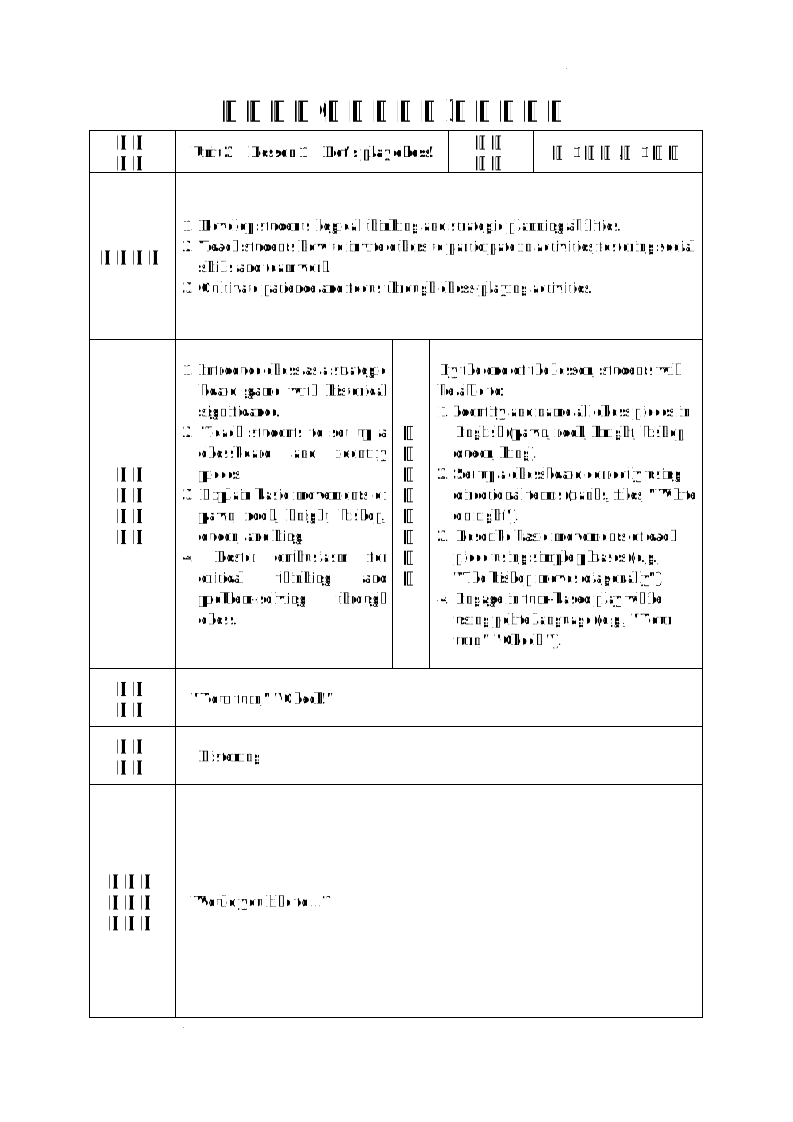
单元课时(融通探究课)学程设计案
课题
名称
Unit 3 Lesson 1 Let's play chess!
课时
分配
共1课时,第1课时
育人目标
1. Develop students' logical thinking and strategic planning abilities.
2. Teach students how to invite others to participate in activities,fostering social skills and teamwork.
3. Cultivate patience and focus through chess-playing activities.
学科
核心
素养
目标
1. Introduce chess as a strategic board game with historical significance.
2. Teach students to set up a chessboard and identify pieces.
3. Explain basic movements of pawn, rook, knight, bishop, queen, and king.
4. Foster enthusiasm for critical thinking and problem-solving through chess.
学
业
质
量
达
成
指
标
By the end of the lesson, students will be able to:
1. Identify and name all chess pieces in English (pawn, rook, knight, bishop, queen, king).
2. Set up a chessboard correctly using directional terms (ranks, files, "White on right").
3. Describe basic movements of each piece using simple phrases (e.g., "The bishop moves diagonally").
4. Engage in turn-based play while using polite language (e.g., "Your turn," "Check!").
教学
重点
"Your turn," "Check!"
教学
难点
Listening
本节内
容与中
考分析
Would you like to ...?
教 与 学 过 程 预 设
环节
(任务)
学习内容
(学什么)
师生活动
(怎么学怎么教)
过程诊断
(学的怎样)
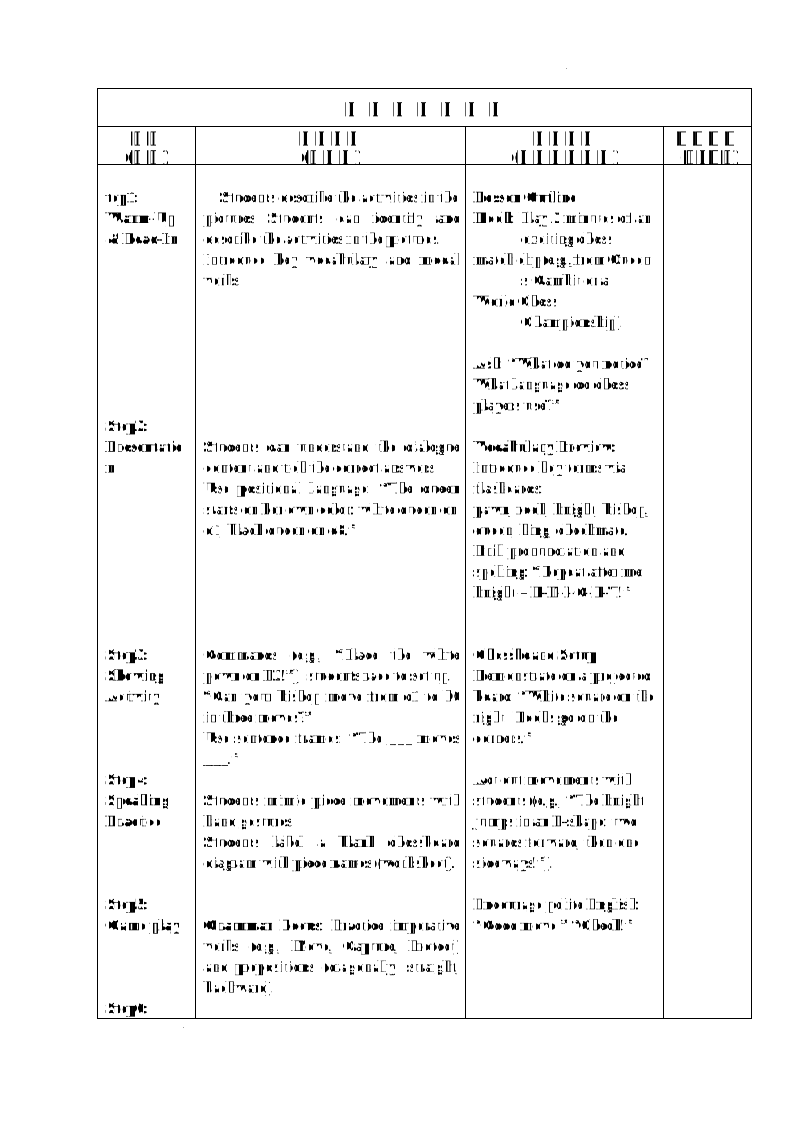
tep1:
Warm-Up & Lead-In
Step2: Presentation
Step3: Showing Activity
Step4: Speaking Practice
Step5:
Game play
Step6:
Summary
Step7:
Homework Assignment
Students describe the activities in the pictures Students can identify and describe the activities in the pictures.
Introduce key vocabulary and modal verbs.
Students can understand the dialogue content and tick the correct answers.
Use positional language: “The queen starts on her own color: white queen on d1, black queen on d8.”
Commands (e.g., “Place the white pown on E2!”), students race to set up.
“Can your bishop move from c1 to h6 in three moves?”
Use sentence frames: “The ___ moves ___.”
Students mimic piece movements with hand gestures.
Students label a blank chessboard diagram with piece names (worksheet).
Grammar Focus: Practice imperative verbs (e.g., Move, Capture, Protect) and prepositions (diagonally, straight, backward).
Monitor correct use of vocabulary during pair work.
Collect worksheets and exit tickets to check understanding.
Students mark their confidence level
Lesson Outline
Hook: Play 2 minutes of an exciting chess
match clip(e.g.,from Queen’s Gambit or a
World Chess Championship).
Ask: “What do you notice? What language do chess players use?”
Vocabulary Preview:
Introduce key terms via flashcards:
pawn, rook, knight, bishop, queen, king, checkmate.
Drill pronunciation and spelling: “Repeat after me: knight – K-N-I-G-H-T!”
Chessboard Setup
Demonstrate on a projected board: “White square on the right! Rooks go on the corners.”
Act out movements with students (e.g., “The knight jumps in an L-shape: two squares forward, then one sideways!”).
Encourage polite English: “Good move!” “Check!”
Exit Ticket:
Draw a knight’s path from b1 to c3 on a mini chessboard diagram.
Write one sentence: “Today I learned ___.”
Goal: Capture 3 opponent pieces using legal moves.
Sentence Stems: “I move my knight to ___. You
Vocabulary Quiz:
Show images of pieces; students shout names (e.g., “That’s a bishop!”).
Homework
Complete a “Chess Maze” worksheet: Guide a knight from a1 to h8 using L-shapes.
Watch a 5-minute YouTube video (“How Chess Pieces Move”) and write 3 new words.
达
标
检
测
Formative: Monitor correct use of vocabulary during pair work.
Assumptive: Collect worksheets and exit tickets to check understanding.
Self-Assessment: Students mark their confidence level:
本节作
业
设
计
与
布
置
基础
性必
做作
业
Complete a “Chess Maze” worksheet: Guide a knight from a1 to h8 using L-shapes.
Watch a 5-minute YouTube video (“How Chess Pieces Move”) and write 3 new words.
拓展
性选
做作
业
Creative Writing: “Imagine you’re a pawn – tell your story!”
Cross-Curricular Link: Math (plotting coordinates:“What’s the distance between e4 and e5?”)
反
思
改
进
学科网(北京)股份有限公司
$$
资源预览图
1
2
相关资源
由于学科网是一个信息分享及获取的平台,不确保部分用户上传资料的 来源及知识产权归属。如您发现相关资料侵犯您的合法权益,请联系学科网,我们核实后将及时进行处理。