Unit 6 Survival Understanding ideas 课件-2024-2025学年高中英语外研版(2019)选择性必修第二册
2025-04-13
|
22页
|
784人阅读
|
4人下载
特供
资源信息
| 学段 | 高中 |
|---|---|
| 学科 | 英语 |
| 教材版本 | 高中英语外研版选择性必修第二册 |
| 年级 | 高二 |
| 章节 | Understanding ideas |
| 类型 | 课件 |
| 知识点 | - |
| 使用场景 | 同步教学-新授课 |
| 学年 | 2024-2025 |
| 地区(省份) | 全国 |
| 地区(市) | - |
| 地区(区县) | - |
| 文件格式 | PPTX |
| 文件大小 | 6.80 MB |
| 发布时间 | 2025-04-13 |
| 更新时间 | 2025-04-13 |
| 作者 | 匿名 |
| 品牌系列 | - |
| 审核时间 | 2025-04-13 |
| 下载链接 | https://m.zxxk.com/soft/51579725.html |
| 价格 | 0.50储值(1储值=1元) |
| 来源 | 学科网 |
内容正文:
Understanding ideas
Unit 6 Survival
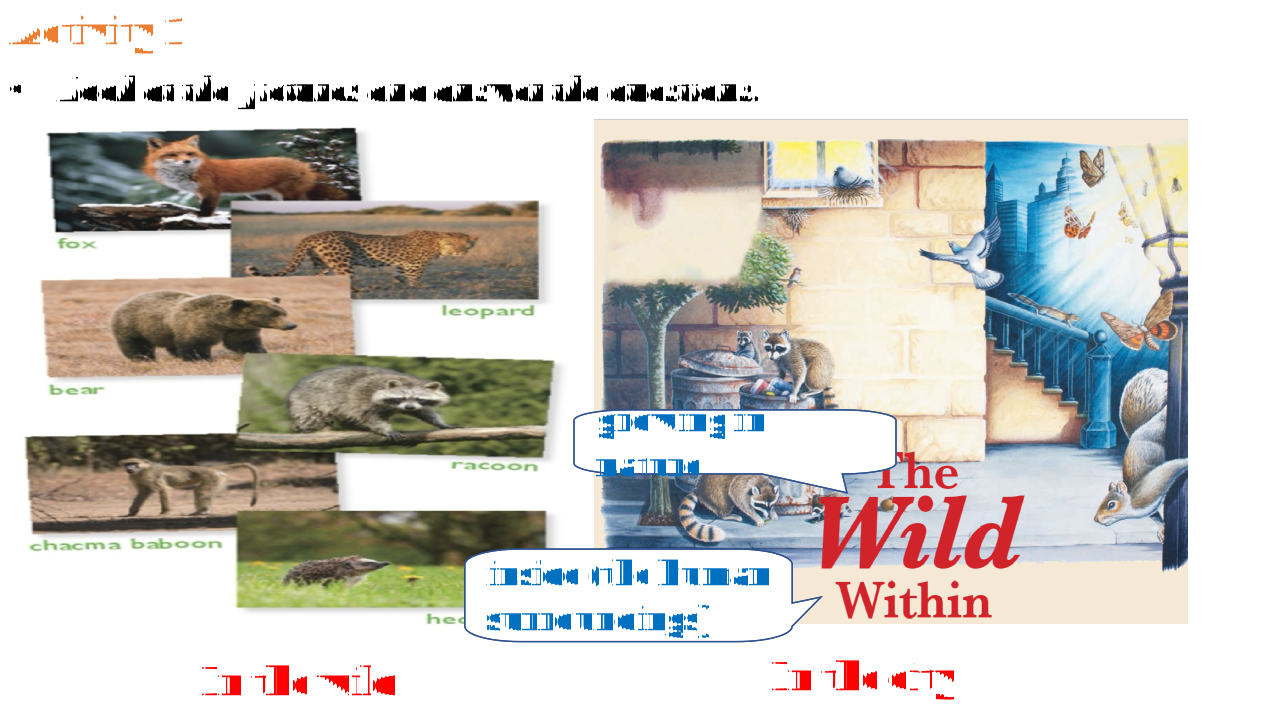
Activity 1
Look at the pictures and answer the questions.
In the wild
In the city
growing in nature
inside (the human surroundings)
2
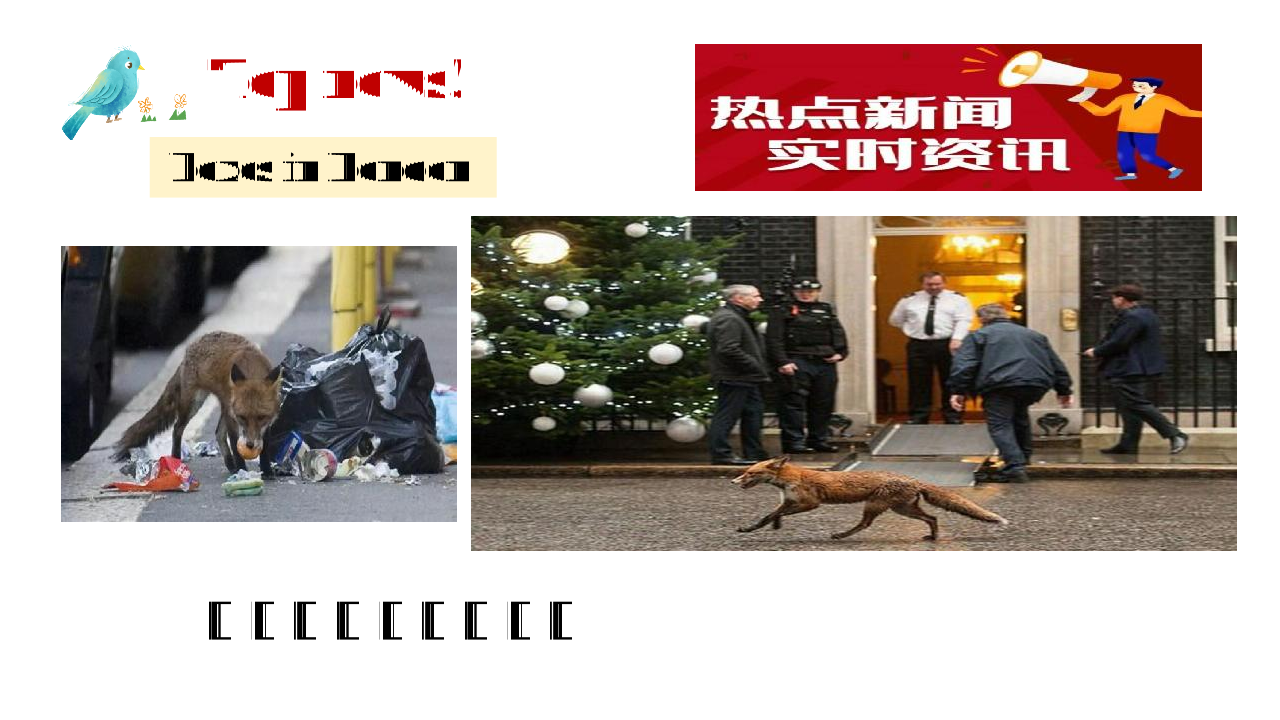
Top news!
狐狸:伦敦街头一霸
Foxes in London
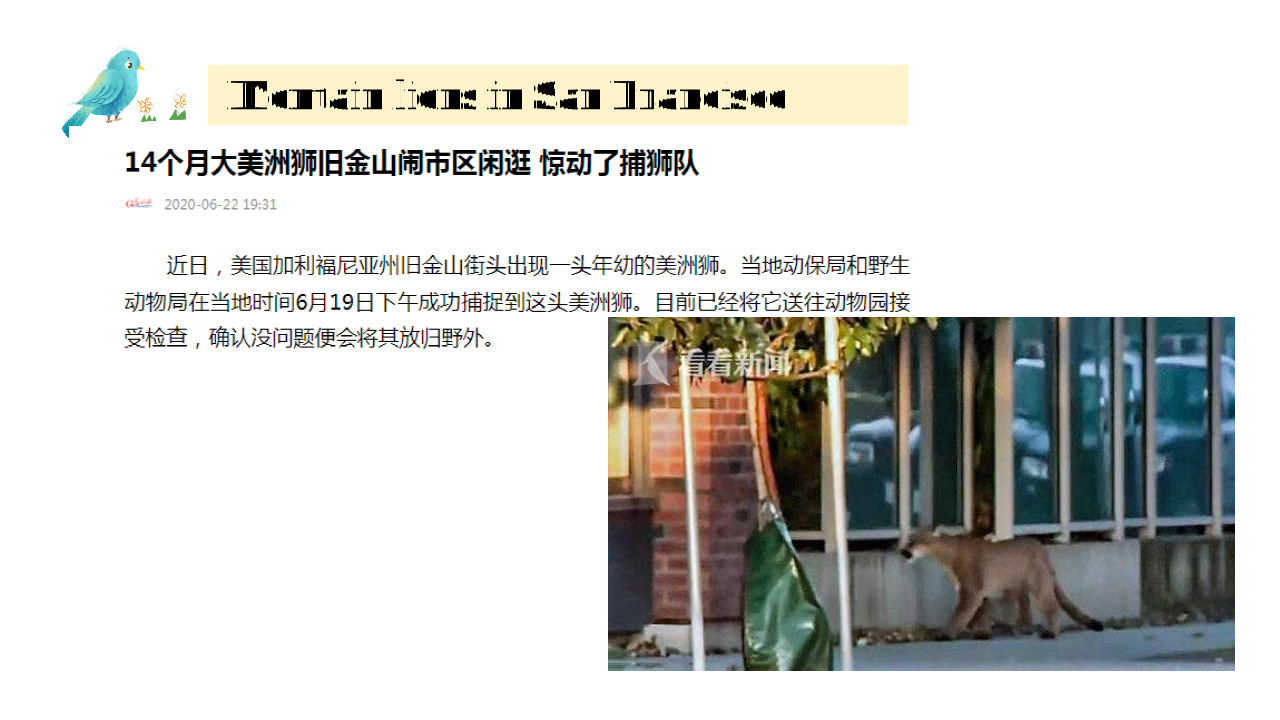
Montain lions in San Francisco
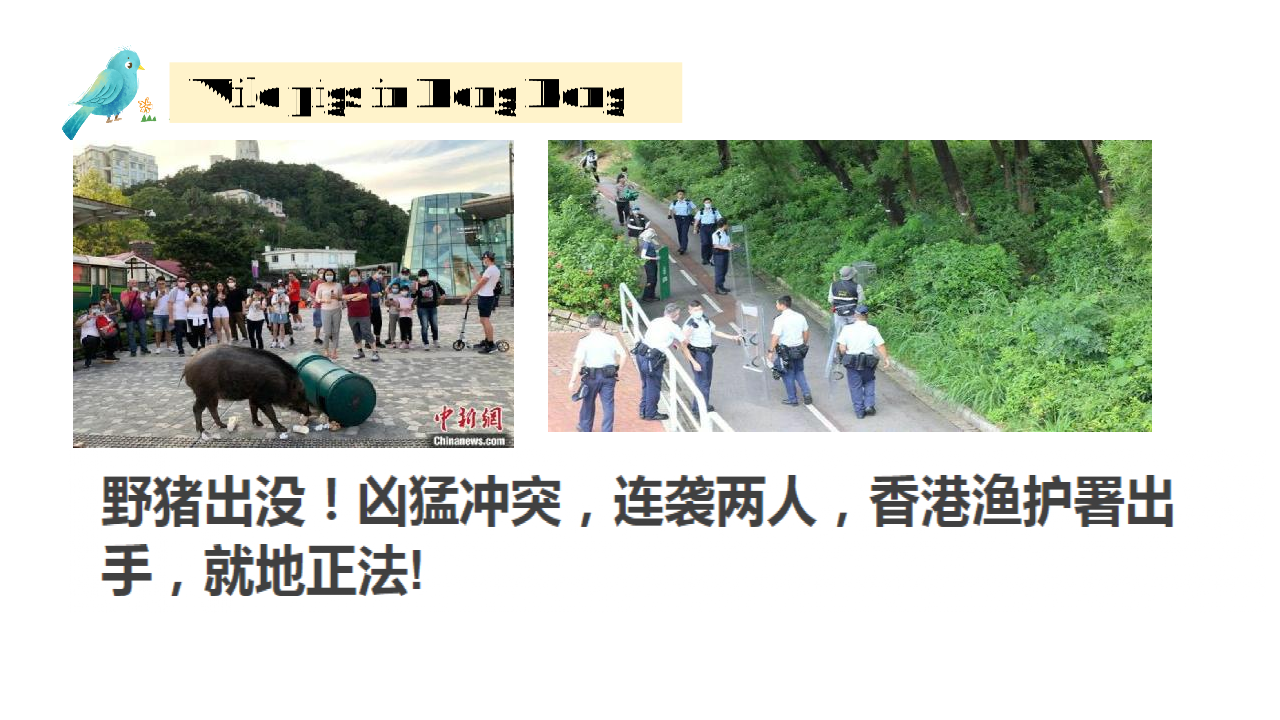
Wild pigs in Hong Kong
Activity 1
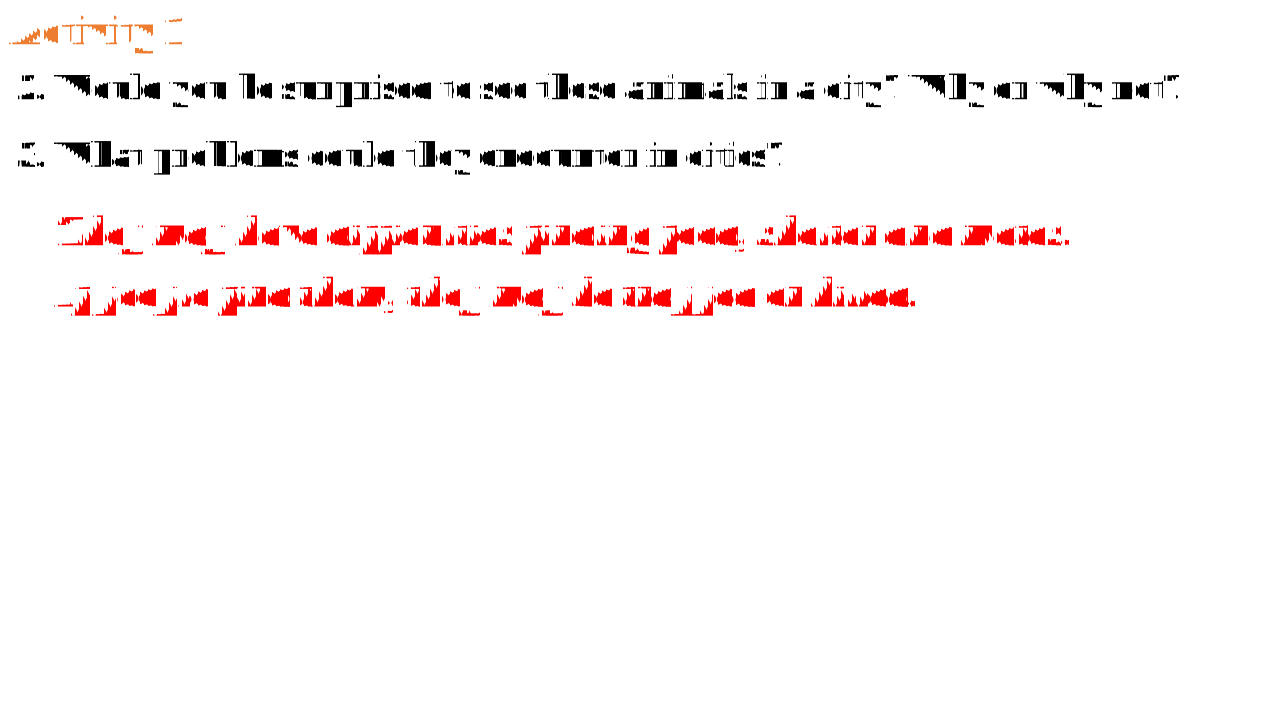
2. Would you be surprised to see these animals in a city? Why or why not?
3. What problems could they encounter in cities?
They may have difficulties finding food, shelter and mates. If people find them, they may be trapped or killed.
Activity 2
Choose the topic sentences for Paragraphs 2~5 and write them on the lines to complete the passage. (Activity 3 on page 84)
Conclude the main idea of para.1 and para. 6.
phenomenon
conclusion
b
d
a
c
Activity 2
What figure of speech is used in the first paragraph? Why does the author choose to start the passage this way?
In the first paragraph, the author uses personification (拟人) to describe what urban animals are doing, with the aim of attracting readers’ attention.
Activity 3
Organize information from the passage and complete the diagram.
(Activity 4 on page 85)
Reasons for migration:
Urban development and climate change push the animals ___________________________.
______________________________________________________________________________________________
_______________________________________________
out of their natural habitats
Wherever they go, animals find towns and cities in their way. With nowhere else to make their homes, they have no choice but to move in with us.
Benefits of cities for animals:
Appealing spaces as habits.
____________________________________________________________________________________________.
____________________________________________________________________________________________.
Out of reach from many of their natural predators, these newcomers often flourish in their new city lives
Hungry animals are finding plenty to eat in our gardens and in the leftovers we throw away
Animals' adaption to cities:
Urban animals are more ____________ _________________________________.
________________________________________________________________________________________.
intelligent
than their wild cousins
Some animals have even changed their living habits to fit in with their new homes
Dangers for some animals:
________________________________________________________________________________________________.
________________________________________________________________________________________________.
Some birds crash into windows because they are unable to distinguish between blue sky and glass
Some birds have yet to change their migratory routes that take them through cities with high-rise buildings
We should learn to better understand and appreciate our wild neighbours, and ______________________________________________________________________________.
look towards harmoniously sharing our urban habitats
Think and Share
How would you describe the relationship between people and urban animals in the passage?
Some environmentalists argue that we should restrict urban development to leave enough natural habitats for wild animals. Do you agree with this? Give your reasons.
Think and Share
How would you describe the relationship between people and urban animals in the passage?
I think people and urban animals are interrelated in the passage. On one hand, the animals entering cities may cause the loss of human property and pose a risk to personal safety. On the other hand, people could also destroy the habitats of animals to some extent and even threaten their lives.
3. Some environmentalists argue that we should restrict urban development to leave enough natural habitats for wild animals. Do you agree with this? Give your reasons.
I agree that we should restrict urban development to leave enough natural habitats for wild animals. As the range of human beings grow, people need more land and resources, which may lead to human habitations overlapping with those of wild animals. Faced with such conflicts, human beings often choose to reduce the habitats of animals or drive them out of their habitats, which eventually, may lead to the extinction of some wild animals.
Language points
Spotting the car with its window left open, the greedy thief didn’t hesitate. (Para.1)
spot sb./ sth. doing sth.
eg. Neighbors spotted the criminal being arrested by the police.
Once almost unheard of, scenes like this one in Cape Town are now common all over the world. (Para.1)
(enter) the room, I found Jerry was seated at the desk.
(absorb) in singing, Mary didn’t notice evening approaching.
Entering
Absorbed
19
With foxes in London, mountain lions in San Francisco and wild pigs in Hong Kong, it is almost as if our cities are being taken over by wild animals. (Para.1)
嘴里有东西的时候不应该说话。
他低着头站在妈妈面前。
他离家时她的儿子还只是个婴儿。
Lucy眼含泪水跑开了。
下周就要考试了,我每空和朋友们出去。
她双臂交叉站着,眼睛盯着窗外。
我现在不能出去,有好多衣服要洗。
You shouldn’t speak with your month full.
He stood in front of his mother with his head down.
She left home with her son still a baby.
Lucy ran away with tears in her eyes.
With the exams coming next week, I have no time to hang out with my friends.
She stood with her arms crossed, staring out the window.
With so many clothes to wash, I can’t go out now.
It’s we humans who have moved into their territory. (Para.2)
There is evidence that urban racoons are more intelligent than their wild cousins, as they frequently have to figure out difficult problems such as how to open rubbish bins and other containers which they would not find in the wild. (Para.4)
Some animals have even changed their living habits to fit in with their new homes. Although naturally active at night, urban foxes come out in daylight if the reward is good. (Para.4)
You can’t expect a baby to fit in with your lifestyle.
He didn’t eat all the food, though (he was) greedy.
When (the museum is) completed, the museum will be open to the public next year.
He’ll go to a seaside suburb for his holiday if (it is) possible.
Unable to distinguish between blue sky and glass, birds crash into windows at speeds of about 50 kilometers per hour. (Para.5)
21
Only then can we look towards harmoniously sharing our urban habitats. (Para.6)
We are able to prevent the extinction of endangered animals by arresting criminals who killed them.
We can protect endangered animals in this way.
Human beings realized the seriousness of air pollution then.
We can live in harmony with endangered animals when we protect them.
Only by arresting criminals who killed endangered animals are we able to prevent the extinction of them.
Only in this way can we protect endangered animals.
Only then did human beings realize the seriousness of air pollution.
Only when we protect endangered animals can we live in harmony with them.
$$
资源预览图

1
2
3
4
5
6
相关资源
由于学科网是一个信息分享及获取的平台,不确保部分用户上传资料的 来源及知识产权归属。如您发现相关资料侵犯您的合法权益,请联系学科网,我们核实后将及时进行处理。