Unit 8 Literature Lesson 2 Poetry Listening 教案 -2024-2025学年高中英语北师大版(2019)选择性必修第三册
2025-03-02
|
4页
|
1361人阅读
|
381人下载
普通
资源信息
| 学段 | 高中 |
|---|---|
| 学科 | 英语 |
| 教材版本 | 高中英语北师大版选择性必修第三册 |
| 年级 | 高二 |
| 章节 | Lesson 2 Poetry |
| 类型 | 教案 |
| 知识点 | - |
| 使用场景 | 同步教学-新授课 |
| 学年 | 2025-2026 |
| 地区(省份) | 全国 |
| 地区(市) | - |
| 地区(区县) | - |
| 文件格式 | DOCX |
| 文件大小 | 31 KB |
| 发布时间 | 2025-03-02 |
| 更新时间 | 2025-03-02 |
| 作者 | 匿名 |
| 品牌系列 | - |
| 审核时间 | 2025-03-02 |
| 下载链接 | https://m.zxxk.com/soft/50748001.html |
| 价格 | 0.00储值(1储值=1元) |
| 来源 | 学科网 |
内容正文:
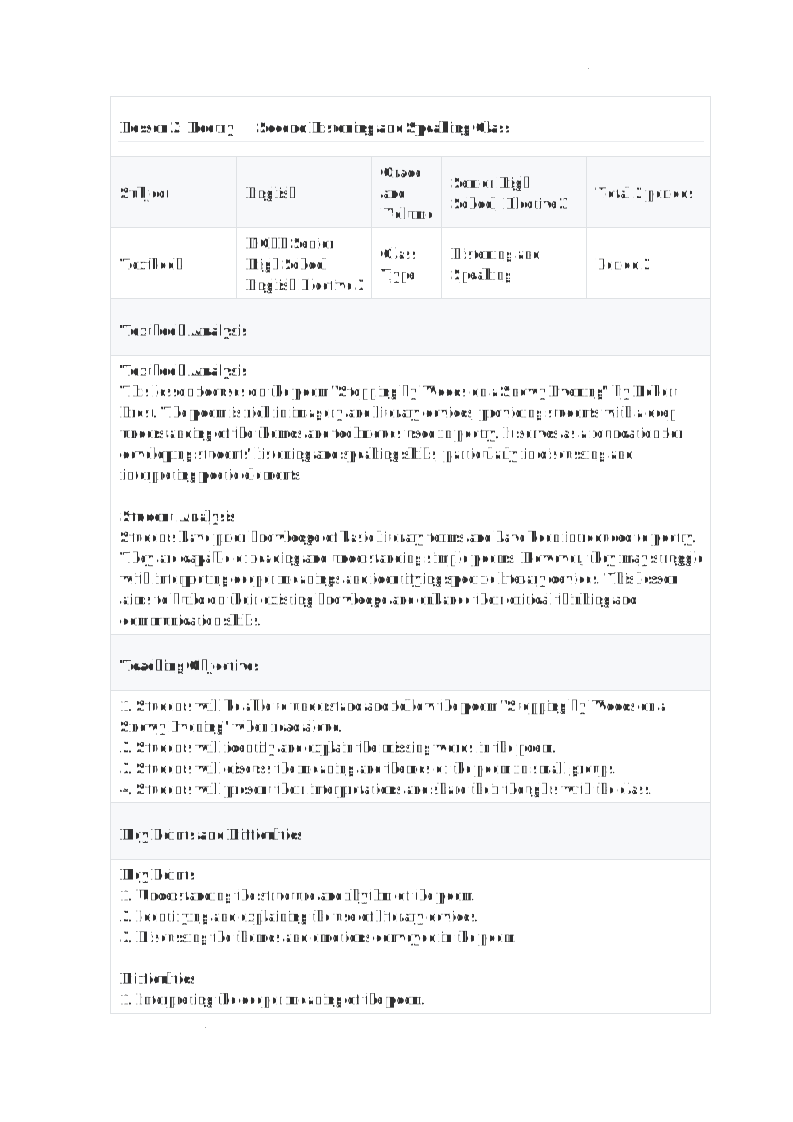
Lesson 2: Poetry Second Listening and Speaking Class
Subject
English
Grade and Volume
Senior High School, Elective 3
Total 2 periods
Textbook
NCEP Senior High School English Elective 3
Class Type
Listening and Speaking
Period 2
Textbook Analysis
Textbook Analysis
This lesson focuses on the poem "Stopping by Woods on a Snowy Evening" by Robert Frost. The poem is rich in imagery and literary devices, providing students with a deep understanding of the themes and techniques used in poetry. It serves as a foundation for developing students' listening and speaking skills, particularly in discussing and interpreting poetic elements.
Student Analysis
Students have prior knowledge of basic literary terms and have been introduced to poetry. They are capable of reading and understanding simple poems. However, they may struggle with interpreting deeper meanings and identifying specific literary devices. This lesson aims to build on their existing knowledge and enhance their critical thinking and communication skills.
Teaching Objectives
1. Students will be able to understand and follow the poem "Stopping by Woods on a Snowy Evening" when read aloud.
2. Students will identify and explain the missing words in the poem.
3. Students will discuss the meaning and themes of the poem in small groups.
4. Students will present their interpretations and share their thoughts with the class.
Key Points and Difficulties
Key Points
1. Understanding the structure and rhythm of the poem.
2. Identifying and explaining the use of literary devices.
3. Discussing the themes and emotions conveyed in the poem.
Difficulties
1. Interpreting the deeper meaning of the poem.
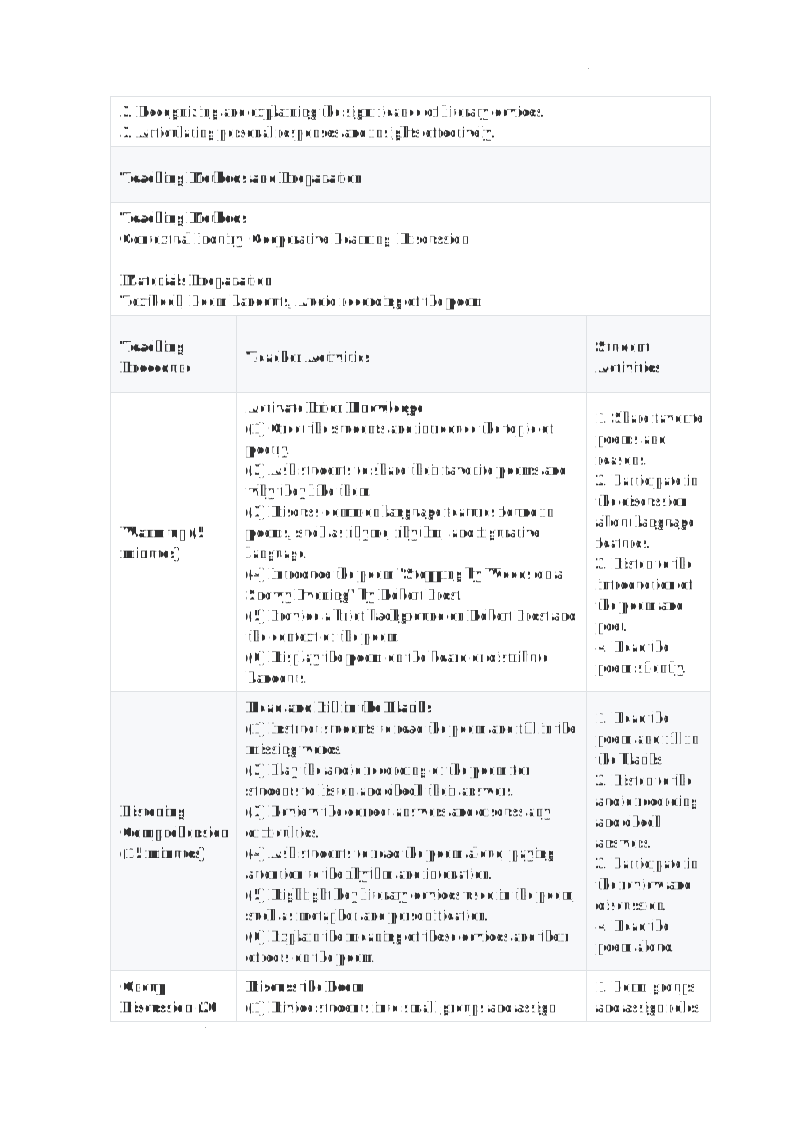
2. Recognizing and explaining the significance of literary devices.
3. Articulating personal responses and insights effectively.
Teaching Methods and Preparation
Teaching Methods
Contextual Inquiry, Cooperative Learning, Discussion
Materials Preparation
Textbook, Poem handouts, Audio recording of the poem
Teaching Procedure
Teacher Activities
Student Activities
Warm up (5 minutes)
Activate Prior Knowledge
(1) Greet the students and introduce the topic of poetry.
(2) Ask students to share their favorite poems and why they like them.
(3) Discuss common language features found in poems, such as rhyme, rhythm, and figurative language.
(4) Introduce the poem "Stopping by Woods on a Snowy Evening" by Robert Frost.
(5) Provide a brief background on Robert Frost and the context of the poem.
(6) Display the poem on the board or distribute handouts.
1. Share favorite poems and reasons.
2. Participate in the discussion about language features.
3. Listen to the introduction of the poem and poet.
4. Read the poem silently.
Listening Comprehension (15 minutes)
Read and Fill in the Blanks
(1) Instruct students to read the poem and fill in the missing words.
(2) Play the audio recording of the poem for students to listen and check their answers.
(3) Review the correct answers and discuss any difficulties.
(4) Ask students to read the poem aloud, paying attention to the rhythm and intonation.
(5) Highlight key literary devices used in the poem, such as metaphor and personification.
(6) Explain the meaning of these devices and their effects on the poem.
1. Read the poem and fill in the blanks.
2. Listen to the audio recording and check answers.
3. Participate in the review and discussion.
4. Read the poem aloud.
Group Discussion (20 minutes)
Discuss the Poem
(1) Divide students into small groups and assign roles (e.g., reader, note taker, reporter).
(2) Provide discussion questions:
Q1: Why did the writer stop by the woods?
Q2: Why did the horse give the harness bells a shake?
Q3: Why couldn't the writer stay longer in the woods?
Q4: What is the effect of the repetition in the last lines of the poem?
(3) Circulate around the room to monitor and assist groups as needed.
(4) Encourage students to support their answers with textual evidence.
(5) After 15 minutes, ask each group to report their findings to the class.
1. Form groups and assign roles.
2. Discuss the provided questions.
3. Support answers with textual evidence.
4. Report findings to the class.
Individual Reflection (10 minutes)
Write a Short Poem
(1) Instruct students to write a short poem expressing their love or appreciation of something.
(2) Encourage creativity and the use of literary devices learned in the lesson.
(3) Provide time for students to draft and revise their poems.
(4) Ask volunteers to read their poems aloud to the class.
(5) Provide feedback on the use of literary devices and overall expression.
(6) Collect the poems for assessment.
1. Write a short poem.
2. Use literary devices.
3. Draft and revise the poem.
4. Share the poem with the class.
Closure (5 minutes)
Summarize the Lesson
(1) Summarize the key points discussed in the lesson.
(2) Emphasize the importance of literary devices in conveying meaning and emotion.
(3) Encourage students to continue exploring poetry outside of class.
(4) Assign homework: Read another poem by Robert Frost and write a short reflection on its themes and devices.
(5) Thank the students for their participation and effort.
(6) Preview the next lesson.
1. Listen to the summary.
2. Note the importance of literary devices.
3. Receive homework assignment.
4. Prepare for the next lesson.
Evaluation Tasks
Q1: Correct answers filled in the blanks: ☆☆☆
Q2: Accurate interpretation of the poem: ☆☆☆
Q3: Effective use of literary devices in the short poem: ☆☆☆
Design Intentions
The warm up activates students' prior knowledge and sets the stage for the lesson. The listening comprehension activity helps students focus on the structure and rhythm of the poem. The group discussion encourages collaboration and critical thinking. The individual reflection task allows students to apply what they have learned and express themselves creatively.
Homework Design
Reading and Reflection
1. Read another poem by Robert Frost, such as "The Road Not Taken."
2. Write a short reflection (100 150 words) on the themes and literary devices used in the poem.
3. Be prepared to share your reflection in the next class.
Board Design
Title: Stopping by Woods on a Snowy Evening
By: Robert Frost
Key Literary Devices:
Metaphor: "His house is in the village though"
Personification: "He gives his harness bells a shake"
Repetition: "And miles to go before I sleep"
Discussion Questions:
1. Why did the writer stop by the woods?
2. Why did the horse give the harness bells a shake?
3. Why couldn't the writer stay longer in the woods?
4. What is the effect of the repetition in the last lines of the poem?
Teaching Reflection
Insufficient Time Management
1. The audio equipment was not working properly, causing delays in the listening comprehension activity.
2. The explanation of literary devices was too detailed, overwhelming some students.
3. The homework assignment could be more structured to guide students better.
学科网(北京)股份有限公司
$$
资源预览图
1
2
相关资源
由于学科网是一个信息分享及获取的平台,不确保部分用户上传资料的 来源及知识产权归属。如您发现相关资料侵犯您的合法权益,请联系学科网,我们核实后将及时进行处理。